Car interiors have evolved dramatically over the past few decades. While modern vehicles often emphasize minimalist design and intuitive layouts, the classic era of automotive design especially from the late 1980s through the early 2000s saw automakers experimenting with increasingly complex dashboards.
Some cars became notorious for overwhelming drivers with buttons, knobs, and switches, while others embraced simplicity, offering drivers a straightforward, almost tactile connection to their vehicle.
For enthusiasts, collectors, or anyone curious about car ergonomics, understanding which classic models overcomplicated the driving experience versus which kept it simple is both fascinating and telling of automotive trends.
Classic Models With Too Many Buttons
As car interiors have evolved, some classic models stand out for one particular reason: their overwhelming array of buttons, switches, and knobs. From climate controls scattered across the dashboard to endless toggles on the center console, these cars sometimes feel more like a cockpit than a daily driver.
While technology was often cutting-edge for its time, it could also be distracting, or downright confusing, for the average driver. In this roundup, we explore classic vehicles that packed in more buttons than anyone could easily memorize, celebrating both their quirky charm and their over-engineered tendencies.
1. Cadillac DeVille (1990s)
Cadillac has long been associated with luxury, comfort, and opulence, but the 1990s DeVille took interior complexity to an extreme. The dashboard was a sea of buttons controlling everything from climate zones to seat adjustments and infotainment.
Cadillac seemed to assume that more buttons equaled more luxury, but for many drivers, it resulted in confusion.
For example, the climate control system alone had over a dozen buttons and switches, each with subtle differences that weren’t immediately intuitive.
American drivers who valued ease of use often found themselves glancing at the dashboard mid-drive, a distraction that contrasted sharply with the DeVille’s otherwise smooth ride.
As Cadillac’s best-selling model, the DeVille entered its sixth generation for the 1994 model year, continuing the legacy of the brand’s flagship full-size sedan.
Built on the same K-body platform as the fourth-generation Seville, the 1994 DeVille impressed buyers with its luxurious, comfortable cabin and advanced onboard technologies.
Like its predecessor, it retained a front-wheel-drive layout and offered only V8 engines. While Cadillac primarily targeted an older demographic with this sedan, the extensive list of amenities could also appeal to younger buyers. Its styling, however, was less daring than that of its Seville counterpart.
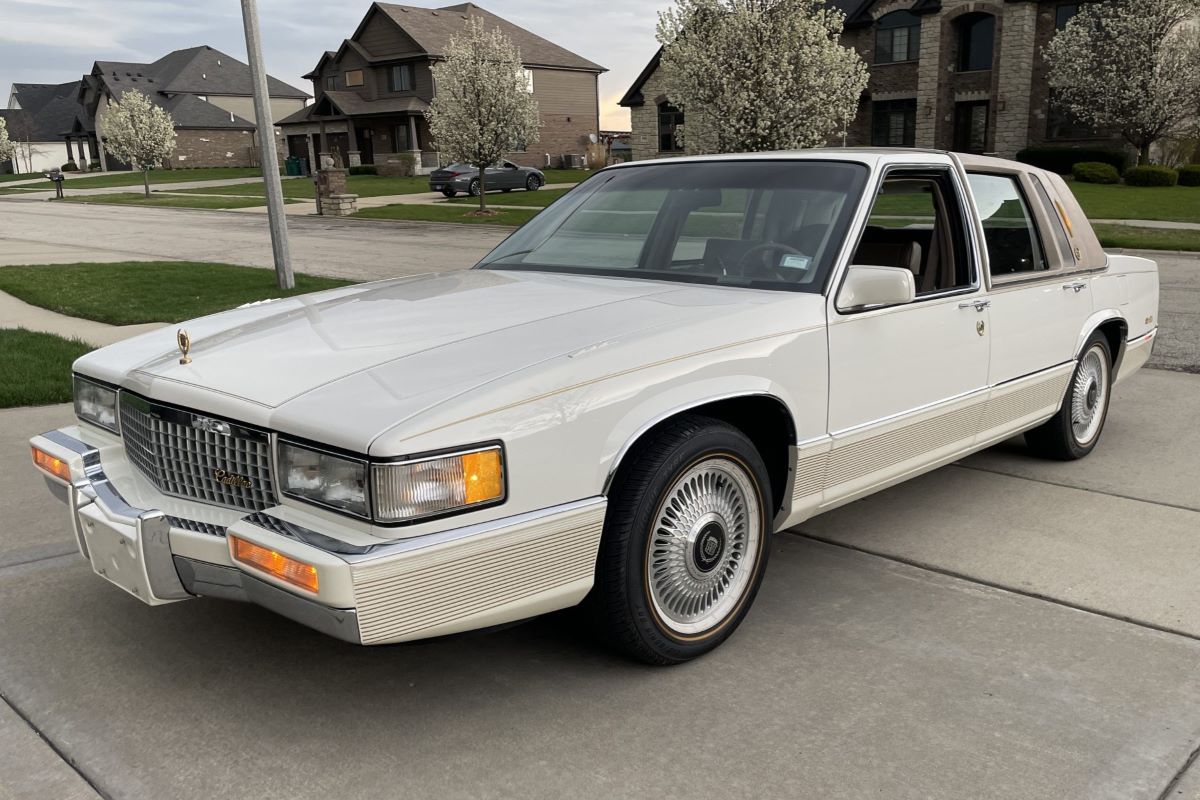
At the front, wide headlights flanked a broad, upright egg-crate grille centered with Cadillac’s emblem. A wraparound plastic bumper with chrome trim, including a lowered middle section, added to the sedan’s commanding presence. The designers even experimented with aerodynamics, incorporating a subtle spoiler along the lower bumper, a rare touch for a Cadillac of this size.
From the side, the 1994 DeVille featured a long, slightly rising hood that helped mask its front-wheel-drive layout. Angular cuts in the front fenders defined the wheel arches, and a raked panoramic windshield with slim A-pillars led into the classic Cadillac greenhouse: a flat roofline with nearly vertical C-pillars.
Inside, the cabin combined Cadillac’s traditional luxury with emerging technology. A long, elegantly curved dashboard featured a visor over the instrument cluster, with Zebrano wood trim running across its width and continuing onto the door panels. Standard dual front airbags protected occupants in the first row, and buyers could also opt for individual bucket seats.
Catering to customer preference for digital displays, Cadillac replaced conventional gauges with green LED readouts for speed, odometer, and more than 42 other data points from the onboard computer. The center stack offered a Delco stereo system with cassette/CD player and up to 11 speakers. Rear passengers enjoyed 61.3 inches (155.7 cm) of shoulder room, comfortably seating three adults.
Powering the 1994 DeVille were two V8 options. The base Sedan DeVille carried over a 4.9-liter engine producing 200 hp (203 PS) from the previous generation, while the DeVille Concours featured a 4.6-liter Northstar V8 generating 275 hp (279 PS).
Both engines drove the front wheels through a four-speed automatic transmission. Later in the model year, Cadillac phased out the 4.9-liter unit, leaving the Northstar engine as the sole option, offered in two outputs: 270 hp (274 PS) and 300 hp (304 PS).
Also Read: Top 10 High-Performance Diesel Cars That Fly Under the Radar
2. Lincoln Town Car (1990s–2000s)
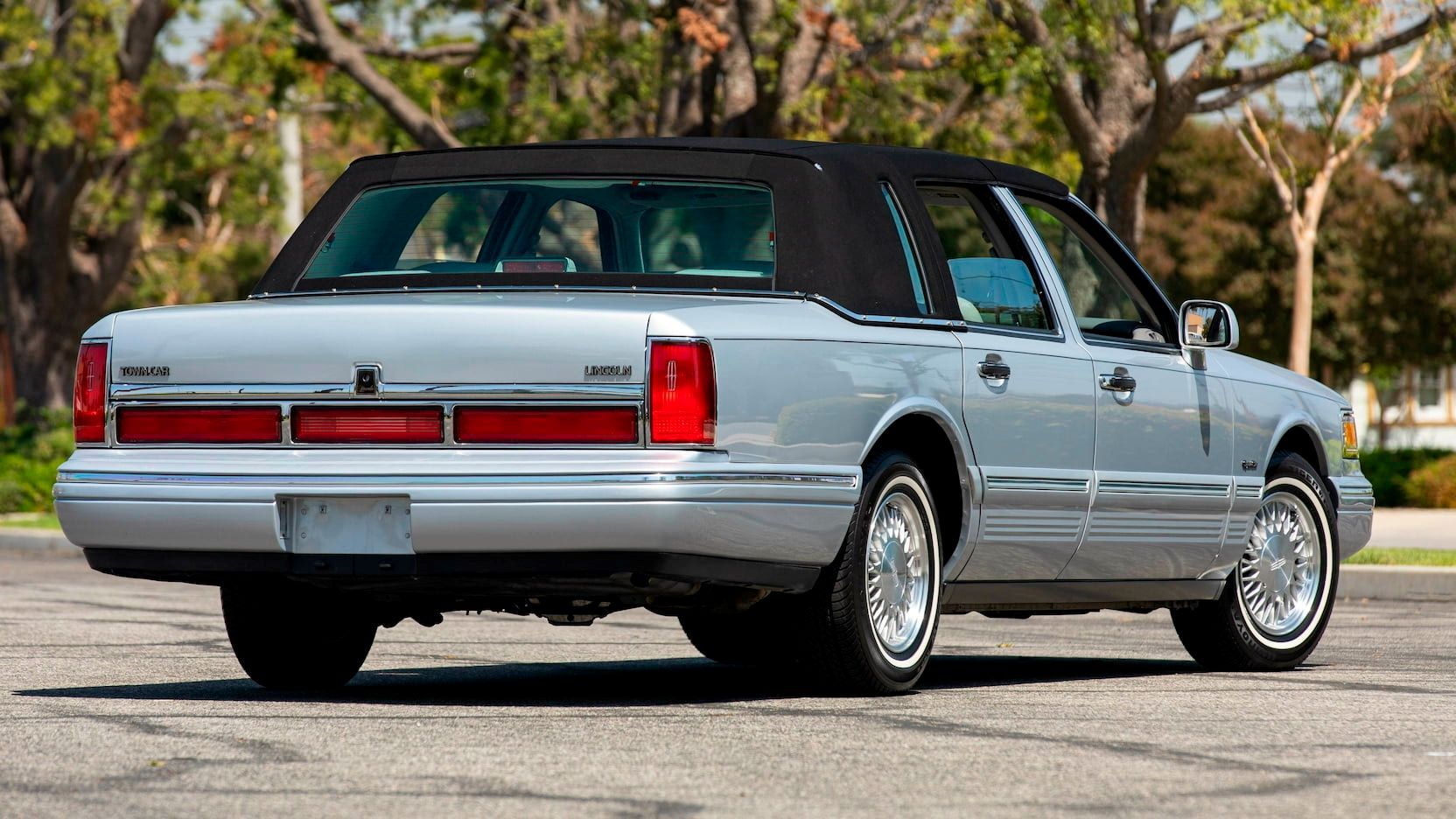
Lincoln’s Town Car was a symbol of executive comfort, especially in the U.S. limo and chauffeur market. However, the dashboard layout in many models particularly the mid-to-late 1990s was notorious for button overload.
Drivers faced a bewildering array of controls for seat positioning, lighting, HVAC systems, and entertainment.
One standout quirk was the redundant controls scattered between the steering wheel, center stack, and door panels.
While this gave the driver options, it also meant that finding the correct button for a specific function could feel like solving a puzzle, particularly for new owners or those used to simpler cars.
The Lincoln Town Car, alongside its Panther-platform siblings, the Mercury Grand Marquis and Ford Crown Victoria, was a fixture of the Lincoln lineup from its debut in the late 1970s until its final production year in 2011.
Across 30 model years, from 1981 to 2011, the Town Car evolved mechanically, but its core identity remained unchanged: a massive, comfortable, V8-powered four-door sedan. By the end of its run, the Town Car might have looked only slightly fancier than a well-appointed police cruiser, yet it retained the size, presence, and refinement that made it unmistakably Lincoln.
Even today, more than a decade after the last one rolled off the assembly line, the Town Car continues to be a familiar sight on American roads. Luxury never truly fades, and the Town Car remains popular with limousine services, funeral homes, executive transport fleets, and retirement communities.
In the larger context, the Town Car suffered the same fate as other American full-size sedans, just earlier than mainstream models such as the Ford Fusion or Focus. By 2006, Ford had already started considering retiring not only the Lincoln Town Car but the entire Panther platform, as outlined in a company press release.
A full-size, V8-powered sedan built on technology dating back to the late 1970s no longer fit with a company increasingly focused on SUVs, trucks, and hybrid vehicles. By comparison, the Town Car had become a relic in Ford’s modern lineup.
The same 2006 release, titled “Ford Fights Back,” noted that the St. Thomas Assembly plant, the birthplace of the Town Car, would be reduced to a single shift, eventually closing in 2011.
The shutdown cost between 25,000 and 30,000 jobs, a casualty of Ford’s larger restructuring efforts. Leading up to the 2008 financial crisis, the Town Car was just one of many iconic vehicles to disappear. Today, with Lincoln fully committed to an SUV-only portfolio and Ford aggressively expanding its electric lineup, a spiritual successor to the Town Car seems unlikely.
The Town Car wasn’t discontinued solely because it was outdated, or because its $47,000-plus price tag on a decades-old platform was high.
3. BMW 7 Series (E38, late 1990s)
BMW’s E38 7 Series is widely celebrated for its engineering and performance, but its dashboard layout reflects a different story.
The center console featured countless buttons for everything from traction control and suspension adjustments to climate zones and seat heating.
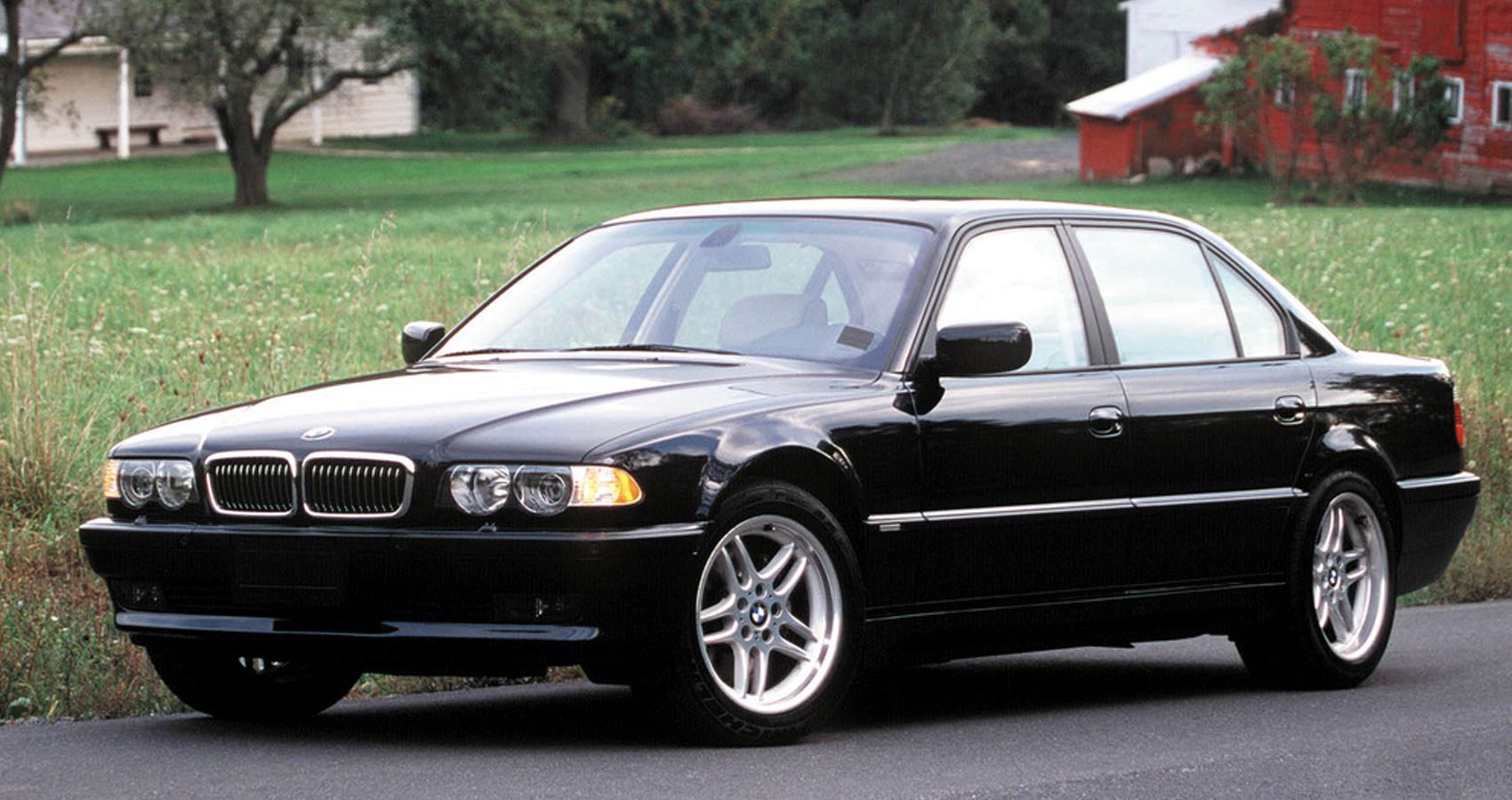
While European buyers often appreciated the tech-forward approach, American drivers sometimes found it overwhelming.
The iDrive system wasn’t yet present, but the pre-iDrive button chaos could make simple adjustments feel unnecessarily complicated. It’s a classic case of tech sophistication surpassing human usability.
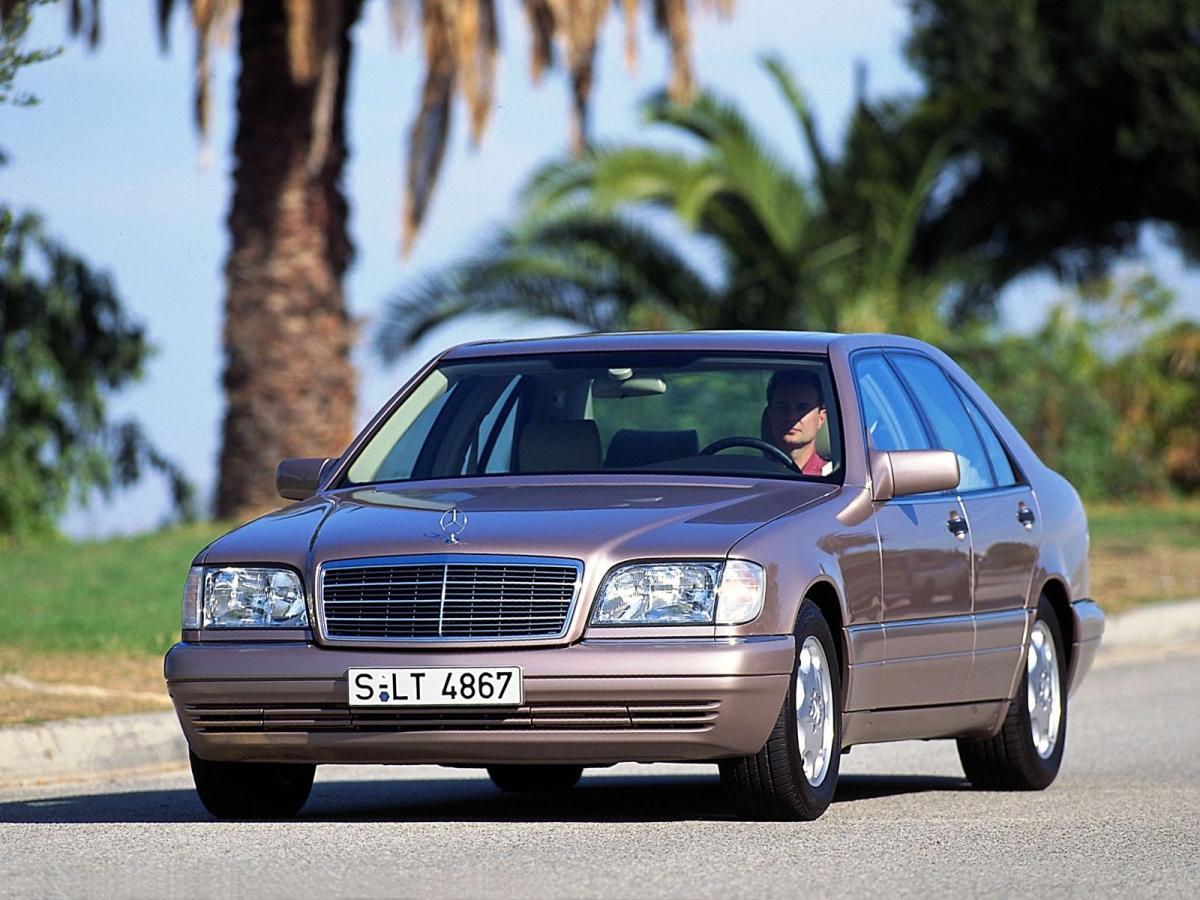
4. Mercedes-Benz S-Class (W140, 1991–1998)
Mercedes-Benz’s W140 S-Class was nicknamed “the tank” for its size and build quality, but its interior complexity was equally notable.
The vehicle included features like double-glass windows, multiple seat adjustments, climate zones, and a plethora of safety systems each with its own switch or button.
What should have been intuitive became a maze for some drivers. Critics often joked that you needed an instruction manual just to adjust the mirrors or control the HVAC.
While the W140 offered unmatched luxury for its time, it often left drivers feeling like they were navigating an airplane cockpit rather than a sedan.
Few sedans manage to strike the balance between luxury and performance quite like the Mercedes-Benz S-Class. Its ride quality is exceptional, thanks to a standard air suspension that expertly smooths out bumps and imperfections in the road.
Even the base S-Class feels agile for a large sedan, while optional upgrades such as rear-axle steering and E-Active Body Control enhance cornering precision and responsiveness.
AMG variants take the driving experience a step further, offering upgraded suspension, steering, and braking for buyers who crave sharper handling. All models come standard with all-wheel drive, known as 4Matic.
Every S-Class trim delivers impressive power. The base S 500 features a turbocharged inline-six producing 442 horsepower. Those seeking more performance can opt for the S 580 or Maybach S 580, both powered by a twin-turbo V8 generating 496 horsepower. The S 580e plug-in hybrid pairs an inline-six with an electric motor to deliver 503 horsepower.
At the top of the lineup, the AMG S 63 E Performance dominates, with a hybrid-assisted V8 producing 791 horsepower, capable of sprinting from zero to 60 mph in just 3.3 seconds.
Even the flagship Maybach S 680, with its 621-horsepower V12, offers effortless performance, though it emphasizes refined, stately power over outright speed. All engines are mated to a nine-speed automatic transmission.
Also Read: Top 10 High-Performance Diesel Cars That Fly Under the Radar
5. Chrysler 300M (1999–2004)
Chrysler’s 300M pushed luxury and tech into the hands of mainstream American drivers. The dashboard included buttons for everything from automatic climate control and radio presets to advanced trip computer features.
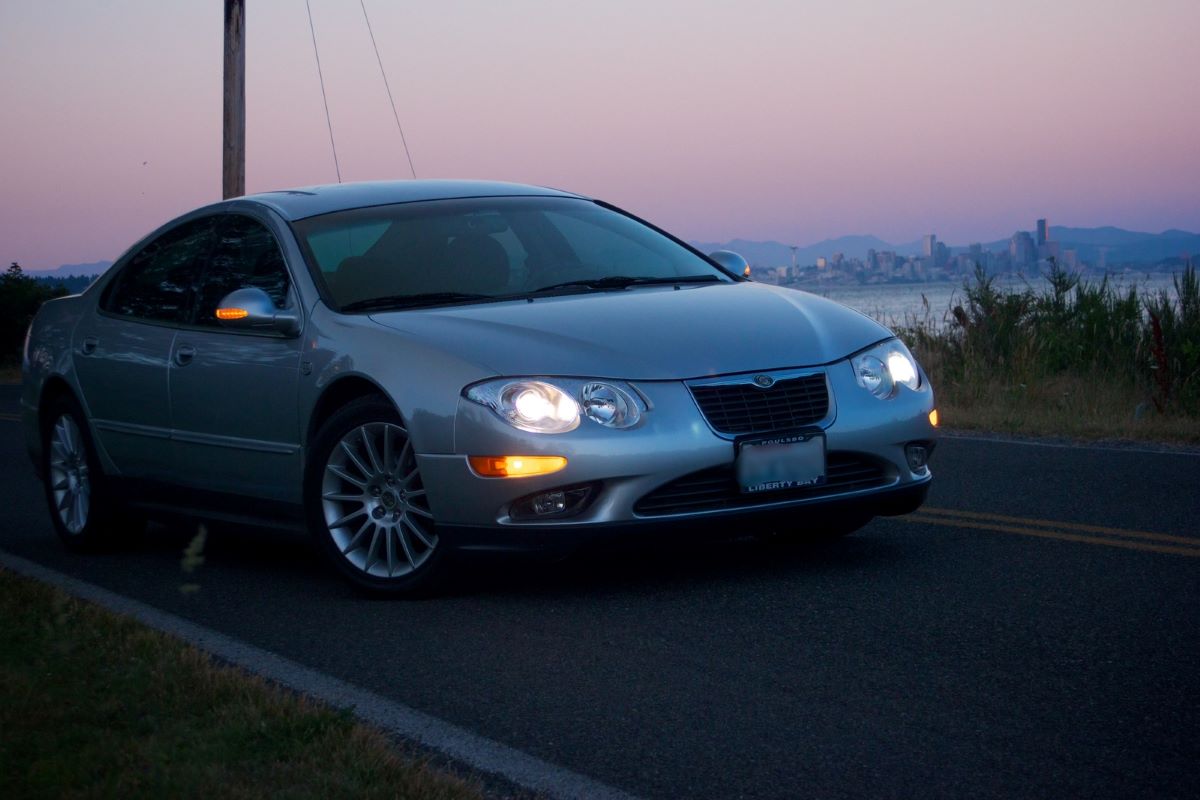
Some controls were grouped logically, but others were scattered or hidden, creating moments of trial and error.
While the 300M offered a refined driving experience, the abundance of buttons reflected a time when carmakers equated luxury with control overload, rather than simplicity and elegance.
Classic Models That Kept It Simple
Not every classic car needed a dashboard full of buttons and switches to impress. Some models earned their reputation by keeping things straightforward, intuitive controls, clean layouts, and a focus on driving enjoyment rather than gadgetry.
These vehicles prove that simplicity can be elegant, practical, and timeless. In this roundup, we celebrate classic cars that stayed true to the basics, showing that less really can be more when it comes to driver experience.
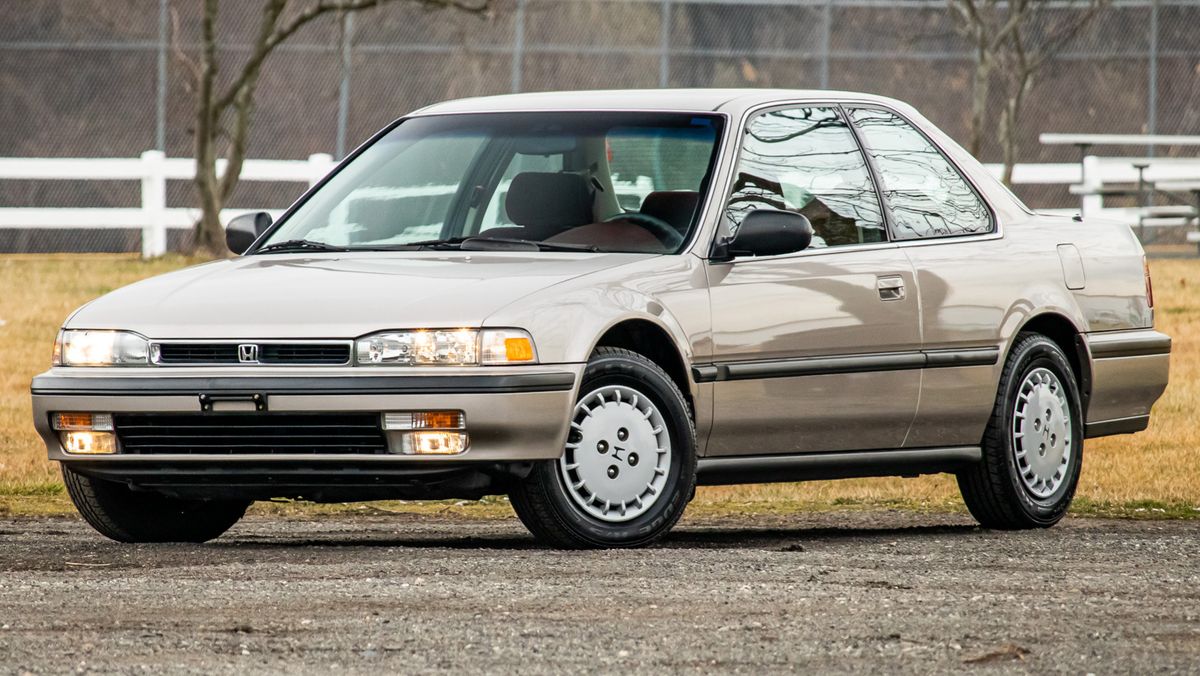
1. Honda Accord (1980s–1990s)
Honda’s Accord has long been praised for reliability, but one of its defining characteristics, especially in the 1980s and 1990s, was a clean, intuitive dashboard.
The buttons were few, clearly labeled, and placed where drivers could reach them without distraction. HVAC controls were simple sliders or rotary knobs, the stereo had a minimalistic layout, and even features like cruise control were straightforward.
The simplicity wasn’t just about aesthetics; it made the Accord a car that drivers of all ages could operate with confidence.
Many statements have been made about the Honda Accord over the years, and for good reason. It has earned its place as one of the most popular cars in the United States, despite Ford’s annual claims, often bolstered by fleet sales of the Taurus to rental companies and government agencies, since 1992.
The Accord built a loyal following by delivering sprightly performance, comfortable seating for four, impressive fuel economy, and a reputation for reliability that has made it nearly bulletproof when properly maintained.
These attributes have made the Accord the benchmark in its segment. Among regular retail customers, it consistently ranks as the best-selling car. While the car may carry a higher sticker price than some rivals, the total cost of ownership, factoring in repairs, maintenance, and resale value, makes it a genuine bargain.
The 1995 model year introduced a V6 to the Accord sedan lineup, but it didn’t necessarily outperform some four-cylinder variants. Added weight, different tires, and the automatic transmission combined to make the V6 less nimble and slower than the five-speed Accord EX.
Critics also argued that the V6 powertrain lacked the spirited character typically associated with Honda engines, offering smooth but uninspiring performance that felt out of step with the rest of the brand’s lineup.
By 1997, Honda had phased out a few models, including the LX 5-speed with antilock brakes and the leather-equipped EX coupes.
The Accord EX with the VTEC engine, however, remained a standout: quick, fuel-efficient, well-equipped, and enjoyable to drive. Coupled with the car’s strong resale value, it makes the Accord a smart choice for families and enthusiasts alike. Whether in sedan, coupe, or wagon form, the Accord continues to define what a dependable, versatile, and practical family car should be.
2. Ford Mustang (1990s)
The 1990s Ford Mustang embraced a driver-focused approach. While some trims offered advanced features, the base and mid-level models kept the interior layout straightforward.
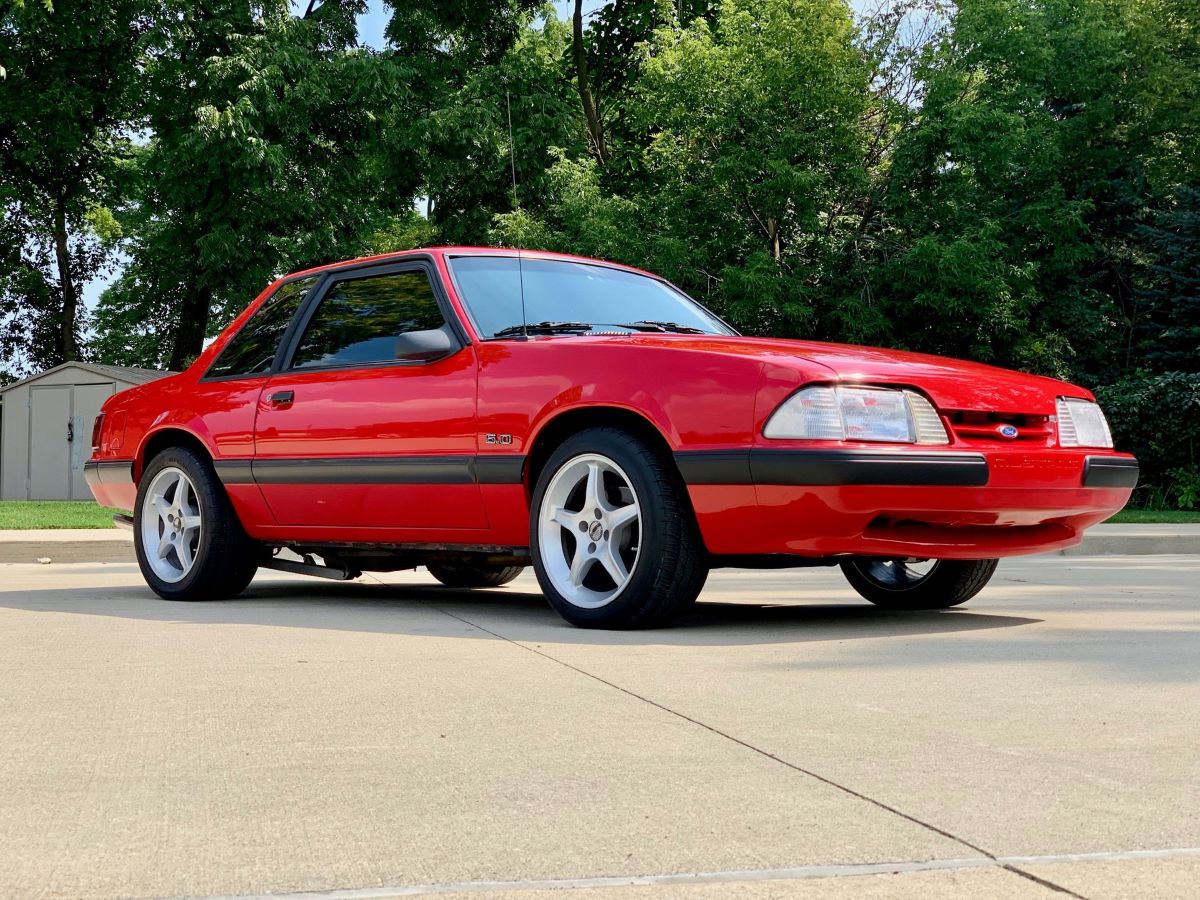
The center console had just enough controls to manage climate, audio, and essential driving functions.
Ford deliberately avoided overwhelming drivers with buttons, which contributed to the Mustang’s enduring appeal among enthusiasts. It demonstrated that performance cars don’t need button-heavy dashboards to feel sophisticated or fun to drive.
3. Toyota Camry (1990s)
The Toyota Camry is a prime example of understated ergonomics. Even as the Camry adopted modern conveniences like automatic climate control and power windows, the controls were logically arranged and easy to operate without a manual.
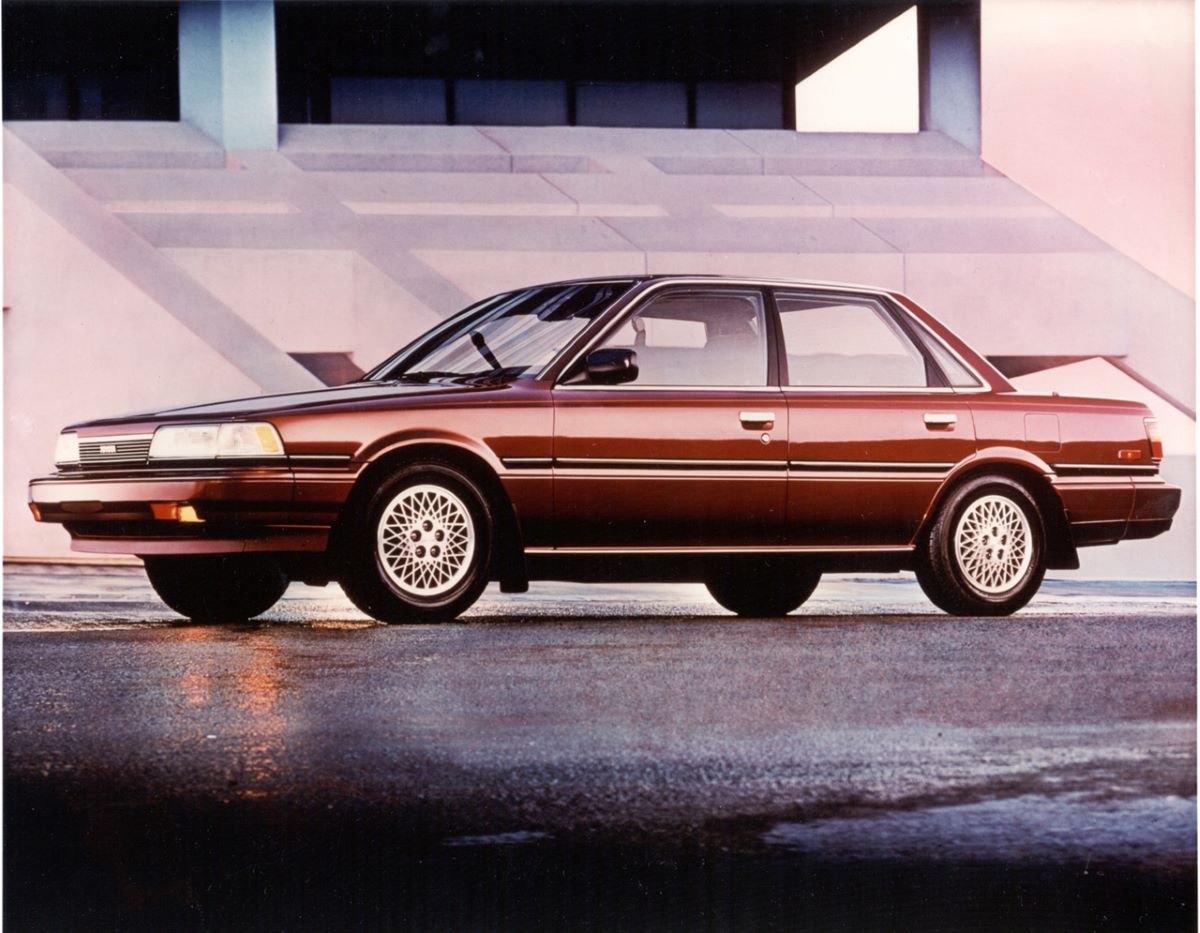
Unlike luxury sedans that equated buttons with sophistication, the Camry focused on usability. Drivers appreciated that almost every essential function could be managed at a glance, reinforcing Toyota’s reputation for practical, user-friendly design.
The Toyota Camry continues to hold favor with most Americans as the top choice among mid-sized sedans, even with Honda’s redesigned 1998 Accord entering the scene.
Its spacious interior comfortably seats five adults, while its styling strikes a balance between attractiveness and conservatism. Performance is lively, especially with the available 24-valve 3.0-liter V6, and the Camry remains reasonably priced when options are kept moderate.
The 1997 redesign aimed to make the Camry America’s best-selling car, and it succeeded, though competition from the Accord and Ford Taurus has grown stronger in 1998 and 1999. Both new and returning Toyota customers appreciate the Camry for its reliability, durability, and overall value.
The sedan can be tailored for practical family use or upgraded for luxury touring. Higher-trim LE and XLE models offer premium options such as a leather interior, power moonroof, and upgraded sound system. The V6 engine provides brisk acceleration, while the antilock braking system ensures confident stopping. Camry handles corners well, even on modest all-season tires.
Inside, the cabin layout is intuitive, with a flowing dashboard that places most controls within easy reach of the driver. The fingertip cruise-control stalk is a standout feature, allowing smooth operation without the risk of accidental activation. For enthusiasts seeking a more engaging drive, the Camry CE can be equipped with the V6 and a five-speed manual transmission.
Storage is plentiful, with a deep center console, door bins, dashboard compartments, and front cupholders that fit 20-ounce bottles—a small but essential convenience. While the suspension could be a touch firmer, the Camry remains Toyota’s all-around winner, and its continued dominance on the sales charts proves its enduring appeal.
4. Mazda MX-5 Miata (NA/NB, 1990–2005)
The first-generation Mazda Miata (NA) and its successor (NB) were celebrated for a purist driving experience. The dashboards were almost Spartan by comparison, featuring only essential buttons and knobs for climate, lights, and the audio system.
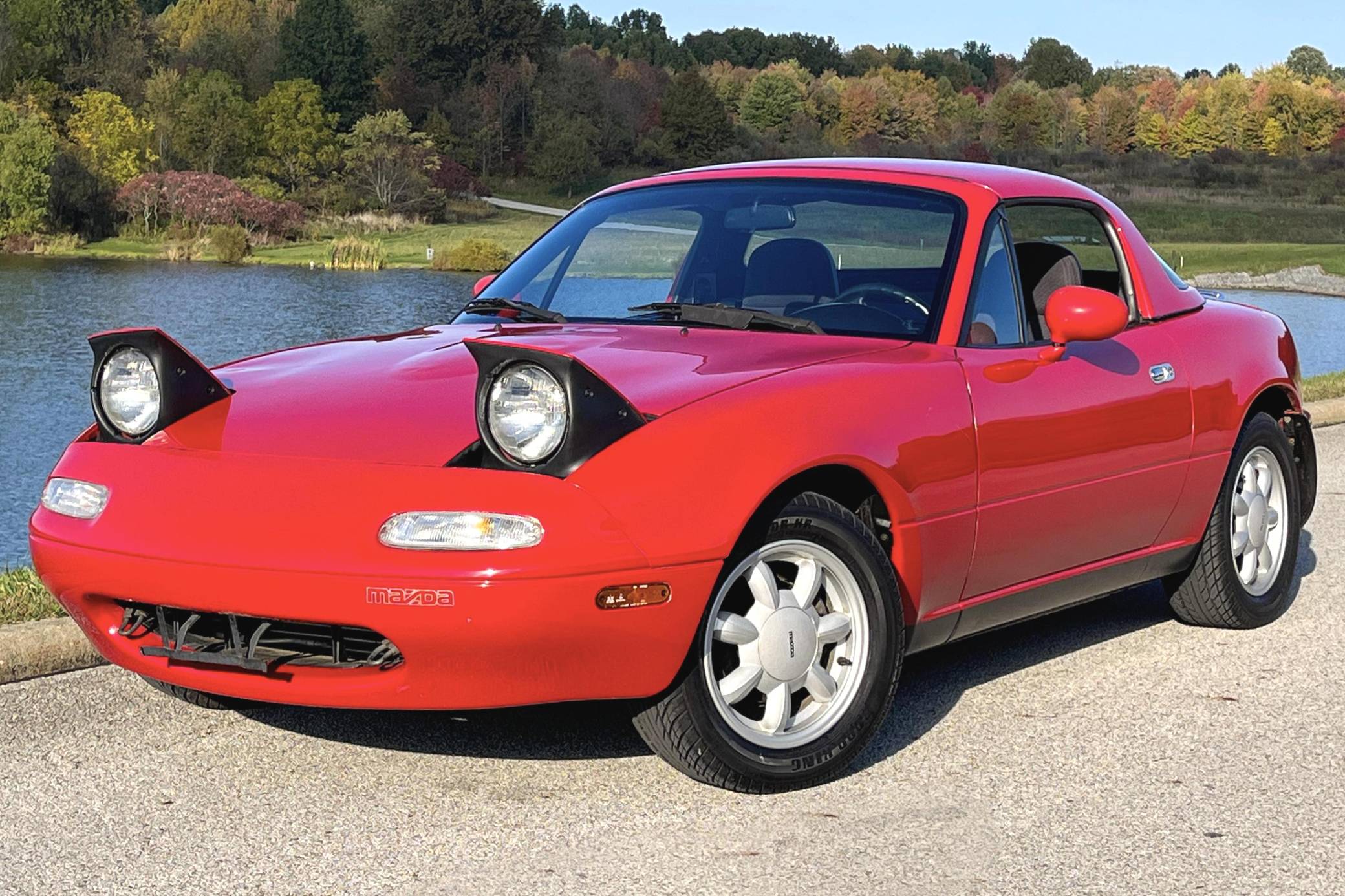
This minimalism was intentional: the Miata was designed to keep the driver connected to the road, not to a maze of switches. Its interior simplicity became part of its charm, proving that less can indeed be more in sports car design.
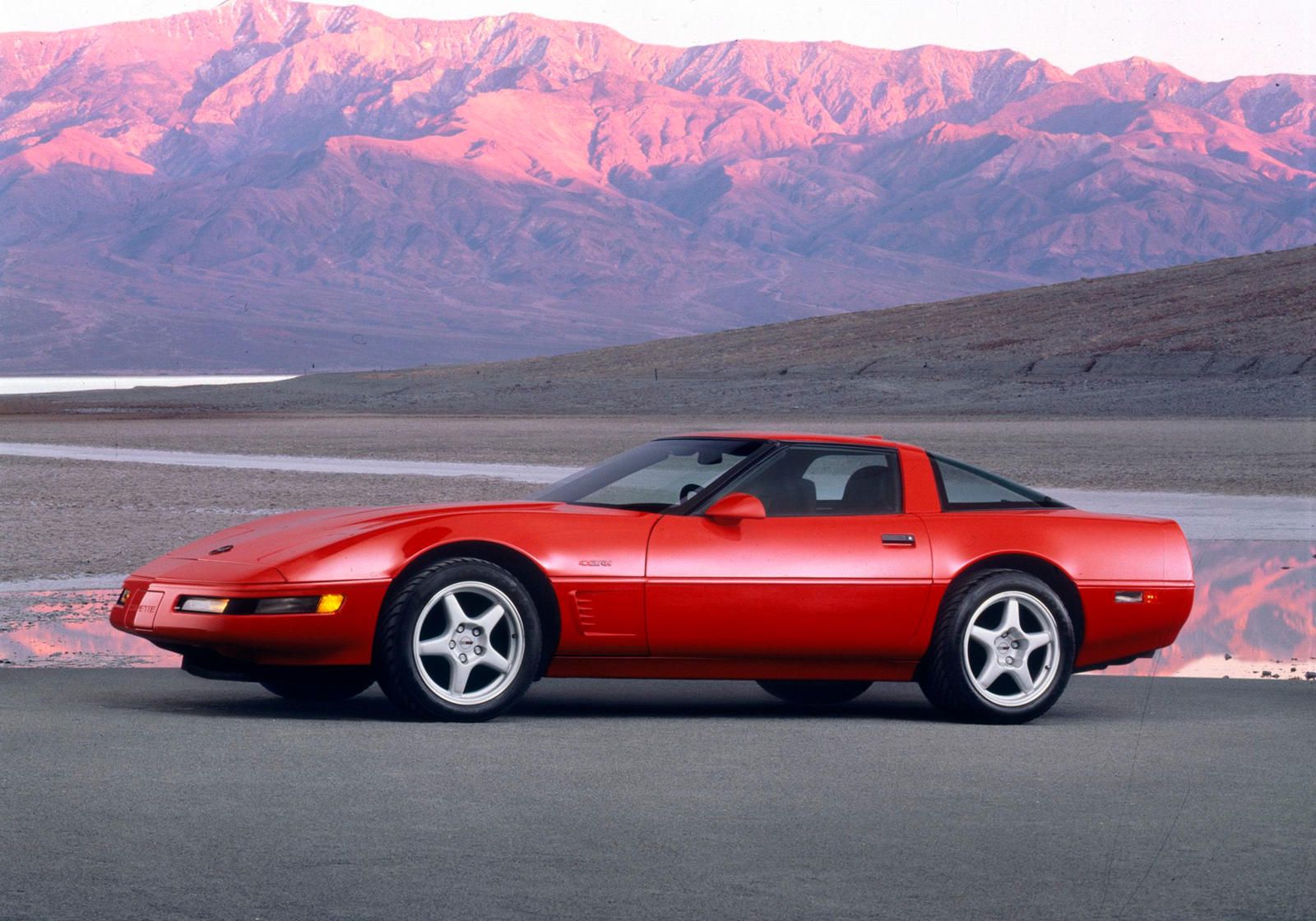
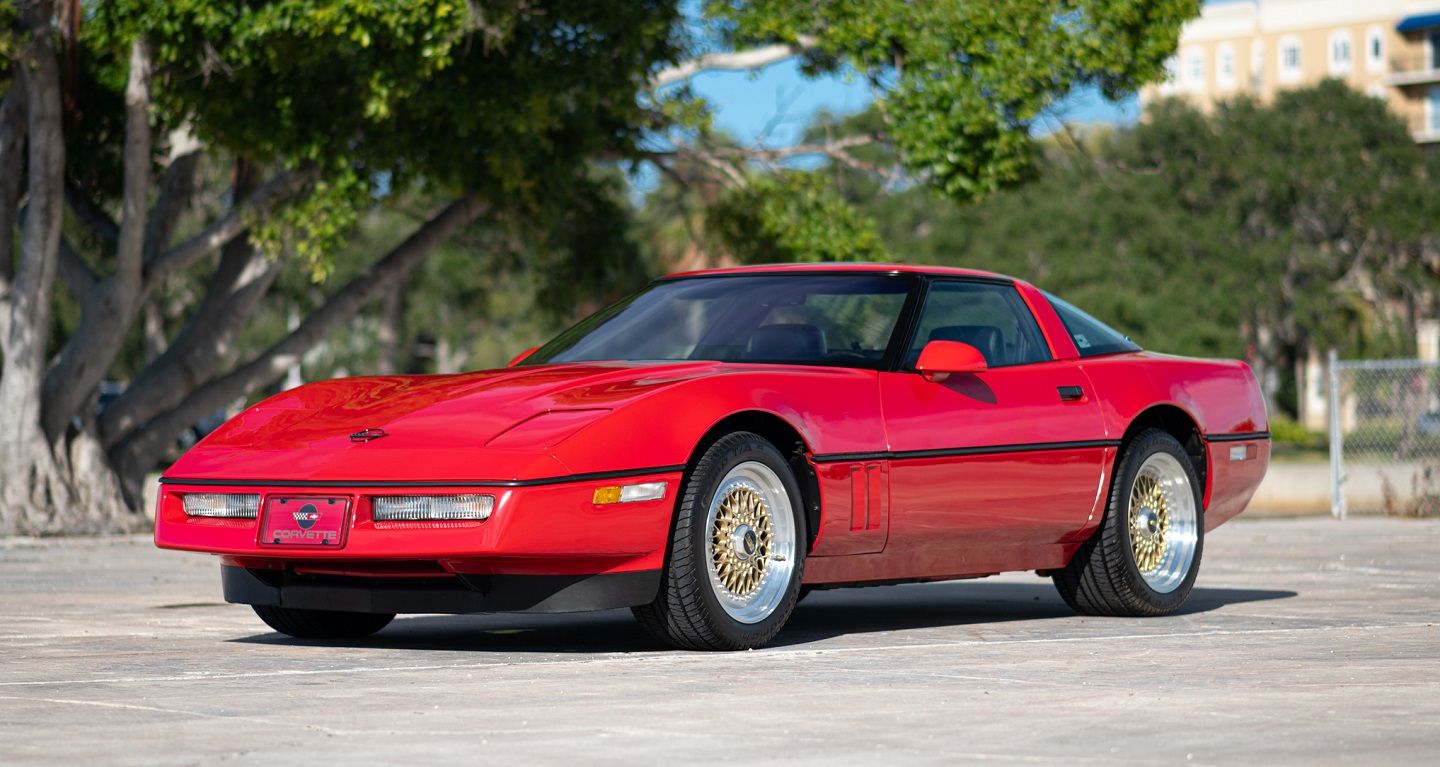
5. Chevrolet Corvette (C4/C5, 1984–2004)
The Corvette’s C4 and C5 generations embraced ergonomics that emphasized function over visual complexity. While the cars offered advanced features like digital dashboards (C4) or integrated climate control (C5), the layout remained clean, with a focus on driver visibility and reach.
Buttons were logically grouped and visually distinct, ensuring drivers could operate the car safely at high speeds. In contrast to button-heavy luxury sedans, the Corvette demonstrated that sports performance and simplicity could coexist beautifully.
Looking at these classic models, it’s clear that dashboard design has always been a balancing act between functionality, luxury, and driver usability.
The Corvette’s design still feels striking, even after 13 years on the market. Yet, it’s clear the fourth-generation model is starting to show its age, and Chevrolet is preparing to unveil a completely redesigned Corvette for 1997, promising cutting-edge technology and significant improvements over the current car.
To send the fourth-gen Corvette off in style, Chevrolet introduced two special edition models for 1996. The first, the Collector Edition, features an exclusive Sebring Silver paint, ZR1-inspired wheels and tires, and perforated leather seats embroidered with “Collector Edition” in Torch Red, Black, or Light Gray.
Even more exclusive is the Grand Sport, a tribute to five lightweight Corvette race cars from the early 1960s. Finished in Admiral Blue Metallic with a white racing stripe and red hash marks on the front left fender, the Grand Sport comes with black aluminum wheels, rear fender flares, and perforated leather seats. Only 1,000 units will be produced.
Under the hood, the Grand Sport debuts the new LT4 V8, generating 330 horsepower paired with a six-speed manual transmission. All 1996 Corvettes can be optioned with this engine, while automatic-equipped cars retain the previous year’s LT1, producing 300 horsepower.
New for 1996 is the optional Selective Real Time Damping system, which adjusts the shock absorbers every 10 to 15 milliseconds for optimal handling. Coupes can also be equipped with the Z51 Performance Handling Package, designed for autocross and gymkhana enthusiasts, though it’s stiff enough that casual street driving could leave your dentist busy.
While the Corvette remains a benchmark for American sports cars, its price premium over the excellent Camaro Z28 may give some buyers pause. For an extra $20,000, one could even opt for a Jeep Wrangler and a weekend of adventure.
Cars like the Cadillac DeVille, Lincoln Town Car, and Mercedes W140 S-Class show that more buttons don’t always equate to better experiences.
In contrast, models like the Honda Accord, Mazda Miata, and Toyota Camry illustrate that simplicity can enhance usability, safety, and driver satisfaction.
For modern car buyers and enthusiasts, these lessons remain relevant. Even with touchscreen interfaces and digital controls, the principle is the same: intuitive design matters.
The trend is increasingly toward minimalist interiors, as seen in Tesla, Lucid, and other tech-forward vehicles, but the debate between “too many buttons” versus “just enough” continues to shape automotive design philosophies.
Classic cars provide a snapshot of how this tension has evolved over decades, offering insight into both past and present approaches to driver ergonomics.