
Even with some automakers rolling out generous Black Friday and year-end incentives, experts say these efforts may not be enough to counter the buyer fatigue caused by steadily rising new-vehicle prices.
Industry analysts are projecting that new-car sales are slowing this year as shoppers hold onto their vehicles longer or turn to the used market in response to escalating new-car costs. This trend is expected to continue through the end of the year and into next year.
As U.S. new-vehicle sales data for November begins rolling out on Dec. 2, many analysts expect a substantial decline across the market compared with the same month last year.
They attribute the anticipated downturn to diminishing government subsidies for electric vehicles and continually rising prices across new-vehicle segments.
U.S. sales volume for November will total 1.27 million new vehicles, a 1% drop from October and a steep 7.8% decline from the same period last year.
J.D. Power offers a slightly different projection for U.S. retail new-vehicle sales, estimating 1,058,500 units sold in November, representing a 4.8% decrease from November 2024.
This downturn marks a sharp reversal from the optimistic outlook that defined the beginning of the year. Early forecasts predicted modest growth for U.S. auto sales in 2025.
On Jan. 26, it is anticipated 16.3 million new-vehicle sales by year-end, pointing to “positive economic” conditions and “improved buying conditions” as reasons for a projected 2%–3% increase over 2024.
That outlook changed dramatically after President Donald Trump implemented 25% tariffs on imported vehicles and auto parts in March, components widely used in domestically assembled vehicles. He later imposed 50% tariffs on imported aluminum and steel, materials essential to nearly all U.S.-built vehicles.
Although many automakers initially refrained from raising MSRPs to offset tariff-related costs, J.P. Morgan Global Research reported in September that the combined impact of vehicle and parts tariffs would cost the industry around $41 billion in the first year.
It projected that automakers and consumers would share the burden, resulting in roughly a 3% increase in new-vehicle price inflation. Sales momentum that built earlier in the year quickly faded.
This year’s sales trajectory unfolded in a notable sequence: New-vehicle demand surged in the spring as buyers hurried to purchase before expected tariff-driven price increases.
A second spike occurred when consumers raced to buy EVs following the passage of Trump’s Big Beautiful Bill in early July. That legislation eliminated the $7,500 federal EV tax credit at the end of September, prompting buyers to act before the benefit expired.
“The third quarter was the strongest quarter ever for EVs; however, Q4 is a different story. Sales of EVs and plug-in hybrids are now collapsing after tax credits expired,” Data showed that estimated U.S. new EV sales for October reached 74,835 units, a sharp 49% drop from September’s record high and down 30% from the previous year.
Compounding the issue, as more tariff-affected vehicles replace older non-tariffed inventory, “prices are drifting higher, leading to slower sales which may last through the remainder of the year and into next year.
High-income consumers may feel these increases less acutely and are expected to sustain demand for now.
“December and January will expose the gap between what dealers need to move and what consumers can actually afford or are willing to buy since we know December tends to be good for luxury brands especially”.
“Expect tactical discounting dressed up as ‘year-end events’ while the real story is payment-fatigued buyers who’ve run out of willingness to stretch.”
In October, the average transaction price for a new vehicle, reflecting the final amount paid after incentives and trade-ins, hit $49,766, a 2% increase from October 2024, according to Kelley Blue Book.
Also Read:Top $100K Sports Cars That Are Wildly Overpriced
In fact, affordability in September reached its lowest point since December 2024 and failed to recover in October after automakers sharply reduced incentives.
The typical monthly payment for a new vehicle increased 0.4% to $766, up 1.2% year over year and reaching the highest level in sixteen months.
The number of weeks of income needed to purchase the average new vehicle increased to 36.43 weeks from 36.40 weeks. The average monthly payment peaked at $795 in December 2022.”
November sales forecast indicates year-over-year declines across all major vehicle categories, even popular pickup trucks and midsize SUVs, though these segments are expected to be impacted the least.
190,000 pickups were sold in November, a 1.6% decline from the prior year. It estimates midsize SUV sales at 210,000 units, down 0.7% year-over-year. The midsize car segment is expected to see the largest drop, with an estimated 60,000 units sold, a 17.2% decline.
General Motors and Stellantis do not publish monthly sales data, reporting quarterly instead. Ford Motor will release its November sales performance on Dec. 2.
The first half of the year was strong for GM and Ford. GM’s U.S. sales jumped 12%, marking its best first-half performance in seven years. Ford’s new-vehicle sales rose 6.8% compared with the same period last year. Stellantis, on the other hand, saw an 11% decline in U.S. new-vehicle sales for the first half.
In October, Ford’s U.S. new-vehicle sales grew a modest 1.6% to 175,584 units, supported largely by strong demand for its gasoline-powered F-Series trucks. However, Ford’s EV sales plunged nearly 25% to 4,709 units versus October 2024, and hybrid sales also slipped 4% to 17,498 units.
Keating expects to see a slowdown for Detroit’s automakers when November results become available, though mid-month data is still too limited to offer detailed forecasts.
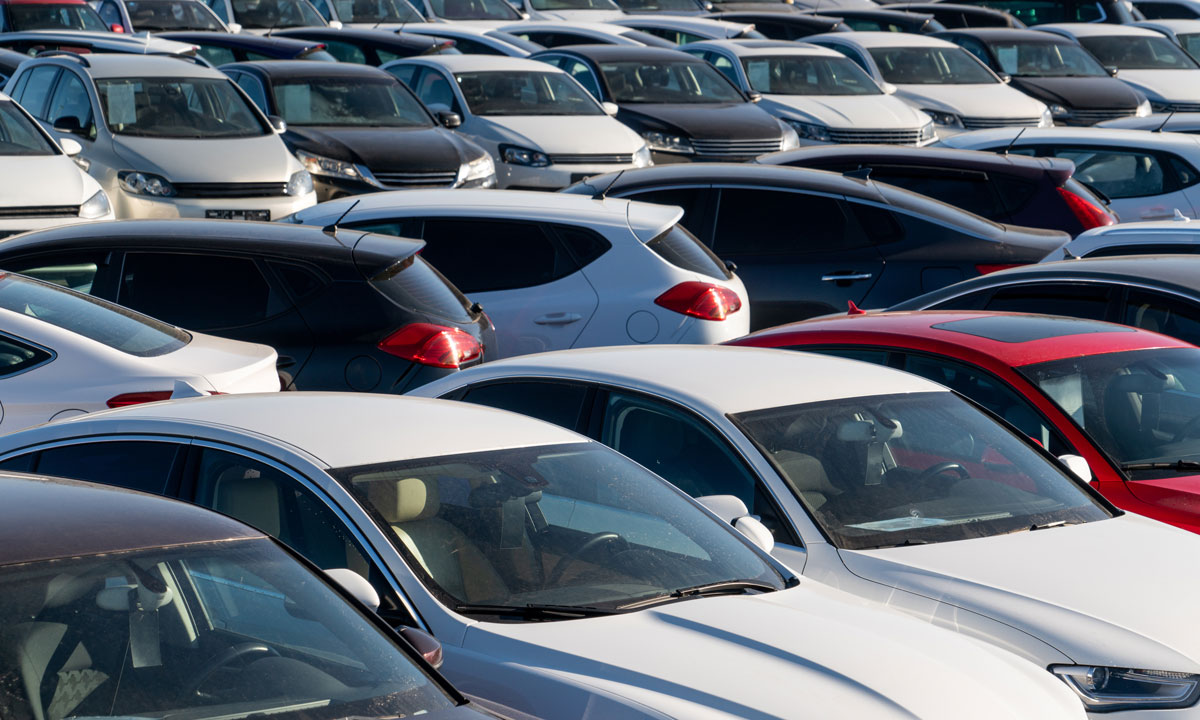
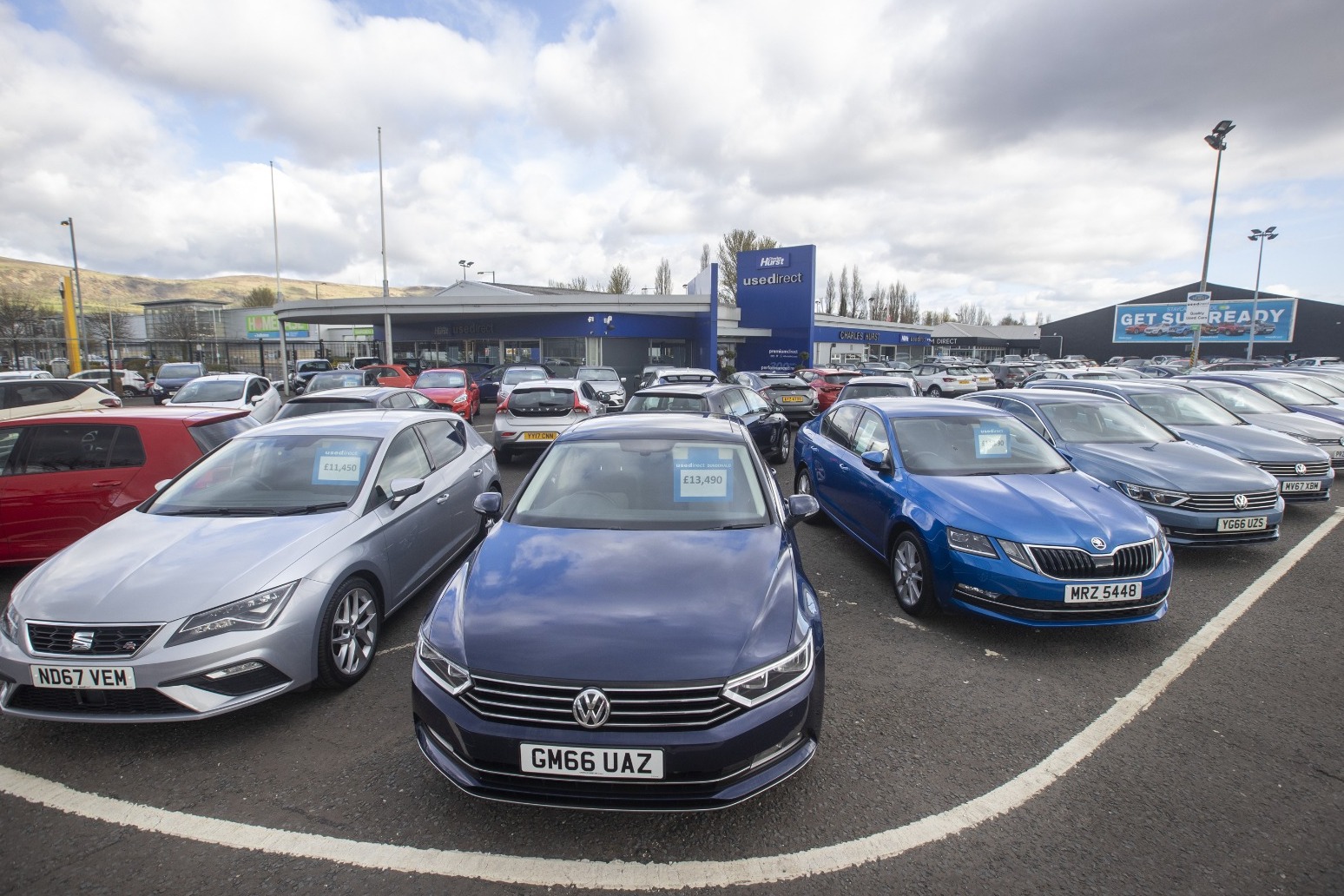
Meanwhile, vehicles are sitting longer on dealership lots, and inventory is becoming more expensive. The data shows that U.S. new-vehicle inventory has been rising and reached an 88-day supply by mid-month, well above the industry norm of 60 days.
“New-vehicle prices have been tracking higher with the arrival of 2026 model year units. Looking at available inventory, more than half of the units out there right now are 2026 model year.”
Also Read: The 10 Most Reliable And 5 Least Reliable Hybrid Cars
