
The V12 engine represents the pinnacle of automotive engineering a symphony of twelve cylinders working in perfect harmony to deliver otherworldly power and an intoxicating soundtrack.
During the 1990s and early 2000s, this configuration became the ultimate status symbol, the mechanical heart that separated true supercars from mere sports cars.
While Ferrari, Lamborghini, and Aston Martin continue to celebrate their V12 heritage, numerous other manufacturers dared to dream of twelve-cylinder glory, creating extraordinary machines that have since faded from collective memory.
These forgotten V12 supercars weren’t simply exercises in excess they were bold statements of ambition, technical showcases that pushed boundaries and challenged established hierarchies.
Some came from established manufacturers seeking to reclaim past glory, while others emerged from ambitious startups with more passion than business acumen.
Many were undone by financial realities, shifting market dynamics, or simply bad timing. Yet each deserves recognition for daring to build something extraordinary in an era when naturally aspirated V12s weren’t yet constrained by emissions regulations or efficiency mandates.
This collection celebrates twelve remarkable V12-powered machines that briefly burned bright before slipping into obscurity. These are the supercars that automotive enthusiasts once coveted in magazine spreads and bedroom posters, the engineering marvels that demonstrated what was possible when ambition exceeded practical constraints.
Their stories remind us that the pursuit of automotive perfection often leads down unexpected paths, and that sometimes the most interesting chapters in automotive history are written by those who dared to fail spectacularly.
1. Cizeta-Moroder V16T (1991-1995)
The Cizeta-Moroder V16T stands as one of the most audacious attempts to out-Lamborghini Lamborghini itself. Created by former Lamborghini engineer Claudio Zampolli and music producer Giorgio Moroder, this Italian exotic featured what appeared to be a V16 engine but was actually two V8s joined at the crank to form a transverse sixteen-cylinder powerplant displacing 6.0 liters.
Technically, this configuration made it a V12 competitor in spirit and performance, producing 540 horsepower and capable of reaching 204 mph.
The V16T’s styling, penned by Marcello Gandini the same designer responsible for the Countach and Diablo featured aggressive wedge proportions and pop-up headlights that screamed 1980s supercar excess.
The car’s most distinctive feature was its side profile, with massive intakes feeding the transversely-mounted engine behind the passenger compartment.
Inside, the cabin mixed Italian craftsmanship with idiosyncratic design choices, including a dashboard that resembled something from a jet fighter.
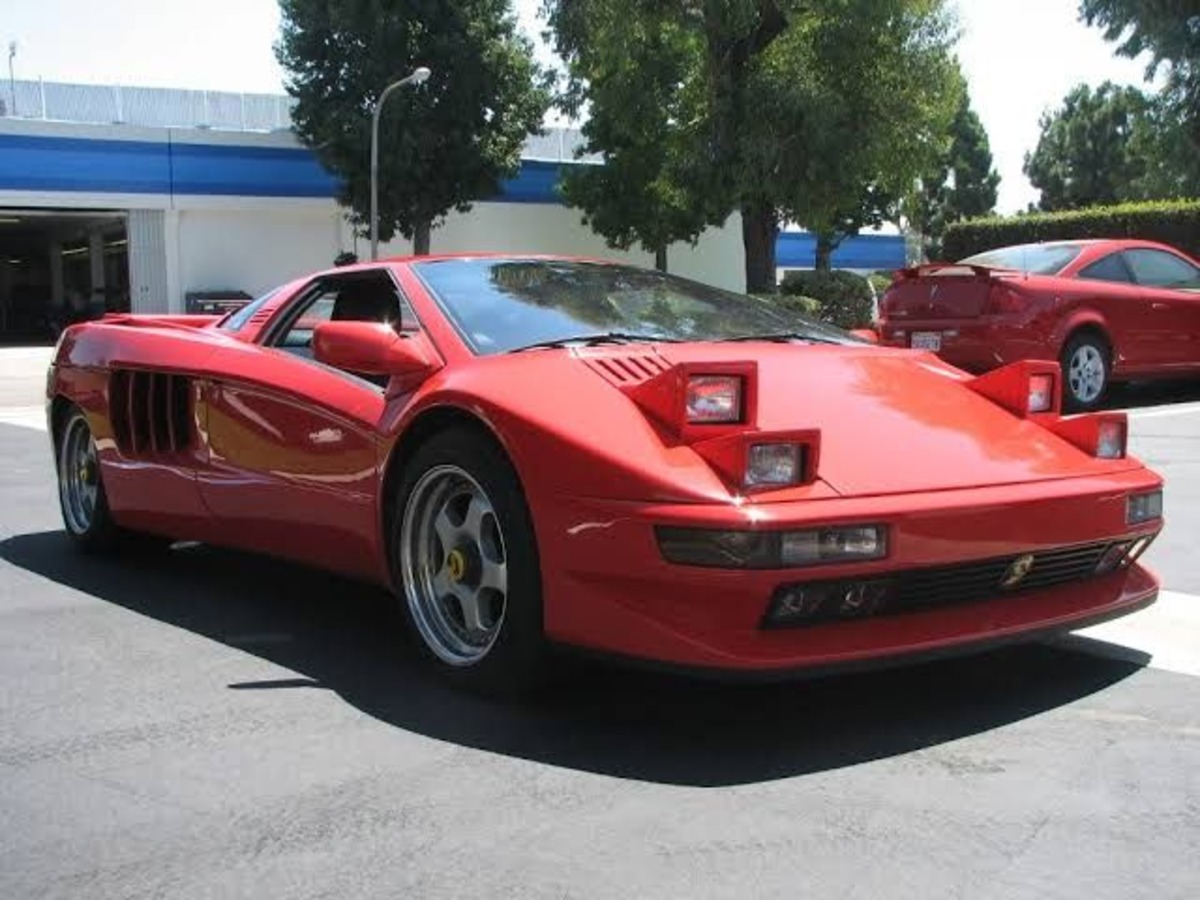
Only nine examples were ever built, making the Cizeta rarer than most Ferraris. Financial troubles plagued the company from the start, and Moroder eventually withdrew his involvement, though his name remained attached to the project.
The car’s pricing around $300,000 in the early 1990s positioned it squarely against established players, but without their brand recognition or dealer networks, sales proved impossible.
Today, the Cizeta-Moroder exists as a fascinating footnote in supercar history, a testament to what happens when talented engineers are given free rein but insufficient funding.
The few surviving examples have become cult collectibles, appreciated by enthusiasts who recognize the V16T as the ultimate expression of late-1980s supercar philosophy extended into the following decade.
The car’s failure wasn’t due to lack of ambition or engineering prowess, but rather the harsh reality that even extraordinary machines need extraordinary business acumen to survive.
The Cizeta proved that passion and technical brilliance alone cannot overcome market forces, yet its existence enriched automotive history with one of the most unusual engine configurations ever attempted in a road car.
2. Jaguar XJR-15 (1990-1992)
The Jaguar XJR-15 emerged from the Le Mans-winning XJR-9 race car, representing Britain’s attempt to create a road-going supercar from proven competition DNA.
Developed by Tom Walkinshaw Racing rather than Jaguar itself, the XJR-15 featured a naturally aspirated 6.0-liter V12 derived from Jaguar’s production engine but substantially modified to produce 450 horsepower.
With a carbon fiber chassis and bodywork weighing just 2,315 pounds, the XJR-15 offered an extraordinary power-to-weight ratio that enabled 0-60 mph in 3.9 seconds and a top speed of 191 mph.
Unlike the comfortable GT character typical of Jaguar road cars, the XJR-15 made no concessions to luxury. The interior was sparse, almost race-car minimal, with exposed carbon fiber and functional switchgear that prioritized weight savings over refinement.
The driving position placed occupants low and reclined, with visibility compromised by the car’s aggressive aerodynamic requirements. This was a machine designed for those who valued performance above all else.
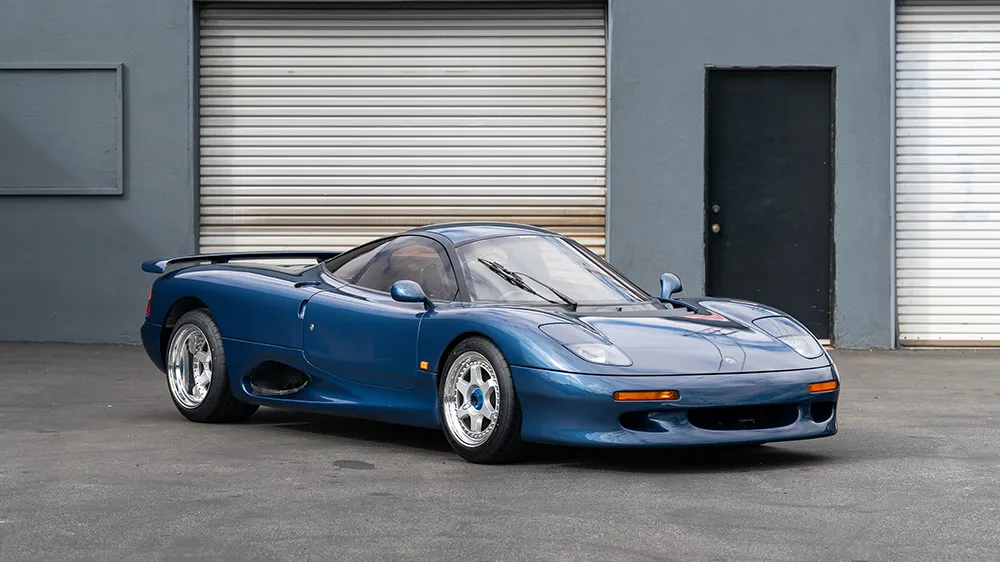
The XJR-15’s styling, penned by Peter Stevens who would later design the McLaren F1, featured smooth, purposeful lines that looked more like sculpted air than traditional automotive design.
The car’s low nose, prominent rear wing, and smooth underbody demonstrated serious attention to aerodynamics, generating significant downforce at speed. Pop-up headlights and a distinctive intake scoop on the roof added to its exotic appearance.
The XJR-15’s £500,000 price tag in 1990 approximately $1 million today positioned it as one of the world’s most expensive cars. This pricing proved optimistic, especially as more practical supercars offered similar performance with greater usability.
The car’s value proposition suffered from Jaguar’s decision not to officially back the project, leaving TWR to handle sales and support.
Today, the XJR-15 represents a remarkable might-have-been, a look at what British engineering could achieve when racing technology transferred directly to the road.
3. Yamaha OX99-11 (1992)
The Yamaha OX99-11 stands as one of the most bizarre and forgotten supercar projects of the 1990s, a tandem-seat Formula One car for the road that never progressed beyond prototype stage.
Created by Yamaha’s European design studio in collaboration with Ypsilon Technology and IAD, the OX99-11 featured a 3.5-liter naturally aspirated V12 derived directly from Yamaha’s Formula One engine program.
This screaming powerplant produced 450 horsepower at a stratospheric 10,000 rpm, with a redline beyond 12,000 rpm specifications that made contemporary supercars seem pedestrian.
The OX99-11’s most distinctive feature was its cockpit layout, with the driver positioned centrally and slightly forward of a passenger seat directly behind, creating a tandem configuration reminiscent of fighter jets.
This arrangement allowed for an extremely narrow body that minimized aerodynamic drag while providing genuine two-seat capability.
The carbon fiber monocoque chassis and extensive use of composite materials kept weight to approximately 2,200 pounds, ensuring the relatively modest power output translated into extraordinary performance.
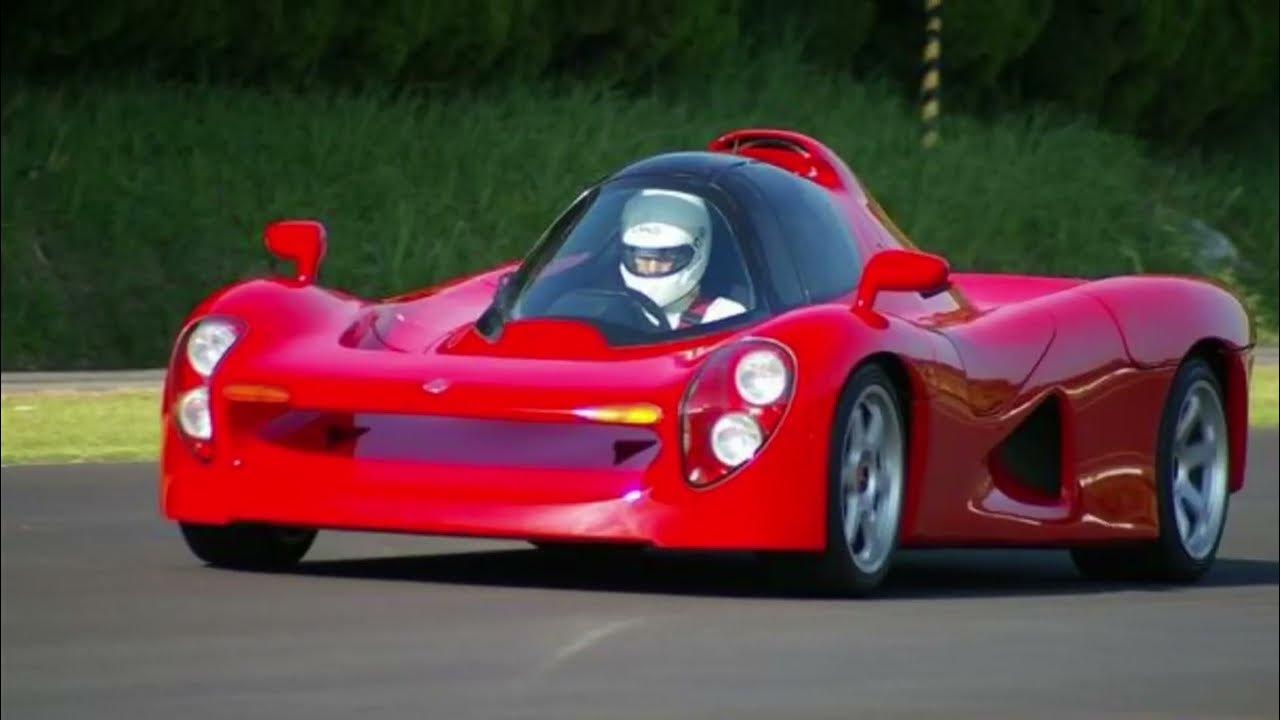
Visually, the OX99-11 appeared alien, with a low-slung profile, covered rear wheels, and an aggressive aerodynamic package that included a prominent rear wing and numerous vents and scoops.
The design prioritized function over conventional beauty, resulting in something that looked purpose-built for speed. Access to the cabin required lifting a canopy-style roof section, further emphasizing the car’s aircraft-inspired design philosophy.
The OX99-11’s failure represented more than just a canceled supercar project it marked the end of Yamaha’s Formula One involvement and the company’s ambitions to compete in the ultimate automotive arena.
The car’s tandem seating proved too radical for potential buyers who expected conventional supercar layouts, and the astronomical price made it accessible only to the ultra-wealthy.
Today, the OX99-11 exists as a fascinating what-if scenario, representing the peak of naturally aspirated V12 technology applied without compromise to a road car platform.
4. Bugatti EB110 (1991-1995)
Before the Veyron redefined automotive excess, Bugatti’s 1990s revival produced the EB110, a quad-turbocharged V12 supercar that deserved far better than the bankruptcy that killed it.
Created by Italian industrialist Romano Artioli, who purchased the dormant Bugatti brand, the EB110 featured a 3.5-liter V12 with four turbochargers producing 553 horsepower in standard form, or 603 horsepower in the hardcore SS variant.
This made it the most powerful production car of its era, capable of 213 mph and 0-60 mph in just 3.2 seconds. The EB110’s technical specifications read like a greatest-hits compilation of early-1990s technology.
All-wheel drive provided traction that conventional rear-drive supercars couldn’t match. A six-speed manual transmission channeled power through a sophisticated mechanical system.
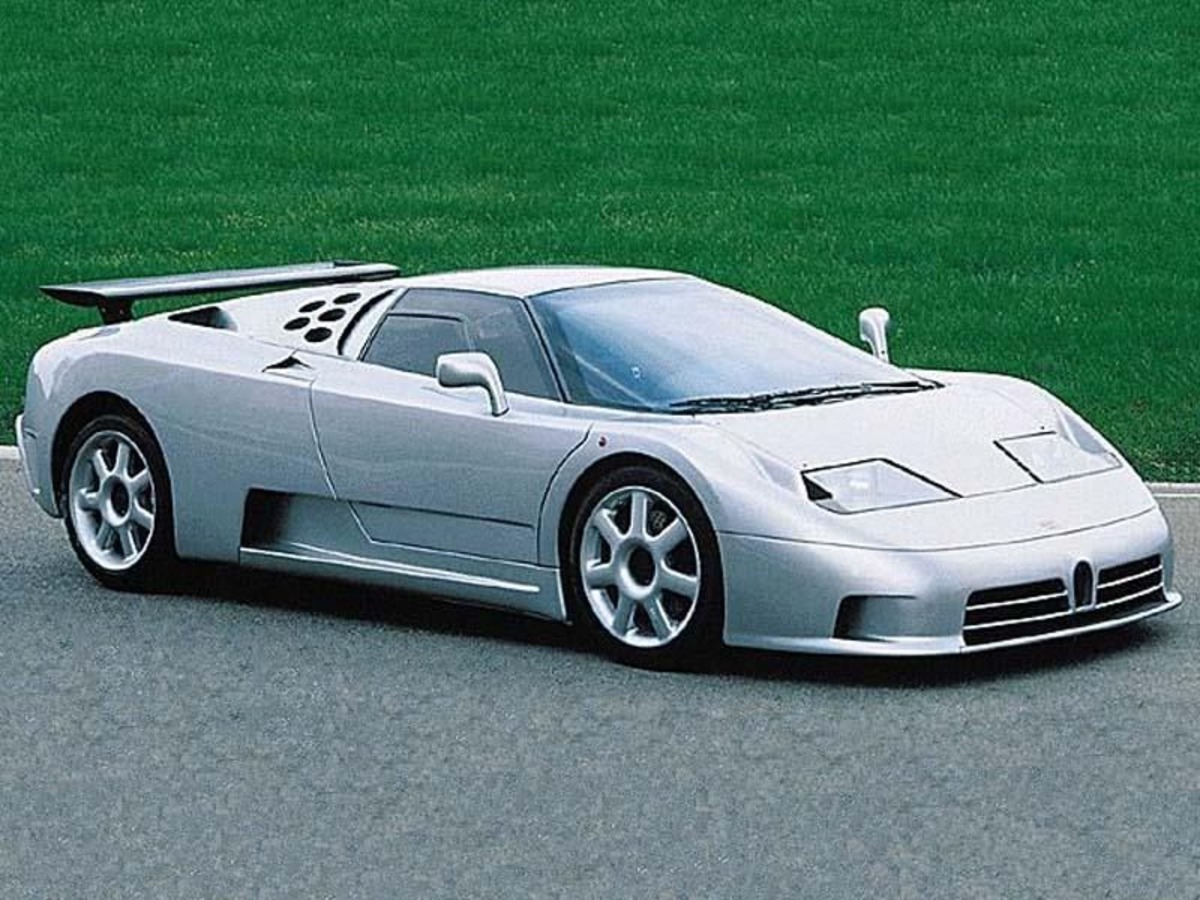
The carbon fiber chassis and aluminum body panels kept weight remarkably low despite the car’s technical complexity. Scissor doors added dramatic flair, while the styling penned by Marcello Gandini before substantial revisions by Giampaolo Benedini featured smooth, rounded surfaces that looked modern yet distinctly Italian.
Racing driver Michael Schumacher famously owned an EB110 SS, and the car briefly held production car speed records before faster machines emerged.
Today, the EB110 has gained appreciation as values have climbed significantly, with collectors recognizing it as a legitimate technical tour de force that was simply ahead of its time.
The car’s failure stemmed not from engineering deficiencies but from timing launching into a global recession while competing against established brands with stronger dealer networks and customer loyalty.
Also Read: 8 Crossovers That Fit a Bike Without Removing Wheels
5. Jaguar XJ220 (1992-1994)
The Jaguar XJ220 represents one of automotive history’s greatest bait-and-switch controversies, a supercar that morphed dramatically from concept to production and left deposit-holders furious.
Originally revealed in 1988 as a quad-turbo V12-powered, all-wheel-drive hypercar, the production version that arrived four years later featured a twin-turbocharged 3.5-liter V6 and rear-wheel drive instead.
Despite producing 542 horsepower and claiming the title of world’s fastest production car at 213 mph, buyers felt cheated by the specification changes and the global recession that made the £470,000 price tag impossible to justify.
The production XJ220 actually featured a racing-derived V6 from Jaguar’s Metro 6R4 rally car program, substantially modified by Tom Walkinshaw Racing to accept twin turbochargers.
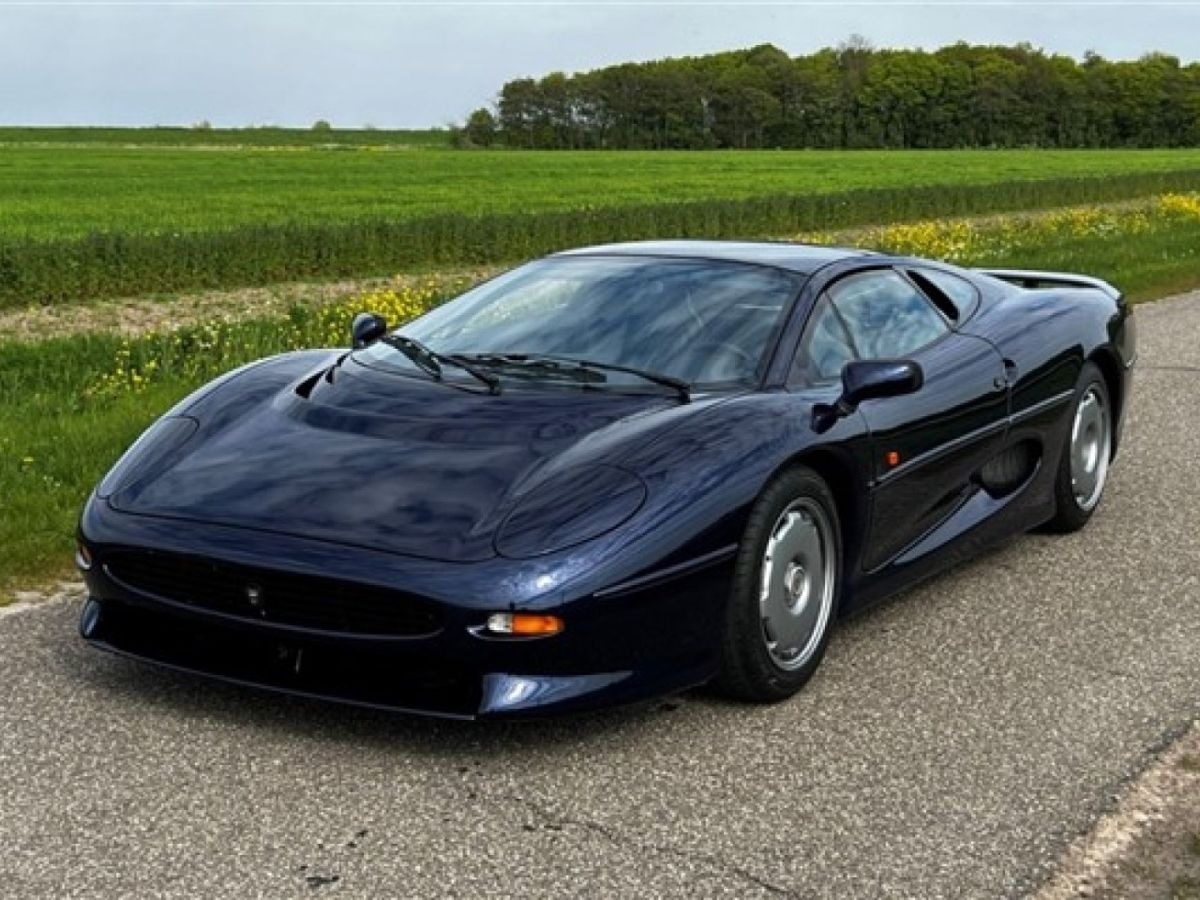
This engine proved lighter, more compact, and ultimately more powerful than the proposed V12 would have been, but buyers wanted twelve cylinders regardless of performance advantages.
The controversy led to lawsuits as numerous deposit-holders refused delivery, leaving Jaguar Sport struggling to sell completed cars in a collapsed exotic car market.
The XJ220’s reputation has undergone significant rehabilitation in recent decades. Collectors now recognize that the V6 made the car faster, lighter, and more reliable than a V12 version would have been. Values have climbed substantially from their post-recession lows, with pristine examples commanding seven-figure prices.
The XJ220 serves as a cautionary tale about managing customer expectations and the dangers of economic cycles, but also as proof that sometimes engineers make the right decisions even when customers initially disagree.
6. Lamborghini Diablo GT (1999-2000)
The Lamborghini Diablo GT represented the ultimate evolution of Lamborghini’s flagship before the Murciélago replaced it, a stripped-down, race-inspired variant that pushed the aging Diablo platform to its absolute limits.
While the standard Diablo certainly wasn’t forgotten, this hardcore GT version has faded from memory despite being the most extreme V12 Lamborghini of its generation.
The 6.0-liter V12 produced 575 horsepower, making it the most powerful naturally aspirated Diablo variant, while weight reduction of over 300 pounds compared to the standard car created a genuinely focused driving experience.
The GT featured aggressive aerodynamic modifications including a fixed rear wing, revised front splitter, and numerous air intakes and vents that gave it a purposeful, race-ready appearance.
Carbon fiber replaced aluminum and steel throughout, with the hood, front bumper, and various interior components all switching to composite construction.
The suspension was lowered and stiffened, wheel sizes increased, and massive brakes installed to cope with the enhanced performance.
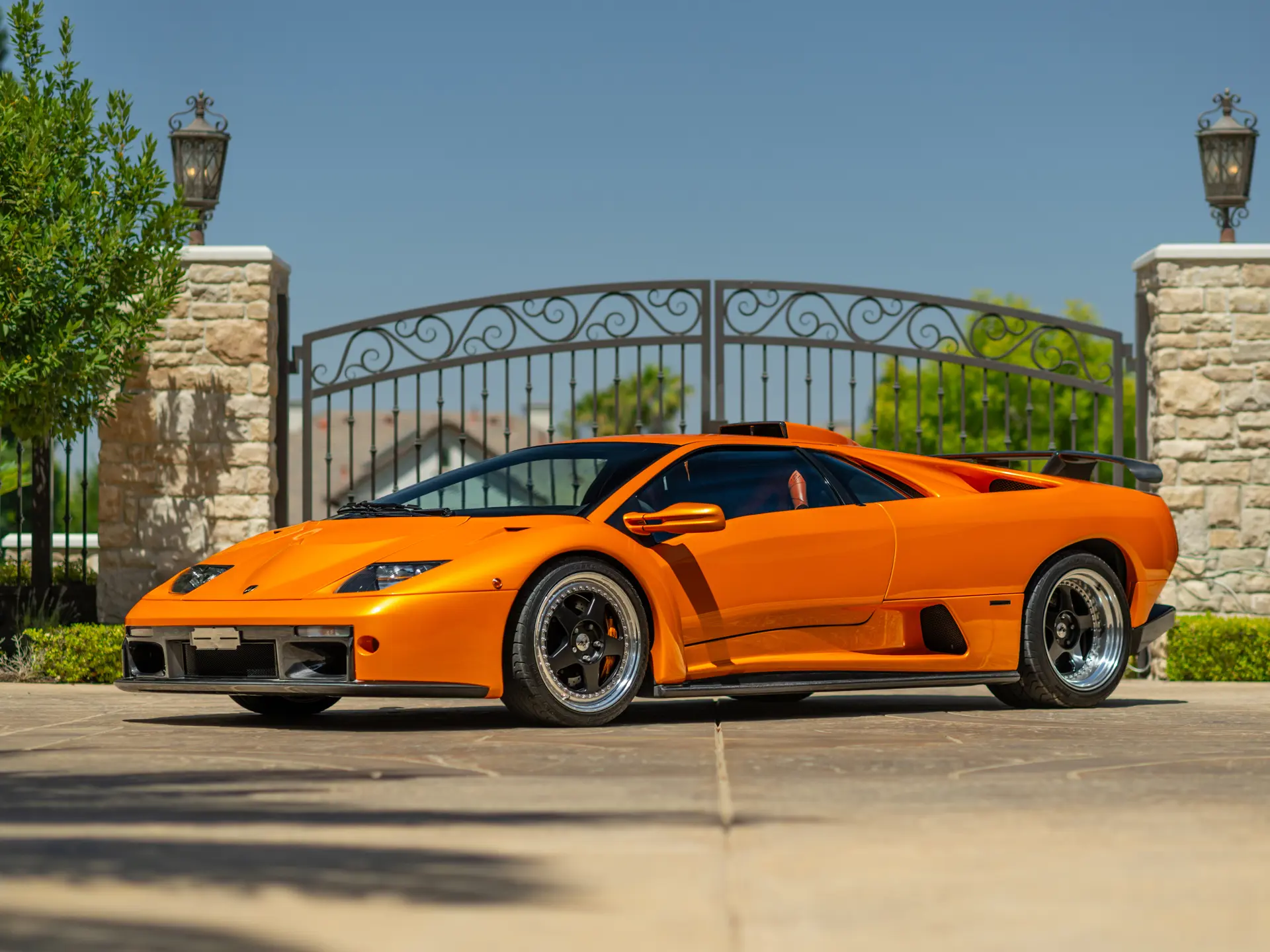
Inside, the GT stripped away luxury in favor of weight savings and functionality. Carbon fiber racing seats, minimal sound deadening, and the removal of various comfort features created a cabin that prioritized the driving experience above all else.
Air conditioning remained optional, as did the stereo system acknowledgment that GT buyers prioritized lap times over creature comforts. The effect created something remarkably raw and engaging, especially compared to the relatively civilized standard Diablo.
Today, the Diablo GT occupies an interesting position in Lamborghini’s history. It’s overshadowed by more famous variants like the original Diablo and the flamboyant SE30, while the subsequent Murciélago family stole attention with modern styling and improved usability.
Yet the GT represents something pure a naturally aspirated V12 stripped to its essence, unencumbered by electronic aids or comfort considerations.
Values have appreciated significantly as collectors recognize it as the last truly analog Lamborghini V12, built before electronic dampers, stability control, and paddle shifters became standard equipment.
7. Isdera Commendatore 112i (1993-1999)
The Isdera Commendatore 112i stands as one of the most obscure V12 supercars ever built, a German-engineered exotic that borrowed Mercedes-Benz’s mighty M120 6.0-liter V12 and wrapped it in styling that looked simultaneously retro and futuristic.
Created by engineer Eberhard Schulz, who had previously worked at Porsche and created the earlier Isdera Imperator 108i, the Commendatore featured gullwing doors, a rear-view periscope instead of a traditional mirror, and proportions that suggested speed even at standstill.
The Mercedes V12 produced between 402 and 408 horsepower depending on specification, channeled through a six-speed manual transmission to the rear wheels.
While not the most powerful engine of its era, the M120’s refinement and reliability made it superior to many purpose-built supercar powerplants that required constant maintenance and attention.
The Commendatore could cruise comfortably at highway speeds, then accelerate to over 210 mph when opportunity permitted genuine supercar performance wrapped in unexpected civility.
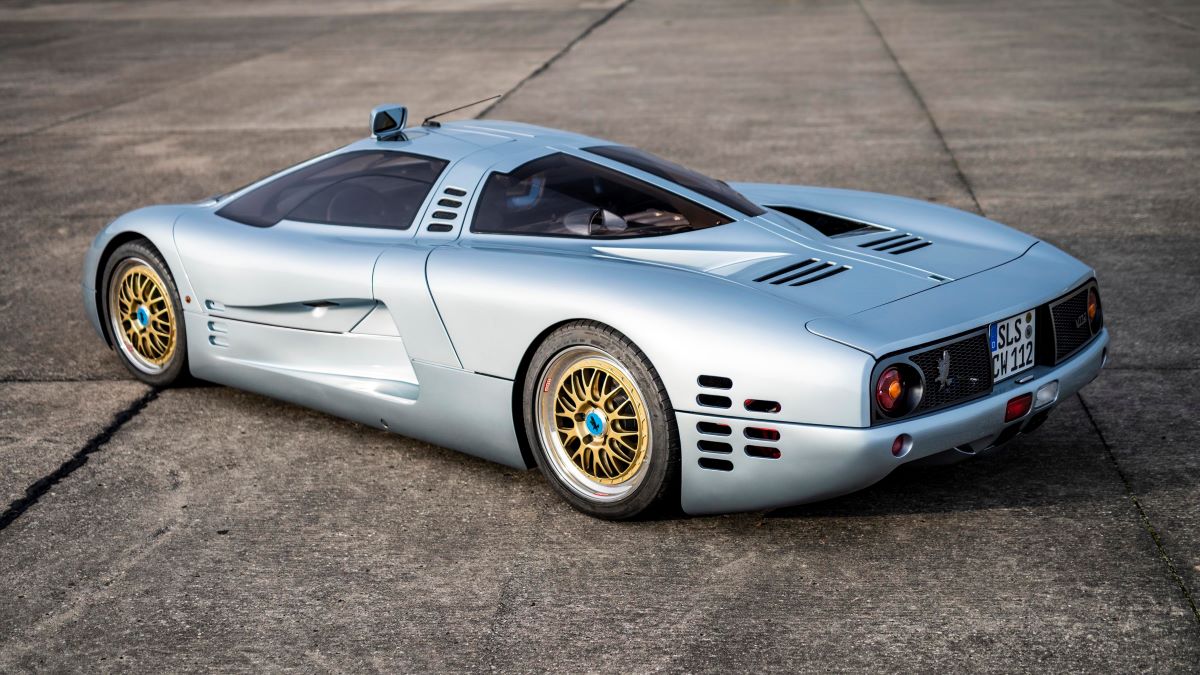
Schulz designed the Commendatore himself, creating a shape that mixed 1970s wedge proportions with 1990s organic surfacing. The result was distinctive if not conventionally beautiful, with a low nose, prominent side intakes, and a fastback roofline that culminated in an integrated rear wing.
The interior featured high-quality German materials and switchgear borrowed from Mercedes, creating a cabin that felt more premium than typical low-volume exotic cars with their parts-bin interiors and questionable build quality.
The Commendatore 112i’s obscurity stems partly from Isdera’s minimal marketing budget and lack of official presence at major automotive events.
Most enthusiasts have never seen one in person, and even photographs remain relatively rare. Yet those familiar with the car appreciate its combination of reliable Mercedes mechanicals, distinctive styling, and genuinely impressive performance.
The Commendatore represents the ultimate expression of the small-scale supercar manufacturer passionate, individual, and ultimately unsustainable in an increasingly corporatized automotive world.
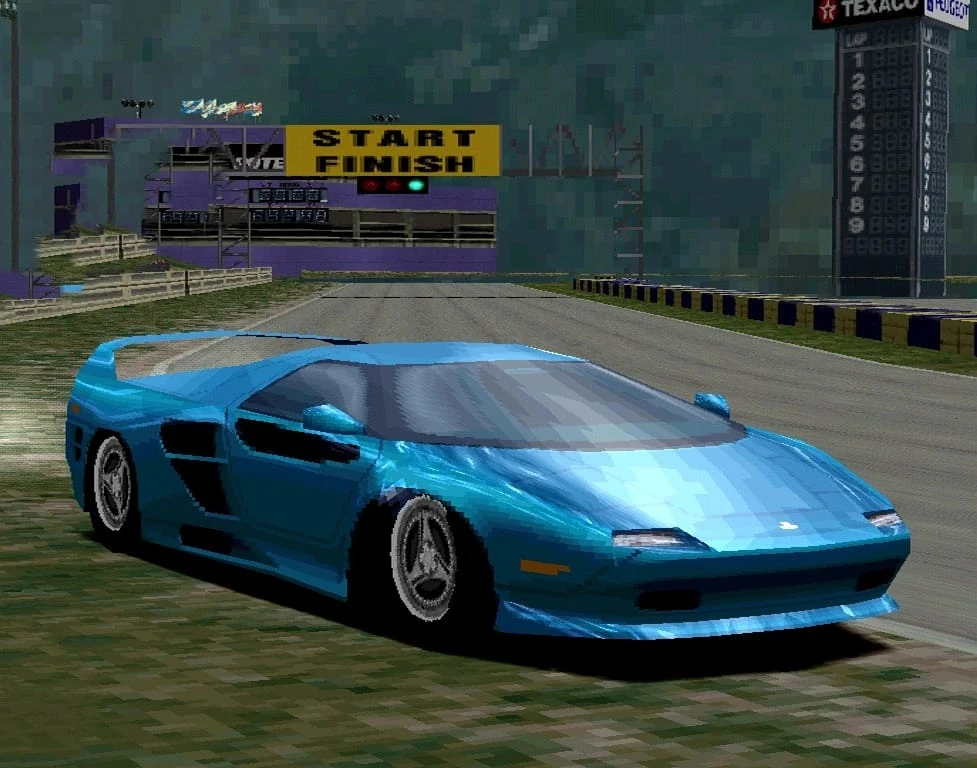
8. Vector M12 (1995-1999)
The Vector M12 represented a dramatic departure from Vector’s earlier W8 and Avanti models, replacing aggressive American muscle with European sophistication after Lamborghini’s parent company MegaTech acquired Vector.
The M12 borrowed the Diablo’s 5.7-liter V12 producing 492 horsepower, combined with a heavily modified Diablo chassis and completely unique bodywork designed by Vector’s Gerald Wiegert.
The result was a supercar that looked nothing like its Lamborghini donor yet shared much of its mechanical DNA. Vector’s design language gave the M12 a distinctly American character despite its Italian mechanics.
Sharp angles, aggressive intakes, and a fighter-jet-inspired canopy created something that looked equally at home on a race track or in a science fiction film.
The interior continued this theme with aircraft-style switchgear, digital instrumentation, and controls that prioritized drama over conventional ergonomics. Wiegert intended the M12 to appeal to American buyers who found Italian exotics too subtle and wanted something more aggressive.
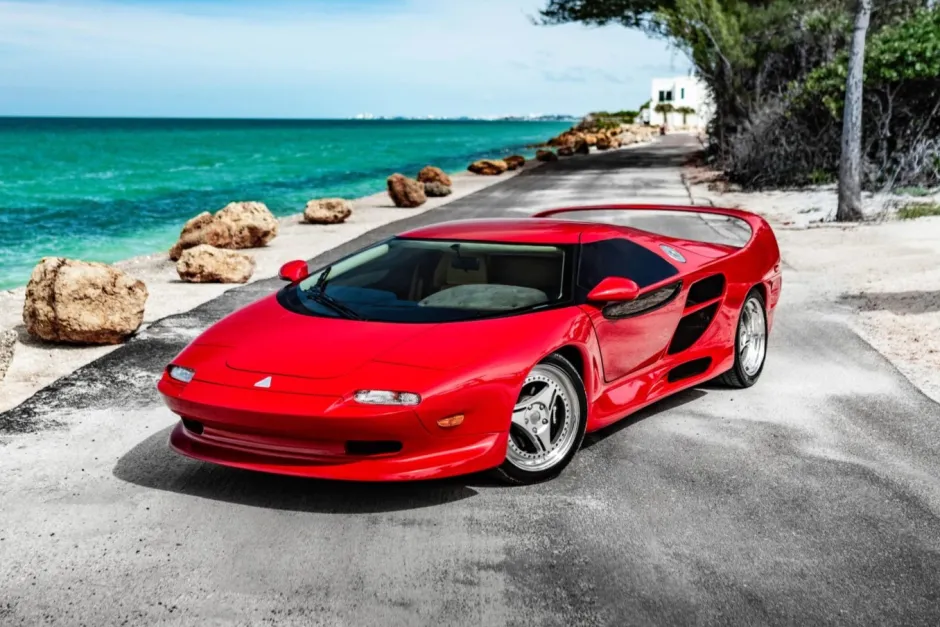
The M12’s performance proved impressive, with 0-60 mph achieved in roughly 4.0 seconds and a top speed around 189 mph competitive with contemporary supercars if not class-leading.
The Lamborghini V12 provided proven reliability and that distinctive Italian V12 soundtrack, advantages over Vector’s earlier twin-turbo Chevrolet V8s which generated more power but lacked refinement.
Handling benefited from the Diablo’s sophisticated suspension geometry, though the M12’s slightly different weight distribution altered the driving dynamics.
Today, the M12 occupies a strange position in automotive history too Italian to be considered a true American supercar, too American to be accepted as properly Italian, and too compromised to satisfy either market completely. Yet its rarity and unusual backstory have created a cult following among collectors who appreciate oddball exotics.
The M12 proved that even with proven Lamborghini mechanicals and genuine supercar performance, success requires more than just good engineering it demands proper execution, financial stability, and clear brand identity.
9. Ascari Ecosse (1998-1999)
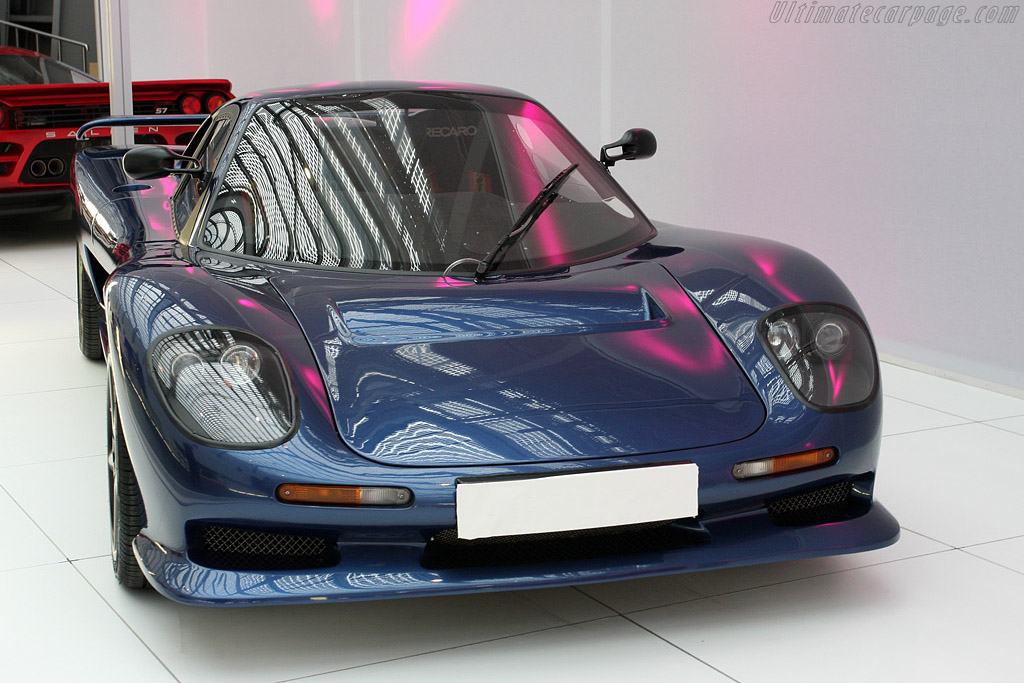
The Ascari Ecosse emerged from British entrepreneur Klaas Zwart’s ambition to create a modern interpretation of classic GT racing cars, resulting in a BMW-powered supercar that briefly competed against established players before evolving into the better-known KZ1.
The Ecosse featured BMW’s M73 5.4-liter V12 producing approximately 420 horsepower in naturally aspirated form, though later versions received supercharging to boost output beyond 500 horsepower.
This German powerplant provided smoothness and reliability often lacking in more exotic Italian alternatives. Styling-wise, the Ecosse mixed retro cues from 1960s sports racers with modern supercar proportions, creating something that looked simultaneously classic and contemporary.
The low nose, curved windscreen, and flowing rear haunches suggested Le Mans prototypes from decades earlier, while the aggressive stance and modern detailing kept it firmly in the 1990s. The design proved polarizing some saw elegant restraint while others wanted more dramatic styling.
The interior emphasized driver focus over passenger comfort, with supportive seats, a purposeful instrument cluster, and controls oriented toward the driver.
British craftsmanship showed in the leather and trim quality, though some switchgear revealed the car’s hand-built nature and limited development budget.
The impression suggested a serious driving tool rather than a luxury cruiser, appealing to enthusiasts who prioritized engagement over refinement.
The Ecosse’s significance lies not in sales success but in establishing Ascari as a legitimate supercar manufacturer. The lessons learned during Ecosse development informed the KZ1, which received better reception and slightly higher production numbers.
The Ecosse proved that BMW’s V12 could work in a mid-engine supercar layout, delivering the refinement and reliability advantages of German engineering in an exotic package.
Today, it stands as a footnote in British supercar history, a brief moment when one ambitious entrepreneur attempted to recreate past racing glory in modern form.
10. Jimenez Novia (1995-1998)
The Jimenez Novia represents perhaps the most obscure entry on this list, a Spanish supercar so rare that many enthusiasts have never heard of it despite its impressive specifications and genuine V12 power.
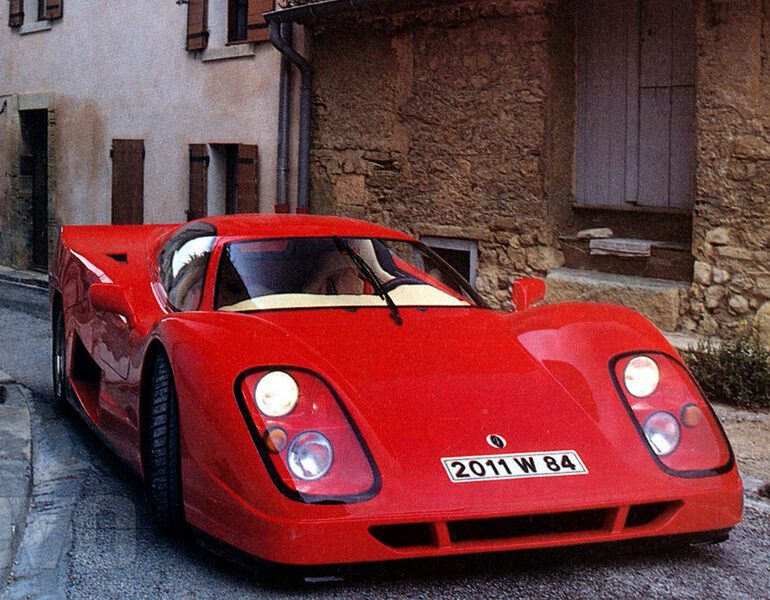
Created by brothers Fernando and Santiago Jimenez, the Novia featured a Lamborghini-sourced 5.7-liter V12 producing 456 horsepower, wrapped in dramatic bodywork that mixed Italian exotic flair with Spanish passion.
The car’s name, meaning “girlfriend” in Spanish, suggested the emotional connection the brothers hoped owners would develop with their creation.
The Novia’s styling employed aggressive angles and dramatic surfacing that made it instantly recognizable, if not conventionally beautiful.
Scissor doors provided theatrical access to the cabin, while the low, wide stance and prominent side intakes announced serious performance intent.
The design clearly drew inspiration from contemporary Lamborghinis and other Italian exotics, yet possessed its own identity through unique details and proportions. Whether parked or moving, the Novia commanded attention through sheer presence.
Inside, the Novia mixed high-quality leather with less expensive components, reflecting the reality of small-scale manufacturing where every euro counted.
The driving position placed occupants low and reclined, with visibility compromised by thick pillars and a low roofline typical sacrifices in pursuit of aerodynamic efficiency and dramatic styling.
The dashboard featured a mix of custom elements and donor-car switchgear, creating an interior that felt special if not quite matching the refinement of seven-figure competitors.
The Novia’s obscurity stems from multiple factors: minimal production, zero presence in major automotive media, and lack of racing success to generate publicity.
Today, confirming the car’s very existence requires deep dives into automotive archives and Spanish automotive publications from the mid-1990s.
Yet the Novia deserves recognition as a genuine attempt to build a supercar outside established manufacturing centers, proof that passion for twelve-cylinder exotics extended well beyond Italy, Germany, and Britain.
11. Monteverdi Hai 650 F1 (1992-1994)
The Monteverdi Hai 650 F1 attempted to resurrect Swiss luxury car manufacturer Monteverdi’s reputation through mid-engine supercar technology, resulting in one of the most unusual V12 machines of the 1990s.
Created by Peter Monteverdi, who had previously built grand touring cars during the 1960s and 1970s, the Hai 650 F1 featured a Chrysler-sourced V12 producing 650 horsepower impressive output for the era, especially from an American manufacturer’s engine in a European exotic car.
The choice of Chrysler power reflected pragmatic thinking rather than prestige considerations. Monteverdi recognized that developing a proprietary V12 was financially impossible for a tiny manufacturer, while sourcing Italian engines meant competing directly with established brands using their own powerplants.
The Chrysler V12 offered unique positioning and adequate performance at lower cost, though it lacked the cachet buyers expected in six-figure supercars.
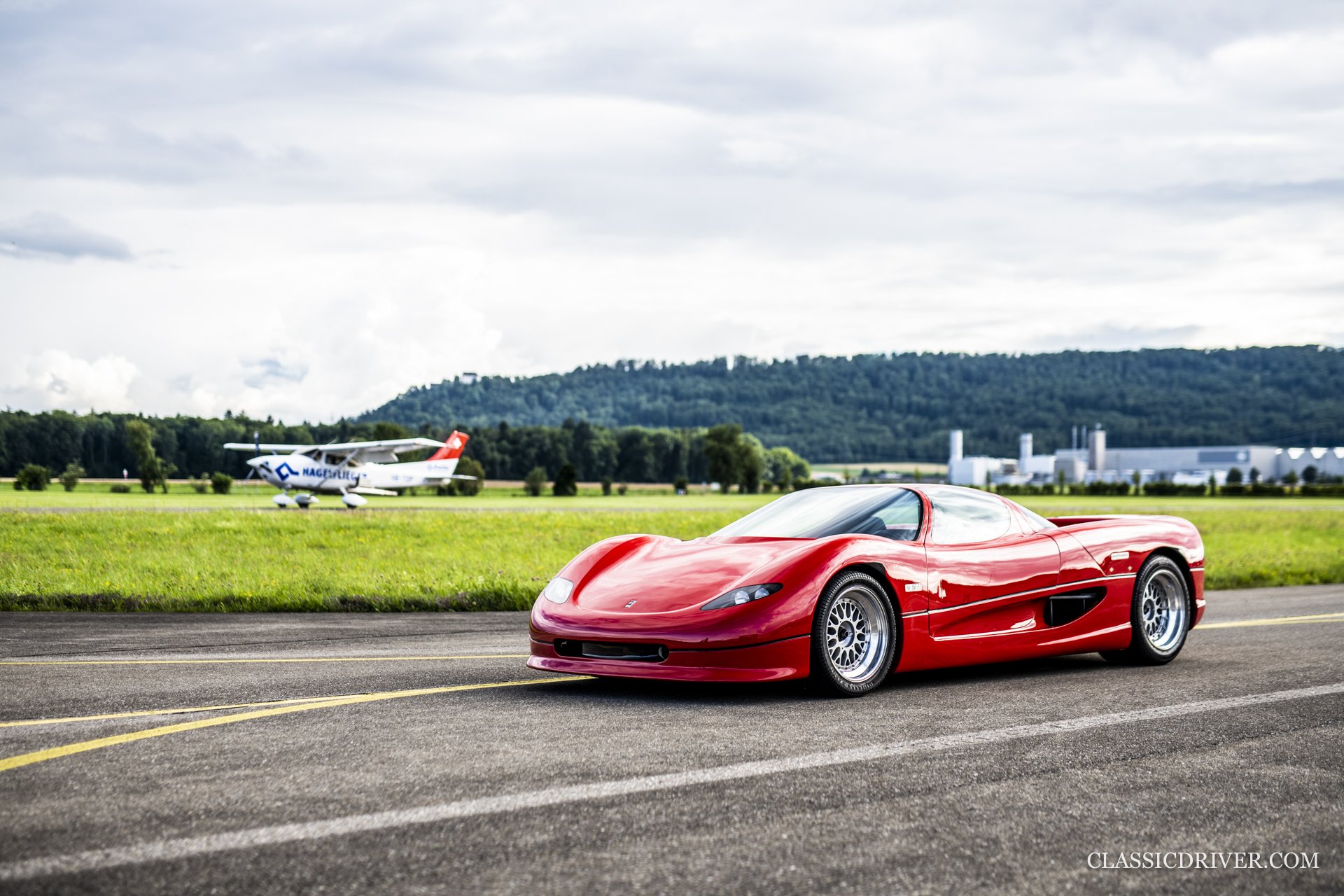
Styling came from noted designer Claude Poiraud, who created aggressive, angular bodywork that looked distinctly early-1990s. The Hai featured scissor doors, prominent intakes, and aerodynamic elements including a large rear wing and extensive underbody management.
The impression suggested purpose-built racing machinery adapted for road use, though the execution couldn’t match the polish of established manufacturers with larger development budgets and more sophisticated production facilities.
The Hai 650 F1 represents a fascinating might-have-been in automotive history. Had Monteverdi possessed greater resources and better timing, the car might have established a niche as the thinking person’s supercar unconventional but effective, sacrificing badge prestige for unique character.
Instead, it became another footnote in the long list of failed supercar dreams, proof that even proven manufacturers with legitimate heritage cannot overcome market forces and financial limitations.
Today, surviving examples if any remain road-worthy stand as artifacts from an era when small manufacturers still believed they could compete against corporate giants through passion and engineering alone.
12. Aixam Mega Track (1992-1996)
The Aixam Mega Track stands as one of the most outrageous and impractical supercars ever conceived, a French attempt to combine supercar performance with SUV ride height in a package powered by Mercedes-Benz’s M120 V12.
This 6.0-liter twelve-cylinder produced approximately 390 horsepower, channeled through all four wheels via a sophisticated drivetrain that allowed the Track to raise its ride height from sports-car-low to SUV-high at the touch of a button.
The result was something that looked like a doorstop on stilts absolutely absurd, completely impractical, and utterly unforgettable. The Track’s styling defied conventional automotive proportions, with a wedge-shaped profile interrupted by massive wheel arches and bodywork that accommodated the adjustable suspension’s full travel.
Gullwing doors provided access to a surprisingly spacious interior that mixed sports car elements with SUV practicality, creating a cabin unlike anything else on the road.
The dashboard featured switches controlling the suspension height, with settings ranging from 110mm ground clearance for maximum aerodynamic efficiency to 330mm for genuine off-road capability though few owners likely tested the latter.
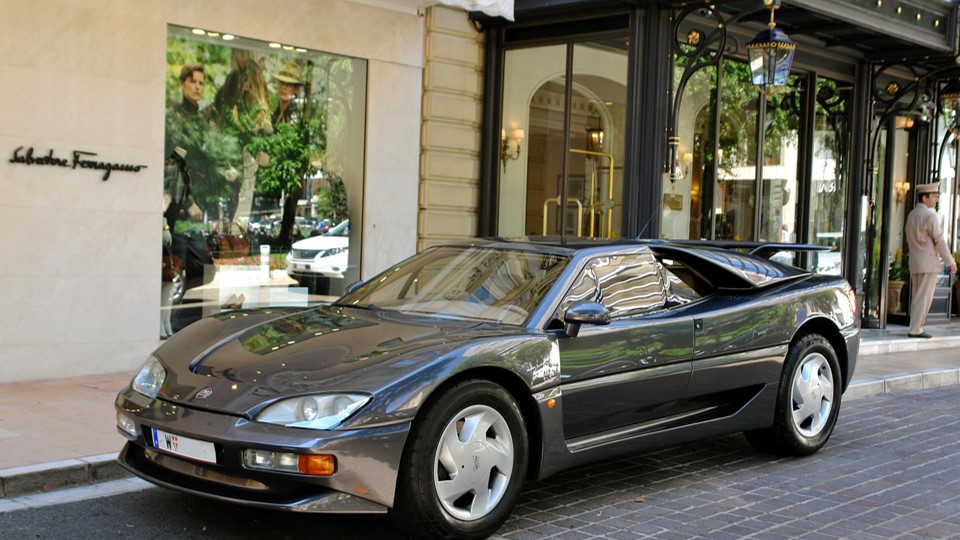
Performance specifications reflected the Track’s split personality. In low mode, it could reach approximately 155 mph and accelerate respectably despite its substantial weight.
Raised to SUV height, the aerodynamics became catastrophic and high-speed stability questionable, but the Track could theoretically go through the rough terrain that would destroy conventional supercars.
This versatility came at the cost of optimizing neither configuration, creating a machine that performed adequately in multiple roles but excelled in none.
Today, the Mega Track exists as one of automotive history’s most peculiar footnotes, a reminder that the 1990s supercar boom encouraged all manner of unusual experiments.
Its combination of Mercedes reliability, genuine off-road capability, and supercar pretensions created something utterly unique for better or worse. Surviving examples have achieved cult status among collectors who appreciate oddball automobiles, with values reflecting extreme rarity rather than objective desirability.
The Track stands as proof that sometimes the most memorable cars are those that fail most spectacularly at defining their purpose, yet succeed completely at being unforgettable.
