
Automotive history is full of unusual design choices that should have flopped but somehow turned into major successes. Every so often, a vehicle that looks completely odd on paper ends up striking a chord with everyday drivers in ways experts never see coming.
Cars that journalists dismiss as strange or impractical end up selling extremely well, reminding everyone that predicting what people will buy is never an exact science.
A strange design doesn’t automatically mean a car is unattractive or poorly engineered. Sometimes the “weirdness” comes from unexpected proportions, a mechanical setup no one saw coming, or a design strategy that ignores long-held industry rules.
At launch, these vehicles often face harsh criticism and gloomy sales predictions. Then reality proves everyone wrong. Buyers show up in huge numbers, turning these quirky machines into surprising profit-makers and forcing critics to rethink their assumptions.
To understand why these unconventional cars thrive, you have to look past traditional benchmarks and consider what real buyers value. People may prioritize practicality over looks, or they may appreciate a bold shape that makes a vehicle instantly recognizable.
A great price can make shoppers overlook eccentric styling, and flexible interior space can redeem an otherwise odd exterior. This list will focus on ten production vehicles that looked unusual yet achieved impressive sales, demonstrating that the automotive market rarely follows a predictable rulebook. Each example shows how taking risks can pay off in ways that safe, conventional designs never manage to achieve.
1. Pontiac Aztek 2001-2005
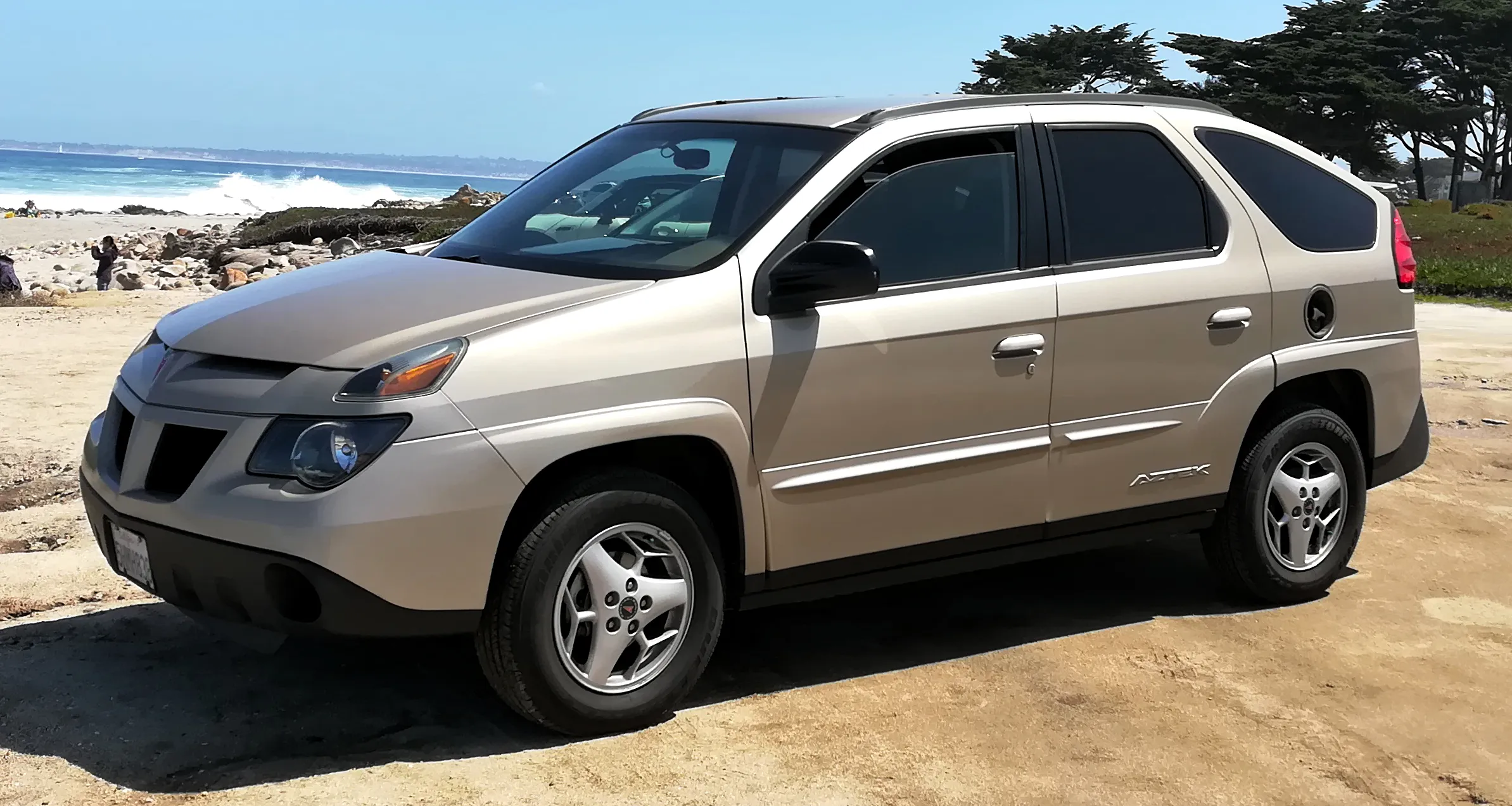
Controversial styling created immediate mockery when the Pontiac Aztek 2001 debuted, with automotive journalists declaring it the ugliest vehicle ever produced. Cladding covered every surface in gray plastic that aged terribly, while proportions seemed wrong from every angle.
Front fascia resembled something designed by committee members who never communicated, creating a disjointed appearance that violated every principle of harmonious design. The rear end looked equally confused, with taillights that seemed borrowed from completely different vehicles. Critics predicted immediate failure, assuming no rational buyer would purchase something this visually offensive.
Sales proved critics spectacularly wrong. During its production run from 2001 to 2005, Pontiac sold over 119,000 Azteks despite universal design condemnation. Buyers recognized practical brilliance hiding beneath polarizing styling.
The crossover layout provided car-like handling with SUV versatility years before crossovers dominated the market. The rear cargo area included an integrated cooler, camping tent attachment points, and a removable center console that became a portable audio system.
These innovative features appealed to active buyers who valued function over form, creating a loyal customer base that defended their Azteks against aesthetic criticism.
The Breaking Bad television series inadvertently rehabilitated the Aztecs’ reputation years after production ended. Walter White’s beige Aztek became an iconic symbol of suburban mediocrity that perfectly suited his chemistry teacher character.
This cultural moment transformed the Aztek from punchline into nostalgic curiosity, with surviving examples gaining collector interest. Prices for clean Azteks climbed as fans sought connections to the beloved series, proving that cultural relevance can rescue even the most maligned vehicles from obscurity.
Practical innovations pioneered by the Aztek influenced future crossover designs, even if manufacturers refused to acknowledge the connection. Removable storage solutions, camping-friendly features, and flexible cargo systems all appeared in later vehicles that borrowed Aztek’s ideas while avoiding its styling mistakes.
GM’s willingness to risk unconventional design created sales success that might have been even larger with a less controversial appearance. You can criticize how it looked, but you cannot deny that the Aztek succeeded commercially while introducing features that became industry standards, proving that sometimes being first matters more than being pretty.
2. Nissan Cube 2009-2014
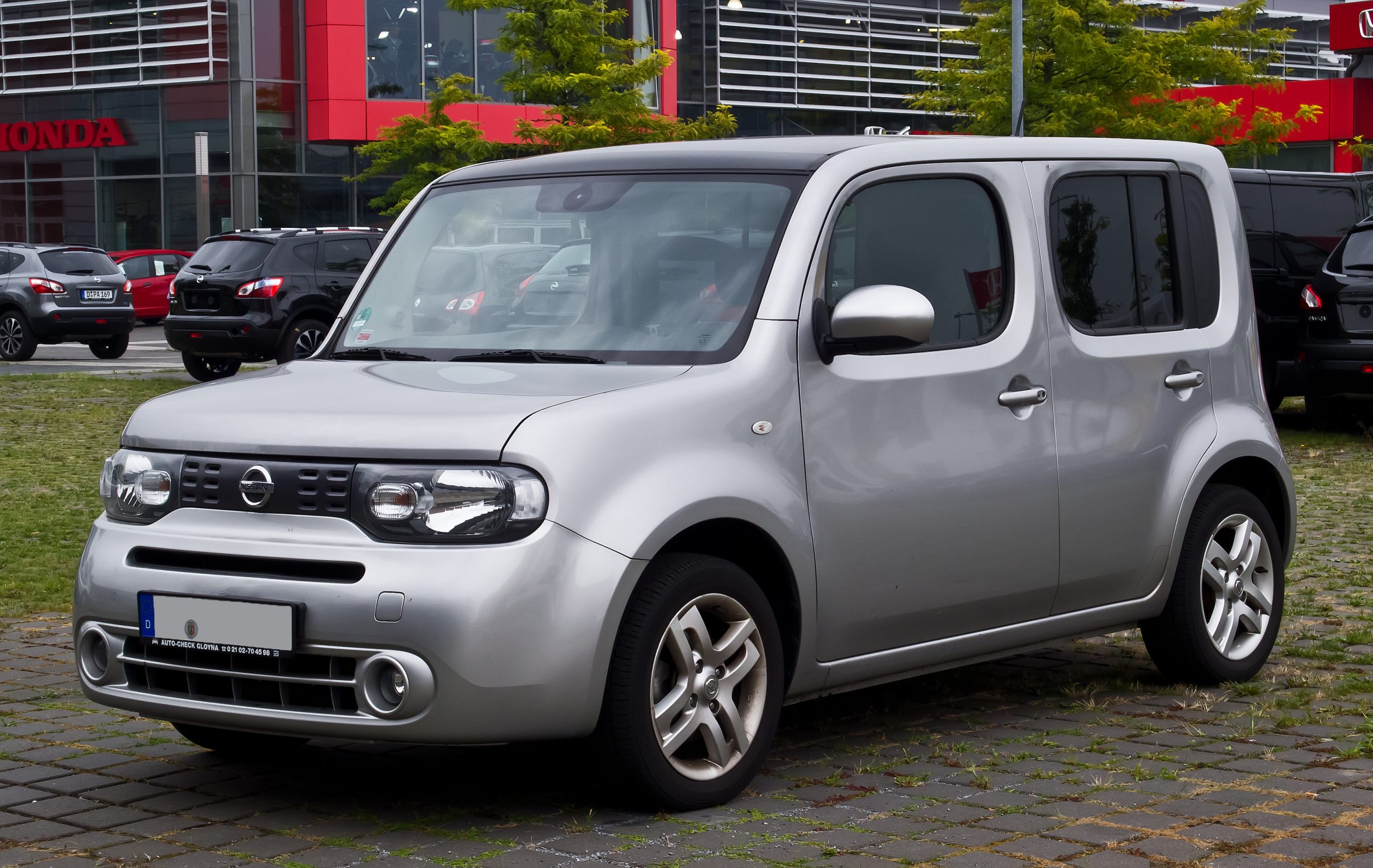
When Nissan brought the 2009 Cube to the U.S., its unusual, box-forward styling immediately puzzled many shoppers. American drivers, who were used to symmetry and traditional proportions, didn’t quite know what to make of the off-balance rear window that wrapped around only the driver’s side.
The uneven glass design looked almost like an assembly mistake, and the rounded nose paired with soft, balloon-like edges gave the Cube a playful, cartoonish appearance. Reviewers openly wondered whether something this unconventional could win over buyers in the U.S. market.
Surprisingly, it did. Nearly 15,000 units sold in the first year, outpacing Nissan’s cautious expectations. Young city drivers in particular embraced the Cube because it didn’t blend in with anything else on the road.
Owners often said the best part was how effortlessly they could spot their car in a crowded lot, its oddball shape was unmistakable. That distinctiveness helped build a loyal following that valued personality over conformity.
Inside, the Cube continued its fun, function-first mindset. Circular accents appeared everywhere, from vents to handles. Some models even offered a small patch of shag carpeting to create a retro atmosphere, and the rippled ceiling design gave the cabin a wavy, water-inspired look. These touches made the Cube feel charming and intentionally different rather than simply practical.
Although U.S. sales ended after 2014, the Cube still accomplished its mission: it proved Nissan was willing to experiment. More than 42,000 units sold in America, and the model went on to enjoy a small but enthusiastic fan base that still celebrates its quirky identity today.
Also Read: 5 Cars for San Antonio Commutes vs 5 That Cost More to Maintain
3. Chrysler PT Cruiser 2001-2010
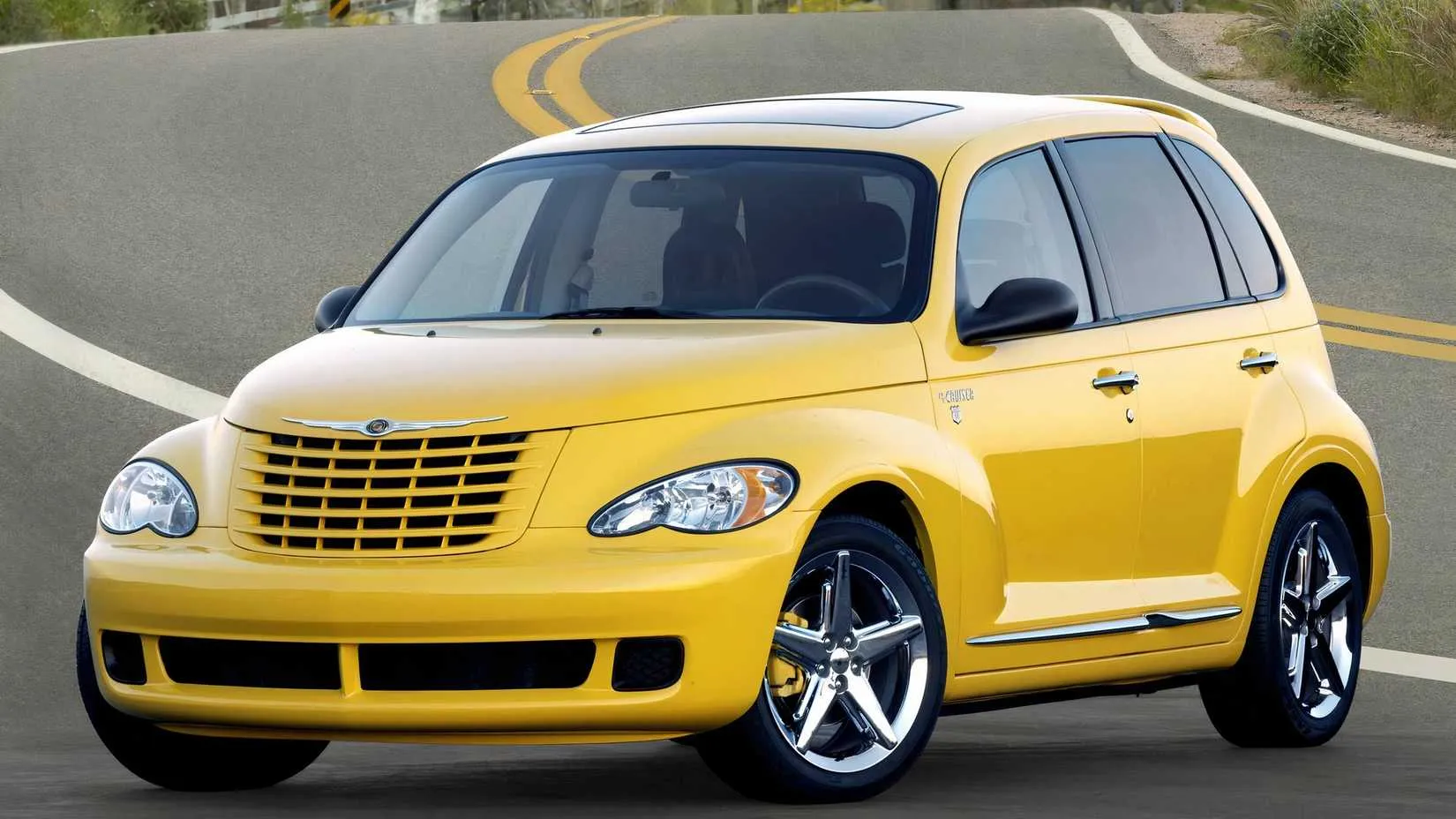
Retro styling reached extreme heights with the Chrysler PT Cruiser 2001, channeling 1930s hot rod aesthetics into a modern compact platform. Pronounced fenders, rounded body panels, and a vertical grille created an appearance that polarized opinion immediately.
Some buyers loved the nostalgic design that recalled earlier automotive eras, while critics dismissed it as kitsch that would age terribly. Chrysler gambled that enough buyers existed in the “love it” category to justify production, launching the PT Cruiser despite internal concerns about long-term market acceptance.
Sales demolished even optimistic projections. First-year American sales exceeded 145,000 units, with buyers paying above sticker prices to obtain vehicles that dealers couldn’t keep in stock. Global sales reached 1.35 million units across a ten-year production run, making the PT Cruiser a massive commercial success that shocked industry observers who predicted quick failure.
Baby boomers nostalgic for their youth drove demand initially, but younger buyers discovered the PT Cruiser offered practical versatility hidden beneath retro styling. Tall roofline provided surprising cargo capacity, while rear seats folded completely flat to create van-like utility in a compact footprint.
Customization culture embraced the PT Cruiser enthusiastically, with aftermarket companies producing countless modification parts. Flame graphics, custom wheels, and lowered suspensions transformed PT Cruisers into legitimate hot rods that honored the styling’s inspiration.
Wood panel kits allowed owners to create faux woody wagon appearances, while convertible versions provided open-air cruising experiences. This modification enthusiasm created a community around the vehicle that sustained sales long after the initial novelty faded. You could attend PT Cruiser shows featuring hundreds of customized examples, proving the design resonated deeply with certain buyer segments.
Production ended in 2010 after sales declined from peak levels, but the PT Cruiser achieved everything Chrysler hoped. It established that retro designs could generate massive sales when executed properly, influencing competitors to launch their own heritage-inspired models.
Volkswagen New Beetle, Mini Cooper, and Fiat 500 all benefited from markets that the PT Cruiser proved existed for unconventional styling referencing automotive history. Love it or hate it, you cannot deny that the PT Cruiser succeeded commercially beyond anyone’s wildest expectations, selling over a million units of something that looked absolutely strange to traditional automotive sensibilities.
4. Scion xB 2004-2015
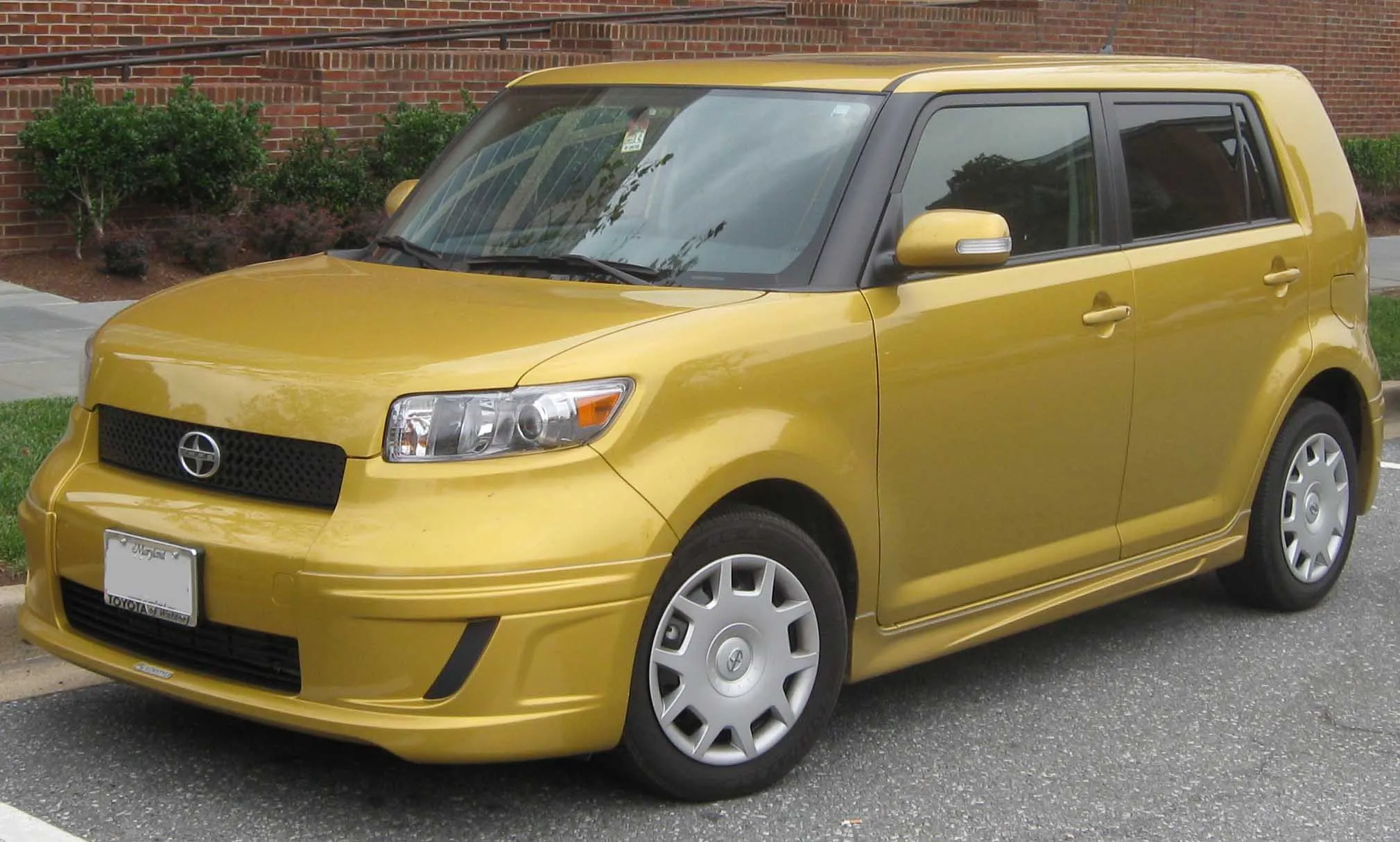
When the first Scion xB arrived in the U.S. in 2004, it introduced a look that felt completely foreign to most American drivers. Inspired by Japan’s Kei-car philosophy, it offered a tall cabin and tiny footprint that many people initially viewed as awkward rather than inventive.
Its upright shape, flat sides, and sharp edges clashed with the flowing curves that defined early-2000s car design, making the xB appear more like a practical appliance than a stylish vehicle. Yet that was exactly the point. Toyota created the Scion brand to appeal to young shoppers, betting that a bold, unusual design would attract buyers who didn’t want the same cars their parents drove.
That bet paid off. Between 2004 and 2006, more than 170,000 first-generation xBs found homes in the U.S., far exceeding expectations. Urban drivers in particular embraced the quirky shape, and the aftermarket industry quickly supported it with endless customization options.
Owners could modify their xBs with body kits, wheels, and interior upgrades, turning them into highly personalized rides. The model also caught on in DJ and tuner communities, where its roomy cabin became a perfect base for oversized audio setups, giving the xB unexpected cultural influence.
Despite its small exterior, the xB delivered impressive interior room. Four adults could travel comfortably, and the folding rear seats created a wide, flat cargo space. Students and young professionals appreciated its affordability, fuel efficiency, and everyday usefulness.
A larger, more conventional redesign arrived in 2008, but it lost the charm that made the original memorable. Sales faded, and Toyota ended production in 2015. Even so, the first-generation model remains popular on the used market, with steady demand keeping prices strong. Across both generations, the xB surpassed 400,000 sales proving that a strange shape can become a hit when it reaches the right audience.
5. Fiat Multipla 1998-2010
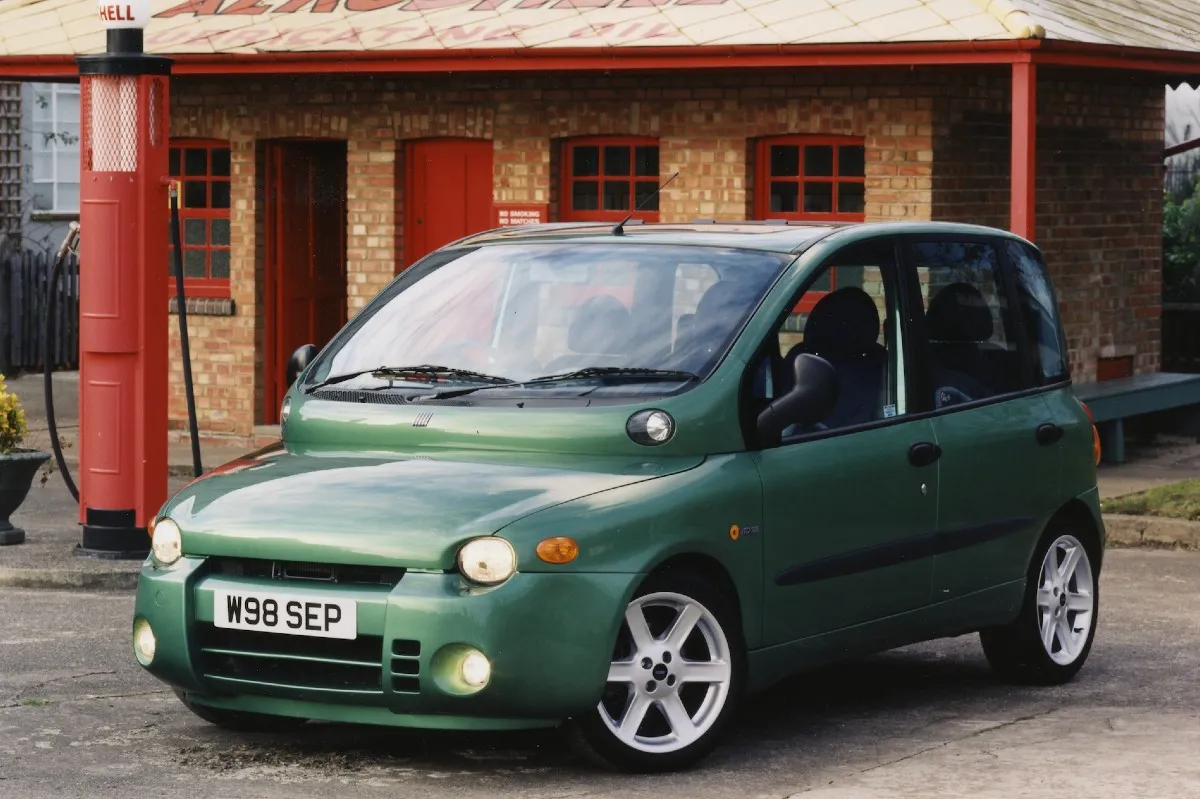
Italian design audacity reached bizarre heights with the Fiat Multipla 1998, creating a six-passenger compact that looked like nothing else on the roads.
Two-row seating arrangement placed three passengers in each row, requiring an unusual width that made the proportions seem distorted. Bubble-like greenhouse sat atop a narrow body, creating an appearance that suggested two different vehicles had been merged unsuccessfully.
The front fascia featured headlights positioned on the dashboard rather than integrated into the front bumper, violating every conventional design principle about where lights should go. Automotive journalists called it ugly, strange, and uncommercial, predicting immediate market rejection.
European buyers disagreed emphatically with the critical consensus. During a twelve-year production run, Fiat sold over 500,000 Multiplas across Europe, making it a commercial success despite universal design condemnation. Families discovered that six-passenger seating in a compact footprint provided unprecedented practicality.
You could transport the entire family plus grandparents in a vehicle smaller than conventional minivans, simplifying parking while maintaining people-carrying capability. Italian buyers particularly appreciated the Multipla’s space efficiency, as narrow European streets made large vehicles impractical for daily use.
Interior design emphasized flexibility and storage that compensated for exterior awkwardness. The center console between the front seats provided massive storage capacity, while the removable middle seat allowed reconfiguring the interior for different needs. Rear seats slid forward and back, creating cargo space or additional legroom as situations required.
High roofline provided headroom that taller passengers appreciated, eliminating the cramped feelings that afflicted conventional compact cars. These practical advantages created loyal customers who defended their Multiplas against aesthetic criticism from people who never experienced the vehicles’ functionality.
Fiat redesigned the Multipla in 2004, softening the controversial styling in response to criticism. New front-end positioned headlights conventionally, while smoothed body panels created a more mainstream appearance. Sales actually declined after the redesign, proving that distinctiveness mattered more than conventional beauty for target customers.
Original Multipla’s strange appearance created recognition that the redesigned version lost, reducing its appeal to buyers who valued standing out. Production ended in 2010 after European emission standards made the aging platform uneconomical to update.
You can criticize how it looked, but you cannot argue with half a million sales that proved a strange design sometimes succeeds spectacularly when paired with genuine utility that target audiences value.
6. AMC Pacer 1975-1980
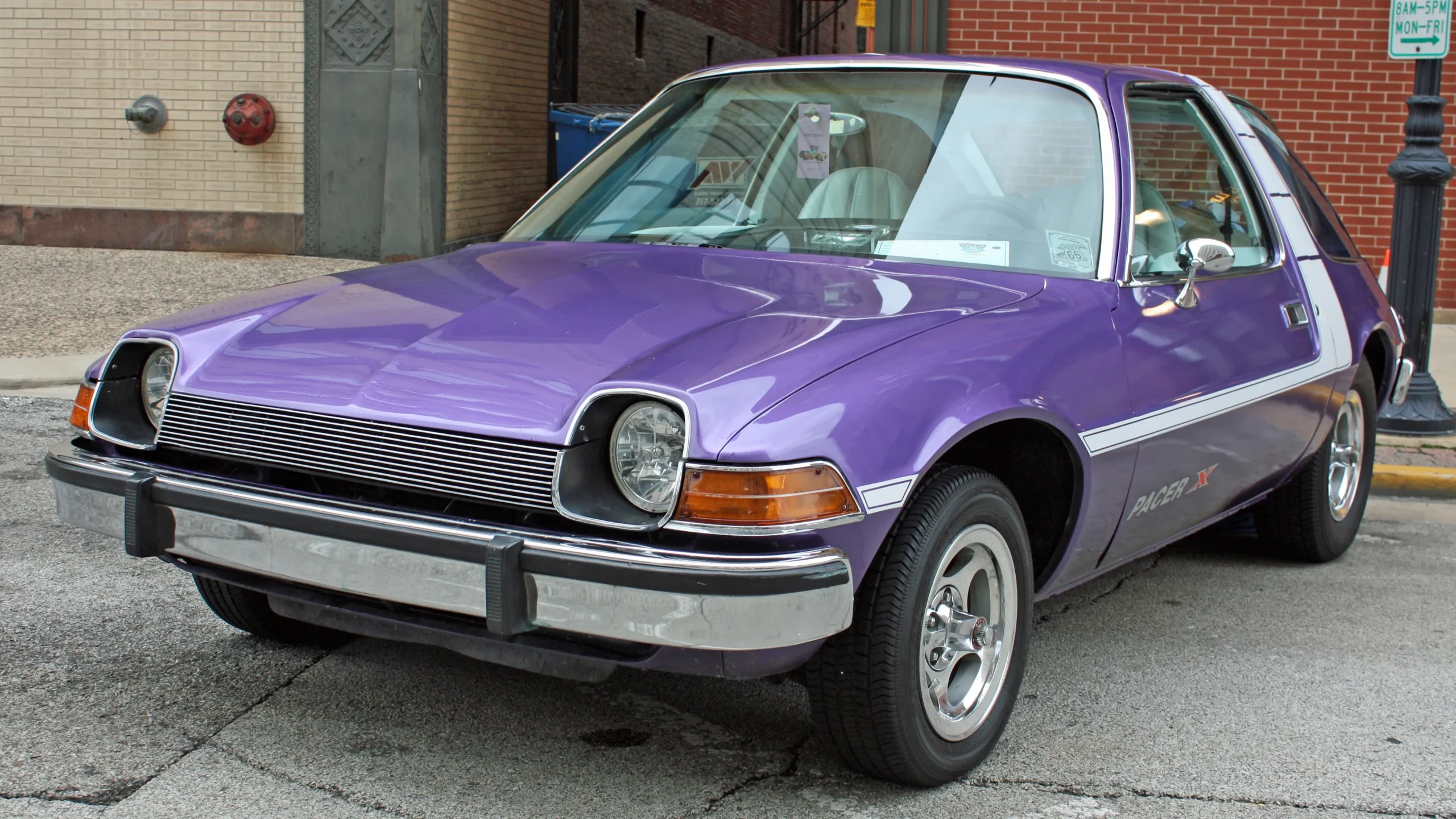
AMC’s launch of the Pacer in 1975 introduced one of the most unusual cars ever to reach American showrooms. Its wide-body concept broke nearly every convention in vehicle design, giving it proportions that looked unnatural from almost any angle. The car was actually wider than it was long, wrapped in an enormous amount of glass that made occupants feel like they were sitting in full view of the world.
The uneven door lengths, with the passenger door noticeably longer than the driver’s, only added to the impression that something wasn’t quite right. Critics in the automotive media mocked it heavily, dismissing it as a rolling fishbowl and predicting it would flop instantly.
Instead, the Pacer’s debut year proved those predictions wrong. AMC built 145,000 units in 1975 alone, more than the company could comfortably produce, and dealers struggled to keep up with demand.
Shoppers loved the huge cabin space packed into a compact footprint, and the visibility was unmatched, making city driving and parking remarkably easy. Women buyers, a group AMC intentionally focused on, responded especially well to the comfortable layout and high seating position.
Beyond sales, the Pacer made a lasting mark on American pop culture. Its appearance in Wayne’s World cemented its quirky legacy and introduced the car to new generations. Because so many were discarded over the years, surviving models later became collectible oddities with rising value.
Production eventually stopped in 1980 as fuel economy expectations shifted and the novelty faded, but the Pacer’s roughly 280,000-unit run proved far more successful than most people expected, giving AMC a brief but meaningful boost.
7. Suzuki X-90 1996-1998
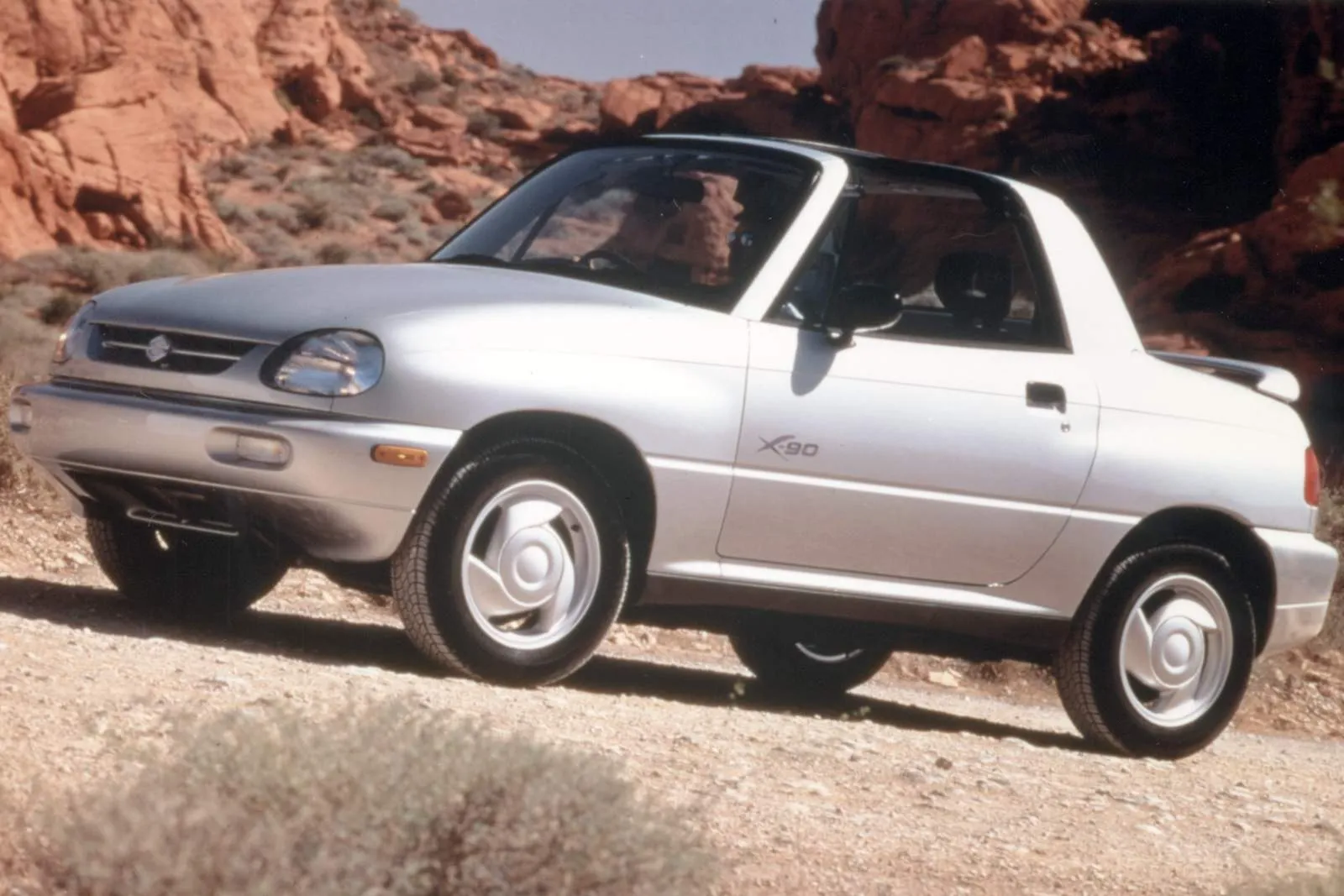
Two-seat convertible SUV concept seemed destined for failure when Suzuki launched the X-90 in 1996, combining categories that nobody requested. Tiny dimensions barely accommodated two adults, while removable T-tops provided a questionable open-air experience. Bulbous styling created a cartoon-like appearance that suggested a toy vehicle rather than serious transportation.
Rear-mounted spare tire mimicked full-size SUVs but looked comically oversized on the diminutive X-90. Automotive journalists questioned who would buy such an impractical vehicle that combined sports car limitations with SUV compromises while delivering neither category’s benefits.
Sales remained modest but sufficient to justify a two-year production run. Suzuki moved approximately 7,000 X-90s in the United States, small numbers that nonetheless exceeded expectations for such an unusual vehicle. Buyers sought distinctive transportation that attracted attention and started conversations, accepting practicality compromises in exchange for uniqueness.
Young singles appreciated the X-90’s playful character that matched their lifestyles better than sensible sedans. Beach communities particularly embraced X-90s, where open-top driving and compact dimensions proved advantageous. This niche success demonstrated that even tiny markets can sustain unusual vehicles when manufacturers target specific audiences rather than attempting broad appeal.
A cult following developed immediately, with owners forming clubs and online communities celebrating their unusual vehicles. Modification culture embraced the X-90 despite limited aftermarket support, with creative owners developing custom solutions for personalization.
Lifted versions appeared at off-road events, while lowered examples attended import car shows. This enthusiastic embrace created a community that sustained interest long after production ended. You could attend X-90 meetups featuring dozens of examples, proving that passionate small groups can create success stories around vehicles that mainstream markets reject.
Rarity transformed X-90s into collectible curiosities decades after production ceased. Clean examples command prices that exceed original MSRPs as collectors seek these quirky remnants of 1990s automotive experimentation.
Suzuki’s willingness to produce such an unconventional vehicle demonstrated a commitment to offering alternatives to mainstream choices, even when commercial success remained uncertain. While the X-90 never achieved blockbuster sales, it succeeded in its actual mission: attracting attention to the Suzuki brand and providing conversation-starting uniqueness that conventional vehicles couldn’t match.
You might struggle to justify X-90 ownership rationally, but rationality rarely drives purchases of vehicles this deliberately impractical and cheerfully strange.
8. Honda Element 2003-2011
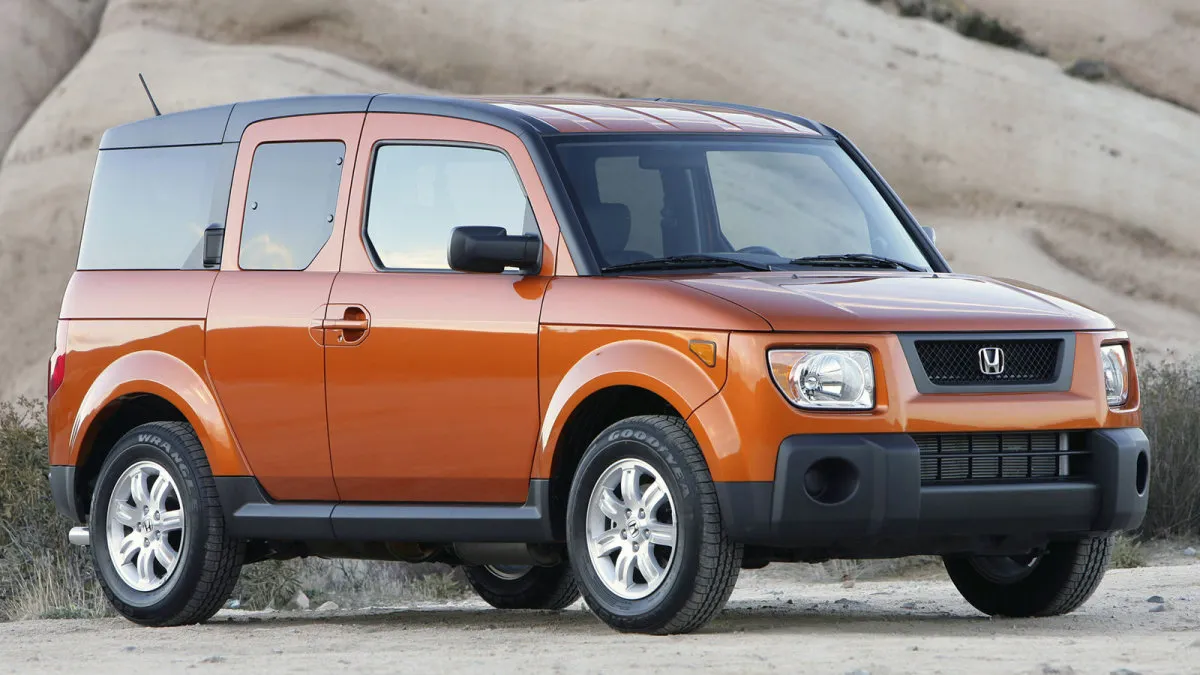
Honda introduced the Element in 2003, aiming it at young, active drivers who wanted something different from the usual car designs. Its squared-off shape, tough-looking plastic panels, and flat surfaces gave it an industrial vibe that broke every styling rule of the time.
The unusual center-opening doors without a traditional B-pillar created a huge entry space, and the rubber-lined floor meant owners could rinse out mud and dirt with almost no effort. The rear seats could also be removed entirely, creating a massive cargo area. Critics were split from the start; some saw it as a clever, ultra-practical idea, while others thought it was too odd to succeed commercially.
Despite the mixed reactions, the Element quickly found the right audience. Over nine years, Honda sold more than 325,000 units, impressive for such an unconventional model. Outdoor enthusiasts loved its wipe-clean interior and boxy shape that easily held camping gear, boards, or bikes.
Pet owners appreciated how simple it was to clean after hauling around messy dogs. College students gravitated toward the quirky design because it felt unique and adaptable to different lifestyles. The Element proved that a well-aimed niche vehicle can build a loyal following.
Owners also discovered the Element was an excellent platform for customization. Many added roof tents, storage systems, and gear racks, turning their vehicles into practical adventure rigs. Some even added small fridges or solar panels for extended trips.
Although Honda stopped production in 2011 as the platform aged, used Elements still hold strong value because demand remains high. Many owners keep them for years, showing how a bold, unusual design can inspire long-term devotion when it genuinely works for the people who drive it.
9. Chevrolet HHR 2006-2011
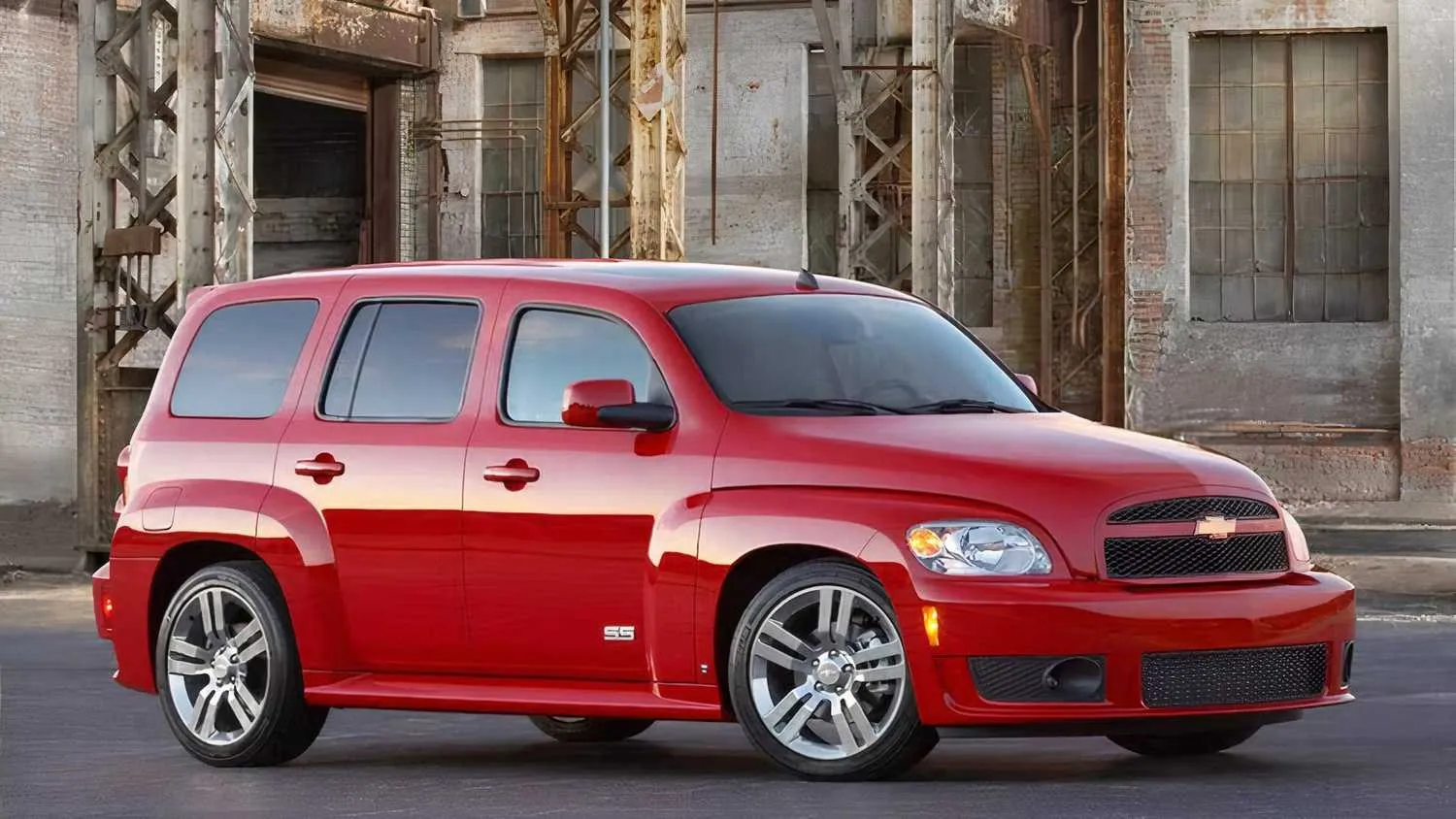
Retro wagon styling arrived when Chevrolet launched the HHR in 2006, channeling 1940s Suburban aesthetics into a modern compact platform. Rounded body panels, prominent fenders, and a vertical grille created an appearance that polarized opinion immediately. Some buyers loved the nostalgic design reminiscent of classic panel trucks, while critics dismissed it as a derivative attempt to copy the PT Cruiser’s retro formula.
Chevrolet gambled that a sufficient market existed for a second retro-styled compact, despite the PT Cruiser already dominating that niche. Skeptics predicted the HHR would fail as a late copycat offering nothing new beyond a different badge.
Sales demolished pessimistic predictions impressively. Chevrolet sold over 190,000 HHRs during the launch year, proving strong demand existed for retro designs beyond the PT Cruiser alone. Total production exceeded 733,000 units during the six-year run, making the HHR a massive commercial success.
Buyers appreciated the HHR’s superior cargo capacity compared to the PT Cruiser, with wagon proportions providing genuinely useful utility. Build quality exceeded Chrysler’s offerings, attracting buyers seeking retro styling without reliability concerns that plagued PT Cruisers. This combination of style and substance created a customer base that sustained strong sales throughout the production run.
The panel van version particularly resonated with small businesses seeking distinctive commercial vehicles. Two-seat configuration maximized cargo space while retro styling created mobile advertising that conventional vans couldn’t match.
Florists, caterers, and boutique retailers embraced HHR panels for combining practical capacity with brand-building and distinctive appearance. This commercial adoption created visibility that marketed consumer versions organically, with business HHRs introducing the nameplate to potential private buyers who might never have visited Chevrolet showrooms otherwise.
SS performance version added an unexpected dimension to the HHR lineup, proving retro styling could accommodate enthusiast performance. A turbocharged engine producing 260 horsepower transformed the HHR into a legitimate hot rod that honored its styling’s inspiration.
This performance variant attracted buyers who would never have considered standard HHRs, expanding the vehicle’s appeal beyond practical family transportation into enthusiast territory. Production ended after 2011 when Chevrolet discontinued multiple nameplates during bankruptcy restructuring, but the HHR achieved everything GM hoped.
It proved retro styling remained commercially viable, generated substantial profits during a difficult period, and created another success story around deliberately unconventional design that shouldn’t have worked but absolutely did.
Also Read: 5 Cars for Detroit Drivers Who Work Long Hours vs 5 That Fail Early
10. Nissan Juke 2011-2017
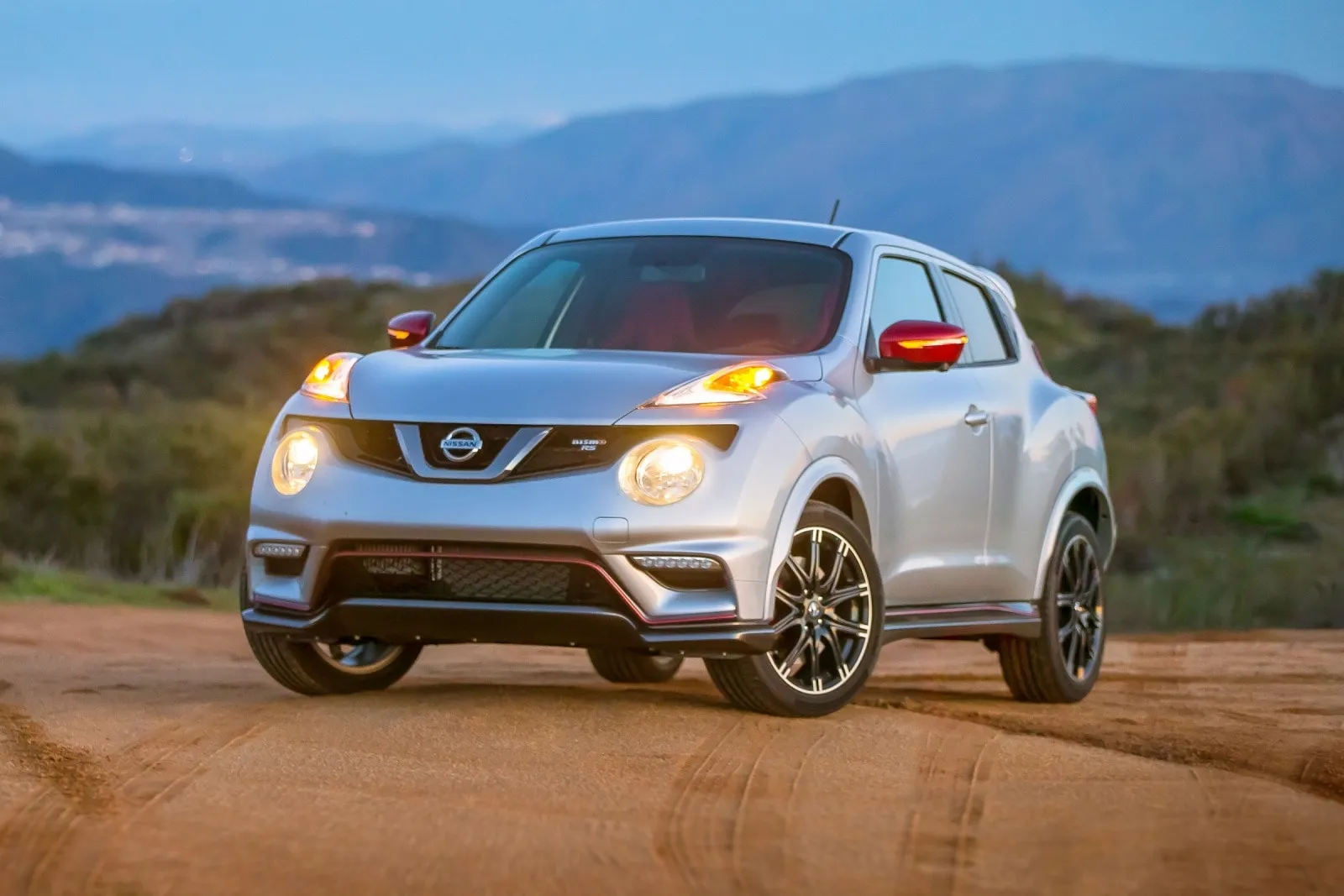
A radically different kind of crossover hit the market when Nissan released the Juke in 2011. Its design looked more like a mechanical creature than a small SUV. Slim daytime running lamps sat high on the hood, while the main headlights were tucked lower in the bumper, giving the front end an unusual layered look.
Wide, rounded fenders and a rising window line exaggerated its shape, and the tiny rear glass only sharpened its odd personality. Reviewers were convinced it would appeal to only a small corner of buyers, calling it weird, unattractive, and too unconventional for mainstream success.
But drivers proved them wrong almost immediately. Nearly 40,000 Americans bought one during its first year, and global sales passed 100,000. Younger city drivers especially appreciated how confidently the Juke stood out. In a world of crossovers that all blended, the Juke announced itself without apology.
Owners embraced that uniqueness, posting photos, swapping stories online, and building a small but devoted community around the car’s offbeat identity. Performance models deepened that appeal. The Nismo version pushed past 200 horsepower, giving the Juke real athletic credibility.
Then Nissan shocked everyone with the limited Juke-R, which packed a GT-R powertrain into its tiny body. Those halo versions proved the car was more than styling flair. By the time the first generation ended, more than a million units had been sold. Even today, used Jukes remain in demand because people still seek the original’s wild, unapologetic character. Its legacy still fascinates many drivers.
