
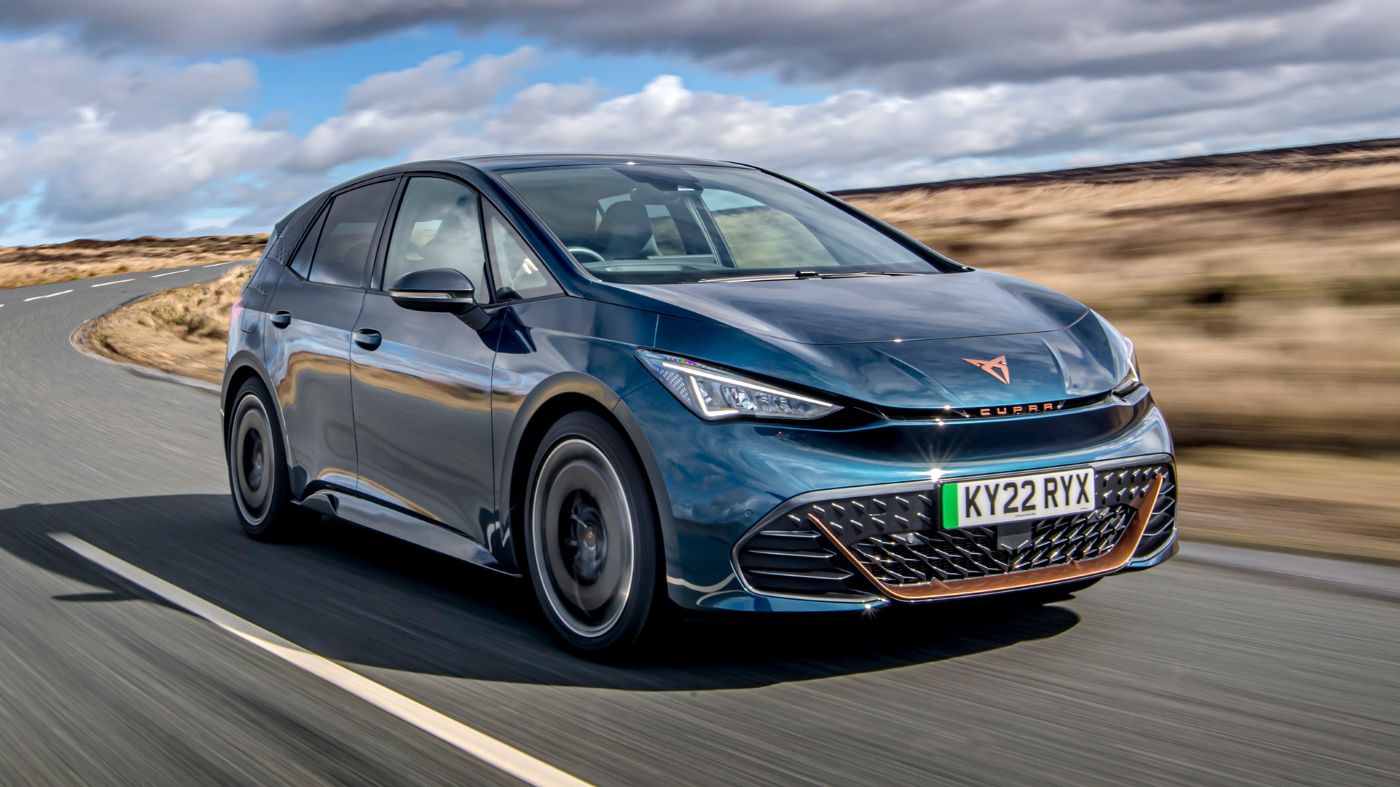
Cupra may be preparing to capture attention in 2026 with the all-new Raval subcompact EV, but the brand hasn’t forgotten the model that helped define its electric identity. Fresh spy shots of a lightly camouflaged Cupra Born prototype reveal that the company is hard at work on a mid-life update for its popular electric hatchback, even if the changes are evolutionary rather than revolutionary.
The refreshed Born was last spotted testing around six months ago, and judging by these new images, Cupra’s approach remains subtle, focusing on refinement rather than dramatic redesign. That strategy likely works in the Born’s favor, as it remains one of the more attractive small EVs on the market and arguably far more dynamic than the Volkswagen ID.3 hatch it shares its platform with.
Camouflage is concentrated around the front and rear, hinting at redesigned bumpers and updated lighting graphics. Up front, the lower grille appears taller and more sculpted, flanked by vertical outer vents that add a sense of width and aggression.
These tweaks align the Born more closely with Cupra’s latest design language seen on models such as the Tavascan, Terramar, and the upcoming Raval.
At the rear, the refresh is similarly restrained, with the bumper housing a reworked diffuser featuring a more pronounced lip at the corners, giving the hatchback a slightly lower, more assertive stance. While the changes are subtle, they are enough to distinguish the facelifted Born from previous models to the observant eye.
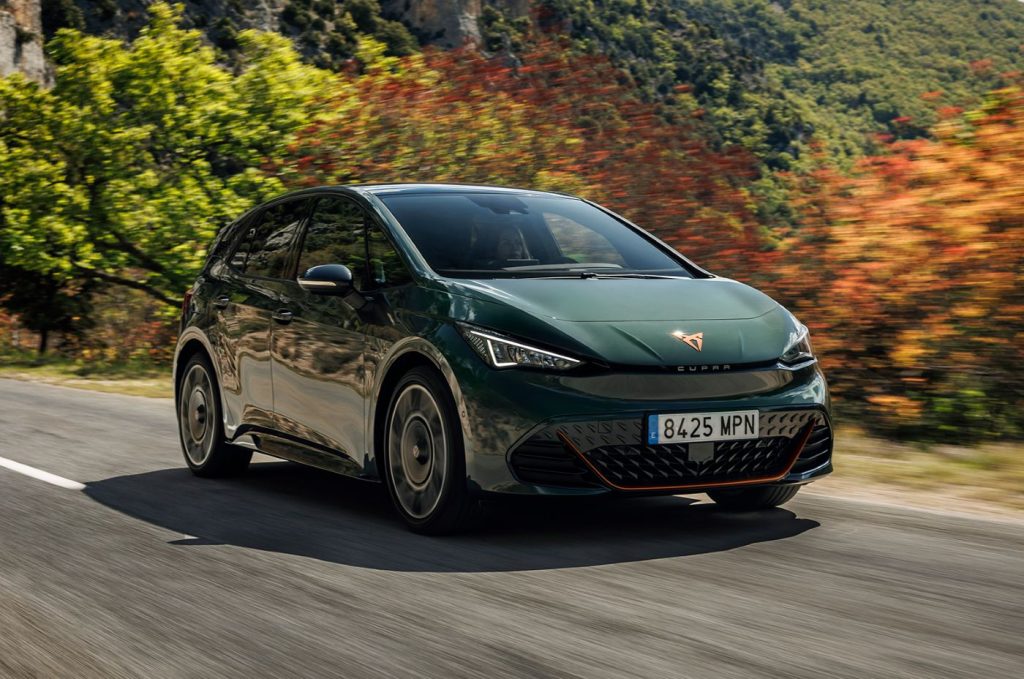
The overall shape, including the doors, roofline, and proportions, remains unchanged, which is expected given how closely the Born is related to its Volkswagen ID.3 sibling. The two cars share so many components that even the doors are interchangeable, making major body modifications difficult without approval across the VW Group.
Inside, significant surprises are unlikely, as Cupra addressed one of the Born’s key interior weaknesses in 2024 by installing VW’s upgraded 12.9-inch touchscreen. Cabin quality already surpasses that of the ID.3, so further updates will likely focus on software improvements and minor trim refinements.
Mechanically, the Born lineup is expected to remain familiar. The 201 hp (204 PS / 150 kW) and 228 hp (231 PS / 170 kW) rear-wheel-drive variants should carry over, alongside the 322 hp (327 PS / 240 kW) VZ hot hatch introduced last year. While significant power increases aren’t anticipated, Cupra may attempt to extract slightly more range from the 59, 77, and 79 kWh battery options.
With the Born already capable of up to 369 miles (594 km) on a single charge, this refresh appears more focused on maintaining the model’s appeal and sharpness, ensuring it remains competitive and stylish in 2026 when the smaller, front-wheel-drive Raval joins the lineup.
