The world of high-performance sedans has evolved beyond traditional boundaries, merging everyday usability with acceleration figures that rival supercars. From lightning-fast combustion engines to cutting-edge electric drivetrains, today’s performance sedans deliver both practicality and jaw-dropping speed.
Cars like the Alfa Romeo Giulia Quadrifoglio and Dodge Charger SRT Hellcat Redeye demonstrate that raw power and driver engagement can coexist with rear seats and usable trunks. Meanwhile, models such as the Tesla Model S Plaid, Porsche Taycan Turbo GT, and Lucid Air Sapphire push electric performance into territory once reserved for exotic supercars, with 0–60 mph times under two seconds.
These vehicles not only dominate straight-line speed but also combine advanced suspension systems, torque-vectoring technology, and precision engineering to provide a dynamic, controlled, and thrilling driving experience. In essence, high-performance sedans now offer the best of both worlds: supercar-level acceleration and everyday usability.
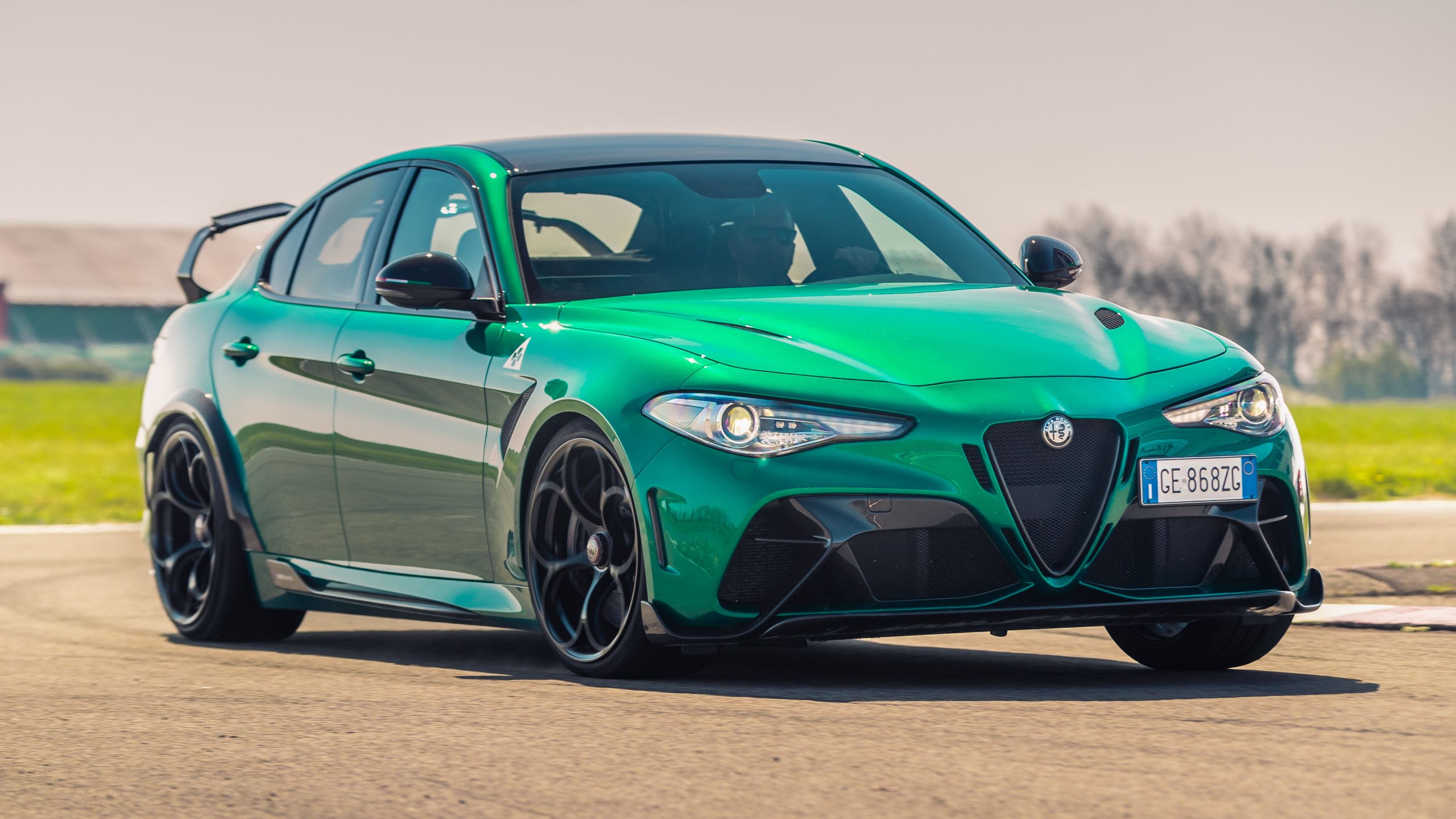
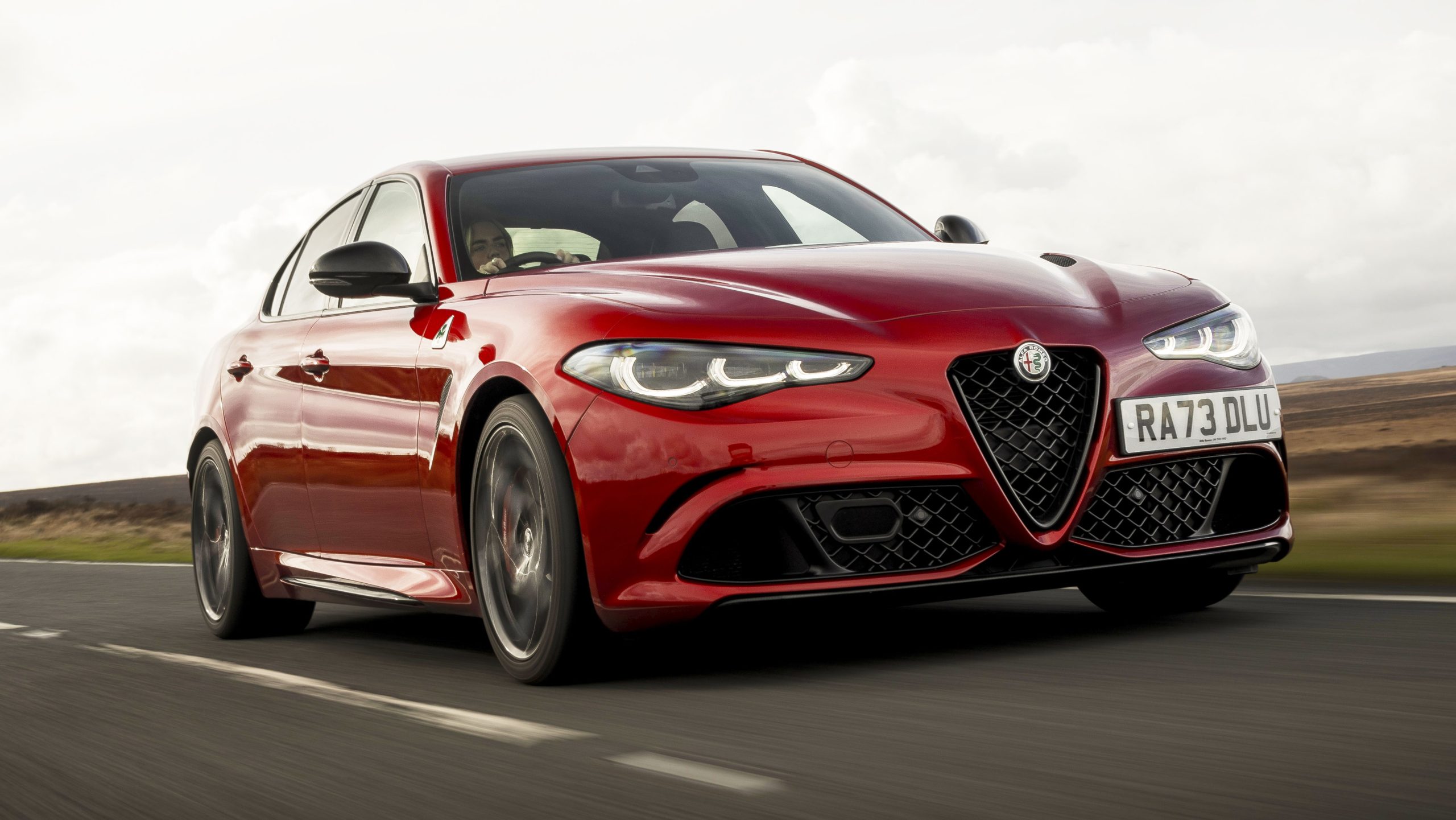
1. Alfa Romeo Giulia Quadrifoglio
The Alfa Romeo Giulia Quadrifoglio is a compelling blend of supercar-level performance and everyday sedan practicality. Beneath its sleek Italian styling lies a Ferrari-derived 2.9-liter twin-turbocharged V6 engine producing 505 horsepower and 443 lb-ft of torque.
Power is sent exclusively to the rear wheels through a refined eight-speed automatic transmission, allowing the Giulia Quadrifoglio to accelerate from 0 to 60 mph in just 3.8 seconds. With a top speed of 191 mph, it comfortably competes with high-performance icons such as the Porsche 911 Carrera and Aston Martin Vantage.
Speed alone does not define the Giulia Quadrifoglio. Alfa Romeo engineered the sedan with a lightweight chassis and near-perfect weight distribution, resulting in remarkable agility and balance. The suspension delivers excellent damping that keeps the ride comfortable during daily use while remaining firm and responsive during aggressive driving. This versatility allows the car to perform confidently on both winding back roads and racetracks without sacrificing comfort.
The driving experience is further elevated by the steering, which is widely regarded as one of the best in its class. The thin-rimmed steering wheel provides quick response, light effort, and exceptional feedback, creating a strong connection between the driver and the road. These attributes help distinguish the Giulia Quadrifoglio from rivals and contributed to its success against competitors like the BMW M3 in comparison testing.
Inside the cabin, the Giulia Quadrifoglio strikes a balance between luxury and sportiness. Leather surfaces, faux-suede accents, and extensive carbon-fiber trim define the interior.
The standard front seats offer strong support and comfort, while optional Recaro racing seats add a more aggressive feel but remove some convenience features such as power adjustment and heating. Cargo space is competitive for the segment, with a trunk capable of holding four carry-on suitcases.
Technology includes an 8.8-inch infotainment display with Apple CarPlay and Android Auto, a 12.3-inch digital instrument cluster, and a 15-speaker Harman Kardon sound system. Safety features such as automated emergency braking and blind-spot monitoring come standard, with adaptive cruise control available.
Although reliability concerns and average warranty coverage remain drawbacks, the Alfa Romeo Giulia Quadrifoglio stands out for its thrilling performance, precise handling, and unmistakable Italian character.
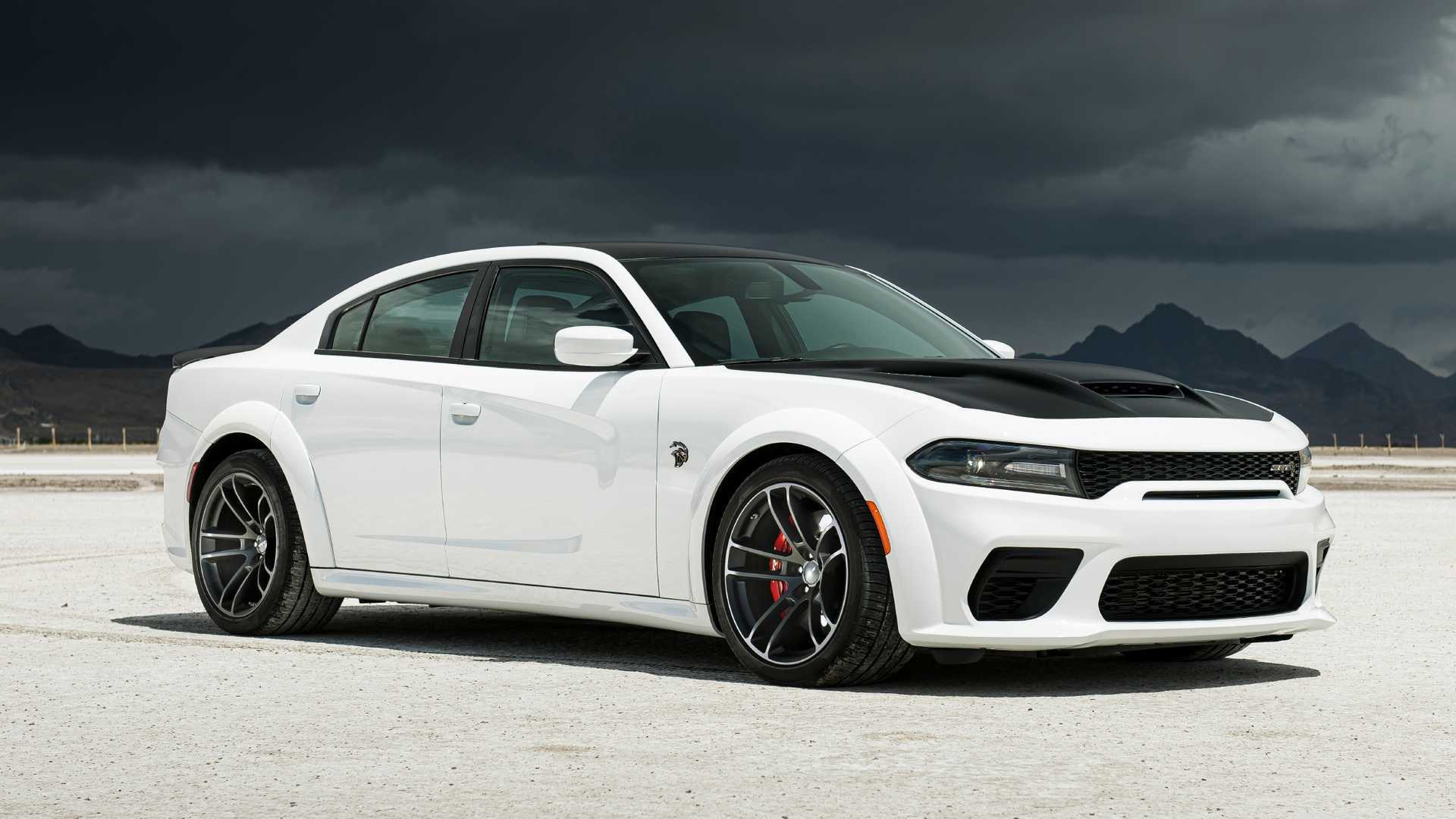
2. Dodge Charger SRT Hellcat Redeye
The Dodge Charger SRT Hellcat Redeye stands as one of the most powerful and outrageous sedans ever produced, redefining what a full-size four-door car can achieve. At its heart is a supercharged 6.2-liter HEMI V8 that delivers an astonishing 797 horsepower and 707 lb-ft of torque to the rear wheels through an eight-speed automatic transmission.
Despite weighing more than 4,600 pounds, the Charger Redeye rockets from 0 to 60 mph in just 3.6 seconds and pushes on to a claimed top speed of 203 mph. These figures place it squarely in the performance territory of exotic supercars like the Ferrari 488 GTB and Lamborghini Huracán.
What truly separates the Charger SRT Hellcat Redeye from traditional supercars is its practicality. Unlike two-seat exotics, it is a full-size, five-seat sedan with usable rear seats and a spacious cabin. This combination of everyday usability and extreme straight-line performance makes it one of the most unique vehicles on the market. It delivers the thunderous personality of a classic American muscle car while remaining capable of handling daily driving duties.
The Redeye’s extra performance over the standard Hellcat comes from significant mechanical upgrades. A larger supercharger produces higher boost, accompanied by a higher redline, improved fueling with dual fuel pumps, and strengthened internal engine components.
The drivetrain is reinforced as well, with a stronger driveshaft and axles designed to cope with the immense output. On the track, the Charger Redeye is the quickest rear-wheel-drive Hellcat tested, capable of hitting 60 mph in as little as 3.5 seconds and completing the quarter-mile in around 11.5 seconds.
Handling is respectable for a car of its size, thanks in part to the widebody setup and massive tires that generate strong grip. Braking performance is also impressive, with stopping distances more typical of performance coupes than large sedans. Ride quality remains livable in normal driving modes, though aggressive suspension settings can feel harsh.
The interior shows its age in design and materials, but it offers comfortable seating and available carbon fiber and suede accents. While expensive, with prices often exceeding $90,000 when fully equipped, the Charger SRT Hellcat Redeye delivers unmatched power, character, and fun. Few cars offer this level of performance with such everyday versatility, making it a modern muscle car icon.
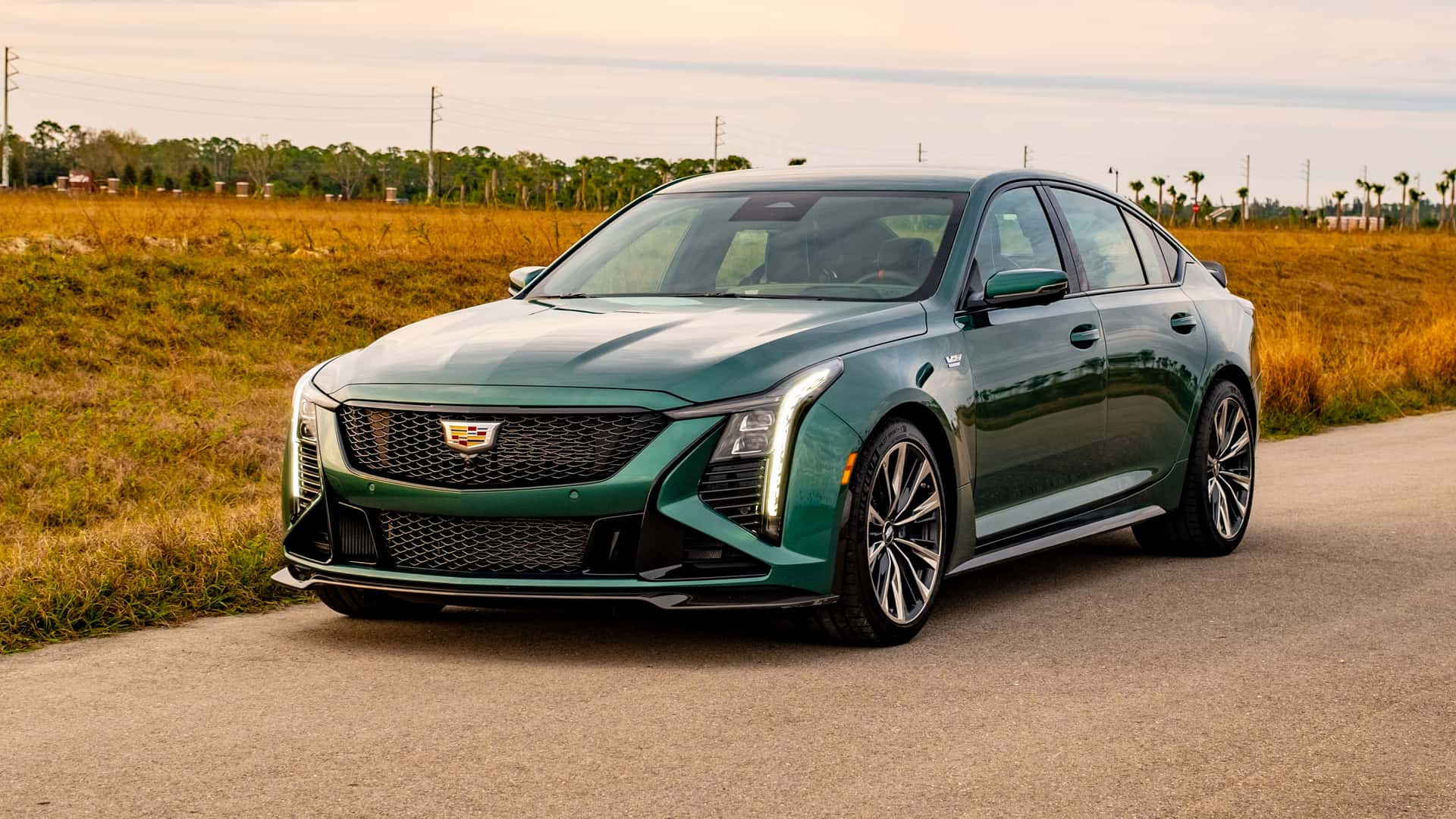
3. Cadillac CT5-V Blackwing
The Cadillac CT5-V Blackwing is a high-performance luxury sedan that blends raw American muscle with precision engineering and modern technology. Powered by a supercharged 6.2-liter V8 producing 668 horsepower and 659 lb-ft of torque, the Blackwing delivers explosive acceleration.
Paired with a 10-speed automatic transmission or a standard six-speed manual, it can sprint from 0 to 60 mph in just 3.4 seconds and reach a top speed of 200 mph. These performance numbers place it in direct competition with high-end sports sedans like the BMW M5 and Audi RS7 while maintaining the comfort and usability expected of a full-size sedan.
The CT5-V Blackwing is designed for drivers who demand both performance and control. Launch control, a line lock feature, a limited-slip differential, and Performance Traction Management allow skilled drivers to extract maximum performance while negotiating corners at high speeds.
Magnetorheological dampers adjust in real time to road conditions and driving style, ensuring a balance between comfort and precision handling. Testing shows the Blackwing accelerates from 0 to 150 mph and back to zero in times comparable to some supercars, highlighting its track-ready capabilities.
Inside, the Blackwing shares much of its layout with the standard CT5 but upgrades materials and features for a more luxurious experience. Leather upholstery, ventilated and massaging front seats with 18-way power adjustments, ambient lighting, and a digital gauge cluster come standard, while optional high-performance sport seats add additional support and style.
The trunk accommodates up to five carry-on suitcases, making it practical for everyday use. A 33-inch, 9K-resolution display integrates infotainment, performance data, and optional Performance Data Recorder functionality, while Apple CarPlay, Android Auto, wireless smartphone charging, and a 16-speaker AKG stereo are standard.
Safety and driver-assistance technologies are comprehensive, with automated emergency braking, lane-departure warning, and Super Cruise hands-free driving available on automatic-equipped models. The Blackwing also offers competitive warranty coverage, with a six-year, 70,000-mile powertrain warranty and complimentary maintenance for the first service visit.
With its combination of supercharged power, refined engineering, advanced technology, and everyday usability, the Cadillac CT5-V Blackwing stands out as a thrilling, practical, and distinctly American performance sedan.
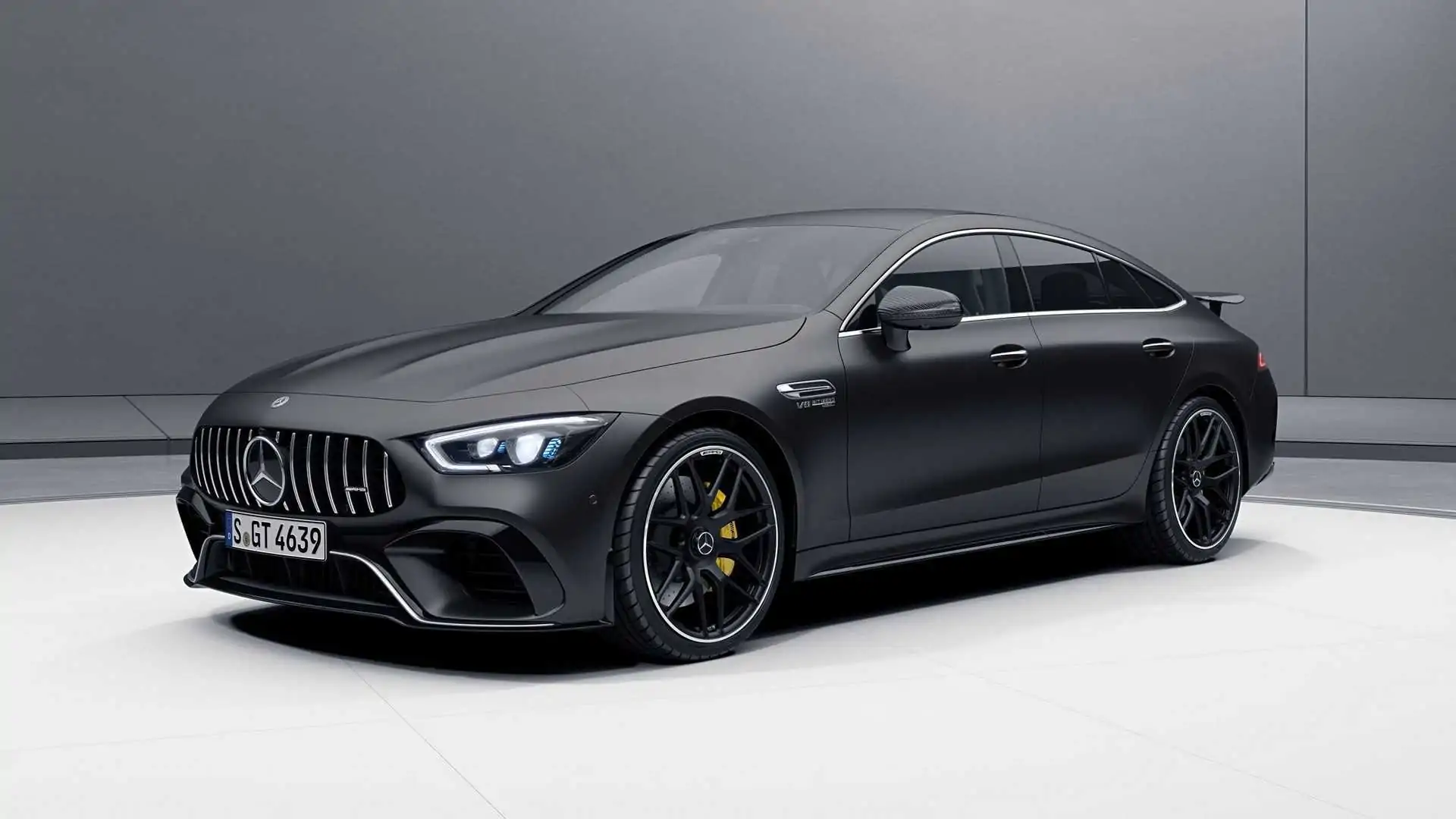
4. Mercedes AMG GT 63 S 4 Door Coupe
The Mercedes AMG GT 63 S 4 Door Coupe combines supercar levels of performance with everyday usability and luxury. It is powered by a handcrafted 4.0 liter twin turbo V8 that produces 630 horsepower and 664 lb ft of torque in the GT 63 S configuration. This engine works with a nine speed AMG Speedshift MCT transmission and AMG Performance 4MATIC plus all wheel drive.
The result is exceptional acceleration, reaching 0 to 60 mph in 3.1 seconds with a top speed of about 196 mph. The all wheel drive system primarily powers the rear wheels but can quickly engage the front when needed, and the Drift mode allows full rear wheel operation for spirited driving.
Although it shares its name with the AMG GT coupe, the 4 Door model is built on Mercedes MRA platform rather than the coupe’s sports car architecture. The structure uses aluminum, carbon fiber, and high strength steel to increase rigidity.
Even so, the GT 63 S weighs roughly 4500 pounds. AMG Dynamics and Dynamic Select give the driver full control over engine response, damping, rear wheel steering, and stability systems. Drive modes range from Slippery to Race, tailoring the car for daily comfort or track ready sharpness.
Inside, the GT 63 S feels more like a high end Mercedes sedan than the two door GT. The seating position is upright, visibility is good, and materials reflect luxury segment expectations. Dual widescreen displays dominate the dashboard, paired with the signature AMG center console.
Ride quality is smooth at highway speeds but firms up on rough pavement due to the performance focused suspension tuning. On the move, the V8’s deep rumble and instant thrust define the experience. Thanks to all wheel drive traction, the GT 63 S launches hard and maintains stability even under full throttle.
Despite its size, the car handles with impressive agility. Four wheel steering helps it rotate through tight corners, and front end grip inspires confidence. Braking performance is strong and consistent for a vehicle of this weight.
In the United States market, pricing typically starts around 175,000 dollars for the AMG GT 63 S 4 Door Coupe. Its closest rivals include the Porsche Panamera Turbo S E Hybrid, BMW M8 Gran Coupe, and Audi RS7. With its combination of speed, refinement, and utility, it delivers a compelling four door supercar experience.
5. BMW M5 CS
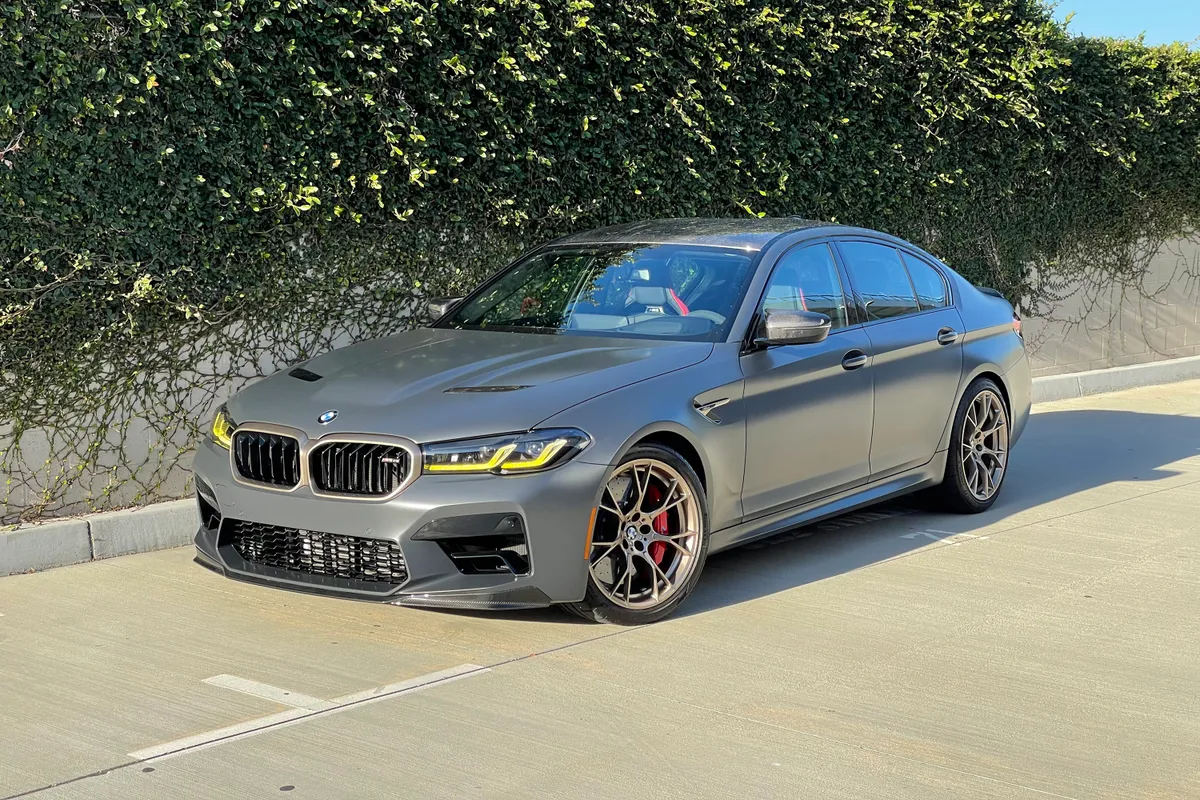
The BMW M5 CS stands at the top of the M5 lineup as the lightest, most powerful, and quickest version ever built. Powered by a 4.4 liter twin turbo V8 that delivers 627 horsepower and 553 lb ft of torque, the M5 CS sends its output to all four wheels through BMW’s xDrive system and an 8 speed M Steptronic automatic transmission.
This setup launches the sedan from 0 to 60 mph in 2.9 seconds, although independent testing has shown times as quick as 2.6 seconds, placing it among the fastest production sedans ever made.
Beyond raw power, the M5 CS receives significant chassis enhancements over the M5 Competition. These include stiffer engine mounts, firmer springs, retuned dampers, increased negative front camber, and reinforced rear suspension components. Combined with a lower ride height and optional Pirelli P Zero Corsa tires, these upgrades sharpen handling and maximize grip.
Extensive weight reduction also plays a role. The CS sheds more than 250 pounds compared to the M5 Competition thanks to carbon fiber reinforced plastic body panels, a carbon hood and diffuser, a lighter engine cover, and reduced sound insulation. BMW lists its curb weight at about 4,089 pounds.
The M5 CS delivers performance figures that rival supercars. It completes the quarter mile in 10.7 seconds at nearly 130 mph and stops from 60 mph in just 101 feet using standard carbon ceramic brakes.
Handling remains confident, with the sedan pulling 1.04 g on the skidpad and completing the figure eight in 23.2 seconds. Some understeer on the skidpad and oversteer at corner exit show that the Michelin PS4S tires fitted during testing limited its true potential. With the stickier Pirelli Corsas, numbers would likely improve further.
Despite its extreme performance, the M5 CS maintains daily usability. It retains the comfort, refinement, and practicality expected from a modern M5 while offering a far more focused driving experience. Steering feel is precise, the engine is explosive yet smooth, and the all wheel drive system provides exceptional traction without diminishing driver engagement.
The BMW M5 CS is widely regarded as the most capable M5 ever produced, blending supercar speed with sedan usability in a way few rivals can match.
Also Read: 5 Cars for Oakland Urban Commuters vs 5 That Are High-Maintenance
6. Porsche Panamera Turbo S E Hybrid
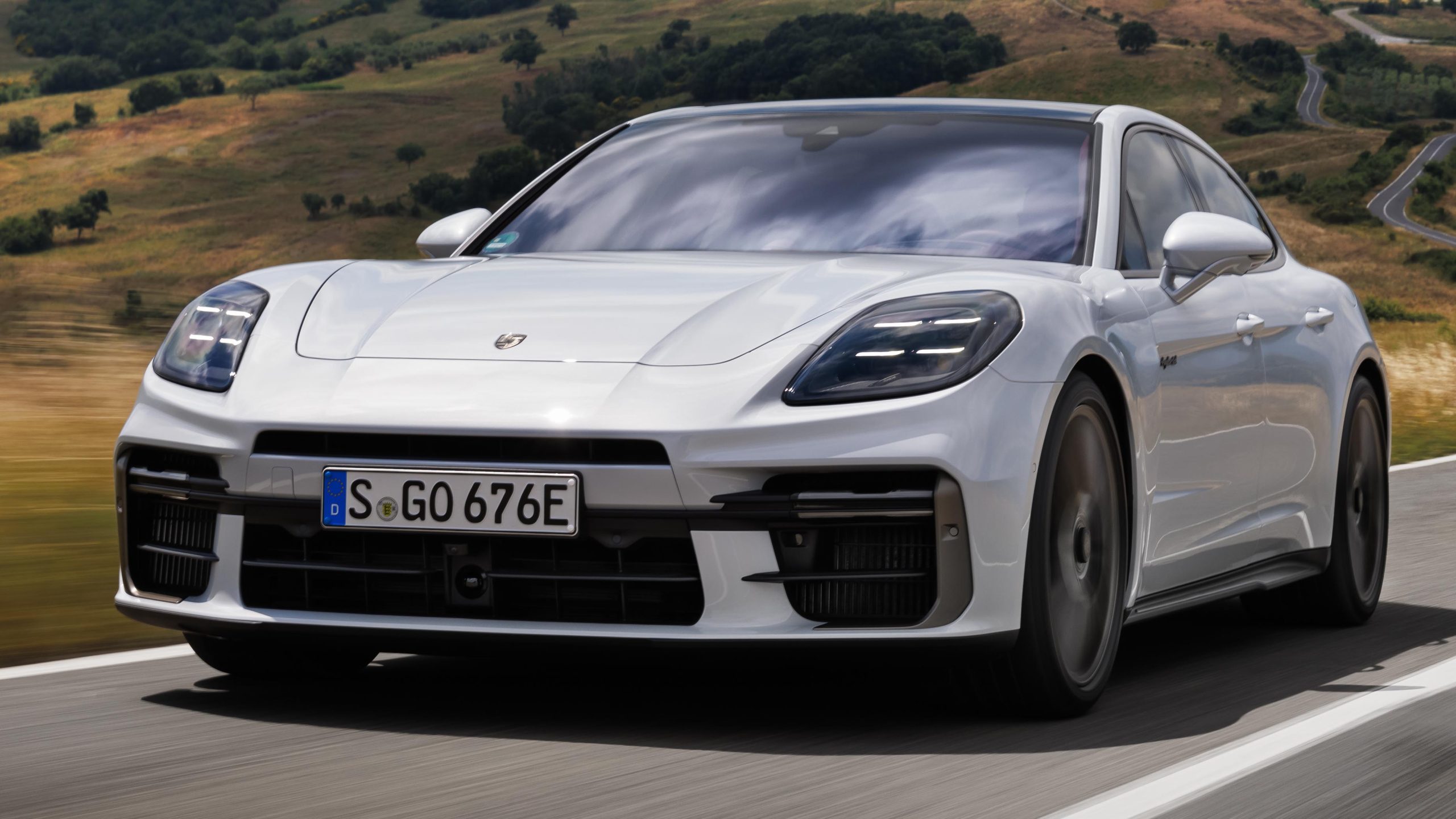
The Porsche Panamera Turbo S E Hybrid stands as one of the most advanced and powerful luxury performance sedans on the market. Combining a 4.0 liter twin turbo V8 with an integrated electric motor, it produces 771 horsepower and 737 lb ft of torque, making it the most potent Panamera ever built.
Power is delivered through an 8 speed PDK dual clutch transmission and an all wheel drive system that ensures relentless traction. Porsche claims a 0 to 60 mph time of 2.8 seconds, though independent testing has seen launches as quick as 2.5 seconds, along with a quarter mile time of 10.5 seconds at 132 mph.
The hybrid system uses a 22 kWh battery that supports both performance driving and electric only operation. In E Power mode, the Panamera delivers up to 27 miles of EPA rated electric range, though real world tests have shown even greater capability. The electric motor is positioned between the gas engine and transmission, which allows seamless power delivery and maintains the responsiveness expected from Porsche’s PDK gearbox.
One of the most innovative features of the Turbo S E Hybrid is Porsche Active Ride, an advanced suspension system powered by the hybrid’s 400 volt electrical architecture. Using electric motor pump units, adaptive dampers, and air springs, the system virtually eliminates body roll, dive, and squat.
The result is a sedan that remains perfectly level through acceleration, braking, and cornering, while still absorbing bumps naturally. In Sport Plus mode, the car lowers itself by up to 1.4 inches and delivers exceptional grip, pulling 1.05 g on the skidpad despite its substantial 5,350 pound mass.
Standard carbon ceramic brakes, rear axle steering, and Porsche Torque Vectoring Plus further enhance control. The Turbo S E Hybrid stops from 70 mph in 153 feet, an impressive feat for its size and weight. Inside, the cabin mirrors the refinement expected of a luxury grand tourer, with available features like a Burmester 3D audio system and extensive customization options.
Starting at $228,495, the Panamera Turbo S E Hybrid is a rare combination of extreme performance, cutting edge hybrid engineering, and daily usability. It delivers supercar acceleration, limousine comfort, and practical electric driving in one technologically advanced package.
7. Audi RS E Tron GT Performance
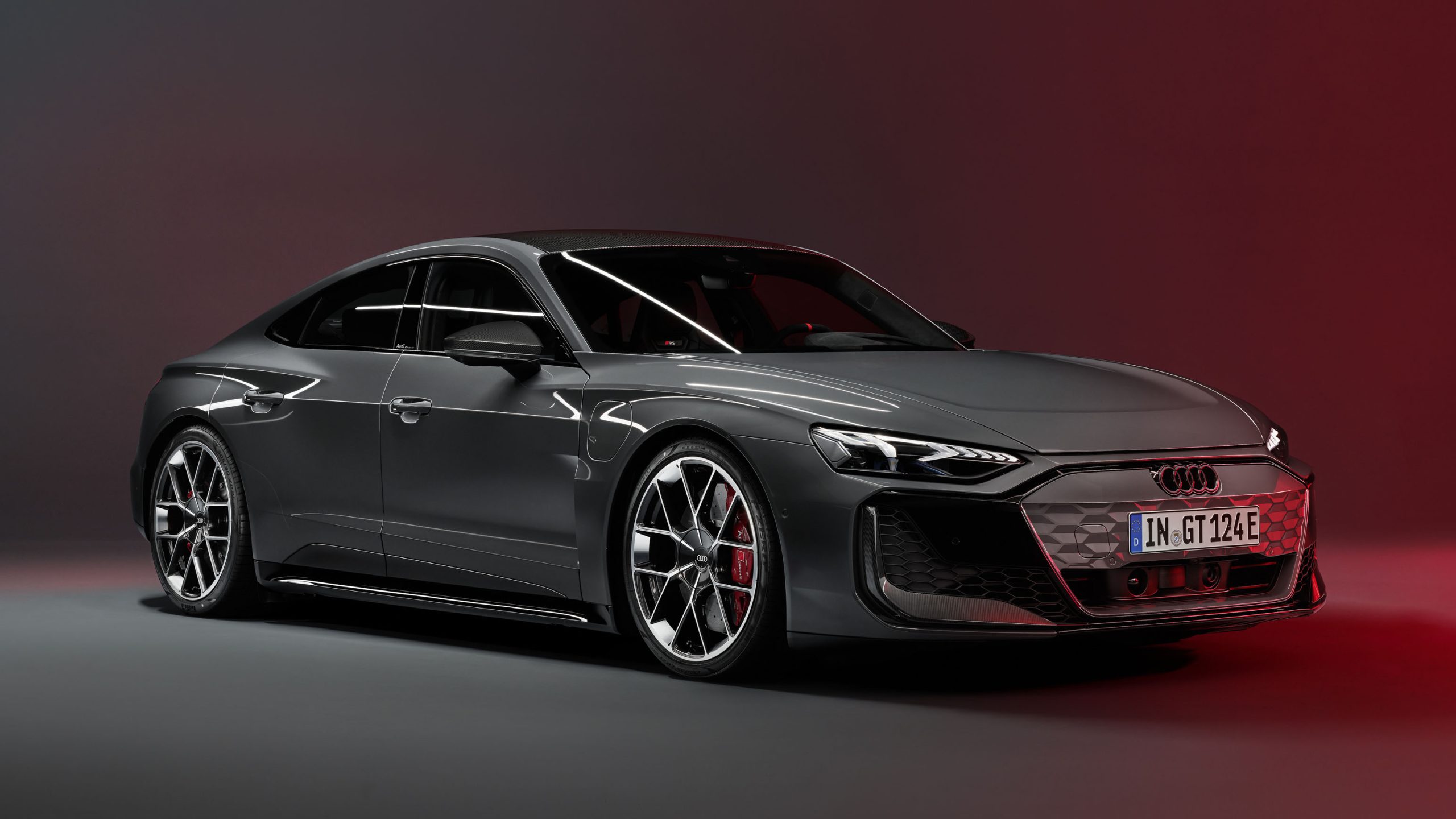
The Audi RS E Tron GT Performance stands at the top of Audi’s EV lineup, delivering supercar acceleration in a four door luxury sedan format. Powered by dual permanent magnet synchronous motors with one on each axle, the RS E Tron GT produces 912 horsepower with Launch Control and 757 lb ft of torque.
Its advanced powertrain includes a direct drive system for the front motor and a two speed automatic transmission for the rear motor, enabling a blistering 0 to 60 mph time of just 2.4 seconds, making it the fastest Audi ever built.
Although the exterior updates for 2025 are subtle, including new colors, wheels, and lightly revised front and rear fascias, the major changes occur beneath the surface. A lighter and more powerful rear motor increases total output significantly, placing the RS E Tron GT Performance in close competition with the Porsche Taycan Turbo and Turbo S.
With Launch Control engaged, the Audi surges to 912 horsepower, far exceeding the previous RS model. Independent testing has shown even more impressive results with a 0 to 60 mph sprint recorded at 2.1 seconds and a quarter mile time of 9.8 seconds at 138 mph.
A larger 97 kWh battery pack improves range and efficiency. Despite the added capacity, the pack is lighter and more advanced than before. EPA estimates list the RS E Tron GT Performance at 278 miles of range, while real world highway testing shows it can reach 280 miles.
Charging performance also improves, thanks to a peak 320 kW DC fast charging rate and optimized battery cooling. The Taycan Turbo GT, which shares this hardware, charged from 10 to 90 percent in only 24 minutes, suggesting similar performance for the Audi.
Ride quality benefits from a redesigned air suspension system. The new two valve dampers allow independent compression and rebound control. Optional active dampers remove traditional anti roll bars and use hydraulic force at each wheel to keep the car flat during hard cornering or rapid acceleration. Braking is equally strong with standard tungsten coated rotors or optional carbon ceramic rotors providing consistent and confident stopping performance.
Inside, the RS E Tron GT Performance offers a refined cabin with familiar Audi design cues and high quality materials. With a starting price of $168,295, it delivers Porsche level performance for less money while offering supercar acceleration, long range capability, and a polished luxury driving experience.
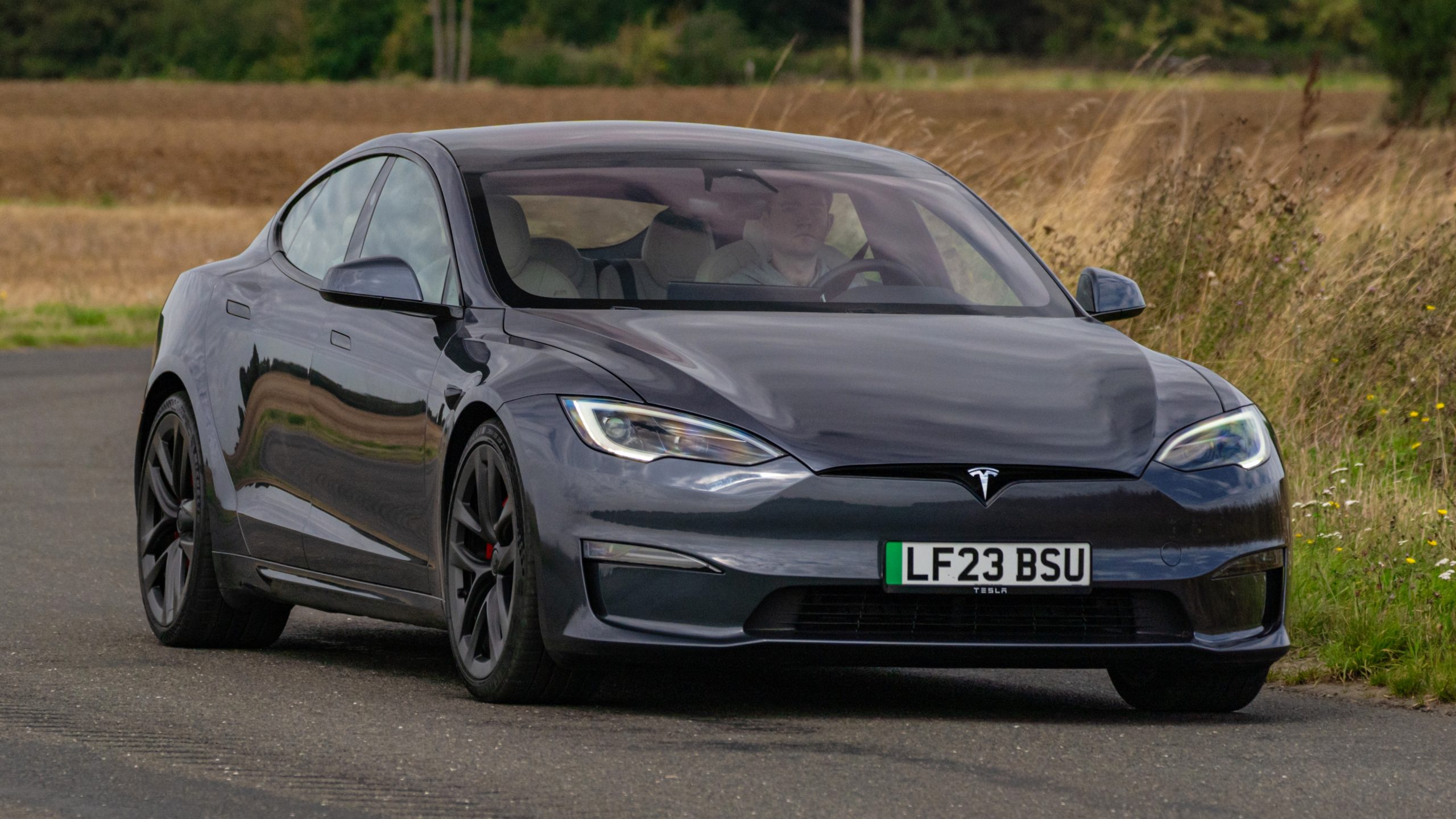
8. Tesla Model S Plaid: Hypercar Speed in a Practical Electric Sedan
The Tesla Model S Plaid remains one of the quickest production cars ever made, delivering acceleration that rivals top tier supercars. Its tri motor all wheel drive powertrain produces 1,020 horsepower and 1,050 lb ft of torque.
With instant torque delivery and a single speed direct drive transmission, the Plaid rockets from 0 to 60 mph in 1.98 seconds, placing it firmly in hypercar territory. It also reaches a top speed of 200 mph and offers up to 390 miles of range, making it both an extreme performance machine and a practical daily driver.
Although its performance is cutting edge, the Model S Plaid’s exterior design remains largely unchanged since its 2012 debut aside from minor updates. The 2026 model carries over the same powertrain introduced in 2021, along with the same brakes and optional 21 inch Michelin Pilot Sport 4S summer tires.
Performance results remain astonishing: 0 to 60 mph in 2.1 seconds, 100 mph in 4.3 seconds, and a quarter mile of 9.4 seconds at 151 mph. These numbers highlight the need for high grip tires to manage the Plaid’s immense power and challenging behavior at the limit.
Braking performance is strong with a 70 mph stop completed in 148 feet, though lateral grip on the skidpad has dipped slightly. While Tesla advertises a 200 mph top speed, achieving it requires purchasing a costly Track package that includes carbon ceramic brakes and upgraded wheels.
On the road, the Plaid is smooth and composed, though it lacks the steering feel and driver engagement found in similarly powerful vehicles. The ride quality is competent but not standout. Inside, the updated cabin features a large center screen, touch sensitive controls, and an optional yoke steering device. A conventional steering wheel is available and preferred by most drivers. Some controls, such as turn signals and wipers placed on the wheel, take time to get used to.
Range is highly dependent on wheel choice. Although the EPA lists 368 miles for the 19 inch setup, the 21 inch wheels correctly reduce the estimate to 309 miles, which aligns with real world testing such as the 300 mile result in a 75 mph highway run.
With a starting price of $111,630, included supervised Full Self Driving, and free Supercharging, the Model S Plaid continues to offer unmatched value for its speed, capability, and everyday usability.
9. Porsche Taycan Turbo GT
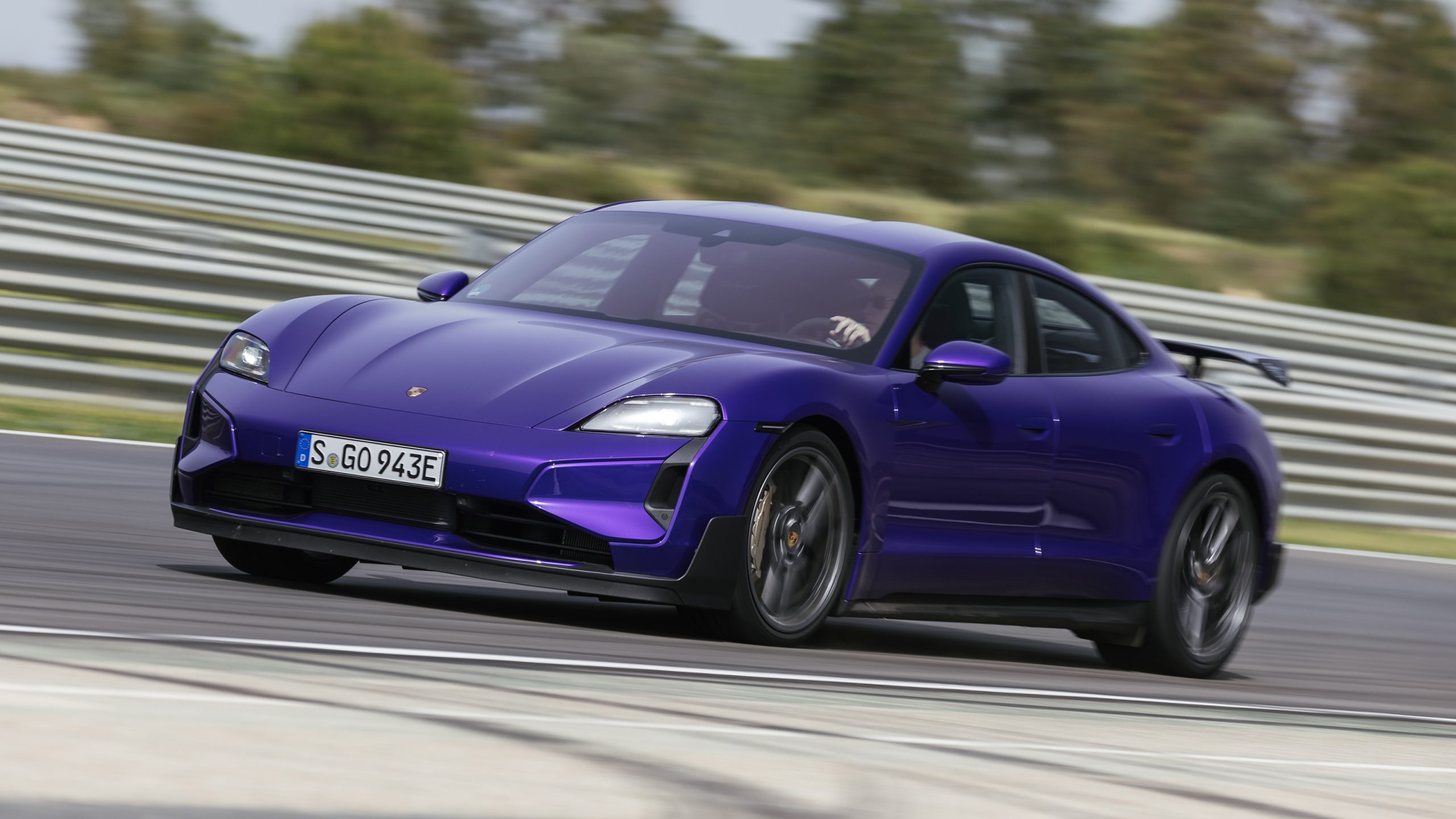
The Porsche Taycan Turbo GT pushes electric performance into new territory. Its dual motor all wheel drive system delivers 1,093 horsepower and 988 lb ft of torque, enabling a 1.9 second sprint from 0 to 60 mph. That figure makes it the first production car ever tested to dip below the 2.0 second barrier, putting it ahead of hypercars that rely on combustion engines. The Taycan Turbo GT also reaches a 190 mph top speed, a remarkable number for a battery powered sedan.
Porsche pursued weight reduction aggressively to sharpen the car’s track abilities. The Turbo GT swaps its rear seat for a carbon fiber storage bin, removes the driver side charge port door, uses thinner glass, deletes speakers and floor mats, and packages lighter brake hardware. The most dramatic changes come with the no cost Weissach package.
This setup adds a fixed rear wing, aerodynamic splitters, and underbody revisions that generate up to 485 pounds of total downforce. It also equips sticky Pirelli P Zero Trofeo RS Elect tires that drastically improve balance and grip compared to the standard rubber. With this package, the Turbo GT can be up to 165 pounds lighter on paper, and in real scale comparisons has been measured nearly 300 pounds lighter than a fully optioned standard car.
On track, the Turbo GT stands out for its flat cornering and responsive steering. Active dampers keep the car composed at high speeds and help exploit the added grip of the Trofeo tires. Braking performance is strong thanks to carbon ceramic rotors and large fixed calipers. Some drivers note a slight dead zone in the brake pedal, but stopping power remains impressive for a nearly 5,000 pound machine.
Inside, the Turbo GT remains familiar to the Taycan family. Optional steering wheel paddles let drivers activate boost mode more easily, delivering short bursts of up to 160 additional horsepower. Despite its extreme mission, ride quality is surprisingly comfortable, although the Weissach package introduces more road noise due to reduced sound insulation and stickier tires.
Against rivals, the Turbo GT outaccelerates both the Tesla Model S Plaid and the Lucid Air Sapphire to 60 mph. It has also set production EV records at both Laguna Seca and the Nürburgring, underscoring Porsche’s goal of building a track capable EV that can unleash full performance for an entire lap. Porsche prices the Taycan Turbo GT at $231,995, with the Weissach package available at no additional cost.
10. Lucid Air Sapphire
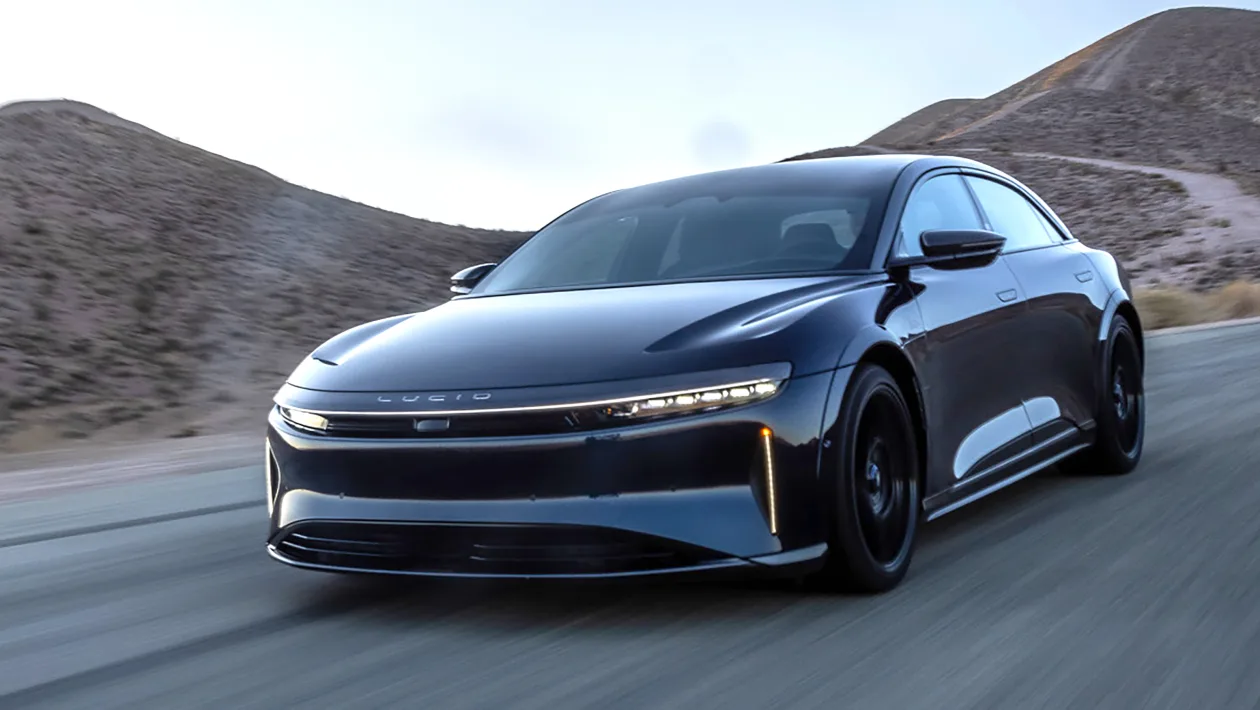
The Lucid Air Sapphire stands as one of the most powerful and quickest sedans ever produced. Its tri motor all wheel drive system unleashes 1,234 horsepower and 1,430 lb ft of torque, enabling a 1.9 second run from 0 to 60 mph on a prepped surface.
With a 205 mph top speed, it pushes performance into genuine supercar territory while maintaining the comfort and practicality expected from a large luxury sedan. Lucid positions the Sapphire as the ultimate evolution of the Air lineup, engineered to challenge the fastest EVs and combustion powered rivals alike.
Acceleration is only part of the story. Lucid equips the Sapphire with an adaptive suspension system and torque vectoring that help manage its immense power. These technologies give the sedan impressive composure during high speed driving and allow it to deliver precise cornering behavior.
Even though it rides on steel coil springs rather than air springs, the chassis remains smooth and stable in its most relaxed settings. The only drawback noted in testing is increased road noise from its 21 inch performance tires.
The Air Sapphire builds on a lineup known for exceptional driving range. While other trims provide up to 512 miles of EPA estimated range, the Sapphire’s priority on performance results in a combined efficiency rating of 105 MPGe. Charging performance remains a strength across the lineup, with the ability to recover 300 miles of range in as little as 21 minutes when connected to a fast charger.
Inside, the Air Sapphire offers an upscale cabin with generous space and advanced technology. A two screen infotainment layout works alongside a digital gauge display, and the system supports both Apple CarPlay and Android Auto. High quality materials, a roomy rear seat, and useful storage areas reinforce that this sedan is designed for daily usability as much as outright speed.
The Sapphire’s performance places it ahead of many competitors. During testing, it reached 60 mph in 2.1 seconds on a standard surface and 1.9 seconds on a prepped track. It also remains the quickest sedan over the quarter mile that buyers can purchase in 2025. With its blend of extreme acceleration, long range capability, and luxury features, the Lucid Air Sapphire represents one of the most complete performance EVs on the market.
The ten sedans highlighted here showcase the remarkable evolution of performance cars. From the Italian finesse of the Giulia Quadrifoglio to the electric mastery of the Lucid Air Sapphire, each vehicle proves that sedans can compete with supercars not only in speed but in handling, technology, and practicality.
While traditional muscle cars like the Dodge Charger SRT Hellcat Redeye impress with raw power, German engineering through the BMW M5 CS, Mercedes AMG GT 63 S, and Porsche Panamera Turbo S E Hybrid demonstrates precision, refinement, and versatility.
Electric models such as the Tesla Model S Plaid, Porsche Taycan Turbo GT, and Lucid Air Sapphire redefine performance boundaries with instant torque, advanced aerodynamics, and track-capable capabilities. These sedans make it clear that the gap between luxury four-door comfort and supercar-level acceleration has nearly vanished, offering enthusiasts and daily drivers alike the ultimate driving experience in a single package.
Also Read: 10 Cars With Helpful Front Cameras for Tight Spots