
Honda and Toyota dominate the global hatchback market, and their rivalry is built on decades of trust, reliability, and mass-market appeal.
For many buyers, choosing between a Honda and a Toyota hatchback is less about brand recognition and more about subtle differences in driving feel, design philosophy, and long-term ownership experience.
Both manufacturers are known for engineering dependable vehicles, but they approach hatchbacks with slightly different priorities and those differences matter more than ever in today’s competitive market.
Toyota hatchbacks traditionally focus on efficiency, conservative styling, and mechanical longevity.
They appeal strongly to buyers who value predictability and low running costs. Honda, by contrast, tends to emphasize driving dynamics, interior usability, and a more engaging overall experience.
Honda hatchbacks often feel more driver-focused, with sharper steering, better chassis tuning, and powertrains that encourage confident everyday driving without sacrificing reliability.
As hatchbacks increasingly serve as primary family cars, urban commuters, and even lifestyle vehicles, buyers expect more than just fuel economy. Interior space, infotainment quality, safety technology, and road manners all play critical roles.
This is where Honda has steadily gained an edge by delivering hatchbacks that feel more versatile and enjoyable while remaining practical and durable.
This article compares five Honda hatchbacks that offer stronger overall value than five Toyota hatchbacks.
The goal is not to dismiss Toyota’s strengths, but to highlight where Honda’s design choices, engineering priorities, and real-world usability provide a noticeable advantage.
Each vehicle is discussed individually to explain why it was chosen and how it outperforms its Toyota counterpart in meaningful ways.
Also Read: 5 Toyota Sedans That Are Better Than 5 Honda Sedans
5 Honda Hatchbacks
Honda has long been praised for building cars that balance reliability with driver engagement, and its hatchback lineup is a clear reflection of that philosophy.
Unlike many manufacturers that treat hatchbacks purely as economy-focused transportation, Honda designs its hatchbacks to feel responsive, spacious, and genuinely enjoyable to drive. This approach is why Honda hatchbacks often appeal to a wider audience from young professionals to small families and driving enthusiasts alike.
One of Honda’s defining strengths is chassis tuning. Even its most affordable hatchbacks are engineered with precise steering and confident handling, making them feel more composed on highways and city roads alike.
Honda also prioritizes interior space efficiency, frequently offering more usable cargo room and better rear-seat comfort than competitors with similar exterior dimensions. This makes Honda hatchbacks especially practical for daily life.
Powertrain refinement is another key advantage. Honda engines are known for smooth power delivery and long-term durability, while transmissions particularly CVTs and manuals, are tuned to maximize responsiveness rather than dull efficiency alone.
Combined with strong safety ratings and intuitive infotainment systems, Honda hatchbacks deliver a well-rounded ownership experience.
The following five Honda hatchbacks were selected because they best represent these strengths. Each model offers clear advantages over comparable Toyota hatchbacks, whether through superior driving dynamics, smarter interior design, or stronger overall versatility.
These are not just reliable cars they are thoughtfully engineered hatchbacks that consistently feel a step ahead in everyday use.
1. Honda Civic Hatchback
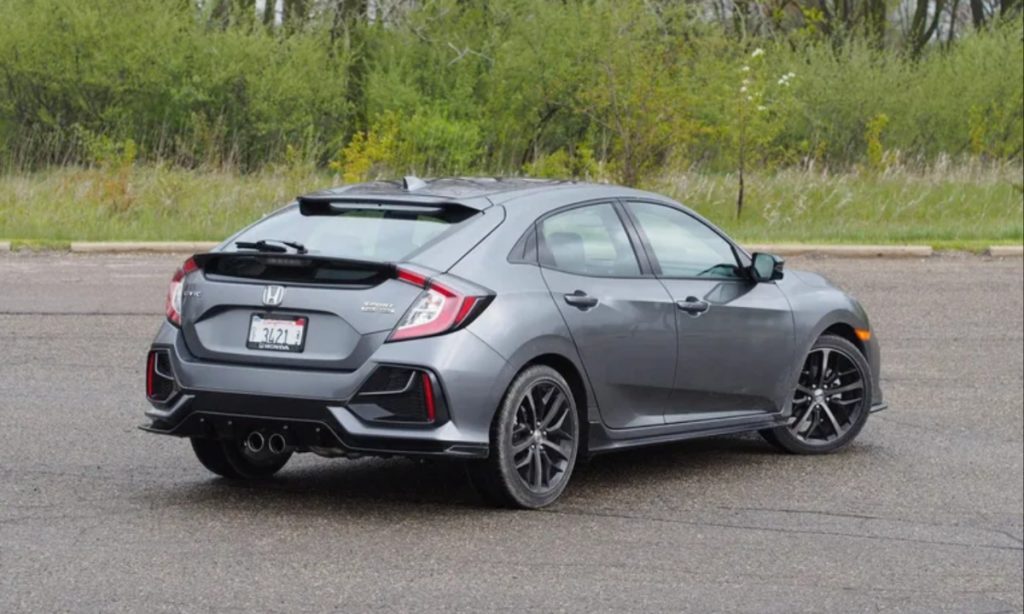
The Honda Civic Hatchback stands as one of the most complete hatchbacks in its class, and it earns its place here because it blends practicality with driving enjoyment better than most Toyota alternatives.
Writing about the Civic Hatchback is important because it demonstrates how Honda elevates a mainstream car into something genuinely engaging.
One of the Civic Hatchback’s strongest advantages is its driving dynamics. The steering is precise, the suspension is well-balanced, and the car feels stable at both city and highway speeds.
This gives drivers confidence and enjoyment that many competitors struggle to match. Honda’s engine tuning delivers smooth acceleration and responsive throttle behavior, making daily commuting feel less monotonous.
Interior design is another area where the Civic Hatchback excels. The cabin is spacious, thoughtfully laid out, and built with high-quality materials for the segment.
Rear-seat legroom and cargo capacity are particularly impressive, allowing the Civic to function as a practical family car without feeling cramped. The hatch opening is wide and low, making loading easier than in many rival models.
Technology integration is clean and intuitive, with infotainment and safety features that enhance usability rather than complicate it.
The reason the Civic Hatchback stands above comparable Toyota hatchbacks is simple: it feels more refined, more versatile, and more rewarding to drive qualities that matter throughout years of ownership.
2. Honda Jazz (Fit)
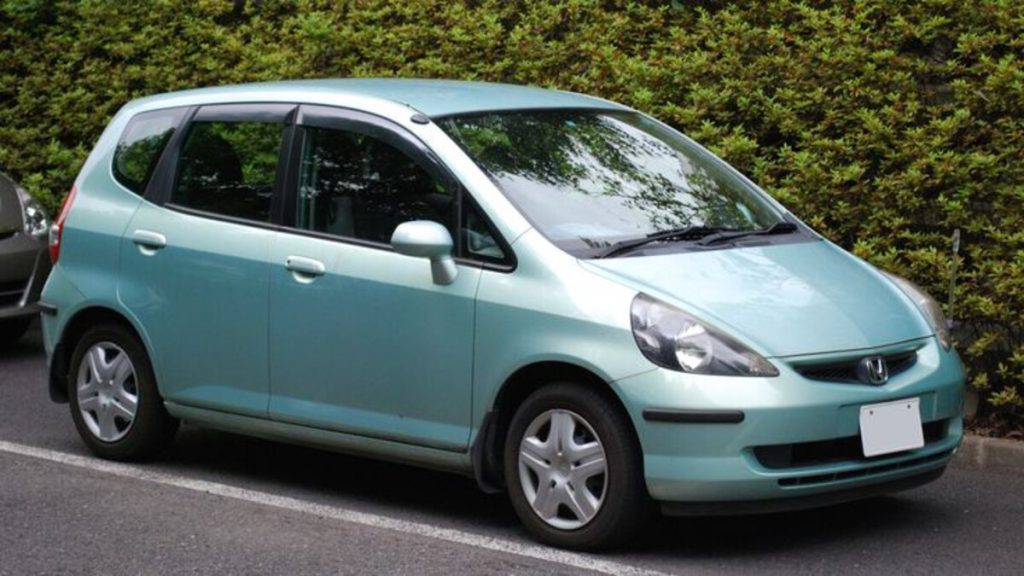
The Honda Jazz also known as the Fit in some markets, is one of the most intelligently designed small hatchbacks ever built. Writing about the Jazz is essential because it highlights Honda’s unmatched ability to maximize interior space and everyday usability within compact dimensions.
Despite its small footprint, the Jazz offers a remarkably spacious cabin. Honda’s signature “Magic Seats” allow for multiple seating and cargo configurations, making the car far more versatile than its size suggests.
This flexibility is something most Toyota hatchbacks in the same class simply cannot match. Whether carrying tall items, long cargo, or extra luggage, the Jazz adapts effortlessly.
The driving experience is another strong point. The Jazz feels light, agile, and easy to maneuver, especially in crowded urban environments.
Steering is responsive, visibility is excellent, and ride quality remains comfortable over uneven roads. These qualities make it ideal for city dwellers who still want a car that feels confident on longer trips.
Reliability and efficiency further strengthen the Jazz’s appeal. Its powertrain is designed for longevity and low operating costs, while maintenance remains straightforward.
The reason the Jazz outperforms similar Toyota hatchbacks is its sheer practicality. Honda didn’t just build a small car they engineered a smart one, and that intelligence shows every time the car is used.
3. Honda City Hatchback
The Honda City Hatchback earns its place on this list because it combines premium refinement with everyday practicality in a way that many Toyota hatchbacks struggle to match.
Writing about the City Hatchback is important because it reflects Honda’s ability to deliver an upscale experience without pushing buyers into higher price brackets.
One of the City Hatchback’s strongest advantages is interior quality. The cabin feels refined, with soft-touch materials, well-designed seats, and a layout that prioritizes comfort for both front and rear passengers.
Rear-seat legroom is particularly generous for a hatchback, making it suitable for families or frequent passengers an area where many Toyota alternatives feel tighter.
The driving experience is another highlight. Honda’s suspension tuning provides a smooth, composed ride while maintaining stability at higher speeds.
Steering is light but precise, which makes city driving effortless and highway cruising confident. The engine delivers linear power and refined performance, emphasizing smoothness over aggression perfect for daily commuting.

Fuel efficiency and reliability remain strong pillars of the City Hatchback’s appeal. Honda’s proven engineering ensures low running costs and long-term durability.
The reason this model stands above comparable Toyota hatchbacks is its balance: it feels premium without being expensive, practical without being dull, and refined without sacrificing usability.
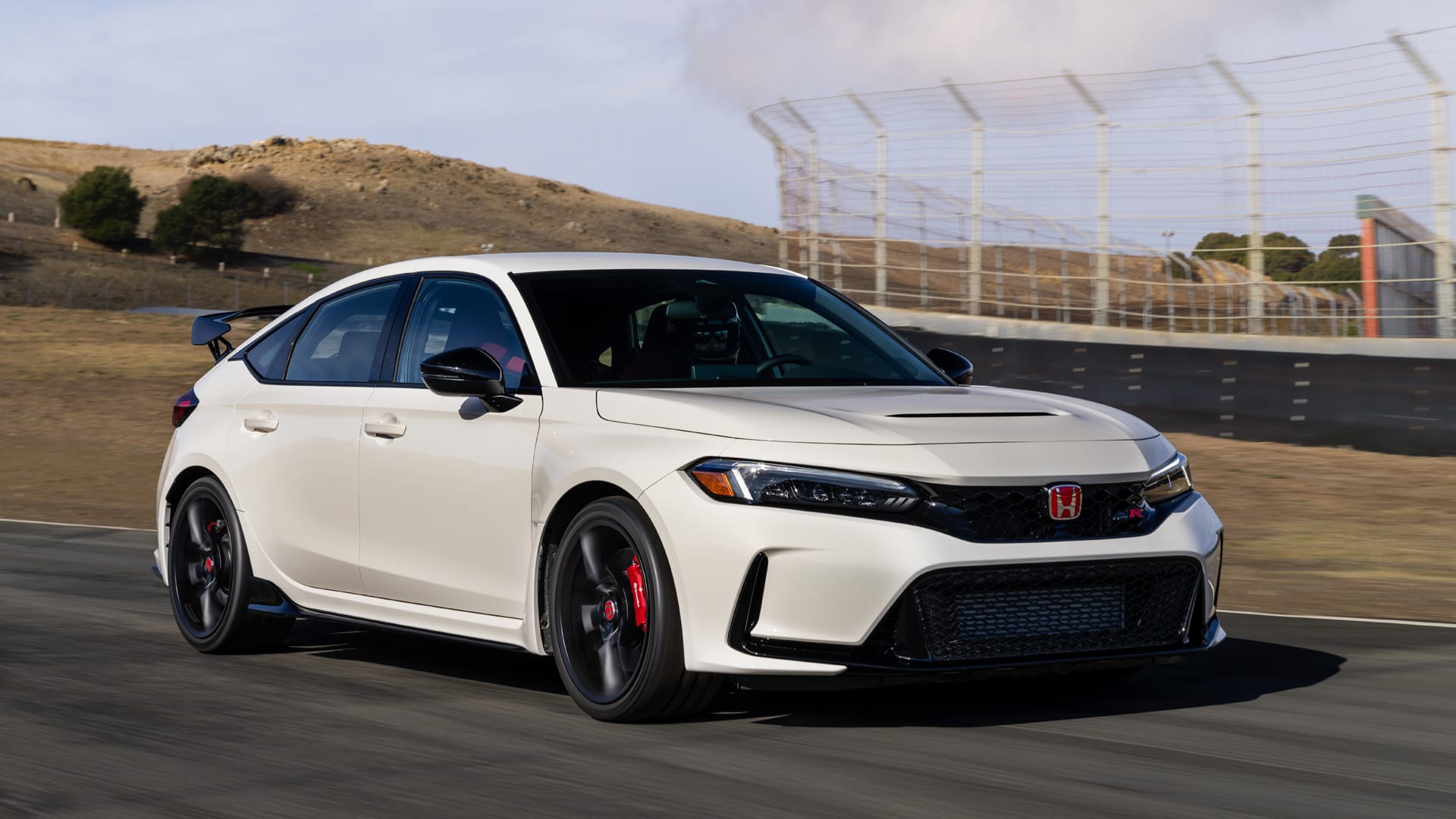
4. Honda Civic Type R
The Honda Civic Type R is included because it proves that a hatchback can deliver true performance without compromising everyday usability. Writing about the Civic Type R matters because it highlights Honda’s engineering depth something Toyota only partially matches in this niche.
Unlike many performance-focused hatchbacks that sacrifice comfort, the Civic Type R retains practicality.
It offers usable rear seats, meaningful cargo space, and daily drivability while delivering exceptional performance. Its chassis tuning, braking system, and steering precision set benchmarks in the performance hatchback segment.
The engine delivers strong, consistent power, and the manual transmission provides a level of driver engagement that enthusiasts deeply value. More importantly, the car’s performance feels controlled and usable, not overwhelming. This makes it suitable for both spirited driving and everyday commuting.
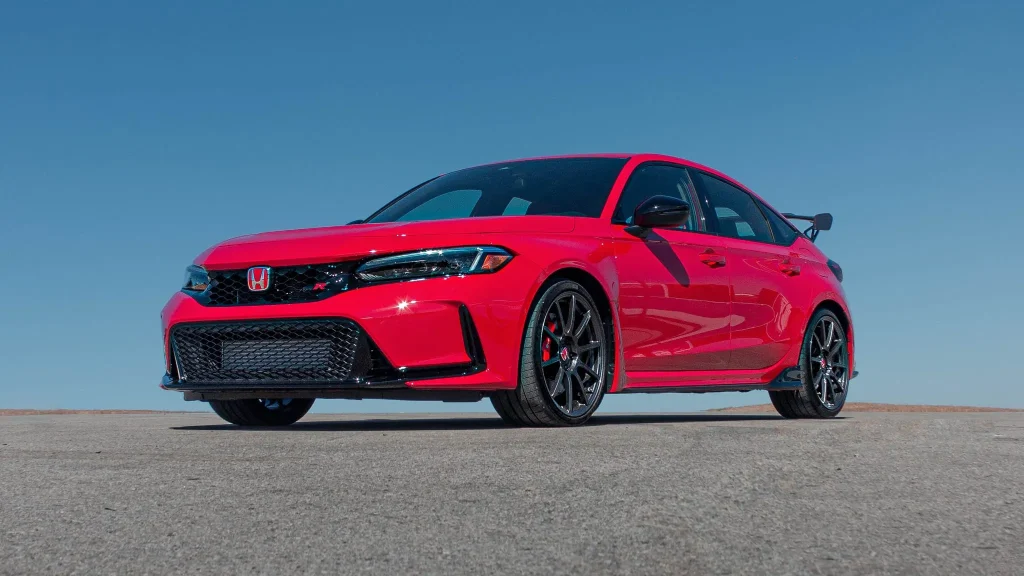
Interior design supports this dual purpose. Sport seats provide excellent support without being uncomfortable, and controls are laid out intuitively. Advanced safety and driver-assistance features further reinforce its practicality.
The reason the Civic Type R outperforms Toyota performance hatchbacks is its cohesion. Every component feels engineered to work together, resulting in a car that excels on both roads and tracks.
Honda’s commitment to driver-focused engineering makes the Civic Type R a standout example of what a hatchback can achieve.
5. Honda Brio
The Honda Brio rounds out this list by representing Honda’s strength at the entry level. Writing about the Brio is important because affordable hatchbacks form the backbone of many markets, and Honda consistently delivers more refinement here than Toyota.
The Brio stands out for its peppy engine, light steering, and responsive handling. It feels lively and easy to drive, especially in urban environments. This sense of agility gives it an edge over similarly priced Toyota hatchbacks, which often prioritize efficiency over engagement.
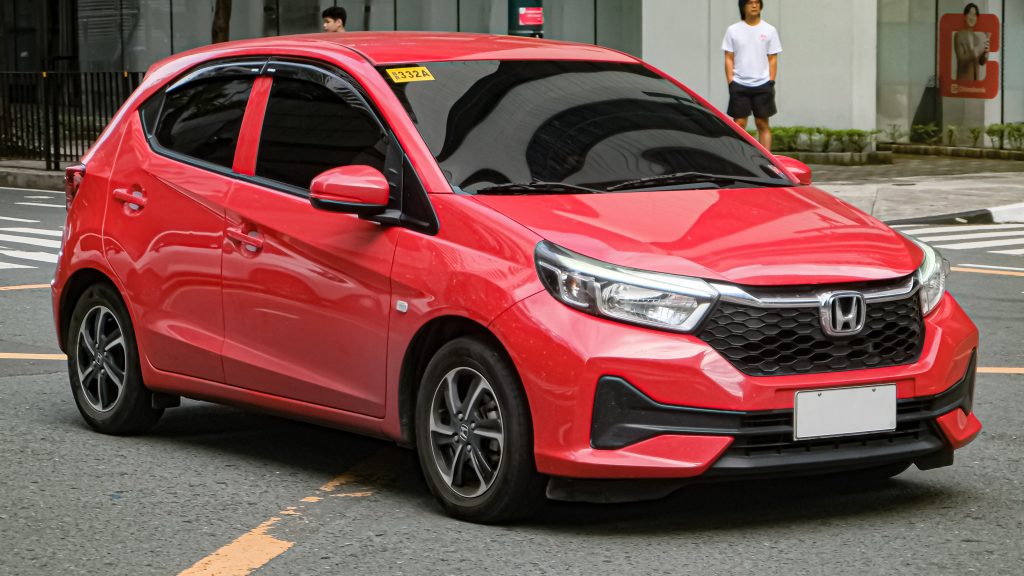
Interior space is used intelligently, offering comfortable seating for its size and a practical cargo area. While materials are simple, build quality feels solid and durable. Honda’s focus on ergonomics ensures controls are easy to reach and visibility remains excellent.
Reliability and low maintenance costs make the Brio appealing for first-time buyers and city users. The reason it outshines comparable Toyota hatchbacks is its character it feels fun, refined, and thoughtfully designed despite its affordability.
5 Toyota Hatchbacks
Toyota hatchbacks have earned a global reputation for reliability, efficiency, and long-term ownership confidence. For decades, Toyota’s approach to hatchback design has focused on minimizing risk for buyers prioritizing proven mechanical components, conservative tuning, and strong resale value.
This strategy has made Toyota hatchbacks especially popular among first-time buyers, families, and commuters who value predictability over experimentation.
A defining characteristic of Toyota hatchbacks is their emphasis on durability. Engines and transmissions are engineered to last under varied driving conditions, often with minimal maintenance requirements.
This makes Toyota vehicles particularly appealing in markets where long-term dependability and low running costs are critical decision factors. Fuel efficiency is another consistent strength, with Toyota frequently optimizing its hatchbacks for steady, economical daily use rather than spirited performance.
In recent years, Toyota has also made noticeable improvements in safety and technology. Advanced driver-assistance systems are now widely available across the lineup, reinforcing Toyota’s commitment to occupant protection.
Interiors have become more refined as well, though the brand generally favors straightforward layouts over bold design statements.
However, this conservative philosophy can sometimes limit emotional appeal. Compared to Honda hatchbacks, Toyota models often feel more restrained in handling, steering feedback, and overall engagement.
They excel at being dependable tools but may lack the dynamic personality and interior flexibility that Honda emphasizes.
The following five Toyota hatchbacks were chosen because they represent the brand’s strongest offerings. Each model demonstrates why Toyota remains a dominant force in the hatchback market, even when compared against Honda’s more driver-focused alternatives.
1. Toyota Corolla Hatchback
The Toyota Corolla Hatchback is one of Toyota’s most globally recognized hatchbacks, and it earns its place here because it embodies the brand’s core strengths. Writing about the Corolla Hatchback is important because it serves as a benchmark for reliability and efficiency in the compact segment.
One of the Corolla Hatchback’s biggest advantages is its reputation for long-term durability. Toyota’s engineering prioritizes mechanical simplicity and consistency, which translates into fewer unexpected issues over years of ownership.
For buyers who want a dependable daily car with minimal maintenance stress, the Corolla Hatchback delivers confidence that few competitors can match.
Fuel efficiency is another strong point. The Corolla Hatchback is tuned for steady, economical driving, making it ideal for urban commuting and long highway journeys.
Its power delivery is smooth and predictable, favoring comfort over excitement. While this may not appeal to driving enthusiasts, it suits the needs of most everyday users.
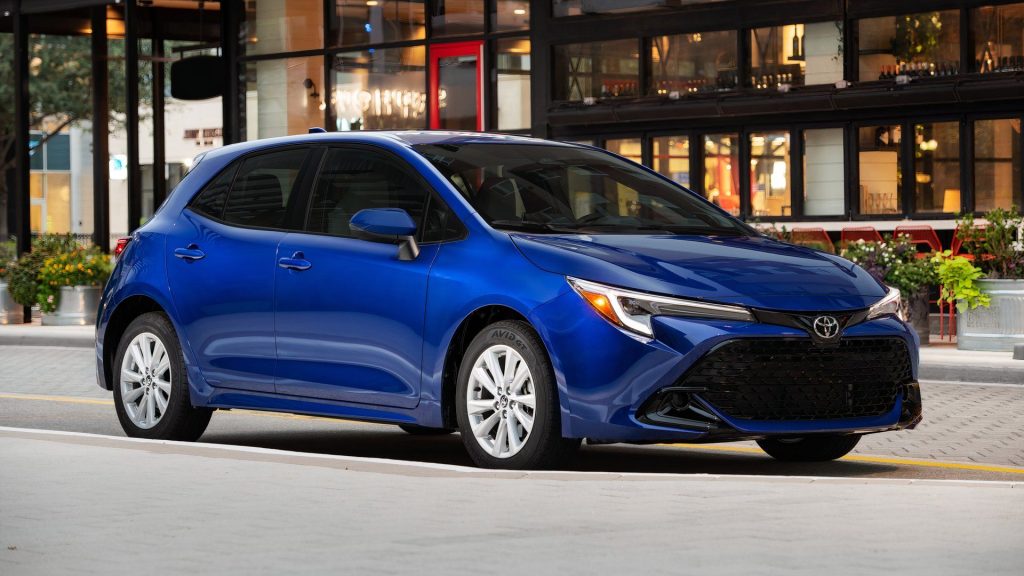
Interior design is clean and functional. Controls are intuitive, materials are durable, and the cabin feels solidly assembled. Rear-seat space and cargo capacity are adequate for the segment, though not class-leading. Toyota focuses more on longevity than flexibility, which is evident in the interior layout.
The reason the Corolla Hatchback is included is balance. While it may not outperform Honda’s Civic Hatchback in driving engagement or interior innovation, it remains a dependable, efficient, and easy-to-own vehicle.
This reliability-first approach continues to make the Corolla Hatchback a safe and sensible choice for millions of buyers worldwide.
2. Toyota Yaris Hatchback
The Toyota Yaris Hatchback represents Toyota’s philosophy of efficiency, simplicity, and long-term dependability in its purest form.
Writing about the Yaris Hatchback is important because it shows how Toyota targets buyers who prioritize low ownership costs, easy drivability, and proven reliability over performance or premium features.
One of the Yaris Hatchback’s strongest advantages is its compact size combined with excellent fuel efficiency. It is engineered primarily for city use, where tight streets, heavy traffic, and limited parking demand a small, maneuverable vehicle.
The light steering and short turning radius make the Yaris exceptionally easy to drive in urban environments, especially for new or less experienced drivers.
Toyota’s powertrain tuning focuses on smoothness and longevity rather than excitement. Acceleration is adequate for daily commuting, and the car feels composed at moderate speeds.
While it lacks the responsive throttle and engaging handling found in comparable Honda hatchbacks, the Yaris compensates with predictable behavior and low mechanical stress, which contributes to its long service life.
Inside, the Yaris Hatchback offers a straightforward and functional cabin. Materials are durable rather than luxurious, and the layout is designed for ease of use.
Infotainment and safety systems are practical and reliable, though not particularly advanced for the segment. Rear-seat space and cargo capacity are limited, reflecting the car’s city-focused design.
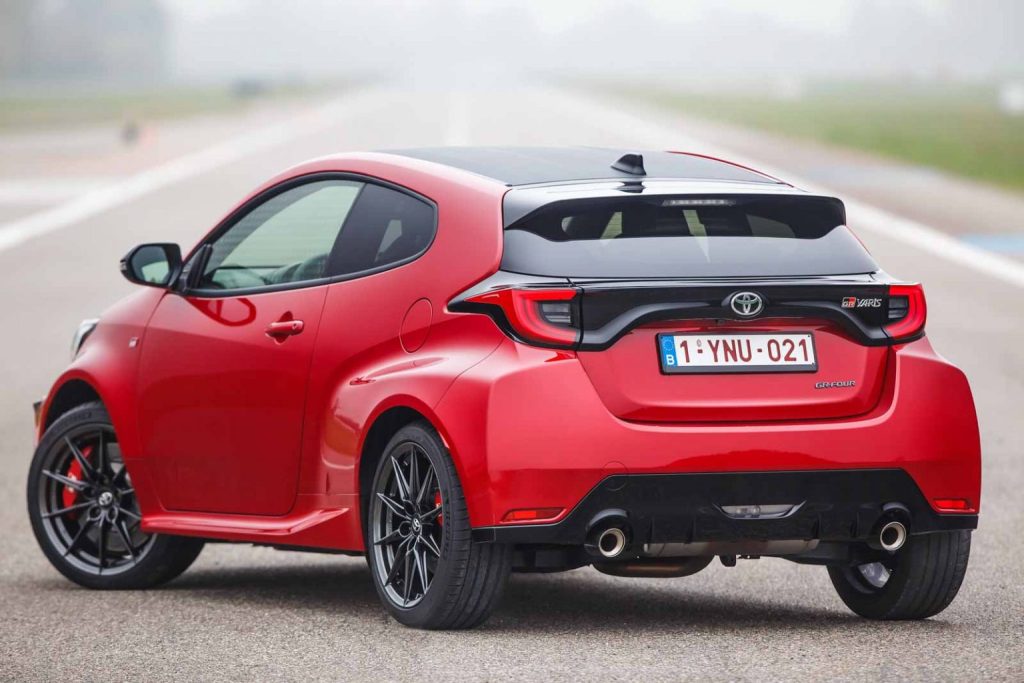
The reason the Yaris Hatchback is included in this comparison is its honesty. It does exactly what it promises efficient, reliable transportation with minimal fuss.
However, when compared to Honda’s subcompact hatchbacks, it often feels less flexible, less engaging, and less refined overall. Toyota prioritizes peace of mind, while Honda tends to deliver a more versatile and enjoyable daily experience.
3. Toyota Glanza
The Toyota Glanza occupies an interesting position in Toyota’s lineup, and writing about it matters because it highlights Toyota’s strategic approach to expanding its hatchback portfolio.
The Glanza is designed to attract buyers seeking a premium feel, strong fuel efficiency, and Toyota’s trusted badge in a compact package.
One of the Glanza’s key strengths is its smooth and efficient powertrain. The engine is tuned for relaxed driving, delivering consistent performance in city and highway conditions. Fuel efficiency remains a standout feature, making the Glanza appealing to cost-conscious buyers who still want a modern, well-equipped hatchback.
Interior quality is where the Glanza makes its strongest impression. The cabin feels more refined than entry-level Toyota hatchbacks, with better materials, a modern infotainment system, and a comfortable seating layout. For everyday commuting and family use, the Glanza provides a pleasant, stress-free driving environment.
However, the driving dynamics are conservative. Steering feedback is light, and suspension tuning prioritizes comfort over agility.
This makes the car easy to live with but less engaging on winding roads or spirited drives. Compared to Honda hatchbacks in the same price range, the Glanza often feels more appliance-like, competent but emotionally neutral.
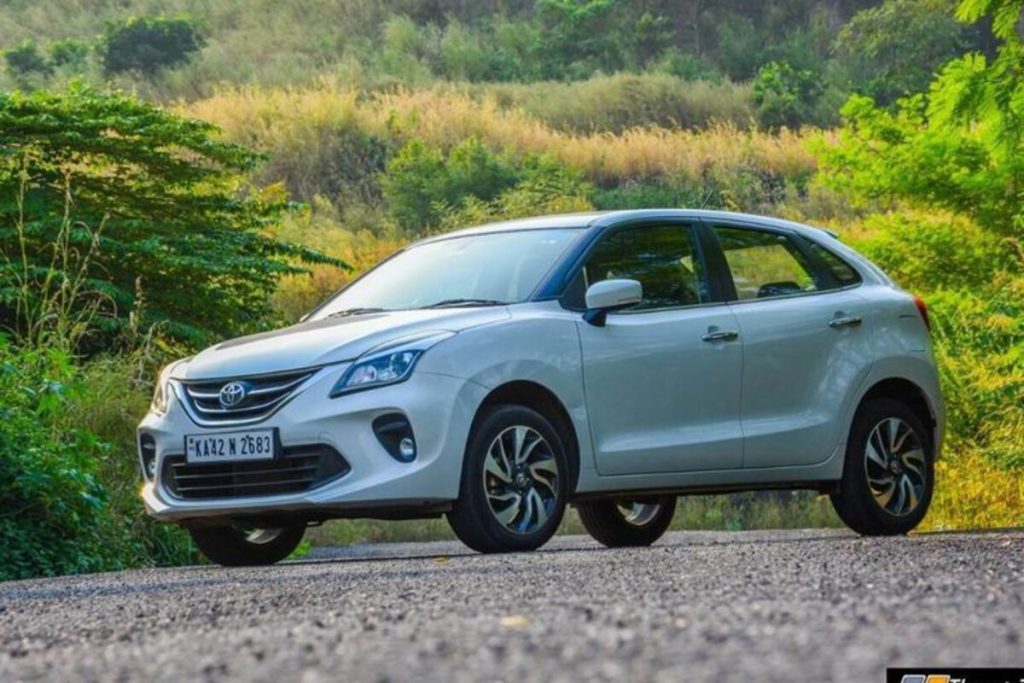
The reason for including the Glanza is balance. It offers Toyota reliability, good fuel economy, and a premium touch at a competitive price. Yet, this also highlights where Honda gains an advantage.
Honda hatchbacks typically feel more purpose-built, better integrated, and more driver-focused, while the Glanza leans heavily on safe, proven formulas. It succeeds as a dependable daily car but lacks the dynamic edge that defines Honda’s hatchback identity.
4. Toyota Prius
The Toyota Prius is one of the most influential hatchbacks ever produced, and writing about it is essential because it represents Toyota’s leadership in hybrid technology.
The Prius is not designed to be exciting or sporty; instead, it focuses almost entirely on efficiency, emissions reduction, and long-term cost savings. This clear purpose is both its greatest strength and its main limitation when compared to Honda hatchbacks.
Fuel efficiency is the Prius’s defining feature. Its hybrid powertrain delivers exceptional mileage in both city and highway driving, making it an ideal choice for buyers with high daily commute distances or those prioritizing environmental impact.
Toyota’s hybrid systems are widely regarded as some of the most reliable in the industry, with proven longevity and low maintenance requirements.
The driving experience, however, is deliberately relaxed. Acceleration is smooth but unremarkable, steering is light, and suspension tuning prioritizes comfort over engagement.
While this makes the Prius easy and stress-free to drive, it lacks the responsiveness and connection that Honda hatchbacks typically provide. For drivers who value involvement behind the wheel, the Prius can feel detached.
Interior design emphasises efficiency and practicality. The cabin is spacious, especially in terms of rear-seat comfort and cargo capacity, making it suitable for families and ride-sharing use. Controls are intuitive, though the overall design prioritises function over warmth or sportiness.
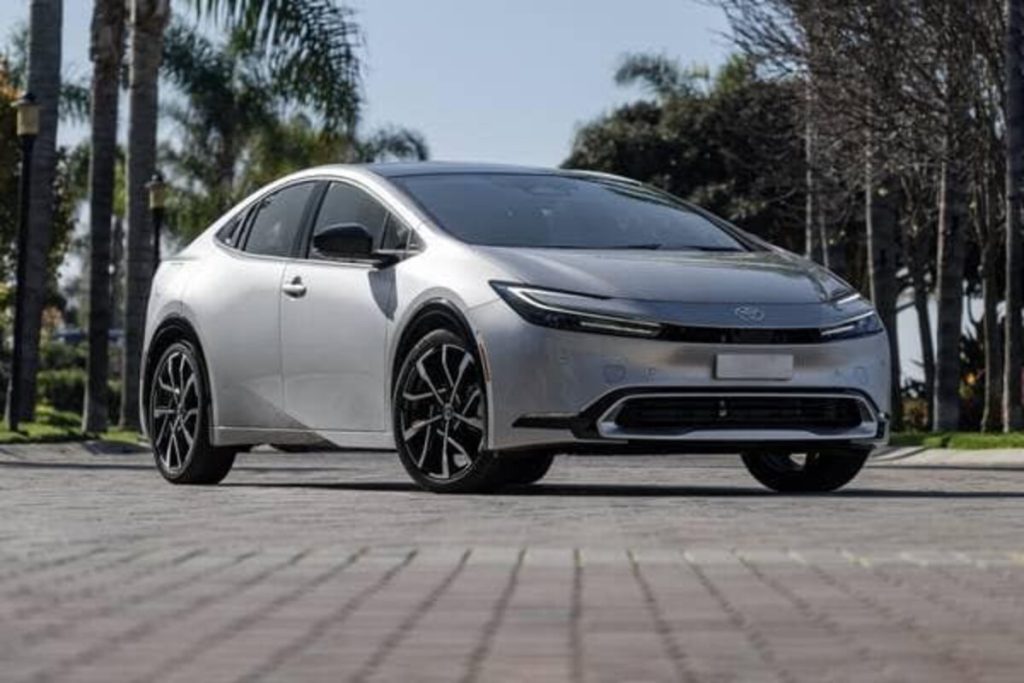
The reason the Prius is included in this comparison is contrast. It excels in efficiency and reliability but highlights how Honda hatchbacks often deliver a more balanced experience, combining good fuel economy with better driving dynamics and interior engagement.
The Prius is an outstanding tool for its purpose, but Honda’s hatchbacks tend to feel more versatile and emotionally satisfying over long-term ownership.
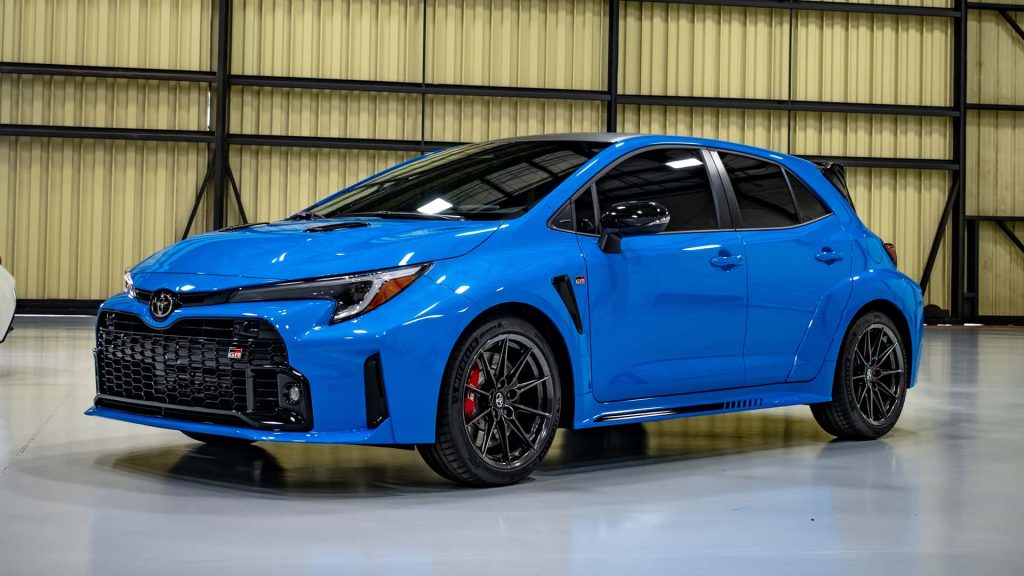
5. Toyota GR Corolla
The Toyota GR Corolla represents Toyota’s most aggressive attempt to compete directly with performance-focused Honda hatchbacks. Writing about the GR Corolla is important because it marks a shift in Toyota’s traditionally conservative hatchback strategy toward enthusiast-oriented engineering.
The GR Corolla is built with performance as its core mission. Its turbocharged engine delivers strong acceleration, and the chassis is tuned for grip, stability, and high-speed confidence.
All-wheel drive enhances traction and makes the car feel planted in challenging driving conditions. On paper and in isolation, the GR Corolla is an impressive machine.
However, its focus is narrow. Ride quality is firm, road noise is noticeable, and daily comfort takes a back seat to performance. While enthusiasts may appreciate this, it limits the car’s appeal as an everyday hatchback. Honda’s performance hatchbacks, by contrast, tend to strike a better balance between speed and usability.
Interior space and cargo practicality are adequate but compromised by the car’s performance-oriented layout. The cabin feels more functional than refined, and while it supports spirited driving, it lacks the everyday polish found in Honda’s comparable offerings.
The reason the GR Corolla is included is significance. It shows Toyota can build a serious performance hatchback when it chooses to.
Yet, it also underscores a key difference: Honda integrates performance into its hatchbacks more seamlessly, making them enjoyable both on spirited drives and daily commutes. The GR Corolla excels in bursts of excitement but feels more specialized than Honda’s broader, more adaptable approach.
This comparison between Honda and Toyota hatchbacks reveals how two of the world’s most trusted automotive brands pursue very different philosophies within the same segment.
Both manufacturers are known for reliability and efficiency, yet the way they translate those values into hatchback design leads to distinct ownership experiences.
Honda hatchbacks consistently emphasize balance. Models like the Civic Hatchback, Jazz, and City Hatchback demonstrate Honda’s ability to combine smart interior packaging, engaging driving dynamics, and long-term dependability in a single package.
Even at the entry level, Honda hatchbacks tend to feel lively, intuitive, and thoughtfully engineered. They are not just economical transportation tools they are cars designed to be used, enjoyed, and adapted to changing lifestyles.
Toyota hatchbacks, by contrast, prioritize peace of mind. Vehicles like the Corolla Hatchback, Yaris, and Prius focus on efficiency, durability, and predictable ownership costs.
These cars excel at minimising risk and maximising longevity, making them ideal for buyers who value consistency above all else. Toyota’s conservative tuning and proven engineering have earned immense trust worldwide.
However, that same conservatism can limit emotional appeal. When compared directly, Toyota hatchbacks often feel less engaging, less flexible, and less refined in everyday use.
Even Toyota’s more adventurous efforts, such as the GR Corolla, tend to feel narrowly focused rather than broadly usable.
The key reason Honda hatchbacks come out ahead in this comparison is versatility. Honda manages to deliver strong reliability without sacrificing driving enjoyment, interior usability, or character. Its hatchbacks feel equally at home in city traffic, highway cruising, and occasional spirited driving.
Ultimately, the choice between Honda and Toyota hatchbacks depends on priorities. Buyers who want a dependable, low-effort ownership experience may gravitate toward Toyota.
Those seeking a more rewarding, adaptable, and engaging hatchback without giving up reliability are more likely to find satisfaction with Honda.
This comparison highlights why, across multiple segments and use cases, Honda hatchbacks often offer the more complete package.
Also Read: 5 Ford Trucks That Are Better Than 5 Chevy Trucks
