For many Americans, Porsche ownership feels like something reserved for high-income collectors or weekend track-day regulars. Yet the brand’s long history, wide model range, and deep enthusiast base have created a vibrant used-car market filled with accessible options.
In 2025, several older Porsches have settled into remarkably affordable price brackets, often costing less than a new economy car while offering far more personality and performance.
Whether you are searching for your first European sports car, wanting a balanced roadster, or craving a practical performance sedan, there is a Porsche from past decades that fits both your budget and your driving style.
Below are ten used Porsche models that stand out in 2025 as great buys for American shoppers looking for a mix of value, reliability, and authentic Porsche character.
1. Porsche 911 (996 Generation, 1998–2004)
The 996 remains the most attainable gateway into the iconic 911 lineup, making it a compelling choice for buyers who have always dreamed of owning a rear-engine Porsche.
Prices for clean examples generally sit between $20,000 and $35,000 in the US, depending on mileage and maintenance history.
This makes the 996 an interesting value proposition, considering it delivers nearly all the traditional elements that make a 911 desirable: sharp handling, timeless silhouette, flat-six performance, and a genuine enthusiast following.
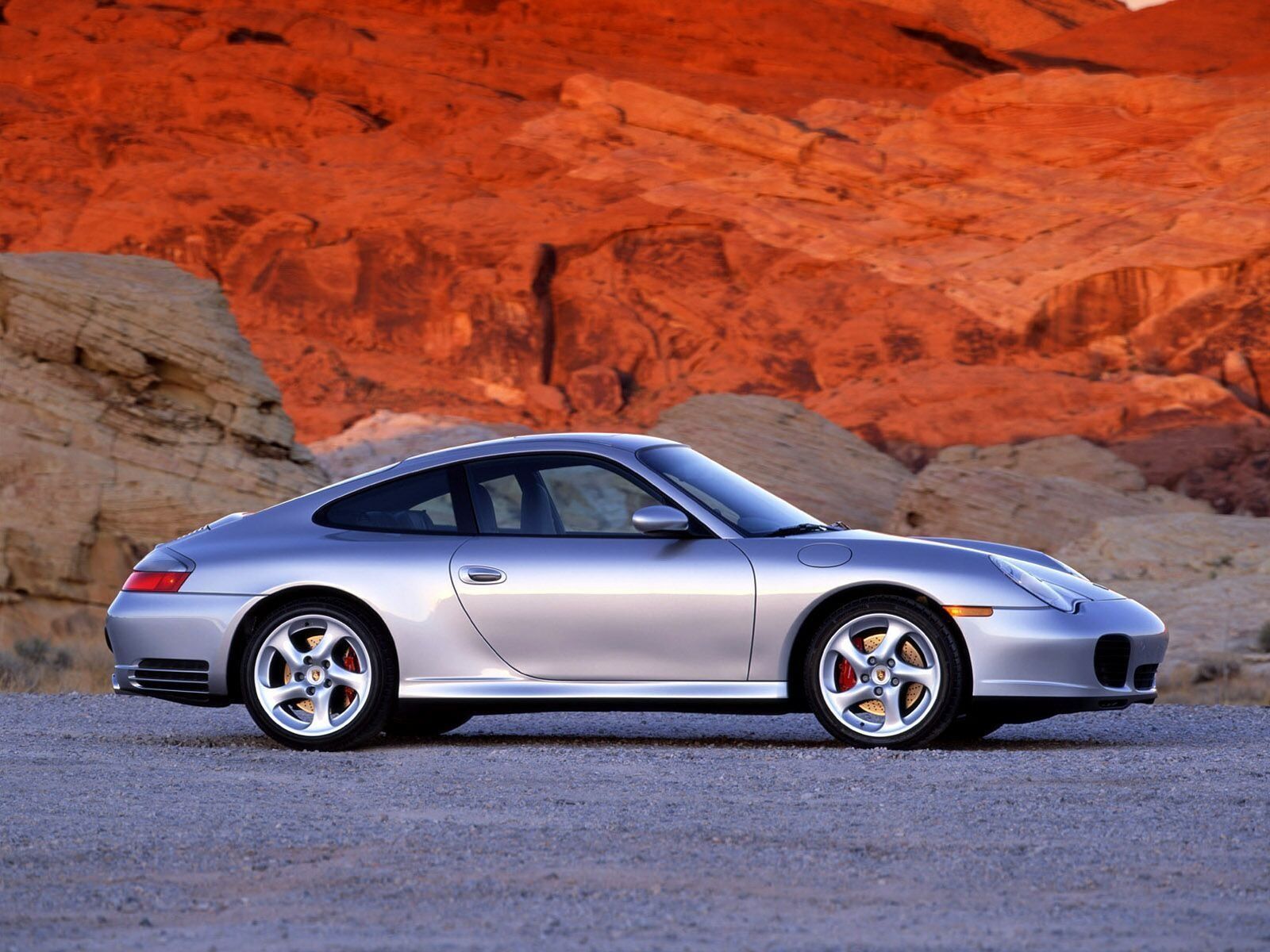
The cabin is more modern than older air-cooled models, yet still retains an unmistakably analog driving feel that appeals to purists.
Buyers should, however, pay close attention to the well-known IMS bearing issue in earlier engines and arrange a proper pre-purchase inspection to ensure long-term reliability.
When maintained well, the 996 offers a thrilling entry into Porsche ownership without the premium price tag newer models demand.
Also Read: 10 Best Used Sedans Under $10,000 in 2025
2. Porsche Boxster 986 (1996–2004)
The first-generation Boxster has become a favorite among budget-conscious sports-car fans thanks to its mid-engine balance, lively chassis, and convertible fun factor.
Compared to the 911, the 986’s prices are significantly lower, often ranging from $12,000 to $20,000 for well-kept examples. This affordability makes it one of the most approachable Porsches on the used market.
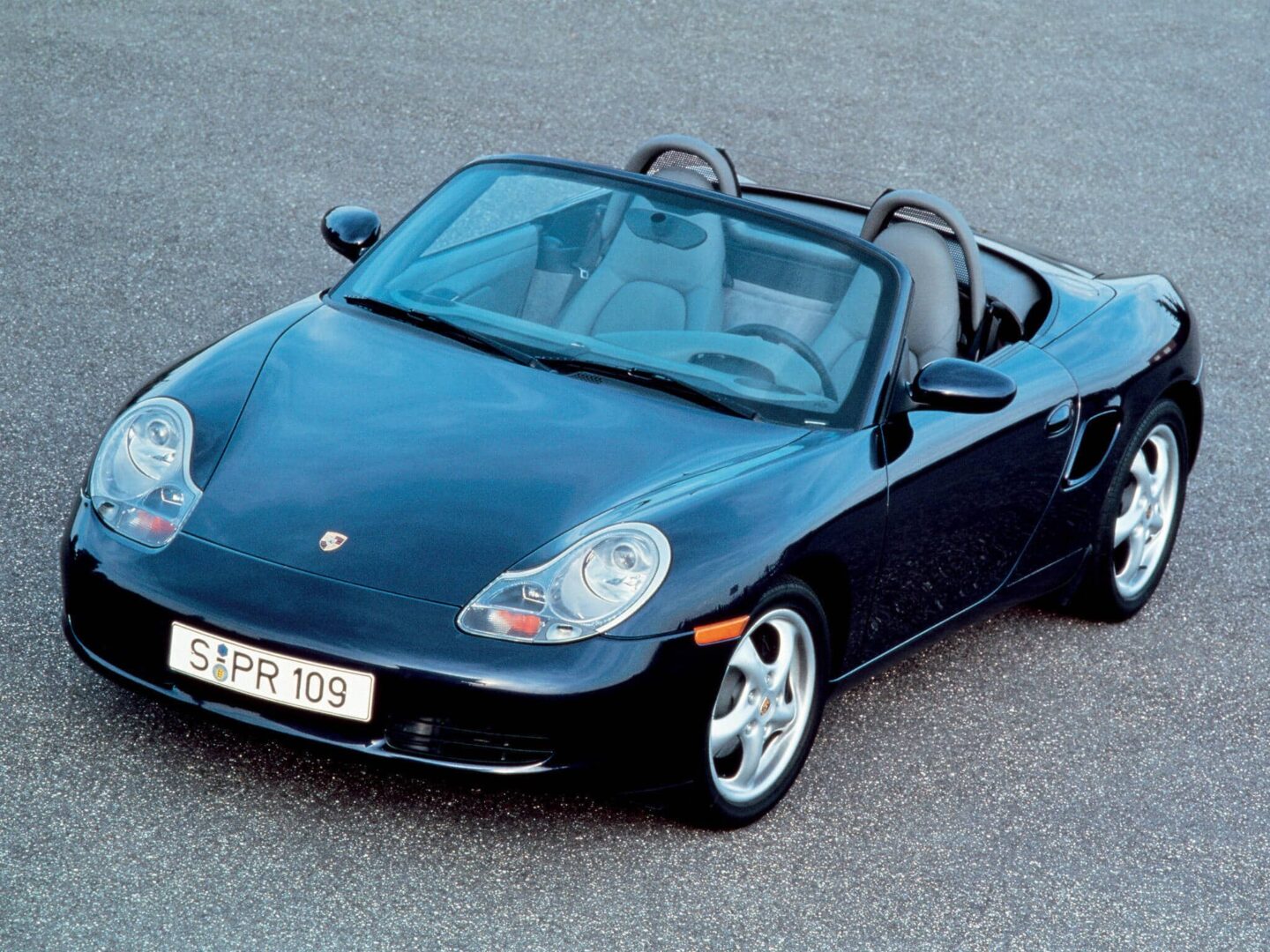
Despite its lower price, the Boxster still delivers an engaging driving experience, with precise steering, a rev-happy flat-six engine, and a layout that rewards confident drivers, especially on winding American backroads.
While it shares the IMS concerns of the early 996, many owners have addressed this issue proactively, and the 986’s simplicity makes it less expensive to maintain than some other Porsches.
For buyers seeking an accessible yet genuinely exciting sports car, the first-gen Boxster remains an excellent choice in 2025.
The Porsche Boxster is a car that truly needs no introduction, but here’s one anyway. Launched in 1996 as a two-seat roadster, it offered a sublime driving experience without being punishing for daily use.
From the moment it arrived, the Boxster naturally became the next step up from an MX-5 in both power and price. Like many Porsches, it immediately defined its own category.
The Boxster was pure sports car, with no shared parts from any other manufacturer’s saloon. That uniqueness is what made it feel special. Since its introduction, it has dominated its class, even as that segment has shrunk over the years.
Essentially, any Boxster you buy, from the original 986 onward, performs the same role with the same precision and enjoyment. The only exception might be the four-cylinder 718, which we’ve covered separately.
Porsche used the Boxster as a strategic reboot. At the time, the company’s lineup consisted of the 911, 968, and 928, three models that were expensive to build because they shared almost nothing in common.
The 968 and 928, in particular, were losing money. The Boxster allowed Porsche to rationalize its production. Sit in an early Boxster, and almost everything forward of your spine shares components with the 911.
Porsche learned this approach from the VW Group: early TT Roadsters, for example, shared much of their mechanicals with a Skoda hatchback.
Central to the Boxster’s appeal is its captivating six-cylinder engine, mounted centrally behind the seats where the 911’s rear seats would be.
This mid-engine layout gives the Boxster a stability and predictability that makes it less challenging to drive than a 911, while retaining that pure sports car feel. Everything else is thoroughly Porsche: aluminum suspension, strong brakes, and controls with uncanny precision that make the driver feel intimately connected to the car.
Porsche has always favored evolution over dramatic generational changes, and the Boxster is no exception. If you know the new models, the original 986 is instantly recognizable.
The first-generation car is slightly smaller, with softer, more oval lines, like a pebble smoothed by sand and waves. A hidden, electrically rising spoiler complements the gently tapering tail, maintaining the brand’s focus on functional elegance.
The original base Boxster started with a 2.5-liter engine producing 204 horsepower, just enough to reach 0-62 mph in just under seven seconds. Torque peaked at 181 lb-ft, a figure that small modern cars can now rival.
Feedback from early drivers led Porsche to increase engine size to 2.7 liters with 220 horsepower in 1999, and introduce the S version with 3.2 liters generating 252 horsepower. By the end of the 986’s production, output had risen to 240 hp for the base model and 280 hp for the S.
Early base models came with a five-speed manual gearbox, while later and higher-spec versions offered six-speed manuals. A five-speed Tiptronic automatic was also available—less engaging, yes, but it preserved the drivetrain from wear caused by drivers with heavy feet.
The Boxster combines Porsche’s hallmark driving precision, timeless styling, and mid-engine balance, making it a classic roadster that has stood the test of time.
3. Porsche Boxster 987 (2005–2012)
A step up from the 986, the 987 Boxster offers more refinement, improved cabin materials, better suspension tuning, and stronger engines.
It is noticeably more modern in feel, making it an appealing middle ground between pure classic motoring and contemporary sports-car performance.
Most base models fall under the $25,000 mark, which allows shoppers to enjoy a newer and more comfortable Porsche without overspending.
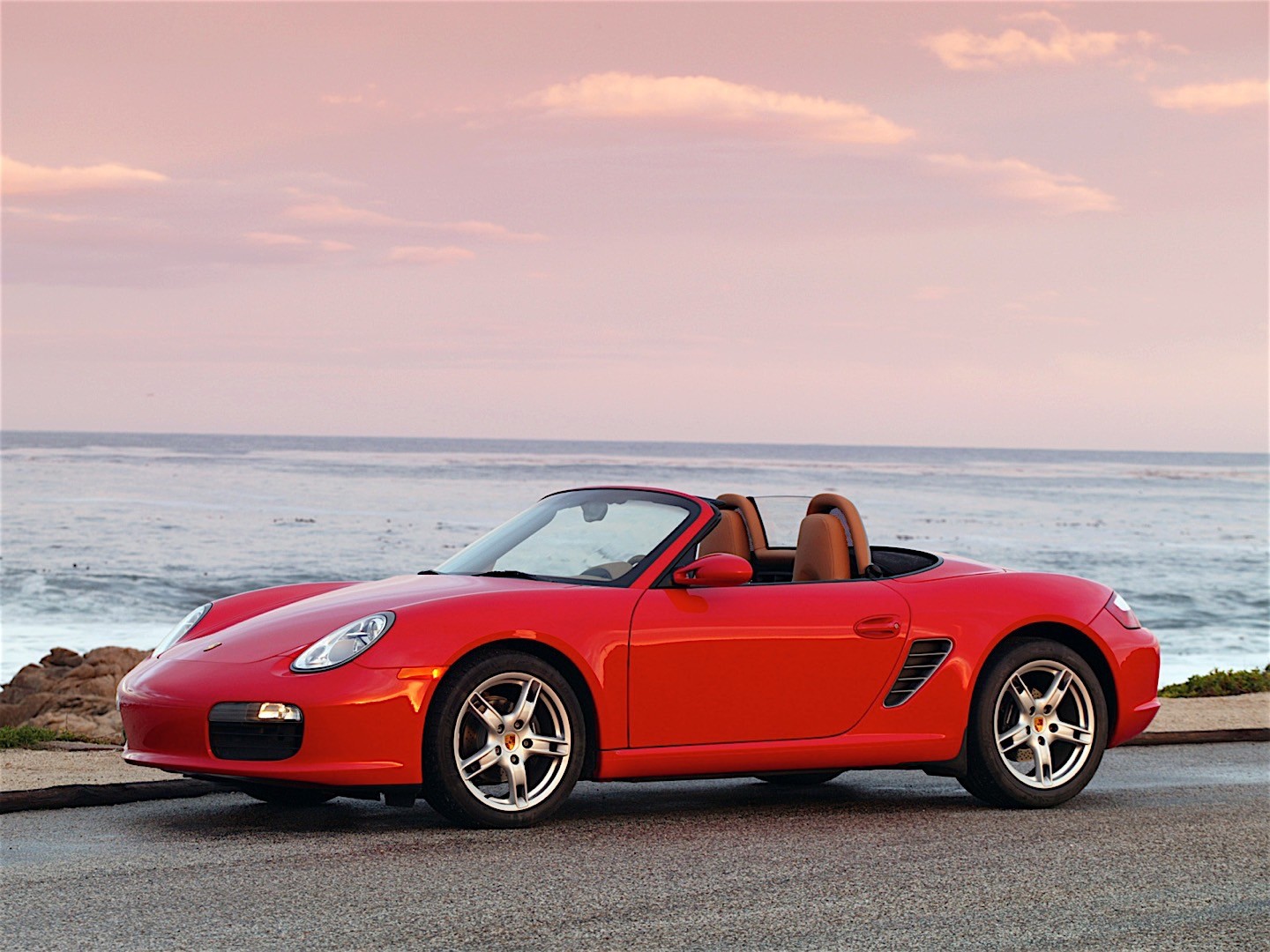
The 987’s handling feels planted and confident, with a more mature ride that makes it suitable for daily commuting in addition to spirited weekend drives.
The interior finally feels aligned with Porsche’s premium image thanks to better ergonomics and higher-quality materials.
Like all older sports cars, it benefits from a strong service history, but when properly maintained, the 987 stands out as one of the most rewarding Porsches the average driver can afford today.
4. Porsche Cayman 987 (2006–2012)
For those who enjoy the Boxster’s driving dynamics but prefer a hardtop design, the 987 Cayman is a standout choice. The coupe body not only improves rigidity but also enhances the car’s handling precision and overall balance.
Pricing usually ranges from $18,000 to $28,000, making it a tremendous value considering its reputation as one of Porsche’s best-handling cars of the modern era.
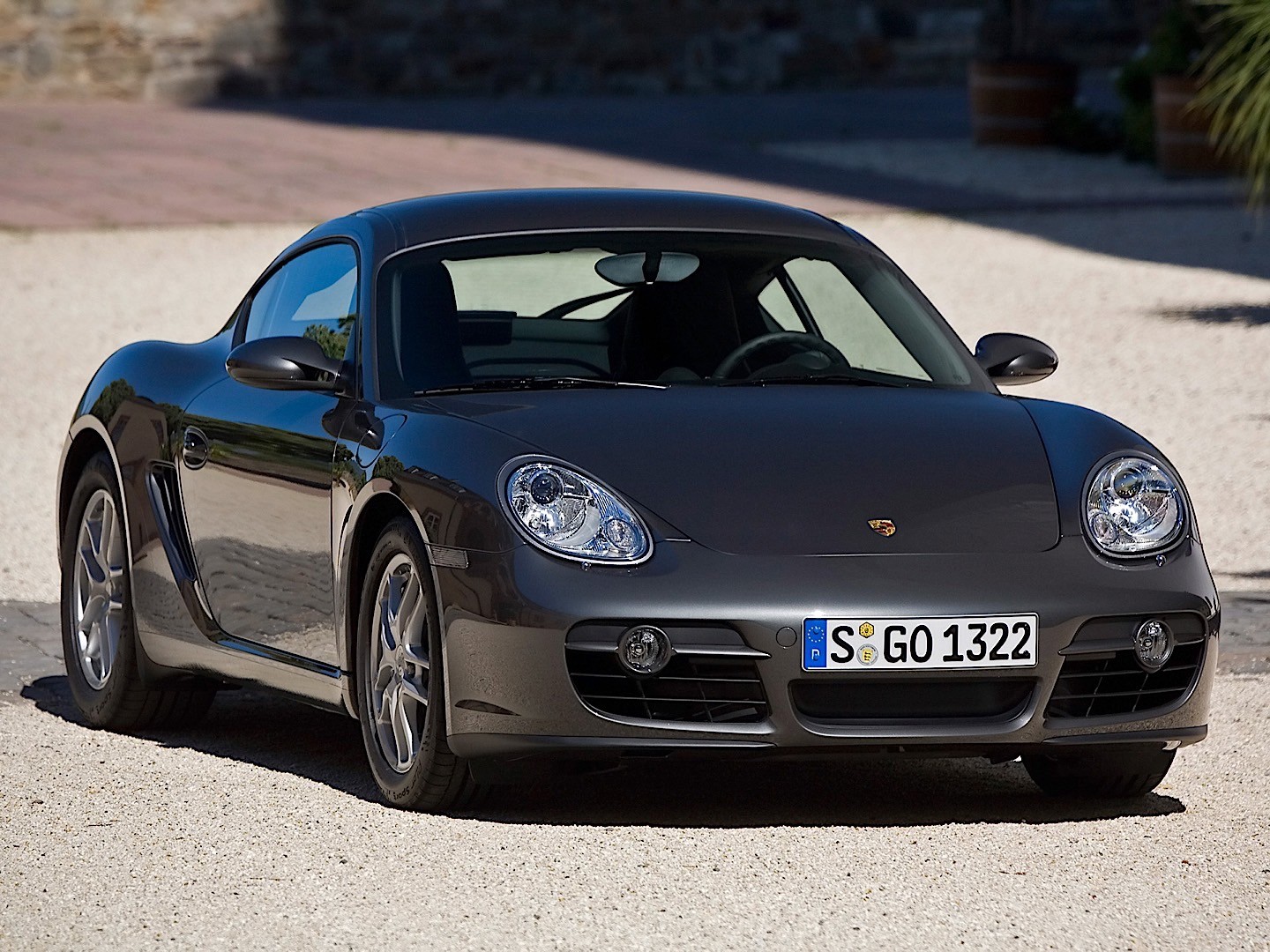
Unlike the Boxster, the Cayman has a more distinctive profile and a slightly more aggressive driving character, appealing to drivers who value sharp turn-in and high-speed stability.
While Cayman S models tend to command higher prices, the base 2.7-liter variant remains the hidden gem of the lineup, offering plenty of performance for far less money.
With its mid-engine design, practical hatchback cargo area, and unmistakable Porsche styling, the Cayman 987 deserves its spot as one of the smartest affordable Porsche buys of 2025.
Porsche introduced the Cayman lineup in S trim alongside the second-generation Boxster in 2005, waiting a year before releasing the lower-powered version. By that time, customers had already come to appreciate the Boxster and Cayman for their well-balanced handling and affordability compared with the more notorious 911.
This popularity allowed Porsche to sell higher numbers, benefiting the company’s finances. However, Porsche recognized that some buyers wanted a daily-driver sports car, usable in winter, economical to run, and without the high-spec features of the Cayman S.
To meet that demand, the lower-powered Cayman debuted in 2006. Sharing much of its underpinnings with the Boxster, it was also more cost-effective to produce.
The Cayman’s front fascia borrowed the Boxster 987’s oval-shaped headlights, making it instantly recognizable as a Porsche. The lower bumper was slightly different, and depending on options, buyers could add round fog lamps integrated into the large side scoops that flanked the center air intake.
From the side, the Cayman clearly shared several parts with the Boxster, including the front fenders, windshield, and doors, though its door mirrors were unique. The roofline flowed into a rounded greenhouse and a sloped tailgate.
Triangular vents with two oblique slats were placed on the rear quarter panels, while aerodynamically shaped side sills ran along the lower body.
At the back, a large rear window with an integrated wiper improved visibility, addressing a common complaint about the Boxster.
The taillights mirrored the Cayman S, with clear upper sections for turn signals and reversing lights, but the lower bumper differed, featuring a trapezoidal exhaust in the center rather than the twin-pipe layout of the more powerful S variant.
Inside, the Cayman accommodated two passengers on standard sports seats. The simple dashboard design featured four round vents and a driver-focused instrument cluster.
A visor sat above the binocular-style gauges, with the tachometer at the center, flanked by the speedometer on the left and additional gauges on the right. The center stack could be equipped with a high-quality sound system or an infotainment unit with navigation, depending on the chosen options.
Under the rear deck, the Cayman housed a 2.7-liter flat-six engine carried over from the Boxster 986/987. Standard transmission was a five-speed manual, with an optional five-speed automatic Tiptronic S featuring manual override for those who preferred convenience without sacrificing control.
This combination of accessible performance, Porsche engineering, and thoughtful design made the lower-powered Cayman a compelling alternative for buyers seeking a usable, well-balanced sports car without the extremes of the Cayman S.
5. Porsche 944 (1982–1991)
The Porsche 944 is a beloved classic that continues to offer impressive value for enthusiasts seeking vintage charm without the sky-high maintenance costs of older 911s.
Prices often fall between $8,000 and $15,000, making it one of the cheapest entry points into the Porsche brand. The 944’s front-engine layout and rear transaxle design give it a near-perfect weight distribution, resulting in superb handling that feels both predictable and confidence-inspiring.
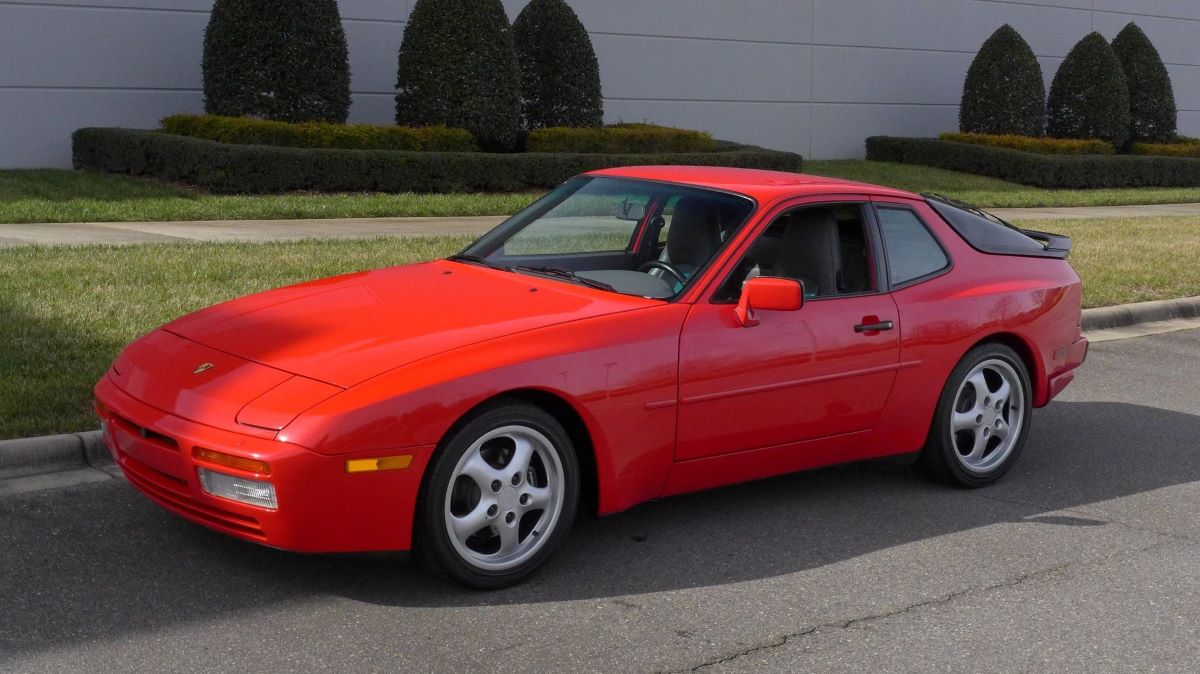
It is also one of the few Porsches from its era that can serve as a daily driver thanks to comfortable seats, good visibility, and relatively simple mechanical systems.
While buyers need to account for timing belt service and the general upkeep of an older European car, the 944’s parts and maintenance costs are surprisingly reasonable. For anyone wanting an analog driving experience with genuine Porsche DNA, the 944 remains a standout bargain.
6. Porsche 968 (1992–1995)
Positioned as the spiritual successor to the 944, the Porsche 968 is a refined and increasingly collectible front-engine sports car.
With most examples priced between $20,000 and $30,000 in 2025, the 968 offers a rare combination of classic Porsche styling, smooth power delivery, and balanced handling.
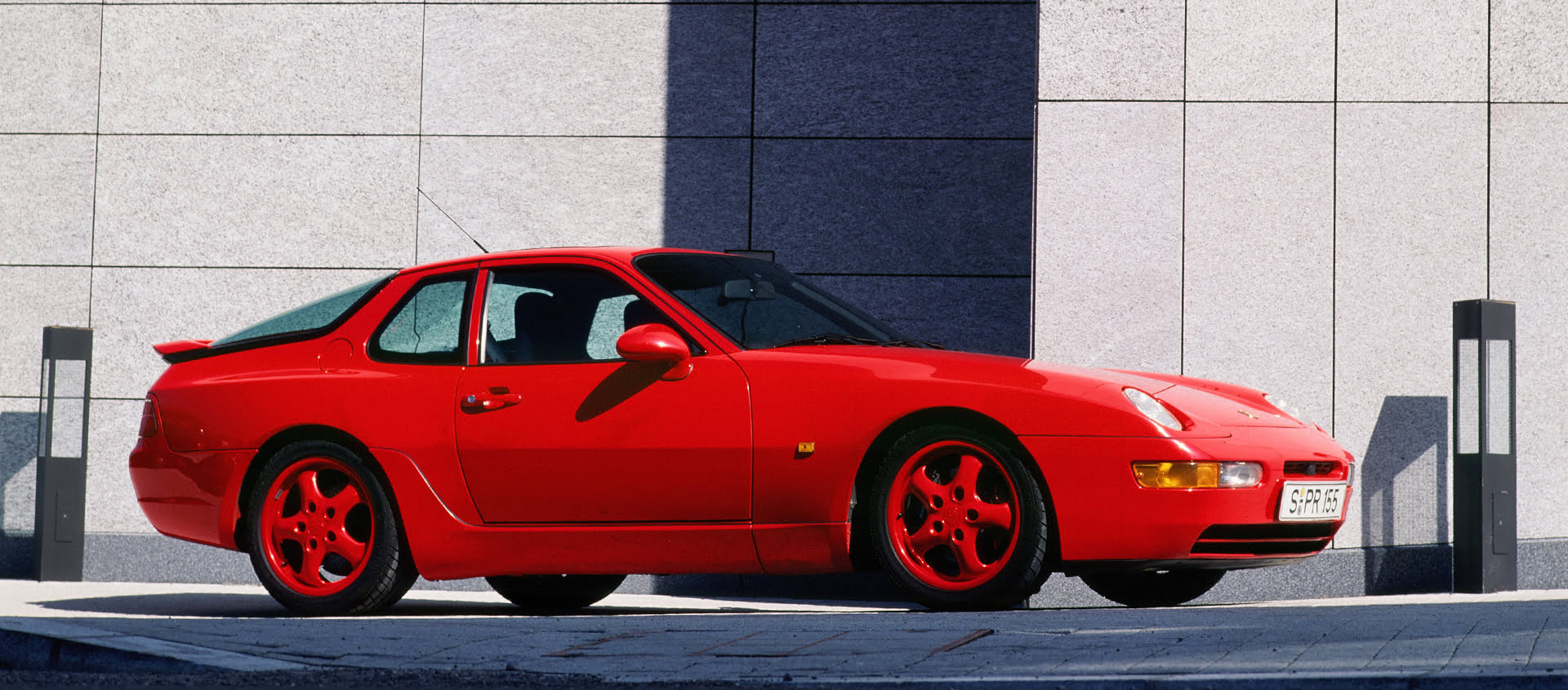
It features a highly advanced 3.0-liter four-cylinder engine for its time and comes with either a six-speed manual or a Tiptronic automatic, though the manual is far more desirable.
The 968’s rarity compared to the 944 gives it an appeal among collectors, and its driving dynamics make it a joy on long weekend cruises across scenic American routes.
This is a car that blends vintage character with surprising performance, making it a compelling alternative to far pricier classic sports cars.
Also Read: 5 Cars for Omaha Practical Buyers vs 5 That Cost a Lot to Maintain
7. Porsche Panamera (2010–2016 Base Models)
For shoppers needing more space without sacrificing the Porsche driving experience, early Panamera models offer exceptional value.
The first-generation Panamera blends sports-sedan performance with a comfortable interior and legitimate cargo room, making it suitable for families, commuters, and road-trip enthusiasts.
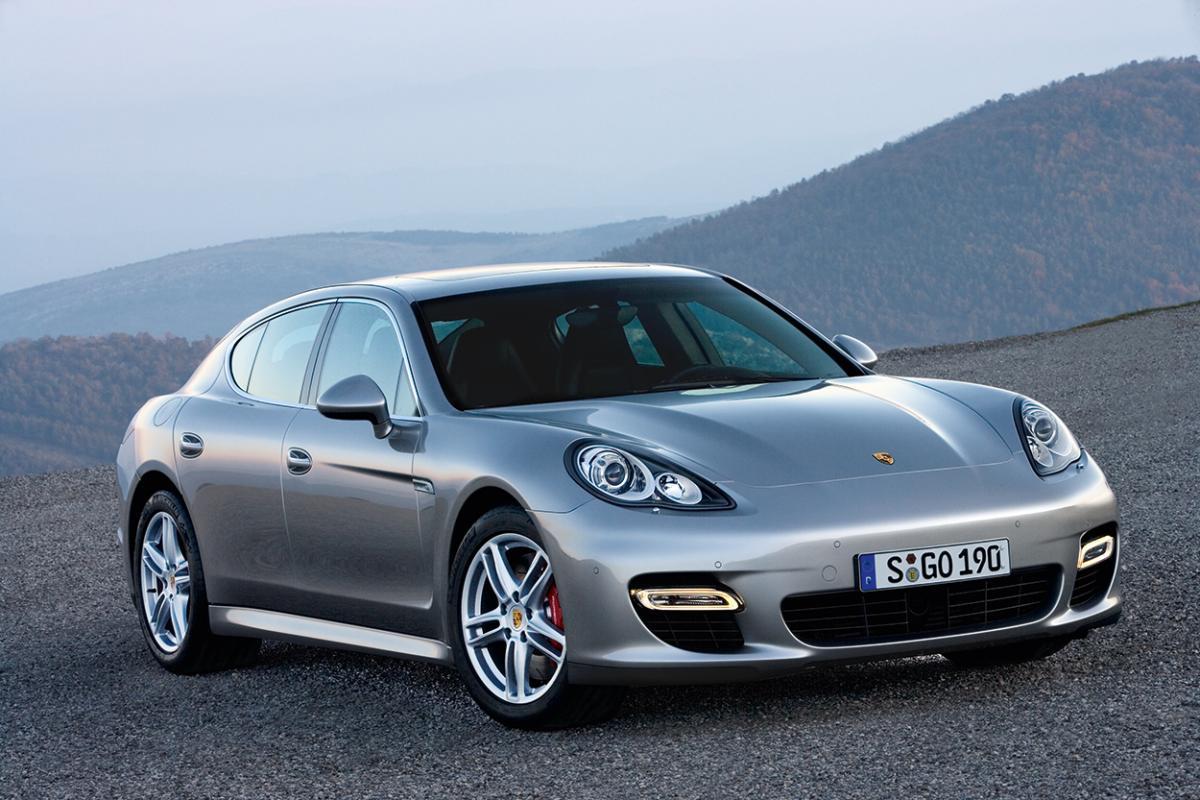
Base V6 models can be found between $20,000 and $30,000, and they offer a level of refinement and luxury that rivals BMW, Audi, and Mercedes sedans of the same era.
The Panamera’s driving character remains distinctly Porsche, with crisp steering and composed handling despite its size.
Buyers should pay attention to suspension and electronic systems during inspection, but well-maintained Panameras provide a surprisingly affordable path into Porsche’s luxury lineup.
The Porsche Panamera made its global debut in April at the Shanghai Motor Show, marking the arrival of Porsche’s fourth standalone model alongside the 911, Boxster/Cayman, and Cayenne. Sales are slated to begin in late summer of the following year.
Porsche has learned from past experiences with models like the 928 that buyers strongly associate the brand with the 911.
As a result, the Panamera’s design does not stray far from that iconic shape. Even as a front-engined vehicle, it maintains the aesthetic of a stretched Carrera. The Panamera measures 76.0 inches in width, 55.8 inches in height, and spans an overall length of 195.7 inches.
Porsche has revealed two initial trim levels: the Turbo and the 4S. Unlike the 911 or Boxster/Cayman, the Panamera does not employ a flat-six boxer engine. Instead, it draws from the Cayenne’s architecture, offering traditional V6 and V8 powerplants.
Depending on the trim, output ranges from 300 to 500 bhp. Buyers can choose between a six-speed manual gearbox or the seven-speed Double-Clutch Gearbox (PDK). Additionally, Porsche is planning a hybrid variant in the near future, further expanding the Panamera’s lineup.
The Panamera represents Porsche’s effort to combine the brand’s signature performance and design language with a larger, more practical four-door layout, creating a new segment for enthusiasts seeking sportscar dynamics in a more versatile package.
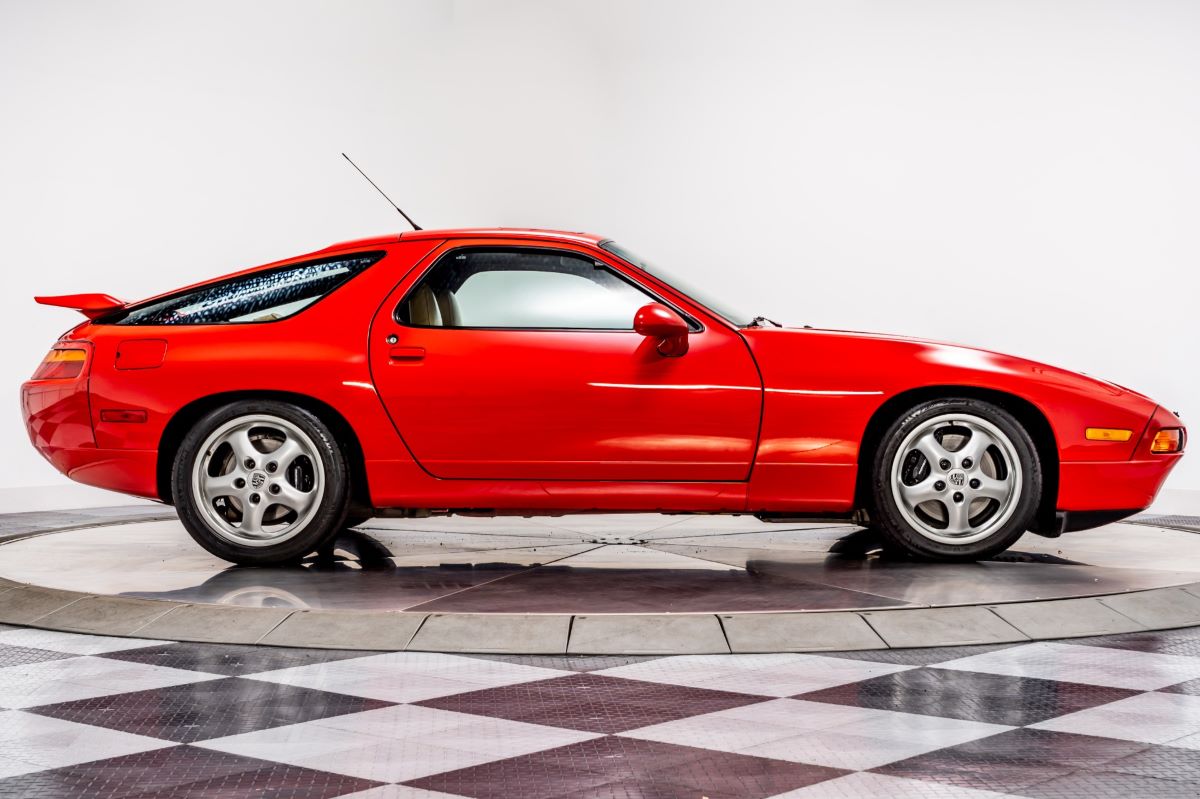
8. Porsche 928 (1978–1995)
The Porsche 928 stands out as one of the brand’s most distinctive vehicles, offering a grand-touring experience anchored by a smooth and powerful V8 engine. While pricing varies widely based on condition, many entry-level 928s fall under the $20,000 mark.
The 928’s wide stance, long-nose design, and luxurious interior create an unmistakable presence that has aged gracefully over the decades.
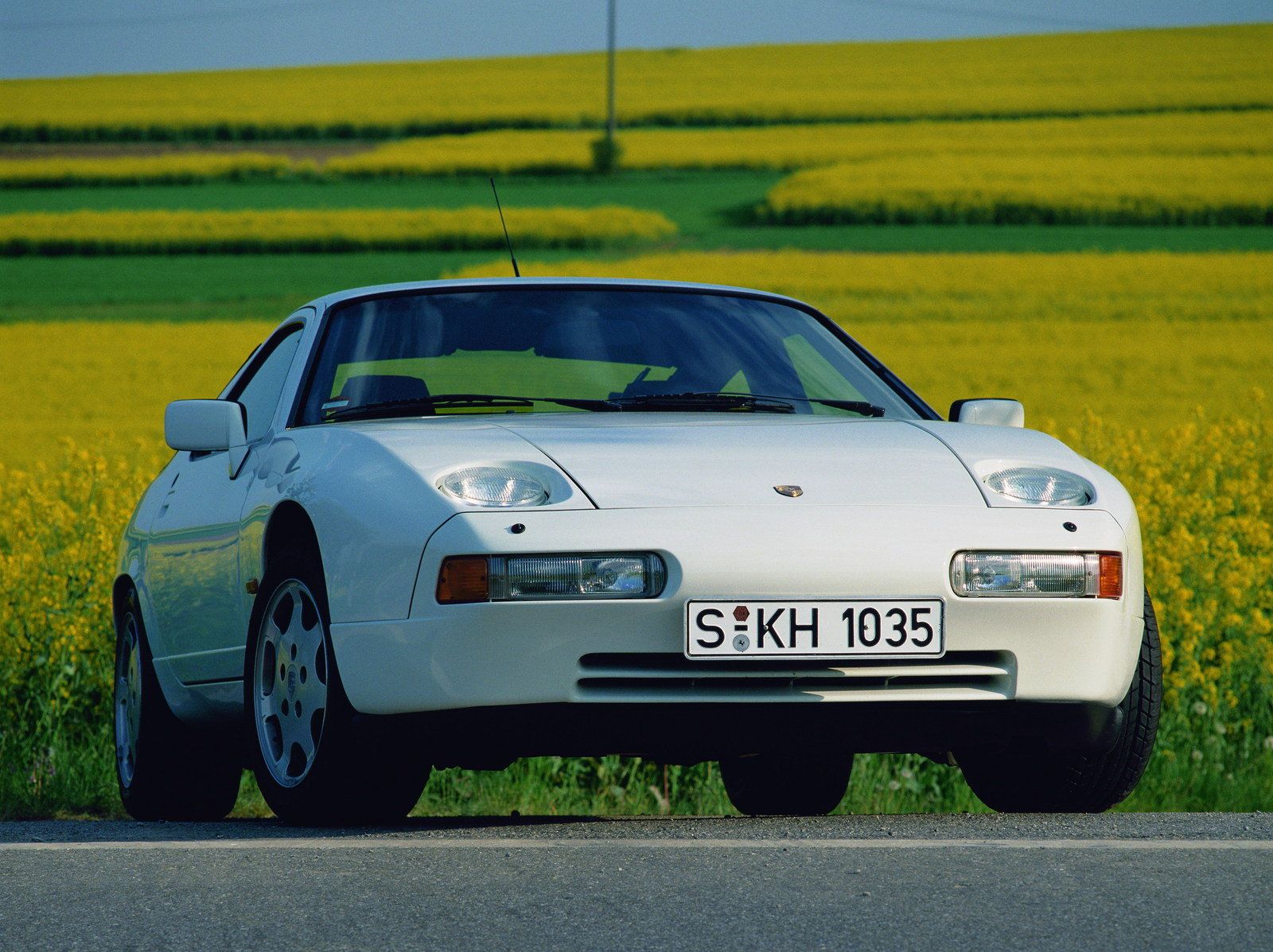
Unlike smaller Porsches, the 928 delivers a comfortable ride suitable for long-distance cruising, making it ideal for collectors who enjoy weekend getaways or classic-car events.
Because it is an older, complex vehicle, buyers should be prepared for occasional electrical and cooling-system repairs, but enthusiasts often argue the 928 is one of the most rewarding vintage Porsches to own when maintained properly.
9. Porsche Cayenne (First Generation, 2003–2010)
The original Cayenne played a key role in transforming Porsche’s image by introducing the brand’s first SUV. On today’s used market, early Cayennes are shockingly affordable, with high-mileage base models sometimes listed for under $10,000.
Despite their low price, they deliver strong performance, capable towing, and surprising off-road ability, making them versatile choices for American families or outdoor enthusiasts.
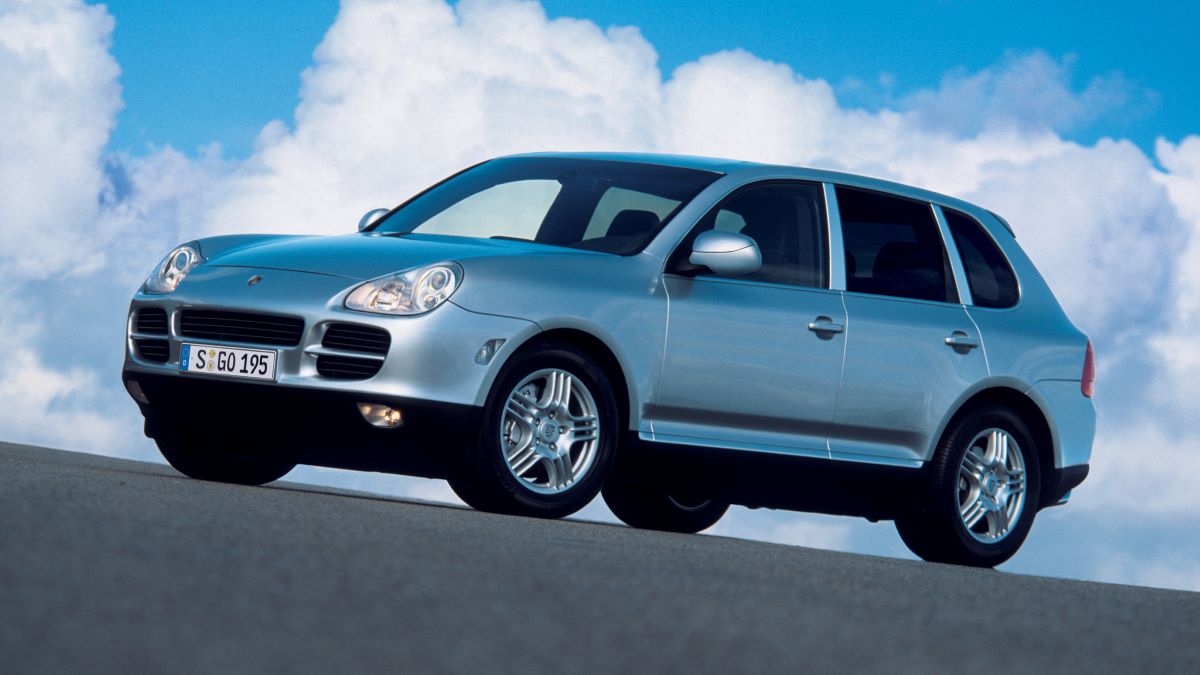
The Cayenne’s V6 and V8 engines provide ample power, though potential buyers should budget for higher running costs typical of large SUVs with performance-oriented engineering.
When purchased with a clean service history and maintained properly, early Cayennes offer a rugged and enjoyable entry into Porsche ownership.
Porsche executives were concerned that limiting the lineup to just the 911 and Boxster created too narrow a market focus, leaving the company vulnerable to economic swings.
That strategy has proven successful so far, as the Porsche Cayenne has sold strongly. Competing against SUVs like the BMW X5 and Infiniti FX45, the Cayenne marks Porsche’s first V8-equipped vehicle since the 928.
The Cayenne lineup consists of four versions: the base Cayenne, Cayenne S, Cayenne Turbo, and Cayenne Turbo S.
The standard Cayenne is powered by a 250-horsepower V6, while the remaining three models use a 4.5-liter V8. The Cayenne S, with its naturally aspirated 340-hp V8, can accelerate to 60 mph in 6.8 seconds.
The Turbo produces 450 horsepower and 457 lb-ft of torque, propelling it to 60 mph in 5.2 seconds. The new-for-2006 Turbo S offers 520 horsepower and can reach 60 mph in just 4.8 seconds, matching the performance of a 911 Carrera.
Being a luxury SUV, the Cayenne is equipped with a full suite of high-end features. Interiors are plush, featuring carpeted floors, a suede headliner, and premium leather surfaces.
Additional leather and wood trim are available at extra cost. Seating accommodates five passengers, with rear seats folding down to create substantial cargo space.
The electronically controlled four-wheel-drive system distributes power between the front and rear axles based on road conditions and driver input, rather than relying solely on traction loss. For off-road situations, low-range gearing and a 100-percent front-to-rear differential lock improve performance on steep inclines and rough terrain.
Turbo and Turbo S models include an air suspension system that can adjust ride height for optimized low- and high-speed driving; this feature is optional on other models.
Safety is comprehensive across the Cayenne range, with all models equipped with multiple airbags and Porsche Stability Management (PSM).
The base model with a manual transmission includes the Porsche Drive-Off Assistant (PDOA), which helps prevent rollback on steep inclines. Turbo models also feature bi-HID headlights capable of steering into curves to enhance nighttime visibility.
Pricing reflects the Cayenne’s luxury and performance: the Turbo S exceeds $110,000, the S model starts in the upper $50Ks, and the base V6 begins in the $40Ks. For buyers accustomed to squeezing into a 911 for family trips, the cost may be justified.
In terms of performance, the base Cayenne’s 3.2-liter V6 delivers 247 horsepower and 229 lb-ft of torque.
The mid-range Cayenne S’s 4.5-liter V8 produces 340 hp and 310 lb-ft, while the Turbo uses a twin-turbo version of the same engine for 450 hp and 460 lb-ft; the optional Power Turbo Kit increases output to 500 hp. The Turbo S tops the range with 520 hp and 530 lb-ft of torque.
Power is sent to all four wheels via a permanent dual-range four-wheel-drive system. Acceleration varies across the lineup: the base V6 reaches 60 mph in roughly 9 seconds, the S in 6.8 seconds, and the Turbo S in 4.8 seconds.
Maximum towing capacity for all models is an impressive 7,700 pounds. Transmission options include a six-speed manual for the base model, with a six-speed automatic available as an option on the V6 and standard on the S and Turbo models.
10. Porsche 912E (1976)
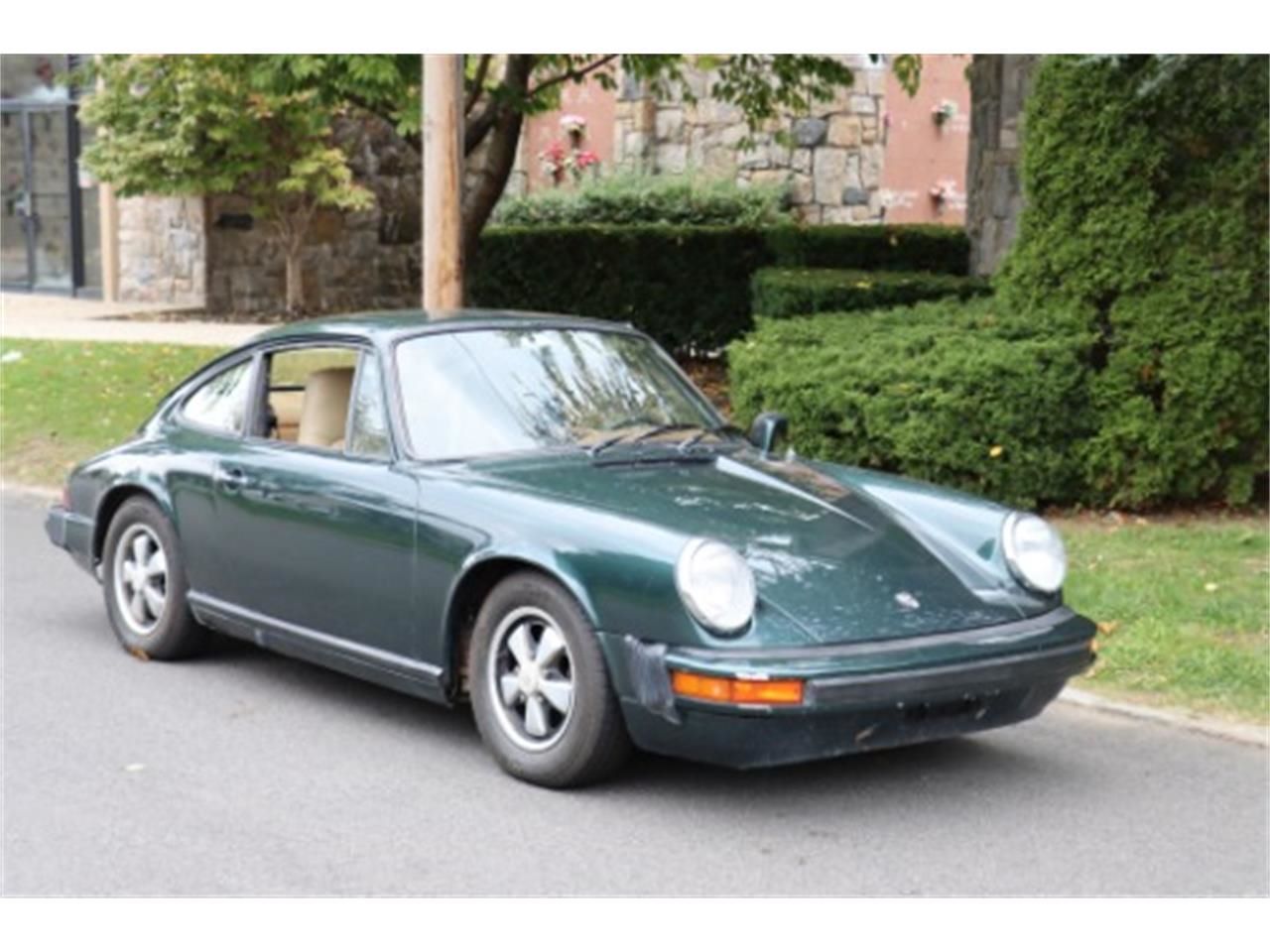
The Porsche 912E is a unique vintage option, produced for just one year and aimed at offering the classic 911 shape with a more economical four-cylinder engine.
While prices fluctuate depending on restoration quality and originality, the 912E often costs less than many 1970s 911 models, giving budget-minded collectors an attainable way into vintage Porsche styling.
Its lightweight construction, rear-engine balance, and analog driving feel make it a rewarding car for weekend drives or local classic-car meets.
Although performance is modest compared to modern sports cars, the 912E delivers a nostalgic experience that continues to attract enthusiasts looking for simplicity, charm, and collectible appeal without breaking the bank.
The used Porsche landscape in 2025 is more diverse and more affordable than many shoppers expect. From modern mid-engine sports cars like the Boxster and Cayman to vintage icons such as the 944 and 928, there are attainable options for nearly every budget.
The key is understanding each model’s unique character, common issues, and long-term ownership costs.
With proper research and a thorough pre-purchase inspection, American buyers can enjoy genuine Porsche engineering and performance without paying new-car prices.
Whether you want a daily driver with luxury credentials or a weekend toy with undeniable heritage, these ten models stand out as the best affordable Porsche choices for the year.