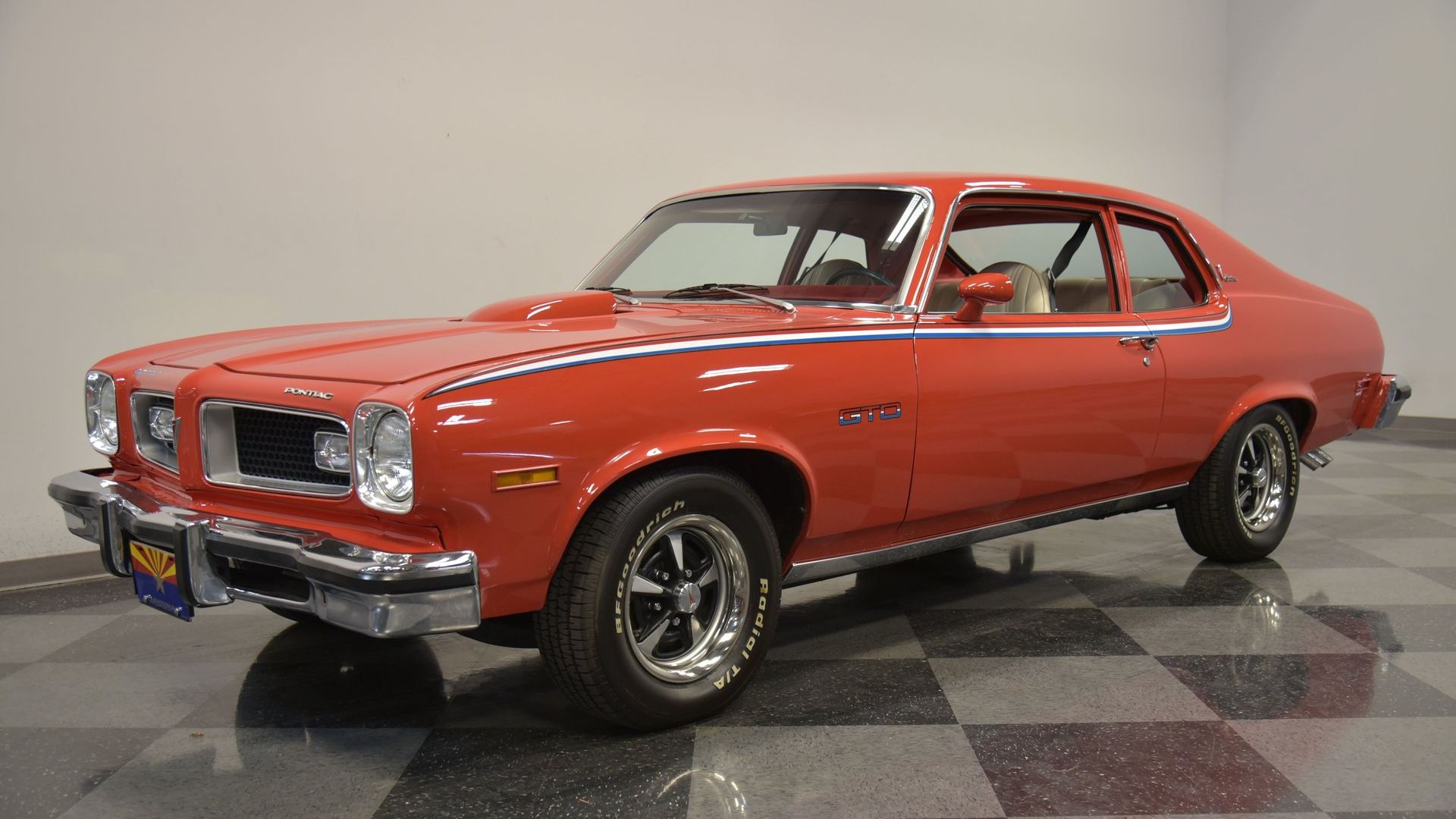
Pontiac may have been discontinued as a brand after General Motors shuttered it in 2010, but the fire-breathing legacy of “Go-wide” performance lives on through a passionate community of collectors, restorers, and drivers.
In 2025, the market for classic muscle is both strong and volatile pristine examples of sought-after classics like the ’69 GTO Judge can fetch six figures, while lesser-known models often go overlooked and undervalued.
For enthusiasts on a budget who want that Pontiac throttle response and classic style without blowing their savings, there are still several bargains to be had.
Here, we dive into eight inexpensive Pontiac muscle cars that are worth buying in 2025 whether you want a daily driver with attitude, a weekend cruiser, or a sleeper project with future upside. Each pick balances affordability, performance potential, and availability in the U.S. market.
1. 1970–1972 Pontiac LeMans Sport
For a muscle car experience without the premium prices of GTOs or Trans Ams, the Pontiac LeMans Sport from the early ’70s is one of the smartest buys in 2025.
These cars are often seen with 350 cubic-inch V8s engines that offer enough power for spirited driving but are also abundant and affordable to maintain.
Unlike the top-tier GTO, the LeMans was produced in higher numbers, which means more examples available today and generally lower prices at auctions and private sales.
Most LeMans models were comfortable, roomy coupes with good handling for their era, and they carry enough street cred to satisfy enthusiasts without a high restoration bill.
Parts support is healthy because of their shared components with other GM B-body cars from the period, making these a reliable entry point into classic Pontiac ownership.
As the 1970s began, Pontiac found itself in a period of upheaval. The division was being forced to reinvent itself in response to a rapidly shifting and increasingly unstable Detroit landscape. With the golden era of muscle cars fading, General Motors’ sportiest brand was watching its identity erode year after year. Still, the once-dominant marque wasn’t ready to surrender without putting up a fight.
When most people think of Pontiac, the GTO and Trans Am usually come to mind first. Yet models like the Catalina and Bonneville deserve recognition at the top of the hierarchy as well. Even so, by the time the seventies arrived, the GTO, once the very definition of the muscle car—was already suffering a sharp decline in sales as it fell out of favor.
The GTO’s roots stretch back to 1964, when it debuted as a performance package for the LeMans, itself derived from the Tempest. The LeMans was introduced midway through the 1961 model year and ultimately outlasted its most celebrated offspring by a full ten years, selling in far greater numbers than Detroit’s famed muscle icon.
Remarkably, the LeMans survived both its Tempest predecessor and its GTO descendant, carrying on through the final, increasingly futile battle Pontiac’s mid-size lineup waged during the Malaise Era.
While the Firebird pony car managed to endure the seventies and eighties with notable success, Pontiac’s A-body offerings quickly lost relevance in the early part of the decade. The Tempest was discontinued after 1970.
In 1971, the GTO abandoned its Judge identity. It briefly returned as an option package for the LeMans in 1972, only to limp through one last, uninspiring appearance in 1974 as a trim package for the compact Ventura.
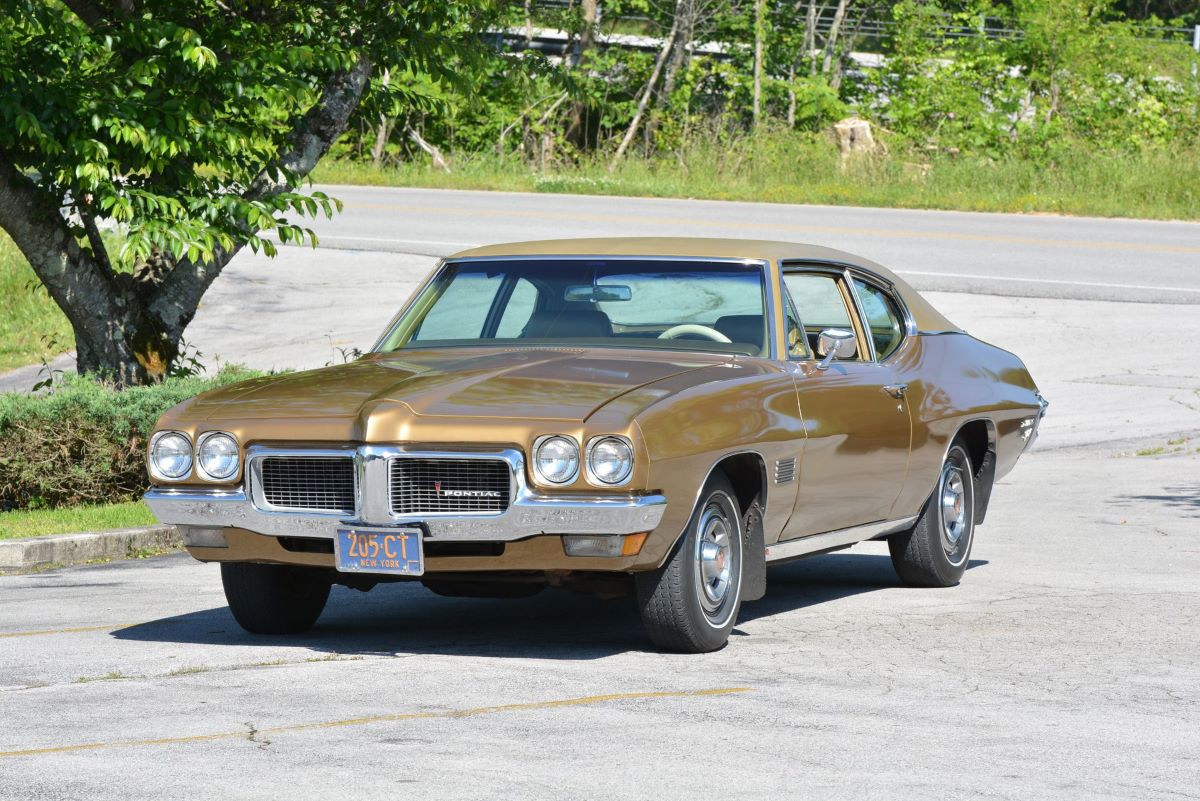
That left the LeMans as the cornerstone of Pontiac’s intermediate segment. In 1972, it stood alone as the only mid-size Pontiac available with a convertible body style. It was also one of just three Pontiac models to offer a ragtop in Sport trim, the others being the full-size Grand Ville and Catalina, and it was easily the most attractive option for buyers.
Sales numbers reflect the changing tastes of the era. Only 3,438 LeMans Sport convertibles were sold in 1972. For comparison, the Catalina moved 2,400 units, while the Grand Ville sold just over 2,200.
Convertibles were no longer the darlings they had been throughout the fifties and sixties. While that production figure may not justify calling it a ‘unicorn,’ it’s certainly low enough that these cars don’t exactly show up at every local car meet.
Scarcity alone doesn’t automatically translate into value, even for a piece of classic Americana. But when you add originality and single-owner provenance into the mix, things get more interesting.
This car is equipped with the optional 350-cubic-inch V8, an upgrade over the standard 250-cubic-inch inline-six, though the engine was hardly a performance standout, despite the Sport badge.
Rated at 160 horsepower and 270 lb-ft of torque (net figures), the two-barrel V8 was a pale shadow of Pontiac’s street-dominating engines from only a few years earlier. Performance was further softened by the original owner’s decision to spec the car with power steering and air conditioning, an understandable choice in Arizona, both then and now.
Power is sent through an automatic Turbo Hydra-Matic 350 transmission, which means the rear axle, if original, likely carries a 2.78:1 gear ratio, with only one optional alternative, a 3.08:1. Being an Arizona car has its advantages: the LeMans remains in solid condition, wears an all-original interior, the tears in the seats arguably support that claim, shows no signs of rust.
2. 1983–1987 Pontiac Firebird (V8 Coupes)
The third-generation Pontiac Firebird is an icon of 1980s muscle that remains surprisingly affordable. While the Trans Am and especially the Turbo models start to climb in value, the base V8 Firebirds from 1983–1987 can often be found at wallet-friendly prices.
These cars offer a blend of retro style, reasonable fuel economy (for a muscle car), and strong aftermarket support.
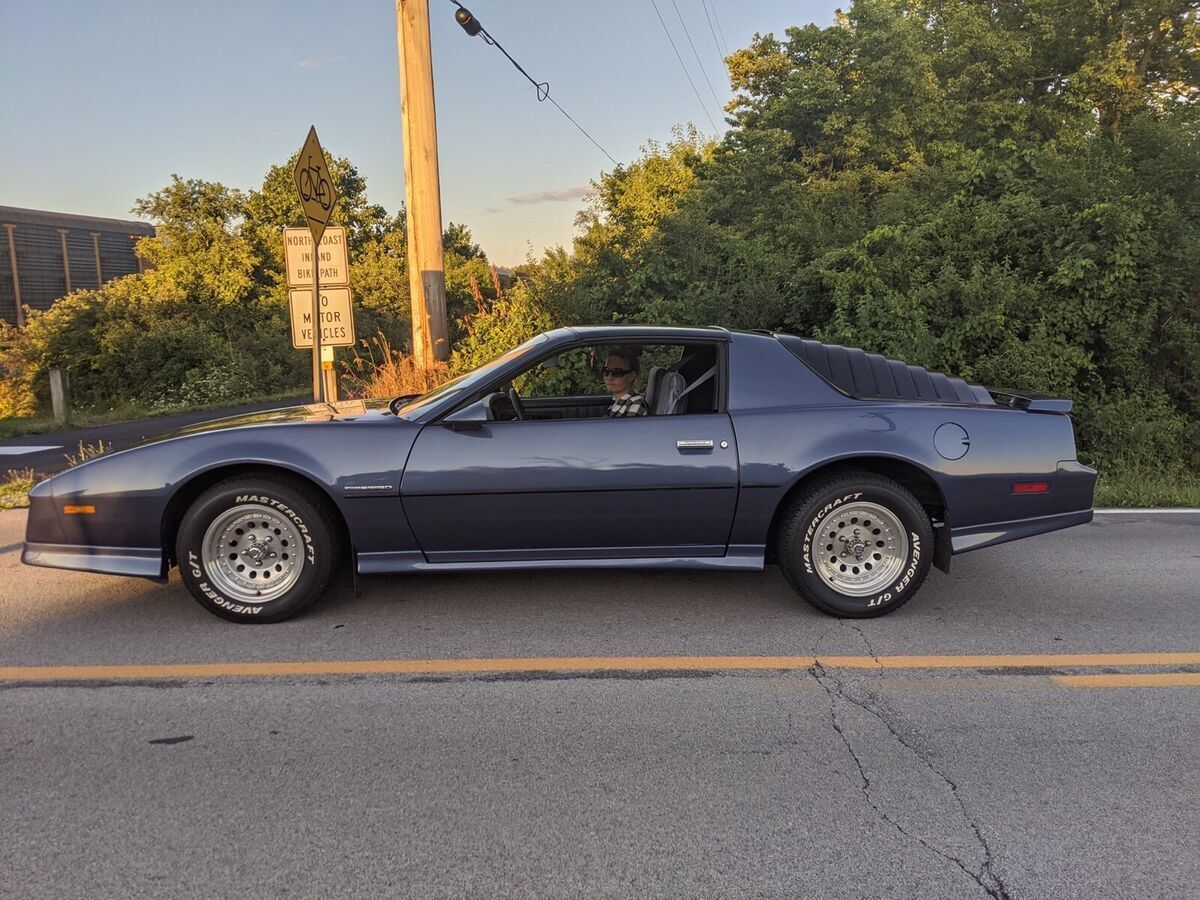
The 305 and 350 V8 engines may not be as potent as late-’60s big blocks, but they still deliver a satisfying kick and plenty of character.
For a 2025 buyer who wants looks, presence, and that satisfying Pontiac rumble without spending a fortune, an ‘80s Firebird is hard to beat.
Plus, their wedge shape and T-tops have started to attract younger buyers who want something distinctive but affordable meaning these cars are poised to retain value over the long term.
3. 1978–1981 Pontiac Trans Am (Base V8 Models)
While high-end Trans Ams from the late ’70s particularly the special editions command strong prices, base V8 Trans Ams from the 1978–1981 era can still be purchased without breaking the bank.
These cars embody classic American muscle with aggressive styling, flared fenders, and that unmistakable Pontiac snarl.
The base models typically came with 305 or 400 cubic-inch engines. The 400, in particular, is a favorite for enthusiasts because it combines respectable performance with a huge aftermarket for rebuilds and performance upgrades.
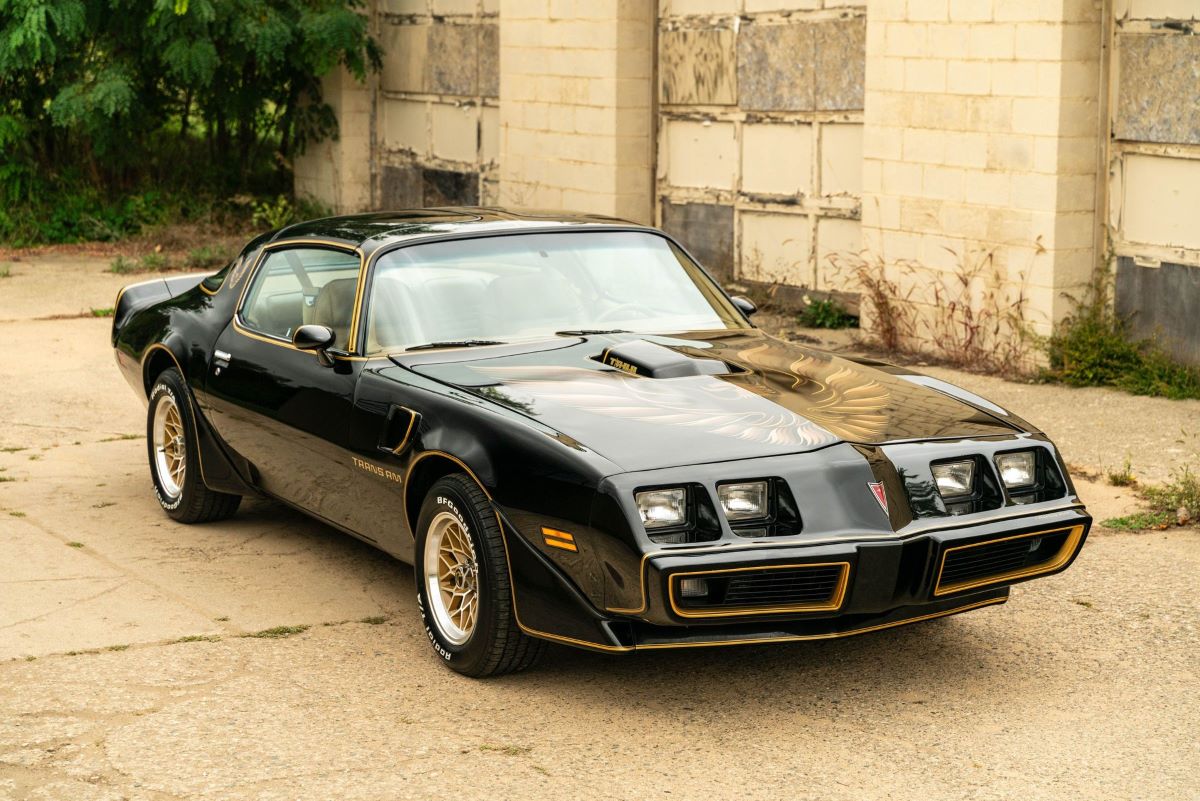
If you’re willing to do some light restoration or mechanical work yourself, these Trans Ams can be both affordable and rewarding projects.
For U.S. buyers, the appeal is broad: these cars are instantly recognizable and often make strong weekend cruisers that draw attention without the heavy investment required by higher-trim muscle cars.
This Pontiac Trans Am edition is fitted with the most powerful engine offered in 1981: the newly introduced turbocharged V8. This powerplant delivers approximately 210 horsepower and around 345 lb-ft of torque, which is more than sufficient to propel the car with strong acceleration.
The vehicle is considered a semi-survivor and still retains its original engine and transmission, both of which feature matching partial VIN stampings. It has accumulated just 84,000 miles over its lifetime.
Equipped with numerous luxury features, the car offers a comfortable yet sporty driving experience, helped by its original quick-ratio steering box that was included as part of the WS6 Handling Package.
This package also added thicker sway bars (anti-roll bars), specially tuned front and rear shocks, and upgraded springs. Additional equipment includes front and rear disc brakes, power steering, and power-assisted brakes.
Inside, the cabin is exceptionally clean and well-appointed. The AM/FM stereo remains fully functional. The steering column is manually adjustable, and all dashboard gauges are operational, including the tachometer.
Electric door locks and power windows are also in working order. A power trunk release is fitted, operated via a small yellow button located inside the glove box. New blue floor mats have been installed, and the original broadcast sheet/build sheet was discovered inside the car, detailing all the factory-installed options. The car is complete, well-preserved, and a genuine pleasure to drive.
The original turbo wheels have been restored back to factory condition and were fitted with new tires some time ago. As a result, the wheels now look exceptionally clean and refreshed.
The 301 cubic-inch turbocharged V8 was introduced in 1980 as a way to extract more performance from the standard 301 engine. In non-turbo form, the 301 produced only 150 horsepower. Due to rising fuel costs and stricter emissions regulations, Pontiac enhanced the base 301 by adding a turbocharger, which significantly increased both horsepower and torque.
This approach allowed the car to remain enjoyable to drive, maintain respectable performance, and achieve better fuel efficiency. To accommodate the turbocharger, Pontiac developed a revised version of the 301 engine, identifiable by a large “T” cast into the block.
The block was reinforced with thicker and stronger materials to safely handle turbo boost. Engineers also designed a unique intake manifold and a dedicated exhaust system to support the turbo setup under the hood.
Because turbocharging dramatically raises effective compression, the 1981 turbo engine was equipped with an anti-knock sensor and an onboard computer to monitor engine conditions.
When excessive boost pressure was detected, the system adjusted ignition timing through the distributor, quickly reducing power to protect the engine. This made the turbocharged 301 the first production V8 engine to feature a factory-installed turbocharger, giving it a unique character and an engaging driving experience.
The turbocharger on this vehicle was recently rebuilt, and the carburetor has also been rebuilt. In addition, gaskets and seals around the engine were replaced, and the rear main seal was upgraded to a modern one-piece design that offers improved leak prevention compared to the original setup. The engine runs smoothly and has been fully tuned and adjusted by the team.
4. 1968–1970 Pontiac GTO
The Pontiac GTO is muscle royalty but the “Judge” variants and well-preserved originals are expensive. In 2025, savvy buyers who aren’t afraid of a project can find non-Judge GTOs with rust or mechanical issues at much more affordable prices than pristine restored cars.
These project cars often come with solid cores but need cosmetic work, interior refurbishment, or drivetrain attention.
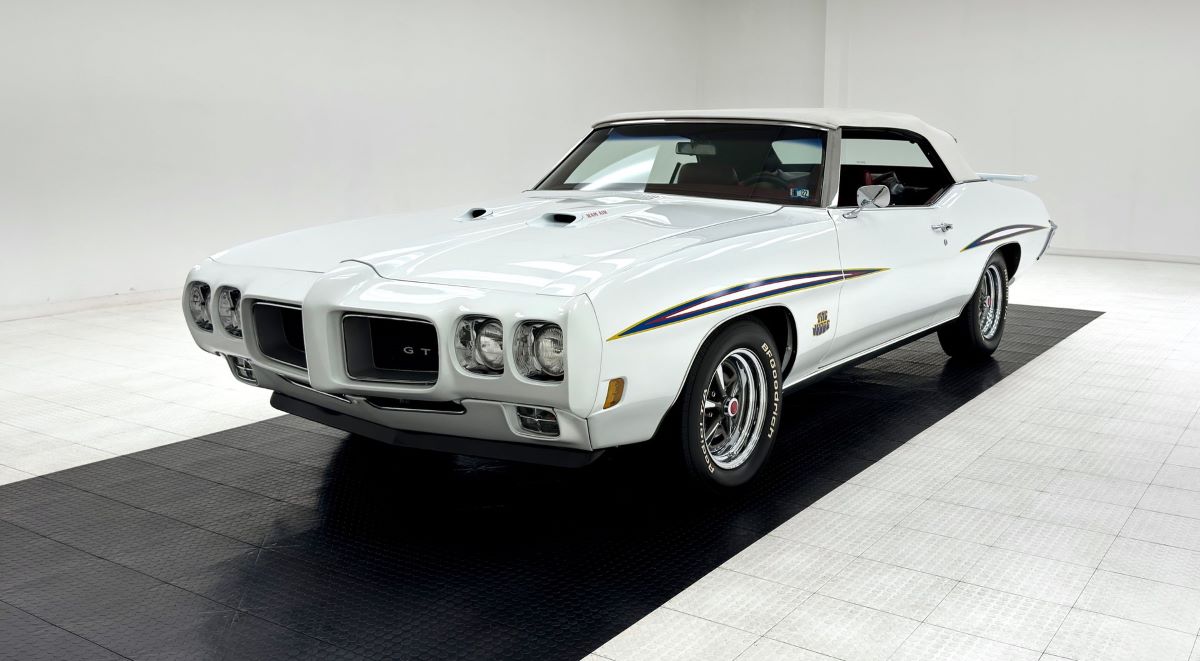
For someone handy in the garage, they represent one of the best values in classic muscle. Once restored, these GTOs reward with staggering performance and one of the most storied badges in American automotive history.
Remember: when buying project cars, especially in the U.S. where rust is common in northern states, inspect floors, rockers, and trunk areas carefully.
But if you get the right car and invest time wisely, the result can be a stunning classic that would have cost three times as much fully restored.
5. 1969–1971 Pontiac Tempest/LeMans
The Pontiac Tempest and LeMans lineup from ’69 to ’71 included some exciting configurations that are often forgotten today.
While they didn’t advertise them as muscle cars like the GTO, these models offered performance options including powerful V8s, dual exhausts, and sport-tuned suspensions that make them compelling budget performance cars.
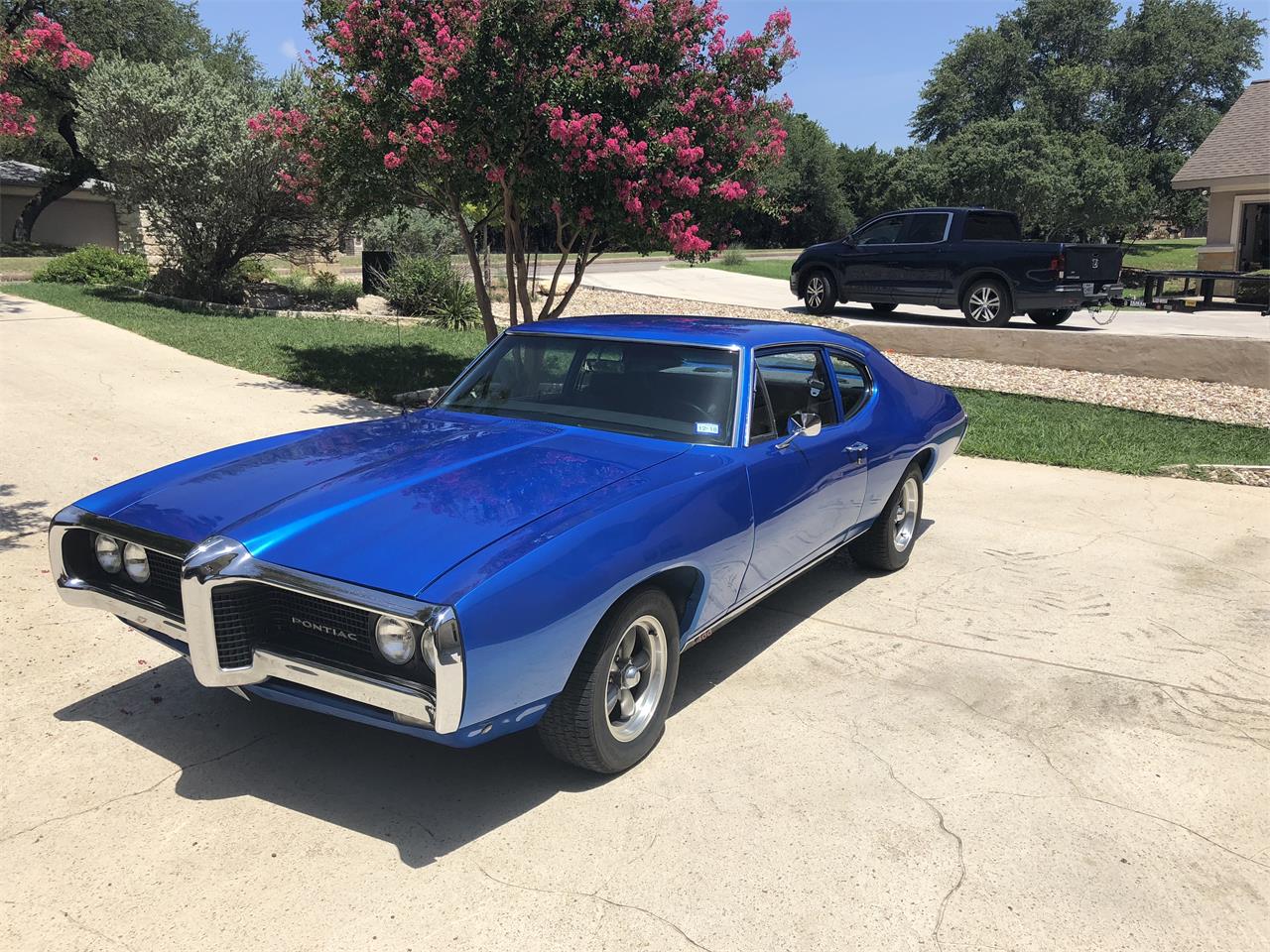
These models are often priced lower than their GTO and Firebird siblings despite sharing many performance traits. Enthusiasts can find examples with options like Rally II wheels, hood scoops, and upgraded carburetion that make for fun drivers and attractive restoration projects.
Their relative anonymity works in your favor as a buyer because the market hasn’t bid up prices as aggressively as more famous names, yet they still deliver all the visceral thrills Pontiac is known for.
When discussions turn to Pontiacs from the muscle car era, most people immediately think of the GTO, Firebird, or Trans Am. Models like the LeMans, Tempest, and Ventura usually earn some recognition among dedicated enthusiasts as well. However, there’s one Pontiac that history has largely overlooked: the T-37.
There are several solid reasons why this particular Poncho never reached the same level of fame as its better-known siblings. First, its production run was extremely short.
Introduced midway through 1970, right as the muscle car market was beginning to cool, T-37 didn’t survive beyond the 1971 model year. Second, it wasn’t designed to target a radically different audience, at least not in the way the GTO did.
By 1970, muscle cars were no longer the bargains they once were. While many performance cars still carried price tags under $3,000, roughly $23,600 in 2022 dollars, insurance premiums had skyrocketed, especially for vehicles equipped with high-performance big-block engines. Ownership costs were becoming a real obstacle for younger buyers.
In response, Pontiac devised a clever solution. The T-37 was created to lure budget-conscious customers into showrooms with a car that looked similar to a GTO but carried a much lower sticker price. Essentially a stripped-down LeMans, the T-37 came without luxury frills in standard form and was positioned as an economy-focused midsize offering.
With a starting price of about $2,600 (around $20,500 in 2022), the T-37 was roughly 18% cheaper than a GTO and nearly $30 less expensive than a Judge.
Despite its affordability, sparse interior, and standard inline-six engine, the T-37 could be ordered with Pontiac’s high-performance engines, including the formidable 455-cubic-inch (7.5-liter) H.O. V8. Most buyers chose the model for its lower insurance costs and sensible six-cylinder setup, but a small group of enthusiasts recognized the appeal of a lightweight, no-frills Pontiac paired with serious V8 power and opted for the 455 H.O.
Those cars are exceptionally rare. Out of nearly 36,000 T-37s sold in 1971, only 54 were ordered with the H.O. engine. That represents just 0.15% of total production, a figure comparable to some of the most legendary HEMI-equipped Mopars.
Because several of these cars were purchased specifically for drag racing, thanks to their excellent power-to-weight ratios, even fewer than 54 are believed to survive today. The plain white Pontiac shown here is one of those rare survivors.
What makes this particular example even more remarkable is its configuration. It is one of only six T-37 H.O. cars equipped with the Turbo 400 automatic transmission and one of just two ordered with a hood-mounted tachometer. Factoring in its color and additional options, it may very well be a one-of-one example. It simply doesn’t get any rarer than this.
Its survival in such outstanding condition over more than five decades is almost miraculous. The explanation lies in its early life: this car was originally purchased for drag racing. Known on the strip as “The Quiet Gent,” it competed in quarter-mile runs and even utilized a modified Cadillac gearbox to improve traction and acceleration.
By 2022, the car had been reunited with a period-correct Pontiac transmission and still retains its numbers-matching 455 V8. Remarkably original and largely untouched, it shows just 18,000 miles (28,968 km) on the odometer. This T-37 stands as a true piece of Pontiac history—a rare and significant muscle car that deserves far more recognition than it has received.
6. 1973–1977 Pontiac Grand Prix
While the Pontiac Grand Prix from the mid-’70s isn’t a traditional muscle car by strict performance metrics, it occupies a unique corner of the market worth considering in 2025 for budget-minded collectors.
These big coupes often came equipped with V8 power and offered a blend of straight-line muscle and cushy touring comfort.
Prices for these cars remain down compared to similar years of the Cutlass or Chevelle, yet they possess distinct Pontiac flair and promise effortless cruising.

They can be ideal for someone who wants a classic American V8 with style, roomy interiors, and a presence that stands out at shows or on open highways.
From an investment perspective, these Grand Prix models are sometimes overlooked which means there are bargains to be had before the broader collector market catches on.
7. 1993–2002 Pontiac Firebird Formula (V8)
Bridging the gap between classic and modern muscle, the fourth-generation Pontiac Firebird Formula offers a V8 experience with more contemporary comforts.
Powered typically by the 5.7L LT1 or later LS1 engines shared with Corvettes and Camaros, these Formulas deliver modern reliability and performance compared to their older counterparts.
As of 2025, these cars remain especially attractive because they offer strong power, four-speed automatic or six-speed manual options, and a tuning ecosystem that’s matured over decades.

They’re lighter than most classic muscle cars, handle better, and their engines respond well to aftermarket upgrades.
For U.S. drivers who want a muscle car that feels more at home on both spirited drives and daily use, the late-’90s Firebird Formula is a top budget pick. They sit in a sweet spot price-wise performance above the entry level but still well below collectible muscle valuations.
8. 1971–1974 Pontiac Ventura (V8 Swaps & Custom Builds)
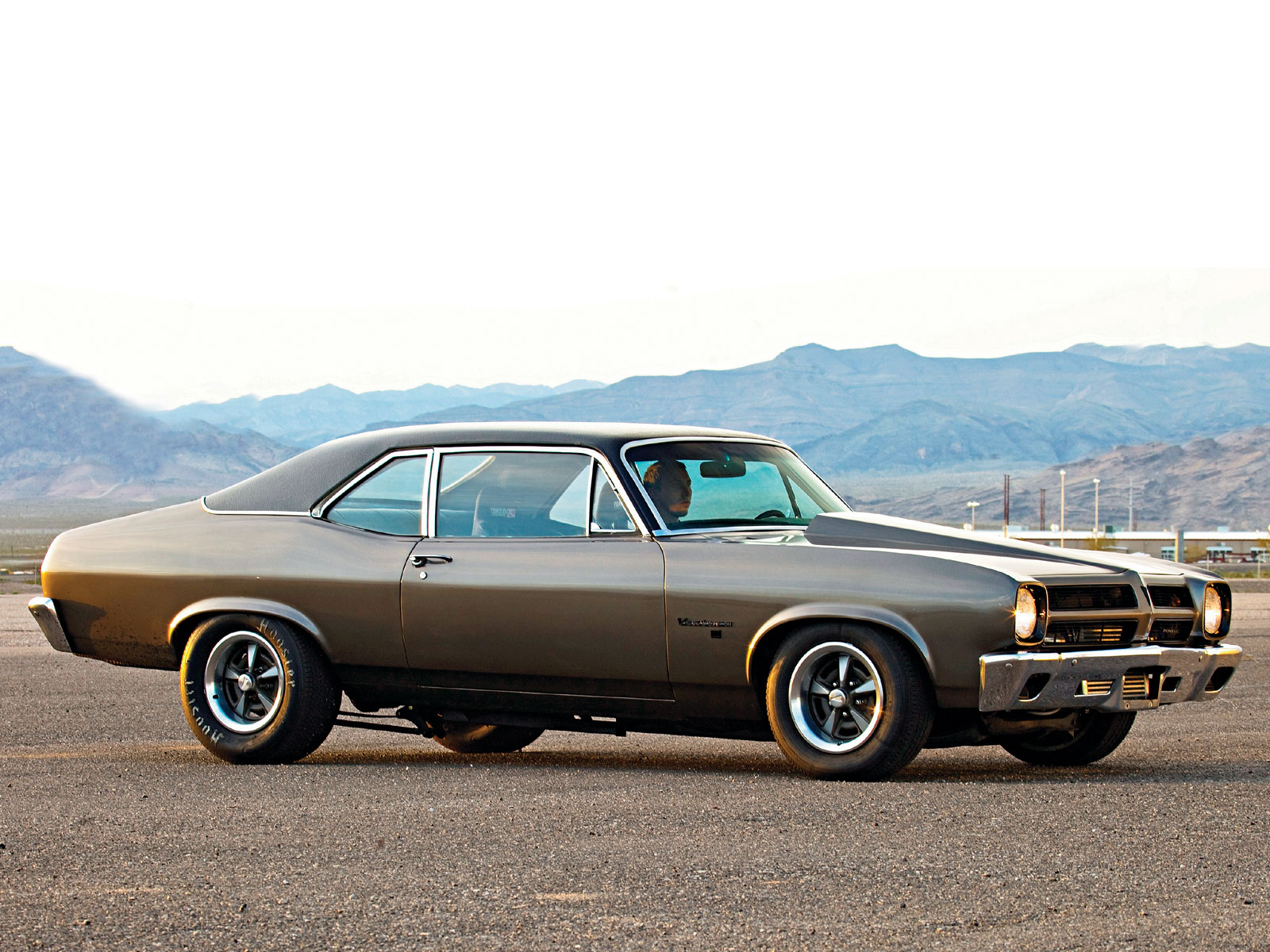
The Pontiac Ventura doesn’t get the attention it deserves from many muscle fans, which is part of its value proposition in 2025.
Originally positioned as a mid-range model, many Venturas came with V8 engines or have become popular candidates for engine swaps due to their lighter weight and simple design.
For hobbyists who like to customize, a Ventura offers a solid platform that can be tailored to your goals whether that’s a period-correct restoration, a sleeper build with modern powertrain upgrades, or a hot rod with contemporary suspension and brakes.
Because Venturas are often overlooked, they can be found at attractive prices. That makes them ideal for buyers who want to stretch their budget farther and create something truly unique without the markup that comes with more iconic models.
Pontiac’s legacy is defined by innovation, attitude, and a distinctly American interpretation of performance. Even though the brand has been gone for over 15 years, its cars continue to resonate because they represent an era when horsepower and character mattered.
In 2025, the classic and near-classic car market is strong, but smart buying can still uncover gems that deliver enjoyment without draining your finances.
Whether you’re after a cruiser that turns heads at local shows, a capable daily driver with real muscle, or a project with future upside, these eight Pontiacs represent some of the best values available.