
In the world of American muscle cars, history has not been kind to subtlety. The cars that dominate conversations, auction stages, and social media feeds tend to be the loudest in both styling and reputation.
Chevrolet’s LS6 Chevelle, Dodge’s Hemi Charger, and Plymouth’s Road Runner have become untouchable icons, elevated by decades of hype, pop culture appearances, and brand loyalty.
Yet buried beneath that noise sits a muscle car that, by nearly every measurable performance metric, deserved to be mentioned in the same breath and often outperformed them in real-world driving.
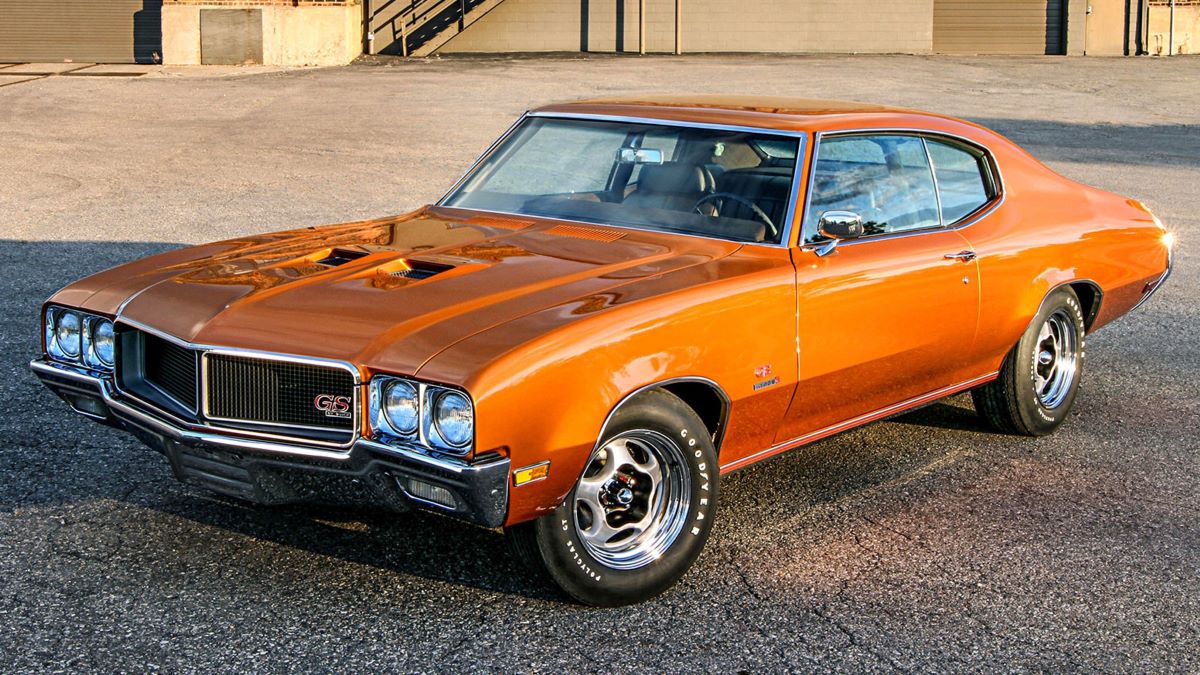
That car is the Buick GS 455 Stage 1, a big-block monster that remains criminally overlooked even today.
The GS 455 Stage 1 arrived at the peak of the muscle car era, armed with one of the most torque-heavy engines Detroit ever unleashed on the public.
It wasn’t marketed with cartoon mascots or drag-strip bravado, nor was it designed to appeal to teenagers plastering posters on bedroom walls.
Instead, Buick engineered a refined brute one that delivered devastating acceleration, remarkable durability, and understated confidence.
That combination ultimately became its downfall in the history books, but it is precisely why the GS 455 Stage 1 deserves recognition as the most overlooked big-block muscle car ever made.
One of the primary reasons the GS 455 Stage 1 slipped through the cracks of muscle car lore is Buick itself. During the late 1960s and early 1970s, Buick was widely perceived as a brand for older, more conservative buyers.
While Pontiac courted younger enthusiasts with aggressive marketing and Chevrolet leaned heavily on motorsports credibility, Buick positioned itself as refined, comfortable, and upscale.
This image unfairly masked Buick’s engineering brilliance. Buick’s performance division was filled with some of General Motors’ sharpest minds, engineers who believed true speed didn’t need to shout.
Their philosophy prioritized torque delivery, smoothness, and longevity over eye-catching horsepower numbers. Unfortunately, muscle car culture tends to celebrate flash over function, and the GS 455 Stage 1 paid the price for Buick’s restraint.
At the heart of the GS 455 Stage 1 sits Buick’s legendary 455 cubic-inch V8, an engine that embodied a completely different philosophy from most big-blocks of the era.
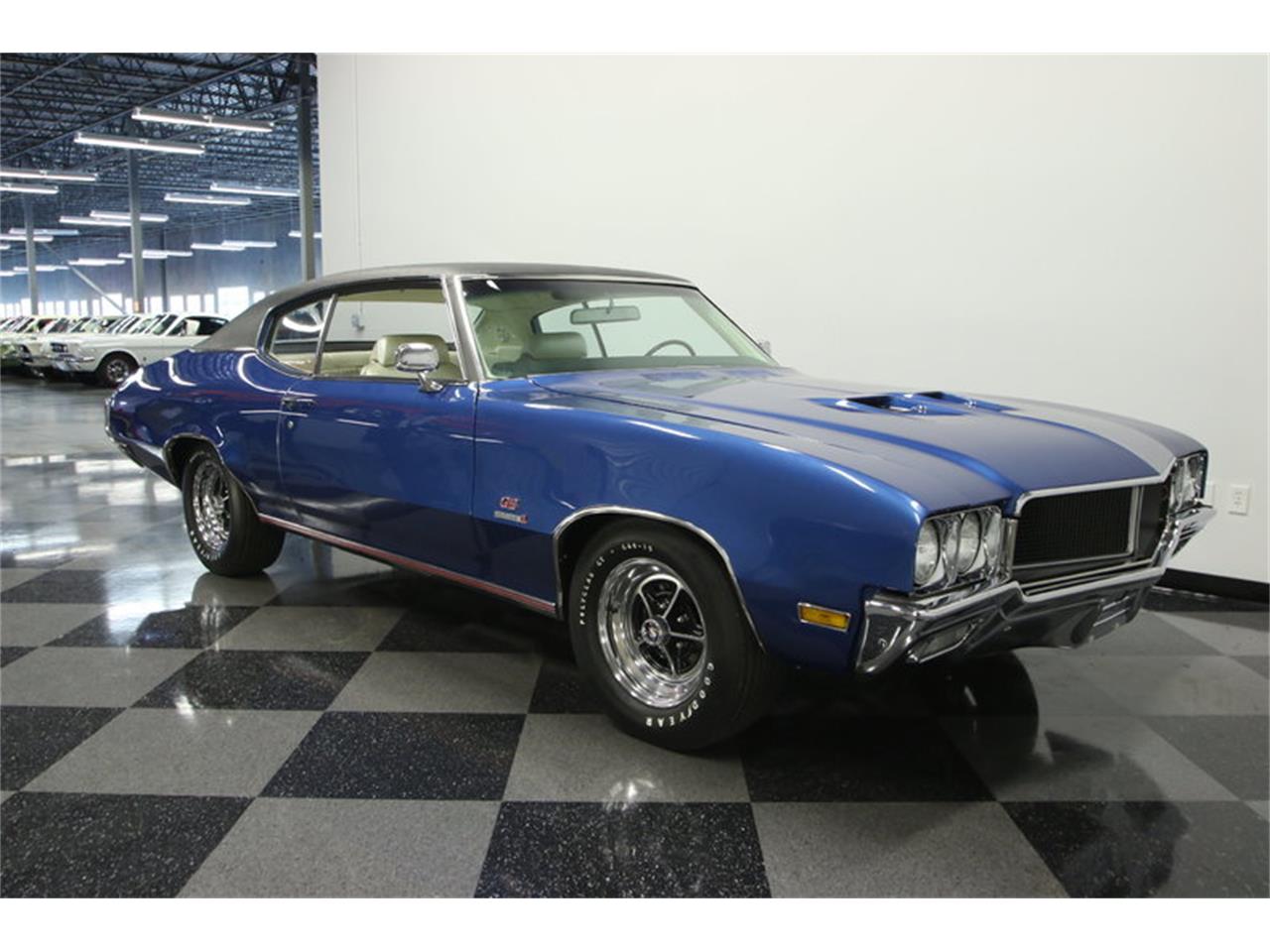
While competitors pushed high-revving horsepower figures to win magazine shootouts, Buick focused on torque real, usable torque that could be felt the instant the throttle was pressed.
Officially rated at 360 horsepower and an astonishing 510 lb-ft of torque, the Stage 1’s figures were deliberately conservative.
This was common practice in the early 1970s, when manufacturers downplayed output to avoid insurance penalties and regulatory scrutiny. In reality, many testers believed the engine was producing significantly more power than advertised.
That torque figure was not just impressive it was borderline outrageous. Very few factory muscle cars ever matched it, and even fewer delivered it so smoothly.
The GS 455 Stage 1 didn’t need high RPM theatrics to feel fast. It simply surged forward with relentless authority, overwhelming tires and embarrassing rivals that looked far more aggressive on paper.
The standard GS 455 was already a formidable machine, but the Stage 1 package elevated it into elite territory. Buick engineers revised the camshaft profile, improved cylinder head flow, optimized carburetion, and enhanced the exhaust system.
These upgrades allowed the engine to breathe freely and unlock its true potential without compromising reliability.
Unlike many performance packages of the era, the Stage 1 wasn’t temperamental or fragile. It was designed to be driven hard and often.
Buick built the engine with thick castings and robust internals, ensuring it could handle sustained abuse something that cannot be said for every high-output big-block of the time.
Also Read: Top 10 Greatest Front-Engine Ferraris Ever Built
On the street and at the drag strip, the GS 455 Stage 1 earned a fearsome reputation among those who encountered one.
Period road tests recorded quarter-mile times in the low 13-second range, with some runs dipping into the high 12s under ideal conditions. These numbers placed the Buick directly alongside the most revered muscle cars ever produced.
What made these results especially impressive was how easily the Buick achieved them. The immense torque allowed for brutal launches without extreme gearing or constant high-RPM shifting.
In real-world driving stoplight sprints, highway pulls, and rolling races the GS 455 Stage 1 often had the advantage over higher-revving rivals.
This wasn’t a car built just for magazine covers. It was a street weapon, optimized for the kind of driving enthusiasts actually did.
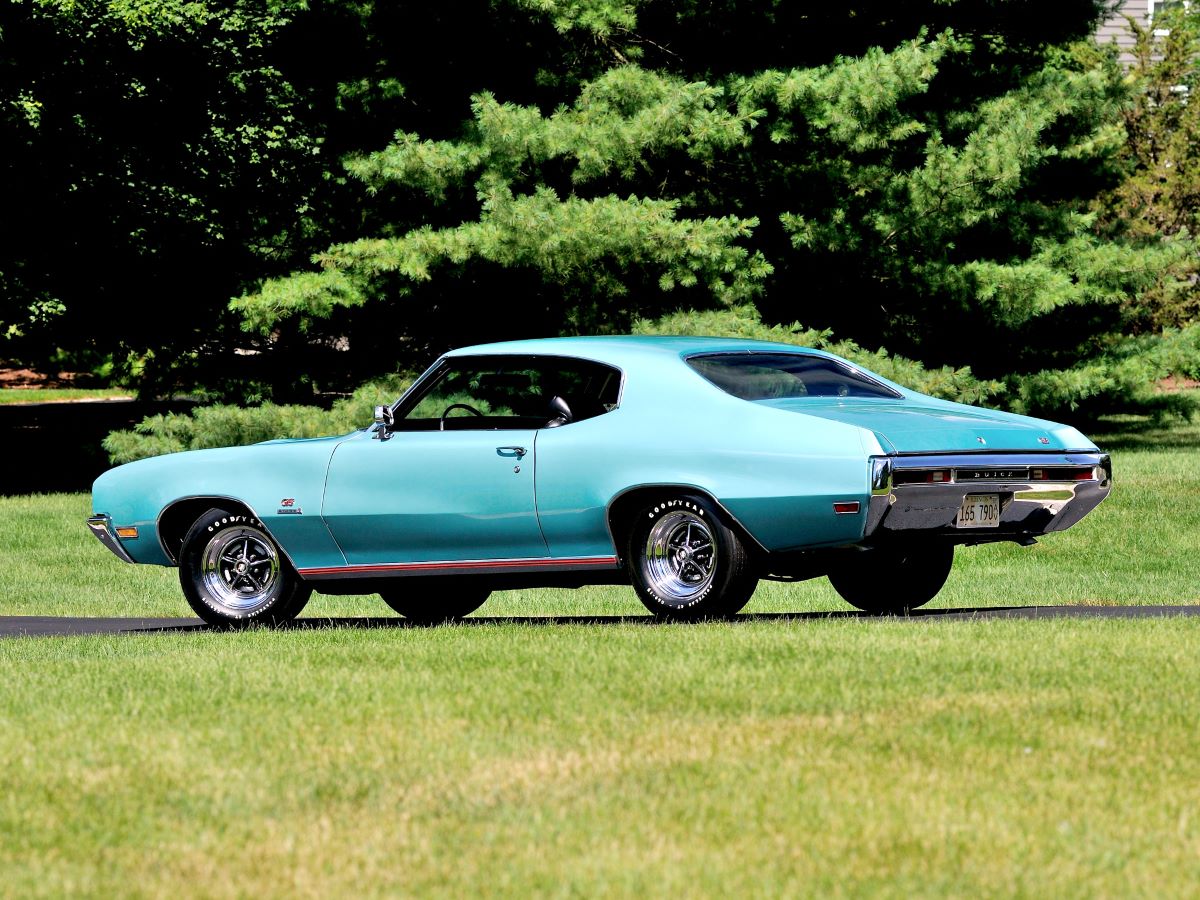
Visually, the GS 455 Stage 1 was never designed to intimidate at first glance. Buick favored clean, muscular lines over exaggerated graphics and oversized scoops. Compared to the flamboyant designs of some competitors, the GS appeared almost restrained.
That understated styling became both a strength and a weakness. On one hand, it gave the car a timeless, sophisticated look that has aged remarkably well.
On the other, it failed to capture the immediate attention that often defines muscle car legends. Many people simply didn’t realize what the GS 455 Stage 1 was capable of until it was too late.
In hindsight, the GS can be seen as one of the original sleepers, a car that looked civilized but delivered savage performance when provoked.
Another overlooked aspect of the GS 455 Stage 1 is its durability. Buick engineered the 455 with longevity in mind, using conservative tuning and robust components to ensure reliability. This wasn’t an engine that needed constant wrenching or delicate care.
As a result, many GS 455 Stage 1 cars survived long after other muscle cars were worn out, blown up, or heavily modified. Even today, it’s not uncommon to find examples with matching-numbers drivetrains, a rarity in the muscle car world.
This strength made the GS an exceptional all-around car. It could dominate a drag strip on Saturday night and cruise comfortably on the highway the next day without complaint.
Even in today’s collector market, the GS 455 Stage 1 remains undervalued compared to its peers. While prices have climbed, they still fall short of similarly capable Chevelles, Chargers, and Hemi-powered Mopars.
This discrepancy has little to do with performance and everything to do with perception.
For enthusiasts willing to look beyond brand hype, the GS 455 Stage 1 represents one of the best values in classic American muscle. It offers elite performance, historical significance, and rarity without the astronomical price tags attached to more famous names.
When judged objectively, the Buick GS 455 Stage 1 checks every box that defines a great muscle car. It delivered massive big-block power, class-leading torque, real-world speed, durability, and comfort in a single package.
Its overlooked status is not a reflection of its quality, but of enthusiast bias and branding misconceptions. For those who understand muscle cars beyond surface-level reputation, the GS 455 Stage 1 stands as one of Detroit’s finest achievements.
The title “The Most Criminally Overlooked Big-Block Muscle Car Ever Made” belongs squarely to the Buick GS 455 Stage 1. It was faster than many legends, tougher than most, and far more refined than history remembers. Its only real flaw was wearing a badge that the muscle car world underestimated.
For true enthusiasts, the GS 455 Stage 1 is not just overlooked it is one of the greatest big-block muscle cars ever built.
Also Read: 10 Best Diesel Trucks Still Available to Buy Today
