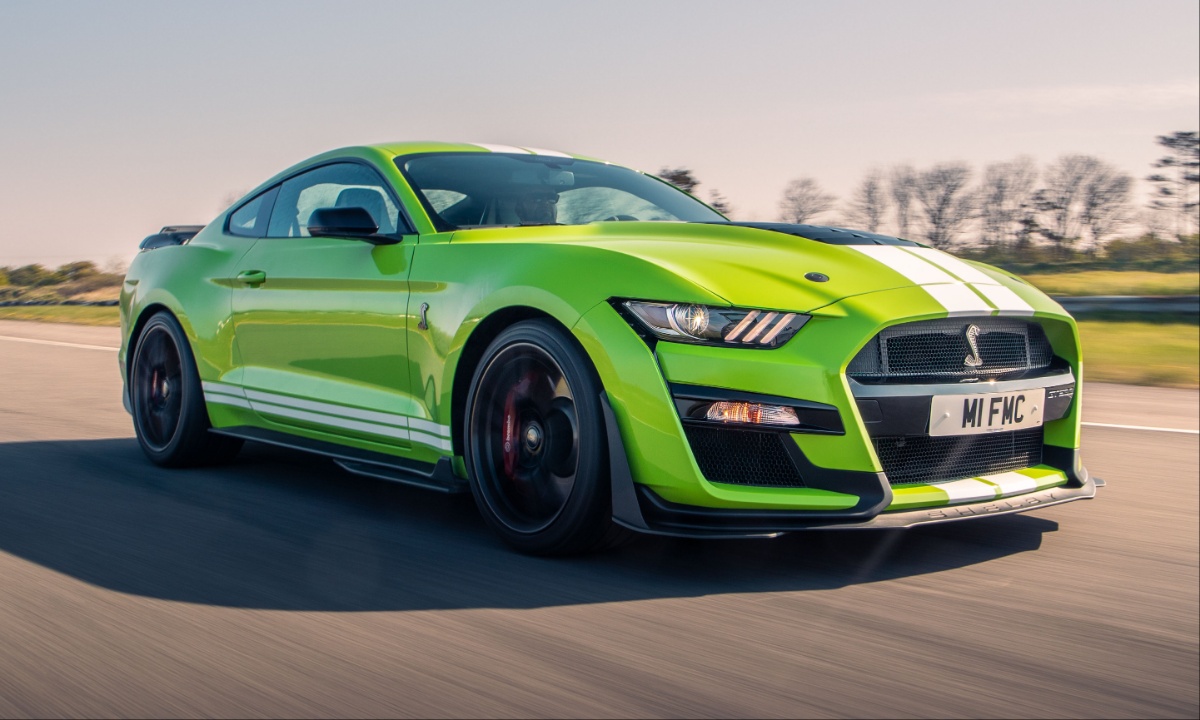
American sports cars have long been symbols of raw power, engineering audacity, and automotive freedom. From the early muscle cars that dominated drag strips to modern hypercars that challenge the limits of physics, the United States has consistently produced vehicles that combine extreme performance with unmistakable character.
In recent years, models such as the Shelby GT500, Dodge Challenger SRT Demon, and Chevrolet Corvette ZR1 C8 have pushed American engineering to new heights, proving that domestic manufacturers can compete with the finest European supercars on both street and track.
These machines do not merely offer speed; they deliver an experience, blending thunderous V8 engines, advanced aerodynamics, and sophisticated suspension technology to create sports cars that thrill every sense.
By exploring the most powerful American sports cars ever made, we witness a fusion of heritage, innovation, and immense horsepower, showcasing the nation’s ability to redefine performance standards repeatedly.
1. 2020 Shelby GT500 (S550): American Muscle Meets Global Supercar Standards
The 2020 Ford Mustang Shelby GT500 represents a major turning point for American performance cars, blending extreme horsepower with genuine track capability and advanced engineering.
At its core is a 5.2-liter supercharged Predator V8 that produces 760 horsepower and 625 lb-ft of torque, making it the most powerful factory Mustang ever built. Mated to a 7-speed Tremec dual-clutch transmission, the GT500 accelerates from 0 to 60 mph in just 3.3 seconds and reaches a top speed limited to 180 mph.
What truly distinguishes the GT500 is its ability to control and exploit its massive power output. The inverted 2.65-liter Eaton roots-type supercharger is mounted low in the engine bay to reduce the center of gravity, improving balance and cornering stability.
Adaptive MagneRide suspension, a Torsen limited-slip differential, and massive brakes allow the car to deliver nearly 1.3 g in acceleration, braking, and lateral grip. On a racetrack, the GT500 behaves less like a traditional muscle car and more like a modern supercar, earning comparisons to elite European performance machines.
The optional Carbon Fiber Track Package elevates the GT500 into a focused, track-oriented machine. This package adds lightweight 20-inch carbon-fiber wheels that reduce unsprung mass by approximately 35 pounds per corner, along with Michelin Pilot Sport Cup 2 tires, revised suspension tuning, and aggressive aerodynamic components.
A large adjustable carbon-fiber rear wing, front splitter enhancements, and rear diffuser generate up to 550 pounds of downforce at 180 mph, transforming the car into a highly capable circuit performer while remaining street legal.
The Predator V8 differs significantly from the naturally aspirated Voodoo engine found in the GT350. It uses a cross-plane crankshaft, lower compression, and a 7,500 rpm redline, relying on forced induction rather than high engine speed to achieve its output. This design results in an impressive specific output of 147.2 horsepower per liter, exceeding that of many exotic performance cars.
The GT500 does have shortcomings, most notably in its interior. Aside from excellent seats, a tactile steering wheel, and a clear digital instrument cluster, much of the cabin closely resembles lower-trim Mustangs and lacks a premium feel.
Even so, the driving experience leaves a lasting impression. The 2020 Shelby GT500 demonstrates that modern American muscle has earned a place among the world’s most serious performance cars.
2. 2025 Ford Mustang GTD: The Ultimate Track-Focused American Muscle
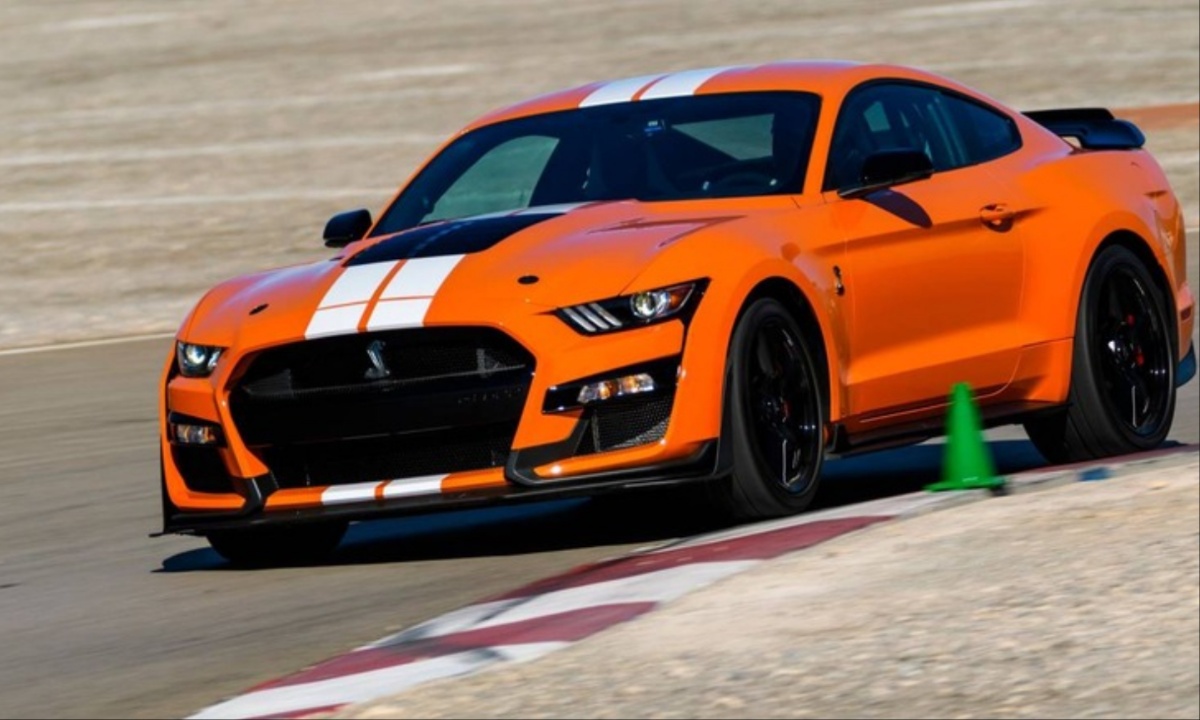
The 2025 Ford Mustang GTD is the pinnacle of Mustang performance, designed to surpass every predecessor and dominate both street and track. Powered by a 5.2-liter supercharged Predator V8, the GTD produces an astonishing 815 horsepower and 664 lb-ft of torque, spinning to 7,650 rpm.
It accelerates from 0 to 60 mph in 3.5 seconds and reaches a top speed of 202 mph, cementing its position as the most powerful production Mustang to date.
Ford aimed to prove the GTD’s prowess at the Nürburgring in Germany, where it completed a lap in 6:57.8. This performance eclipsed renowned rivals, including the Porsche 911 GT3, Corvette C8 Z06, and Viper ACR, demonstrating that American muscle can compete with European supercars on their home turf.
The car achieves this through active aerodynamics, extensive carbon-fiber bodywork, and carbon-ceramic brakes that ensure exceptional stopping power under extreme conditions.
Weighing 4,386 pounds, the GTD might seem heavy compared to competitors, but it handles with remarkable poise. Thanks to advanced suspension geometry, massive Michelin Pilot Cup 2 tires (325 front, 345 rear), and precise weight distribution from a rear-mounted transaxle, the car remains planted in corners, braking zones, and during acceleration.
The new Variable Traction Control allows fine-tuned adjustments or complete deactivation, providing drivers with confidence even under aggressive power application.
The GTD’s track-focused technologies include an integral-link rear suspension with pushrod-actuated springs and Multimatic ASV shocks, a hydraulic system to adjust spring compression and ride height, and active aerodynamics managed by the onboard computer.
The optional Track package enhances downforce with adjustable front flaps, a longer splitter, hood flicks, and an extendable rear wing. Nearly the entire body is carbon fiber, reducing weight while improving rigidity, with optional Liquid Carbon upgrades saving an additional 30 pounds.
Despite its staggering performance, the interior is a weak point. While Recaro seats provide excellent support and comfort, the cabin still reflects a standard Mustang layout, with limited premium materials and an underwhelming sense of occasion.
Priced from $325,000, the GTD is produced in limited numbers, with Ford already selecting buyers for the 2025 and 2026 model years. With record-breaking Nürburgring credentials, advanced track technologies, and unmatched American muscle, the Mustang GTD is positioned as a road-legal supercar capable of competing with the very best in the world.
3. 2024 Shelby Super Snake: Extreme Muscle with Shelby Heritage
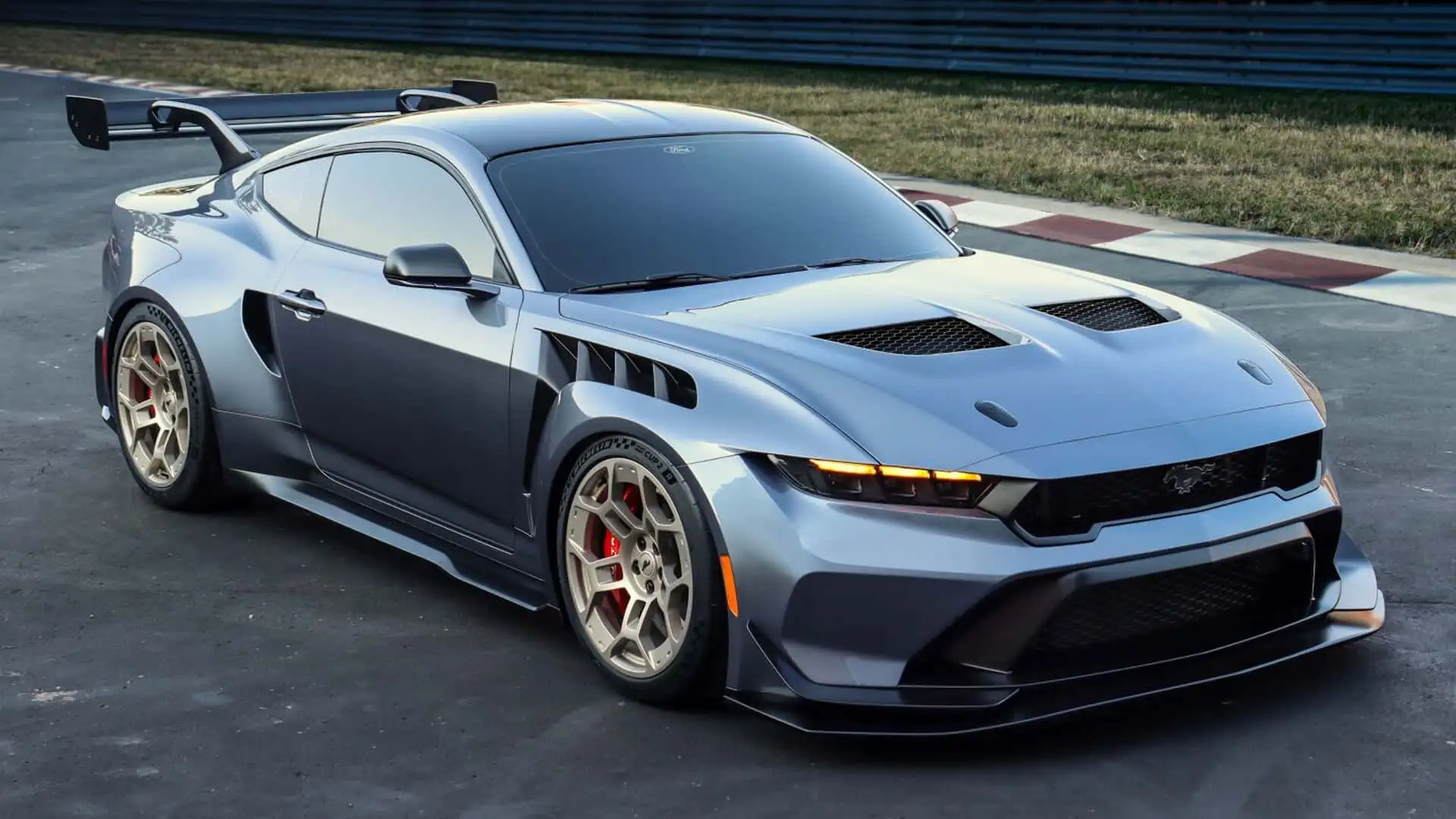
The 2024 Shelby Super Snake is the ultimate expression of Mustang performance, combining extreme power with Shelby American’s legendary tuning expertise. Based on the standard 5.0-liter Coyote V8, the Super Snake produces an astonishing 825 horsepower and 630 lb-ft of torque, enabled by a massive Whipple supercharger.
This allows the car to accelerate from 0–60 mph in just 3.5 seconds, delivering a driving experience that is both thrilling and raw. Starting at $159,000, the Super Snake builds on the legacy of the 2021 special edition while adding five more horsepower and a redesigned, aggressive exterior.
Shelby American enhances the Mustang with extensive mechanical upgrades. Suspension components, springs, dampers, and anti-roll bars are replaced with bespoke Shelby parts.
Six-piston front and four-piston rear Wilwood calipers paired with ventilated discs provide ultimate stopping power, while 20-inch forged wheels wrapped in Michelin Pilot Super Sport tires improve grip and stability.
The rear driveshafts are upgraded with Ford Racing components, and the chassis receives a complete alignment for optimal handling. These changes reduce body roll while retaining enough movement to feel connected to the road, maintaining the Mustang’s muscle car character while improving control.
Carbon-fiber body panels, including a new hood, splitter, spoiler, side skirts, and diffuser, reduce weight and enhance aerodynamics. Super Snake-specific grilles, stripes, and Shelby badging provide visual distinction, while the interior gains Shelby leather, embroidered headrests, and a set of new dash dials for oil, fuel, and boost pressures.
On the road, the Super Snake is aggressive and unruly. Its engine delivers an explosive soundtrack with a crisp, thunderous exhaust note, though the supercharger whine is surprisingly subtle. Traction is challenging in lower gears, and the rear axle can twist under hard throttle, creating a wild yet controllable experience.
The upgraded suspension, wide tires, and chassis tuning allow the car to remain planted, letting drivers exploit the 800+ horsepower without feeling unsafe. While not a precision sports car, the Super Snake balances extreme power with a rideable, confident chassis.
Priced at $159,000, the Super Snake competes with other high-power Mustang tuners such as Sutton Bespoke and Steeda. Its combination of raw muscle, refined Shelby upgrades, and legendary provenance makes it a unique offering for enthusiasts seeking a street-legal, 800+ horsepower American muscle car.
4. 2018 Dodge Challenger SRT Demon: Drag Strip Domination
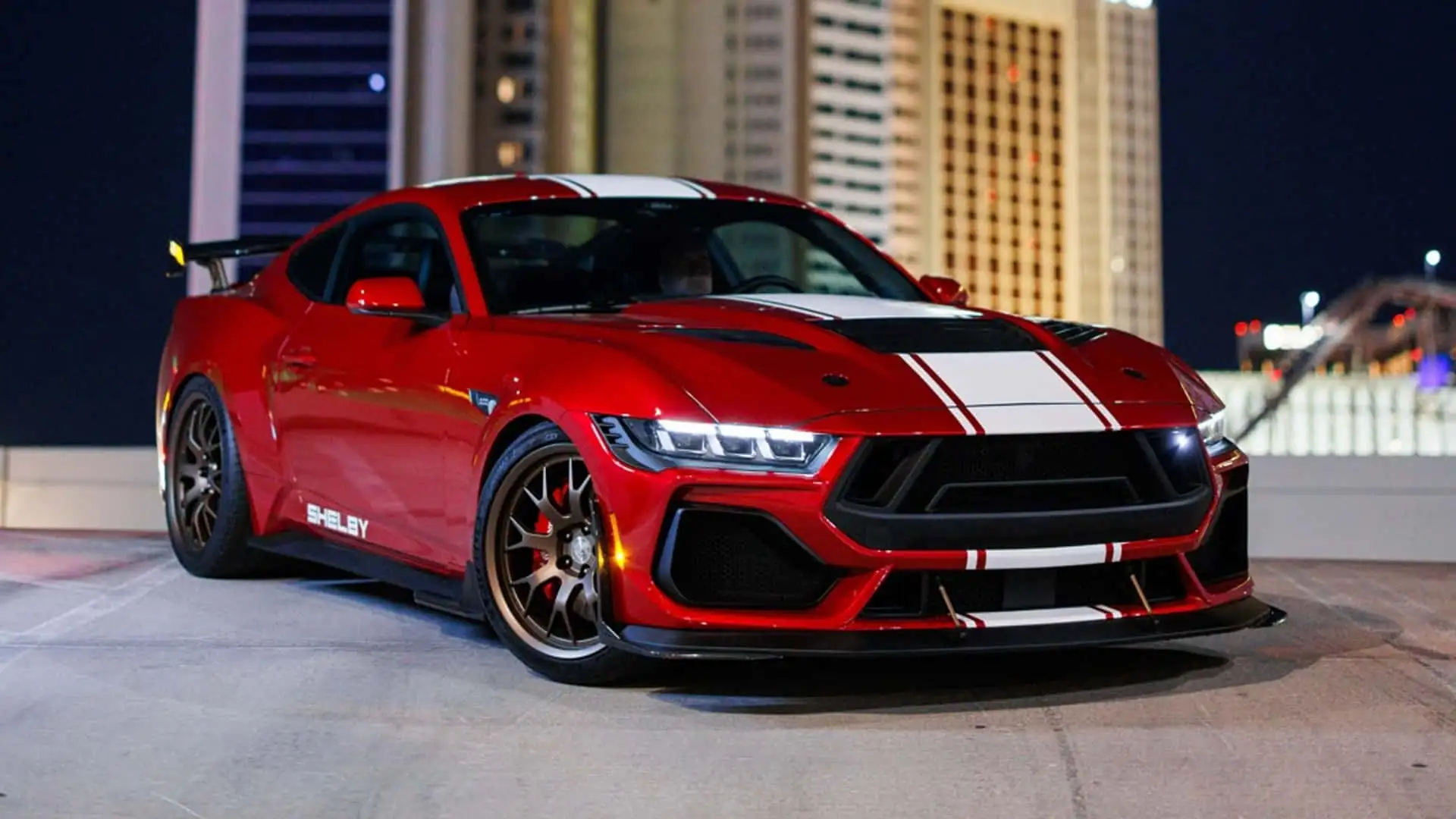
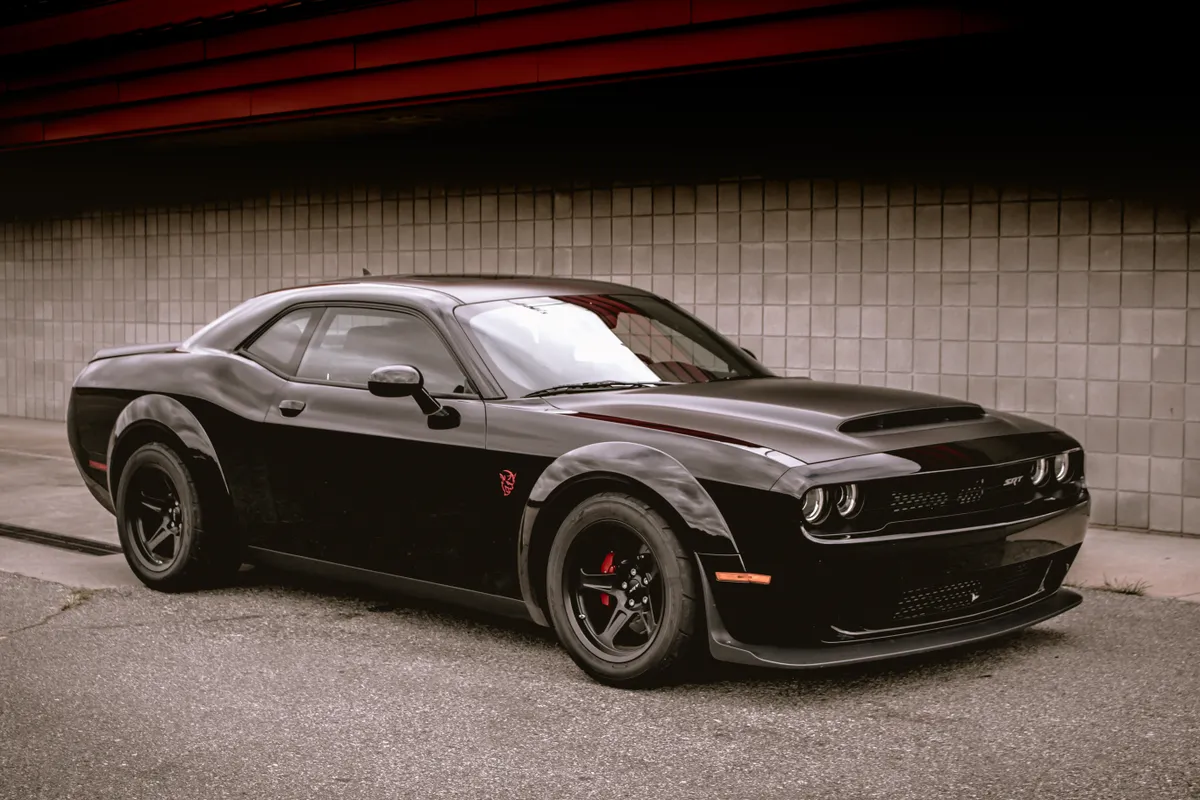
The 2018 Dodge Challenger SRT Demon is an icon of muscle car performance, built for straight-line supremacy. Powered by a supercharged 6.2-liter HEMI V8, the Demon produces up to 840 horsepower and 770 lb-ft of torque when equipped with the optional Demon Crate package and running on high-octane fuel.
This immense power allows it to rocket from 0 to 60 mph in just 2.3 seconds and reach a top speed of 211 mph, making it one of the fastest production muscle cars ever built.
The Demon’s primary focus is drag racing, a niche in which it excels. It features a quarter-mile time of 9.65 seconds at 140 mph on E85 fuel, officially recognized by Dodge. Key to this performance is the car’s TransBrake, a unique system that locks the transmission to improve launch control.
Weight reduction options, such as deleting the passenger and rear seats, further enhance acceleration, while the Demon Crate package includes a specialized engine controller that unlocks the full potential of the supercharged V8. Adjustable dampers help transfer weight to the rear for better traction, and super-sticky tires fitted under flared fenders ensure the enormous power reaches the pavement.
While it dominates in straight-line performance, the Demon was not designed for handling on winding roads. Its chassis and suspension are optimized for drag-strip launches rather than tight corners, and the wide rear tires are a testament to its focus on maximum grip during acceleration.
Despite this, the car remains comfortable for cruising or attending car shows, provided drivers respect the prodigious power.
The interior largely mirrors other Dodge Challenger models, with the option to strip down for weight savings or retain amenities for comfort. Standard features can be removed and replaced with simpler alternatives, while luxury options such as heated and ventilated seats, a power sunroof, and a premium audio system can be retained if desired.
The 2018 Dodge Challenger SRT Demon remains a milestone in American muscle car history. Its record-breaking power, drag-strip capability, and drag-specific engineering make it an unparalleled choice for enthusiasts seeking straight-line performance that few vehicles in the world can match.
5. 2022 Shelby GT500KR: The Ultimate Mustang Evolution
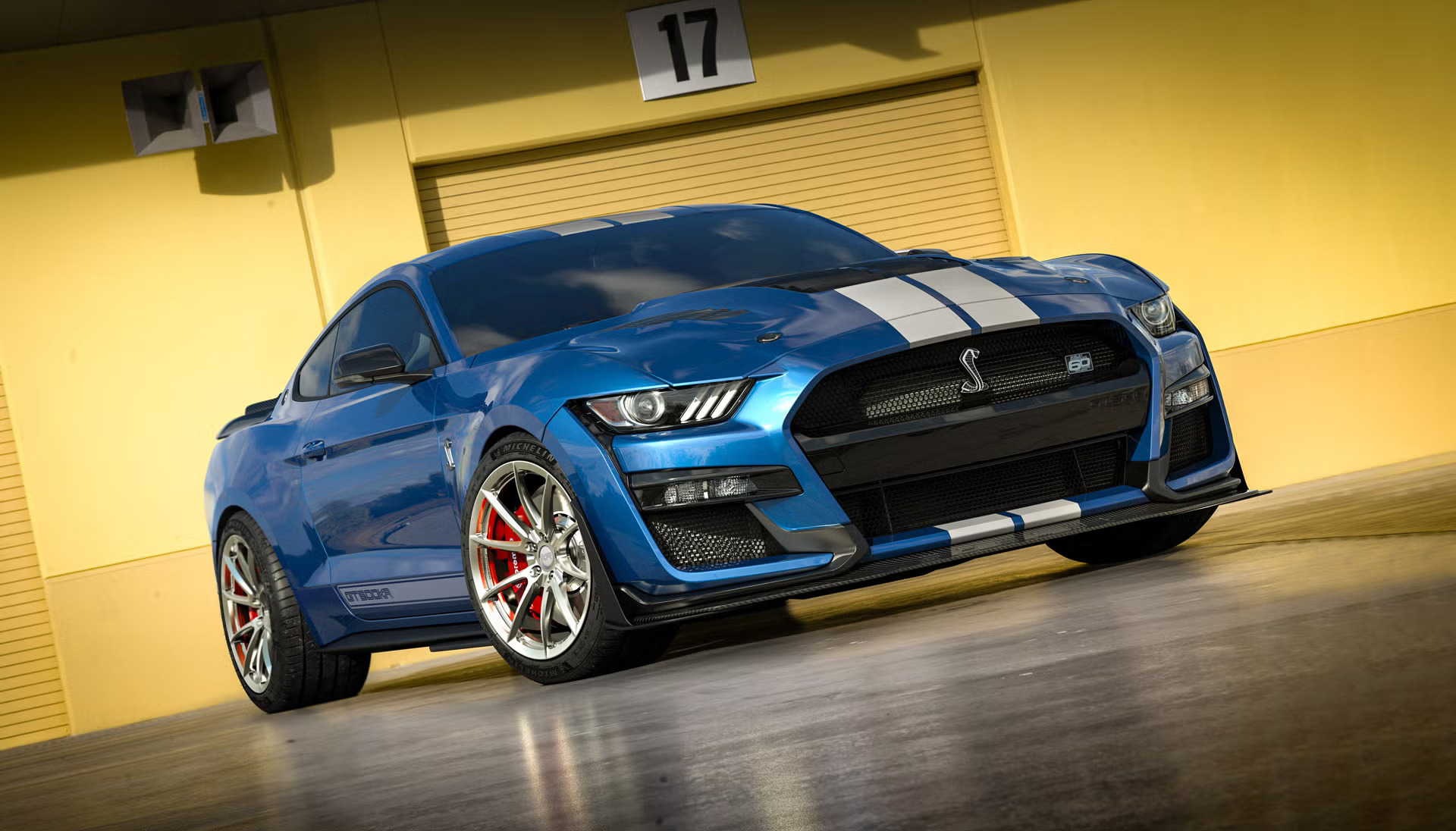
The 2022 Shelby GT500KR, short for “King of the Road,” is a tribute to Shelby American’s 60th anniversary and a crowning achievement for the outgoing GT500 line. Limited to just 225 units worldwide, the GT500KR combines the 5.2-liter Predator V8 with a massive 3.2-liter Whipple supercharger to produce roughly 900 horsepower and 750 lb-ft of torque.
This powerhouse propels the car from 0–60 mph in 3.2 seconds, solidifying its status as the most extreme production Ford Mustang ever built. Priced at $127,895, the GT500KR carries unique Shelby badging and interior trim, making it a collector’s dream.
The GT500KR continues the legacy of the GT500, which debuted in 1967 when Carroll Shelby first stuffed a large V8 into a Mustang. The current GT500, launched in 2020, was already the most powerful road-going Ford Mustang, producing 760 hp and 625 lb-ft of torque.
With the KR upgrade, the car pushes beyond muscle car limits to rival supercars costing far more, thanks to its track-capable chassis, precise handling, and blistering acceleration.
A standout option is the Carbon Fiber Track Package, which transforms the GT500 into a track-focused supercar. This package adds 20-inch wheels with Michelin Pilot Sport Cup 2 tires, a massive rear wing, Recaro front bucket seats, and deletes the rear seats.
Adjustable strut mounts and an oil catch can further enhance performance, while lightweight carbon-fiber interior trim reduces weight and adds a race-inspired aesthetic. Even without this package, the GT500KR is impressively poised, with dual-clutch transmission shifts firing like gunshots and massive brakes providing strong stopping power.
The GT500KR also offers modern technology and comfort. An 8.0-inch touchscreen with Apple CarPlay and Android Auto, a 12.0-inch configurable digital gauge cluster, and an optional 12-speaker Bang & Olufsen audio system enhance usability and enjoyment. Front legroom is generous at 45.1 inches, and the trunk offers 13.5 cubic feet of cargo space, making it more practical than competitors like the C8 Corvette.
Performance comparisons highlight the GT500KR’s superiority over Dodge Hellcat models, with faster 0–60 mph times and quicker quarter-mile runs thanks to better traction and advanced chassis tuning. With only 225 units available, the 2022 Shelby GT500KR stands as a rare, hyper-powerful Mustang that merges American muscle car heritage with modern supercar performance.
Also Read: 5 Cars for Pensacola Family Trips vs 5 cars That Break on Road Trips
6. 2023 Dodge Challenger SRT Demon 170: The Ultimate Drag Muscle Car
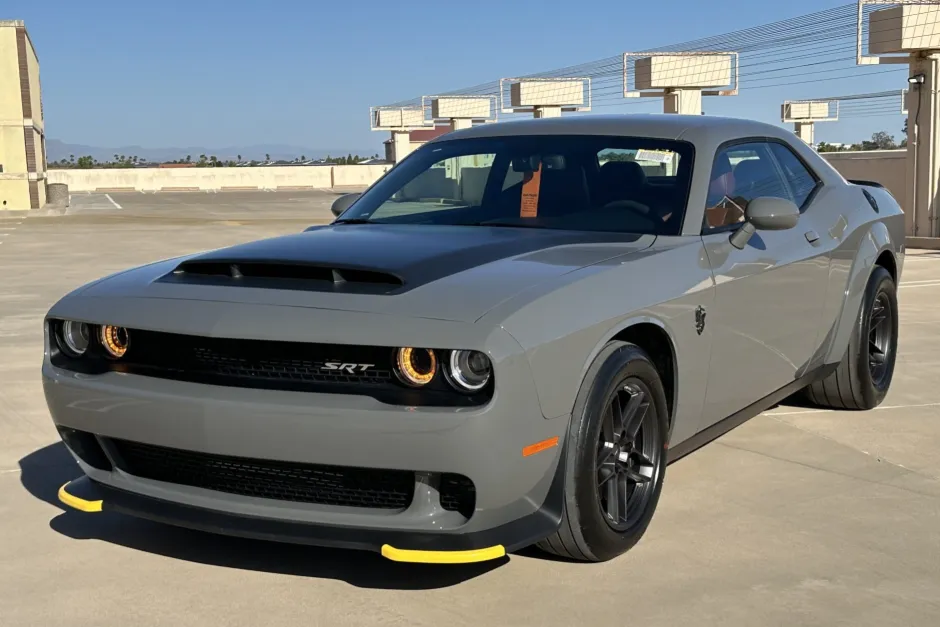
The 2023 Dodge Challenger SRT Demon 170 is a purpose-built, factory drag racing machine and the most extreme muscle car ever produced. With a base price of $96,666, this 1,025-horsepower hypercar delivers a staggering 945 lb-ft of torque, propelled by a 6.2-liter supercharged Hemi V8.
Its 0-60 mph time is officially 1.66 seconds, and it can complete a quarter-mile in just 8.9 seconds, making it one of the fastest production cars on Earth in straight-line acceleration.
The Demon 170 is a final, drag-focused farewell to the Challenger. It runs on E85 ethanol fuel, indicated by the “170” in its name, and uses a highly reinforced version of Dodge’s Hellcat V8. Upgrades include strengthened pistons, connecting rods, crankshaft, fuel injectors, and cylinder head studs, topped with a massive 3.0-liter supercharger.
On conventional E10 fuel, it still produces 900 hp and 810 lb-ft, making it terrifyingly powerful under any circumstances. Power is delivered through an eight-speed automatic transmission to the rear wheels, while drag-spec radials and suspension ensure maximum traction on the strip.
The Demon 170 is designed purely for drag performance. Its acceleration and launch capabilities surpass most all-wheel-drive electric hypercars, including the Rimac Nevera, Tesla Model S Plaid, and Porsche 911 Turbo S, though achieving peak performance requires a prepped drag strip and expert driving.
Dodge also offers optional passenger and rear seats for $2,500 and a sunroof for $10,000, though the car is intended to remain stripped for minimal weight.
Visually, the Demon 170 retains the classic Challenger silhouette but adds subtle flared rear wheel arches and other discreet cues, making it recognizable only to enthusiasts. Despite its monstrous performance, it maintains street legality, although its real potential is unleashed only on the drag strip.
The Challenger SRT Demon 170 represents the ultimate expression of Dodge’s muscle car philosophy: maximum power, straight-line dominance, and unadulterated driver engagement.
For those who want the quickest factory drag car with a V8 engine and a price under $100,000, the Demon 170 is a once-in-a-generation machine, combining classic American muscle heritage with record-shattering performance.
7. 2025 Chevrolet Corvette ZR1 C8: 1,064 HP Mid-Engine Marvel
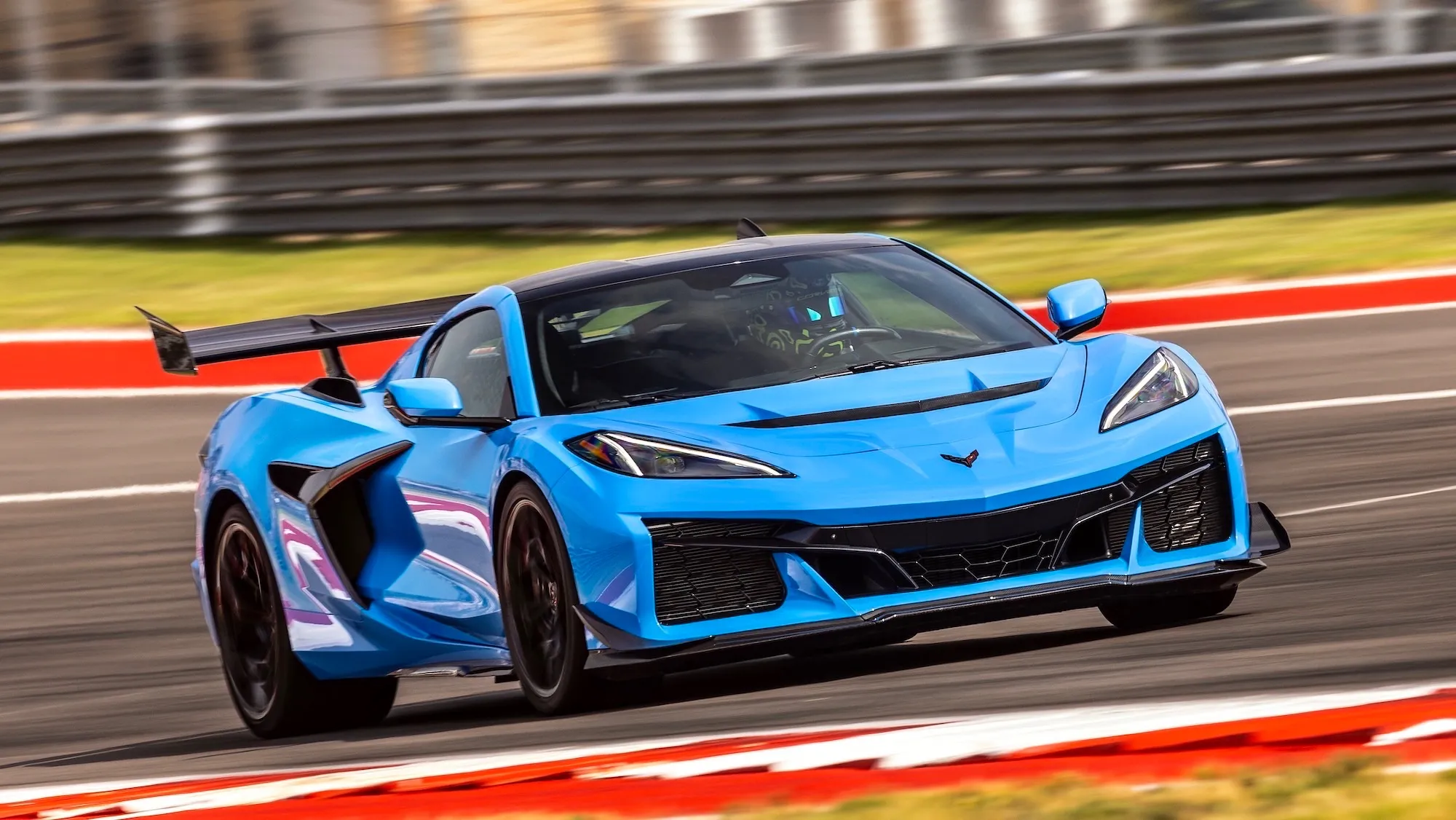
The 2025 Chevrolet Corvette ZR1 C8 is a mid-engine supercar that pushes the boundaries of American performance, delivering a staggering 1,064 hp and 828 lb-ft of torque from its 5.5-liter twin-turbo V8.
With a 0-60 mph time of just 2.3 seconds and a top speed of 233 mph, the ZR1 surpasses many hypercars in acceleration while remaining far more affordable. Its rear-wheel-drive setup, paired with massive 345mm rear tires, channels all this power to the asphalt, making it a pure driver-focused experience.
The ZR1’s LT7 V8 is a ground-up engineering feat, developed alongside the Z06’s naturally aspirated LT6 as part of the “Gemini twins” project. While sharing basic architecture, the LT7 features turbo-specific modifications, including dished pistons, shorter titanium connecting rods, larger combustion chambers, and a flat-plane crankshaft.
The twin turbochargers produce up to 24 psi of boost, supported by an anti-lag system for instant throttle response. A secondary port fuel-injection system, 16 total injectors, and motorsports-grade cooling allow the engine to deliver consistent, high-octane performance. This drivetrain also forms the basis for Corvette’s GT3.R race cars used in Le Mans and Daytona competitions.
On the track, the ZR1 proves astonishingly controllable despite its extreme power. Equipped with the optional $8,495 Carbon Aero package and Michelin PS4 tires, the car exhibits remarkable stability through high-speed corners at the Circuit of the Americas, allowing drivers to exploit its full potential without fear of sudden oversteer.
The ZTK Performance Package ($1,500) adds stiffer springs, track-aligned suspension, Michelin Cup 2 R tires, and aerodynamic enhancements like a massive rear wing and front dive planes, generating up to 1,200 pounds of downforce while maintaining top-speed efficiency. Carbon-ceramic brakes measuring 15.7 inches front and 15.4 inches rear provide fade-free stopping power.
Despite its immense capabilities, the ZR1 remains usable for daily driving, offering comfort and practicality unlike many mid-engine supercars. Its linear torque delivery, responsive dual-clutch eight-speed gearbox, and chassis balance make it an accessible yet thrilling experience. While it may not match the lateral grip of a GT3 RS, it delivers raw, unfiltered power in a uniquely American supercar package.
Starting at $174,995 for the coupe and $184,995 for the convertible, the 2025 Corvette ZR1 C8 represents a rare combination of extreme performance, track capability, and relative affordability, cementing its place as a modern automotive legend.
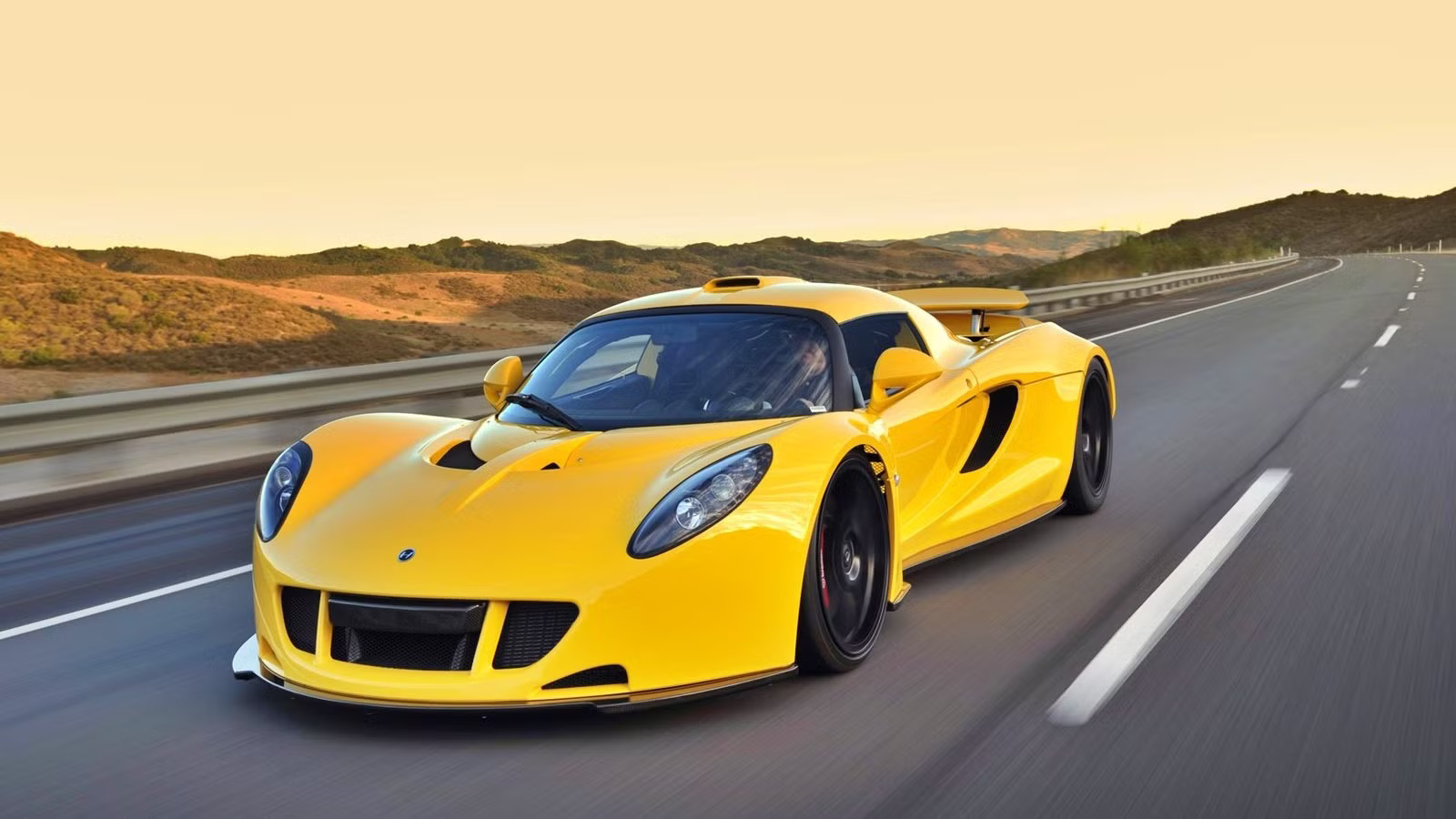
8. Hennessey Venom GT: 1,244 HP Hypercar Pioneer
The Hennessey Venom GT, introduced in 2010, was Hennessey Performance’s first proprietary hypercar and cemented the company’s reputation for extreme performance vehicles. Built on a modified Lotus Elise body, the Venom GT combines a lightweight carbon-fiber chassis with a 7.0-liter twin-turbo V8 from the Corvette Z06 LS7.
This engine produces 1,244 hp and 1,155 lb-ft of torque, allowing the car to accelerate from 0 to 60 mph in 2.7 seconds and achieve an official top speed of 270.49 mph, making it one of the fastest production cars ever.
The car’s lightweight design delivers nearly one horsepower per kilogram, enabling it to complete a quarter-mile in under 10 seconds. Only 13 units were produced, each priced at $1.2 million, highlighting its exclusivity.
The engine comes in three states of tune: 725 hp for the base model, 1,000 hp for a twin-turbo variant, and 1,244 hp for the ultimate version.
The Venom GT features advanced technologies such as adjustable suspension, active aerodynamics, carbon-fiber body panels, a rear wing, and Michelin Pilot Super Sport tires measuring 345/30 on 20-inch rear wheels. Carbon-ceramic brakes with Brembo six-piston calipers at each corner provide exceptional stopping power.
Hennessey developed the Venom GT using its experience with high-performance Vipers, combining American muscle with a lightweight mid-engine layout for both speed and handling. Delta Motorsport in the UK helped refine the chassis, suspension, brakes, and aerodynamics to ensure the car could handle its extraordinary power safely and effectively.
While some critics viewed it as a stretched Lotus with an oversized V8, testing on military runways and country roads demonstrated its exceptional balance, poise, and drivability, rivaling much more expensive supercars.
The Venom GT represents Hennessey’s bold vision of combining lightweight engineering with massive power. Its combination of American muscle, record-breaking speed, and precision engineering makes it a landmark vehicle in the history of production hypercars and a definitive example of what extreme performance can achieve.
9. SSC Tuatara: 1,750 HP Hypercar
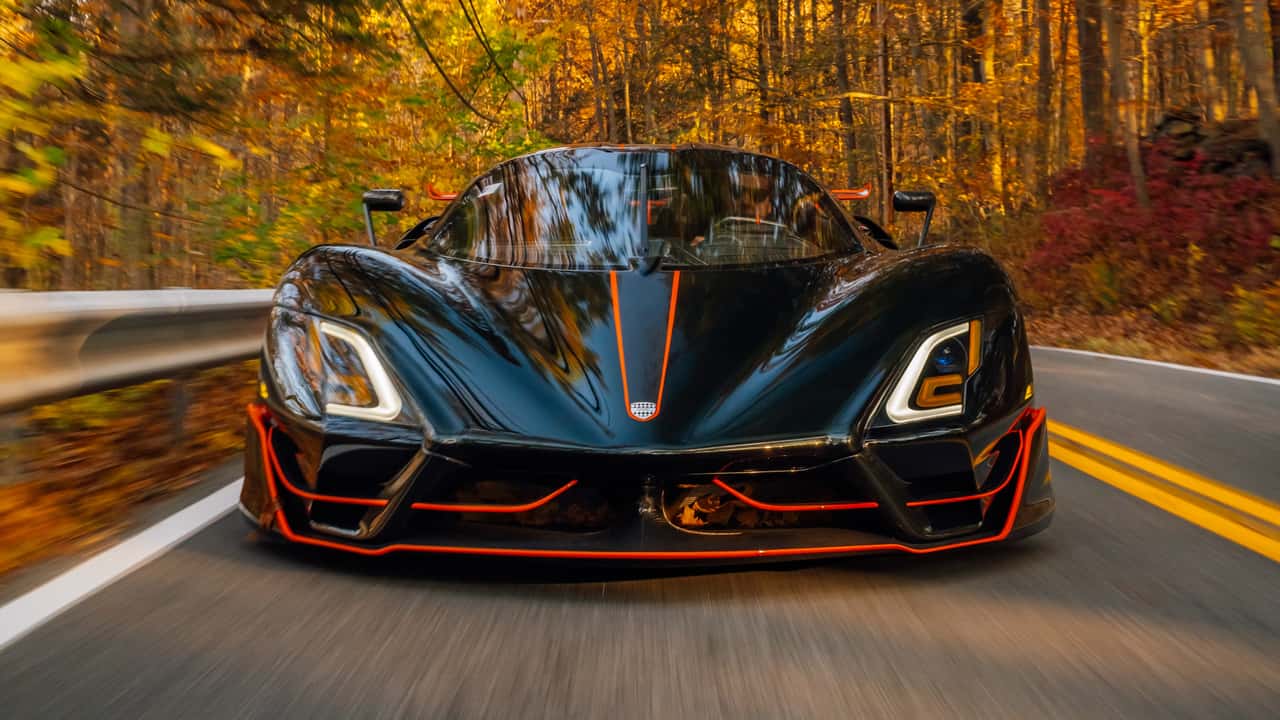
The SSC Tuatara is the successor to SSC’s mid-2000s record-breaking Ultimate Aero, establishing itself as one of the most extreme hypercars ever created.
With a 5.9-liter twin-turbo V8 producing 1,750 horsepower on E85 fuel, the Tuatara is designed for unparalleled speed, featuring an estimated 0 to 60 mph acceleration of 2.5 seconds and a claimed top speed exceeding 300 mph. The car also generates a staggering 1,280 lb-ft of torque, making it one of the highest-torque combustion engines available.
The Tuatara’s design is heavily focused on aerodynamics, resembling a spaceship with a low, aggressive profile. Styled by Jason Castriota, who also designed the Ferrari 599 and Saab Aero-X concept, the Tuatara blends extreme form with function.
The car weighs just 2,750 lbs thanks to extensive use of carbon fiber and composite materials in its chassis and body panels, making it lighter than a Subaru BRZ. The lightweight construction allows the enormous power to be effectively transmitted to the rear wheels while maintaining high stability at extreme speeds.
SSC has committed to producing only 100 units of the Tuatara, with each car priced at approximately $2,000,000. This exclusivity underscores the hypercar’s status as a collector’s item and technological showcase.
The Tuatara follows SSC’s legacy of breaking records, which began with the Ultimate Aero TT. That car achieved a 256 mph top speed on a closed road in Washington State in 2007, briefly surpassing European supercars until the Bugatti Veyron Super Sport claimed the record.
The Tuatara’s development faced multiple delays. Initially presented in 2011, the prototype featured a 1,350-hp 6.9-liter bi-turbo V8, carbon fiber construction, and a seven-speed manual gearbox.
Despite early excitement and plans for a public debut, funding issues and slow development postponed production. SSC received an interest-free $829,000 loan from the local government in Washington to establish a new headquarters, but updates on testing and deliveries remained scarce, leaving enthusiasts eagerly anticipating the car’s arrival.
The SSC Tuatara represents a blend of extreme engineering, American ambition, and hypercar exclusivity. With its lightweight construction, immense power, and radical design, it continues SSC’s tradition of challenging the limits of production car performance.
10. Hennessey Venom F5: 1,817 HP Hypercar
The Hennessey Venom F5 is the Texan tuner’s ultimate hypercar, built with the explicit goal of surpassing 300 mph. Named after the F5 tornado, the car embodies raw power and speed. Hennessey plans to produce just 24 units of the coupe version, each priced at approximately $2.3 million, with additional targa and high-downforce track variants to follow.
At its heart, the Venom F5 is powered by the 6.6-liter twin-turbo V8 “Fury” engine, producing a staggering 1,817 horsepower and 1,193 lb-ft of torque. The car weighs only 1,360 kg (dry) thanks to its carbon-fiber construction, making it extremely light relative to its immense power.
Maximum power is reached at 8,000 rpm, with a redline of 8,500 rpm, and torque arrives at 5,000 rpm. Performance figures are extreme, including 0-62 mph in 2.6 seconds, 0-124 mph in 4.7 seconds, and 0-250 mph in 15.5 seconds. The vehicle is paired with a seven-speed automated manual transmission designed to handle this incredible output.
While official top speed records have not yet been confirmed, Hennessey claims the F5 is capable of 311 mph, with simulations suggesting potential up to 328 mph.
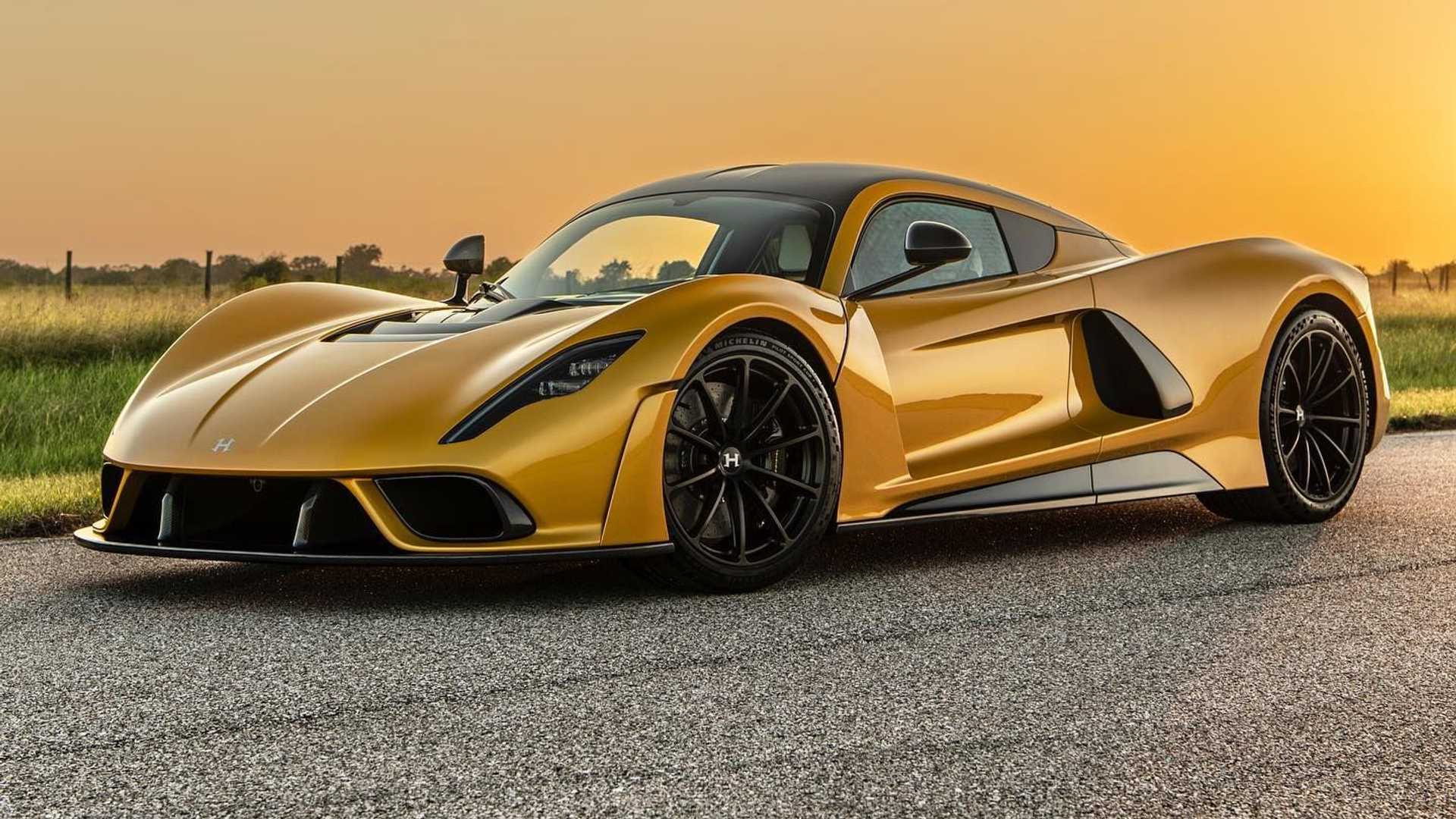
The Venom F5 prioritizes both extreme performance and drivability. Its stripped-back, aerodynamic body reduces lift at high speeds while carbon-ceramic Brembo brakes, fixed-rate dampers, and Michelin Pilot Sport Cup 2 tires ensure control.
The interior is minimalist, featuring a yoke-style steering wheel, a digital instrument cluster, and carbon and leather finishes, emphasizing performance over luxury. Despite its intensity, the car remains usable on public roads, offering a visceral driving experience where engine sound, vibrations, and acceleration dominate every sense.
On both drag strips and public roads, the F5 is relentless, delivering near-instantaneous acceleration and intense sensory feedback. The semi-automatic gearbox provides brutal, precise shifts at full throttle, while fixed-rate suspension allows surprisingly controlled handling for a hypercar of its caliber.
Hennessey has focused on balance and downforce, ensuring the F5 is not just a top-speed machine but also a car capable of handling real-world driving conditions with precision.
The Hennessey Venom F5 is a landmark in combustion-powered hypercars, combining extreme speed, engineering excellence, and raw driving excitement into one of the most potent vehicles ever built.
The most powerful American sports cars ever made represent more than just numbers on a specification sheet. They are statements of ambition, ingenuity, and unbridled driving passion. From the track-dominating Shelby GTD to the hypercar-level Venom F5, these vehicles push boundaries previously thought unattainable for domestic manufacturers.
Each car combines advanced engineering, lightweight construction, and immense horsepower to deliver a visceral driving experience that commands attention on every road and racetrack. They honor a legacy of muscle and performance while embracing modern technology, proving that American sports cars are as capable and thrilling as any exotic supercar.
These vehicles are not only feats of mechanical excellence but also cultural icons, symbolizing a commitment to speed, power, and driving excitement. They reflect the audacious spirit that defines the country’s performance car heritage.
Also Read: 10 Cars That Look Stunning But Disappoint True Enthusiasts