Commuting in Tulsa requires vehicles that can handle a mix of city streets, highway driving, and occasionally unpredictable weather, all while keeping fuel costs, maintenance, and stress manageable.
Some vehicles rise to the challenge, offering a combination of efficiency, comfort, modern technology, and long-term durability that makes daily commuting a breeze.
Examples like the 2025 Toyota Camry Hybrid, Honda Civic Hybrid, and Subaru Outback demonstrate how hybrid efficiency, reliable powertrains, and practical design support high-mileage drivers, making them ideal for Tulsa commuters.
At the same time, several popular vehicles struggle to survive the demands of high-mileage commuting. Trucks and SUVs with complex hybrid or electric systems, older first-generation EVs, or off-road-focused designs can face frequent repairs, software glitches, or mechanical wear that reduce their reliability for daily driving.
Models such as the 2025 Jeep Wrangler, Rivian R1T, and Cadillac Lyriq show that even advanced or adventurous vehicles can become expensive and inconvenient when used as a daily commuter. Understanding which vehicles thrive and which face challenges is crucial for Tulsa drivers seeking dependable, long-lasting transportation.
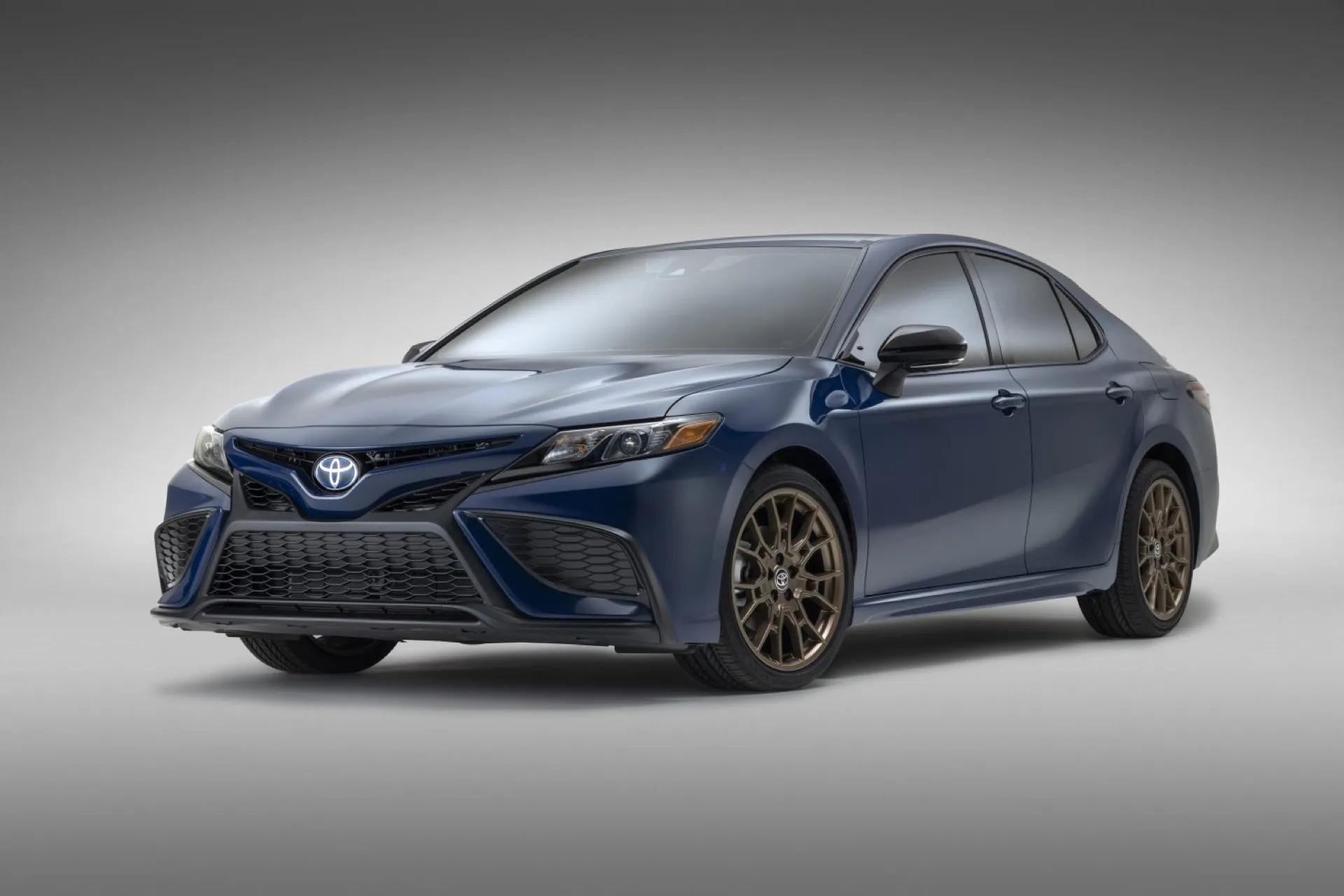
1. 2025 Toyota Camry Hybrid: Efficient, Practical, and Updated for Modern Drivers
The 2025 Toyota Camry Hybrid marks a significant shift for the sedan, moving to an all-hybrid lineup. Leveraging Toyota’s fifth-generation hybrid system, it delivers a combined 170 kW of power, with an EPA-estimated fuel efficiency of 51–53 mpg (4.0–4.6 L/100 km).
The Camry offers a real-world driving range of over 1,000 km from its 50-litre fuel tank. Its smooth, compliant ride is ideal for highway driving, particularly absorbing bumps common on Oklahoma interstates, while the hybrid system seamlessly alternates between electric and petrol power.
For commuters, cities like Tulsa benefit from short average travel times (around 18 minutes) and lighter congestion than larger metros. Public transit improvements, such as the MetroLink Arrow Bus Rapid Transit (BRT) and on-demand MicroLink service, enhance connectivity, though car ownership remains essential.
Road construction on major routes like I‑44 can occasionally delay travel, but hybrid vehicles like the Camry help reduce fuel costs for daily drivers.
The Camry’s exterior design remains unmistakably familiar but adopts subtle luxury cues from Lexus, with C-shaped LED daytime running lights, slimmer headlights, claw-like tail-lights, and new premium colour options.
Inside, the cabin has a simpler, more ergonomic layout with fabric trims, gloss-black highlights, a 12.3-inch touchscreen, and dual-zone climate controls. Rear passenger space is generous, featuring a fold-down centre armrest, USB-C ports, and rear air vents, though material quality is functional rather than premium.
Safety remains a Camry strong suit. The sedan comes standard with front AEB, blind-spot monitoring, rear cross-traffic alert, adaptive cruise control with lane-centring, and a 360-degree camera system.
ANCAP awarded the Camry a five-star safety rating, with strong scores for adult and child occupant protection. Limitations include glare from taller vehicles and missing rear AEB and pedestrian warning speakers in some markets.
Practicality is highlighted by a 524-litre boot, easy-to-use rear seat folding, and thoughtful storage options. Driving is comfortable and compliant, with smooth hybrid transitions, though the CVT can sound groaning under load. The Camry supports three drive modes, including an EV-only mode, enhancing flexibility for urban and highway driving.
Toyota offers low-cost capped-price servicing at $255 per visit for the first five years, alongside a five-year unlimited-kilometre warranty and a 10-year hybrid battery warranty, conditional on dealer servicing. Connected services are included for one year, with optional subscriptions available for advanced features.
The 2025 Camry Hybrid remains a practical, fuel-efficient, and safe mid-size sedan, combining reliability and modern technology, making it suitable for both private and fleet buyers.

2. 2025 Honda Civic Hybrid: Fuel-Efficient, Practical, and Engaging
The 2025 Honda Civic Hybrid makes a strong return, offering up to 50 MPG in the city and 47 MPG on the highway. Designed for commuters who need a compact footprint for city streets and downtown parking, it delivers “Prius-like” fuel economy while retaining Honda’s reputation for mechanical longevity and high resale value.
Tulsa drivers benefit from its efficiency on highways like I‑44 and the Broken Arrow Expressway, combined with a comfortable, engaging ride and user-friendly technology, making it a cost-effective and stress-reducing daily driver.
Equipped with a 200-horsepower hybrid powertrain, the Civic Hybrid provides strong, smooth acceleration and impressive torque for merging and passing. It reaches 0–60 MPH in around 6.5 seconds, outpacing the Toyota Prius and Corolla Hybrid.
The hybrid system transitions seamlessly between petrol and electric power, offering precise throttle response and a dynamic driving experience. While the four-cylinder engine produces the expected engine sound under load, it does not compromise the car’s spirited character.
The Civic Hybrid delivers a spacious and refined cabin for a compact sedan. Rear passengers enjoy generous legroom and headroom, while the trunk provides ample cargo space.
Cabin materials are solid and quiet, with no rattles, and higher trims add features such as a Bose audio system, Google Built-In, and touchscreen infotainment. Physical controls for climate and essential functions simplify daily use, while illuminated door unlock buttons add convenience during nighttime entry.
Steering is direct and confident, a hallmark of the Civic, and the comfort-tuned suspension balances agility with ride comfort. The car handles curves with composure while remaining compliant over bumps. Despite being a hybrid, it maintains a lively and engaging character, making it suitable for both relaxed commuting and spirited drives.
Standard Honda Sensing includes adaptive cruise control, lane-keeping assist, and other driver aids, reducing stress in stop-and-go traffic. Infotainment is intuitive, though the 9-inch screen may feel slightly dated, while higher trims offer enhanced connectivity and multimedia features.
Priced under $35,000 for fully equipped models, the Civic Hybrid combines efficiency, practicality, and performance with Honda’s proven reliability. Its fuel economy, comfortable interior, engaging driving dynamics, and smart technology make it an excellent choice for city and suburban commuting.
The 2025 Honda Civic Hybrid establishes itself as a compact sedan that blends fuel efficiency, comfort, and fun-to-drive dynamics, making it a top contender for commuters and small car buyers alike.

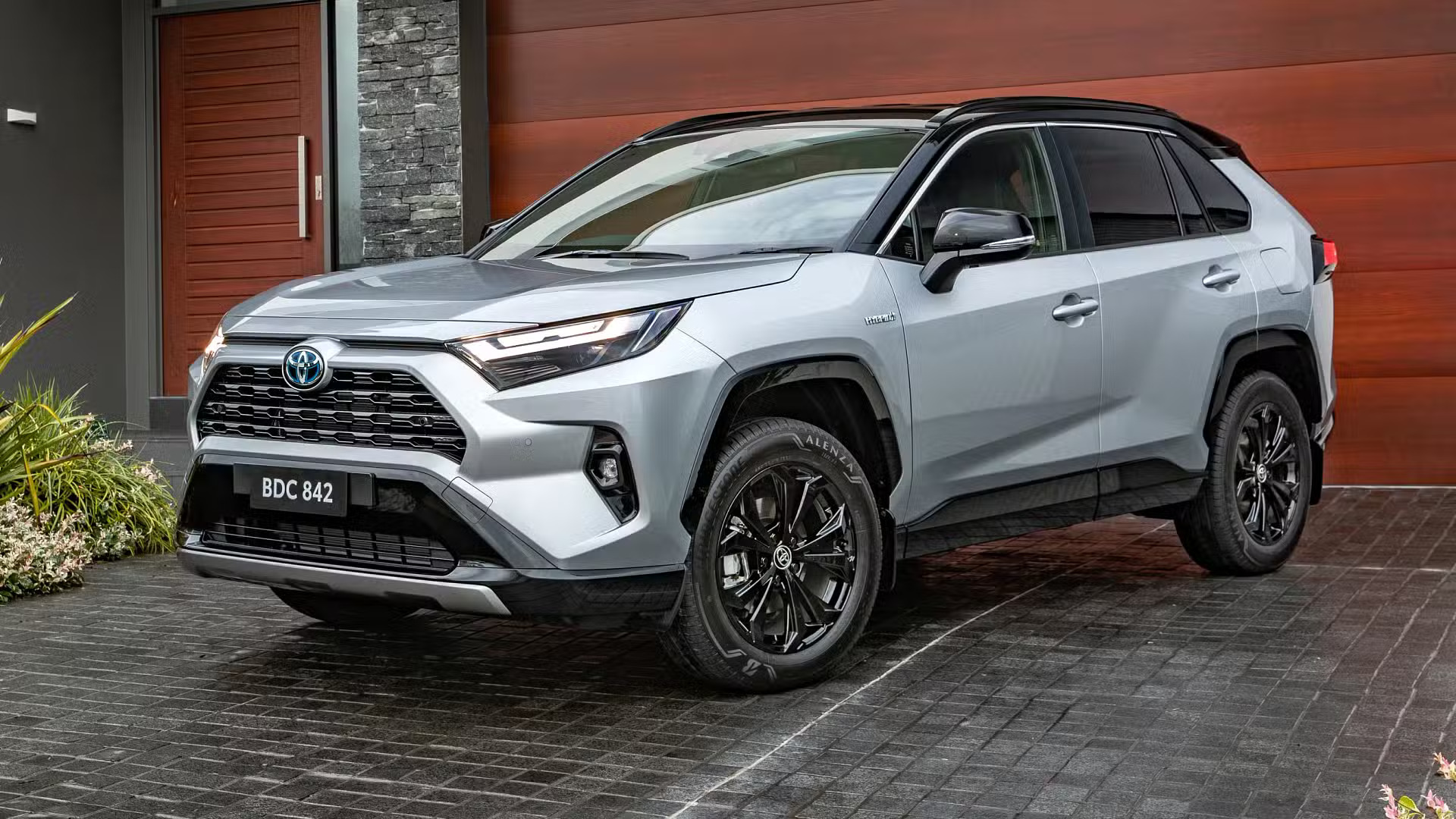
3. 2025 Toyota RAV4 Hybrid: Efficient, Capable, and Reliable SUV
The 2025 Toyota RAV4 Hybrid is a practical and dependable SUV, consistently ranked among the most reliable models of the year. Combining fuel efficiency with all-wheel drive, it suits commuters in Tulsa and other areas with unpredictable weather.
With an expected lifespan exceeding 250,000 miles, the RAV4 Hybrid offers long-term durability alongside modern technology, making it a versatile choice for city driving and weekend adventures.
Powered by a 2.5-liter four-cylinder engine paired with three electric motors and a continuously variable transmission, the RAV4 Hybrid produces a combined 219 horsepower. The rear electric motor provides standard all-wheel drive, enhancing traction in wet or icy conditions.
Acceleration is smooth and responsive, particularly in stop-and-go traffic, with the electric motors supplying instant torque. The Hybrid achieves EPA estimates of 41 MPG city, 38 MPG highway, and 40 MPG combined, outperforming the standard gas-only RAV4. The plug-in hybrid RAV4 PHEV offers 302 combined horsepower and an electric-only range of up to 42 miles.
The RAV4 Hybrid maintains a comfortable ride while delivering competent handling. In testing, the Woodland Edition achieved 0–60 MPH in 7.3 seconds, faster than the standard gas model, while the PHEV version reached 60 MPH in just 5.4 seconds. Its suspension balances comfort and stability, providing confidence on both city streets and highways, though cornering is more composed than sporty.
Cabins prioritize practicality with ample storage, multiple cubbies, and intuitive controls. Standard features include a tilting and telescoping steering wheel, dual-zone automatic climate control, and a height-adjustable cargo floor.
Higher trims offer heated seats, ambient lighting, SofTex upholstery, and larger infotainment displays. Cargo capacity matches the gas-only RAV4, accommodating 10 carry-on suitcases behind the second row or 22 with seats folded, while the PHEV sacrifices some space for its larger battery.
The RAV4 Hybrid features modern infotainment with wireless Apple CarPlay and Android Auto, onboard Wi-Fi, and screens ranging from 8 to 12.3 inches depending on trim. Standard Toyota Safety Sense 3.0 includes adaptive cruise control, lane-keeping assist, and automated emergency braking with pedestrian detection, enhancing driver confidence.
Toyota offers comprehensive coverage with a three-year/36,000-mile limited warranty, five-year/60,000-mile powertrain warranty, and a 10-year/150,000-mile hybrid component warranty. Complimentary scheduled maintenance is included for the first two years or 25,000 miles, highlighting Toyota’s commitment to reliability.
The 2025 Toyota RAV4 Hybrid blends efficiency, AWD capability, modern technology, and long-term dependability, making it a practical and confident choice for daily commuting and family adventures alike.
4. 2025 Mazda CX-5: Premium Comfort and Dynamic Driving
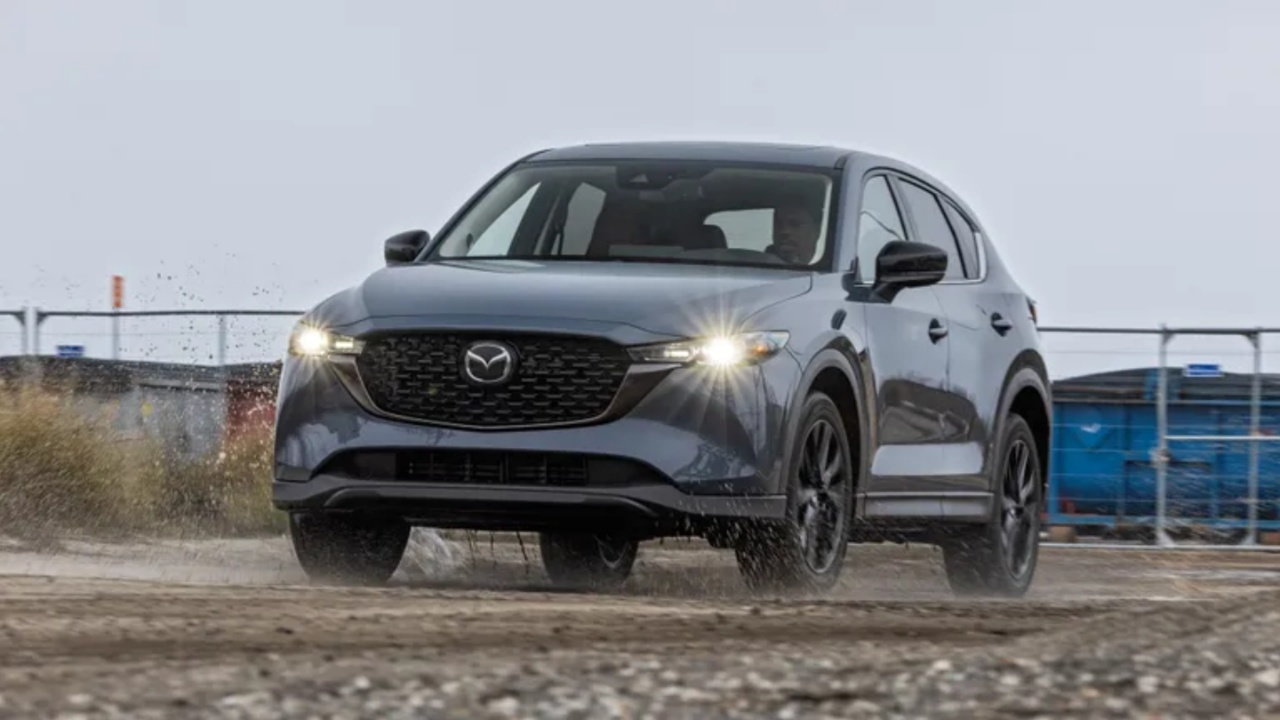
The 2025 Mazda CX-5 delivers a near-luxury experience without the high price of premium SUVs, making it an appealing choice for Tulsa commuters seeking comfort, style, and capability.
With its naturally aspirated engines and traditional automatic transmission, the CX-5 offers durability over high mileage compared to CVT-equipped rivals. Standard all-wheel drive ensures confidence on slick or rainy roads, while its quiet, well-insulated cabin makes daily commuting less stressful.
The CX-5 comes with two engine options. The standard 2.5-liter four-cylinder produces 187 horsepower, offering responsive throttle for city driving, while the turbocharged 256-horsepower engine provides brisk acceleration and a more engaging drive.
Both pair with a six-speed automatic transmission and standard i-Activsense all-wheel drive. In testing, the base engine achieved 0–60 MPH in 8.1 seconds, while the turbocharged version reached 60 MPH in 6.2 seconds. Steering is precise, cornering is composed, and the suspension absorbs road imperfections effectively, combining a smooth ride with responsive handling.
Fuel economy is competitive for the segment. The base engine achieves 26 MPG city and 31 MPG highway, while the turbocharged version delivers 22 MPG city and 27 MPG highway. Testing on a 75-mph highway route returned 32 MPG for the standard engine and 30 MPG for the turbo, demonstrating that the CX-5 balances performance with efficiency for daily commuting.
The cabin feels premium, with high-quality materials, supportive seats, and thoughtful ergonomics. The rear seat provides adequate space for adults, and cargo capacity is versatile, with up to 59.3 cu ft available when the rear seats are folded. Numerous storage compartments and a flat load floor enhance usability for groceries, work gear, or weekend trips.
A 10.3-inch infotainment display with rotary control, voice commands, and steering wheel buttons is standard across the lineup. Apple CarPlay and Android Auto are included, and Mazda Connected Services offers remote vehicle functions via smartphone, along with an optional Wi-Fi hotspot.
Standard safety features include automated emergency braking with pedestrian detection, lane-departure warning, lane-keeping assist, and adaptive cruise control. Additional driver-assistance options are available on higher trims, enhancing confidence in city and highway driving.
The CX-5 comes with a three-year/36,000-mile limited warranty and a five-year/60,000-mile powertrain warranty. Unlike some competitors, Mazda does not offer complimentary scheduled maintenance.
The 2025 Mazda CX-5 combines a premium cabin, refined ride, capable handling, and modern safety features, offering a balanced package for commuters seeking comfort, practicality, and engaging driving dynamics.
5. 2025 Subaru Outback: Reliable AWD Wagon for Tulsa Commuters
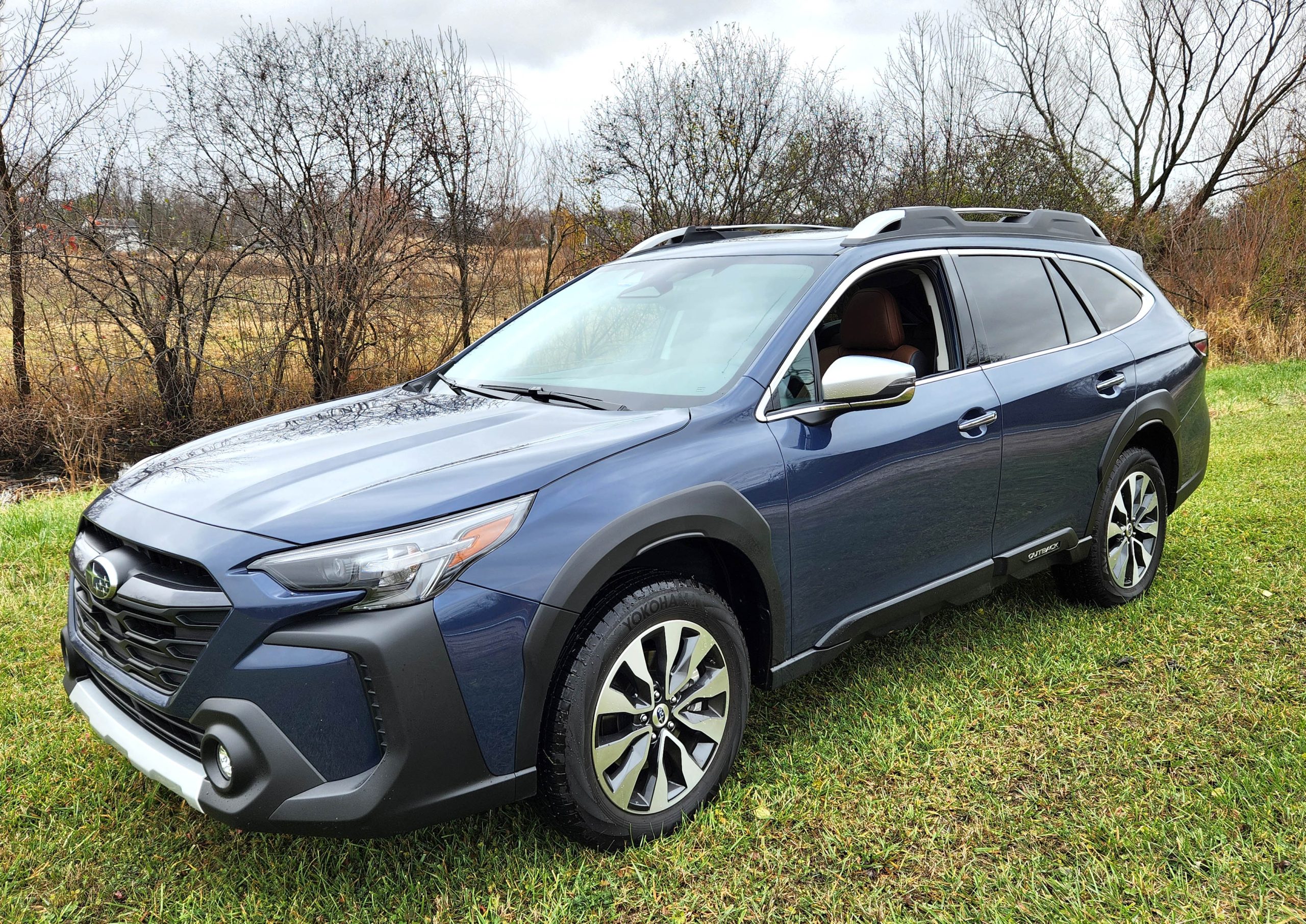
The 2025 Subaru Outback is a versatile wagon built for Tulsa drivers who need a dependable vehicle for both city commuting and weekend adventures.
With standard Symmetrical All-Wheel Drive (AWD), the Outback offers confidence on slick or uneven roads, while its strong reliability and longevity make it ideal for drivers intending to keep their vehicles for a decade or more. Its combination of fuel efficiency, comfort, advanced safety, and cargo capacity makes it particularly suited for Tulsa’s mixed driving conditions.
The Outback is offered with two engines: a standard 182-hp 2.5-liter four-cylinder and a 260-hp turbocharged 2.4-liter. Both engines are paired with a continuously variable transmission (CVT) and standard AWD. While the CVT occasionally feels sluggish, especially with the base engine, it provides smooth operation and predictable acceleration.
The turbocharged model enhances responsiveness, allowing the Outback Wilderness to reach 60 MPH in 5.8 seconds, compared to 8.5 seconds with the base engine. Standard towing capacity is 2,700 pounds, increasing to 3,500 pounds with the turbo option. Ground clearance ranges from 8.7 inches to 9.5 inches in the Wilderness trim, supporting light off-road capability.
Fuel economy is strong for the segment, with the base engine achieving an EPA rating of 26 MPG city and 33 MPG highway, while the turbo version earns 23 MPG city and 30 MPG highway. Real-world highway testing returned 28 MPG for both engines, making the Outback an efficient choice for daily commuting and longer drives.
The Outback’s cabin is functional and comfortable, with quality materials and generous head- and shoulder room. Rear passengers gain extra legroom compared to previous generations.
Cargo space is substantial, holding up to 11 carry-on suitcases behind the rear seats and 23 with seats folded. Higher trims add dual-zone climate control, heated seats, a power-adjustable passenger seat, and optional ventilated seats.
Trim levels feature a large vertically oriented 11.6-inch touchscreen, with Apple CarPlay and Android Auto standard. Optional navigation, wireless charging, and a Wi-Fi hotspot enhance connectivity, while premium trims offer a 12-speaker Harman/Kardon audio system. Physical controls for climate and audio provide intuitive usability.
All Outback models come standard with Subaru’s EyeSight suite, including forward-collision warning, automated emergency braking, adaptive cruise control, and lane-keeping assist. Blind-spot monitoring and rear cross-traffic alert are available on higher trims, ensuring comprehensive protection on city streets and highways.
Subaru offers a three-year/36,000-mile limited warranty and a five-year/60,000-mile powertrain warranty, though no complimentary scheduled maintenance is included.
The 2025 Subaru Outback combines practicality, comfort, AWD capability, and advanced safety features, making it a reliable, versatile choice for Tulsa commuters and weekend adventurers alike.
Also Read: 5 Cars for Charleston WV Hills & Drives and 5 That Struggle Uphill
5 That Don’t Survive High Mileage
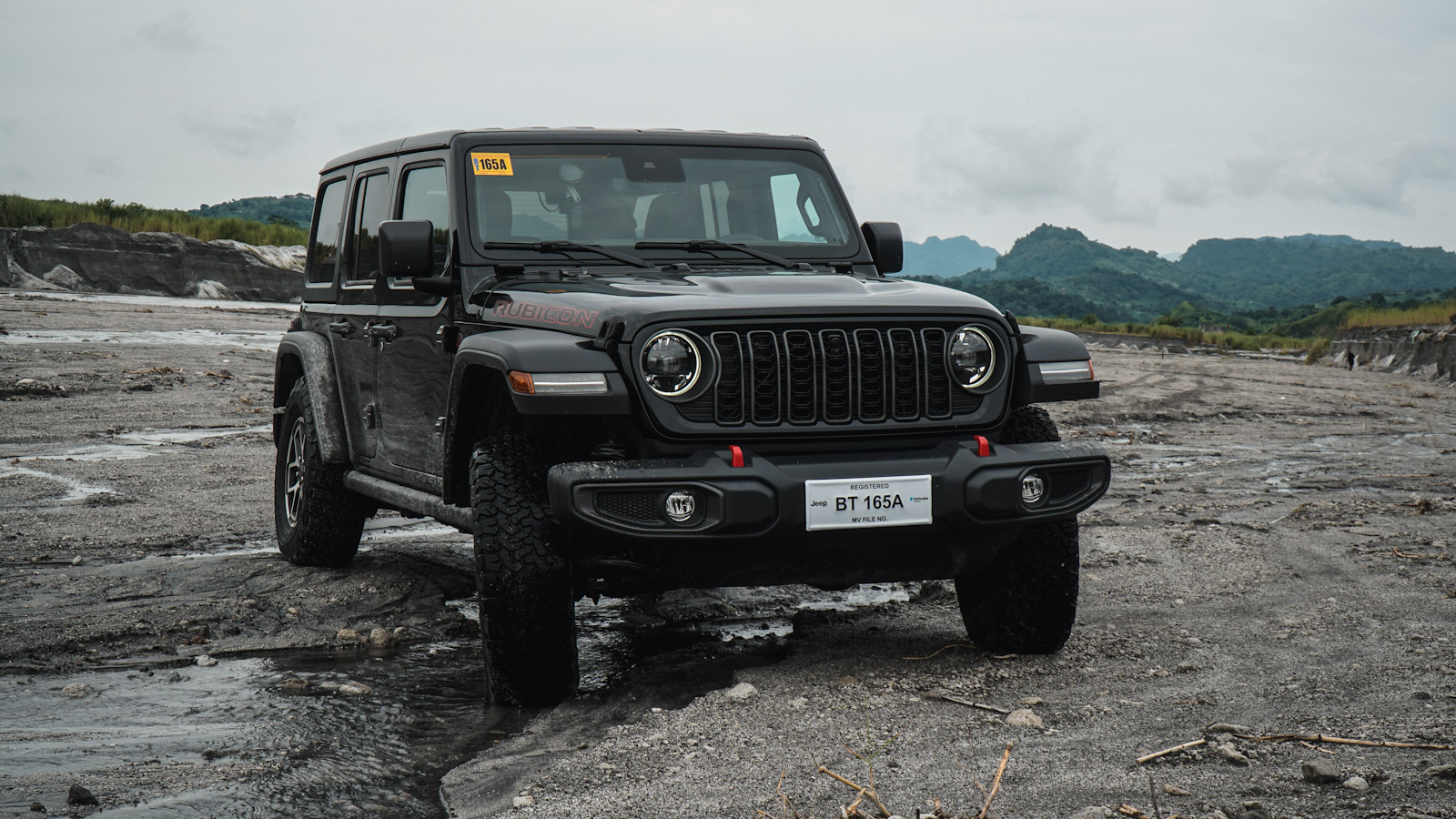
1. 2025 Jeep Wrangler: Off-Road Icon with Commuter Limitations
The 2025 Jeep Wrangler excels as an off-road vehicle but faces challenges as a high-mileage daily driver, particularly in cities like Tulsa. Its solid axle suspension, ideal for rugged terrain, wears quickly on paved roads, leading to frequent ball joint and bushing issues and the notorious “death wobble.”
Steering and suspension components often require replacement sooner than in typical SUVs, while electrical faults and dashboard glitches further compromise reliability. Consumer Reports ranks the Wrangler below average, citing recurring mechanical and electronic problems.
Tulsa’s stop-and-go traffic and intense summer heat place additional stress on the engine and transmission. Without meticulous maintenance, oil degradation and transmission wear accelerate, compounding long-term costs.
Fuel economy remains poor, averaging 17–21 MPG, and 10-year maintenance costs are estimated at around $3,456 above the SUV segment average, creating a significant financial burden for daily commuters.
Despite its off-road prowess, the Wrangler’s heavy, high-drag design makes it less suited for frequent highway or city driving. High-mileage owners must adhere to strict 5,000-mile service intervals and address suspension leaks immediately to prolong longevity.
For those prioritizing daily reliability and cost-efficiency, the 2025 Wrangler is a less practical choice, best reserved for weekend adventures and off-road excursions rather than everyday commuting.
2. 2025 Rivian R1T: Adventure-Ready but High-Mileage Risk
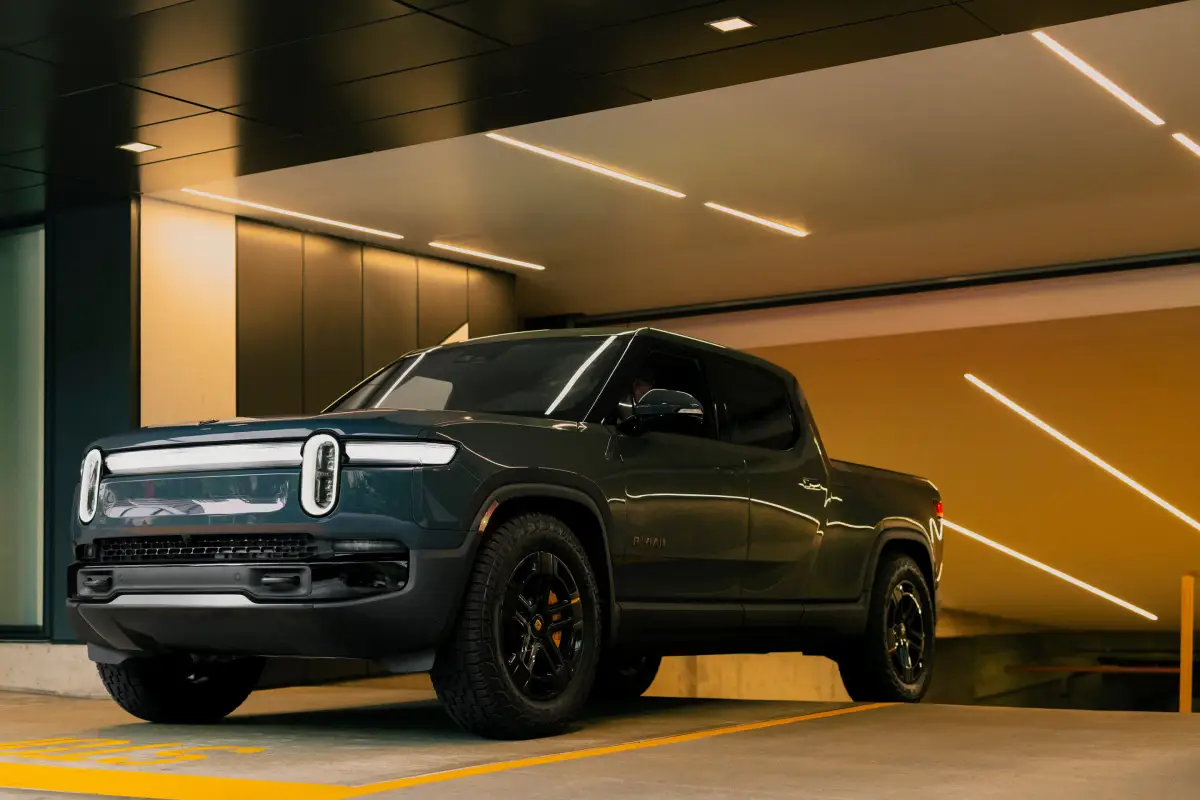
The 2025 Rivian R1T is a technologically advanced electric truck designed for off-road adventure, but it faces significant reliability concerns for high-mileage commuters, particularly in cities like Tulsa.
Owners report frequent software glitches, unresponsive screens, and driver-assist malfunctions, all of which can disrupt daily driving. Electrical failures, including 12V battery issues and persistent HVAC malfunctions, further compromise its dependability, leaving drivers stranded or uncomfortable.
Build quality inconsistencies, such as panel gaps and trim misalignment, detract from the premium experience, while Rivian’s limited service network exacerbates the problem.
High-mileage drivers face longer repair times, delayed parts availability, and costly out-of-warranty expenses, making daily use a gamble. The 60,000-mile warranty may not cover many long-term EV-specific repairs, raising concerns about ownership costs.
Increased mileage accelerates wear and tear on software, electronics, and mechanical components, highlighting the R1T’s vulnerabilities for daily commuting.
While the truck excels in off-road performance and adventure-ready features, its current reliability and service infrastructure make it a challenging option for drivers seeking a dependable, high-mileage vehicle. For commuters prioritizing uptime and low maintenance, the R1T may be less practical compared to more established brands with proven dependability.
3. 2025 Chrysler Pacifica Hybrid: Spacious but Challenging for High-Mileage Commuters
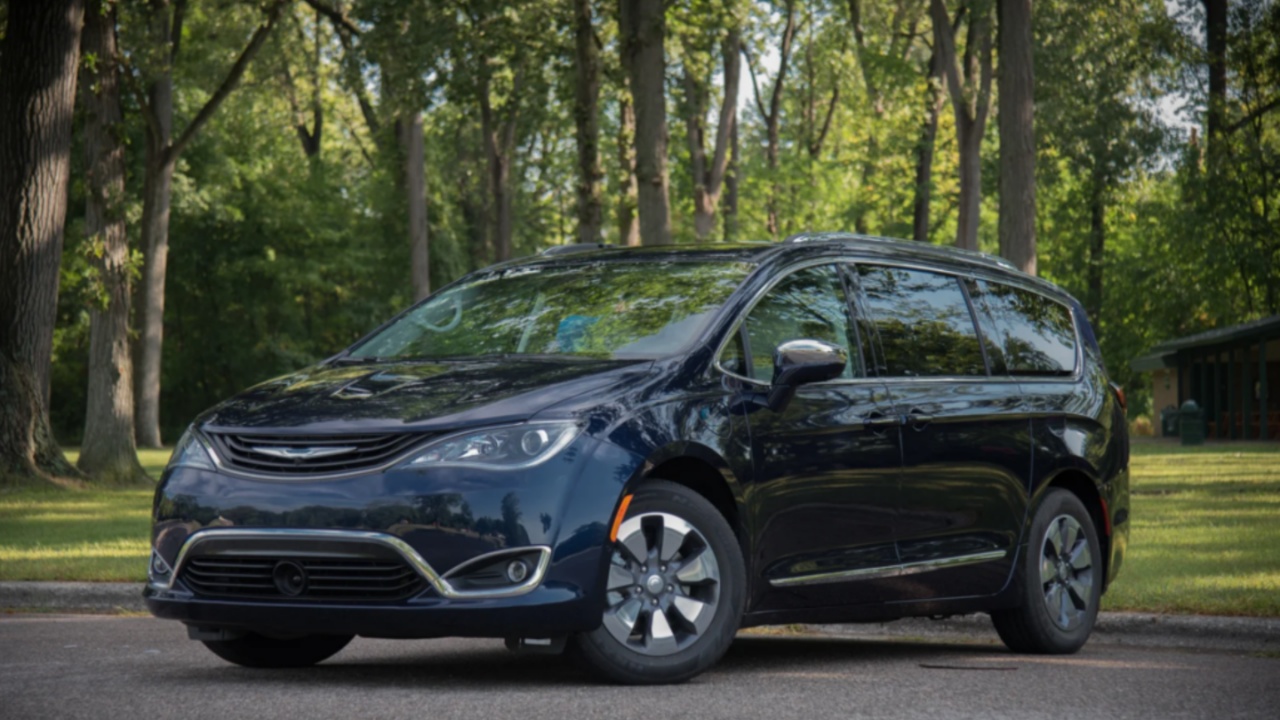
The 2025 Chrysler Pacifica Hybrid offers ample space and advanced hybrid technology, but high-mileage commuting exposes several weaknesses. Its complex plug-in hybrid system is prone to battery degradation, particularly under frequent start-stop city driving and Tulsa’s temperature extremes, which reduces electric range and increases reliance on the gas engine.
The hybrid’s eCVT, paired with the gas model’s 9-speed transmission, can feel slow or clunky in stop-and-go traffic, affecting drivability over time.
Electronics and infotainment systems, including Uconnect, have been reported to glitch, creating frustration during daily drives. The ride quality, especially with larger wheels, can feel stiff or harsh on uneven roads, and regenerative braking may deliver inconsistent feedback, requiring driver adjustment.
These factors compound during heavy commuting, increasing wear on both hybrid and mechanical components.
High-mileage use also stresses the battery and transmission further, accelerating the need for maintenance and potentially costly repairs. Inconsistent access to charging further reduces efficiency, forcing the gasoline engine to compensate.
While the Pacifica Hybrid excels in interior space, comfort, and utility, its long-term reliability under heavy daily use is limited. Commuters seeking a durable, low-maintenance hybrid may find the Pacifica less practical compared to more proven alternatives.
4. 2025 Volkswagen Taos: Compact but Reliability Concerns Persist
The 2025 Volkswagen Taos is a compact SUV designed for city and suburban commuting, yet high-mileage drivers in Tulsa may face reliability challenges. While the refresh replaces the clunky dual-clutch transmission with a smoother 8-speed automatic, turbo lag and occasional downshift hesitation can still affect acceleration, particularly during busy commutes.
The engine, though more powerful than previous models, may feel underwhelming under heavy use and produces a buzzy sound at higher RPMs.
Heat-intensive environments like Tulsa put additional stress on Taos’s cooling system. Earlier 2022–2024 models experienced head gasket failures and fuel system issues, including suction jet pump defects, highlighting potential vulnerabilities even in refreshed 2025 models.
Electrical quirks, from accessory malfunctions to minor software glitches, remain a concern, especially for high-mileage users relying on consistent daily performance.
The anticipated Taos Hybrid, not yet released, adds further complexity. While hybrid efficiency could benefit stop-and-go city driving, high-voltage components demand robust cooling and battery care, increasing maintenance demands.
For Tulsa commuters, the 2025 Taos offers style and compact convenience, but long-term dependability requires diligent maintenance. Monitoring the cooling system, addressing transmission quirks, and ensuring routine checks on electrical systems will be key to minimizing downtime and avoiding costly repairs under heavy, high-mileage usage.

5. 2025 Cadillac Lyriq: Luxury EV with Early Reliability Concerns
The 2025 Cadillac Lyriq is Cadillac’s first-generation electric SUV, combining luxury and strong range, but it faces challenges for high-mileage commuters. Early reliability issues, including infotainment glitches, software bugs, and occasional high-voltage battery errors, raise concerns about long-term dependability.
Consumer Reports predicts below-average reliability for the Lyriq, highlighting the need for refinement in GM’s newer EV technology.
Software and electronic problems are frequent, with infotainment malfunctions and connectivity errors requiring dealership updates, which can disrupt daily commuting.
Real-world battery performance sometimes falls short of EPA estimates, and high temperatures common in Tulsa can further reduce efficiency. Essential EV features such as traffic updates and preconditioning may require costly subscriptions, adding to ownership expenses.
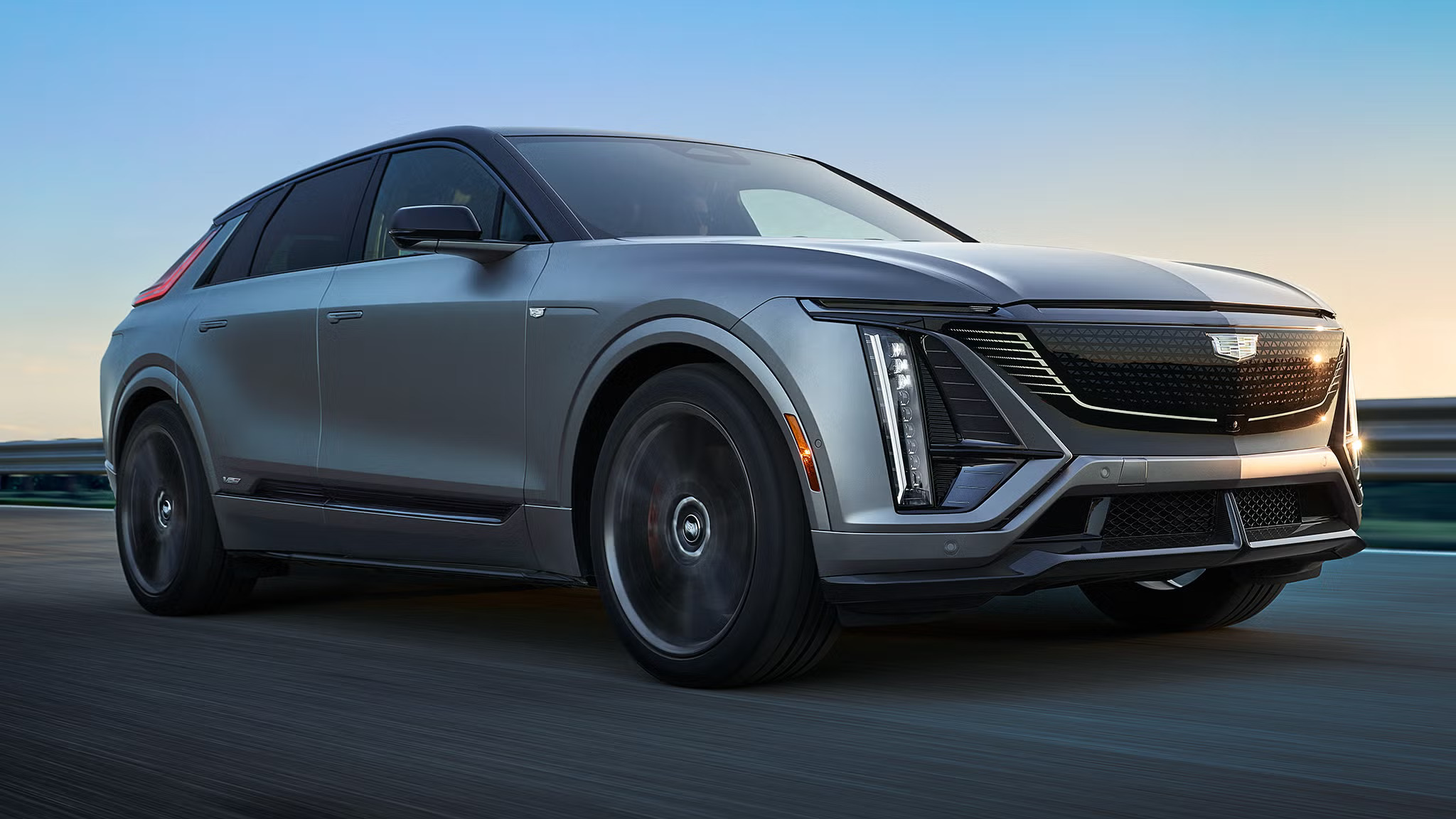
Tulsa drivers may face additional stress on the Lyriq due to frequent stop-and-go traffic and intense summer heat, which can affect battery health and reduce driving range. Early reports also identify braking and driver-assistance systems as areas needing attention, which are important for safe and reliable commuting.
While the Lyriq excels in driving experience, interior quality, and luxury amenities, its current reliability profile suggests high-mileage commuters could encounter difficulties. Careful maintenance and attention to early-generation EV issues are essential for making the Lyriq a practical daily vehicle.
Choosing the right commuter vehicle in Tulsa goes beyond brand appeal or off-road capability. High-mileage reliability, fuel efficiency, comfort, and safety are key factors that determine how well a vehicle performs under daily driving conditions.
Vehicles like the Toyota Camry Hybrid, Honda Civic Hybrid, and Subaru Outback combine practical design, efficient powertrains, and proven durability, making them dependable companions for long-term commuting. Similarly, the Mazda CX-5 and Toyota RAV4 Hybrid offer all-weather capability and modern technology without compromising reliability.
Conversely, vehicles such as the Jeep Wrangler, Rivian R1T, Chrysler Pacifica Hybrid, Volkswagen Taos, and Cadillac Lyriq face challenges when subjected to frequent city commuting or high mileage.
Mechanical wear, battery and hybrid system stress, software glitches, and service limitations can make these models costly and inconvenient for daily use. By carefully evaluating both the strengths and weaknesses of each model, Tulsa commuters can make informed decisions, ensuring they select vehicles that remain dependable, safe, and efficient for years of driving.