
V8 engines are usually associated with size, weight, and excess. For decades, the idea of a V8 meant large displacement, deep exhaust notes, and engines designed to dominate through brute force.
Yet throughout automotive history, a few manufacturers went in the opposite direction. They built V8 engines that were surprisingly small.
These compact V8s were not created by accident. Some were born out of racing regulations, others from taxation laws, fuel economy pressures, or engineering curiosity. In many cases, manufacturers wanted the smoothness and character of a V8 without the penalties of large displacement.
Small V8 engines offered unique advantages. They delivered refined power delivery, high revving capability, and compact packaging that allowed them to fit into lighter or more balanced vehicles.
While they often sacrificed outright torque, they compensated with responsiveness and mechanical sophistication.
This list focuses on the smallest V8 engines ever used in production cars. Ranking is based primarily on displacement, not power output. Some of these engines powered exotic sports cars, while others appeared in unexpected everyday vehicles.
What makes these engines fascinating is how they challenged conventional thinking. They proved that a V8 did not need massive cubic inches to be special. Engineering creativity played a bigger role than raw size.
Each car on this list represents a unique moment in automotive history. Some were commercial successes, others were niche experiments. All of them demonstrated that the V8 layout could be adapted to fit remarkably small packages.
The cars are presented from smallest to progressively larger V8 engines. Each entry examines why the engine existed, how it functioned, and its significance.
Let us begin with the smallest production V8 engine ever installed in a road going car.
Also Read: 5 Trucks Perfect for Charleston, SC’s Historic Streets and 5 That Don’t Fit the Cobblestone Charm
1. Ferrari 208 GTB and GTS
The Ferrari 208 GTB and GTS hold a unique place in automotive history. They are widely recognised as the smallest-displacement V8-powered production cars ever sold.
Built specifically for the Italian market, they represented an unusual response to government regulations rather than performance demands.
At the heart of the Ferrari 208 sat a 2.0 liter V8 engine. This displacement was chosen to fall under Italy’s heavy tax penalties applied to engines larger than two liters.
Ferrari engineers were tasked with creating a compliant car without abandoning the brand’s V8 identity.
The result was an incredibly compact V8 engine that prioritized high revs over torque. While output was modest compared to other Ferraris of the era, the engine retained the smoothness and balance that define a V8 layout.
Acceleration was not brutal, but it was engaging. The engine needed to be revved hard to extract performance, encouraging drivers to stay in the upper reaches of the tachometer. This created a very different driving experience from larger Ferrari V8s.
The engine’s compact size allowed the car to remain well balanced. Weight distribution was favorable, and handling felt nimble and predictable. The lighter engine improved turn in and overall responsiveness.
Sound played a key role in the appeal. Despite its small size, the V8 produced a sharp and exotic exhaust note. It sounded unmistakably Italian, even if it lacked the thunder of larger engines.
Later turbocharged versions improved performance significantly. Forced induction helped compensate for the lack of displacement while maintaining tax advantages. These versions became more usable and enjoyable on the road.
The interior and styling were identical to larger displacement Ferrari models. This meant buyers received the full Ferrari experience, minus the extreme performance and tax burden.
What makes the Ferrari 208 remarkable is not speed, but ingenuity. Ferrari managed to preserve brand identity under strict limitations. Few manufacturers would attempt such a solution.
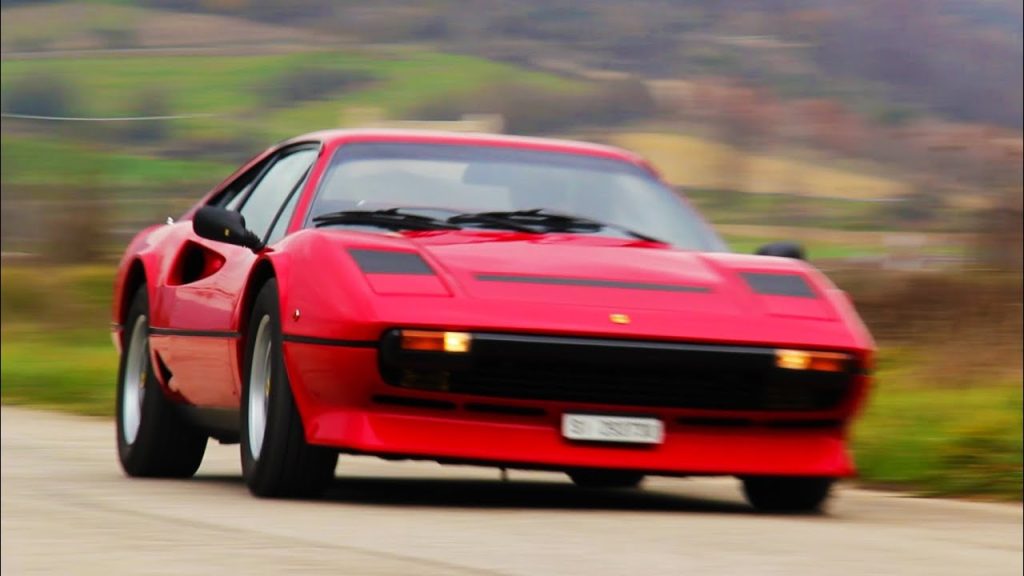
Today, the 208 GTB and GTS are appreciated for their rarity and engineering creativity. They represent a moment when regulation shaped innovation rather than killing it.
As the smallest V8 production car ever built, the Ferrari 208 stands alone. It proves that even the most performance driven brands can adapt when forced to think differently.
2. Alfa Romeo Montreal
The Alfa Romeo Montreal occupies a fascinating place in V8 history. It featured one of the smallest naturally aspirated V8 engines ever fitted to a production road car, while still delivering genuine performance character.
At the heart of the Montreal was a 2.6 liter V8 engine derived from Alfa Romeo’s racing programs. Unlike many small V8s that were detuned for comfort, this engine retained strong motorsport DNA.
The engine used dry sump lubrication and advanced breathing for its time. These features allowed it to rev freely and maintain reliability under sustained high speed use.
Power output was respectable rather than overwhelming. The focus was on responsiveness and smoothness instead of outright acceleration. Drivers were encouraged to explore the upper rev range.
The compact size of the engine helped keep the car balanced. Weight distribution felt neutral, making the Montreal surprisingly agile for a front engine sports coupe.
Throttle response was crisp. The engine reacted instantly to inputs, delivering linear power that built progressively rather than suddenly.
Sound was a major part of the experience. The V8 produced a sharp, mechanical note that was distinctly Alfa Romeo. It sounded refined but purposeful.
The Montreal was never intended to compete with large displacement muscle cars. Instead, it offered sophistication and engineering creativity in a compact package.
Driving the car required involvement. The engine rewarded precise gear selection and committed driving rather than relaxed cruising.
The interior and exterior styling matched the engine’s uniqueness. The Montreal looked exotic and futuristic, reinforcing its engineering ambition.
Reliability was acceptable for its era but required proper maintenance. The engine’s complexity meant ownership demanded attention and care.
What makes the Montreal special is how unusual it was. Few manufacturers attempted such a small displacement V8 for road use.
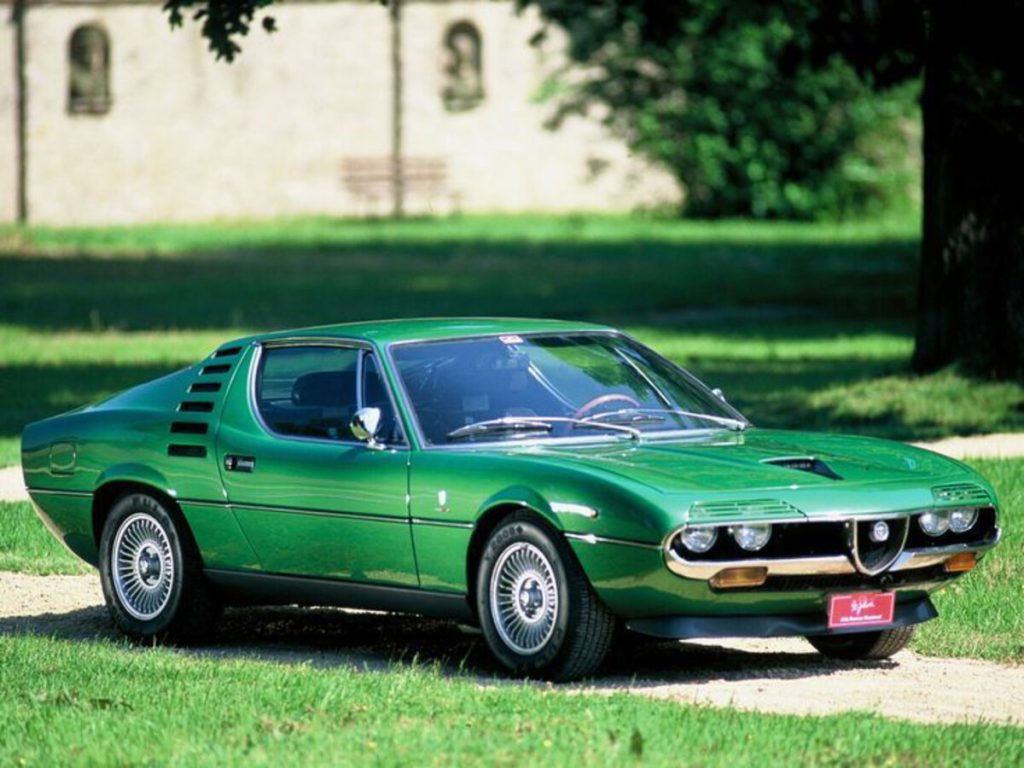
The engine proved that eight cylinders could deliver character and refinement without relying on size. Today, the Alfa Romeo Montreal is respected as an engineering statement rather than a performance benchmark.
It stands as one of the smallest and most distinctive V8 engines ever offered in a production car.
3. Ferrari 308 GTB and GTS
The Ferrari 308 GTB and GTS introduced a slightly larger but still remarkably small V8 engine to a global audience. These cars helped define the modern Ferrari V8 formula.
Power came from a 2.9 liter V8 engine mounted behind the driver. This displacement was modest by V8 standards, especially for a performance focused brand.
The engine featured four camshafts and high revving capability. Ferrari prioritized breathing efficiency and mechanical precision over torque output.
Acceleration felt lively rather than brutal. Drivers needed to work the engine hard to extract performance, which encouraged a more engaged driving style.
The compact V8 allowed the 308 to maintain excellent balance. Mid engine placement combined with low mass improved handling and cornering stability.
Sound played a crucial role in the car’s appeal. The V8 delivered a sharp, high pitched exhaust note that became iconic among Ferrari enthusiasts.
Throttle response was immediate. The engine felt eager to rev, making it enjoyable on winding roads where momentum mattered more than straight line speed.
Later fuel injection variants improved drivability and emissions compliance. While power slightly decreased, refinement increased.
The 308 became one of Ferrari’s most recognizable models. Its success proved that a small displacement V8 could still deliver an authentic Ferrari experience.
Reliability was better than earlier Ferrari engines, though regular maintenance remained essential.
The engine’s compact size allowed Ferrari to refine cooling and packaging, setting the stage for future mid engine V8 designs.
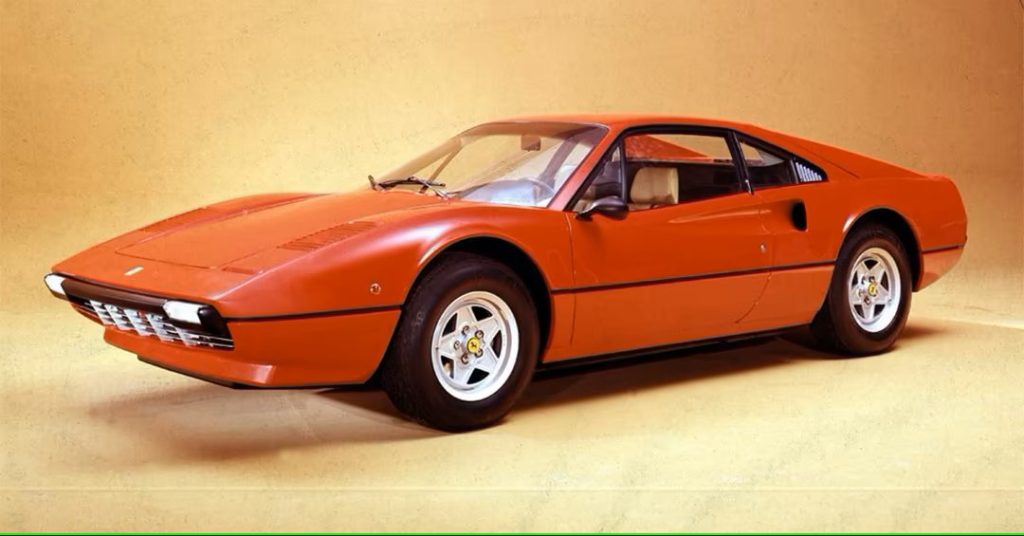
What makes the 308 important is influence. It shaped Ferrari’s V8 lineage for decades. Rather than chasing displacement, Ferrari focused on balance, sound, and responsiveness.
The 308 GTB and GTS demonstrated that small V8 engines could thrive in high performance applications. They remain a benchmark for compact V8 sports cars.
4. Lancia Thema 8.32
The Lancia Thema 8.32 is one of the most unexpected V8 powered production cars ever made. On the surface, it looked like a conservative executive sedan. Under the hood, it carried a surprisingly small and exotic V8 engine.
Power came from a 2.9 liter V8 derived from Ferrari’s 308 engine. Lancia adapted this engine for front engine, front wheel drive use, which was highly unusual for a V8 layout.
The engine was naturally aspirated and tuned for smoothness rather than outright speed. Power delivery felt refined and progressive, matching the car’s luxury oriented mission.
Despite modest displacement, the V8 delivered excellent balance and smoothness. Vibration levels were low, and the engine felt effortless at cruising speeds.
Acceleration was respectable but not aggressive. The Thema 8.32 was never intended to be a sports sedan. It focused on composure and refinement rather than raw performance.
The compact size of the engine made installation possible in a relatively small engine bay. This showcased how adaptable small V8 designs could be.
Sound was subtle but distinctive. The engine produced a muted V8 note that hinted at its Ferrari origins without being loud or dramatic.
The car featured an advanced suspension system for its time. This helped maintain ride comfort while controlling body movement effectively.
Interior quality was high, with a focus on comfort and luxury. The V8 was meant to enhance prestige rather than dominate the driving experience.
Reliability depended heavily on maintenance. The engine’s complexity meant ownership required careful attention and proper servicing.
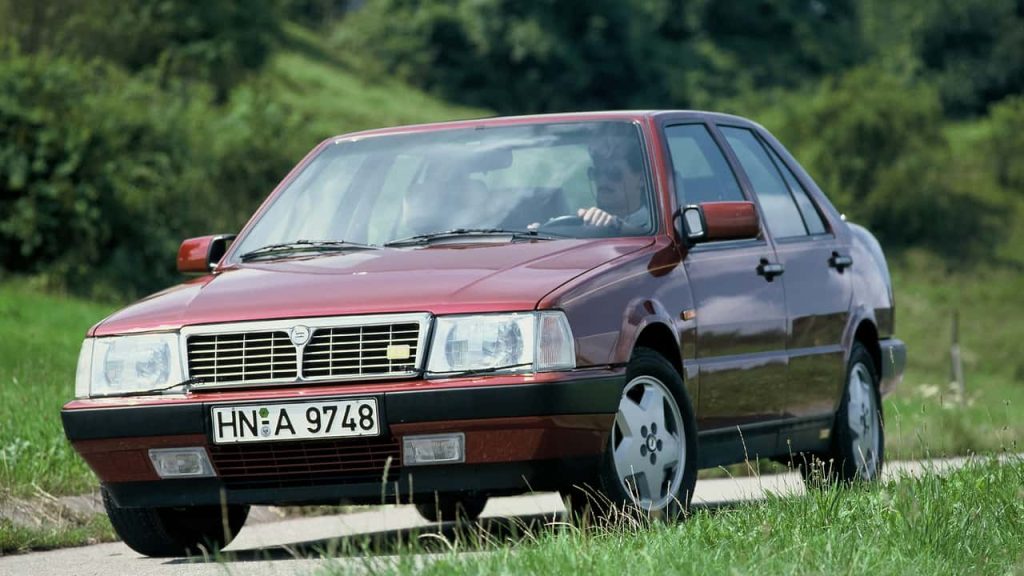
What makes the Thema 8.32 remarkable is restraint. Lancia chose to use a V8 for refinement and exclusivity rather than speed. The small displacement allowed the car to avoid the drawbacks of larger V8 sedans, such as excessive weight and poor balance.
This car remains a fascinating example of how small V8 engines could be used creatively outside sports cars. The Thema 8.32 proved that eight cylinders could serve elegance as effectively as performance.
5. Mercedes-Benz 190E 2.5-16 Evolution with V8 Prototypes
The Mercedes Benz 190E is best known for its four cylinder performance variants, but few realize that Mercedes experimented with a compact V8 version during development. These prototypes featured one of the smallest V8 engines Mercedes ever produced.
The experimental V8 displacement was just under 3.0 liters. Engineers aimed to combine compact dimensions with the smoothness expected from a Mercedes V8.
This engine was designed to fit into the tight engine bay of the 190E. Achieving this required significant engineering effort and compact component design.
Power output was modest by V8 standards. The focus was refinement, smooth delivery, and packaging efficiency rather than maximum acceleration.
The small V8 provided improved balance compared to larger engines. Weight distribution remained favorable, preserving the 190E’s handling characteristics.
Throttle response was smooth and predictable. The engine delivered power progressively, making it easy to drive in everyday conditions.
Sound was restrained and refined. Unlike large Mercedes V8s, this engine emphasized quiet operation over dramatic exhaust notes.
The project never reached full production due to cost and complexity. However, it demonstrated Mercedes’ ability to engineer compact V8 solutions.
The prototypes helped influence later engine development strategies, particularly around downsizing and packaging efficiency.
From an engineering perspective, the project was a success. It proved that a small displacement V8 could meet luxury standards without compromise.
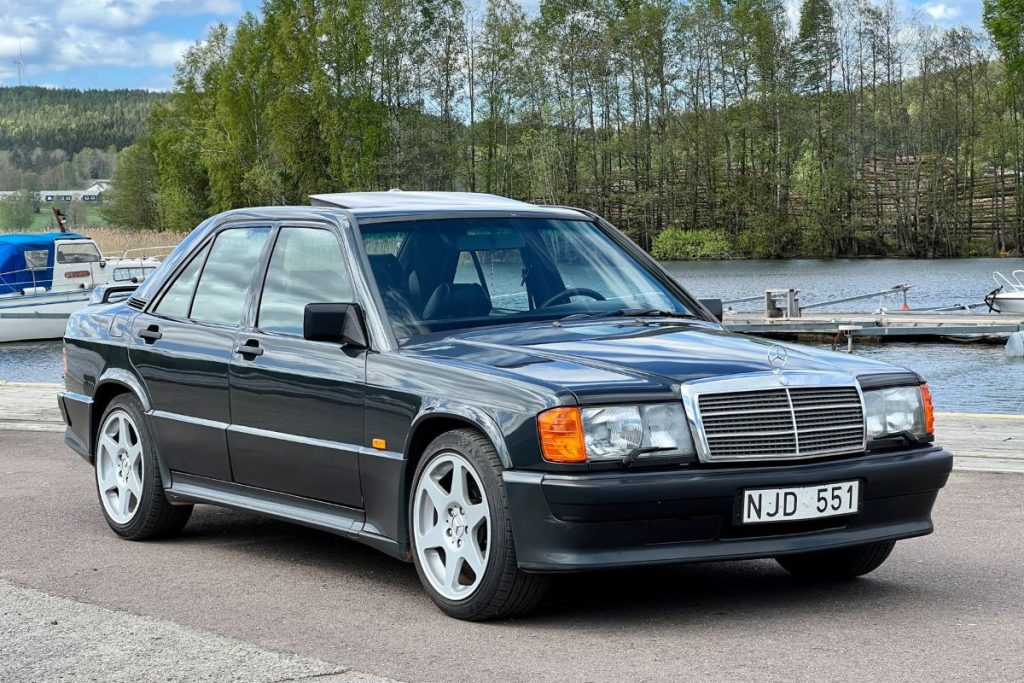
What makes this entry notable is rarity. Few examples were built, and most remained within Mercedes’ development programs. The compact V8 concept highlighted an alternative path for performance that did not rely on large displacement.
Though never sold to the public, the 190E V8 prototypes remain an important part of V8 history. They show how manufacturers explored creative solutions long before modern downsizing trends.
6. Ford Mustang 260 V8
The Ford Mustang 260 V8 holds a special place in history as one of the smallest displacement V8 engines ever offered in a mass production car. It helped launch the Mustang name while proving that a V8 did not need to be large to be appealing.
Introduced in 1964, the 260 cubic inch V8 displaced just 4.3 liters. By modern standards, this is small for a V8, especially during an era when displacement was rapidly increasing.
Ford designed the 260 V8 to be lightweight and compact. It shared much of its architecture with smaller engines, allowing it to fit easily into a wide range of vehicles.
Power output was modest, but the engine delivered smooth and accessible performance. Acceleration felt lively rather than aggressive, making the car approachable for everyday drivers.
The engine’s small size contributed to better balance compared to larger V8 Mustangs that followed. Steering felt lighter, and handling was more predictable.
Torque delivery was gentle and linear. The engine encouraged relaxed cruising rather than high speed aggression. This suited the Mustang’s early image as a sporty personal car.
Sound was refined and pleasant. The 260 produced a classic V8 burble without the thunder associated with big block engines.
Fuel economy was relatively reasonable for a V8 of the time. This made the Mustang attractive to buyers who wanted eight cylinders without excessive running costs.
The engine’s simplicity contributed to reliability. Owners appreciated its ease of maintenance and durability under normal use.
While quickly overshadowed by larger V8 options, the 260 laid the groundwork for the Mustang’s success. It proved that V8 ownership could be accessible.
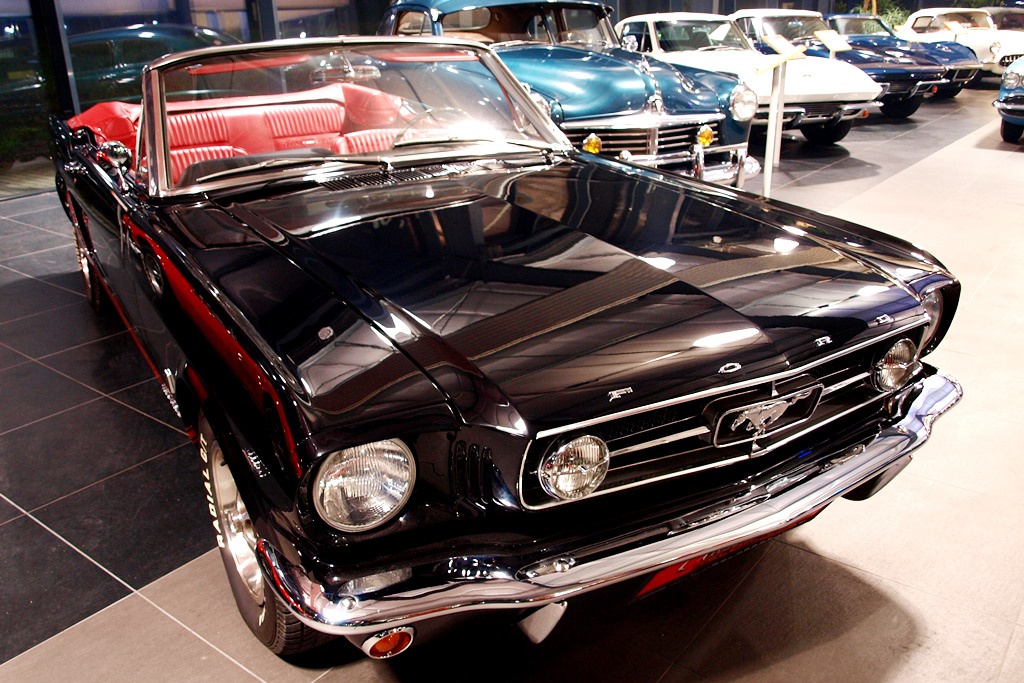
What makes the 260 notable is timing. It arrived at the perfect moment and helped establish a new segment. The engine demonstrated that compact V8s could deliver smoothness and character without overwhelming performance.
Today, the Mustang 260 V8 is often overlooked, but its historical importance remains strong. It stands as one of the smallest and most influential V8 engines ever installed in a production car.
7. Rover P5B and P6B V8
The Rover P5B and P6B introduced one of the most compact and lightweight V8 engines ever used in a production sedan. This engine became famous for its adaptability and longevity.
Rover’s V8 displaced just 3.5 liters, making it remarkably small for an eight cylinder engine. It was based on an American design but heavily refined for European use.
The engine was constructed from aluminum, which significantly reduced weight. This gave the cars better balance and improved handling characteristics.
Power delivery was smooth and effortless. The V8 provided refinement and torque rather than outright speed. Acceleration felt calm and confident.
The compact dimensions allowed Rover to fit the engine into relatively small engine bays. This versatility made it suitable for a wide range of vehicles.
Sound was understated but unmistakably V8. The engine produced a soft, refined note that matched the car’s luxury positioning.
Reliability became one of its defining traits. The engine proved durable and easy to maintain, contributing to its long production life.
Fuel efficiency was respectable for a V8, especially compared to larger engines of the era. This made it appealing in markets sensitive to running costs.
The Rover V8 became widely used beyond Rover’s own models. It powered sports cars, off road vehicles, and luxury sedans across multiple brands.
Its small displacement allowed manufacturers to enjoy V8 smoothness without excessive penalties. This adaptability made it legendary.
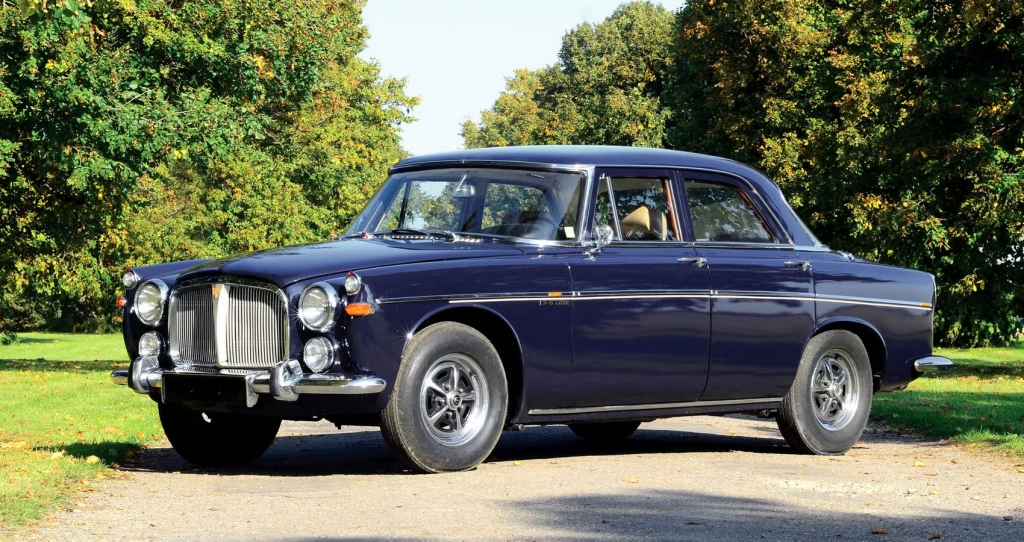
What makes the Rover V8 special is influence. Few small V8 engines powered such a diverse range of vehicles for so long. The engine’s compact size and lightweight construction set a benchmark for future designs.
Even decades later, the Rover V8 remains respected for its simplicity and character. In the context of small V8 engines, the Rover P5B and P6B stand as enduring examples of efficient engineering.
8. Fiat 8V Supersonic and Sport
The Fiat 8V is one of the most unusual and historically important small V8 powered production cars ever built. Produced in the early 1950s, it featured an engine that was remarkably compact even by modern standards.
At the heart of the Fiat 8V was a 2.0 liter V8 engine. This displacement makes it one of the smallest naturally aspirated V8 engines ever installed in a production road car. It was engineered entirely in house by Fiat.
Unlike most V8 engines, the Fiat unit used a unique configuration. It was not derived from any existing inline or V shaped engine. Fiat built it from the ground up to be compact and lightweight.
The engine prioritized revving capability and balance rather than torque. Power output was modest, but responsiveness was impressive for the era. Drivers were encouraged to keep the engine spinning high.
The compact size of the V8 allowed the Fiat 8V to maintain excellent balance. Weight distribution was favorable, and the car felt nimble and agile on winding roads.
Sound played a major role in the experience. Despite its small displacement, the V8 produced a sharp and mechanical exhaust note that set it apart from four cylinder rivals.
The engine featured advanced materials and design choices for its time. Lightweight construction helped offset the complexity of eight cylinders.
Acceleration was respectable rather than fast. The Fiat 8V was not built for straight line dominance. Instead, it focused on driving involvement and technical sophistication.
The car found success in motorsport, particularly in endurance and hill climb events. The engine’s reliability and balance made it competitive despite limited power.
Body styles varied, including stunning coachbuilt designs like the Supersonic. These bodies highlighted the car’s exotic nature and engineering ambition.
Ownership required careful maintenance. The engine’s complexity meant it was not forgiving of neglect. Proper care rewarded owners with a unique driving experience.
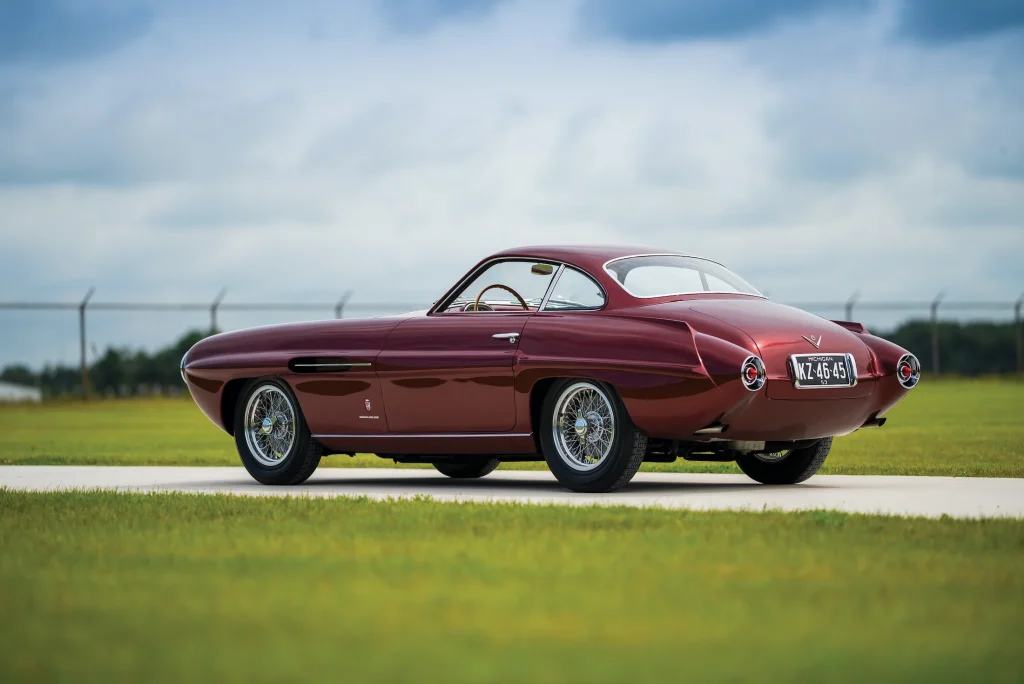
What makes the Fiat 8V special is boldness. Fiat had no need to build such a car, yet it did so to showcase engineering capability. The small V8 proved that eight cylinders could exist at very low displacement without sacrificing refinement.
Today, the Fiat 8V is highly collectible. Its rarity and technical originality make it a standout in automotive history. As one of the smallest V8 production cars ever built, the Fiat 8V remains unmatched in creativity and execution.
9. BMW 530i E34 V8
The BMW 530i E34 introduced one of the smallest displacement V8 engines ever used in a modern executive sedan. It marked BMW’s return to V8 engines after a long absence.
Power came from a 3.0 liter V8 known as the M60B30. This engine was compact, lightweight, and designed with efficiency in mind rather than brute force.
BMW used an aluminum block and heads to reduce weight. This helped maintain the brand’s reputation for balanced handling and refined driving dynamics.
The engine delivered smooth and linear power. Acceleration was not aggressive, but it felt effortless and refined. Power delivery suited highway cruising perfectly.
Throttle response was crisp. The engine reacted quickly to driver inputs, making the car feel responsive despite its luxury positioning.
Sound was understated but distinct. The V8 produced a muted growl that emphasized refinement over aggression.
The compact size of the engine allowed it to fit neatly into the E34 chassis without compromising balance. Steering feel remained precise and predictable.
Fuel efficiency was respectable for a V8 of the era. This made the 530i appealing to buyers who wanted eight cylinders without excessive operating costs.
Reliability was generally good, though early versions required careful maintenance. When properly cared for, the engine proved durable.
The M60 engine represented BMW’s engineering philosophy. Smoothness, balance, and efficiency were prioritized over raw numbers.
What makes this engine notable is restraint. BMW chose a small V8 when competitors were chasing larger displacements.
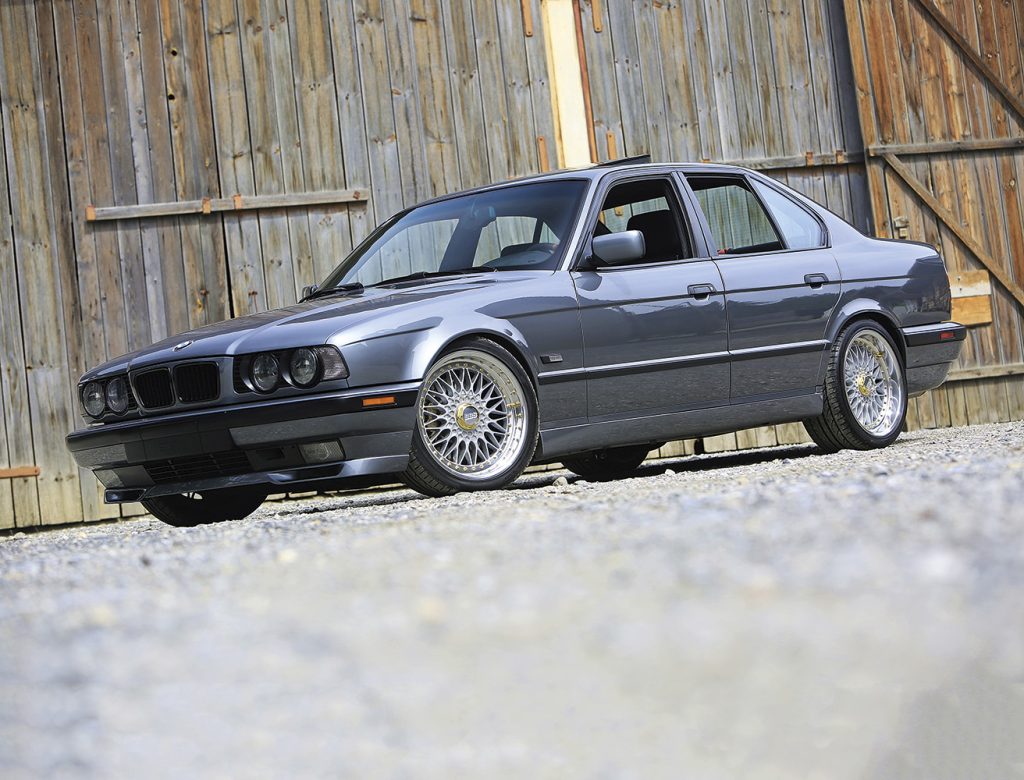
The result was a sedan that felt refined and confident rather than overpowering. Performance was usable and polished. This engine laid the foundation for BMW’s later V8 development, influencing more powerful successors.
The 530i E34 stands as proof that small V8 engines could succeed in luxury applications. In the context of this list, it represents the modern era of compact V8 design.
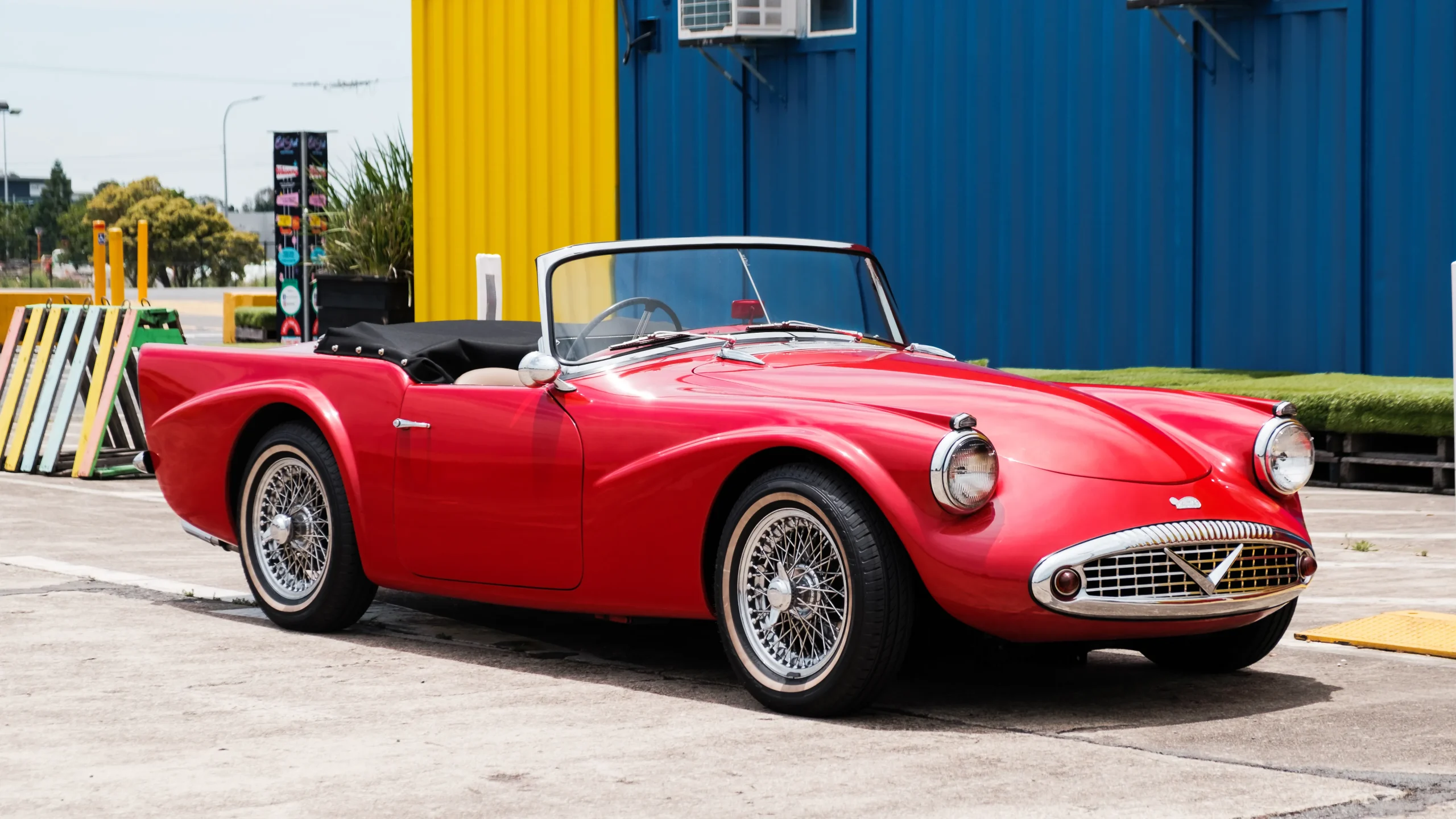
10. Daimler Dart SP250
The Daimler Dart SP250 completes this list as one of the smallest displacement V8-powered production cars ever sold to the public. It stands out not only for its engine size, but for how unusual and ambitious it was for its time.
Introduced in the late 1950s, the SP250 was powered by a compact 2.5-litre V8 engine. This displacement makes it one of the smallest V8 engines ever fitted to a production road car.
Daimler designed this engine entirely in-house. Unlike many small V8s that evolved from larger designs, the SP250 engine was purpose-built to be compact and lightweight.
The engine used hemispherical combustion chambers, which was advanced for the era. This helped improve airflow and efficiency despite the limited displacement.
Power output was modest, but smoothness was exceptional. The V8 delivered refined and consistent power, setting it apart from four cylinder and six cylinder rivals.
Acceleration was respectable for the time. The SP250 was not intended to dominate drag races. Instead, it focused on relaxed performance and touring capability.
The compact V8 contributed to good weight distribution. Combined with the car’s lightweight body, handling felt nimble and responsive on winding roads.
Sound was one of the engine’s most appealing traits. Despite its small size, the V8 produced a crisp and distinctive exhaust note that added character to the driving experience.
The SP250 used a fiberglass body, which helped keep overall weight low. This allowed the small V8 to feel more energetic than its numbers suggested.
Early versions suffered from chassis flex issues, but later revisions improved structural rigidity. Once sorted, the car offered an enjoyable and balanced driving experience.
The engine itself proved durable when properly maintained. Its simple design and robust construction helped it survive extended use.
What makes the Daimler Dart SP250 special is originality. Very few manufacturers attempted a V8 this small for road use, especially in a sports car format.
The engine demonstrated that eight cylinders could deliver refinement and character without relying on displacement alone. While the SP250 never achieved mass market success, it earned respect for its engineering ambition.
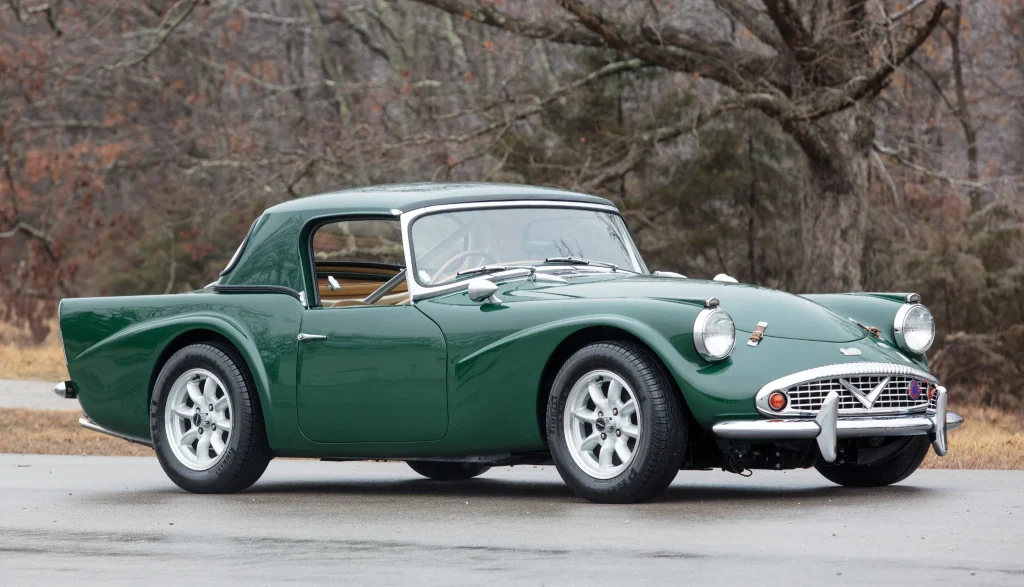
Collectors today appreciate the car for its rarity and uniqueness. The small V8 remains the centrepiece of its appeal. In the context of this list, the Daimler Dart SP250 represents the extreme end of compact V8 design.
It proves that the smallest V8 engines were often born from creativity rather than necessity. As the final entry, it completes a fascinating look at how manufacturers pushed the V8 layout into remarkably small packages.
Also Read: 10 American Cars With the Lowest Maintenance Costs in 2026
