
Convertible SUVs sit in a very unusual corner of the car world. They combine two ideas that were never meant to live together, rugged utility and open top freedom.
For years, many people assumed this body style was a gimmick, something built for attention rather than real use. Yet over time, a small group of models proved that a roofless SUV can actually be practical, enjoyable, and surprisingly capable.
What makes a convertible SUV impressive is not just the roof coming off. It is how well the vehicle works when the roof is gone. Structural strength matters.
Ride quality matters. Noise control matters. If the vehicle feels flimsy or compromised, the novelty wears off quickly. The truly impressive ones feel solid, confident, and enjoyable both with the roof on and with it removed.
Another factor is purpose. Some convertible SUVs are built for off road exploration, where open air driving enhances the experience.
Others focus on luxury and style, delivering a premium feel with the wind in your hair. A few manage to balance both worlds, offering real capability without sacrificing comfort.
This list focuses on those vehicles. These are not just SUVs with removable panels. They are models that justify their design through engineering, heritage, or execution.
Some are modern, others are discontinued but still respected. All of them earned their place by being memorable and genuinely well done.
Each vehicle below is discussed for what it offers, why it stands out, and why it deserves recognition. This is not about hype or rarity alone. It is about real impact, real usability, and real appeal.
Now, let us begin with the first truly impressive convertible SUV.
Also Read: 5 Cars for Appleton Family Runs and 5 That Don’t Hold Up
1. Jeep Wrangler
The Jeep Wrangler is the most recognizable convertible SUV ever built. It did not create the idea, but it perfected it over decades. The removable roof is not a gimmick here. It is part of the vehicle’s identity and purpose.
Every generation of the Wrangler has offered some form of open top driving. Soft tops, hard tops, and removable panels allow owners to choose how exposed they want to be. This flexibility is one of the Wrangler’s greatest strengths. You can go fully open or keep things partially covered.
The real reason the Wrangler works so well as a convertible SUV is its body on frame construction. This design gives it the structural strength needed when the roof comes off. The vehicle does not feel weak or unstable, even over rough terrain.
Off road capability is another key factor. With solid axles, excellent articulation, and strong four wheel drive systems, the Wrangler feels at home in environments where open air driving enhances the experience.
Trails, beaches, and deserts all benefit from better visibility and connection to the surroundings.
On the road, the Wrangler has improved significantly over the years. Ride quality and interior comfort are better than older models, making it easier to live with daily. Wind noise still exists, but it is part of the character rather than a flaw.

The Wrangler succeeds because it never pretends to be something else. It embraces its rugged roots while refining them for modern use. As a convertible SUV, it feels authentic, durable, and purpose built. That is why it remains the benchmark for this category.
2. Ford Bronco
The modern Ford Bronco revived the idea of a rugged convertible SUV for a new generation. Ford did not simply copy past formulas. Instead, it engineered the Bronco specifically to compete with the best open-air off-road vehicles.
One of the Bronco’s standout features is its modular roof and doors. Panels can be removed individually, allowing drivers to tailor the level of openness. The doors are also frameless and removable, adding to the full open experience.
Structurally, the Bronco feels solid even with major components removed. This comes from careful chassis engineering and reinforcements designed to maintain rigidity. The result is confidence whether you are cruising or crawling.
Off-road performance is a major highlight. Advanced Four Wheel Drive systems, locking differentials, and terrain management modes make the Bronco extremely capable. Open-air driving enhances visibility and immersion during technical manoeuvres.
Inside, the Bronco balances toughness with modern comfort. Materials are durable and washable, which suits its adventurous nature. Technology features like large screens and driver aids bring it firmly into the modern era.
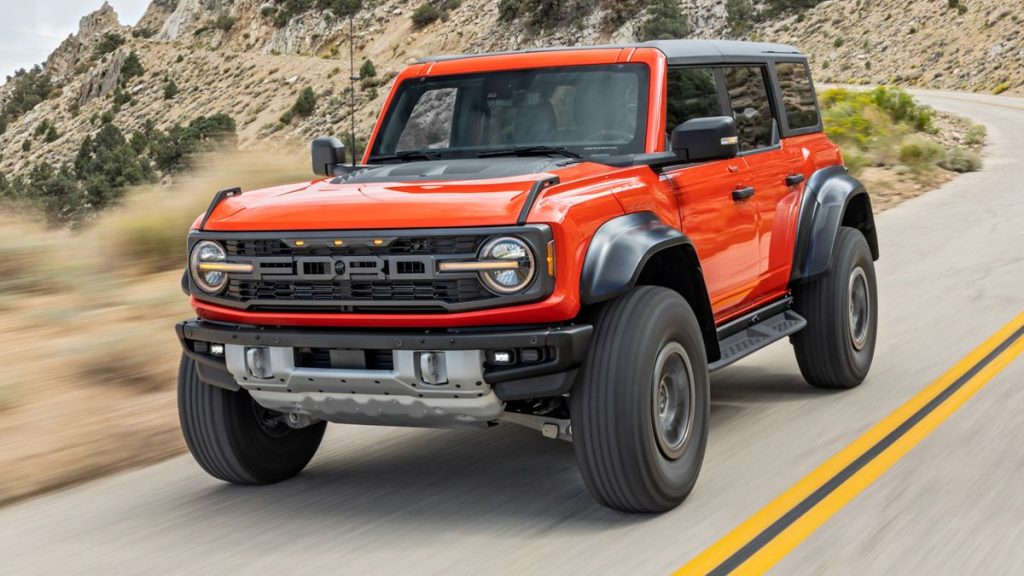
On pavement, the Bronco feels more composed than expected for such a capable off roader. Steering and suspension tuning make daily driving manageable, even if fuel efficiency is not its strongest point.
The Bronco earns its place by proving that a convertible SUV can be modern, rugged, and thoughtfully designed. It respects its heritage while delivering genuine capability and excitement.
3. Land Rover Defender 90
The classic Land Rover Defender 90 represents a more utilitarian approach to the convertible SUV idea. In soft top form, it delivers one of the purest open air driving experiences ever offered in an SUV.
Unlike luxury focused convertibles, the Defender 90 was designed for work and exploration. The removable canvas roof was practical, easy to repair, and suited to harsh environments. This simplicity became part of its charm.
The short wheelbase made the Defender agile and capable off road. With the roof removed, visibility improved dramatically, which helped in difficult terrain. Drivers could better judge obstacles and surroundings.
Build quality was never about refinement. Instead, it focused on durability. Heavy duty components, strong axles, and a ladder frame ensured the vehicle remained solid even without a permanent roof.
On the road, comfort was basic, but that was never the goal. Wind noise, vibrations, and a firm ride were accepted as part of the experience. For many owners, these traits added to its authenticity.
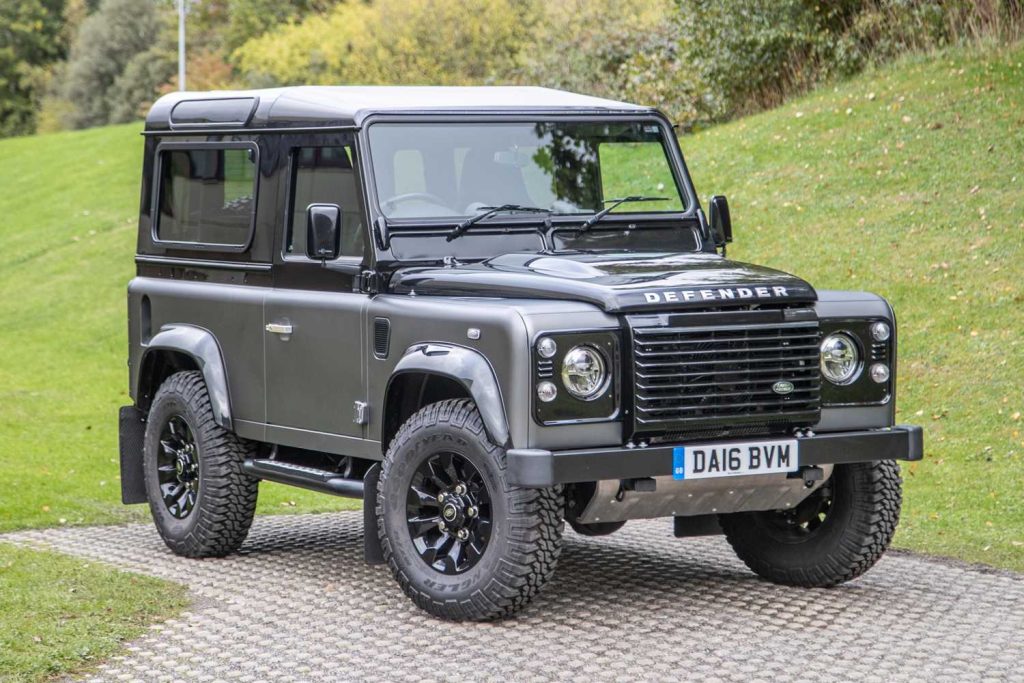
The Defender 90 convertible worked because it was honest. It did not chase trends or luxury. It delivered exactly what it promised, an open, capable, and dependable SUV for serious use.
Even today, it is remembered fondly as a true icon. Its influence can be seen in many modern off road vehicles that aim to blend openness with capability.
4. Suzuki Jimny Cabriolet
The Suzuki Jimny Cabriolet is one of the smallest yet most charming convertible SUVs ever produced. It proves that size does not limit capability or personality. Built primarily for compact markets, it gained a cult following worldwide.
The Jimny Cabriolet features a soft top roof that can be folded back to open the cabin to the outdoors. Unlike larger SUVs, this design feels playful and intimate. Open air driving in the Jimny feels more like an adventure than a luxury experience.
Structurally, the Jimny benefits from a ladder frame chassis. This gives it strength that many small vehicles lack. Even with the roof removed, the body remains solid and confidence inspiring on rough terrain.
Off road capability is where the Jimny truly shines. Its lightweight design, short wheelbase, and proper four wheel drive system allow it to go places much larger SUVs struggle to reach. The open roof enhances visibility and connection to the trail.
The interior is simple and functional. Materials are basic but durable. Controls are easy to use and placed logically. This simplicity aligns with the vehicle’s purpose rather than feeling like a cost cutting exercise.
On the road, the Jimny Cabriolet is not fast or refined. It prioritizes control and durability over comfort. Wind noise is noticeable with the roof open, but this adds to the sense of freedom rather than detracting from it.
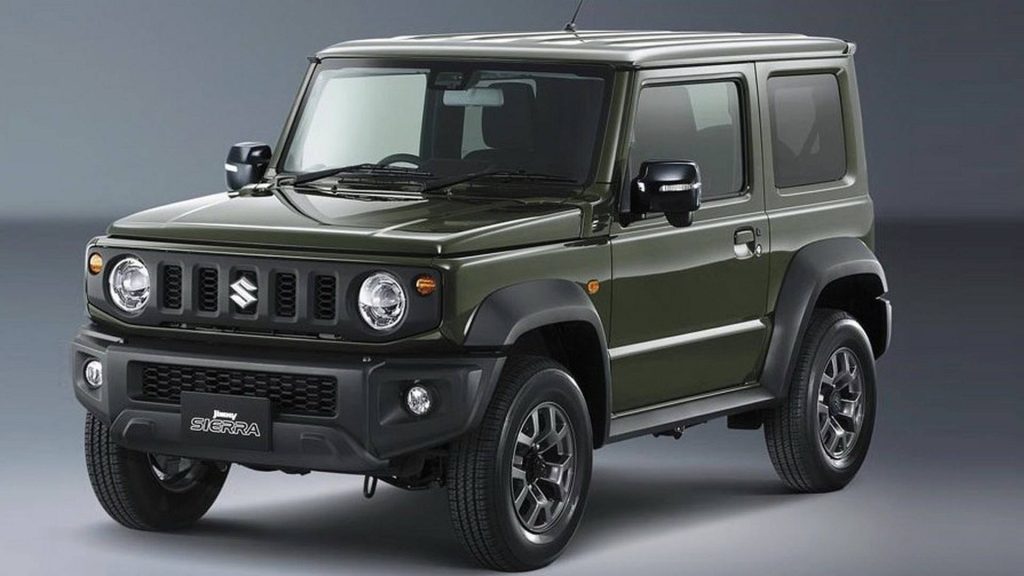
What makes the Jimny impressive is its honesty. It never tries to be luxurious or overly modern. Instead, it delivers pure utility and fun in a compact package. Few vehicles offer such a genuine experience.
The Jimny Cabriolet remains memorable because it embraced its role fully. It delivered adventure without pretense, making it one of the most lovable convertible SUVs ever built.
5. Nissan Murano CrossCabriolet
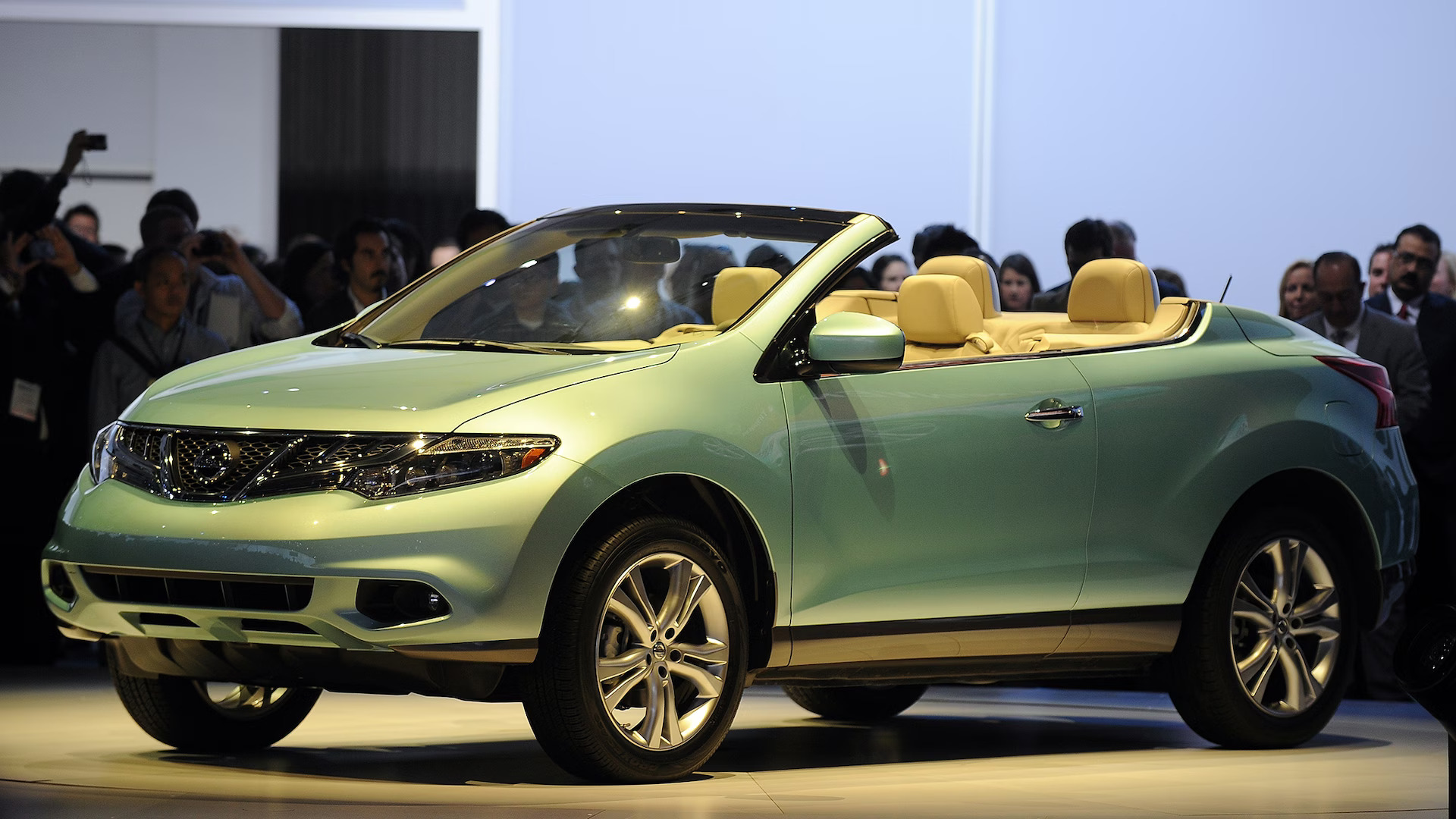
The Nissan Murano CrossCabriolet stands as one of the boldest experiments in automotive design. It challenged expectations by blending a midsize crossover with a fully convertible roof. While controversial, it deserves recognition for its ambition.
Unlike off road focused convertibles, the Murano CrossCabriolet targeted comfort and style. It featured a power operated soft top that folded neatly into the rear, transforming the SUV into an open cruiser.
Structurally, Nissan reinforced the body to compensate for the lack of a fixed roof. This resulted in a surprisingly solid feel for a vehicle of its type. Chassis rigidity was better than many expected.
The interior focused on comfort and refinement. Leather seating, premium finishes, and a quiet cabin when the roof was up gave it a luxury oriented character. When the roof was down, it offered a relaxed and airy driving experience.
Performance was tuned for smoothness rather than aggression. The V6 engine delivered adequate power, making highway cruising effortless. Suspension tuning favored comfort, which suited its intended audience.
Practicality was compromised, particularly in rear seat access and cargo space. However, buyers drawn to this vehicle prioritized uniqueness over maximum utility. It was never meant to replace traditional SUVs.
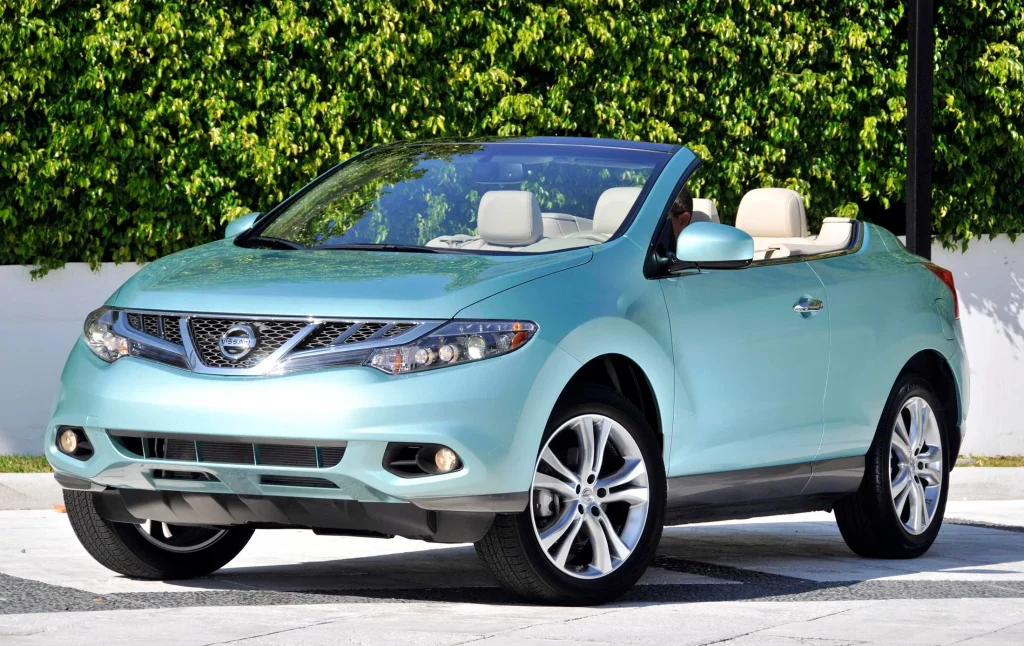
What makes the Murano CrossCabriolet impressive is its confidence. Nissan took a risk that few manufacturers would attempt. The result was a vehicle that stood out in a crowded market.
While sales were limited, its impact remains significant. It proved that convertible SUVs do not need to follow traditional off road formulas. Innovation itself became its defining feature.
6. Mercedes-Benz G Class Cabriolet
The Mercedes Benz G Class Cabriolet represents the most luxurious interpretation of the convertible SUV idea. It combines military inspired roots with premium craftsmanship and exclusivity.
Originally designed as a utilitarian vehicle, the G Class evolved into a luxury icon. The cabriolet version retained the boxy shape while offering a power operated soft top that elevated the experience.
Structural integrity was maintained through extensive reinforcement. Even without a fixed roof, the G Class Cabriolet feels exceptionally solid. This is crucial for a vehicle with serious off road capability.
The interior defines luxury. High-quality leather, wood trim, and advanced technology transform the cabin into a refined space. Open air driving does not compromise comfort or prestige.
Off road performance remains a core strength. Locking differentials, strong axles, and a robust Four Wheel Drive system allow it to tackle challenging terrain with ease. The open roof enhances visibility and immersion.
On the road, the G Class Cabriolet feels commanding. Powerful engines provide effortless acceleration. Ride quality is firm but controlled, reflecting its rugged foundation.
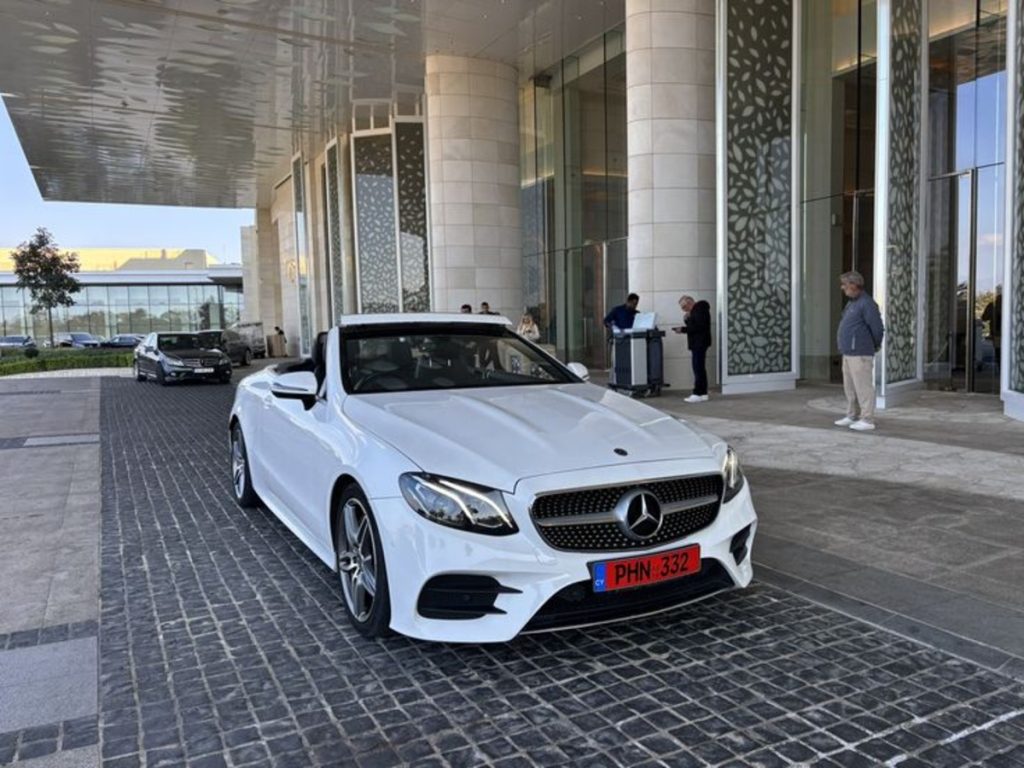
Exclusivity plays a major role in its appeal. Limited production numbers make it rare and highly desirable. Ownership becomes as much about identity as functionality.
The G Class Cabriolet is impressive because it proves that luxury and capability can coexist in a convertible SUV. It stands as a symbol of engineering confidence and uncompromising design.
7. Volkswagen T-Roc Cabriolet
The Volkswagen T-Roc Cabriolet is one of the most modern attempts at redefining what a convertible SUV can be. Rather than focusing on off road use, it targets urban drivers who want style, comfort, and open air freedom in a compact package.
This vehicle is based on a crossover platform, but the transformation into a cabriolet is significant. The roof is fully removed and replaced with a power operated fabric top. This gives it a true convertible feel rather than a partial open design.
Structural reinforcement plays a major role in its success. Volkswagen added rigidity to the chassis and body to maintain safety and stability. As a result, the T-Roc Cabriolet feels planted and confident while driving.
The interior reflects modern Volkswagen design. Materials feel solid and well assembled. The cabin remains comfortable even with the roof down, thanks to effective wind management and supportive seating.
Performance focuses on smoothness and efficiency. Turbocharged petrol engines provide adequate power for daily use. Acceleration is not aggressive, but it suits the relaxed nature of the vehicle.
On city roads, the T-Roc Cabriolet feels easy to maneuver. Steering is light, visibility is good, and the compact size makes parking less stressful. Open air driving adds enjoyment to even short trips.
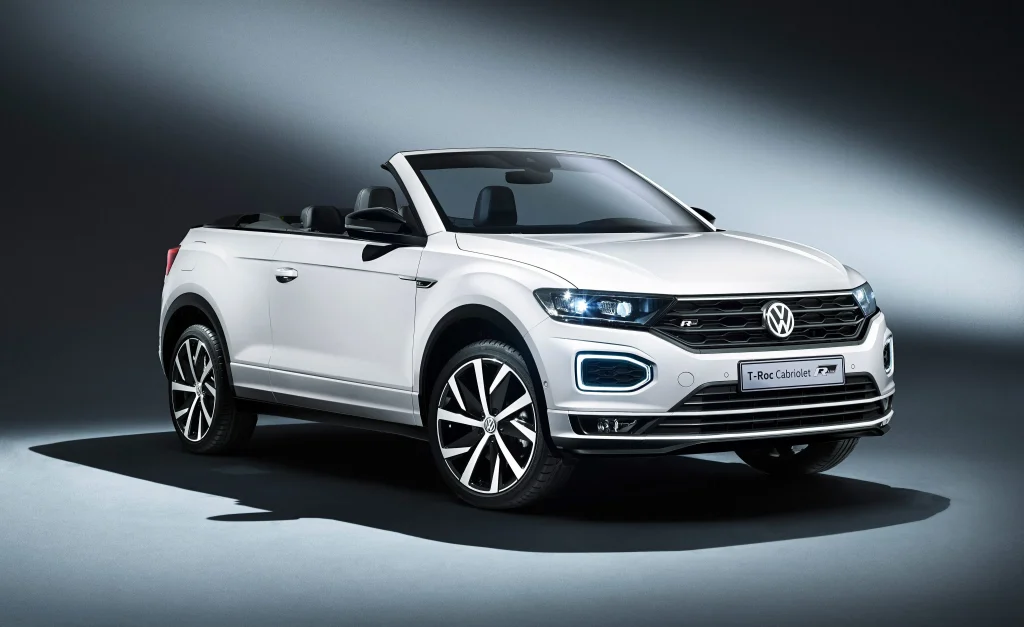
Practicality is understandably reduced compared to a standard SUV. Rear seat access is limited, and cargo space is smaller. However, buyers interested in this vehicle value experience over maximum utility.
What makes the T-Roc Cabriolet impressive is its confidence in being different. It proves that convertible SUVs do not need to be rugged or extreme. Style and usability can be enough.
By blending crossover practicality with true convertible design, it delivers a unique option for drivers who want something fresh and expressive.
8. Range Rover Evoque Convertible
The Range Rover Evoque Convertible brought luxury into the convertible SUV conversation. It took an already stylish compact SUV and transformed it into an open top statement vehicle.
The soft top roof is power operated and designed to maintain the Evoque’s premium appearance. When closed, it blends well with the body. When open, it creates a dramatic and upscale presence.
Land Rover reinforced the body extensively to preserve structural integrity. This ensures that the vehicle feels stable and secure even without a fixed roof. Safety systems were also adapted to suit the new design.
Inside, the Evoque Convertible maintains a high level of refinement. Leather upholstery, premium materials, and advanced infotainment features create a luxurious environment. Comfort remains a priority.
Performance is tuned for smooth and composed driving. Turbocharged engines deliver sufficient power for urban and highway use. The focus is on refinement rather than sportiness.
All wheel drive capability adds confidence in varying road conditions. While it is not intended for extreme off road use, it retains enough capability for light trails and poor weather.
Rear seat space and cargo capacity are limited. This is the trade off for the convertible design. Owners typically accept this in exchange for exclusivity and style.
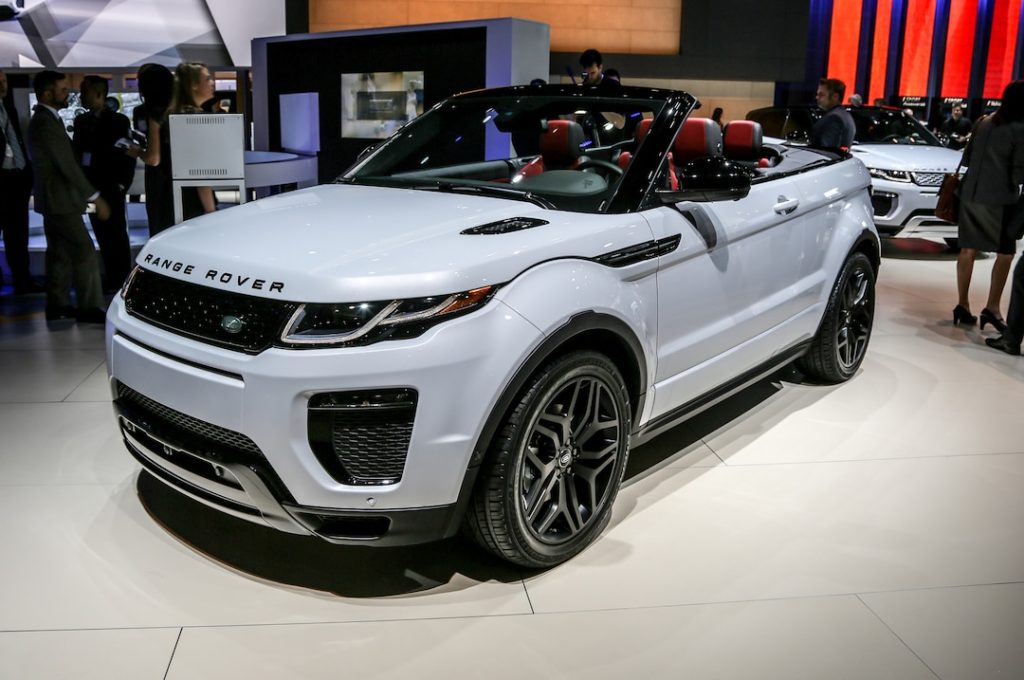
The Evoque Convertible stands out because it dares to merge luxury fashion with open air driving. It is not built for everyone, but it is built with purpose.
Its existence proves that convertible SUVs can be elegant and premium, not just rugged or experimental.
9. Toyota FJ Cruiser Convertible
The Toyota FJ Cruiser Convertible was a limited and region specific offering, but it left a lasting impression. Based on the rugged FJ Cruiser, it delivered a removable roof experience rooted in durability.
The design featured removable roof panels rather than a full soft top. This allowed drivers to enjoy open air driving while retaining a strong structural framework. The result was a balanced approach.
The FJ Cruiser’s body on frame construction gave it exceptional strength. Removing roof sections did not compromise its solid feel. This made it suitable for demanding conditions.
Off road capability was a core strength. High ground clearance, strong suspension components, and a capable four wheel drive system made it trail ready. Open roof sections enhanced situational awareness.
The interior was practical and tough. Materials were designed to handle dirt and moisture. Controls were large and easy to operate, even with gloves.
On the road, the FJ Cruiser felt robust but not refined. Ride quality was firm, and fuel efficiency was not a priority. These traits aligned with its adventurous nature.
The convertible aspect added enjoyment without undermining functionality. Drivers could enjoy fresh air while exploring challenging terrain or scenic routes.
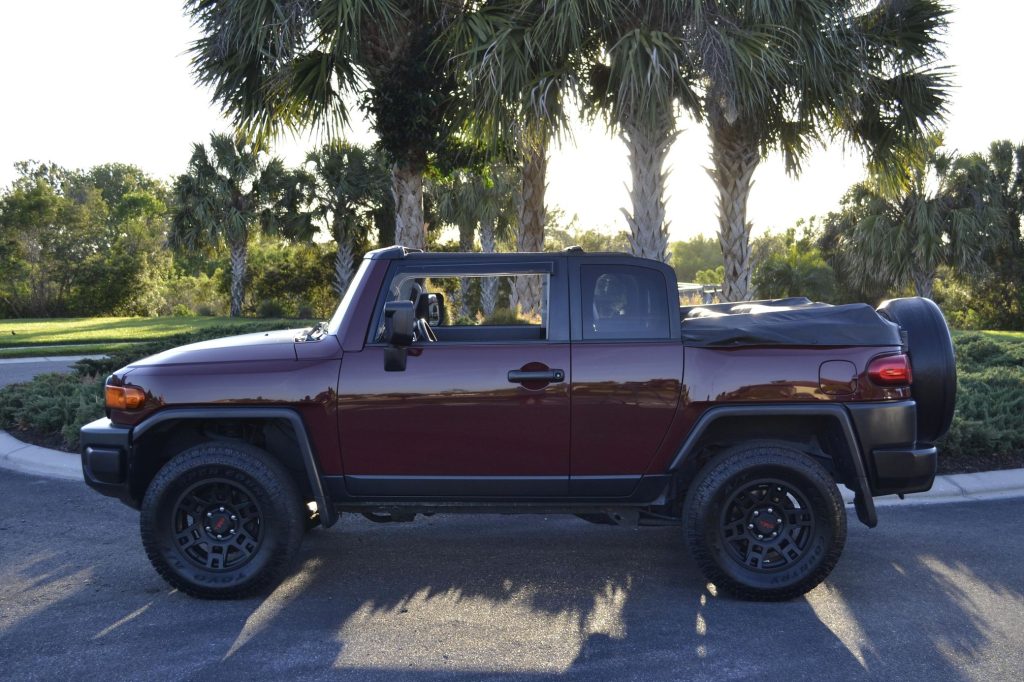
What makes the FJ Cruiser Convertible impressive is its balance. It delivered openness without sacrificing the qualities that made the FJ Cruiser respected.
Although discontinued, it remains admired by enthusiasts who value authenticity and purpose-driven design.
10. Hummer H1 Alpha Open Top
The Hummer H1 Alpha Open Top is one of the most extreme convertible SUVs ever produced. It was never designed to be subtle or refined. Instead, it exists to deliver unmatched presence, durability, and open air power.
The open top version features removable roof panels that expose the massive cabin. This design transforms the H1 into an open military style vehicle. Visibility improves dramatically, especially in off road environments.
Structural integrity is not a concern for the H1 Alpha. Its heavy duty chassis and military derived construction ensure exceptional rigidity. Even with the roof removed, the vehicle feels unbreakable.
Off road capability is where the H1 truly dominates. Portal axles, central tire inflation, and extreme ground clearance allow it to conquer terrain that stops most vehicles. Open air driving enhances awareness and control.
The Alpha variant introduced a powerful diesel engine that delivered immense torque. This improved drivability while maintaining the vehicle’s raw character. Acceleration is not quick, but strength is unmistakable.
Inside, the cabin is utilitarian. Materials are rugged and functional rather than luxurious. Comfort takes a back seat to durability and control. This suits the vehicle’s mission focused design.
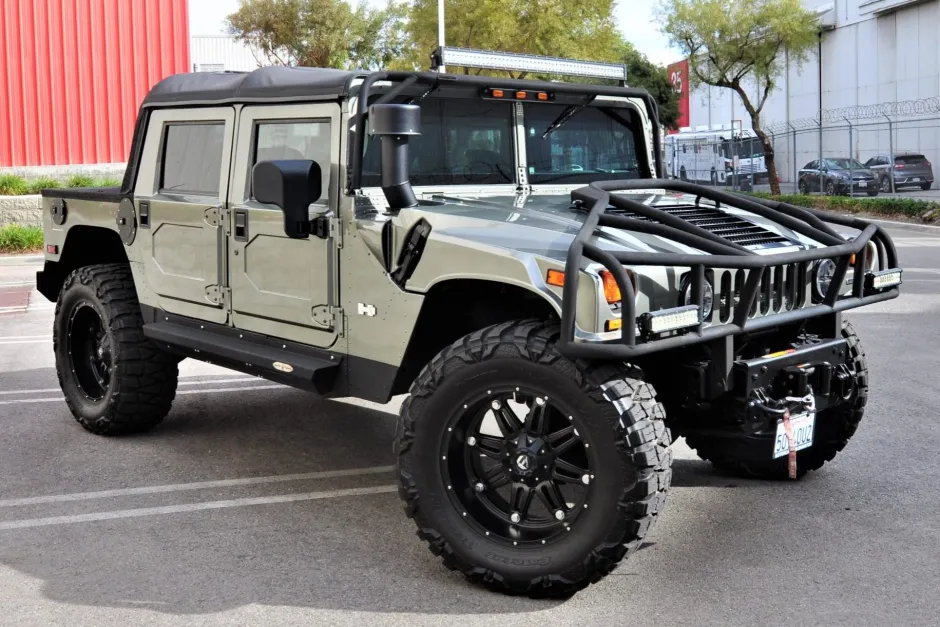
On paved roads, the H1 is challenging. Its width, weight, and handling require attention. However, owners rarely choose it for convenience. They choose it for capability and impact.
What makes the H1 Alpha Open Top impressive is its authenticity. It does not adapt military design for style. It delivers it fully and unapologetically.
This vehicle represents the most extreme interpretation of a convertible SUV. It is not practical, but it is unforgettable.
11. Jeep Gladiator Mojave Open Air
The Jeep Gladiator Mojave Open Air blends pickup utility with convertible SUV heritage. While technically a pickup, its removable roof and doors firmly place it within the open air SUV tradition.
The Mojave trim is designed for high speed desert performance. Removable roof panels allow drivers to experience open terrain while maintaining the vehicle’s rugged identity.
Structural strength comes from a reinforced frame built to handle harsh conditions. Even with the roof removed, the Gladiator remains stable and confidence inspiring.
The interior balances toughness with comfort. Materials are durable, and the layout is practical. Modern technology adds convenience without overwhelming the design.
Off road performance is a highlight. Special suspension tuning, reinforced components, and advanced four wheel drive systems make it capable in demanding environments. Open air driving adds excitement and visibility.
On the road, the Gladiator feels larger than a traditional SUV. Steering and ride quality reflect its truck based roots. However, long distance comfort is respectable.
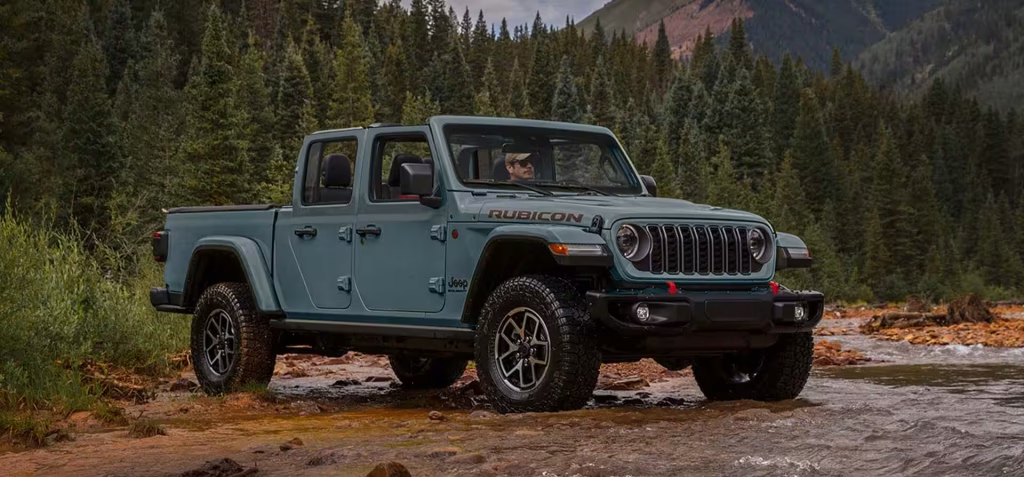
Cargo capacity adds versatility. Unlike many convertible SUVs, the Gladiator can haul gear while still offering open air enjoyment. This makes it appealing to outdoor enthusiasts.
What makes the Gladiator Mojave impressive is its versatility. It combines open top freedom, off road performance, and utility in one package.
It proves that the convertible SUV idea can evolve beyond traditional body styles while staying true to its roots.
12. Mahindra Thar Convertible
The Mahindra Thar Convertible represents a modern interpretation of a classic off road formula. Inspired by rugged utility vehicles, it delivers open air driving with real capability.
The Thar offers a removable soft top that allows drivers to enjoy an open cabin. This feature is central to its appeal and identity.
Built on a ladder frame chassis, the Thar maintains strong structural integrity. The vehicle feels solid even when driven over rough terrain with the roof removed.
Off road capability is a major strength. High ground clearance, strong axles, and a capable four wheel drive system allow it to handle trails confidently. Open air driving enhances the experience.
Inside, the Thar has improved significantly compared to earlier generations. Materials are more refined, and technology features add convenience without compromising durability.
On road behavior has also improved. Steering and suspension tuning make it easier to live with daily, while still preserving its rugged character.
The convertible design adds personality. It transforms ordinary drives into experiences, especially in scenic environments.
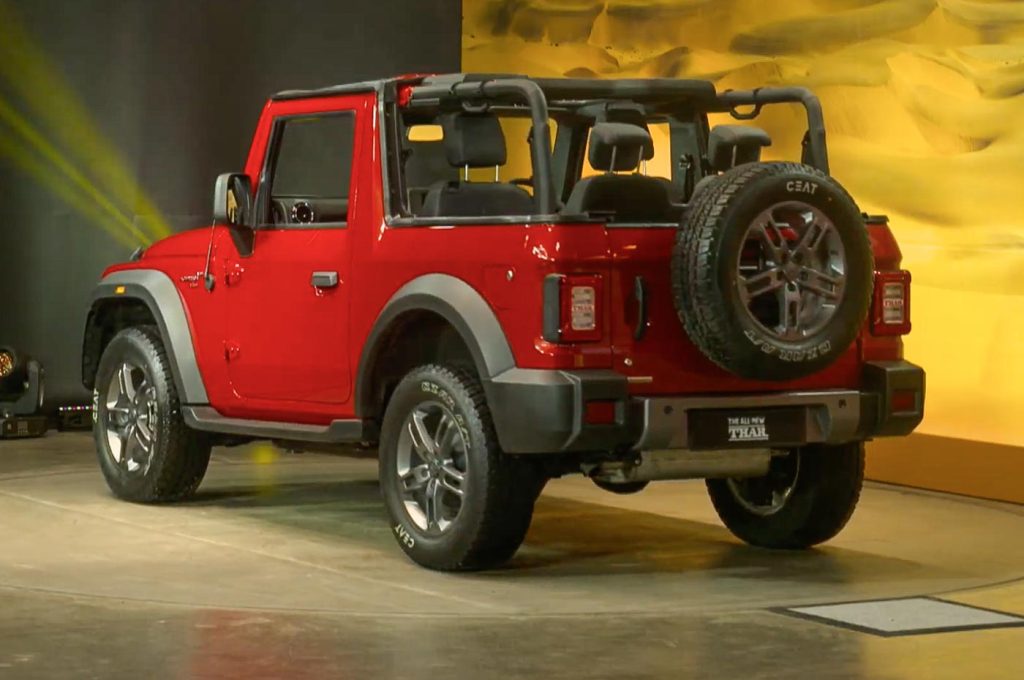
What makes the Thar impressive is its balance. It respects its utilitarian roots while adapting to modern expectations.
It stands as proof that convertible SUVs can thrive in emerging markets and still deliver authentic adventure.
13. GMC Jimmy Convertible
The GMC Jimmy Convertible is a classic example of an early American attempt to blend SUV practicality with open air driving. Produced during a time when SUVs were still evolving, it offered a bold and distinctive experience.
The Jimmy Convertible featured a removable soft top that transformed the vehicle into an open cruiser. This design was aimed at drivers who wanted freedom without giving up the elevated driving position of an SUV.
Built on a body on frame platform, the Jimmy retained strong structural integrity. Even with the roof removed, the vehicle felt sturdy and capable. This construction helped it stand apart from lighter, less durable designs.
Off road capability was respectable for its era. Four wheel drive versions allowed drivers to explore trails, beaches, and rural roads with confidence. Open air driving enhanced the sense of adventure and visibility.
The interior was straightforward and functional. Materials were designed for durability rather than luxury. Controls were simple, making the vehicle easy to operate in a variety of conditions.
On the road, the Jimmy delivered a comfortable ride for its time. Suspension tuning favored stability over sportiness. Highway cruising with the roof down created a relaxed and enjoyable experience.
Practicality was a strong point. Unlike many modern convertible SUVs, the Jimmy offered usable rear seats and decent cargo space. This made it suitable for families and recreational use.
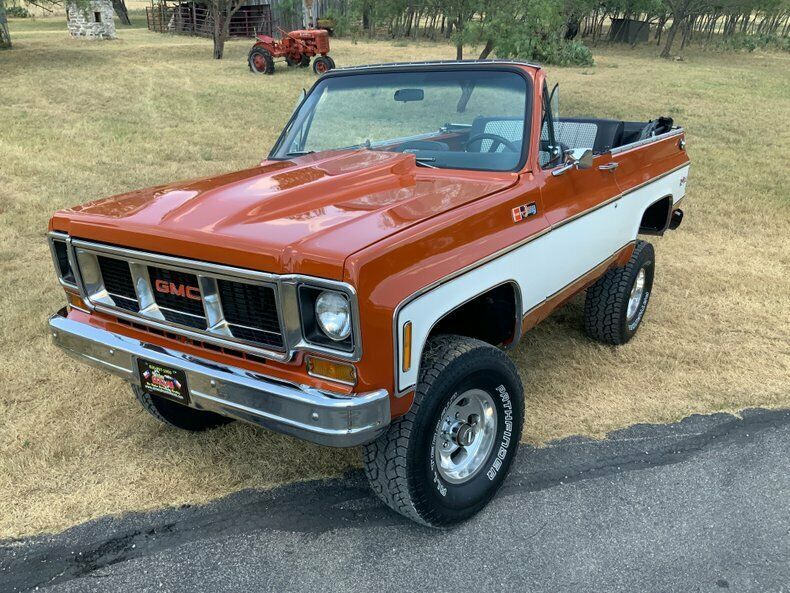
The appeal of the Jimmy Convertible lies in its authenticity. It was built during a period when experimentation was encouraged. Manufacturers were willing to try unconventional ideas without overthinking market trends.
While it may not match modern standards of refinement or efficiency, it delivered something rare. It offered genuine versatility paired with open air enjoyment.
Today, the GMC Jimmy Convertible is remembered fondly by enthusiasts. It represents a formative chapter in SUV history and proves that the idea of a convertible SUV has deep roots.
Its legacy lives on through modern vehicles that continue to explore the balance between freedom, function, and personality.
Also Read: 5 Cars for Greenville Weekend Drives and 5 That Don’t Hold Up
