
Motorcycles that blend old-school design with modern engineering have carved out a powerful niche in today’s market. Often referred to as modern classics, these bikes capture the look, feel, and emotional pull of vintage machines while delivering contemporary performance, safety, and reliability.
For American riders, especially those who appreciate heritage styling but don’t want to give up fuel injection, ABS, traction control, or highway-ready power, the category has never been stronger.
As we look toward 2026, manufacturers are doubling down on large-displacement modern classics, bikes over 1000cc that offer effortless torque, relaxed long-distance cruising, and unmistakable presence.
These machines aren’t about lap times or electronic gimmicks; they’re about character, sound, and real-world rideability. Whether aimed at seasoned riders seeking nostalgia with refinement or newer buyers wanting something timeless rather than trendy, these motorcycles are worth watching closely over the next year.
Below are ten modern classic motorcycles over 1000cc that stand out heading into 2026, either because of recent updates, continued popularity, or their potential to become long-term icons in the American market.
1. Triumph Bonneville T120
Few motorcycles embody the modern classic ethos as perfectly as the Triumph Bonneville T120. With its liquid-cooled 1200cc parallel-twin engine, the T120 looks almost identical to its 1960s ancestor while delivering smooth, torque-rich performance that’s ideal for US roads.
Producing strong low-end pull rather than high-rev horsepower, it excels on everything from urban commuting to cross-state cruising.
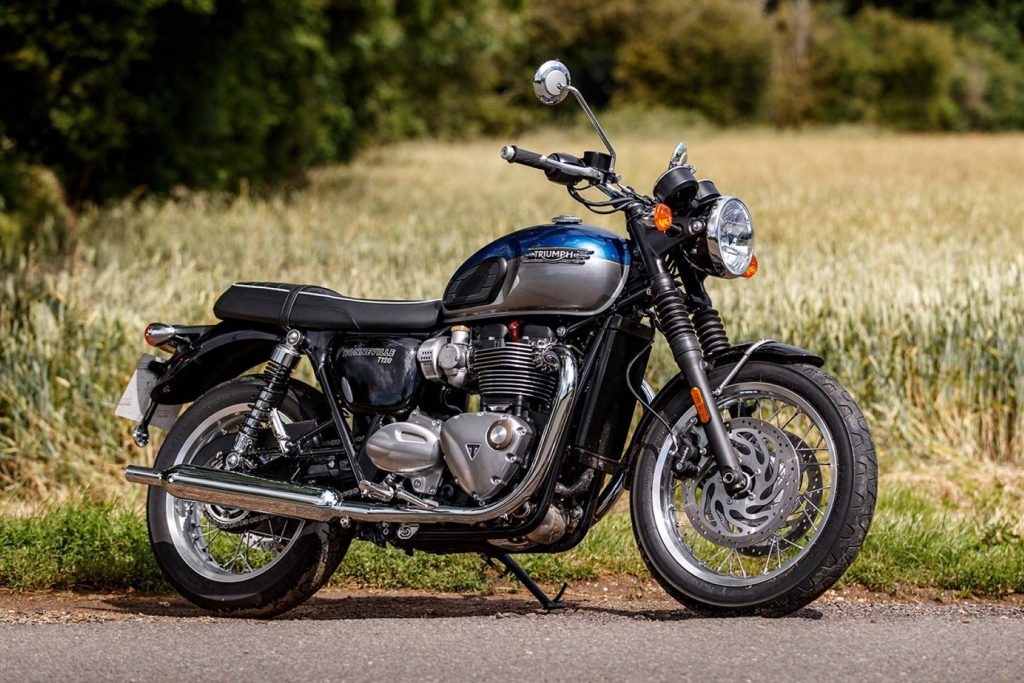
Triumph has steadily refined the T120 with better electronics, improved suspension tuning, and lighter overall weight. By 2026, it remains one of the safest bets for riders who want authentic retro style without sacrificing modern reliability. Its timeless design and approachable power delivery make it a likely long-term classic in the American market.
2. BMW R nineT
BMW’s R nineT continues to be one of the most distinctive motorcycles in the modern classic space. Powered by the brand’s iconic air/oil-cooled 1170cc boxer twin, the R nineT combines mechanical character with premium build quality.
Its exposed shaft drive, horizontally opposed cylinders, and minimalist styling give it a presence few competitors can match.
What keeps the R nineT relevant heading into 2026 is BMW’s commitment to refinement without over-digitizing the experience.
Riders still get ride modes, traction control, and ABS, but the bike feels raw in a way that modern sport bikes do not. In the US, where customization culture is strong, the R nineT’s modular design also makes it a favorite for personalization.
BMW’s decade-old R nineT has received a substantial overhaul for 2024, but instead of keeping the quirky, familiar name, the folks in Berlin have added a “12” in the middle, creating the new R 12 nineT.
The original “nineT” name commemorated BMW’s 90th anniversary of motorcycle production when it first launched in 2014.
With over 100 years of motorcycle history now, one might have expected a name like R cenT, R 12 100th, or R 100, but BMW decided to stick with the retro-modern theme.
Despite the name change, the 2024 R 12 nineT remains fundamentally the same concept as its predecessor, albeit with significant updates that make it a compelling ride, even if a few minor quirks persist.
From a distance, the 2024 R 12 nineT looks familiar. You might notice subtle changes, like the removal of the air-intake trumpet and slightly sleeker lines, but the most important updates are beneath the bodywork.
BMW has managed to retain the model’s retro charm while modernizing its structure and technology. The result is a bike that honors BMW’s motorcycle heritage while benefiting from contemporary engineering.
Beneath the $325 San Remo Green Metallic paint and brushed, clear-coated aluminum, the R 12 nineT now features a lighter trellis frame with a bolt-on subframe, trimming 2.2 pounds from the overall weight.
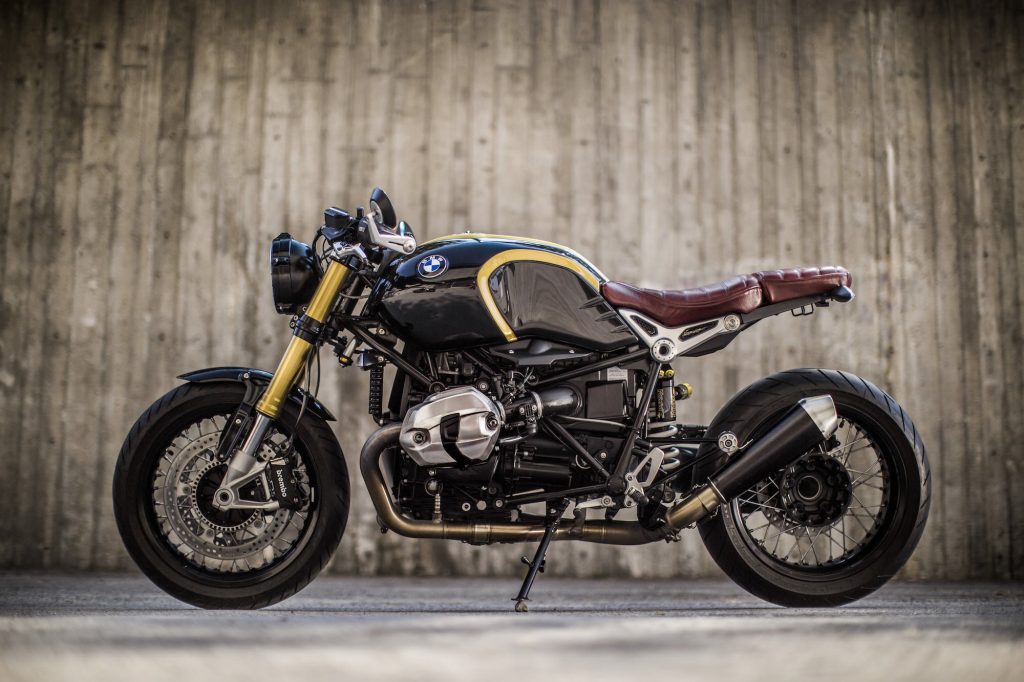
The suspension has been beefed up, with the front fork diameter increasing from 43mm to 45mm, while the rear linkless shock is now mounted at an angle rather than vertically. Both front and rear travel are 4.7 inches.
Chassis geometry has been adjusted for improved stability, with the wheelbase stretching nearly an inch to 59.5 inches and the steering rake relaxing 0.9 degrees to 27.7, while trail measures 4.4 inches.
Power still comes from the 1,170cc air- and oil-cooled eight-valve boxer twin. BMW claims the same 109 peak horsepower, but now it arrives 250 rpm sooner. Peak torque of 84.8 lb-ft, slightly down by 0.7 lb-ft, is delivered at 6,500 rpm.
Notable mechanical updates include the relocation of the underseat airbox, eliminating the right-side intake trumpet found on previous models.
The exhaust system has been redesigned, removing the low-speed exhaust valve and replacing it with a silencer box featuring a catalytic converter beneath the transmission, which feeds twin outlet pipes on the left side.
The R 12 nineT’s cockpit strikes a balance between compactness and comfort. The tubular handlebar offers a comfortable reach for riders of average height, with a moderate elbow bend despite its width.
The lower half of the body is slightly tighter between the 31.3-inch-high seat and rearset footpegs, though not to the extreme of sportbikes.
A full run through the 4.2-gallon tank is manageable without fatigue for most riders. The 2024 BMW R 12 nineT blends updated performance and technology with the classic, retro appeal that has made the R nineT line so popular.
3. Moto Guzzi V100 Mandello (Heritage Appeal)
While not traditionally categorized as a retro bike, the Moto Guzzi V100 Mandello earns a place here thanks to its heritage-driven design and transverse 1042cc V-twin engine layout, a signature Guzzi trait. Named after the company’s historic hometown, the V100 bridges old and new better than almost any bike in its class.
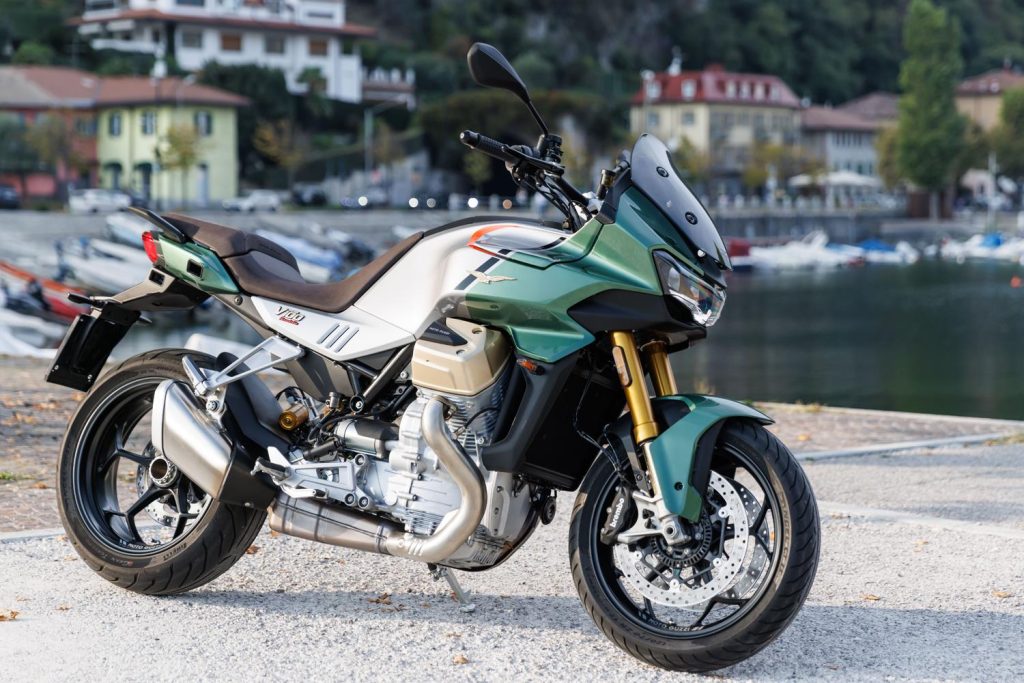
Moto Guzzi’s emphasis on shaft drive, long-distance comfort, and mechanical honesty resonates with American riders seeking something different from mainstream offerings. As Moto Guzzi continues expanding its US dealer presence, the V100 Mandello could become a sleeper modern classic by 2026.
4. Triumph Thruxton RS (or Its Successor)
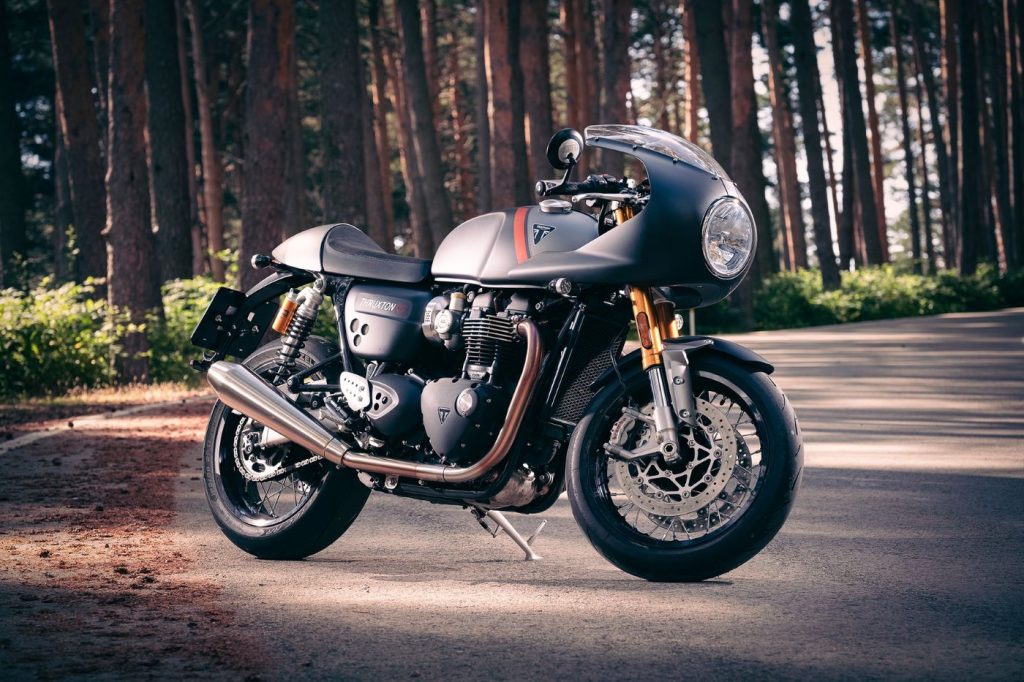
Although production of the Thruxton RS has been limited in recent years, its influence remains strong. Powered by the same 1200cc engine family as the Bonneville, the Thruxton RS represents the café racer side of the modern classic world. Clip-on bars, rear-set pegs, and premium suspension components give it sharper dynamics without losing vintage appeal.
If Triumph introduces a refreshed or reimagined Thruxton-style model by 2026, as industry rumors suggest, it will immediately draw attention. In the US, where café racers have a devoted following, this platform remains highly desirable.
The 2020 Triumph Thruxton RS represents the latest evolution in the British marque’s celebrated café-racer lineage, joining the standard Thruxton and Thruxton R models.
Unlike previous iterations, the RS treatment, typically reserved for Triumph’s high-end sport and Supersport machines, has been applied to the modern-classic Thruxton line for the first time.
Building on the Thruxton R, the RS enhances performance with a more potent engine, refined electronics, Brembo M50 calipers, and a weight reduction of 13 pounds. Visually, it adds subtle RS styling cues that modernize the retro aesthetic without compromising the café-racer heritage.
To experience the new Thruxton RS firsthand, we traveled to the coastal town of Albufeira in Portugal, where the bike’s capabilities could be explored on winding roads and in urban settings alike.
At the heart of the RS is the upgraded liquid-cooled 1200cc HP parallel-twin engine, delivering 104 horsepower at 7,500 rpm, eight more than the R model, and 83 ft-lbs of torque available from a low 4,250 rpm, 700 rpm earlier than the standard engine.
The RS motor is exceptionally tractable, providing immediate torque below 3,000 rpm and sustaining power nearly to the 8,000 rpm redline. This broad rev range makes it both a thrilling companion for open backroads and a manageable machine in city traffic.
Triumph engineers implemented several weight-saving and performance-enhancing modifications to achieve this refined engine character.
A low-inertia crank, revised balancer shafts, lighter clutch, and alternator reduce internal inertia, allowing the engine to spool up more freely.
Model-specific high-compression pistons, high-lift cams, optimized intake and exhaust porting, and a new engine tune provide an additional 500 rpm over the R, enabling riders to stretch the engine without hitting the limiter prematurely. Magnesium cam covers and thin-walled engine covers contribute to a lighter, more agile package.
The six-speed gearbox continues to impress, featuring a lighter assist-and-slipper clutch with machined basket modifications and two removed clutch plates. The result is a light, confident clutch pull that allows smooth, secure gear changes, enabling riders to exploit the RS’s broad torque curve without frequent shifting.
While the RS line generally comes with up/down quickshifters, Triumph opted not to include one on the Thruxton RS, preserving the model’s traditional café-racer character, a decision some may agree with and others may wish had been different.
Despite compliance with Euro 5 emissions standards, the Thruxton RS retains the expressive character of its 270-degree crank parallel-twin. Triumph engineers achieved compliance through supplemental catalysts in the mufflers, complementing the primary catalyst integrated within the tubular steel frame.
These changes allow the RS to remain lively and responsive, proving that modern environmental regulations need not compromise the performance or spirit of a classic café racer.
The 2020 Triumph Thruxton RS melds heritage and modernity with deft precision. It delivers enhanced power, refined handling, and subtle styling upgrades while maintaining the iconic Thruxton character, ensuring that riders can enjoy a thoroughly modern café-racer experience without losing touch with the bike’s storied past.
Also Read: Top 10 Sport Bikes You Can Buy in 2026
5. Harley-Davidson Sportster S (Evolution of a Classic)
While the Sportster S doesn’t look like a traditional classic at first glance, its lineage firmly places it in Harley-Davidson history. Powered by the 1252cc Revolution Max engine, it represents a modern reinterpretation of one of America’s most iconic motorcycle families.
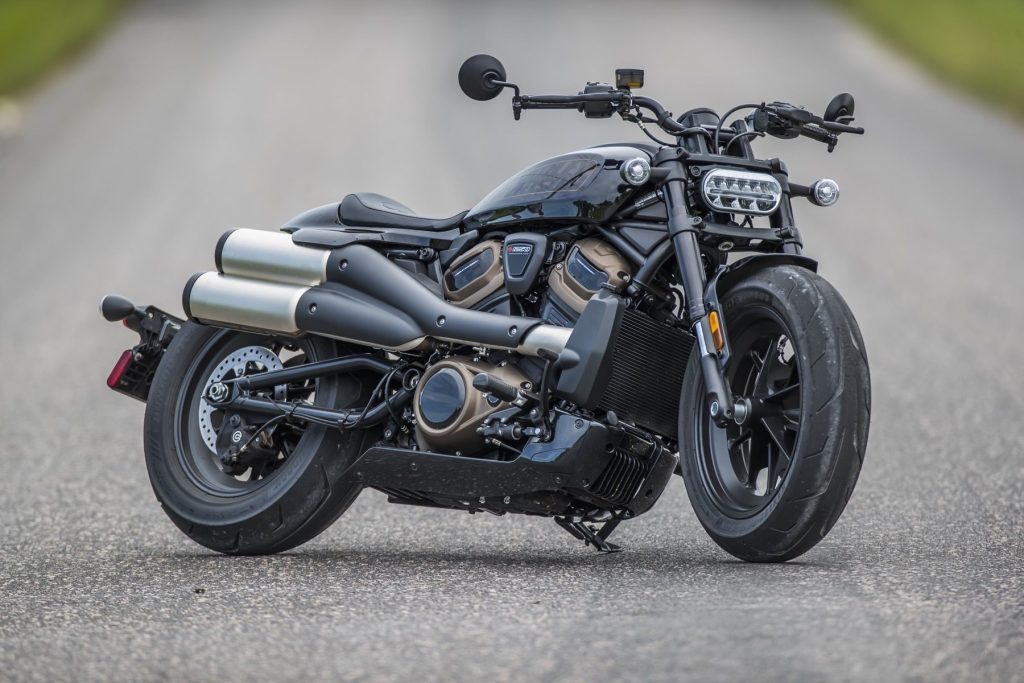
As Harley continues refining the Sportster platform, its blend of torque-heavy performance, stripped-down styling, and American heritage makes it a compelling modern classic for 2026. It appeals particularly to riders who want something contemporary but still rooted in domestic motorcycle culture.
6. Indian Chief (Current Generation)
Indian Motorcycle has successfully modernized its legacy without losing identity, and the current-generation Chief lineup proves it. Powered by the 116-cubic-inch (1901cc) Thunderstroke V-twin, the Chief offers massive low-end torque wrapped in clean, uncluttered styling.
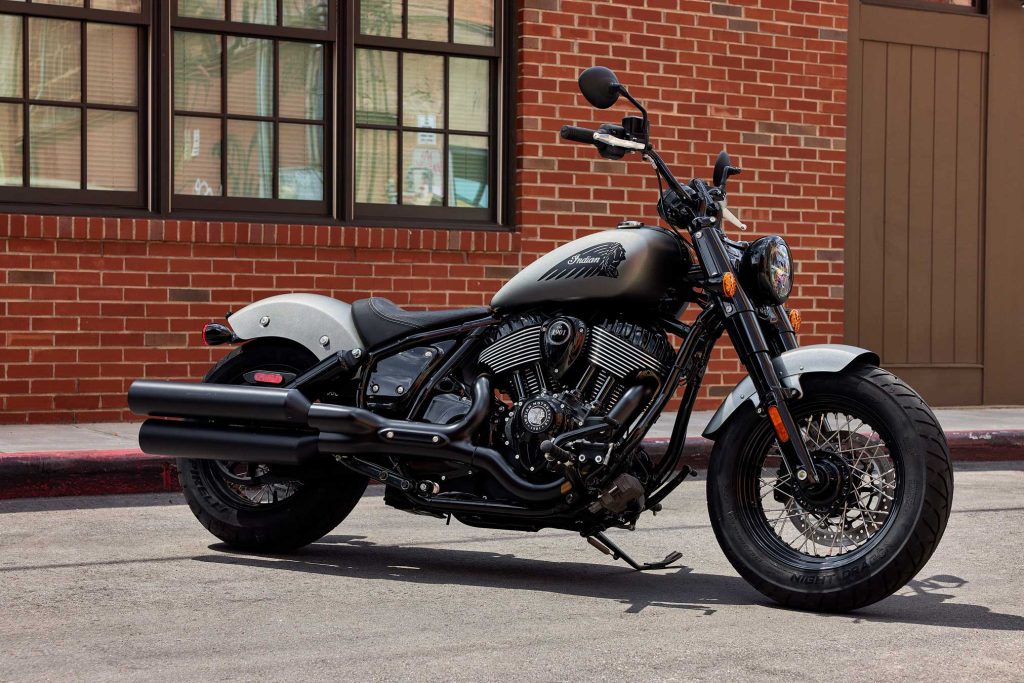
Unlike larger touring-focused cruisers, the Chief feels more elemental and rider-focused. Its air-cooled engine, steel frame, and classic proportions speak directly to riders who want authenticity.
In the US market, where American V-twins still carry enormous cultural weight, the Chief is positioned to remain relevant well beyond 2026.
7. Kawasaki Z900RS (1100cc Evolution Expected)
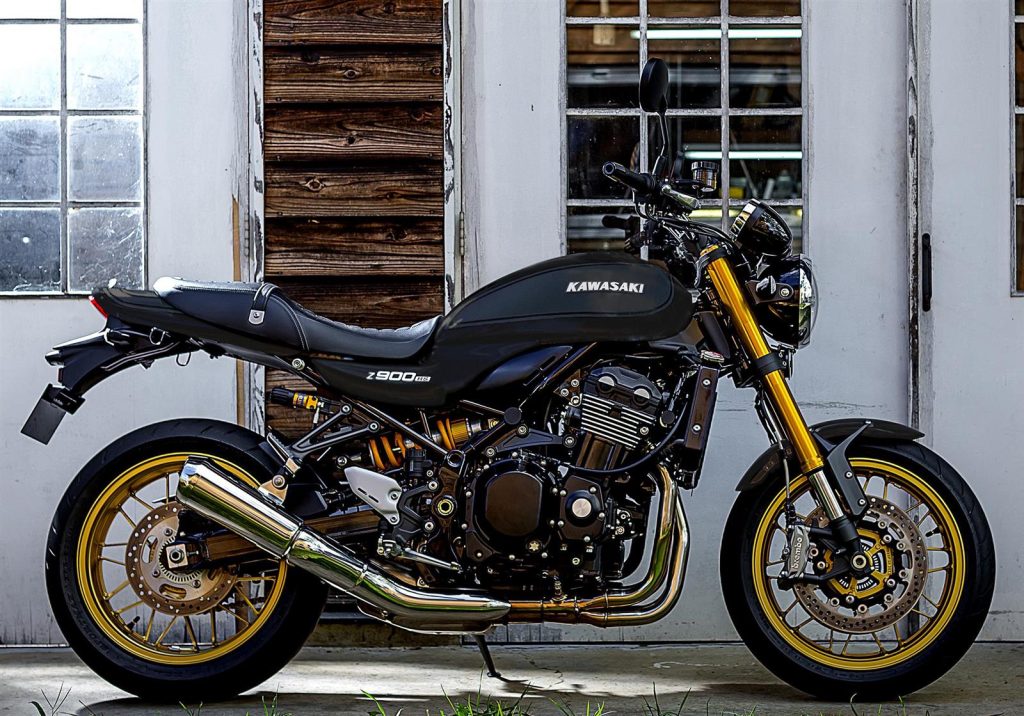
The Kawasaki Z900RS has already established itself as one of the best Japanese modern classics ever produced. Inspired by the legendary Z1, it pairs retro aesthetics with modern reliability and smooth inline-four performance.
While currently under 1000cc, industry chatter suggests Kawasaki could introduce a larger-displacement variant or update the platform to meet evolving emissions and performance demands.
If an 1100cc or similar upgrade appears by 2026, it would instantly become one of the most compelling options for riders who want classic looks with Japanese engineering.
At the core of the Kawasaki Z900RS sits a 948 cc inline four-cylinder engine producing 111 horsepower.
Figures aside, what truly defines this motorcycle is its personality. The engine feels exceptionally smooth, confidently strong, and impressively refined, delivering a riding experience that prioritizes feel as much as performance.
Power delivery is linear and easy to manage, with a generous spread of mid-range torque that minimizes the need for constant gear changes.
When pushed toward the upper rev range, the engine rewards the rider with an engaging soundtrack, courtesy of a carefully tuned exhaust that enhances acceleration without becoming intrusive or tiring on extended rides.
The six-speed manual transmission stands out for its accuracy and smooth operation. Over the course of 2,500 kilometers, there were no missed shifts or difficulties locating neutral. That said, the absence of an optional quickshifter is noticeable and feels like a missed opportunity, as it would have suited the bike’s lively character well.
For riders who favor a more traditional, mechanical riding experience, however, this omission may actually be welcomed.
One aspect that may divide opinion is the Z900RS’s weight. At 216 kg, it is not a lightweight machine. While this mass largely disappears once the bike is moving thanks to its excellent balance, it can become apparent during slow-speed maneuvers or when navigating congested urban environments.
Overall, the engine remains one of the Z900RS’s greatest strengths. It is polished, versatile, and powerful enough for virtually any riding scenario, paired with a character that encourages relaxed enjoyment rather than aggressive riding.
The chassis of the Kawasaki Z900RS is built around a steel trellis frame that strikes a thoughtful balance between stiffness and controlled flex.
This design plays a key role in the bike’s reassuring stability and precise handling, particularly when cornering at speed or flowing through winding roads.
Suspension on the standard Z900RS is relatively simple and lacks full adjustability. The upside-down front fork offers no adjustment options, while the rear mono-shock is limited to basic preload tuning. This setup works adequately for general riding but leaves little room for personalization.
The Z900RS SE version significantly raises the bar with higher-quality suspension components. It features fully adjustable front and rear suspension, including a premium Öhlins rear shock, allowing riders to fine-tune the bike’s behavior to suit different riding styles and road conditions.
For those who value customization and sharper dynamics, the SE is clearly the superior choice. On smooth, well-maintained roads, the Z900RS feels composed, stable, and predictable.
It may not be razor-sharp or ultra-agile, but it inspires confidence, especially when tackling fast sweepers or twisty sections at a steady pace. When road conditions worsen, the limits of the suspension become more apparent.
It handles moderate imperfections without complaint, but on rough or broken surfaces, it’s clear that this motorcycle is not designed for extreme terrain. Even so, overall comfort remains respectable, and longer rides are still manageable.
Also Read: Top 10 Oldsmobiles That Quietly Became Serious Collector Cars
8. Ducati Diavel V4 (Modern Muscle Classic)
Though undeniably futuristic, the Diavel earns its place here by redefining what a power cruiser can be. Its 1158cc V4 engine, muscular stance, and minimal bodywork give it a modern take on classic muscle-bike philosophy.
Ducati’s ability to blend heritage with innovation makes the Diavel a standout for American riders seeking a bold statement bike. As Ducati continues refining the V4 platform, the Diavel’s long-term appeal could grow beyond trend status into modern-classic territory.
9. BSA Gold Star 650 (Future Big-Bore Expansion)
While currently under 1000cc, the revived BSA Gold Star deserves attention because of its potential. With classic British styling and a strong emphasis on simplicity, it has already gained traction among US riders who appreciate authenticity.
If BSA introduces a larger-displacement Gold Star variant, something over 1000cc, by 2026, it would immediately attract buyers looking for a true old-school experience with modern dependability. Its success could mirror Triumph’s early Bonneville revival.
The motorcycle world has always been fueled by heritage, emotion, and the art of reinvention.
Few brands embody those qualities as strongly as BSA, and even fewer models resonate through history quite like the BSA Gold Star. Once regarded as the pinnacle of British single-cylinder performance, the Gold Star symbolized the golden age of motorcycling in the mid-20th century.
The legacy of the BSA Gold Star dates back to the late 1930s, when racer Wal Handley recorded a lap speed exceeding 100 mph at the legendary Brooklands circuit.
This achievement earned him the coveted “Gold Star” badge, a distinction that soon inspired BSA to create a production motorcycle worthy of the name. The resulting Gold Star models were celebrated not only for their speed but also for their meticulous craftsmanship.
Each engine was hand-built and dyno-tested, with official horsepower certification supplied to buyers, an extraordinary practice for its era. This attention to detail set the Gold Star apart and helped establish its reputation as a machine for serious riders.
Between the late 1940s and early 1960s, BSA Gold Star motorcycles became fixtures on both streets and racetracks.
Available primarily in 350cc and 500cc configurations, they earned loyal followings among performance enthusiasts across Europe and the United States. Production ultimately ended in 1963, and the legendary name faded into history, until its long-awaited revival.
At the center of this revival stood the new BSA Gold Star 650, a motorcycle designed to carry forward the brand’s identity while adapting to contemporary standards.
Rather than abandoning tradition, the project focused on preserving the Gold Star’s defining characteristics, most notably its single-cylinder layout, while integrating modern reliability, safety, and usability.
The result is a motorcycle that captures nostalgia without feeling outdated, positioning itself competitively within today’s growing retro-classic segment.
Visually, the 2025 BSA Gold Star makes an immediate impression. Chrome-accented tank panels, elegant pinstriping, and a traditional round headlamp give it a distinctly vintage presence. The iconic “Piled Arms” BSA emblem proudly displayed on the fuel tank reinforces its British heritage and sense of authenticity.
Ergonomics are designed for comfort and accessibility. With a low seat height of 30.8 inches, the Gold Star accommodates a broad range of riders. The upright seating position, flat bench-style seat, and wide handlebars create a relaxed riding posture well suited to urban commutes and leisurely countryside rides alike.
Instrumentation blends old and new. The primary display mimics a classic analog gauge but incorporates a discreet LCD panel to provide essential digital information.
Spoked wheels, traditional fenders, and period-correct details complete the visual package, making the Gold Star especially appealing to riders who value timeless design.
Powering the Gold Star 650 is a 652cc, liquid-cooled, single-cylinder DOHC engine. It delivers 45 horsepower at 6,500 rpm and 55 Nm of torque at 4,000 rpm, resulting in strong mid-range performance and relaxed cruising ability.
Unlike many single-cylinder motorcycles that struggle at higher speeds, the Gold Star remains composed and smooth even during extended highway riding.
The focus was on preserving the distinctive low-end torque and responsive nature that define classic thumpers, while ensuring modern efficiency and reliability. This makes the Gold Star equally comfortable navigating city traffic, tackling open roads, or handling light touring duties.
Completing the experience is the exhaust note, a deep, unmistakable thump that instantly recalls traditional single-cylinder motorcycles. It’s a sound that adds character and emotional connection, reinforcing the Gold Star’s identity as a machine that appeals as much to the senses as it does to practical riding needs.
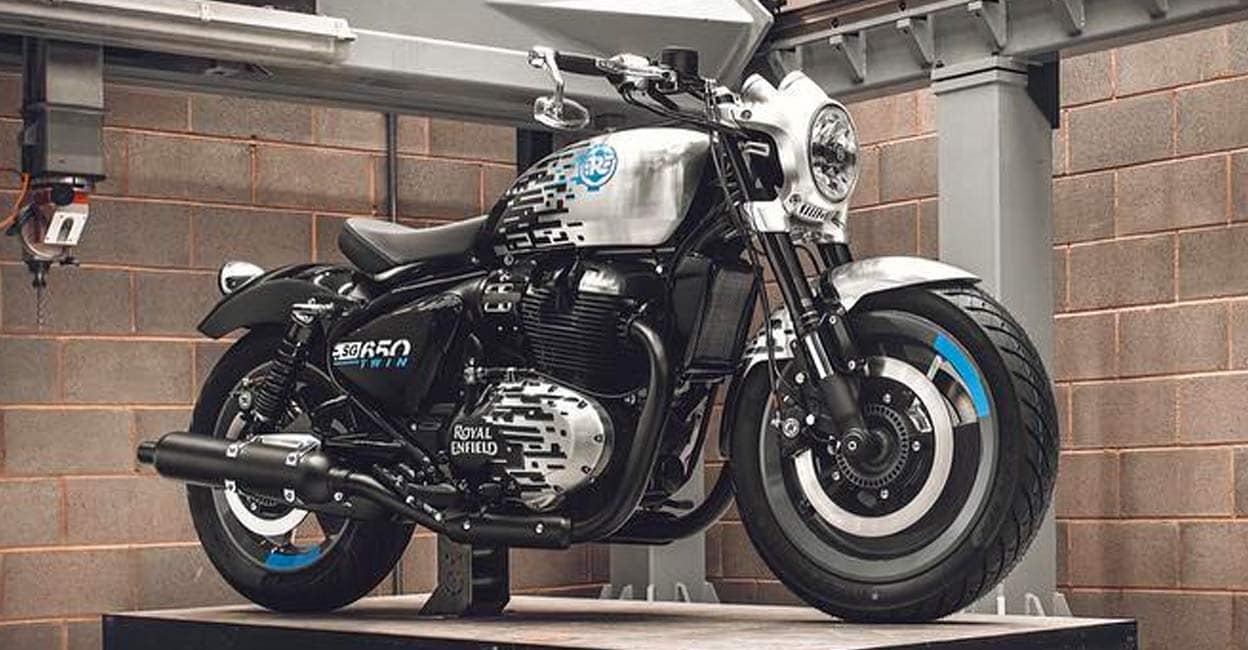
10. Royal Enfield 1200cc Concept (Future Watch)
Royal Enfield has made significant gains in the US market by offering approachable, heritage-inspired motorcycles. While its current lineup tops out below 1000cc, the brand has openly discussed developing larger-displacement platforms.
A 1200cc Royal Enfield modern classic, if launched by 2026, could be a game-changer. By combining accessible pricing with authentic retro design, it would appeal to American riders who want big-engine character without premium-brand pricing.
As motorcycles become increasingly digitized, many riders are seeking machines that feel personal and mechanical rather than purely technical. Large-displacement modern classics offer exactly that balance, strong torque, relaxed cruising, and designs that age gracefully.
For US riders who log long highway miles, ride year-round in varied climates, and value brand heritage, these bikes make more sense than ever.
Heading into 2026, the modern classic segment over 1000cc isn’t just surviving, it’s quietly becoming one of the most emotionally resonant corners of the motorcycle industry.
If you’re watching the market for something timeless rather than trendy, these are the motorcycles worth paying attention to.
