
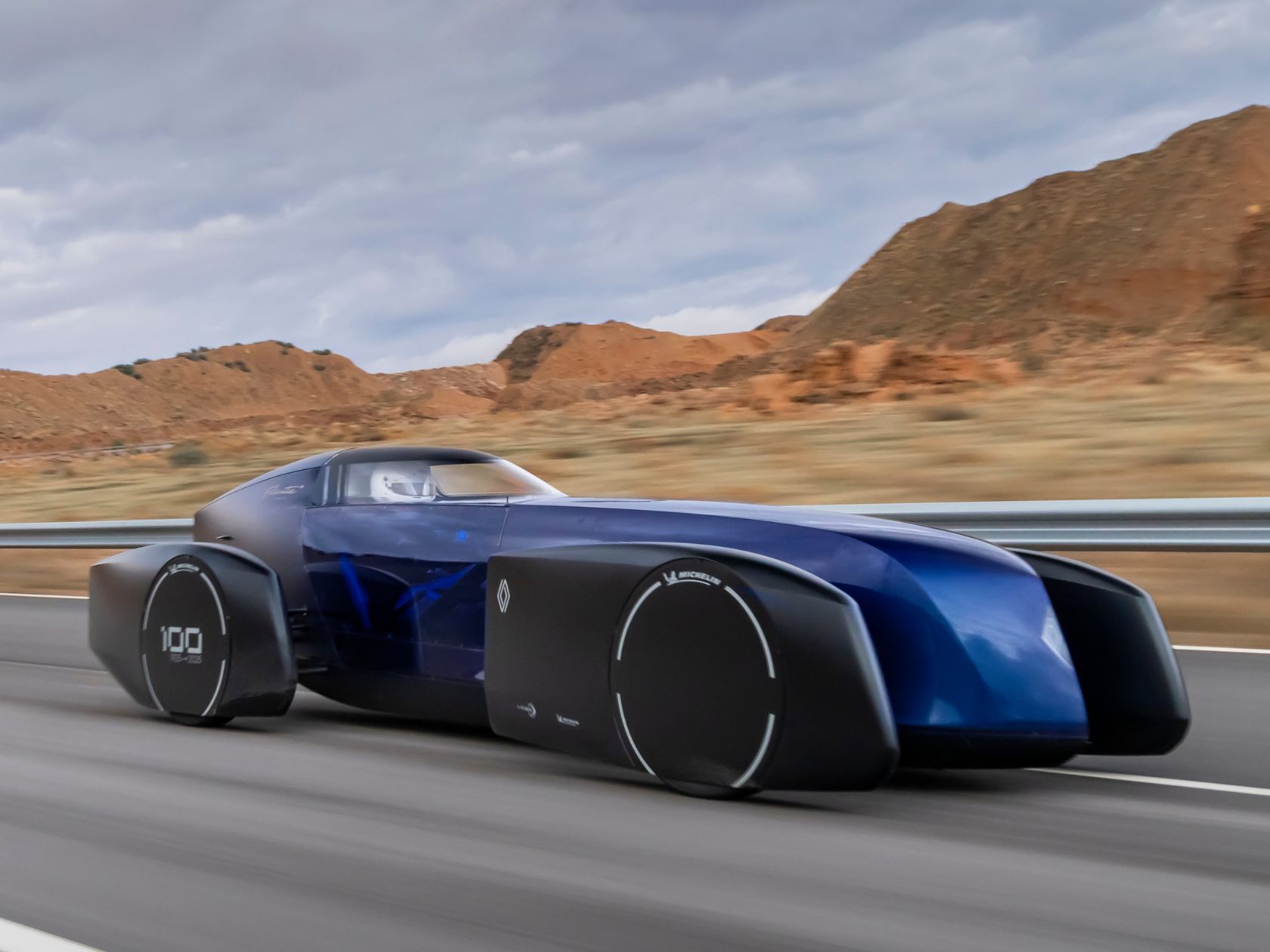
Renault has delivered a compelling reminder that electric vehicle range doesn’t have to hinge on ever-larger battery packs. With its Filante test vehicle, the French automaker managed to cover an impressive 626 miles on a single charge while still finishing the run with 11 percent battery remaining.
Even more notable is that this wasn’t an extreme hypermiling exercise. The Filante completed the drive at highway speeds, averaging 63 mph, while setting a new benchmark for efficiency in the process.
Although the Filante is a purpose-built test vehicle, weighing just 2,200 pounds, roughly half the mass of most modern EVs, its standout performance is rooted in thoughtful engineering rather than novelty hardware.
Renault focused heavily on aerodynamic optimization, dramatically reducing drag, and pairing it with extremely low rolling resistance. The vehicle also benefits from advanced steer-by-wire and brake-by-wire systems designed to minimize energy losses.
Together, these elements allowed the Filante to achieve an average efficiency of about 8 miles per kWh, a figure that comfortably outpaces leading production EVs such as the Tesla Model 3, which typically average closer to 5 miles per kWh.
The result underscores how intelligent design and energy management can outperform the strategy of simply increasing battery capacity.
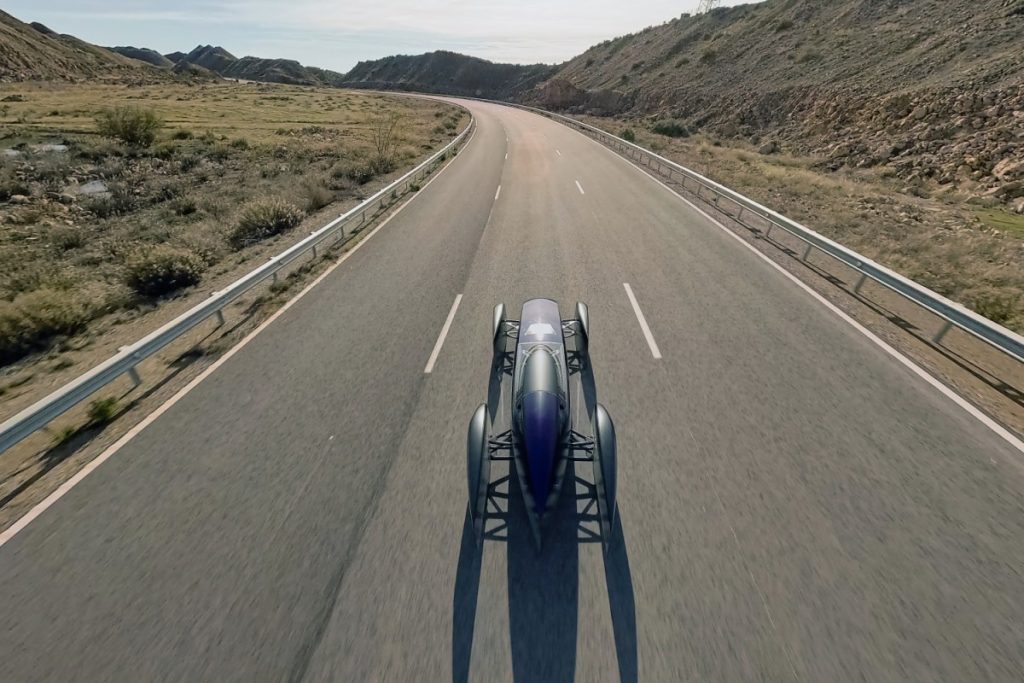
Crucially, the Filante didn’t rely on a custom or oversized battery to achieve its record. It uses the same 87 kWh battery pack already found in Renault’s production lineup. For comparison, the Renault Scenic E-Tech electric crossover equipped with this battery is rated for around 380 miles under official test cycles.
In real-world highway driving, that number usually drops by roughly 30 percent, highlighting how much efficiency is still being lost in today’s production vehicles due to weight, aerodynamics, and rolling resistance.
Renault’s approach carries significant implications for the future of electric vehicles. Battery packs remain one of the most expensive and resource-intensive components of an EV.
By prioritizing efficiency, automakers can reduce reliance on large batteries, lowering costs and minimizing environmental impact during production. Smaller, lighter packs also open the door to faster charging times and improved overall vehicle dynamics, creating a more balanced and sustainable product.
While the Filante itself is not intended for showroom floors, it serves as a rolling laboratory for technologies that will shape Renault’s next generation of electric vehicles.
Insights gained from the record-setting run will influence everything from exterior body design and underbody airflow to regenerative braking strategies and power management systems. These advancements can then be applied to consumer-ready models, improving real-world range without adding unnecessary weight or cost.
For buyers, the long-term payoff could be EVs that are more affordable, quicker to recharge, and still capable of handling daily commutes as well as longer trips.
Renault’s Filante project demonstrates that the path forward for electric mobility may not lie in bigger batteries, but in smarter, more efficient engineering.
Also Read: Top 10 Volvos Built to Go the Distance Without Breaking a Sweat
