
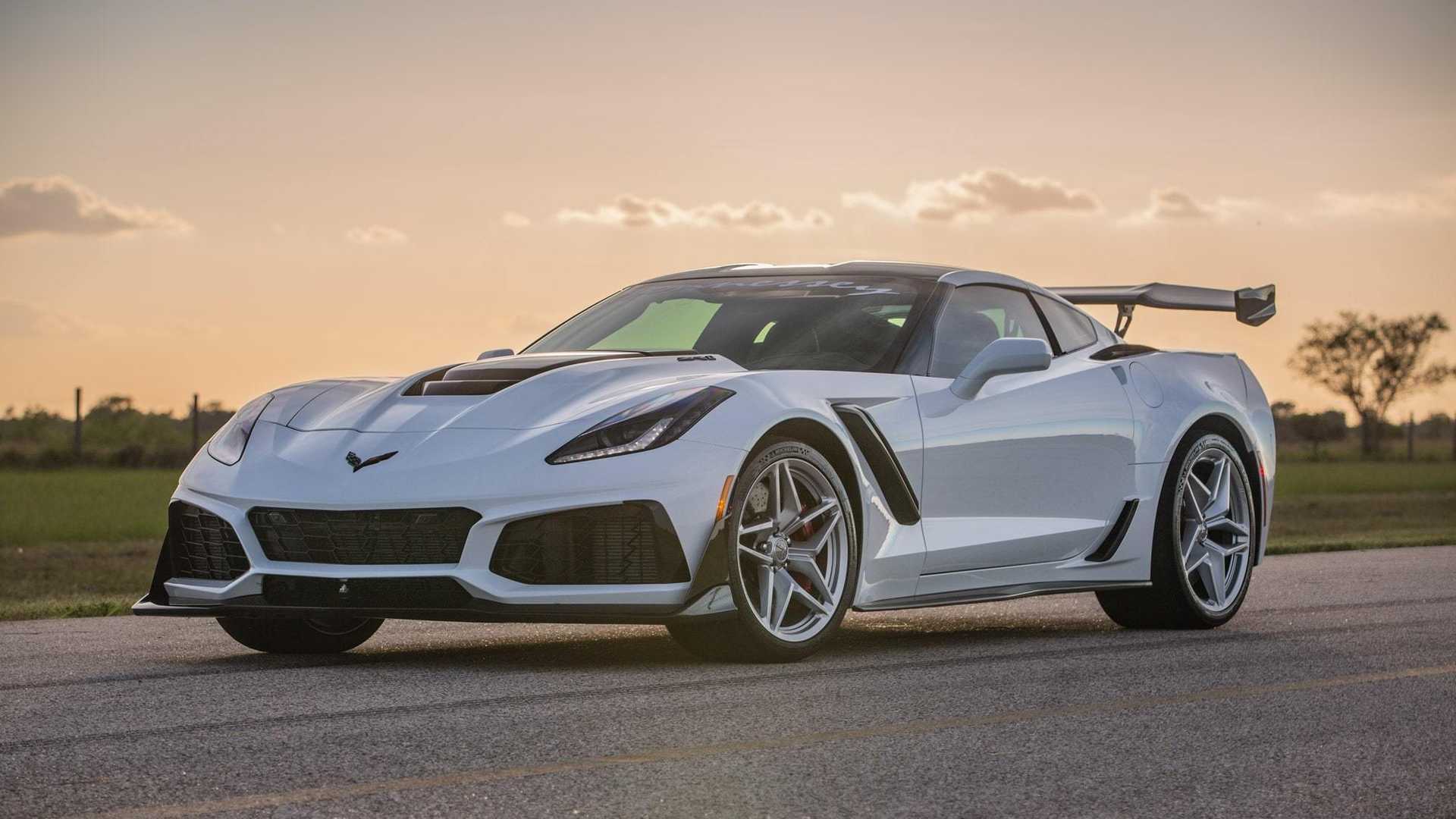
Automakers traditionally advertise crankshaft horsepower figures, which are always higher than what reaches the wheels due to unavoidable drivetrain losses.
That’s why Hennessey Performance’s recent dyno test of a stock Chevrolet C8 Corvette ZR1 has sparked so much discussion. The tuner recorded a peak output of 1,050 horsepower, a number that appears to conflict with Chevrolet’s official factory rating of 1,064 horsepower at the crank.
Because Hennessey’s dyno measures wheel horsepower, the result is unusual on paper. In most cases, wheel horsepower falls well below the advertised crank figure once losses through the transmission and driveline are accounted for.
If the 1,050-hp reading is accurate, it suggests that the Corvette ZR1’s true crankshaft output could be significantly higher than Chevrolet claims, potentially landing somewhere in the 1,100- to 1,200-horsepower range.
According to the dyno data, peak power arrived at 6,960 rpm, while maximum torque reached 821 lb-ft at 4,810 rpm. Importantly, the vehicle tested was completely stock, powered by Chevrolet’s 5.5-liter twin-turbocharged flat-plane-crank V8.
That engine is already widely regarded as the most powerful powerplant ever installed in a production Corvette, even before questions surrounding its true output began to surface.
On-track performance has further reinforced the ZR1’s reputation. The model has already posted multiple record-setting laps, including a 6:50.763 run around the Nürburgring Nordschleife.
That time allowed it to outperform the 815-horsepower Ford Mustang GTD on one of the world’s most demanding circuits, lending real-world credibility to the ZR1’s astonishing performance claims.
This naturally raises the question of why Chevrolet might choose to understate the ZR1’s horsepower, assuming that is indeed the case.
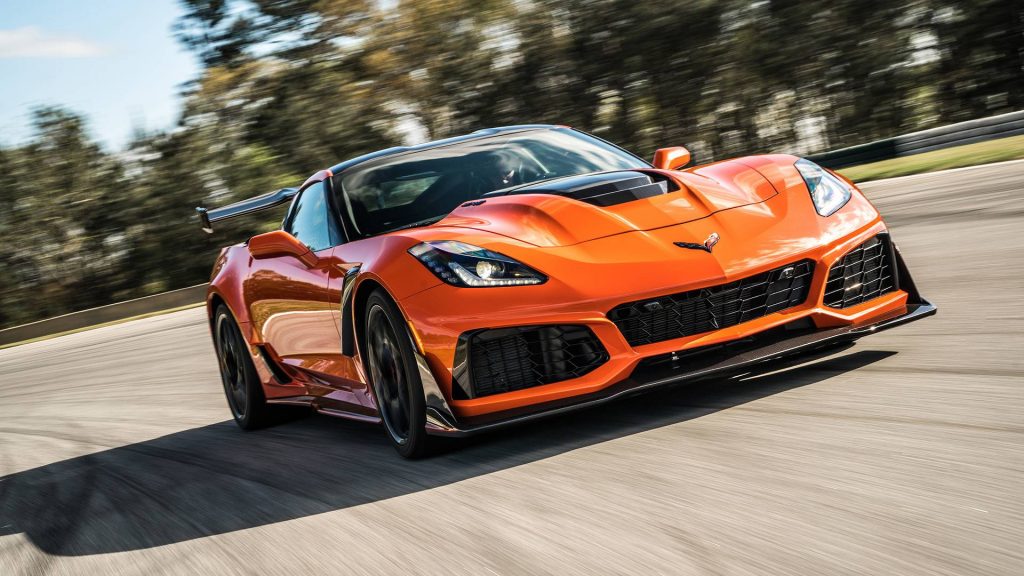
One plausible explanation lies in strategic product positioning. Chevrolet may be intentionally preserving a clear performance hierarchy within the Corvette lineup, particularly to protect the status of the ZR1X.
That flagship model produces a combined 1,250 horsepower thanks to the addition of a hybrid electric motor powering the front axle.
Publicly acknowledging that the standard ZR1 operates closer to that territory could blur the distinction between the two models and weaken the ZR1X’s top-tier positioning.
Pricing supports this internal hierarchy as well. Chevrolet’s consumer-facing site lists the Corvette ZR1 with a starting price of $185,000, while the more extreme ZR1X begins at $209,700.
Although the automaker has not announced formal production caps for either variant, real-world availability could still be constrained by supply-chain limitations, especially for the hybrid-equipped ZR1X.
Ultimately, determining the Corvette ZR1’s true crank horsepower may prove difficult without direct confirmation from Chevrolet. What is far more certain is what comes next.
Hennessey Performance, a company already known for pushing boundaries with projects like the 2,031-horsepower Venom F5 Evolution, is almost certainly preparing to extract even more performance from the ZR1.
As with any serious performance program, it begins with establishing a baseline on the dyno, before the real gains are unlocked.
Also Read: 11 Best Manual-Shift Sports Cars of the Last Decade for Every Budget
