
The Korean automotive industry has undergone a remarkable transformation over the past two decades, evolving from budget-friendly economy car manufacturers to serious performance contenders that rival established European and Japanese sports cars.
What was once considered impossible Korean cars competing with BMW M cars, Mercedes-AMG models, and Japanese legends is now reality.
Hyundai, Genesis, and Kia have invested heavily in performance engineering, hiring top talent from European manufacturers and establishing dedicated high-performance divisions that are rewriting the rules of what Korean cars can achieve.
Today’s fastest Korean cars represent a perfect blend of cutting-edge technology, aggressive styling, and impressive value propositions.
These vehicles feature turbocharged engines, sophisticated all-wheel-drive systems, track-tuned suspensions, and aerodynamic enhancements that would have seemed unthinkable for Korean brands just a generation ago.
From the Genesis GV60 Performance’s electric thrust to the Hyundai Ioniq 5 N’s track capabilities, Korean manufacturers are proving they can deliver genuine driving thrills.
What makes these Korean performance cars particularly compelling is their combination of speed and practicality. Unlike many European performance cars that command premium prices and expensive maintenance, Korean fast cars offer supercar-rivaling acceleration, advanced technology, and competitive pricing, all backed by industry-leading warranties.
Whether you’re looking for a tire-shredding hot hatch, a luxury sports sedan, or an electric performance SUV, Korean automakers now offer options that can satisfy even the most demanding enthusiasts. Let’s explore the ten fastest Korean cars currently available.
1. Genesis GV60 Performance
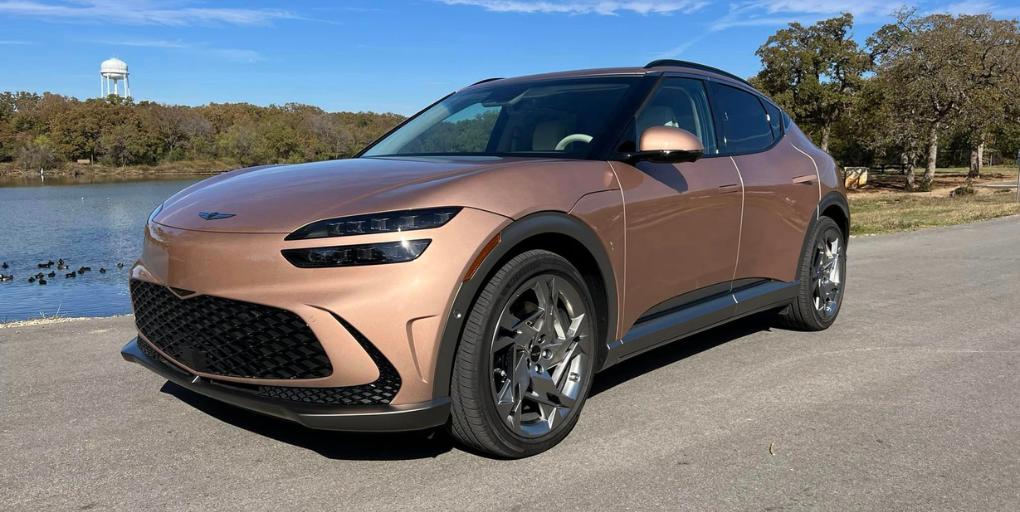
The Genesis GV60 Performance represents the pinnacle of Korean electric performance, combining luxury, technology, and blistering acceleration into a distinctive crossover package.
Built on Hyundai Motor Group’s dedicated E-GMP electric platform, the GV60 Performance features dual electric motors producing a combined 429 horsepower in normal operation, which rockets to an astonishing 483 horsepower with the Boost Mode activated.
This power enables the GV60 Performance to sprint from 0-60 mph in just 3.7 seconds, making it one of the quickest vehicles in Genesis’s entire lineup.
The dual-motor all-wheel-drive system provides exceptional traction and stability, with the front motor delivering 160 kW and the rear motor producing 160 kW under normal circumstances.
The Boost Mode, activated via a steering wheel button, provides ten-second bursts of maximum power for overtaking or track driving.
The 77.4 kWh battery pack provides an EPA-estimated range of approximately 235 miles, and supports 350 kW ultra-fast charging that can replenish the battery from 10% to 80% in just 18 minutes.
Beyond straight-line speed, the GV60 Performance features an electronically controlled limited-slip differential, adaptive dampers, and a sophisticated torque vectoring system that distributes power intelligently between all four wheels.
The low center of gravity, courtesy of the floor-mounted battery pack, provides sports car-like handling dynamics despite the crossover body style. Genesis has also equipped the Performance model with larger brakes, 21-inch wheels, and performance summer tires to match its acceleration capabilities.
Inside, the GV60 Performance showcases Genesis’s commitment to luxury with premium materials, a rotating Crystal Sphere gear selector that emerges when the vehicle powers on, and advanced technology including a curved widescreen display combining the digital instrument cluster and infotainment screen.
The facial recognition system, fingerprint authentication, and augmented reality head-up display represent cutting-edge features rarely found in performance vehicles.
With its combination of electric performance, luxury appointments, and distinctive styling, the Genesis GV60 Performance demonstrates that Korean brands can compete directly with premium German electric performance SUVs while offering superior value.
2. Hyundai Ioniq 5 N
The Hyundai Ioniq 5 N marks Hyundai’s entry into the electric performance market and represents one of the most exciting developments in Korean automotive history. As the first N-branded electric vehicle, the Ioniq 5 N features dual motors producing a combined 641 horsepower with N Grin Boost activated making it significantly more powerful than the standard Ioniq 5.
This immense power propels the angular crossover from 0-60 mph in just 3.25 seconds, with a top speed electronically limited to 161 mph. These figures put the Ioniq 5 N in legitimate supercar territory, all while maintaining the practicality of a five-passenger crossover.
What sets the Ioniq 5 N apart from other electric performance vehicles is Hyundai’s commitment to preserving the emotional aspects of driving.
The engineers developed N e-shift, a simulated eight-speed dual-clutch transmission complete with artificial gear changes, engine sounds piped through external speakers, and even programmed power cuts during upshifts to mimic a traditional internal combustion sports car.
While purists might scoff at synthesized sounds, the system is remarkably convincing and provides feedback that many electric vehicles lack. Additionally, the N Pedal feature allows for aggressive regenerative braking that enables near one-pedal driving on track.
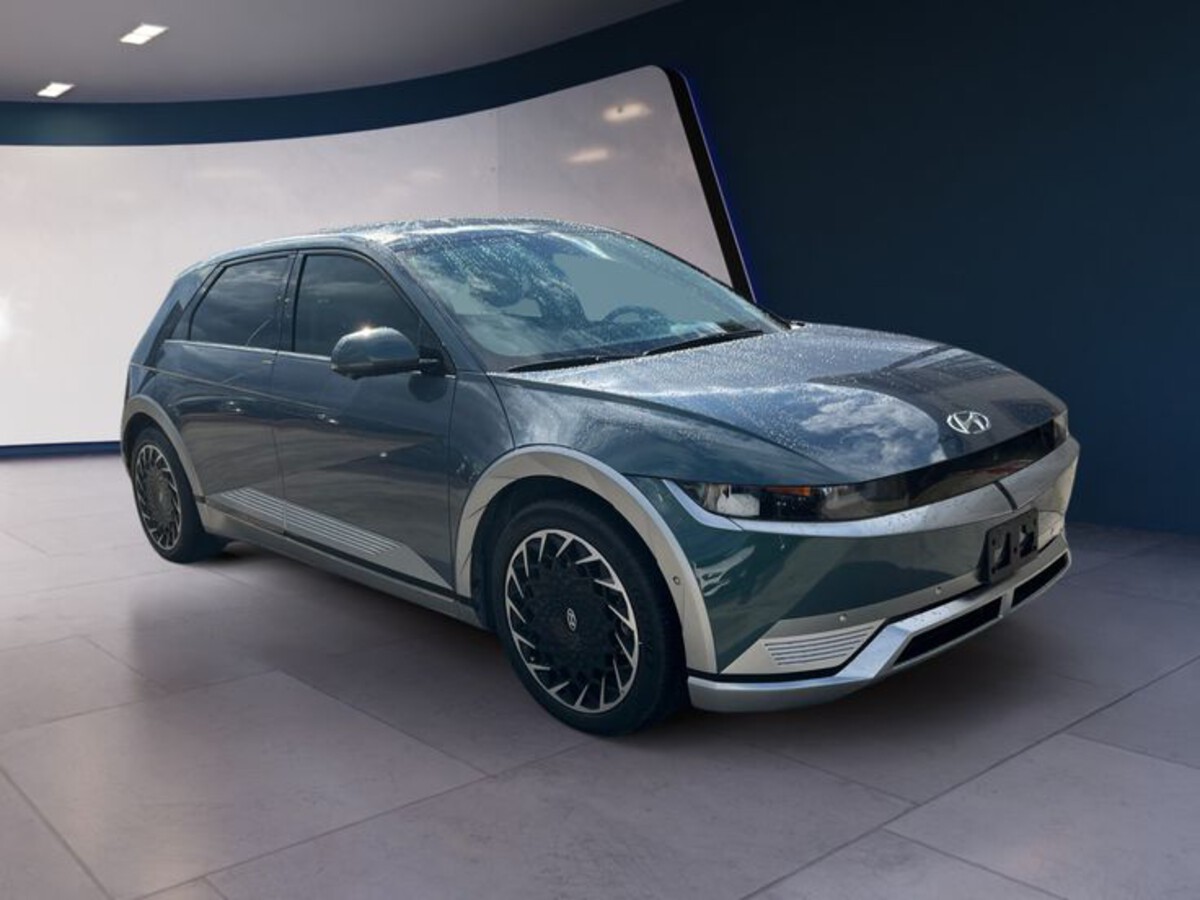
The Ioniq 5 N’s chassis benefits from extensive development at the Nürburgring, featuring adaptive dampers, upgraded brakes with aggressive cooling ducts, wider fenders to accommodate 21-inch forged wheels, and Pirelli P Zero performance tires measuring 275mm wide.
The electronically controlled limited-slip differential and torque vectoring system provide exceptional cornering ability, while the lower, stiffer suspension delivers precise handling without completely sacrificing ride comfort for daily driving.
Track enthusiasts will appreciate features like N Race mode, which adjusts all vehicle parameters for maximum performance, N Drift Optimizer for controlled oversteer, and N Brake Regen for consistent pedal feel during hard driving.
The battery thermal management system maintains optimal temperatures during repeated acceleration runs, addressing a common weakness in performance electric vehicles.
With approximately 221 miles of EPA-estimated range and 350 kW fast-charging capability, the Ioniq 5 N proves that electric performance cars can deliver genuine thrills while remaining practical.
3. Genesis G70 3.3T Sport
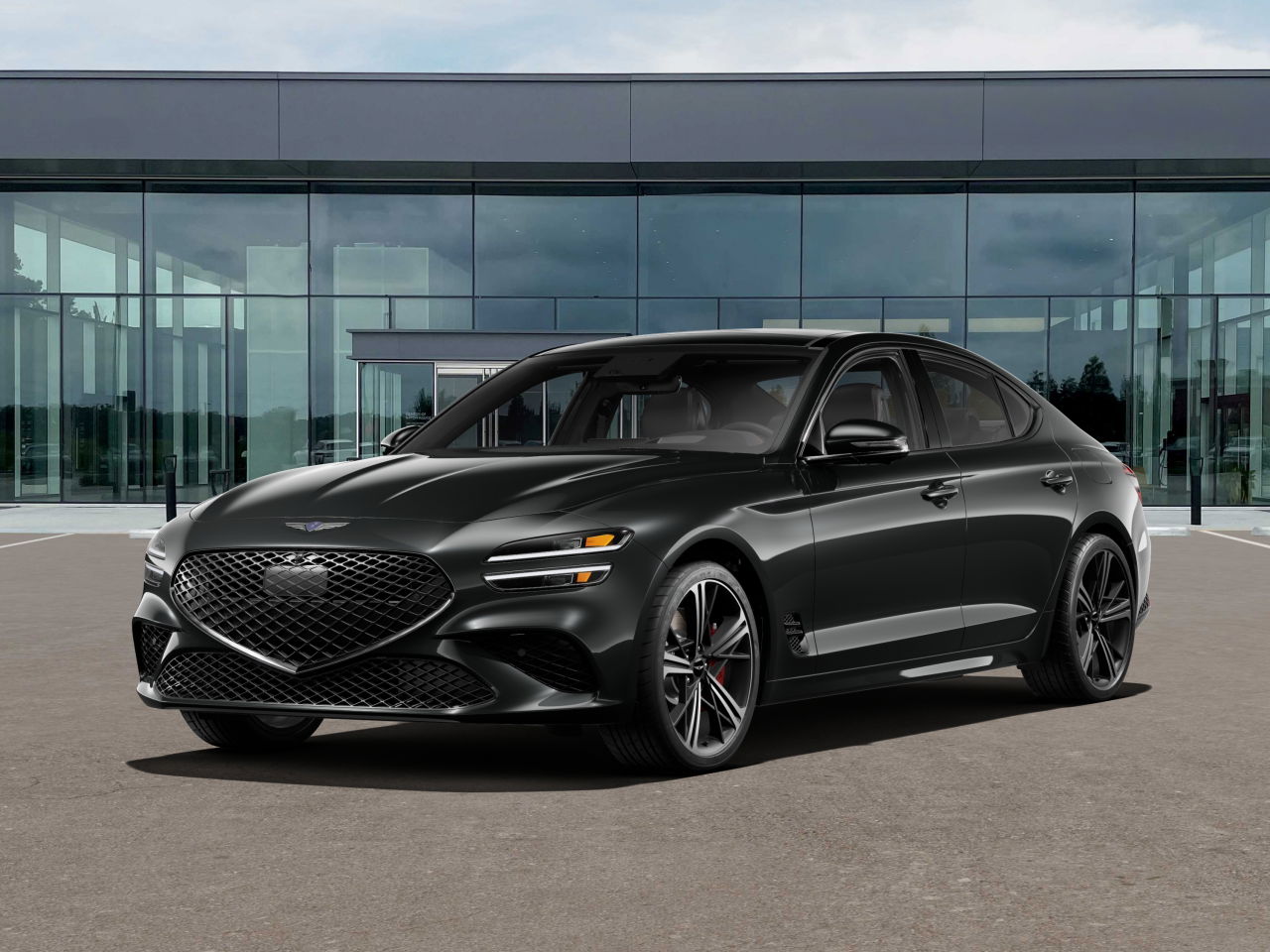
The Genesis G70 3.3T Sport represents the Korean answer to the BMW M340i and Mercedes-AMG C43, offering rear-wheel-drive sports sedan dynamics with a premium luxury experience at a competitive price point.
Under the hood lies a twin-turbocharged 3.3-liter V6 engine producing 365 horsepower and 376 lb-ft of torque, channeled through an eight-speed automatic transmission.
This powertrain combination enables the rear-wheel-drive G70 3.3T to accelerate from 0-60 mph in 4.5 seconds, with all-wheel-drive models achieving similar times thanks to enhanced traction.
The G70’s chassis tuning was developed with input from former BMW M engineers, and it shows in the car’s balanced handling characteristics.
The Sport model features larger brakes, an electronically controlled limited-slip differential on rear-wheel-drive variants, adaptive dampers, and a sport-tuned exhaust system that produces a satisfying growl under acceleration.
The steering is communicative and precise, providing genuine feedback that many modern cars lack, while the suspension strikes an admirable balance between comfort and sportiness.
Inside, the G70 showcases Genesis’s commitment to luxury with Nappa leather upholstery, genuine aluminum trim, and a driver-focused cockpit layout.
The analog gauges, a rarity in modern vehicles, provide a sporting aesthetic while the available 15-speaker Lexicon audio system delivers exceptional sound quality.
The infotainment system, while not as advanced as some competitors, includes navigation, smartphone integration, and a suite of advanced safety features.
Genesis’s industry-leading warranty five years/60,000 miles basic, ten years/100,000 miles powertrain provides peace of mind often absent from European competitors.
The G70 3.3T Sport’s value proposition remains its strongest selling point, offering performance comparable to German sports sedans at thousands less while including more standard equipment and better warranty coverage.
For enthusiasts seeking a proper rear-wheel-drive sports sedan with a powerful engine and engaging dynamics, the G70 3.3T represents an often-overlooked alternative to the usual German suspects.
4. Kia EV6 GT
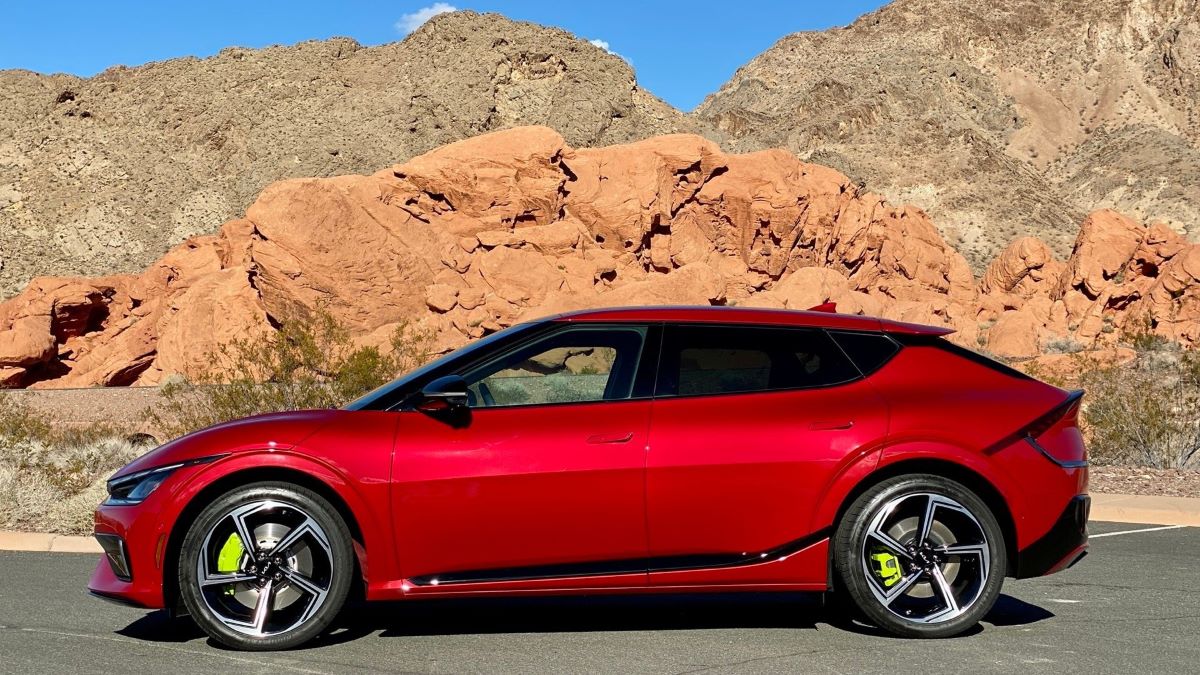
The Kia EV6 GT transforms the stylish EV6 crossover into a genuine performance machine, sharing its platform with the Genesis GV60 Performance but adopting a more aggressive personality.
The dual-motor all-wheel-drive system produces 576 horsepower and 546 lb-ft of torque, enabling acceleration from 0-60 mph in just 3.4 seconds faster than most sports cars and nearly all other crossovers regardless of price. Top speed reaches an electronically limited 161 mph, making the EV6 GT one of the fastest Korean vehicles ever produced.
Kia equipped the EV6 GT with substantial performance hardware to match its impressive power output. The GT features an electronically controlled limited-slip differential, adaptive dampers with continuously variable valve control, and significantly larger brakes with bright green calipers.
The wide 21-inch wheels wear Michelin Pilot Sport 4S tires measuring 275mm wide, providing exceptional grip for acceleration and cornering.
The suspension is lowered and stiffened compared to standard EV6 models, while additional structural bracing improves rigidity. The low center of gravity inherent to electric vehicles, combined with the 50/50 weight distribution, provides sports car-like handling dynamics.
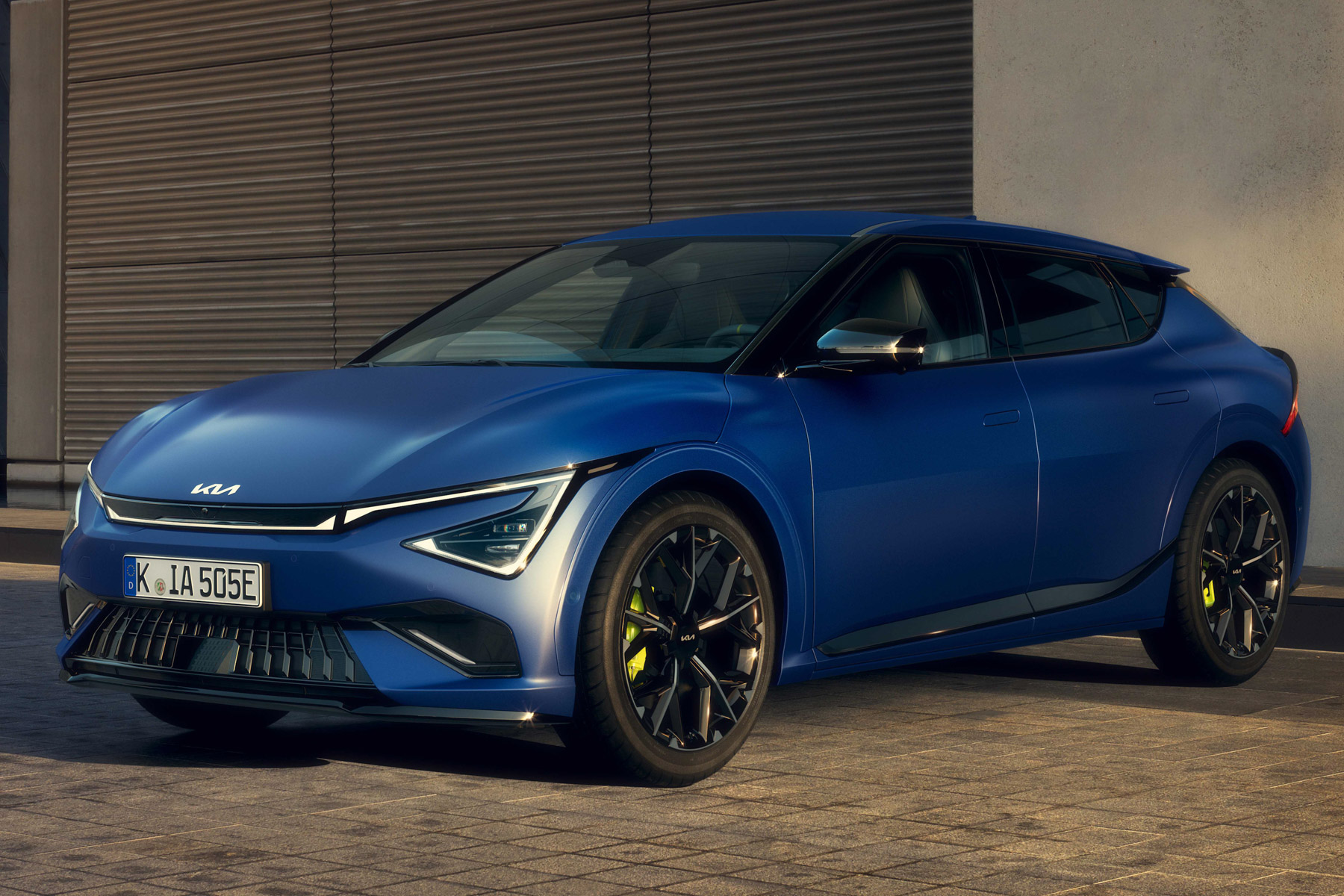
The EV6 GT includes a GT mode that sharpens throttle response, stiffens the dampers, increases regenerative braking intensity, and activates the synthetic engine sound through external speakers a feature borrowed from the Ioniq 5 N development program.
While not as sophisticated as the Ioniq 5 N’s N e-shift simulated transmission, the EV6 GT’s sound enhancement provides audio feedback during acceleration.
The vehicle also features launch control for consistent acceleration runs and an advanced torque vectoring system that brakes individual wheels to enhance cornering precision.
Inside, the EV6 GT receives sport seats with enhanced bolstering, a GT-specific steering wheel, and unique trim elements. The curved dual-screen display seamlessly integrates the 12.3-inch digital instrument cluster and infotainment system, running Kia’s latest software with wireless Apple CarPlay and Android Auto.
The 77.4 kWh battery provides approximately 206 miles of EPA-estimated range, and supports 350 kW ultra-fast charging. With its combination of explosive acceleration, engaging handling, futuristic styling, and relative affordability, the Kia EV6 GT demonstrates that Korean automakers can compete with anyone in the electric performance segment.
Also Read: 5 Cars for Edmond Suburban Life and 5 That Need Dealer-Only Care
5. Hyundai Elantra N
The Hyundai Elantra N represents the Korean brand’s most focused performance sedan, transforming the ordinary compact Elantra into a track-capable machine that rivals the Honda Civic Type R and Volkswagen Golf R. Under the hood sits a turbocharged 2.0-liter four-cylinder engine producing 276 horsepower and 289 lb-ft of torque or 286 lb-ft with the optional dual-clutch transmission’s overboost function.
This potent engine, developed specifically for N models, propels the front-wheel-drive Elantra N from 0-60 mph in 4.9 seconds with the eight-speed dual-clutch transmission, or 5.1 seconds with the six-speed manual transmission.
What makes the Elantra N special isn’t just its straight-line speed but its comprehensive performance package. Hyundai fitted the N with an electronically controlled limited-slip differential that dramatically improves traction and cornering ability, addressing the traditional weaknesses of front-wheel-drive performance cars.
The adaptive dampers offer multiple settings from comfortable daily driving to track-ready firmness, while the massive brakes borrowed from larger N models provide exceptional stopping power with minimal fade during spirited driving. The Michelin Pilot Sport 4S tires, measuring 245mm wide on 19-inch forged wheels, deliver impressive grip levels.
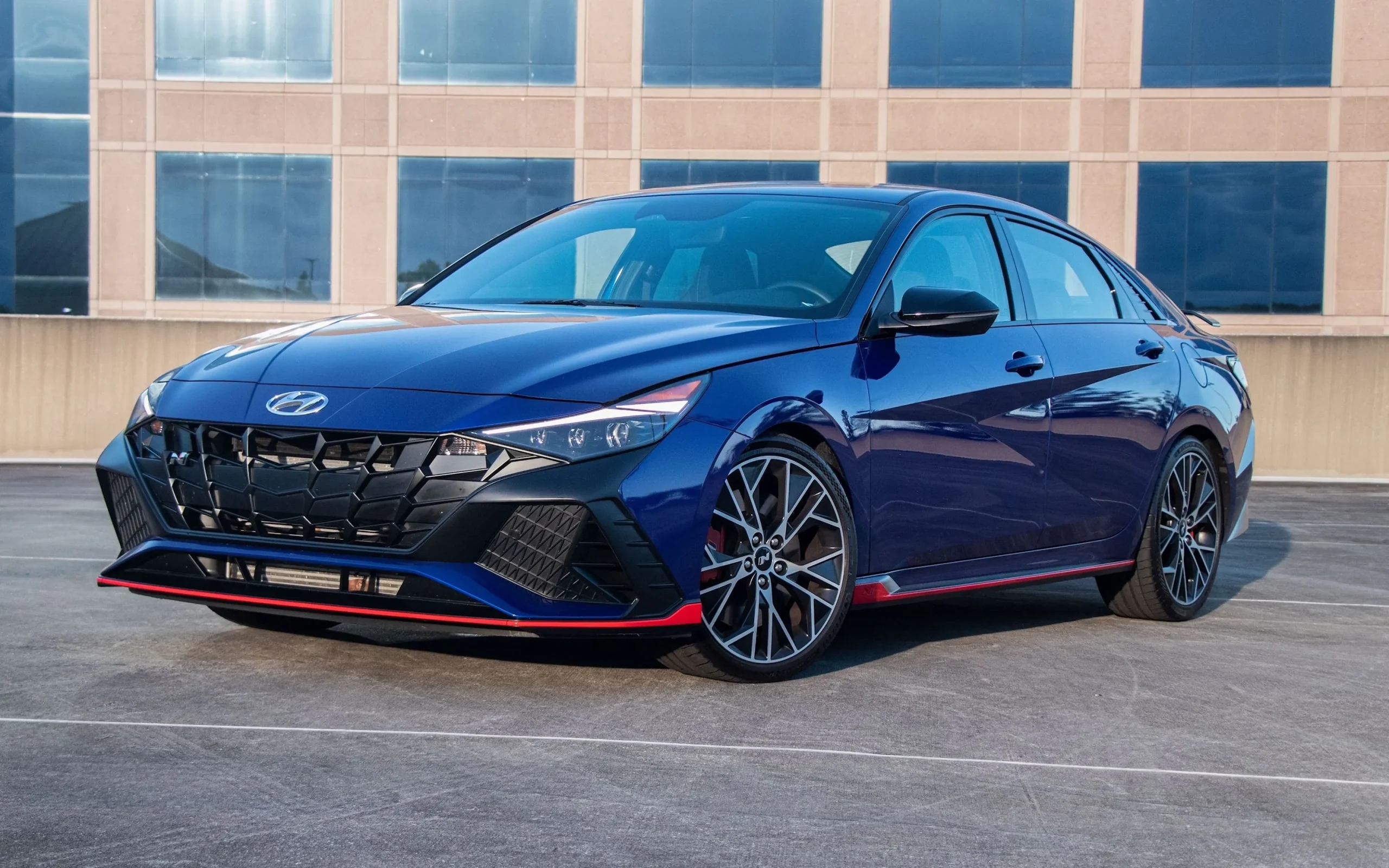
The Elantra N’s party trick is its dual-mode exhaust system with active sound management. In N mode, the exhaust produces aggressive pops, crackles, and burbles during deceleration, creating an auditory experience typically associated with high-performance European cars.
The N Grin Shift button on the steering wheel provides temporary power and throttle response boosts for overtaking, while launch control enables consistent acceleration runs. The driving modes Eco, Normal, Sport, N, and Custom allow drivers to tailor the vehicle’s personality for different situations.
Inside, the Elantra N receives deeply bolstered sport seats with N logos, a flat-bottom steering wheel, metal pedals, and N-specific interior trim. The digital displays provide performance data including turbo boost pressure, lap times, and g-force measurements.
Despite its performance focus, the Elantra N maintains surprising daily usability with comfortable seating for five adults, a spacious trunk, modern technology features, and reasonable fuel economy.
For enthusiasts seeking an affordable, engaging performance sedan with manual transmission availability a rarity in today’s market the Elantra N delivers exceptional value and genuine driving thrills.
6. Kia Stinger GT
The Kia Stinger GT stunned the automotive world when it launched, proving that Kia could build a legitimate sports sedan rivaling German alternatives.
The flagship Stinger GT features the same twin-turbocharged 3.3-liter V6 found in the Genesis G70, producing 368 horsepower and 376 lb-ft of torque.
Power routes through an eight-speed automatic transmission to either the rear wheels or all four, with rear-wheel-drive models achieving 0-60 mph in 4.6 seconds impressive for a nearly 4,000-pound sedan. The Stinger’s fastback styling provides dramatic road presence while maintaining practical hatchback versatility with 23 cubic feet of cargo space.
The Stinger’s chassis development occurred at Germany’s Nürburgring under the direction of former BMW M engineer Albert Biermann, who served as Hyundai Motor Group’s performance chief.
This pedigree shows in the Stinger’s balanced handling, with a rear-biased weight distribution, multi-link suspension front and rear, and adaptive dampers that adjust in milliseconds.
The electronically controlled limited-slip differential on rear-wheel-drive GT models enhances cornering ability and allows controlled power slides when stability control is relaxed.
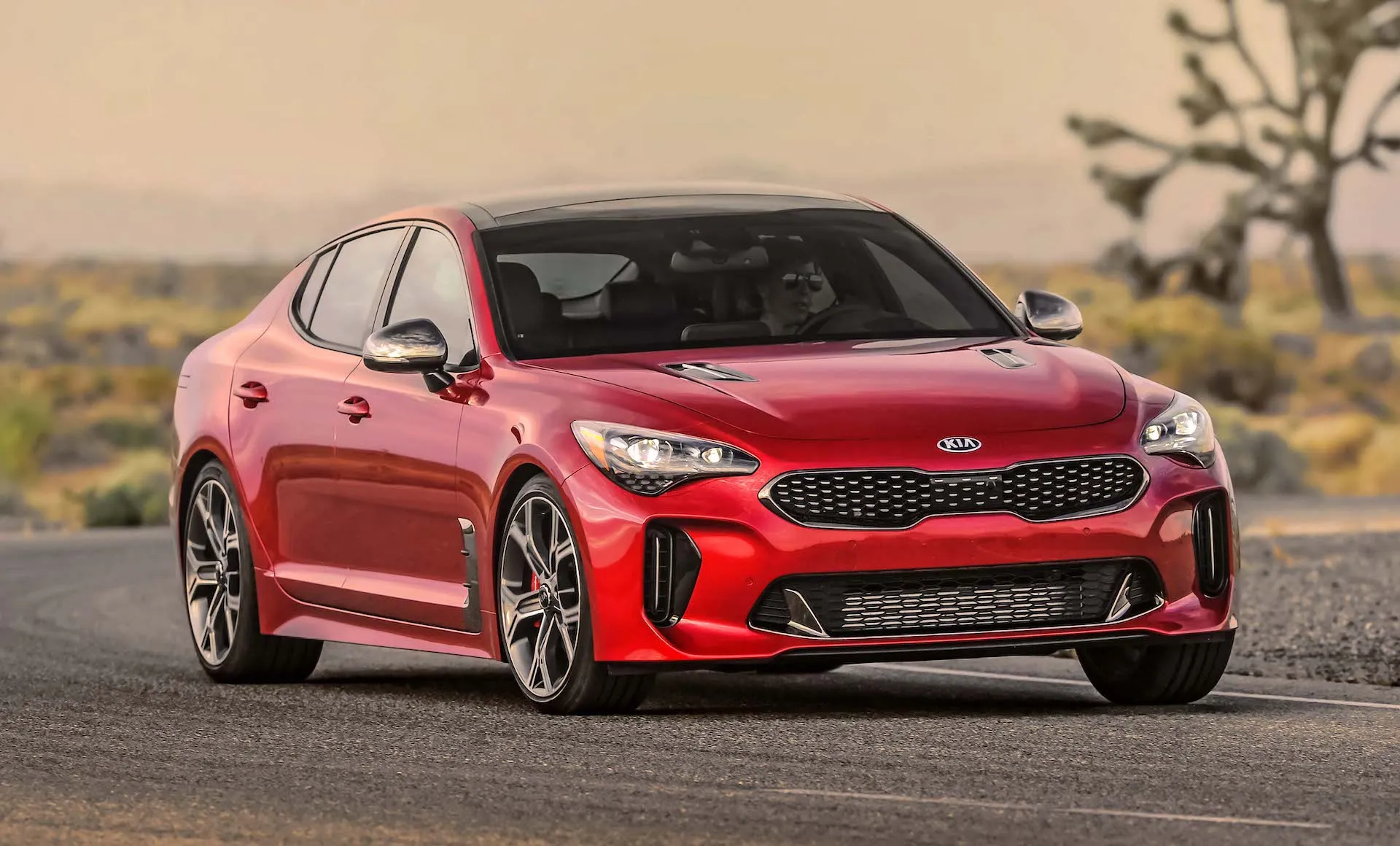
Brembo brakes provide strong, fade-resistant stopping power, while the Michelin Pilot Sport 4 tires deliver excellent grip. Inside, the Stinger GT features sport seats with Nappa leather upholstery, a premium Harman Kardon audio system, dual-zone climate control, and an 8-inch infotainment touchscreen with navigation and smartphone integration.
The driver-focused cockpit includes metal paddle shifters, a thick-rimmed steering wheel, and a comprehensive suite of safety technologies.
While the interior materials aren’t quite up to German luxury standards, the Stinger offers significantly more equipment at comparable price points to rivals from BMW, Audi, and Mercedes-Benz.
The Stinger’s greatest appeal lies in its combination of performance, practicality, and value. It delivers sports sedan dynamics with GT car comfort and hatchback versatility, all backed by Kia’s excellent warranty coverage.
Though Kia has announced the Stinger will be discontinued after the current generation, remaining inventory offers exceptional value for enthusiasts seeking a unique, powerful sedan that stands apart from mainstream choices while delivering genuine driving engagement.
7. Hyundai Kona N
The Hyundai Kona N brings hot hatch performance to the compact crossover segment, creating a unique vehicle that combines utility with genuine sporting capability.
Under the hood sits the turbocharged 2.0-liter four-cylinder engine producing 276 horsepower and 289 lb-ft of torque, identical to the Elantra N’s powerplant.
Despite weighing more than its sedan sibling, the Kona N still manages impressive performance with 0-60 mph arriving in 5.5 seconds and a top speed of 149 mph remarkable figures for a small crossover.
Hyundai extensively modified the Kona to handle N-level performance, adding an electronically controlled limited-slip differential, adaptive dampers, larger brakes with cooling ducts, and wider fenders to accommodate aggressive 19-inch forged wheels wearing 275mm Pirelli P Zero tires.
The suspension sits lower with stiffer springs and bushings, while additional structural reinforcements improve chassis rigidity. The eight-speed dual-clutch transmission with launch control provides quick shifts and overboost capability, while the variable exhaust system produces the characteristic N pops and crackles that enthusiasts appreciate.
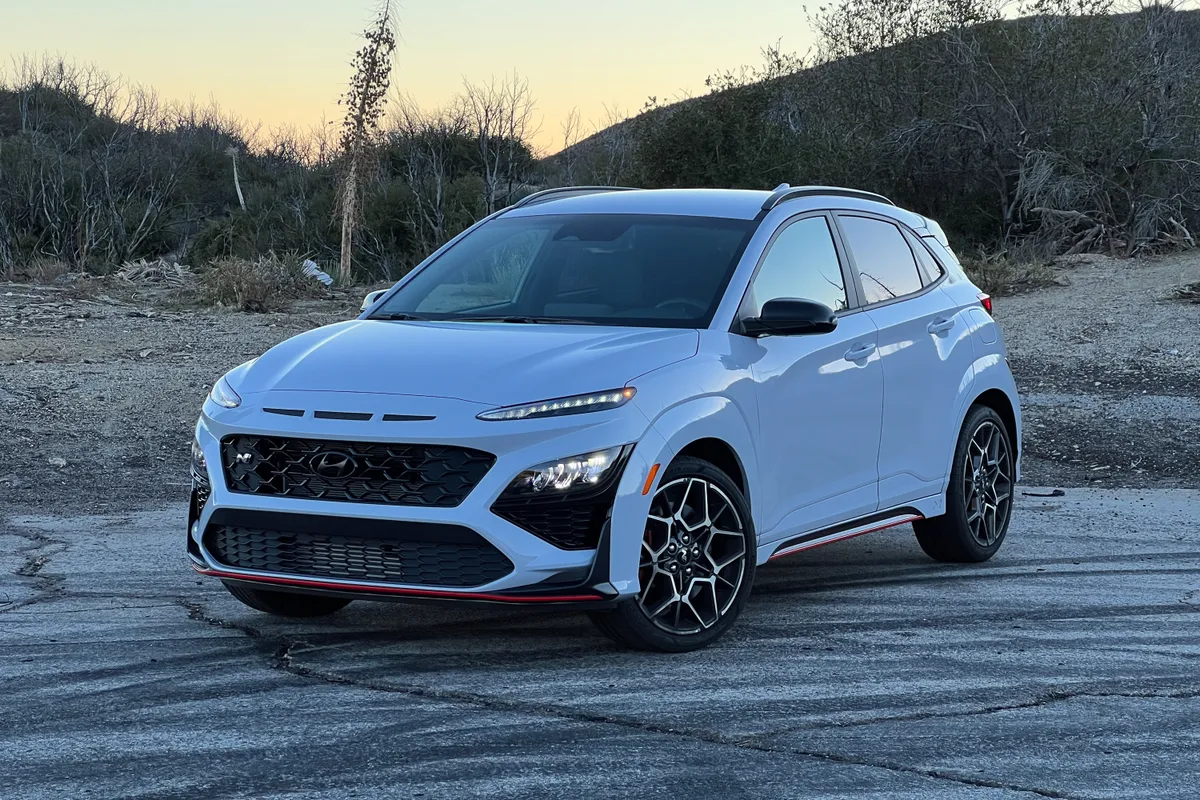
The Kona N includes multiple drive modes Eco, Normal, Sport, N, N Custom, and N Grin Shift—allowing drivers to adjust every performance parameter including throttle response, transmission behavior, steering weight, damper stiffness, stability control intervention, and exhaust sound.
The digital displays can show performance data including boost pressure, lap timers, and lateral g-forces. Despite its performance focus, the Kona N maintains the practicality of the standard Kona with raised seating position, good visibility, spacious cargo area, and comfortable accommodations for passengers.
What makes the Kona N special is its unique position as one of the few genuine performance crossovers available, offering SUV practicality with hot hatch dynamics.
While competitors like the BMW X2 M35i and Volkswagen T-Roc R exist in some markets, the Kona N’s combination of power, technology, and value makes it compelling.
For enthusiasts who need the utility of a crossover but refuse to sacrifice driving excitement, the Kona N delivers an engaging experience that defies its segment’s typically mundane offerings.
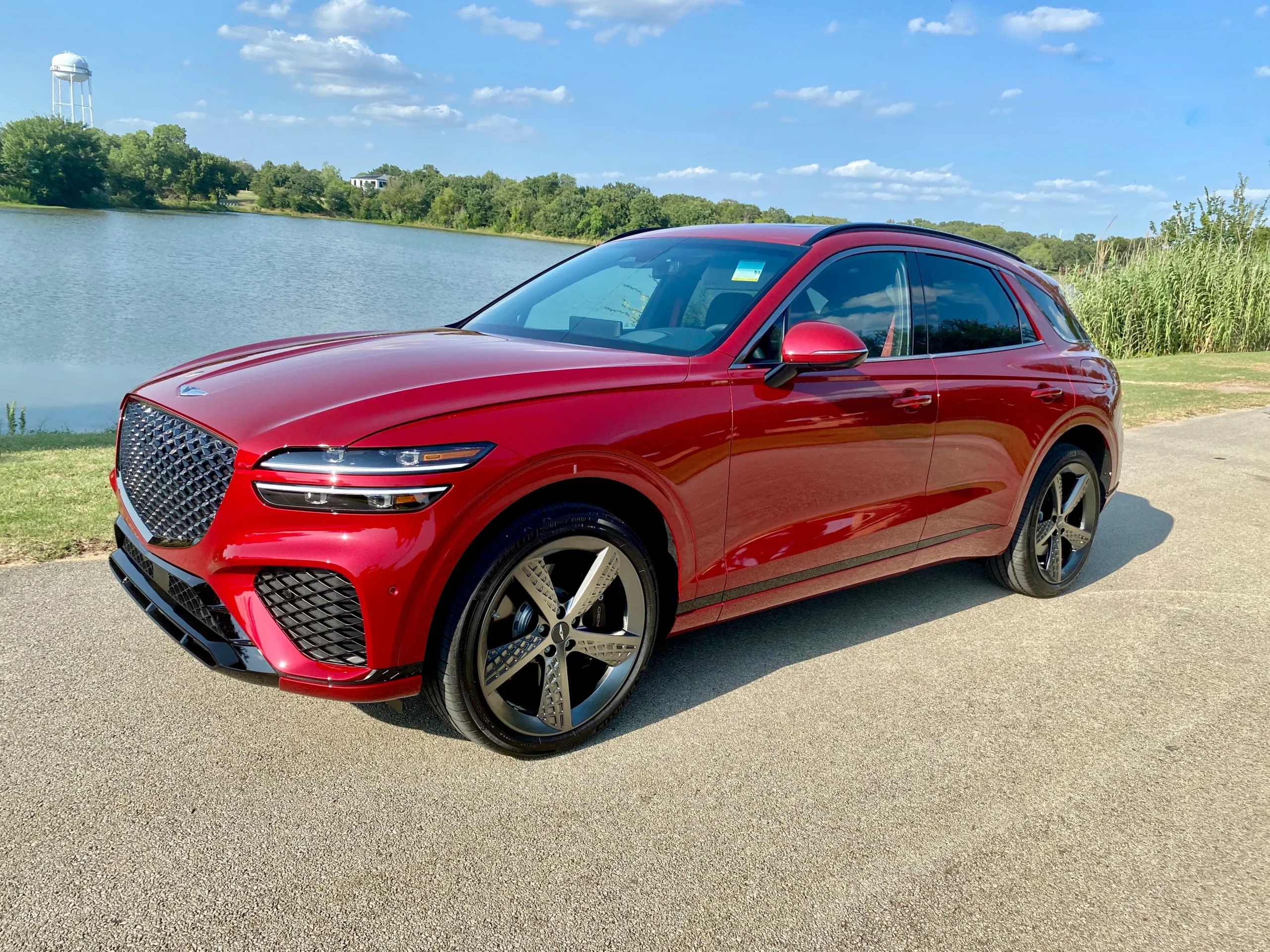
8. Genesis GV70 3.5T Sport
The Genesis GV70 3.5T Sport takes the brand’s compact luxury crossover and injects serious performance capability, creating a vehicle that competes directly with the BMW X3 M40i and Mercedes-AMG GLC 43.
The twin-turbocharged 3.5-liter V6 engine produces 375 horsepower and 391 lb-ft of torque, routing power through an eight-speed automatic transmission to a standard all-wheel-drive system. This powertrain enables the GV70 3.5T to accelerate from 0-60 mph in 4.9 seconds, making it one of the quickest compact luxury crossovers available.
Genesis equipped the 3.5T Sport with substantial performance hardware including electronically controlled dampers, sport-tuned all-wheel-drive with rear-biased torque distribution, larger brakes, 21-inch wheels, and summer performance tires.
The adaptive suspension automatically adjusts damping rates based on driving conditions and selected drive mode, while the electronic limited-slip differential enhances cornering capability.
Despite weighing over 4,400 pounds, the GV70 3.5T Sport handles with surprising agility, exhibiting minimal body roll and responsive steering that makes it feel smaller than its dimensions suggest.
Inside, the GV70 showcases Genesis’s luxury credentials with premium Nappa leather, genuine wood trim, a 14.5-inch infotainment touchscreen, 12.3-inch digital instrument cluster, and a spectacular 16-speaker Lexicon audio system.
The front seats offer heating, ventilation, and massage functions, while the rear seats provide ample space for adults. Advanced technology includes a 3D digital gauge cluster, augmented reality navigation, highway driving assist, and remote parking assistance. The interior quality rivals and often exceeds German competitors despite the Genesis carrying a significantly lower price tag.
The GV70 3.5T Sport’s cargo capacity of 28.9 cubic feet behind the rear seats, expanding to 56.9 cubic feet with seats folded, provides genuine utility for families. The combination of luxury, performance, technology, and practicality makes the GV70 3.5T an incredibly well-rounded vehicle.
When considering Genesis’s five-year/60,000-mile complimentary scheduled maintenance, three-year complimentary Genesis Connected Services, and industry-leading warranty, the value proposition becomes nearly irresistible for shoppers comparing it to significantly more expensive German alternatives.
9. Hyundai Veloster N
The Hyundai Veloster N represents one of the most entertaining front-wheel-drive performance cars available, transforming the quirky three-door hatchback into a track-focused machine.
The turbocharged 2.0-liter four-cylinder engine produces 275 horsepower and 260 lb-ft of torque, enabling 0-60 mph acceleration in 5.1 seconds with the six-speed manual transmission or 4.9 seconds with the optional eight-speed dual-clutch automatic.
Top speed reaches 155 mph electronically limited, impressive for a car starting under $35,000 when it launched. What raises the Veloster N beyond simple power upgrades is Hyundai’s comprehensive approach to performance.
The electronically controlled limited-slip differential dramatically improves traction and cornering ability, allowing the Veloster N to put power down effectively despite front-wheel drive.
The adaptive dampers offer multiple firmness settings, the massive brakes provide exceptional stopping power with minimal fade, and the Pirelli P Zero summer tires measuring 235mm wide deliver impressive grip.
The N-specific suspension geometry, revised steering calibration, and additional chassis bracing create a cohesive package that delivers genuine driving excitement.
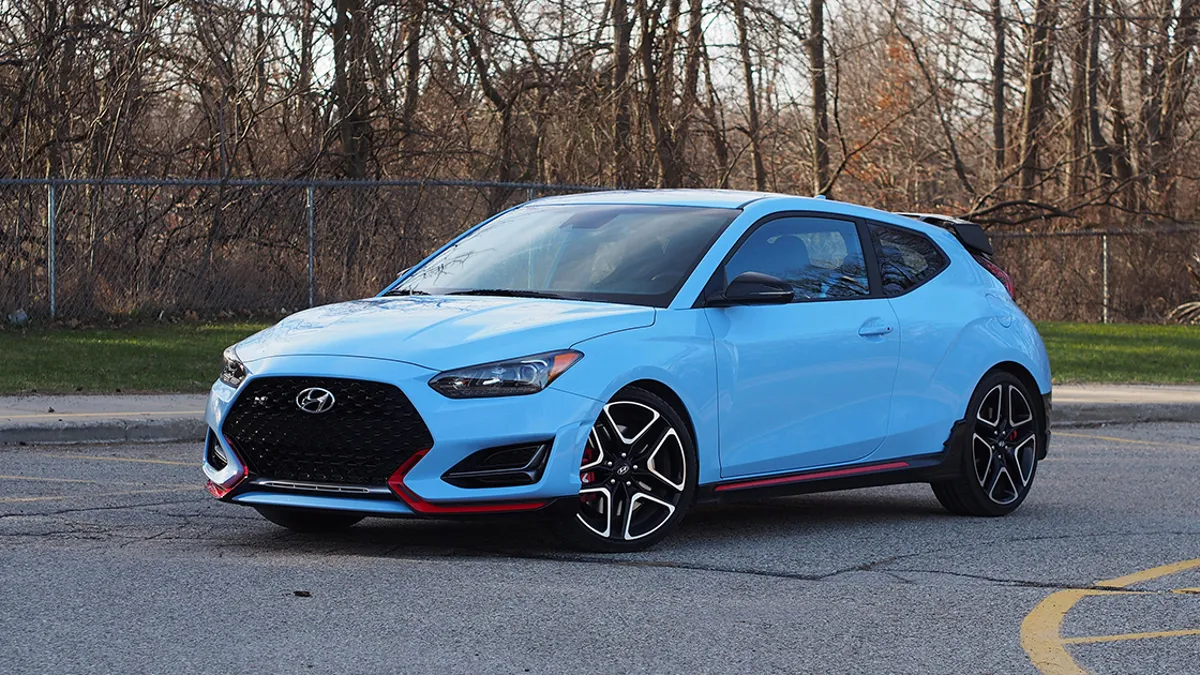
The Veloster N’s character shines through its customizable performance features and engaging driving dynamics. The variable exhaust system produces loud pops and crackles during aggressive driving, N Grin Shift provides temporary performance boosts, and launch control enables consistent acceleration runs.
Multiple drive modes allow extensive customization of every vehicle parameter. The manual transmission, with rev-matching technology, provides an engaging connection between driver and machine increasingly rare in modern performance cars.
Inside, the Veloster N features heavily bolstered sport seats, a thick-rimmed steering wheel, and performance-oriented displays showing boost pressure and other vital data.
Though Hyundai discontinued the Veloster after 2022, remaining new inventory and recent used examples represent exceptional value for enthusiasts.
The Veloster N delivered performance rivaling the Honda Civic Type R and Volkswagen Golf GTI at lower price points with more standard equipment.
Its unique three-door configuration, aggressive styling, and genuine performance capability created a cult following among enthusiasts who appreciate cars that prioritize driving enjoyment above all else.
10. Kia Forte GT
The Kia Forte GT might be the most affordable option on this list, but it still delivers surprising performance and value for budget-conscious enthusiasts.
The turbocharged 1.6-liter four-cylinder engine produces 201 horsepower and 195 lb-ft of torque, routing power to the front wheels through either a six-speed manual transmission or seven-speed dual-clutch automatic.
While 0-60 mph acceleration in 6.8 seconds won’t threaten supercars, it’s respectable for the compact sedan segment and significantly quicker than the standard Forte’s 147-horsepower naturally aspirated engine.
The Forte GT receives sport-oriented enhancements including a sport-tuned suspension with stiffer springs and dampers, larger front brakes, 18-inch alloy wheels with summer tires, and revised steering calibration for increased feedback.
While it lacks an electronically controlled limited-slip differential or adaptive dampers found in more expensive N models, the Forte GT still delivers engaging handling with minimal body roll, responsive steering, and confident cornering ability. The sport-tuned exhaust produces a more aggressive note under acceleration compared to standard Forte models.
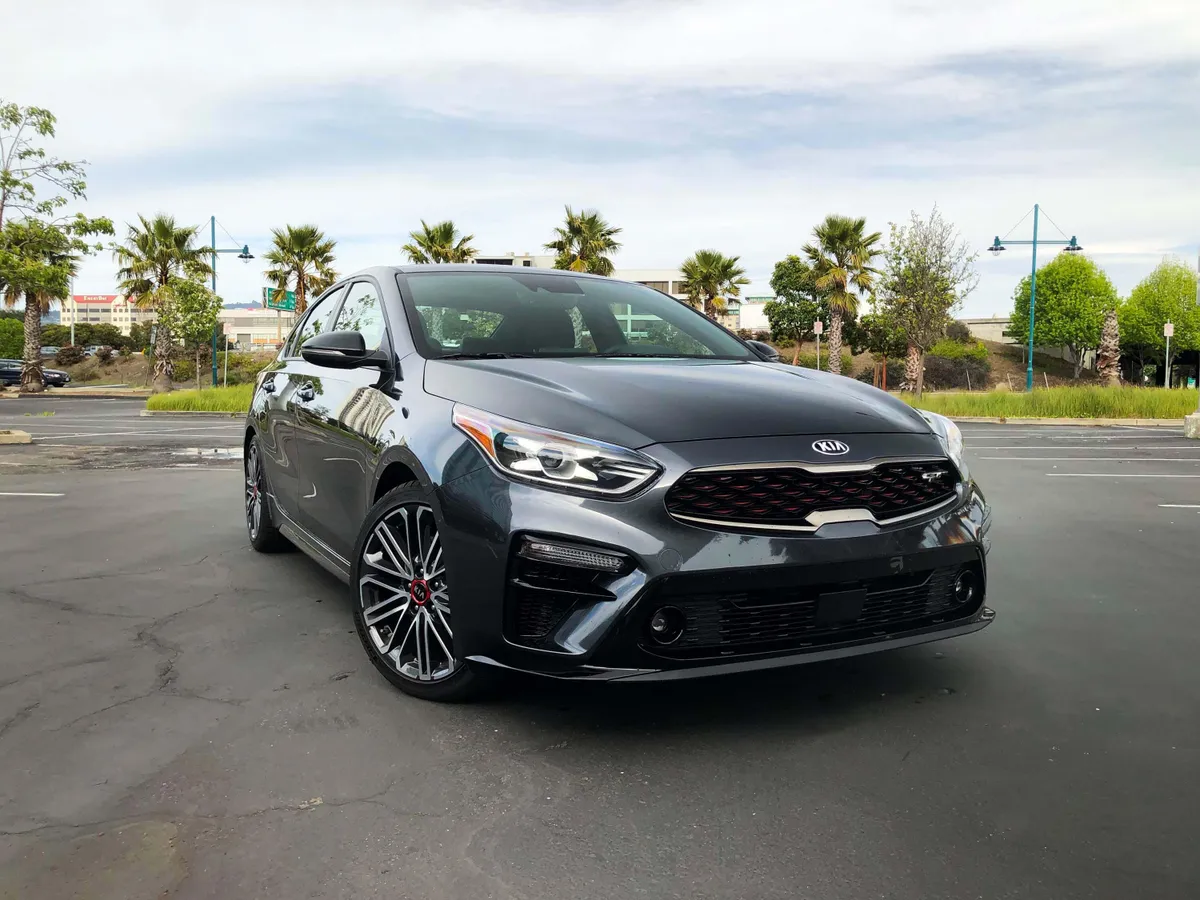
Inside, the Forte GT features sport seats with red contrast stitching, a leather-wrapped steering wheel, metal pedals, and red accent trim. The 10.25-inch touchscreen infotainment system includes wireless Apple CarPlay and Android Auto, navigation, and a premium eight-speaker Harman Kardon audio system.
The digital instrument cluster displays performance information including a boost gauge, while the suite of advanced safety features includes forward collision warning, automatic emergency braking, lane keeping assist, and adaptive cruise control.
The Forte GT maintains the standard Forte’s practical virtues including spacious rear seats, a generous trunk, and excellent fuel economy when driven sensibly.
The Forte GT’s primary appeal lies in its accessibility it provides a taste of performance driving without the financial commitment required for more expensive sports cars.
For young enthusiasts purchasing their first performance car, budget-conscious buyers wanting some excitement in their daily driver, or anyone seeking value above all else, the Forte GT delivers surprising entertainment.
While it can’t match the capabilities of dedicated performance cars, it offers more than enough performance to put a smile on your face during your daily commute without breaking the bank.
Also Read: 5 Cars for Boulder Mountain Roads and 5 That Struggle in Snow
