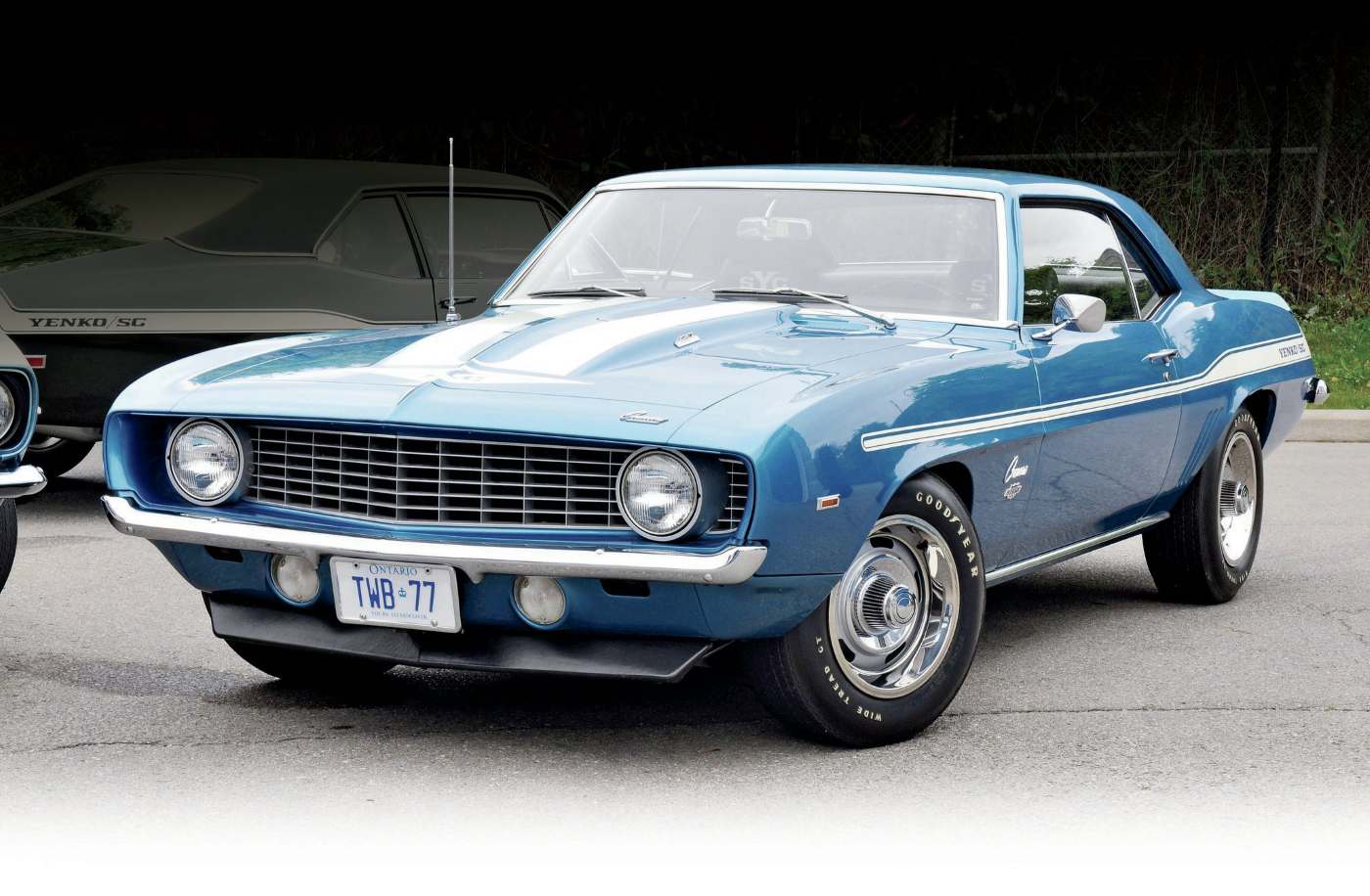
Few American muscle cars evoke the raw emotion, iconic style, and performance pedigree like the Chevrolet Camaro. Since its debut in 1966 as a direct competitor to the Ford Mustang, the Camaro has evolved from a classic pony car into a modern performance machine capable of astounding speed and handling.
Across its six generations, Chevrolet has pushed the limits of engine technology, aerodynamics, and chassis engineering, producing some of the fastest Camaros ever built.
For American car enthusiasts, these cars represent a blend of heritage, horsepower, and unadulterated fun on both the street and track. Here’s a look at the ten fastest Chevrolet Camaros ever made, showcasing the pinnacle of Camaro performance.
1. 2018 Camaro ZL1 1LE
The 2018 Camaro ZL1 1LE is widely regarded as the ultimate track-ready Camaro. Powered by a supercharged 6.2-liter LT4 V8 producing 650 horsepower, it accelerates from 0-60 mph in just 3.5 seconds and has a top speed around 198 mph.
Beyond raw speed, the 1LE package adds aerodynamic enhancements, carbon-ceramic brakes, and magnetic ride control, ensuring it corners as impressively as it accelerates. American enthusiasts prize this model for delivering Corvette-level performance in a slightly more approachable, muscle-car package.
The current state of the muscle-car world is perhaps best summed up by the fact that the 650-hp Camaro ZL1 is only the third-most-powerful two-door on the market. Dodge’s outrageous 707-hp Challenger SRT Hellcat and the downright insane 840-hp Challenger SRT Demon surpass the Chevy in raw output.
Yet the Camaro’s supercharged 6.2-liter V-8, borrowed from the higher-end Chevrolet Corvette Z06, is a remarkably well-behaved and manageable powerhouse, delivering torque across the entire rev range and leaving black streaks in its wake. And, as you’d expect, when it’s really unleashed, the ZL1 produces a thunderous roar that commands attention.
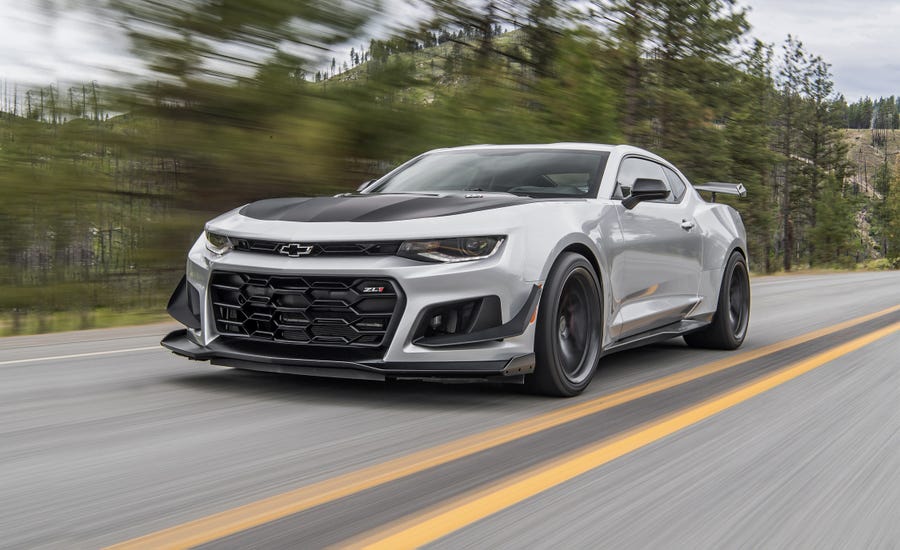
While the 650-hp ZL1 engine may chase the 707-hp Hellcat V-8 in Dodge’s Challenger, the Camaro’s chassis and handling hardware squarely target Ford’s sharp-handling Mustang Shelby GT350. The result is a ZL1 that feels exceptionally well-rounded, combining track-capable handling with an almost limitless reserve of power at the driver’s command.
Already a confident performer with quick, communicative steering, a balanced rear-drive layout, and a surprisingly compliant ride, the Camaro reaches new heights in the ZL1 trim. Wider tires, a specially tuned suspension, and an electronically controlled limited-slip differential rein in the potent V-8 while maintaining the Camaro’s excellent human-to-machine connection.
The ZL1 exists to push the Camaro lineup into a higher performance bracket, and it does so convincingly. It is faster, stickier, and undeniably more aggressive than standard Camaros, as well as most other performance coupes at or near its price point.
Also Read: Top 10 Toyota’s Best Budget-Friendly Models Heading Into 2025
2. 2017 Camaro ZL1
The base 2017 Camaro ZL1, without the 1LE enhancements, still dominates as one of the fastest Camaros. With the same 6.2-liter supercharged LT4 V8 producing 650 horsepower, this car hits 0-60 mph in about 3.5 seconds and maintains a top speed near 198 mph.
Its combination of straight-line acceleration, handling balance, and iconic Camaro styling make it a favorite among U.S. muscle car drivers who crave modern performance without compromise.
Unlike some of its obvious competitors (Chevy, we’re looking at you, Hellcat), the ZL1 isn’t extreme just for the sake of being extreme. The Camaro team equipped the sixth-generation Camaro with every performance upgrade for a reason, actually, three reasons.
Chevy has dubbed these three goals the #ZL1triplethreat, a modern way of marketing a tall order. Fortunately for Oppenheiser, he had the right platform, the right engineers, and the right parts to make it happen.
For example, although the ZL1 gains 70 horsepower over the previous generation, it sheds 169 pounds, largely thanks to the Alpha platform, which also underpins Cadillac’s ATS and CTS models.
The ZL1’s front fenders are flared compared with other Camaros to accommodate 285-width Goodyear Eagle F1 Supercar 3 tires, the same as those on the SS 1LE. On the 1LE, those tires simply protrude.
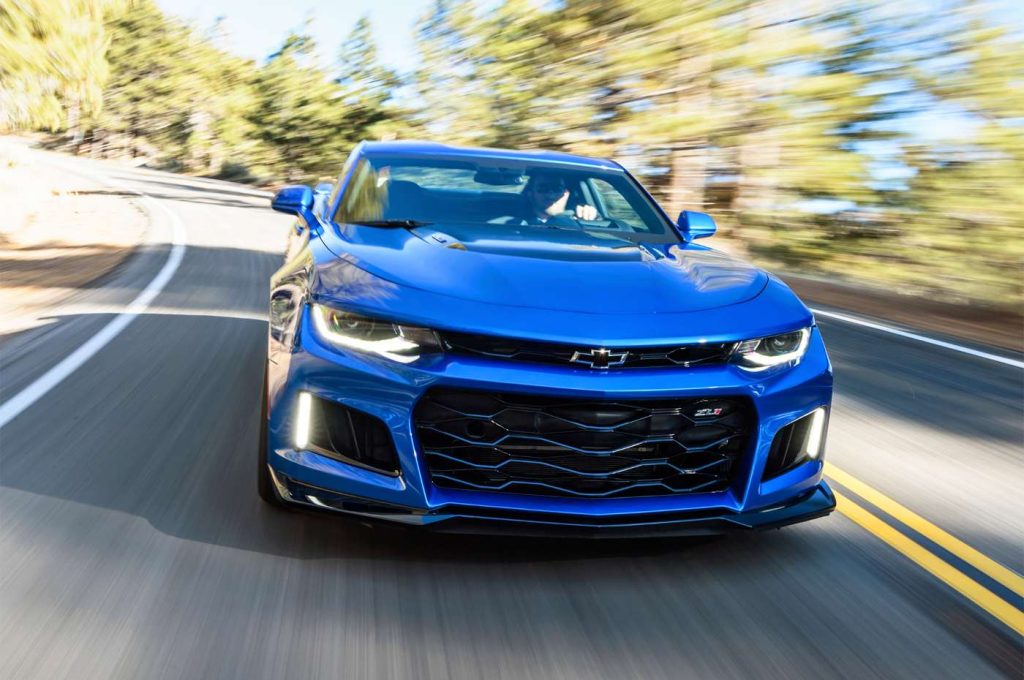
Of course, there’s the engine to consider, the miniature atomic device known as the LT4. Its most recognizable form is the 650-hp, 650 lb-ft dry-sump version in the Corvette Z06.
A slightly detuned 640-hp, 630 lb-ft wet-sump version powers the Cadillac CTS-V. All three iterations are 6.2-liter, direct-injection V-8s with a top-mounted 1.7-liter intercooled supercharger.
Here’s the part Chevrolet would rather I not say: the LT4 in the Z06 has cooling issues. The Corvette’s mighty engine can heat soak or overheat, despite its 11 heat exchangers. The Camaro ZL1, however, does not suffer this fate. Even after six sets of rear tires in four days, the thunderous V-8 never even simmered.
Two of the 11 heat exchangers are the intercoolers flanking the supercharger, which have been redesigned and repositioned for ZL1 duty. Notably, the ZL1’s LT4 produces exactly the same power and torque as the Z06. In the past, the Corvette was officially required to hold the crown in power output, but now the Camaro can be just as formidable.
The ZL1 also debuts GM’s 10-speed automatic transmission. Co-developed to some extent with Ford, the Camaro’s version features unique gearing, valving, and control software. Gears one through six are closely spaced for performance, seventh is direct, and gears eight through ten are optimized for highway cruising.
Choosing the six-speed manual triggers a $1,300 Gas Guzzler tax. The EPA hasn’t finalized numbers for the automatic, but the additional overdrive gears could reduce the tax to $1,000, or even zero, potentially dropping the cost of the 10-speed option from $1,595 to $295. That said, a $1,000 tax still seems the likeliest scenario.
3. 1969 Camaro ZL1
The original 1969 Camaro ZL1 represents one of the most legendary examples of American muscle engineering. Built primarily for Trans-Am racing, it featured an all-aluminum 427-cubic-inch V8 producing 430 horsepower, though many estimates suggest its actual output was closer to 500 horsepower.
With a top speed exceeding 140 mph, a remarkable figure for its time, the ’69 ZL1 remains a collector’s dream and a symbol of Chevrolet’s racing pedigree.
The story behind the creation of the 1969 Chevrolet Camaro ZL1 is a fascinating one. The first-generation Camaro, which debuted in 1967 and ran through 1969, was designed to accomplish what the Corvair had not: surpass the Ford Mustang in sales.
Featuring a traditional rear-wheel-drive layout and front-engine configuration, along with distinctive body styling, this pony car was ready to challenge the competition.
The first-generation Camaro offered a wide variety of engines, from a 230-cubic-inch straight-six rated at 140 horsepower to a 396-cubic-inch V8 producing 375 hp, giving customers plenty of options.
Yet even that wasn’t enough for Chevrolet, and the 1969 Camaro ZL1 was introduced to take the lineup to the next level.
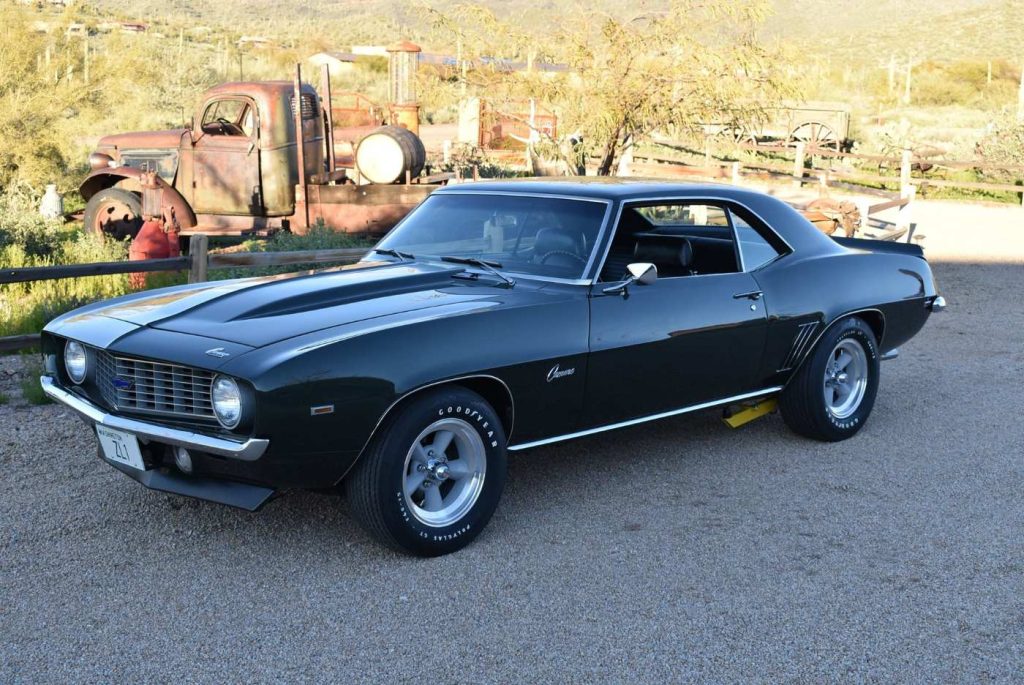
During development of the first-generation Camaro, GM prohibited Chevrolet from installing engines larger than 400 cubic inches in mid-size and compact vehicles. That didn’t stop Chevrolet.
After noticing that dealers were already fitting 427-cubic-inch engines into Camaros, the brand formalized the process through a special ordering system. In 1969, two Central Office Production Orders (COPO), numbered 9560 and 9561, allowed buyers to order Camaros with big-block engines straight from the factory.
The COPO 9561 housed an L72 big-block engine producing 425 horsepower at 5,600 rpm and 460 lb-ft of torque at 4,000 rpm. The COPO 9560 featured the legendary all-aluminum 427-cubic-inch big-block engine, codenamed the ZL1, engineered specifically for drag racing.
Beyond its 356 aluminum construction, the 1969 Camaro ZL1 engine was remarkable for its ability to exceed 500 horsepower without issue. It also included a larger cam optimized for drag racing, was highly tunable, and paired perfectly with Chevrolet’s sleek muscle-car design—combining breathtaking specs with strong sales potential.
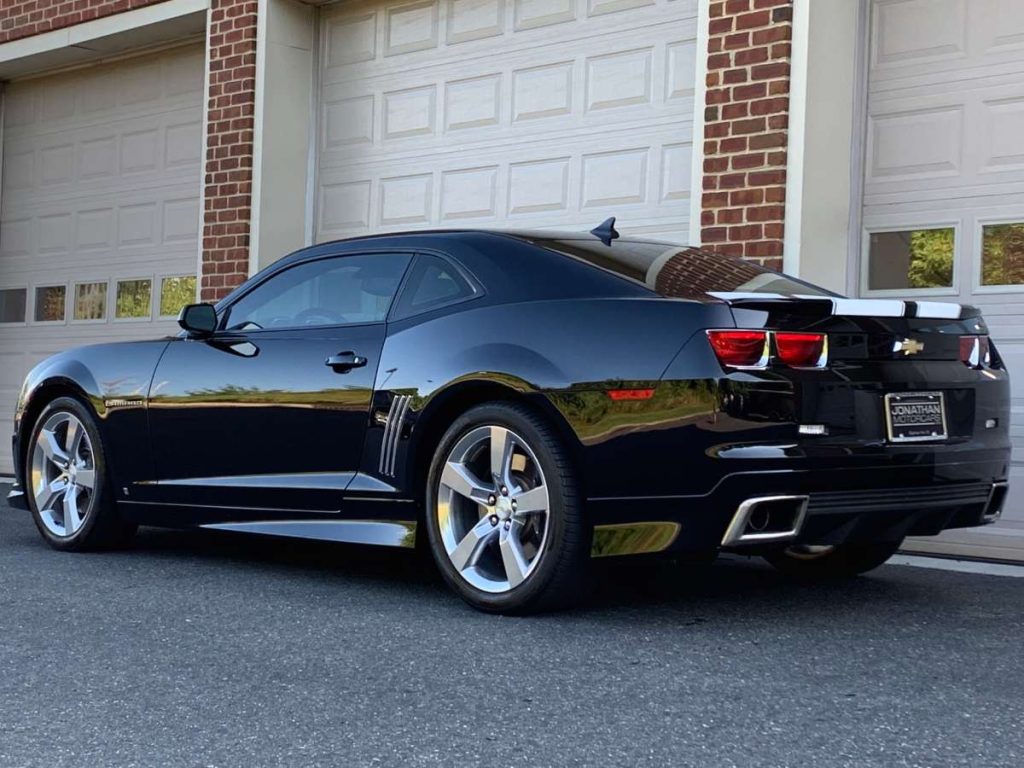
4. 2010 Camaro SS
The fifth-generation Camaro SS reintroduced modern muscle car enthusiasm to the U.S. market. Powered by a 6.2-liter LS3 V8 producing 426 horsepower, it could accelerate from 0-60 mph in roughly 4.5 seconds, with a top speed near 155 mph.
While not as extreme as later ZL1 models, the 2010 SS provided a compelling blend of classic Camaro style and modern performance, marking a pivotal moment in the Camaro’s resurgence.
5. 2012 Camaro ZL1
The 2012 ZL1 was the first of the modern supercharged Camaros, powered by the 6.2-liter supercharged LSA V8 producing 580 horsepower. Its 0-60 mph time of 3.9 seconds and a top speed near 184 mph made it one of the fastest American muscle cars of its era.
Its aggressive styling and performance-focused suspension made it a true competitor for the Mustang Shelby GT500 and Dodge Challenger SRT Hellcat.
Starting with a Camaro SS, the ZL1 adds stiffer suspension bushings throughout, a redesigned rear stabilizer bar, and most notably, a new version of GM’s Magnetic Ride Control. The result is impressive: although it still feels slightly heavy, the car handles far better than expected.
A new electric power steering system feels neutral and highly responsive, while Performance Traction Management offers five settings to suit track conditions or driver preference. Brembo brakes are, without question, the best we’ve ever experienced on a Camaro, it was hard to fully grasp how hard we were pushing them in just a few laps.
On the street, the ride remains surprisingly compliant, seating is comfortable, and the ZL1 behaves reasonably well. About 30% of its parts are unique, though many are hidden, including underbody aerodynamic enhancements, a new rear differential that shares transmission coolant, and additional fuel tank pickups.
Exterior updates are more obvious. A large front splitter, a redesigned grille feeding oversized brake cooling ducts, and a vented carbon-fiber hood not only evacuate heat from the engine bay but also increase front-end downforce.
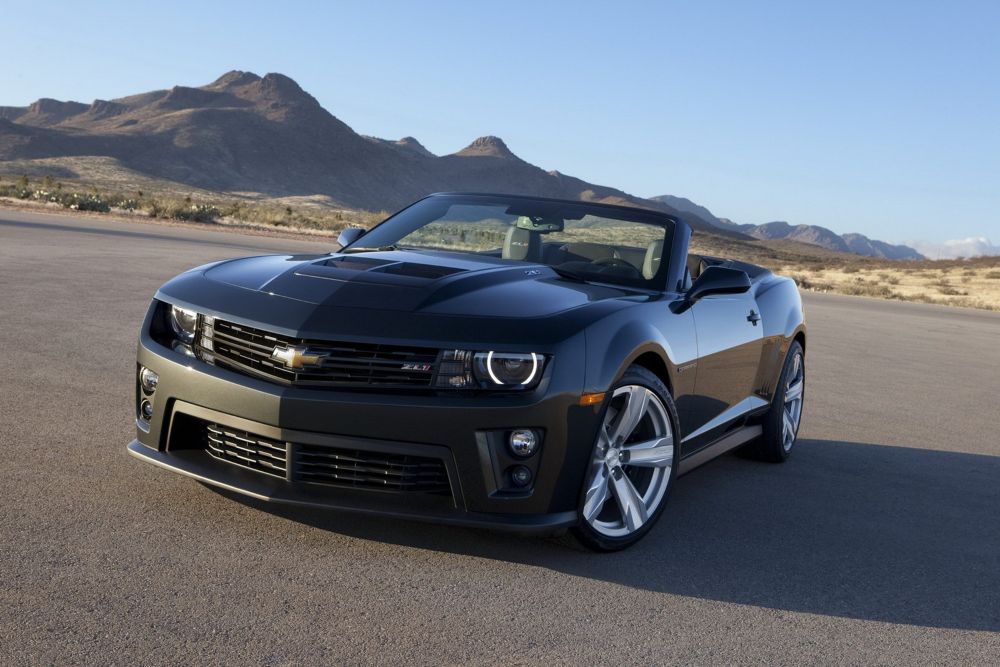
Additional touches include extended rockers and fenders, a rear spoiler, and standard 20-inch wheels wrapped in Goodyear Eagle F1 tires, 285/35 up front, 305/35 in the rear.
Inside, the ZL1 receives subtle upgrades, with suede leather replacing plastic on the dash and doors. The improved seats also feature suede, and an optional Suede Package extends the material to the steering wheel and shifter.
Standard features are generous: Bluetooth, a backup camera, and even a Head-Up Display come equipped. Buyers can choose between a six-speed manual or automatic transmission; as in the CTS-V, the automatic is slightly quicker to 60 mph by a tenth of a second, achieving 3.9 seconds. Top speed is 180 mph.
Fuel economy favors the manual, rated at 14 city and 19 highway, while the automatic manages 12 and 18. These low numbers mean the car is subject to a Gas Guzzler Tax. Still, like the Chevrolet Corvette, the Camaro ZL1 delivers world-class performance without an exotic price tag, starting at just $54,995, with few optional extras required.
The 2012 Chevrolet Camaro ZL1 is a modern muscle car in every sense. More than just a drag-strip pony car, it’s a high-performance missile capable of tackling any corner, and it has firmly cemented the Camaro near the top of the pony-car field.
6. 2016 Camaro SS 1LE
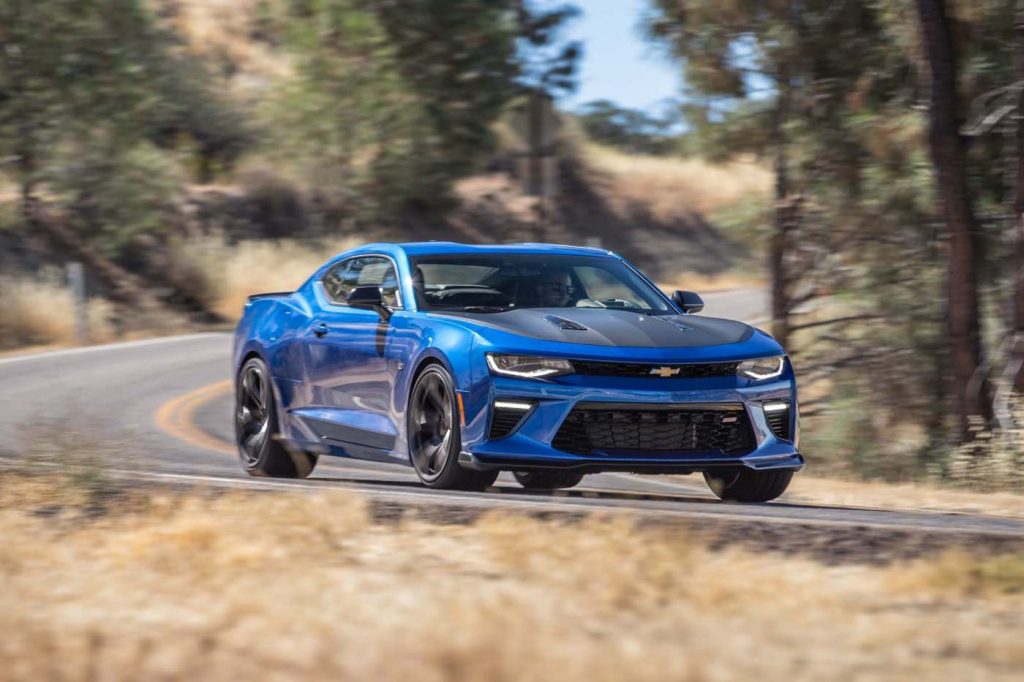
The 2016 Camaro SS 1LE combined the naturally aspirated 6.2-liter LT1 V8 (455 horsepower) with performance enhancements aimed at cornering precision and track dominance.
With magnetic ride control, enhanced suspension components, and lightweight wheels, this Camaro could tackle road courses with agility rivaling sports cars many times its price, while still achieving a respectable top speed near 165 mph. In the U.S., it’s celebrated as a performance-focused SS that rewards spirited driving.
This Camaro is a compelling performer, combining speed, precision, and driving enjoyment in a way that earlier Camaros never quite managed. The V8 is powerful and our top choice for the full muscle-car experience, though even the V6 and four-cylinder engines feel punchy.
Most models will slightly out-drag an equivalent Mustang, and the brakes are more than capable of bringing the car to a rapid stop when needed.
Handling is sharper with the smaller, lighter engines, but the V8, equipped with stickier tires, demonstrates higher performance limits. The manual transmissions feature precise, positive gates, and rev-matching ensures downshifts that feel as smooth and accurate as those of a professional racer.
Also Read: Top 300-HP Cars That Cost the Least to Maintain in 2025
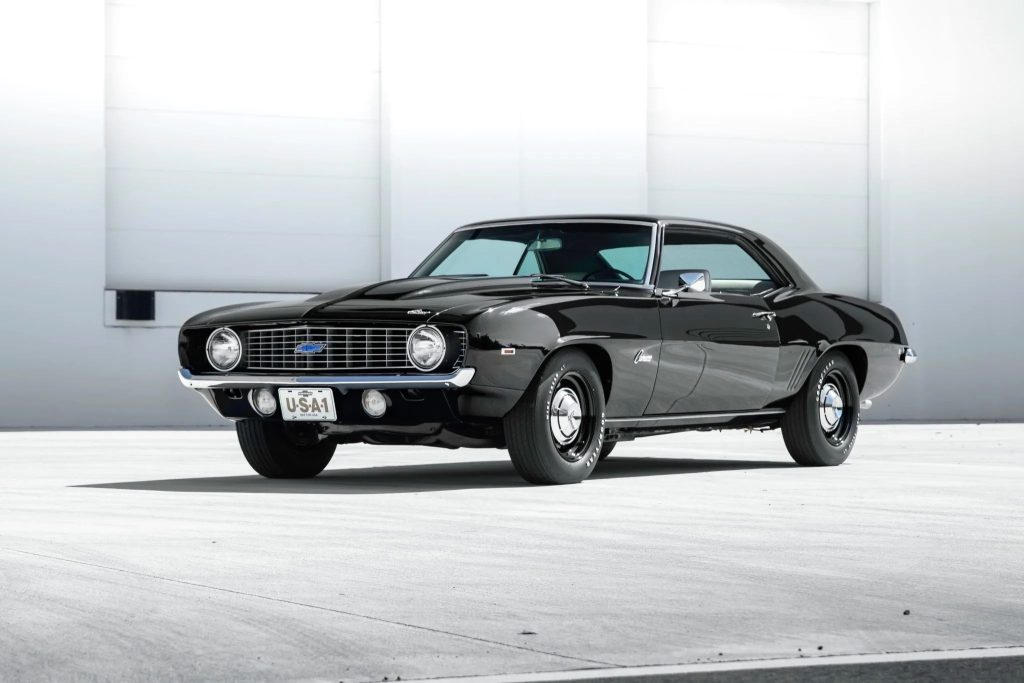
7. 1969 Camaro COPO 427
The COPO 427 Camaro is an American muscle legend. These factory-built drag race machines housed a massive 427-cubic-inch V8, producing up to 425 horsepower.
Their quarter-mile times were phenomenal for the era, regularly clocking in under 12 seconds. Today, surviving COPO Camaros are extremely rare and command high prices among collectors, representing the ultimate expression of first-generation Camaro performance.
8. 2017 Camaro SS with 6-Speed Manual
While not supercharged, the 2017 Camaro SS with a 6-speed manual and 6.2-liter LT1 V8 delivers exhilarating performance. Producing 455 horsepower and 455 lb-ft of torque, it accelerates from 0-60 mph in just over 4 seconds and provides a raw, connected driving experience.
Its naturally aspirated V8 rewards rev-happy drivers with a classic muscle car soundtrack, making it a favorite for U.S. enthusiasts who value feel over outright numbers.
The 2017 Chevrolet Camaro comes standard with an eight-speed automatic transmission and offers four distinct engine choices. The base engine in the Camaro LT is a 275-horsepower, turbocharged 2.0-liter four-cylinder with 295 pound-feet of torque.
LT buyers can also opt for a 335-horsepower 3.6-liter V6 producing 284 pound-feet of torque. Fuel economy is best with the 2.0-liter paired with the eight-speed automatic, rated at 22 mpg city and 31 mpg highway, strong numbers compared with other muscle cars.
With the six-speed manual, the same engine achieves 20 mpg city/30 mpg highway, while the 3.6-liter V6 with a manual drops to 16 mpg city/28 mpg highway.
The Camaro SS is powered by a 455-horsepower 6.2-liter V8 with 455 pound-feet of torque, paired with a standard six-speed manual or an optional eight-speed automatic. Again, fuel economy favors the automatic at 17 mpg city/27 mpg highway, while the manual drops slightly to 16 mpg city/25 mpg highway.
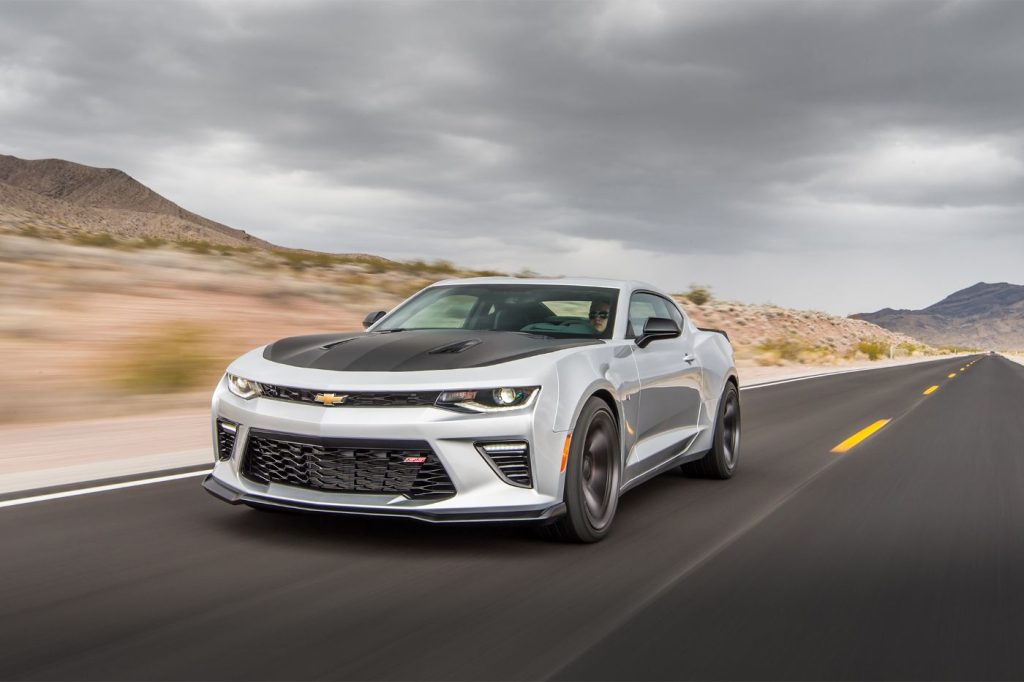
At the top of the lineup, the all-new Camaro ZL1 features a supercharged 6.2-liter V8 with a standard six-speed manual or available 10-speed automatic, producing 650 horsepower and 650 pound-feet of torque.
From a standstill, the ZL1 hits 60 mph in a blistering 3.5 seconds. Official top-speed figures aren’t published, but experts speculate it could approach 200 mph.
The Camaro’s full engine lineup earns praise from reviewers. The base turbo-four delivers excellent fuel economy and respectable acceleration, while the V6 provides a noticeable boost in off-the-line performance.
The real performance crown belongs to the Camaro’s V8 models, the naturally aspirated SS and the supercharged ZL1. The manual transmission is precise and engaging, and the eight-speed automatic performs admirably, with quick, well-timed shifts that live up to the Camaro’s muscle-car character.
9. 1998 Camaro SS
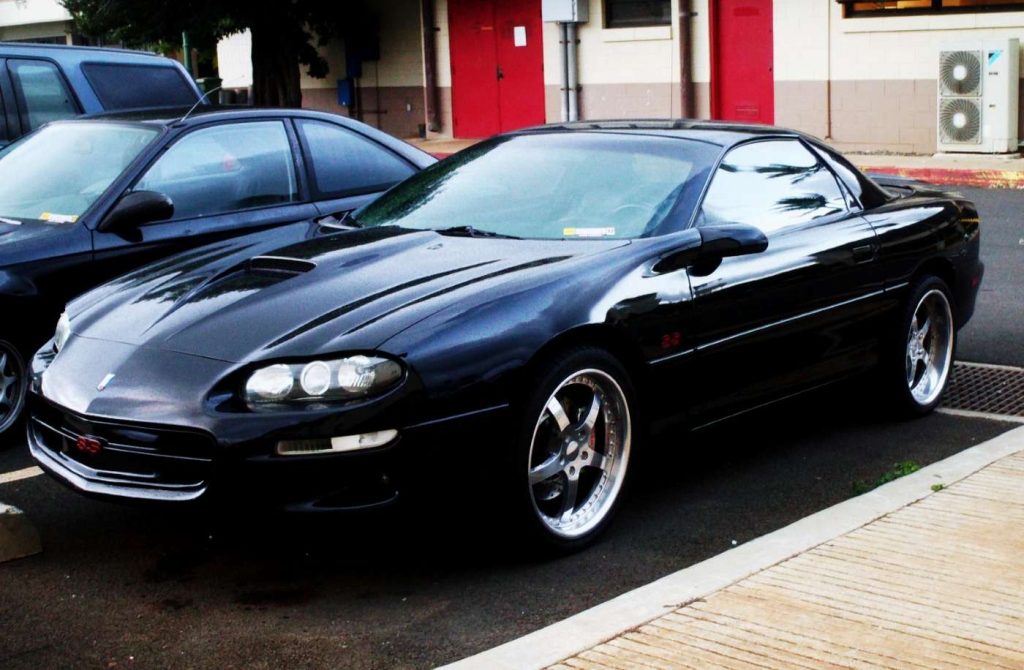
The fourth-generation Camaro SS reintroduced high-performance V8s in the late 1990s. Powered by a 5.7-liter LS1 V8 producing 305 horsepower, it could hit 0-60 mph in about 5.2 seconds and reach a top speed near 150 mph.
While less extreme than modern supercharged variants, the ’98 SS remains important as it bridged the gap between classic muscle and contemporary performance, setting the stage for later high-output Camaros.
A small technicality, perhaps, but there are no compromises when it comes to the Camaro’s performance, especially in Z28 or SS trim. These models are lightning quick, hold the road tenaciously, cost less than the average new car in the U.S. (the Z28, at least), and deliver reasonable fuel economy when not being aggressively driven on a twisty two-lane road.
For 1998, Camaro buyers get more power and speed. The Z28 is equipped with a detuned Corvette LS1 engine producing 305 horsepower and 335 pound-feet of torque.
Base Camaros weren’t ignored, either: all models now have standard four-wheel disc brakes, a Pass-Key II theft deterrent system, updated front styling, body-colored door handles, and two new color options, Sport Gold and Navy Blue.
Trim levels and styling details were revised for 1998. The RS model disappears, but all of its signature aero enhancements are available on base and Z28 models through the Sport Appearance Package.
The SS model continues to be offered intermittently during the year. Z28s feature a black roof treatment, while base models retain a body-colored roof. White leather is available in all trims, and last year’s Flame Red interior has been reduced to red accents only.
The base engine continues to be the 3800 Series II V6, producing 200 horsepower, 45 more than the Mustang V6. Introduced in 1995, the 3800 V6 can be paired with a four-speed automatic or five-speed manual, and with the manual it gets the Camaro to 60 mph nearly as quickly as a Mustang GT.
This engine makes a strong argument for avoiding the higher insurance and price of a Z28. An optional Performance Handling Package adds larger tires, alloy wheels, tighter steering, and a limited-slip differential for the V6 Camaro.
From a bang-for-the-buck perspective, the Z28 is tough to beat. The Z28 SS generates 320 horsepower (327 with the optional exhaust) thanks to a big hood scoop forcing cool air into the engine, though the cost of the SS package may outweigh the modest power gain.
The interior is functional, if a little flashy. The Camaro offers over 33 cubic feet of cargo space with the rear seats folded, and airbags and antilock brakes are standard. Traction control is optional for more mature drivers, though it can reduce the fun of smoky, tire-scorching burnouts.
Even the base V6 impresses, often outpacing comparable models like the Mustang V6. Owners also value the Camaro’s surprisingly good fuel economy; some Z28s achieve nearly 30 mpg on the highway, proving that muscle and efficiency can coexist. Handling is frequently highlighted, with sharp cornering and high-speed stability reinforcing the Camaro’s sports-car roots.
Comfort and ergonomics receive positive notes, with long-time drivers finding the seats supportive for extended trips. The model’s T-tops are celebrated for style and the open-air driving experience they provide. Finally, owners find the Camaro reliable, with minimal maintenance beyond routine service, and they commend the build quality of both interior and exterior features despite its 1990s heritage.
10. 2020 Camaro ZL1 1LE
The 2020 ZL1 1LE continues the tradition of Camaro dominance on both track and street. With a 6.2-liter supercharged LT4 V8 producing 650 horsepower, a top speed of 198 mph, and 0-60 mph times in the mid-3-second range, it refines previous models with updated aerodynamics, track-focused tires, and lighter components. For U.S. drivers, it represents the peak of Camaro performance in a modern package, combining raw power, precision handling, and aggressive styling.
Chevrolet Camaros have always been built around a philosophy of delivering big American V8 power, but the fastest examples combine more than just engine output. Aerodynamics, suspension tuning, braking capability, and weight optimization all play crucial roles in transforming horsepower into speed.
From the stripped-down drag-oriented COPO Camaros of the late 1960s to the modern ZL1 1LE track machines, Chevrolet engineers have continuously evolved the platform to maximize both straight-line and cornering performance.
For American enthusiasts, speed isn’t just measured in top-end numbers, it’s about how the car feels in your hands, the sound of the V8 under load, and the thrill of driving a piece of muscle car history.
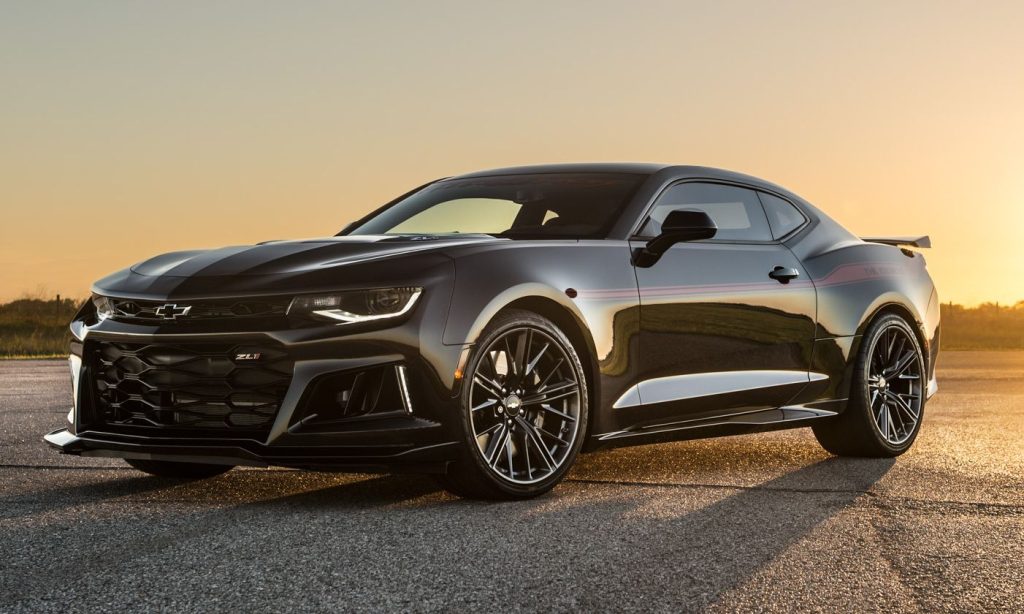
From classic first-generation legends like the 1969 ZL1 and COPO 427 to modern track monsters like the ZL1 1LE, Chevrolet Camaros have consistently pushed the envelope of American muscle car performance.
Each generation showcases advancements in engine technology, aerodynamics, and handling, proving that the Camaro isn’t just about looks, it’s about delivering one of the most thrilling rides on four wheels.
For U.S. enthusiasts, these ten Camaros represent the pinnacle of what Chevrolet has built over more than five decades: speed, style, and the unmistakable roar of a V8 that can dominate the street and track alike.