
Choosing the right vehicle for your household in Blue Springs means finding the right mix of comfort, safety, space, and efficiency while keeping ownership costs manageable. This guide, “5 Cars for Blue Springs Family Driving and 5 Fuel-Efficient Choices,” is built to support that decision.
From daily school routines and weekend errands to longer road trips, local drivers need vehicles that adapt easily to changing demands. Today’s market makes that possible, offering well-equipped family SUVs alongside compact cars and hybrids designed to reduce fuel spending.
The vehicles highlighted here focus on real-world usability, strong safety technology, and thoughtful interior design. Together, these selections reflect what matters most to Blue Springs families and commuters alike: dependable transportation that supports busy schedules, growing families, and long-term value without sacrificing comfort or confidence behind the wheel.
5 Cars for Blue Springs Family Driving
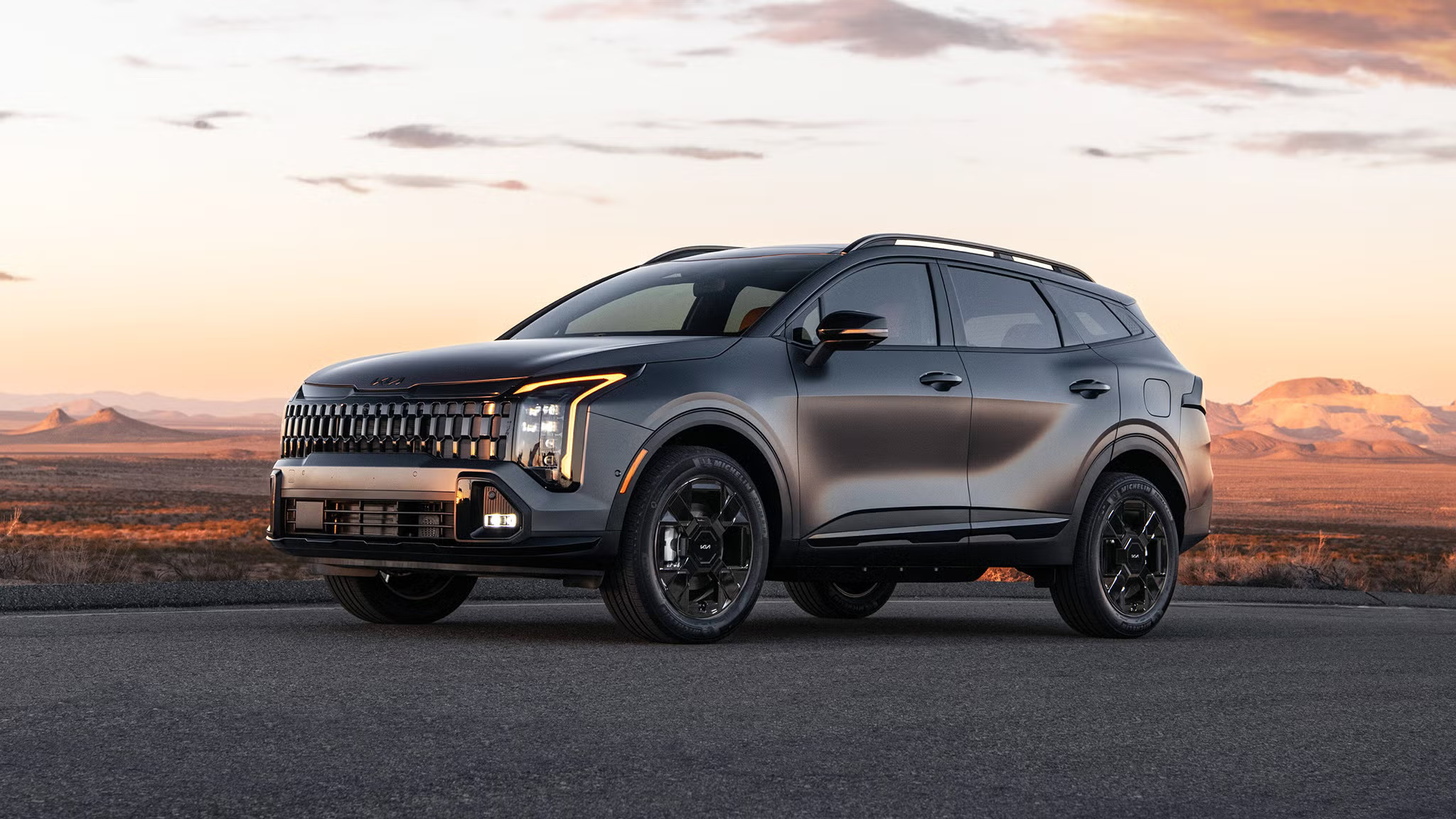
1. 2026 Kia Telluride: A Spacious, Tech-Savvy Family SUV
The 2026 Kia Telluride continues to be a standout in the three-row SUV segment, combining practicality, comfort, and style. Seating up to eight, it features a near-luxury interior with soft-touch materials, optional leather, and premium finishes, offering a high-end experience at a mainstream price.
This model brings a refreshed exterior and updated technology, including standard 12.3-inch infotainment touchscreens and advanced DriveWise safety systems like Highway Driving Assist, keeping families connected and secure.
The cabin provides generous legroom in all three rows, addressing previous concerns about third-row comfort. Cargo space behind the third row is competitive, and sound-deadening materials along with acoustic glass create a quiet, refined ride. Higher trims offer features such as dual sunroofs, second-row captain’s chairs, and a 360-degree camera system.
The Telluride is powered by a 3.8-liter V6 engine producing 291 horsepower and 262 lb-ft of torque, paired with an 8-speed automatic transmission. Acceleration is smooth and responsive, though fuel economy is moderate, with FWD models rated at 20/26 mpg city/highway and AWD at 18/23 mpg. A hybrid version is expected in 2027 to boost efficiency.
Standard technology includes wireless Apple CarPlay and Android Auto, five USB ports, and an intuitive infotainment system. Optional upgrades include a 12.3-inch driver display, wireless phone charging, and a premium 10-speaker Harman Kardon audio system.
Safety is a key strength, with IIHS Top Safety Pick+ and NHTSA five-star ratings, along with features like blind-spot monitoring, lane-keeping assist, rear cross-traffic alert, and automatic emergency braking.
The Telluride delivers strong value, combining a rich feature set with Kia’s 10-year/100,000-mile powertrain warranty. Its spacious cabin, refined ride, and dependable V6 make it a practical choice for families seeking a versatile and comfortable three-row SUV.
Despite moderate fuel economy and potential price increases, the 2026 Telluride remains a class leader in comfort, technology, and practicality, standing out among rivals such as the Honda Pilot, Hyundai Palisade, and Toyota Highlander.
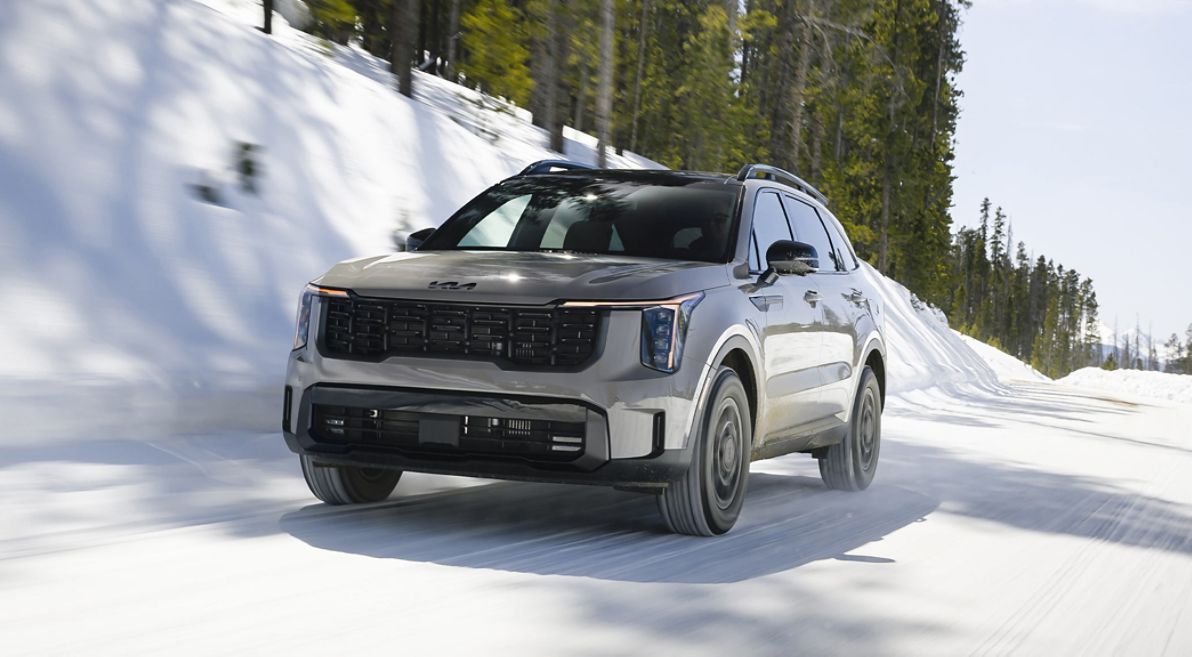
2. 2026 Honda Pilot: A Spacious, Reliable Family SUV
The 2026 Honda Pilot continues to be a practical and dependable choice for families, blending Honda’s legendary reliability with a versatile, spacious interior.
Known for its “minivan-like” utility in an SUV body, the Pilot offers seating for up to eight, abundant cargo space, and clever features like a stowable second-row center seat that can be removed and stored under the cargo floor, allowing easy conversion between seven- and eight-passenger layouts.
The cabin provides generous legroom in all three rows, with a second-row setup that includes optional captain’s chairs and a middle seat that stows neatly when not in use. Higher trims offer leather upholstery, heated seats, a panoramic sunroof, and a premium 12-speaker Bose audio system.
Cargo space is competitive, accommodating multiple carry-on-sized bags even with all three rows in use, making it one of the most practical SUVs for large families.
All 2026 Pilots are powered by a 3.5-liter V6 producing 285 horsepower, paired with a smooth 10-speed automatic transmission. Front-wheel drive is standard, with all-wheel drive available for added traction.
Acceleration is adequate, with 0–60 mph times ranging from 6.9 to 7.2 seconds depending on the trim. The TrailSport trim features mild off-road capability, including a suspension lift, skid plates, all-terrain tires, and a Trail driving mode, suitable for moderate off-road use.
The Pilot comes standard with a 12.3-inch infotainment touchscreen, wireless Apple CarPlay and Android Auto, and a 10.2-inch digital instrument cluster.
Honda Sensing® is standard on all trims, offering adaptive cruise control, lane-keeping assist, blind-spot monitoring, and automated emergency braking. The Pilot has earned top safety ratings from both NHTSA and IIHS, reinforcing its reputation as a family-friendly SUV.
The Pilot’s long-standing reliability supports low long-term maintenance costs, while strong resale value adds financial advantage. Fuel economy is competitive but not class-leading, and the V6 may feel less powerful when fully loaded. Warranty coverage is standard, with a three-year/36,000-mile limited and five-year/60,000-mile powertrain warranty, plus one year of complimentary maintenance.
With its spacious interior, thoughtful family-focused features, solid performance, and high safety ratings, the 2026 Honda Pilot remains a smart choice for buyers seeking a versatile, reliable, and practical three-row SUV.
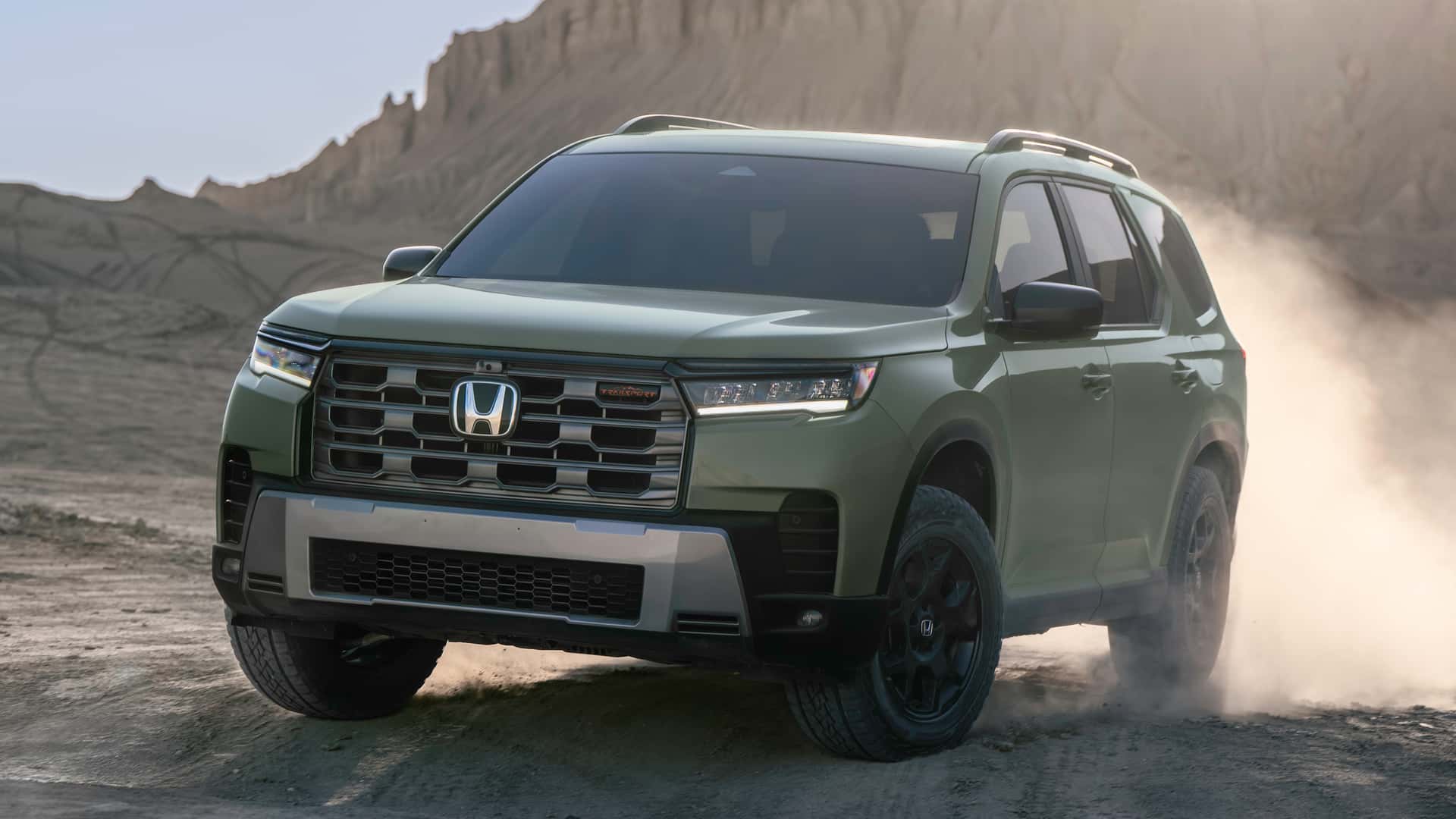
3. 2026 Hyundai Palisade: A Premium, Family-Friendly Three-Row SUV
The 2026 Hyundai Palisade is a well-rounded three-row SUV that combines comfort, technology, and versatility, making it a strong competitor in the family SUV segment alongside the Kia Telluride.
It offers a sophisticated interior, spacious seating for seven or eight passengers, and a quiet, refined ride. A newly available hybrid variant provides improved fuel efficiency and more power, giving buyers flexibility between performance and economy.
The Palisade cabin emphasizes a premium feel, with enhanced insulation, laminated glass, and upgraded materials. The first row is roomy and ergonomically designed, while the second row offers a choice of a three-passenger bench or optional captain’s chairs with footrests for maximum comfort.
The third row can accommodate adults for shorter trips and features power adjustments on higher trims. Standard family-friendly technologies include Passenger Talk for easier communication with rear passengers, Rear Seat Quiet Mode, multiple USB-C ports, wireless charging, and optional relaxation seats. Cargo space is practical, with 19.1 cubic feet behind the third row and 46.3 cubic feet when the rear seats are folded.
All Palisades come with a 287-hp 3.5-liter V6 paired with an 8-speed automatic transmission, available in FWD or AWD. Acceleration is moderate, with 0–60 mph times around 8 seconds.
The rugged XRT Pro trim adds a lifted suspension, terrain modes, and all-wheel drive for mild off-road adventures. The hybrid variant, producing 329 hp, offers better fuel efficiency while maintaining strong towing capability, with a maximum of 5,000 pounds on AWD models.
The Palisade features a dual 12.3-inch curved display, wireless Apple CarPlay/Android Auto, in-dash navigation, Hyundai Pay, and an optional 14-speaker Bose stereo. Safety is highlighted by IIHS TOP SAFETY PICK+ recognition, standard automated emergency braking, lane-keeping assist, and adaptive cruise control, with optional lane-centering and parking sensors for added convenience.
Hyundai backs the Palisade with a five-year/60,000-mile limited warranty and an industry-leading 10-year/100,000-mile powertrain warranty, offering long-term confidence.
While complimentary maintenance is no longer included, the Palisade delivers a near-luxury experience at a mainstream price, making it an excellent choice for families seeking comfort, technology, and practical versatility in a three-row SUV.
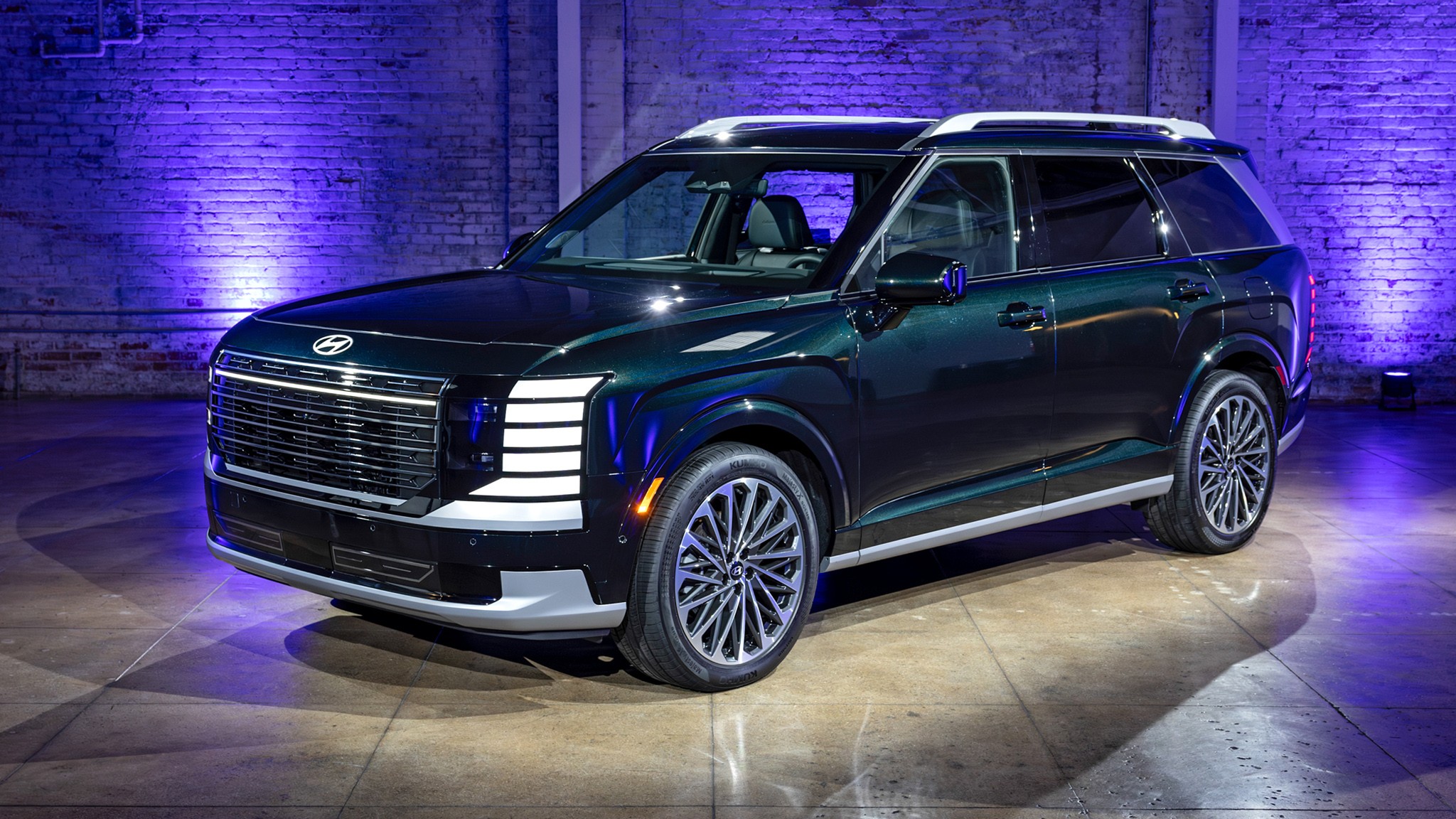
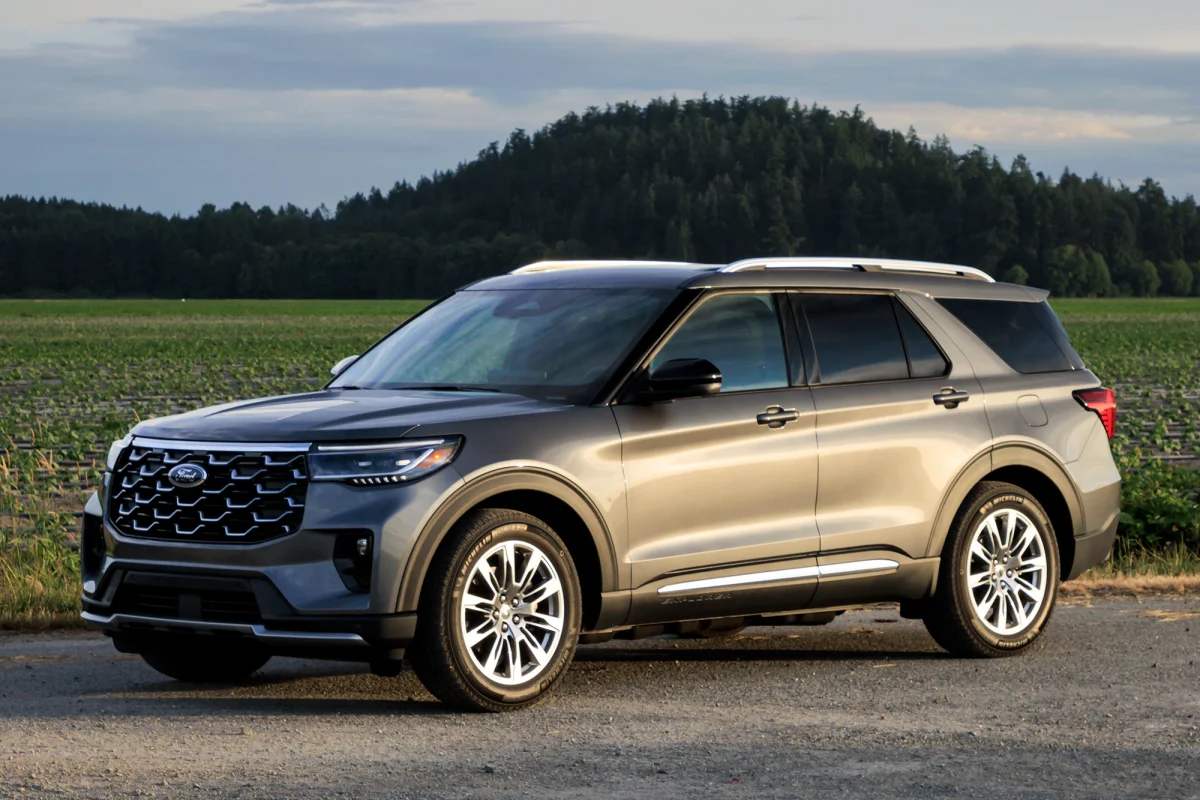
4. 2026 Ford Explorer: A Versatile and Powerful Three-Row SUV
The 2026 Ford Explorer is a versatile family SUV that blends capability, technology, and comfort. With three rows of seating for up to seven passengers, flexible cargo configurations, and a maximum capacity exceeding 85 cubic feet, it is well-suited for families needing space for both passengers and gear.
The Explorer also offers strong towing capability of up to 5,000 pounds when equipped with the standard Class III Trailer Tow Package, making it practical for trailers, boats, or recreational equipment.
The Explorer’s interior prioritizes function while incorporating modern refinements. Last year’s updates added more soft-touch surfaces and updated color schemes. Entry to the third row is assisted by a power-slide mechanism in the second row, although taller passengers may find it less comfortable than competitors like the Chevrolet Traverse or Volkswagen Atlas.
Standard features include a 13.2-inch touchscreen, 12.3-inch digital instrument cluster, eight USB ports, and wireless Apple CarPlay/Android Auto. Higher trims provide a 12-speaker Bang & Olufsen audio system, Ford BlueCruise hands-free driving, and other premium options.
The Explorer offers two main engines: a 300-hp turbocharged 2.3-liter four-cylinder and a 400-hp twin-turbo 3.0-liter V6 for ST and optional Platinum models. All trims use a 10-speed automatic transmission, with rear-wheel drive standard and all-wheel drive available.
Acceleration is solid, with 0–60 mph times ranging from 5.1 seconds for the V6 ST to 6.0 seconds for the four-cylinder model. The ride is composed and predictable, with higher trims offering more power and refined handling.
The Explorer comes standard with Ford Co-Pilot360 Assist+ driver-assist technologies, including automated emergency braking, lane-keeping assist, blind-spot monitoring, and rear-cross-traffic alert. Higher trims add self-parking assist and hands-free driving support.
Warranty coverage is standard for the class, with a three-year/36,000-mile limited warranty and a five-year/60,000-mile powertrain warranty. While complimentary maintenance is not included, the Explorer’s combination of space, performance, technology, and safety makes it a practical and versatile choice for families seeking a capable three-row SUV.
5. 2026 Subaru Outback: A Capable and Versatile AWD Family Wagon
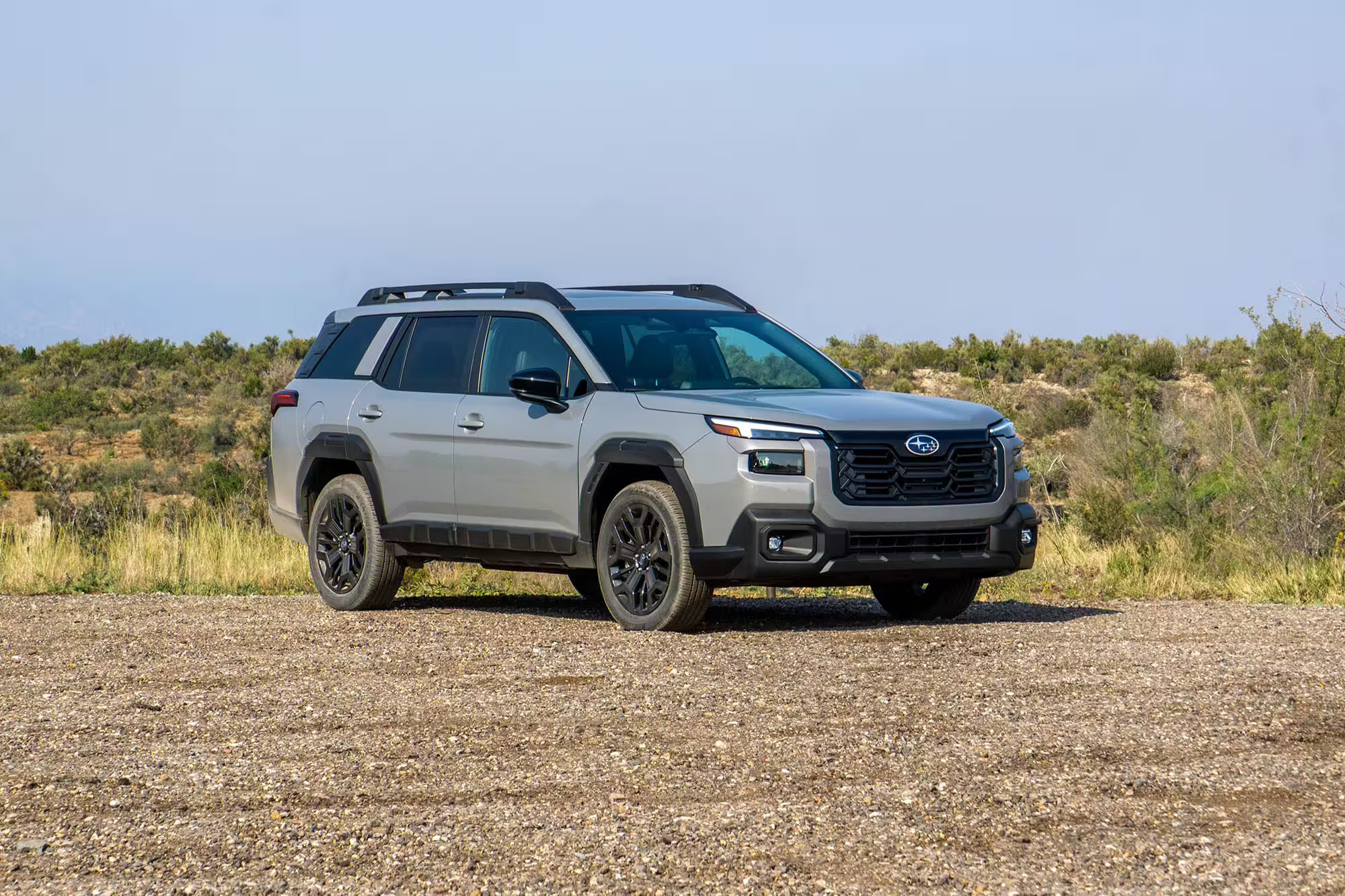
The 2026 Subaru Outback is a practical choice for families and outdoor enthusiasts seeking all-weather confidence in a car-like package. Standard Symmetrical All-Wheel Drive, 8.7 inches of ground clearance, and selectable terrain modes make it well-suited for snowy roads, muddy trails, or daily commuting in varied conditions. Its SUV-inspired styling, refined ride, and enhanced utility balance adventure capability with everyday comfort.
The Outback’s redesigned interior emphasizes space and usability. The flat roofline is raised, improving headroom, and cargo volume behind the rear seats reaches 34.6 cubic feet, with a squarer opening for easier loading. Ladder-style roof rails with an 800-lb static load rating accommodate rooftop tents or gear.
Interior organization is enhanced with a washable cargo cover, deep door pockets, tie-down points, and multiple USB ports. The dashboard integrates a dual-panel digital instrument cluster and a 12.1-inch infotainment screen, featuring standard wireless Apple CarPlay and Android Auto, cloud-based voice recognition, and physical climate controls for intuitive use.
The Outback offers two four-cylinder engines: a standard 180-hp 2.5-liter and a 260-hp turbocharged 2.4-liter for XT trims and standard on the Wilderness. Both engines are paired with a CVT, and all models include AWD and 8.7-inch ground clearance.
Estimated 0–60 mph times are 8.8 seconds for the base engine and 6.6 seconds for the turbo. The Wilderness trim adds all-terrain tires, extra ground clearance, and rugged exterior styling for off-road readiness. Towing capacity ranges from 2,700 lbs with the base engine to 3,500 lbs for the turbo models.
All Outbacks come with Subaru’s EyeSight® Driver Assist Technology, offering forward-collision warning, automated emergency braking, adaptive cruise control with lane-keeping assist, and optional blind-spot monitoring and rear-cross-traffic alert. Higher trims support hands-free highway driving up to 85 mph.
The 2026 Outback provides excellent standard features, AWD capability, and a comfortable, quiet ride at a competitive price. Warranty coverage includes a three-year/36,000-mile limited and five-year/60,000-mile powertrain warranty.
With its blend of all-weather performance, interior versatility, and family-friendly technology, the Outback serves as a practical daily driver and capable adventure vehicle for a variety of lifestyles.
Also read: 5 Cars for Binghamton Winter Driving and 5 Cold-Start Reliable Models
5 Fuel-Efficient Choices
1. Toyota Prius: The Benchmark for Fuel Efficiency
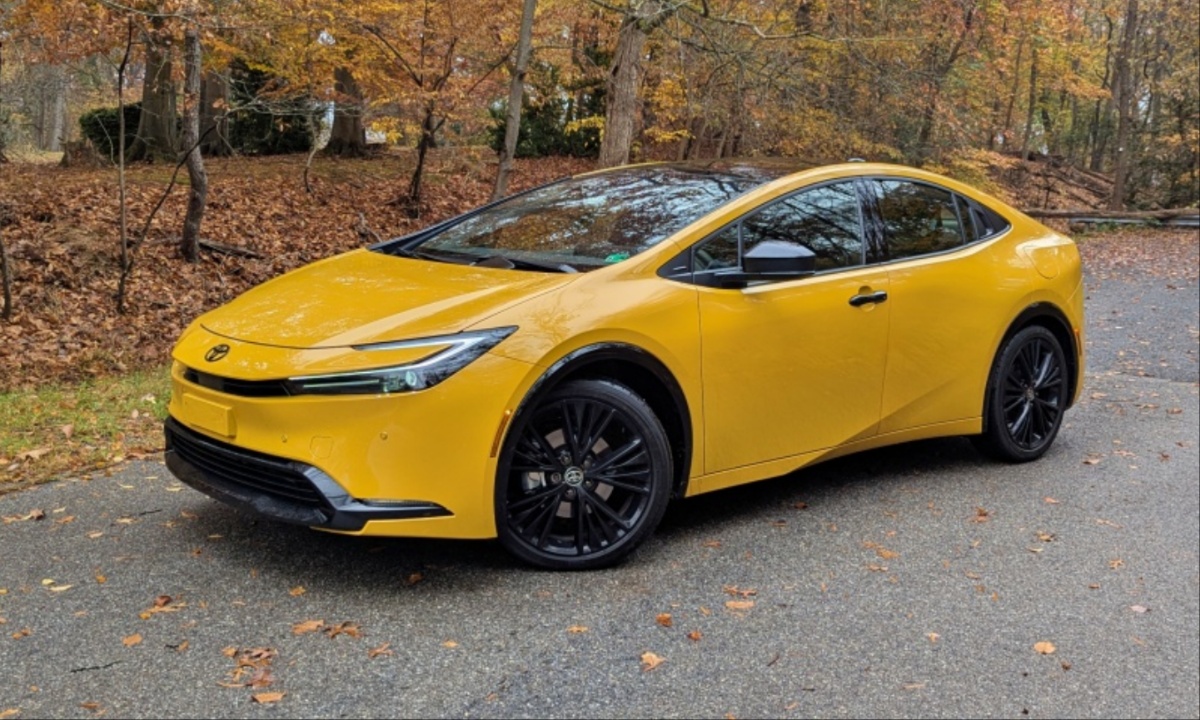
The Toyota Prius remains a top choice for buyers seeking exceptional fuel economy and low emissions in a compact hybrid. Its fifth-generation Toyota Hybrid System pairs a 2.0-liter gasoline engine with electric motors, allowing seamless transitions between gas and electric power or combined operation.
At low speeds, the Prius can operate solely on electric power, reducing fuel consumption in city driving, while regenerative braking recaptures energy to recharge the battery, further enhancing efficiency.
Front-wheel-drive LE trims achieve an estimated 57 MPG combined, with other FWD models ranging up to 52 MPG and AWD models reaching 54 MPG. A plug-in Prius Prime variant extends the all-electric range to 44 miles while still delivering 52 MPG combined when operating as a hybrid.
The standard powertrain produces 194 hp with FWD, while AWD models reach 196 hp thanks to an additional rear motor. Both use a continuously variable automatic transmission (CVT). Estimated 0–60 mph times are 7.1 seconds for FWD models and 6.6 seconds for the turbo-enhanced AWD variant, offering adequate acceleration for city and highway driving.
The Prius interior emphasizes driver-focused ergonomics and practicality. A digital gauge cluster sits directly in front of the steering wheel, while rear passengers benefit from reasonable legroom despite a low roofline. Cargo capacity ranges from 20.3 to 23.8 cubic feet depending on trim. Infotainment includes a standard 8.0-inch touchscreen, with an optional 12.3-inch display on higher trims, offering wireless Apple CarPlay, Android Auto, cloud-based voice control, Wi-Fi, and over-the-air updates.
Standard Toyota Safety Sense features include adaptive cruise control, lane-keeping assist, and blind-spot monitoring, providing a comprehensive suite of driver-assist technologies without requiring higher trim levels.
Warranty coverage includes a three-year/36,000-mile limited and five-year/60,000-mile powertrain warranty, plus a 10-year/150,000-mile hybrid-component warranty and two years/25,000 miles of complimentary maintenance.
The Prius combines cutting-edge hybrid efficiency, advanced safety, and practical interior design, making it an economical and environmentally conscious option for daily commuting and long-term ownership.
2. Hyundai Elantra: Efficient, Stylish, and Backed by Exceptional Value
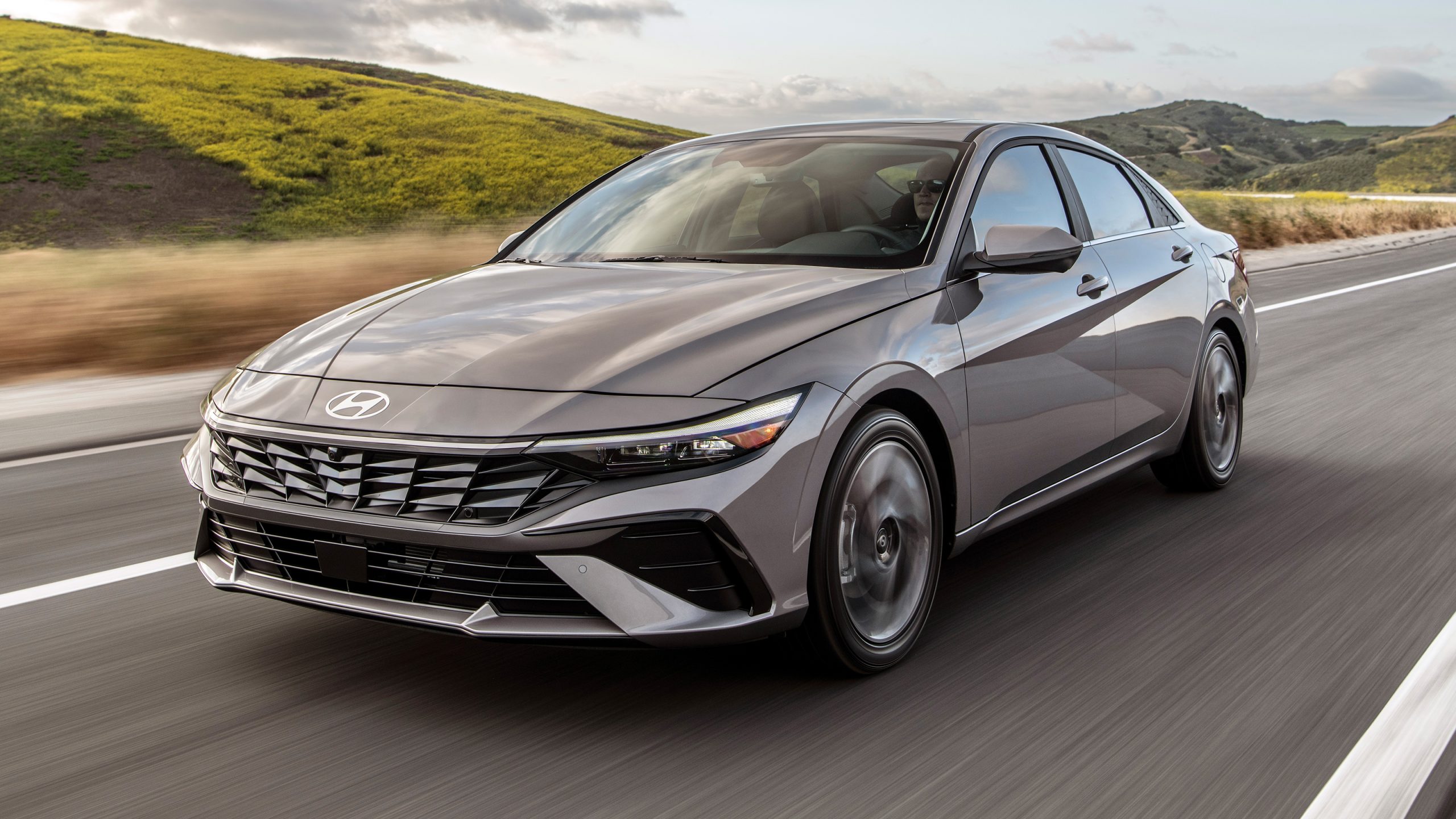
The Hyundai Elantra stands out in the compact sedan segment by combining strong fuel economy, modern styling, and a long list of ownership benefits. Designed with efficiency in mind, the Elantra appeals to commuters and families seeking low running costs without sacrificing comfort, technology, or warranty protection.
Fuel economy is a major strength of the Elantra lineup. Gas-powered models deliver up to an EPA-estimated 36 mpg combined (31 city/42 highway), while the Elantra Hybrid pushes efficiency even further with ratings as high as 54 mpg combined.
This impressive performance is achieved through a mix of aerodynamic exterior styling, lightweight construction, and Hyundai’s efficient Smartstream engines. Most gas models use an Intelligent Variable Transmission (IVT), which keeps the engine operating in its most efficient range, while Eco drive modes further optimize fuel savings in city driving.
Buyers can choose from several powertrains, including a 147-hp 2.0-liter four-cylinder, a 201-hp turbocharged engine in the N Line, and a 139-hp hybrid system that pairs a 1.6-liter engine with an electric motor.
The hybrid model is particularly noteworthy for its dual-clutch automatic transmission, which helps reduce engine droning and provides a more engaging driving feel than many CVT-equipped hybrids. While acceleration is modest in the nonhybrid and hybrid models, the Elantra delivers smooth, predictable performance well suited for daily driving.
Inside, the Elantra offers a roomy cabin with generous front and rear passenger space. The design is functional and driver-focused, with available dual 10.3-inch displays on higher trims and standard smartphone integration across the lineup.
Cargo capacity is also competitive, easily accommodating multiple carry-on suitcases. While some materials are hard to the touch, the cabin feels modern and thoughtfully laid out.
Standard safety features include automatic emergency braking, lane-keeping assist, and lane-departure warning, with more advanced driver aids available on higher trims. One of the Elantra’s biggest advantages is Hyundai’s industry-leading warranty, featuring a 10-year/100,000-mile powertrain warranty and three years of complimentary maintenance.
With strong fuel economy, available hybrid efficiency, modern tech, and exceptional warranty coverage, the Hyundai Elantra delivers excellent value for drivers focused on affordability and long-term peace of mind.
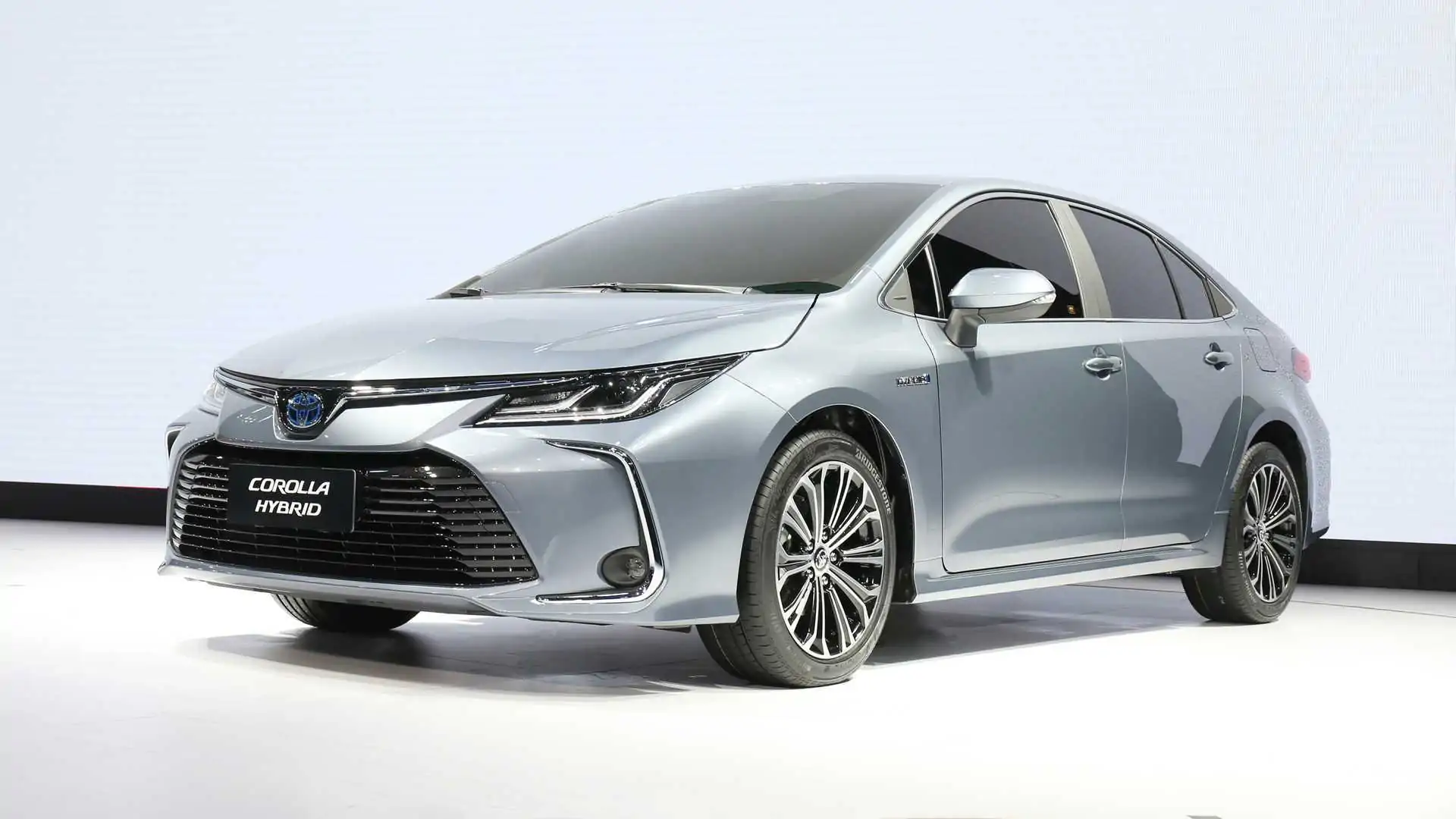
3. Toyota Corolla: Proven Efficiency and Everyday Dependability
The Toyota Corolla has long been regarded as a dependable compact sedan, and its reputation continues thanks to strong fuel economy, approachable driving manners, and low ownership costs. Designed to be practical and efficient, the Corolla appeals to drivers who value reliability and simplicity without giving up modern technology or comfort.
Efficiency is a core strength of the Corolla lineup. Gas-only models achieve EPA estimates of up to 35 mpg combined (32 city/41 highway), while the Corolla Hybrid delivers exceptional mileage of up to 50 mpg combined, with city ratings reaching as high as 53 mpg.
This performance comes from Toyota’s Dynamic Force engine technology, which boasts high thermal efficiency by converting more fuel energy into usable motion. Both gas and hybrid models use a CVT or e-CVT that keeps the engine operating in its most efficient range, helping reduce fuel consumption in daily driving.
The standard Corolla uses a 169-horsepower 2.0-liter four-cylinder engine paired with a CVT and front-wheel drive. For drivers focused on maximum savings at the pump, the available hybrid system blends gasoline and electric power, excelling in stop-and-go traffic.
While acceleration is modest, the Corolla prioritizes smoothness and consistency over sporty performance. Ride quality is comfortable and well controlled, isolating most road imperfections and making it a pleasant commuter.
Inside, the Corolla features a clean, user-friendly layout with soft-touch materials and thoughtful storage.
The sedan provides better rear-seat legroom, while the hatchback offers flexible cargo space, especially with the available enhanced cargo configuration. Standard features include an 8-inch touchscreen with Apple CarPlay and Android Auto, with larger displays and premium audio available on higher trims.
Every Corolla comes equipped with Toyota Safety Sense 3.0, which includes forward-collision warning, automatic emergency braking, lane-keeping assist, and adaptive cruise control.
These features help reinforce the Corolla’s reputation as a safe and confidence-inspiring vehicle. Toyota also includes two years of complimentary maintenance, and hybrid components are covered for up to ten years or 150,000 miles.
With its blend of fuel efficiency, long-term reliability, modern safety technology, and reasonable ownership costs, the Toyota Corolla remains a smart, economical choice for drivers seeking a trustworthy daily companion.
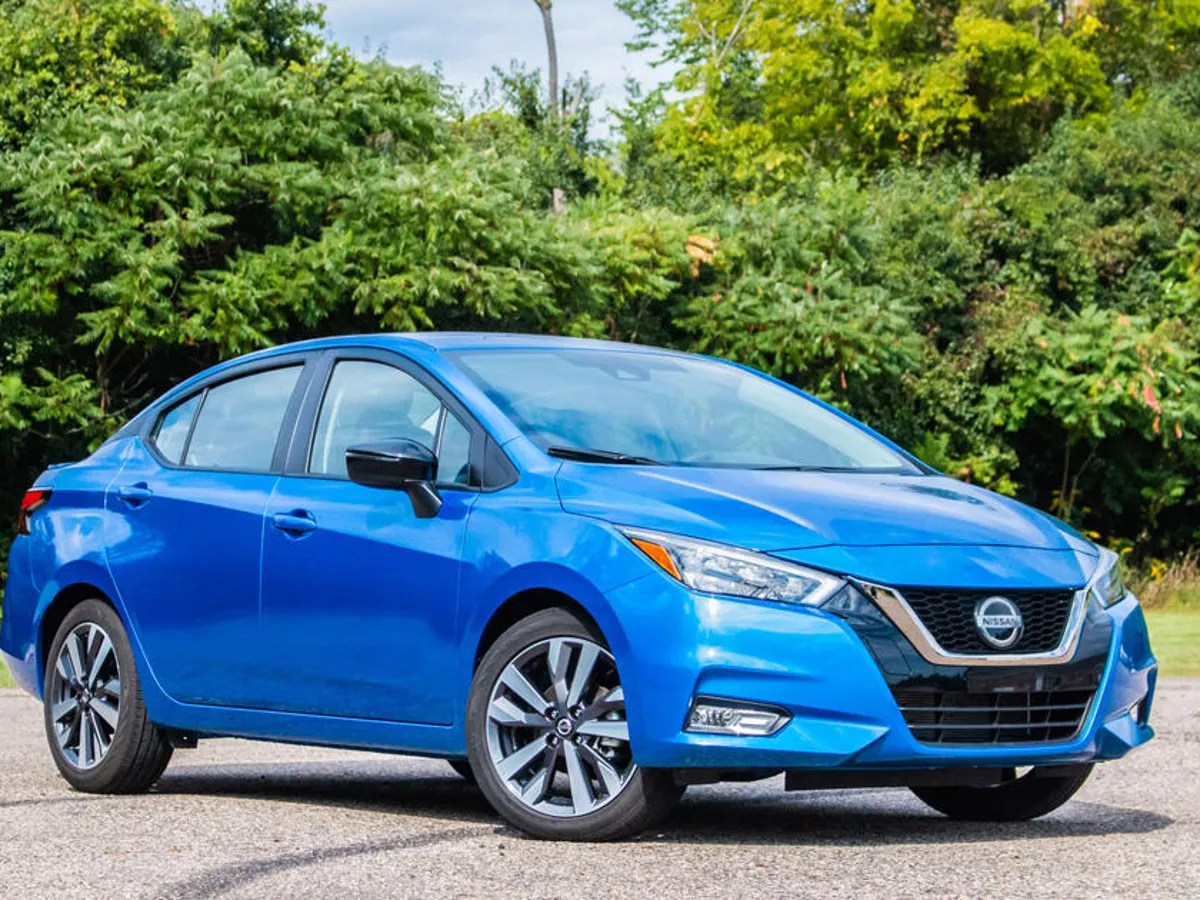
4. Nissan Versa: Budget-Friendly Efficiency with Everyday Comfort
The Nissan Versa stands out as one of the most affordable new sedans on the market while still delivering strong fuel economy, surprising interior space, and modern safety features. Designed for practicality and low ownership costs, the Versa is an appealing option for commuters, first-time buyers, and anyone seeking dependable transportation without stretching their budget.
Efficiency is a key advantage of the Versa. Models equipped with Nissan’s Xtronic continuously variable transmission (CVT) earn EPA estimates of up to 35 mpg combined, with ratings of 32 mpg in the city and 40 mpg on the highway.
This efficiency comes from a combination of lightweight construction, a streamlined aerodynamic shape, and a 1.6-liter four-cylinder engine tuned specifically for economy. The CVT plays a major role by keeping engine speeds low and steady, helping reduce fuel consumption during both city driving and long highway trips.
Every Versa uses a 122-horsepower 1.6-liter engine driving the front wheels. A five-speed manual transmission is standard on base trims, while the CVT is standard on higher SV and SR trims.
Acceleration is modest, with a 0–60 mph time of around 9.5 seconds, but the Versa prioritizes smoothness and comfort over speed. The ride quality is composed and forgiving, and steering and braking responses feel predictable and easy to manage in daily use.
Inside, the Versa feels more refined than its low price suggests. The cabin uses improved materials with soft-touch surfaces, and higher trims add heated front seats, a leather-wrapped steering wheel, and automatic climate control.
Rear-seat space is generous for a subcompact sedan, comfortably fitting two adults. Cargo capacity is another highlight, with room for multiple carry-on suitcases and flexible storage when the rear seats are folded.
A 7-inch touchscreen is standard, with an 8-inch display available on the SR trim. Apple CarPlay and Android Auto come standard on SV and SR models. Safety technology is also impressive for the segment, with standard front and rear automatic emergency braking and available blind-spot monitoring and adaptive cruise control.
With strong fuel economy, a comfortable ride, modern safety features, and one of the lowest entry prices in its class, the Nissan Versa delivers exceptional value for cost-conscious drivers seeking reliable, efficient transportation.
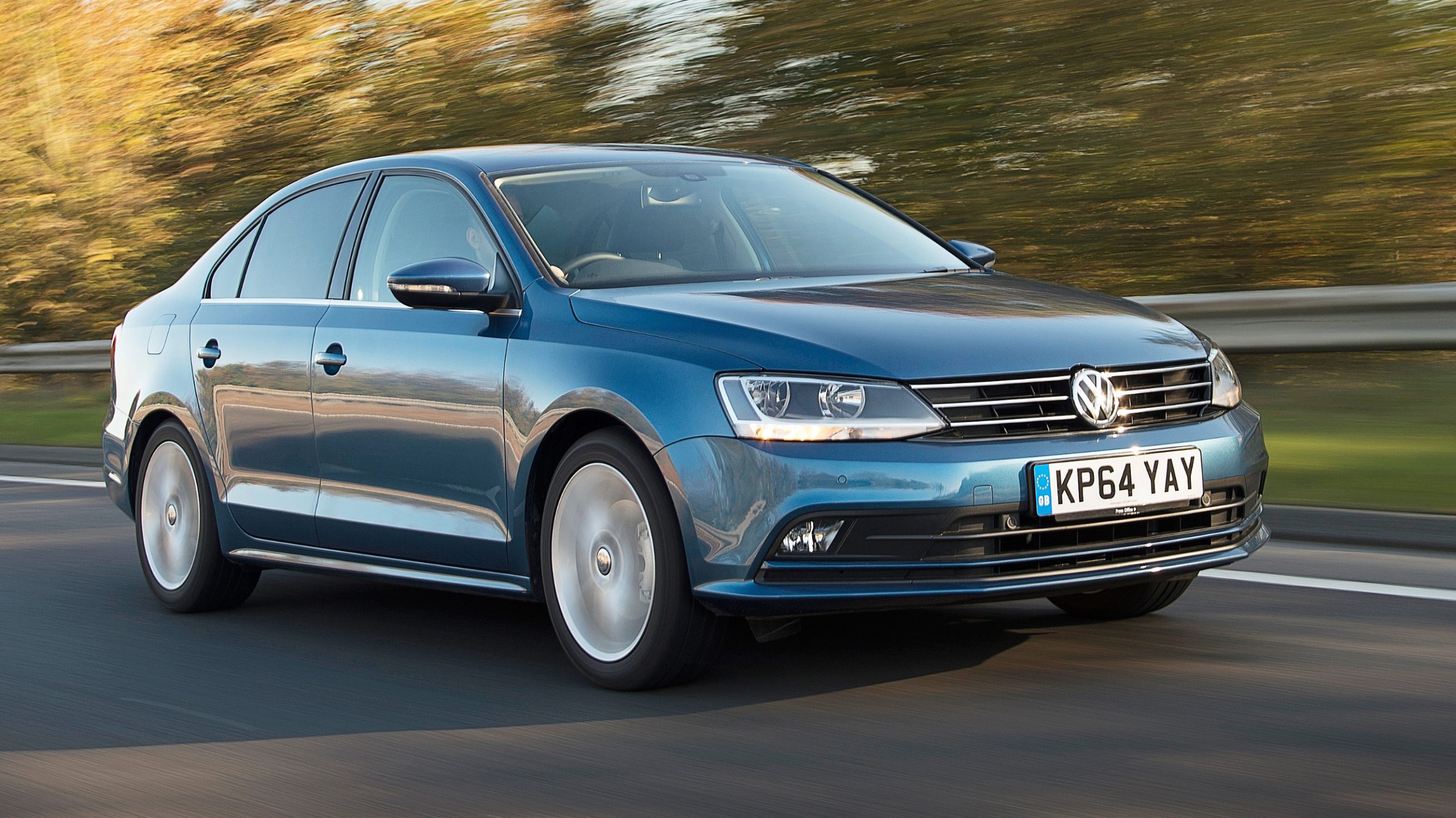
5. Volkswagen Jetta: Efficient Turbo Power with Highway Comfort
The Volkswagen Jetta remains a strong contender in the compact sedan segment by pairing impressive fuel economy with a refined, comfortable driving experience. Designed with commuters in mind, the Jetta delivers confident highway manners, a quiet cabin, and efficiency that often exceeds expectations, all while maintaining an engaging personality.
The Jetta’s efficiency comes from its modern 1.5-liter turbocharged four-cylinder engine, which balances responsive performance with restrained fuel consumption. This small-displacement turbo design provides strong low-end torque, allowing the engine to work less during everyday driving.
Combined with an aerodynamic body and lightweight construction, the Jetta achieves EPA estimates of up to 34 mpg combined, with highway ratings reaching 40 mpg. Real-world testing has frequently shown the Jetta surpassing these numbers, with some drivers recording over 42 mpg at highway speeds.
For 2026, the Jetta continues with 158 horsepower and 184 lb-ft of torque, routed through a smooth-shifting eight-speed automatic transmission. While the chassis is tuned more for comfort than sharp handling, the Jetta feels stable and composed, especially during long highway drives.
Acceleration is brisk enough for confident merging and passing, with a 0–60 mph time of about 7.1 seconds. Steering is relaxed rather than sporty, reinforcing the Jetta’s role as a comfortable daily driver rather than an aggressive corner carver.
Inside, the Jetta offers generous front and rear passenger room, excellent outward visibility, and a clean, driver-focused layout. The design is modern and functional, with higher trims adding features such as ambient lighting, wireless charging, and ventilated front seats. Cargo capacity is a standout, with a large trunk that rivals some hatchbacks, making it easy to accommodate luggage, groceries, or work gear.
An 8-inch digital gauge cluster is standard, with a larger 10.3-inch display available on higher trims. Apple CarPlay and Android Auto are included, with wireless capability on select models. Safety technology is comprehensive, featuring standard forward-collision warning, automatic emergency braking, blind-spot monitoring, and available adaptive cruise control.
With its efficient turbo engine, comfortable highway ride, spacious interior, and strong real-world fuel economy, the Volkswagen Jetta offers a well-rounded, non-hybrid option for drivers seeking refinement and efficiency in a compact sedan.
This collection highlights how modern vehicles can meet a wide range of needs without compromise. Spacious options such as the Kia Telluride, Honda Pilot, and Hyundai Palisade deliver comfort, safety, and flexibility for families, while fuel-efficient models like the Toyota Prius, Corolla, Nissan Versa, and Volkswagen Jetta help reduce daily operating costs.
Each vehicle brings a clear focus on reliability, practicality, and user-friendly technology, making them well suited for life in Blue Springs. Whether the priority is seating capacity, cargo room, fuel savings, or a balanced mix of all three, these ten vehicles offer strong solutions for today’s drivers.
By considering both family-oriented SUVs and efficient sedans together, buyers can better match their vehicle choice to their lifestyle and budget. With careful selection, drivers can enjoy comfort, confidence, and long-term value for years to come.
Also Read: 10 Cars That Look Stunning But Disappoint True Enthusiasts
