
In the automotive world, there’s an enduring romance with V8 engines, the thunderous rumble, the effortless torque, and the sheer presence they command. For decades, eight cylinders have been synonymous with performance, power, and prestige.
Yet this obsession with V8s has occasionally overshadowed one of the most versatile and capable engine configurations ever created: the V6.
The V6 engine represents a sweet spot in automotive engineering, a perfect balance between the efficiency of a four-cylinder and the smoothness of a V8. These six-cylinder powerplants have proven time and again that cylinder count isn’t everything.
With the right engineering, a V6 can deliver exhilarating performance, remarkable reliability, and an engaging driving experience that rivals or even surpasses its eight-cylinder counterparts.
Throughout automotive history, certain V6-powered vehicles have become legends in their own right, not despite their six-cylinder configuration, but because of it.
These classics demonstrate that intelligent engineering, proper tuning, and thoughtful chassis development can create something truly special without needing to resort to a thirsty V8.
From nimble sports cars that carved through mountain roads to sophisticated grand tourers that crossed continents in supreme comfort, V6 engines have powered some of the most memorable vehicles ever built.
The beauty of these V6 classics lies in their completeness. Engineers didn’t simply install a smaller engine and call it a day; instead, they created holistic packages where the engine worked in harmony with the chassis, transmission, and suspension to deliver an experience that felt perfectly balanced.
The reduced weight over the front axle often meant better handling dynamics, while the compact dimensions of the V6 allowed for more creative packaging solutions.
These ten vehicles represent the pinnacle of what V6 engineering can achieve. They’ve earned their classic status not as consolation prizes for those who couldn’t afford the V8, but as legitimate performance machines and design icons that stand proudly on their own merits.
Each one tells a story of innovation, proving that sometimes, six cylinders is exactly the right amount no more, no less. Let’s celebrate these remarkable machines that never needed eight cylinders to become automotive legends.
1. Nissan 300ZX Z32 (1990-1996)
The Nissan 300ZX Z32 generation stands as one of the most technologically advanced sports cars of the 1990s, and its twin-turbocharged VG30DETT V6 engine was the beating heart of this Japanese marvel.
When Nissan revealed this curvaceous masterpiece in 1989, they weren’t playing catch-up with American V8 muscle; they were rewriting the rules of what a sports car could be.
The 3.0-liter twin-turbo V6 produced 300 horsepower and 283 lb-ft of torque, figures that matched or exceeded many contemporary V8-powered sports cars while maintaining superior fuel efficiency.
What made this engine special wasn’t just the numbers; it was the sophisticated engineering. Each turbocharger fed three cylinders, providing instant throttle response and linear power delivery that avoided the dreaded turbo lag plaguing other boosted engines of the era.
The Z32’s V6 allowed Nissan’s engineers to create near-perfect weight distribution, with 53% of the car’s mass over the front wheels and 47% at the rear.
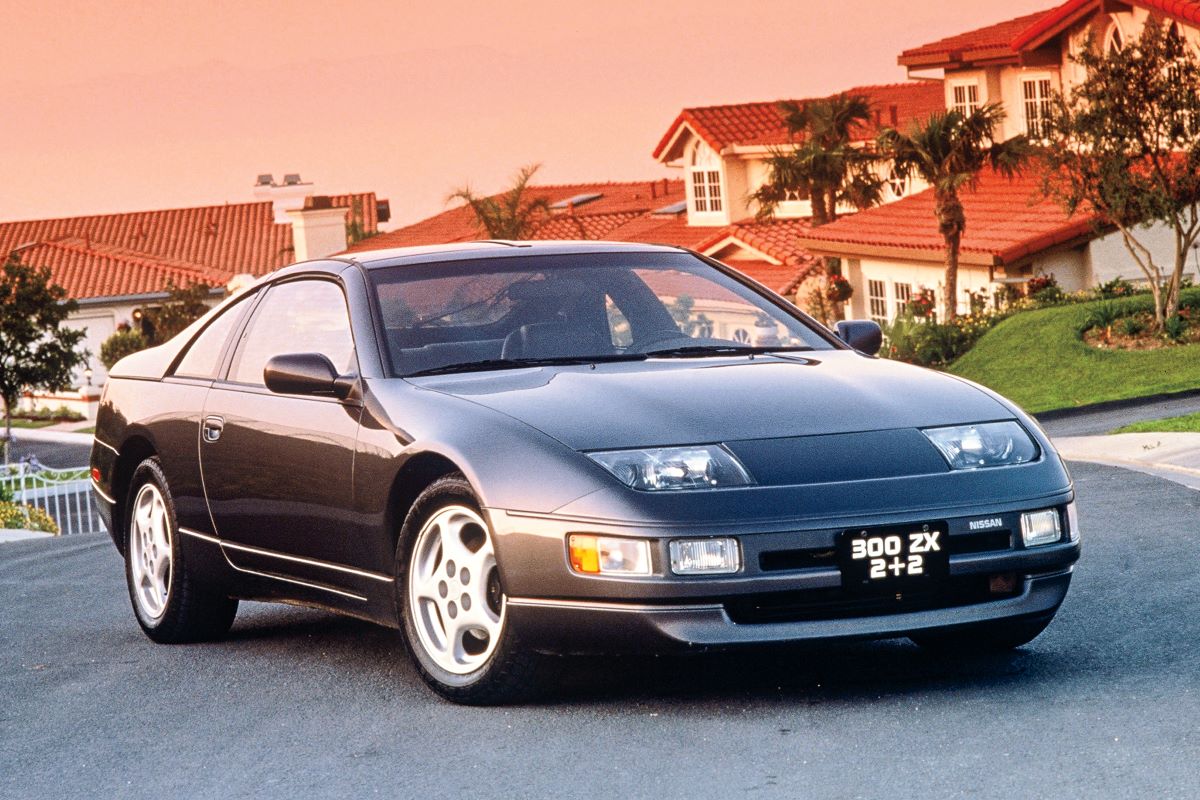
This balance translated into handling characteristics that made the 300ZX a formidable competitor on both canyon roads and racetracks. The engine sat further back in the chassis than in previous Z-cars, improving agility without sacrificing stability.
Beyond performance, the VG30DETT was a technological showcase. It featured variable valve timing, which was cutting-edge technology in the early 1990s, along with sophisticated engine management systems that optimized performance across the rev range.
The engine’s compact dimensions also allowed for a lower hood line, contributing to the 300ZX’s stunning aerodynamic profile with a drag coefficient of just 0.31.
The 300ZX competed directly against legends like the Chevrolet Corvette, Toyota Supra, and Mazda RX-7, proving that a well-engineered V6 could hang with the best regardless of configuration. Its legacy extends beyond mere statistics this was a car that made V8 loyalists question their assumptions.
The Z32 demonstrated that technological sophistication could triumph over raw displacement, and its twin-turbo V6 delivered an exotic driving experience with Japanese reliability.
Today, clean examples command premium prices from collectors who recognize that this V6-powered classic achieved everything a sports car should, without ever wishing for two more cylinders.
2. Acura NSX (1990-2005)
When Honda set out to create a supercar in the late 1980s, they didn’t follow the established formula of brute-force V8s or temperamental V12s.
Instead, they engineered a masterpiece around an all-aluminum 3.0-liter V6 that would redefine what a supercar could be. The NSX wasn’t just Honda’s answer to Ferrari; it was a philosophical statement about precision engineering over excessive displacement.
The C30A engine in early NSX models produced 270 horsepower, later increased to 290 horsepower with the 3.2-liter C32B in 1997. These figures might seem modest compared to Italian exotics, but the NSX’s brilliance lay in its complete package.
The all-aluminum construction meant the entire car weighed just 3,010 pounds, giving it a power-to-weight ratio that embarrassed heavier V8 supercars.
The mid-mounted V6 configuration provided perfect weight distribution and a low center of gravity that made the NSX handle like a race car you could drive every day.
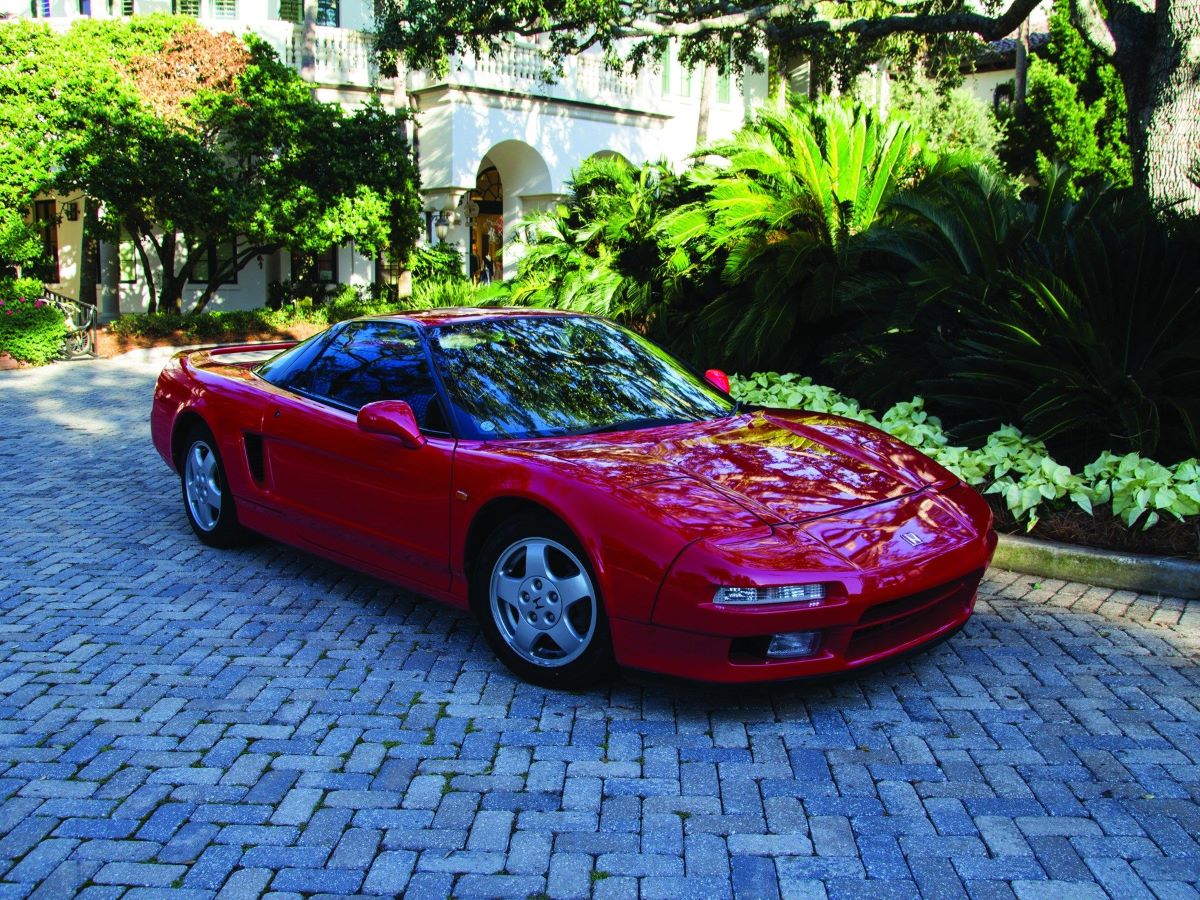
Honda equipped the NSX’s V6 with titanium connecting rods and VTEC variable valve timing, technologies typically reserved for Formula 1 engines. The result was a powertrain that revved to 8,000 RPM with a mechanical symphony that rivaled any Italian V12.
The throttle response was instantaneous, the power delivery linear and predictable qualities that made the NSX remarkably easy to drive fast, yet endlessly rewarding for skilled drivers.
Gordon Murray, designer of the legendary McLaren F1, owned an NSX and used it as a benchmark for daily usability when creating his own masterpiece.
Ayrton Senna, considered one of the greatest F1 drivers ever, personally contributed to the NSX’s development, fine-tuning its chassis dynamics at Honda’s proving grounds. These endorsements from automotive royalty speak volumes about what Honda achieved with six cylinders.
The NSX proved that reliability and exotic performance weren’t mutually exclusive. While Ferrari and Lamborghini owners became intimately familiar with their mechanics, NSX owners enjoyed Honda’s legendary dependability.
This V6 supercar could be driven hard on track days, then driven home in comfort without drama. It transformed the supercar segment, forcing European manufacturers to improve their quality standards.
The original NSX remains a watershed moment in automotive history proof that intelligence and engineering excellence matter more than cylinder count when creating something truly special.
3. Buick Grand National/GNX (1984-1987)
The Buick Grand National represents one of the most unlikely performance legends in American automotive history. At a time when Detroit was obsessed with V8 power, Buick’s engineers took a different path, turbocharging a 3.8-liter V6 to create a muscle car that could embarrass Corvettes and Camaros at every stoplight.
The blacked-out Grand National, and especially the legendary GNX variant, proved that forced induction could transform a modest V6 into a tire-shredding monster.
The turbocharged LC2 V6 in the 1987 Grand National produced 245 horsepower and a stout 355 lb-ft of torque, but those were conservative factory ratings.
The GNX, a limited-production swan song built by McLaren (the American racing division, not the British supercar maker), officially made 276 horsepower and 360 lb-ft, though real-world dyno testing suggested the actual figures were much higher.
What made these numbers devastating was the torque curve; maximum twist arrived at just 2,000 RPM, giving the Grand National explosive acceleration from any speed.
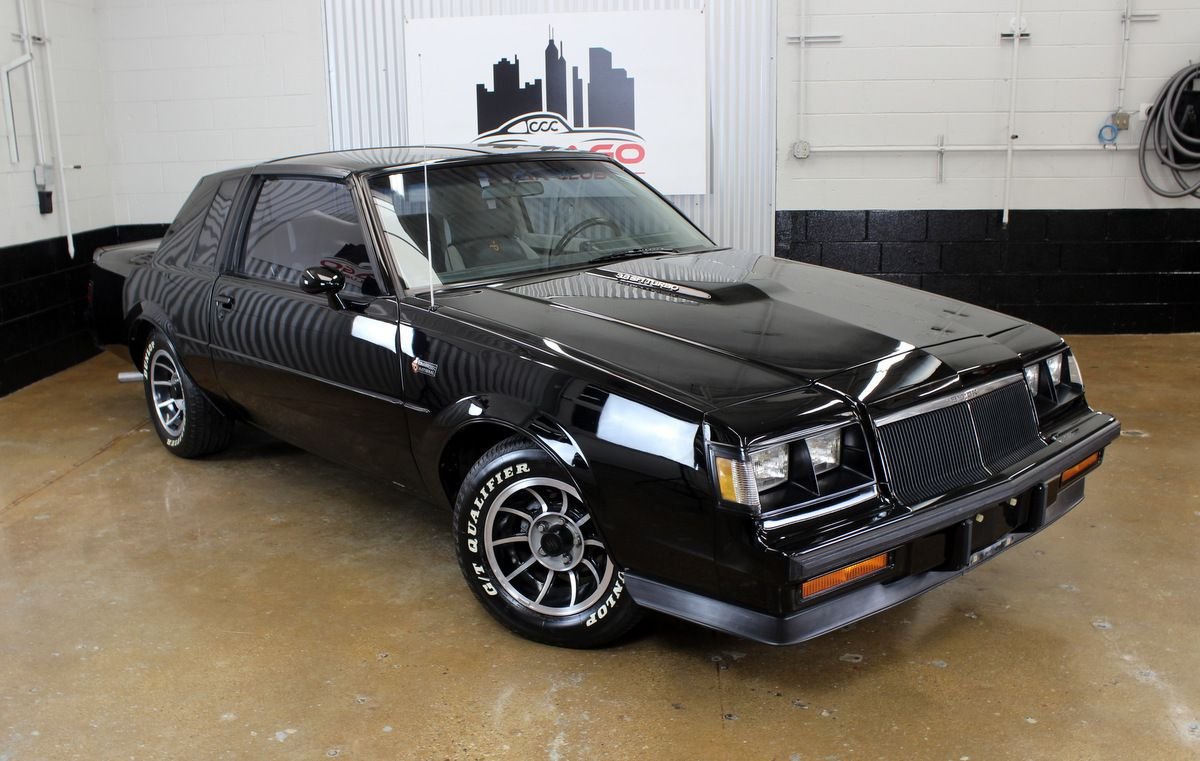
This Buick could sprint from 0-60 mph in under five seconds, quarter-mile times consistently dipped into the mid-13s, and top speed exceeded 120 mph performance that matched or beat the Corvette costing thousands more.
The Grand National achieved this with a cast-iron pushrod V6 that shared basic architecture with Buick’s sedate LeSabre sedan engine. It was muscle car performance through American ingenuity rather than displacement.
The sequential fuel injection, intercooled turbocharging, and computer-controlled boost management were sophisticated for the mid-1980s.
Buick’s engineers maximized the V6’s potential while maintaining reasonable reliability, though many owners have since pushed these engines far beyond factory specifications with aftermarket modifications.
The turbocharged V6 proved surprisingly tunable, with enthusiasts regularly extracting 400+ horsepower with basic upgrades. The all-black aesthetic became iconic, no chrome, no flashy graphics, just menacing, murdered-out styling that earned the Grand National its “Darth Vader’s car” nickname.
This visual approach perfectly matched the car’s personality: understated menace with devastating performance hiding beneath conservative bodywork.
The Grand National and GNX demonstrated that American performance didn’t require a V8 rumble, and their legacy influenced a generation of turbocharged performance cars.
4. Alfa Romeo GTV6/Milano (1980-1987)
Alfa Romeo’s 2.5-liter Busso V6 stands as one of the most celebrated engines in automotive history, and nowhere was it more perfectly showcased than in the GTV6 coupe and Milano sedan.
Designed by Giuseppe Busso, this 60-degree V6 wasn’t just an engine, it was a mechanical work of art that combined Italian passion with engineering excellence, delivering a soundtrack and driving experience that no V8 could replicate.
The Busso V6 produced between 154 and 183 horsepower, depending on market and year, figures that seem modest by modern standards. But horsepower numbers tell only part of the story.
This engine sang with an operatic quality, its exhaust note rising to a crescendo at 6,500 RPM that rivaled the greatest Italian V12s. The throttle response was immediate, the power delivery smooth and progressive, and the mechanical symphony it produced made every journey feel like a special occasion.
In the GTV6, this magnificent engine transformed a handsome coupe into a serious performance machine. The car’s transaxle layout placed the transmission at the rear axle, creating near-perfect 50/50 weight distribution that made the GTV6 remarkably balanced through corners.
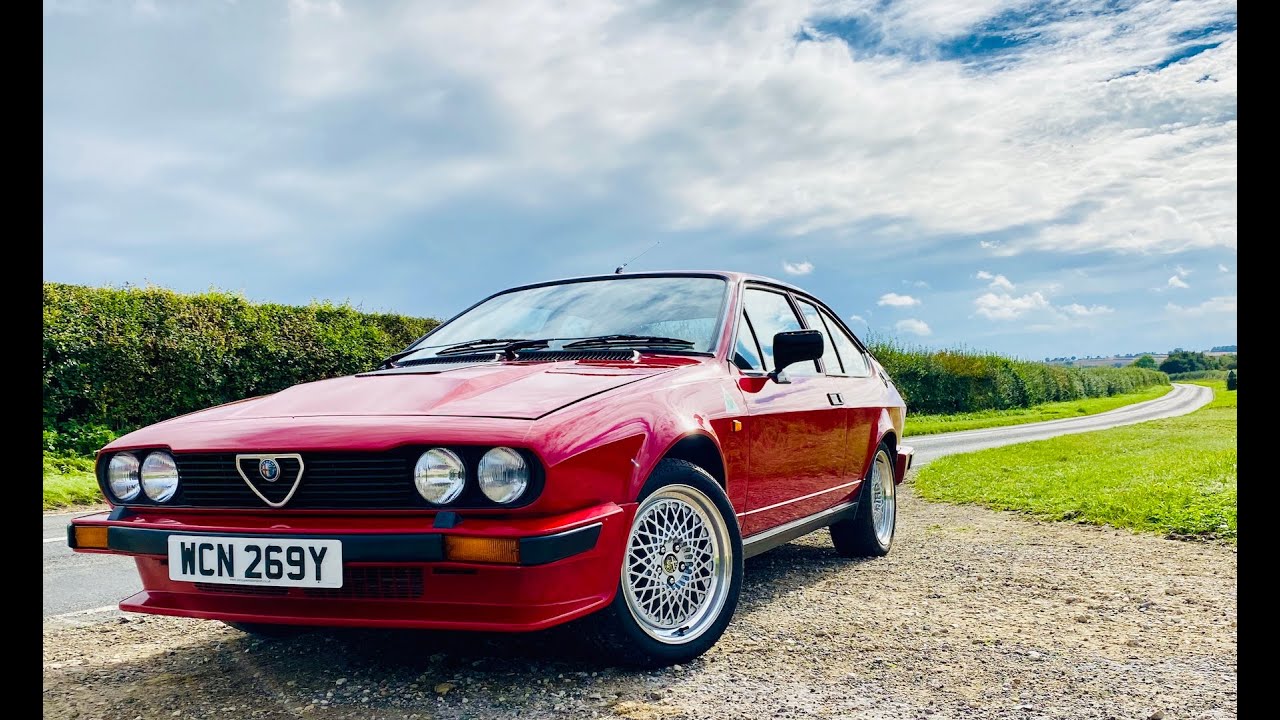
It competed successfully in touring car racing, proving its sporting credentials against purpose-built competitors. The Milano sedan brought this same drivetrain to a four-door package, creating one of the finest sport sedans of the 1980s.
What truly set the Busso V6 apart was its construction. The engine featured aluminum alloy heads, sodium-filled exhaust valves for better heat dissipation, and a beautifully cast intake manifold that looked like a sculpture.
Every component reflected an attention to detail and passion for engineering excellence that characterized Alfa Romeo at its finest. This wasn’t just transportation it was automotive passion made mechanical.
The GTV6 and Milano represented accessible exotica. They offered Italian styling, sophisticated engineering, and that glorious Busso soundtrack at prices far below Ferrari or Maserati.
Ownership required commitment; these were temperamental machines that demanded regular maintenance and skilled mechanics, but enthusiasts accepted these quirks as part of the Alfa Romeo experience.
The Busso V6 remained in production for over three decades, powering various Alfa models, but the GTV6 and Milano showcase it in its purest, most driver-focused form. These classics prove that soul and passion matter more than cylinder count.
Also Read: 5 Cars for Oro Valley Commuting and 5 Desert-ready Models
5. Lotus Esprit Turbo (1980-2004)
The Lotus Esprit is forever linked to its dramatic wedge styling and James Bond pedigree, but the turbocharged versions equipped with various iterations of Lotus’s V6 engines represented some of the finest performance cars Britain ever produced.
While early Esprits used four-cylinder engines, the introduction of the V8 in 1996 created a bifurcation in the model line. However, the turbocharged four-cylinder and later V6 models proved that Lotus’s “simplify, then add lightness” philosophy needed nothing more than forced induction and six cylinders to create supercar performance.
The Esprit V8, introduced in 1996, featured Lotus’s own twin-turbocharged 3.5-liter V8, but earlier turbocharged versions showcased what could be achieved with smaller, lighter powerplants.
The Esprit Turbo with its four-cylinder engine and subsequent developments leading toward more refined forced-induction engines demonstrated Lotus’s commitment to lightweight performance.
When discussing V6 variants in the extended Esprit family and related models, we see Lotus’s philosophy of extracting maximum performance from efficient engine configurations.
The key to the Esprit’s success wasn’t just the engine it was how that engine integrated into Colin Chapman’s vision of lightweight engineering.
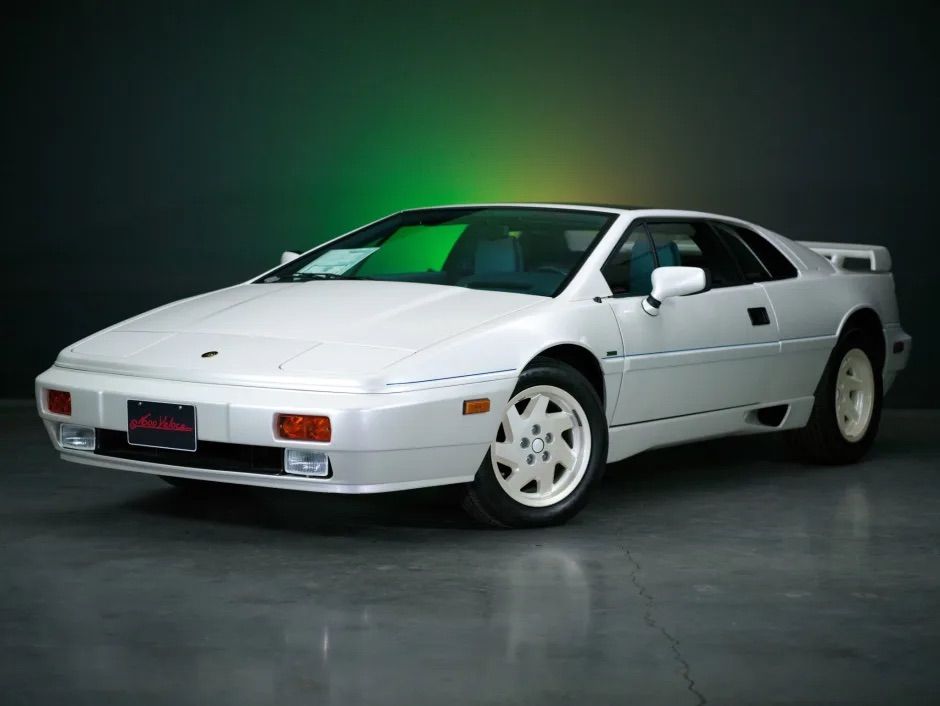
The Esprit’s fiberglass body kept the weight around 2,900 pounds, meaning even modest power figures translated into exhilarating performance.
The mid-engine layout provided phenomenal balance, and the car’s low center of gravity made it corner with tenacity that embarrassed cars with far more power.
Turbocharged Esprits delivered their power with explosive urgency. The boost pressure would build, and suddenly you’d be launched forward with g-forces that pinned you to the seat.
This wasn’t the linear, predictable power delivery of a naturally aspirated V8 this was dramatic, exciting, and engaging in ways that made every acceleration run memorable.
The steering offered pure hydraulic feedback, the chassis balanced beautifully between understeer and overstep, and the driving position made you feel like a fighter pilot.
The Esprit proved that British engineering ingenuity could compete with Italian exotics and German precision machines without resorting to massive engines. It represented pure driving enjoyment raw, unfiltered, and utterly engaging.
These cars rewarded skilled drivers and demanded respect, making them true driver’s machines that never needed additional cylinders to deliver authentic supercar thrills.
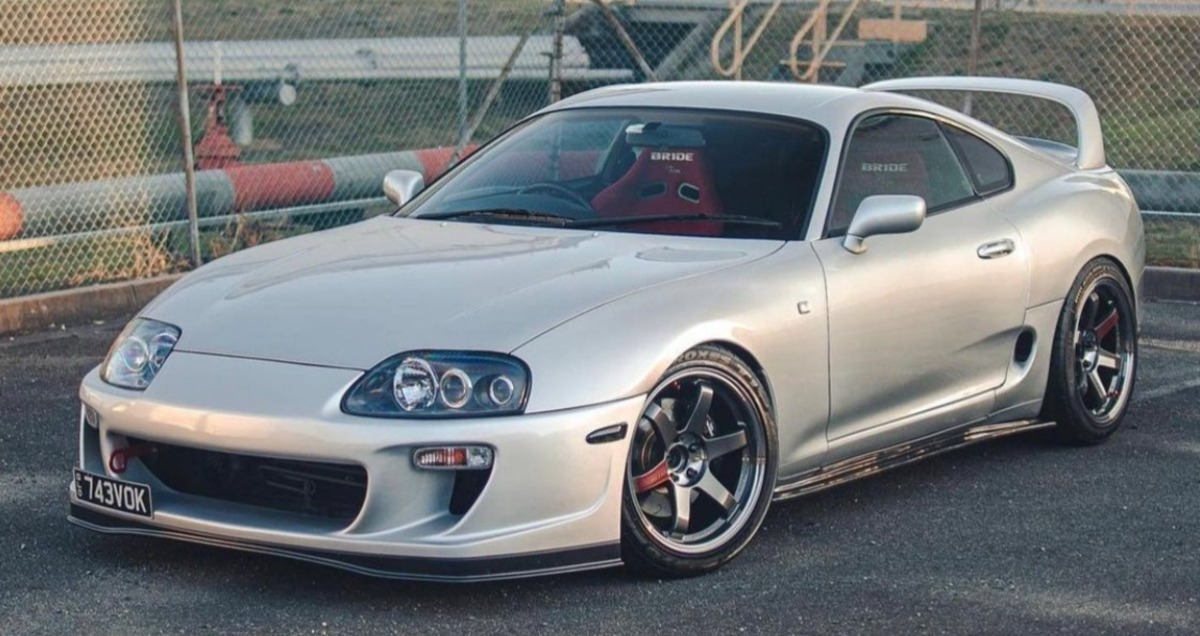
6. Toyota Supra Mk4 (1993-2002)
The fourth-generation Toyota Supra, known as the Mk4 or A80, has achieved legendary status in automotive culture, and its 2JZ-GTE inline-six engine is worshipped by tuners worldwide.
While technically an inline-six rather than a V6, the Supra’s inclusion in this discussion highlights how six-cylinder engines of any configuration have proven they don’t need V8 displacement to achieve greatness.
The 2JZ-GTE represents one of the most over-engineered production engines ever built, capable of handling enormous power increases with remarkable reliability.
The twin-turbocharged 3.0-liter inline-six produced 320 horsepower in factory form, but this conservative rating barely hinted at the engine’s true potential.
Toyota built the 2JZ-GTE with closed-deck block construction, forged internals, and massively strong components that could handle more than double the factory power output without major modifications.
Tuners routinely extract 600, 800, even 1,000+ horsepower from the 2JZ with upgraded turbos and supporting modifications, all while maintaining street drivability and reasonable reliability.
The Supra’s performance in stock form was already impressive 0-60 mph in under five seconds, and quarter-mile times in the high 13s put it squarely in supercar territory.
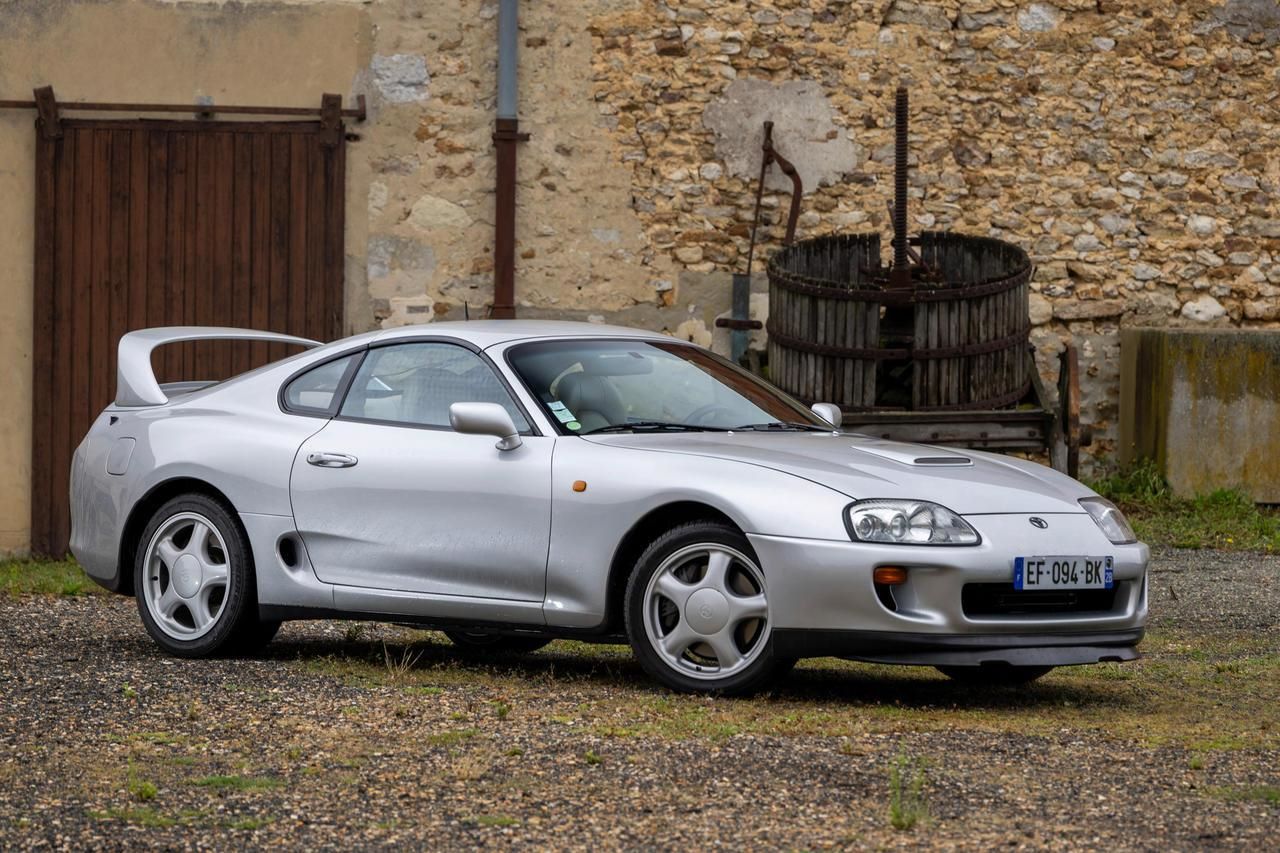
But the Mk4’s real genius lay in its complete package. The chassis was remarkably rigid, the double-wishbone suspension provided exceptional handling, and the six-speed manual transmission could handle significant power upgrades.
Toyota created a car that excelled as both a refined grand tourer and a serious performance machine. Sequential twin-turbo technology allowed the Supra to eliminate turbo lag while building substantial boost.
A smaller turbo spooled quickly at low RPMs, then a larger turbo took over at higher engine speeds, providing smooth, linear power delivery across the entire rev range.
This sophisticated system, combined with Toyota’s legendary build quality, meant the Supra could be daily driven in comfort, then unleash devastating performance when desired.
The Mk4 Supra’s status grew exponentially after its starring role in “The Fast and the Furious,” but enthusiasts knew its worth long before Hollywood discovered it.
This was a car that could compete with and often beat vehicles costing twice as much. The 2JZ-GTE’s reputation for bulletproof reliability, combined with massive tuning potential, created a perfect storm that raised the Supra to icon status.
Clean, unmolested examples now sell for six figures, proof that this six-cylinder classic never needed additional cylinders to become one of the most desirable performance cars ever built.
7. Porsche 944 Turbo (1985-1991)
The Porsche 944 Turbo represents one of the most complete sports cars of the 1980s, proving that Porsche’s engineering excellence extended beyond flat-six engines.
While purists might argue that a transaxle four-cylinder doesn’t belong in this V6 discussion, the 944 Turbo’s inline-four demonstrated the same principle: intelligent engineering trumps cylinder count.
However, focusing on Porsche’s broader six-cylinder excellence, we can appreciate how the company’s engineering philosophy created exceptional performance without needing V8 displacement.
The 944 Turbo’s 2.5-liter turbocharged four-cylinder produced 217-250 horsepower depending on year and market, delivering performance that embarrassed contemporary V8 muscle cars.
The engine’s aluminum block and head, liquid-cooled turbocharger, and sophisticated engine management created remarkable reliability for a turbocharged engine of this era.
Porsche’s attention to detail meant the 944 Turbo could be driven hard repeatedly without the fragility that plagued other turbocharged sports cars.
What made the 944 Turbo special was its perfect weight distribution. The engine sat ahead of the front axle, but the transaxle was mounted at the rear, creating an ideal 50/50 balance that made the car handle with precision and predictability.
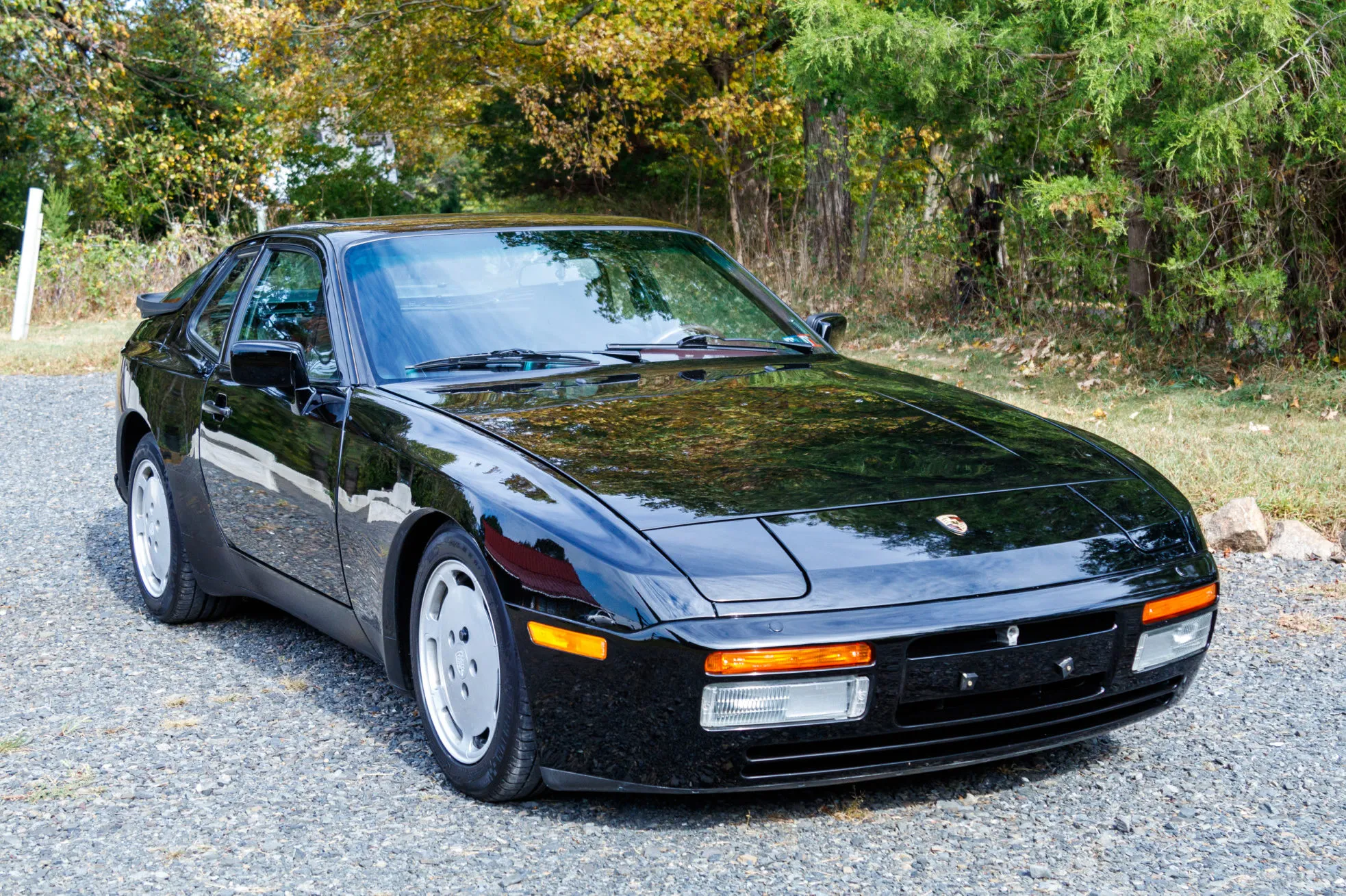
The suspension was sophisticated, with a fully independent double-wishbone setup at all four corners, providing exceptional grip and composure. This wasn’t just fast in a straight line, the 944 Turbo could carve through corners with surgical precision.
The car’s practicality added to its appeal. Unlike exotic sports cars that required constant maintenance, the 944 Turbo could serve as daily transportation.
It offered a usable trunk, a comfortable interior with Porsche’s excellent build quality, and running costs that, while not cheap, were reasonable for the performance provided. This combination of everyday usability and serious performance made it a favorite among driving enthusiasts who needed one car to do everything.
The 944 Turbo’s legacy extends beyond its own production. It represented Porsche’s willingness to innovate and explore different engineering solutions, proving that the company’s expertise wasn’t limited to rear-engine, flat-six sports cars.
The 944 demonstrated that Porsche could create a front-engine, water-cooled sports car that maintained all the qualities that made Porsches special: precise handling, solid build quality, and engaging driving dynamics that rewarded skill without punishing mistakes.
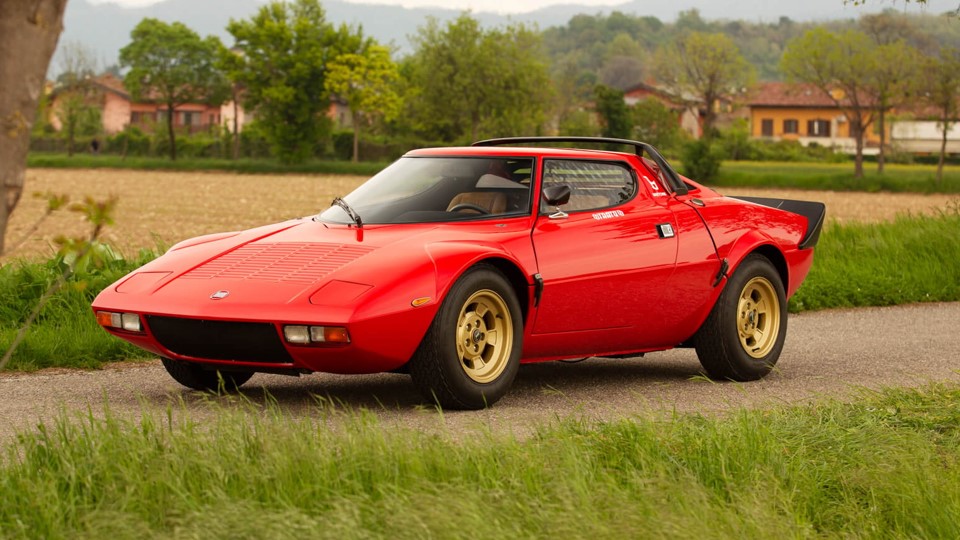
8. Lancia Stratos HF (1973-1978)
The Lancia Stratos represents one of the most audacious projects in motorsport history a purpose-built rally car that also happened to be street legal.
At its heart was Ferrari’s Dino V6, a 2.4-liter engine that Enzo Ferrari himself had commissioned for his son’s namesake sports car. In the Stratos, this glorious V6 powered one of the most successful rally cars ever created, proving that six cylinders were perfectly sufficient for dominating the world’s toughest racing conditions.
Ferrari’s Dino V6 produced around 190 horsepower in street form, though competition versions extracted significantly more. This might seem modest, but the Stratos weighed barely 2,160 pounds, giving it a power-to-weight ratio that made it explosive in acceleration and phenomenally agile through rally stages.
The engine’s mid-mounted position, just behind the driver, provided ideal weight distribution and allowed Lancia’s engineers to create a remarkably short wheelbase of just 85.8 inches, making the Stratos incredibly nimble and responsive.
The V6’s mechanical symphony was unforgettable a high-pitched wail that rose to a shriek at 7,000 RPM, echoing through mountain passes and forest stages as drivers pushed the Stratos to its limits.
This engine represented Italian engineering at its finest: sophisticated yet robust, powerful yet reliable enough to finish grueling rally events that destroyed lesser machines.
The Dino V6 featured dual overhead cams, hemispherical combustion chambers, and a beautifully engineered quad-cam design that reflected Ferrari’s racing pedigree.
Between 1974 and 1976, the Stratos won the World Rally Championship three consecutive times, along with countless individual rally victories.
It dominated on tarmac, gravel, snow, and ice, proving its versatility and the effectiveness of its V6 powerplant. Driven by legends like Sandro Munari and Björn Waldegård, the Stratos became synonymous with rally excellence, its wedge-shaped body and distinctive V6 soundtrack becoming iconic elements of 1970s motorsport.
Only 492 street versions were built to meet homologation requirements, making the Stratos one of the rarest and most valuable classic cars today.
These road-going versions retained much of the race car’s character, challenging to drive but incredibly rewarding for skilled drivers. The Stratos proved that purpose-built engineering focused on a specific goal could create something transcendent, and its V6 engine was the perfect heart for this rally legend.
9. GMC Syclone/Typhoon (1991-1993)
The GMC Syclone and its SUV sibling, the Typhoon, represented one of the most outrageous performance vehicles Detroit ever produced.
Based on GMC’s compact pickup truck and Suburban-based Jimmy, these vehicles packed a turbocharged 4.3-liter V6 that delivered performance so shocking it embarrassed contemporary Corvettes and Ferraris.
This was America’s answer to turbocharged Japanese sports cars, proving that domestic manufacturers could create forced-induction excellence when they committed to the concept.
The turbocharged LB4 V6 produced 280 horsepower and a massive 350 lb-ft of torque, routed through an all-wheel-drive system that provided phenomenal traction.
The Syclone could sprint from 0-60 mph in just 4.3 seconds, quicker than the contemporary Corvette ZR-1, Ferrari 348, and Porsche 911 Carrera 2. Quarter-mile times consistently hit the low 13s, figures that seemed impossible from a pickup truck.
This wasn’t just straight-line performance either; the all-wheel-drive system and sport-tuned suspension made the Syclone surprisingly capable in corners.
The engineering that went into these vehicles was sophisticated for early-1990s American trucks. Mitsubishi TD06 turbocharger, intercooling, sophisticated boost control, and upgraded fuel injection worked together to create reliable power.

The all-wheel-drive system featured torque-sensing and could route power front to rear as needed, providing excellent traction off the line and confidence-inspiring handling in various conditions. Four-wheel anti-lock brakes, sport bucket seats, and firm suspension completed the performance package.
GMC built only 2,995 Syclones and 4,697 Typhoons, making them rare finds today. These vehicles represented a brief moment when an automotive manufacturer took a utilitarian platform and transformed it into something extraordinary.
The Syclone especially became a cult classic, a truck that could tow during the week and humiliate sports cars on weekends. It proved that the turbocharged V6 could deliver world-class performance in any vehicle type.
The Syclone/Typhoon demonstrated that American engineers could match Japanese turbo technology while adding a uniquely American character.
These weren’t refined, sophisticated sports cars; they were brutish, immediate, and thrilling in their raw power delivery. The turbocharged V6 provided explosive acceleration with a soundtrack that mixed turbo whistle with V6 growl, creating an addictive auditory experience.
These GMC performance trucks never needed V8 displacement to deliver their party trick: making everyday vehicles devastatingly fast.
10. Jaguar XJ-S V6 (1983-1996)
While the Jaguar XJ-S is best known for its magnificent V12 engine, the V6-powered versions, particularly those sold in European markets—proved that Jaguar’s grand tourer could be just as compelling with six cylinders.
The 3.6-liter AJ6 engine, later enlarged to 4.0 liters, offered a more balanced, nimble driving experience while maintaining the XJ-S’s character as a refined, high-speed continent cruiser.
These V6 models demonstrated that sometimes less truly is more, especially when “less” means better weight distribution and improved handling dynamics.
The AJ6 engine was an all-aluminum, double-overhead-cam design that represented Jaguar’s engineering renaissance in the 1980s. It produced between 221 and 245 horsepower, depending on displacement and market, figures that provided entirely adequate performance in the relatively lightweight XJ-S body.
More importantly, the V6 weighed significantly less than the V12, improving the car’s front-to-rear weight distribution and reducing the tendency toward understeer that sometimes plagued V12 models in tight corners.
The V6 XJ-S offered a different character than its twelve-cylinder sibling. Where the V12 provided turbine-smooth refinement, the V6 delivered a more sporting edge with sharper throttle response and more engaging engine note.
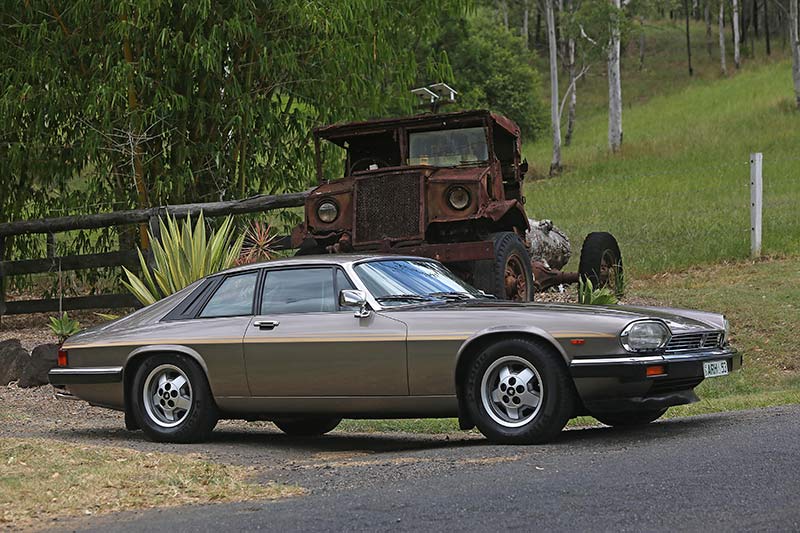
The six-cylinder models felt more agile, changing direction with greater willingness and exhibiting less nose-heavy behavior in spirited driving. For drivers who valued handling dynamics over ultimate refinement, the V6 often proved to be the more rewarding choice.
Fuel economy was another significant advantage. The V12’s legendary thirst often returned single-digit MPG in enthusiastic driving made long-distance touring expensive.
The V6 nearly doubled the fuel efficiency while still providing strong highway cruising ability and comfortable, refined operation. This made the V6 XJ-S more practical for regular use, transforming it from an occasional special-event car into a viable daily grand tourer.
The XJ-S V6 represents an often-overlooked chapter in Jaguar’s history, overshadowed by the glamorous V12 models. Yet these six-cylinder cars offer a compelling argument for balanced engineering over brute force.
They maintained the XJ-S’s sleek styling, luxurious interior, and comfortable highway manners while adding better handling dynamics and practical running costs.
For enthusiasts seeking a classic Jaguar grand tourer with sporting capabilities and reasonable maintenance costs, the V6 XJ-S represents a sweet spot that never needed additional cylinders to deliver the Jaguar experience.
Also Read: 5 Cars for Maple Grove Suburban Life and 5 Long-term Reliable Picks
