
The supercar market has evolved dramatically over the past decade, making exotic performance more accessible than ever before.
While seven-figure hypercars dominate headlines, there exists a sweet spot under $200,000 where driving thrills, build quality, and ownership experience converge without the crippling depreciation and maintenance nightmares that plague many exotics.
These aren’t just fast cars they’re carefully engineered machines that deliver supercar credentials without the regret that often accompanies exotic ownership.
The vehicles on this list share common traits: they offer genuine supercar performance with sub-3-second 0-60 times or top speeds exceeding 180 mph, they maintain reasonable reliability for their segment, and crucially, they won’t financially devastate you the moment you drive off the lot.
What separates a regrettable supercar purchase from a brilliant one? It’s the combination of driving engagement, real-world usability, dealer network support, parts availability, and resale value retention.
Many exotic manufacturers produce stunning vehicles that become money pits within months, plagued by electrical gremlins, unobtainable parts, and eye-watering service costs.
The following ten supercars represent the cream of the sub-$200K crop vehicles that deliver authentic exotic experiences while remaining relatively sensible ownership propositions.
Whether you prioritize raw performance, everyday drivability, track capability, or investment potential, these machines prove you don’t need to spend half a million dollars to join the supercar club without regrets.
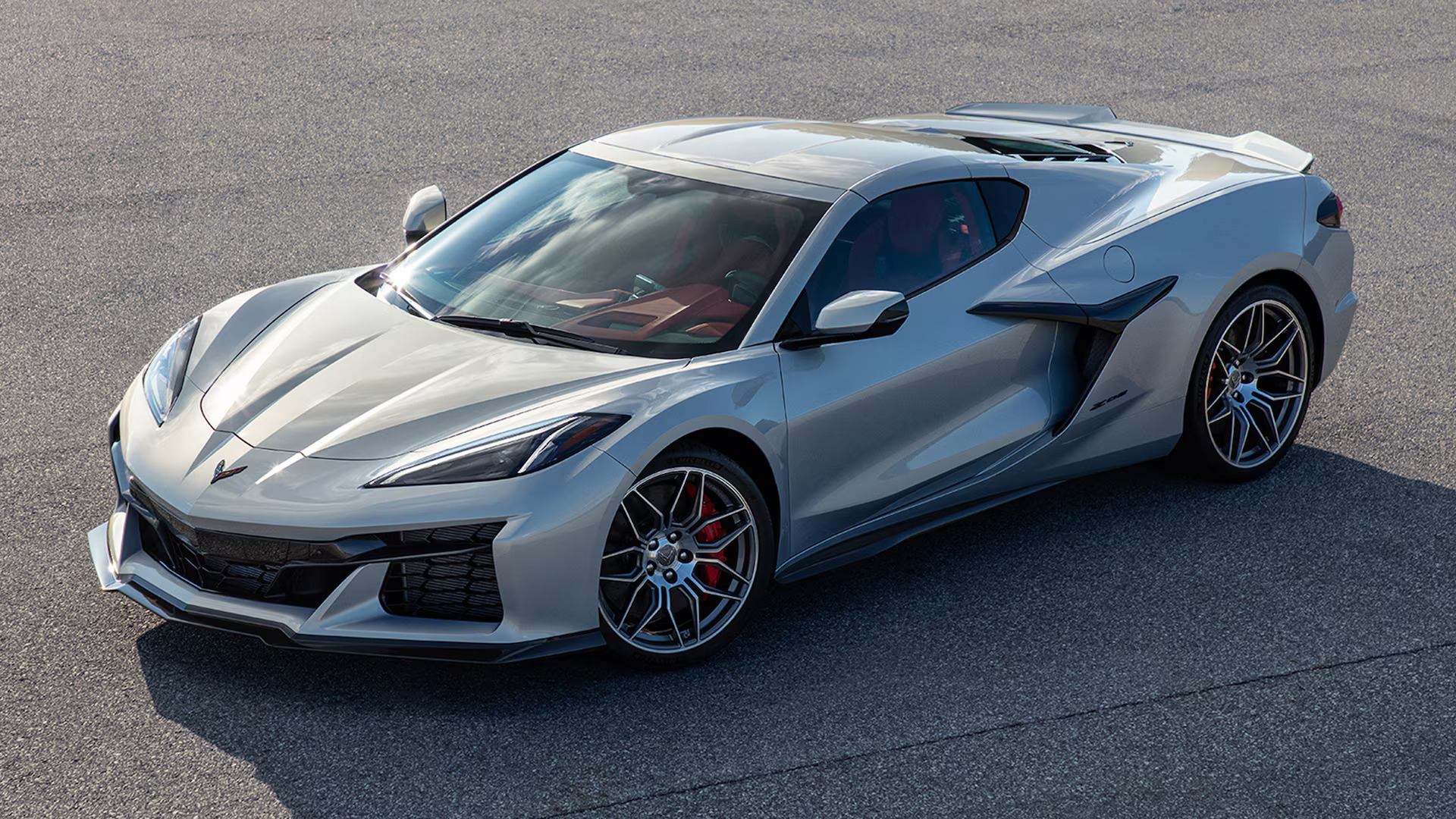
1. Chevrolet Corvette C8 Z06 ($110,000-$130,000)
The C8 Corvette Z06 represents perhaps the most significant performance bargain in automotive history. At its core sits a naturally aspirated 5.5-liter flat-plane crank V8 that screams to 8,600 rpm while producing 670 horsepower more than a Ferrari 458 Italia.
This isn’t just impressive on paper; the Z06 delivers an authentic supercar experience that rivals machines costing three times as much.
General Motors engineered the Z06 with track dominance in mind, equipping it with massive carbon ceramic brakes, Michelin Pilot Sport Cup 2 R tires, and aerodynamics that generate genuine downforce.
The mid-engine layout provides perfect weight distribution, while Magnetic Ride Control 4.0 suspension delivers both comfortable highway cruising and razor-sharp track precision. Independent testing has confirmed the Z06 can lap circuits faster than McLarens and Ferraris costing substantially more.
What makes the Z06 a non-regrettable purchase extends beyond raw performance. Chevrolet’s nationwide dealer network means you’ll never struggle to find qualified service, and parts availability rivals mainstream vehicles.
Unlike European exotics requiring specialized technicians and months-long parts orders, your local Chevrolet dealer can handle routine maintenance at reasonable costs.
The Z06 also demonstrates remarkable reliability, benefiting from decades of GM small-block engineering expertise and rigorous testing protocols.
The interior, while not Italian leather and hand-stitched luxury, offers surprising quality with comfortable sport seats, modern infotainment, and genuinely usable storage space.
You can actually daily drive a Z06 without sacrificing comfort or practicality. The forward visibility is excellent, the ride quality is compliant in Tour mode, and fuel economy, while not spectacular, won’t bankrupt you during normal commuting.
Resale values remain strong, particularly for desirable color combinations and Z07 package cars. The enthusiast community is massive, providing extensive aftermarket support and making eventual resale straightforward.
Perhaps most importantly, the Z06 delivers emotional engagement that flat-plane crank howl and mid-engine chassis balance create experiences that justify the supercar classification.
This isn’t a muscle car pretending to be exotic; it’s a legitimate supercar that happens to wear a bowtie badge, and at $110,000-$130,000, it represents extraordinary value that won’t leave you with buyer’s remorse.
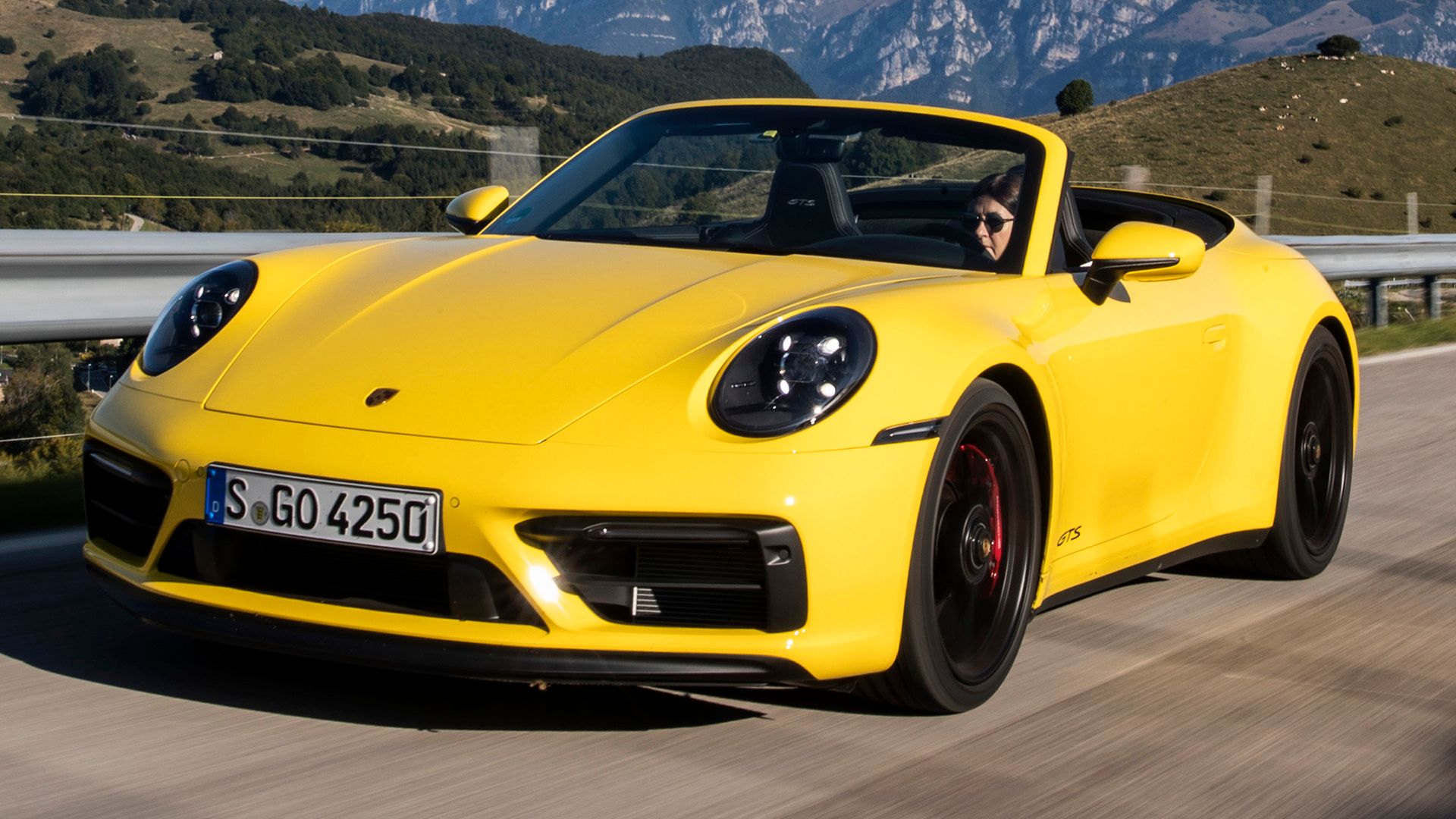
2. Porsche 911 Carrera S/GTS ($120,000-$150,000)
The Porsche 911 remains the benchmark for supercar practicality and year-round usability. The 992-generation Carrera S and GTS variants deliver legitimate supercar performance while maintaining the 911’s reputation for German reliability and everyday drivability.
The Carrera S produces 443 horsepower from its twin-turbocharged 3.0-liter flat-six, while the GTS bumps that to 473 horsepower, both launching to 60 mph in under 3.5 seconds.
What distinguishes the 911 from competitors is its remarkable versatility. This is a car you can drive through snowstorms with winter tires, commute comfortably in stop-and-go traffic, tour across continents, then unleash on track days without modification.
The rear-engine layout, once considered unconventional, now represents decades of refined engineering that delivers predictable handling and exceptional traction.
Porsche’s PDK dual-clutch transmission executes shifts with machine-gun precision, while the optional Sport Chrono package adds performance-enhancing features that transform character at the push of a button.
Ownership costs, while not cheap, remain reasonable for the segment. Porsche’s build quality is legendary, with engines regularly exceeding 200,000 miles when properly maintained.
The extensive dealer network ensures service availability, and while maintenance isn’t inexpensive, it’s predictable and transparent. Porsche’s CPO program offers comprehensive warranties, making used purchases less risky than most exotics.
The interior blends traditional 911 elements with modern technology the iconic five-gauge layout (now digital), the centrally-mounted tachometer, and the perfectly-weighted controls create an environment that feels special without being overwrought.
The rear seats, while small, accommodate children or additional cargo, and the front trunk provides surprising practicality for weekend trips.
Resale values are exceptional, with 911s historically depreciating slowly and desirable variants sometimes appreciating. The enthusiast community is passionate and knowledgeable, making ownership enjoyable and resale straightforward.
The 911 Carrera S or GTS won’t deliver the jaw-dropping visual drama of mid-engine Italian exotics, but they provide supercar performance with sports car practicality, a combination that ensures zero regret.
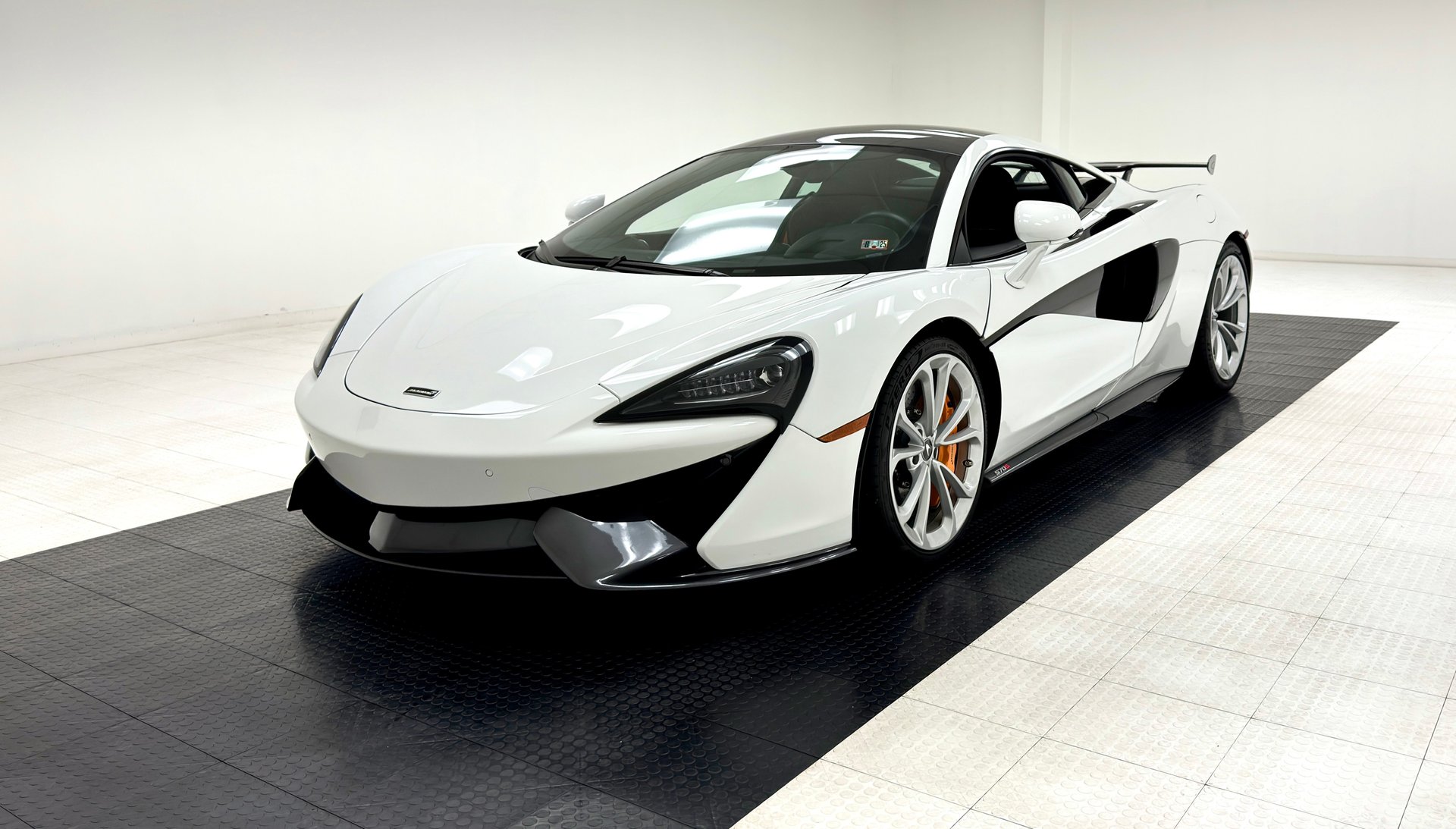
3. McLaren 570S/570GT ($150,000-$180,000)
McLaren entered the “accessible” supercar segment with the Sports Series, and the 570S represents British engineering at its finest. The twin-turbocharged 3.8-liter V8 produces 562 horsepower, propelling this carbon fiber monocoque chassis to 60 mph in 3.1 seconds and onward to 204 mph.
What impresses most isn’t just the straight-line speed but the chassis balance and steering precision that make the 570S genuinely thrilling on twisting roads.
The MonoCell II carbon fiber chassis provides exceptional rigidity while keeping weight to just 2,895 pounds, giving the 570S a power-to-weight ratio that embarrasses heavier competitors.
McLaren’s suspension geometry, derived from Formula 1 experience, delivers handling that feels telepathic the car responds to inputs with immediacy and precision that few rivals match. The hydraulic steering system, increasingly rare in modern cars, provides genuine feedback that connects driver to road surface.
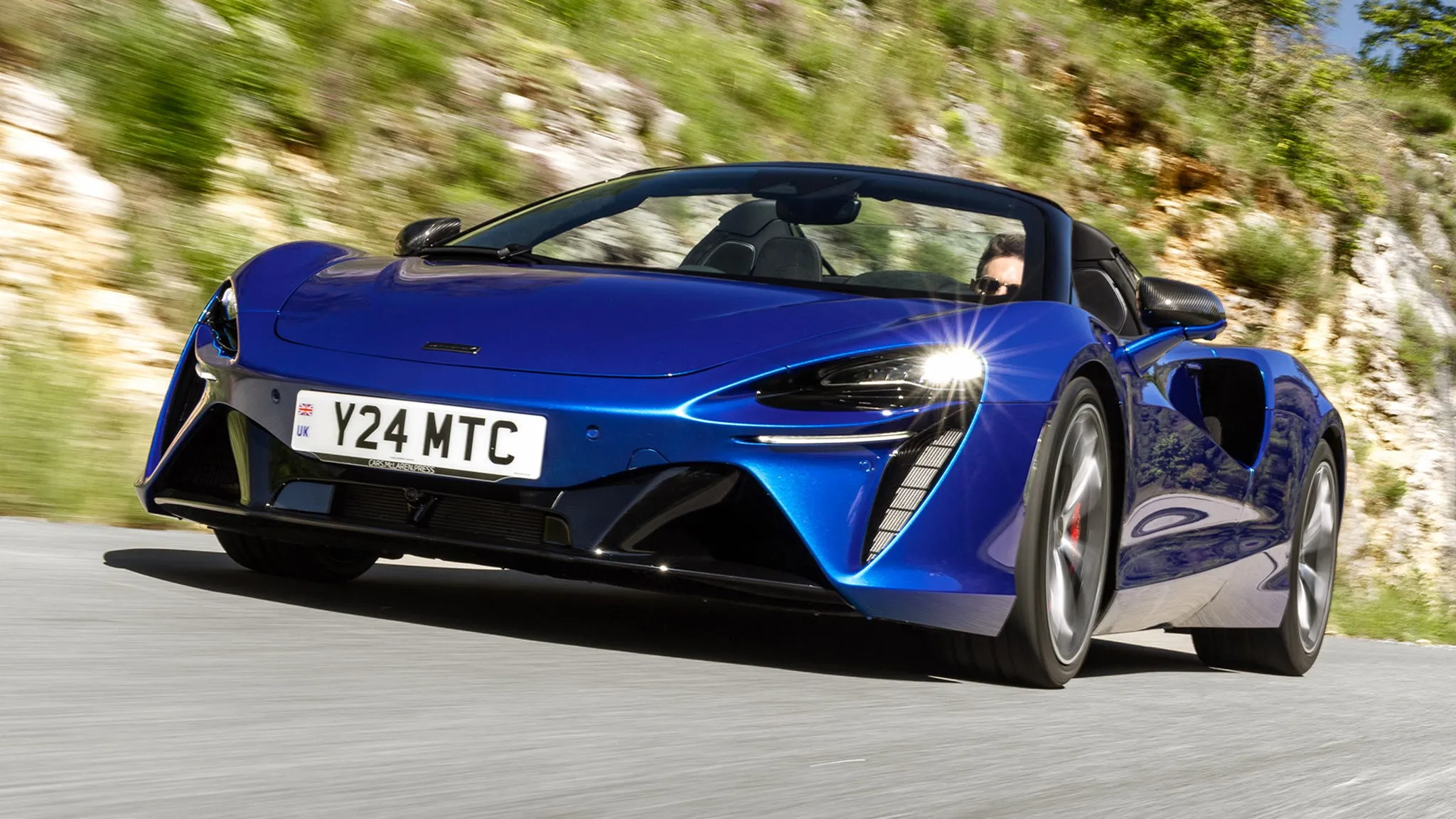
The 570GT variant adds practicality with a glass roof, softer suspension tuning, and additional cargo space, making it surprisingly usable for grand touring.
Both models feature dihedral doors that provide that essential supercar drama when arriving anywhere, and the interior, while minimalist, feels appropriately special with quality materials and McLaren’s distinctive design language.
Here’s where reality intrudes: McLaren ownership requires careful consideration. While the driving experience is extraordinary, reliability has been inconsistent, with early cars suffering from electrical issues and various component failures.
However, later production years (2018-2019) demonstrate improved quality, and vehicles still under McLaren’s warranty or extended coverage programs mitigate risk significantly.
The dealer network, while growing, remains limited compared to Porsche, though McLaren service has earned positive reviews where available. Depreciation has been brutal, which actually benefits buyers today $150,000 buys you a supercar that costs $200,000+ new, sometimes with significant warranty remaining.
For those willing to accept slightly higher ownership risk and secure proper warranty coverage, the 570S delivers an ownership experience that justifies any concerns.
The driving dynamics alone make it non-regrettable, assuming you’ve done proper due diligence on the specific vehicle and secured warranty protection.
4. Audi R8 V10 Performance ($160,000-$190,000)
The Audi R8 represents the sensible person’s mid-engine supercar exotic looks and performance wrapped in German reliability and Audi’s extensive dealer network.
The naturally aspirated 5.2-liter V10, shared with the Lamborghini Huracán, produces 562 horsepower in standard form and 602 in Performance trim, wailing to a 8,700 rpm redline with a soundtrack that justifies opening windows in tunnels. Zero to sixty arrives in 3.2 seconds, with top speed exceeding 200 mph.
What makes the R8 special is how it balances supercar drama with daily-driver practicality. The Quattro all-wheel-drive system provides confidence in adverse weather and launches with brutal effectiveness, while multiple drive modes allow character adjustment from docile commuter to track weapon.
The interior is pure Audi Virtual Cockpit digital displays, quality materials, intuitive controls, and build quality that feels several notches above Italian competitors. You can actually see out of an R8, park it without terror, and go through the tight spaces with surprising ease.
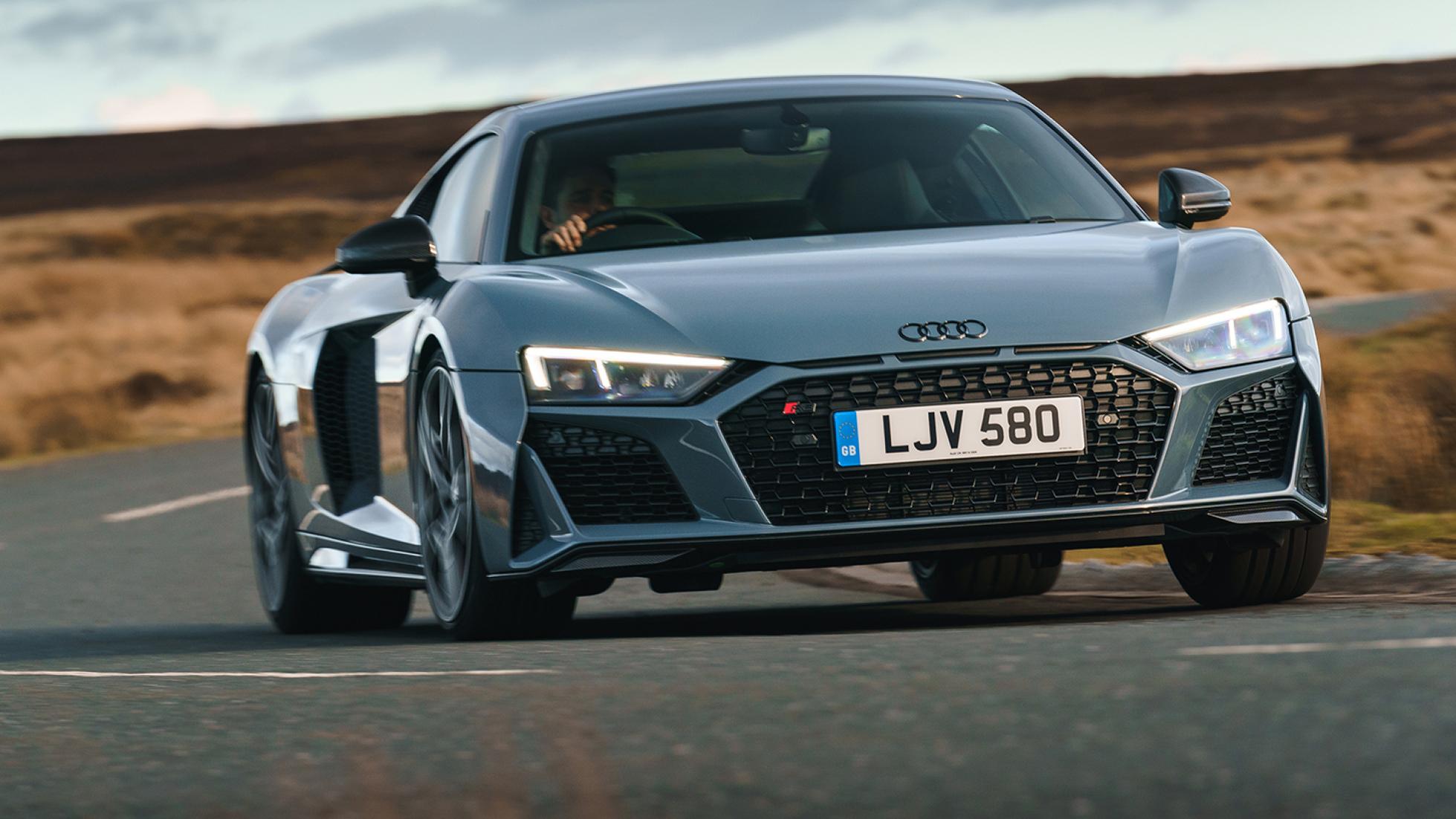
Reliability is where the R8 truly shines among mid-engine exotics. Built alongside the Huracán at Audi’s specialized Böllinger Höfe facility, the R8 benefits from Audi’s manufacturing precision and quality control.
The V10 engine, while complex, has proven durable with proper maintenance, and Audi’s dealer network means service is accessible nationwide. Maintenance costs, while not cheap, are transparent and predictable compared to boutique supercar brands.
The second-generation R8 (2016+) received updated styling, improved interior technology, and refined dynamics that make it even more capable.
The magnetic ride suspension and dynamic steering system enhance both comfort and performance, while the available carbon ceramic brakes provide fade-free stopping power for track enthusiasts. The R8 also offers a manual transmission in some markets, adding engagement for purists who prefer three pedals.
Depreciation has stabilized, with values holding reasonably well for clean examples. The R8’s relationship to the Lamborghini Huracán means you’re essentially buying Lamborghini performance with Audi reliability at a lower price point the V10 engine is identical, the chassis is closely related, yet the R8 costs significantly less.
For buyers seeking supercar thrills without supercar headaches, the R8 delivers an ownership experience that combines exotic performance with premium-brand dependability, making it essentially regret-proof.
Also Read: 9 Vehicles That Are Easy to Maneuver on City Streets
5. Nissan GT-R Premium/Track Edition ($115,000-$130,000)
The Nissan GT-R remains the technological tour de force that revolutionized performance car expectations when it launched. While the design has aged and the interior feels dated compared to newer rivals, the fundamental engineering brilliance still delivers supercar performance at sports car pricing.
The twin-turbocharged 3.8-liter V6 produces 565 horsepower in Premium trim and 600 in Track Edition, managed by Nissan’s sophisticated ATTESA E-TS all-wheel-drive system and dual-clutch transmission that executes launches with mechanical brutality.
What the GT-R lacks in romance, it compensates for with devastating real-world performance. Zero to sixty arrives in 2.9 seconds, and the GT-R’s ability to put power down in any weather condition makes it hilariously effective for point-to-point travel.
The chassis tuning, refined over numerous updates since 2009, provides handling balance that belies the car’s 3,900-pound curb weight. Advanced systems like independent rear transaxle, adjustable dampers, and sophisticated torque vectoring work seamlessly to make drivers feel like heroes regardless of skill level.
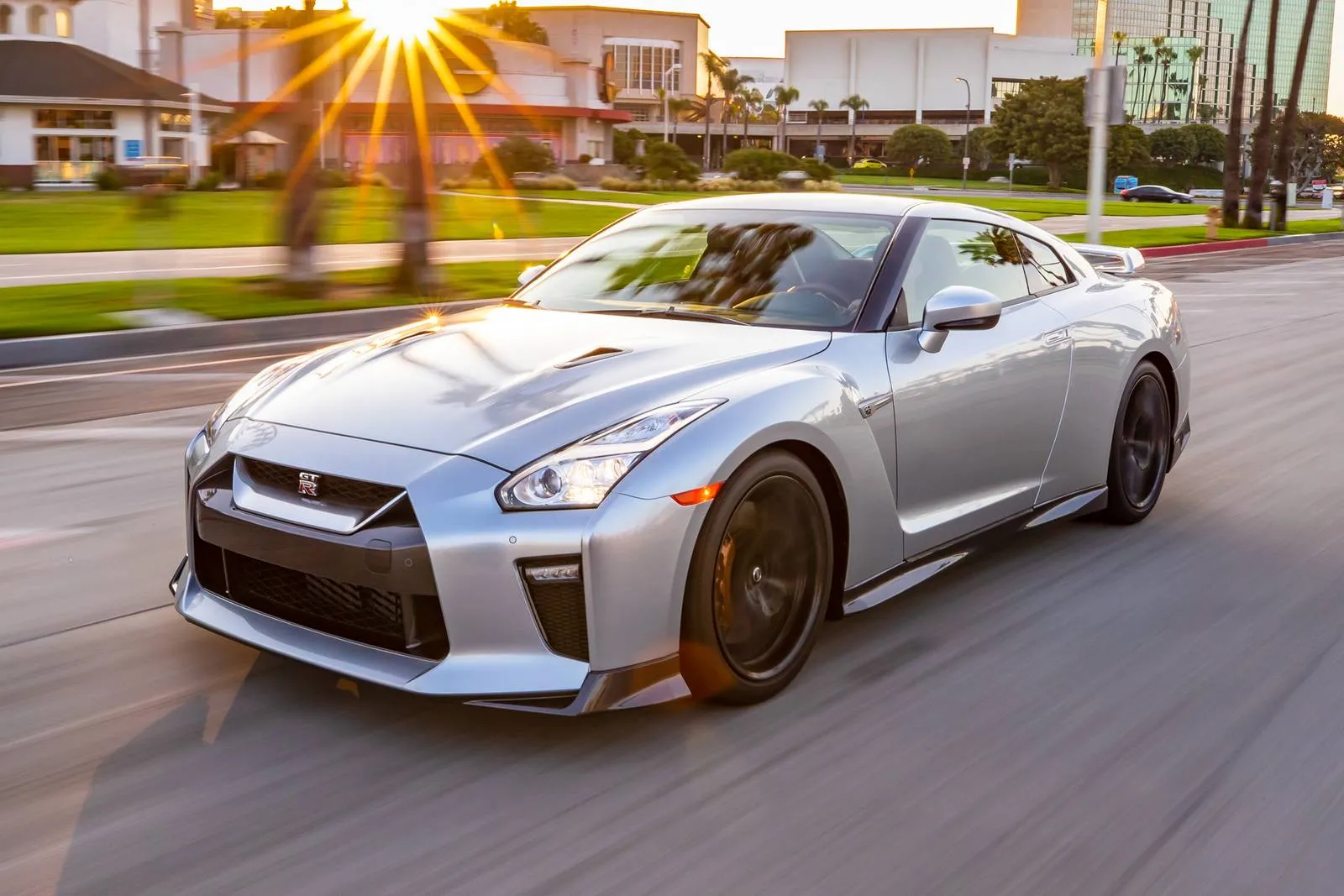
The GT-R’s reputation for reliability is well-earned, particularly for stock or lightly-modified examples. The VR38DETT engine, while highly-stressed, proves durable with proper maintenance, including frequent transmission fluid changes.
Nissan’s dealer network means service accessibility exceeds boutique supercar brands, though finding technicians experienced with GT-R-specific maintenance may require seeking out performance-oriented dealers. Parts availability is excellent, and the massive aftermarket support means modifications and upgrades are readily available.
The interior represents the GT-R’s main compromise materials and design feel dated compared to modern alternatives, and the ergonomics prioritize function over form.
However, the supportive seats, clear instrumentation, and intuitive controls create an environment focused on driving rather than luxury.
The rear seats, while cramped, add practicality for occasional use or cargo flexibility. The ride quality is firm but not punishing, making the GT-R surprisingly tolerable for daily driving despite its performance focus.
Resale values have stabilized after initial depreciation, with clean examples commanding strong prices, particularly for later model years with updated technology.
The GT-R community is passionate and supportive, providing extensive knowledge resources and making ownership more enjoyable.
For those willing to accept aging design and a somewhat utilitarian interior, the GT-R delivers supercar performance with Japanese reliability a combination that makes it difficult to regret, especially considering it remains one of the fastest point-to-point cars under $200,000.
6. Lotus Emira V6 First Edition ($95,000-$105,000)
The Lotus Emira represents the British brand’s most refined and accessible sports car, combining classic Lotus handling brilliance with long-overdue improvements in build quality and practicality.
The supercharged 3.5-liter V6, sourced from Toyota, produces 400 horsepower, modest by modern supercar standards but more than adequate given the Emira’s featherweight 3,097-pound curb weight.
The power-to-weight ratio delivers 0-60 mph in 4.2 seconds with the manual transmission, and the driving experience emphasizes engagement over brutal acceleration.
What makes the Emira special is the classic Lotus formula executed with modern refinement. The bonded aluminum chassis provides exceptional rigidity, while the suspension geometry, refined through decades of motorsport and road car development, delivers handling precision that makes the Emira feel like an extension of the driver’s nervous system.
The steering is perfectly weighted and communicative, the chassis balance is neutral and adjustable, and the entire experience rewards skilled driving in ways that raw power never can. This is a car that makes B-roads feel like personal race tracks.
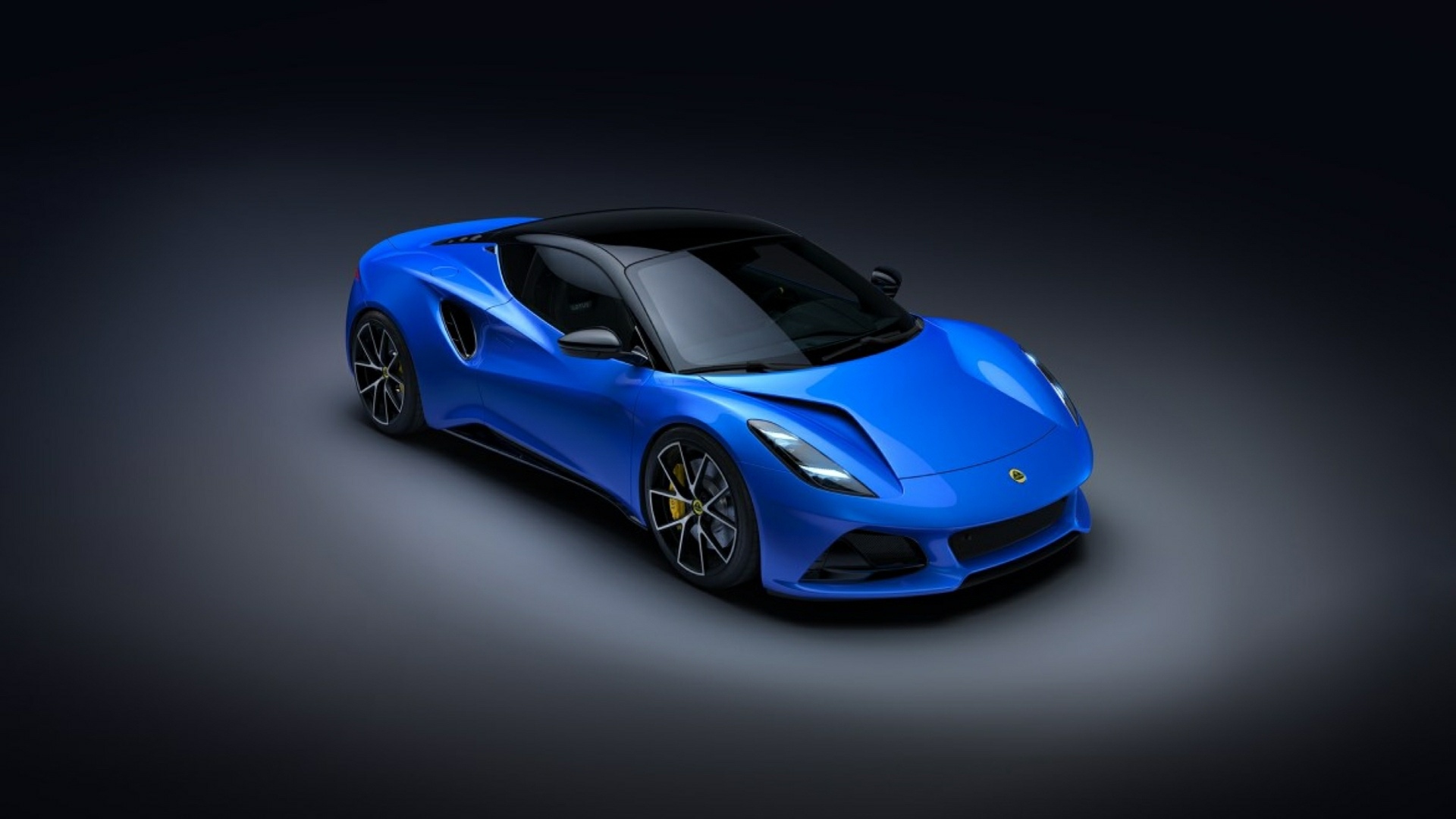
Lotus addressed previous shortcomings with impressive thoroughness. The interior, designed with Lotus’s new owner Geely’s resources, features quality materials, comfortable sport seats, modern infotainment, and build quality that finally matches competitors.
The ride quality, while firm, doesn’t punish like previous Lotus models, and noise insulation improves comfort without diluting engagement.
The Emira even offers practical features like door pockets, decent visibility, and amenities like climate control that actually works revolutionary for Lotus.
Reliability concerns that plagued previous Lotus models are largely addressed. The Toyota V6 and Aisin transmission are proven components with extensive service histories, and Lotus’s manufacturing processes have improved dramatically.
The dealer network remains limited compared to mainstream brands, but Lotus Cars USA provides nationwide support, and the mechanical simplicity means capable independent shops can handle maintenance. Parts availability for the Toyota-sourced drivetrain is excellent.
The Emira’s value proposition is compelling this is a hand-built sports car that delivers driving purity, increasingly rare in modern vehicles. While it lacks the straight-line brutality of turbocharged rivals, it provides engagement that makes every drive memorable.
The manual transmission option adds to the analog experience, and the gorgeous design turns heads everywhere. For enthusiasts prioritizing driver connection over straight-line speed, the Emira delivers an ownership experience that emphasizes joy over numbers, making it wonderfully non-regrettable for the right buyer.
7. BMW M8 Competition ($135,000-$145,000)
The BMW M8 Competition occupies a unique position it’s a grand touring supercar that prioritizes continent-crossing comfort while delivering shocking performance.
The twin-turbocharged 4.4-liter V8 produces 617 horsepower and 553 lb-ft of torque, launching this substantial machine to 60 mph in 3.0 seconds flat despite weighing 4,200 pounds.
The xDrive all-wheel-drive system ensures traction in all conditions, while the M-tuned suspension manages the seemingly impossible task of providing both comfort and dynamic capability.
The M8’s character differs from mid-engine exotics this is a car for devouring continents at triple-digit speeds rather than carving canyon roads.
The interior is spectacular, featuring BMW’s finest materials, deeply supportive M Sport seats, cutting-edge technology including gesture controls and a premium sound system, and genuine space for four adults.
The rear seats aren’t merely decorative like most supercars; they actually accommodate passengers comfortably for reasonable distances. The trunk provides usable cargo space, making the M8 genuinely practical for road trips or airport runs.
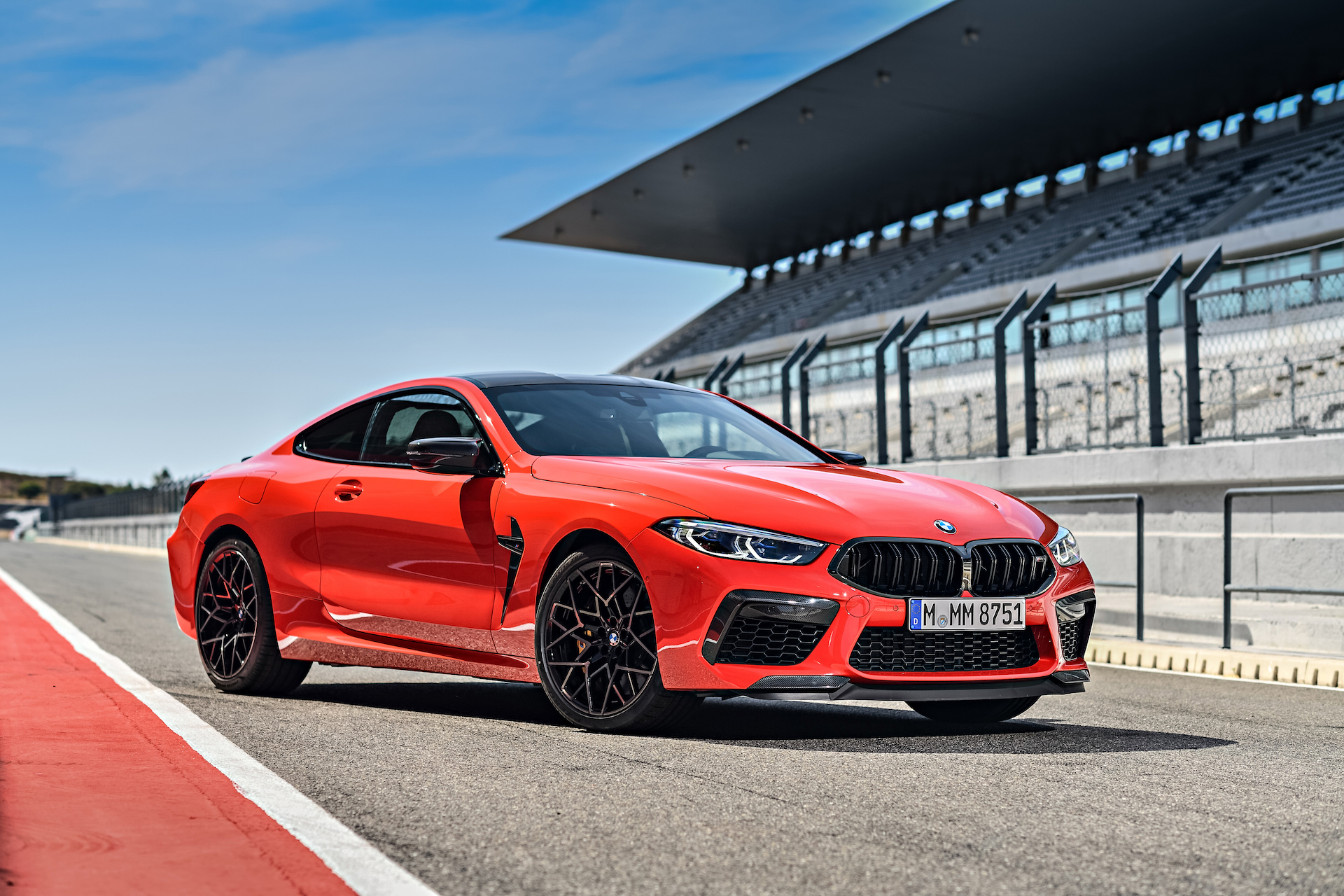
BMW’s reputation for reliability in high-performance models is mixed, but the M8 benefits from mature S63 engine architecture that’s powered previous M cars successfully.
The complexity is undeniable xDrive, active differentials, adjustable dampers, and sophisticated electronics create potential failure points.
However, BMW’s comprehensive warranty and extensive dealer network provide security, and maintenance costs, while substantial, are predictable. BMW’s comprehensive CPO program adds protection for used purchases.
The M8 delivers performance that embarrasses dedicated sports cars the acceleration is savage, the brakes are massive carbon ceramics with tremendous capability, and the handling defies physics, given the curb weight.
The M-specific chassis tuning, rear-wheel steering, and active differential create agility that belies the size. On track, the M8 surprises with genuine capability, though it’s most at home on fast, flowing roads or autobahn runs where the power and comfort shine.
Depreciation is steeper than that of more exotic brands, which benefits buyers seeking used examples. A new $150,000 car can be found for $100,000-$120,000 after a few years, sometimes with significant warranty remaining.
For those seeking supercar performance with luxury car comfort and genuine four-seat practicality, the M8 Competition delivers an ownership experience that won’t leave you regretting the compromise between exotic thrills and daily usability because there’s surprisingly little compromise.
8. Acura NSX Type S ($170,000-$190,000)
The second-generation NSX represents Honda’s technological showcase a hybrid supercar combining a twin-turbocharged V6 with three electric motors to create all-wheel drive and torque vectoring of extraordinary sophistication.
The Type S final edition increases output to 600 horsepower and enhances dynamics with revised tuning, resulting in 0-60 mph in 2.7 seconds and a top speed of 191 mph. The technology isn’t just impressive on paper; it fundamentally transforms how the NSX drives.
The Sport Hybrid SH-AWD system uses electric motors to provide instant torque vectoring at the front axle, allowing the NSX to rotate into corners with precision while maintaining traction and stability.
The transition between electric and combustion power is seamless, creating a powertrain that feels like a more powerful, more responsive naturally aspirated engine rather than the turbocharged lag typical of forced induction.
The nine-speed dual-clutch transmission executes shifts quickly, and the various drive modes genuinely transform character from comfortable GT to track weapon.
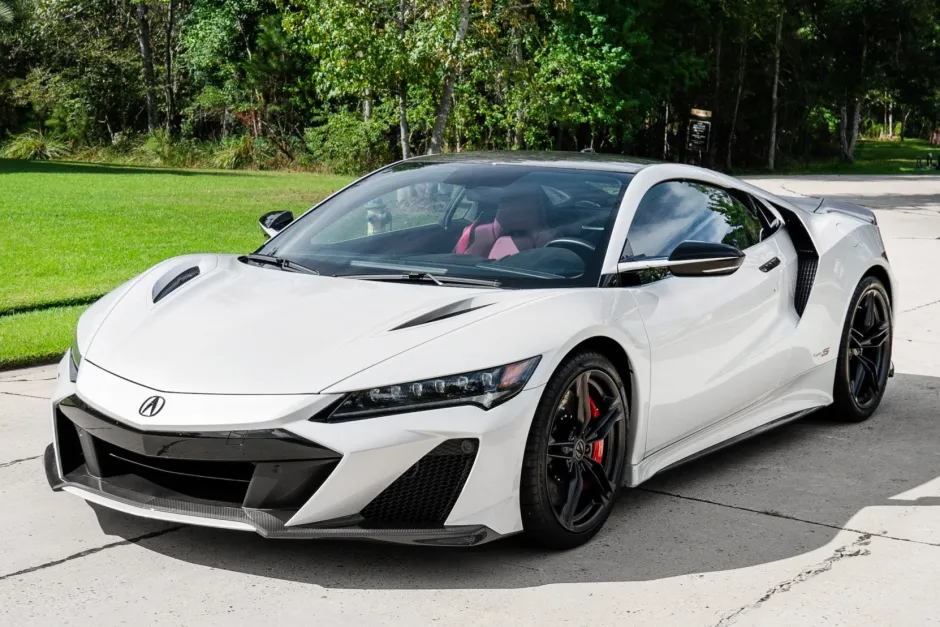
Honda’s reliability and build quality distinguish the NSX from European rivals. Built at Honda’s Performance Manufacturing Center in Ohio with meticulous attention to detail, the NSX demonstrates typical Honda durability and quality control.
The complexity of the hybrid system initially concerned enthusiasts, but real-world experience has proven the technology robust. The extensive dealer network means service availability exceeds boutique brands, though NSX-specific expertise may require larger Acura dealers. Maintenance costs, while not cheap, are reasonable given the performance level.
The interior emphasizes driver focus with a wraparound cockpit design, excellent visibility, and quality materials throughout. The NSX feels smaller and more maneuverable than its dimensions suggest, making it surprisingly usable in urban environments.
The ride quality is compliant for a supercar, cargo space is adequate for weekend trips, and the experience is civilized enough for daily driving without sacrificing exotic character.
The NSX’s market reception was disappointing, resulting in limited production and eventual discontinuation. However, this creates opportunity for buyers depreciation has been significant, with used examples offering tremendous value.
The Type S final edition, limited to just 350 units, represents the ultimate expression and may prove collectible long-term. For those seeking cutting-edge technology, Honda reliability, and legitimate supercar performance in a package that won’t drain your bank account with maintenance nightmares, the NSX delivers an ownership experience that’s genuinely regret-free.
9. Mercedes-AMG GT C/GT R ($150,000-$175,000)
The Mercedes-AMG GT represents the German brand’s purpose-built sports car, featuring a front-engine layout that prioritizes weight distribution and handling balance.
The hand-built twin-turbocharged 4.0-liter V8 produces 550 horsepower in GT C trim and 577 in GT R, both offering exhaust soundtracks that combine turbocharged fury with AMG’s signature crackle and pop on overrun.
The rear-wheel-drive chassis, adaptive suspension, and rear-wheel steering create a driving experience that emphasizes engagement and precision.
The GT R “Beast of the Green Hell” earned its nickname through Nürburgring development, featuring track-focused suspension, aggressive aerodynamics, and carbon ceramic brakes standard.
The active rear-axle steering enhances both low-speed maneuverability and high-speed stability, while the nine-stage traction control allows customization for track work.
The GT C offers 90% of the performance with greater everyday usability and a retractable soft top that adds open-air drama. Both variants feature AMG’s exceptional dual-clutch transmission with multiple shift modes.
Mercedes-Benz reliability and dealer network advantages make the AMG GT more sensible than limited-production exotics. While AMG models introduce complexity and potential maintenance costs, Mercedes’ comprehensive warranty and extensive dealer network provide security.
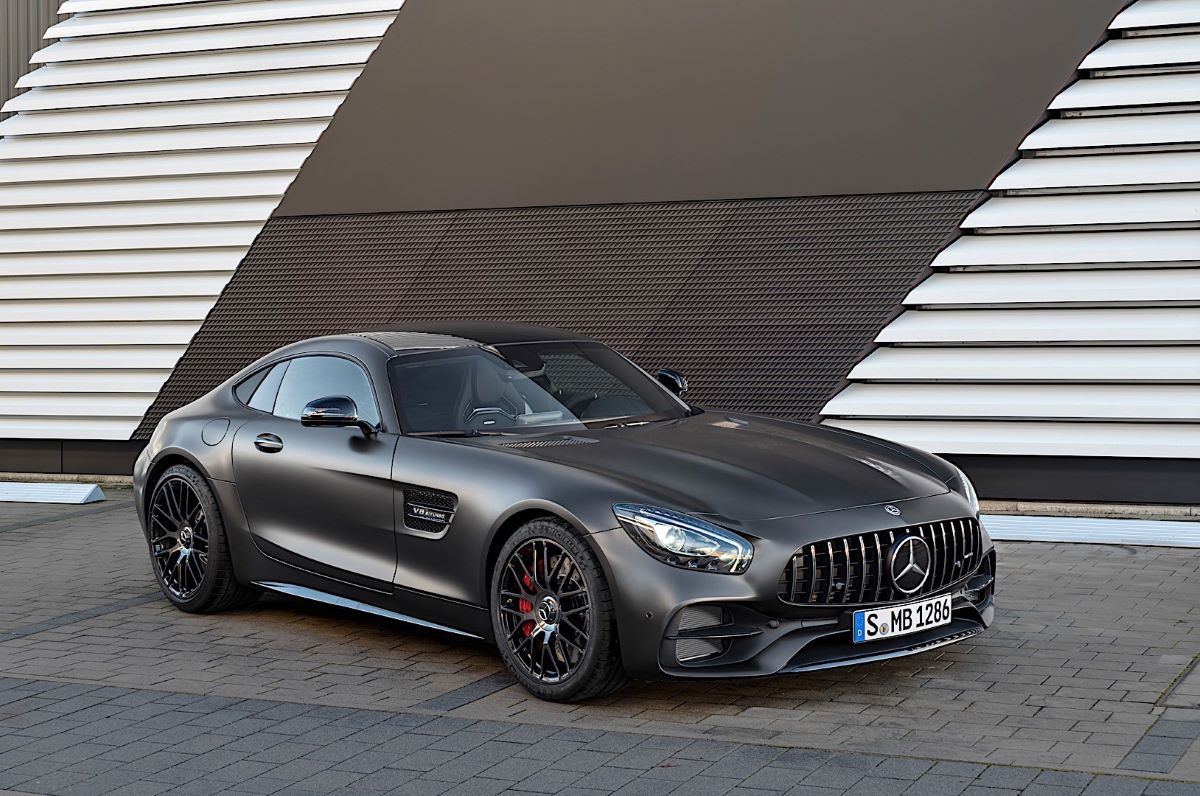
The hand-built AMG engine comes with pride of ownership each engine features a plaque signed by the technician who assembled it. Mercedes’ CPO program offers excellent coverage for used purchases, mitigating risk significantly.
The interior showcases Mercedes’ latest technology and materials the wide center console emphasizes the cockpit feel, the digital instrumentation is configurable and clear, and the ambiance blends sports car focus with luxury car refinement.
The GT isn’t particularly practical, the trunk is small, cabin space is tight, and the ride can be harsh in Sport+ mode, but it’s comfortable enough for grand touring when needed. The long hood and muscular proportions provide classic sports car aesthetics with modern execution.
Depreciation has been moderate, with values holding reasonably well for desirable colors and options. The GT R’s limited production and track focus may support long-term collectibility, while the GT C offers accessible performance with added practicality.
For enthusiasts seeking front-engine/rear-drive purity with modern AMG performance and Mercedes luxury, the AMG GT delivers an ownership experience that balances exotic thrills with German sensibility a combination unlikely to disappoint.
10. Dodge Viper (Late Generation: 2013-2017) ($90,000-$130,000)
The Dodge Viper represents the raw, unfiltered American supercar a naturally aspirated 8.4-liter V10 producing 645 horsepower, delivered through a six-speed manual transmission to massive rear tires with minimal electronic intervention.
This is supercar ownership for purists who value visceral experience over technological sophistication. The Viper makes no apologies for what it is: a barely-tamed road-legal race car that demands respect and rewards skill.
The fifth-generation Viper (2013-2017) refined the formula with improved interior quality, better ergonomics, and chassis tuning that made it genuinely capable rather than just brutally fast.
The aluminum space frame provides exceptional rigidity, while the suspension geometry benefits from racing development. Electronic stability control (which can be fully disabled) adds a safety net, and features like launch control help manage the enormous power.
The TA (Time Attack) and ACR (American Club Racer) variants add track-focused hardware including massive aerodynamics, adjustable suspension, and extreme performance tires.
Reliability is surprisingly good for a hand-built American exotic. The V10 engine, while massive, is relatively simple without forced induction or complex hybrid systems.
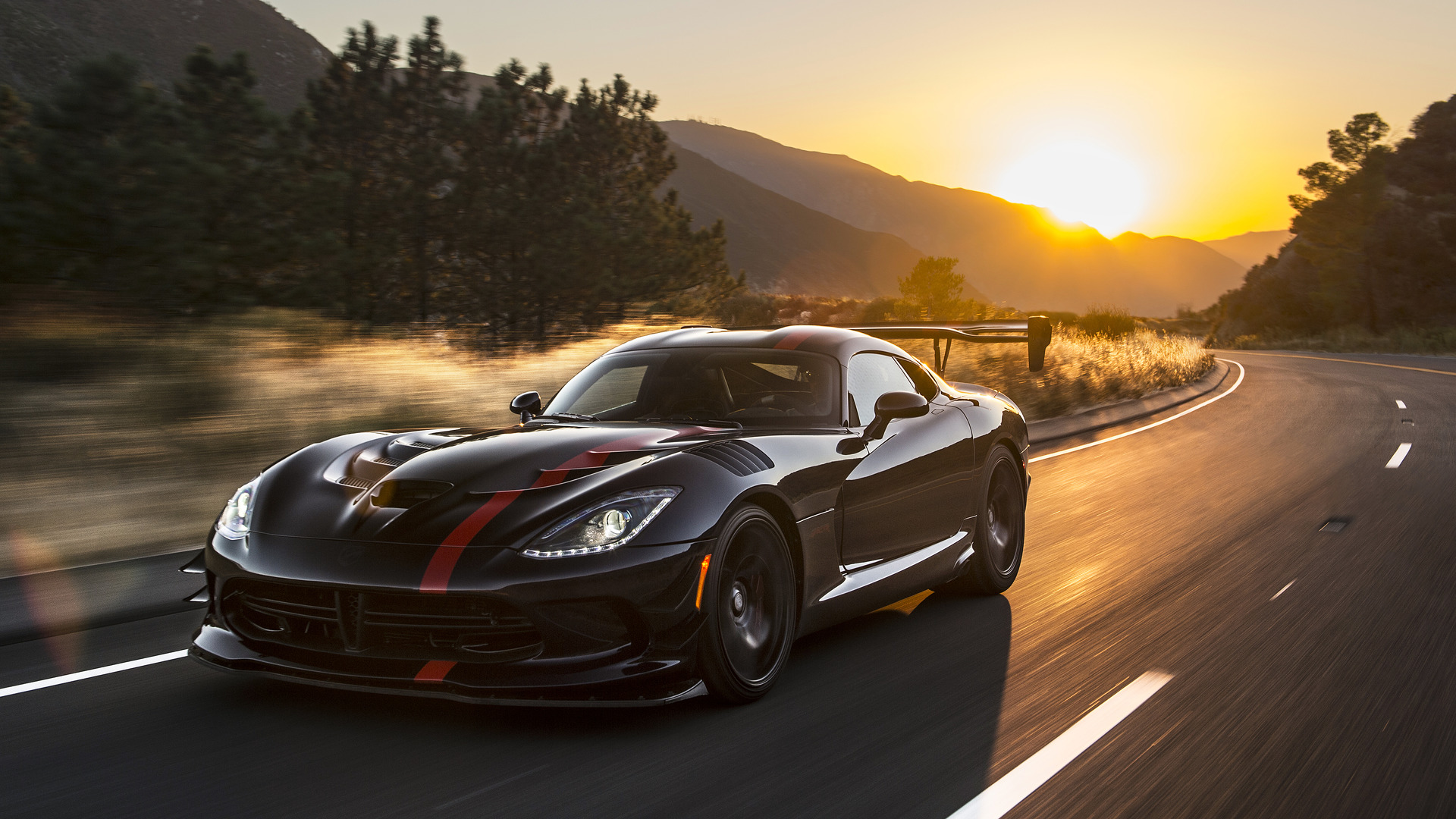
Regular maintenance is straightforward, though consumables like tires, brakes, and clutches wear quickly given the performance. The Viper’s mechanical simplicity means capable independent shops can handle service, and the enthusiast community provides extensive knowledge and support. Parts availability through Dodge ensures you won’t be stranded.
The Viper’s interior improved dramatically in the final generation quality materials, comfortable seats, and functional climate control addressed previous shortcomings.
However, make no mistake: this remains a focused performance machine rather than a luxury cruiser. The ride is firm, road noise is significant, and the massive hood makes urban parking challenging. The trunk offers minimal space, and fuel economy hovers in single digits when driven enthusiastically.
The Viper’s discontinuation in 2017 created instant collectibility, with values stabilizing and certain variants beginning to appreciate. The ACR’s record-setting Nürburgring time and track dominance ensure long-term desirability, while all Vipers represent the end of an era for naturally aspirated, manual-transmission American supercars.
For collectors and enthusiasts seeking analog driving experience with American muscle heritage, the Viper delivers ownership that’s genuinely special assuming you embrace its uncompromising character rather than expecting European refinement.
Also Read: 7 Luxury Cars That Handle City Driving Comfortably
