
Los Angeles and electric vehicles should be a match made in heaven, right? You’ve got perfect weather year-round, distances that demand reliable transportation, and a culture that’s always been quick to embrace the next big thing in automotive technology.
But here’s what nobody talks about enough: not every EV actually works well for the way people live and drive in Southern California. Some handle the unique demands beautifully, while others create frustrations that test even the most committed environmentalist’s patience.
What makes an EV practical in LA goes beyond just having good range numbers on paper. You need a charging infrastructure that actually exists where you need it, not just on maps that promise future installations.
Real-world range that accounts for sitting in traffic with the air conditioning blasting through another 95-degree afternoon matters more than EPA estimates achieved under ideal laboratory conditions. Fast charging capability becomes essential when your daily routine involves unpredictable driving patterns, unexpected detours, and those spontaneous trips to the beach or mountains that define life here.
Then there’s the reality of where people actually live. Not everyone parks in a garage with a dedicated charger waiting overnight. Apartment dwellers, condo residents, and renters often face charging situations that range from inconvenient to nearly impossible.
An EV that requires constant access to home charging becomes impractical fast when your only option involves competing for public chargers or planning your entire week around charging sessions at shopping centers.
We’ve identified five electric vehicles that genuinely work for LA life, handling everything from beach runs to desert escapes without causing range anxiety or charging headaches. Following that, we’ll cover five EVs that sound great until you actually try living with them here, vehicles with limitations that become deal-breakers once you understand how they perform in real Southern California conditions.
Whether you’re shopping for your first EV or considering a switch from your current model, understanding these differences could save you from a purchase you’ll regret three months down the road.
EVs That Work in Los Angeles
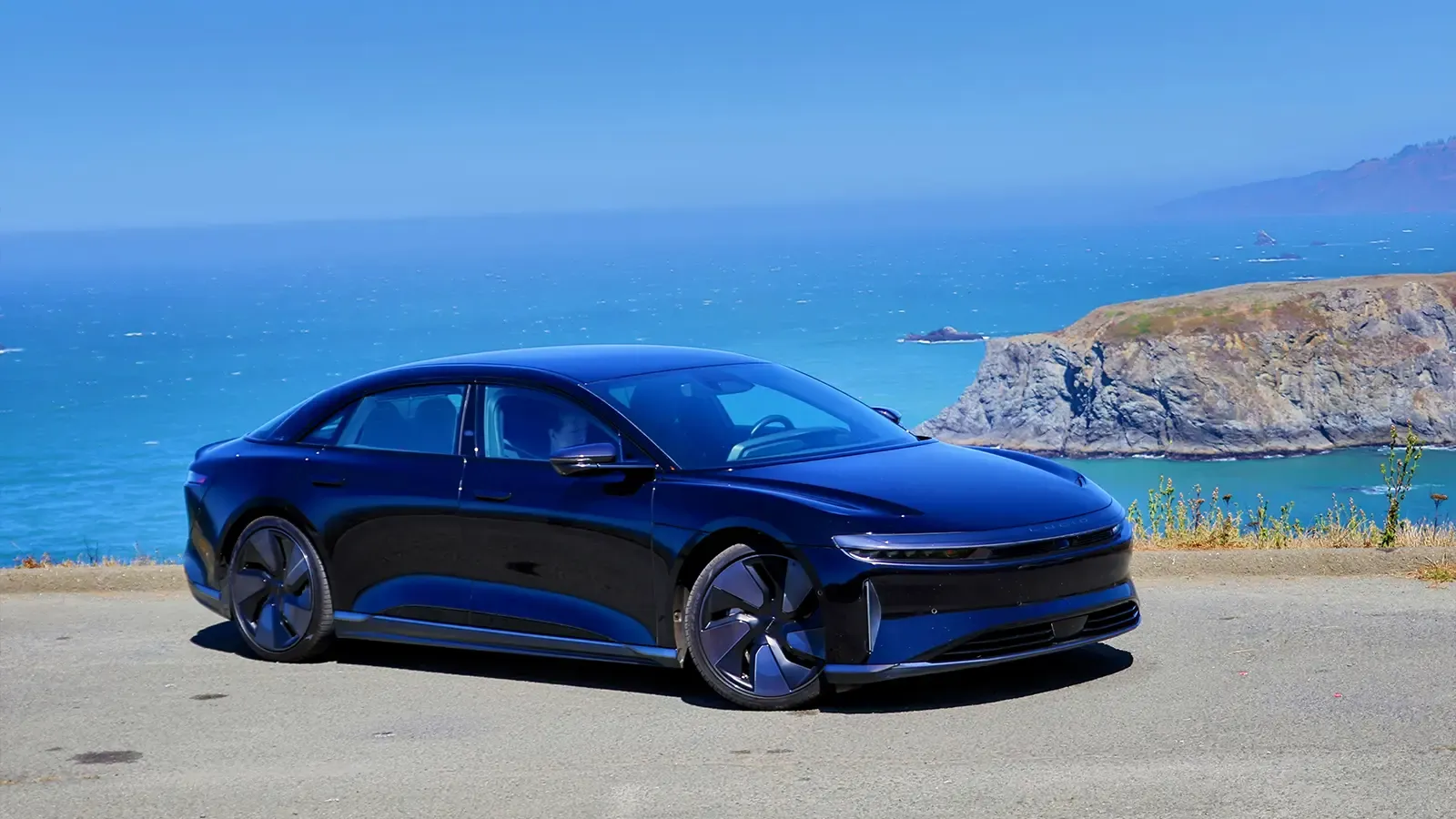
1. Lucid Air Grand Touring
Range anxiety becomes a distant memory when you’re piloting a vehicle that can travel 516 miles on a single charge. Lucid engineered this Air Grand Touring with efficiency as a primary goal, creating an EV that sips electrons instead of gulping them.
You can drive from downtown LA to San Francisco and back without stopping to charge, or spend an entire week commuting without plugging in if you’re averaging typical distances. That freedom changes how you think about electric vehicle ownership, eliminating the mental math that accompanies every trip in shorter-range EVs.
Charging speeds impress even more than range figures. Lucid’s 900-volt architecture enables incredibly fast DC charging, adding up to 300 miles of range in just 20 minutes when connected to a capable fast charger.
The EA charging network has solid coverage across LA and its surrounding areas, with stations located at shopping centers, rest stops along major highways, and increasingly at grocery stores and entertainment venues.
That combination of long range and quick charging means you rarely need to charge, but when you do, it happens fast enough that you can grab coffee and use the restroom while the battery fills. Dual-motor setup produces 819 horsepower, giving this sedan acceleration that embarrasses sports cars costing twice as much.
Merging onto the 405 during rush hour requires confidence and power, both of which this Air delivers without hesitation. Handling stays composed through sweeping freeway curves and tight canyon roads alike, with adaptive suspension that reads pavement conditions and adjusts damping accordingly.
Steering provides actual feedback, something rare in EVs where many manufacturers opt for vague, over-assisted systems that communicate nothing about road surfaces or available grip. Driver assistance features handle stop-and-go traffic with grace, maintaining smooth acceleration and braking that feels almost human in its smoothness.
Highway Assist keeps you centered in your lane and maintains safe following distances, reducing fatigue during those long slogs through congested freeways that define LA driving. Visibility proves excellent thanks to slim pillars and large glass areas, making lane changes and parking easier than in many sedans with smaller windows and thicker roof supports.
LA drivers need vehicles that can handle anything from beach parking lots to Mulholland curves to desert highways, and this Lucid Air checks every single box.
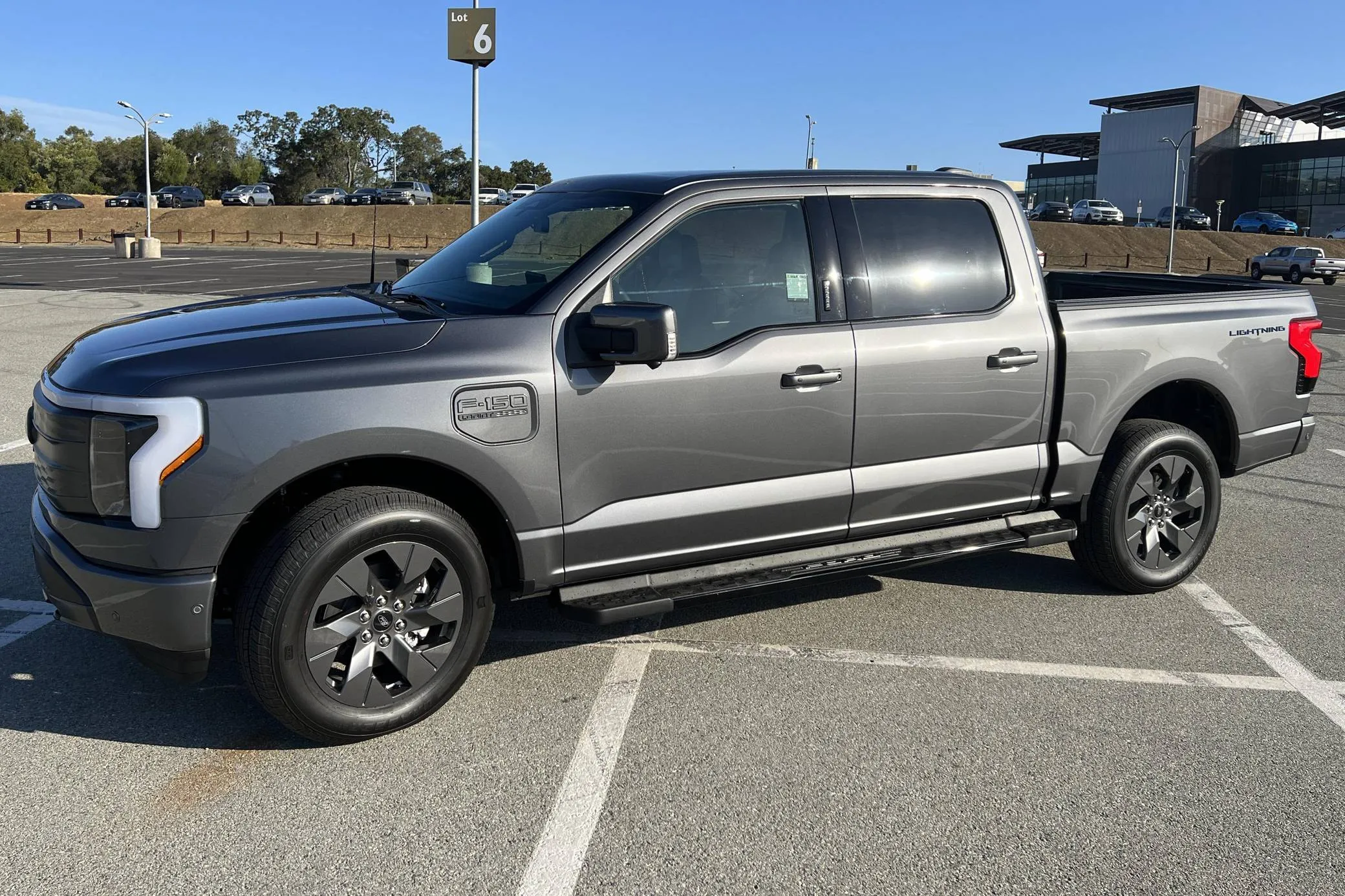
2. Ford F-150 Lightning Lariat
Truck practicality meets electric efficiency in a manner suited to everyday vehicle use in Los Angeles. Ford converted its best-selling pickup to battery power while retaining the strength associated with the F-150 name.
Dual motors deliver 580 horsepower and 775 pound-feet of torque, supporting confident towing and hauling for building supplies or a boat to the marina. The extended range battery reaches up to 320 miles, covering daily duties and weekend trips without frequent charging stops.
Pro Power Onboard turns the truck into a mobile generator, supplying up to 9.6 kilowatts through outlets in the front boot, load bed, and cabin. This capacity proves useful during wildfire season and planned power shutoffs, when households need temporary electricity.
Owners can run essential appliances, charge devices, and operate tools for home projects without a separate generator. The front boot offers 14.1 cubic feet of lockable, weatherproof storage for valuables at the beach or chilled groceries.
Charging support benefits from partnerships across multiple networks. The BlueOval Charge Network links providers under one payment system, removing the need for several applications and accounts. Plug and Charge communication with compatible stations begins sessions automatically without cards or phone prompts.
Home charging with the available 80-amp Ford Charge Station Pro adds about 30 miles of range per hour, allowing a full recharge overnight after demanding use. Cabin design prioritises function and comfort with supportive seats, clear controls, and durable materials. The SYNC 4A system runs on a 15.5-inch portrait screen with sharp graphics and quick responses.
Wireless smartphone integration and route planning with charging guidance support daily travel for reliable urban and coastal commuting across Southern California regions today.
Also Read: Top 10 Old-School Car Technologies EVs Can’t Replicate
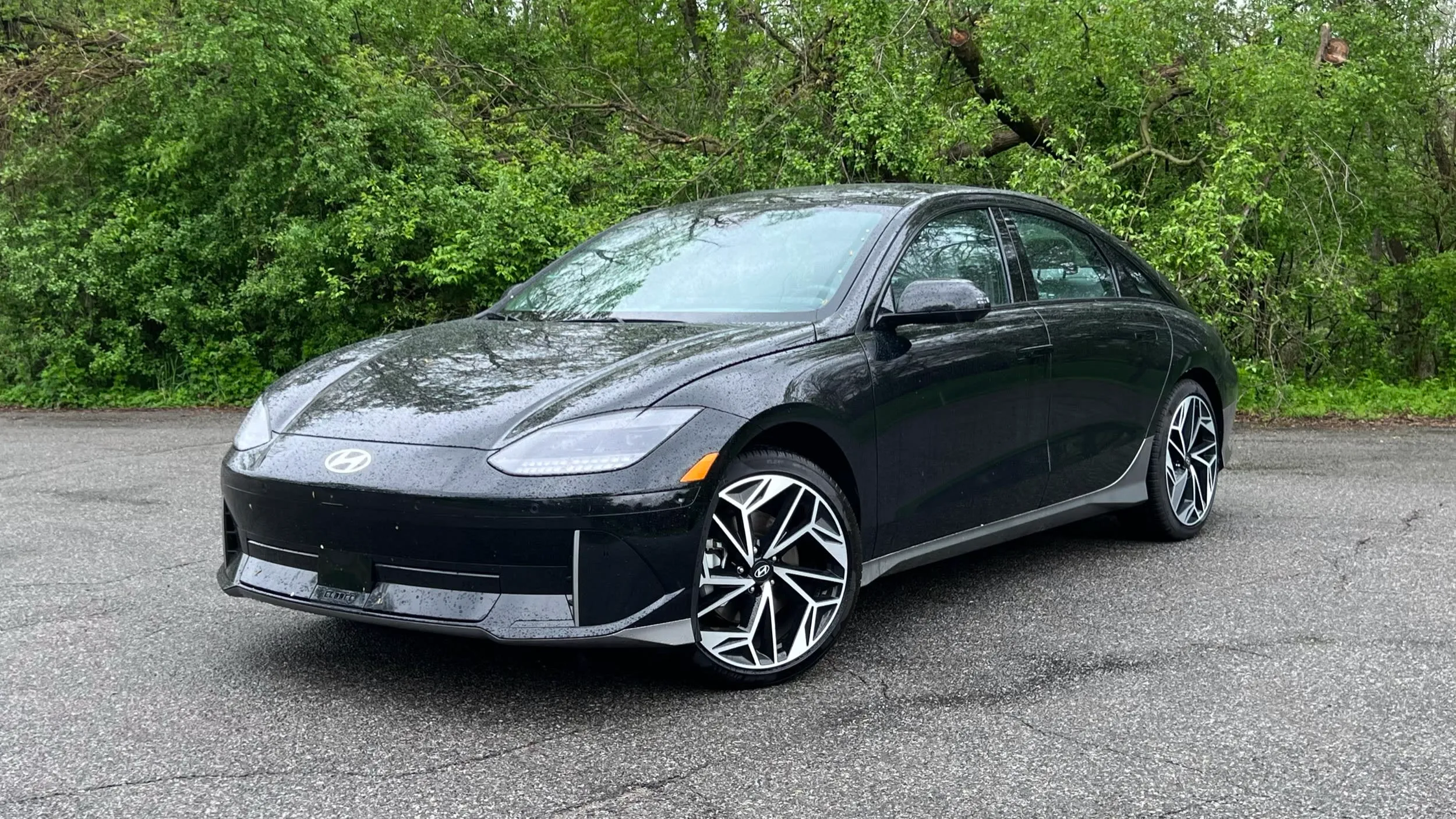
3. Hyundai Ioniq 6 Limited
Aerodynamic efficiency becomes beautiful in Hyundai’s sleek sedan that slips through the air like nothing else on the road. The coefficient of drag measures just 0.21, making this one of the slipperiest production vehicles ever built. That shape isn’t just for looks; it translates directly into a range that exceeds expectations.
EPA rates the long-range rear-wheel-drive model at 361 miles, and real-world LA driving with mixed freeway and city use typically delivers within 10% of that estimate. Highway cruising at 70 mph barely dents the battery, letting you road trip without constant charging stops.
Vehicle-to-Load capability allows the Ioniq 6 to power external devices through an adapter, useful for camping trips, tailgating, or emergencies. While not as powerful as the F-150’s onboard generator, it provides enough juice for laptops, portable refrigerators, and other devices you might need away from traditional power sources.
800-volt architecture enables incredibly fast DC charging, adding 10% to 80% in roughly 18 minutes when connected to a 350 kW charger. That speed makes charging stops feel more like brief pauses than interruptions to your journey.
Dual-motor all-wheel-drive variant produces 320 horsepower, delivering acceleration that feels genuinely quick without being overwhelming. Launch control allows repeatable hard launches that showcase just how fast this sedan can sprint from a standstill, perfect for those moments when you need to merge aggressively or want to show off a bit.
Adaptive suspension adjusts damping based on drive mode and road conditions, maintaining composure whether you’re cruising PCH or attacking Angeles Crest Highway. Steering weight and response feel natural, avoiding the artificial heaviness some EVs use to create a false sense of sportiness.
Interior space surprises given the coupe-like roofline, with adequate headroom front and rear, even for taller passengers. Sustainable materials, including recycled plastics, bio-based paints, and eco-processed leather, align with the environmental ethos that draws people to EVs in the first place.
Dual 12-inch displays handle instrument cluster and infotainment duties, providing clear graphics and logical menu structures. Augmented reality head-up display projects navigation arrows onto your view of the road ahead, showing exactly where to turn with clarity that traditional navigation can’t match.
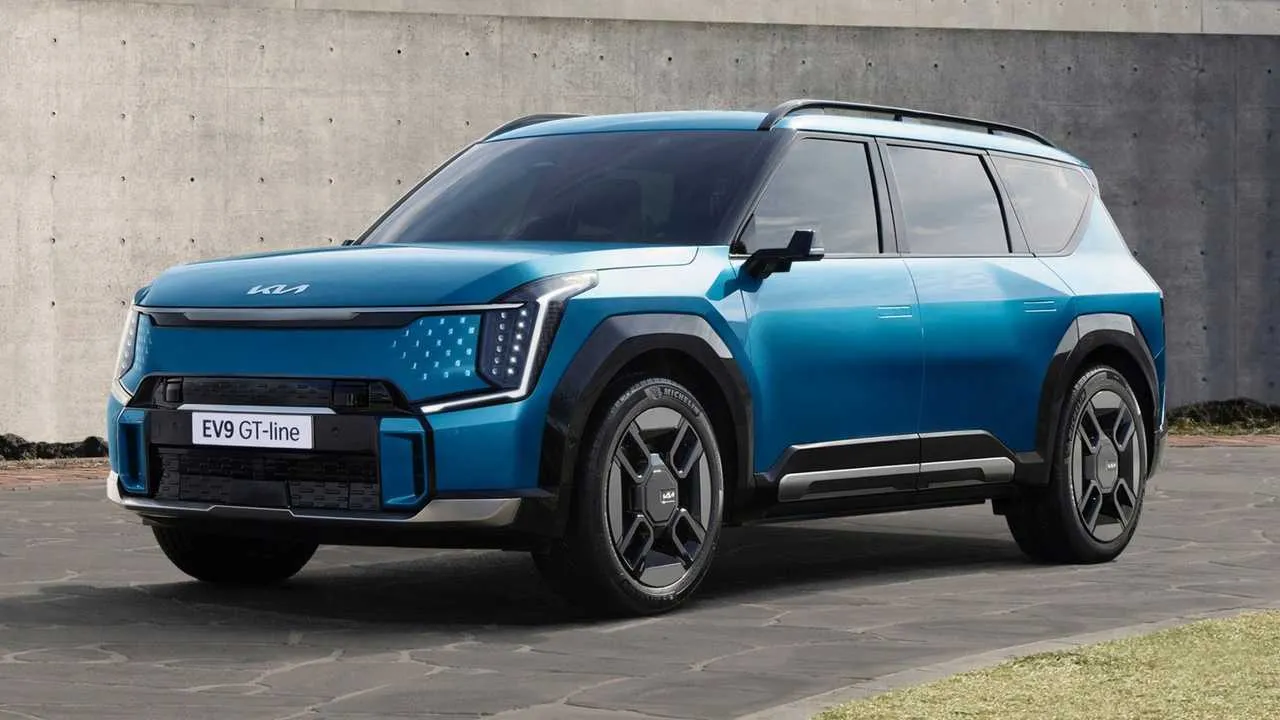
4. Kia EV9 GT-Line
Three-row electric sport utility vehicles remain uncommon, which places the Kia EV9 in a strong position for families seeking space with battery power. Seating for up to seven occupants is standard, while second row captain chairs on the GT Line trim create a six-seat layout that improves comfort.
Dual motor All Wheel Drive produces 379 horsepower, giving enough strength for confident progress in city traffic and on hilly routes. Driving range stands at about 270 miles, suitable for daily use and nearby trips, though longer journeys require planned charging stops.
Interior space defines the experience, with generous legroom in all three rows and practical storage throughout the cabin. The second row slides and reclines widely, allowing passengers to relax during long hours on congested roads.
The third row accommodates adults without forcing awkward seating positions, which is rare in this class. Folding both rear rows opens up 81.7 cubic feet of cargo volume, suitable for bulk shopping, airport transfers with extended family, or carrying sports and camping equipment. The technology presentation is impressive through dual panoramic displays across the dashboard, each measuring 12.3 inches for instruments and infotainment.
A head-up display projects driving information within the driver’s natural line of sight. The Meridian sound system with fourteen speakers delivers rich and balanced audio. Relaxation seats in the first and second rows provide power recline, ventilation, and massage, making long journeys less tiring.
Highway Driving Assist 2 manages steering, braking, and acceleration on major roads, easing workload on long commutes. Lane Following Assist keeps the vehicle centred, while navigation-linked cruise control adjusts speed for bends and exits.
Blind Spot View Monitor shows live camera images of adjacent lanes when indicators are used. Fast charging benefits from an 800-volt architecture, reaching eighty percent in about twenty-four minutes at suitable stations, supporting dependable electric family travel.
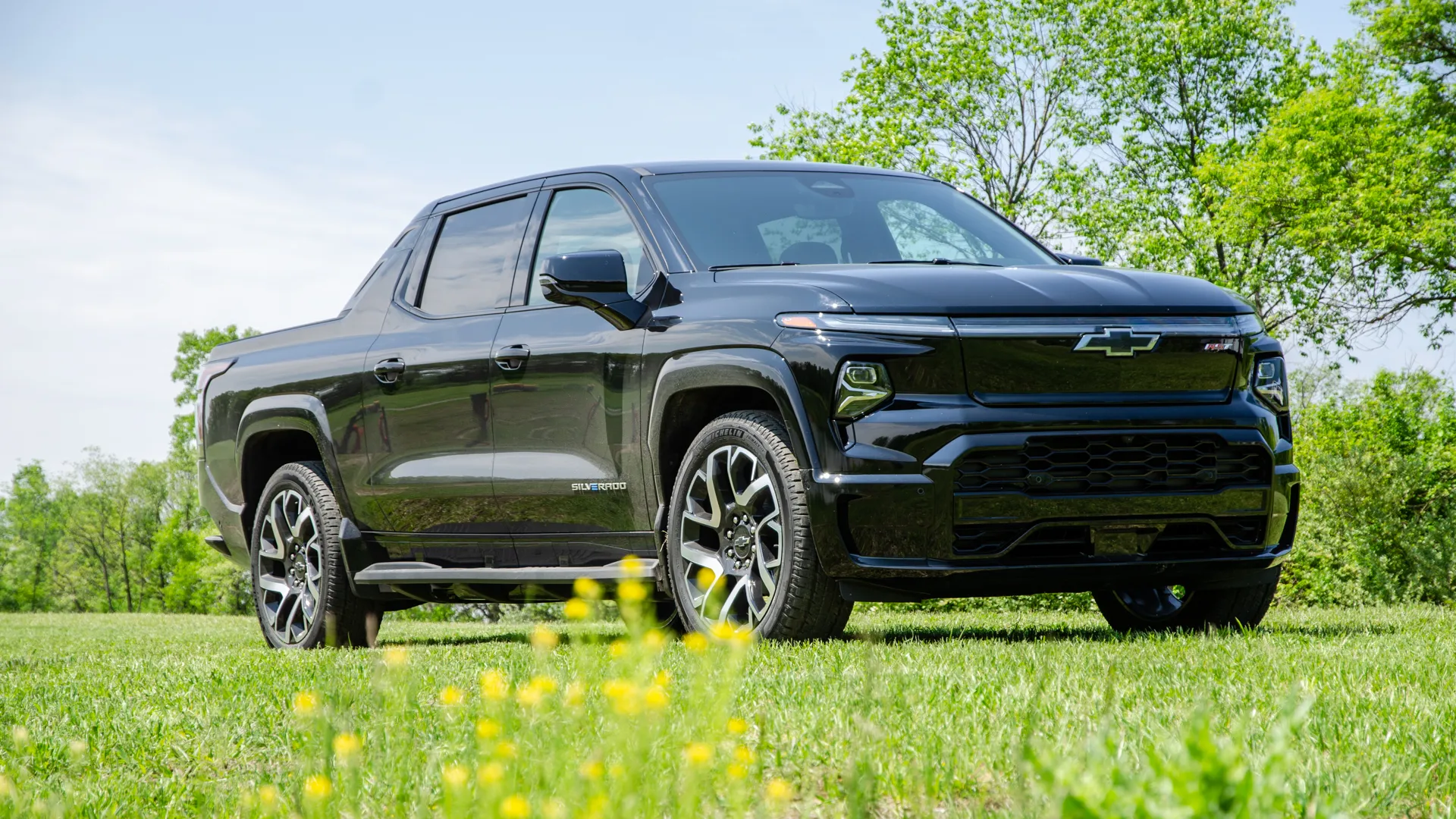
5. Chevrolet Silverado EV RST
American truck tradition goes electric with Chevy’s Silverado EV, bringing work-ready capability to the zero-emissions world. Dual motors produce up to 754 horsepower in Wide Open Watts mode, making this one of the most powerful trucks you can buy, regardless of powering method.
Max range approaches 440 miles with the available battery, easily enough for a week of typical LA driving or extended road trips without range anxiety. Towing capacity reaches 10,000 pounds when properly equipped, handling boats, trailers, and recreational toys without breaking a sweat.
Midgate opens between the cab and bed, extending cargo length to over nine feet with the tailgate down. That versatility lets you haul everything from lumber to kayaks to furniture, adapting the truck to whatever task demands your attention.
Multi-Flex tailgate offers six different configurations, including step access, workspace mode, and load-stop functionality, making loading and unloading easier while providing genuine utility. Power outlets in the bed and cabin provide 10.2 kW of exportable power, enough to run job site tools, camping equipment, or emergency home backup during power outages that increasingly affect LA during fire season.
Interior quality matches what you’d expect from a premium truck, with quality materials, comfortable seats, and an 11-inch diagonal infotainment screen running Google built-in software. Google Maps integration provides real-time traffic updates and suggests optimal routes, while Google Assistant handles voice commands for navigation, music, and climate control.
Wireless Apple CarPlay and Android Auto ensure compatibility regardless of your smartphone preference. Multiple USB-C ports, wireless charging, and household-style 120-volt outlets keep everyone’s devices powered. LA truck owners need capability, range, and technology that makes daily driving enjoyable, and this Silverado EV delivers all three without compromise.
EVs That Aren’t Practical in Los Angeles Yet
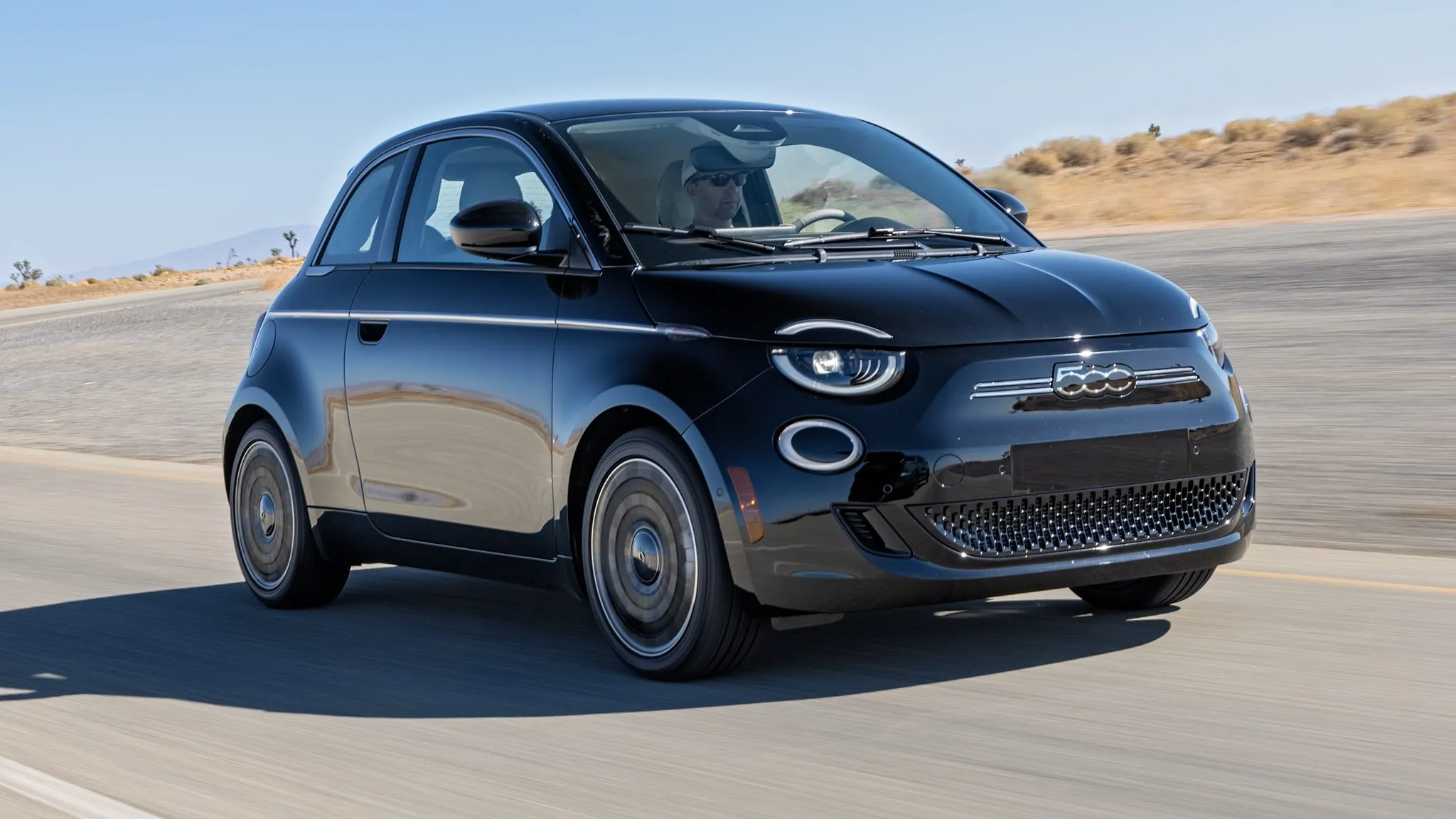
1. Fiat 500e Hatchback
European city car dimensions create problems when adapted for sprawling Los Angeles distances and driving patterns. Fiat designed this 500e for tight European streets and short urban commutes, priorities that simply don’t match how people actually drive in Southern California.
Battery capacity tops out at just 42 kWh, delivering an EPA-estimated range of 149 miles, which sounds borderline acceptable until you factor in real-world conditions. Running air conditioning during summer months, cruising at 70+ mph on freeways, and dealing with LA’s constant elevation changes drops usable range to somewhere around 110-120 miles per charge.
Daily commutes in LA often involve a 40-60-mile round-trip, sometimes more when you factor in errands, unexpected detours, or stops to pick up kids from activities. That leaves very little buffer in a vehicle with such a limited range, creating constant anxiety about whether you’ll make it home without needing to charge.
Public charging becomes necessary far too frequently, and finding available chargers during peak times can waste 20-30 minutes just waiting for someone else to finish. Home charging helps somewhat, but even with a Level 2 charger, you’re looking at several hours to fully replenish the battery.
Highway driving exposes another weakness. A small electric motor produces just 117 horsepower, barely adequate for keeping up with traffic on flat ground and genuinely struggling when climbing the grades between the valley and the westside or heading through mountain passes.
Acceleration feels leisurely at best, dangerous at worst, when you need to merge quickly or avoid developing traffic situations. Wind buffets the small, lightweight body at freeway speeds, creating noise and requiring constant steering corrections that become exhausting during longer drives.
Build quality feels European in good ways and bad. Stylish design elements and quirky interior touches bring character that’s missing from many modern vehicles, but fit and finish don’t match Japanese or Korean competitors at similar price points. Some plastics feel cheap, panel gaps vary, and you hear occasional rattles over rough pavement.
The infotainment system works adequately but lacks the polish and responsiveness of better implementations, with a small touchscreen and menus that require too many steps to access basic functions.
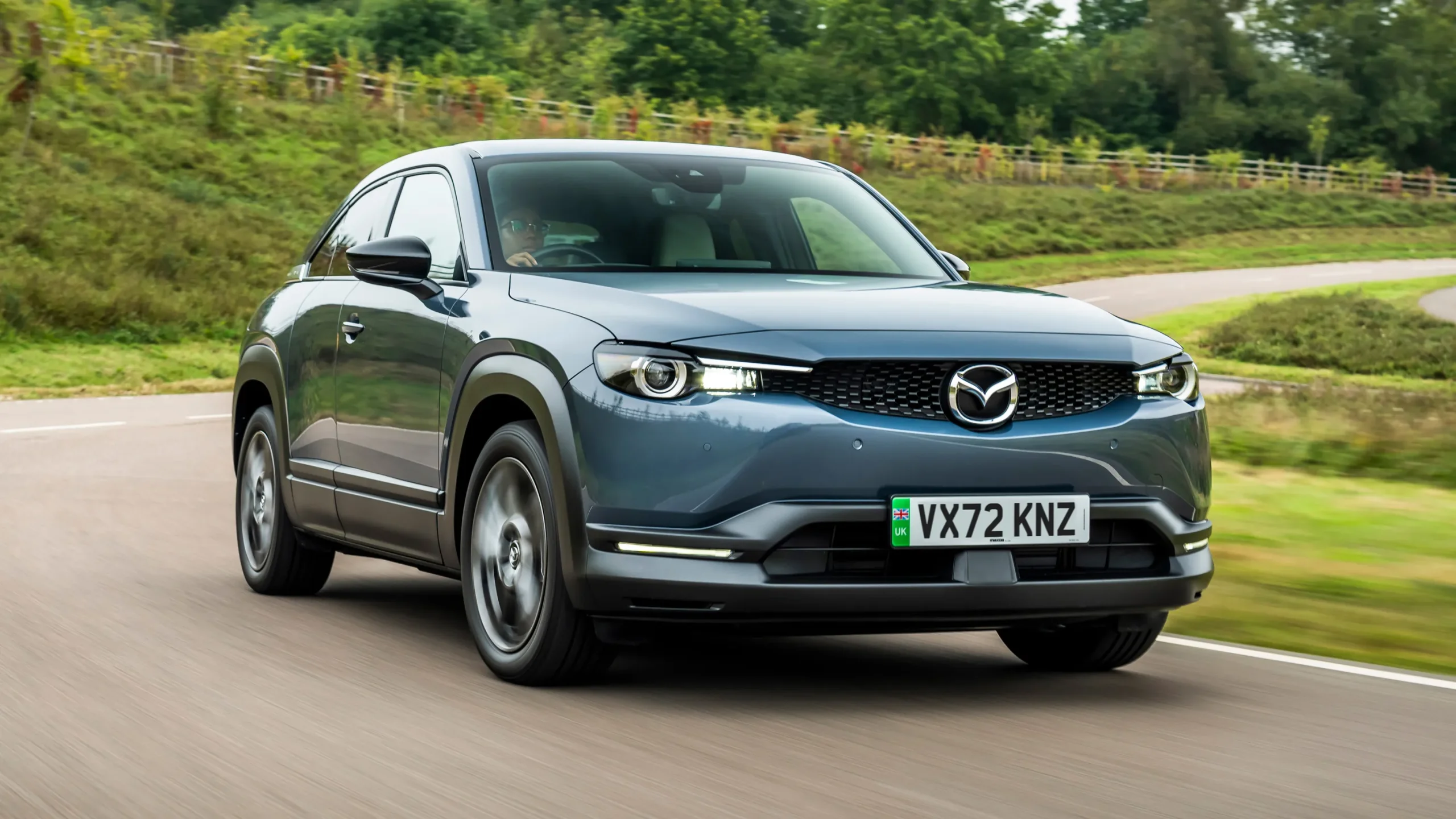
2. Mazda MX-30 EV Premium
Mazda prioritised styling over practicality in the development of the MX‑30, resulting in a compact crossover that impresses visually but struggles in everyday function. Its battery holds 35.5 kWh, producing an EPA range of approximately 100 miles. In real Los Angeles traffic, drivers typically achieve 75 to 85 miles per charge, occasionally less with active climate control or sustained highway speeds.
This range restricts the MX‑30 to short commutes, requiring frequent recharging even for basic daily use. A single electric motor delivers 143 horsepower, sufficient for urban travel but underpowered for freeway merges or uphill acceleration.
Weight distribution and suspension provide Mazda’s familiar handling and steering feedback, yet these dynamics cannot offset the vehicle’s fundamental power limitations. Acceleration from stoplights is slow, and overtaking slower vehicles on two-lane roads demands careful timing and patience.
Rear-hinged back doors create a distinctive aesthetic but complicate usability. The front door must be opened before the rear can swing, slowing entry for passengers. Tight parking spaces become difficult to use, as both doors require clearance. Rear seating is cramped, with restricted headroom and legroom, making long journeys uncomfortable.
Cargo capacity is modest, with 13.2 cubic feet behind the rear seats and 46.5 cubic feet with seats folded, although the angled rear seatbacks prevent fully flat loading. High liftover height and a narrow opening make loading cumbersome. The vehicle lacks towing capability and roof rails, reducing the versatility expected in a crossover of this class.
Charging is compatible with J1772 Level 2 and CCS DC fast chargers, yet maximum charging is limited to 50 kW. Filling the battery from twenty to eighty percent takes roughly 36 minutes, and frequent stops are unavoidable due to the limited range. Home Level 2 charging requires about three hours for a full recharge, which becomes repetitive under regular use.
The cabin reflects Mazda’s commitment to material quality, with cork accents, soft-touch surfaces, and well-executed design. The rotary controller interface is distinctive, though opinions vary on usability compared with touchscreen systems. The sound system delivers respectable audio, and the build quality is solid with minimal rattles.
Despite premium pricing, the MX‑30 delivers subcompact performance with restricted range, while competitors offer greater capability at similar or lower cost. The vehicle’s specifications suit European and Japanese urban conditions but struggle to meet the demands of daily Los Angeles driving.
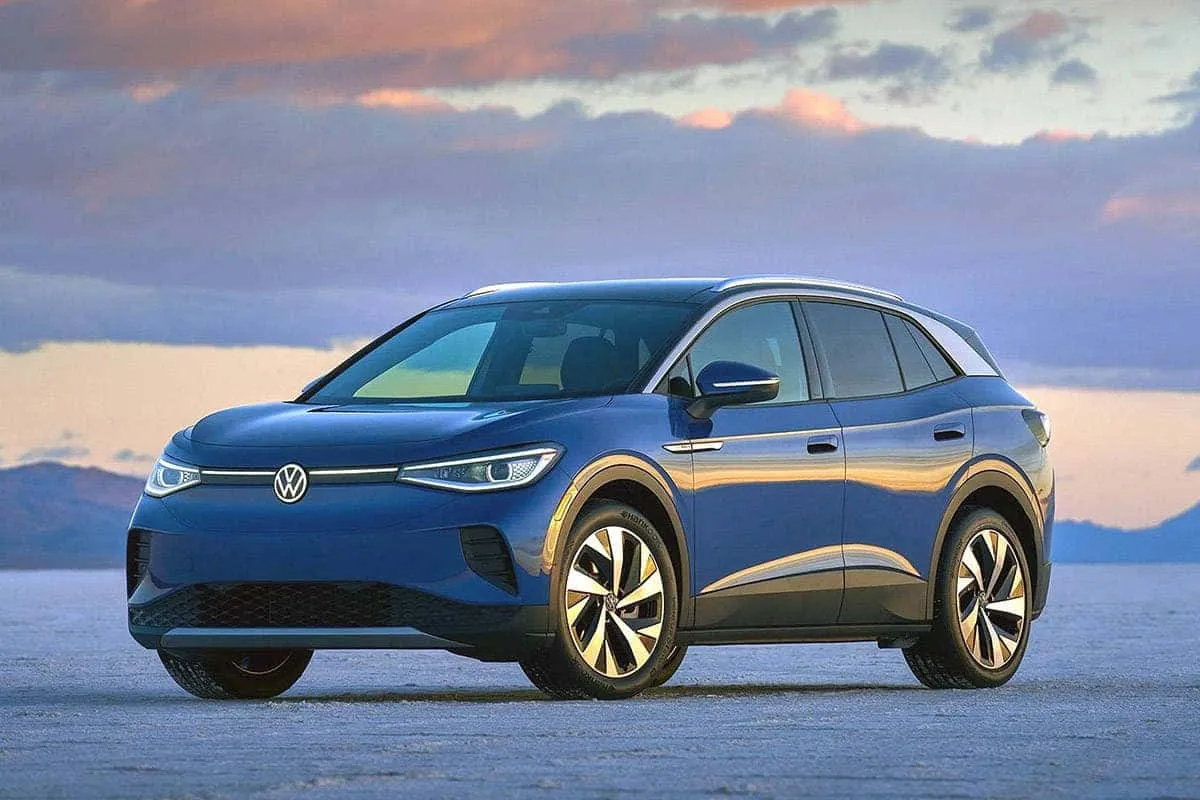
3. Volkswagen ID.4 Standard
Entry-level pricing comes with compromises that become deal-breakers for serious LA use. VW’s ID.4 Standard uses a smaller 62 kWh battery paired with a single 201-horsepower rear motor, creating a combination that sounds adequate on paper but disappoints in daily reality.
EPA range estimates 206 miles, but real-world driving through LA traffic, up mountain roads, and across valley floors typically delivers 160-175 miles. That’s workable for short commutes but leaves zero margin for error or spontaneity.
Daily life in LA involves unpredictability. You leave work planning to head straight home, then remember you need groceries, decide to stop by a friend’s place, and maybe grab dinner on the way. Each detour adds miles that eat into your remaining range, and with only 160-175 miles to work with, you’re constantly calculating whether you’ll make it or need to find a charger.
That mental load becomes exhausting quickly, turning every drive into a math problem instead of just transportation. Interior space impresses with good passenger room and cargo capacity, one area where this ID.4 excels. Material quality feels cheaper than the price suggests, though, with hard plastics in prominent locations and panel gaps that vary between acceptable and questionable.
The infotainment system frustrates with touch-sensitive controls for climate and volume, requiring you to look away from traffic longer than is safe. Software feels laggy compared to Tesla or newer Korean competitors, with delayed responses that make simple tasks unnecessarily annoying.
Ride quality errs toward soft and comfortable, which most passengers appreciate, but enthusiasts find it too floaty and imprecise. Body roll becomes pronounced during aggressive cornering, and steering provides minimal feedback about the road surface or available grip.
For relaxed cruising, the ID.4 works fine, but it never feels engaging or fun to drive the way some EVs manage despite their weight and electric powertrains.
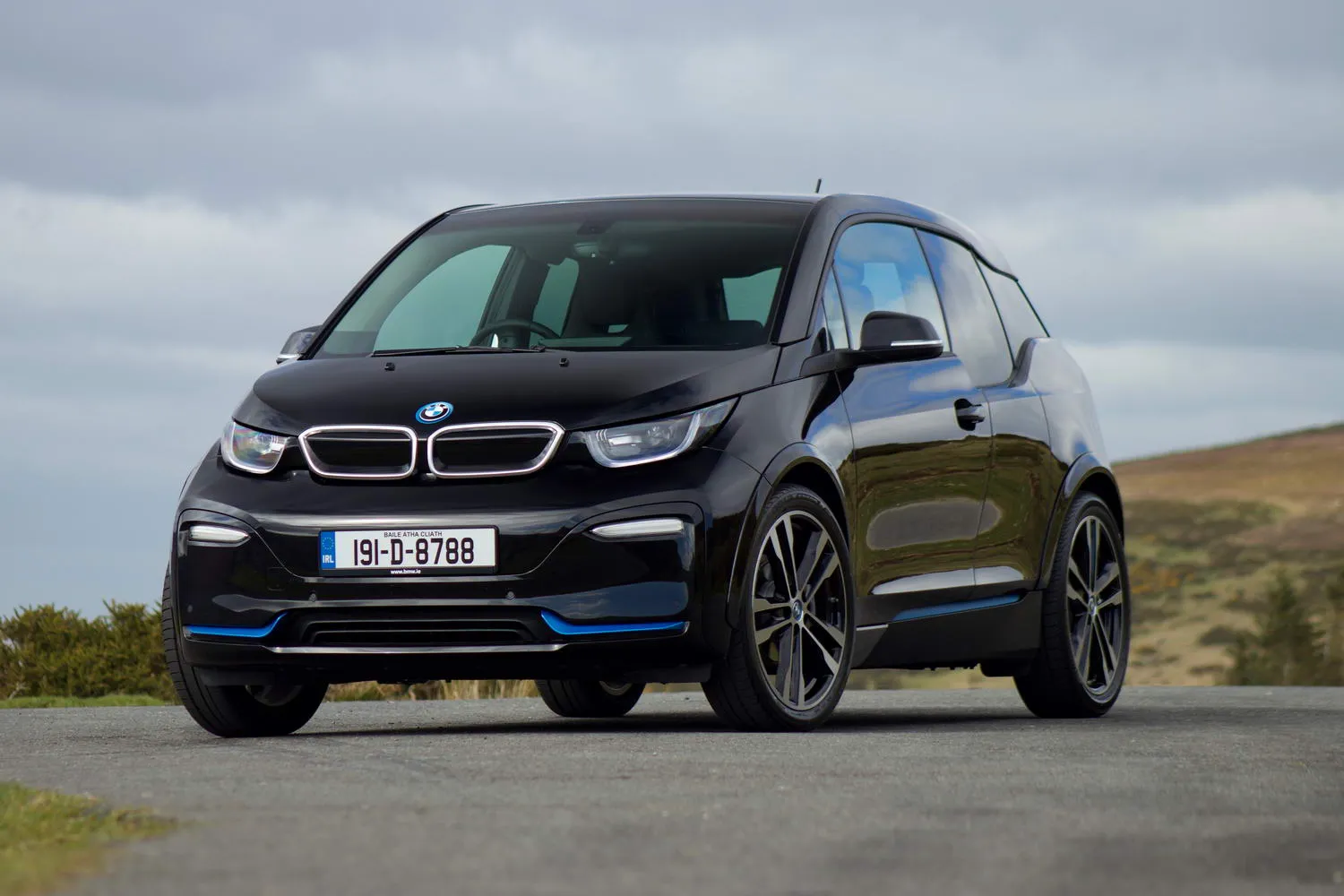
4. BMW i3 120 Ah
The BMW i3 combines distinctive styling with innovative engineering, but its limitations reduce practicality for contemporary Los Angeles driving. Introduced more than ten years ago, the i3 featured bold design and extensive carbon fibre construction that was considered advanced at the time.
Today, the styling feels dated, and its specifications no longer align with current expectations for electric vehicles. The battery holds 42.2 kWh, providing an EPA-estimated range of 153 miles, while real-world driving reduces this to roughly 120-130 miles per charge.
Rear-wheel drive and narrow tyres create handling characteristics that are unusual but not always reassuring. The lightweight carbon fibre makes the i3 agile in city streets, yet this same lightness allows crosswinds to affect stability at highway speeds.
The tall, narrow body compromises aerodynamics, requiring frequent steering adjustments on freeways, which becomes tiring on longer trips. Regenerative braking in standard mode feels overly abrupt, producing a jerky driving experience that requires time to master.
Interior space is limited due to the vehicle’s proportions. Front seats sit high with good visibility, but rear-hinged doors require front doors to open first, complicating passenger entry. Rear legroom is sufficient for children but tight for adults, and carrying four passengers plus luggage quickly reaches capacity limits.
Cargo volume measures 15.1 cubic feet behind the rear seats and 42.2 cubic feet with seats folded, adequate but unimpressive given the vehicle’s size. Charging uses the CCS standard, with maximum DC fast charging of about 50 kW, slower than modern EVs.
Charging from 20 to 80 per cent takes roughly 42 minutes, while Level 2 home charging requires about seven hours on a 240-volt outlet. The absence of a CHAdeMO adapter further limits fast charging options.
Early infotainment lacked Apple CarPlay or Android Auto, with later models improving but still trailing competitors in user experience. Depreciation has been steep, with used examples selling at a fraction of original prices.
Production ended in 2022, leaving buyers dependent on existing stock and dealer support that may diminish as BMW focuses on newer electric models.
Also Read: 5 EVs That Work in San Francisco and 5 That Hate Hills
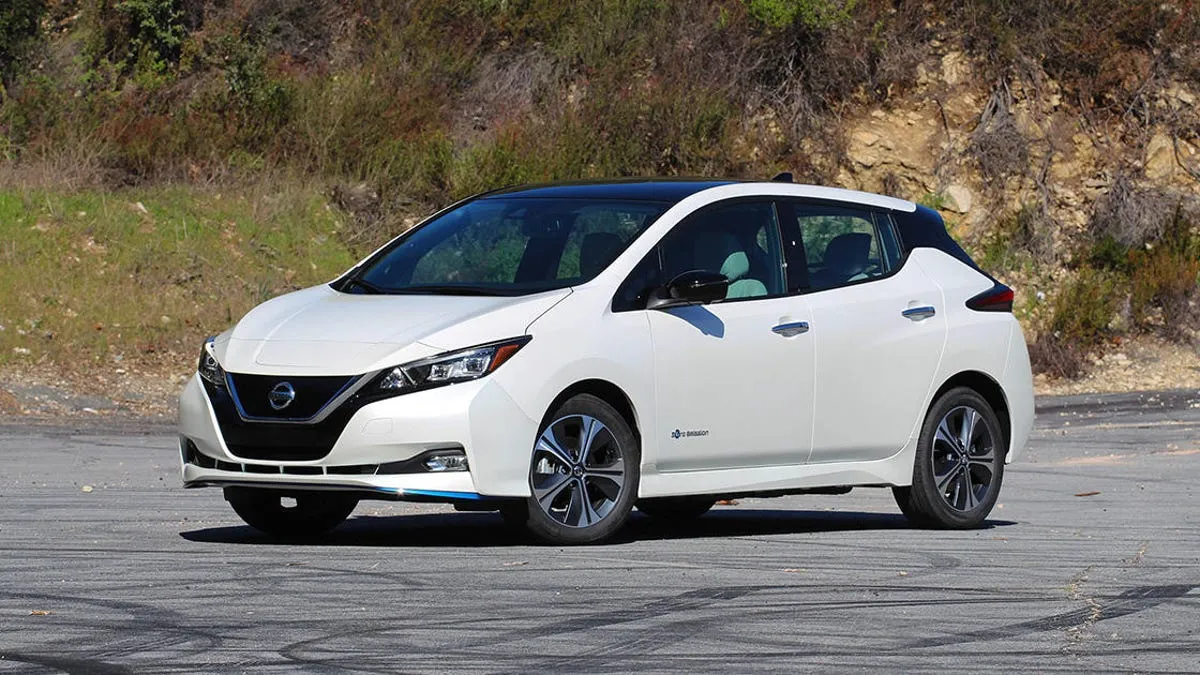
5. Nissan Leaf S
Base-model positioning creates a vehicle that cuts too many corners to work well for typical LA drivers. Nissan offers the Leaf S with a 40 kWh battery providing 149 miles of EPA-estimated range, though real-world driving typically delivers 115-125 miles per charge.
That limited range requires frequent charging, which becomes tedious quickly, particularly for people without home charging who must rely on public infrastructure. Add in hot weather battery degradation and range drops even further, sometimes into the 90-100 mile territory during summer months.
Front-wheel drive and modest power output create a driving experience that feels adequate but uninspiring. The electric motor produces 147 horsepower, enough for typical city driving but lacking the punch that makes EVs exciting.
Acceleration feels brisk from stops thanks to instant electric torque, but that initial surge fades quickly, and sustained acceleration from highway speeds feels leisurely. Handling stays competent without being engaging, with soft suspension tuning that prioritizes comfort over driving dynamics.
CHAdeMO fast charging standard has become increasingly rare in the United States, with most new charging installations using CCS connectors instead. That limits your DC fast charging options substantially, potentially requiring you to search specifically for CHAdeMO-equipped stations instead of using whatever chargers happen to be convenient.
Charging speeds max out around 50 kW, slow by modern standards and frustrating when you need to add range quickly. Twenty to eighty percent takes approximately 40-60 minutes, depending on charger capability and battery temperature.
Interior quality and features satisfy basic transportation needs without offering anything that feels premium or special. Cloth seats, hard plastics, and simple controls create a utilitarian environment that gets the job done but won’t impress anyone.
The infotainment system feels several generations behind competitors, with a small touchscreen and basic functionality that lacks the polish and integration buyers expect in modern vehicles. No wireless Apple CarPlay or Android Auto, just wired connections that clutter the cabin with cables.
Safety features include basic automatic emergency braking and lane departure warning in higher trims, but base S models skip many driver assistance features that have become standard in competitive vehicles. No blind spot monitoring, no rear cross-traffic alert, no adaptive cruise control.
You get airbags and stability control, meeting minimum safety standards but offering none of the advanced features that make daily driving easier and safer.
