
Owning a car in New York City is less about horsepower or luxury and more about survivability.
Between narrow streets laid out long before modern vehicles existed, aggressive parallel parking, snowplows in winter, delivery trucks squeezing every inch of curb space, and drivers who park by feel rather than mirrors, NYC street parking is brutal. Cars here don’t just get parked they get tested daily.
For residents without guaranteed garages, the right vehicle choice can mean the difference between a car that ages gracefully and one that looks battered within a year.
Shorter lengths, higher ride heights, resilient bumpers, and good visibility matter far more than 0–60 times.
On the other hand, cars with low ground clearance, long overhangs, fragile bodywork, or wide doors often become magnets for curb rash, bumper scrapes, and mysterious dents that appear overnight.
Below, we break down five cars that genuinely work for New York street parking vehicles that fit tight spots and handle curb abuse followed by five cars that consistently suffer on NYC streets, no matter how carefully you drive.
Cars That Work for New York Street Parking
Finding a car that works well in New York City can feel like navigating a maze, tight streets, crowded parking lots, and limited curb space make city driving a unique challenge.
While many vehicles look great on paper, not all are practical for the daily realities of NYC life. From maneuvering through narrow avenues to squeezing into parallel parking spots, the right car can make a huge difference in convenience and stress levels.
We’ll break down the cars that excel at New York street parking, highlighting models that are compact, agile, and smartly designed to thrive in one of the busiest urban environments in the world.
1. Toyota Corolla Hatchback
The Corolla Hatchback is one of the quiet heroes of city life. Unlike its sedan sibling, the hatchback’s shorter rear overhang makes parallel parking far easier on cramped Manhattan and Brooklyn streets.
It’s narrow, easy to judge from the driver’s seat, and doesn’t punish you with expensive bodywork if it gets tapped.
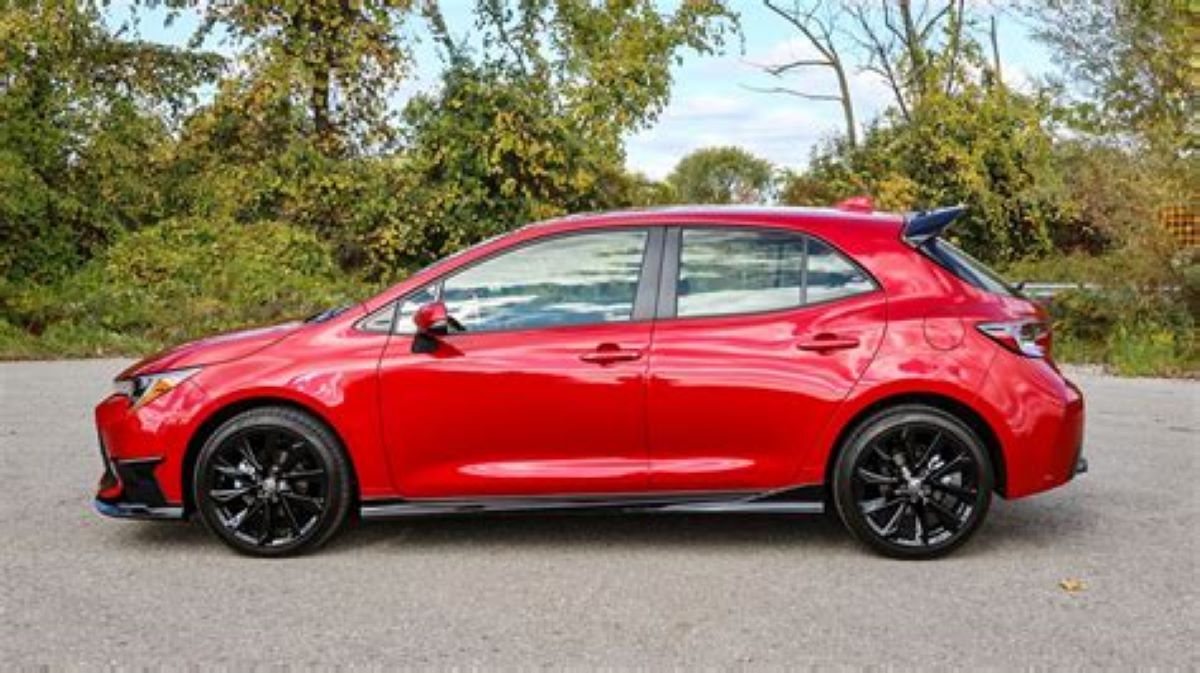
New York street parking almost guarantees bumper-to-bumper contact at some point, and Toyota’s durable plastic trim and conservative bumper design absorb minor scrapes well.
Ground clearance is modest but sufficient for curb transitions, and replacement parts are cheap a major win when cosmetic damage is inevitable.
Add excellent fuel economy and bulletproof reliability, and the Corolla Hatchback fits NYC life better than most cars twice its price.
2. Honda Fit (2015–2020)
Though discontinued in the U.S., the Honda Fit remains one of the best used-car choices for New York street parking. Its short length and tall profile give drivers outstanding visibility, which matters when threading into impossibly small gaps.
You can see curbs clearly, judge distances accurately, and park confidently without relying entirely on sensors.
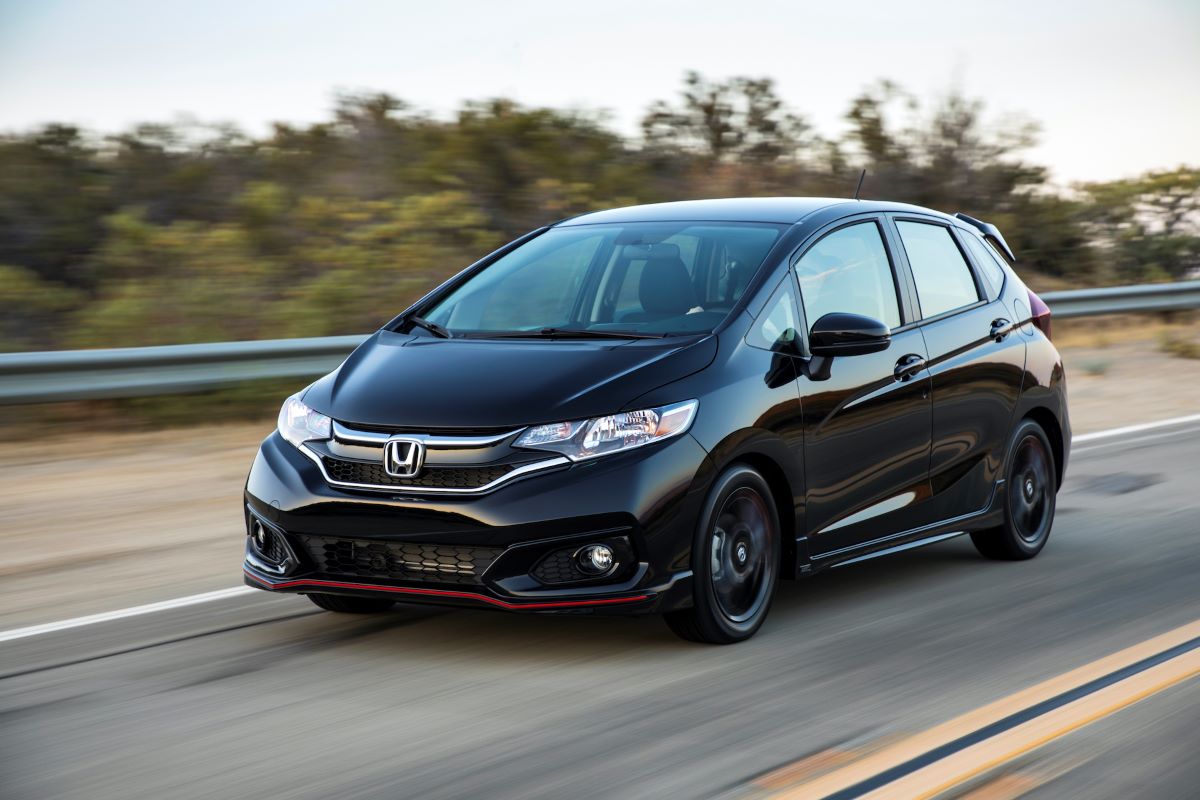
The Fit’s upright design also minimizes bumper overhang, reducing the chances of scraping when pulling out of tight spaces. Importantly for NYC winters, its light weight and predictable handling make it easier to control on slushy streets.
While it’s not flashy, the Fit’s practicality and resilience make it perfectly suited for the daily grind of city parking.
When the Honda Fit debuted eight years ago, it quickly became a favorite among economy car shoppers. Its appeal wasn’t in its somewhat controversial styling, but in its practical, versatile nature.
With flexible interior configurations, a fuel-efficient engine, and surprisingly enjoyable handling, the Fit proved you didn’t have to settle for an anonymous econobox just to get good mileage.
Now in its third generation, the 2015 Honda Fit aims to keep that momentum going while becoming even more appealing.
The Fit’s distinctive wedge shape largely carries over, but the new model looks a bit more mature. Updates like a redesigned grille and headlights, LED taillights, and available 16-inch wheels bring it in line with the rest of Honda’s lineup.
For those needing a small hatchback that can haul serious cargo, the 2015 Honda Fit is hard to beat. Its enhanced seating slightly reduces luggage space, but with nearly 53 cubic feet available, the Fit still offers substantially more cargo room than most competitors.
A major reason for this is the Fit’s innovative “Magic” seat, which can fold completely flat or flip its seat bottom up, offering unmatched versatility for passengers, mountain bikes, large pets, or nearly anything else.
The interior has also been upgraded with higher-quality materials, available heated leather seats, and new technology features such as a larger touchscreen, smartphone app integration, and keyless ignition.
Under the hood, nearly everything is new as well. The 1.5-liter four-cylinder engine now features direct injection, delivering slightly more power and improved fuel efficiency.
A six-speed manual transmission replaces the previous five-speed, and a new continuously variable automatic transmission (CVT) takes over from the older five-speed automatic. Combined fuel economy is impressive, ranging from 32 to 36 mpg depending on the model.
Sedans like the Fiesta and Accent may offer more standard features or different body styles for similar money, but the Fit’s versatility makes it one of the most practical subcompact hatchbacks available.
The 2015 Honda Fit is powered by a 1.5-liter four-cylinder engine producing 130 horsepower and 114 pound-feet of torque.
A six-speed manual transmission comes standard on LX and EX trims, while a CVT is optional. EX-L models are available only with the CVT.
A 2015 Honda Fit EX-L with Navigation accelerated from 0 to 60 mph in 8.8 seconds, a solid performance for the subcompact segment.
Also Read: 5 Cars for Clovis Daily Commutes and 5 High-Mileage Performers
3. Subaru Crosstrek
The Crosstrek hits a sweet spot for New Yorkers who want a bit more ground clearance without committing to a bulky SUV.
With 8.7 inches of clearance, it shrugs off curbs, potholes, and uneven pavement that scrape lower cars daily. Snowbanks and half-buried parking spots are far less intimidating with this ride height.
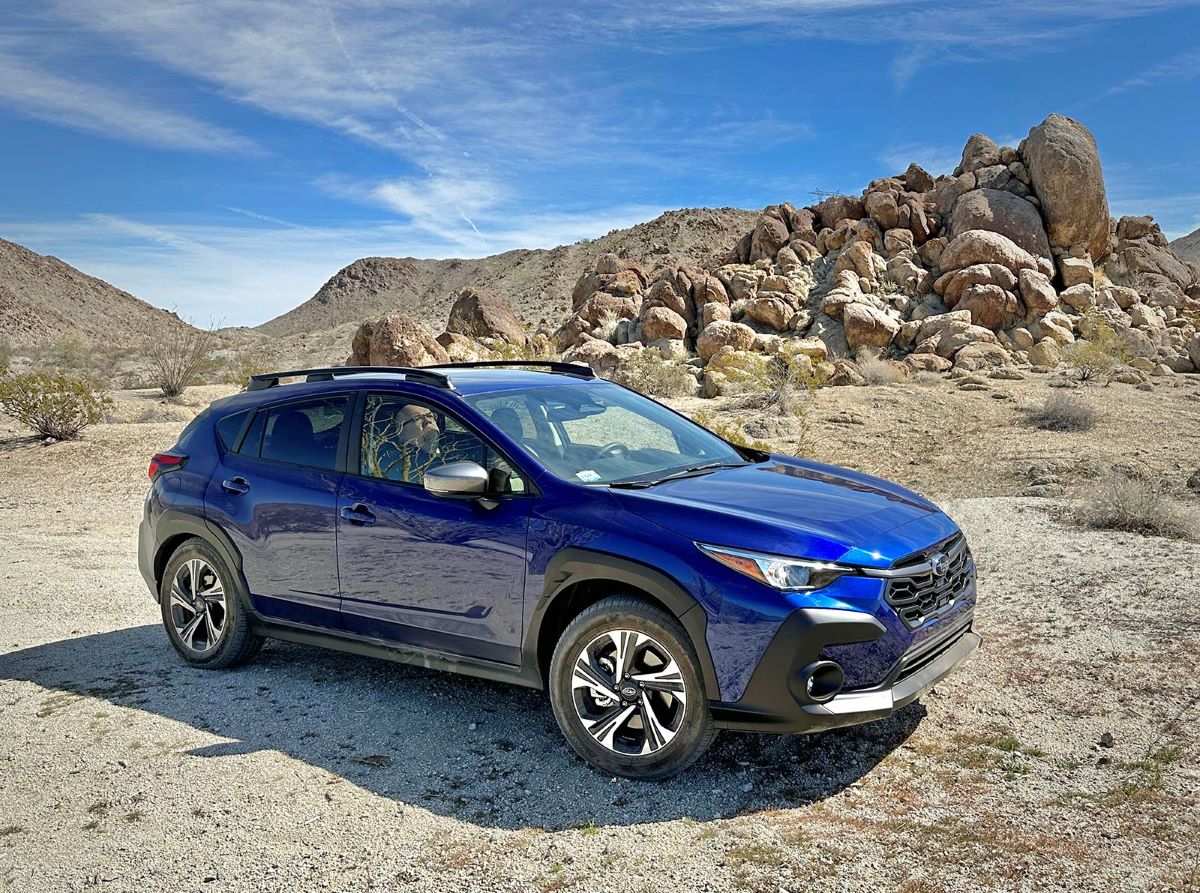
Its standard all-wheel drive is a major bonus during NYC winters, especially for outer boroughs where streets aren’t plowed immediately.
Despite being a crossover, the Crosstrek remains relatively compact, making it easier to squeeze into street spots compared to larger SUVs. It’s not immune to damage, but it’s far more forgiving than low-slung alternatives.
4. Mini Cooper (2-Door Hardtop)
For pure street-parking efficiency, few cars beat the Mini Cooper. Its extremely short wheelbase allows it to fit into spots other cars can’t even attempt.
In neighborhoods like the Upper West Side or Astoria, where space is always at a premium, this can be the difference between circling for an hour and parking immediately.
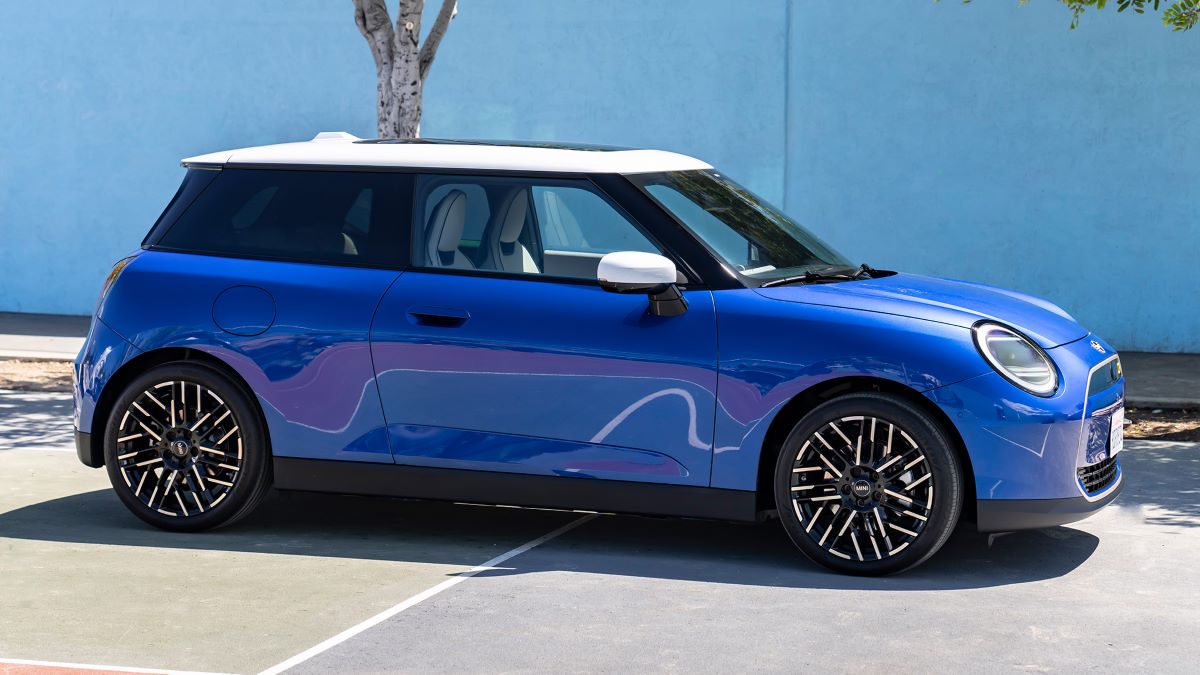
The Mini’s tight turning radius and upright windshield make maneuvering easy, though owners should accept that wheel curb rash is still possible.
However, the trade-off is worth it for drivers who prioritize parking ease over cargo space. When properly equipped with protective trim and smaller wheels, the Mini becomes a genuine NYC street-parking champion.
For those craving a more hot-blooded driving experience, Mini also offers the S and John Cooper Works (JCW) variants, both featuring turbocharged four-cylinder engines with significantly more punch.
Nimble handling remains a Cooper hallmark, and the car’s long list of available features and personalization options is virtually unmatched in the subcompact segment.
Of course, there are some reasons shoppers might look elsewhere. The Mini Cooper’s sporty handling comes at the expense of ride comfort, particularly when equipped with larger wheels and tires.
Additionally, the Cooper is pricier than many other subcompact cars, and costs rise quickly as you add the tempting options available through Mini’s configurator.
If you’re after a more budget-friendly subcompact with some flair, the Ford Fiesta and its high-performance ST version are worth considering.
The Fiesta is slightly larger than the Mini, and the ST delivers horsepower comparable to the Cooper S, though it can’t quite match the Mini’s upscale feel. The Fiat 500 is another option, offering a range of engines and customization possibilities similar to the Mini.
No matter the engine or number of doors, the 2016 Mini Cooper comes standard with a six-speed manual transmission, complete with hill-start assist and automatic rev-matching for smoother downshifts.
A six-speed automatic, also featuring rev-matching, is optional. To improve fuel efficiency, the Cooper includes an automatic stop-start system that shuts off the engine when the car is idle.
The base engine is a turbocharged 1.5-liter three-cylinder producing 134 horsepower and 162 pound-feet of torque.
A two-door Cooper with the automatic transmission accelerated from 0 to 60 mph in 7.4 seconds, a quick time that ranks second only to the Ford Fiesta ST in the subcompact category.
5. Mazda CX-30
The Mazda CX-30 blends compact dimensions with a slightly elevated ride height, making it far better suited to city streets than traditional sedans.
Mazda’s clever use of matte black lower cladding is especially useful in New York scrapes that would be obvious on painted panels are far less noticeable here.
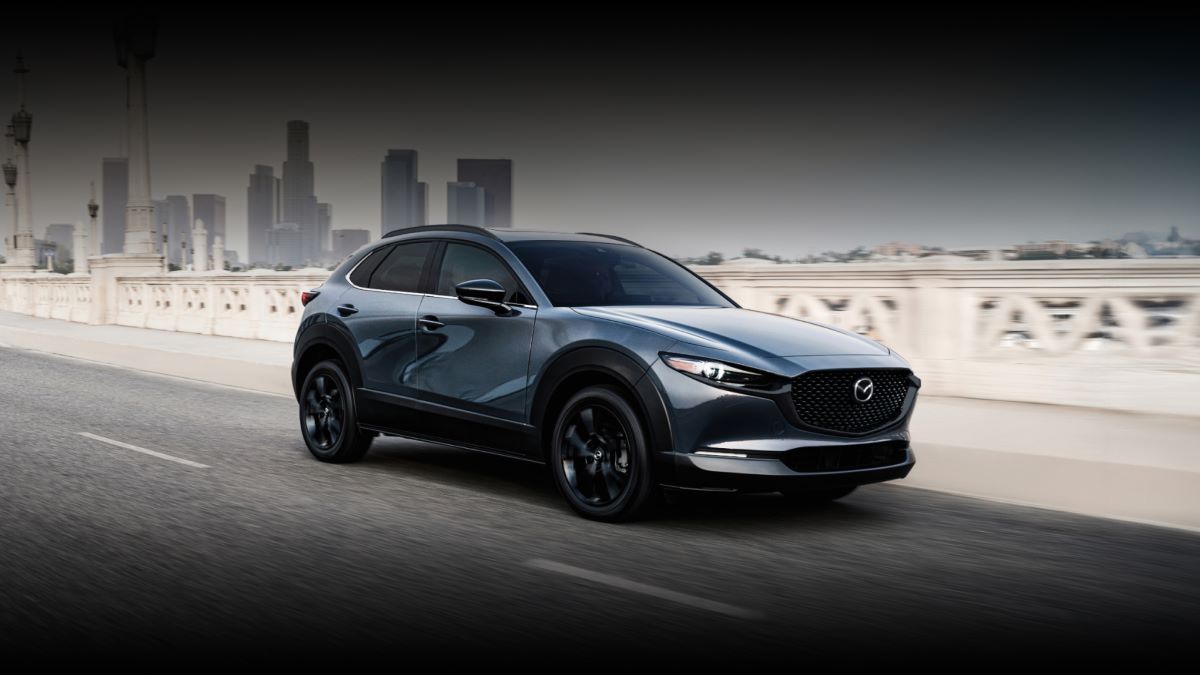
Its width is manageable, visibility is strong, and the suspension absorbs rough pavement well. For drivers who want something that feels upscale without being fragile, the CX-30 strikes an excellent balance.
It’s modern enough to include helpful parking tech but rugged enough not to fall apart cosmetically after a few curb encounters.
Also Read: 4 Cars for New Haven City Commuters vs 4 That Cost More to Service
Cars That Constantly Get Scraped in New York
Driving in New York City can be a battle of inches. Between narrow streets, tight corners, and the endless struggle to find curbside parking, some cars simply aren’t built for the city’s unforgiving urban landscape.
Certain vehicles, with low ground clearance, wide bodies, or overly sensitive bumpers, seem to attract scrapes, dings, and curb marks as if by fate.
We’ll take a close look at the cars that are most likely to suffer in New York’s streets, helping you avoid costly repairs and daily frustration while navigating the city that never sleeps.
1. Tesla Model 3
Despite its popularity, the Tesla Model 3 is a nightmare for NYC street parking. Its low ground clearance and long, smooth bumpers are extremely vulnerable to curb scrapes and snow damage.
Even minor impacts can become expensive repairs due to Tesla’s limited body shop network and costly parts.

Additionally, the Model 3’s wide doors are difficult to open safely in tight street parking situations, increasing the risk of door dings both yours and your neighbors’.
While the car’s cameras help with parking, they can’t prevent the slow, inevitable cosmetic wear that NYC inflicts on low-slung electric sedans.
With a nearly ideal combination of performance, driving range, and accessible pricing, the 2022 Tesla Model 3 is an electric vehicle that lives up to the hype.
It’s fast, especially in the Performance trim, and nimble, making it an EV that driving enthusiasts can genuinely enjoy.
The mid-level Long Range trim delivers an impressive 358 miles per charge, so daily recharging isn’t a necessity.
That said, the entry-level price doesn’t unlock the Model 3’s full potential, and its fit and finish aren’t quite on par with alternatives like the Chevy Bolt or Ford Mustang Mach-E.
2. BMW 3 Series (M Sport trims especially)
The BMW 3 Series, particularly in M Sport configuration, looks great until it meets a New York curb.
Low front splitters, stiff suspension tuning, and expensive alloy wheels make this car especially prone to damage. One misjudged curb stop can result in cracked lips or scraped bumpers.
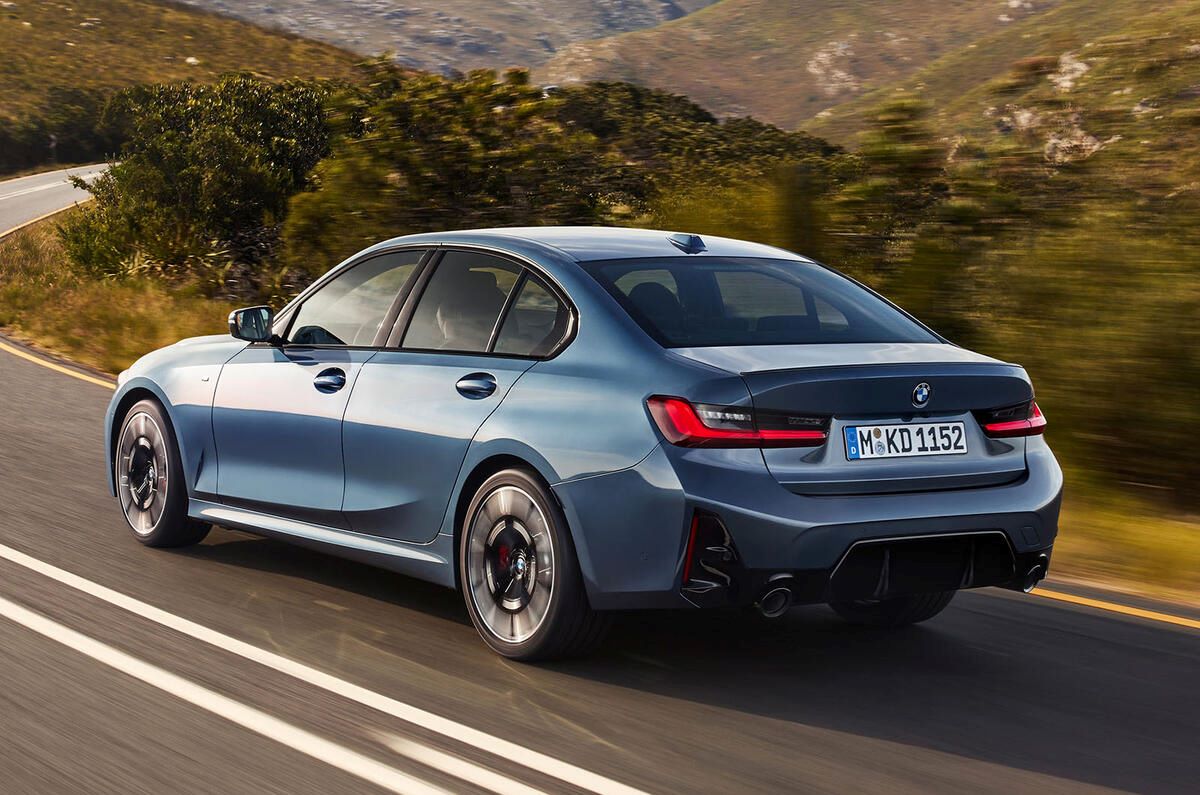
NYC streets are rarely smooth, and the 3 Series’ sporty setup amplifies every pothole. Repair costs add insult to injury, as even minor cosmetic fixes can quickly become four-figure bills. It’s a fantastic driving car just not one designed for street parking warfare.
For an entry-level BMW, the 330i is surprisingly satisfying. Its turbocharged four-cylinder engine delivers plenty of torque, offering more than enough power for everyday driving.
On our test track, the 330i sprinted from 0 to 60 mph in 5.7 seconds, proof that it’s no slouch, even if it trails its six-cylinder sibling, the M340i.
Handling is also impressive. Our test car was equipped with the optional M Sport suspension, which kept the vehicle balanced through corners without making the ride overly firm or harsh over bumps.
Overall, driving a 3 Series is a smooth and effortless experience. The transmission shifts seamlessly, and outward visibility is quite good, particularly when equipped with the optional surround-view parking camera system.
We also appreciate the optional hands-free highway driving system, which helps reduce the monotony of slow-moving traffic.
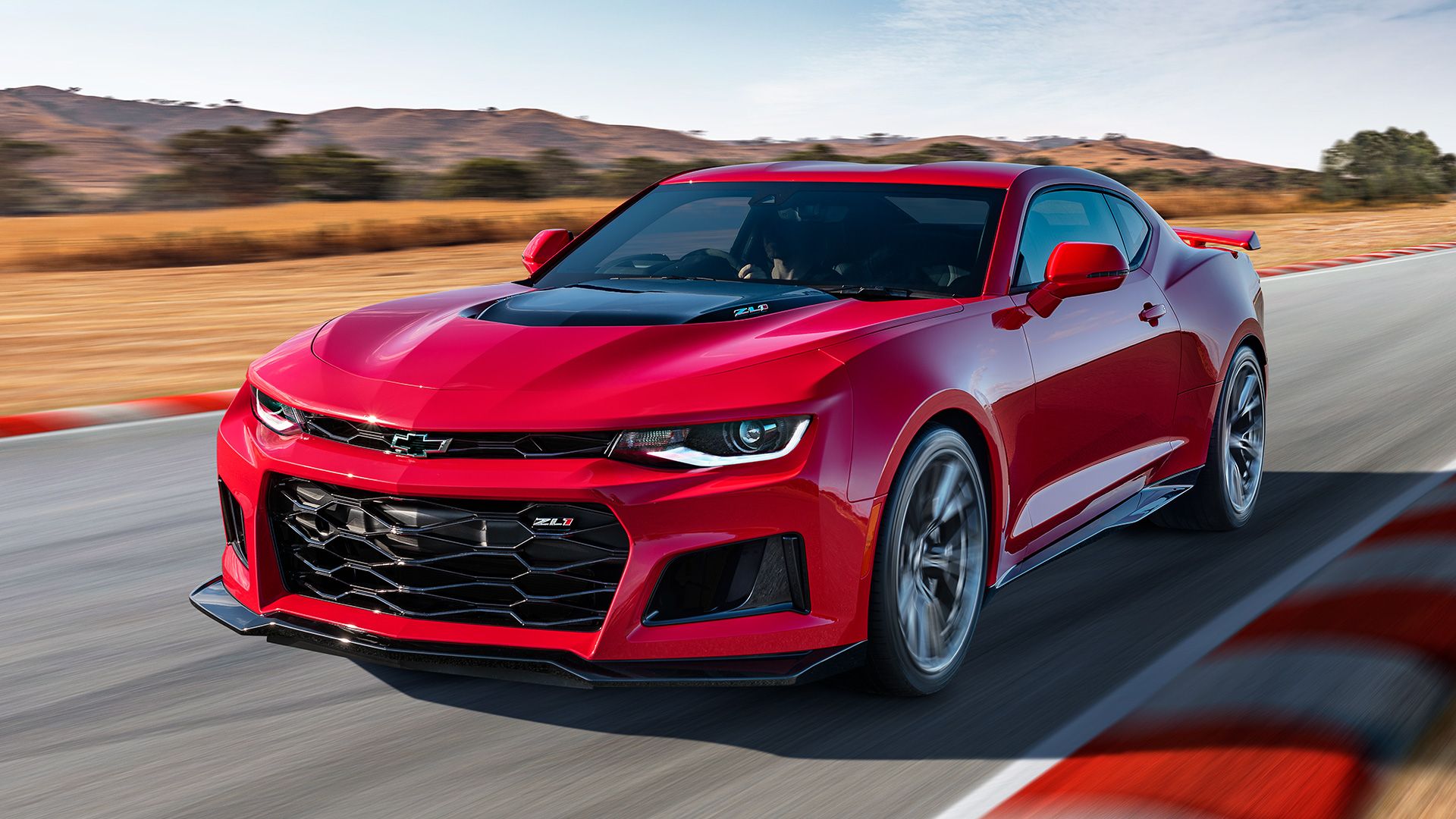
3. Chevrolet Camaro
Few cars suffer more on New York streets than the Camaro. Its poor outward visibility, long doors, and extremely low front end make it nearly impossible to park confidently in tight spaces.
Front bumper scrapes are almost guaranteed, especially on sloped curbs or uneven pavement.
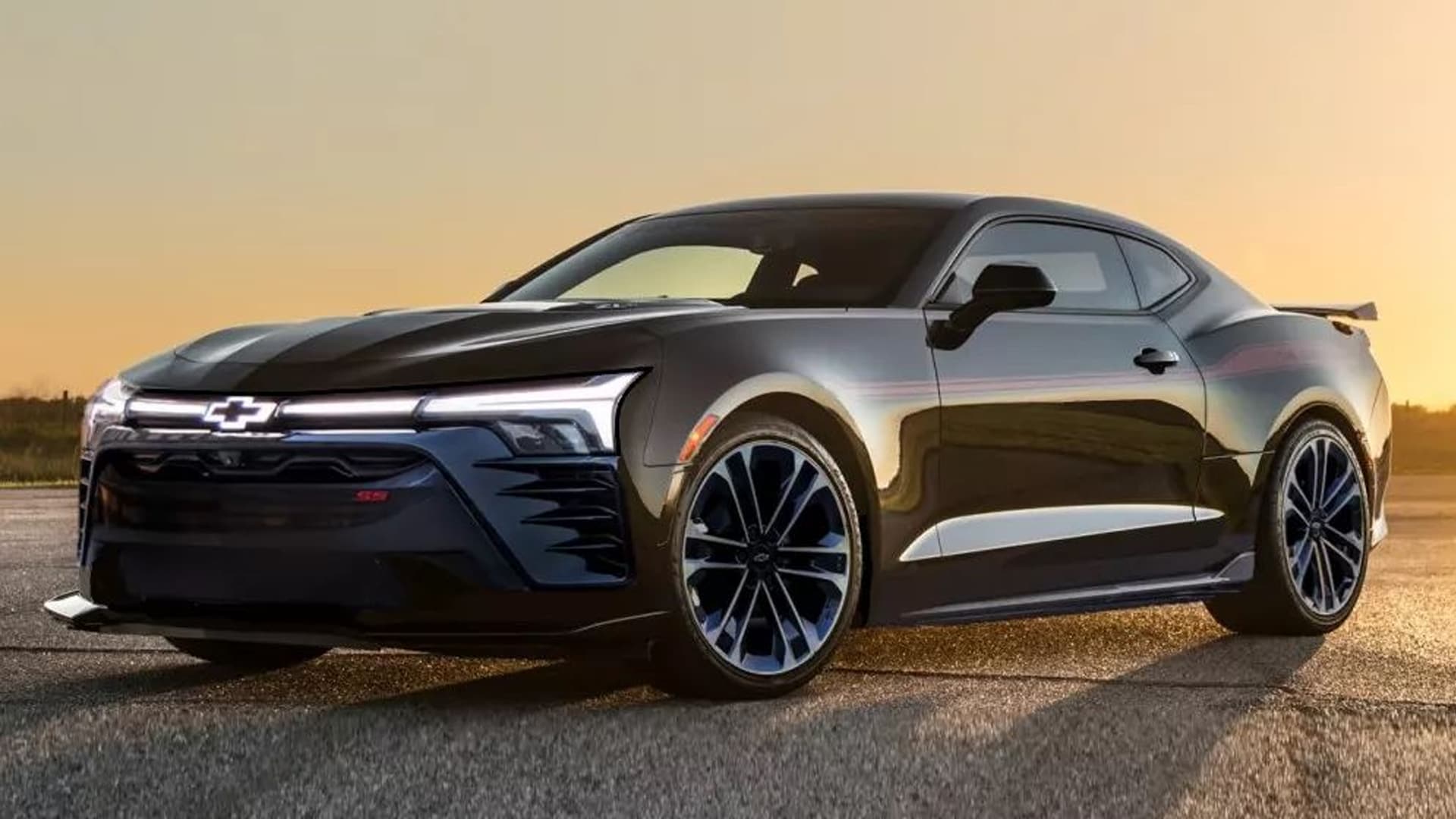
The Camaro’s length also works against it, forcing drivers to either overhang curbs or leave excessive space neither of which ends well in NYC. While it looks aggressive and sounds great, it’s completely mismatched with the realities of urban street parking.
4. Mercedes-Benz E-Class
Luxury sedans like the E-Class are built for smooth highways, not chaotic curbside parking. Its long wheelbase and extended front and rear overhangs make it highly susceptible to bumper damage.
In New York, where other drivers park by feel, large luxury sedans often become unwilling shock absorbers.
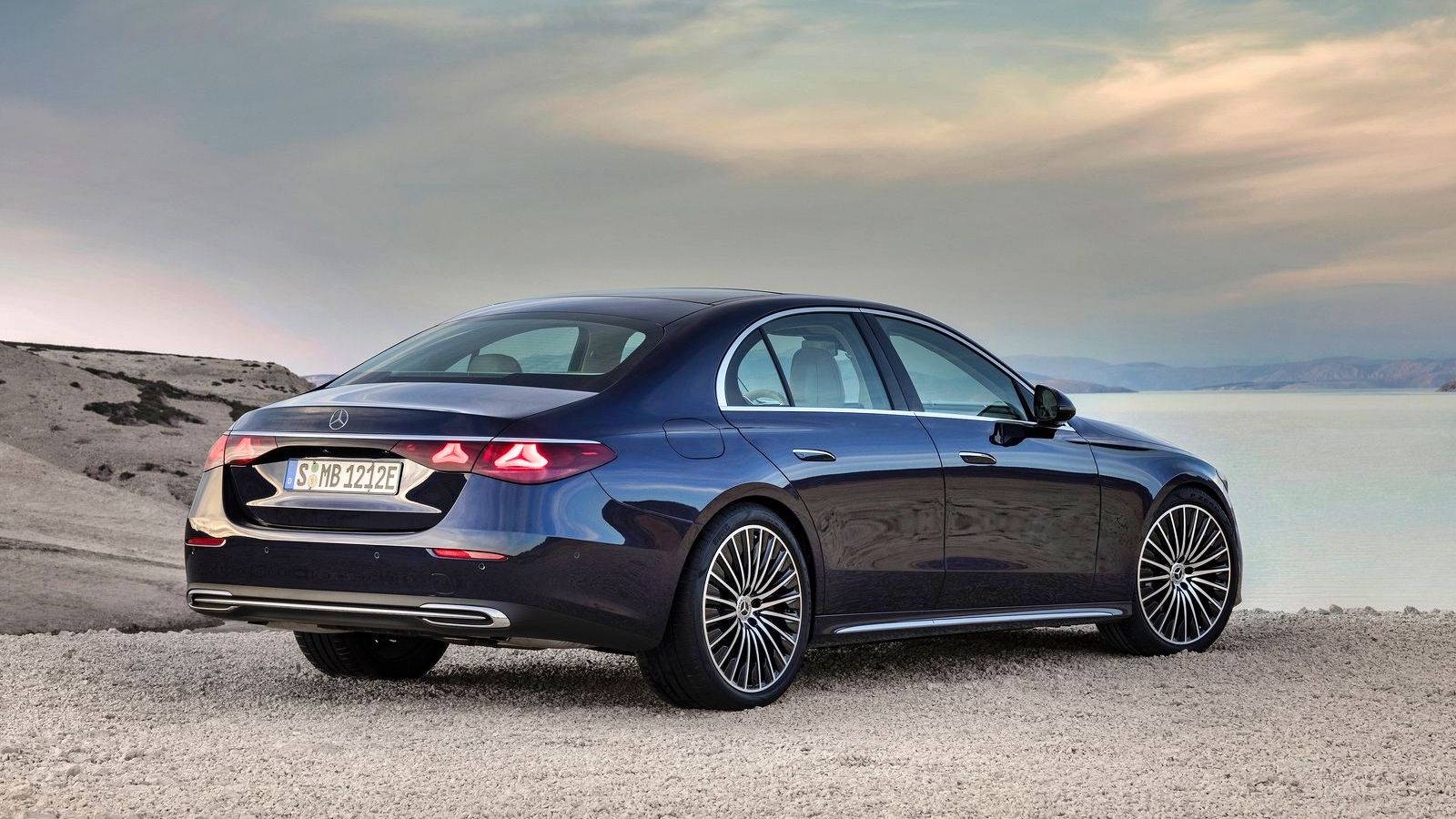
Additionally, soft suspension components and expensive painted trim don’t tolerate repeated minor impacts well. The result is a car that may drive beautifully but ages poorly when exposed to daily street parking abuse.
We tested both the four-cylinder E 350 and the six-cylinder E 450. On our test track, the E 450 proved to be the more impressive of the two, accelerating to 60 mph in just 4.7 seconds
That’s undeniably quick, and the powertrain’s smoothness and responsiveness made an even stronger impression. Regardless of engine choice, shifts from the nine-speed automatic are nearly imperceptible.
The E-Class also impresses with smooth, powerful braking and composed handling. In the E 450, everything feels effortless, from stop-and-go city traffic to merging onto the freeway. The four-cylinder E 350, however, can start to feel strained at higher speeds.
Our test car came equipped with the optional Airmatic suspension. Though not inexpensive, it delivers exceptional ride quality over notoriously choppy freeways and uneven roads.
We’d advise skipping the optional 21-inch wheels, but even their low-profile tires couldn’t spoil the overall comfort.
A host of optional driver-assistance features make the E-Class easy to live with on a daily basis, though the adaptive regenerative braking can feel a bit jerky at higher speeds.
5. Dodge Challenger
The Challenger’s muscle-car appeal fades quickly on narrow NYC streets. It’s wide, long, and heavy, with doors that swing out dramatically a terrible combination for tight curbside parking.
Maneuvering into small spaces is stressful, and backing out often risks scraping wheels or bumpers.
Its low front lip and long hood make curb judgment difficult, leading to frequent underbody scrapes. While it turns heads, the Challenger is far better suited to suburban driveways than city streets where space is scarce and mistakes are costly.

In New York City, the smartest car choice isn’t about luxury or speed it’s about minimizing damage, stress, and repair bills. Compact dimensions, practical ground clearance, forgiving body materials, and good visibility matter far more than badge prestige.
We’d also recommend the adaptive dampers for adjustable ride quality and the Dynamics package, which adds wide 20-inch wheels, six-piston Brembo front brakes, and a leather-wrapped steering wheel.
The Plus package elevates the interior with ambient lighting, faux-suede seat inserts, and upgraded materials on the dashboard and doors.
It requires the Driver Convenience Group, which includes blind-spot monitoring, rear-cross-traffic alert, power mirrors, and high-intensity-discharge headlights.
The Challenger’s base 305-hp V-6 won’t satisfy thrill seekers. Paired exclusively with the eight-speed automatic, this modest engine feels underwhelming in the heavy Challenger, lacking the acceleration and excitement of its rivals.
The Dodge’s Hemi V-8 engines, however, are a different story. The 375-hp 5.7-liter we tested delivered ample power for powerslides, accompanied by a gratifying, guttural growl.
Those aiming to extract the Challenger’s full potential will want the 6.4-liter V-8, which produces 485 horsepower and 475 pound-feet of torque.
We also drove the T/A 392 with the automatic transmission and were impressed by the exhaust’s cannon-blast startup and deep, baritone roar when pushed. While enthusiasts may prefer a manual, the automatic is highly responsive to throttle inputs, delivering quick downshifts and immediate power.
The Challenger charges through corners like a raging bull, snorting aggressively and swaying with authority. True to its muscle car heritage, the Dodge excels on the street and the drag strip rather than on twisty two-lanes or technical road courses.
Since the 2015 redesign, the Challenger offers a compliant ride that’s comfortable but slightly unrefined.
Compared to the sharper, stickier handling of the Camaro and Mustang, the Challenger feels soft in tight turns, and its steering is numb. The slow-to-react helm, however, suits leisurely drives and controlled, power-induced tail slides.
The rear-wheel-drive, V-6 Challenger is estimated at 19 mpg city and 30 mpg highway. Adding all-wheel drive drops those figures to 18 city and 27 highway. Models with the 5.7-liter V-8 are rated up to 16 mpg city and 25 highway, while the 6.4-liter V-8 earns up to 15 mpg city and 24 highway.
In our testing on a 75-mph real-world highway route, we evaluated an all-wheel-drive V-6 and a 485-hp V-8 automatic, both achieving 26 mpg on the highway, a surprising result given the car’s size and power.
Cars like the Corolla Hatchback, Honda Fit, and Subaru Crosstrek succeed because they accept reality: bumps will happen, curbs will be kissed, and snow will pile up. On the other hand, low-slung sedans and wide performance cars may look great on paper but suffer visibly in real-world NYC conditions.
For anyone relying on street parking, choosing a car designed to survive not just impress can save thousands of dollars and countless headaches over time. In a city where parking is a daily battle, the right car isn’t just transportation it’s protection.
