
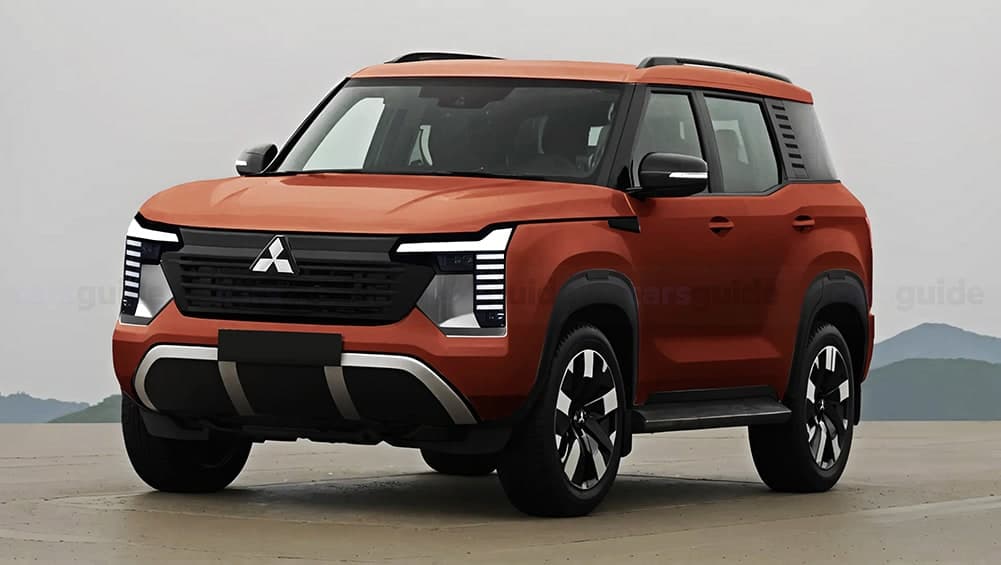
Speculation has swirled that a revived Pajero could share its underpinnings with the Nissan Patrol, but a new report indicates Mitsubishi is taking a different approach.
The new Pajero is expected to use the Mitsubishi Triton’s chassis. A 2.4-liter twin-turbo diesel producing 201 hp could serve as the base engine. A plug-in hybrid powertrain based on the Outlander is also under consideration.
After a long absence, Mitsubishi appears ready to resurrect one of its most iconic off-road nameplates.
Paired with a recent teaser image that closely resembles earlier spy photos, it didn’t take long for observers to connect the dots and begin talking seriously about the return of the Pajero.
For enthusiasts who value rugged, adventure-ready SUVs, the timing couldn’t be more fitting. With the Toyota Land Cruiser currently dominating the segment, a properly executed challenger from Mitsubishi could inject some much-needed competition back into the category.
Production of the traditional Pajero came to an end in 2021, closing the book on a 40-year legacy that spanned four generations. More recently, a video released by Ralliart previewed a modern, Pajero-sized SUV, featuring a boxy, purposeful design that immediately caught the attention of longtime fans.
Earlier reports suggested the next Pajero might share major components with the latest Nissan Patrol, an idea that seemed logical given Mitsubishi’s alliance with Nissan and Renault.
According to the report, the upcoming SUV will be based on the same platform as the latest Mitsubishi Triton pickup. Power is expected to come from the Triton’s 2.4-liter twin-turbocharged four-cylinder diesel engine, which produces 201 hp and 347 lb-ft (470 Nm) of torque.
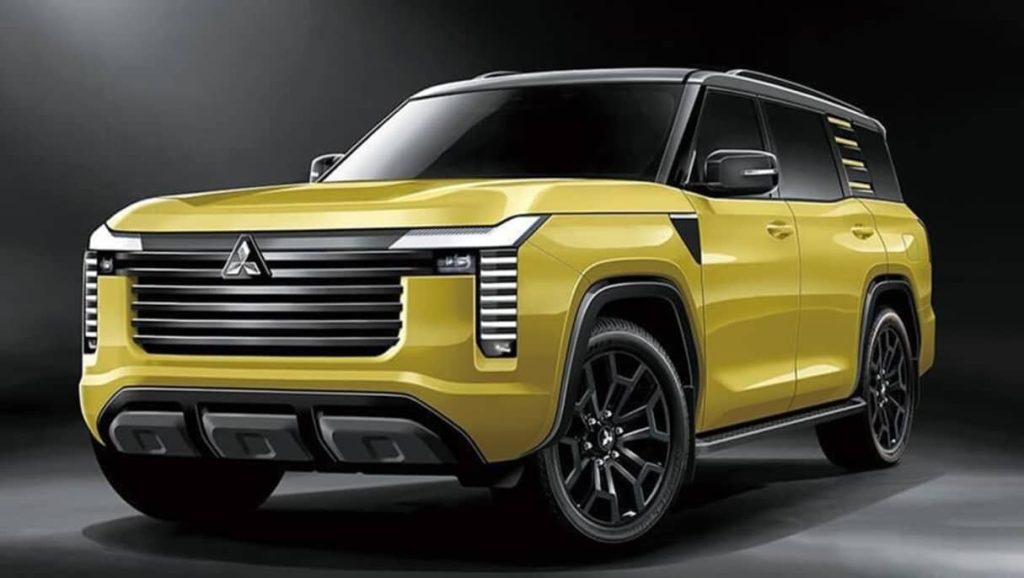
Those numbers line up closely with the Toyota Land Cruiser Prado sold outside the U.S., which relies on Toyota’s long-running 2.8-liter turbo-diesel four-cylinder engine rated at 201 hp and 368 lb-ft (500 Nm).
When the new Prado arrives, it’s likely Mitsubishi will also introduce an electrified version of its SUV. A plug-in hybrid setup based on the Outlander PHEV would be a logical solution.
That system pairs a 2.4-liter four-cylinder gasoline engine with two electric motors and a lithium-ion battery pack, producing a combined 248 hp (185 kW) and 332 lb-ft (450 Nm) of torque.
While the powertrain performs well in the Outlander, adapting it for a larger, heavier Pajero could present challenges. Mitsubishi may need to boost output or explore alternative configurations to ensure the hybrid version feels adequately powered for the demands of a full-size off-road SUV.
Pricing details remain uncertain at this stage. What does seem likely is that the Pajero will be priced above the Triton in base form, while higher-end trims will almost certainly exceed the cost of the Outlander.
Reports from Japanese media suggest pricing could range from 5.5 million yen (approximately $34,900) to 7.5 million yen (around $47,500).
It’s worth noting, however, that Japanese domestic pricing is typically far lower than what vehicles command in Western markets. As an example, the Land Cruiser 250 starts at 5.2 million yen ($32,900) in Japan, while the U.S. version begins at $57,600.
Some of that difference can be attributed to powertrain variations, Japan receives the diesel, while North America gets a hybrid, but it doesn’t fully explain the sizable gap.
Also Read: Top 10 Sleeper Cars That Separate Real Enthusiasts From Posers
