In an era dominated by massive infotainment screens, advanced driver-assistance systems, and ever-stricter safety regulations, vehicle weight has quietly crept upward across nearly every segment of the auto industry.
Even compact sedans now weigh as much as full-size cars from two decades ago. Against this backdrop, truly lightweight production cars have become rare and valuable.
For enthusiasts and purists alike, lightness still matters because it affects everything: acceleration, braking, handling, efficiency, and even driver engagement.
Lightweight cars don’t rely on brute horsepower to feel fast or exciting. Instead, they make better use of what they have.
A lighter vehicle changes direction more eagerly, stops with less effort, and communicates more clearly through the steering wheel and chassis. For daily drivers, reduced weight can also translate to better fuel economy and lower wear on brakes and tires.
While regulations and consumer expectations have made ultra-light cars harder to produce, several manufacturers still prioritize mass reduction through clever engineering, minimalist design, and specialized materials.
Below are ten of the lightest production cars you can buy today in the U.S. market, spanning sports cars, city cars, and purpose-built driving machines.
These aren’t concept vehicles or kit cars they’re street-legal, manufacturer-backed models that prove lightness still has a place in modern automotive design.
1. Caterham Seven 170
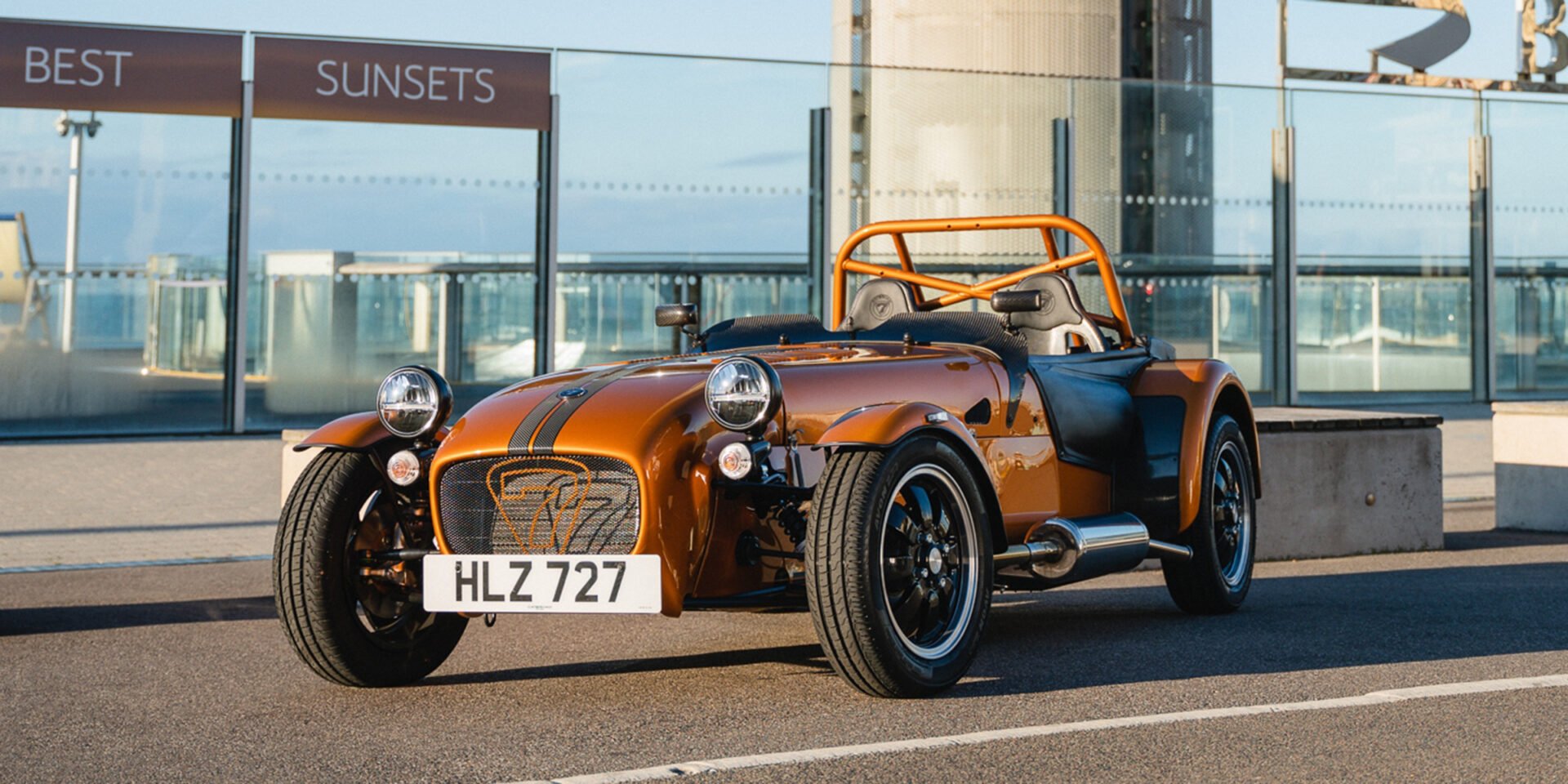
Few cars embody the philosophy of “add lightness” better than the Caterham Seven 170. With a curb weight hovering around 970 pounds, this car feels more like a road-legal go-kart than a traditional automobile.
Powered by a tiny turbocharged Suzuki three-cylinder engine, the Seven 170 produces modest horsepower, but thanks to its featherweight construction, performance feels anything but slow.
The Seven’s minimalist bodywork, exposed suspension, and lack of unnecessary comforts are deliberate choices. There’s no power steering, limited weather protection, and very little sound insulation.
What you get instead is direct feedback and mechanical purity. For U.S. buyers willing to embrace a raw driving experience, the Caterham Seven 170 remains one of the lightest and most engaging cars you can legally own.
That is no small feat for a brand whose pint-sized, two-seat sports cars have never exactly been candidates for weight-loss programmes. Even back in 1957, when the concept was first sketched out, Caterhams were unapologetically lean. But this latest car, the new Seven 170, takes that long-standing obsession with lightness to an almost extreme level.
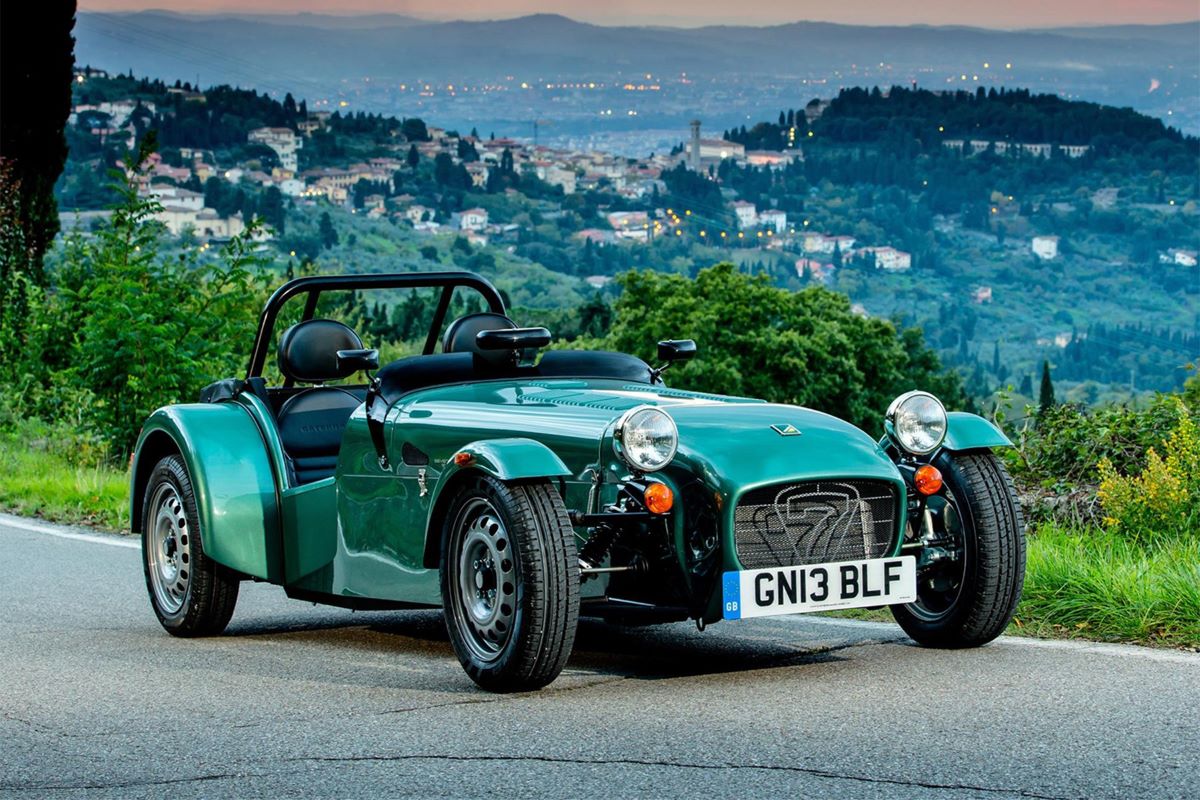
A touch over 440kg. To put that into perspective, it weighs roughly twice as much as the heart of a Blue Whale, yet comfortably less than half the mass of an Alpine A110, a car routinely worshipped by automotive weight obsessives.
Even if kilograms and kilowatts aren’t normally your thing, understand this: the 170 is comically light. And that matters more than ever, because the rules of gravity on planet Car have shifted.
For the better part of the last decade, vehicle weight has marched relentlessly upward. Buyers want more comfort and technology, regulators want more safety systems, and the result has been cars getting heavier and heavier. Dynamics have often paid the price – cough, BMW G80 M3. Against that backdrop, this Caterham feels almost rebellious.
Not quite. This isn’t modern supercar lightweighting by way of carbon tubs and unobtainium. The Seven 170 is light because it’s genuinely small. At just 1470mm wide, it’s 105mm narrower than any other model in Caterham’s current lineup. That makes it not only the lightest Caterham ever produced, but also the smallest.
It replaces the stripped-back Caterham 160 from a few years ago and sticks closely to the same ethos, borrowing heavily from the Japanese Kei car rulebook. Lift the aluminium bonnet, which feels more like opening a sardine tin, and you’ll find Suzuki’s 660cc, three-cylinder K-car engine, assisted by a tiny turbocharger.
There’s a five-speed manual gearbox, a live rear axle, and 14-inch wheels wearing tyres barely wider than a child’s forearm. The Avon ZTZ rubber measures just 155 at the front and a positively meaty 165 at the rear, Barratt Liquorice Wheels would have a larger contact patch.
As with every Caterham currently on sale, the 170 comes in two versions: ‘S’ and ‘R’. The £22,990 ‘S’ is road-focused and features an open differential along with a more forgiving setup. It even throws in some creature comforts, including a full windscreen, weather equipment (doors and roof), and comparatively plush leather seats.
Spend an extra £1,000 and you can opt for the more hardcore ‘R’ pack. That brings uprated sports suspension, composite race seats, a four-point harness, a limited-slip differential, a Momo steering wheel, a carbon-fibre dashboard, and a choice of four paint finishes.
Where Caterham has truly embraced modern times is the options list. It is now entirely possible to inflate the price dramatically through an array of add-ons and paint choices.
2. Ariel Atom 4
The Ariel Atom 4 pushes the definition of “production car” to its extreme. With an exposed tubular chassis and almost no body panels, the Atom weighs just over 1,300 pounds, depending on configuration.
It uses a turbocharged Honda engine that delivers explosive performance relative to its mass, resulting in acceleration that rivals modern supercars.
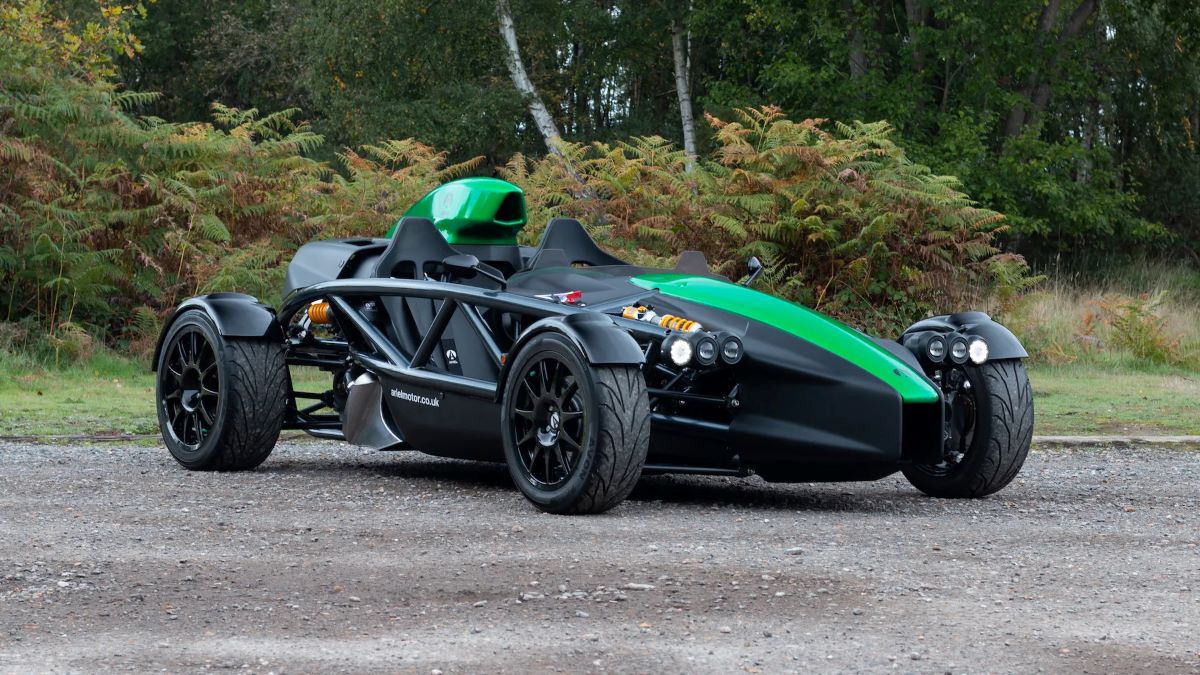
Despite its track-focused nature, the Atom 4 is street-legal in the U.S. and built with production-level quality standards. Advanced aerodynamics, adjustable suspension, and a rigid space frame make it more than just a novelty.
While it’s not a practical daily driver, the Atom 4 represents one of the purest expressions of lightweight engineering available today.
Also Read: 5 Cars for Dublin CA Commuting and 5 Bay Area Practical Picks
3. BAC Mono
The BAC Mono takes inspiration from single-seat race cars and applies it to a road-legal package. Weighing around 1,250 pounds, the Mono uses carbon fiber body panels, magnesium components, and a highly optimized chassis to achieve its incredibly low mass.
Unlike most cars on this list, the Mono is designed around a single driver, eliminating the need for a passenger seat entirely.
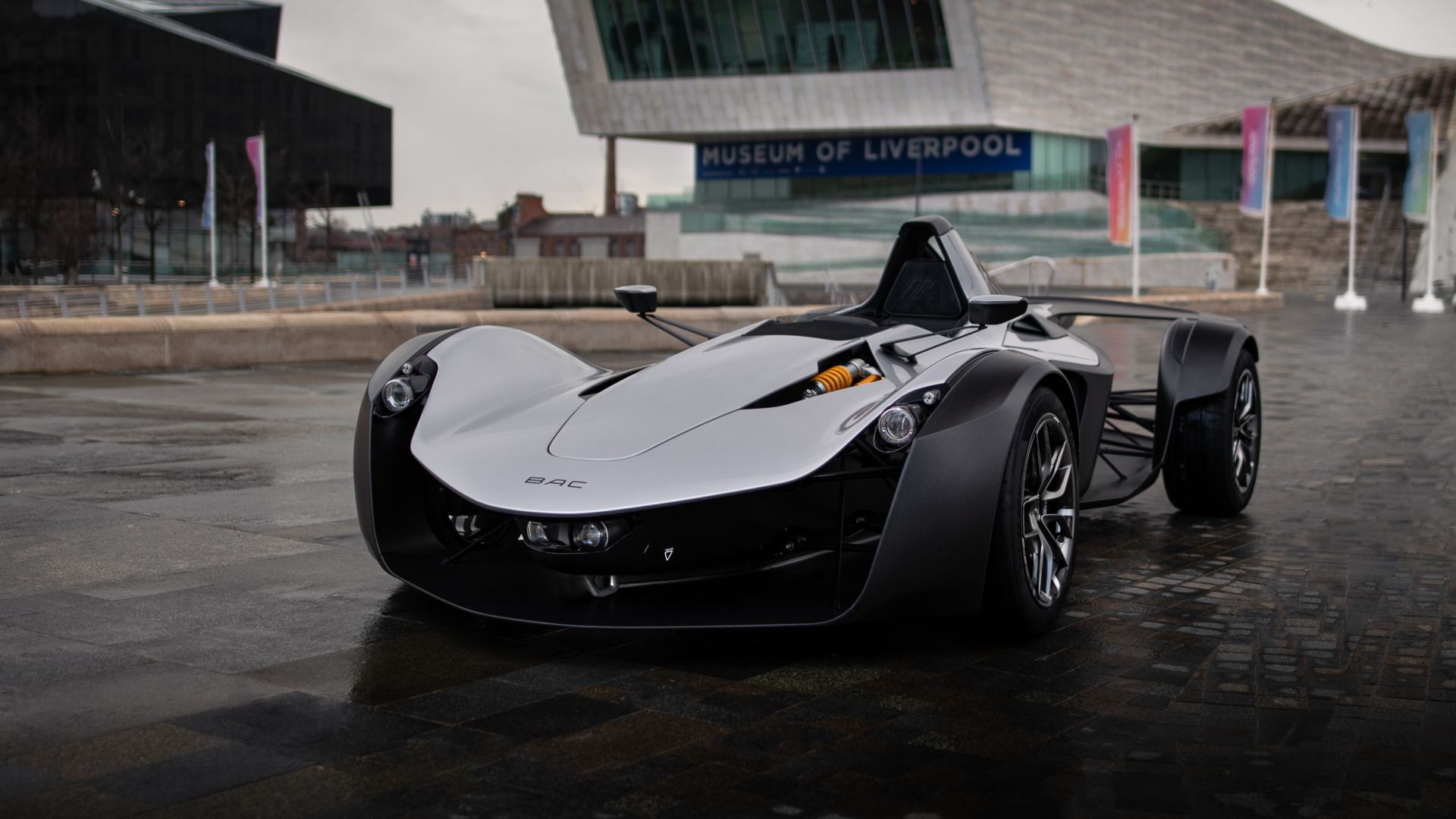
That design choice alone saves significant weight and allows for a perfectly centered driving position.
The result is a machine that feels intensely focused and razor-sharp. For U.S. buyers looking for a lightweight car that feels like a racing simulator brought to life, the BAC Mono stands alone.
The BAC Mono has existed since 2011, and over the last 12 years the world has shown no signs of losing interest in ultra-lightweight sports cars. That is welcome news all round, because it has resulted in the BAC Mono receiving a substantial update.
True to its name, the latest Mono remains a single-seat sports car with an uncompromising focus on low mass. The design has not been reinvented, instead preserving the original Mono’s distinctive silhouette and exposed, open-wheel aesthetic.
Buyers should not expect a windscreen or any attempt to disguise the rear suspension, but they will find a rear wing and a highly visible roll hoop. Every piece of bodywork that does exist is there for a reason, whether aerodynamic, safety-related, or driven by regulations. All of it contributes to a remarkably low final weight of 1,257 lb.
Mounted directly behind the driver is a naturally aspirated 2.5-liter four-cylinder engine that revs to 8,000 rpm and produces 311 hp. On paper, that output figure may not sound especially dramatic, but paired with such a low curb weight it tells a very different story.
The result is a weight-to-power ratio of just 4 pounds per horsepower. For context, a 707-hp Dodge Charger Hellcat manages a comparatively hefty 6.3 pounds per horsepower.
According to BAC, the latest Mono has been engineered to perform just as convincingly on the road as it does on track, making it more usable than before. As a single-seat machine that can legitimately be driven to the circuit and back again, it occupies a space in the automotive world that remains entirely its own.
4. Lotus Elise (Final Edition)
Although no longer in regular production, the Lotus Elise Final Edition is still available in limited numbers and qualifies as one of the lightest modern production cars.
With a curb weight of roughly 2,000 pounds, the Elise demonstrates how effective lightweight aluminum construction can be without sacrificing road usability.
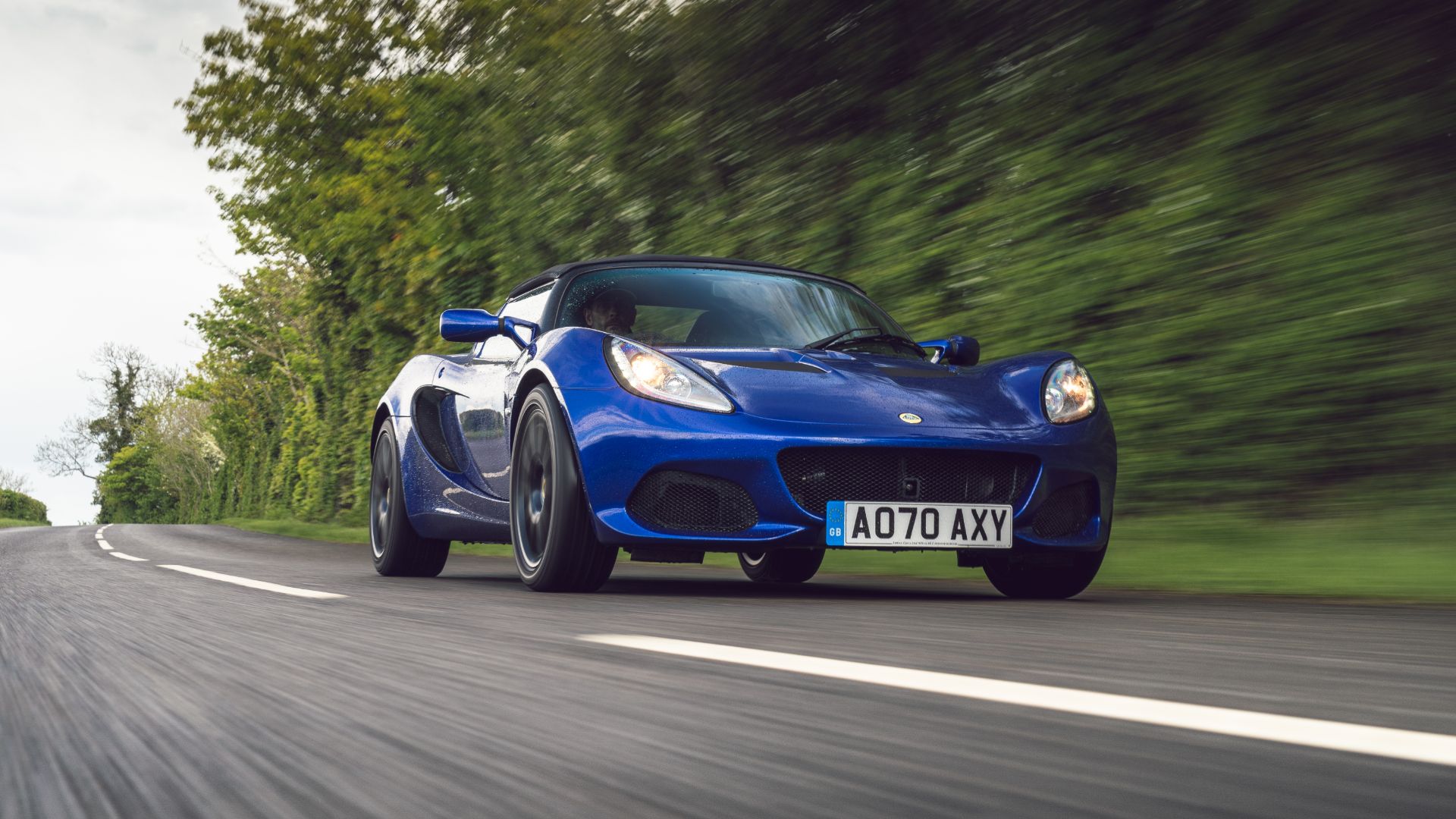
Lotus has long prioritized chassis balance over raw power, and the Elise reflects that philosophy perfectly. Its bonded aluminum tub provides exceptional rigidity while keeping weight low.
On American roads, the Elise feels agile, communicative, and alive qualities that are increasingly rare in modern vehicles. Even by today’s standards, its weight remains impressively low.
Positioned as the successor to the second-generation Elan, which arrived in 1989 as a front-wheel-drive convertible, the Elise was widely seen as a course correction for the historic British marque.
Built between 1996 and 2021, the Elise re-centered Lotus around its core belief in uncompromised performance and lightweight engineering. The project was led by Julian Thomson, then Lotus’s head of design, alongside chief engineer Richard Rackham.
The Elise did not initially make its way to the United States, but it was eventually federalized for the American market in 2005. It exited the U.S. lineup in 2011 as regulatory requirements evolved, although Lotus continued refining and selling the model in other markets for another ten years.
Over its 25-year lifespan, numerous performance-oriented special editions were released, reinforcing the Elise’s reputation as the default choice for serious track enthusiasts.
While the Elise has no direct replacement at present, the Lotus Emira has assumed that role in part. Looking further ahead, Lotus has also previewed a future electric sports car known as the Type 135, slated for a 2028 debut and expected to draw clear inspiration from the Elise’s philosophy.
5. Mazda MX-5 Miata (ND)
The Mazda MX-5 Miata may not seem extreme compared to track-only machines, but in the context of modern production cars, it’s remarkably light.
The current ND generation weighs as little as 2,300 pounds, making it one of the lightest mass-market vehicles sold in the U.S.
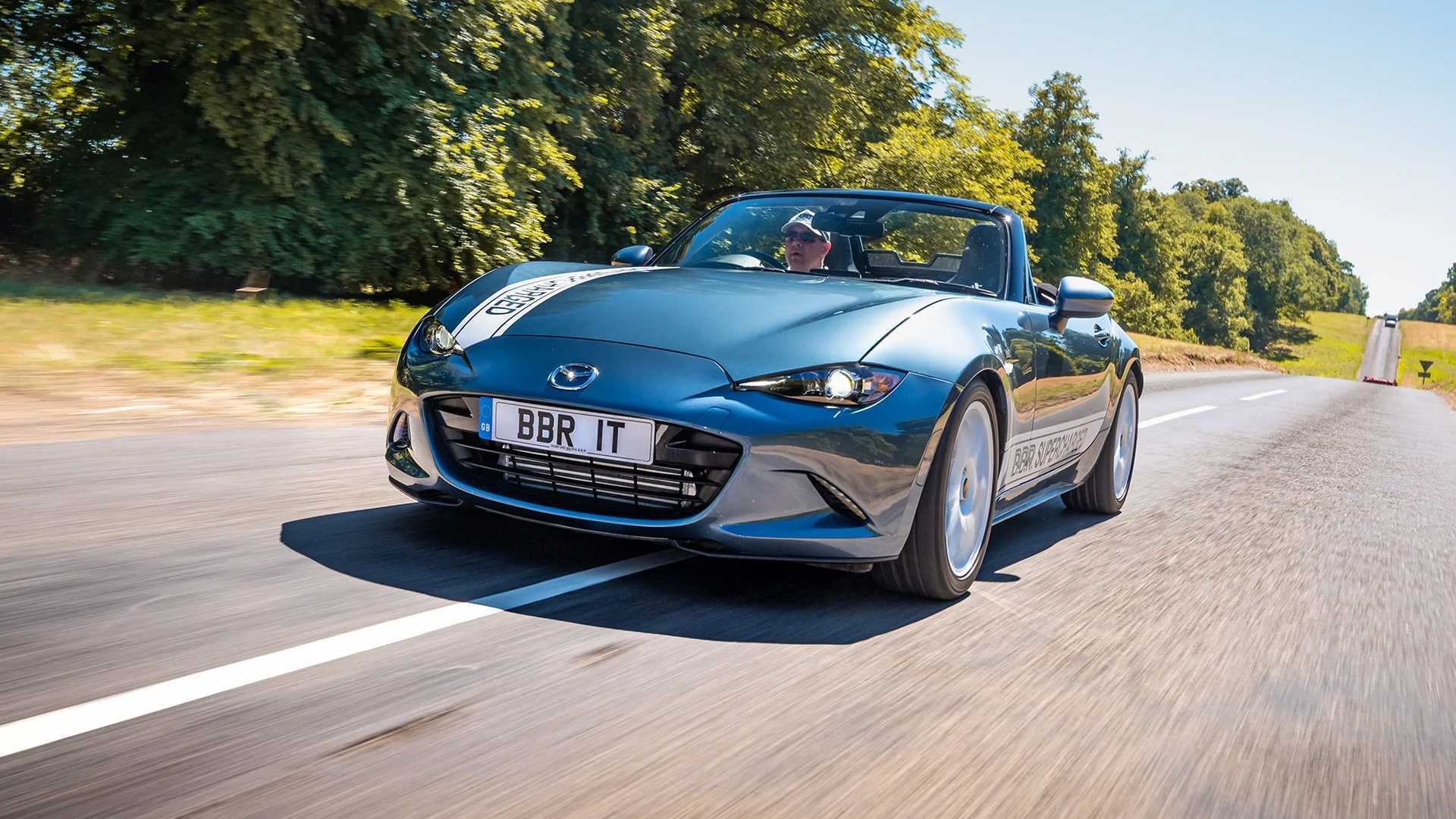
Mazda achieved this through careful material selection, compact dimensions, and a refusal to overcomplicate the formula. The Miata proves that lightweight cars don’t have to be impractical or expensive.
It offers modern safety features, everyday reliability, and excellent fuel economy all while preserving the joy that comes from low mass and balanced handling.
Also Read: 8 High Performance SUVs With Sports-Car Handling
6. Toyota GR86 / Subaru BRZ
The Toyota GR86 and Subaru BRZ twins represent a rare commitment to lightweight, rear-wheel-drive fun in an affordable package.
Weighing around 2,800 pounds, these coupes are among the lightest sports cars currently available from a major manufacturer in the U.S.
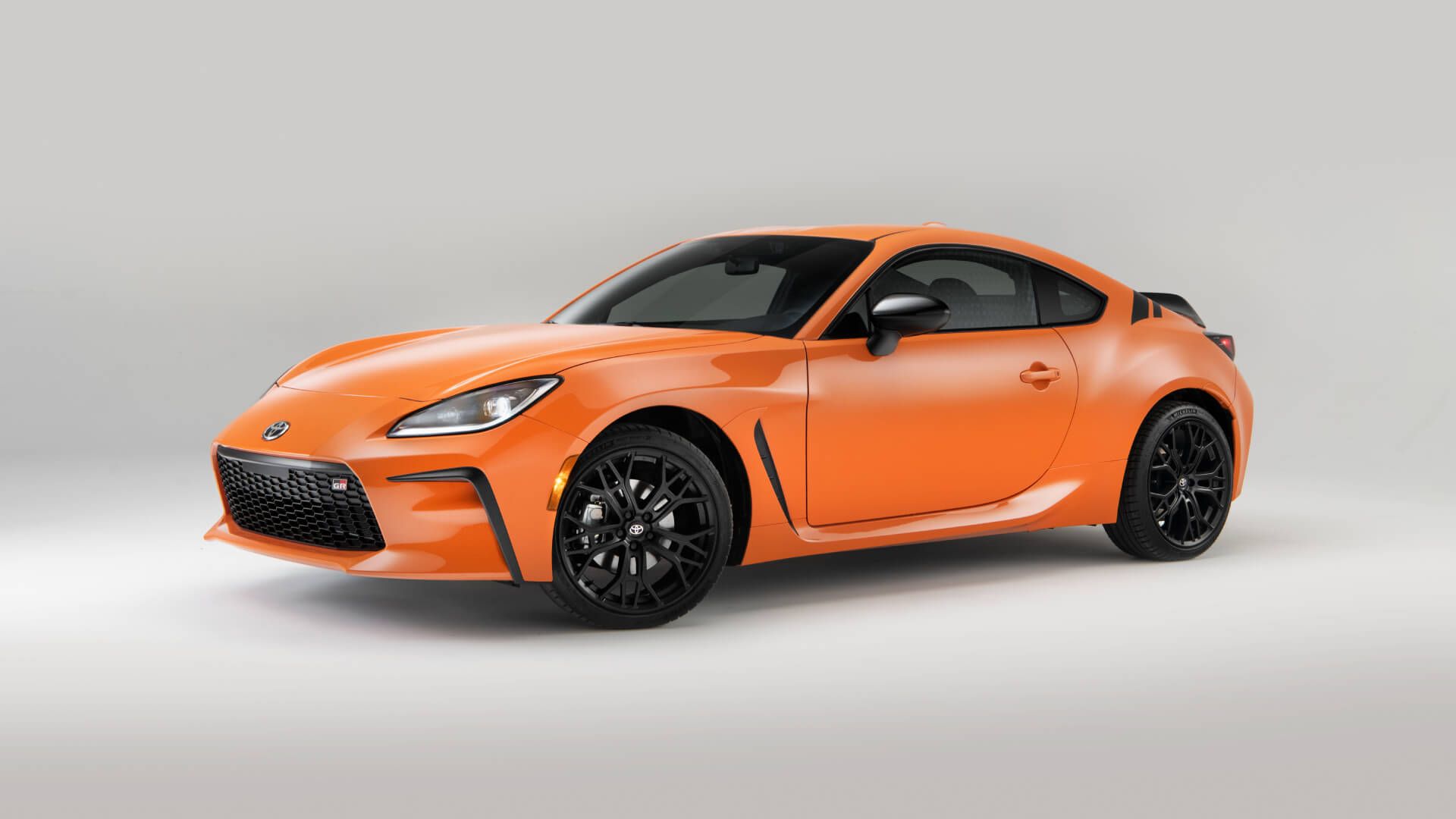
Their relatively low curb weight enhances steering feel, cornering balance, and braking performance. Rather than chasing high horsepower numbers, Toyota and Subaru focused on chassis tuning and driver engagement.
In a market increasingly dominated by heavy, turbocharged performance cars, the GR86 and BRZ stand out as accessible examples of how lightness still matters.
7. Mini Cooper Hardtop 2-Door
Among modern small cars, the two-door Mini Cooper remains one of the lightest options available, with a curb weight starting around 2,700 pounds.
While newer Minis are heavier than their predecessors, the brand still emphasizes compact dimensions and agile handling.
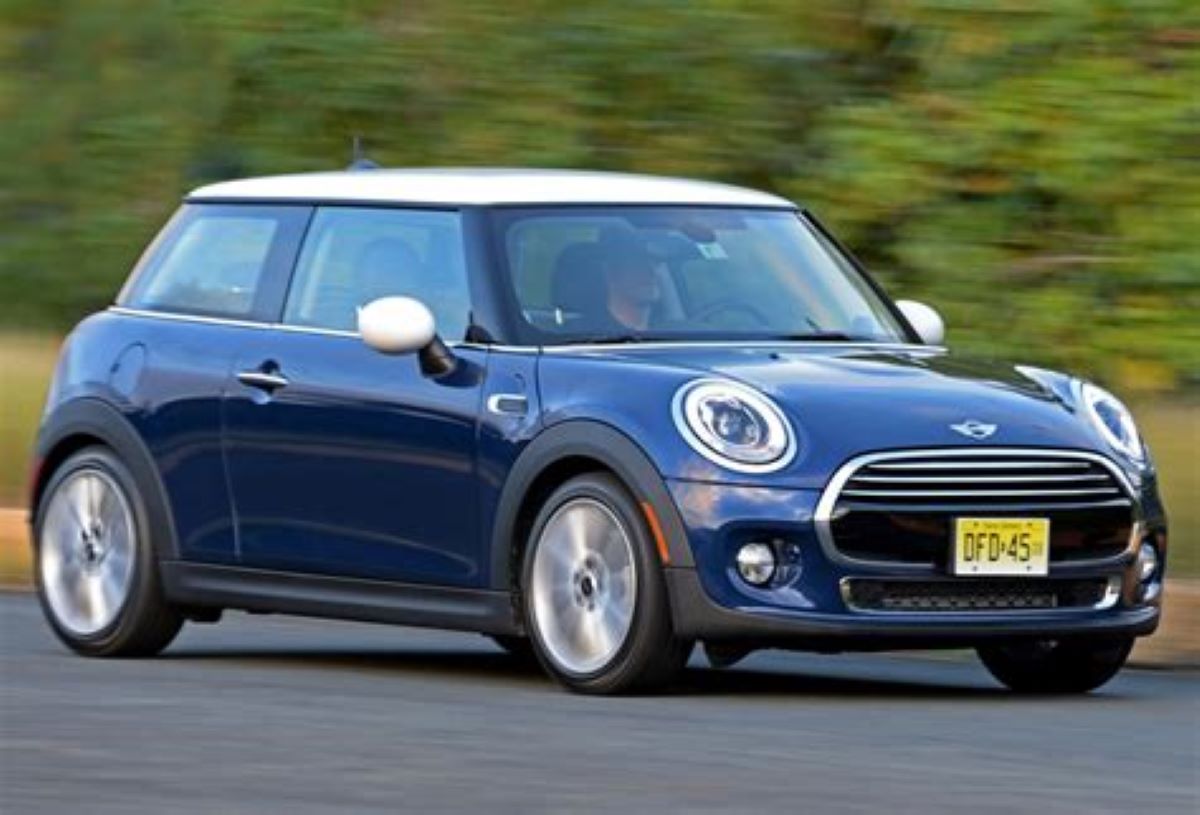
For urban U.S. drivers, the Mini’s low weight contributes to nimble maneuverability, efficient braking, and responsive acceleration especially in city traffic.
It’s proof that lightweight design can coexist with modern safety requirements and everyday comfort, even in a mainstream package.
At a glance, the Mini can come across as a car that prioritizes style over substance, but that assumption quickly falls apart once you start driving it. In terms of handling, it delivers genuine engagement and character. It may be down on power compared to nearly all of its direct rivals, yet it remains a compact, tightly wound bundle of fun.
Our test Mini Cooper S, fitted with the rapid-fire automatic transmission, managed a 0–60 mph run in 6.4 seconds. That makes it half a second slower than a dual-clutch-equipped Volkswagen Golf GTI, but still quicker than the manual-only Honda Civic Si.
Braking performance is where the Cooper S shows its biggest weakness. Coming down from 60 mph, it required 120 feet to stop. By comparison, the Golf GTI needed only 103 feet, while the Civic Si managed the same feat in 106 feet. The brake pedal itself feels overly soft and lacks meaningful feedback; put plainly, the brakes are the Mini’s most significant dynamic shortcoming.
Steering and handling tell a very different story. They are sharp, lively, and almost nervous in a way that recalls classic Minis of the past. The car’s performance is approachable yet rewarding when pushed, and that balance is something we genuinely appreciate about this generation of Mini.
8. Mitsubishi Mirage
While not a performance car, the Mitsubishi Mirage earns its place on this list by being one of the lightest new cars sold in America.
With a curb weight just under 2,100 pounds, the Mirage demonstrates how simplicity and minimalism can still deliver tangible benefits.

Its lightweight construction helps offset its modest power output, making it surprisingly efficient in urban environments.
For budget-conscious U.S. buyers, the Mirage shows how low weight can enhance fuel economy and reduce ownership costs, even without sporty intentions.
The Black Edition can be fitted with automatic headlights and rain-sensing windshield wipers, while those same features are also available as options on the range-topping SE trim. Across the lineup, every Mirage now includes a front-passenger vanity mirror as standard equipment, and welcome and departure lighting has also been added to all models.
If the Mirage is on your shopping list, the motivation is almost certainly budget-driven. With that in mind, the base ES makes the most sense. Moving up to higher trims quickly erodes the Mirage’s value proposition and places it in direct competition with several objectively better alternatives.
Every Mitsubishi Mirage hatchback is powered by a 1.2-liter three-cylinder engine producing a modest 78 horsepower and 74 pound-feet of torque. That output trails rivals such as the Chevy Spark, which offers 98 horsepower.
The entry-level Mirage comes standard with a five-speed manual transmission, while all other trims use a continuously variable automatic transmission (CVT). Power is delivered to the front wheels.
In real-world driving, the Mirage’s performance is underwhelming. Acceleration around town and on the highway feels sluggish, and passing at freeway speeds requires heavy throttle inputs.
When pushed, the engine becomes coarse and noisy, and noticeable vibration makes its way into the cabin. Overall, the driving experience reinforces the Mirage’s economy-first priorities rather than any pretense of performance.
9. Smart EQ Fortwo
The Smart EQ Fortwo, though discontinued in some markets, is still available in limited U.S. inventory and remains exceptionally light for a modern electric vehicle.
Weighing around 2,200 pounds, it stands in stark contrast to most EVs, which often exceed 4,000 pounds.
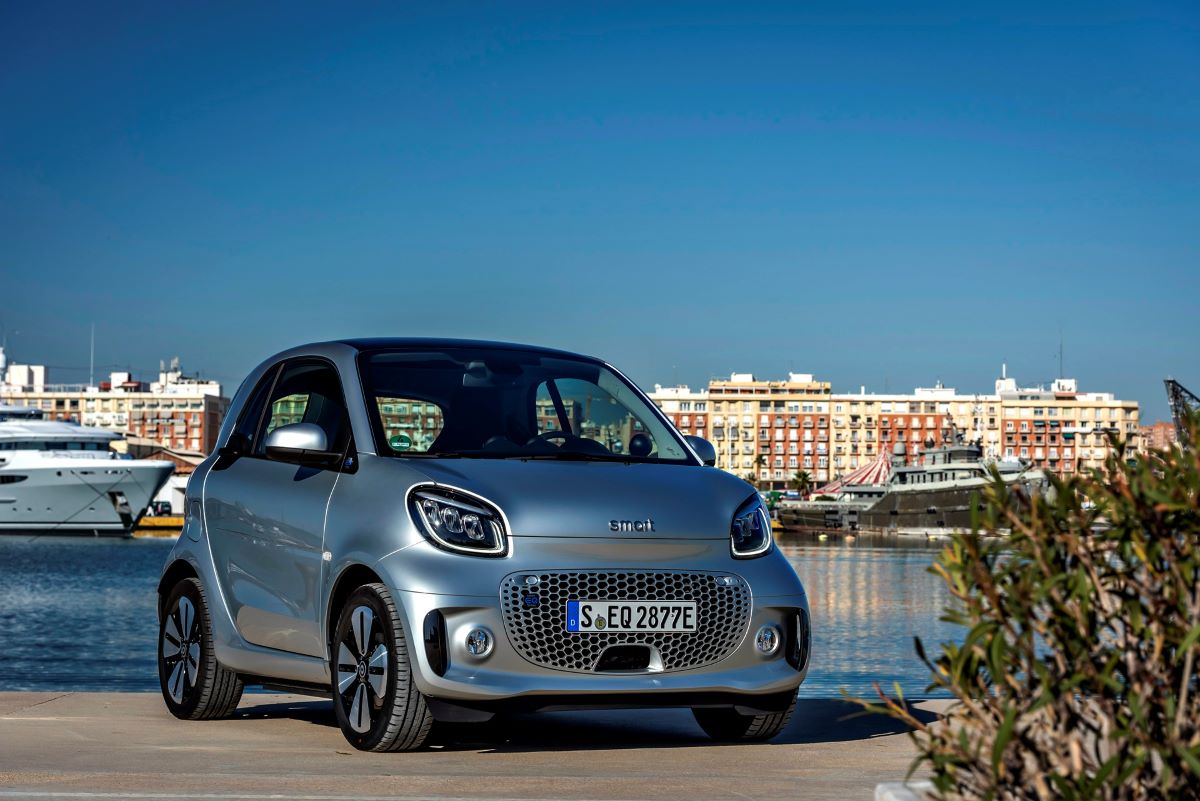
The Fortwo’s small battery pack and compact structure allow it to feel agile and responsive in city driving. While its range and speed are limited, its lightweight nature makes it one of the most approachable electric cars for dense urban environments.
The EQ Fortwo carves out a unique niche in the EV market thanks to its ultra-compact footprint, making it exceptionally well-suited for urban environments.
Power comes from an 80-hp electric motor paired with a single-speed transmission that drives the rear wheels of this tiny two-seater. Charging is straightforward: a 240-volt charger can bring the battery from empty to full in roughly three hours.
Despite its small stature, the EQ Fortwo offers features aimed at highway confidence, including crosswind assist to counteract the effects of strong gusts. For those who enjoy open-air driving, a cabriolet version is available, allowing for top-down electric motoring.
Range, however, is limited. The coupe version can travel an estimated 58 miles on a full charge, while the cabriolet manages around 57 miles. Prospective buyers should act quickly, 2019 marks the final year Smart will offer vehicles in the U.S., making the EQ Fortwo a rare opportunity for city-focused EV ownership.
10. KTM X-Bow GT-XR
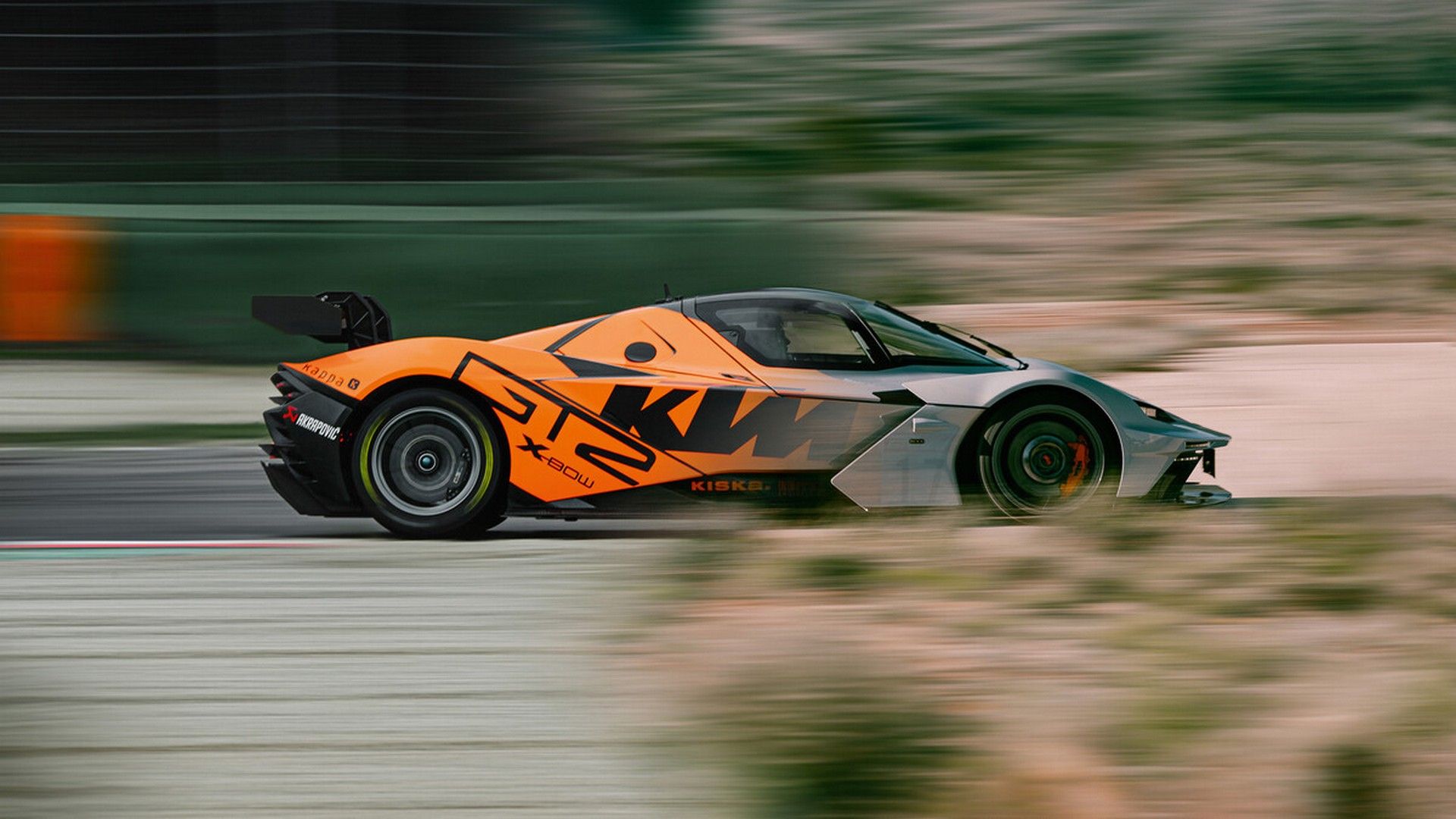
The KTM X-Bow GT-XR blends supercar performance with ultra-light construction, weighing approximately 2,000 pounds thanks to extensive use of carbon fiber. Though rare, it is street-legal in the U.S. and represents the extreme end of lightweight engineering.
Every design decision from the exposed carbon tub to the minimal interior exists to reduce mass. The result is a car that delivers breathtaking performance without relying solely on excessive horsepower.
For those who want cutting-edge materials and a true lightweight philosophy, the X-Bow GT-XR is among the most radical options available.
As vehicles continue to grow heavier due to regulations, technology, and consumer expectations, lightweight cars are becoming increasingly special.
The Austrian company KTM, best known in the U.S. as a motorcycle brand, has introduced a new road-going X-Bow variant called the GT-XR. The X-Bow, short for “crossbow”, has been part of KTM’s lineup since 2008.
The GT-XR is essentially the street-legal version of the X-Bow GT2, featuring amenities such as air conditioning, Bluetooth, and even an optional rear-view mirror. Rather than traditional doors, KTM embraced a more futuristic approach with a jet fighter–style canopy reminiscent of a Star Wars X-Wing.
KTM’s track performance credentials are impressive. The original X-Bow recorded a 2:52.3 lap at Virginia International Raceway during our Lightning Lap testing, and our editor-in-chief called the 2019 X-Bow Comp R “properly capable” after driving it at Sonoma Raceway in California.
Powering the GT-XR is a turbocharged 2.5-liter engine sourced from the Audi RS3, producing 493 horsepower. While not a record-breaking figure, the car’s featherweight construction makes the performance feel extraordinary.
The GT-XR weighs a claimed 2,491 pounds, only about 300 pounds more than a first-generation Mazda Miata. Its carbon-fiber monocoque weighs just 196 pounds, lighter than the average American male. This combination of high output and low mass enables the GT-XR to reach 62 mph in just 3.4 seconds.
KTM opted for a seven-speed direct-shift gearbox (DSG) rather than a manual transmission. The steering wheel is removable and features an integrated display with shift indicators, while forged aluminum wheels by OZ Racing round out the package. A 25-gallon fuel tank extends the car’s range to more than 600 miles between fill-ups.
The GT-XR is currently available to order in Europe, where it is approved for street use. Pricing sits just above $286,000 based on current exchange rates, with a production limit of 100 units per year. U.S. buyers may be out of luck, however, as KTM has not confirmed any plans to bring the GT-XR stateside.
They offer a driving experience that emphasizes balance, feedback, and efficiency rather than brute force. Whether it’s a minimalist track weapon or a compact city car, reduced weight improves nearly every aspect of vehicle dynamics.
For U.S. buyers, choosing a lightweight car often means choosing intention over excess. It’s about prioritizing how a car feels rather than how many features it can advertise.
These ten vehicles prove that lightness is not an outdated concept it’s a design choice that still delivers real-world benefits in today’s automotive landscape.