Buying a first car or a low-cost daily driver often comes with competing priorities. For teens, parents usually want something safe, affordable to insure, and easy to maintain.
For cash-strapped adults, the goal is reliability, decent fuel economy, and just enough personality to make daily commuting tolerable.
The good news is that “cheap” doesn’t have to mean boring. There are still cars on the used market that deliver genuine driving enjoyment without wrecking your finances.
This list focuses on vehicles that are widely available in the U.S., easy to find under reasonable budgets, and known for balancing fun, dependability, and low ownership costs. None of these cars require exotic parts, premium fuel, or constant repairs.
Instead, they offer approachable performance, simple engineering, and enough character to make drivers look forward to getting behind the wheel even if the car was bought with saved allowance money or a tight paycheck.
Below are ten smart picks that prove affordable cars can still be enjoyable.
1. Mazda3 (2010–2016)
The Mazda3 has long been one of the best-kept secrets for drivers who want a little excitement without stepping into sports car territory.
Even older models feel more engaging than most compact sedans, thanks to responsive steering and well-tuned suspension. For teens, this translates into a car that feels controlled and predictable rather than twitchy or overwhelming.
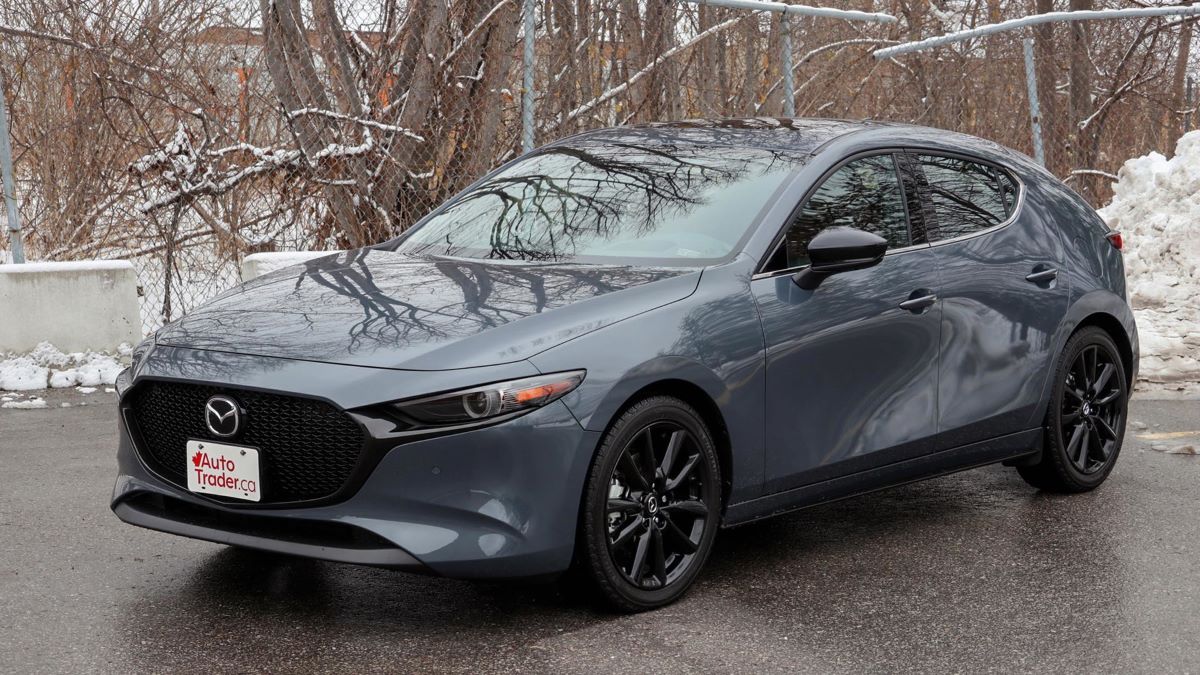
From a budget standpoint, the Mazda3 excels. The naturally aspirated four-cylinder engines are durable, fuel economy is solid, and maintenance costs are low.
Insurance rates also tend to be reasonable compared to flashier coupes. It’s a practical car that still feels like it was designed by people who enjoy driving.
Mazda equips the 3 with three different four-cylinder engines, starting with a 2.0-liter on the base sedan. This engine produces 155 horsepower and is limited to front-wheel drive.
Stepping up to the 186-hp 2.5-liter four-cylinder adds the option of all-wheel drive, though the most exciting choice is the 250-hp turbocharged 2.5-liter. Buyers can pair the turbo with a six-speed manual, but only in front-wheel-drive models, selecting all-wheel drive requires a six-speed automatic.
While every Mazda 3 responds eagerly to throttle inputs, the non-turbo engines aren’t particularly fast. Testing the turbocharged version, we recorded a 0–60 mph time of 5.6 seconds.
Both the hatchback and sedan maintain composure on straightaways and twisty roads alike, delivering a refined ride. The new Mazda 3 continues the outgoing model’s reputation for fun-to-drive dynamics, offering tight body control, naturally communicative steering, and a firm yet comfortable ride that keeps occupants from feeling every bump in the road.
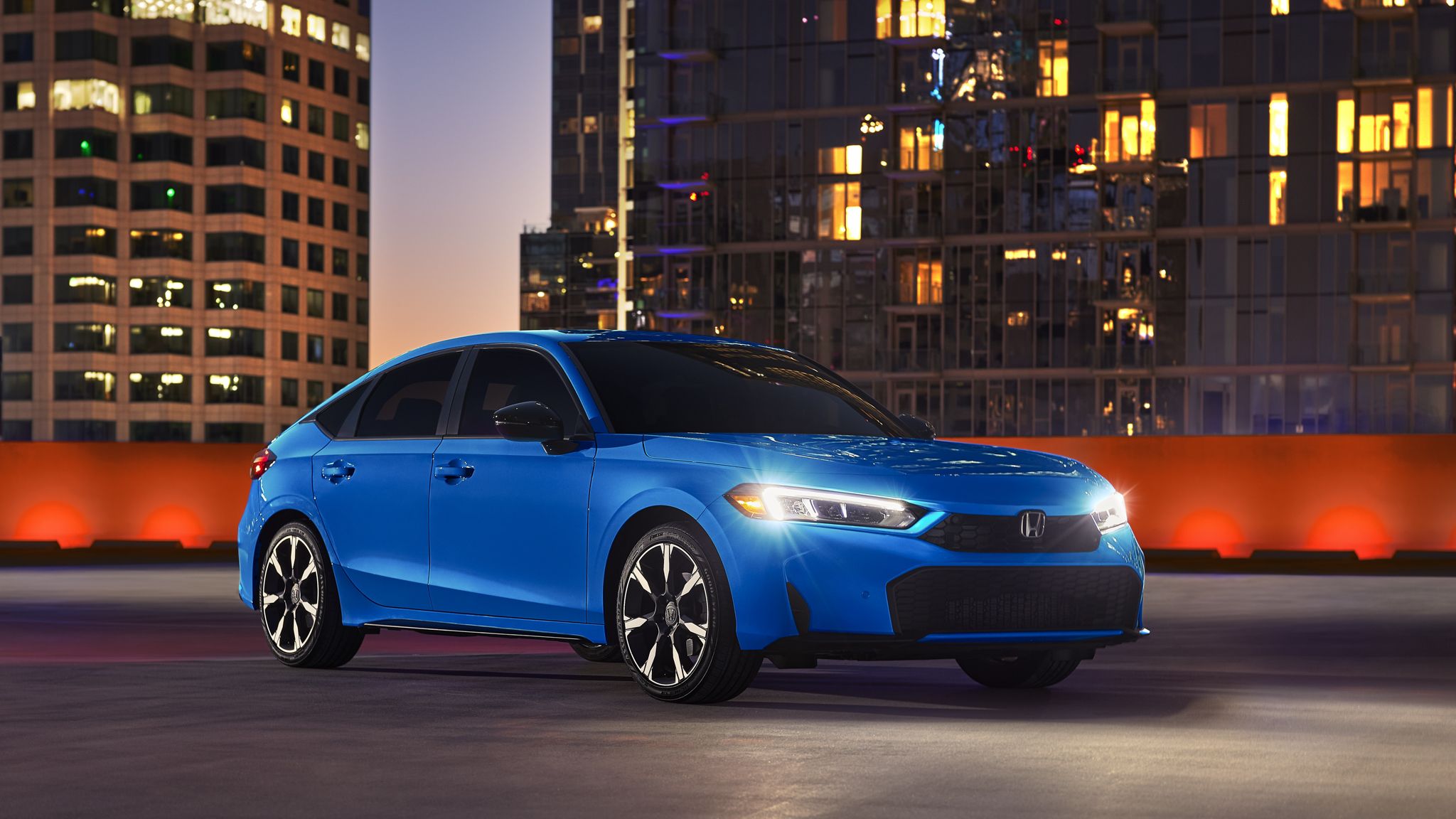
2. Honda Civic (2006–2015)
The Honda Civic is almost unavoidable on any list of affordable cars, but it earns its place for good reason. Civics from this era combine legendary reliability with just enough fun to keep drivers engaged.
Even base models feel light and responsive, and the manual transmission versions are especially satisfying.
For teens and young adults, the Civic’s massive aftermarket and parts availability are major advantages.
Repairs are cheap, mechanics know the platform well, and resale value remains strong. It’s not the most exciting car here, but it’s one of the safest bets for low-cost ownership with minimal surprises.
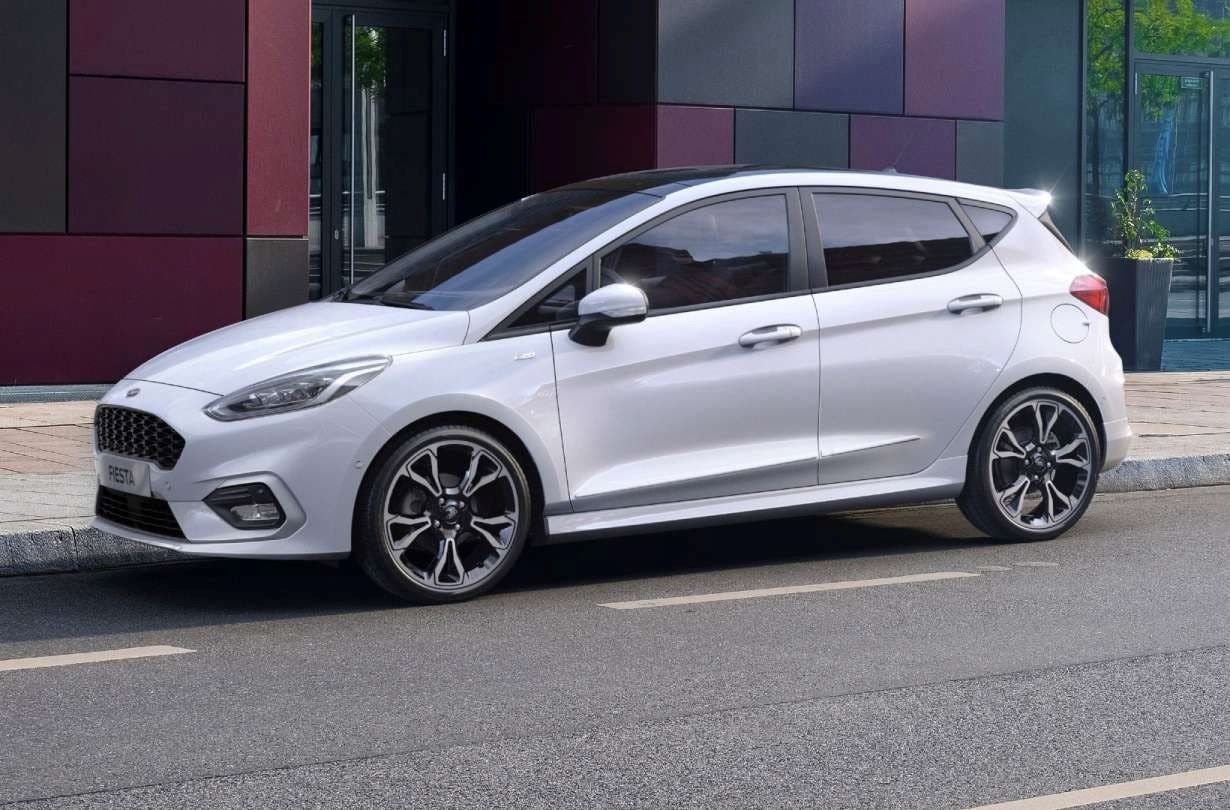
3. Ford Fiesta (2011–2019, Manual Only)
The Ford Fiesta often gets overlooked in the U.S., but that’s part of its appeal. With a manual transmission, the Fiesta is genuinely fun to drive, offering nimble handling and a playful personality that shines on back roads and city streets alike.
It feels smaller and lighter than most modern cars, which makes everyday driving more engaging.
It’s important to note that automatic versions have well-documented transmission issues, which is why the manual-only recommendation matters.
With that caveat, the Fiesta becomes a bargain enthusiast car cheap to buy, efficient on fuel, and surprisingly enjoyable for drivers who value involvement over outright speed.
Affordable to buy, inexpensive to operate, and genuinely fun to drive, these are three key qualities we look for in a standout economy car, and the 2015 Ford Fiesta hits all of them. Its surprisingly upscale interior and fully modern infotainment features reinforce the idea that this subcompact delivers far more than its modest price tag suggests.
One of the Fiesta’s strongest points is that Ford doesn’t seem to punish buyers for choosing the least expensive car in the showroom. Every model comes with attractive styling, a well-fitted interior with some surprisingly nice finishes, and essential tech features like Bluetooth phone connectivity and an iPod connector as standard.
For those wanting a little extra pampering, options that would have been unheard of in a subcompact not long ago are available, including push-button start, a large touchscreen infotainment system, and heated seats, available with or without leather.
At its core, the Fiesta excels where it counts for subcompact buyers: fuel economy. The lively 1.6-liter four-cylinder may not be the absolute most efficient in the class, but its EPA-estimated 31 mpg combined is still impressive.
There’s also the turbocharged EcoBoost three-cylinder, which boosts both efficiency and acceleration. And for those craving performance, the sport-tuned Fiesta ST is one of the best performance bargains in the segment.
Other competitors don’t quite reach that level but remain worth considering: the Chevrolet Sonic is just as engaging to drive, while the Hyundai Accent and Kia Rio offer smart styling, long warranties, and solid value. All of these alternatives, unlike the Fit, are available in both sedan and hatchback body styles.
It’s never been a better time to shop in the subcompact segment, and the 2015 Ford Fiesta demonstrates that a small, affordable car doesn’t have to be dull or uninspiring.
The base Fiesta comes with a 1.6-liter four-cylinder producing 120 horsepower and 112 lb-ft of torque. A five-speed manual is standard, while the six-speed “Powershift” automatic is optional. Powershift is an automated manual that shifts gears without driver input but remains more efficient than a traditional automatic.
Both the manual and Powershift-equipped models reached 0–60 mph in roughly 9.5 seconds. That’s about average for a manual and above average for an automatic, delivering respectable performance for a car in this class.
Also Read: 5 Cars That Survive Houston Stop-and-Go vs 5 With Frequent Cooling Problems
4. Toyota Corolla (2009–2016)
Fun isn’t always about speed or sharp handling. Sometimes, fun means not worrying about your car breaking down or draining your bank account.
The Toyota Corolla represents stress-free ownership at its best, making it an ideal choice for teens who need dependable transportation or adults who simply want a car that works every day.
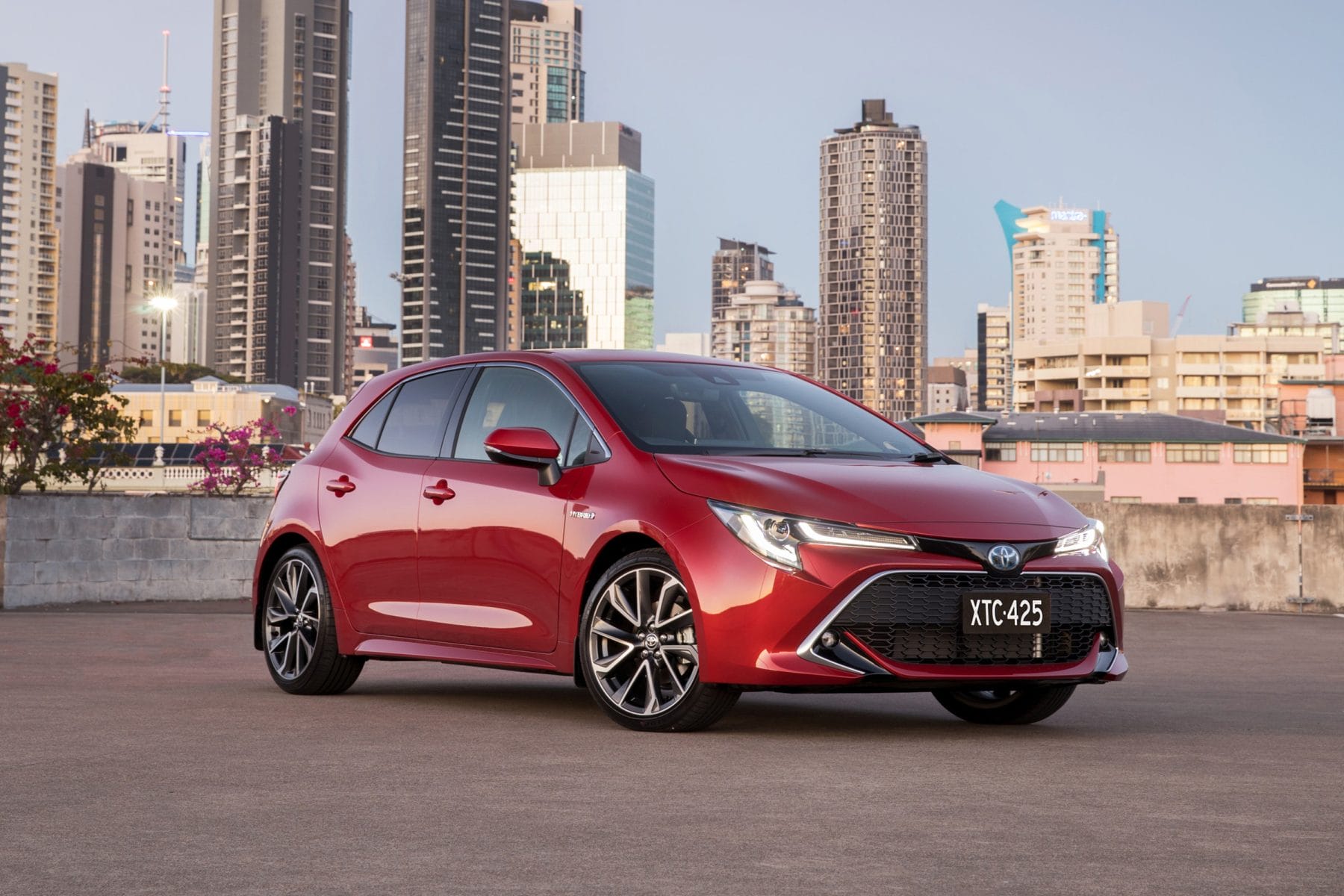
While Corollas aren’t thrilling in a traditional sense, their light steering and simple controls make them easy to live with.
They’re forgiving to drive, inexpensive to insure, and capable of lasting well beyond 200,000 miles with basic maintenance. For many buyers, that peace of mind is the real fun.
5. Volkswagen Golf (2007–2014)
The Volkswagen Golf offers a more European take on affordable driving. It feels more solid than many economy cars and provides a refined ride without sacrificing engagement.
The steering is precise, the interior materials are above average for the price, and the hatchback design adds real-world practicality.
Maintenance costs can be slightly higher than Japanese competitors, but they’re still manageable if the car has been properly maintained.
For teens who want something that feels a little more grown-up or adults who want a compact car with personality the Golf strikes a compelling balance.
Losing another manual transmission is almost as painful as missing breakfast at Whammy Burger by three minutes. North American buyers tried to keep the row-your-own gearbox alive in the Golf GTI and Golf R, snapping them up at about a 40 percent take rate.
Unfortunately, a global disinterest in six-speed manuals killed the business case. But there’s much more to these hot-hatch legends than just the shift lever.
At the heart of both the Golf GTI and Golf R is a driving experience that balances luxury and performance. The GTI’s 241-hp turbocharged 2.0-liter four-cylinder comes alive with a throaty growl, and its now-standard seven-speed dual-clutch transmission snaps through shifts instantly.
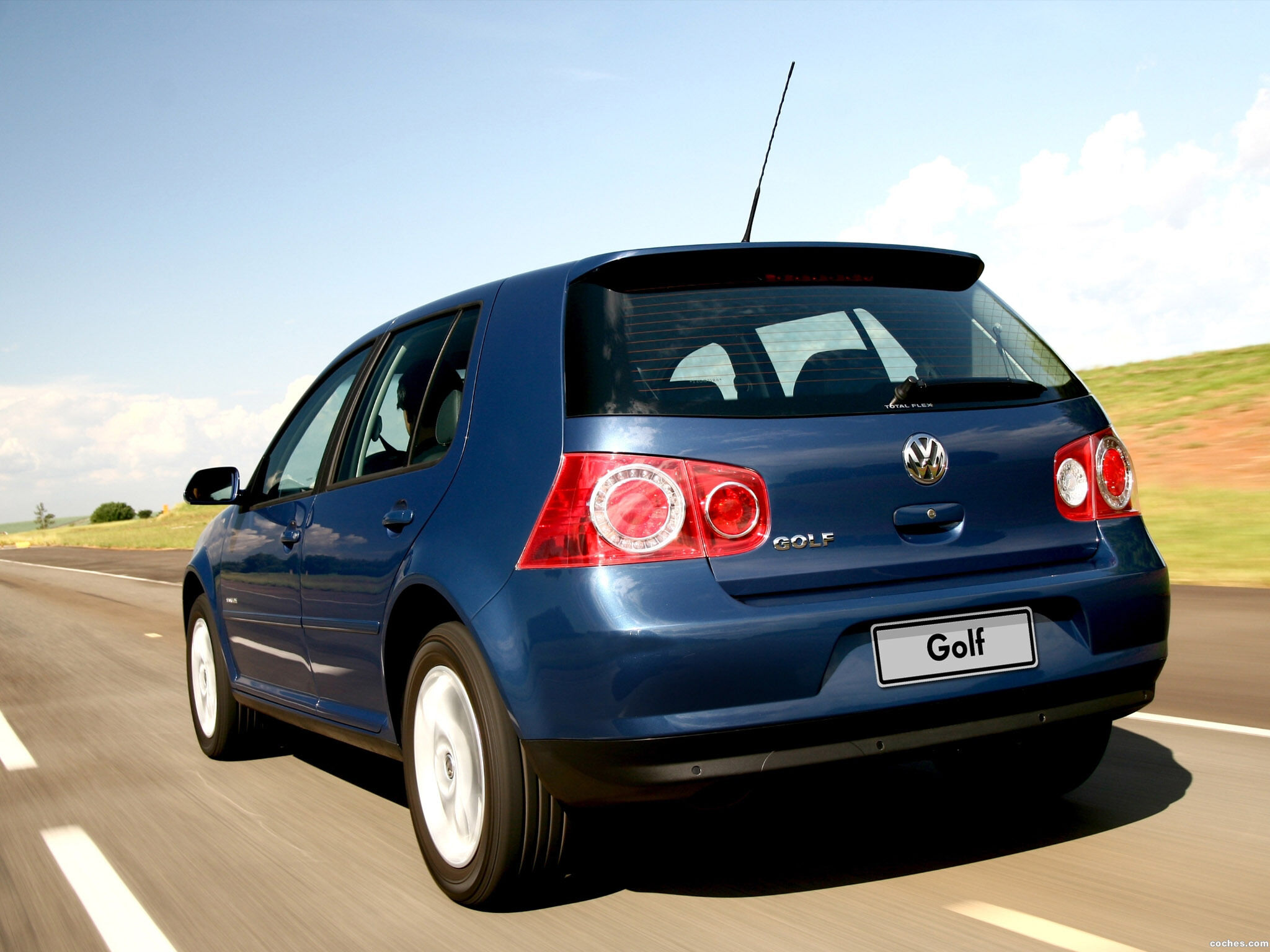
The GTI rockets to 60 mph in 5.6 seconds, with over 0.90 g of grip available regardless of trim or tires. Steering feedback is crisp, the wheel now features buttons in the GTI, while the Golf R continues with capacitive controls, and the electronically controlled limited-slip differential keeps composure even when exiting corners at full throttle.
The all-wheel-drive Golf R takes things a step further. With 328 horsepower, it hits 60 mph in just 4.1 seconds, making it the fastest hot hatch in the lineup. Adaptive dampers, optional on the GTI, offer 15 settings to fine-tune the ride.
While the GTI’s magic resides primarily in the front axle, the Golf R adds rear-end wizardry with a torque-vectoring differential and Drift mode for controlled tail-out fun.
The Euro Style package caters to enthusiasts wanting to shave weight, stripping the front seats of ventilation and power-sliding functions, removing the sunroof, and adding a throaty Akrapovič exhaust, all on forged 19-inch wheels that save a claimed 16 pounds.
While the Honda Civic Type R leans more toward hardcore driving enthusiasts, the Golf R maintains a more sophisticated, grown-up personality. Forgo the Euro Style package, and the Golf R keeps leather seats, three-zone climate control, and heated outboard rear seats instead of the stripped-down Euro’s cloth fittings.
Both models are not just thrilling to drive, they’re practical, too. From hauling a Cozy Coupe from Craigslist to carving up a canyon road, the Golf GTI and Golf R excel as versatile hot hatches. Even with this year’s price increase, they still deliver strong performance and value in a segment where fun and functionality are equally important.
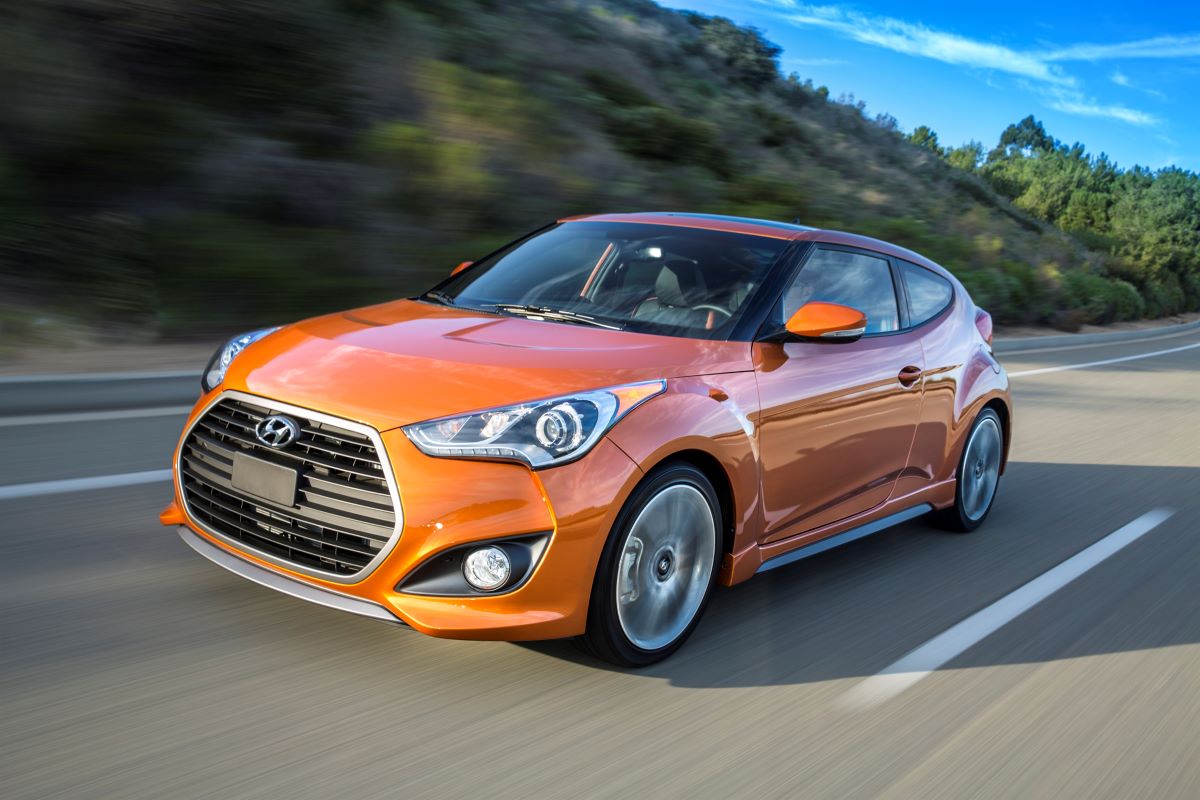
6. Hyundai Veloster (2012–2016)
The Hyundai Veloster is proof that affordable cars don’t have to look dull. Its three-door design and sporty styling make it stand out in a parking lot full of sedans.
More importantly, it delivers a fun driving experience without aggressive insurance premiums or excessive fuel costs.
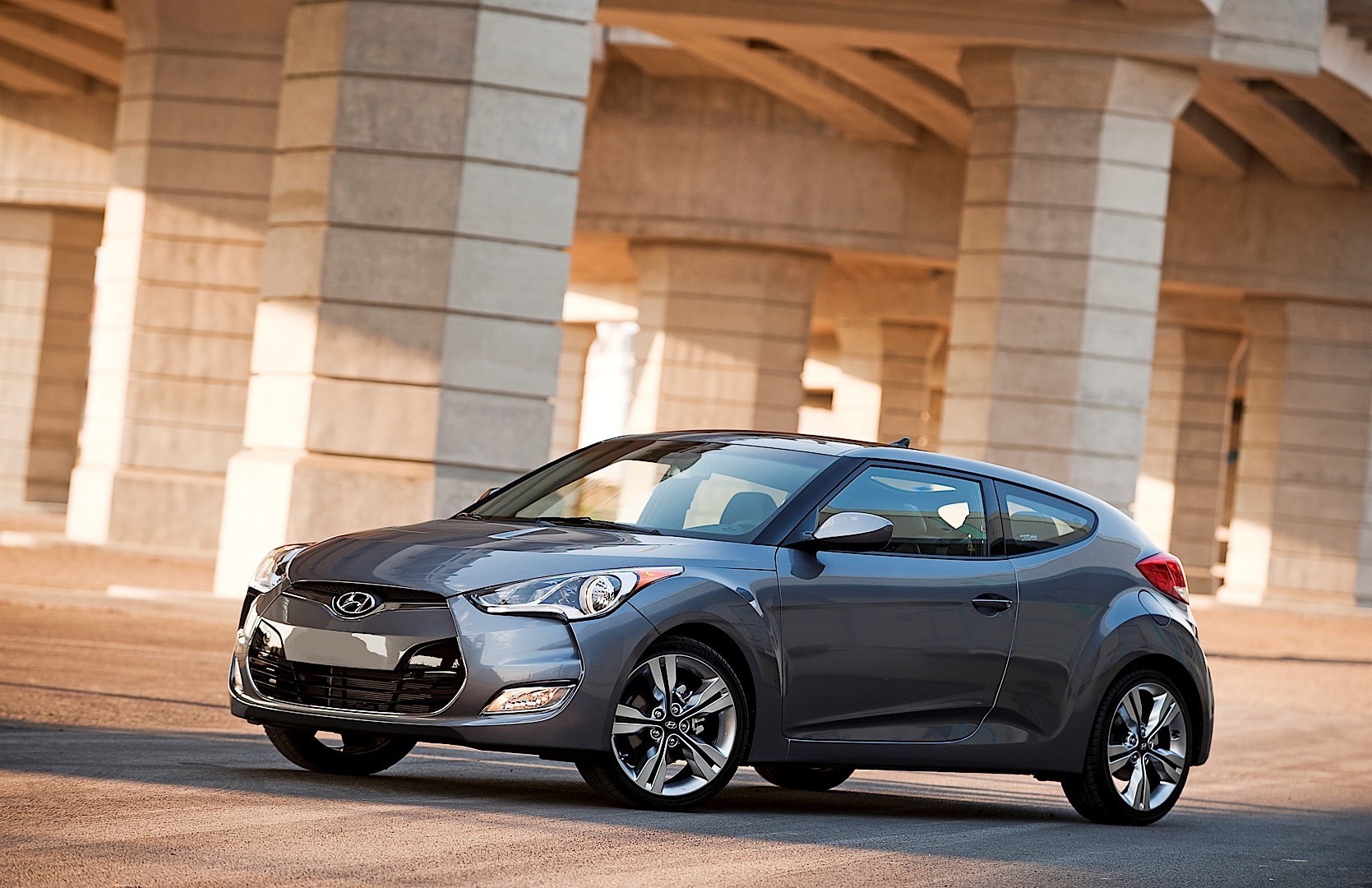
While not a true performance car, the Veloster’s low seating position and responsive handling make it enjoyable at legal speeds.
It’s a strong choice for teens who want something visually exciting or adults who still care about style but need to stay within a strict budget.
These days, almost any compact hatchback will get you from point A to point B, but finding one that’s genuinely fun to drive is a different story. The 2015 Hyundai Veloster looks like it might fit the bill. With its distinctive styling, available turbocharged engine, and quirky three-door layout—one door on the driver’s side and two on the passenger side for easier rear-seat access—the Veloster certainly stands out.
The Veloster also offers solid value. Even the base model comes generously equipped, and Hyundai’s lengthy warranty adds extra peace of mind. Fuel economy is respectable as well: the base Veloster is rated at 30 mpg combined, while the turbo version achieves 27 mpg combined.
That said, the Veloster’s sporty appearance doesn’t always translate into sporty performance. The standard four-cylinder engine is slow, and while the turbo option is quicker, it still trails most hot-hatch competitors. The suspension is another weak point, transmitting bumps and road imperfections directly into the cabin. Practicality suffers too, with limited cargo space and modest rear-seat headroom.
Although there are no direct three-door rivals, several two- and four-door competitors provide a stronger overall package. The 2015 Ford Fiesta ST, for instance, can’t be had with an automatic, but its superior performance and handling make it a far more enjoyable car to drive while remaining practical enough for daily use.
The 2015 Kia Forte Koup, which can be fitted with the same turbo engine as the Veloster, is another option worth considering. The lively 2015 Mazda 3 and the upscale 2015 Volkswagen Golf are also strong alternatives. In short, while the Veloster has its charms, many rivals end up feeling more desirable.
The base 2015 Hyundai Veloster (RE:FLEX and base trims) comes with a 1.6-liter four-cylinder engine driving the front wheels, paired with either a six-speed manual or a six-speed automated manual (DCT). With the manual, it produces 138 hp and 123 lb-ft of torque; the DCT version makes 132 hp and 120 lb-ft.
In Edmunds testing, a manual-equipped base Veloster went from 0–60 mph in 9.5 seconds, roughly a second slower than the average for budget subcompact hatchbacks. The DCT model was even slower at 10.2 seconds. Fuel economy is solid: the manual achieves 26 city/35 highway mpg, while the DCT gets 27/36 mpg, yielding a combined rating of 30 mpg for both transmissions.
Also Read: 5 Vehicles Suited to Phoenix Stoplights vs 5 That Struggle With Heat Soak
7. Mini Cooper (2007–2013)
The Mini Cooper is one of the most fun-to-drive cars on this list, especially at low speeds. Its go-kart-like handling and compact size make even short trips entertaining.
For urban environments or suburban neighborhoods, the Mini feels perfectly at home.
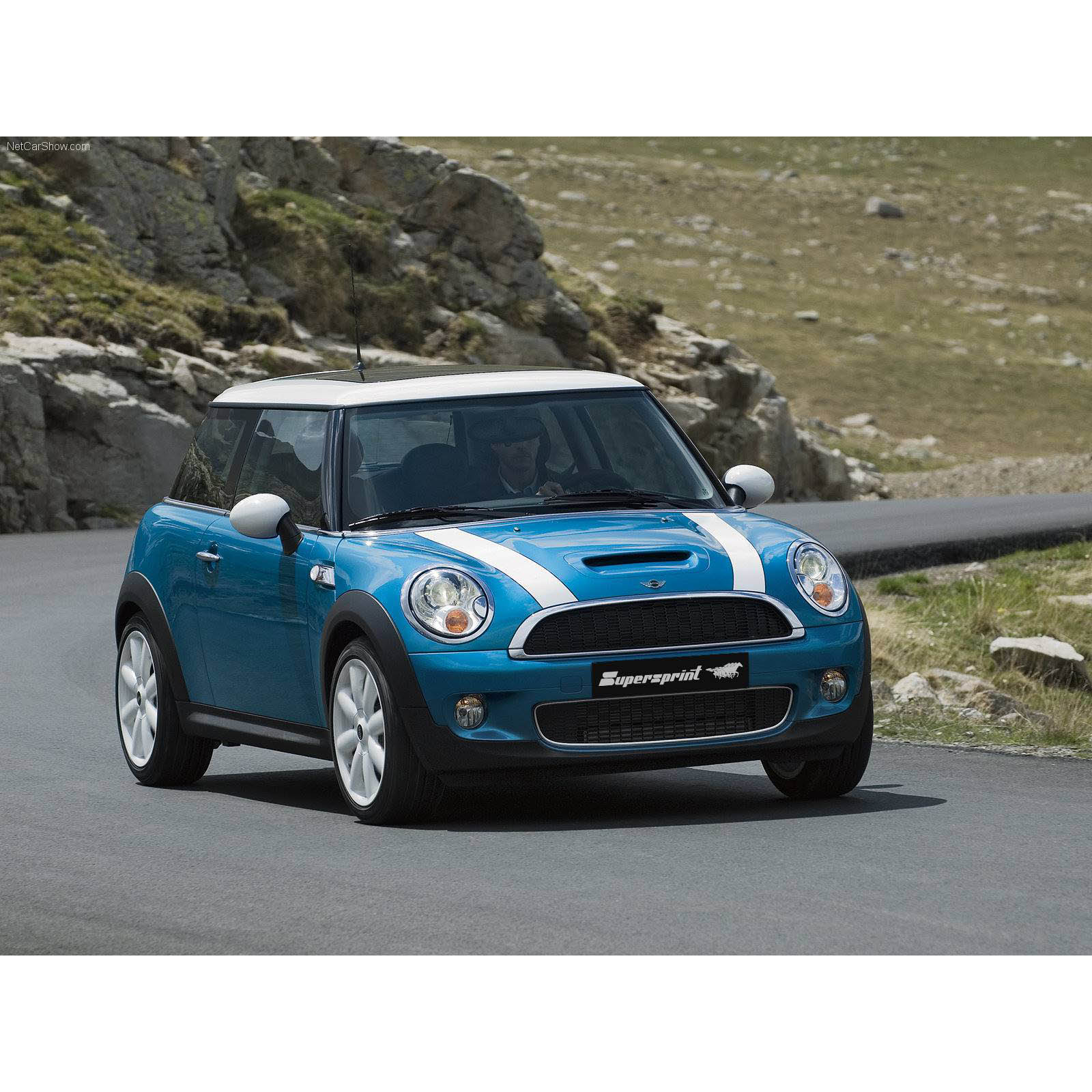
However, ownership requires some care. Maintenance can be pricier than average, and skipping service is a bad idea.
That said, a well-maintained Mini rewards drivers with personality that few budget cars can match. It’s a great option for buyers willing to do their homework before purchasing.
8. Scion tC (2007–2015)
Scion’s mission was to attract younger buyers, and the tC delivered exactly that. It offers sporty styling, a standard manual transmission in many examples, and Toyota-backed reliability.
The hatchback design makes it practical, while the suspension tuning keeps it engaging enough for spirited driving.
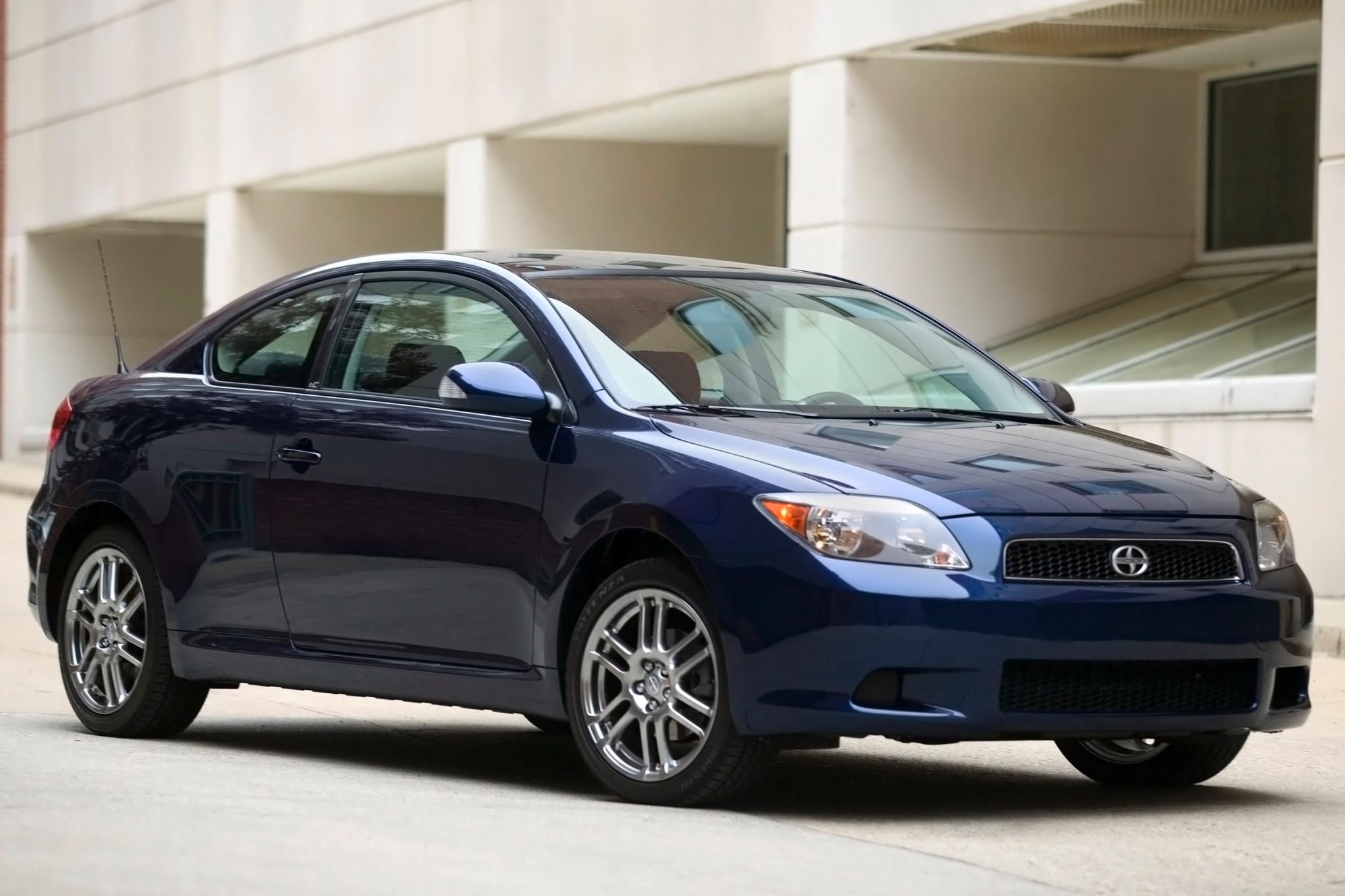
The tC is especially appealing for teens who want something that looks sporty without the insurance penalties of a traditional sports car. For adults, it’s a reminder that affordable coupes don’t have to be impractical or unreliable.
In today’s world of rising car prices and limited entry-level options for spirited driving, many buyers are turning to the used market in search of affordable, fun-to-drive vehicles. While some models have become obvious favorites, others have been overlooked—but these hidden gems can offer an opportunity to enjoy a sporty car without breaking the bank.
One such vehicle is the Scion tC, a sporty coupe produced for just 11 years. Backed by Toyota’s reputation for reliability, the tC provides an accessible way to enjoy an engaging driving experience. Let’s take a closer look at the Scion tC, its two generations, and the history of the short-lived Scion brand that created it.
Built on Toyota’s MC platform, the first-generation tC came with a single engine choice: a 2.4-liter inline-four from Toyota’s AZ engine family. A five-speed manual transmission was standard, with a four-speed automatic offered as an option.
In keeping with Scion’s philosophy of a simplified, well-equipped lineup, the tC included many features as standard, such as cruise control, air conditioning, a CD player, moonroof, power windows, and keyless entry.
For buyers seeking a more stripped-down option, Scion offered the Spec Package edition. This bare-bones variant removed many of the standard features, including the moonroof, upgraded wheels, and non-essential tech features, giving enthusiasts a clean slate for modifications.
In 2007, the first-generation tC received a minor facelift. Updates included redesigned headlights and taillights inspired by the Lexus IS, as well as a refreshed grille, giving the coupe a slightly more upscale and contemporary appearance.
9. Chevrolet Sonic (2012–2018)
The Chevrolet Sonic doesn’t get much attention, but it deserves more credit than it receives. It’s inexpensive to buy, easy to maintain, and surprisingly fun when equipped with a manual transmission.
The turbocharged versions add extra torque, making city driving feel lively.
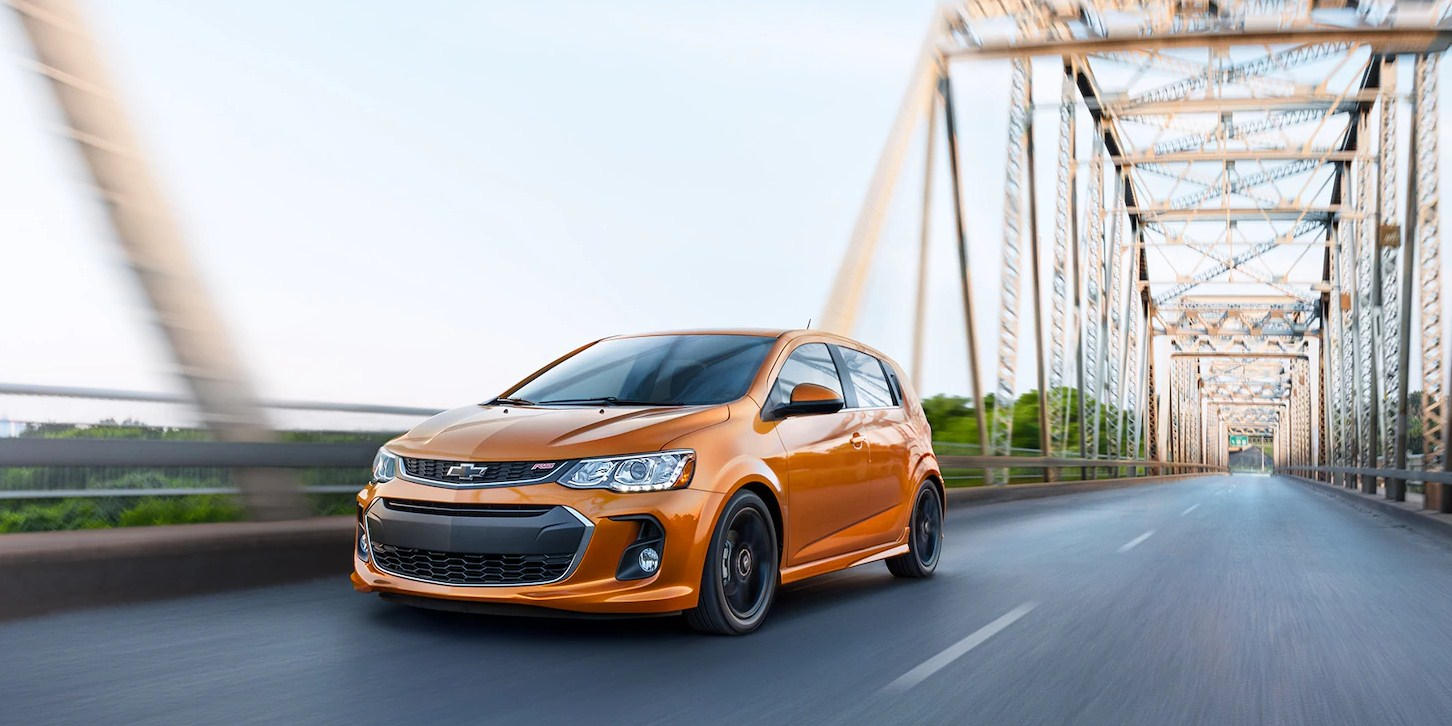
For first-time buyers, the Sonic’s simplicity is a plus. Parts are cheap, repairs are straightforward, and the car is forgiving for new drivers. It’s not flashy, but it does its job well while still offering a hint of character.
For years, domestic automakers lagged behind in the small-car segment, but that’s no longer the case. Today, homegrown models compete strongly in both sales and quality, and a prime example is the 2012 Chevrolet Sonic, a subcompact that replaced the Aveo in Chevy’s lineup.
The name change was well-earned, as the Sonic represents a significant step up from its predecessor. Available as both a sedan and a four-door hatchback, it features a well-designed cabin that ranks among the most livable in the subcompact class.
Storage is abundant and cleverly integrated, including a pair of unusually high bins on the center stack. Front passengers enjoy generous head- and shoulder room, while the roomy rear seats comfortably accommodate 6-foot adults, so long as there isn’t another tall occupant in the front seat.
Under the hood, the Sonic impresses. The standard 1.8-liter inline-four produces a respectable 138 horsepower and 125 lb-ft of torque, while the turbocharged 1.4-liter engine delivers the same horsepower with a stronger 148 lb-ft of torque.
The Sonic is engaging to drive, offering responsive handling, and fuel economy is competitive, the turbo engine estimates 40 mpg on the highway. Perhaps most importantly for buyers downsizing from a larger car, the Sonic feels surprisingly substantial and composed behind the wheel, making it feel larger than its subcompact classification might suggest.
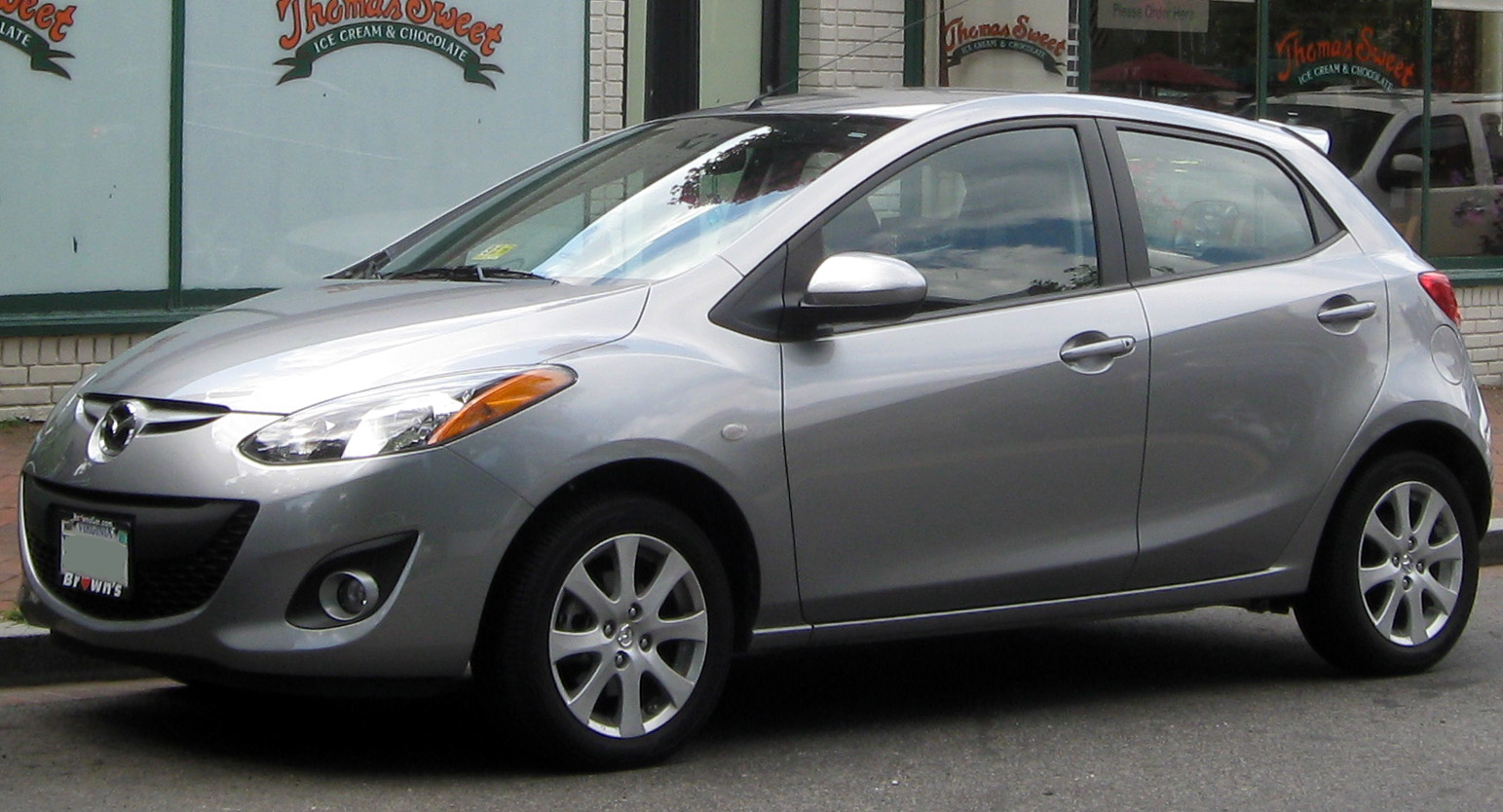
10. Mazda2 (2011–2014)
The Mazda2 is one of the lightest and most playful cars on this list. While it lacks power, it makes up for it with excellent handling and a sense of connection that’s rare in budget cars.
Driving a Mazda2 at moderate speeds can be genuinely enjoyable, especially for new drivers learning car control.
Its small size also makes it easy to park and maneuver, which is ideal for teens or city-based adults. With strong reliability and low running costs, the Mazda2 proves that fun doesn’t require horsepower just good engineering.
Cheap cars often get dismissed as appliances, but the right choice can still bring enjoyment and confidence to everyday driving.
For teens, these vehicles offer safe, manageable performance and reasonable ownership costs. For cash-strapped adults, they provide dependable transportation without sacrificing personality or comfort.
The used car market in the U.S. still rewards smart buyers who prioritize balance over badges.
Whether it’s the engaging feel of a Mazda, the bulletproof reliability of a Toyota, or the character of a Mini or Volkswagen, these ten cars show that affordability and fun don’t have to be opposites.
With careful selection and proper maintenance, any of them can deliver years of enjoyable driving without financial regret.