Parking lots are one of the few places where cars reveal their true personalities without the help of horsepower or highway speed. Tight corners, unpredictable pedestrians, shopping carts drifting like tumbleweeds, and drivers stopping without warning create an environment that rewards clarity, control, and confidence.
In these spaces, a vehicle’s size, steering response, visibility, and low-speed behavior matter more than badges or acceleration figures. A car that feels composed in traffic can suddenly feel awkward when navigating painted lines and concrete pillars.
Crowded parking areas expose design decisions that are easy to ignore during daily driving. A long hood may look elegant on the road but becomes a guessing game near curbs. Wide turning circles turn simple maneuvers into multi-step corrections that raise stress levels.
Heavy steering that feels planted at speed can become tiring when threading through rows of parked vehicles. These moments reveal how well a car communicates with its driver and how forgiving it is when space runs out.
Modern vehicles try to compensate with cameras, sensors, and automated aids, yet the fundamentals still matter most. A compact footprint, predictable throttle response, and upright seating position often outperform advanced tech in tight situations.
Some cars feel like they shrink around the driver, making it easy to judge distance and angle. Others constantly remind you of their bulk, demanding extra attention and patience for even basic parking tasks.
This article looks at ten vehicles split into two clear groups. Five of them feel calm, cooperative, and intuitive when dealing with crowded parking lots. The other five tend to feel cumbersome, awkward, or unintentionally stressful in the same conditions.
5 Cars That Manage Crowded Parking Lots
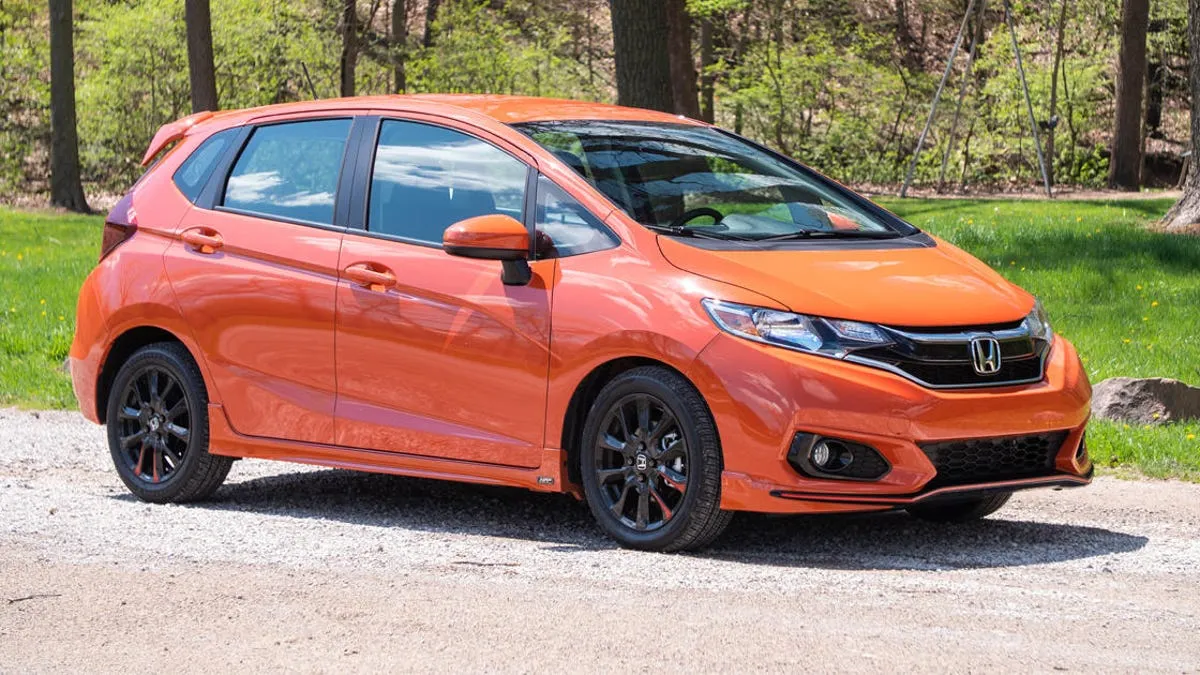
Honda Fit
The Honda Fit has long been praised for its clever use of space, and that efficiency shines brightest in parking lots. Its compact exterior dimensions make it easy to slide into narrow spots without second guessing the alignment, which is ideal for congested areas.
The short front and rear overhangs help drivers judge distance accurately, reducing minor scrapes and collisions. Visibility is excellent thanks to large windows and a tall roofline, allowing a clear view of pedestrians, shopping carts, and other vehicles moving nearby.
Steering in the Fit is light and responsive at low speeds, which reduces effort during repeated maneuvers and gives a sense of control. Small corrections feel natural rather than exaggerated, allowing precise positioning between lines, even in crowded garages.
The steering wheel returns smoothly to center, helping drivers straighten out without thinking and minimizing awkward adjustments. This creates a relaxed rhythm when navigating crowded rows and prevents unnecessary stress during parking.
The upright driving position plays a big role in the Fit’s confidence, giving drivers a commanding view of the surroundings. Drivers sit higher relative to the car’s size, making it easier to see pedestrians and obstacles while planning the approach to tight spaces.
Blind spots are minimal compared to many modern designs, so judgment of clearance is simple. This awareness reduces hesitation when pulling into or out of busy areas, ensuring smoother and safer parking maneuvers every time.
Also Read: Top 10 Sleeper Cars That Separate Real Enthusiasts From Posers
Throttle and brake response are tuned for predictability rather than aggression, which adds to its low-stress character. The car creeps forward smoothly without sudden surges, making inching toward a curb or aligning perfectly between lines much simpler.
Braking is responsive yet forgiving, giving drivers confidence that they can adjust speed accurately at all times. The Fit feels cooperative rather than demanding, allowing newcomers and experienced drivers alike to feel at ease.
All of these traits combine to make the Honda Fit feel smaller than it already is, with excellent maneuverability in tight urban environments. The car responds exactly as expected, which builds trust quickly and reduces hesitation in stressful situations.
Its compactness, responsive steering, and predictable controls work together to make parking less of a chore. In crowded parking lots, this trust translates into calm decisions and smooth movements, transforming the daily hassle of finding a space into a manageable task.
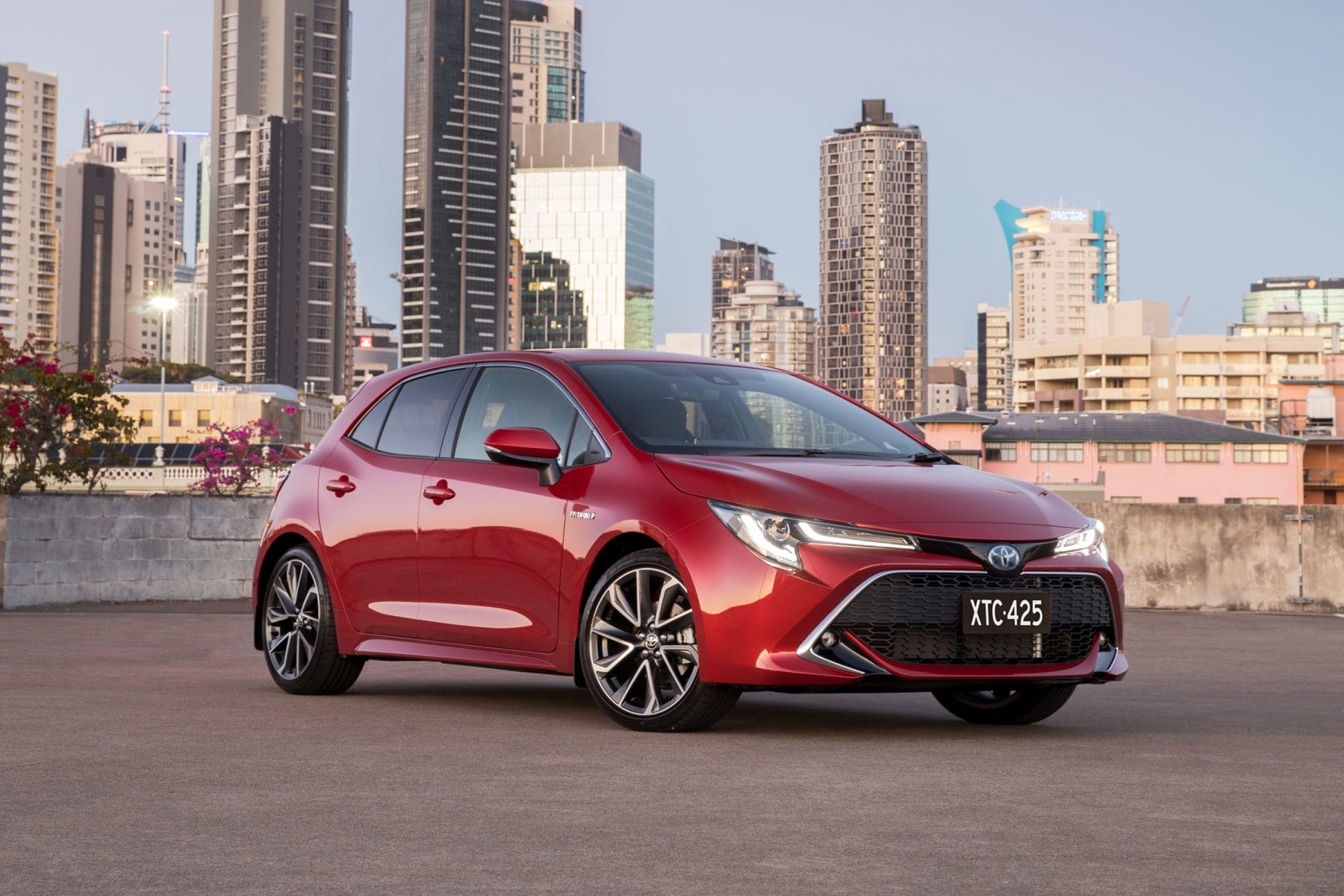
Toyota Corolla
The Toyota Corolla strikes a balance between familiarity and ease that works well in tight spaces, making it a reliable choice for drivers who deal with crowded parking often. Its dimensions are modest without feeling cramped inside, allowing comfortable maneuvering without constantly worrying about clearance.
The hood slopes gently, helping drivers see the front corners clearly and align accurately with parking lines. Rear visibility is also better than many cars in its class, which reduces guesswork when reversing into tight spaces.
Low speed steering is tuned for comfort and ease rather than sportiness, letting the driver focus on surroundings instead of fighting the wheel. The wheel turns with minimal effort, reducing fatigue in stop-and-go situations common in parking lots. Turning radius is reasonable, allowing U-turns and tight angles without excessive corrections. The car feels cooperative instead of resistant, which contributes to confidence when performing multiple maneuvers in a small area.
Corolla controls are predictable and consistent, which matters most when space is limited and quick adjustments are needed. The brake pedal is easy to modulate, preventing abrupt stops that could startle nearby pedestrians or vehicles.
Throttle response is smooth, making it easy to crawl forward or hold position when necessary. This predictability reduces stress, allowing drivers to focus on positioning instead of worrying about sudden jerks or surprises.
The seating position provides a clear view of surroundings without feeling perched too high, enhancing spatial awareness in crowded conditions. Drivers can judge distance to other vehicles and obstacles with confidence, reducing the need for repeated adjustments. Mirrors are well sized and strategically placed, providing a nearly complete view of lateral space. These small but critical details add up to make navigation less taxing in busy lots.
While not designed to be flashy, the Corolla excels at being unobtrusive and easy to manage. It does not surprise the driver or demand extra attention, which is crucial in environments where precision matters more than power.
Its combination of visibility, low-speed control, and predictability ensures a calm parking experience. In crowded parking lots, that simplicity becomes a strength, making it feel like an ally rather than an object to control.
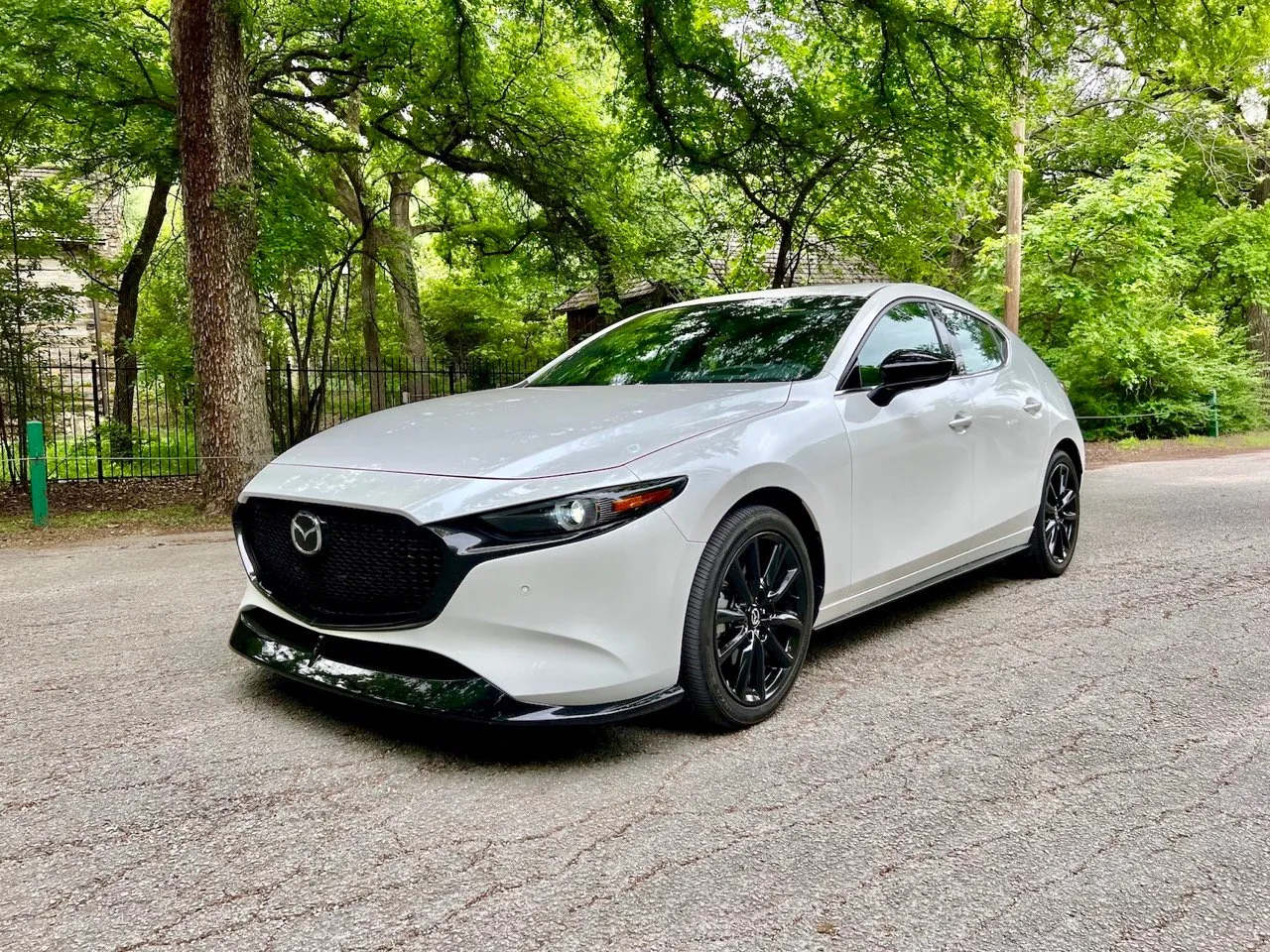
Mazda 3 Hatchback
The Mazda 3 Hatchback manages to combine style with practical low-speed manners, creating a vehicle that feels composed even in tight conditions. Its compact length and hatchback design make it easier to fit into tight spaces than many sedans, while still providing adequate cargo room for daily errands.
The rear shape allows better judgment when reversing, reducing surprises when approaching curbs or other vehicles. Despite its sporty appearance, it behaves politely in confined areas, making it predictable for any driver.
Steering feedback is slightly firmer than some competitors, but it remains precise at parking speeds, which aids confidence when maneuvering in tight rows. Small inputs result in controlled movement rather than sudden shifts, reducing the need for repeated corrections. This precision helps drivers line up accurately in narrow spots, even when visibility is not ideal. The car feels attentive rather than twitchy, creating a sense of mastery during low-speed navigation.
Mazda places the driver in a focused yet comfortable position, which enhances both control and awareness. Controls fall naturally to hand, reducing distraction during critical maneuvers in crowded lots. The dashboard design avoids clutter, ensuring that attention remains on the environment instead of internal displays. This clarity allows for smooth, confident handling even in complex situations where cars, pedestrians, and shopping carts intersect.
The throttle is well calibrated for gradual movement, providing predictability when creeping forward or making fine adjustments. The car responds smoothly when easing off the brake, minimizing sudden jerks that could affect positioning.
Braking is consistent and forgiving, allowing precise control while reversing or aligning with a curb. Everything feels coordinated, making the Mazda 3 Hatchback highly manageable under stress.
The Mazda 3 Hatchback feels like it was designed with human scale in mind, respecting the driver’s inputs and communicating its limits clearly. Its compact size, responsive steering, and predictable handling make navigating tight areas straightforward. In crowded parking lots, these qualities translate into confidence and ease. The car feels like a reliable partner rather than an obstacle, making stressful situations surprisingly manageable.
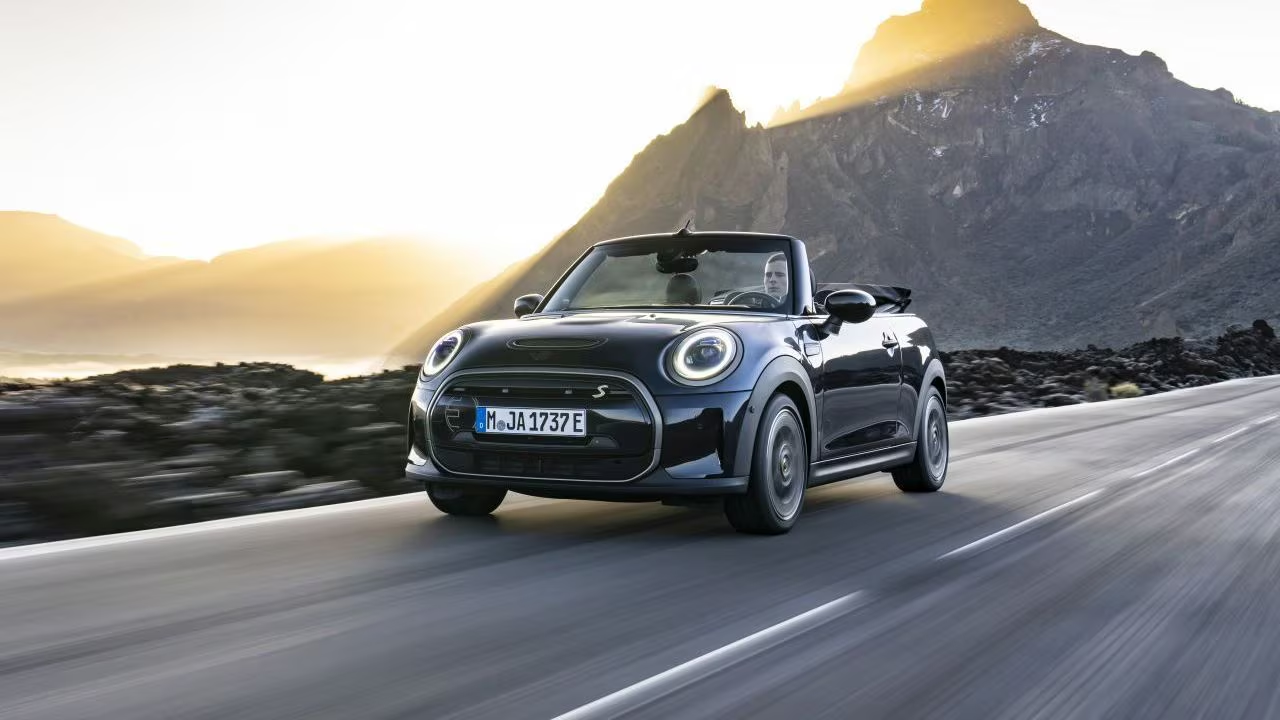
Mini Cooper
The Mini Cooper thrives in environments where space is at a premium, with proportions and handling tailored for tight conditions. Its short length and narrow width make it feel tailor-made for crowded parking lots, allowing entry into spots that might challenge larger vehicles. Finding a space often feels easier simply because the car fits where others cannot, reducing stress and hesitation. Maneuvering requires less planning and fewer corrections, giving drivers a sense of natural control.
Steering is quick and responsive, allowing sharp turns with minimal wheel movement, which is ideal for tight corners and sudden obstacles. This responsiveness makes it easy to pivot into tight angles without multiple attempts. The small turning circle is especially helpful in older parking structures, where tight corridors can make other cars feel awkward. The Mini feels agile and alert, creating confidence with every maneuver.
The upright windshield and short hood improve forward visibility significantly, helping drivers judge distance accurately. Seeing exactly where the front of the car ends removes guesswork when approaching curbs, walls, or other vehicles. Pedestrians and small obstacles can be identified quickly, reducing the likelihood of minor collisions. Confidence builds quickly in close quarters because the car communicates clearly with the driver.
Throttle response is immediate but controllable, making low-speed driving feel lively yet manageable. The car moves when asked without lurching forward, which allows smooth creeping into spaces and gradual adjustments. Braking is equally predictable, letting drivers feel in command while reversing or aligning. This balance keeps the driver relaxed even when the lot is full or crowded.
The Mini Cooper turns parking into a low-effort task rather than a challenge, with scale and responsiveness working seamlessly together. The car reacts precisely to every input, fostering trust and reducing the cognitive load in busy lots. Maneuvers feel natural, and the environment never seems overwhelming. Few vehicles make tight spaces feel so manageable and forgiving, giving the Mini a clear advantage in urban settings.
Kia Soul
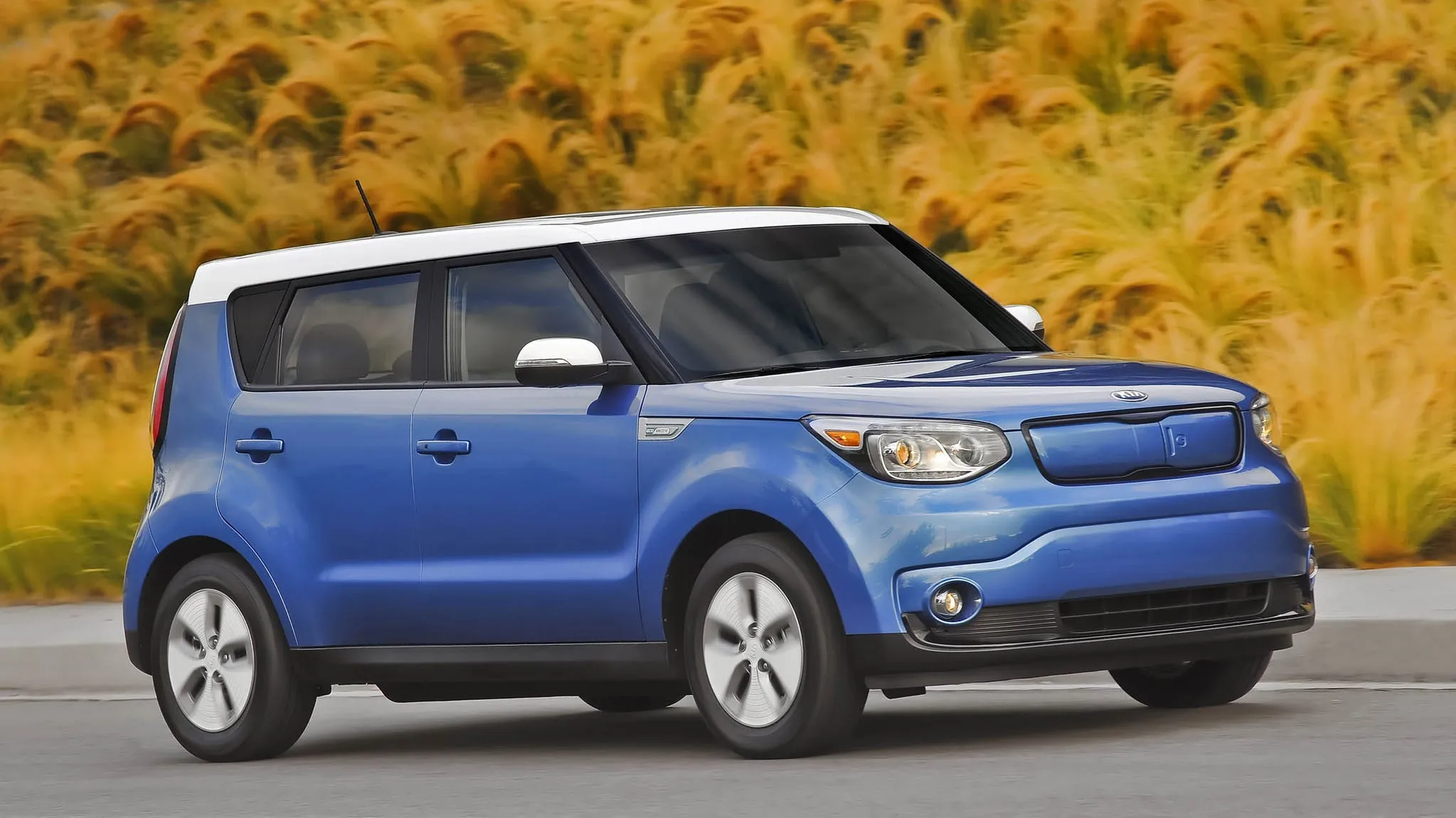
The Kia Soul’s boxy shape gives it a unique advantage in parking situations, as its tall, straight lines make spatial judgment straightforward. Straight edges and upright corners help drivers visualize where the car begins and ends, simplifying alignment in tight spots. Maneuvering becomes less stressful, as the driver can anticipate overhangs and curbs with ease. This clarity is rare among compact vehicles, making it especially useful in congested lots.
The seating position is tall without being overwhelming, providing excellent sightlines over surrounding cars, obstacles, and pedestrians. This elevated position allows early recognition of potential hazards, like carts or children moving between vehicles.
Awareness remains high even in the busiest lots, reducing the need for repeated adjustments or corrections. The driver can plan maneuvers efficiently, keeping confidence intact.
Steering is light and relaxed at low speeds, encouraging smooth movements while maintaining control. The car responds to small inputs without overreacting, giving precise control over alignment. The tight turning radius allows effective navigation of narrow lanes and quick changes in direction when necessary. The Soul feels friendly rather than demanding, creating a sense of calm in potentially stressful environments.
Throttle and brake tuning favor smoothness over urgency, making creeping forward a controlled and predictable process. The car moves gradually without abrupt surges, which is critical when negotiating other vehicles or pedestrians in confined spaces. Braking is forgiving yet precise, supporting fine adjustments during alignment. Nothing feels rushed or sudden, which enhances confidence.
The Kia Soul feels honest and straightforward in crowded parking lots, rewarding careful input without surprising the driver. Its design prioritizes usability over style, focusing on practical, manageable dimensions and behavior. Maneuvers feel natural and achievable, and it communicates its boundaries clearly. The car works with the driver instead of testing patience, making it an excellent choice for navigating tight and busy environments.
5 That Feel Clumsy
Chevrolet Suburban
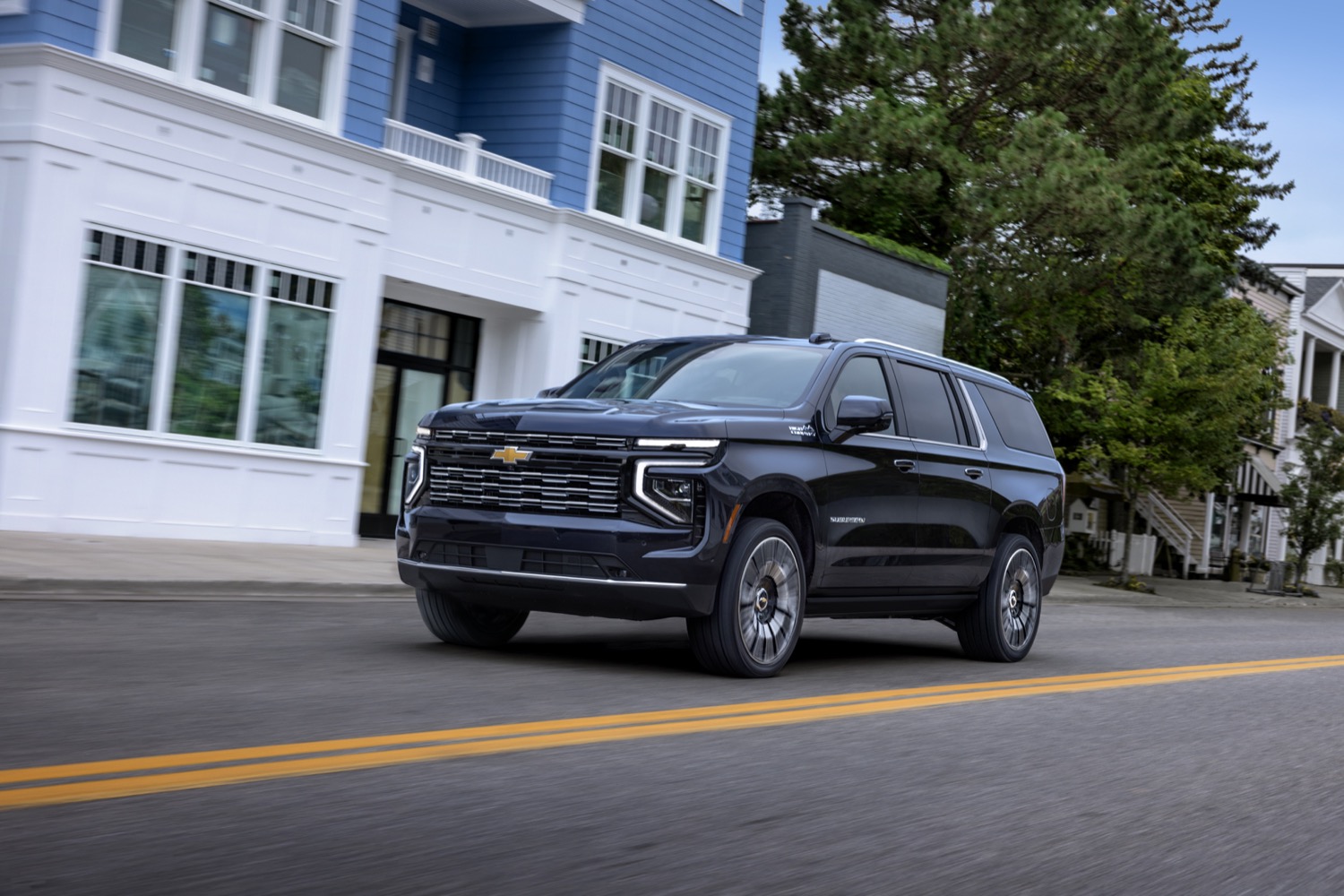
The Chevrolet Suburban feels imposing the moment it enters a crowded parking lot, making even simple maneuvers seem more complicated. Its sheer length and width dominate space, leaving little margin for error when navigating between other vehicles.
Standard parking spots often feel undersized, turning a routine task into a careful negotiation of distance. The environment seems smaller around it, and drivers must constantly plan each step before moving forward.
Steering effort is heavier at low speeds, which adds to the sense of bulk and reduces maneuverability. Tight turns require more wheel input and deliberate effort, making small adjustments more tiring over time. Multi-point maneuvers become common in places where smaller cars glide through easily. The added effort slows every parking task and demands greater attention from the driver.
Visibility is limited by the long hood and high beltline, complicating judgment of distance to curbs, walls, or other vehicles. Even with cameras and sensors, estimating the space needed requires constant mental calculation. Overconfidence can easily lead to misalignment or scraping, especially in older or tight lots. Drivers need to remain vigilant to avoid mishaps.
Also Read: 5 Once-Popular Cars Now Selling Below MSRP vs 5 That Still Sell Above Sticker
Throttle response can feel touchy at low speeds because of the vehicle’s mass. Minor pedal movements move a lot of vehicle, which reduces precision when inching forward or aligning with parking lines. Braking must also be carefully modulated to avoid abrupt stops that could jolt nearby cars or pedestrians. The combination of size and momentum makes every move feel consequential.
In crowded parking lots, the Suburban feels out of its element, demanding attention and patience at every step. While it is capable of handling space eventually, the effort required is significantly higher than with smaller vehicles. Drivers must constantly adjust and anticipate obstacles. Its scale turns routine parking into a high-stress exercise.
Ford F 150
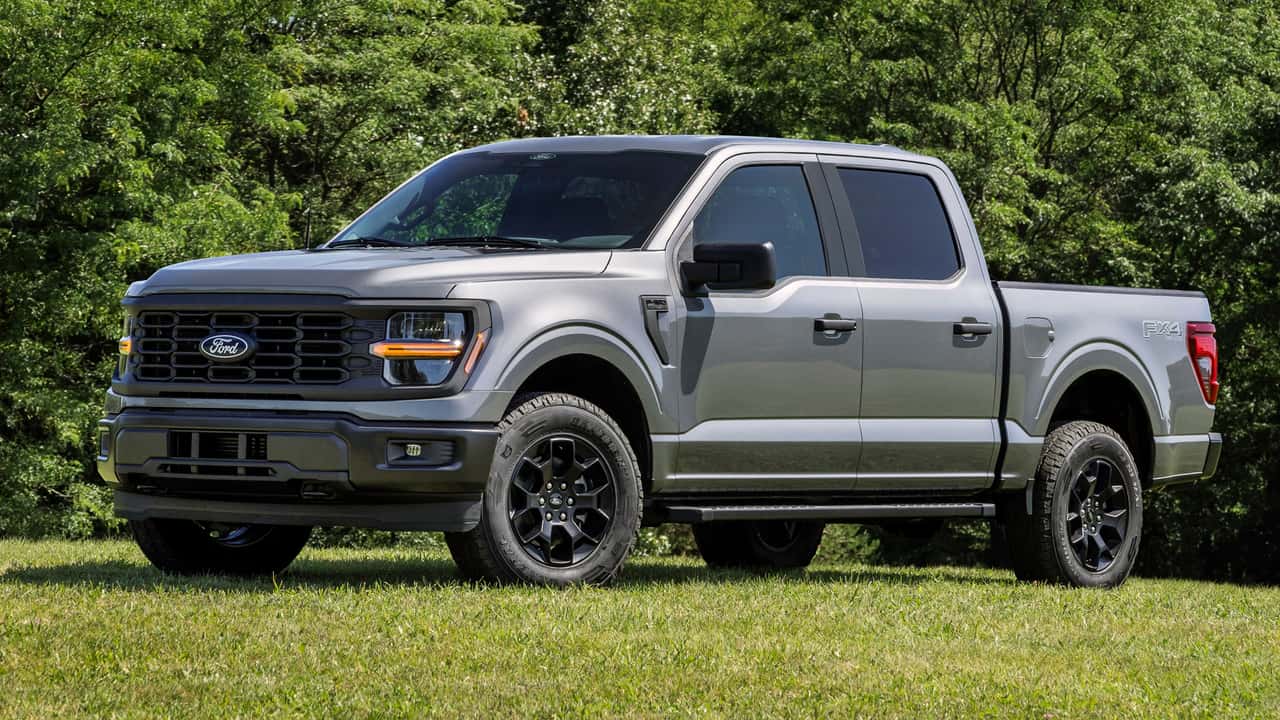
The Ford F 150 brings the presence and size of a full-size truck into spaces that rarely accommodate it comfortably, creating immediate challenges for parking.
Its wide stance and long bed make positioning difficult, leaving little room for error in tight spots. Standard parking spaces often feel restrictive, requiring careful maneuvering and multiple adjustments. Every movement must be planned, which slows down the process and increases tension.
Steering response is slower compared to smaller vehicles, reducing precision in low-speed turns. Angling into a spot often requires wide, deliberate movements, and repeated corrections become almost inevitable. This slower reaction adds to the perception of bulk and can frustrate drivers unaccustomed to handling a large truck. Tight spaces quickly reveal the F 150’s limits in urban or crowded lots.
The high hood limits forward visibility close to the vehicle, creating a guessing game when approaching curbs or other obstacles. Side visibility is also affected by the truck’s width, making it hard to judge lateral clearance without constant reference to mirrors or sensors. Maneuvers become mentally exhausting because the driver cannot rely solely on direct sightlines. Close proximity to other cars demands constant caution.
Throttle control at low speeds can feel inconsistent, especially in higher-powered trims. The truck moves with authority rather than finesse, which makes delicate adjustments feel awkward. Fine control requires deliberate modulation of the accelerator and brakes, making parking more laborious. Precision is achieved through patience rather than natural vehicle responsiveness.
In parking lots, the F 150 feels like it is negotiating its environment rather than fitting into it. While it is manageable, it requires constant attention, and mistakes can quickly become costly in terms of scratches or minor collisions. The vehicle’s size dominates the experience, reminding drivers that not all roads or spaces are equally welcoming. Comfort and ease are traded for presence and utility, which becomes most noticeable in tight areas.
Dodge Charger
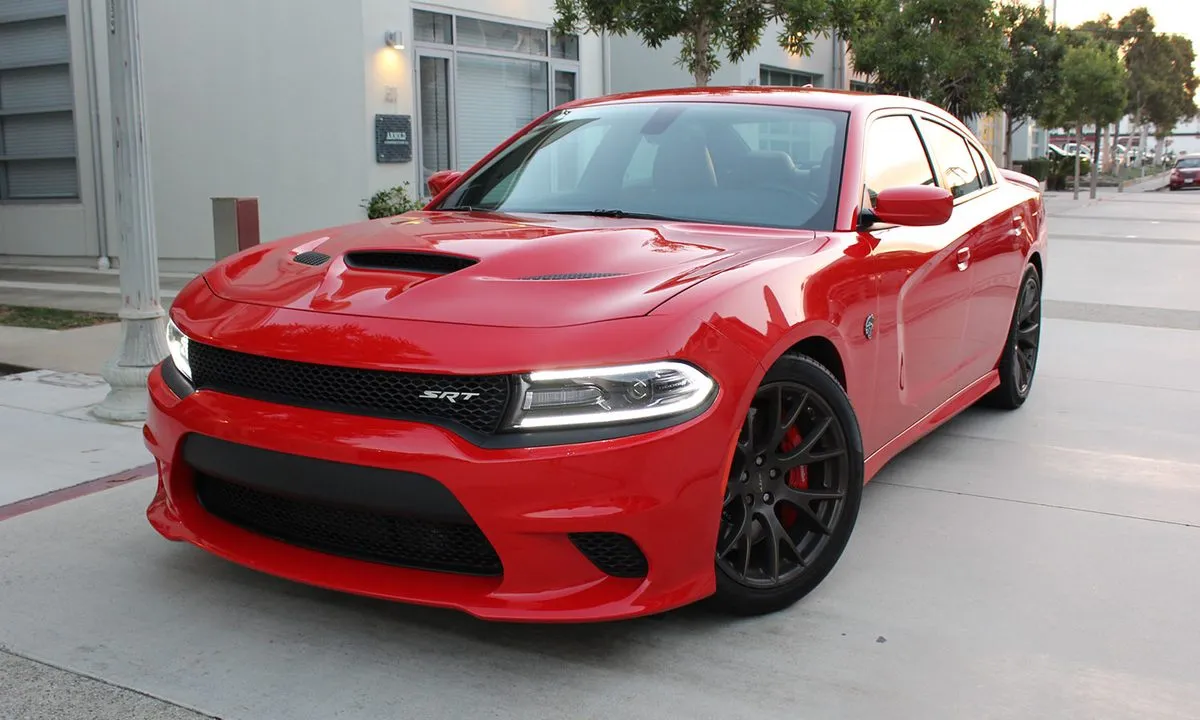
The Dodge Charger’s wide body and long hood give it a commanding road presence, but those traits become liabilities in confined parking spaces. The car feels larger than its actual footprint, and corners can seem tighter than expected. Maneuvers require constant planning and attention to surroundings. Even simple parking tasks become more mentally demanding due to the Charger’s dimensions and design.
Steering is tuned for high-speed stability rather than low-speed agility, making slow maneuvers feel sluggish or imprecise. Adjusting angles requires extra effort, and quick corrections are harder to execute without multiple attempts. The car favors broad, sweeping movements over fine positioning, which is challenging in crowded lots. Drivers often feel like they are working against the car rather than moving with it.
Visibility suffers due to the high beltline and narrow rear window, limiting the ability to judge distance accurately when reversing. Pedestrians, shopping carts, or smaller obstacles may appear suddenly, forcing abrupt adjustments. The driver must rely on mirrors and backup cameras extensively. Confidence builds slowly because sightlines do not naturally match the car’s bulk.
Throttle response is strong even at minimal input, which can make slow movements feel jumpy or abrupt. Slight pressure on the accelerator moves the car more than intended, requiring continuous modulation. Braking must also be carefully controlled to avoid overshooting positions or causing sudden jolts. Maneuvering is a deliberate process, demanding attention at every step.
In tight parking lots, the Charger feels out of place and constantly reminds the driver of its muscle roots. While it can fit eventually, the car does not naturally inspire confidence in confined conditions. Its bulk and behavior make every adjustment a mental exercise. The Charger feels heavy, wide, and slightly awkward, even for experienced drivers.
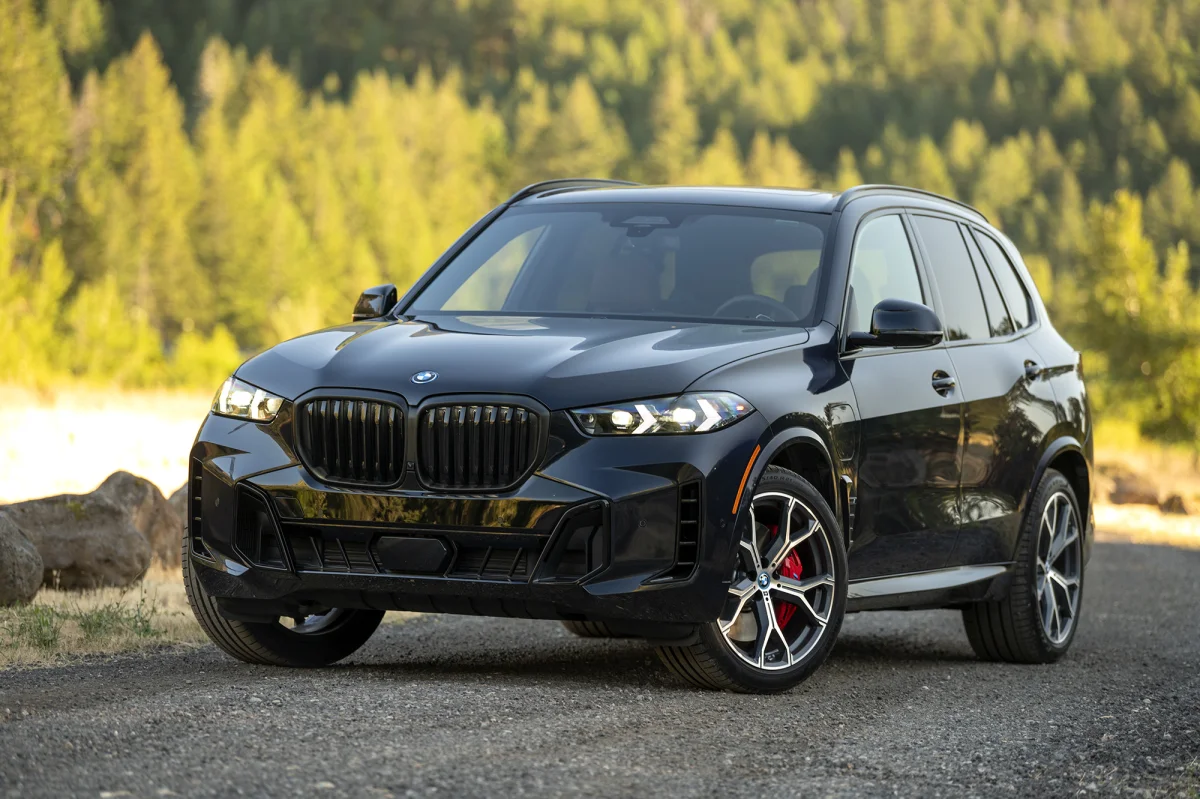
BMW X5
The BMW X5 blends luxury with size, and that combination exposes its limits in tight parking areas. The vehicle’s width makes narrow lanes feel restricted, forcing careful, deliberate maneuvering. Finding a spot that fits comfortably can be frustrating, as the X5’s bulk becomes apparent immediately. Crowded lots highlight the vehicle’s substantial presence, which can intimidate less experienced drivers.
Steering is precise but weighted, which can feel cumbersome during repeated low-speed maneuvers. Tight turns require careful, deliberate effort, and the vehicle’s size amplifies every adjustment. While it responds accurately, the physical effort necessary at low speeds reminds drivers that this is a large SUV. Maneuvers that smaller vehicles handle effortlessly take more time and focus.
Visibility is mixed, with a high seating position providing general awareness but thick pillars limiting clear sightlines. Blind spots can hide smaller obstacles, pedestrians, or low walls. Cameras and sensors assist, but drivers must actively scan surroundings to avoid errors. Close quarters require constant attention and caution.
Throttle response is smooth but powerful, moving the large vehicle decisively with even small inputs. Delicate adjustments demand careful control of accelerator and brake to avoid overshooting. Precision comes from experience and patience rather than natural intuition. Every movement in a crowded lot feels consequential and requires focused effort.
In busy parking lots, the BMW X5 feels capable but not effortless, demanding constant engagement from the driver. It performs necessary maneuvers, but grace and ease are absent. The vehicle’s size and weight are always apparent, making tight parking stressful. The X5 is competent but clearly designed for broader roads rather than confined spaces.

Mercedes Benz G Class
The Mercedes Benz G Class carries a rugged, boxy design that dominates its surroundings, making parking in crowded lots particularly challenging. Its tall, angular frame exaggerates its presence and reduces flexibility in tight spaces.
Standard parking spots feel restrictive, forcing careful alignment and multi-step maneuvers. The G Class never blends into the environment, and its sheer volume requires extra awareness and planning.
Steering requires significant effort at low speeds, especially when turning in tight spaces. The wide turning circle makes sharp angles difficult to achieve in one movement, requiring multiple corrections. Maneuvers demand deliberate precision, slowing down each attempt to fit the vehicle into a confined space. The car’s resistance to nimble adjustments can frustrate even experienced drivers.
Visibility is challenging despite the upright shape, as flat panels and thick pillars obscure critical areas around the vehicle. Judging front and rear distance can be tricky, and obstacles may not appear until very close. Drivers must creep forward carefully, relying heavily on mirrors and cameras to ensure proper clearance. Mistakes in judgment are more likely than in smaller, more responsive vehicles.
Throttle input moves a heavy, tall vehicle with authority, making low-speed adjustments less forgiving. Fine control of speed requires patience and careful modulation to avoid overshooting. Braking must also be gradual to maintain stability, particularly when reversing into tight spaces. The vehicle’s weight amplifies small errors, which makes confidence harder to maintain.
In crowded parking lots, the G Class feels like a square peg in a small space, highlighting its cumbersome character. Its size, weight, and steering requirements make parking a complex task rather than a simple procedure. The vehicle is capable but demands constant attention and care. Crowded conditions emphasize its stubbornness, reinforcing that it is better suited to open environments than tight urban lots.