
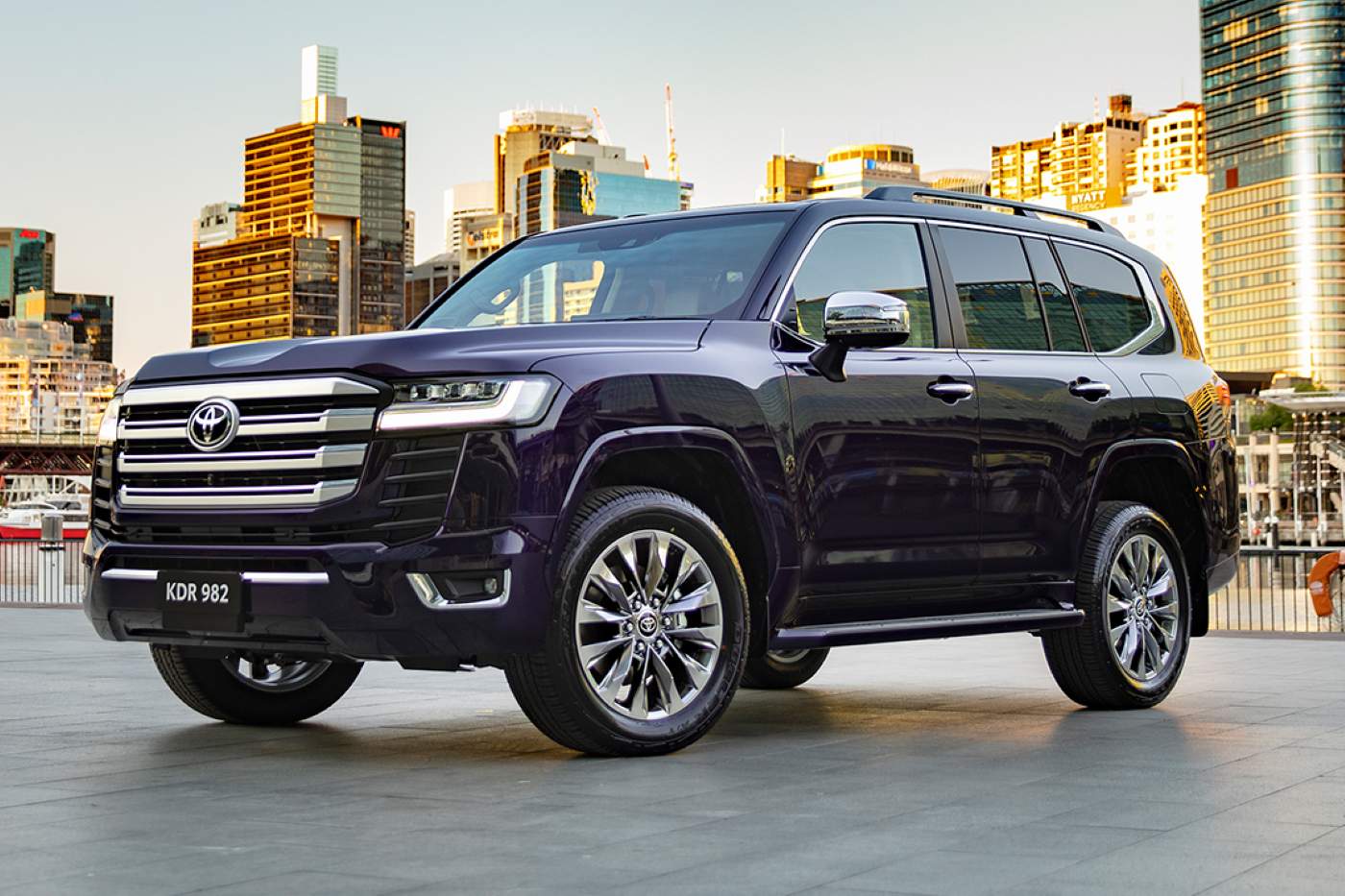
The Land Cruiser 300 Performance Hybrid produces 457 hp, easily eclipsing the smaller North American version. Hybrid hardware increases torque by 20% and improves throttle response by 40% versus the non-hybrid model. The Land Cruiser 300 Hybrid will not be offered in the U.S., remaining limited to select international markets.
Toyota’s Land Cruiser story stretches back to the 1950s, and the automaker has now revealed the most powerful version of the iconic SUV to date. Dubbed the Land Cruiser 300 Performance Hybrid, this rugged flagship is based on the J300-series model sold outside North America.
With 457 horsepower and 583 lb-ft of torque on tap, the new Performance Hybrid decisively outguns the J250-based Land Cruiser currently sold in the U.S. Think of the J300 Performance Hybrid as something akin to a Nissan Armada Nismo, and its mission becomes clear.
Over the past few years, Toyota has steadily rolled out hybrid systems across its largest vehicles. After decades dominated by fuel-hungry V8s, trucks and SUVs like the Tundra and Sequoia have transitioned to turbocharged V6 hybrid setups.
The Land Cruiser now follows suit, pairing Toyota’s 3.5-liter twin-turbo V6 with an electric motor. Compared to the non-hybrid Land Cruiser 300, which uses a 3.3-liter twin-turbo engine, maximum torque climbs by 20%, while throttle response improves by 40%.
According to Toyota, the 300 Performance Hybrid is capable of operating on electric power alone at speeds of up to 30 km/h (18.6 mph), making it well-suited for low-speed urban driving or quiet wildlife excursions. The SUV features a ten-speed automatic transmission along with a newly developed electric power steering system.
Crucially, its off-road credentials remain intact, as Toyota has gone to lengths to waterproof the battery housing so water-fording ability is unaffected. Buyers can also opt for a GR Sport trim, which adds unique styling touches similar to those found on the GR Sport version of the latest RAV4.
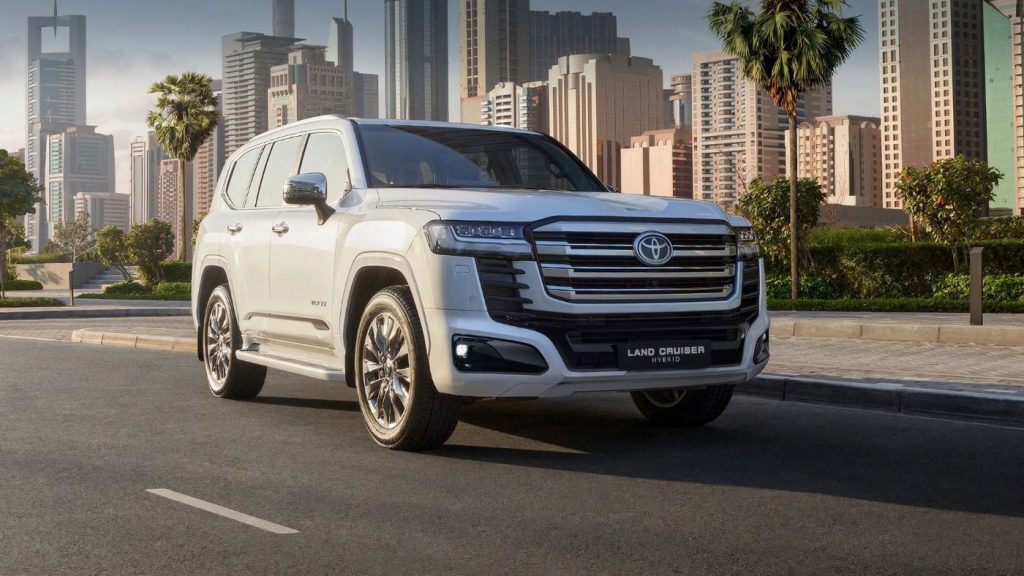
In contrast, the Land Cruiser offered in North America is the smaller J250-based model. While it also uses a hybrid setup, it relies on a 2.4-liter turbocharged four-cylinder engine. Combined output stands at 326 horsepower, respectable, but nowhere near the 457 hp produced by the larger 300.
There is effectively no chance that the most powerful Land Cruiser ever will be sold in the United States. The previous J200 Land Cruiser struggled to find buyers here, as shoppers willing to spend more than $80,000 gravitated toward luxury alternatives such as the Lexus LX, which has itself recently adopted hybrid power. That reality is precisely why Toyota opted to introduce the smaller J250 Land Cruiser to the U.S. market instead.
The J300 will continue to be offered in regions including Africa, Eastern Europe, the Middle East, and Asia-Pacific markets. In many of these areas, buyers favor the more utilitarian Land Cruiser over plush luxury SUVs. Road conditions are often far less forgiving, making a large, highly capable SUV a necessity rather than a lifestyle choice.
Toyota keeps expanding its Gazoo Racing lineup, but the US-market Land Cruiser won’t be getting the GR Sport treatment anytime soon.
The Land Cruiser Performance Hybrid now joins a growing list of vehicles that American buyers won’t get. While these omissions often frustrate enthusiasts, the reasoning is usually straightforward: If demand isn’t there, automakers won’t take the risk.
Beyond the big Land Cruiser, the pattern repeats across several segments. Kia has introduced an appealing K4 Sportswagon with a manual transmission, but America’s general disinterest in wagons and stick shifts means it won’t cross our shores.
The standard Volkswagen Golf is gone as well, joining a long list of desirable hatchbacks that slowly disappeared from the U.S. lineup. Audi’s RS3 Sportback belongs on that list, too. Then there’s Suzuki’s Jimny, a utilitarian 4×4 that thrives elsewhere but would likely struggle in the U.S. due to its size and modest power.
Unless American preferences undergo a dramatic shift, these are just a few of the vehicles enthusiasts here will continue to admire from a distance.
Also Read: Top 10 Toyota’s Best Budget-Friendly Models Heading Into 2025
