Rear engine sports cars have always been the rebels of the performance world. Placing the engine behind the rear axle goes against conventional vehicle balance theory, yet some manufacturers embraced this layout and turned it into a defining strength.
What began as a packaging solution eventually became a performance philosophy that produced some of the most thrilling driver’s cars ever made.
The biggest challenge of a rear engine layout is weight distribution. With so much mass at the back, early cars were known for tricky handling, especially at the limit.
Sudden oversteer and dramatic weight transfer made these machines demanding, sometimes even intimidating. But engineers who stuck with the concept discovered unique advantages that front and mid engine cars could not fully replicate.
Rear engine traction under acceleration is exceptional. With weight naturally pressing down on the driven wheels, these cars can launch out of corners with incredible grip.
This characteristic proved especially powerful in racing and rallying, where putting power down cleanly often matters more than raw horsepower alone. Over time, suspension design, tire technology, and aerodynamics helped tame the layout’s wilder traits.
What makes rear-engine sports cars truly special is the driving experience. The sensation of the mass pushing from behind creates a distinct feeling that no other configuration delivers. Steering inputs, throttle control, and cornering balance all feel different, requiring skill but rewarding drivers with unmatched feedback and character.
The cars on this list did more than just use a rear engine layout. They refined it, mastered it, or completely redefined what people thought was possible with it.
Each one pushed performance forward and helped turn a once-controversial design into an icon of engineering individuality. Here are thirteen rear engine sports cars that reshaped performance history.
Also Read: 5 Vehicles That Make Sense for City Budgets vs 5 That Don’t
1. Porsche 911 Carrera RS 2.7
The Porsche 911 Carrera RS 2.7 is often considered the car that cemented the rear engine layout as a serious performance formula rather than a quirky design choice. Introduced in the early 1970s, it was built as a homologation special for racing, but it ended up redefining what a road-going sports car could be.
At its heart was a naturally aspirated flat-six engine mounted behind the rear axle, a signature Porsche layout. Engineers increased displacement and focused on making the engine more responsive, giving the RS 2.7 a sharp throttle reaction and a thrilling top-end rush. Power delivery felt alive, constantly urging the driver to explore higher revs.
Weight reduction was a major focus. Thinner body panels, lighter glass, and minimal interior insulation helped make the car significantly lighter than standard 911 models. This reduced mass made every input more immediate, from steering to braking to changes in direction during fast cornering.
One of the most famous features was the distinctive rear spoiler, often called the ducktail. This was not just a styling flourish but an aerodynamic breakthrough. It reduced rear lift at high speeds, making the car more stable and confidence-inspiring, especially on fast circuits and autobahns.
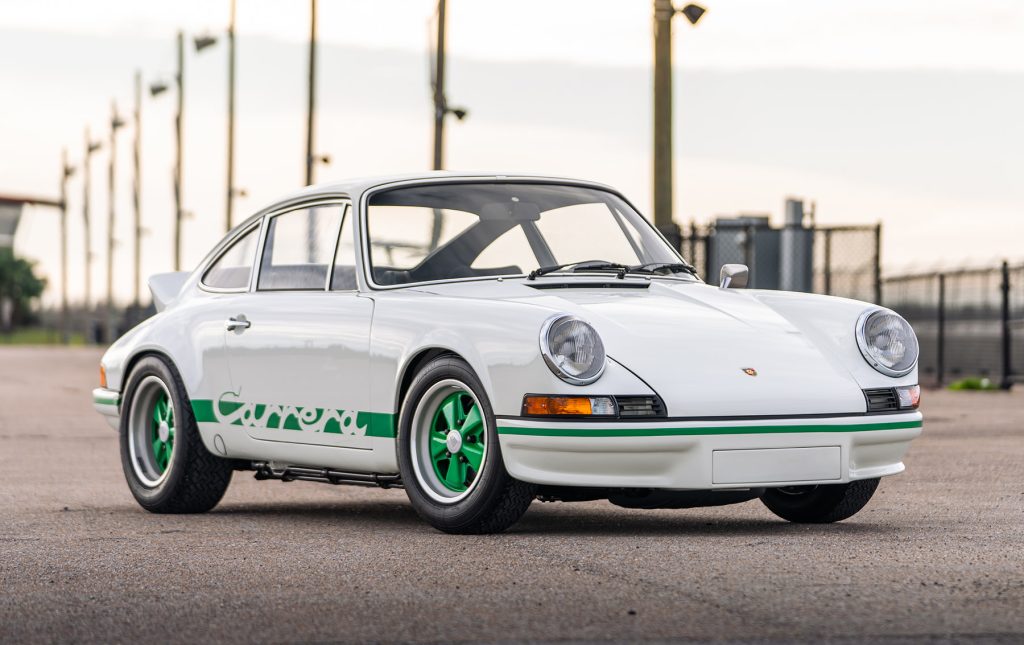
Driving the Carrera RS 2.7 demanded respect. Lift off the throttle mid-corner and the rear weight bias could quickly rotate the car. Skilled drivers, however, learned to use this trait to their advantage, steering with both the wheel and the throttle in a way few other cars allowed.
The RS 2.7 proved that a rear-engine car could be both brutally fast and deeply rewarding. It became a benchmark for driver involvement and set the template for future high-performance 911 models. Even today, its balance of lightness, power, and raw feedback feels remarkably modern.
More than just a fast version of an existing model, the Carrera RS 2.7 turned the 911 into a true motorsport legend. It showed the world that the rear engine layout, when carefully developed, could deliver a unique and unbeatable performance character.
2. Chevrolet Corvair Monza Spyder
The Chevrolet Corvair Monza Spyder brought rear engine performance to an audience that had never experienced anything like it. Introduced in the 1960s, it stood apart from typical American cars by using an air-cooled flat-six engine mounted at the rear, paired with sporty styling and turbocharged power.
This configuration gave the Corvair a completely different driving feel compared to front engine, rear wheel drive muscle cars of the same era. With less weight over the front wheels, steering felt light and responsive. Meanwhile, the rear engine provided strong traction when accelerating out of corners.
The Monza Spyder version added a turbocharger, making it one of the first mass produced turbocharged cars in the United States. The boost delivered a noticeable surge of power that transformed the car from a stylish compact into a genuine performance machine.
Handling could be challenging at the limit, especially in early versions with swing axle suspension. Rapid weight transfer and rear-heavy balance meant that sudden inputs could unsettle the car. However, drivers who understood its behaviour found it engaging and lively rather than simply unpredictable.
The interior reflected its sporty ambitions, with bucket seats, a tachometer, and additional gauges that emphasized performance. It felt more like a European sports coupe than a traditional American sedan, which was part of its unique appeal.
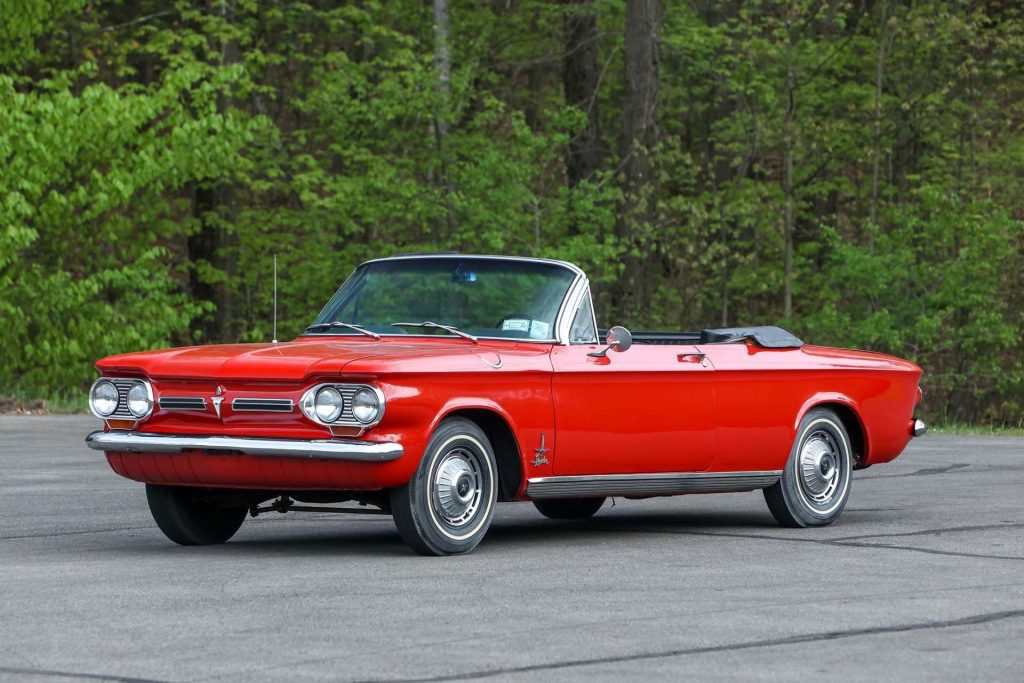
Despite controversy surrounding its handling reputation, the Corvair Monza Spyder played an important role in proving that rear engine layouts could work outside of Europe. It brought the concept to a wider audience and showed that performance did not have to follow Detroit’s usual formula.
Today, it is remembered as a bold experiment that challenged American automotive norms. Its turbocharged rear engine setup and distinctive driving character make it a fascinating and influential chapter in the story of unconventional performance cars.
3. Porsche 959
The Porsche 959 took the traditional rear engine idea and fused it with advanced technology that was years ahead of its time. Developed in the 1980s, it was originally intended for Group B competition, but it evolved into one of the most sophisticated high-performance road cars ever built.
Its twin-turbocharged flat-six engine was mounted in the rear, continuing Porsche’s signature layout. However, this was no ordinary power plant. Sequential turbocharging reduced lag and provided strong performance across the rev range, making the car both ferociously fast and surprisingly manageable.
One of the most revolutionary features was its intelligent all-wheel-drive system. Although the engine was at the rear, power could be distributed between the front and rear wheels depending on grip conditions. This helped counter the traditional handling challenges of rear engine cars and made the 959 incredibly stable.
The suspension was equally advanced, with adjustable ride height and damping. Drivers could adapt the car to different road surfaces and driving conditions. Combined with sophisticated aerodynamics, this gave the 959 remarkable high-speed composure.
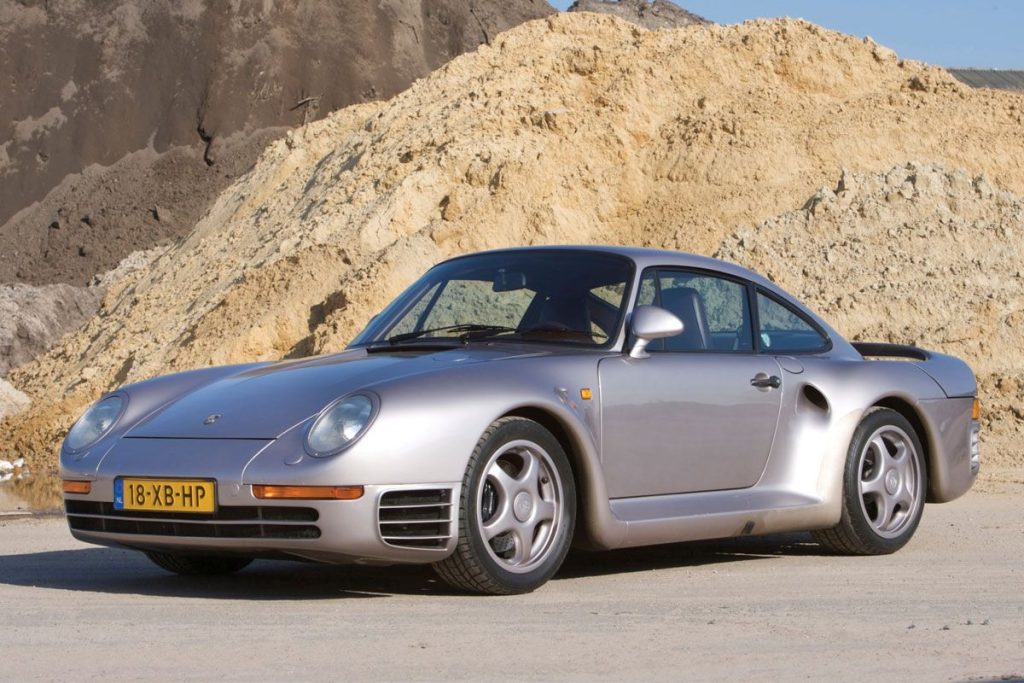
Inside, the car balanced luxury and innovation. It was comfortable enough for long-distance travel but packed with technology that made it feel like a rolling laboratory. It demonstrated that a rear engine supercar could also be refined and usable.
The 959 redefined what was possible with a rear engine platform. Instead of fighting the layout’s limitations, Porsche engineered solutions that turned them into strengths. The result was a car that delivered extreme performance with an unprecedented level of control.
Its influence can still be seen in modern high-performance vehicles that blend electronic systems with mechanical grip. The 959 showed that the rear engine concept could evolve into something futuristic rather than remain a relic of the past.
4. Renault 5 Turbo
The Renault 5 Turbo is one of the most dramatic transformations of an everyday car into a rear engine performance icon. Originally based on a humble front wheel drive hatchback, the Turbo version was reengineered into a mid rear engine rally weapon that stunned the automotive world.
Engineers removed the rear seats and installed a turbocharged four cylinder engine behind the driver. This radical change completely altered the car’s balance and purpose. What started as a practical city car became a wide bodied, aggressive machine built to dominate rally stages.
Massive fender flares, deep air intakes, and a squat stance made the Renault 5 Turbo look like a cartoon version of the original. Every visual element served a purpose, either feeding air to the engine or improving stability at speed.
On loose rally surfaces, the rear engine layout provided strong traction under acceleration. Combined with a short wheelbase and light weight, the car was incredibly agile. Skilled drivers could slide it through tight corners with precision, using throttle inputs to control its attitude.
On the road, it felt raw and intense. Turbo lag followed by a sudden rush of power made driving it an event every time the boost came in. The cabin was focused and driver-oriented, with little concern for luxury.
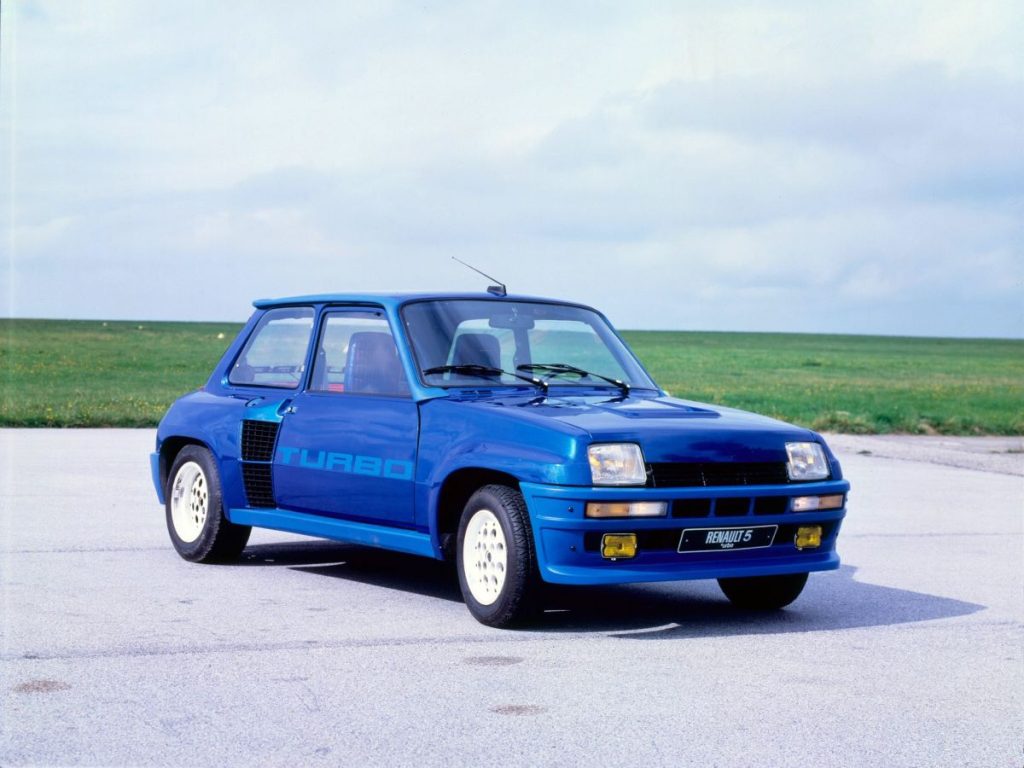
The Renault 5 Turbo showed that rear-engine performance was not limited to expensive sports cars. It proved that with enough engineering ambition, even a small hatchback could be turned into a rally-inspired performance legend.
Its success in motorsport and its outrageous design helped it achieve cult status. Today, it stands as one of the wildest and most creative examples of real-engine performance ever put into production.
5. Porsche 930 Turbo
The Porsche 930 Turbo was the car that gave the 911 a fearsome reputation and showed the world how explosive a rear engine layout could be when combined with turbocharging. Launched in the mid 1970s, it was Porsche’s first production turbocharged 911 and quickly became known as a machine that demanded respect.
Its flat six engine sat behind the rear axle as always, but now a large turbocharger forced extra air into the cylinders. The result was a dramatic surge of power that arrived with little warning. Below boost, the car felt manageable. Once the turbo came alive, it transformed into something far more intense.
This sudden wave of acceleration worked hand in hand with the rear heavy weight distribution. Under hard throttle, the back of the car dug into the road, giving strong traction and brutal forward thrust. In a straight line, the 930 Turbo felt unstoppable for its era.
Cornering required skill and anticipation. Lifting off the throttle mid turn could shift weight forward and make the rear feel light. Drivers had to be smooth and deliberate, learning to balance the car with careful inputs. Those who mastered it found a deeply rewarding and thrilling experience.
Visually, the wide fenders and large rear wing became defining features. The wing was not just for style, as it helped manage airflow and stability at high speed. The aggressive stance signaled that this was not a standard sports car but a serious performance machine.
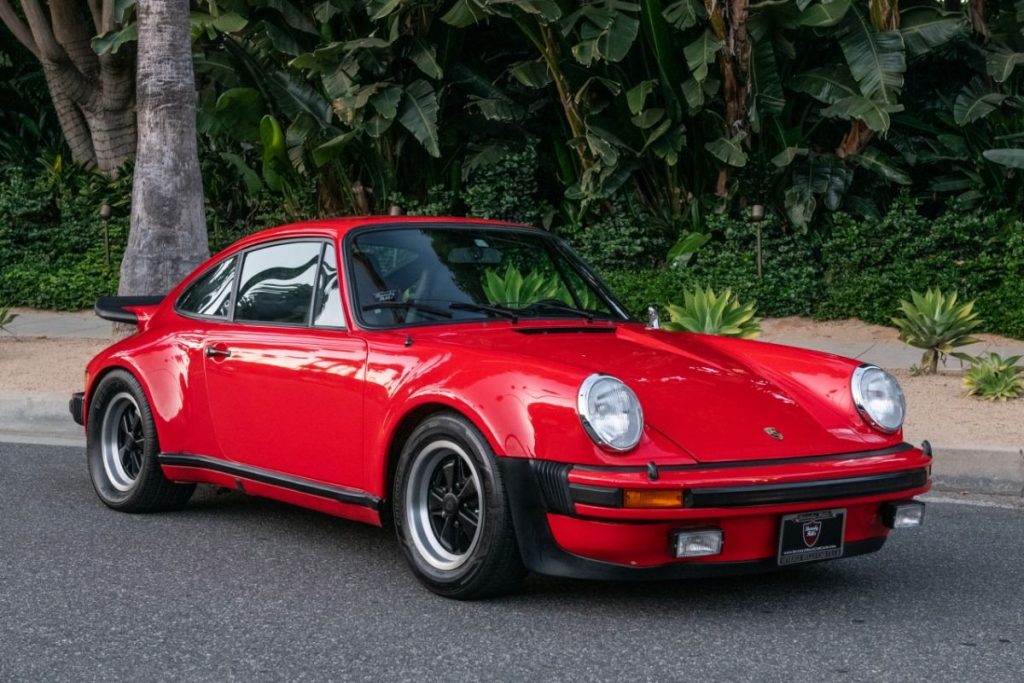
Inside, the 930 mixed Porsche quality with a clear focus on driving. Supportive seats and a simple layout kept attention on the road. It was usable day to day, yet always felt like it was holding back a wild side waiting to be unleashed.
The 930 Turbo proved that turbocharging and a rear-engine platform could create a new kind of supercar. It laid the foundation for decades of high-performance 911 Turbo models and turned the idea of turbo lag and sudden boost into part of the car’s dramatic personality.
6. Volkswagen Beetle RSR Concept
The Volkswagen Beetle RSR Concept took one of the most recognizable rear engine cars in history and reimagined it as a modern performance machine. While the classic Beetle was never a true sports car, this concept showed how the rear engine layout could be pushed into serious performance territory.
Built as a racing inspired project, the Beetle RSR featured a heavily modified turbocharged engine mounted at the rear. Power output was far beyond anything associated with the Beetle name before. The focus shifted from economy and charm to speed and track capability.
The chassis received major upgrades to handle the extra performance. Wider tracks, racing suspension components, and large brakes transformed the car’s dynamics. With the engine mass over the driven wheels, traction out of corners was strong and confidence inspiring under acceleration.
Aerodynamics also played a big role. A large rear wing, aggressive front splitter, and vented body panels helped manage airflow and cooling. The once friendly shape of the Beetle became sharp and purposeful, clearly designed for competition rather than city streets.
Inside, the cabin was stripped and fitted with racing seats, harnesses, and a roll cage. Comfort gave way to safety and driver focus. Every element reinforced that this was a serious track machine built around a rear engine philosophy.
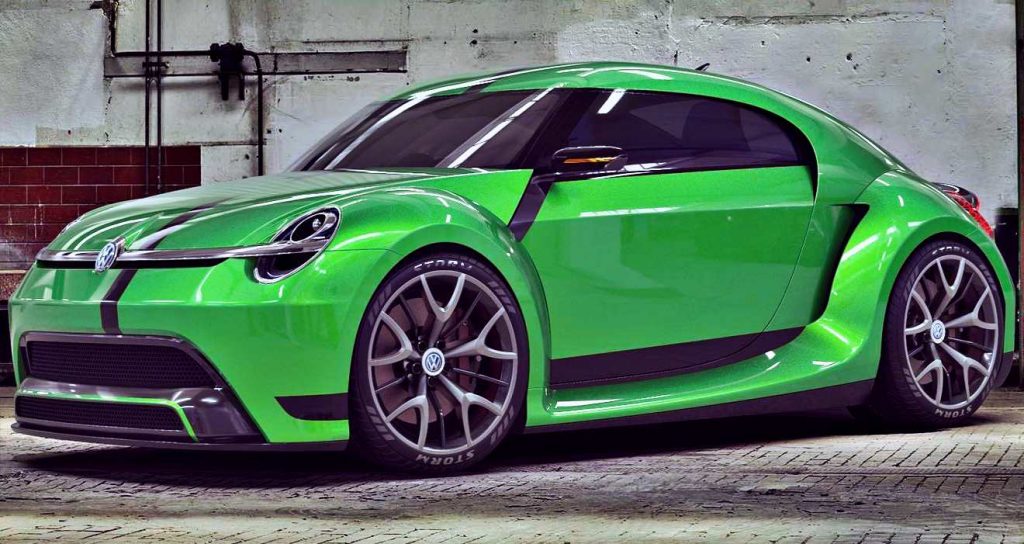
What made the Beetle RSR special was the contrast between its heritage and its performance. It showed that even a car known for simplicity could be turned into a high-grip, high power machine by embracing the advantages of rear weight bias and modern engineering.
Though it remained a concept, it highlighted the flexibility of the rear engine layout. It proved that with the right development, the configuration could deliver competitive performance in a completely different era from the original Beetle.
7. Porsche 911 GT2 RS
The Porsche 911 GT2 RS represents one of the most extreme evolutions of the rear engine sports car formula. Built as a high performance flagship, it took the familiar 911 layout and pushed it to levels once reserved for dedicated race cars.
Its twin turbocharged flat six engine delivered enormous power to the rear wheels only. Unlike all wheel drive Turbo models, this car relied purely on rear traction, making weight over the back axle a key advantage under hard acceleration. The result was explosive speed combined with intense driver involvement.
Advanced aerodynamics helped keep the car stable at very high speeds. Large vents, an aggressive front splitter, and a towering rear wing generated serious downforce. This countered the traditional light front end feeling of rear engine cars and improved high speed balance.
Suspension and chassis tuning were equally focused. Lightweight components, track oriented geometry, and massive brakes turned the GT2 RS into a precision tool. Despite its extreme performance, it remained remarkably controllable thanks to modern tire and stability technologies.
Driving it required concentration but rewarded commitment. The rear engine placement gave immense traction exiting corners, allowing earlier throttle application than many mid-engine rivals. The sensation of being pushed forward by the mass behind you remained a defining part of the experience.
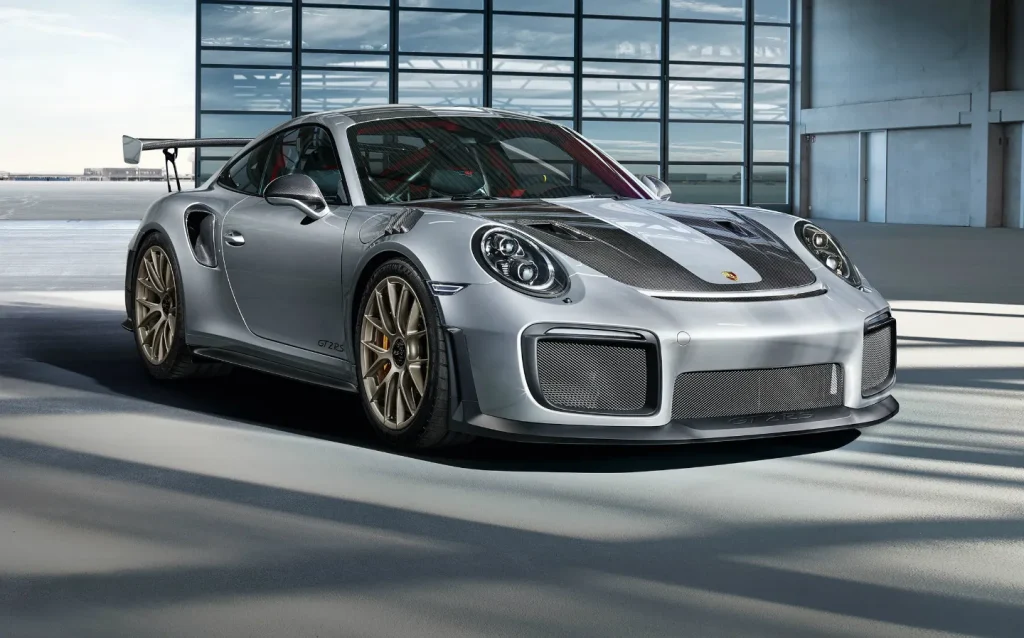
Inside, weight-saving measures mixed with purposeful luxury. Carbon fiber trim, supportive bucket seats, and minimal distractions kept the focus on performance. It was road legal, yet clearly born for fast laps and high-speed runs.
The GT2 RS showed how far the rear engine concept had come. What was once seen as a handling compromise became a platform for record-breaking performance, proving that decades of development had turned a challenging layout into a refined weapon.
8. Alpine A110 (Original Berlinette)
The original Alpine A110 Berlinette is a lightweight legend that used rear engine balance to dominate rally stages in the 1960s and 1970s. Small, nimble, and beautifully shaped, it proved that clever engineering and low weight could overcome bigger and more powerful rivals.
Its engine sat behind the rear axle, giving the car excellent traction on loose and uneven surfaces. This allowed drivers to put power down effectively when exiting tight corners, a huge advantage in rally competition where grip is constantly changing.
The A110 was built with lightness as a priority. A compact body and minimal interior equipment kept weight extremely low. This made the car feel agile and responsive, able to change direction quickly and carry speed through technical sections.
Handling was lively, and like many rear engine cars, it could oversteer if provoked. Skilled rally drivers used this trait to rotate the car into corners and power out in controlled slides. The balance between grip and playfulness made it both effective and exciting.
Aerodynamics were simple but effective for the time. The smooth, rounded shape reduced drag and helped stability at speed. On narrow mountain roads and rough rally routes, the A110 felt perfectly sized and perfectly suited to the task.
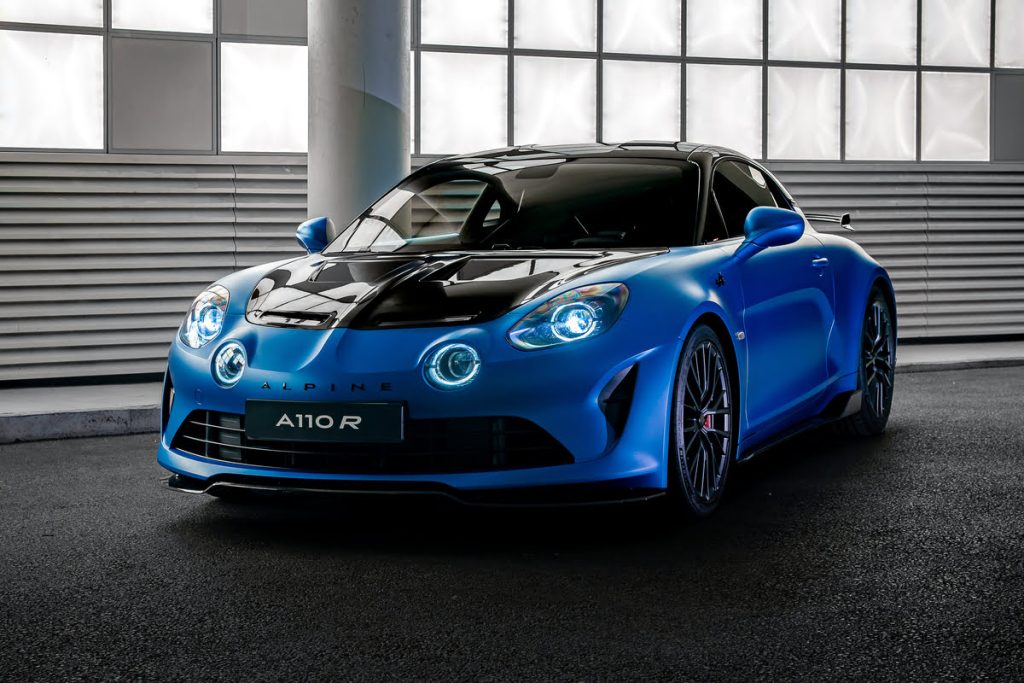
Inside, the focus was on the driver. Clear instruments and a straightforward layout kept attention on the road ahead. Comfort was secondary to control and communication, which suited the car’s competitive nature.
The Alpine A110 demonstrated that a rear engine layout could shine in lightweight performance cars, not just high-horsepower machines. Its success in motorsport and its distinctive driving character helped secure its place as one of the most influential rear engine sports cars ever built.
9. Porsche 911 GT3 RS
The Porsche 911 GT3 RS is one of the purest modern interpretations of the rear engine performance formula. While many high performance cars rely heavily on all wheel drive and electronic assistance, the GT3 RS focuses on precision, balance, and driver connection, all built around the traditional rear mounted flat six engine.
Unlike turbocharged models, the GT3 RS uses a naturally aspirated engine that thrives on high revs. The power delivery is immediate and linear, allowing drivers to finely control throttle input when balancing the car through fast corners. This responsiveness works beautifully with the rear weight bias, especially on corner exit.
Aerodynamics play a major role in its performance. Large front vents, deep splitters, and an enormous rear wing generate serious downforce. This added grip at high speeds helps stabilize the rear engine layout, giving the car incredible confidence during fast track driving.
Chassis tuning is razor sharp. Stiff suspension, precision steering, and powerful brakes turn every input into immediate action. The rear engine position enhances traction under acceleration, allowing the GT3 RS to fire out of bends with authority and minimal wheelspin.
Despite its track focus, the car remains usable on the road. The interior is purposeful but not stripped bare, offering enough comfort for driving to and from circuits. Lightweight materials and supportive seats remind the driver that performance is always the top priority.
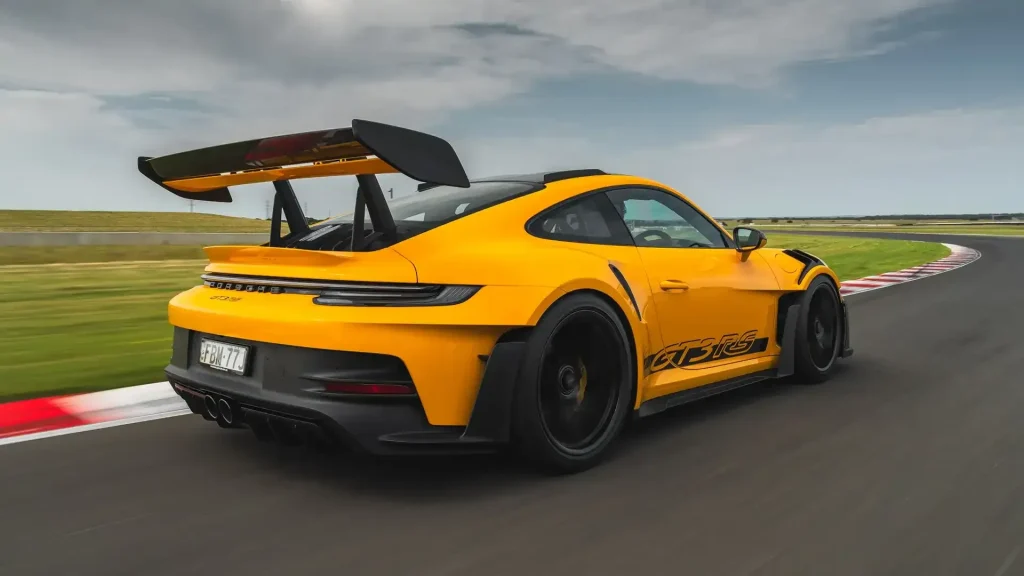
The GT3 RS proves that the rear engine layout is not just a historical quirk but a modern performance advantage. Through decades of refinement, Porsche has turned what was once a tricky configuration into one of the most effective setups for serious driver engagement and lap time capability.
10. DeLorean DMC 12 Twin Turbo Prototype
The DeLorean DMC 12 is often remembered more for its styling and movie fame than outright performance, but the twin turbo prototype showed how the rear engine layout could transform its character. With the engine mounted behind the rear axle, the platform had untapped potential that this experimental version aimed to explore.
Engineers added turbochargers to the existing V6 engine, significantly increasing power over the standard car. This extra performance worked well with the rear weight distribution, improving traction when accelerating and giving the car a much stronger push out of corners.
The stainless steel body and distinctive shape remained, but the driving experience changed dramatically. What had been a stylish but modest sports car became something far more urgent and exciting. The added power made better use of the chassis and its rear engine dynamics.
Handling still required care. Like many rear engine cars, sudden inputs could unsettle the balance, especially with the extra turbocharged thrust. However, when driven smoothly, the car felt more alive and capable than the standard version ever did.
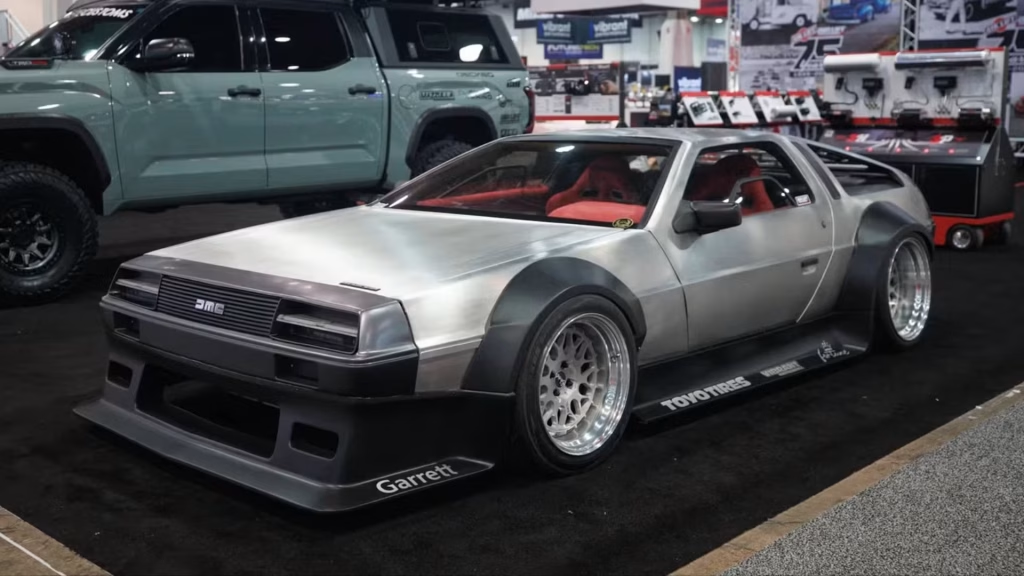
The interior remained futuristic for its time, with a driver focused layout and unique design touches. In the prototype, performance upgrades mattered more than luxury, but the car still retained its unmistakable identity.
Although this twin turbo version never entered mass production, it demonstrated how much potential lay within the rear engine layout of the DMC 12. It stands as an intriguing example of how added power and development could have redefined the car’s performance reputation.
11. Smart Roadster Brabus
The Smart Roadster Brabus showed that rear engine performance could exist in a tiny, lightweight package. With the engine mounted at the back and driving the rear wheels, the car delivered a playful and engaging driving experience that felt far bigger than its size suggested.
The Brabus version added more power, sharper suspension tuning, and sportier styling. While the engine output remained modest compared to larger sports cars, the car’s low weight meant performance felt lively and responsive, especially in tight corners and on twisty roads.
Rear weight bias gave the Roadster strong traction under acceleration. This helped it punch out of corners with surprising enthusiasm. The compact dimensions made it incredibly agile, able to change direction quickly and dart through narrow roads with ease.
Handling was fun rather than intimidating. The limits were approachable, allowing drivers to explore the balance without excessive speed. Oversteer was possible, but it was progressive and easy to catch, making the car feel friendly and entertaining.
Inside, the cabin was simple but sporty, with supportive seats and a focus on driving enjoyment. It was not about luxury or outright speed, but about maximizing fun from a lightweight rear engine platform.
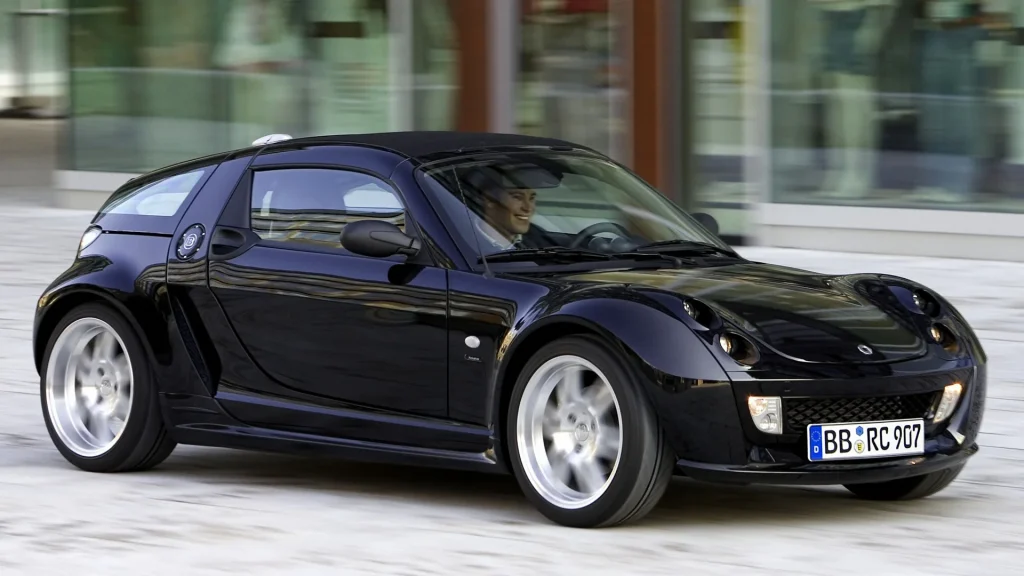
The Smart Roadster Brabus proved that the rear engine layout could deliver driving excitement without huge power figures. It carried forward the idea that balance, traction, and character can matter just as much as raw horsepower in creating a memorable sports car.
12. Porsche 356 Carrera
The Porsche 356 Carrera helped establish the foundation for decades of rear engine sports car success. As one of Porsche’s early high performance models, it showed how a compact, lightweight car with its engine mounted at the back could compete with larger and more powerful rivals.
Its four cylinder engine sat behind the rear axle, giving the car strong traction and a distinctive handling balance. With careful driving, the rear weight bias helped it accelerate effectively out of corners, an advantage in both racing and spirited road driving.
The Carrera versions featured more advanced engines and mechanical components compared to standard models. These upgrades improved power, reliability, and high speed capability, turning the already capable 356 into a serious performance machine for its time.
Light weight played a crucial role in its success. The car’s compact size and simple construction allowed it to feel nimble and responsive. Steering was communicative, and the car rewarded smooth inputs and momentum based driving.
On the track, the 356 Carrera earned an impressive motorsport record. Its rear engine layout, once seen as unconventional, proved highly competitive when combined with clever engineering and driver skill.
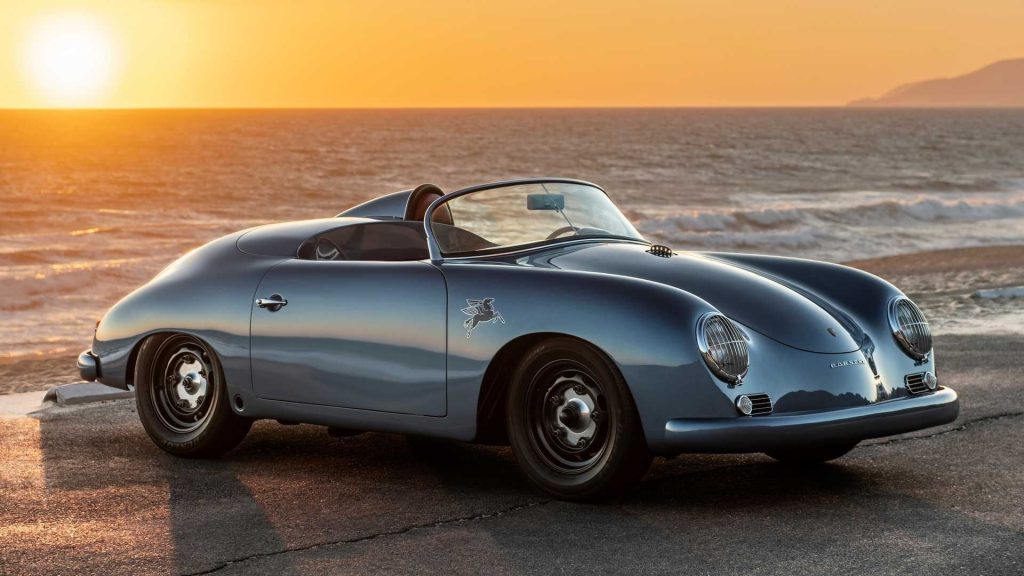
The 356 Carrera demonstrated early on that the rear engine concept was not a limitation but an opportunity. It laid the groundwork for the philosophy that would later define the 911 and many other Porsche performance icons.
13. Porsche 911 Turbo S (992)
The Porsche 911 Turbo S in its modern form represents the most technologically advanced expression of the rear engine sports car idea. While it retains the traditional engine placement behind the rear axle, nearly every aspect of the car has been refined to maximize performance and control.
Its twin turbocharged flat six produces immense power, delivered through an advanced all wheel drive system. Even with power going to all four wheels, the rear engine placement still plays a key role in traction and acceleration, helping the car launch with incredible force.
Sophisticated electronics manage stability, torque distribution, and suspension behavior. These systems work in harmony with the physical advantages of the rear engine layout, smoothing out the tricky traits that once made such cars intimidating at the limit.
Aerodynamics are carefully engineered to provide downforce and stability at very high speeds. Active elements adjust to driving conditions, ensuring the car remains composed whether on the highway or on a racetrack.
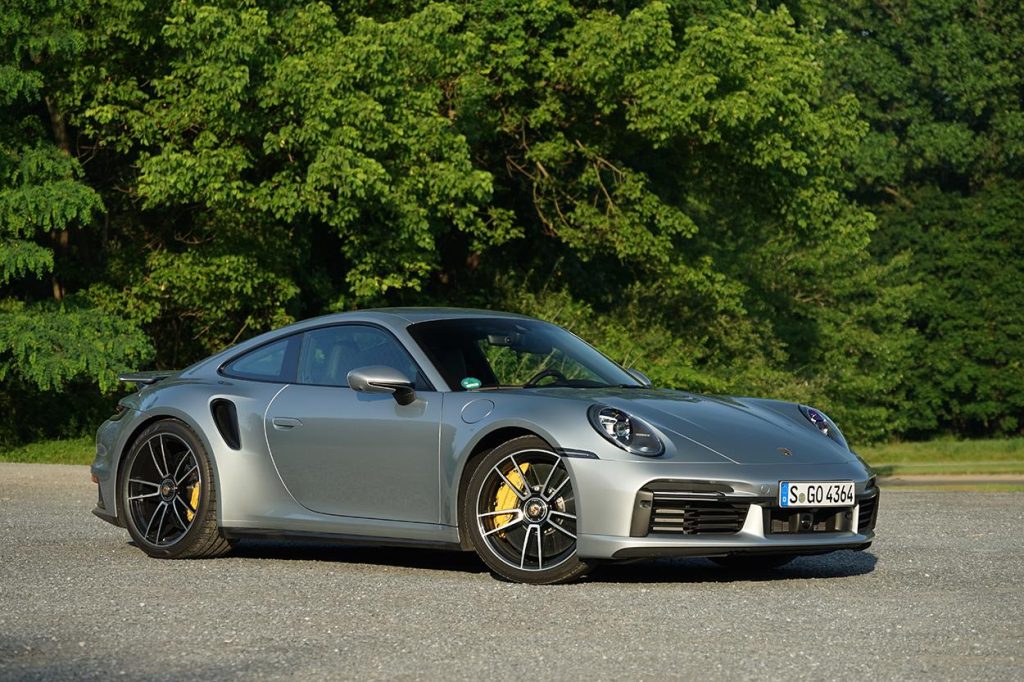
Inside, the Turbo S blends supercar performance with everyday usability. High quality materials, advanced infotainment, and comfort features make it easy to live with, while the underlying performance remains extraordinary.
The 992 Turbo S shows how far rear engine sports cars have evolved. What started as a challenging and unconventional layout has become the basis for one of the fastest and most complete performance cars in the world. It stands as a modern benchmark for how engineering can turn a unique configuration into a lasting advantage.
Rear engine sports cars turned a risky layout into a performance advantage through traction, character, and relentless engineering.
From lightweight rally icons to modern high tech supercars, these machines proved that placing the engine at the back could deliver unique handling, thrilling acceleration, and decades of motorsport and road car innovation.
Also Read: 5 Vehicles That Suit Long Beach Daily Driving vs 5 That Don’t