
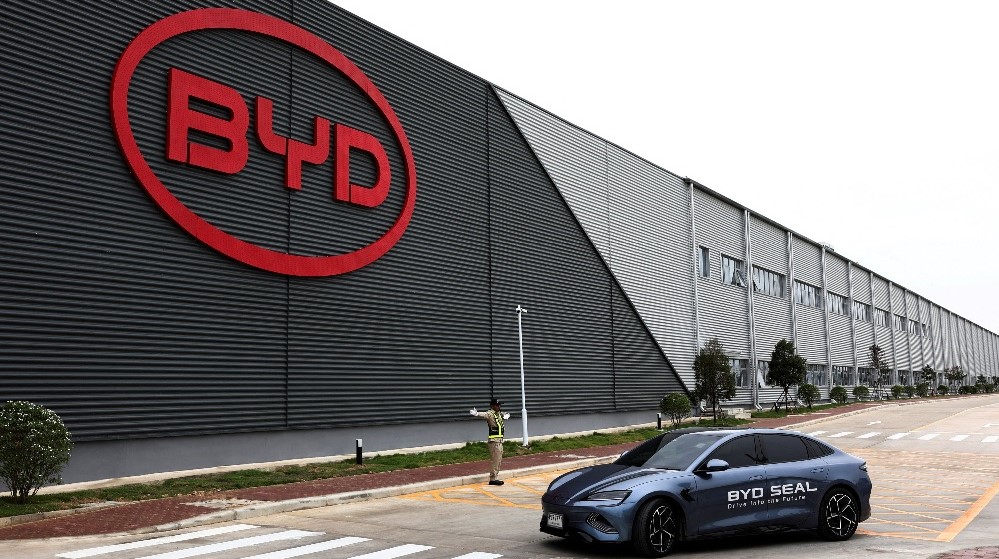
BYD’s sales slump deepened in January, with the company reporting its fifth straight month of year-on-year declines as demand in its home market remained under pressure.
The automaker sold 210,051 new energy vehicles (NEVs) globally during the month, a drop of 30.1% compared with the same period last year. Production also fell sharply, down 29.1% to 232,358 vehicles. Battery-electric vehicle sales slid 33.6% to 83,249 units, while plug-in hybrid deliveries declined 28.5% to 122,269.
January’s results marked BYD’s weakest performance for the month since 2020, when the onset of the COVID-19 pandemic severely disrupted operations across China. Investors reacted swiftly to the news.
BYD’s shares on the Hong Kong exchange fell 6.1% on February 2 to HK$91 (US$11.65), their lowest level in at least a year. On the Shenzhen exchange, the stock dropped 4.2% to CN¥87 (US$12.51) after briefly touching its weakest point since September 2024.
The downturn was not limited to BYD. Shares of other Chinese automakers, including Geely, Leapmotor, Xiaomi, and Xpeng, declined between 1.2% and 6.8% as investors grew increasingly concerned about the prolonged slowdown in China’s automotive sector.
While sales in China typically soften ahead of Lunar New Year celebrations, the current weakness has been notably more severe than seasonal trends alone would suggest. BYD was also not alone in posting falling deliveries, with Xpeng reporting a 34% year-on-year decline, Chery down 10.7%, and Li Auto posting an 8% drop.
Not every brand struggled, however. Smartphone giant-turned-automaker Xiaomi continued its rapid ascent, delivering 39,000 vehicles in January for a 70.3% year-on-year increase. In the sub-US$25,000 segment, long considered BYD’s core strength, the company was outsold by Geely, highlighting how BYD’s once-clear technological edge in the mass market has begun to narrow.
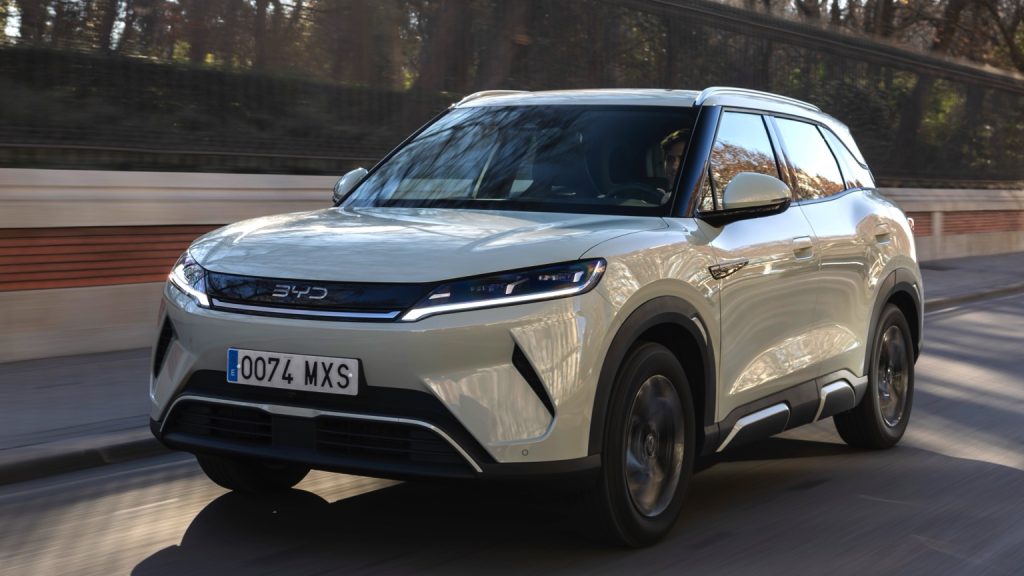
Looking ahead, China’s overall car market is widely expected to stagnate in 2026 following changes to government subsidy programs that previously fueled the rapid expansion of the country’s NEV sector. The revised framework shifts away from fixed subsidies toward price-based incentives, a move that could reduce support for lower-priced vehicles, which make up the majority of new car sales in China.
At the same time, the intense price war in China shows little sign of easing, despite regulatory attempts to curb so-called “involution,” where manufacturers sell vehicles below production cost to drive smaller rivals out of the market.
Instead of outright price cuts, automakers are increasingly relying on alternative incentives, including zero-percent financing over five- to seven-year terms and bundling advanced driver-assistance or autonomous-driving software that would normally cost tens of thousands of yuan.
Internationally, BYD’s performance remains a bright spot. The company’s exports topped 100,000 units in January, representing a strong 51.5% year-on-year increase. Even so, BYD is adopting a more cautious stance on its global ambitions.
It has revised its 2026 overseas shipment target to 1.3 million vehicles, a 25% increase over 2025 volumes, but lower than an earlier projection of up to 1.6 million units that had been discussed with Citi in November.
