Audi has acknowledged that a recent attempt to overhaul its vehicle naming strategy backfired, leaving customers confused and the brand scrambling to undo the damage.
While the company has also been dealing with softer sales compared to its German rivals, executives now admit that the decision to rename the entire lineup in 2023 only compounded its problems instead of clarifying the brand’s transition toward electrification.
Under the revised strategy introduced two years ago, Audi assigned even-numbered nameplates to fully electric vehicles and odd-numbered numbers to combustion-powered models. This meant familiar models were suddenly rebranded, most notably turning the long-running A4 into the A5.
At the same time, Audi used two-digit numbers to indicate power output, creating an added layer of complexity. Rather than helping buyers understand the range, the system overwhelmed them, making it harder to distinguish between models at a glance and even more difficult for sales staff to explain.
Audi has now conceded that the approach was misguided and has begun reversing course. The first clear sign of this change is the return to the traditional naming structure with the new gas-powered A6. Speaking to Australian media, Audi’s leadership also suggested that this rollback could extend across the broader lineup in the future.
“Yes, as we said earlier this year, that was a mistake, and we corrected it,” Audi CEO Gernot Döllner said at the Munich motor show in September. “We will go back to our old nomenclature: A is for flat-floor cars, Q is for SUVs, and then the number describes the size of the car or the segment of the car, full stop.”
This clearer structure should make it easier for customers to understand where each vehicle fits in the range, while also simplifying the job of dealers explaining the lineup.
That shift, however, raises questions about models already launched under the abandoned naming logic. Chief among them is the current A5 sedan, which replaced the A4 name despite being part of the same segment. When asked whether Audi might revert that model back to its old badge, Döllner was noncommittal but open to the idea.
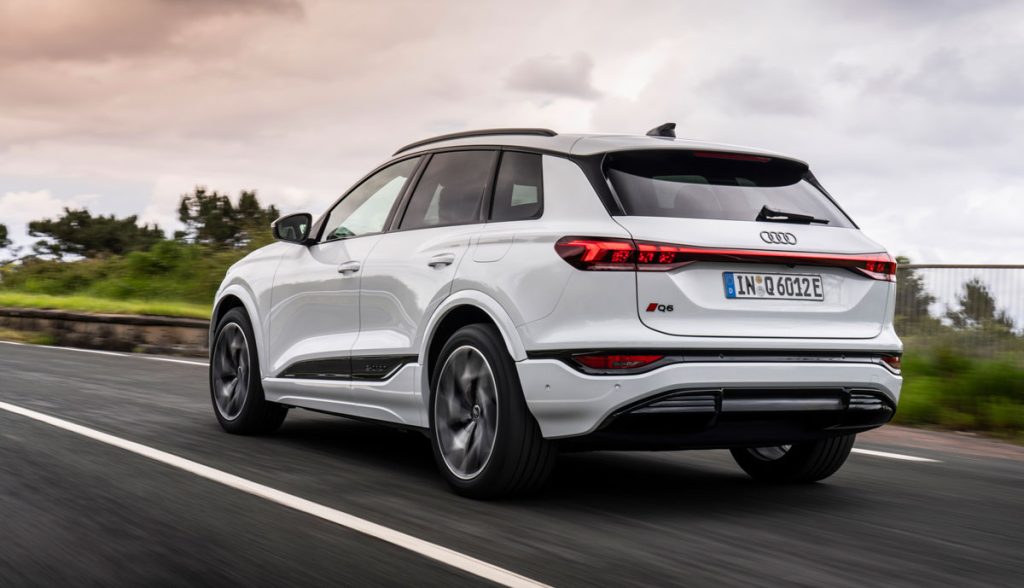
“Yeah, that’s thinkable,” he said, adding, “In general with the A6 as the anchor point, from there into the future we will be looking.” If Audi does eventually resurrect the A4 name, the existing A5 sedan could become an odd historical footnote, a rare instance of a traditionally two-door badge applied to a four-door car.
Regardless of how quickly Audi completes the transition back to its familiar naming scheme, the episode is likely to be remembered as an expensive marketing misstep. Renaming an entire lineup requires significant investment in branding, advertising, and dealer education, and undoing it only adds to those costs.
Audi is not alone in struggling with how to name vehicles in the age of electrification. Mercedes-Benz learned that giving EVs entirely separate identities did not necessarily resonate with buyers, as its EQS electric S-Class has underperformed.
In response, Mercedes is now returning to traditional model names, simply appending “with EQ Technology” to denote electric versions. BMW took a different route, calling its electric 7 Series the i7 while quietly dropping the long-standing “i” suffix from combustion models like the M340i, since many customers associated that badge exclusively with EVs.
The key difference, however, is that BMW’s electric models have remained visually similar to their gasoline counterparts, while Mercedes initially gave its EVs a distinctive, rounded design language.
Both Mercedes and Audi appear to have learned from BMW’s experience that offering the same familiar vehicles with different powertrains, and clear, intuitive names, is often the most effective way to encourage customers to embrace electrification.
With Audi preparing a broader design refresh in the coming years, the hope is that a simpler, more logical naming strategy will finally align with its next-generation products.
Also Read: 10 Most Reliable Used Audis to Buy Today For Long Term Use