Renault is moving to further integrate Chinese technology into its electric vehicle supply chain, announcing plans to assemble a new small EV motor in France using components sourced from China.
The decision underlines how cost pressures and slowing demand in Europe are pushing even legacy automakers to deepen ties with Chinese suppliers as they fight to stay competitive in the electric age.
The new electric motor will be assembled at Renault’s Cleon plant in northern France, a long-standing hub for the company’s powertrain operations.
According to Renault, a dedicated production line will be installed in 2027 with capacity to build up to 120,000 motors per year. While final assembly will take place in France, key components will be supplied by Shanghai e-drive, a major Chinese manufacturer of electric drivetrains.
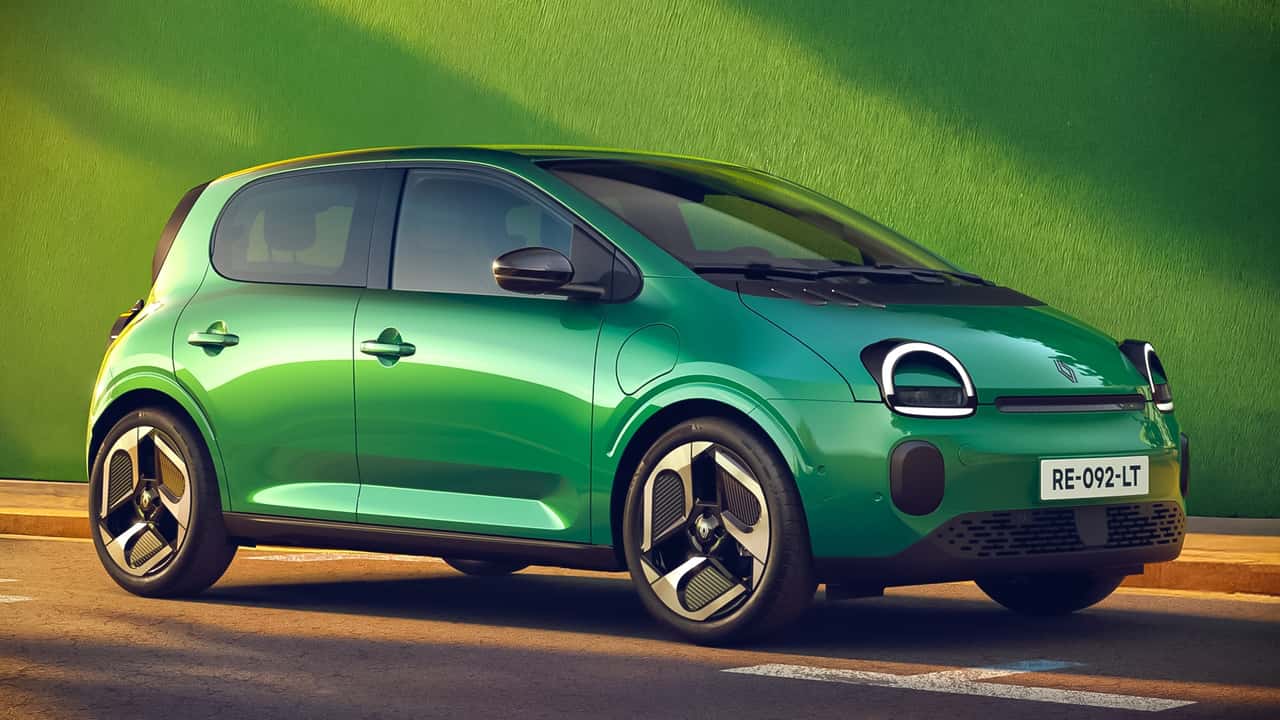
This is not Renault’s first collaboration with Shanghai e-drive. The French automaker already imports compact electric motors from the company for the new Twingo EV, a project that became notable within the industry for its unusually fast development cycle.
The car was reportedly brought from concept to production readiness in under two years, a pace Renault executives have credited in part to close cooperation with Chinese engineers and suppliers accustomed to rapid iteration.
Renault’s decision comes at a time when European automakers are under intense pressure. EV demand across the EU has cooled as subsidies are scaled back, interest rates remain elevated, and consumers grow more price-sensitive.
At the same time, Chinese brands are entering Europe with aggressively priced electric models, forcing established manufacturers to rethink both their cost structures and supply chains.
In this environment, Renault has opted for pragmatism. Rather than pursuing an entirely in-house solution, the company recently walked away from a joint project with Valeo that aimed to develop a more powerful electric motor without rare earth materials.
While strategically attractive, that project proved too expensive for Renault’s current priorities. The automaker instead chose a lower-cost Chinese alternative, even if it means relying more heavily on foreign technology.
The Cleon assembly plan allows Renault to strike a balance: it can reduce unit costs by sourcing from China while still maintaining European manufacturing jobs and preserving some control over final integration and quality. For policymakers and labor groups in France, local assembly offers political cover at a time when offshoring remains a sensitive issue.
Despite growing supply-chain dependence, Renault has made it clear that it has no intention of returning to the Chinese consumer car market.
Chief executive François Provost has been blunt about the reasons. China’s auto market has become brutally competitive, dominated by domestic brands engaged in relentless price wars that have squeezed margins to razor-thin levels. Those same dynamics have already forced several Western automakers to scale back or exit entirely.
Renault withdrew from selling cars in China years ago after struggling to gain traction, and Provost has confirmed that the company sees little strategic value in re-entering such a hostile environment. Instead, Renault’s China strategy is firmly focused on technology, engineering, and sourcing rather than retail sales.
That distinction is important. Renault wants access to China’s speed, scale, and cost advantages, but without exposing itself to the financial risks of competing head-to-head with local EV giants on their home turf.
Provost has emphasized that Renault plans to integrate “deeply” into the Chinese automotive ecosystem while still protecting its core technological identity. The company is willing to invest enough to ensure its vehicles remain differentiated, even as more subsystems are sourced or co-developed abroad.
Renault’s history in China reflects this selective approach. In 2020, the company wound down joint ventures with Dongfeng and Brilliance, effectively ending its ambitions as a mass-market player in China. However, it did not cut ties altogether. Renault remains closely linked to Geely through several strategic initiatives.
One of the most significant is the Horse Powertrain joint venture, which combines Renault and Geely assets to develop and produce internal combustion and hybrid powertrains.
Horse has a stated capacity of up to five million units annually and is positioned as a global supplier, not just a captive operation. The partnership also extends to South Korea, where Renault-branded vehicles are developed and built using shared technologies, and to Brazil, where Geely can manufacture its own branded cars at existing Renault facilities.
Provost has described Renault and Geely as having a “compatible vision,” arguing that the relationship operates in a genuinely win-win mode rather than as a one-sided dependency.
Renault’s move fits into a wider pattern across Europe. As EV affordability becomes a central concern, many automakers are turning to Chinese suppliers not just for batteries, but for motors, electronics, and software.
Mercedes-Benz is collaborating with Geely on advanced driver-assistance systems and powertrain technologies, while Volkswagen is developing future models that rely heavily on platforms and software from Xpeng.
Under former CEO Luca de Meo, Renault institutionalized this approach by opening a dedicated R&D center in China in 2024. The facility operates under a “local-for-global” philosophy, leveraging China’s engineering talent and supply base to develop products and components that can be deployed worldwide.
Renault’s decision to assemble EV motors in France using Chinese components highlights a hard truth for Europe’s auto industry: cost competitiveness now matters as much as, if not more than, technological purity. As EV adoption slows and subsidies fade, the winners are likely to be those who can deliver acceptable range, performance, and quality at prices mainstream buyers can afford.
For Renault, deeper supply-chain integration with China is less about surrendering control and more about survival. The Cleon motor project shows how European manufacturing and Chinese cost efficiency are increasingly being blended into a single strategy, one that may define the next phase of the global EV market.
Also Read: Renault Brings Twingo E-Tech Electric to Brussels for Public Premiere