When choosing a vehicle, fuel or battery range can be just as important as performance, comfort, or style. Some cars are engineered to go the distance, providing long real-world driving ranges that reduce stops and improve convenience for commuters, families, and road-trippers.
Vehicles like the Chevrolet Silverado EV Work Truck, Lucid Air Grand Touring, and Mercedes-Benz EQS 450+ showcase how advanced battery technology, aerodynamics, and efficient powertrains allow drivers to cover hundreds of miles on a single charge.
Similarly, fuel-efficient hybrids like the Toyota Grand Highlander or diesel engines such as the Volkswagen Golf 2.0 TDI offer extended range without compromising utility. On the other hand, many compact and urban-focused vehicles prioritize size, affordability, or handling over distance.
Cars like the Fiat Grande Panda Electric, Mini Cooper SE, Mazda MX-30, Ford F-150 Lightning Standard Range, and Toyota Wigo deliver short real-world ranges that are perfect for city commutes but require frequent stops on longer trips.
5 Cars With Long Real-World Fuel Range
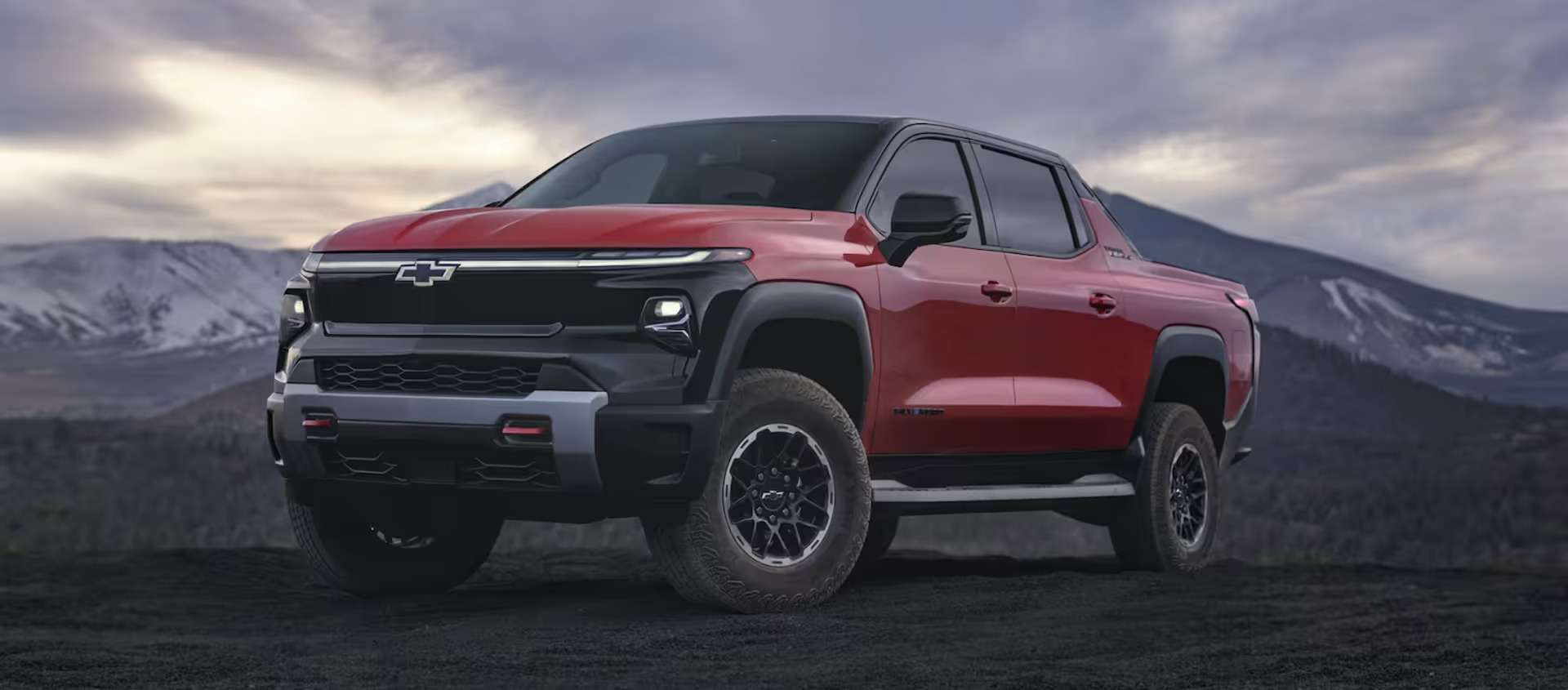
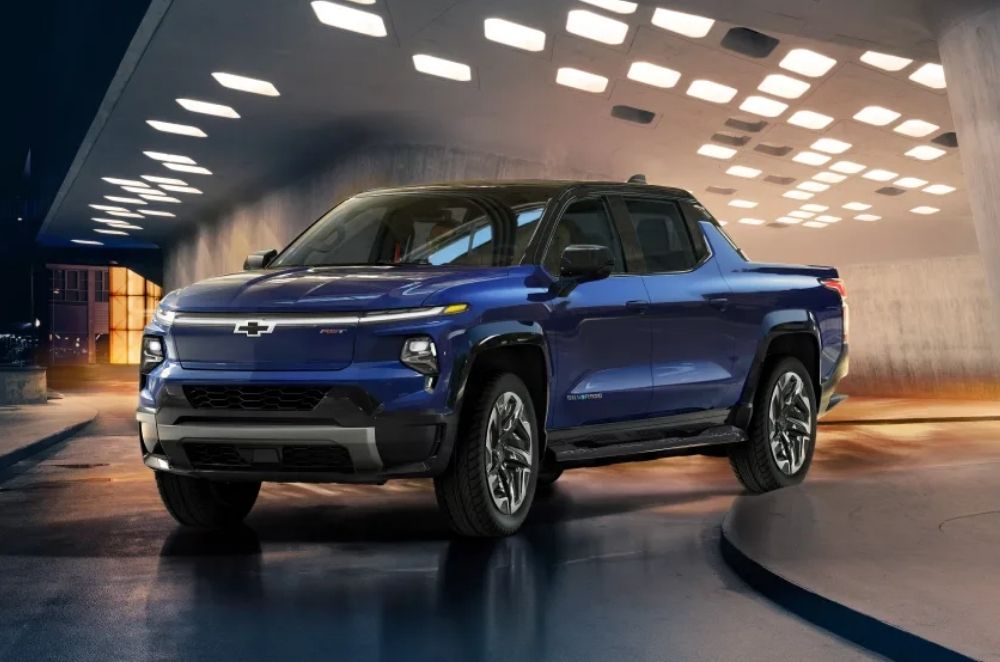
1. Chevrolet Silverado EV Work Truck: The Electric Workhorse Redefined
The 2025 Chevrolet Silverado EV Work Truck (WT) sets a new benchmark for electric pickup endurance, achieving an astonishing 539 miles on a single charge in real-world testing, well above its 492-mile EPA estimate.
The truck’s impressive range stems from a combination of its massive ~205 kWh Ultium battery, aerodynamic design, and weight-saving features tailored for utility rather than luxury. Specialized low-rolling-resistance tires and optional tonneau covers further enhance efficiency.
The Work Truck trims down non-essential features to reduce weight, replacing large wheels with smaller 18-inch ones, omitting leather seating, and foregoing high-end equipment present in the RST and other trims.
The Ultium powertrain provides 510 hp and 615 lb-ft of torque, along with a payload capacity of 1,440 pounds and a towing capability of up to 10,000 pounds (with a future max-tow package rated at 20,000 pounds). The truck also offers multiple power outlets for tools and equipment, making it highly practical for commercial use.
Chevy designed the Silverado EV from the ground up using its Ultium platform, aiming to rival Ford’s F-150 Lightning while showcasing GM’s electric technology. Despite being a full-size pickup, the WT delivers manageable driving dynamics.
Steering feels natural, braking is smooth with regenerative assistance, and one-pedal driving is effective. Notably, its cab-forward design and optimized suspension create a surprisingly tight turning radius, improving maneuverability in urban settings.
The WT’s interior emphasizes practicality over luxury. Its all-black upholstery and durable materials can withstand worksite wear, offering generous storage and legroom. However, the ride can feel stiff due to steel springs, and shorter drivers may find forward visibility challenging. Towing a 10,000-pound load proved smooth, with only minor impacts on acceleration and braking, aided by real-time range estimates for trailer loads.
Pricing remains a potential barrier. While early announcements hinted at a $41,000 base, the 4WT model driven started at $79,800, reflecting the cost of its advanced battery and platform. Other trims like the 3WT and RST First Edition range from $74,800 to over $106,000. While pricey for a stripped-down work truck, the Silverado EV WT demonstrates GM’s commitment to electric pickups with serious capability.
The 2024 Silverado EV Work Truck is a no-nonsense, long-range electric pickup built for durability, utility, and commercial readiness. With its combination of cutting-edge battery technology, towing capacity, and practical interior design, it positions itself as a strong contender in the growing all-electric full-size truck market.
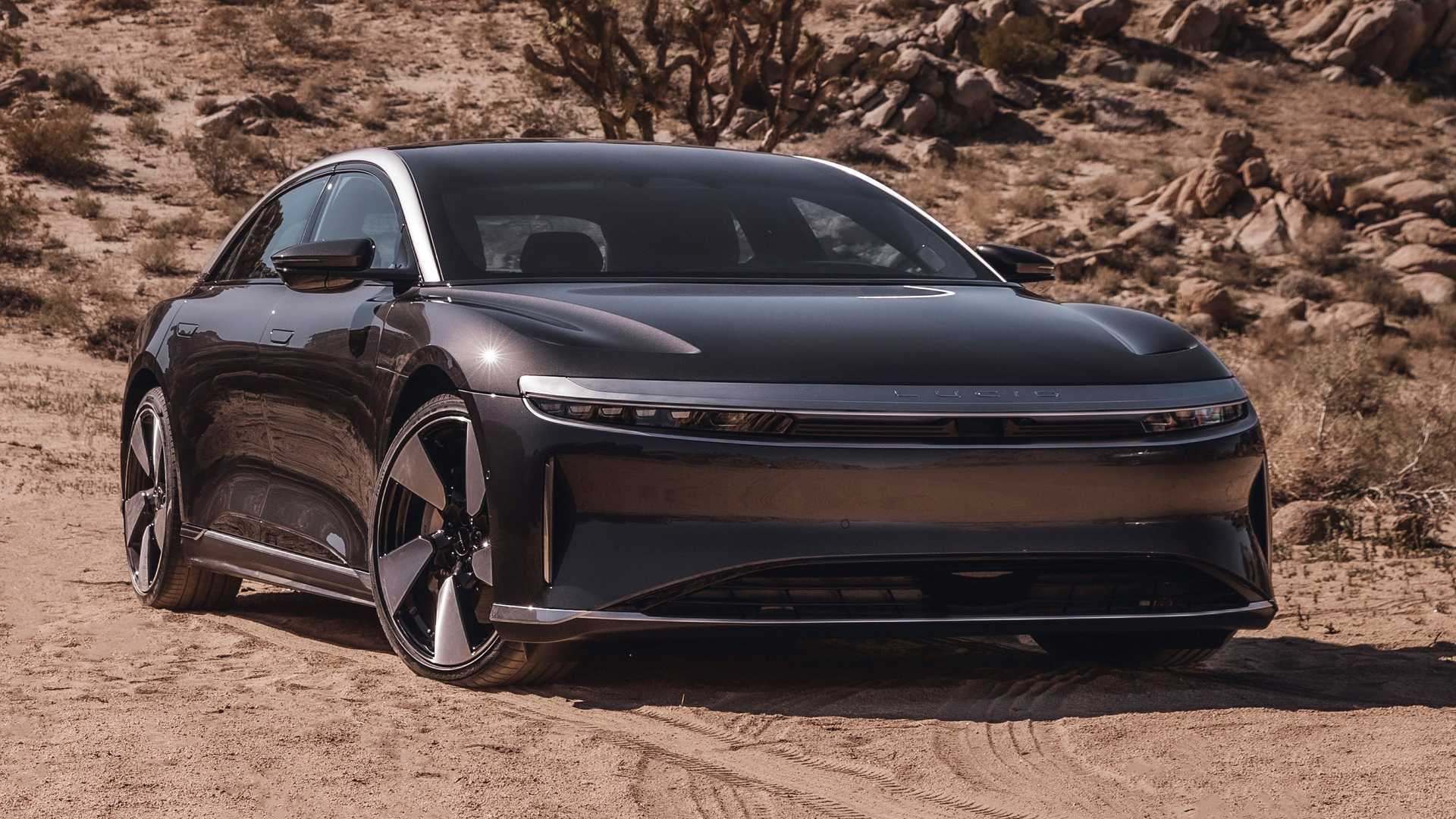
2. Lucid Air Grand Touring: Luxury, Range, and Performance Redefined
The Lucid Air Grand Touring sets a new standard for luxury electric sedans, combining remarkable range with high-end performance. It has an EPA-estimated range of 512 miles, while real-world driving typically delivers around 485 miles.
This achievement is made possible by a battery pack exceeding 100 kWh, a low 0.197 drag coefficient, lightweight construction, proprietary high-voltage motors, and a heat pump that improves efficiency in cold weather. These features allow the Air to travel farther on each kilowatt-hour than nearly any competitor.
Lucid Motors, one of the few American EV startups to reach significant production, developed the Air under former Tesla Model S engineer Peter Rawlinson. Efficiency was central to the design from the start, covering powertrain performance, vehicle packaging, and aerodynamics.
At 195.9 inches long, the Air is comparable in size to the BMW i5 and Genesis Electrified G80, but it offers more passenger space with 99 cubic feet compared to the Model S’s 94 cubic feet. The flat floor and generous cargo capacity of 32 cubic feet, including compartments in the front and rear trunks, provide excellent usability for both daily activities and long trips.
Inside, the Air features a minimalist cabin with a 34-inch main dashboard display and a retractable 12.5-inch Pilot screen for infotainment, vehicle settings, and trip information. Physical controls remain for climate and volume functions. The seats include a massaging function, and rear passengers enjoy ample legroom and headroom.
Some adjustments, such as mirrors and steering wheel position, are made through the Pilot screen, but the interface is generally straightforward and intuitive. Optional full-glass roofs and stealth trim packages enhance the cabin’s luxurious feel.
The Grand Touring delivers 819 horsepower from dual motors, accelerating to 60 mph in 3 seconds. The high-performance Air Sapphire produces 1,234 horsepower and reaches 60 mph in 1.89 seconds. Handling is precise and well-balanced, particularly on curving roads, while the ride quality is firm due to low-profile tires.
Real-world testing showed the Air with 19-inch wheels maintains the full 512-mile range, while 21-inch wheels reduce it to 446 miles. On a 368-mile mixed drive, it averaged 3.41 miles per kWh, impressive for highway driving with air conditioning.
The Lucid Air Grand Touring offers outstanding range, a luxurious interior, strong performance, and practical space, making it one of the most appealing luxury electric sedans on the market. Prices start at 72,400 USD for the Air Pure and reach 127,650 USD for the fully equipped Grand Touring.
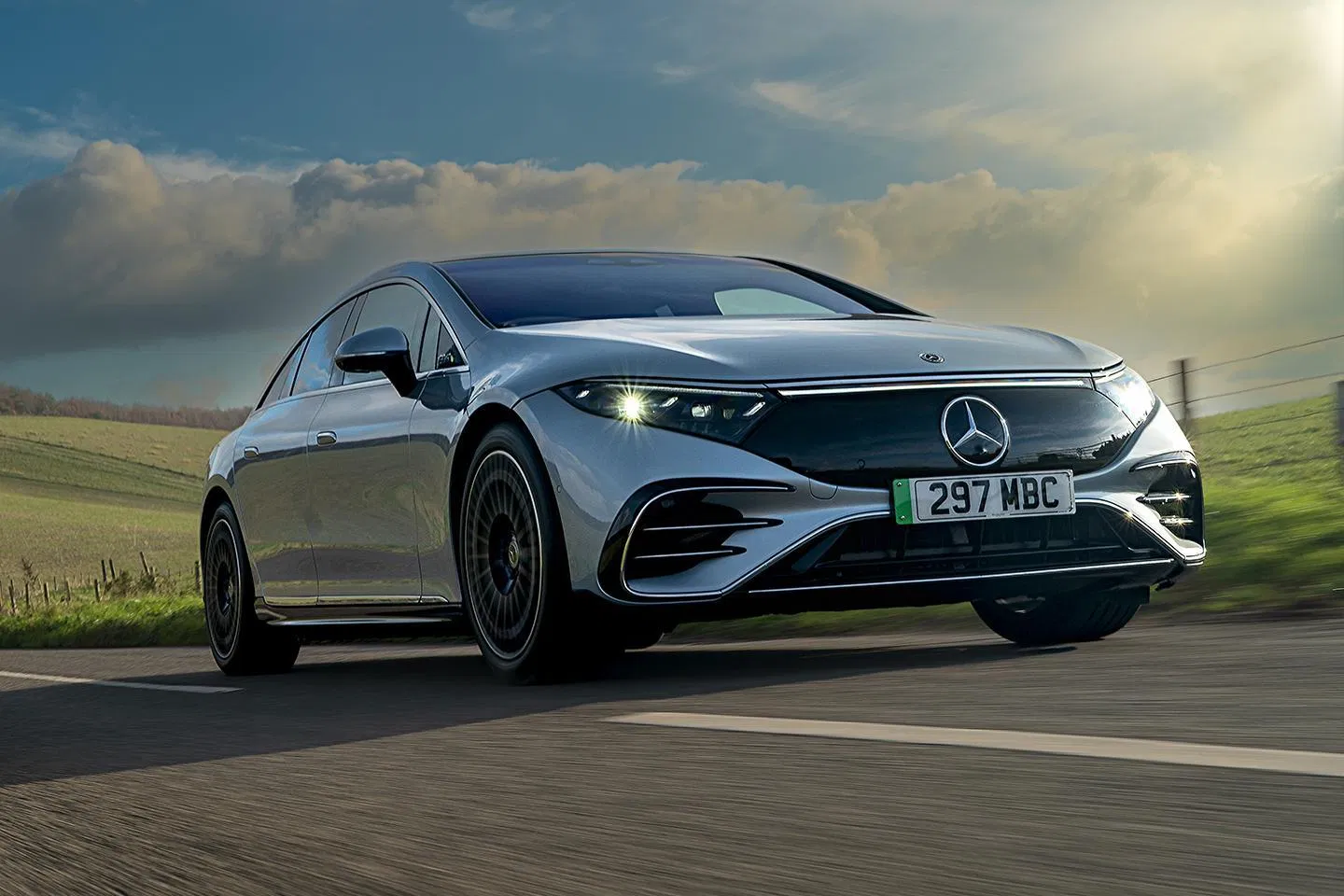
3. Mercedes-Benz EQS 450+: Luxury and Efficiency in the Electric Era
The Mercedes-Benz EQS 450+ is a remarkable example of German engineering, combining luxury, efficiency, and long-range electric performance. Rated for 390 miles, the EQS 450+ frequently surpasses expectations in independent testing, often achieving 422 to 464 miles on a single charge.
This is made possible by its 118 kWh battery (107.8 kWh usable), ultra-low drag coefficient, rear-wheel-drive efficiency, and advanced regenerative braking.
The EQS 450+ uses a single rear-mounted motor producing 329 to 355 horsepower, offering a smooth, silent power delivery. While it may not match high-end EVs in acceleration, the car prioritizes comfort and efficiency.
Its rear-axle steering allows the long limousine to maneuver in tight city streets with surprising agility, turning up to 10 degrees opposite the front wheels. These design choices make it ideal for long-distance travel without the stress of range anxiety.
Aerodynamics play a central role in the EQS 450+’s performance. Mercedes’ “One Bow” design shapes the sedan like a smooth pebble, achieving a 0.20 drag coefficient, one of the lowest for production cars. This slipperiness, combined with the large battery, low energy consumption of about 29.5 kWh per 100 miles, and rear-wheel-drive efficiency, gives the EQS 450+ its class-leading range and highway capability.
Inside, the MBUX Hyperscreen spans 56 inches, uniting three displays for infotainment, driver information, and controls. Materials are premium, including Nappa leather, NEOTEX sustainable fabric, and a Burmester surround sound system.
While the cab-forward design maximizes legroom, the sloping roofline may limit headroom for taller passengers. Touch-sensitive sliders on the steering wheel provide a futuristic interface, though they may feel less intuitive than physical buttons.
Some trade-offs exist. The brake pedal blends regenerative and mechanical braking, creating a “mushy” feel that takes adjustment. Storage is only available in the rear hatch, as there is no front trunk, although the hatch is generous and practical.
The EQS 450+ is less about raw speed and more about creating a serene, high-tech driving experience. Its combination of long-range capability, aerodynamic efficiency, luxurious cabin, and digital innovation makes it one of the most capable electric sedans for those who prioritize comfort, technology, and endurance on long journeys. The EQS 450+ demonstrates how physics and engineering can shape a luxury EV that is both elegant and exceptionally practical.
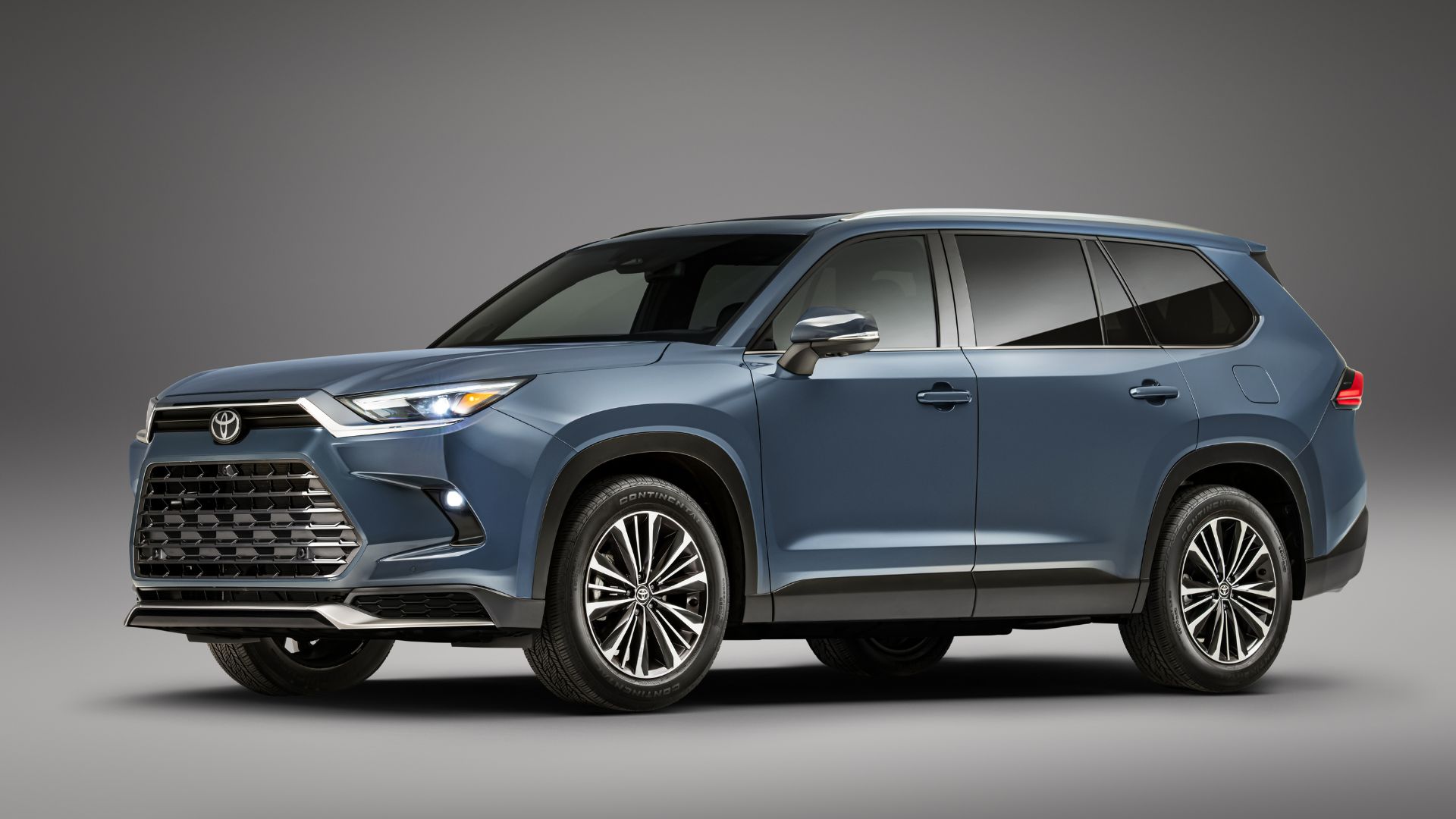
4. Toyota Grand Highlander Hybrid: Three-Row Efficiency Meets Practical Utility
The 2026 Toyota Grand Highlander Hybrid offers a rare combination of three-row SUV utility and impressive fuel efficiency. With an EPA-estimated 36 mpg combined and a 17.2-gallon fuel tank, it achieves a theoretical range of over 600 miles, making it ideal for long road trips.
In real-world driving, some models reach 585 miles on a single tank, thanks to their efficient 2.5-liter four-cylinder hybrid powertrain, smart ECU learning, and conservative “Distance to Empty” display, which often leaves a usable reserve beyond what the gauge indicates.
The Grand Highlander Hybrid comes with two powertrain options. The standard Hybrid pairs a 2.5-liter engine with two electric motors to deliver 245 horsepower and can be equipped with front-wheel or all-wheel drive, using a CVT for smooth power delivery.
The Hybrid Max combines a turbocharged 2.4-liter engine with a single electric motor for 362 horsepower and 400 pound-feet of torque, paired with a six-speed automatic transmission and standard all-wheel drive.
Hybrid Max models are quicker, reaching 0–60 mph in 5.6 seconds, compared to 7.8 seconds for the standard hybrid. Towing capacity ranges from 3,500 pounds on the standard Hybrid to 5,000 pounds for the Hybrid Max, placing it near the top of its class for three-row SUVs.
Interior space is generous, with room for up to eight passengers using a second-row bench or seven with captain’s chairs. The third row offers 5.5 inches more legroom and 2.5 inches more shoulder room than the standard Highlander, while cargo capacity reaches 98 cubic feet with both rear rows folded.
The cabin includes a 12.3-inch touchscreen, wireless Apple CarPlay and Android Auto, optional 11-speaker JBL audio, and a thoughtful layout with additional storage and comfort features.
Safety and driver-assistance come standard with Toyota Safety Sense 3.0, including blind-spot monitoring, automated emergency braking, adaptive cruise control, automatic high beams, and road sign recognition. Optional features add traffic-jam assist and parking assistance with automated braking.
Toyota backs the Grand Highlander Hybrid with standard warranties: three years/36,000 miles limited, five years/60,000 miles powertrain, and an eight-year/100,000-mile hybrid component warranty, plus two years of complimentary scheduled maintenance.
Overall, the Toyota Grand Highlander Hybrid balances fuel economy, power, and passenger comfort, offering a practical and efficient choice for families who need three rows, long-distance capability, and hybrid efficiency without sacrificing space or versatility.
5. Volkswagen Golf 2.0 TDI: The Diesel Long-Distance Champion
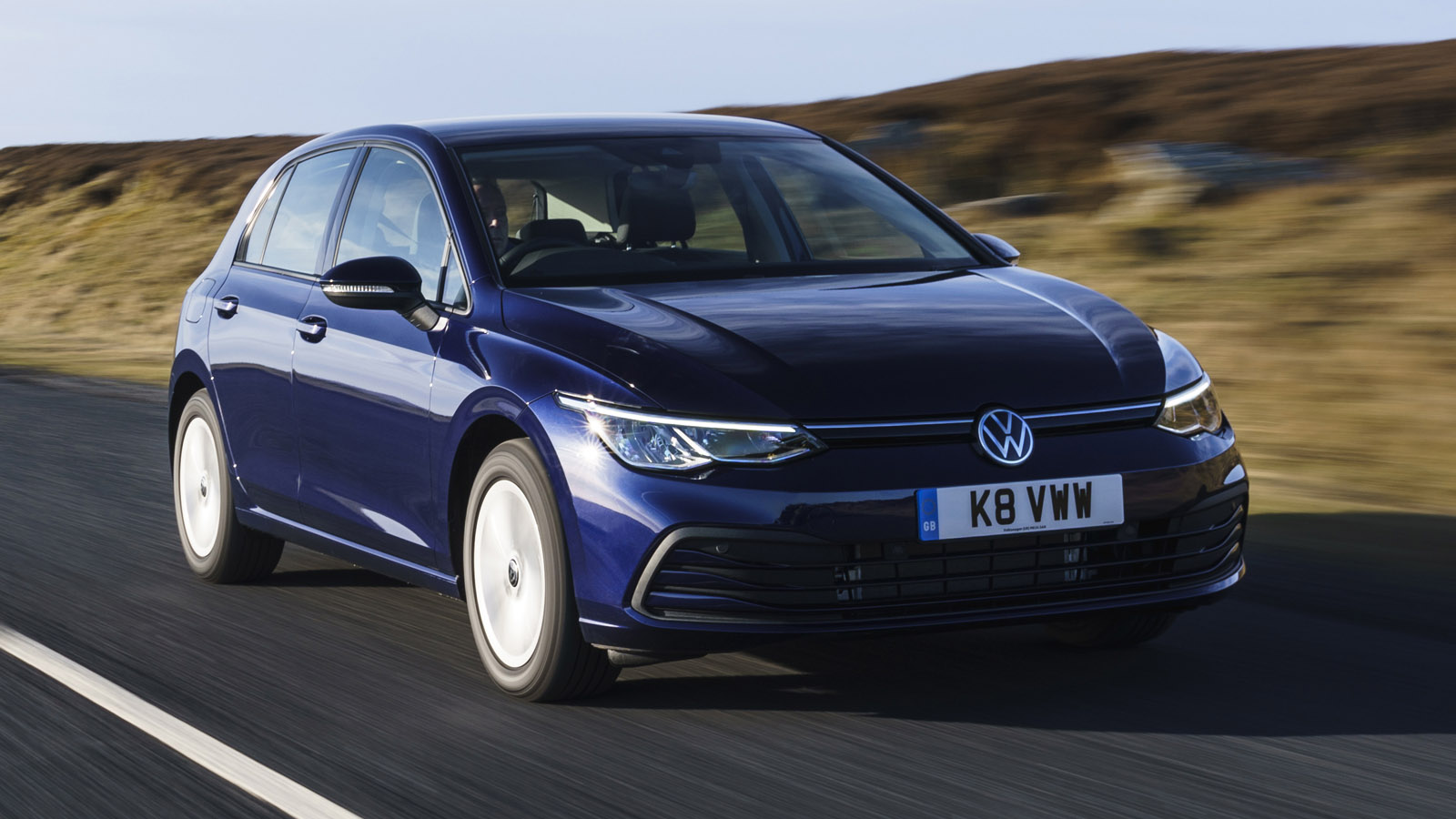
The Volkswagen Golf 2.0 TDI remains a standout option for drivers seeking exceptional long-distance fuel efficiency. With real-world highway performance frequently exceeding 60 mpg, paired with a 50-litre fuel tank, it can achieve ranges of 600 to 700 miles per tank, and under ideal conditions even surpass 900 miles.
This efficiency is driven by its high-efficiency 2.0-litre turbocharged diesel engine, aerodynamic design, low-RPM torque delivery, and advanced emission control systems, including AdBlue injection on newer Evo models. The Golf 2.0 TDI is particularly optimized for sustained highway cruising, offering a relaxed, low-revving ride while maintaining impressive fuel economy.
The engine is offered in two primary outputs. The 115-hp version, typically mated to a six-speed manual, is ideal for smooth, efficient progress on long journeys. The 150-hp variant, paired with a seven-speed DSG automatic, provides stronger acceleration while balancing fuel economy and everyday usability.
Both engines are refined and quiet, contributing to a serene cabin environment even at motorway speeds. Rear multi-link suspension on higher trims further enhances comfort and handling, absorbing bumps with ease while providing stable, confident driving dynamics.
Inside, the Golf’s cabin continues to impress with its premium materials and ergonomic design. The latest Mk8.5 facelift addresses earlier complaints about touch-heavy controls by reinstating physical steering wheel buttons and backlit climate sliders.
Infotainment features include a 12.9-inch touchscreen, 10.25-inch digital instrument cluster, and full smartphone integration via wireless Apple CarPlay and Android Auto. The interior comfortably accommodates four adults, while the 381-litre boot provides ample, practical luggage space.
Practicality is matched by low running costs. Diesel’s higher energy density, combined with the Golf’s efficient powertrain, makes it particularly cost-effective for high-mileage drivers.
While the Mk7 generation earned a strong reputation for reliability, the newer Mk8 models have experienced some software and AdBlue-related issues, meaning potential buyers may prefer a well-maintained Mk7 or Mk7.5 for long-term dependability.
The Volkswagen Golf 2.0 TDI is a highly refined, fuel-efficient family hatchback that excels in long-distance driving. Its combination of diesel economy, smooth power delivery, comfort, and premium cabin quality makes it an excellent choice for commuters and travelers who prioritize efficiency and refinement. While newer models require some caution regarding reliability, the Golf remains a compelling option for those seeking a practical, long-range vehicle with a European pedigree.
Also Read: 5 Cars That Work Across Climates vs 5 That Are Climate-Sensitive
5 With Short Range
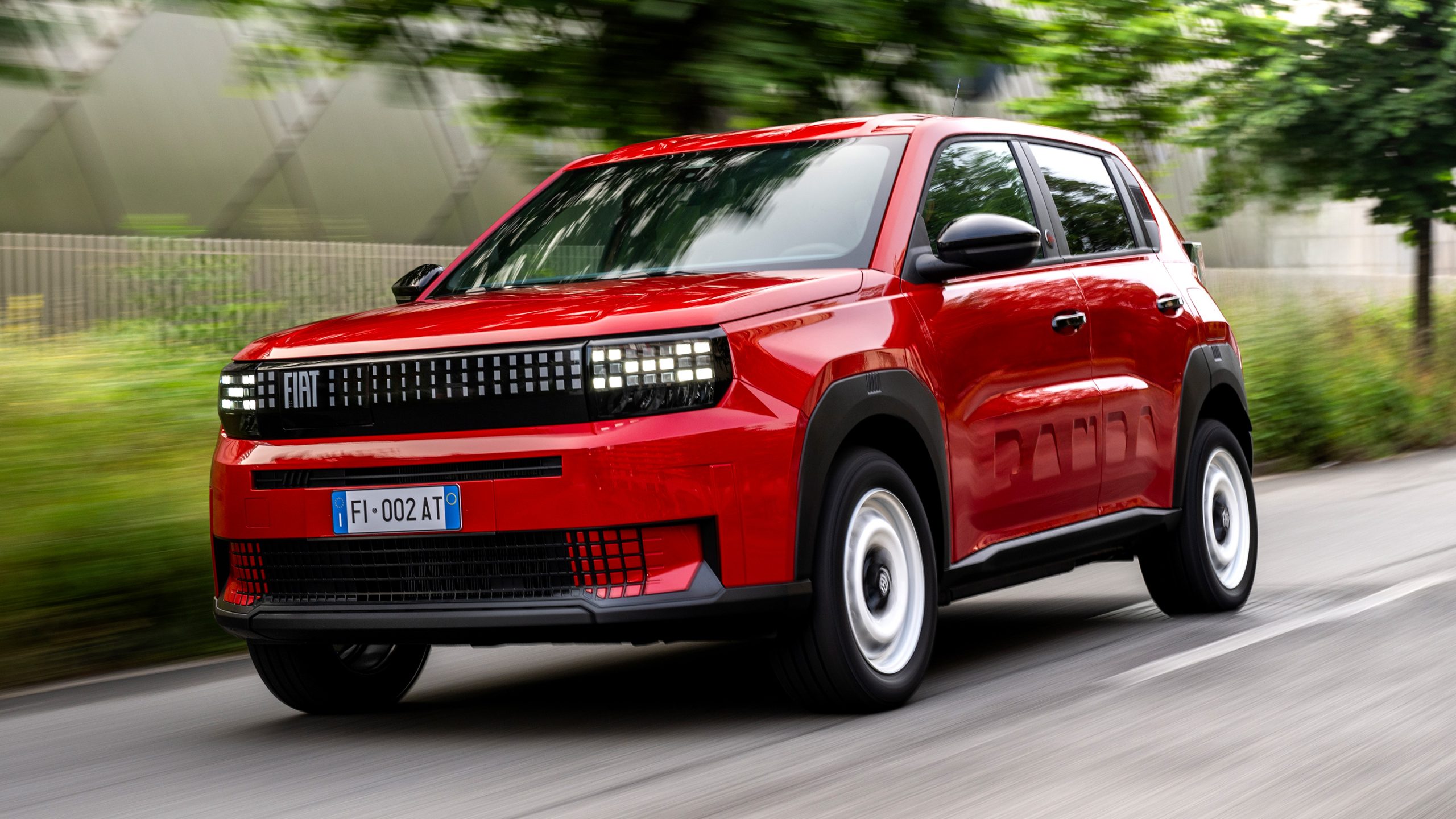
1. Fiat Grande Panda Electric: Compact EV Built for City Driving
The Fiat Grande Panda Electric is a small, stylish city car designed for affordability and short trips rather than long-distance travel. It features a 44 kWh Lithium Iron Phosphate (LFP) battery and has a WLTP-rated range of 199 miles. In real-world conditions, especially on highways or in cold weather, its practical range is significantly lower.
One factor affecting range is the LFP battery chemistry. While durable and cost-effective, LFP batteries are heavier and less energy-dense than nickel-based alternatives used in cars like the MG4 or VW ID.3. This extra weight reduces efficiency slightly for every kilowatt-hour stored.
The car’s boxy, retro design also influences its performance. Its tall, square shape increases air resistance at speeds above 60 miles per hour, reducing highway range to around 110 to 125 miles. This makes the Grande Panda less suited for long motorway journeys but still effective for city driving.
Winter conditions further limit efficiency. Without a heat pump, the car uses a resistive heater that draws energy directly from the battery. In freezing weather, real-world range can drop by 30 to 40 percent, with mixed driving delivering roughly 120 miles.
Fiat designed the Grande Panda Electric for stop-and-go urban commuting, where regenerative braking helps it approach its official range. On mixed city routes, drivers can expect around 155 miles, while steady highway driving yields about 115 miles.
The Fiat Grande Panda Electric is a practical choice for city dwellers who need a compact, affordable electric vehicle for daily commutes. It prioritizes low running costs, maneuverability, and ease of parking rather than long-range performance. Buyers planning longer trips or frequent highway driving should carefully consider the limited battery capacity and real-world range in demanding conditions.
2. Mini Cooper SE: Electric City Car Built for Short Trips
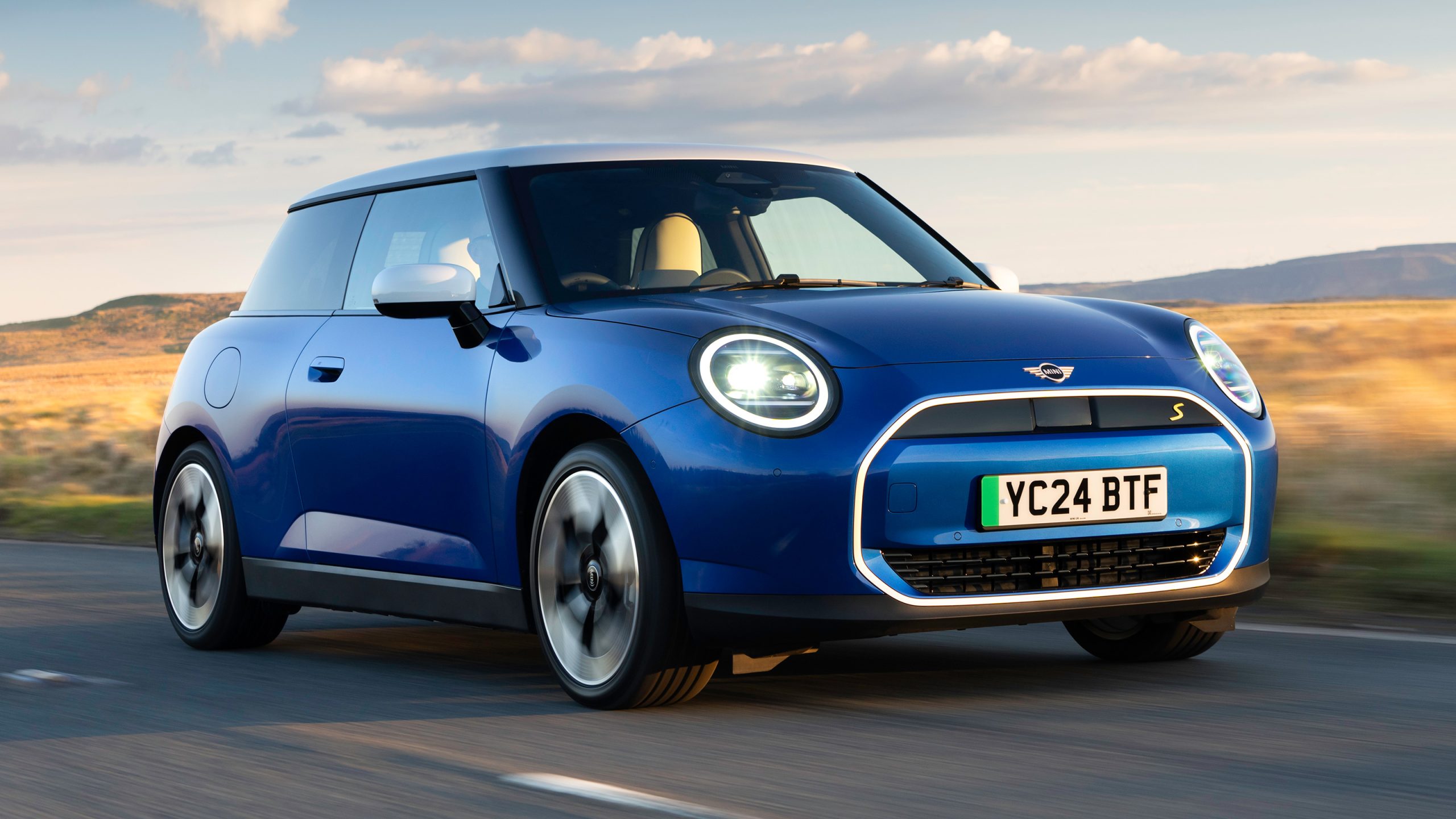
The Mini Cooper SE (Electric) is a compact EV designed for urban commuting rather than long-distance travel. Its real-world highway range usually falls between 110 and 140 miles, making it one of the shortest-range electric vehicles currently available. Despite its limited distance, the Mini SE offers nimble handling, a premium interior, and the classic go-kart driving experience the brand is known for.
The primary factor limiting range is the small 32.6 kWh lithium-ion battery, with only 28.9 kWh usable. Modern EVs often use batteries between 60 and 100 kWh, but Mini opted for a smaller pack to keep the car light and maintain agile cornering. Adding a larger battery would have increased the weight and reduced the car’s distinctive handling.
The retrofitted platform also constrains battery size. Built on BMW’s UKL chassis, originally designed for internal combustion engines, the Mini SE lacks a flat “skateboard” layout to house a larger battery without a complete redesign. This makes the car less suited for long trips but still effective for short commutes.
Aerodynamics further affects efficiency. The Mini’s upright windshield, flat roof, and blunt front end create significant drag at highway speeds, reducing range more sharply than in city traffic. The electric motor, borrowed from the BMW i3S, delivers 181 horsepower and is punchy and reliable but not as efficient as newer EV motors, amplifying the impact of the small battery.
The Mini Cooper SE is a specialized tool for city driving, ideal for daily commutes of 30 miles or less. It provides fun, responsive handling, compact dimensions for urban parking, and a premium cabin experience. While it is not suited for extended highway trips, it succeeds as a practical, engaging, and stylish electric vehicle for short-distance use.
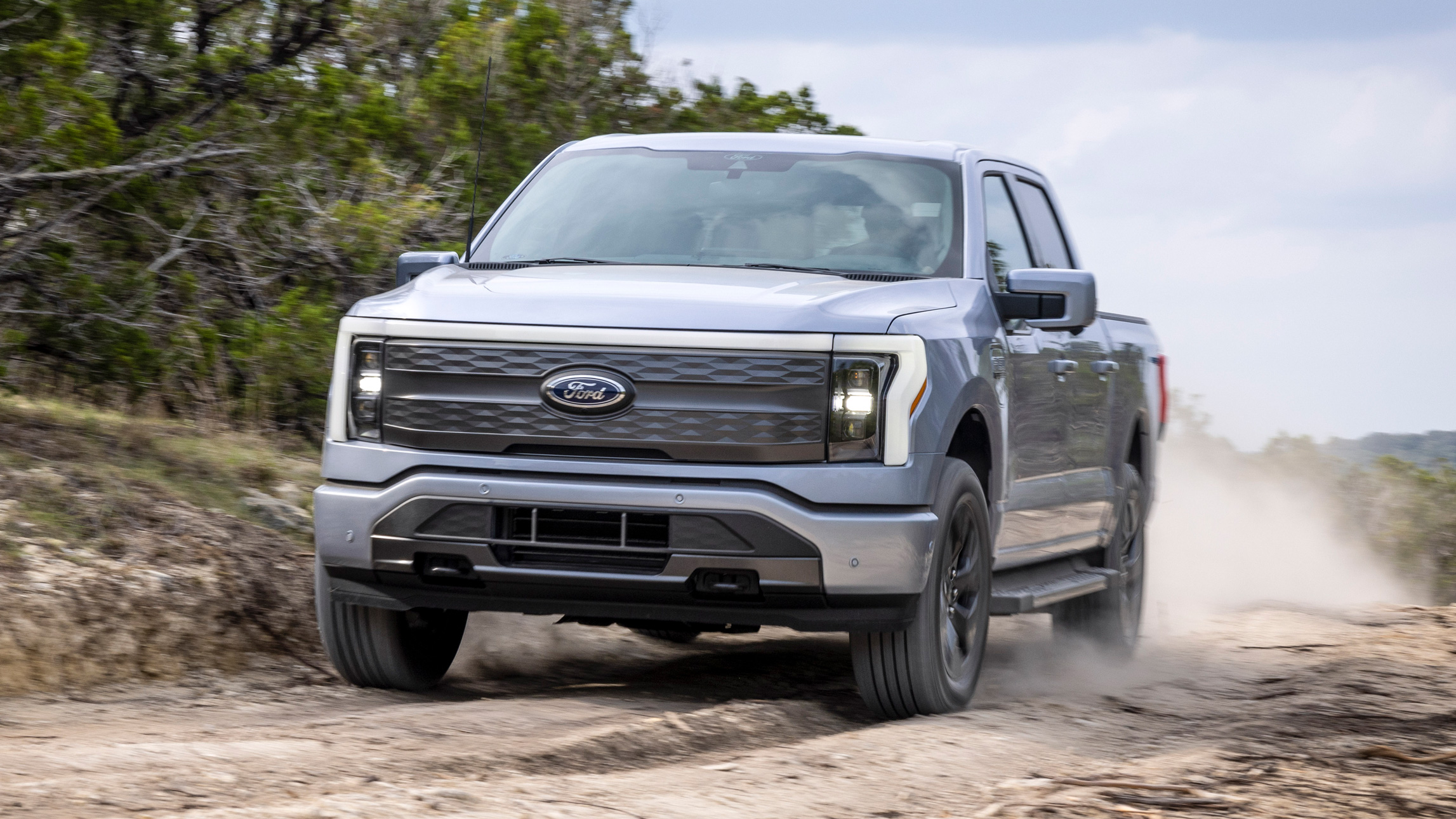
3. Ford F-150 Lightning Standard Range: Practical for Daily Use but Limited on Long Trips
The Ford F-150 Lightning Standard Range (SR) is an electric pickup designed for daily commuting and local work, but its real-world range can be significantly lower than EPA ratings. Equipped with a 98 kWh usable battery, it struggles to match the demands of a heavy, brick-shaped truck, especially in highway driving, cold weather, or while towing.
The truck’s weight-to-battery ratio is a primary factor. At over 6,000 pounds, the Lightning requires substantial energy to overcome mass and rolling resistance. Compared with lighter electric sedans, its battery drains quickly under normal driving conditions, making its usable range feel limited.
Aerodynamics also plays a key role. The Lightning’s tall, wide, flat-front design increases wind resistance at highway speeds. Driving at 75 mph instead of 65 mph can reduce efficiency by roughly 20 percent, as the truck must push through air rather than glide.
Environmental factors further reduce range. Unlike gasoline vehicles that use waste heat, the Lightning draws energy from the battery to heat the cabin. In cold climates, battery efficiency drops, and constant HVAC use can lower range by up to 30 percent. Many owners also follow the 80 percent charging rule to preserve battery health, meaning the usable daily range may be closer to 168 miles instead of the EPA-rated 240 miles.
Utility use compounds the issue. Towing trailers or carrying heavy payloads increases drag and rolling resistance, often cutting the Standard Range’s distance in half. On demanding jobsites, this may require charging every 80 to 90 miles.
The Ford F-150 Lightning Standard Range is well-suited for daily commuting, local errands, and moderate utility use. However, those planning frequent high-speed travel, long-distance road trips, or heavy towing will find its real-world range limited. For users who primarily drive locally with access to home charging, it remains a capable, practical, and fully electric alternative to traditional pickups.
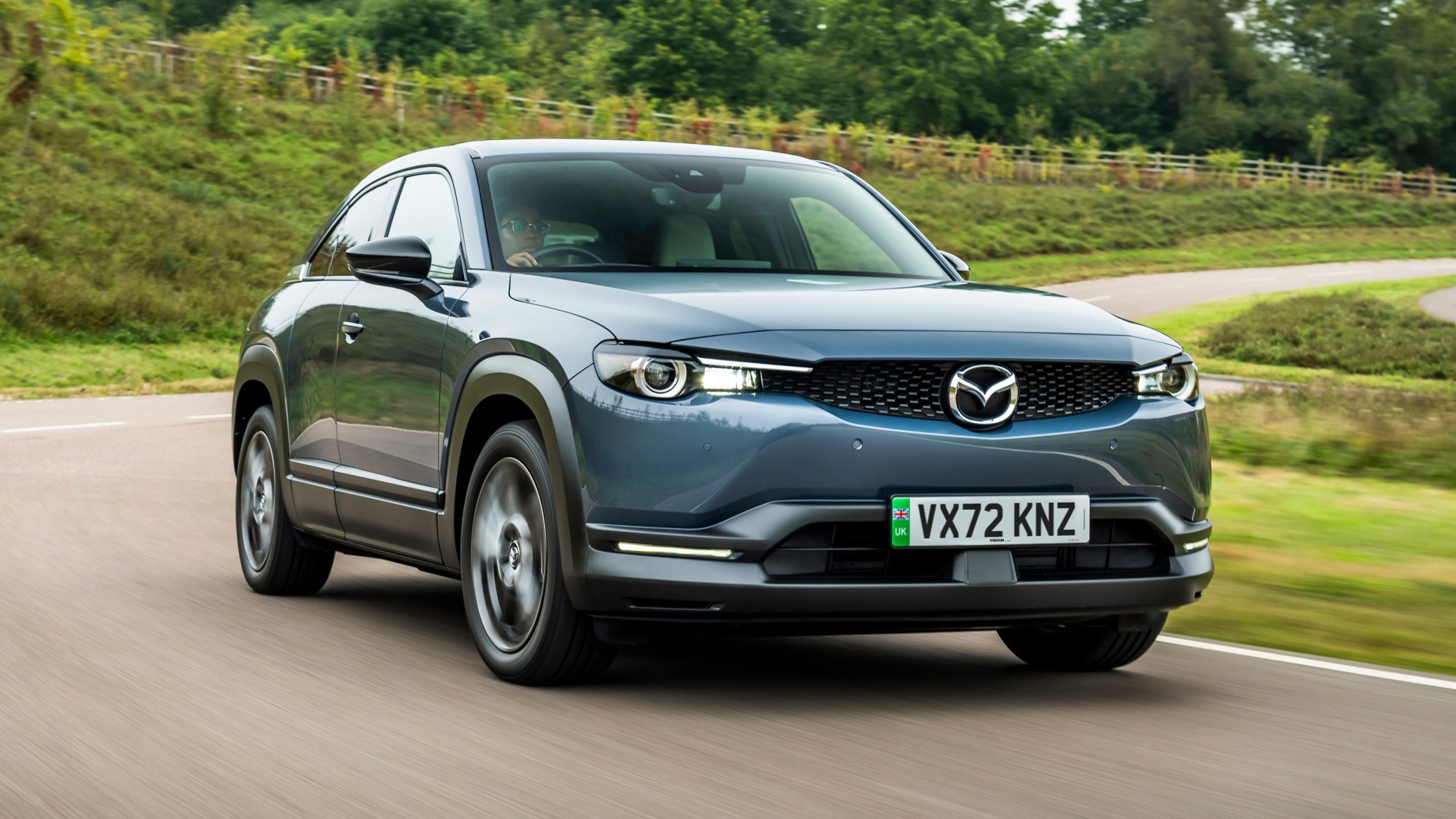
4. Mazda MX-30: Urban-Focused EV with a Small Battery
The Mazda MX-30 is an electric vehicle designed with a unique philosophy Mazda calls “Right-Sizing”, which prioritizes sustainability, driving dynamics, and urban use over long-range capability. Its EPA-estimated range of 100 miles is modest compared to other modern EVs, and in real-world highway driving, the range can drop into double digits.
The small battery is the main factor behind the limited range. The MX-30 uses a 35.5 kWh pack, roughly half the size of batteries found in vehicles like the Tesla Model 3 or Hyundai Ioniq 5.
Mazda argues that oversized batteries are environmentally inefficient, citing the full lifecycle impact of battery production, use, and recycling. By keeping the battery compact, the MX-30 reduces the vehicle’s carbon footprint while remaining lightweight.
Driving dynamics benefit from the smaller battery as well. Heavy batteries can exceed 500 kilograms, negatively affecting handling and braking. The MX-30’s lighter weight allows for better turn-in, less body roll, and a more connected, “organic” driving experience, reflecting Mazda’s Jinba Ittai philosophy of harmony between car and driver.
The MX-30 is designed for urban commuters. Market research suggested that most daily trips are under 30 miles, making a large battery unnecessary for routine errands. The car is positioned as a second vehicle for households, ideal for city streets rather than cross-country travel.
Real-world factors can reduce the advertised 100-mile range. Cold weather decreases battery efficiency, and the resistive heating system draws power, sometimes lowering range to 70–80 miles. Highway driving further drains the small battery due to aerodynamic drag.
The Mazda MX-30 is a stylish, compact EV built for city and suburban use, prioritizing driving enjoyment, sustainability, and efficiency for short trips. It is not suited for long-distance travel but provides a premium, eco-conscious option for daily commutes.
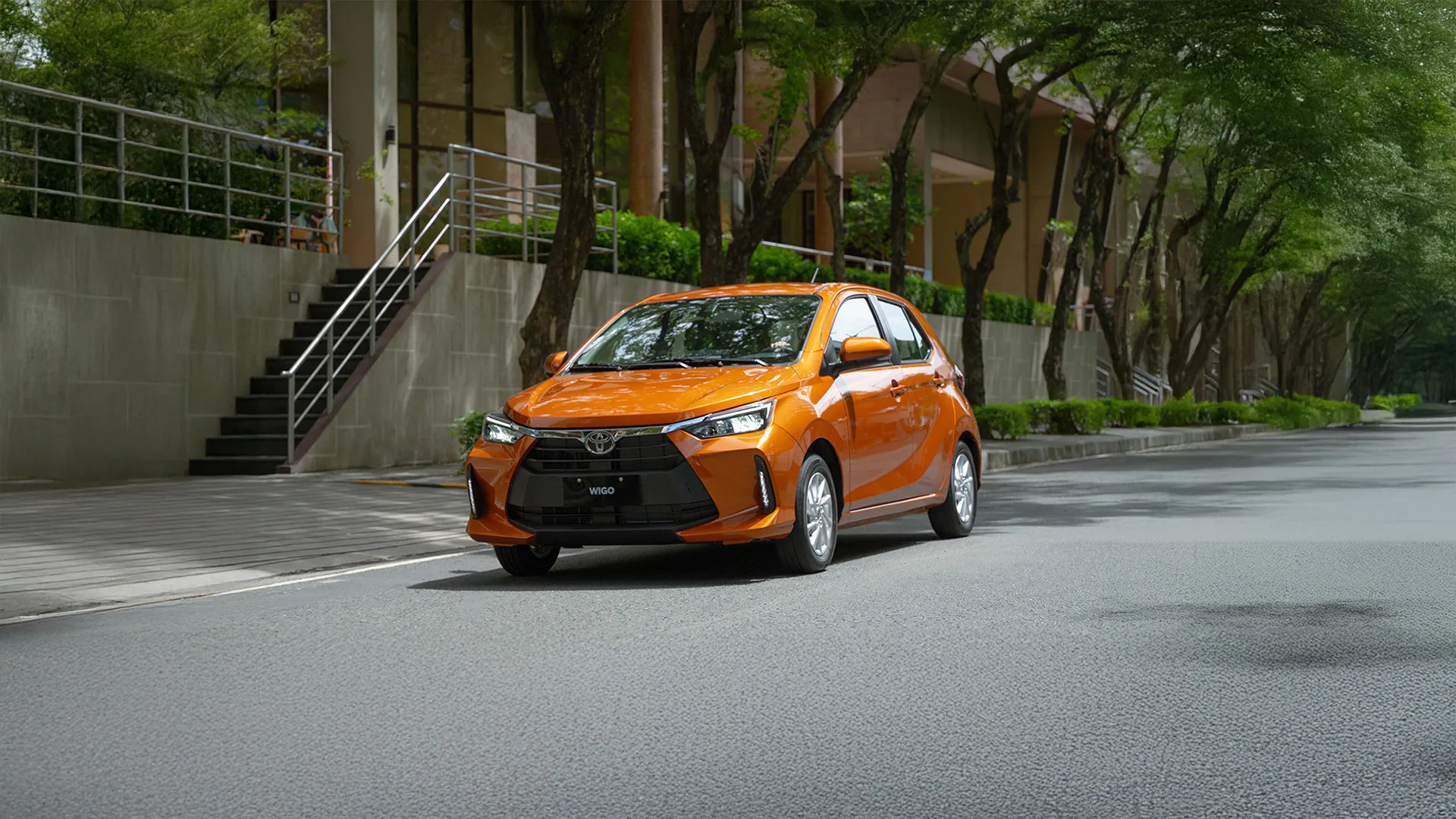
5. Toyota Wigo: Fuel-Efficient City Car with a Limited Range
The Toyota Wigo is a subcompact city car known for impressive fuel efficiency, achieving up to 20 km/L. Despite this, its real-world driving range is limited, requiring refueling roughly every 300 miles, far sooner than larger sedans. This short range stems from several design and engineering factors.
The primary limitation is the small fuel tank, which holds only 33 liters (8.7 gallons). By comparison, vehicles like the Toyota Vios and Corolla Altis carry 42 and 50 liters, respectively. Even with excellent fuel economy, the Wigo’s smaller tank significantly reduces the total distance it can travel before reaching empty.
The car’s gearbox is optimized for city driving. Its short gear ratios help the small 1.0L engine accelerate quickly in stop-and-go traffic, but at highway speeds, the engine must spin at higher RPMs to maintain 100 km/h. This increases fuel consumption, negating some of the efficiency gains and shortening highway range.
Passenger load and air conditioning further impact the Wigo’s range. Fully occupied with four adults or running the AC in hot climates puts extra stress on the small 3-cylinder engine. The additional load forces the engine to burn more fuel to maintain speed and cabin comfort, reducing the distance achievable per tank.
Toyota also programs fuel sensors conservatively, illuminating the low-fuel light when 5–7 liters remain. This makes the effective range appear shorter, as drivers often refuel with fuel still in the tank.
The Toyota Wigo is a highly efficient urban vehicle designed for short commutes and city streets. While it excels at fuel economy, its small tank, city-oriented gearing, and sensitivity to load and HVAC use mean drivers should plan refueling stops more frequently than they might expect from its efficiency figures.
Comparing these extremes highlights how vehicle design directly affects range. Long-range vehicles demonstrate how large batteries, aerodynamic efficiency, hybrid systems, and diesel technology can maximize distance per charge or tank, making them ideal for long commutes, cross-country travel, and towing.
Conversely, short-range cars prioritize urban maneuverability, affordability, and light weight over endurance, making them excellent daily drivers for city dwellers but less suited for highway travel.
Understanding these trade-offs helps buyers match a vehicle to their lifestyle, whether they need nonstop long-range capability or a nimble, energy-efficient city car. Choosing the right car depends not only on fuel efficiency or battery size but also on how, where, and how far the car will be driven.
Also Read: Top 10 Cars That Changed Automotive Engineering Forever