
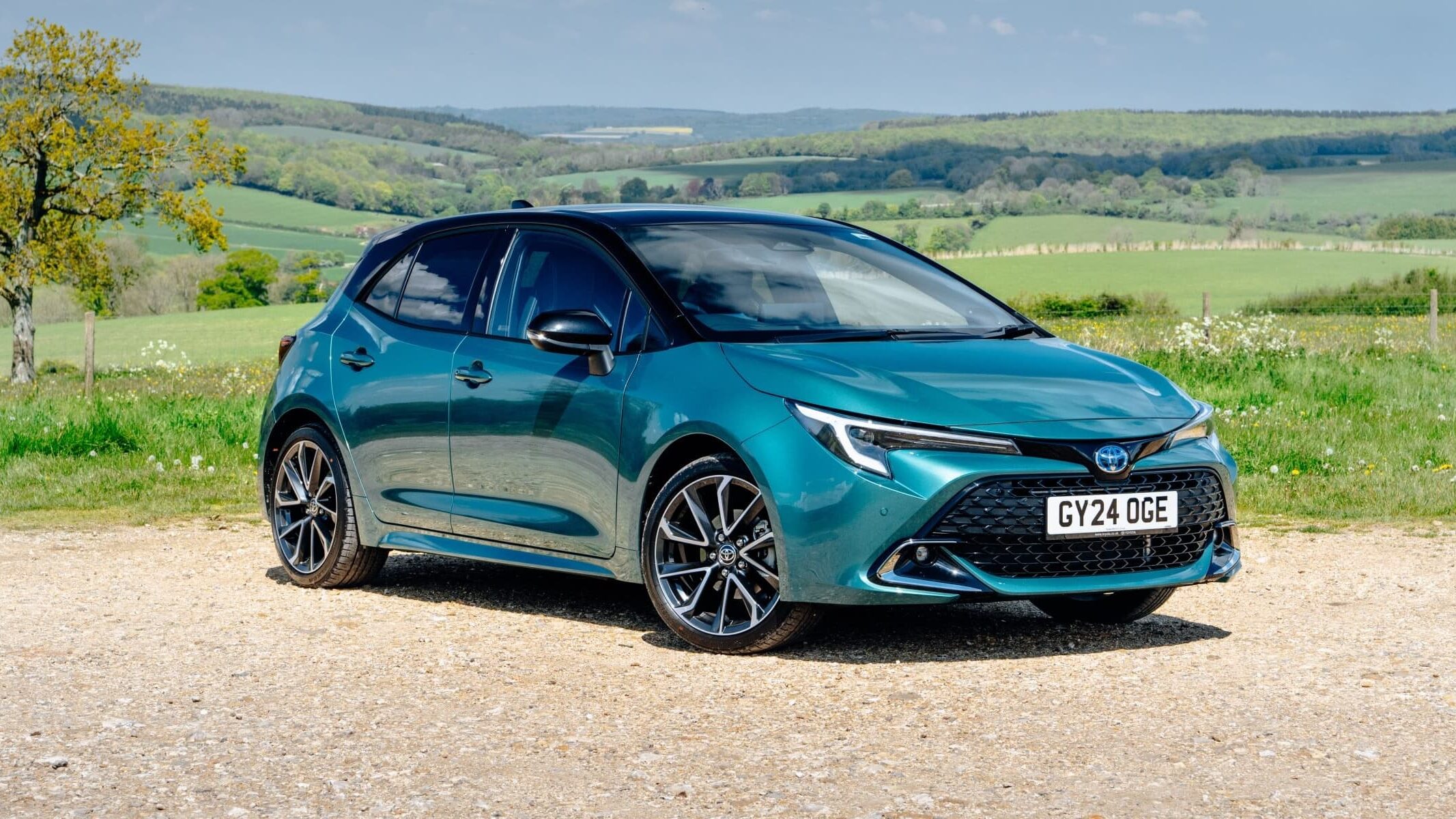
Living in an apartment presents unique challenges when it comes to car ownership. Unlike homeowners with spacious garages and driveways, apartment dwellers must go through the tight parking spaces, shared garages, limited storage, and often lack access to personal charging stations or maintenance areas.
The right vehicle can make urban apartment living seamless, while the wrong choice can turn daily life into a logistical nightmare. When selecting a car for apartment living, several factors become critically important.
Compact dimensions are essential for maneuvering through cramped parking structures and squeezing into tight street parking spots.
Fuel efficiency matters more when you can’t charge an electric vehicle overnight in your own garage. Reliability becomes paramount when you don’t have a personal workspace for frequent maintenance.
Security features are crucial when your car sits in a shared lot rather than a locked garage. And perhaps most importantly, the vehicle must fit your lifestyle without requiring special accommodations that apartment living simply cannot provide.
This comprehensive guide examines ten vehicles five that are perfectly suited for apartment life and five that create unnecessary complications.
Whether you’re a current apartment dweller looking to upgrade or someone considering a move to apartment living, understanding these distinctions will help you make an informed decision that enhances rather than complicates your daily routine.
Let’s explore which cars earn their parking spot and which ones should be left to the homeowners.
5 Cars That Work for Apartment Dwellers
These exceptionally practical vehicles feature compact dimensions and minimal maintenance needs perfectly suited for apartment living without dedicated garages, providing reliable transportation that fits assigned parking spaces, survives outdoor exposure, and operates affordably without requiring constant charging infrastructure or specialized storage facilities.
Their sensible design includes modest footprints and durable finishes that resist the challenges found in shared parking environments while fitting comfortably in standard apartment lot spaces, tolerating street parking exposure to weather and vandalism risks, and requiring only basic maintenance available at nearby shops without needing home garages for DIY work.
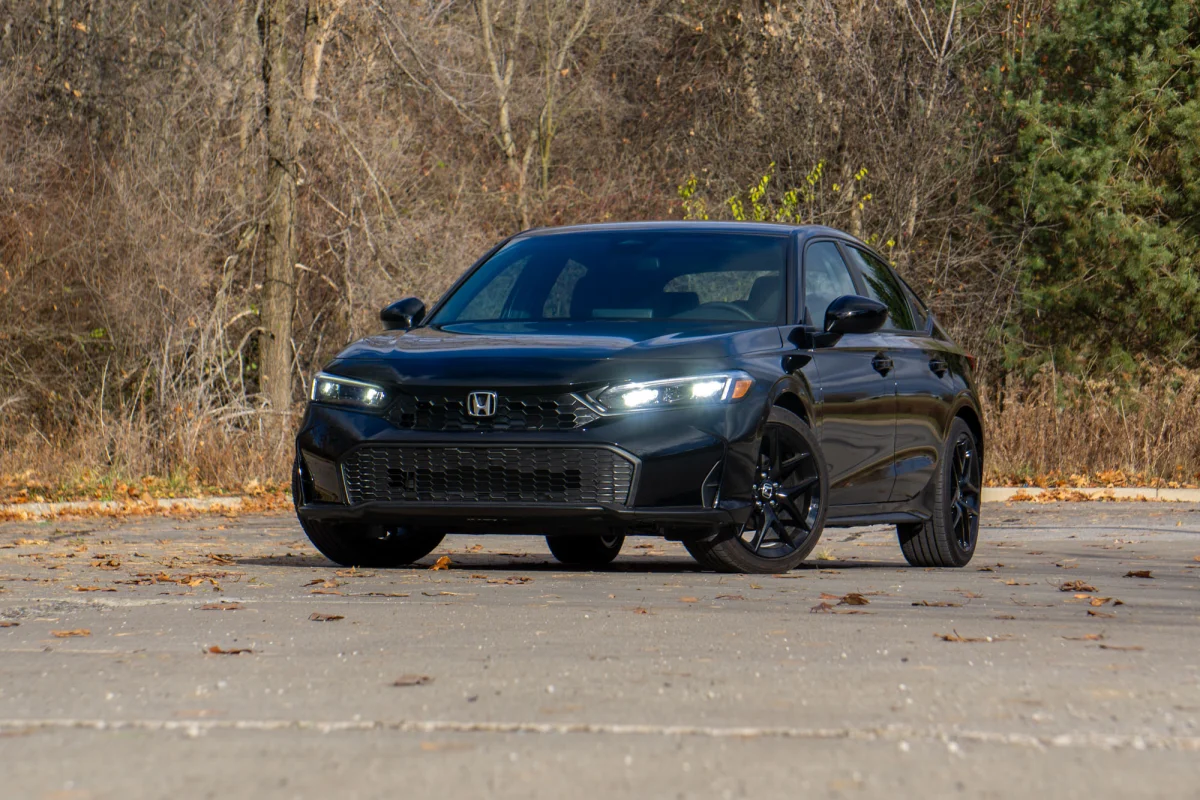
1. Honda Civic
The Honda Civic has long been the gold standard for practical, apartment-friendly transportation, and for good reason.
This compact sedan strikes an ideal balance between interior space and exterior dimensions, making it perfectly suited for the challenges of apartment living.
Measuring just 184 inches in length, the Civic can slip into tight parking spots that would challenge larger vehicles, yet it offers surprisingly generous interior room for passengers and cargo.
One of the Civic’s greatest strengths for apartment dwellers is its exceptional fuel efficiency. With EPA ratings reaching up to 32 city and 42 highway mpg in the standard gasoline model, and even more impressive numbers in the hybrid variant, you’ll spend less time hunting for gas stations and more time enjoying your drive.
This efficiency translates directly to cost savings critical when apartment rent takes a significant chunk of your budget. The smaller fuel tank also means less weight to carry and less money spent per fill-up.
Reliability is where the Civic truly shines for apartment residents. Honda’s legendary build quality means fewer trips to the mechanic, which is especially valuable when you lack a personal garage for DIY maintenance.
The Civic consistently ranks among the most reliable vehicles in consumer reports, with many owners reporting trouble-free operation well past 200,000 miles.
This dependability means you won’t find yourself stranded in a parking garage or scrambling to find street parking near a repair shop.
The Civic’s excellent resale value provides another significant advantage. Should your living situation change or you need to upgrade, the Civic holds its value better than most competitors, ensuring you’ll recoup more of your investment.
The modern Civic also comes equipped with advanced safety features like Honda Sensing, providing collision mitigation braking, adaptive cruise control, and lane-keeping assist features that prove especially useful in the tight confines and heavy traffic common around apartment complexes.
Storage is thoughtfully designed throughout the cabin, with plenty of cubbies, cup holders, and a spacious trunk that can accommodate grocery runs, luggage, or hobby equipment without requiring a storage unit.
The vehicle’s low hood and excellent visibility make going through the tight parking structures and backing into spaces far less stressful than it would be in a larger vehicle.
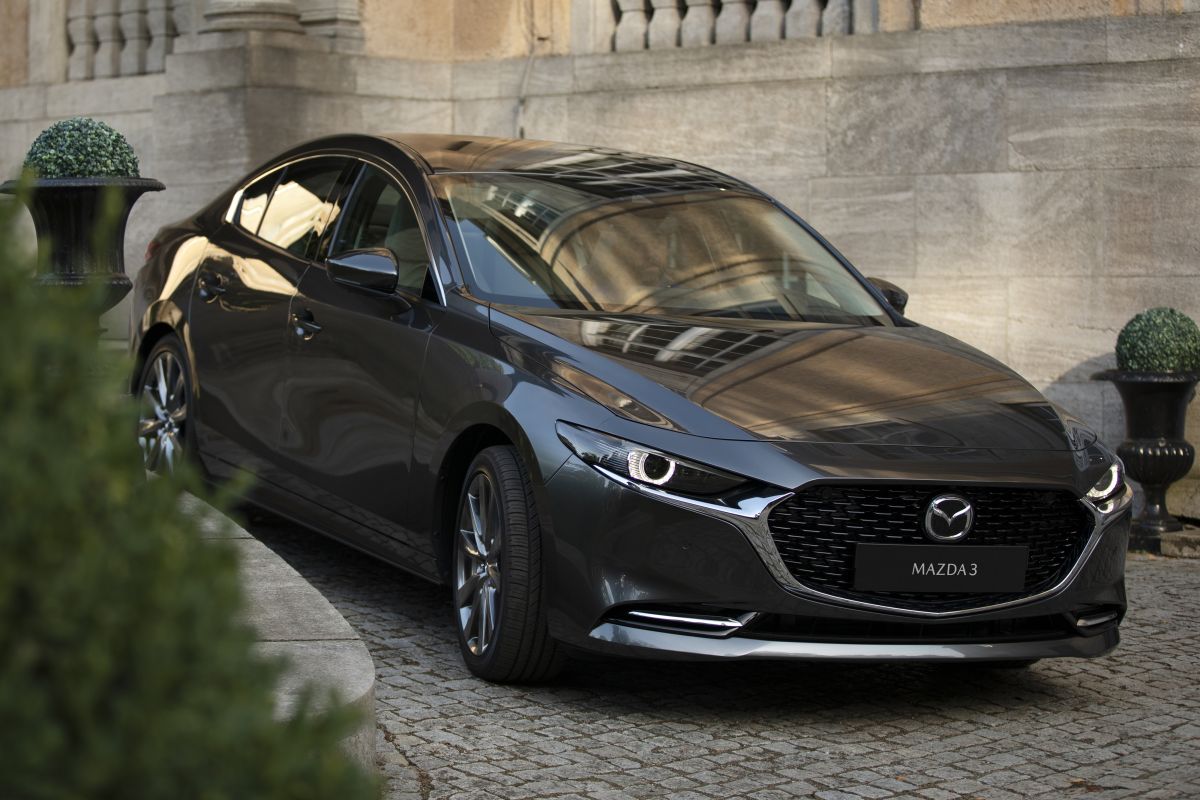
2. Mazda3
The Mazda3 represents the perfect intersection of style, practicality, and apartment-friendly design. Available as both a sedan and hatchback, this compact car delivers a premium feel without the premium complications that can plague apartment dwellers.
The Mazda3’s compact footprint similar to the Civic at around 183 inches long makes it exceptionally maneuverable in urban environments while maintaining a sophisticated appearance that won’t look out of place in any apartment complex.
What sets the Mazda3 apart is its upscale interior quality. Apartment living often means downsizing in some areas of life, but the Mazda3 ensures your daily commute doesn’t feel like a compromise.
High-quality materials, excellent sound insulation, and an intuitive infotainment system create a sanctuary from the sometimes chaotic nature of apartment living. After dealing with thin walls, noisy neighbors, or cramped living spaces, sliding into the Mazda3’s well-appointed cabin provides a welcome respite.
The hatchback variant deserves special mention for apartment dwellers. The versatile cargo area, accessible through a wide-opening liftgate, can accommodate everything from furniture for your apartment to sports equipment, all while maintaining the compact exterior dimensions that make parking manageable.
The rear seats fold flat, creating a surprisingly spacious cargo floor that has helped many apartment residents avoid expensive furniture delivery fees or storage unit rentals.
Fuel economy in the Mazda3 is competitive with the best in class, delivering around 28 city and 36 highway mpg with the standard engine. The available turbocharged engine provides exhilarating performance for those who want more excitement in their daily drive, though it does compromise fuel efficiency slightly.
For apartment dwellers who view their car as more than just transportation, the Mazda3 offers an engaging driving experience that makes even mundane errands enjoyable.
Mazda’s reputation for reliability has grown significantly in recent years, with the Mazda3 consistently ranking well in dependability studies.
The vehicle requires minimal maintenance beyond regular oil changes and routine service, which can often be completed quickly at any number of service centers important when you’re juggling appointment times with work schedules and don’t have a garage to store a car that’s waiting for parts.
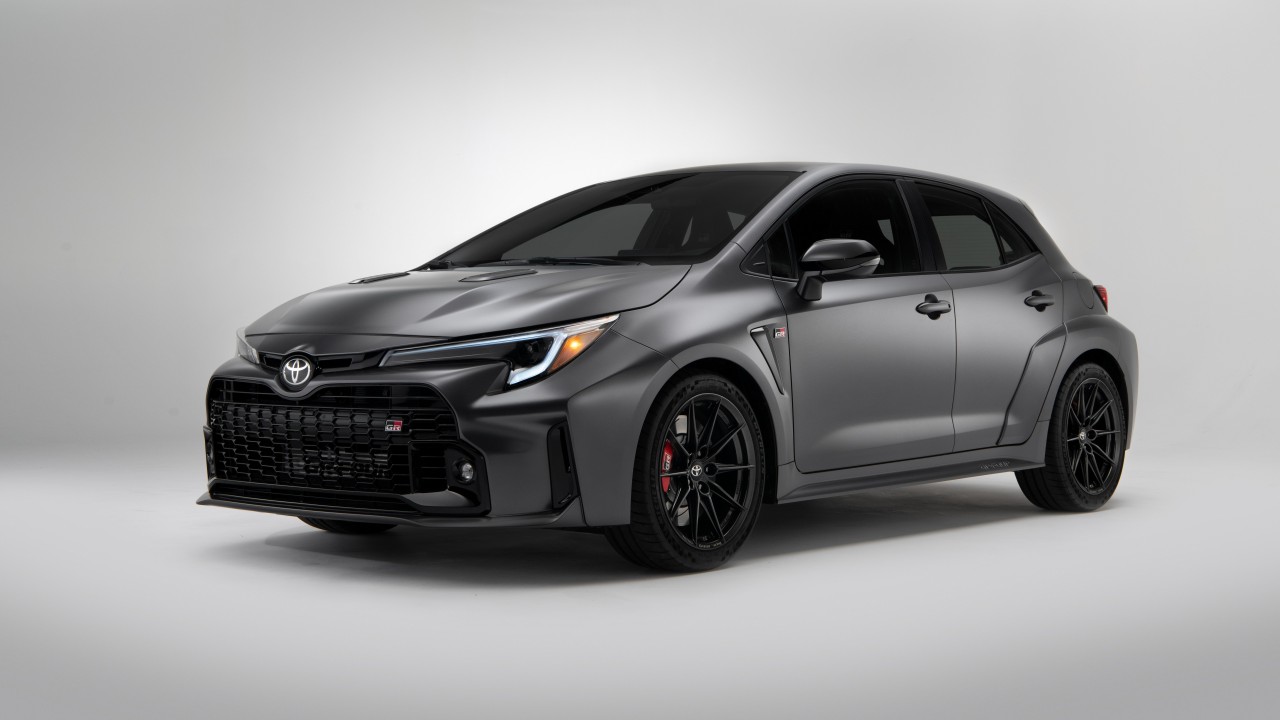
3. Toyota Corolla
The Toyota Corolla epitomizes sensible transportation for apartment dwellers, having perfected the art of reliable, economical, and compact motoring over more than five decades.
This is the car that simply works, day in and day out, without drama or unexpected expenses precisely what apartment residents need when they can’t afford surprises in their budget or schedule.
Toyota’s legendary reliability reaches its zenith in the Corolla. This is the vehicle that mechanics joke will outlast civilization itself, and there’s substantial truth behind the humor.
The Corolla’s simple, proven engineering means fewer breakdowns and lower maintenance costs over the vehicle’s lifetime.
For apartment dwellers without a garage full of tools or the space to work on their own vehicle, this reliability translates to genuine peace of mind. You won’t be making emergency calls to tow trucks or trying to find overnight street parking while your car sits in a shop.
The Corolla’s fuel efficiency is exemplary, with the standard model achieving around 31 city and 40 highway mpg, while the hybrid variant pushes those numbers even higher to 53 city and 52 highway mpg.
For apartment residents who might face longer commutes from more affordable neighborhoods, these efficiency numbers can result in hundreds of dollars in annual savings.
The hybrid model is particularly noteworthy because it doesn’t require plug-in charging ideal for apartment dwellers without access to dedicated charging infrastructure.
With a compact 183-inch length, the Corolla go through the tight parking situations with ease. The vehicle’s excellent turning radius makes parking garage ramps and cramped lots far less intimidating.
Modern Corollas also feature a backup camera as standard equipment, along with available parking sensors that can help prevent costly scrapes and dings in crowded apartment parking areas where every inch matters.
The Corolla’s interior is straightforward and functional, prioritizing usability over flashiness. Climate controls are intuitive, storage spaces are practical, and the layout is designed for real-world use.
The trunk offers 13.1 cubic feet of space adequate for grocery shopping, luggage, or the occasional IKEA run without requiring you to rent a truck or beg friends with larger vehicles for help.
4. Subaru Crosstrek
The Subaru Crosstrek occupies a unique position as the ideal apartment-dweller’s vehicle for those who refuse to compromise their active lifestyle.
This compact crossover delivers the capability and versatility that apartment residents often sacrifice, all while maintaining dimensions and practicality that work within the constraints of urban living.
At 176 inches long, the Crosstrek is actually shorter than many compact sedans, making it surprisingly easy to park despite its crossover stance.
The raised ride height 8.7 inches of ground clearance provides a commanding view of traffic and parking lot obstacles while making entry and exit more comfortable, especially in tight spaces where you might be parking close to other vehicles or concrete pillars.
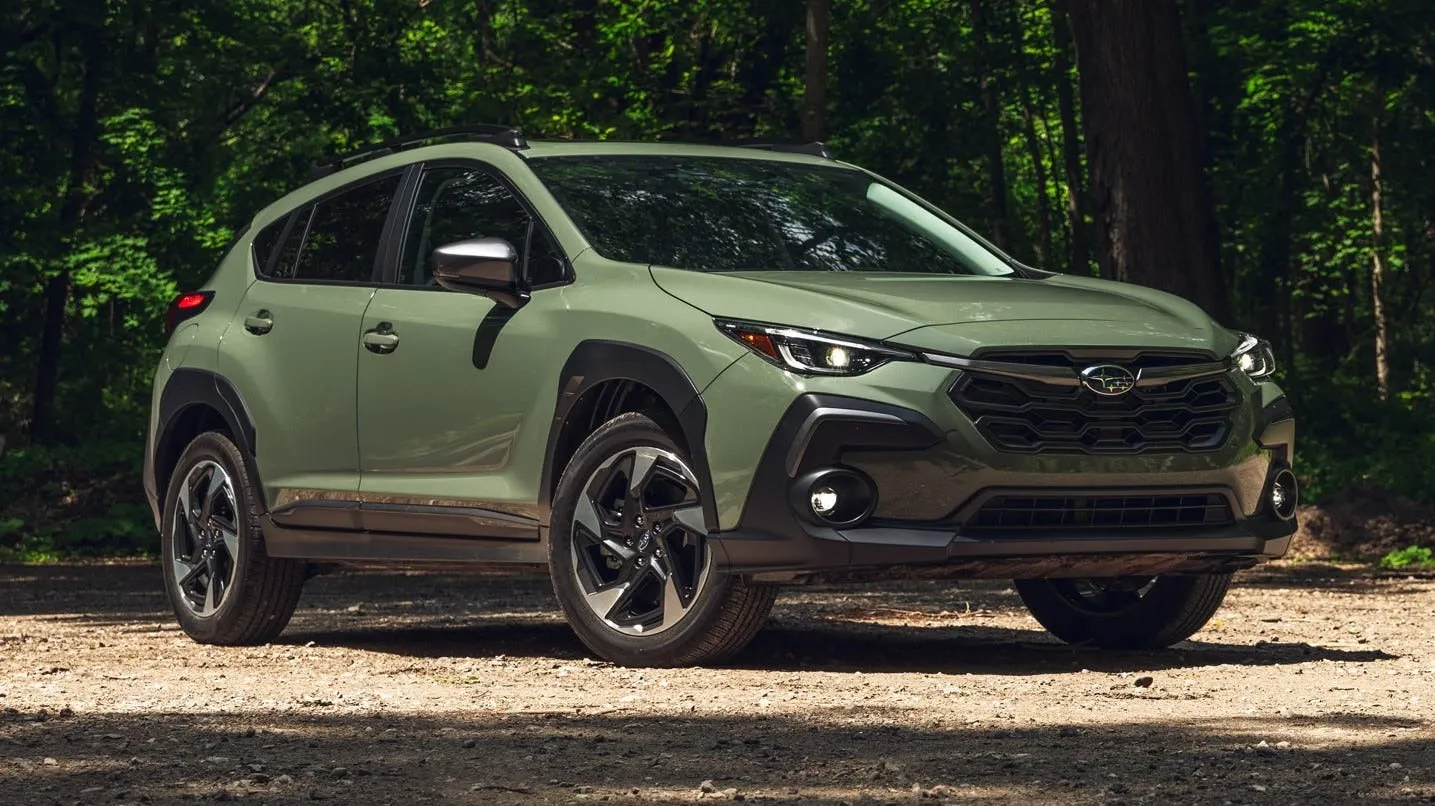
All-wheel drive comes standard on every Crosstrek, a feature that proves invaluable for apartment dwellers in various scenarios. For those in northern climates where apartment complexes may not plow parking lots promptly after snowfall, the Crosstrek’s snow capability ensures you won’t be stranded.
The system also provides confidence on unpaved roads leading to trailheads, camping spots, or beach access enabling weekend adventures that help offset the compromises of apartment living during the week.
The Crosstrek’s interior is designed with active lifestyles in mind. Water-resistant seat materials mean you won’t stress about sweaty workout clothes or wet swimsuits damaging upholstery.
The cargo area, accessible via a wide-opening rear hatch, easily swallows mountain bikes, camping gear, kayaks (with roof racks), or surfboards. For apartment dwellers who lack garage storage for recreational equipment, the Crosstrek essentially becomes a mobile gear locker.
Fuel efficiency is respectable for a capable all-wheel-drive crossover, achieving around 28 city and 33 highway mpg. While not quite matching the efficiency of pure economy cars, the Crosstrek’s versatility often eliminates the need for a second vehicle or frequent rental cars for weekend trips.
Subaru’s reputation for longevity and reliability means the Crosstrek will likely serve faithfully for many years, often outlasting the apartment lease itself.
The vehicle’s safety features are comprehensive, with Subaru’s EyeSight driver assist technology available on most trims, providing adaptive cruise control, pre-collision braking, and lane departure warning features that reduce stress during daily commutes and long road trips alike.
Also Read: 5 Cars That Make Ownership Easy vs 5 That Don’t
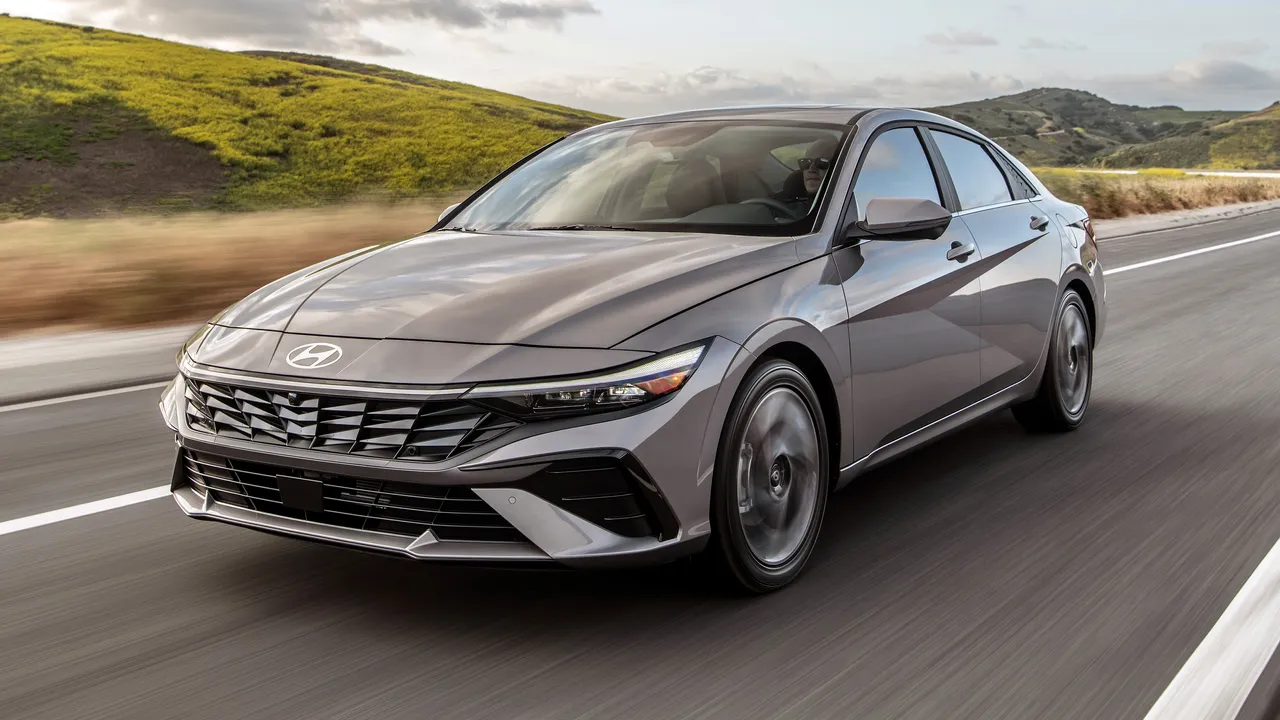
5. Hyundai Elantra
The Hyundai Elantra has evolved into a compelling choice for apartment dwellers seeking maximum value without sacrificing style or features.
In recent years, Hyundai has transformed from a budget alternative to a legitimate competitor offering premium features at mainstream prices, and the Elantra embodies this evolution perfectly. The Elantra’s bold, distinctive styling ensures it stands out in any apartment parking lot, making it easy to locate after a long day.
At 184 inches long, it matches the Civic’s compact dimensions while offering a dramatically different aesthetic that appeals to those who want their practical choice to also make a statement. The sharp creases and angular design give the Elantra a more expensive appearance than its price tag suggests.
Where the Elantra truly excels for apartment dwellers is in its warranty coverage. Hyundai’s industry-leading 10-year/100,000-mile powertrain warranty and 5-year/60,000-mile comprehensive warranty provide unmatched peace of mind.
For apartment residents without the space or tools for DIY repairs, knowing that major components are covered for a decade eliminates a significant source of financial anxiety.
This extensive coverage can also make the Elantra more affordable to own than competitors with shorter warranties, even if those competitors have slightly better reliability reputations.
The Elantra’s fuel efficiency is excellent, with the base model achieving up to 33 city and 43 highway mpg. The available hybrid model pushes efficiency even further to 53 city and 56 highway mpg, rivaling dedicated hybrid vehicles while maintaining the practical sedan format.
Like the Corolla Hybrid, the Elantra Hybrid doesn’t require plug-in charging, making it perfect for apartment dwellers without charging access.
The trunk provides 14.2 cubic feet of space, among the best in the compact sedan class, while the rear seats fold down to accommodate longer items.
For apartment dwellers who may need to transport furniture, large purchases, or moving boxes, this flexibility proves invaluable and can reduce reliance on delivery services or vehicle rentals.
5 Cars That Don’t Work for Apartment Dwellers
These frustratingly impractical vehicles suffer from excessive size and demanding maintenance requirements that create constant challenges for apartment dwellers, transforming rental living into vehicle accommodation struggles as oversized dimensions exceed standard parking spaces, delicate finishes suffer from outdoor exposure, or specialized needs require infrastructure unavailable without private garages.
Their problematic characteristics include dimensions overflowing compact apartment spaces and electric powertrains requiring dedicated home charging that cannot exist in rental situations, leading to vehicles jutting into traffic lanes from too-small assigned spots, paint and interiors deteriorating rapidly from constant outdoor exposure, and range anxiety from relying entirely on inconvenient public charging without overnight home charging capability.
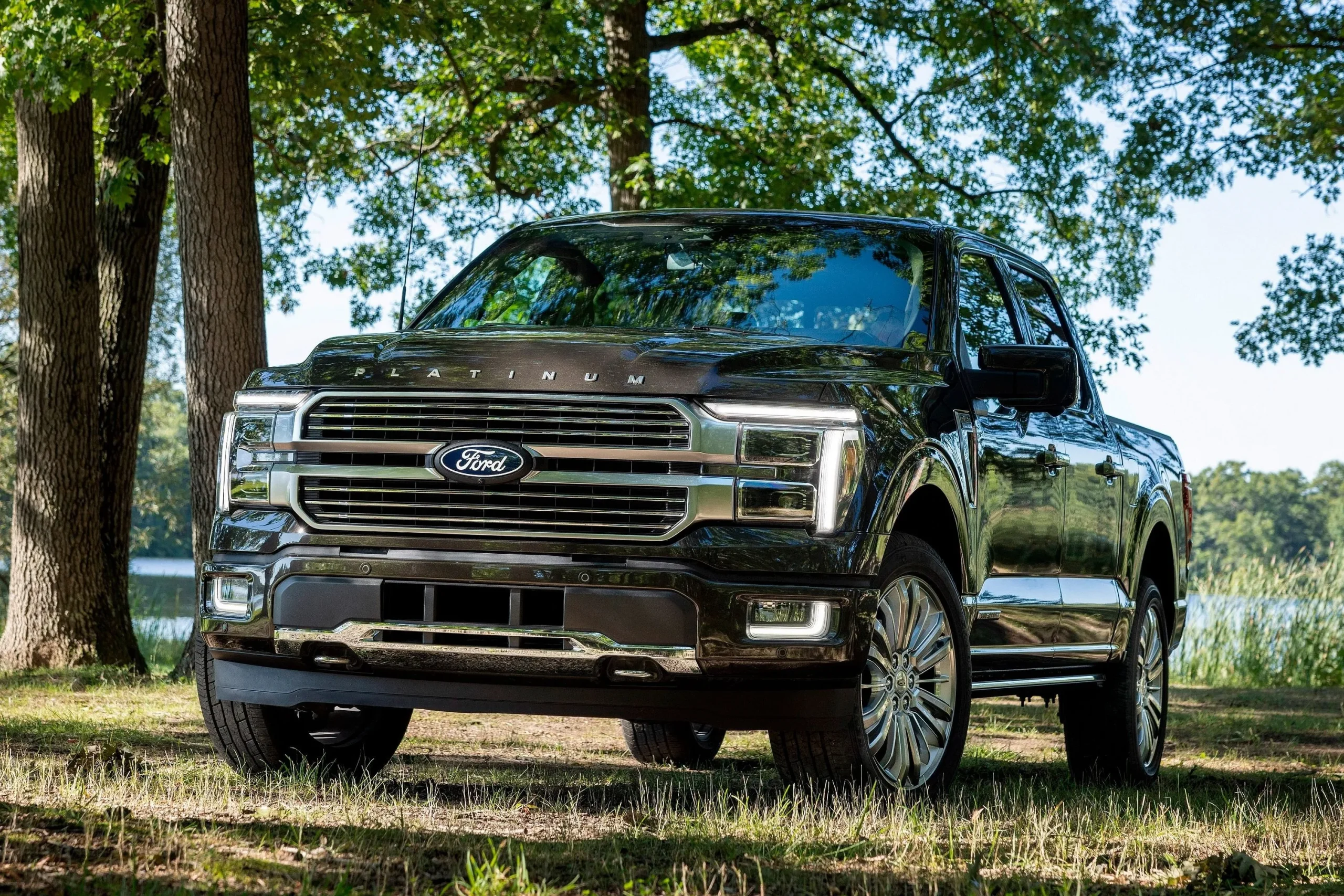
1. Ford F-150
The Ford F-150, America’s best-selling vehicle for decades, represents everything that challenges apartment living. While undeniably capable and versatile for those with appropriate housing, this full-size pickup truck creates numerous complications for apartment dwellers that can transform daily life into a constant struggle.
Size is the most obvious issue. At over 230 inches long for crew cab models and nearly 80 inches wide, the F-150 barely fits in standard parking spaces designed for compact and mid-size vehicles.
Many older apartment complexes feature parking spaces that measure just 180 inches long, making it physically impossible to park an F-150 without blocking the aisle or extending into adjacent spaces.
Even in newer complexes with larger spaces, maneuvering the F-150 through parking garage ramps, around tight corners, and into your assigned spot becomes a daily exercise in precision driving and stress.
The turning radius of the F-150 is significantly larger than compact cars, making three-point turns necessary in situations where smaller vehicles can simply turn around.
This becomes particularly problematic in packed apartment parking lots during evening hours when everyone returns from work and available maneuvering space disappears. The truck’s width also makes it challenging to open doors fully when parked, potentially forcing you to squeeze in and out or climb through the passenger side.
Fuel economy in the F-150, even with modern turbocharged engines and the available hybrid powertrain, can’t match compact cars. Real-world fuel economy often ranges from 17-22 mpg in combined driving, depending on the engine and driving conditions.
For apartment dwellers potentially facing long commutes from affordable neighborhoods, this fuel consumption can add hundreds of dollars to monthly transportation costs compared to efficient compact cars.
Without a personal garage and tools, apartment-dwelling F-150 owners must rely entirely on service centers for all maintenance, and the truck’s size means it won’t fit in many quick-lube facilities.
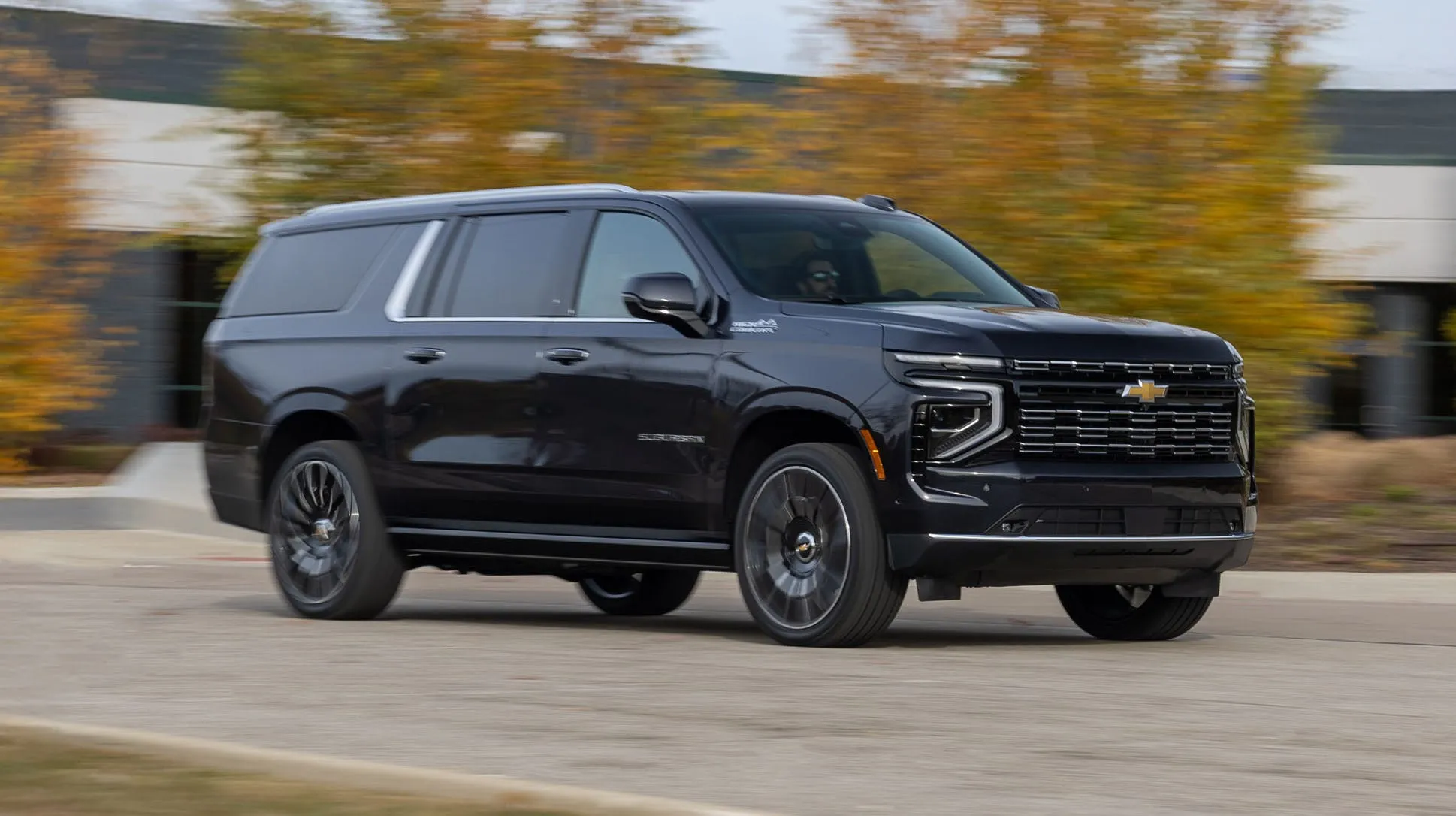
2. Chevrolet Suburban
The Chevrolet Suburban takes the challenges of the F-150 and amplifies them with even more extreme dimensions. This full-size SUV stretches over 225 inches in length, making it one of the longest passenger vehicles available. For apartment dwellers, the Suburban represents an almost comical mismatch between vehicle and lifestyle.
Parking becomes an ordeal with the Suburban. Standard apartment parking spaces simply cannot accommodate this behemoth properly.
Even when you manage to squeeze into a space, the Suburban’s length often means the rear bumper extends into the driving lane or the front end hangs into pedestrian walkways. Some apartment complexes explicitly prohibit vehicles over certain lengths, potentially making Suburban ownership a lease violation subject to fines or towing.
The Suburban’s width of 81 inches creates additional problems. When parked in a standard space, there’s virtually no clearance on either side, making door dings from neighboring vehicles almost inevitable.
Loading groceries, getting children into car seats, or simply entering the vehicle becomes challenging when you can’t fully open the doors. The mirrors extend even wider, increasing the risk of damage from passing vehicles in tight parking aisles.
Fuel consumption in the Suburban is substantial, with real-world averages typically ranging from 14-18 mpg in combined driving. The massive fuel tank 28 gallons on some models means fill-ups can easily exceed $100 even at moderate gas prices.
For apartment dwellers on a budget, this fuel expense can rival monthly utility bills, representing a significant ongoing cost that more efficient vehicles would avoid entirely.
The Suburban’s size makes it incompatible with many parking garages. Height restrictions in underground or multi-story parking structures often exceed the Suburban’s 76-inch height, but not by much, creating anxiety-inducing clearances where you’re constantly worried about scraping the roof.
Some older parking structures simply cannot accommodate the Suburban at all, forcing you to find street parking or expensive alternative parking solutions.
Insurance costs for the Suburban tend to be higher than compact vehicles due to higher repair costs, replacement value, and the increased risk of causing significant damage in accidents.
When combined with higher fuel costs and maintenance expenses, the Suburban’s total cost of ownership can be double or triple that of an apartment-friendly compact car.
3. Tesla Model S
The Tesla Model S represents a different category of apartment-incompatible vehicle not due to excessive size, but due to charging infrastructure requirements that apartment living rarely accommodates.
While electric vehicles offer numerous advantages, the Model S specifically presents challenges that make it impractical for most apartment dwellers.
Charging is the fundamental problem. The Model S’s large battery pack designed for extended range requires regular charging, ideally overnight at home.
Most apartment complexes lack individual charging stations for each parking space, leaving Model S owners dependent on public charging infrastructure. This transforms the simple act of keeping your car ready to drive into a logistical challenge requiring planning, time management, and often additional expense.
Public Supercharger stations, while increasingly common, still require dedicated trips and waiting periods. Instead of simply plugging in at home overnight and waking to a fully charged vehicle, apartment-dwelling Model S owners must schedule charging sessions, drive to charging locations, and wait 30-60 minutes for sufficient charge.
This erodes one of electric vehicle ownership’s primary advantages: the convenience of home charging. For busy apartment residents juggling work, social obligations, and errands, these mandatory charging trips become another task consuming valuable time.
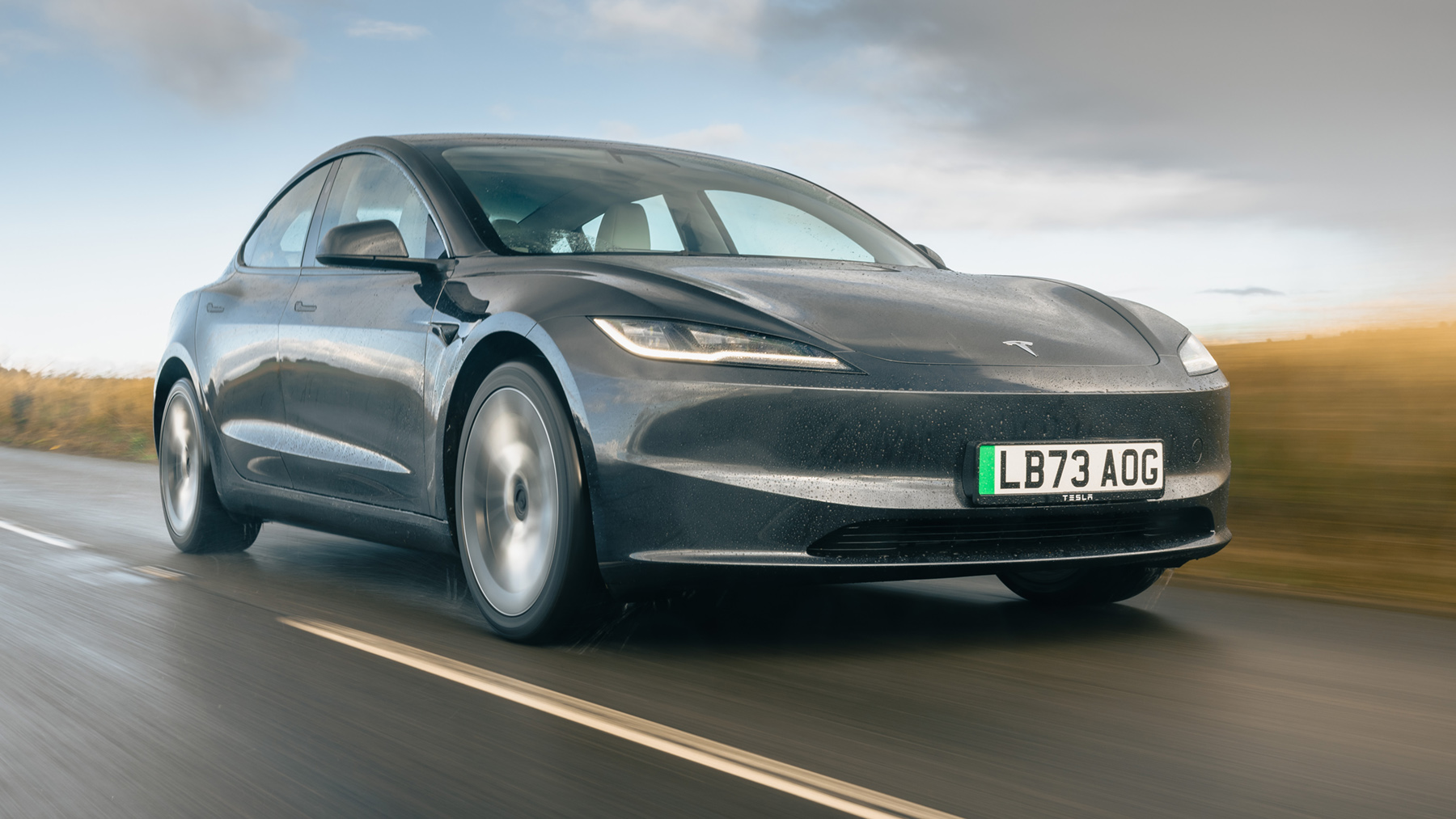
The Model S’s premium price tag starting above $75,000 seems particularly poorly matched with apartment living. Parking a luxury vehicle in a shared, often unsecured apartment lot exposes it to higher risks of vandalism, door dings, shopping cart damage, and theft.
Unlike homeowners who can park in locked garages, apartment dwellers must leave their expensive Tesla exposed to these risks nightly. Some insurance companies charge higher premiums for vehicles garaged in apartment complexes versus private garages, further increasing ownership costs.
The Model S’s advanced features and technology, while impressive, can create maintenance challenges for apartment dwellers. Tesla’s proprietary service network means you can’t simply visit any mechanic for repairs.
Expensive wheels and low-profile tires can be damaged by curbs and potholes, leading to repair bills that sting significantly more than similar damage to a Corolla’s basic steel wheels and economy tires.
4. Jeep Wrangler Unlimited (4-Door)
The Jeep Wrangler Unlimited embodies adventure and capability, but these very qualities that make it appealing also create significant incompatibilities with apartment living.
This rugged off-roader prioritizes trail performance over urban practicality, resulting in daily compromises that accumulate into genuine inconveniences for apartment dwellers.
The Wrangler’s boxy design and solid front axle create a surprisingly large turning radius for a vehicle of its class. Maneuvering through tight parking garages and making U-turns in cramped apartment lots requires more space than the Wrangler’s moderate length would suggest.
The upright windshield and flat panels also make it difficult to judge the vehicle’s extremities when parking, increasing the risk of scrapes and bumps in tight spaces.
Fuel economy in the Wrangler is poor by modern standards, typically ranging from 18-23 mpg in combined driving depending on engine choice and configuration.
The vehicle’s brick-like aerodynamics and heavy-duty drivetrain prioritize off-road capability over efficiency, making highway driving particularly fuel-intensive. For apartment dwellers with long commutes, these efficiency numbers translate to significantly higher fuel costs compared to apartment-friendly alternatives.
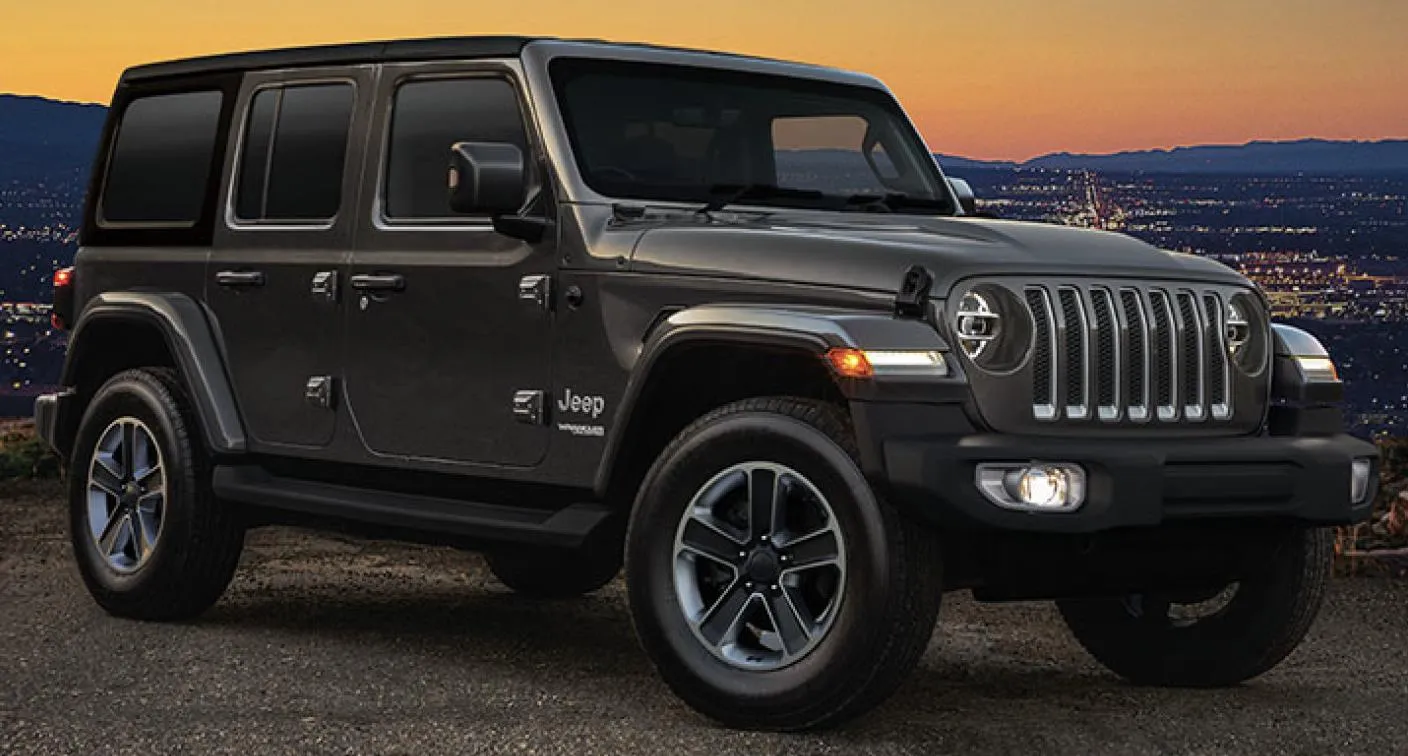
Security concerns are significant with the Wrangler. The removable soft top and doors signature features that enable open-air driving—also make the vehicle vulnerable to theft and vandalism when parked in shared apartment lots.
Even hard-top models can be broken into more easily than conventional vehicles. Expensive aftermarket wheels, lift kits, and off-road accessories make Wranglers attractive targets for theft. Without a secure garage, apartment-dwelling Wrangler owners face higher insurance premiums and greater anxiety about their vehicle’s safety.
The Wrangler’s ride quality, optimized for off-road capability with solid axles and long-travel suspension, creates a bouncy, less refined on-road experience compared to conventional vehicles.
For apartment dwellers who need to haul furniture, large purchases, or moving boxes, the Wrangler’s cargo area is less practical than a compact hatchback with folding rear seats and a wide-opening liftgate.
5. BMW 7 Series
The BMW 7 Series represents the pinnacle of luxury sedans, but this full-size flagship creates numerous complications for apartment living that undermine the premium ownership experience.
While undeniably impressive in capability and refinement, the 7 Series is fundamentally designed for owners with private garages, dedicated parking, and resources that apartment living typically doesn’t provide.
The 7 Series stretches over 212 inches in length, making it significantly longer than apartment-friendly compact cars. This length creates constant parking challenges, with the car frequently extending beyond standard parking spaces or forcing you to squeeze into spots with minimal clearance front and rear.
The vehicle’s substantial width of 76 inches means door dings from neighboring cars are a constant threat, and fully opening doors in standard parking spaces becomes impossible, forcing awkward entries and exits.
The vehicle’s complexity and advanced technology require specialized maintenance that significantly increases ownership costs. The twin-turbo engines, air suspension, sophisticated electronics, and luxury features demand expert service from BMW-certified technicians using specialized tools and diagnostic equipment.
Independent mechanics often lack the expertise or equipment to properly service a 7 Series, forcing reliance on expensive dealership service departments. Without a garage to perform even basic maintenance, apartment-dwelling 7 Series owners face substantially higher service costs than owners of simpler vehicles.
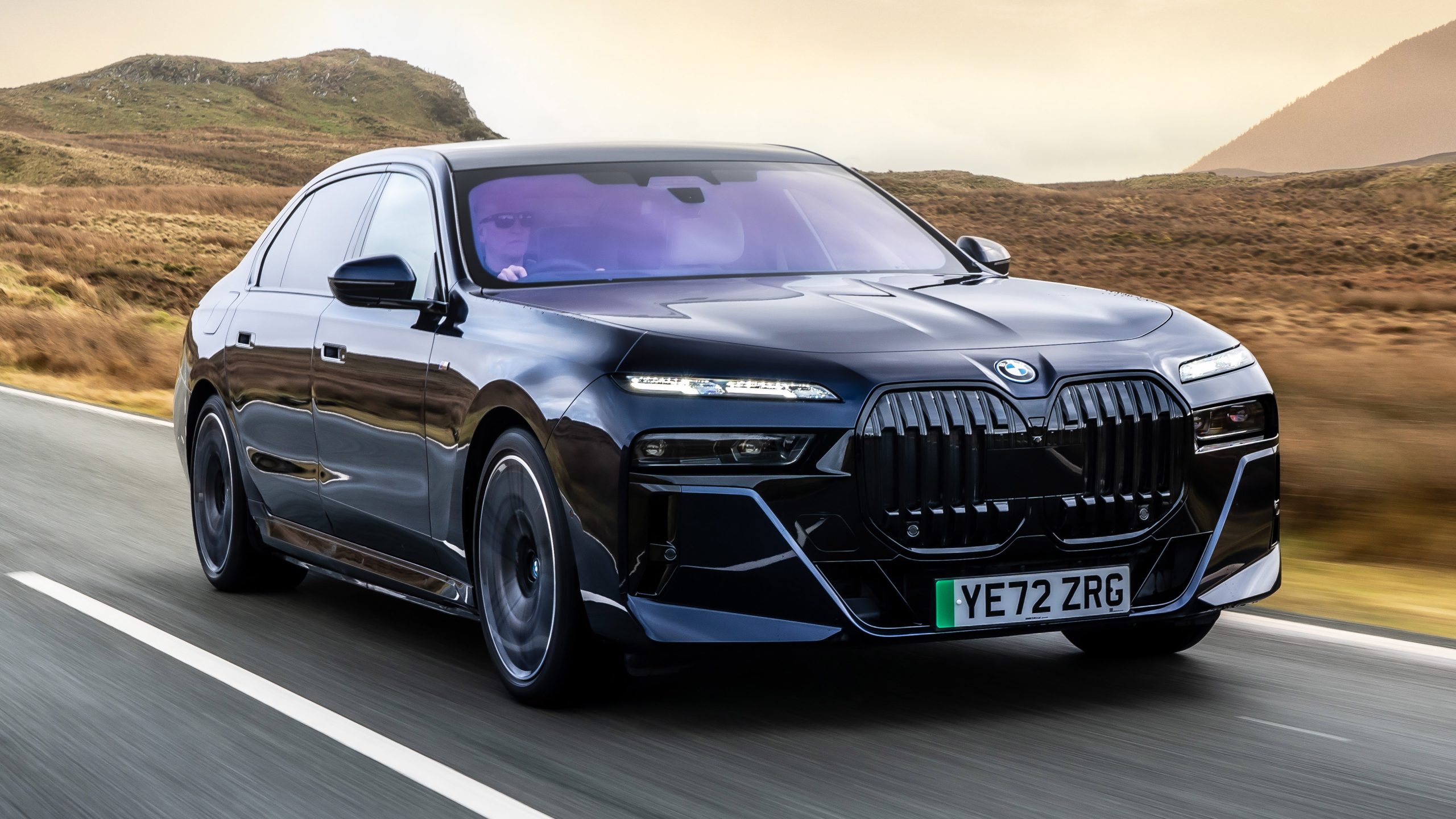
Fuel economy is poor despite modern efficiency technologies, typically ranging from 20-25 mpg in combined driving. Premium fuel is required, further increasing operating costs. For apartment dwellers seeking to minimize transportation expenses while managing rent and other living costs, the 7 Series’s thirst for expensive premium gasoline creates an ongoing financial burden.
The security concerns of parking a $90,000+ luxury sedan in a shared, often unsecured apartment lot are significant. The 7 Series attracts attention from thieves interested in the valuable components, wheels, catalytic converters, and the vehicle itself.
The fundamental mismatch is philosophical: the 7 Series is designed to be a sanctuary of quiet luxury, but apartment living often means dealing with practical realities like cramped parking, shared spaces, and budget consciousness that conflict with the vehicle’s premium positioning and running costs.
Also Read: 5 Vehicles That Feel Well-Designed vs 5 That Don’t
