
Anyone who drives regularly knows that potholes are more than an inconvenience. They shake confidence, damage suspension parts, wear out tires early, and quietly raise repair bills. Some vehicles seem to glide over broken pavement with calm composure, while others react harshly, sending jolts straight through the steering wheel and into the cabin.
That difference rarely comes down to luck. Vehicle design, suspension tuning, wheel size, tire profile, and chassis flexibility all play a role in how well a car copes with damaged roads. Car buyers often focus on fuel economy, horsepower, or interior screens, yet road comfort on rough surfaces shapes daily satisfaction just as strongly.
A vehicle that absorbs road imperfections smoothly reduces fatigue, preserves mechanical components, and protects passengers from constant impact. By comparison, a model that struggles with uneven pavement can turn short commutes into tiring experiences and long drives into tests of patience.
This page breaks down ten vehicles through a practical lens. Five models earn praise for handling potholes with control and resilience. Five others struggle, reacting poorly to broken pavement and sharp edges. Each vehicle discussed comes from a different brand, with no repeats, offering a fresh look at how design choices affect real-world driving.
The goal is not to crown winners but to give clear insight that helps readers choose wisely based on the road conditions they face every day.
This first section focuses on vehicles that deal with potholes well. These models prioritize suspension compliance, tire sidewall protection, and structural durability without sacrificing everyday usability.
5 Vehicles That Handle Potholes Well
1. Toyota Land Cruiser 2024
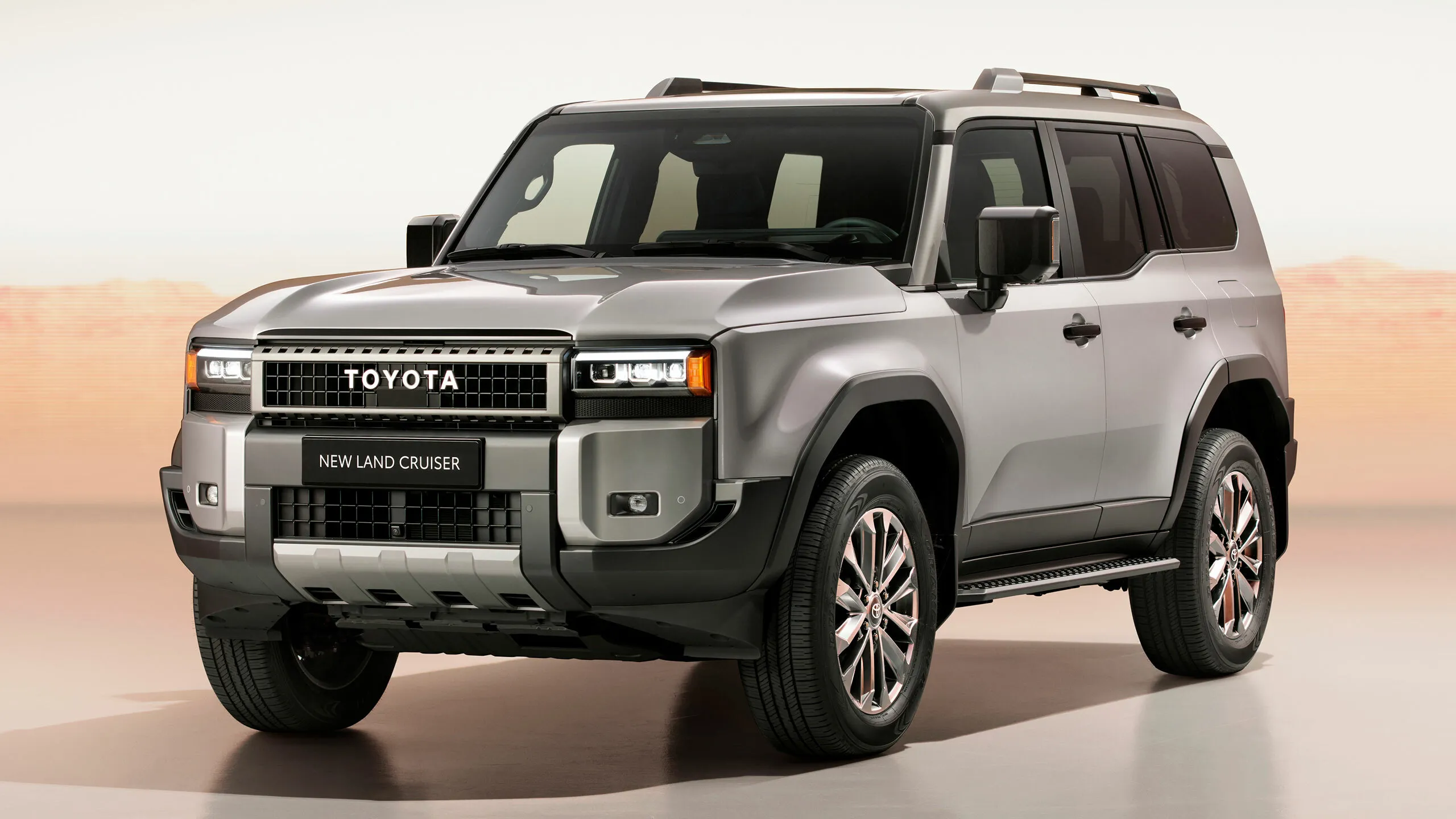
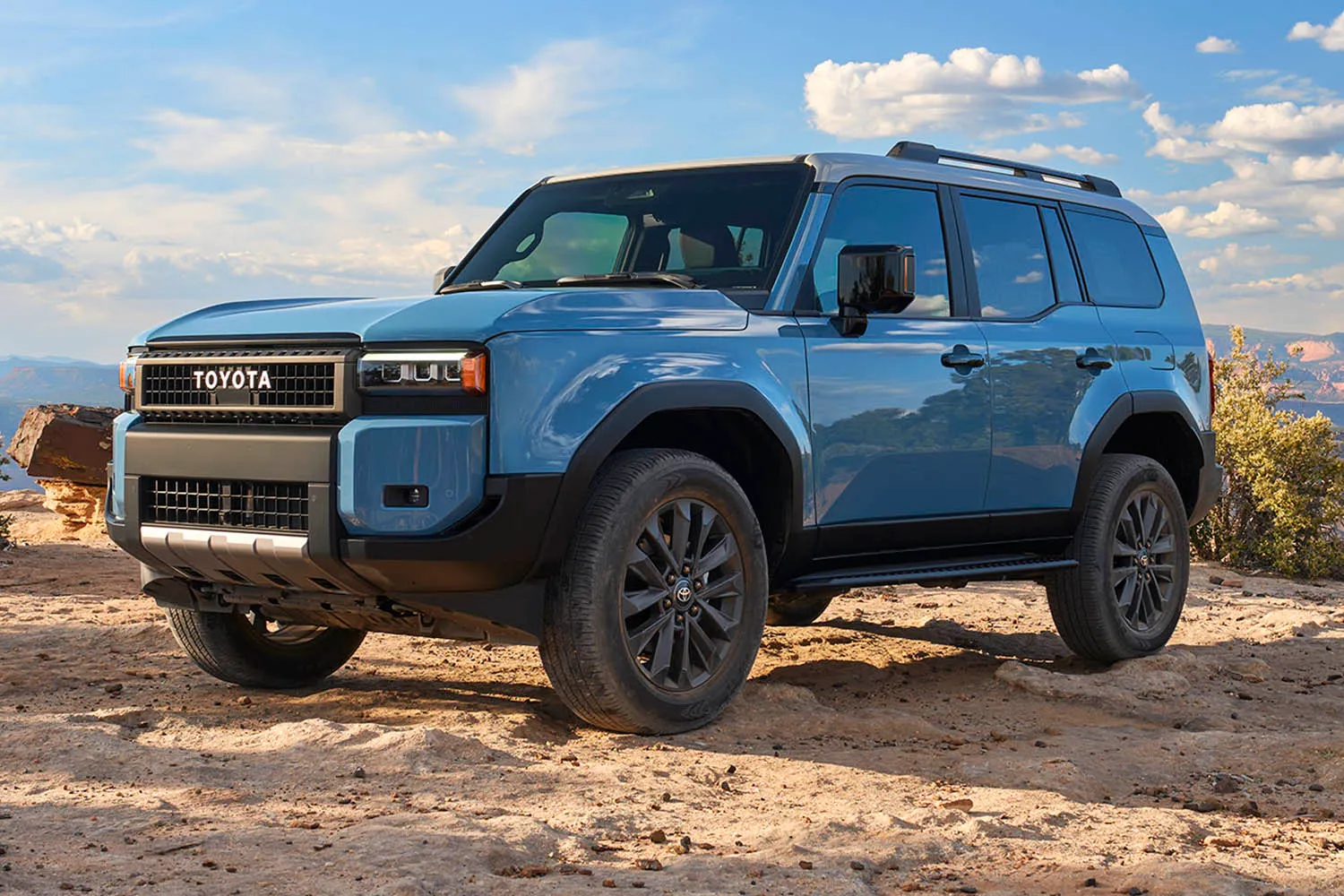
Confidence defines the Toyota Land Cruiser 2024 the moment it meets rough pavement. Built with durability as a guiding principle, this SUV absorbs broken asphalt with ease, rarely transmitting sharp impacts into the cabin. Suspension travel plays a major role here. Long wheel articulation allows the tires to dip into potholes instead of crashing against their edges, reducing the shock felt by occupants.
Another strength comes from wheel and tire choices. The Land Cruiser avoids ultra-thin tire profiles, opting instead for sidewalls that flex under pressure. That flexibility protects wheels from bending while softening the blow of sudden road defects. Steering feedback stays calm even when pavement quality changes without warning, which helps drivers maintain steady control rather than reacting nervously to every impact.
Chassis construction also matters. A body-on-frame layout provides structural strength that resists twisting under stress. When one wheel drops into a pothole, the vehicle remains composed instead of sending vibrations through the dashboard or steering column. Passengers notice stability rather than chaos, even on neglected city streets or worn highways.
Cabin comfort remains consistent during rough travel. Seats offer enough cushioning to filter remaining vibrations, and interior panels stay quiet instead of rattling. Drivers who cover long distances on unpredictable roads appreciate how the Land Cruiser reduces fatigue by keeping impacts muted and controlled.
While fuel consumption and size may deter some buyers, road durability remains a strong reason people choose this model. The Toyota Land Cruiser 2024 feels engineered for imperfect surfaces, offering reassurance that potholes will not dominate the driving experience or ownership costs.
2. Subaru Forester 2024
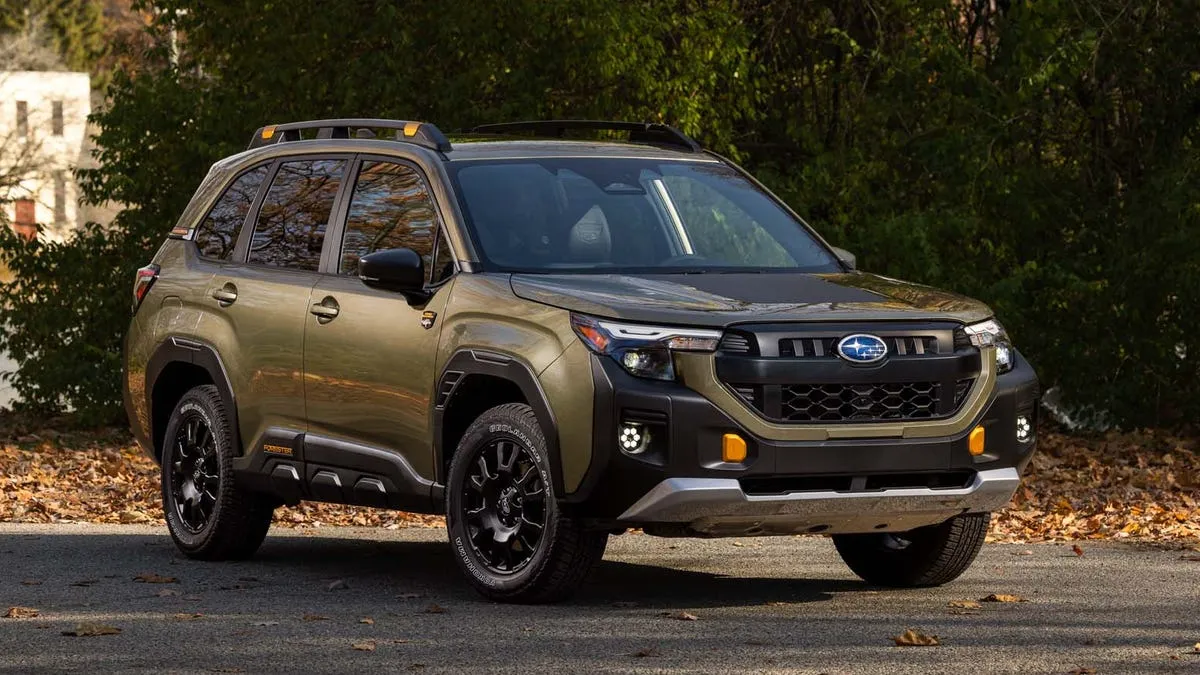
Balance defines how the Subaru Forester 2024 approaches damaged roads. Rather than relying on sheer size or weight, this compact SUV uses smart suspension tuning and sensible tire dimensions to handle potholes gracefully. Ride height provides enough clearance to prevent underbody scraping, while still keeping the center of gravity low enough for stable handling.
Suspension calibration favors compliance. Springs and dampers absorb sudden drops and sharp edges without rebounding harshly. This setup keeps tires planted on uneven surfaces, maintaining traction while limiting cabin disturbance. Drivers notice fewer jolts through the seat and steering wheel, even when roads deteriorate unexpectedly.
All Wheel Drive contributes indirectly to comfort. By distributing power evenly, the Forester avoids wheel hop when encountering rough patches during acceleration. That smooth delivery reduces stress on suspension components and tires, which pays off during repeated encounters with poor pavement.
Interior materials support this calm ride quality. Panels fit securely, minimizing squeaks and rattles that often develop in vehicles exposed to constant vibration. Seating posture helps as well, placing occupants in an upright position that reduces strain during repeated impacts.
Daily usability adds to its appeal. Parking remains easy, visibility stays strong, and ownership costs stay reasonable. For drivers facing inconsistent road maintenance, the Subaru Forester 2024 offers a practical solution that manages potholes without demanding sacrifices in size or efficiency.
Also Read: 5 Vehicles With Practical Cabin Storage vs 5 That Lack It
3. Lexus GX 460 2024
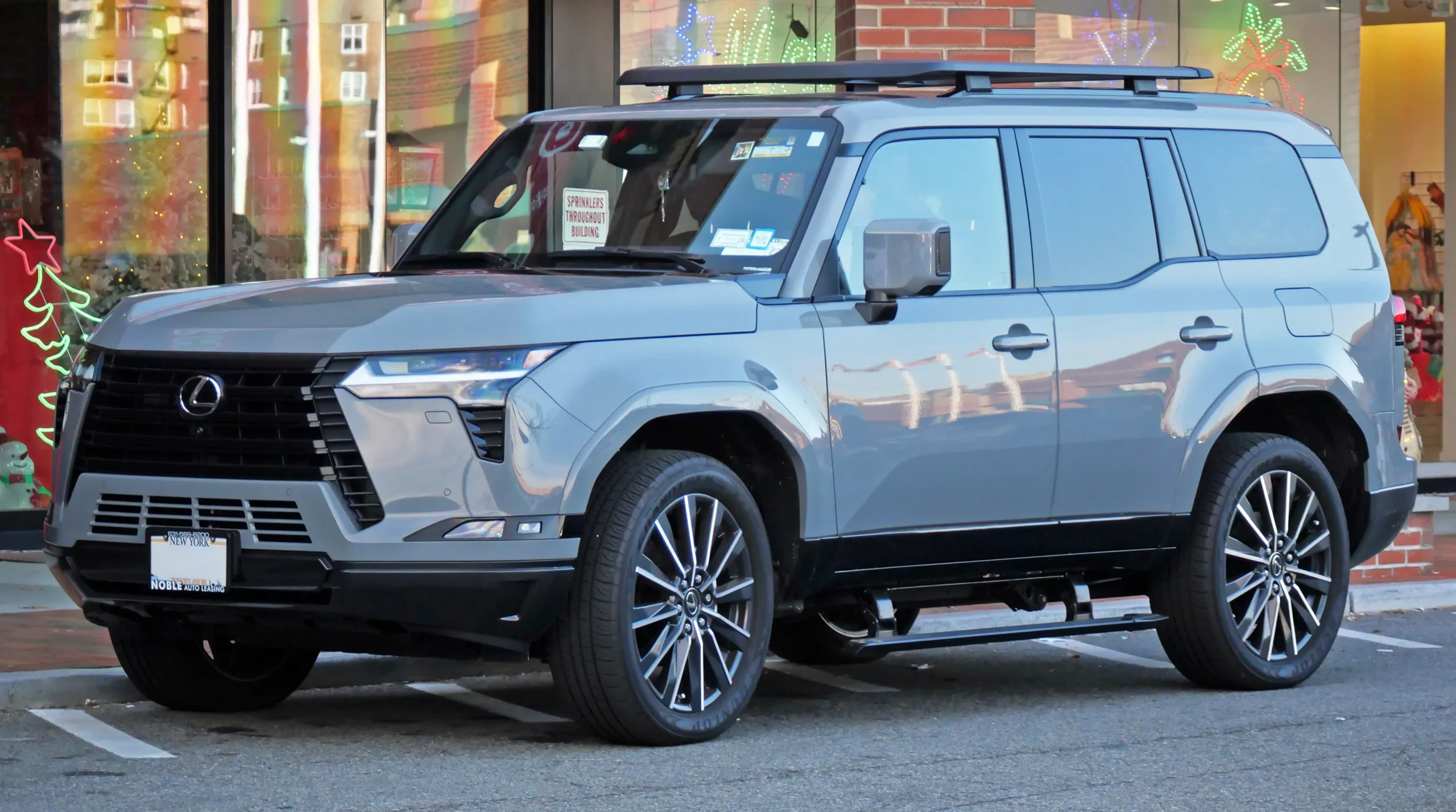
Lexus GX 460 2024 combines luxury with robust engineering, producing a driving experience that manages broken pavement with remarkable composure. Built on a full-frame chassis, the vehicle emphasizes durability and suspension travel, ensuring that wheels can move independently over uneven surfaces.
This design allows the SUV to absorb deep potholes without transmitting harsh jolts to the cabin, giving occupants a sense of control and calm even in unpredictable road conditions. Unlike sport-focused vehicles, the GX 460 does not trade comfort for appearance, maintaining a steady ride in urban environments plagued with surface deterioration.
Suspension components demonstrate thoughtful engineering, striking a balance between firmness for road handling and flexibility to soften impacts. Coil spring and shock absorber tuning prioritizes travel distance over rigidity, preventing sudden transfer of energy to the driver and passengers.
The result is a composed response to potholes, where wheels adjust individually without disturbing the vehicle’s alignment or direction. Tires complement this setup, with taller sidewalls that cushion the impacts of rough surfaces, reducing the likelihood of rim damage and providing a smoother ride. This combination of tires and suspension creates a protective envelope for the chassis while maintaining Lexus’ traditional refinement.
Steering behavior adds another layer of confidence. When wheels encounter sudden depressions or cracked surfaces, the steering wheel remains stable, allowing drivers to hold a straight line without abrupt corrections. This steadiness enhances safety during city commuting, especially in dense traffic where overcorrection can create hazards.
Compared with lower-profile luxury crossovers, the GX 460 maintains composure even during repeated encounters with poor pavement, minimizing fatigue for long journeys. Inside, cabin refinement reinforces the vehicle’s capacity to absorb road imperfections.
Noise insulation reduces the perception of impacts, while seat cushioning and support absorb residual movement. Passengers experience calm rather than jarring feedback, ensuring comfort over extended trips. Durable materials further resist wear from vibrations and minor shocks, contributing to a perception of long-term quality.
Ownership benefits also reinforce the vehicle’s resilience. Components designed for longevity endure repeated stress without premature deterioration. While fuel consumption and vehicle size remain practical considerations, the GX 460 excels for drivers who frequently face pothole-laden roads.
Its combination of thoughtful suspension travel, tire choice, and structural integrity ensures that everyday driving remains composed, reassuring, and remarkably comfortable, even when road conditions would challenge less capable vehicles.
4. Honda Passport 2024
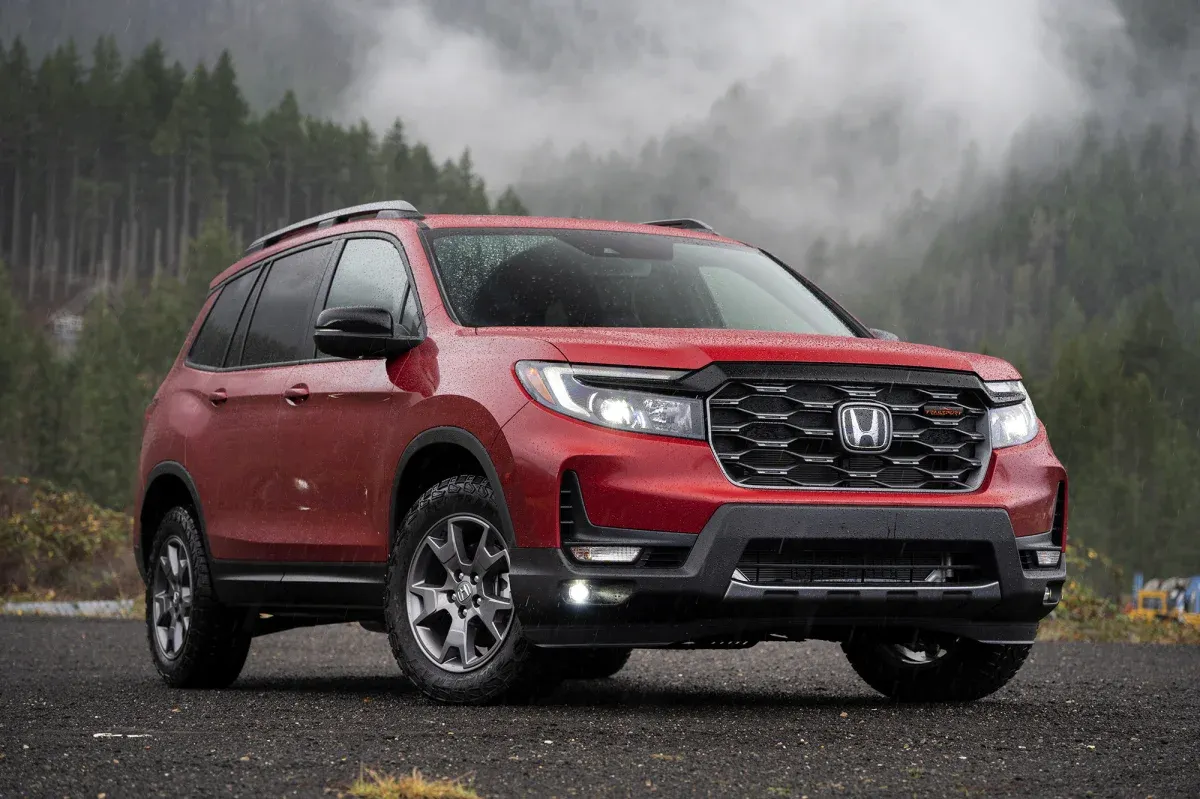
Honda Passport 2024 is engineered for practical performance, particularly when road surfaces are inconsistent or damaged. Its suspension system prioritizes absorption over sporty stiffness, allowing wheels to settle into potholes smoothly rather than striking edges abruptly.
This tuning reduces cabin jolts and ensures that occupants experience a balanced ride. The vehicle’s frame provides sufficient ground clearance to prevent underbody contact while retaining a low enough center of gravity to support stability, creating a driving experience that feels safe, controlled, and responsive, even on streets with recurring imperfections.
Tire selection enhances this practicality. Sidewalls offer moderate flexibility, absorbing sudden surface shocks while reducing the risk of wheel and rim damage. Drivers rarely need to adjust their speed excessively when encountering potholes, as the Passport mitigates impact energy before it reaches the cabin.
This predictability contributes to consistent ownership satisfaction, minimizing the likelihood of repeated repairs or maintenance issues resulting from damaged components. Steering behavior complements the suspension, remaining precise while filtering vibrations from the rough road.
Drivers can focus on road direction rather than corrective maneuvers, promoting relaxed confidence even in urban areas where potholes appear frequently. Unlike vehicles tuned for sporty responsiveness, the Passport allows drivers to approach irregularities without abrupt reaction or strain.
Its predictable handling ensures that vehicle dynamics remain stable under a variety of conditions, from slow city traffic to highway driving over patched pavement. Cabin comfort reinforces the mechanical design. Seats provide ergonomic support, cushioning the body without excessive firmness.
Noise levels remain subdued, and vibrations transmitted through the floor are effectively damped. Interior organization supports routine usability, allowing passengers to remain comfortable during short commutes or extended trips. Technology integration remains unobtrusive, assisting without adding cognitive burden when handling uneven surfaces.
For families, commuters, or anyone traversing urban streets prone to damage, the Honda Passport 2024 delivers reassurance. Its suspension, steering, and cabin design create a coherent system that transforms rough surfaces into manageable experiences.
5. Ford Bronco 2024
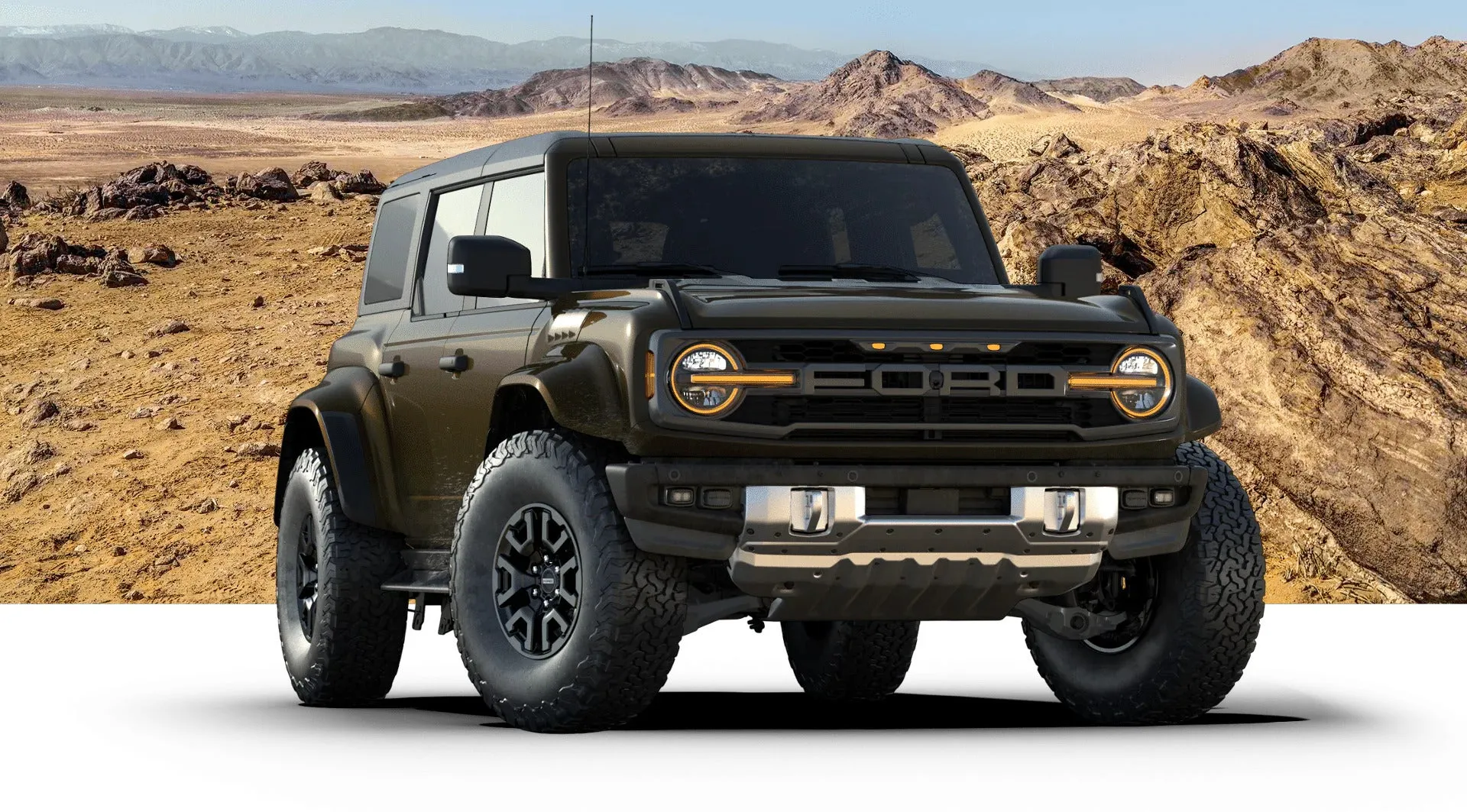
Ford Bronco 2024 is designed to confront rough roads and challenging surfaces with confidence, offering a driving experience that treats potholes as minor interruptions rather than threats. The vehicle’s suspension system allows wheels to articulate freely, maintaining contact with uneven surfaces while controlling movement to minimize cabin disturbance.
Tire design complements the suspension, incorporating thicker sidewalls that flex under pressure and cushion impacts. This flexibility helps protect rims and maintain ride quality when wheels encounter sudden drops or sharp edges. Even under repeated exposure to rough streets, the vehicle demonstrates stability, absorbing energy efficiently while maintaining traction and control.
Wheel articulation and tire selection combine to preserve both safety and comfort during everyday use, making pothole navigation predictable and straightforward. Steering geometry contributes to composure. Sudden impacts fail to induce abrupt changes in direction, allowing the driver to maintain control and confidence.
This stability proves especially useful in urban environments where potholes may be paired with narrow lanes or oncoming traffic. The Bronco’s body structure resists flexing under repeated impact, limiting the transfer of vibration and noise to the cabin. Seats and interior materials further absorb residual motion, providing a balanced and calm environment despite the external challenges.
Ownership benefits also reflect durability. Suspension components are built for longevity, reducing the frequency of repairs even when streets are consistently uneven. The vehicle’s rugged construction and thoughtful design mitigate the risks typically associated with repeated pothole encounters. Maintenance costs remain reasonable, as components are accessible and resilient, enhancing long-term reliability.
The Bronco’s design philosophy prioritises resilience and predictable handling, transforming daily challenges into tolerable experiences and ensuring that the vehicle performs confidently in both off-road adventures and routine commutes.
5 Vehicles That Struggle With Potholes
1. BMW X6 2024
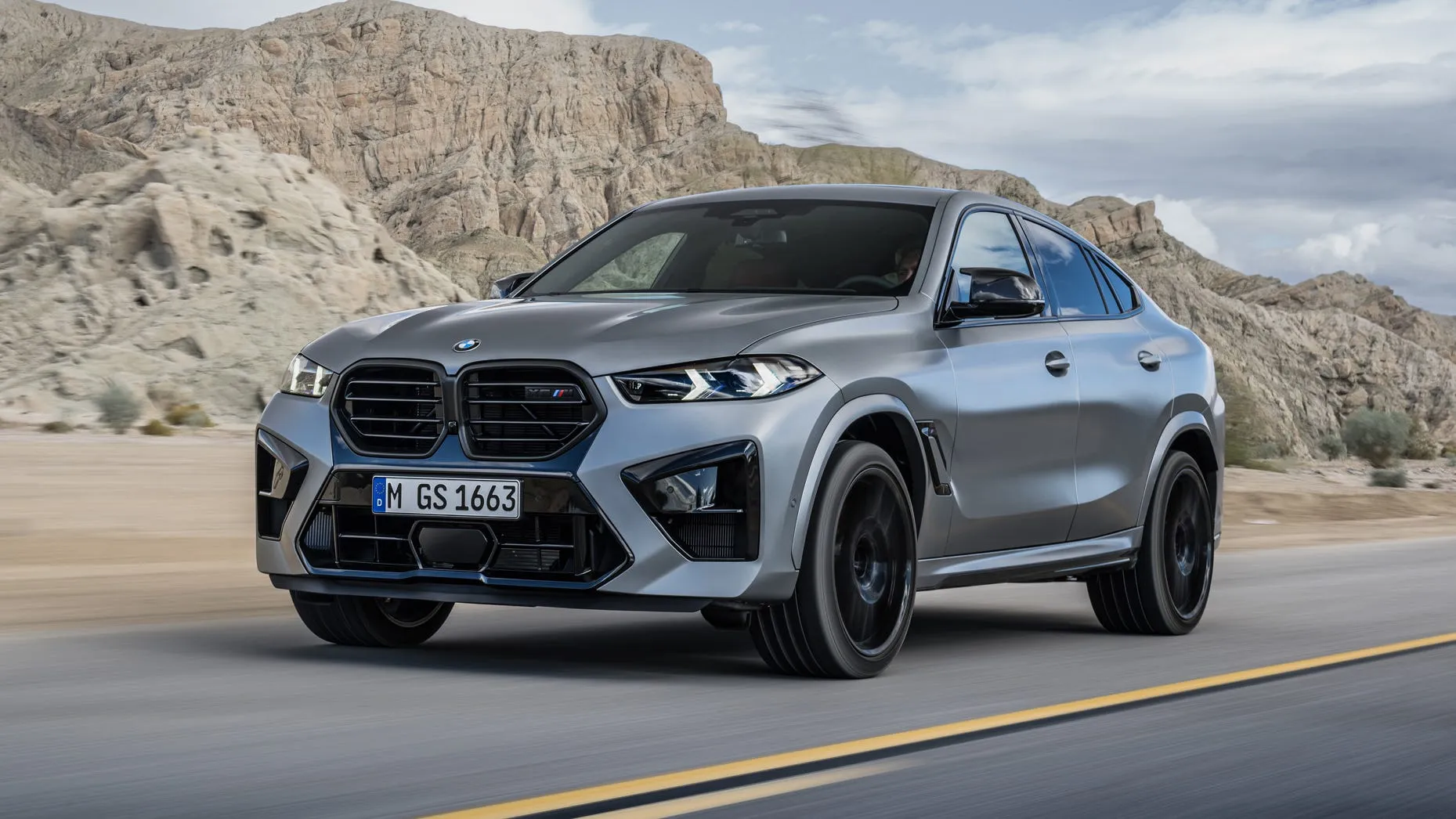
Design ambition defines the BMW X6 2024 long before it meets damaged pavement, and that ambition introduces specific challenges for everyday driving. The vehicle’s low-profile tires and large wheel sizes present a striking, athletic appearance that conveys luxury and performance. However, this same design compromises the car’s capacity to absorb irregularities in road surfaces.
Suspension tuning reinforces this dynamic. Engineers have prioritised precision and handling responsiveness over softness, allowing the vehicle to corner with confidence and transmit road feel accurately. When the pavement deteriorates, however, this approach becomes apparent.
Rather than absorbing impacts gradually, the chassis reacts sharply, sending vibrations through the steering wheel and seats. Daily commuting over damaged streets can quickly become tiring, as repeated jolts magnify driver and passenger fatigue. Even moderate potholes require careful speed adjustment to avoid discomfort and potential damage.
Roofline design further compounds the issue. The sloping rear roof limits vertical space above the rear wheels, reducing the range for suspension travel. Wheels encounter less room to adjust when striking deep depressions, which magnifies the sensation of harshness at lower urban speeds. This design, while visually striking, produces a cabin experience that can feel less forgiving when road irregularities are frequent and unpredictable.
Inside the cabin, refinement cannot fully compensate for road feedback. Noise insulation reduces environmental sound, yet the physical sensation of uneven roads remains pronounced. Vibrations pass through the seat base and floor, reducing comfort on longer journeys.
Large wheels paired with low-profile tires also raise practical concerns. Bent rims, damaged sidewalls, and alignment issues become realistic considerations for owners who regularly encounter potholes. The combination of aggressive styling, firm suspension, and reduced wheel cushioning creates a driving experience that demands attention and careful speed management.
BMW X6 2024 excels at projecting presence and providing high-speed stability. On streets that suffer from poor maintenance, however, its design priorities are revealed in full. Drivers seeking comfort and forgiving road handling may find the vehicle demanding, whereas those prioritising style, agility, and direct steering response will accept the compromises. Its performance character is unmistakable, yet urban potholes expose the limitations of its otherwise ambitious engineering.
2. Tesla Model 3 Performance 2024
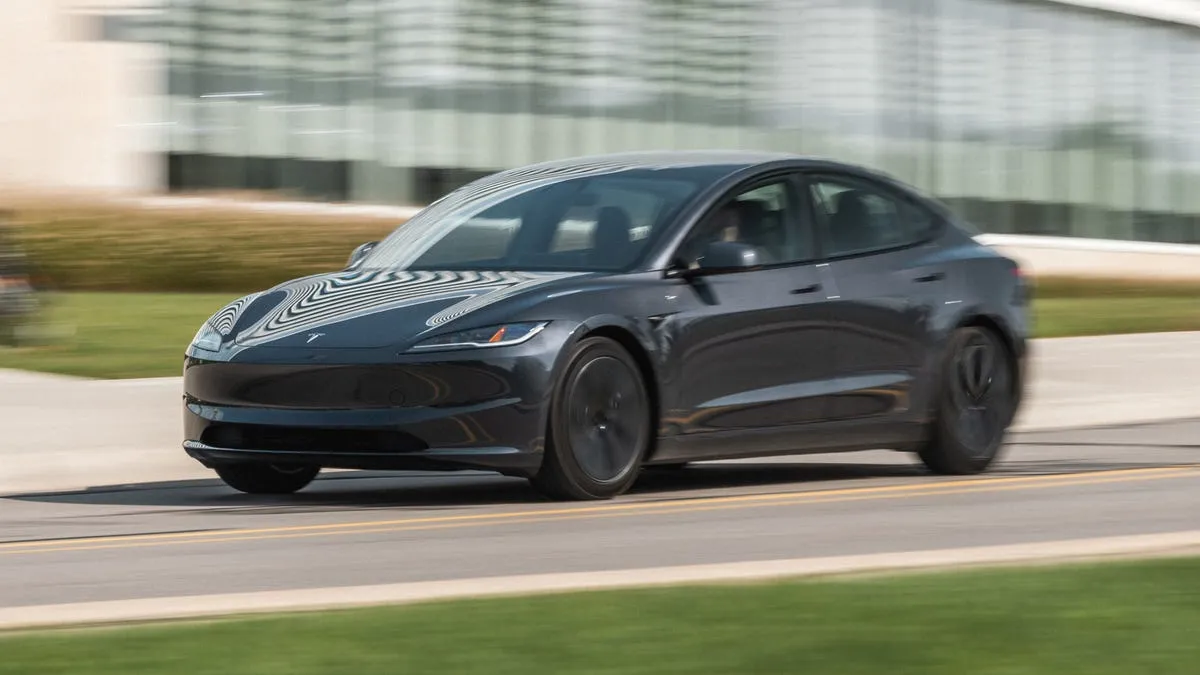
Tesla Model 3 Performance 2024 prioritises acceleration, handling precision, and technology, yet those same qualities introduce challenges when pavement deteriorates. Low ride height, paired with firm suspension tuning, ensures responsive cornering and sharp steering feedback under ideal conditions.
On rough or pothole-filled streets, however, this setup transmits impacts abruptly to the cabin, producing a jarring experience. Drivers must remain alert and often adjust speed proactively to minimise discomfort. What feels thrilling on smooth surfaces quickly becomes demanding on imperfect roads.
Wheel and tire choices amplify the issue. Thin sidewalls, selected to improve performance and maintain steering responsiveness, offer minimal cushioning against sudden depressions. Each pothole becomes a potential hazard, as the wheel has little margin to absorb impact energy.
Repeated exposure can stress tires and rims, prompting more frequent repairs or replacements than a higher profile setup would require. Urban streets, with unpredictable cracks and surface irregularities, place this vulnerability in sharp relief. The vehicle’s heavy battery pack further affects how the suspension reacts.
The concentrated weight over the chassis increases unsprung mass, which heightens the force transmitted upward when a wheel drops into a pothole. Instead of dispersing energy gradually, impacts are communicated directly to the driver and passengers. Steering feedback, usually sharp and precise, can become twitchy during sudden jolts, requiring corrective action that interrupts smooth driving.
Cabin design reinforces the sensation. The absence of engine noise allows every vibration to be perceived more acutely. Seats provide support but limited isolation from road impacts, leaving occupants fully aware of every irregularity. Even short trips through deteriorating streets can feel tense, as the vehicle’s performance focus amplifies minor imperfections into tangible feedback.
Maintenance and ownership considerations follow naturally. Wheel repairs, tire replacements, and alignment checks may become more frequent under conditions with poor pavement. Tesla Model 3 Performance 2024 excels on smooth roads, offering exhilarating acceleration and confident handling.
On streets with potholes and uneven asphalt, however, drivers must adapt their habits, slowing when necessary and accepting that the car communicates surface flaws with little mitigation. The experience rewards careful attention, but tests comfort during everyday driving, revealing that peak performance can come at the expense of forgiving road behaviour.
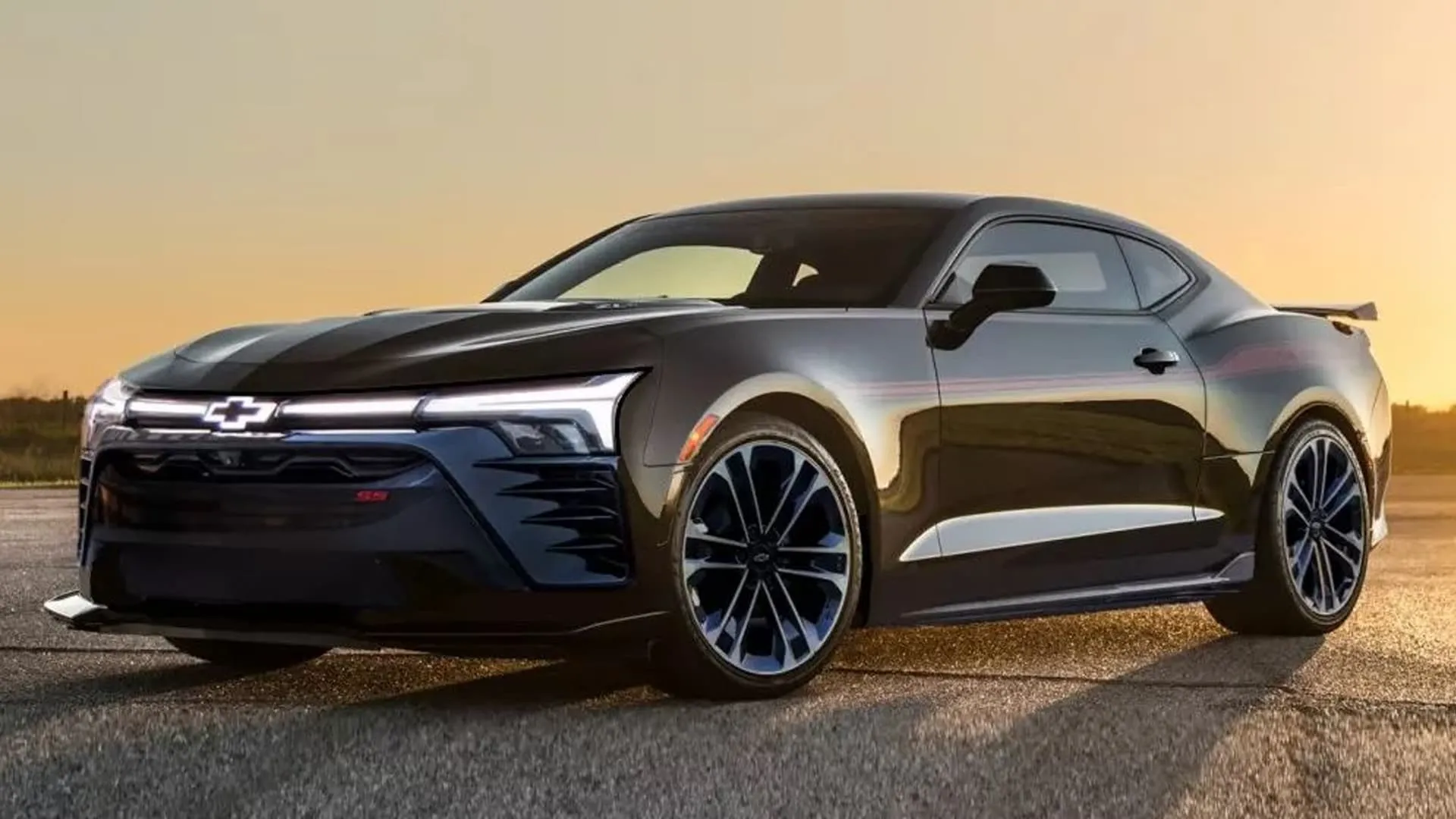
3. Chevrolet Camaro 2024
Chevrolet Camaro 2024 projects a bold performance identity that immediately affects how it responds to damaged road surfaces. Its low stance, designed to enhance aerodynamics and handling precision, leaves limited clearance beneath the body. When potholes appear, drivers must slow to avoid scraping or suspension strain.
This constant caution disrupts normal driving flow, especially on streets where road conditions change without warning. Suspension tuning leans strongly toward firmness, a deliberate choice meant to support aggressive cornering and high-speed stability.
While effective on smooth pavement, this setup struggles on uneven roads. Potholes generate sharp vertical impacts that transmit directly into the cabin, reducing ride comfort. Instead of settling quickly after contact, the vehicle often feels unsettled for several moments, requiring steering correction and speed adjustment.
Visibility limitations worsen the experience. Thick roof pillars and narrow window openings restrict forward and side views, making early detection of road damage difficult. Drivers frequently encounter potholes before they can react, which increases frustration during urban driving. Tight parking areas and poorly lit streets demand heightened concentration, adding to fatigue during routine use.
Interior comfort reflects performance priorities rather than daily convenience. Seating remains firm, offering lateral support but limited cushioning against harsh impacts. Vibrations from the road surface are easily felt through the seats and steering wheel, reminding occupants of every imperfection beneath the tires.
Sound insulation struggles to soften impact noise, reinforcing the sense of strain during travel on damaged roads. The Chevrolet Camaro 2024 performs confidently when pavement quality matches its design intent. On pothole-filled streets, however, the vehicle requires patience and deliberate driving habits.
Owners who frequently encounter poor road conditions may find daily use demanding, as the car asks the driver to adjust rather than adapting itself to real-world imperfections.
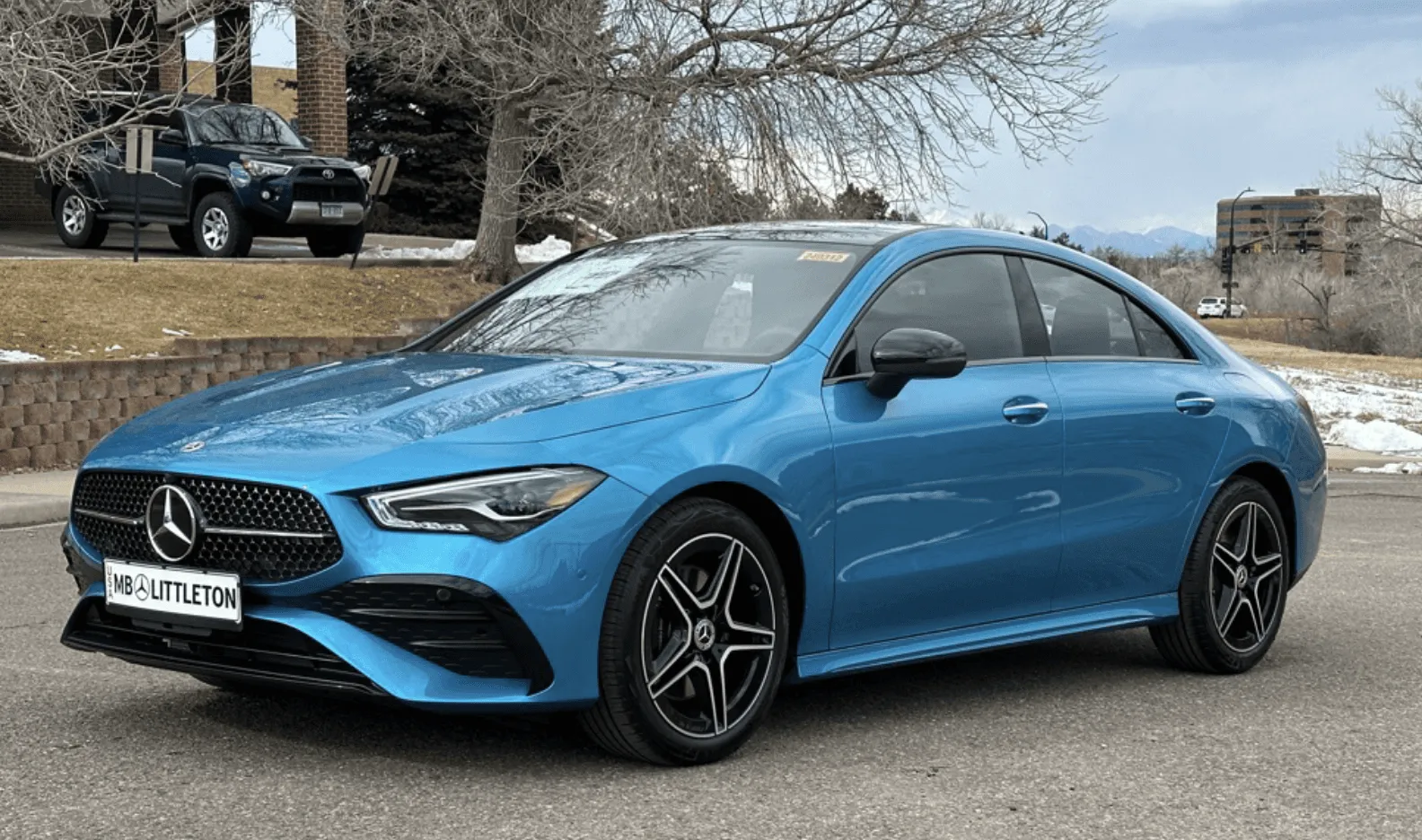
4. Mercedes-Benz CLA 250 2024
Mercedes-Benz CLA 250 2024 blends sharp styling with a sporty driving character, yet this combination presents challenges when road quality declines. Its low ride height and slim tire profiles reduce the vehicle’s ability to absorb sudden surface depressions. When potholes appear, impacts feel abrupt and pronounced, often interrupting the smoothness expected from a luxury-branded sedan.
Suspension geometry favors agility and road feel, limiting vertical wheel movement. As a result, deep potholes cause the suspension to react suddenly, transferring force into the cabin instead of dissipating it gradually. Steering feedback tightens under these conditions, requiring careful correction to maintain control. City driving on uneven streets becomes mentally demanding, as drivers remain alert to every surface change.
Cabin refinement remains visually appealing, though physical comfort suffers during prolonged exposure to broken pavement. Seats provide adequate posture support but lack sufficient padding to soften repeated jolts. Long drives across poorly maintained roads increase fatigue, as occupants remain constantly aware of vibration and impact beneath them. Ride firmness becomes especially noticeable at lower speeds where potholes occur more frequently.
Wheel and tire vulnerability adds another layer of concern. Large rims paired with thin sidewalls face a higher risk of damage when encountering sharp edges. Bent wheels, tire bulges, and alignment issues become realistic ownership considerations. Repair expenses can accumulate, particularly in regions where road maintenance varies widely.
Mercedes-Benz CLA 250 2024 excels on smooth surfaces where its balance and styling shine. On pothole-ridden streets, however, its priorities feel misaligned with daily comfort. Drivers seeking reassurance and composure on rough roads may find the experience demanding rather than accommodating.
Also Read: 5 Vehicles That Are Thoughtful vs 5 That Feel Rushed
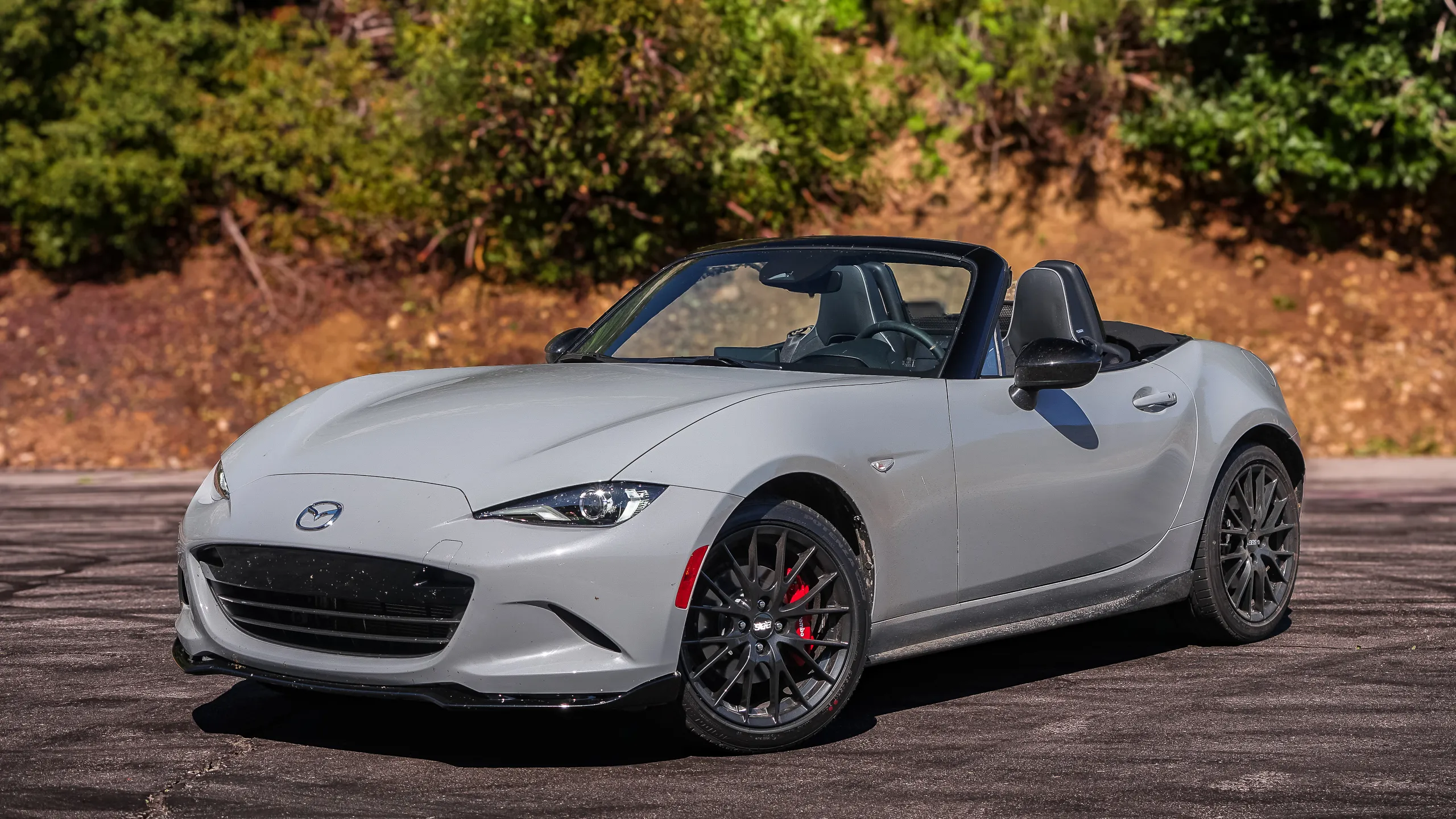
5. Mazda MX-5 Miata 2024
Mazda MX-5 Miata 2024 follows a lightweight performance philosophy that defines both its appeal and its limitations. Designed to deliver direct driver connection, the car sits very low to the ground with minimal suspension travel. When potholes appear, there is little room for absorption, resulting in immediate and noticeable impacts.
Suspension tuning emphasizes responsiveness rather than comfort. Broken pavement produces sharp jolts that travel through the steering column and seat frame. Every surface flaw is communicated clearly to the driver, which may appeal during spirited driving but becomes tiring during daily commuting. Extended exposure to rough roads places physical strain on occupants, especially during longer trips.
Short wheelbase dimensions contribute to ride instability on uneven surfaces. When one wheel drops suddenly into a pothole, the entire vehicle reacts quickly, creating a choppy sensation. Limited tire sidewall height offers little cushioning, increasing susceptibility to wheel damage and premature tire wear. Careful route selection becomes necessary to avoid repeated impacts.
Cabin isolation remains intentionally minimal. Road noise, vibration, and impact sounds enter freely, reinforcing the sense of constant interaction with the road surface. While this openness suits driving enthusiasts, it amplifies discomfort when pavement quality deteriorates. Storage space and everyday practicality also remain limited, restricting versatility beyond recreational use.
Mazda MX-5 Miata 2024 rewards precision and engagement under ideal conditions. Pothole-filled roads test one’s tolerance, requiring cautious driving and acceptance of reduced comfort. Owners facing damaged streets daily may find that enjoyment gradually gives way to inconvenience during routine travel.
