
When going through the crowded city streets, squeezing into tight parking spaces, or making U-turns on narrow roads, a vehicle’s turning circle can make all the difference between effortless maneuvering and frustrating multi-point turns.
While we often associate agile handling with compact city cars, some larger vehicles surprise drivers with their remarkable ability to pivot in surprisingly small spaces.
A turning circle, measured curb-to-curb or wall-to-wall, represents the smallest circular turn a vehicle can make. This specification is determined by factors including wheelbase length, steering angle capabilities, and vehicle design.
Engineers must balance multiple considerations when optimizing turning radius, from suspension geometry to tire clearance, making exceptional maneuverability in larger vehicles particularly impressive.
The automotive world contains numerous unexpected champions of tight turning performance. From full-size trucks that go through the like sedans to SUVs that shame smaller competitors, these vehicles defy expectations about size and agility.
Some achieve their impressive statistics through innovative engineering solutions like rear-wheel steering, while others rely on clever packaging and traditional design excellence.
Understanding which vehicles offer superior turning circles helps buyers make informed decisions, especially those who frequently go throug the urban environments, tight parking garages, or winding mountain roads.
The following ten vehicles stand out for delivering surprisingly tight turning circles that contradict assumptions about their size, class, or purpose. Each demonstrates that thoughtful engineering can overcome dimensional challenges, providing drivers with confidence and convenience in confined spaces where larger vehicles typically struggle.
1. RAM 1500
The RAM 1500 consistently surprises drivers who expect full-size pickup trucks to handle like ocean liners in parking lots. With a turning circle ranging from 39.9 to 44.9 feet depending on configuration, the RAM 1500 outmaneuvers many smaller competitors in its segment.
This impressive agility seems almost impossible when you consider that crew cab models stretch beyond 230 inches in length, yet the truck pivots with unexpected grace.
RAM’s engineers achieved this remarkable turning performance through careful attention to steering geometry and suspension design.
The truck’s independent front suspension allows for greater steering angles than traditional solid axle designs, while the rear suspension setup provides the stability needed for towing without compromising front-end articulation.
Even when equipped with the longer wheelbase found in crew cab configurations, the RAM 1500 maintains respectable maneuverability that makes daily driving less stressful.
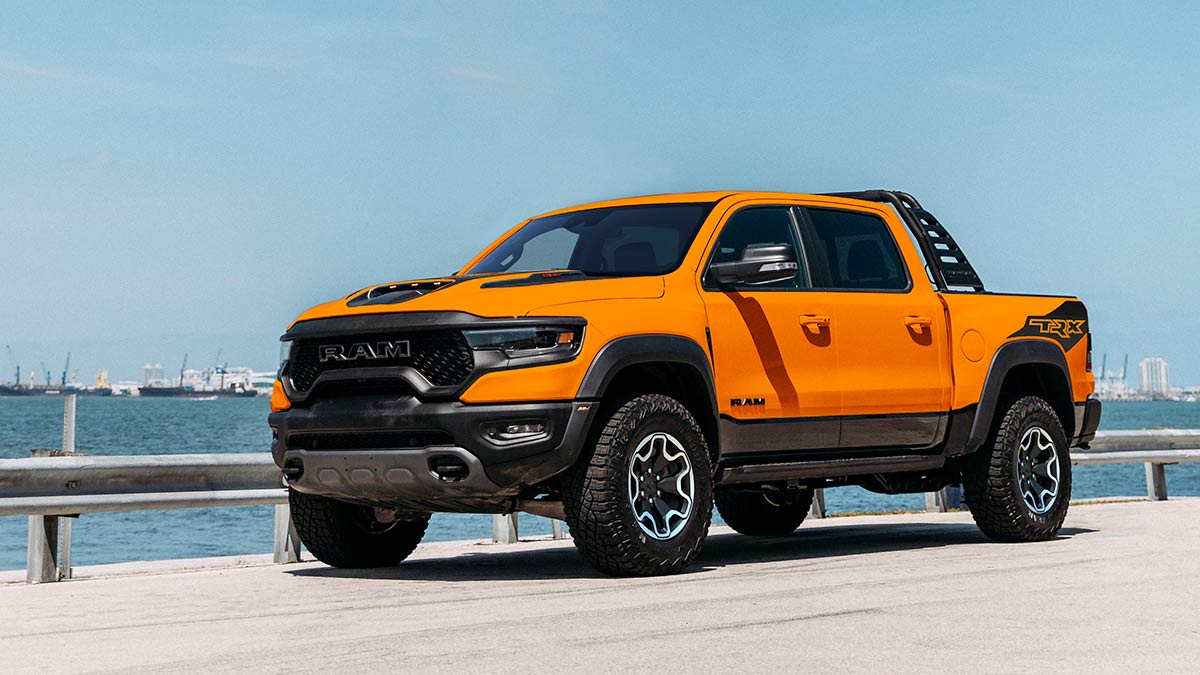
What makes the RAM 1500’s turning circle particularly noteworthy is how it performs across different trim levels and configurations. The Tradesman work truck variant manages similar agility to the luxurious Limited trim, ensuring that whether you’re hauling construction materials or cruising to a business meeting, you’ll go through the tight spaces with confidence.
The standard wheelbase models deliver the tightest turns, but even long-bed crew cab versions remain competitive with rivals’ shorter configurations.
City dwellers who need truck capability without sacrificing urban maneuverability find the RAM 1500’s turning radius especially valuable. Parallel parking becomes less daunting, three-point turns require fewer adjustments, and going through the narrow streets or parking garages doesn’t induce anxiety.
The truck’s tight turning circle also benefits those who frequently go through the construction sites, where space constraints and obstacles demand precise vehicle placement. Combined with available surround-view camera systems and parking sensors, the RAM 1500’s natural agility becomes even more accessible to drivers of all skill levels.
2. Jeep Wrangler
The Jeep Wrangler’s legendary off-road prowess is well documented, but its surprisingly tight turning circle often goes unmentioned despite being crucial to its trail capability.
Two-door Wrangler models achieve a turning circle of approximately 34.5 feet, while four-door Wrangler Unlimited versions manage around 40.8 feet. These figures are impressive considering the vehicle’s solid front axle design, which typically limits steering angles compared to independent suspension systems.
Jeep specifically engineered the Wrangler’s steering geometry to excel in situations where maneuverability matters most. On challenging trails, the ability to go through the tight switchbacks, position the vehicle precisely over obstacles, or turn around on narrow mountain paths can mean the difference between progress and retreat.
The tight turning circle combines with exceptional approach and departure angles, creating a vehicle that can handle technical terrain other SUVs cannot attempt.
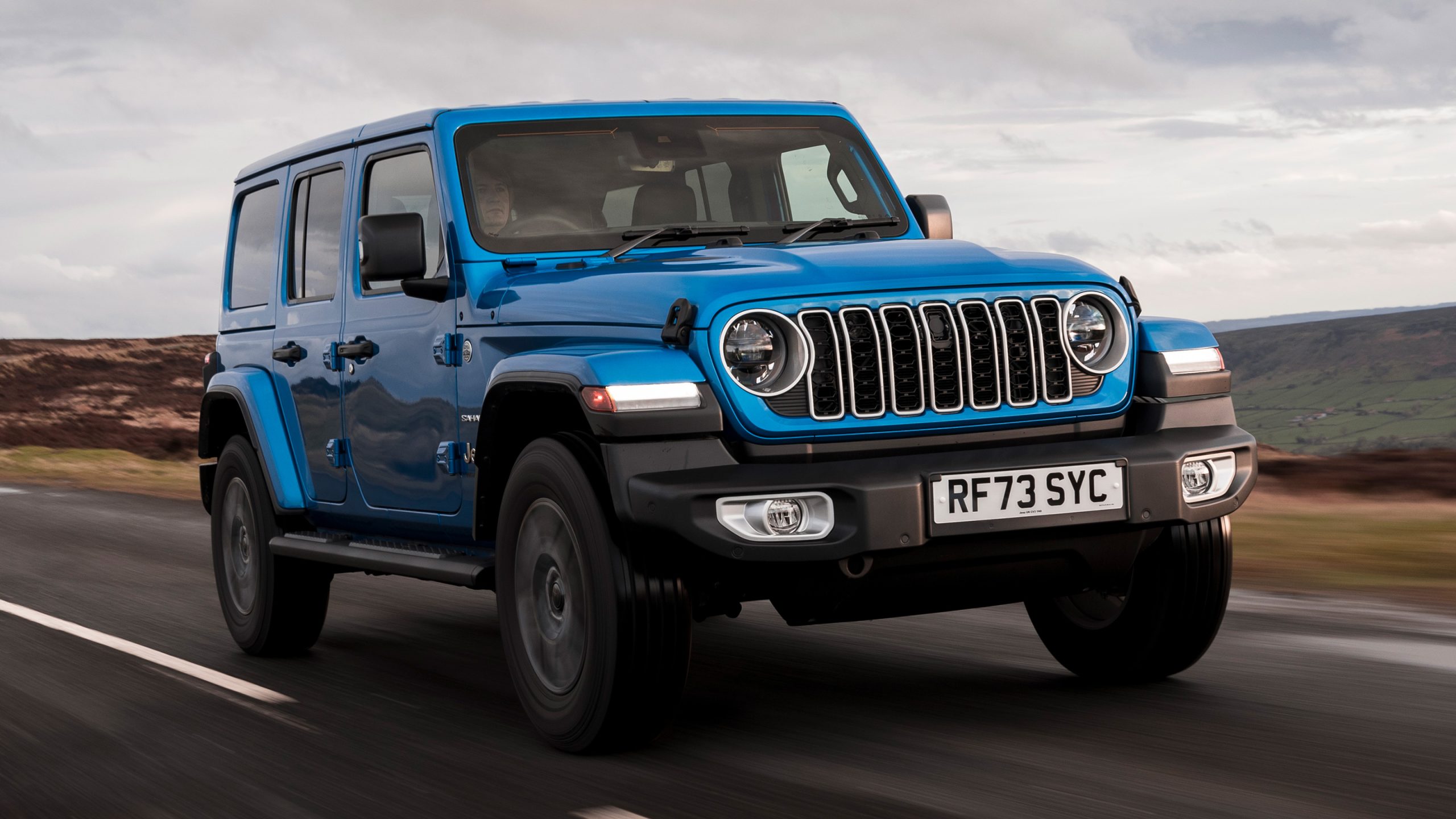
The Wrangler’s turning performance benefits from its relatively short wheelbase, particularly in two-door configurations. This compact footprint allows the vehicle to pivot around its center point more easily than stretched three-row SUVs or long-wheelbase trucks.
Even the four-door Unlimited, with its extended passenger space, maintains competitive maneuverability that belies its substantial dimensions.
The solid axles front and rear, while theoretically limiting steering angle, are engineered with enough articulation to deliver practical agility both on and off pavement.
Urban Wrangler owners appreciate the tight turning circle as much as trail enthusiasts. Parking in crowded shopping center lots, going through the downtown streets with delivery trucks double-parked, or making U-turns on residential roads all become easier thanks to the compact turning radius.
The combination of a commanding seating position, excellent visibility, and tight turning circle makes the Wrangler surprisingly pleasant for daily driving despite its utilitarian nature. For drivers seeking one vehicle that excels in wilderness settings while remaining practical for everyday errands, the Wrangler’s maneuverability bridges both worlds effectively.
3. Ford F-150 Lightning
The all-electric Ford F-150 Lightning brings surprising agility to the full-size truck segment, with a turning circle of approximately 47.1 feet for standard wheelbase models.
While this measurement might not sound particularly tight on paper, it represents impressive performance for a vehicle weighing over 6,500 pounds and stretching more than 232 inches long. The Lightning achieves maneuverability comparable to its gasoline-powered F-150 siblings while packaging massive battery packs and electric motors.
What makes the Lightning’s turning performance particularly remarkable is how the electric powertrain’s unique architecture enables it.
Without a traditional engine and transmission occupying the front end, Ford’s engineers gained flexibility in positioning steering components and optimizing front suspension geometry.
The independent front suspension allows maximum steering angle, while the low center of gravity from floor-mounted batteries actually enhances handling characteristics during turns. The instant torque delivery from electric motors also provides precise control when maneuvering at low speeds.
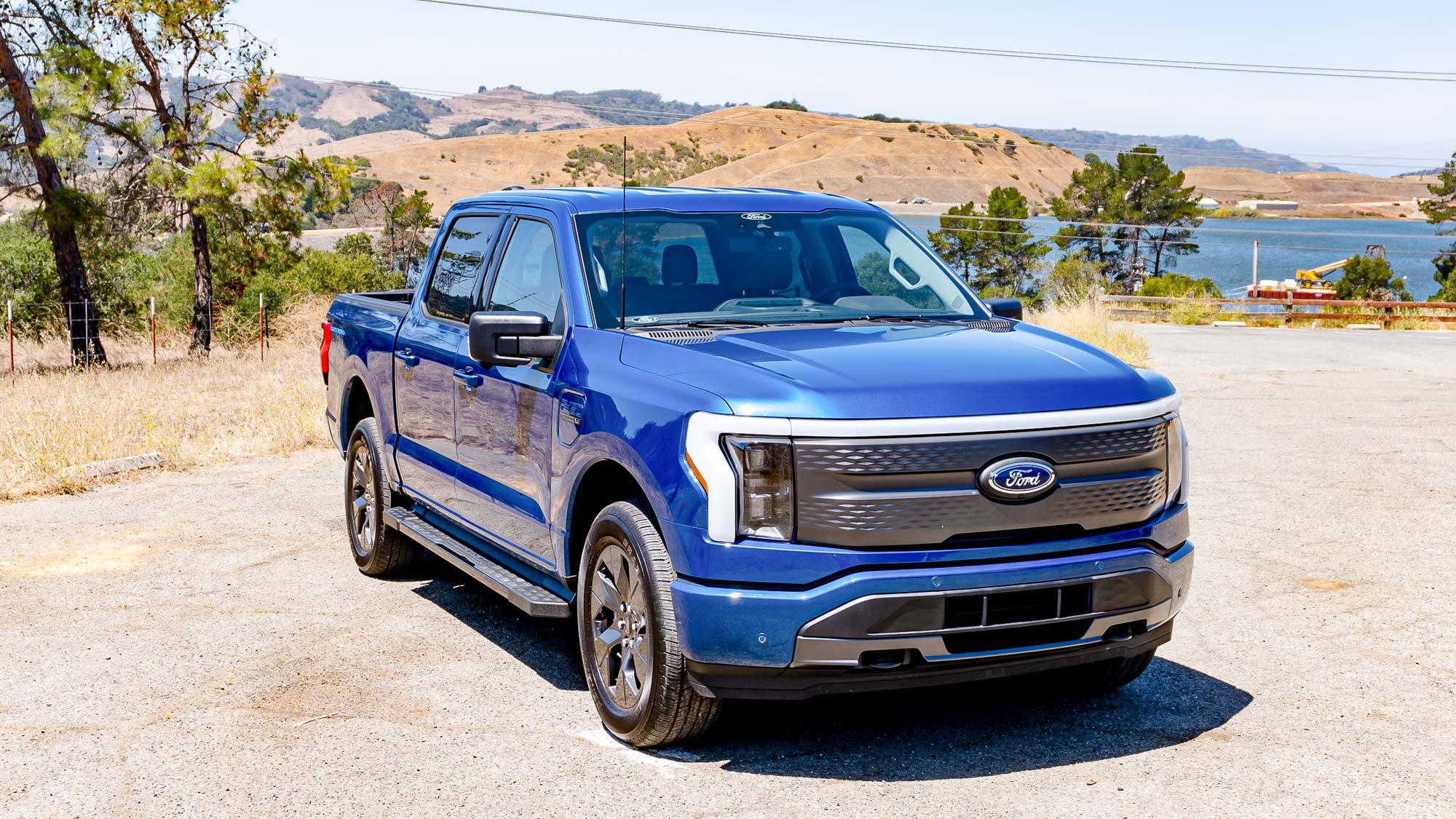
The Lightning’s turning circle becomes especially valuable when considering how owners use these trucks. Electric vehicle owners often go through the urban and suburban environments where charging infrastructure is concentrated, making tight turning ability essential for daily driving.
Whether you’re positioning the truck precisely at a charging station, parallel parking on a city street, or going through a crowded shopping center lot, the Lightning’s agility defies expectations about electric truck handling.
Ford enhanced the practical benefits of the Lightning’s tight turning circle through technology integration. The available Pro Trailer Backup Assist system uses the compact turning radius to simplify trailer maneuvering, while the 360-degree camera system provides visual confirmation of clearances during tight turns.
The Onboard Scales feature even helps drivers understand weight distribution during turns, particularly useful when towing or hauling. For contractors going through the job sites or adventure seekers accessing remote campsites, the Lightning’s combination of electric capability and genuine truck maneuverability opens new possibilities in zero-emission transportation.
4. Mazda MX-5 Miata
The Mazda MX-5 Miata delivers exactly what enthusiasts expect from a lightweight roadster: exceptional handling, responsive steering, and a turning circle of just 30.8 feet that makes the car feel like an extension of the driver’s intentions.
This incredibly tight turning radius results from the Miata’s compact dimensions, short wheelbase, and purpose-built sports car architecture, where every design decision prioritizes driving dynamics.
Mazda engineered the Miata’s chassis around the principle of “Jinba Ittai,” the Japanese concept of horse and rider in perfect harmony.
The tight turning circle directly supports this philosophy by allowing drivers to place the car exactly where they intend with minimal steering input or adjustment.
On winding mountain roads, the Miata’s ability to pivot through tight hairpins creates an engaging, confidence-inspiring experience. On autocross courses, the compact turning radius allows aggressive line choices that maximize momentum through technical sections.
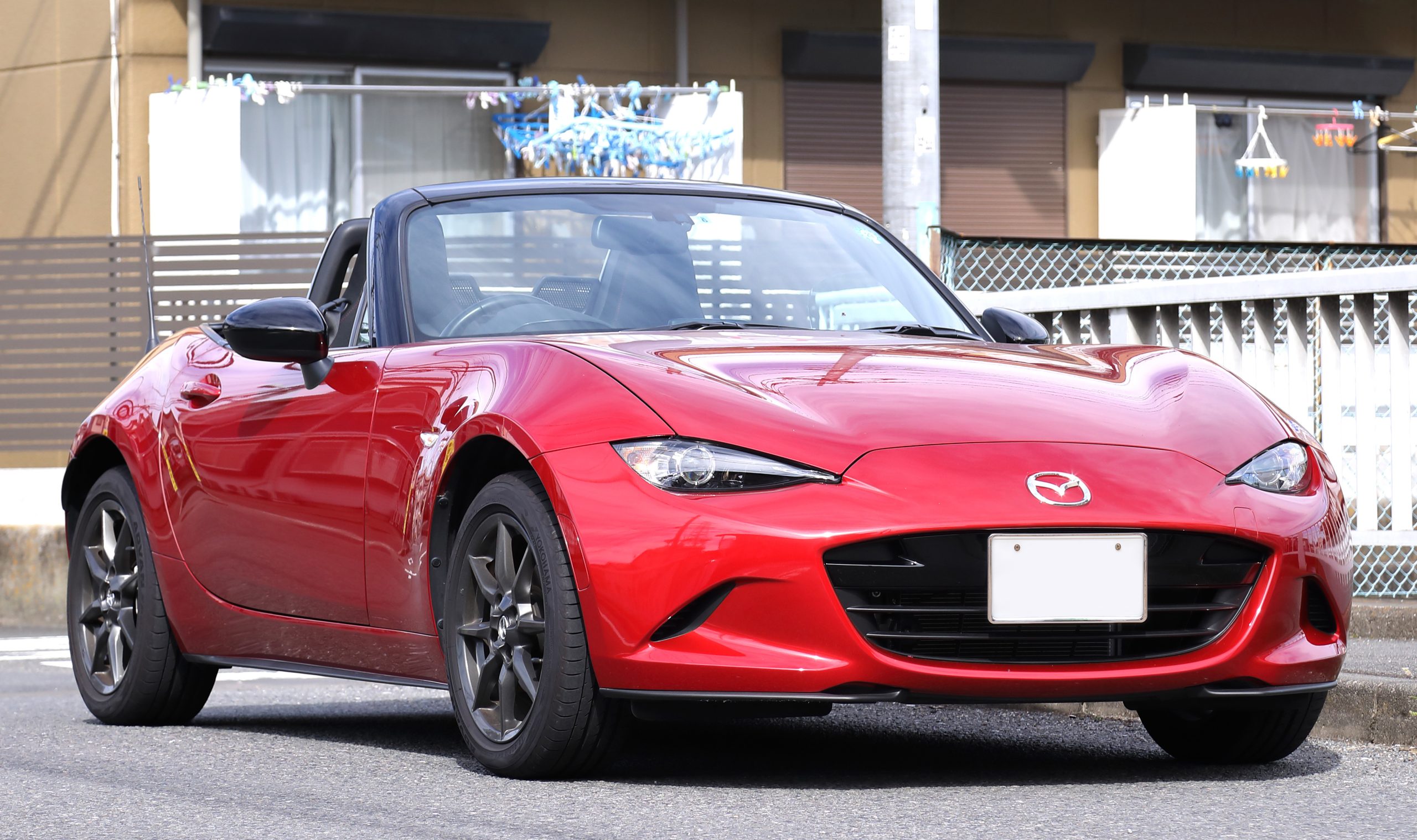
The fourth-generation ND Miata maintains this exceptional maneuverability while incorporating modern safety standards and enhanced rigidity.
Despite growing slightly larger than its predecessors to accommodate contemporary crash protection, the ND preserves the tight turning circle that makes the Miata legendary.
The electric power steering system, initially controversial among purists, actually contributes to the car’s agility by allowing more aggressive steering angles while maintaining the feedback that drivers cherish.
Beyond performance driving, the Miata’s turning circle provides practical advantages that make the car surprisingly livable as daily transportation.
Parallel parking becomes trivial, crowded parking lots present no challenge, and U-turns require minimal road width. City dwellers particularly appreciate how the Miata goes through the narrow streets and tight garage spaces where larger sports cars struggle.
The combination of compact dimensions, exceptional visibility with the top down, and that remarkable 30.8-foot turning circle transforms routine driving into enjoyable experiences where other performance cars feel cumbersome and compromised.
Also Read: 5 Cars That Work for Apartment Dwellers vs 5 That Don’t
5. GMC Hummer EV
The GMC Hummer EV seems like the last vehicle that would possess a tight turning circle. Measuring over 216 inches long, 86 inches wide, and weighing approximately 9,000 pounds, this electric super-truck appears destined for ponderous handling.
Yet the Hummer EV incorporates CrabWalk mode, an innovative four-wheel steering system that enables diagonal movement and effectively reduces the turning circle to approximately 37 feet, an astonishing achievement for such a massive vehicle.
GMC’s CrabWalk technology represents a significant engineering accomplishment that fundamentally changes how large vehicles maneuver.
The system allows the rear wheels to steer up to 10 degrees in the same direction as the front wheels for diagonal movement, or in the opposite direction to tighten the turning radius dramatically.
When going through the tight spaces, drivers can activate CrabWalk mode through the center console, transforming the Hummer from a gargantuan truck into something with the maneuverability approaching a mid-size SUV.
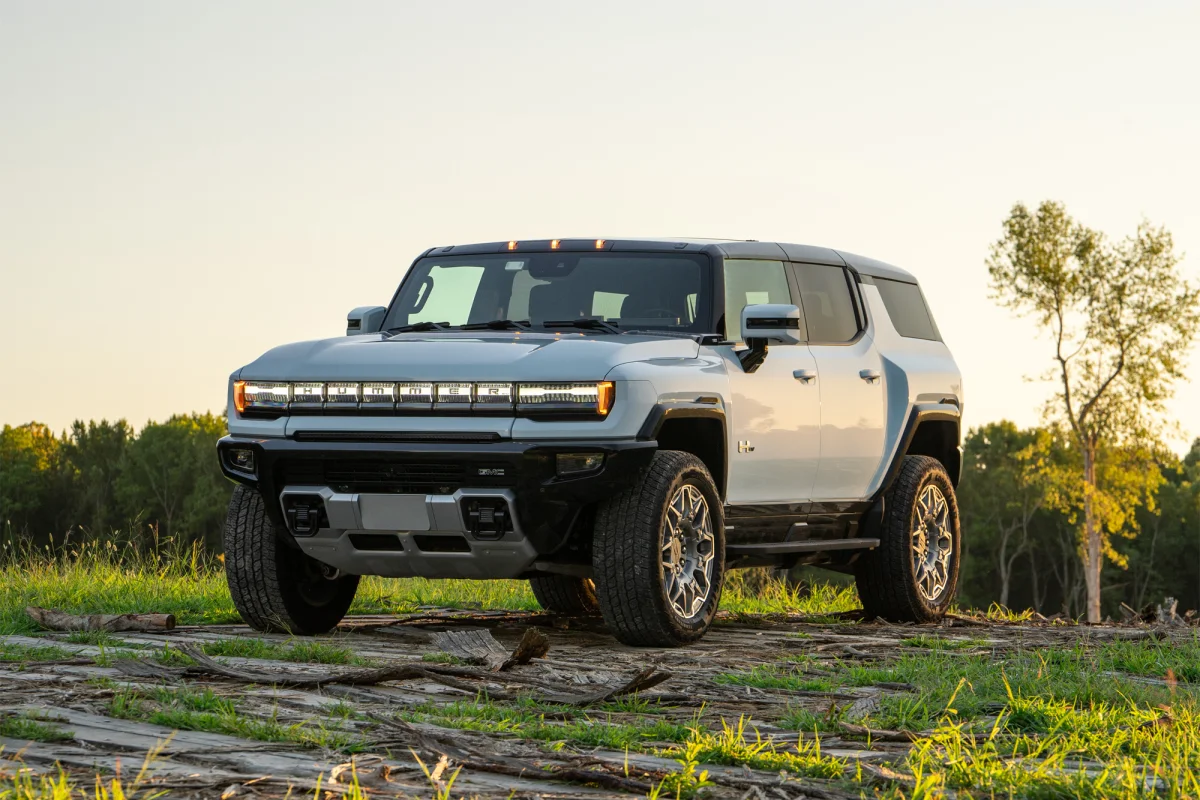
The practical applications of CrabWalk extend beyond mere parking lot convenience. Off-road enthusiasts use the feature to go through the tight trail sections, position the vehicle precisely over obstacles, or avoid hazards that would require extensive maneuvering in conventional trucks.
The diagonal movement capability proves particularly valuable when extracting the Hummer from tight spots or aligning the truck with trailer hitches without multiple adjustment attempts.
In urban settings, the reduced turning circle makes the imposing Hummer surprisingly manageable on city streets where its size would otherwise prove limiting.
Beyond CrabWalk, the Hummer EV’s standard four-wheel steering system improves everyday maneuverability even when not in diagonal mode. The rear-wheel steering reduces the effective turning radius, improves stability during lane changes, and enhances the truck’s agility despite its substantial mass.
Combined with the instantaneous torque delivery from tri-motor configurations and the low center of gravity from floor-mounted batteries, the Hummer EV handles with unexpected grace.
This engineering achievement demonstrates how advanced technology can overcome dimensional challenges that would have seemed insurmountable in previous generations of large vehicles.
6. Honda Fit
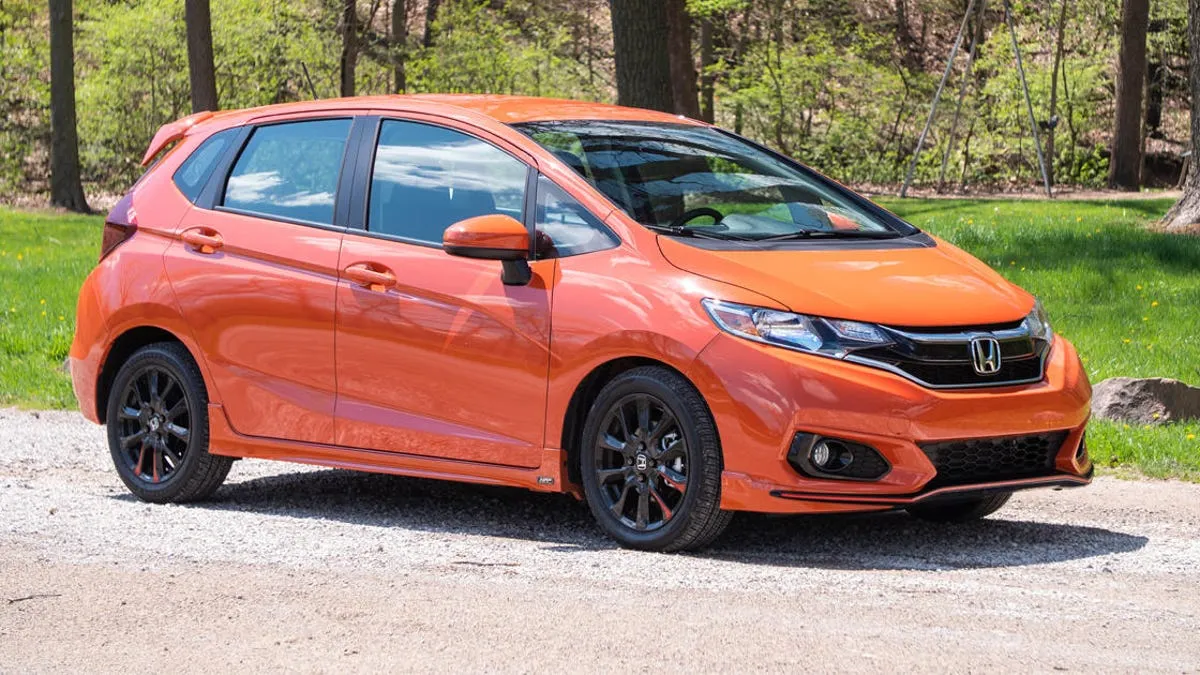
The Honda Fit has earned a devoted following partly because of its exceptional packaging efficiency, but its remarkably tight turning circle of approximately 34.1 feet deserves equal recognition.
This compact hatchback pivots within a circle smaller than many subcompact cars manage, making it an ideal urban vehicle that maximizes interior space without sacrificing maneuverability. The Fit’s dimensions and engineering create a vehicle that feels naturally suited to crowded city environments.
Honda achieved the Fit’s impressive turning performance through intelligent chassis design and compact powertrain packaging. The short wheelbase combined with optimized steering geometry, allows the front wheels to achieve aggressive steering angles without interference from wheel wells or suspension components.
The transverse engine layout positions weight efficiently while allowing engineers to maximize the steering system’s capabilities. Even with the fuel tank located beneath the front seats instead of the rear, the Fit maintains excellent weight distribution that supports agile handling.
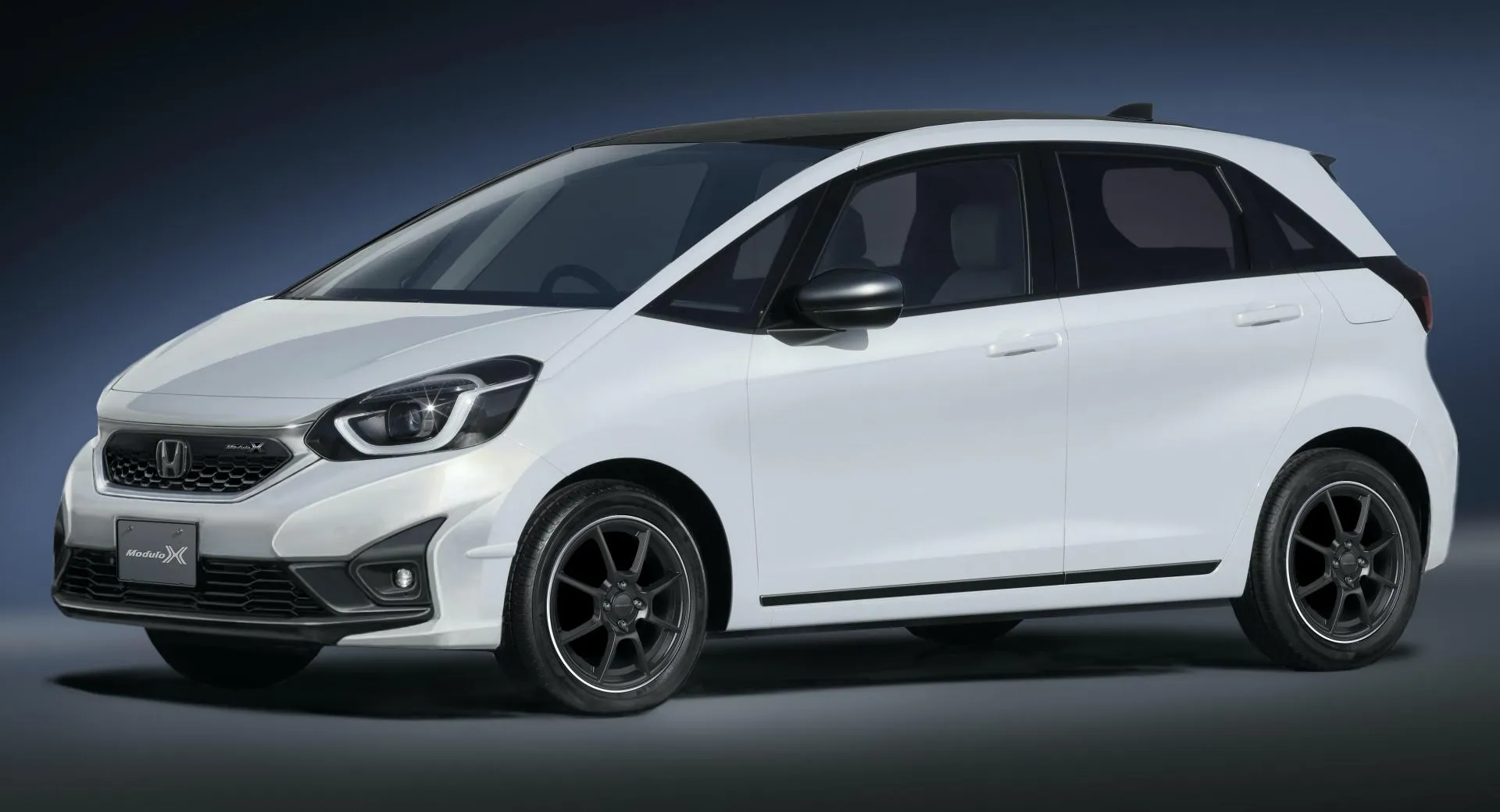
The tight turning circle transforms daily driving in ways that Fit owners quickly come to appreciate. Parallel parking becomes almost effortless, requiring minimal back-and-forth adjustments even in spaces that would challenge drivers of larger vehicles.
Three-point turns on narrow residential streets often become two-point maneuvers, while going through the crowded parking structures or reversing direction in tight spaces loses all stress.
The Fit’s excellent visibility through large windows combines with the compact turning radius to create a driving experience defined by confidence rather than anxiety.
Beyond practical convenience, the Fit’s maneuverability contributes to an engaging driving character despite modest power output. The car changes direction eagerly, making winding roads enjoyable and urban navigation almost playful. The steering feel, while not sports-car direct, provides enough feedback that drivers can exploit the tight turning circle confidently.
For city dwellers, college students, or anyone who prioritizes efficiency and practicality, the Honda Fit’s turning performance represents the kind of thoughtful engineering that makes a vehicle genuinely pleasant to live with over the years of ownership.
7. Mercedes-Benz S-Class (with Rear-Axle Steering)
The Mercedes-Benz S-Class flagship sedan seems unlikely to excel at tight maneuvering given its substantial size and luxury-focused mission.
However, models equipped with optional rear-axle steering achieve a turning circle of approximately 35.9 feet, remarkably tight for a vehicle exceeding 206 inches in length.
This advanced system allows a full-size luxury sedan to go through the with the agility typically associated with compact cars, demonstrating how technology can overcome traditional engineering limitations.
Mercedes’ rear-axle steering system represents sophisticated engineering that dynamically adjusts the rear wheels’ angle based on vehicle speed and steering input.
At low speeds, the rear wheels turn up to 10 degrees in the opposite direction from the front wheels, effectively shortening the wheelbase and tightening the turning circle dramatically.
At higher speeds, the rear wheels turn in the same direction as the front wheels, improving stability during lane changes and highway driving. This adaptive behavior optimizes the S-Class’s character for different driving situations.
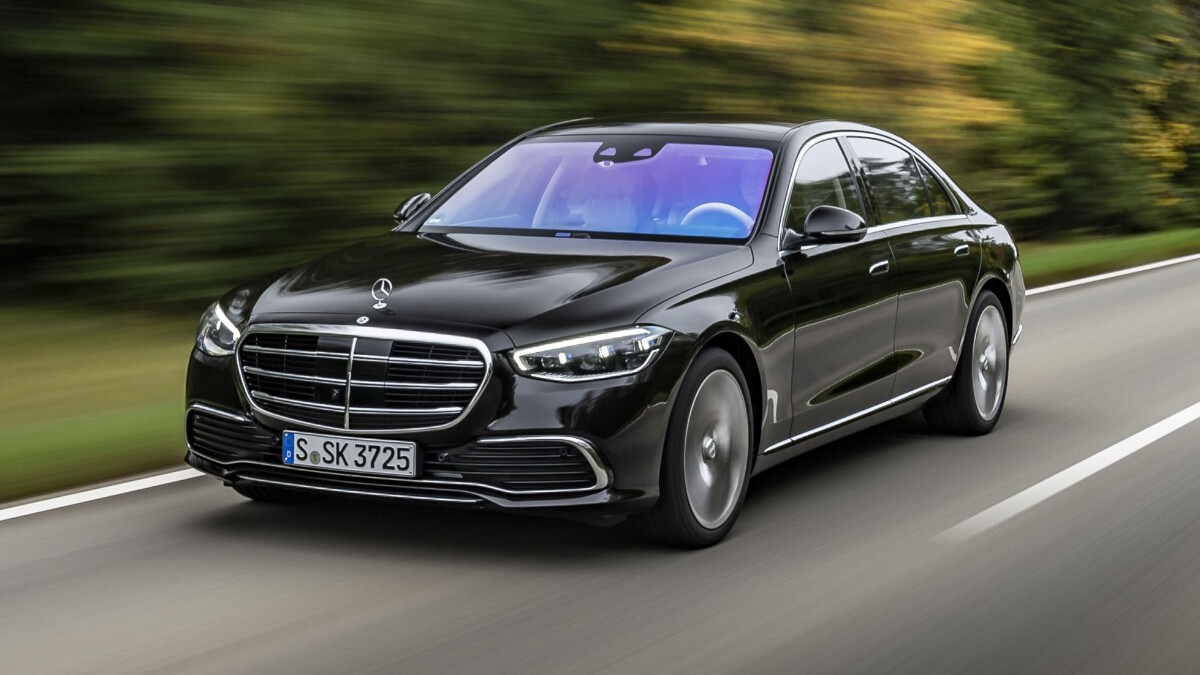
The practical benefits of this tight turning circle prove especially valuable for S-Class buyers who may employ chauffeurs or frequently go through urban environments.
Parking in tight spots at exclusive restaurants, going through the narrow European city streets, or making U-turns on busy boulevards all become easier despite the S-Class’s imposing dimensions.
The system operates transparently, requiring no special driver input or mode selection, simply making the car more maneuverable without compromising the serene, effortless character that S-Class buyers expect.
Beyond convenience, the rear-axle steering system’s contribution to the tight turning circle enhances the S-Class’s dynamic capability.
The car changes direction more eagerly, exhibits less body roll during cornering, and generally feels more agile than its size suggests possible.
Combined with air suspension that can adjust ride height and damping, adaptive cruise control, and active safety systems, the rear-axle steering completes a technology package that makes piloting a large luxury sedan surprisingly engaging and stress-free in any environment.
8. Toyota 4Runner
The Toyota 4Runner maintains old-school body-on-frame SUV construction while delivering a surprisingly competitive turning circle of approximately 37.4 feet.
This measurement becomes even more impressive when considering the 4Runner’s solid rear axle, which many modern SUVs have abandoned in favor of independent suspension.
Toyota proves that traditional truck-based architecture doesn’t necessarily mean compromised maneuverability, at least when engineers prioritize steering geometry and wheelbase optimization.
The 4Runner achieves its respectable turning performance through careful chassis tuning and a moderate wheelbase that balances interior space with agility.
The independent front suspension allows sufficient steering angle to keep the turning circle competitive, while the rear suspension design doesn’t compromise the tight turns that make daily driving pleasant.
Even when equipped with aggressive off-road tires or lifted suspension from TRD packages, the 4Runner maintains predictable turning characteristics that inspire confidence.
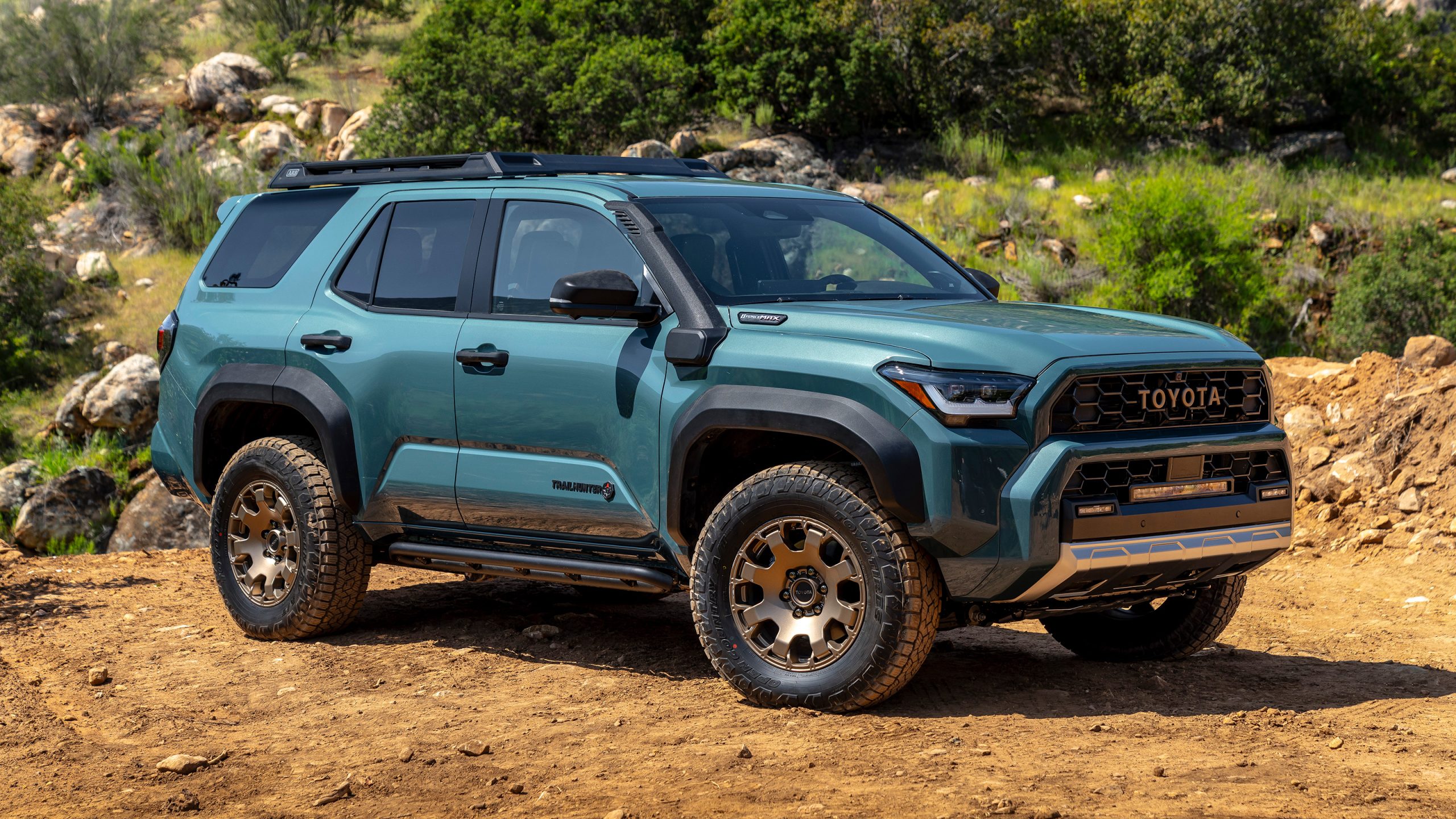
Off-road enthusiasts particularly appreciate the 4Runner’s turning circle when going through the technical trails. The ability to execute tight turns on narrow mountain roads, position the vehicle precisely during rock crawling, or reverse direction on switchbacks makes the difference between accessing remote locations and turning back.
The combination of a tight turning circle, excellent ground clearance, and robust four-wheel-drive systems creates a package that handles challenging terrain without the size-related compromises of larger SUVs.
For daily driving, the 4Runner’s turning circle strikes a balance between family-hauling capability and urban manageability. Three rows of seating provide space for up to seven passengers, yet the SUV goes through the parking lots and city streets without the unwieldy feel of extended-length competitors.
The commanding driving position offers excellent forward visibility, making it easier to judge clearances during tight turns, while the square body shape helps drivers understand the vehicle’s footprint.
Parents appreciate how the 4Runner handles school pickup lines and soccer practice parking lots despite offering substantial cargo capacity and towing capability for weekend adventures.
9. Mini Cooper
The Mini Cooper built its reputation on combining retro styling with genuine go-kart handling characteristics, and its exceptionally tight turning circle of approximately 35.4 feet demonstrates engineering that matches the marketing promises.
This compact dimension allows the Mini to pivot within spaces that would challenge larger vehicles, creating the nimble urban driving experience that has made the reborn brand successful since BMW’s 2001 relaunch.
BMW engineered the modern Mini’s chassis to honor the original’s spirit while incorporating contemporary safety standards and performance expectations. The short wheelbase creates the foundation for tight turning, while the wide track enhances stability during aggressive cornering.
The electric power steering system allows more aggressive steering angles than traditional hydraulic setups, contributing to the exceptionally tight turning circle without sacrificing the weighted, communicative steering feel that enthusiasts demand from performance-oriented small cars.

The Mini’s turning circle transforms urban driving from a navigational challenge into entertainment. Parallel parking becomes almost trivially easy, often requiring just one attempt to slide into spaces that other drivers pass by.
U-turns on residential streets require minimal road width, while going through the tight lanes and roundabouts common in European cities feels natural and stress-free.
The combination of compact dimensions, excellent visibility, and that remarkable turning circle makes the Mini feel perfectly scaled for city environments where space comes at a premium.
Performance variants like the Cooper S and John Cooper Works models leverage the tight turning circle to deliver engaging driving dynamics beyond straight-line acceleration.
On autocross courses or winding back roads, the ability to rotate the car quickly through tight corners allows drivers to maintain momentum and explore the chassis limits safely.
The turning circle combines with responsive steering, firm suspension tuning, and eager powertrains to create a cohesive performance package where agility matters as much as outright speed, staying true to the Mini philosophy that driving enjoyment doesn’t require excessive power or size.
10. Rivian R1T
The Rivian R1T electric pickup truck surprises observers with a turning circle of approximately 43.6 feet, impressive for a vehicle measuring 217 inches long and weighing over 7,000 pounds.
What makes this achievement particularly noteworthy is Rivian’s inclusion of an available quad-motor configuration where each wheel receives independent power delivery, combined with future software capabilities that could enable even tighter maneuvering through advanced torque vectoring and potential tank-turn functionality.
Rivian engineered the R1T’s chassis to balance adventure capability with daily drivability, and the turning circle reflects this dual-purpose philosophy.
The independent front suspension allows generous steering angles, while the skateboard battery architecture provides flexibility in packaging components for optimal weight distribution and handling.
The relatively short bed length compared to traditional pickups contributes to the manageable wheelbase, proving that electric truck design doesn’t need to replicate every dimension of gasoline-powered predecessors to succeed.
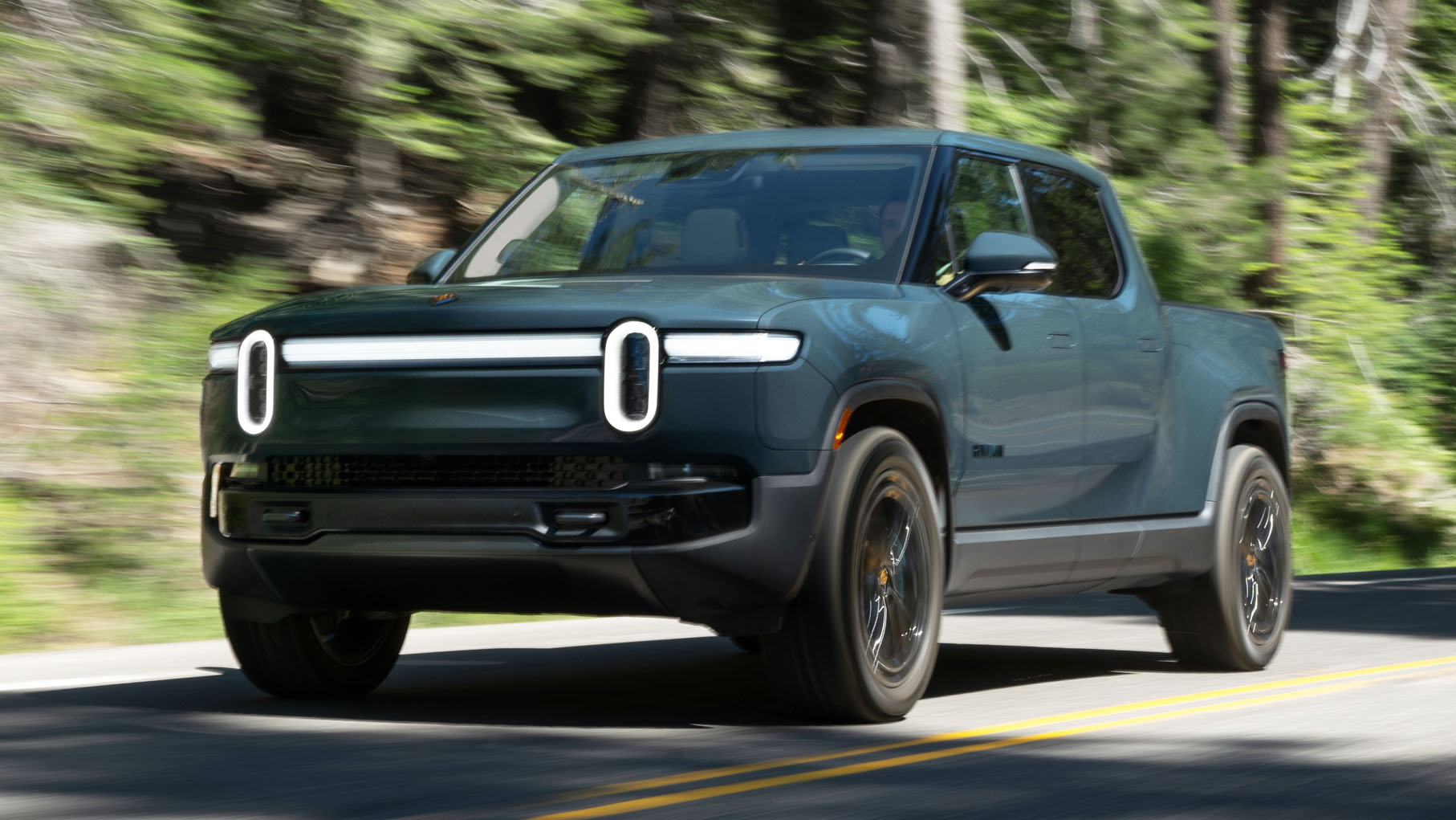
The R1T’s turning performance becomes especially valuable when considering how owners use these adventure-focused trucks. going through the forest service roads to reach trailheads, positioning precisely at campsites, or executing three-point turns on narrow mountain passes all benefit from a tighter turning circle.
The instant torque from electric motors provides precise low-speed control during tight maneuvers, while the low center of gravity from floor-mounted batteries enhances stability.
Features like the Tank Turn, which Rivian continues developing, could eventually allow the R1T to pivot within its own length, fundamentally changing expectations about large vehicle maneuverability.
For daily driving, the R1T’s turning circle makes the truck more livable in suburban and urban environments than its dimensions might suggest. Parking at charging stations, going through the grocery store lots, or handling school drop-off lanes becomes less stressful thanks to the relatively tight turning radius.
The combination of advanced driver assistance features, 360-degree cameras, and genuine maneuverability creates a user experience where the R1T’s substantial size rarely feels burdensome.
As electric trucks compete for market share, Rivian’s attention to practical details like turning circle demonstrates understanding that capability must extend beyond range and power to encompass the everyday realities of truck ownership.
Also Read: 5 Vehicles That Feel Right for Daily Life vs 5 That Don’t
