
For decades, Germany has quietly dominated the hot-hatch world. While American enthusiasts traditionally gravitate toward muscle cars and big V8 sedans, a different kind of performance culture grew overseas one built around compact dimensions, everyday usability, and serious engineering.
These German hatchbacks proved that you don’t need a massive footprint to deliver thrilling speed, precision handling, and premium refinement.
In the U.S., hot hatches have always lived in a niche. But models from brands like Volkswagen, Audi, BMW, and Mercedes-Benz changed that perception.
These cars brought Autobahn-bred performance to American roads while remaining practical enough for daily commuting, Costco runs, and weekend canyon carving.
What makes these machines iconic isn’t just speed, it’s balance. They blend performance, build quality, and usability in ways few competitors can match.
Here are nine high-performance German hatchbacks that didn’t just raise the bar, they rewrote the rulebook.
1. Volkswagen Golf GTI
No list of German performance hatchbacks can start anywhere else. The Golf GTI essentially created the modern hot-hatch formula back in the late 1970s: lightweight, turbocharged fun wrapped in a sensible family shell.
Over multiple generations, the GTI evolved from a scrappy lightweight into a refined performance daily. U.S. buyers especially embraced the Mk5 and Mk7 models, which balanced punchy turbo power with upscale interiors and impressive reliability.
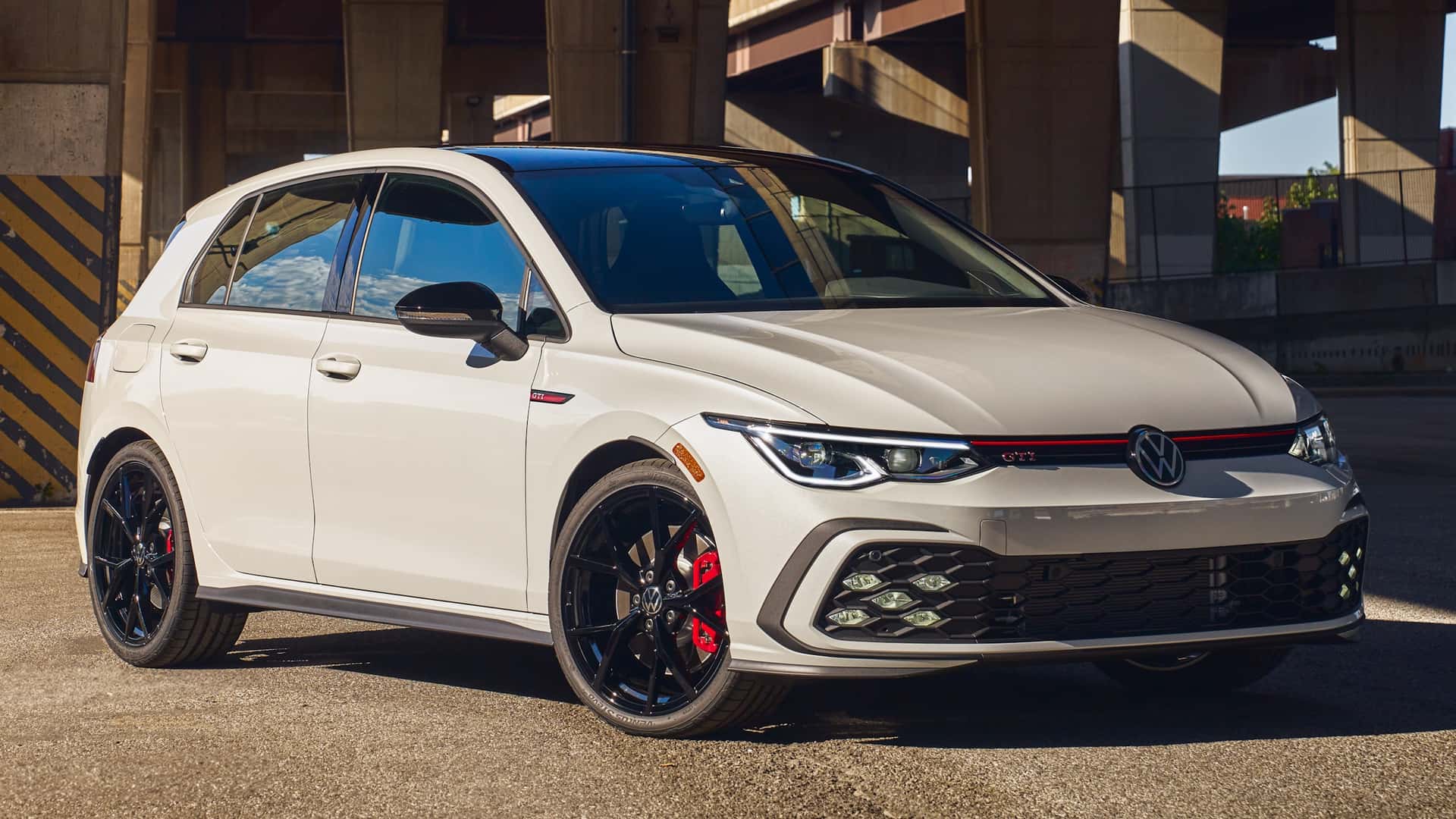
The GTI’s real genius lies in accessibility, it’s quick enough to entertain seasoned drivers, forgiving enough for newcomers, and comfortable enough for long road trips. Even today, it remains the benchmark for affordable performance hatchbacks in America.
It is unsurprising that the newest GTI retains much of the dynamic character of its predecessor. Although exterior styling has evolved, the core mechanical components, including the engine, transmission options, and much of the suspension hardware, carry over.
That said, there are measurable updates. Entry-level GTIs receive a modest increase in power output, and every version now comes standard with an electronically controlled limited-slip differential. This system improves traction when accelerating out of corners, enabling more efficient power delivery at corner exit.
Equipped with the available dual-clutch automatic transmission, a test GTI accelerated from 0 to 60 mph in 5.9 seconds. That figure places it approximately half a second behind the more powerful Hyundai Elantra N fitted with its dual-clutch transmission.
The manual-transmission GTI recorded a 6.5-second run to 60 mph, one-tenth slower than the manual Elantra N and roughly half a second behind the Subaru WRX. Both transmission choices perform well. The manual gearbox features precise shift action and a light clutch with a clearly defined engagement point, making it manageable in urban settings while remaining satisfying on winding roads.
Braking performance is equally notable. Fitted with summer tires, the GTI stopped from 60 mph in just 103 feet, a short distance for a performance-oriented vehicle in this price bracket. Steering response and overall chassis tuning have also been refined. As a result, the latest GTI ranks among the most capable-handling front-wheel-drive cars currently available.
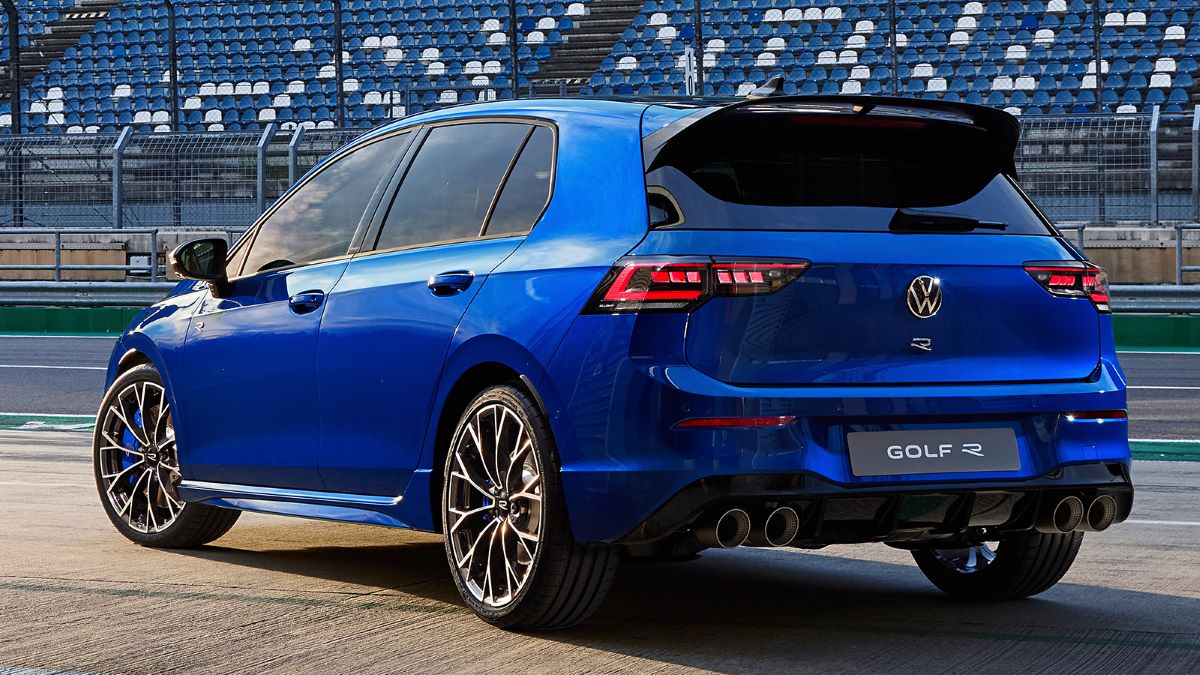
2. Volkswagen Golf R
If the GTI is the people’s performance hatch, the Golf R is its more serious sibling. Adding all-wheel drive, more horsepower, and subtle styling upgrades, the Golf R turns the friendly GTI formula into something genuinely fast.
For U.S. drivers dealing with rain, snow, or rough pavement, the AWD system makes this one of the most usable performance cars you can buy.
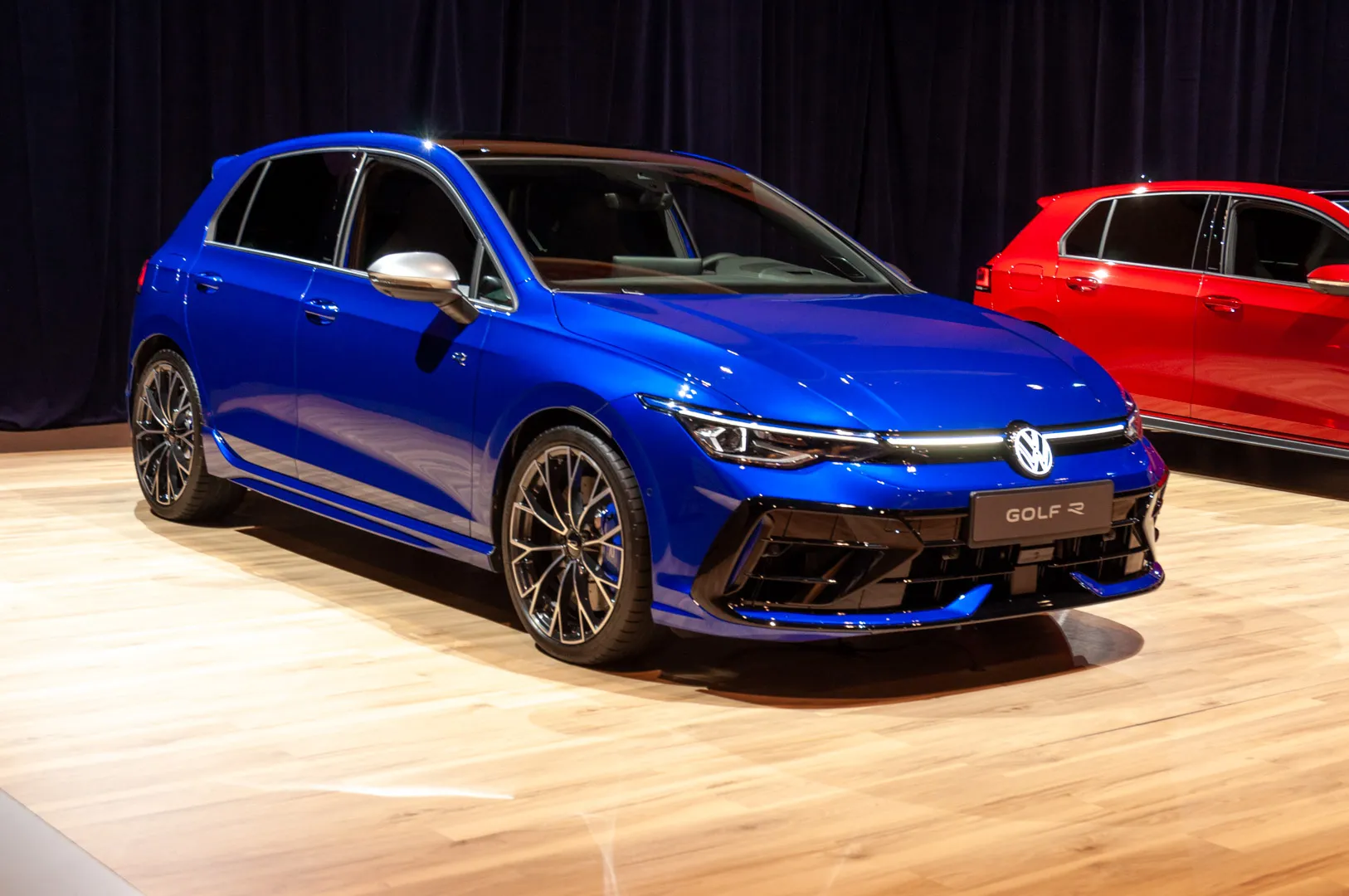
It’s the rare hatchback that can embarrass sports cars at stoplights while still hauling groceries in comfort. The Golf R earned its iconic status by proving that compact cars don’t need compromises.
The Golf R is powered by one of the most accomplished turbocharged four-cylinder engines in the segment. In testing, an automatic-equipped example accelerated from 0 to 60 mph in just 4.3 seconds and completed the quarter mile in 12.7 seconds at 108.3 mph. These figures position it near the top of the hot hatch and compact performance sedan categories.
The engine delivers strong, linear power with a smooth character, while the dual-clutch automatic transmission executes shifts with a level of refinement that surpasses many conventional automatics used by competitors.
Braking and cornering performance are similarly notable. The Golf R required only 105 feet to stop from 60 mph and generated 0.99 g of lateral grip on the skidpad, results that rank among the strongest recorded for compact vehicles.
The standard adaptive suspension effectively controls body movement, maintaining composure during aggressive driving without excessive harshness. Standard all-wheel drive ensures consistent traction in varied conditions.
Chassis tuning contributes to a sensation of lightness and agility, supported by responsive steering that communicates more road feedback than the closely related Volkswagen GTI.
While it may not represent the absolute dynamic benchmark within its class, it remains close to that standard. Some evaluators noted that steering effort in Sport mode can feel heavier than necessary, though assistance reduces at lower speeds, making maneuvering and parking straightforward.
Also Read: Top 10 Underrated Japanese Sports Cars That Are Not Supras
3. Audi RS3 Sportback
The RS3 Sportback is what happens when Audi decides subtlety is optional. Powered by a turbocharged five-cylinder engine, a layout loved by enthusiasts for its unique sound and massive torque, the RS3 delivers supercar-level acceleration in hatchback form.
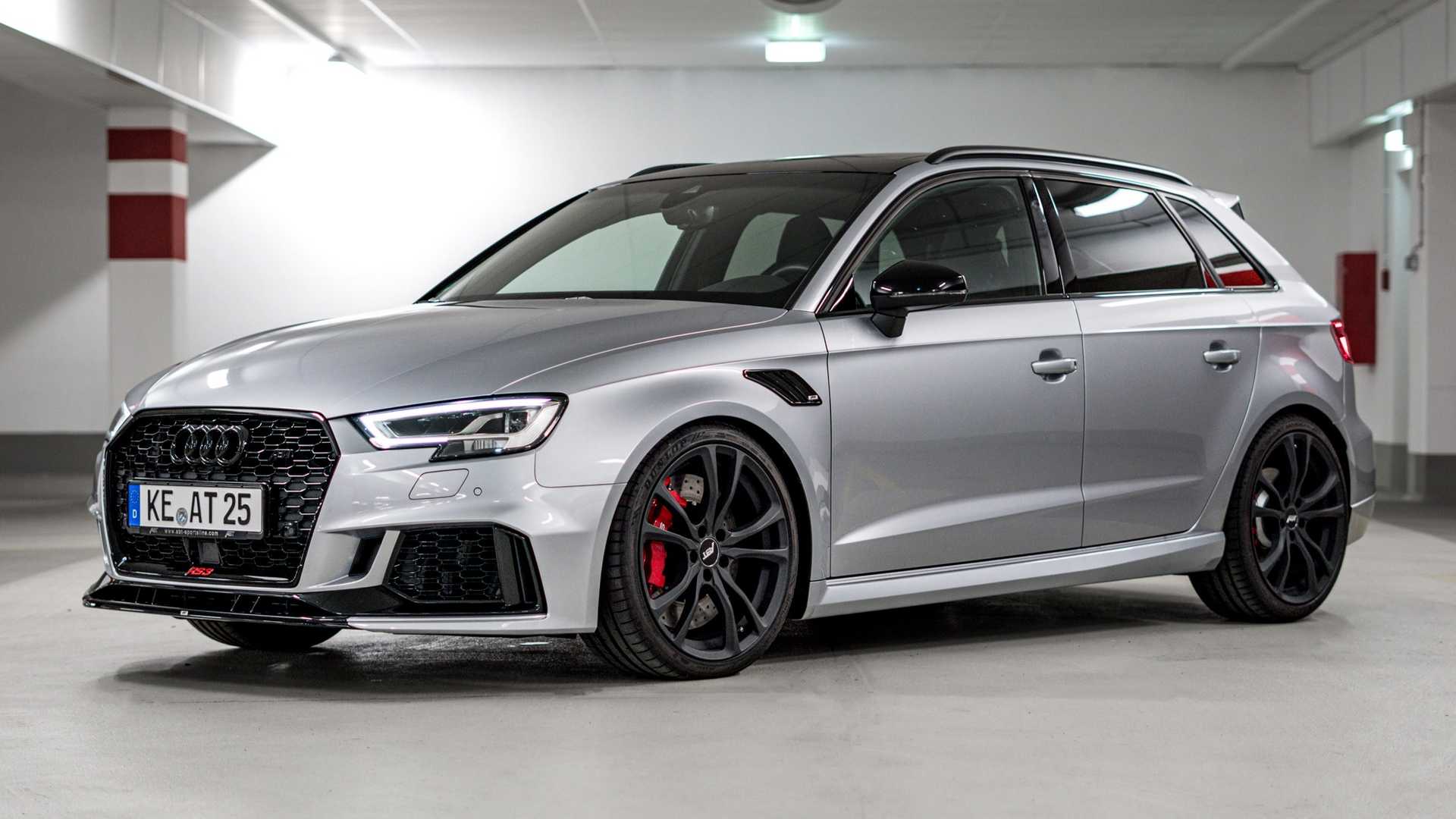
Although the Sportback version wasn’t officially sold in the U.S. for many years, American buyers still lusted after it through imports and gray-market builds.
Its combination of luxury, brute force, and compact size makes it one of the most revered performance hatches ever produced. It’s proof that small cars can still feel exotic.
4. Mercedes-AMG A45
Mercedes took a radically different approach with the AMG A45. Instead of refining an existing formula, they went all-in: massive turbo power, advanced all-wheel drive, and razor-sharp chassis tuning.
At one point, it held the title of the world’s most powerful production four-cylinder car. That’s wild for something you can park in a compact garage.
While U.S. availability has been limited, its reputation traveled fast and enthusiasts everywhere recognized it as a technical masterpiece.
This hatchback showed that luxury brands could build hardcore performance machines without sacrificing refinement. The defining characteristic of the Mercedes-AMG A45 is its acceleration. Its 2.0-litre turbocharged four-cylinder produces 416bhp, the highest output of any production 2.0-litre engine.
With launch control activated, particularly in dry conditions, the system deploys power with minimal loss, allowing the car to accelerate with exceptional efficiency. Even in wet test conditions, it recorded a 0–60mph time of four seconds, approximately half a second quicker than a manual BMW M2 achieved in the dry.
Straight-line figures, however, only tell part of the story. Without engaging launch control, throttle response remains immediate. Despite the presence of a large turbocharger on a relatively small displacement engine, lag is minimal.
Full throttle application produces only a brief hesitation before the car surges forward with notable force, shifting rapidly through its gears. The level of acceleration approaches that of high-end supercars from only a few years ago.
Notably, the engine maintains strong performance at higher revs, with peak power arriving at 6750rpm. Power delivery builds progressively and consistently to the redline. While its exhaust note does not match the distinctive five-cylinder soundtrack of the Audi RS3, it remains characterful for a four-cylinder unit.
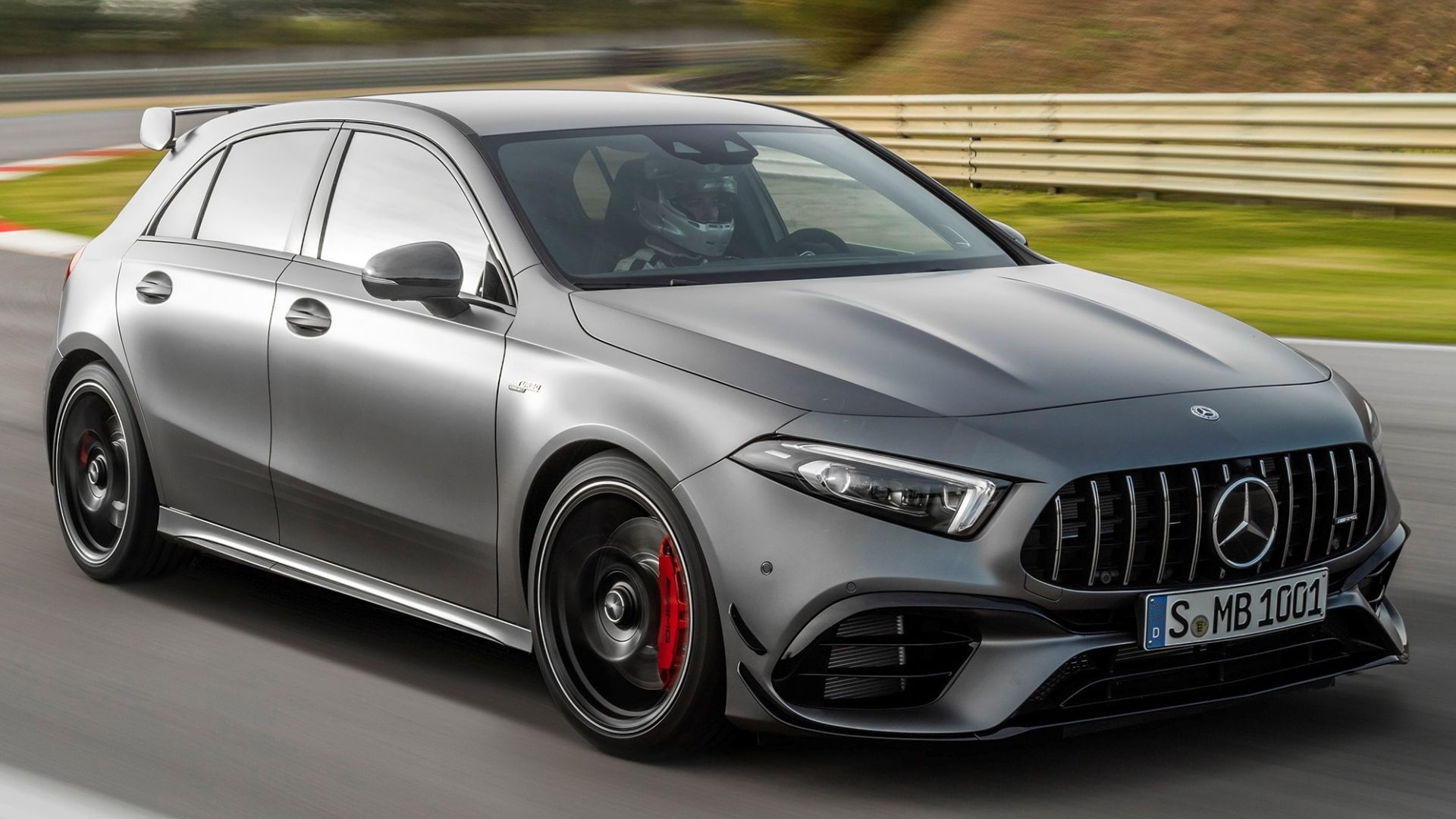
For increased driver involvement, the eight-speed dual-clutch transmission can be placed in manual mode, allowing gear changes via steering-wheel-mounted paddles. Shift responses are prompt and generally more immediate than those of the RS3’s gearbox.
In daily operation, the A45 demonstrates unexpected civility. When set to Comfort mode, it behaves similarly to a standard Mercedes-Benz A-Class, maintaining smooth and manageable behavior in urban traffic.
The standard adaptive suspension is firmer than that of the regular A-Class, but discomfort is largely confined to severe surface imperfections such as deep potholes. Overall, it remains comparatively livable by hot hatch standards. The RS3, particularly when equipped with adaptive suspension, offers slightly greater compliance and reduced motorway road noise.
On winding roads, steering response is not ultra-quick, but it delivers more front-end feedback than the RS3. The Honda Civic Type R provides heavier steering effort and marginally stronger feedback, yet the A45’s steering feels natural and precise, making accurate placement straightforward.
Body roll is limited even in Comfort mode, and Sport mode further tightens control without significantly degrading ride quality. Sport+ and Race settings are more appropriate for smooth surfaces, though the drivetrain and exhaust can be configured independently from the suspension to maintain performance intensity without fully stiffening the ride.
5. BMW M140i
BMW’s M140i stands out for one simple reason: it packs a turbocharged inline-six into a compact hatchback. That engine configuration is legendary among enthusiasts, delivering smooth power and a character most four-cylinder rivals can’t match.
Although the U.S. mostly received sedan versions like the M235i Gran Coupe, the M140i became an icon overseas and American fans took notice.
Hot hatches have traditionally followed a specific formula: compact dimensions, practical hatchback bodywork, and front-wheel drive. While a handful of early exceptions existed, such as the rear-wheel-drive Lotus Sunbeam, the arrival of the Volkswagen Golf GTI in the late 1970s effectively standardized the layout.
As mainstream manufacturers developed performance variants of their small, front-drive economy cars, front-wheel drive became the default configuration due to predictable handling traits and efficient packaging.
During the 1990s, rare outliers appeared, including the mid-engined, rear-wheel-drive Renault Clio V6. However, these models were exceptions rather than the rule. By the 2000s, power outputs in hot hatches climbed toward and beyond 250 horsepower. As torque levels increased, torque steer became more pronounced in front-wheel-drive platforms.
Manufacturers explored various engineering solutions. Ford Focus RS employed advanced torque-vectoring systems before ultimately adopting all-wheel drive. Volkswagen Golf R standardized all-wheel drive to manage higher outputs. Aside from persistent front-wheel-drive holdouts such as the Honda Civic Type R, distributing power to all four wheels appeared to be the prevailing answer for high-performance hatchbacks.
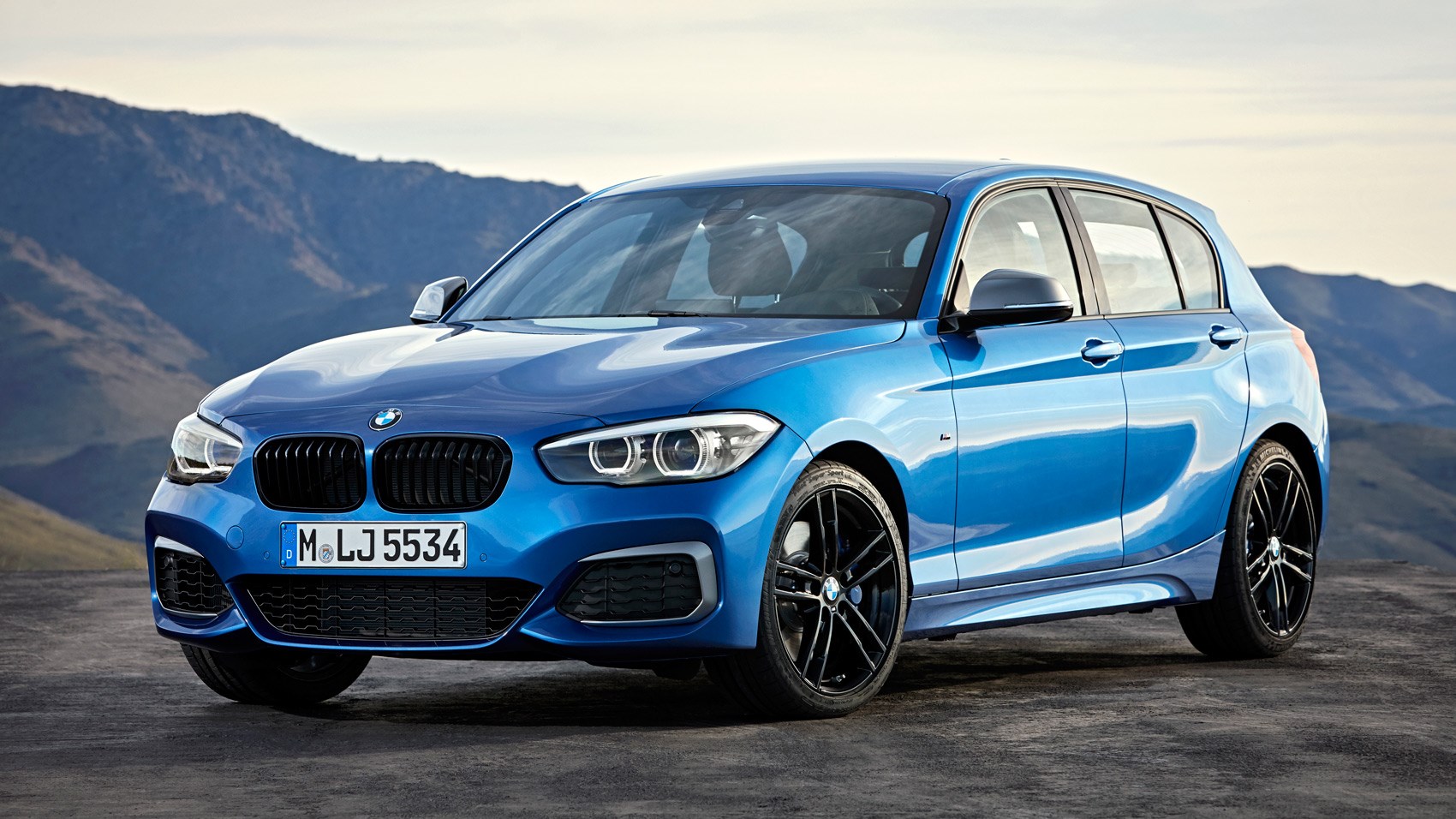
One manufacturer diverged from this trend. Rather than defaulting to all-wheel drive, BMW introduced a flagship hot hatch with rear-wheel drive as standard, despite output levels comparable to a 2010 Porsche 911 Carrera. The result was the most powerful mass-produced rear-wheel-drive hatchback to date, though its character proved potentially too aggressive for certain markets, including the United States.
That vehicle was the BMW M140i, introduced in select markets around 2015–2016. Unlike many hot hatches defined by overt styling cues, contrasting trim accents, exaggerated vents, large spoilers, and conspicuous wheel designs, the M140i adopted a restrained aesthetic consistent with BMW’s M Performance sub-brand.
Despite its subtle appearance, the M140i delivered substantial performance. Built on the F20/F21 1 Series platform, originally intended to compete with vehicles such as the Volkswagen Golf in the premium compact segment, it retained BMW’s traditional rear-wheel-drive architecture. Rear-wheel-drive hatchbacks are rare; pairing that layout with a front-mounted six-cylinder engine is rarer still.
The M140i’s turbocharged 3.0-liter inline-six produced 340 horsepower and 369 lb-ft of torque, making it the most powerful rear-drive hatchback placed into large-scale production at the time.
By late-2010s standards, its existence was notable in itself. Combined with its discreet styling, the model represented an unconventional interpretation of the modern hot hatch formula, one that prioritized drivetrain purity and straight-line performance over prevailing all-wheel-drive orthodoxy.
6. MINI John Cooper Works Hatch
While technically British in heritage, modern MINI performance models are engineered under BMW ownership, earning them a place in Germany’s performance lineage.
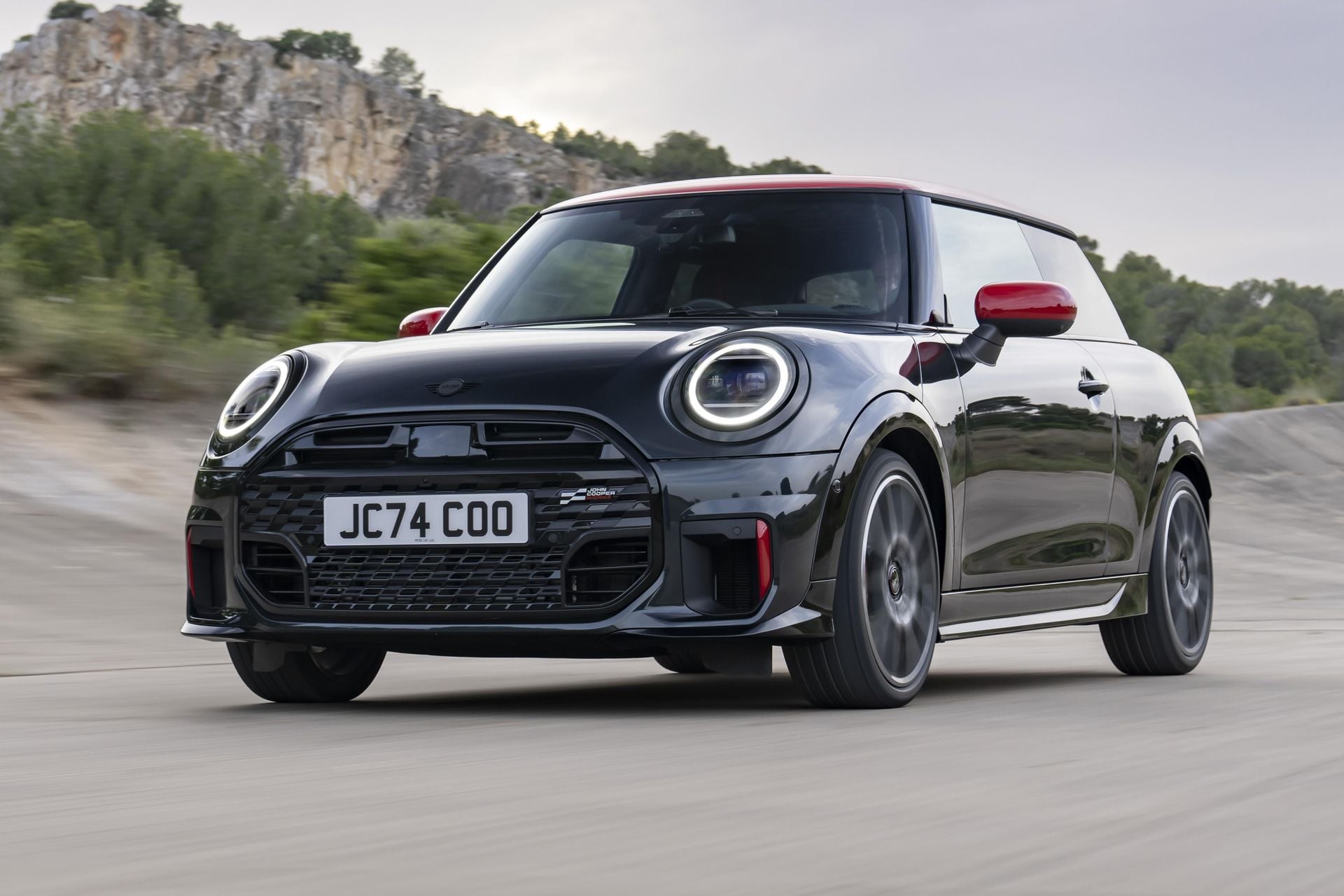
The John Cooper Works hatch is pure go-kart energy, short wheelbase, stiff suspension, and explosive turbo power. U.S. buyers embraced it for its personality as much as its performance. It doesn’t just go fast; it feels fast at every speed.
Few cars deliver such big smiles in such a small package.
Also Read: Top 10 Work Vans That Plumbers and Electricians Swear By
7. Volkswagen Scirocco R
The Scirocco R is one of those models U.S. enthusiasts wish had officially arrived stateside. Sleeker than the Golf and tuned for sharper handling, it offered a more aggressive take on Volkswagen’s performance hatch philosophy.
Its lower roofline and sporty proportions made it look closer to a coupe than a hatchback, yet it retained everyday practicality. Today, it lives on as a cult favorite among import fans. Sometimes icons are defined by what we didn’t get.
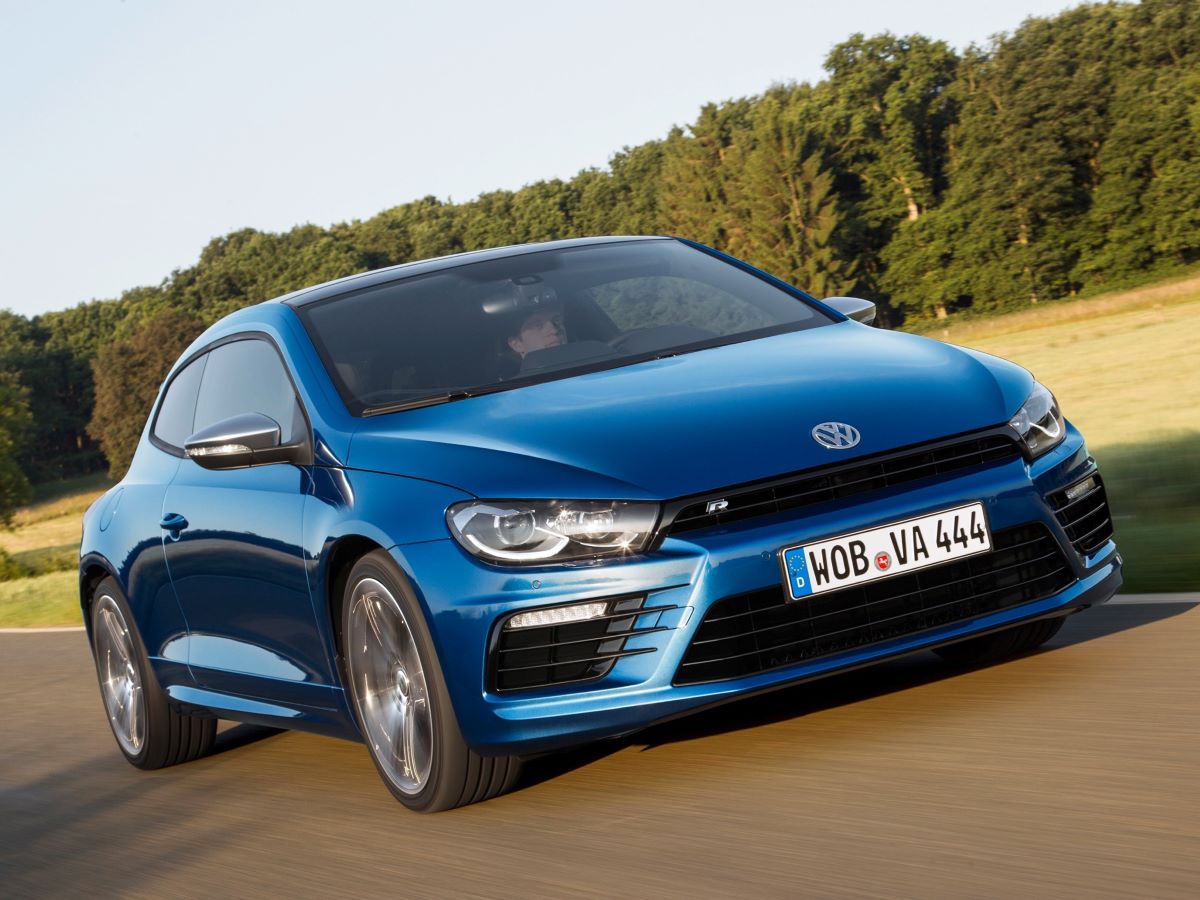
Following sales of more than 200,000 units for the third-generation Scirocco, Volkswagen introduced a mid-cycle refresh that included updates to the performance-focused 2014 Scirocco R. The revised model combined sharper styling with mechanical enhancements intended to strengthen its position in the compact performance segment.
With assertive design cues and strong engine output, the Scirocco R positioned itself as a credible alternative not only to competitors but also to its platform relative, the Volkswagen Golf.
Its three-door configuration, reduced rear cabin space, and smaller cargo area contributed to a more niche, youth-oriented appeal. The facelift brought exterior refinements, cabin updates, and a power increase, along with transmission improvements aimed at enhancing responsiveness.
At the front, the updated Scirocco R adopted sharper headlamp units, typically equipped with xenon lighting depending on market specification, complemented by new LED daytime running lights.
The coupe-like profile remained a defining characteristic. A steeply raked windshield transitioned into a short roofline that tapered gradually toward the rear. An optional panoramic glass roof increased cabin light.
Standard front bucket seats provided substantial bolstering, while optional sport seats with integrated headrests and harness pass-throughs enhanced the performance aesthetic. A flat-bottom multifunction steering wheel carried the R emblem. Rear seating remained suitable primarily for short-distance use.
Power came from a revised 2.0-liter turbocharged engine producing 280 PS (approximately 276 hp), an increase of 15 PS over the previous version, while meeting Euro 6 emissions standards.
A six-speed manual transmission was standard equipment, with a six-speed DSG dual-clutch gearbox available as an option. The Scirocco R also featured a standard XDS electronically controlled differential, improving traction and enabling more effective power delivery to the front wheels.
8. Opel Astra OPC
Built by Opel, the Astra OPC (also known as the VXR in some markets) represented Germany’s more rebellious side. With bold styling, aggressive aero, and turbocharged punch, it competed directly with the GTI and A45 overseas.
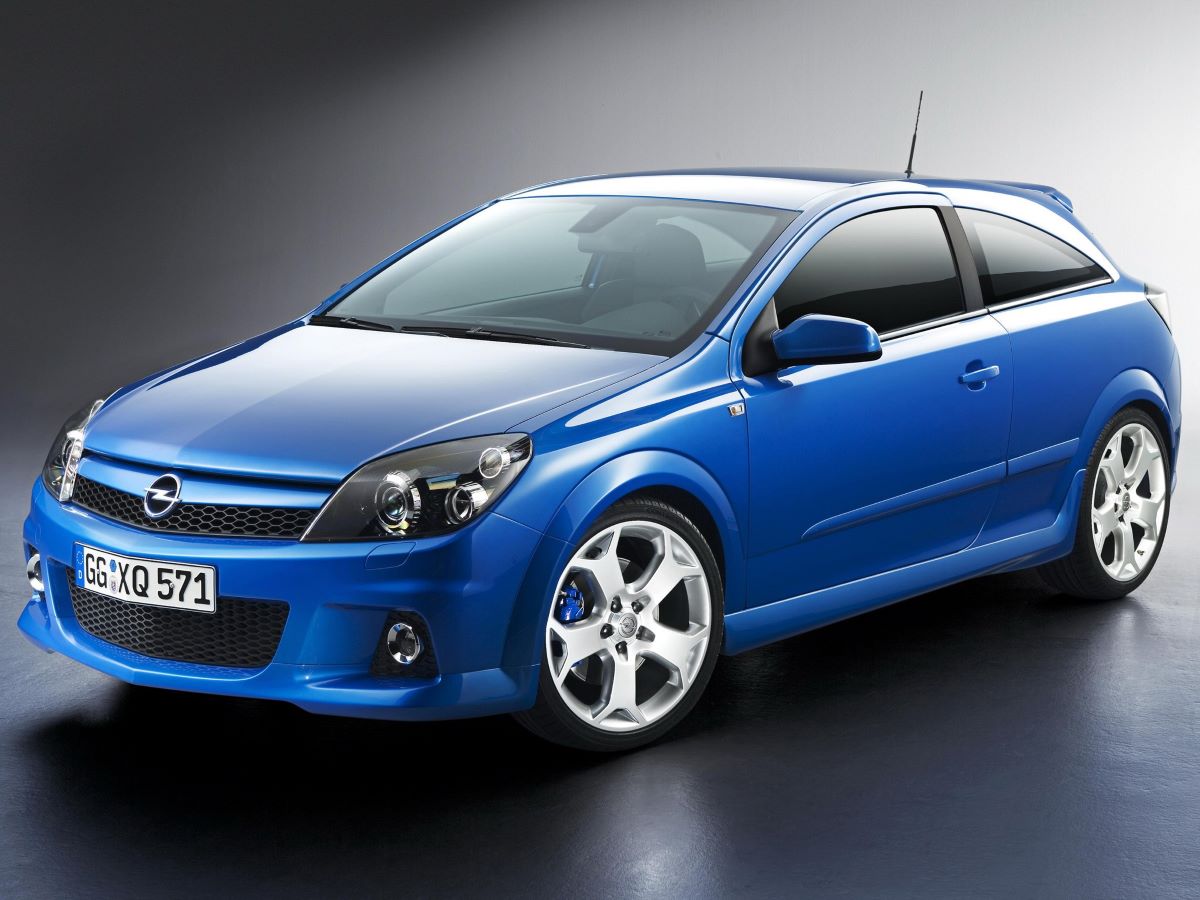
Though never sold in the U.S., its reputation spread through automotive media and online communities. It proved that Germany’s performance hatch scene extended far beyond the big luxury brands.
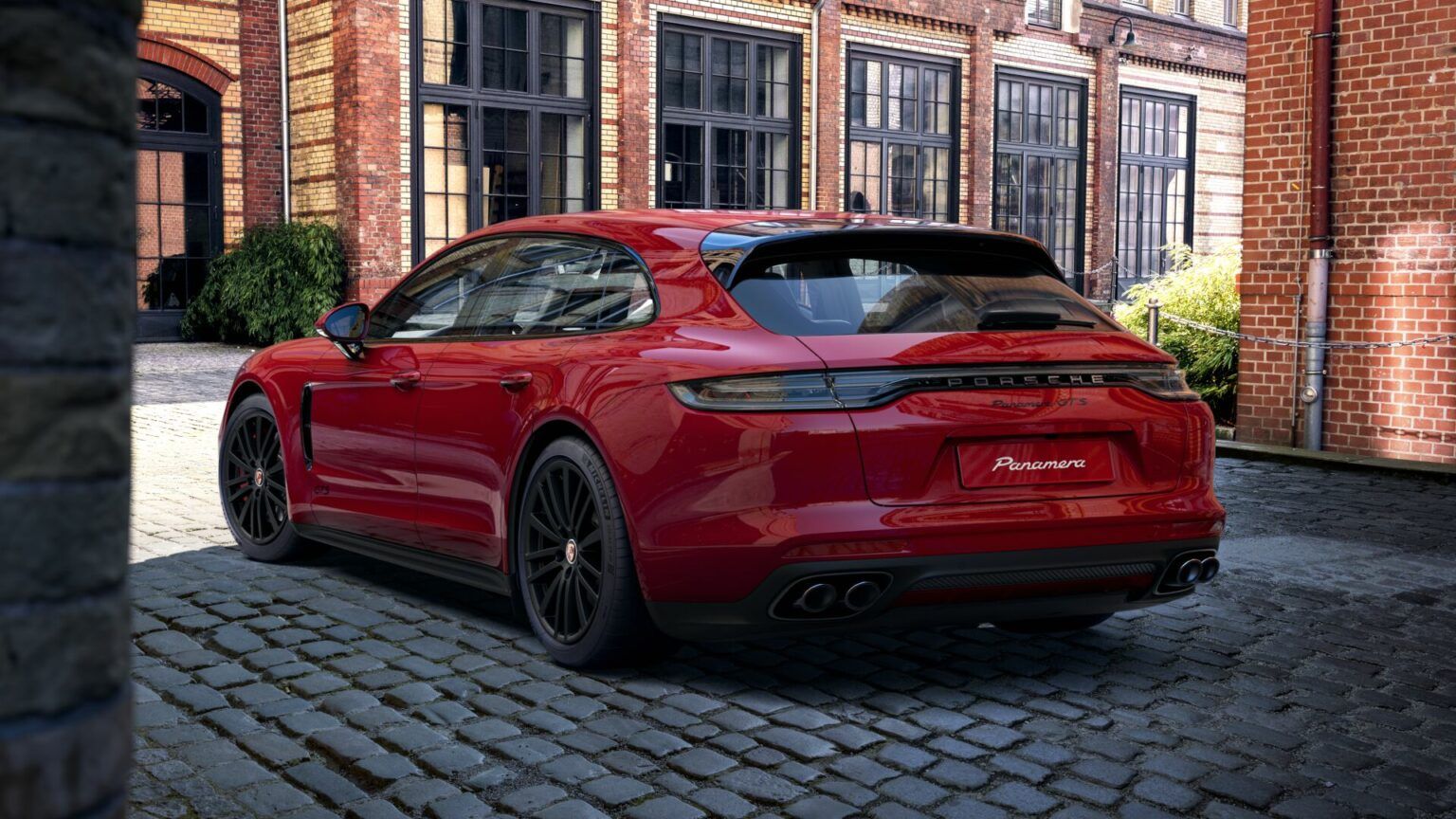
9. Porsche Panamera GTS Sport Turismo
This one bends the “hatchback” definition, but it deserves mention. Porsche’s Sport Turismo body style blends wagon practicality with true high-performance engineering. The GTS variant delivers V8 power, razor-sharp handling, and cargo space that rivals many SUVs.
For U.S. buyers who want supercar performance without sacrificing utility, it represents the ultimate evolution of the performance hatch concept.
What unites all nine of these icons is philosophy. They prioritize driver engagement, everyday practicality, and engineering excellence in equal measure.
In a market dominated by SUVs and pickup trucks, these cars offer a compelling alternative, compact yet powerful, refined yet fun.
They also helped reshape U.S. tastes. Hot hatches proved that performance doesn’t have to mean massive size or outrageous fuel bills. You can have speed, comfort, and usability in one well-engineered package.
Porsche equips the Panamera Sport Turismo with a broad range of gasoline-only and plug-in-hybrid powertrains. Every configuration, regardless of output level, comes standard with an eight-speed dual-clutch automatic transmission and all-wheel drive.
The entry-level Panamera 4 Sport Turismo is powered by a 2.9-liter twin-turbocharged V-6 producing 325 horsepower. A higher-output version of that same engine generates 443 horsepower in the 4S variant. Stepping up the range, the GTS receives a twin-turbocharged 4.0-liter V-8 rated at 473 horsepower, while the Turbo S increases output further to 620 horsepower.
With the exception of the GTS, each trim level is available in E-Hybrid form. These variants incorporate an electric motor, a 17.9-kWh battery pack, and external charging capability alongside their combustion engines.
At the top of the lineup sits the Turbo S E-Hybrid, which produces a combined system output of 690 horsepower. Porsche cites a claimed top speed of 196 mph and a 0–60 mph acceleration time of two seconds flat. Although initial driving impressions have been conducted, comprehensive instrumented testing has yet to verify those figures.
Given the breadth of engine choices and the extensive catalog of optional performance enhancements offered by Porsche, the overall driving character varies substantially depending on specification. Power output, suspension configuration, and selected equipment all influence the experience behind the wheel.
From the legendary Golf GTI to the wild AMG A45 and beyond, these German hatchbacks didn’t just become popular, they became benchmarks. And even as the industry shifts toward electrification, their legacy continues to influence how performance cars are designed today.
If you’re an enthusiast who values smart engineering over sheer excess, these icons show exactly why Germany still rules the hot-hatch world.
