
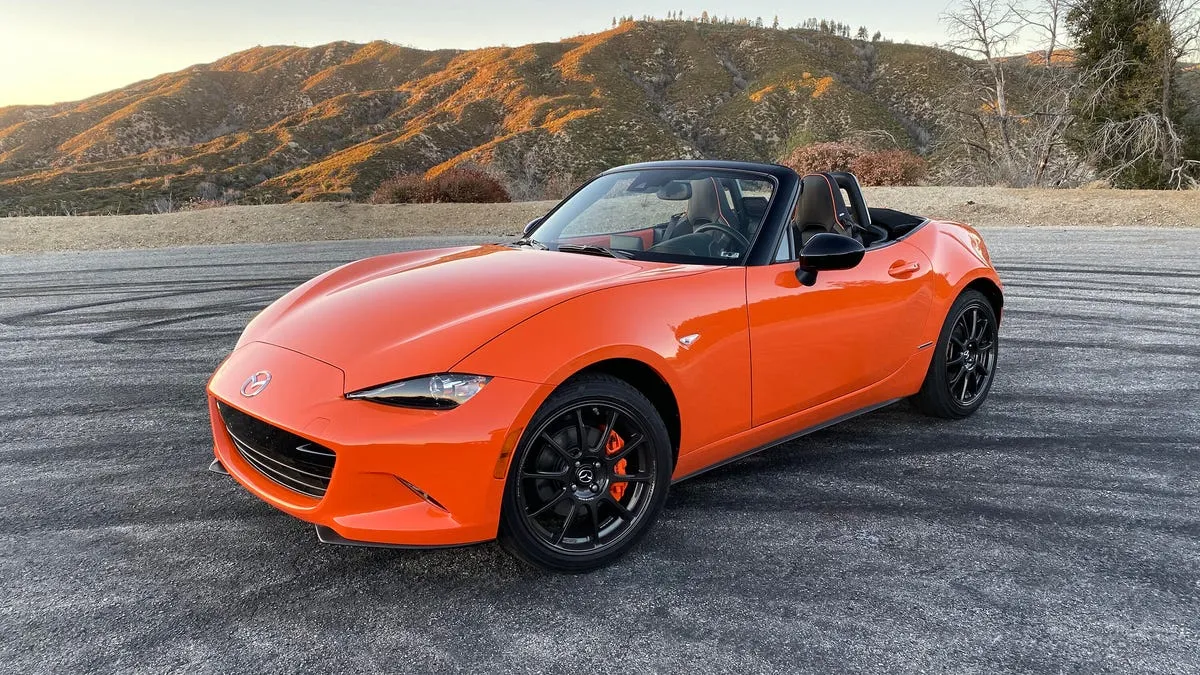
There’s something magical about a car that transforms mundane errands into adventures. You know the feeling, you’ve reached your destination, but your hand hesitates over the ignition.
Maybe you take that scenic detour you’ve been eyeing, or perhaps you “accidentally” miss your exit on the highway. These aren’t just vehicles; they’re escape pods from the ordinary, machines that remind us why driving can be pure joy.
The cars on this list aren’t necessarily the fastest, the most expensive, or the most practical. What they share is an intangible quality that makes every journey feel special.
Whether it’s a perfectly weighted steering wheel that communicates every nuance of the road, an engine note that plays a symphony with each press of the accelerator, or a driving position that makes you feel like a fighter pilot, these vehicles create an emotional connection that’s increasingly rare in our age of autonomous driving and electric appliances on wheels.
Some are affordable roadsters that prove you don’t need a six-figure budget to experience driving nirvana. Others are meticulously engineered sports cars that represent decades of motorsport heritage.
A few are unlikely heroes vehicles you might not expect to deliver such visceral thrills. But all of them share one crucial characteristic: they make you want to drive, not because you have to, but because you genuinely can’t imagine anything you’d rather be doing.
1. Mazda MX-5 Miata
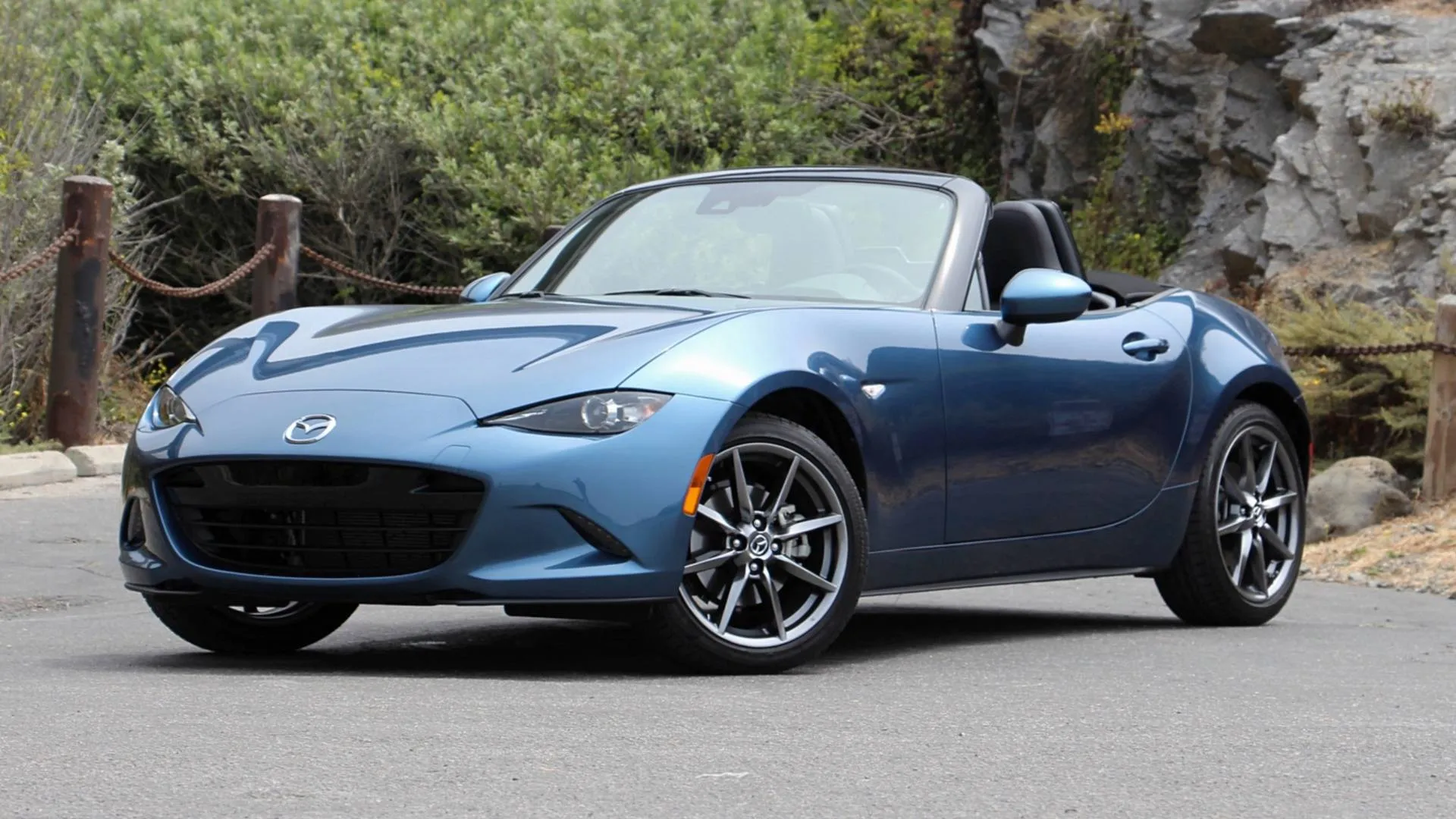
The Mazda MX-5 Miata stands as automotive proof that happiness doesn’t require horsepower. With just 181 horsepower in its current iteration, this lightweight roadster delivers more smiles per gallon than vehicles with three times its power. The genius of the Miata lies in its philosophy: minimize weight, maximize involvement.
Tipping the scales at barely 2,300 pounds, the MX-5 dances through corners with a grace that heavier, more powerful cars can’t replicate.
Drop the top a process that takes mere seconds and the Miata becomes an extension of your senses. The wind rushes past, the exhaust note becomes more pronounced, and suddenly that grocery run transforms into a memorable drive.
The steering is hydraulically assisted and communicates road texture with a clarity that’s become exceedingly rare. You don’t drive a Miata so much as wear it; the compact dimensions and perfectly positioned controls create an intimacy between driver and machine that’s addictive.
The manual transmission because nobody buying a Miata for the right reasons chooses the automatic snicks through gears with mechanical precision. Each shift is an event, accompanied by a perfectly rev-matched blip if you opt for the newer models. The clutch pedal has just enough weight to feel substantial without being tiresome in traffic.
The balance is sublime, with a 50/50 weight distribution that makes the car feel neutral and predictable, even when you’re exploring its limits on a winding back road.
What makes the Miata truly special is its accessibility. This isn’t a car that requires a racetrack to appreciate. At legal speeds on public roads, you can explore its entire dynamic envelope, heel-toeing downshifts into second-gear corners and feeling the chassis communicate every weight transfer.
It rewards smoothness and punishes ham-fistedness, making you a better driver simply through seat time. The Miata doesn’t just make you take the long way home it makes you memorize every great driving road within a hundred miles and creates excuses to drive them repeatedly. It’s the automotive equivalent of a perfectly fitting pair of jeans: unpretentious, comfortable, and absolutely right.
2. Porsche 911 (992 Generation)
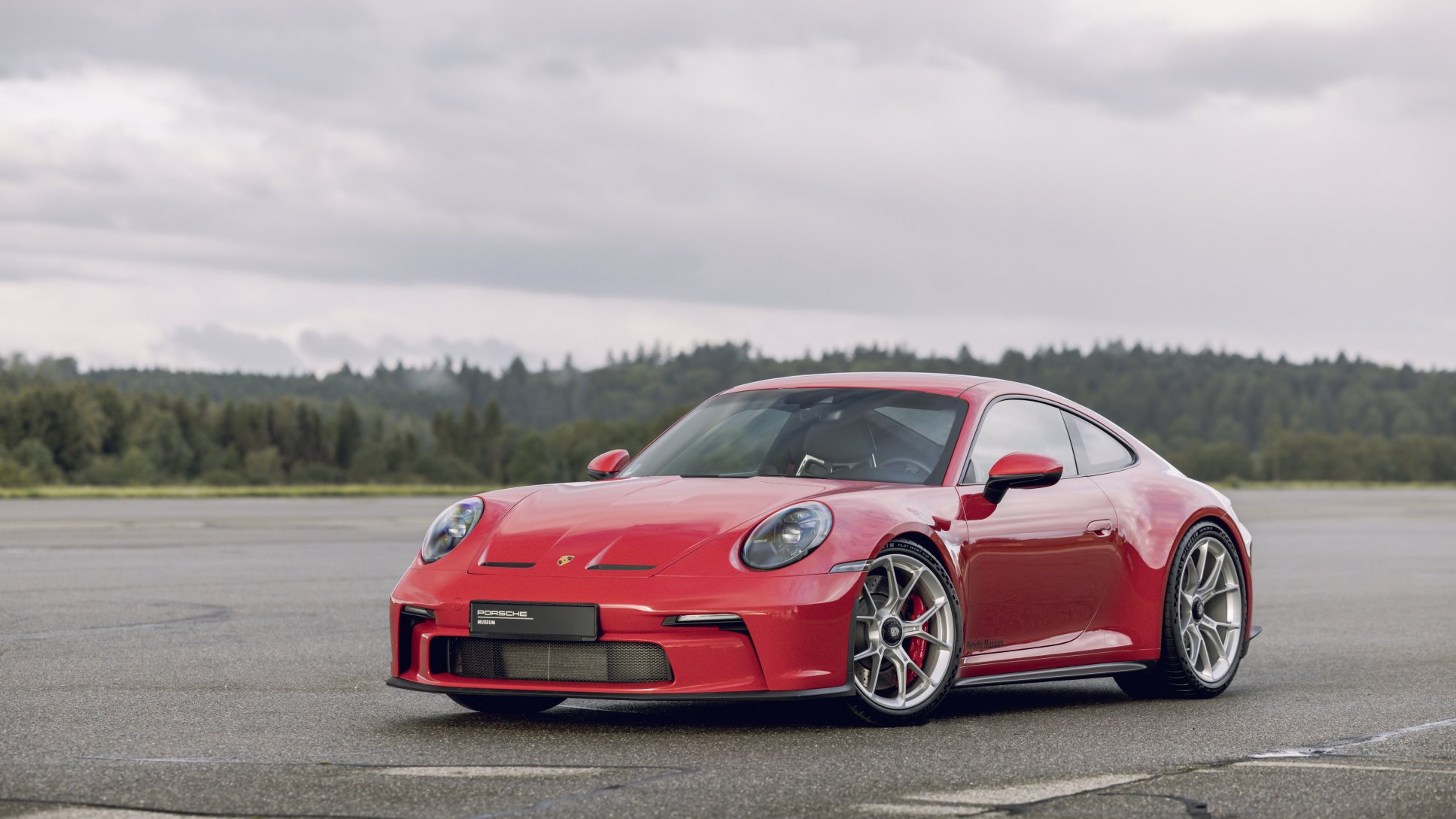
The Porsche 911 represents over half a century of iterative excellence, and the current 992 generation might be the most complete sports car ever created.
Despite growing slightly larger and more refined with each generation, the 911 has retained the essential character that’s made it legendary: rear-engine layout, unmistakable silhouette, and driving dynamics that blend everyday usability with track-ready performance.
Behind you sits a twin-turbocharged flat-six engine producing anywhere from 379 to 640 horsepower, depending on the variant. But the numbers barely scratch the surface of what makes the 911 addictive. Start the engine, and that distinctive boxer rumble fills the cabin.
The sound is mechanical, purposeful, and utterly unlike anything else on the road. Select manual mode on the PDK dual-clutch transmission or better yet, opt for the seven-speed manual still available on certain models and prepare for a driving experience that feels simultaneously modern and classic.
The steering is Porsche-precise, weighting up progressively as cornering loads increase. The chassis, despite the inherent physics challenges of hanging the engine behind the rear axle, feels utterly planted and neutral thanks to decades of engineering refinement.
The all-wheel-drive system on Carrera 4 models delivers traction that seems to defy physics, while rear-drive variants offer a more playful, engaging character. The adaptive dampers read the road constantly, keeping the body controlled without sacrificing ride quality.
What raises 911 from merely excellent to truly special is its dual personality. Dial everything into Comfort mode, and it’s a refined grand tourer that could cross continents without complaint. The seats are supportive enough for track work yet comfortable for hours of highway cruising.
The cabin, while distinctly Porsche in its layout, offers genuine luxury and enough technology to satisfy modern expectations. Then, with a twist of the drive mode selector, it transforms into a focused sports car ready to devour canyon roads or lap circuits.
The 911 makes you take the long way home because it’s so competent, so confidence-inspiring, that you find yourself seeking out challenges worthy of its abilities.
That freeway on-ramp becomes an opportunity to experience the relentless thrust of turbocharged acceleration. That mountain pass you normally avoid becomes irresistible when you’re behind the wheel of a machine this capable, knowing you can explore its limits safely thanks to decades of refinement.
3. Honda Civic Type R
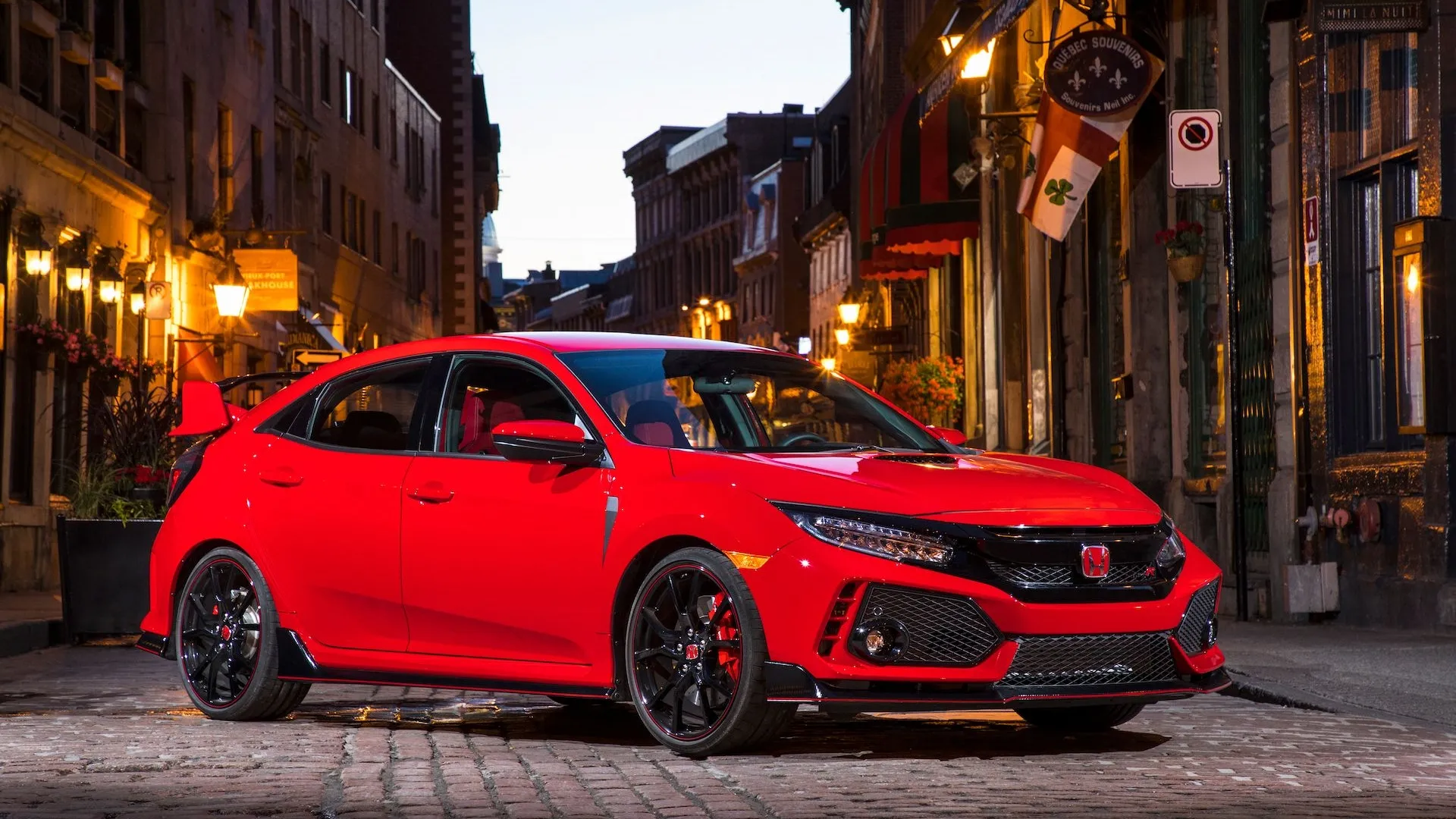
Wearing its wild bodywork like armor, the Honda Civic Type R looks like it escaped from a video game. The aggressive aero, the enormous rear wing, the angular vents and scoops it’s all delightfully excessive and unashamedly purposeful. But beneath the boy-racer aesthetics beats the heart of one of the finest front-wheel-drive performance cars ever engineered.
The 2.0-liter turbocharged four-cylinder produces 315 horsepower and 310 lb-ft of torque, sent exclusively to the front wheels through a sublime six-speed manual transmission.
Honda’s engineers have performed near-magic in eliminating torque steer, that tugging sensation that typically plagues powerful front-drive cars. Instead, the Type R tracks true even under full throttle, the limited-slip differential apportioning power with intelligence that borders on supernatural.
Step inside, and the boy-racer theme continues with red accents, bucket seats that grip firmly, and a steering wheel wrapped in Alcantara.
The driving position is perfect, putting you low and central with all controls falling naturally to hand. Fire up the engine, and the quad exhaust produces a characterful growl that intensifies with revs.
The turbocharger spools with an audible whoosh, and then you’re catapulted forward with a force that feels far greater than the specs suggest.
The chassis is the Type R’s masterpiece. Adaptive dampers provide surprising compliance over rough pavement, but the body remains flat through corners, rotating with precision around its axis.
The steering communicates road surface with clarity, weighting up naturally as you add lock. The brake pedal is firm and progressive, with stopping power that remains consistent lap after lap.
This is a car developed at the Nürburgring, and it shows the Type R feels engineered to handle punishment while remaining engaging and communicative.
Perhaps most remarkably, the Type R remains practical. It’s based on a Civic, after all, so you get a usable back seat, a reasonable trunk, and fuel economy that won’t bankrupt you.
It’s a daily driver that happens to be faster around a track than cars costing three times as much. The Type R makes you take the long way home because it makes spirited driving accessible and involving without requiring racetrack speeds.
Every on-ramp is an event, every corner an opportunity to feel the chassis work its magic, and every mile a reminder that Honda still knows how to build cars that prioritize driver engagement above all else.
4. BMW M2
The BMW M2 represents a return to the values that made the M division legendary: compact dimensions, powerful engine, rear-wheel drive, and a manual transmission option.
While BMW’s lineup has grown increasingly large and complex, the M2 remains refreshingly focused, a distillation of the driving pleasure that made cars like the E30 M3 and 2002 turbo icons.
Under the hood sits a twin-turbocharged inline-six producing 453 horsepower in Competition form an engine shared with the larger M3 and M4 but somehow more appropriate in the M2’s compact chassis.
The power delivery is linear and urgent, with peak torque arriving early and holding strong through the rev range. The engine note is cultured and mechanical, the characteristic BMW inline-six smoothness enhanced by the turbochargers’ forced induction fury.
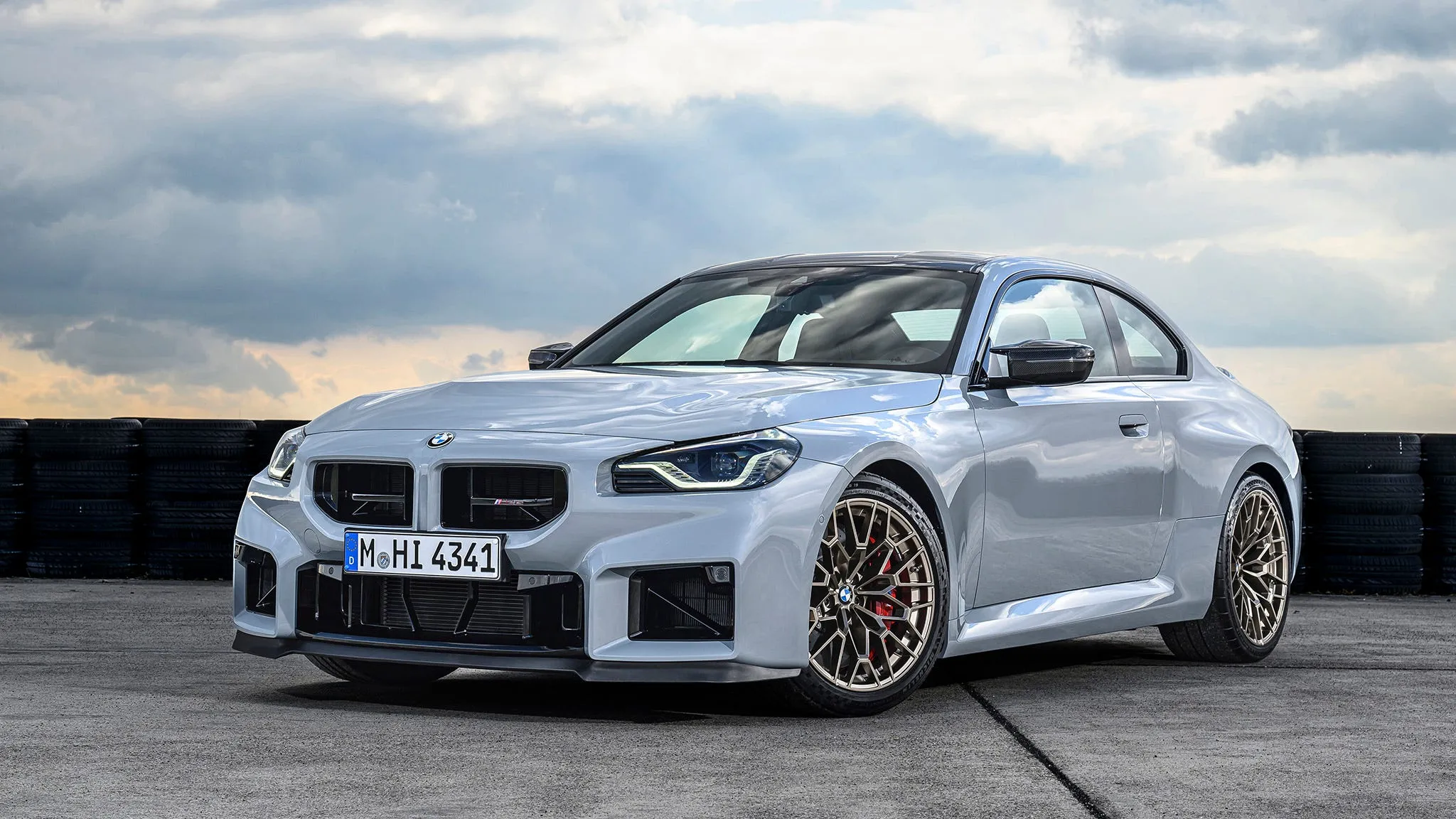
The chassis strikes an almost perfect balance between comfort and capability. The suspension is firm enough to keep the body controlled through aggressive direction changes, yet compliant enough for daily driving without rattling your fillings loose.
The M2 feels taut and connected, communicating weight transfer and grip levels with a clarity that’s increasingly rare. The limited-slip differential helps rotate the car through corners, and with the stability control in its more permissive M Dynamic mode, the M2 will slide its tail in controlled, confidence-building arcs.
The steering deserves special mention. BMW has rediscovered the art of steering feel after some regrettable electrically-assisted detours, and the M2’s helm is weighted perfectly, loading up naturally as cornering forces build.
The ratio is quick without being nervous, making the car feel agile and responsive. The brakes are powerful and fade-resistant, with a pedal that offers excellent modulation.
Inside, the M2 combines sporting intent with premium materials. The seats hold you firmly during spirited driving while remaining comfortable for long journeys.
The dashboard layout is driver-focused, with essential controls logically placed. The latest iDrive infotainment system is intuitive and responsive, though you’ll likely ignore it when the road gets interesting.
The M2 makes you take the long way home because it feels special every time you drive it. It’s small enough to feel wieldy on narrow roads, powerful enough to be genuinely quick, and engaging enough that you want to savor every corner. It’s a car that rewards skill, encourages involvement, and reminds you why driving can be one of life’s great pleasures.
Also Read: 8 Cars With Doors That Open Wider Than You’d Expect
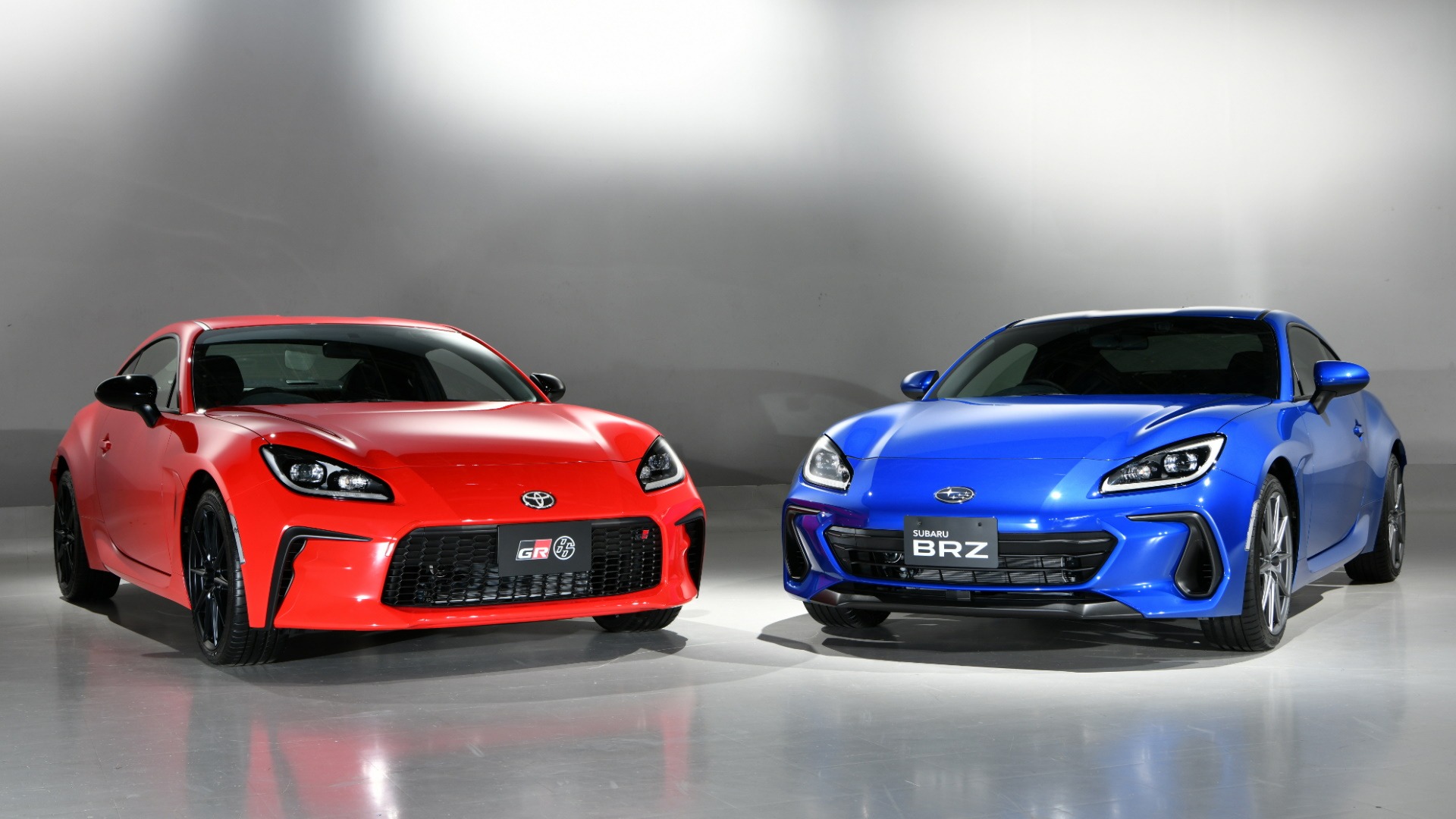
5. Toyota GR86 / Subaru BRZ
The Toyota GR86 and its mechanical twin, the Subaru BRZ, prove that affordable sports cars aren’t extinct they’re just rare. Developed jointly by Toyota and Subaru, these rear-wheel-drive coupes prioritize handling balance and driver engagement over outright power, creating an experience that’s pure and addictive.
The naturally-aspirated 2.4-liter boxer four-cylinder produces a modest 228 horsepower, but the magic lies in how that power is deployed. The engine sits low and far back, creating a center of gravity that would make a limbo champion jealous.
Combined with rear-wheel drive and a near-perfect weight distribution, the GR86/BRZ rotates through corners with a naturalness that belies its humble horsepower figure. You don’t need to be going fast to have fun these cars are engaging at speeds that won’t cost you your license.
The manual transmission the only choice for purists features short, precise throws and a clutch with excellent feel. Heel-toe downshifting becomes second nature, and the rev-matching on the automatic (for those who absolutely must) is perfectly calibrated.
The steering is direct and communicative, using a traditional hydraulic assist that provides feedback electric systems struggle to match. You can feel texture in the pavement, sense the front tires’ grip levels, and place the car with millimeter precision.
The chassis is the star performer. The suspension uses MacPherson struts up front and a double-wishbone setup in the rear, tuned for responsiveness and balance.
The limited-slip differential helps distribute power evenly between the rear wheels, enhancing both traction and playfulness. With stability control disabled and these cars are forgiving enough that this is actually enjoyable on the right roads you can feel the weight transfer, modulate slides with the throttle, and learn advanced driving techniques in a relatively safe, predictable environment.
Inside, the cabin is functional rather than luxurious. The seats provide decent support, the visibility is excellent (including over your shoulder for track work), and the controls are logically arranged.
It’s not fancy, but everything is where it should be. The latest generation adds modern infotainment and safety features without significantly increasing weight, a remarkable achievement in an era of automotive obesity.
The GR86/BRZ makes you take the long way home because it makes driving feel like a skill worth developing rather than a chore to endure. Every corner is an opportunity to practice smoothness, every gear change a tactile pleasure, every mile a reminder that joy doesn’t require superlatives.
6. Alfa Romeo Giulia Quadrifoglio
The Alfa Romeo Giulia Quadrifoglio is the automotive equivalent of dating someone passionate but slightly unpredictable—thrilling, occasionally frustrating, and absolutely unforgettable.
This Italian sports sedan challenges German rivals with a combination of stunning design, explosive performance, and handling that’s been honed at racetracks around the world.
Under the carbon fiber hood sits a Ferrari-derived twin-turbocharged 2.9-liter V6 producing 505 horsepower and an addictive exhaust note that burbles and snarls with every throttle input.
The engine spins to nearly 7,000 rpm with an eagerness that feels more supercar than sedan, and the power delivery is urgent enough to pin you firmly into the supportive seats.
The eight-speed automatic transmission shifts quickly in automatic mode and responds instantly to paddle inputs, while launch control enables 0-60 mph sprints in under four seconds.
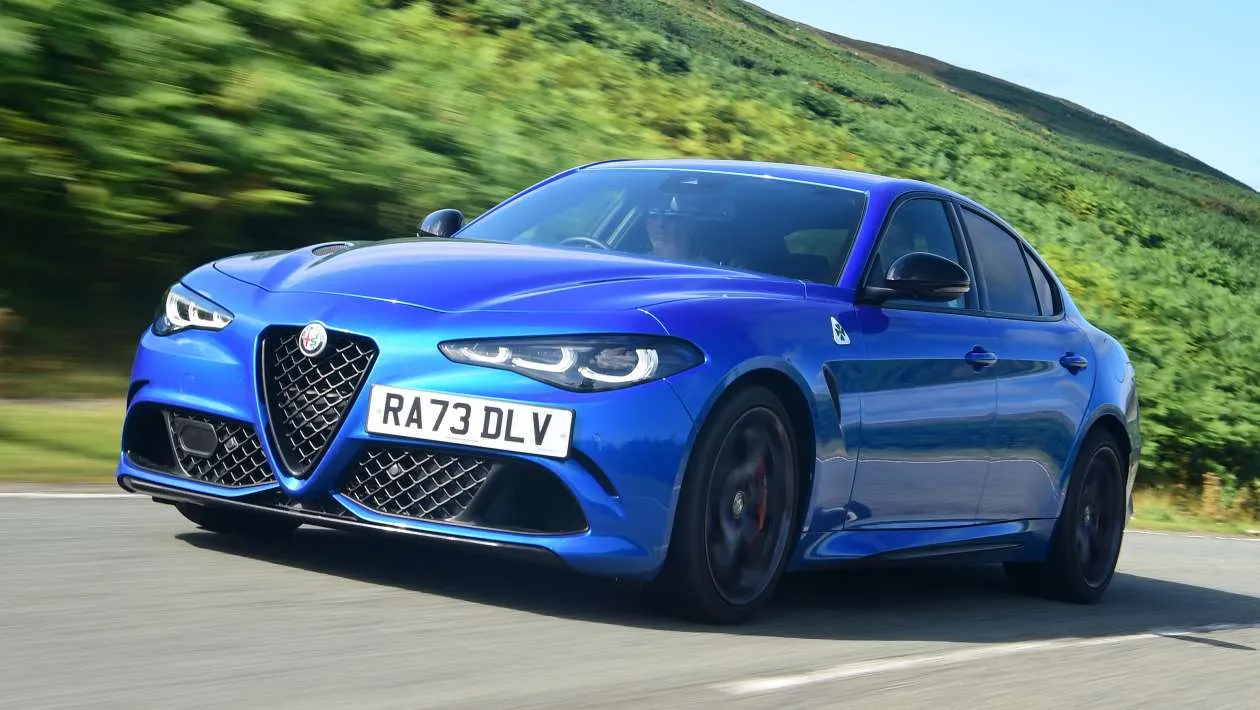
But the Quadrifoglio’s party trick isn’t straight-line speed it’s the chassis. Alfa Romeo’s engineers achieved a near-perfect 50/50 weight distribution by using aluminum construction extensively and positioning the engine behind the front axle line. Carbon fiber components hood, roof, and driveshaft reduce mass and lower the center of gravity.
The result is a sedan that feels more like a sports car, rotating eagerly into corners and gripping with tenacity that seems physics-defying.
The steering deserves poetry written about it. It’s perhaps the most communicative, natural-feeling electric power steering system in any modern car.
Weight builds progressively, feedback is detailed, and the ratio is quick enough to make the Giulia feel agile despite its sedan practicality.
The adaptive dampers in Race mode firm up the suspension without making the ride punishing, keeping the body flat through aggressive direction changes while still absorbing bumps competently.
Inside, the Giulia Quadrifoglio blends Italian style with genuine usability. The seats are deeply bolstered and wrapped in leather and Alcantara.
Carbon fiber trim and aluminum paddle shifters add tactile luxury. The rear seat is genuinely usable, and the trunk can handle actual luggage this is a sports car you can live with.
The Giulia Quadrifoglio makes you take the long way home because it’s so engaging, so rewarding to drive enthusiastically, that you actively seek out opportunities to experience its capabilities. It’s a car with character and soul in an era when many performance sedans feel like very fast appliances.
7. Lotus Emira
The Lotus Emira represents a new chapter for the legendary British brand their first all-new car in over a decade and potentially the last pure internal combustion Lotus. It combines classic Lotus virtues of light weight and handling precision with a level of fit, finish, and practicality previously absent from the Norfolk manufacturer’s offerings.
Power comes from your choice of a supercharged 3.5-liter Toyota V6 producing 400 horsepower or a turbocharged 2.0-liter four-cylinder from AMG with 360 horsepower.
The V6, carried over from the Exige and Evora, delivers linear power with a characterful exhaust note and mechanical supercharger whine.
The AMG four-cylinder offers more modern turbocharged thrust and slightly better fuel economy. Both engines are mid-mounted, creating the balance and agility Lotus is famous for.
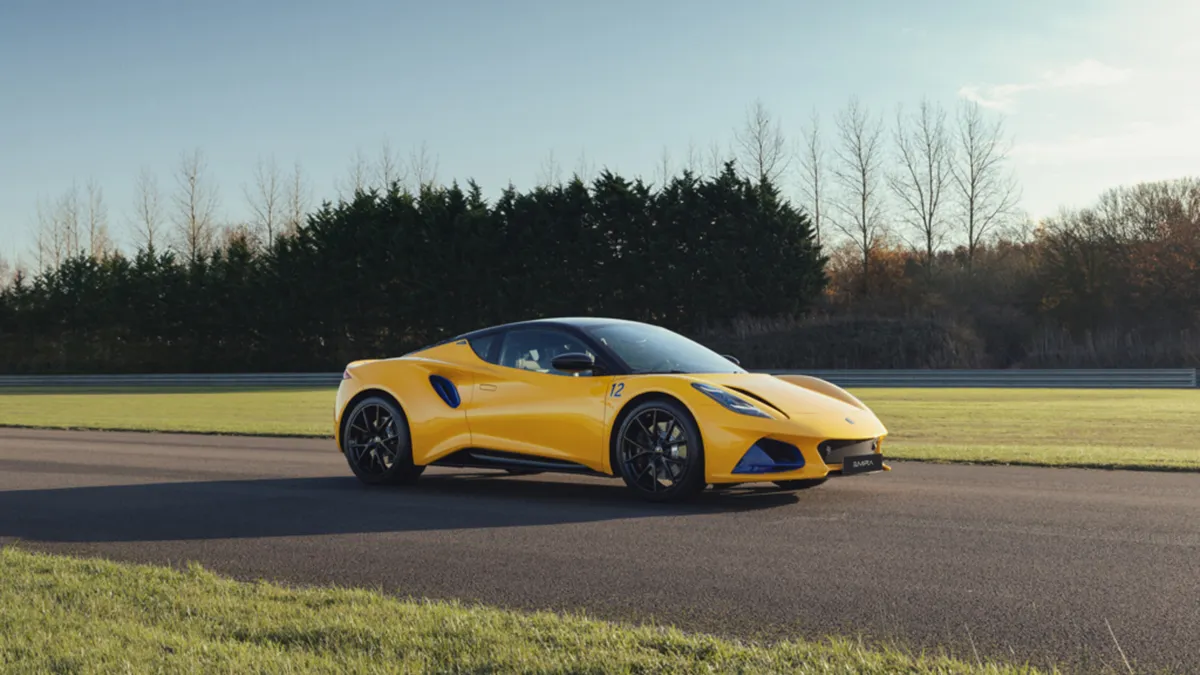
The chassis is pure Lotus bonded aluminum construction keeping weight around 3,100 pounds, a figure that would make most modern sports cars blush.
The suspension uses double wishbones all around, with geometry refined through countless hours at Lotus’s Hethel test track. The result is handling that’s simultaneously precise and communicative, allowing you to place the car with confidence while feeling every nuance of the road surface.
The steering is hydraulically assisted Lotus refusing to follow industry trends toward electric systems and it’s magnificent. The ratio is quick, the feedback is detailed, and the weighting is perfect.
Combined with excellent visibility (for a mid-engine car) and compact dimensions, the Emira feels wieldy and exploitable at speeds that wouldn’t attract unwanted attention. The manual transmission features a proper gated shifter with mechanical precision that makes every gear change an event.
Where the Emira breaks from Lotus tradition is interior quality and daily usability. The cabin features proper materials, comfortable seats, a functional infotainment system, and even adequate storage for a weekend trip.
It’s still snug and the ride is firm, but it’s genuinely possible to use an Emira as a daily driver without needing a chiropractor on speed dial.
The Emira makes you take the long way home because it delivers the pure, unfiltered driving experience that’s becoming extinct. Every input steering, shifting, braking feels mechanical and direct. The car communicates constantly, building a connection between driver and machine that transcends mere transportation.
8. Volkswagen Golf GTI
The Volkswagen Golf GTI invented the hot hatch formula over four decades ago and remains the benchmark against which all sport compacts are judged.
The latest eighth-generation GTI continues the tradition: practical hatchback meets genuinely sporting performance, wrapped in understated styling that flies under the radar.
The turbocharged 2.0-liter four-cylinder produces 241 horsepower (or 296 in the more hardcore Golf R), but the GTI’s appeal transcends specifications.
The power delivery is smooth and linear, with peak torque arriving early and holding strong through the rev range. The engine note is enhanced tastefully present enough to enjoy during spirited driving but quiet enough for comfortable cruising.
The seven-speed dual-clutch transmission shifts quickly and smoothly, though manual transmission enthusiasts will lament its absence in many markets.
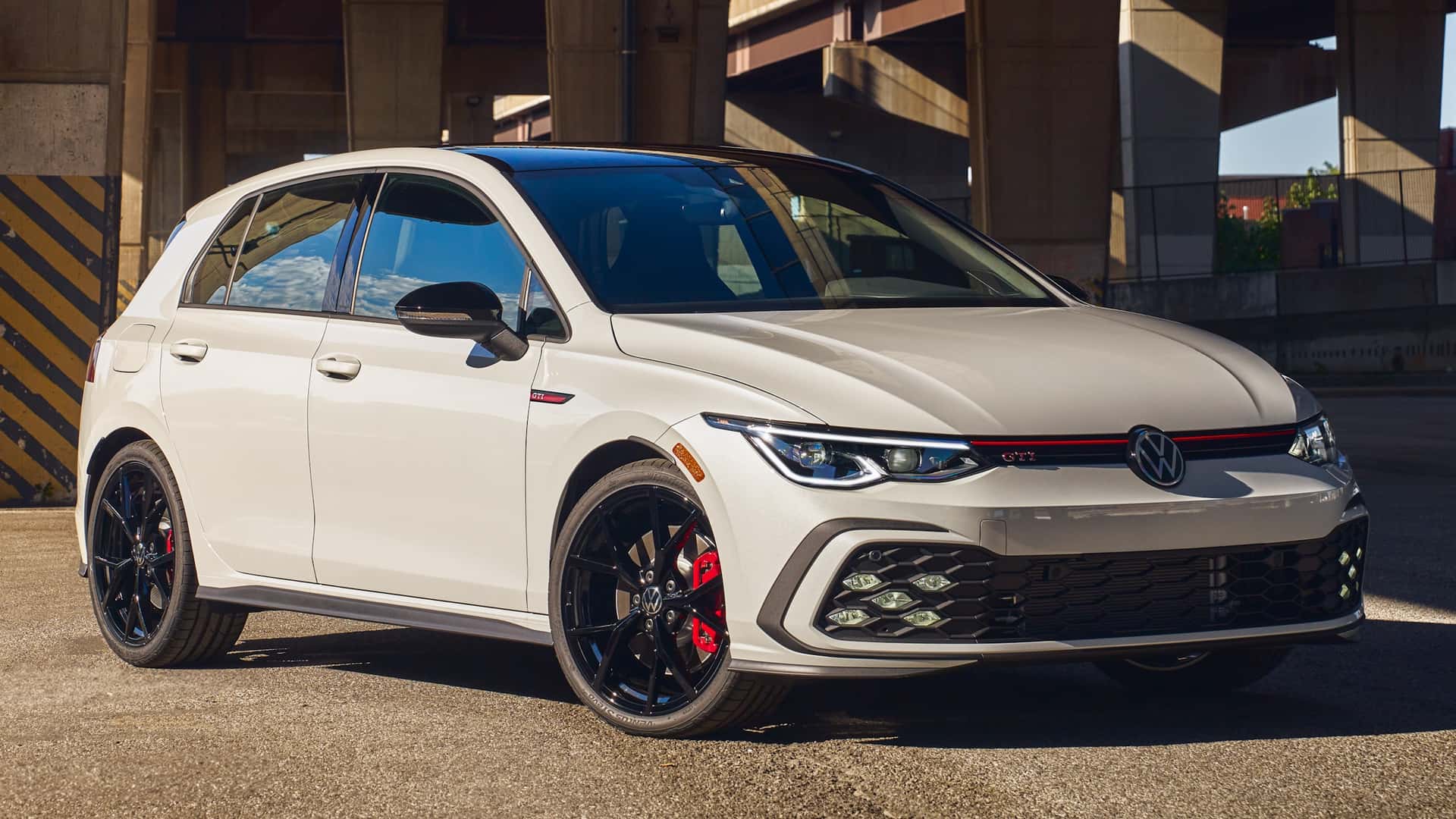
The chassis strikes an enviable balance between sporting intent and everyday compliance. The electronically-controlled dampers adapt to conditions, firming up during aggressive cornering while remaining supple over broken pavement.
The limited-slip differential helps mitigate front-wheel-drive limitations, putting power down efficiently and enhancing corner-exit traction. The progressive steering provides decent feedback and weights up naturally, making the GTI feel nimble despite its practical dimensions.
Where the GTI truly excels is in versatility. The back seat accommodates adults comfortably, the cargo area swallows groceries or weekend luggage with ease, and the ride quality never becomes punishing.
The interior is quintessentially Volkswagen: logically laid out, solidly built, and finished with materials that feel premium. The plaid cloth sport seats are supportive and comfortable, providing both visual interest and practical function.
The GTI’s greatest strength is its breadth of capability. It’s quick enough to embarrass cars costing twice as much, handles well enough to entertain on a winding road, yet comfortable and practical enough for family duty.
You can take it to a track day, autocross event, or ski trip with equal confidence. The ownership experience is relatively painless too VW’s extensive dealer network and reasonable parts prices make maintenance less stressful than exotic alternatives.
The Golf GTI makes you take the long way home because it makes every journey engaging without being exhausting. It encourages you to explore its capabilities because those capabilities are accessible and exploitable at legal speeds. It’s the automotive equivalent of a perfectly seasoned cast-iron skillet: unpretentious, versatile, and fundamentally right.
9. Chevrolet Corvette C8
When Chevrolet finally moved the Corvette’s engine behind the driver for the eighth generation, they created something remarkable: a genuine mid-engine supercar that costs less than a well-equipped German sedan.
The C8 Corvette delivers performance and drama that was previously reserved for six-figure exotics, making it one of the automotive world’s most compelling value propositions.
The naturally-aspirated 6.2-liter V8 produces 490 horsepower in standard form, roaring to life with a mechanical fury that modern turbocharged engines struggle to match.
Peak power arrives high in the rev range, encouraging you to stretch each gear toward the 6,450 rpm redline. The eight-speed dual-clutch transmission shifts with race-car precision, transforming smoothly in automatic mode or responding instantly to paddle inputs. Launch control enables 0-60 mph runs in under three seconds, performance that humbles cars costing three times as much.
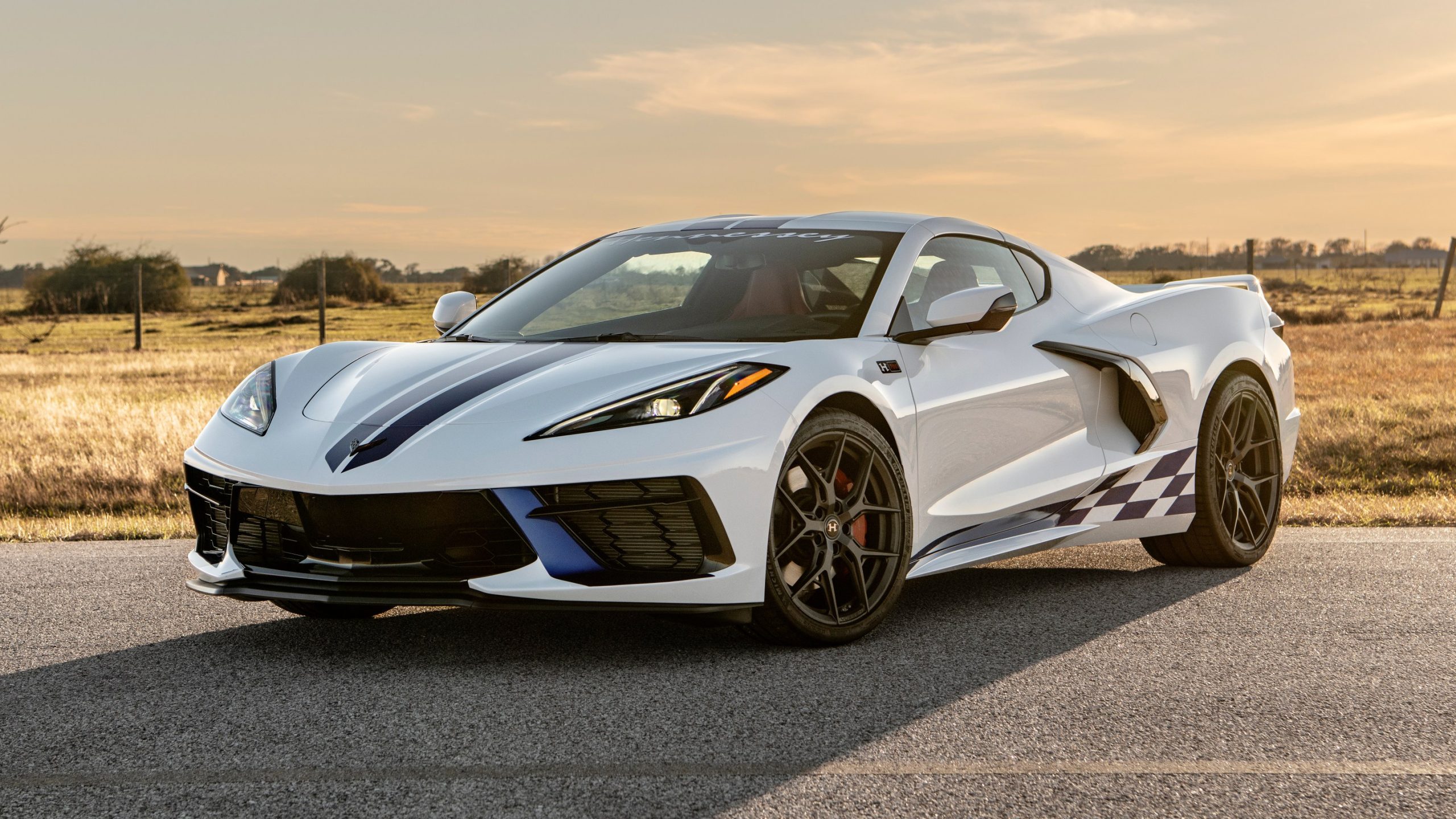
The mid-engine layout transforms the Corvette’s character entirely. The engine sits just behind you, its intake roar mixing with exhaust notes to create an intoxicating mechanical symphony.
The weight distribution is nearly perfect, and you can feel it the car rotates eagerly into corners, the rear end feeling planted and stable even when you’re exploring the considerable limits.
The suspension uses Magnetic Ride Control dampers that read road conditions constantly, providing surprising compliance in Tour mode while keeping the body flat in Track mode.
The steering is quick and accurate, though not quite as communicative as hydraulic systems in some competitors. Still, the C8 provides enough feedback to place the car precisely and feel the front tires’ grip levels.
The brakes are powerful and fade-resistant, essential given the Corvette’s performance envelope. The carbon-ceramic rotors available on Z51-equipped cars provide truly supercar-level stopping power.
Inside, the C8 makes quantum leaps forward in quality and design compared to previous Corvettes. The driver-focused cockpit features a digital instrument cluster, squared-off steering wheel, and controls that feel modern and thoughtfully designed.
The seats are supportive and comfortable, though the cabin is snug this is a two-seater sports car, after all. Build quality is vastly improved, though some interior materials still betray the car’s relatively affordable price point.
The C8 Corvette makes you take the long way home because it delivers exotic-car thrills with minimal exotic-car headaches, making you want to exercise its considerable capabilities at every opportunity.
10. Caterham Seven
The Caterham Seven is automotive minimalism taken to its logical extreme a car that hasn’t fundamentally changed since Colin Chapman designed the original Lotus Seven in 1957. It’s an open-wheeled, barely-streetable track weapon that weighs less than a Miata despite having a more powerful engine.
There’s no roof (well, there’s a rudimentary weather cover), no windows, minimal bodywork, and absolutely no apologies. Depending on the variant, power comes from engines ranging from 125 to over 300 horsepower. In a car weighing as little as 1,190 pounds, even the base models feel rapid.
The more powerful versions particularly the 620R with its supercharged 310 horsepower offer acceleration that rivals million-dollar hypercars. The power-to-weight ratio is simply absurd, and the sensation is amplified by your complete exposure to the elements.
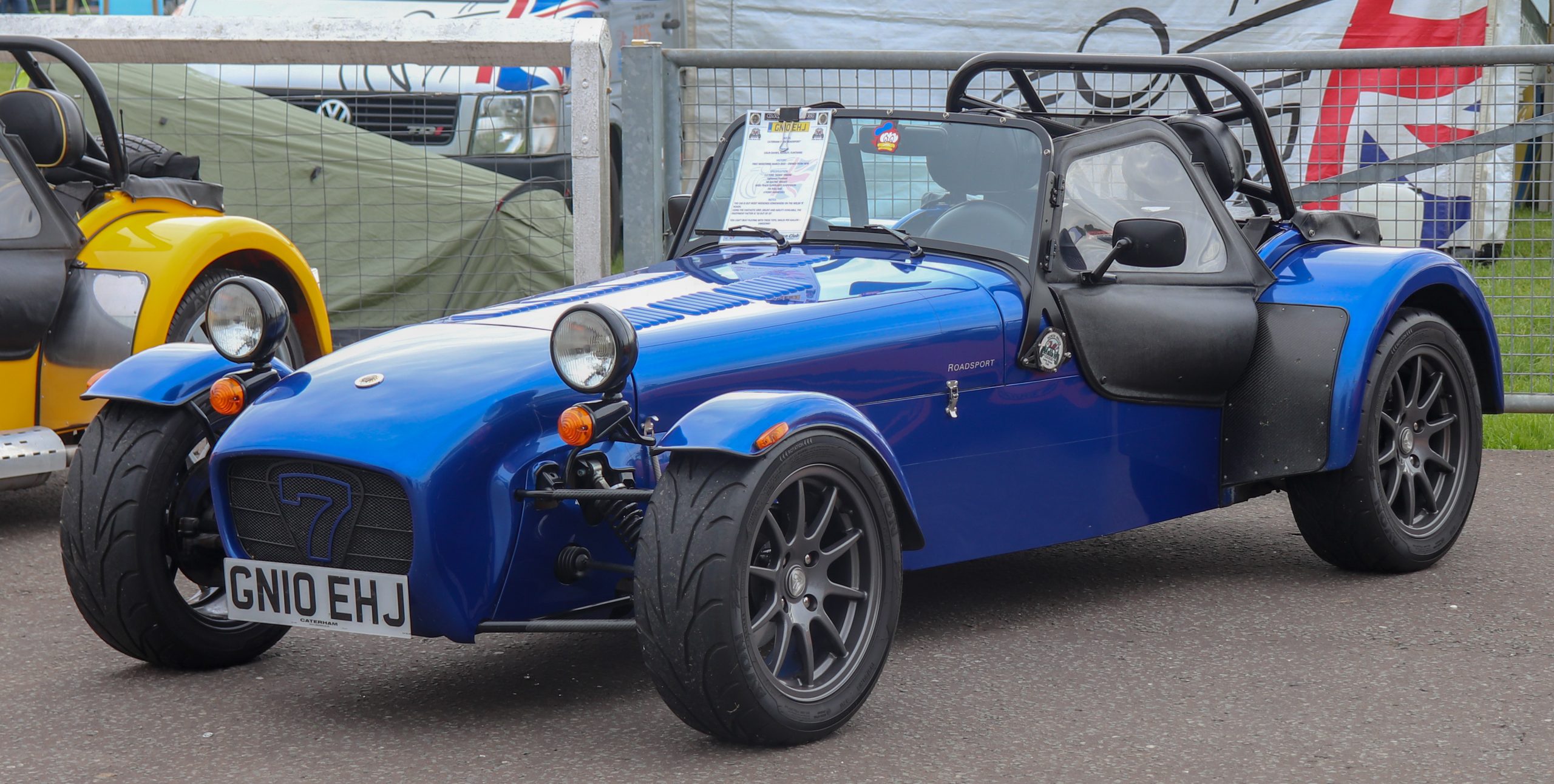
The driving experience is raw and unfiltered. The steering is unassisted rack-and-pinion, providing feedback so detailed you can sense individual pebbles beneath the front tires.
The sequential gearbox in higher-spec models shifts with mechanical precision and zero electronic intervention. The suspension uses double wishbones with inboard springs and dampers, creating handling that’s simultaneously responsive and communicative. The Seven changes direction with an immediacy that makes other sports cars feel ponderous.
There’s no ABS, no traction control, no stability management just you, a proper manual transmission (or sequential in some models), and direct mechanical connections between all controls and their functions.
The Seven demands attention and rewards skill, punishing sloppiness but responding beautifully to smooth, considered inputs. It’s a car that makes you a better driver simply through necessity.
The impracticality is part of the charm. There’s minimal weather protection, negligible storage, a ride quality that could charitably be called “firm,” and ergonomics designed for someone shaped exactly like Colin Chapman. Highway driving is an exercise in exposure, with wind buffeting and road noise that make conversation impossible above 50 mph.
Yet the Caterham Seven makes you take the long way home and the even longer way back because it delivers driving in its purest, most distilled form. Every journey becomes an event, every corner an opportunity for mechanical communion. It’s utterly impractical and completely, wonderfully addictive.
Also Read: 10 Interiors That Still Look Modern After a Decade
