China’s FAW Group says it has developed a lithium-manganese semi-solid-state battery capable of delivering more than 600 miles of range under China’s CLTC testing cycle.
According to Chinese media reports, the company has already installed this battery in a production vehicle, though pricing and commercialization timelines have not yet been clarified.
Conventional lithium-ion batteries remain the dominant chemistry in electric vehicles globally. However, competing chemistries are advancing quickly, aiming to extend driving range, accelerate charging times, and improve durability.
What distinguishes this announcement is that the technology appears to have progressed beyond laboratory prototypes and into an actual vehicle platform.
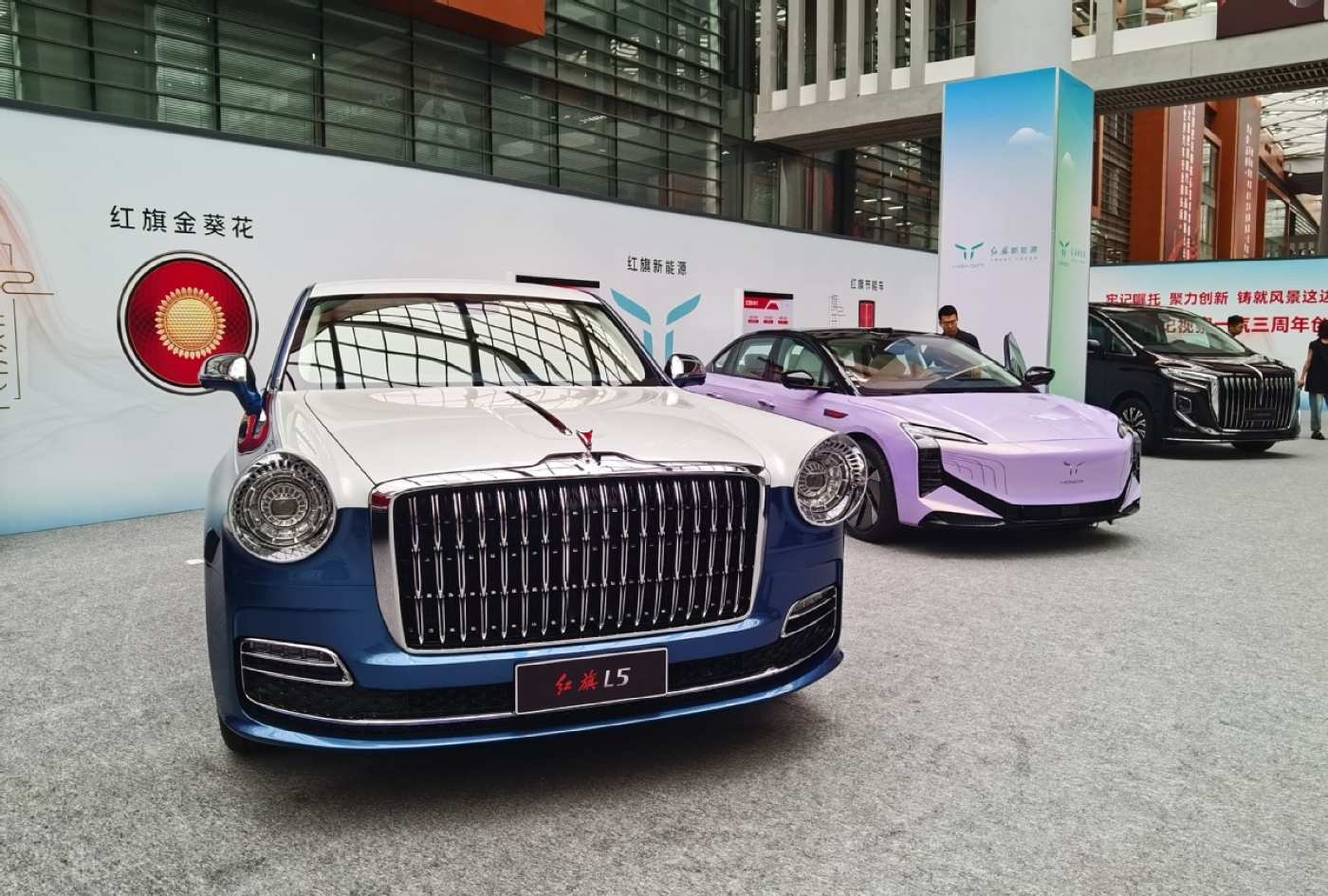
FAW highlighted a Hongqi-branded electric crossover during its presentation. The vehicle is equipped with a 142-kilowatt-hour semi-solid-state battery pack.
At the cell level, FAW claims an energy density of 500 watt-hours per kilogram, approximately double that of many current lithium-ion batteries. On the CLTC cycle, that translates to a projected range of 1,000 kilometers, or roughly 620 miles.
It is important to contextualize that figure. The CLTC standard typically produces more optimistic results than the U.S. EPA cycle. Real-world range under EPA testing would likely be substantially lower.
Moreover, total driving range depends not only on battery capacity but also on vehicle aerodynamics, curb weight, drivetrain efficiency, and environmental conditions.
The defining element of this development is its manganese-rich chemistry. Semi-solid-state batteries generally use a gel-like electrolyte to enhance stability and safety compared to fully liquid systems.
However, many such batteries still rely on familiar cathode materials like nickel-manganese-cobalt (NMC) or nickel-cobalt-aluminum (NCA).
FAW’s approach emphasizes manganese as a core cathode component. This aligns with a broader industry shift toward manganese-rich formulations.
Manganese offers potential advantages in cost, supply stability, and sustainability compared to nickel and cobalt, both of which are expensive and linked to environmental and ethical concerns.
This transition is not confined to China. In the United States, General Motors and Ford Motor Company have both announced intentions to deploy lithium-manganese-rich (LMR) battery chemistries in future electric vehicles.
The objective is to reduce reliance on nickel and cobalt while maintaining competitive energy density.
BYD has also publicized improvements in cycle life and charging performance for its solid-state cells, while Toyota and a key battery partner have begun establishing large-scale pilot production lines in Japan.
Separately, several Chinese battery manufacturers are exploring lithium iron manganese phosphate (LMFP) chemistries to enhance the performance of low-cost lithium iron phosphate (LFP) cells.
Collectively, these efforts signal growing momentum behind manganese as a critical cathode material in next-generation EV batteries.
Automakers have issued numerous claims in recent years regarding battery breakthroughs. Not all have translated quickly, or economically, into large-scale production. The same uncertainties apply here.
Manufacturing complexity, cost per kilowatt-hour, long-term durability, and safety validation will ultimately determine whether FAW’s semi-solid-state battery becomes commercially significant.
Nevertheless, the aggregate direction of industry research suggests that the next decade of electric vehicles could differ substantially from the current one in terms of battery performance.
Higher energy density, reduced material constraints, and improved charging characteristics are becoming strategic imperatives rather than speculative ambitions.
Also Read: Top 10 Electric SUVs Coming Soon That Are Worth Waiting For