Not all compact cars behave the same on highways. Some feel composed, confident, and planted, while others can feel light, floaty, or twitchy at higher speeds. Factors such as chassis strength, suspension tuning, weight distribution, aerodynamics, and steering feedback strongly influence a car’s stability when leaving city streets behind.
Vehicles like the Honda Civic, Mazda 3, Volkswagen Golf, Skoda Slavia, and Subaru Impreza combine well-engineered platforms, precise steering, and suspension designed for both comfort and control to remain stable and reassuring during long highway drives.
On the other hand, models such as the Mitsubishi Mirage, older Toyota Aygo, Fiat 500, Dacia Sandero Stepway, and Suzuki S-Presso prioritize city-focused features, including lightweight construction, soft suspension, and high ground clearance, which make them more sensitive to crosswinds and prone to floaty sensations at speed.
Recognizing these characteristics helps drivers select the right compact car for both urban and highway driving.
5 Compact Cars That Feel Solid at Highway Speeds
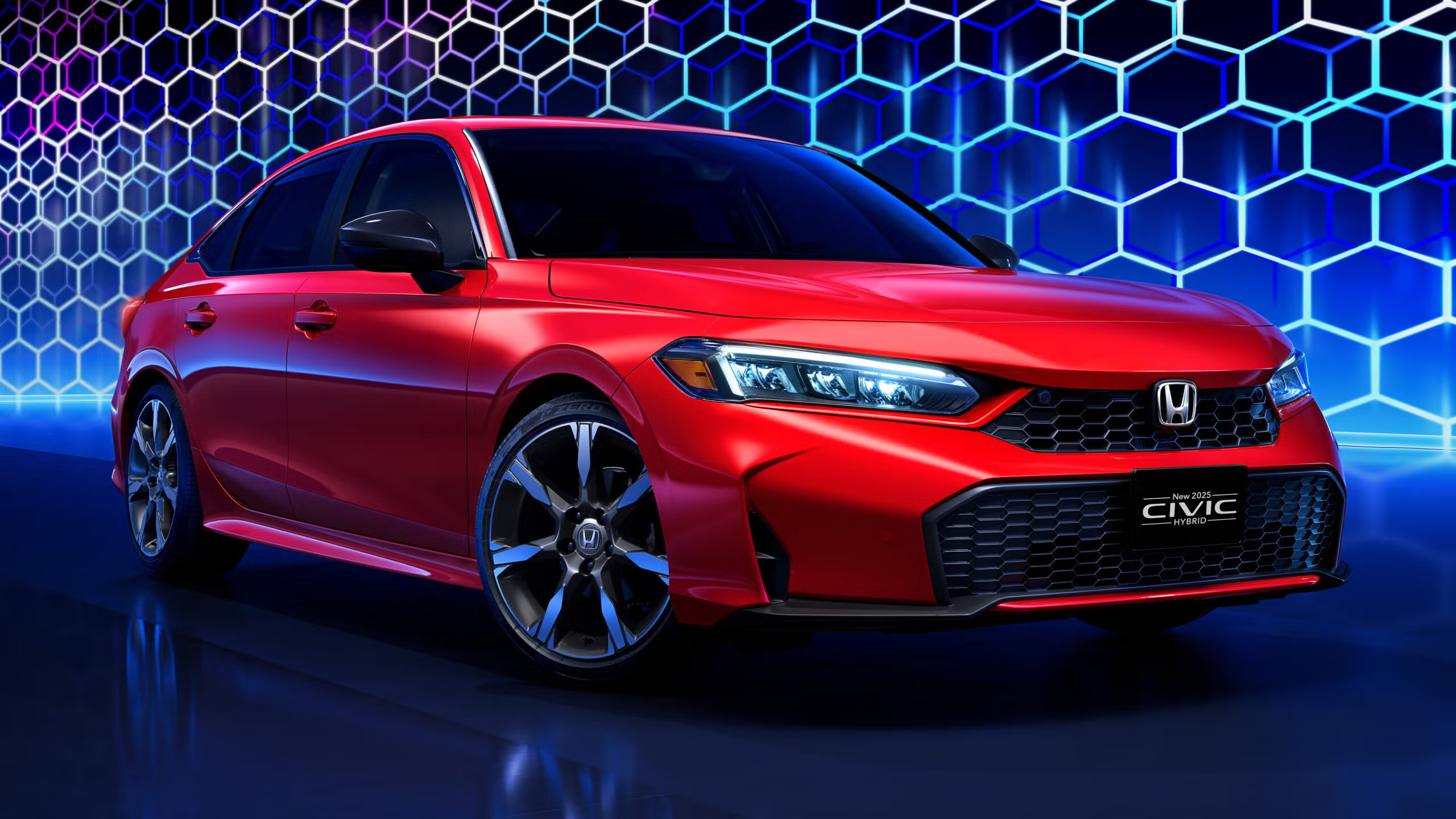
1. Honda Civic: Balanced Performance, Comfort, and Efficiency
The Honda Civic is widely recognized as a benchmark in the compact sedan segment, offering a refined driving experience with stability, comfort, and efficiency. Its rigid chassis and well-damped suspension provide excellent straight-line stability, while precise electric power steering delivers responsive, confident handling at highway speeds.
Aerodynamic design, balanced weight distribution, and a low-profile stance help the car stay planted, reducing the need for constant steering corrections. Performance trims such as the Si and Type R benefit from specially tuned suspension for neutral, composed handling even during quick lane changes or on windy roads. Maintaining suspension components, particularly in older models, helps retain this stability.
The Civic is available in both nonhybrid and hybrid configurations. The standard 2.0-liter four-cylinder engine produces 150 hp and drives the front wheels via a continuously variable automatic transmission (CVT). While not exceptionally fast, it is nimble and capable of keeping pace with urban traffic.
The Civic Hybrid pairs the same 2.0-liter engine with two electric motors to deliver 200 hp, providing smooth and lively acceleration. In testing, the Sport Touring Hybrid reaches 0–60 mph in 6.2 seconds, compared with 8.9 seconds for the nonhybrid, demonstrating the hybrid’s strong performance for everyday driving.
Fuel efficiency is another strength: the hybrid achieves EPA ratings of 50 mpg city, 47 mpg highway, and 49 mpg combined, while the nonhybrid offers up to 32 mpg city and 41 mpg highway. Real-world highway testing of the hybrid produced 47 mpg at 75 mph.
Inside, the Civic accommodates five passengers comfortably, with spacious front seats and a rear bench suitable for two adults. Cloth upholstery comes standard, while higher trims feature leather.
Cargo space is generous in both sedan and hatchback models, with the sedan holding six carry-on suitcases in the trunk or 17 with the rear seats folded. Infotainment includes a standard 7.0-inch touchscreen with wired Apple CarPlay and Android Auto, with optional 9.0-inch or larger screens, wireless connectivity, navigation, a wireless charging pad, and a premium 12-speaker Bose audio system.
Standard safety features include automated emergency braking, lane-keeping assist, and adaptive cruise control, with optional blind-spot monitoring, rear-cross-traffic alert, and parking sensors.
Warranty coverage is typical for the segment, offering three years/36,000 miles limited, five years/60,000 miles powertrain, and eight years/100,000 miles for hybrid components, along with one year/12,000 miles of complimentary maintenance. The Honda Civic continues to deliver a satisfying combination of comfort, performance, efficiency, and reliability for compact-sedan buyers.
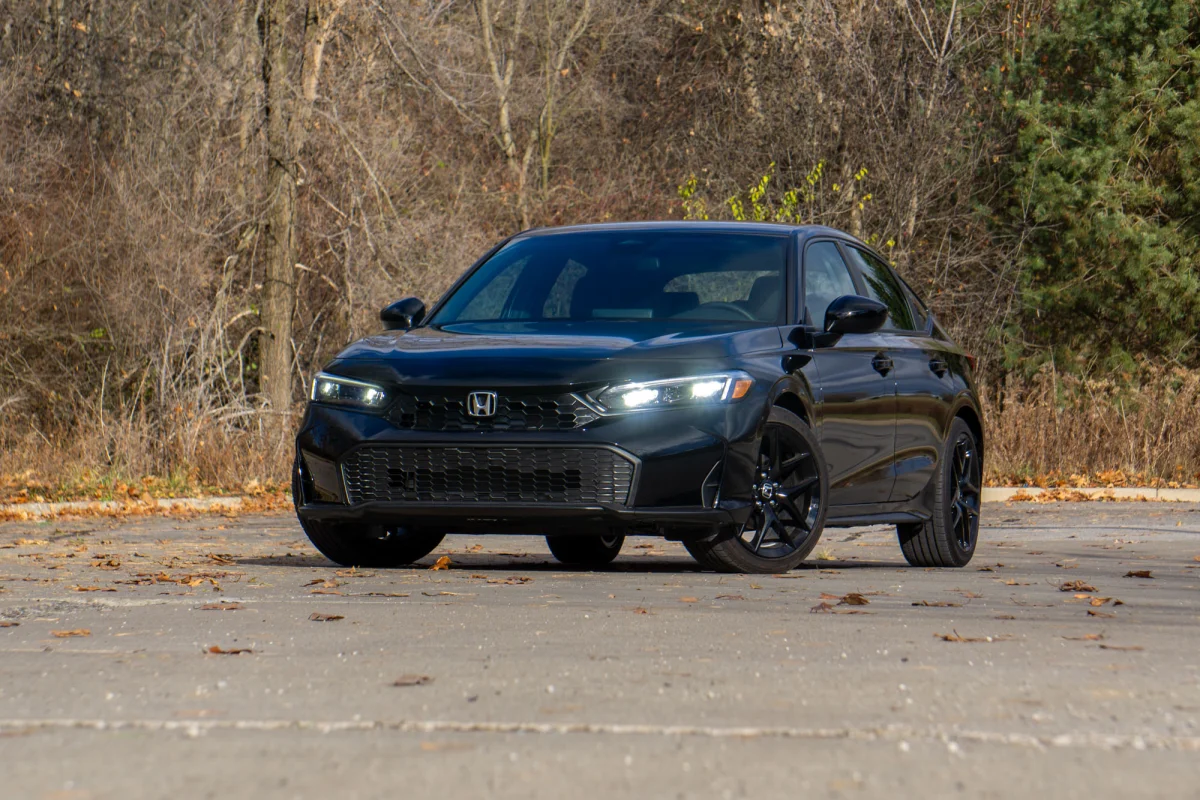
2. Mazda 3: Premium Comfort Meets Athletic Handling
The Mazda 3 is known for its premium interior, athletic handling, and composed, planted feel on highways. Its stability is enhanced by G-Vectoring Control, which subtly adjusts engine output during lane changes and high-speed cornering. European-influenced suspension tuning, a rigid chassis, and a design focused on steering feel and cabin refinement make the Mazda 3 feel solid and confident at speed.
While the suspension can feel firm around town, this stiffness improves high-speed stability, absorbs large road dips, and prevents sway. Additional features such as precise, heavy steering, refined cabin insulation, optimized seat design, and available i-Activ all-wheel drive (AWD) further enhance highway composure and reduce driver fatigue during long trips.
Under the hood, most Mazda 3 models feature a 186-hp 2.5-liter naturally aspirated four-cylinder engine paired with a six-speed automatic transmission, with optional AWD or manual transmission depending on the trim. The turbocharged 2.5-liter four-cylinder produces 250 hp and comes standard with AWD and the automatic, delivering brisk acceleration and sporty performance.
In testing, the turbo AWD sedan reaches 60 mph in 5.6 seconds, while the naturally aspirated front-wheel-drive sedan achieves 7.0 seconds. Both sedan and hatchback bodies feel composed on straight and twisty roads, retaining the fun-to-drive character of previous models, with taut body control, natural steering, and a firm but comfortable ride.
Fuel efficiency varies by model and drivetrain. The front-wheel-drive sedan delivers up to 27 mpg city and 36 mpg highway, while AWD sedans achieve 26/34 mpg. Turbo models are slightly less efficient at 23/32 mpg, and manual hatchbacks reach 25/34 mpg. Real-world highway testing generally meets or exceeds EPA estimates by 2–4 mpg.
The interior is attractive, comfortable, and dressed with high-quality materials. Front seats are supportive, while rear legroom is adequate for a compact car. Cargo capacity is practical: the sedan fits six carry-on bags behind the rear seats and 16 with the seats folded, while the hatchback accommodates five bags up top and 16 total.
Infotainment includes a standard 8.8-inch touchscreen with wired Apple CarPlay and Android Auto, with optional 10.3-inch screens and wireless smartphone integration for Turbo models. Audio ranges from an eight-speaker stereo to an optional 12-speaker Bose system.
Safety is comprehensive, with standard automated emergency braking, blind-spot monitoring, and adaptive cruise control, plus optional 360-degree cameras and parking sensors. Warranty coverage is standard for the segment: three years/36,000 miles limited and five years/60,000 miles powertrain, without complimentary maintenance.
The Mazda 3 combines upscale comfort, engaging performance, and refined highway stability, making it a standout in the compact car segment.
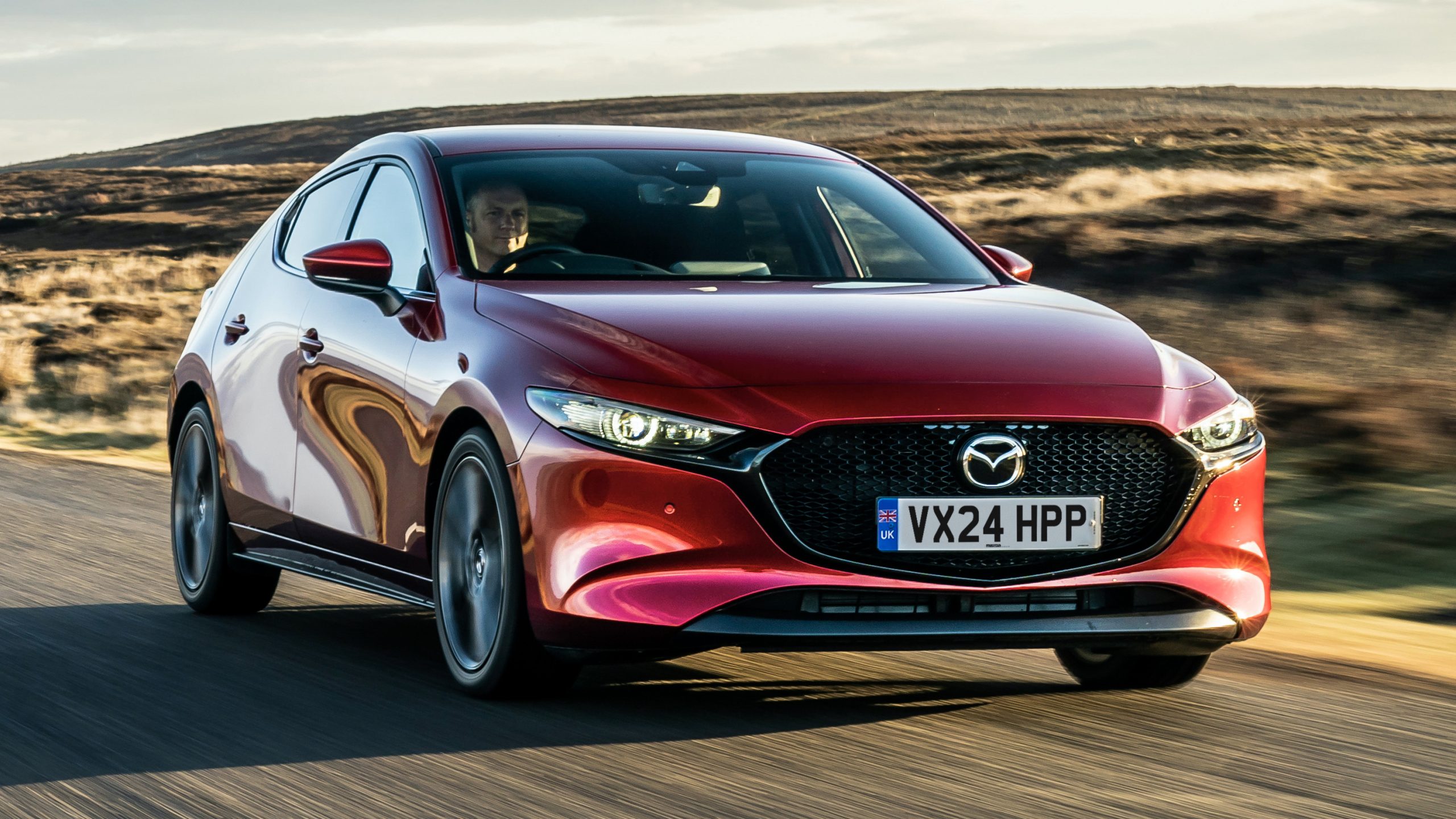
3. Volkswagen Golf: Solid, Practical, and Refined Hatchback
The Volkswagen Golf has been a cornerstone of European automotive engineering for decades, known for its composed handling, solid build quality, and practical design. It feels confident and stable at highway speeds due to a rigid chassis, carefully tuned suspension, and aerodynamic efficiency.
The Golf features progressive, precise steering that provides control without feeling twitchy, a well-insulated cabin that reduces wind and road noise, and a suspension firm enough to stay planted over bumps and dips without feeling floaty. Optional all-wheel drive further improves stability, while seats are designed for comfort and support on longer drives.
The Golf is available with a variety of engines and drivetrains to suit different driving preferences. Standard models offer 1.5- and 2.0-liter petrol engines paired with six-speed manual or seven-speed dual-clutch automatic transmissions, some of which include mild-hybrid technology.
Diesel and plug-in hybrid options add fuel-efficient alternatives, with the PHEV capable of 88 miles on electric power alone. Performance models, such as the GTI and Golf R, provide higher horsepower, sport-tuned suspension, and sharper steering.
Most non-sport models prioritize comfort and stability. Acceleration ranges from brisk, with the Golf R reaching 0 to 62 mph in 5.6 seconds, to adequate for standard engines, while motorway driving is quiet and relaxed.
Inside, the Golf maintains high-quality materials and thoughtful design. Soft-touch plastics are used throughout, essential controls feature physical buttons, and the dashboard includes a large 12.9-inch touchscreen for infotainment. Haptic climate controls, steering wheel buttons, wireless Apple CarPlay and Android Auto, and the IDA voice assistant provide convenient connectivity and usability.
The cabin is practical, with a 381-liter boot that expands to 1,237 liters with the rear seats folded, adequate rear legroom for adults, and clearly marked Isofix mounting points for child seats. Optional features include winter packs, heated seats, and adjustable dampers to enhance comfort.
Safety features are comprehensive and include adaptive cruise control, lane assist, automatic emergency braking, road-sign recognition, and driver alert systems. The Euro NCAP awarded the Golf a five-star safety rating. Warranty coverage is three years or 60,000 miles, which is standard for the segment.
The Volkswagen Golf offers a dependable and refined driving experience. It is practical, comfortable, and confident on the road. While it may not be the most exciting car to drive in corners, it balances comfort, technology, and build quality, making it a strong choice for families, commuters, and anyone seeking a versatile hatchback.
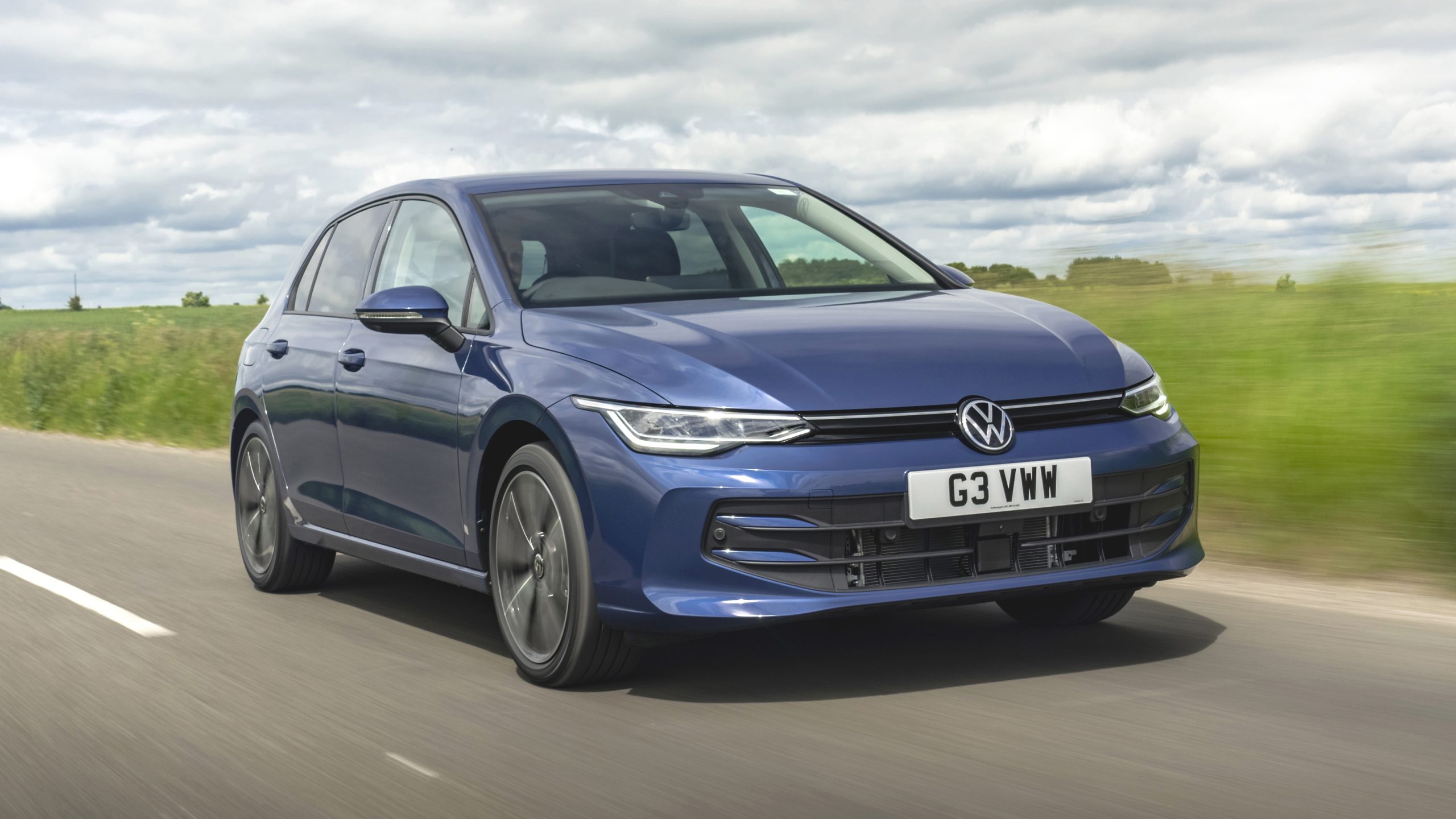
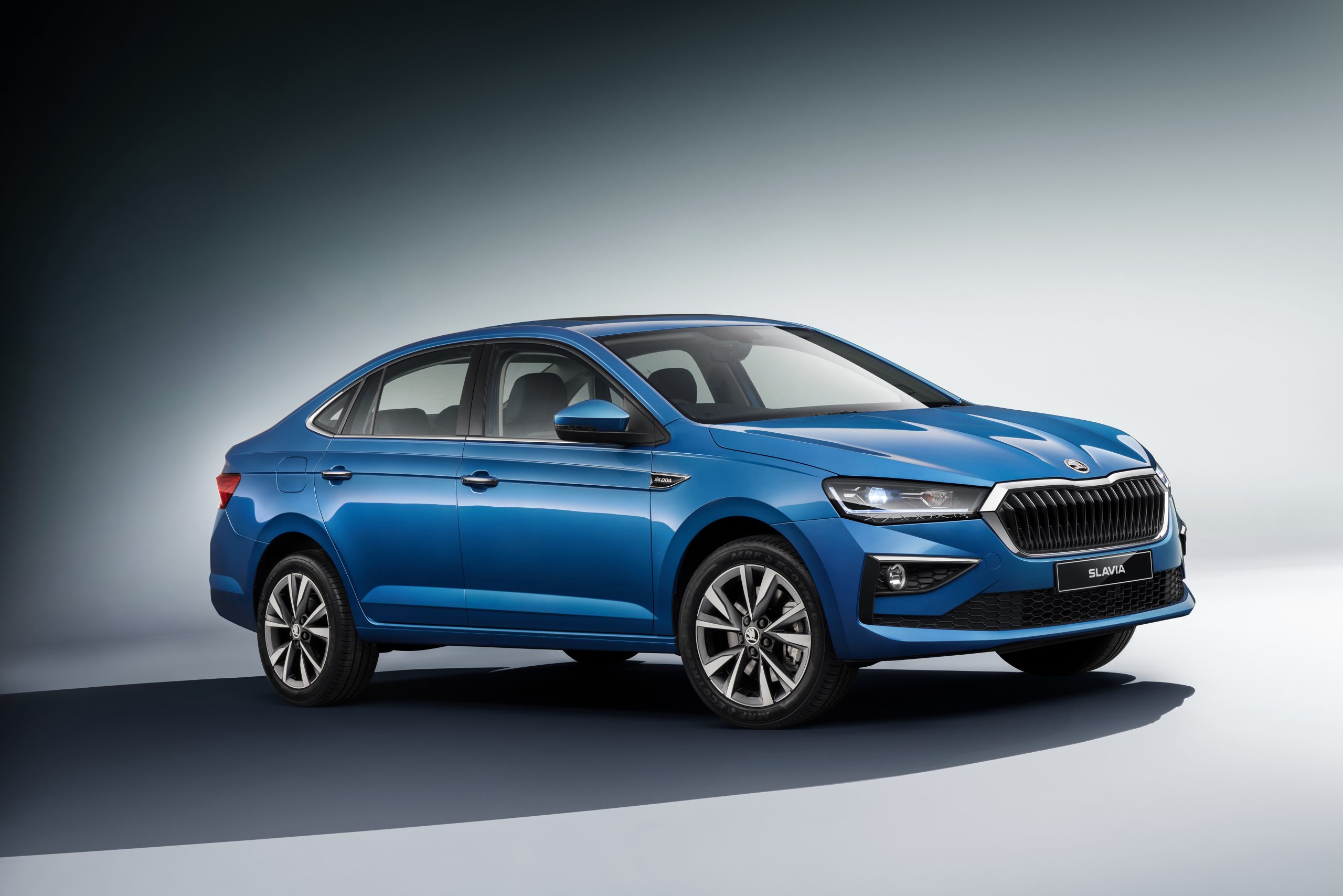
4. Skoda Slavia: Solid, Comfortable, and Confident on Highways
The Skoda Slavia is built on the MQB-A0-IN platform, giving it a stiff and robust chassis that provides a sure-footed and mature ride at highway speeds. Its European-inspired build quality, well-tuned suspension, and heavy-duty structure ensure stability and composure even on rough roads. The car feels planted from 100 to 140 km/h, with minimal floatiness and precise handling.
Key factors contributing to this confidence include the torsionally rigid platform, suspension tuned for both comfort and stability, responsive steering, and high ground clearance of 179 millimeters, which allows it to navigate unpaved or uneven roads with ease. Advanced safety systems, such as electronic stability control and multi-collision braking, help maintain control under varying conditions.
The Slavia is powered by TSI petrol engines in 1.0-liter and 1.5-liter variants. The 1.5-liter engine produces 150 hp, delivering smooth and strong acceleration in the mid- and top-range, while cylinder deactivation and start-stop technology improve fuel efficiency. On highways, the car can achieve over 17 kilometers per liter, while mixed driving returns around 10.5 kilometers per liter.
Turbo lag is noticeable below 1,800 rpm, but above that threshold, the engine pulls cleanly and effortlessly. The six-speed manual gearbox is precise, well-weighted, and satisfying to operate, while automatic transmission options are available for those preferring convenience.
Ride quality is both absorbent and flat, smoothing out road imperfections while controlling pitch and bob. The suspension is firm at low speeds but keeps the car stable and composed during long drives.
Steering is light, precise, and communicative, providing confidence at high speeds. While the Slavia does not corner like a hot hatch, it remains balanced and grippy, allowing drivers to enjoy spirited driving without sacrificing stability.
The interior combines comfort, practicality, and refinement. Front seats are ventilated and supportive, rear seating is spacious, and the cabin includes a large sunroof and well-designed controls. The infotainment and audio systems deliver clear sound, with strong subwoofer output and clean mids and highs.
Storage is generous, with a 521-liter boot that can hold at least four large suitcases. Minor issues include occasional rattles behind the touchscreen, stiff window operation, and small quirks in the digital cluster, but these do not affect the driving experience.
The Skoda Slavia delivers a composed, solid, and comfortable driving experience, with refined handling, practical interior space, efficient engines, and strong build quality, making it a confident choice for highway driving and everyday use.
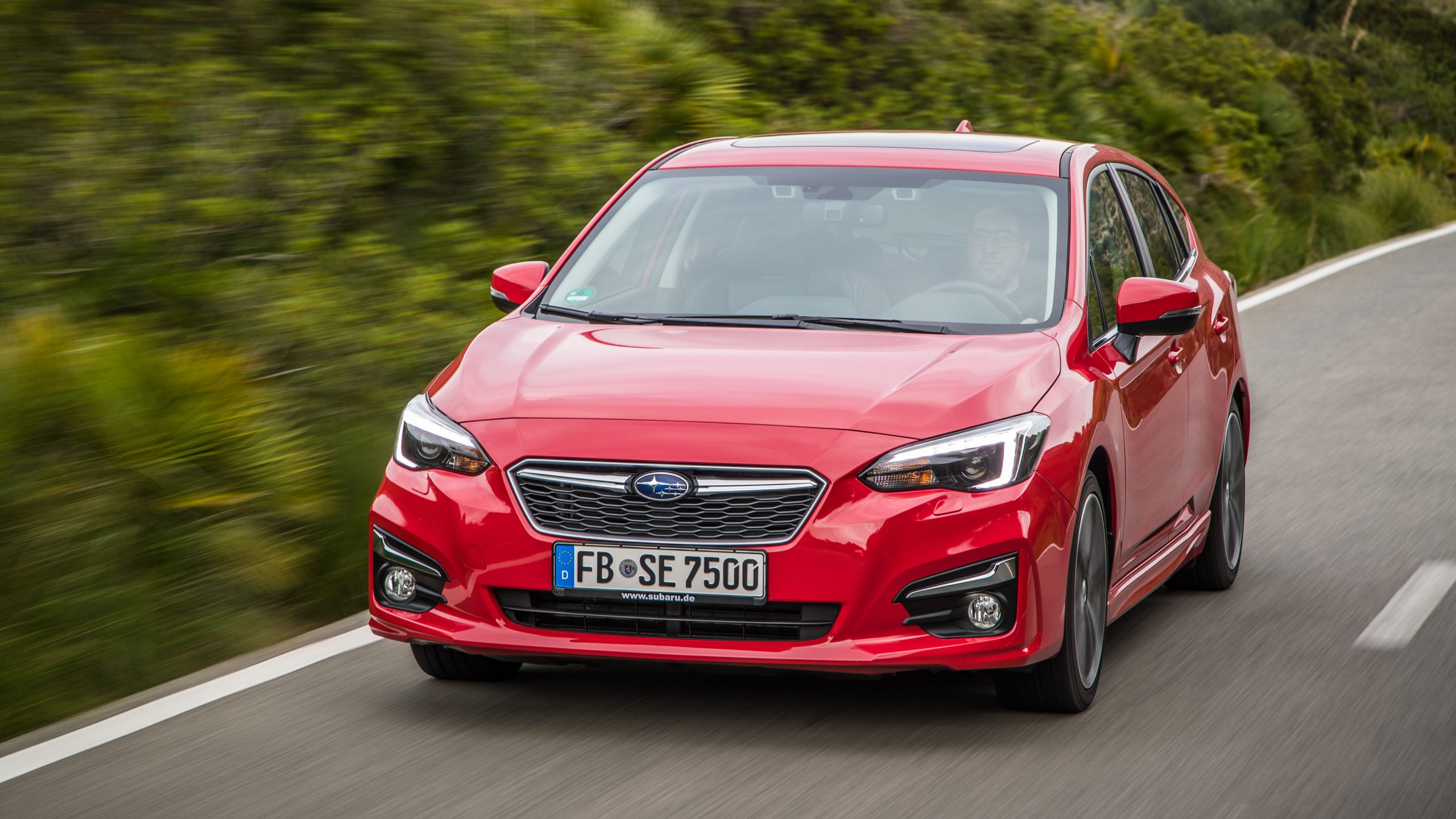
5. Subaru Impreza: Stable, All-Wheel Drive Compact with Practicality
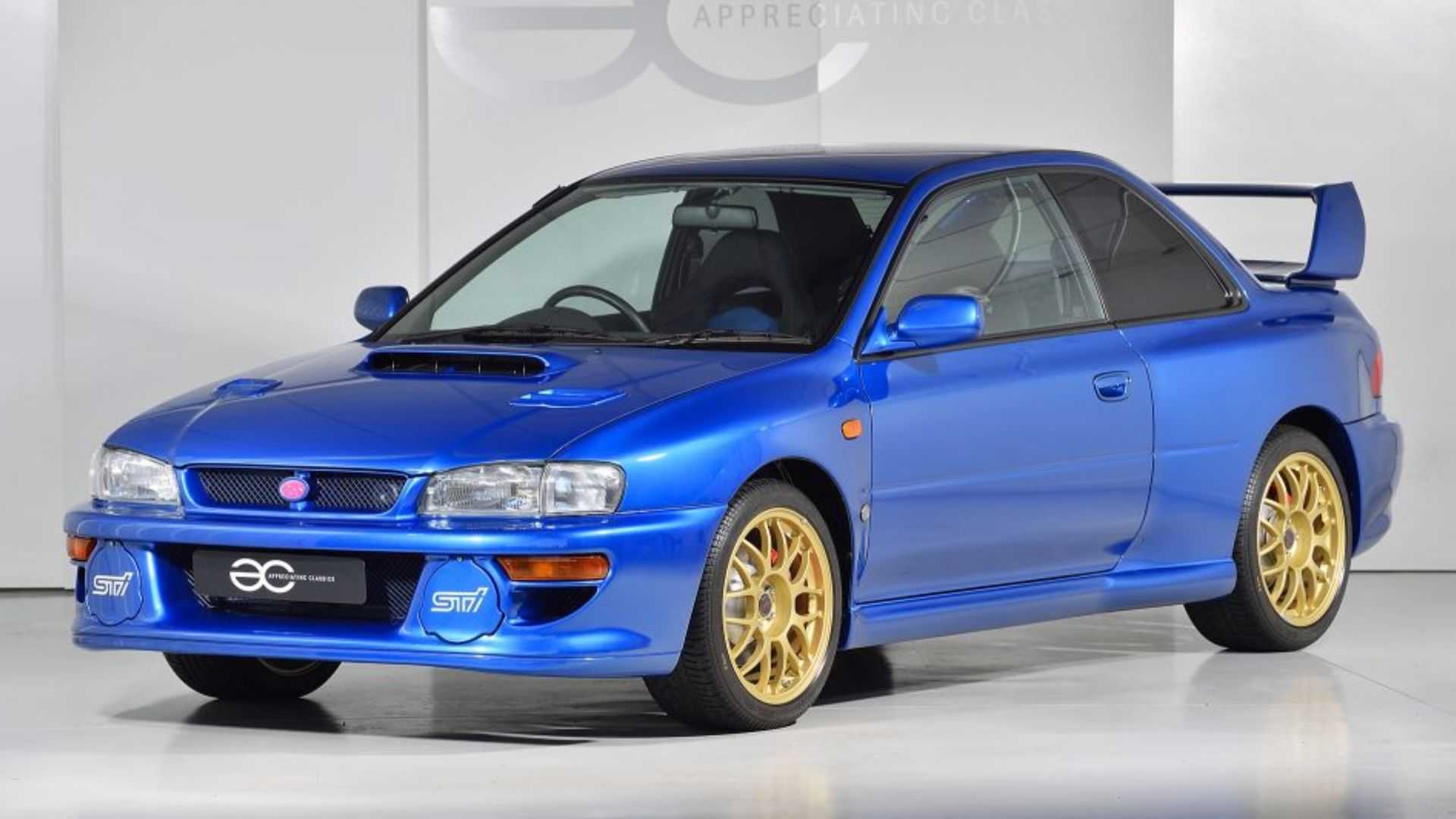
The Subaru Impreza stands out in the compact segment for its standard Symmetrical All-Wheel Drive and low center of gravity, provided by the horizontally opposed SUBARU BOXER® engine. These features give the Impreza exceptional stability and balance at highway speeds, especially in wet or windy conditions.
The firm, communicative suspension and precise steering further enhance its grounded, planted feel, making the car confident and secure during long drives. The Impreza’s rigid build quality and well-tuned chassis also contribute to a mature and composed driving experience.
The 2026 Impreza comes with two naturally aspirated flat-four engines. The Sport model produces 152 horsepower, while the RS trim delivers 180 horsepower. Both use a continuously variable automatic transmission, and all-wheel drive is standard across the range.
While the base engine feels sluggish and even the RS lacks the excitement of a turbocharged powertrain, acceleration is adequate for highway and city driving. The RS reaches 60 mph in 7.8 seconds, improving on the previous generation but still trailing many competitors. Despite this, the chassis handles well, the ride remains comfortable, and the cabin is quiet at speed, reinforcing the sense of stability.
Fuel efficiency is reasonable for an all-wheel-drive compact. The base engine achieves 27 mpg city and 33 mpg highway according to EPA ratings, while the RS trim matched and even exceeded its highway estimate, delivering 37 mpg in real-world testing. Cylinder layout, start-stop technology, and efficient gearing help maintain a strong economy on longer drives.
The interior is practical and driver-focused rather than luxurious. Front seats are supportive, and rear passengers enjoy reasonable legroom with 60/40 split-folding rear seats. The hatchback offers a generous cargo capacity of 56 cubic feet with the seats folded, or room for eight bags with the second row upright.
The infotainment system features an 11.6-inch touchscreen with wireless Apple CarPlay and Android Auto, USB-C and USB-A ports, and an optional 10-speaker Harman/Kardon audio system for RS models. Physical knobs for climate and audio controls make the interface easy to use on the move.
Safety is a strong point, with Subaru’s EyeSight driver-assistance suite standard across all trims. It includes adaptive cruise control, lane-centering assist, and automated emergency braking. RS trims add blind-spot monitoring, while other optional features include rear-cross-traffic alert and evasive-steering assist.
Warranty coverage is standard for the segment, with three years or 36,000 miles limited coverage and five years or 60,000 miles for the powertrain, but no complimentary maintenance.
The Subaru Impreza delivers a solid, secure, and practical driving experience with confident handling, all-weather capability, and functional interior space, making it a dependable choice for commuters and highway travelers alike.
Also read: 5 Cars Owners Are Happy With Long-Term vs 5 They Aren’t
5 That Feel Unstable
1. Mitsubishi Mirage: Lightweight Design Compromises Highway Stability
The Mitsubishi Mirage is highly fuel-efficient and budget-friendly, but its light curb weight and compact design make it less stable at highway speeds. Weighing just 2,000 to 2,100 pounds, the car is easily affected by crosswinds and air pressure from passing trucks. This low mass contributes to its “floaty” feel, especially above 60 mph, and requires constant steering corrections to stay on course.
Narrow tires amplify the instability. Standard 165/65R14 tires provide a small contact patch, reducing lateral grip and making the steering feel twitchy. They also tend to follow grooves in the pavement, a phenomenon called tramlining, which can make lane changes feel unpredictable.
The Mirage’s suspension is tuned for city driving, prioritizing comfort over highway composure. Soft shocks struggle to stabilize the car after bumps, and the absence of a rear sway bar on many trims allows noticeable body roll during lane changes. The car’s narrow, high-profile shape can create aerodynamic lift at speed, slightly reducing weight over the front tires and causing vague, disconnected steering.
Maintenance and wear further affect stability. Misaligned wheels, worn shocks or struts, and improper tire pressure can all increase the “floaty” sensation. By around 50,000 miles, suspension components may lose effectiveness, making the car feel even less planted.
Owners frequently address these issues with aftermarket modifications. Wider tires, such as 175/65R14 or 195/50R15, improve grip and reduce tramlining. Stiffer struts, like KYB Excel-G units, limit bounce, and adding a rear sway bar reduces body roll during high-speed maneuvers.
While the Mitsubishi Mirage excels in fuel efficiency and city driving, its lightweight construction, narrow tires, soft suspension, and aerodynamics make highway driving less secure. With careful maintenance and some aftermarket upgrades, however, the Mirage’s stability can be noticeably improved for highway use.
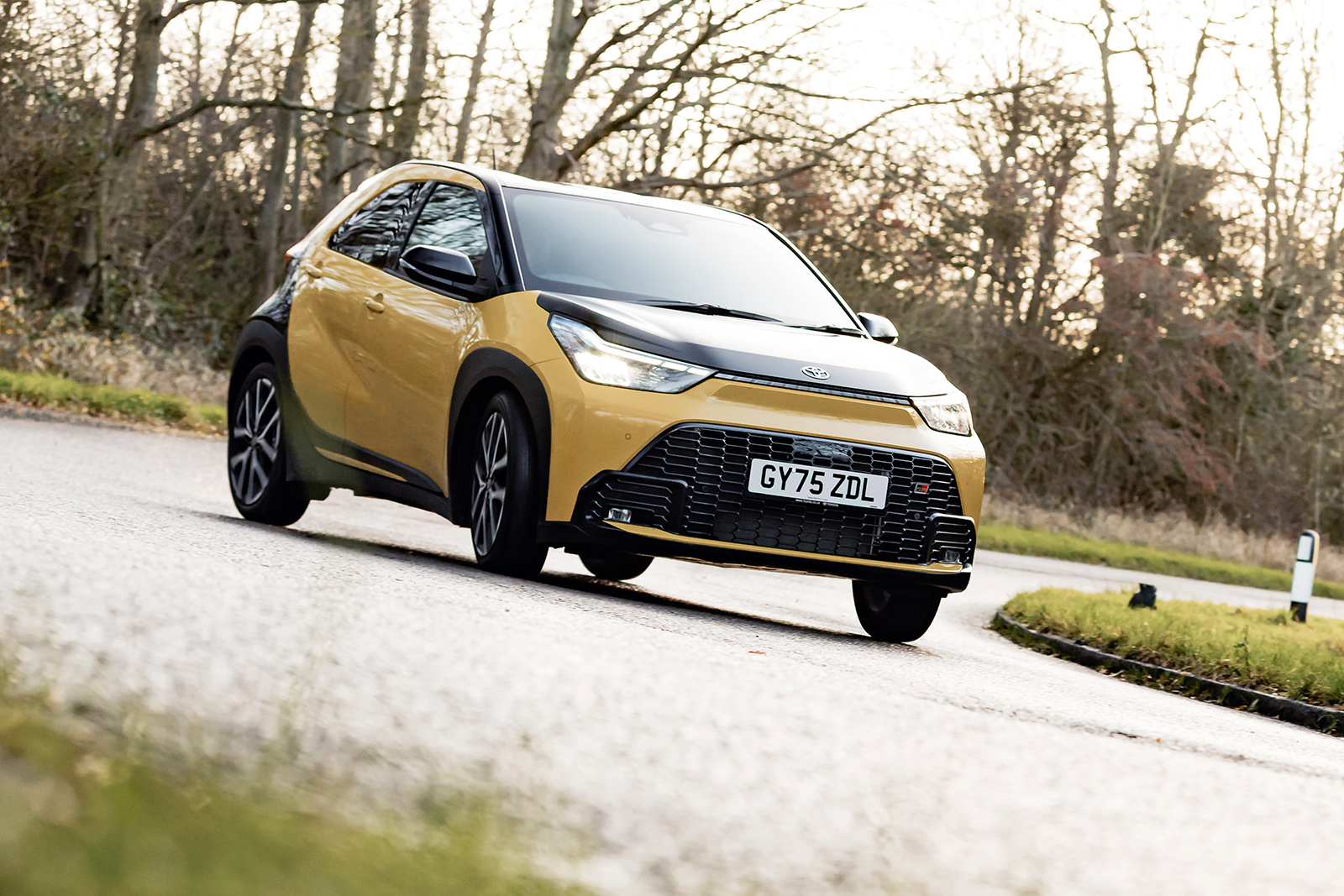
2. Toyota Aygo: City-Focused Design Limits Highway Stability
The Toyota Aygo is a compact city car designed for maneuvering tight urban streets, but its performance on highways is often described as nervous or jittery. This is not due to a defect but stems from the car’s lightweight construction, short wheelbase, and city-oriented engineering.
At speeds above 60 mph, these traits make the Aygo feel less planted than larger vehicles, particularly in windy conditions or when passing large trucks.
The Aygo’s featherweight chassis, at under 1,000 kilograms, lacks the mass needed to resist external forces. Aerodynamic lift at speed further reduces tire grip, giving the car a light, floaty sensation. Its short wheelbase enhances city maneuverability but makes the car more sensitive to steering inputs at highway speeds, causing minor gusts or corrections to feel exaggerated.
Environmental factors such as crosswinds and turbulence from large vehicles amplify this effect. Drivers often need constant steering adjustments to maintain lane position, especially on open bridges or exposed roads.
The suspension and steering contribute as well. Tuned for comfort over potholes, the soft suspension allows more body roll during lane changes, while light steering, ideal for urban parking, reduces feedback at high speed, making the driver feel disconnected from the road.
Maintenance issues can worsen highway stability. Incorrect tire pressure, misaligned wheels, or worn shocks and bushings increase wandering, bouncing, and floatiness, highlighting the importance of regular upkeep.
In essence, the Toyota Aygo’s jittery highway behavior is a product of its city-focused design. Awareness of its lightweight chassis, short wheelbase, and soft suspension, along with diligent maintenance, helps drivers differentiate between inherent characteristics and avoidable mechanical factors, ensuring safer and more predictable performance on longer drives.
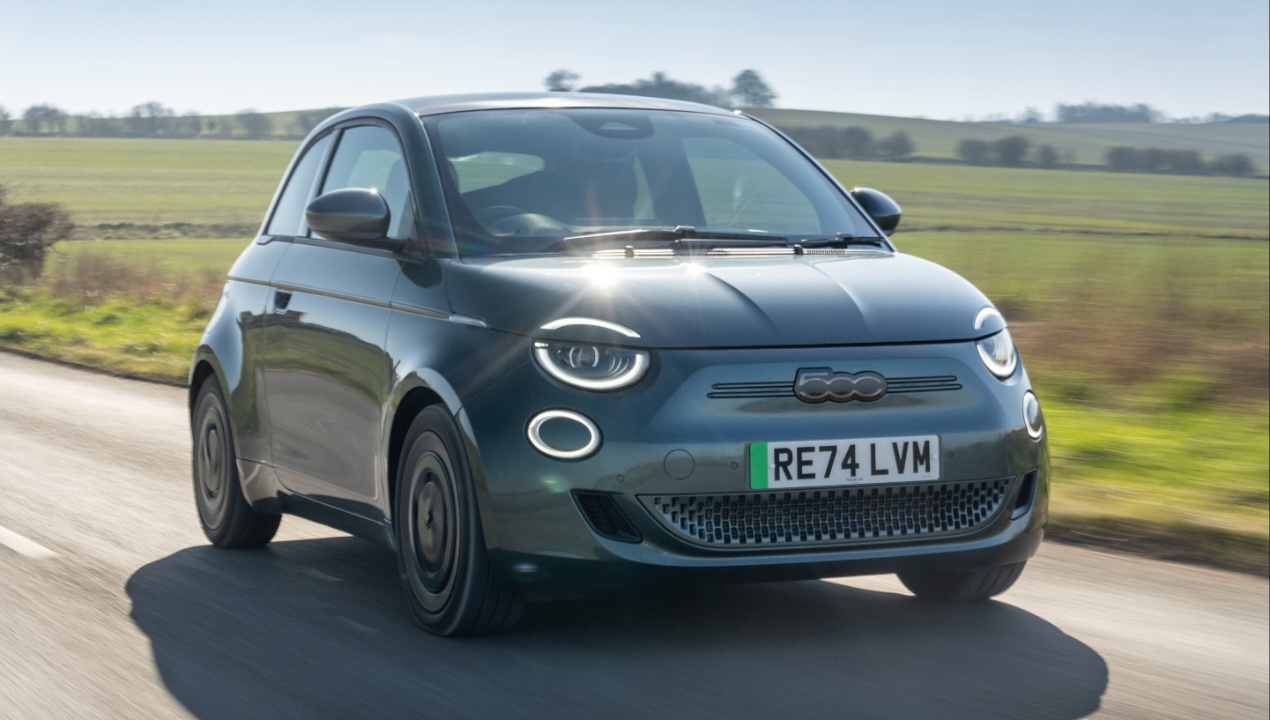
3. Fiat 500: Urban Agility Comes at a Highway Cost
The Fiat 500 is designed as a nimble city car, but at highway speeds it can feel twitchy, floaty, or nervous. This behavior is largely due to its physical design and is sometimes amplified by common maintenance issues.
Its short wheelbase enhances maneuverability in tight streets but makes the car highly sensitive to steering inputs at speed. Every minor adjustment is magnified, creating a jittery sensation compared with larger, heavier vehicles that resist sudden changes.
The Fiat’s tall and narrow body adds to the challenge. With a high center of gravity and lightweight construction of roughly 2,400 pounds, the car is prone to aerodynamic buffeting. Passing trucks or gusty winds can push the vehicle sideways, producing a startling “floaty” or unsettled feel.
Suspension components play a crucial role in highway stability. Worn shocks or struts fail to keep tires planted, leading to uncontrolled bouncing. Twist-beam rear suspension bushings, if cracked, allow subtle rear-wheel movement that amplifies sway and instability.
Tires and alignment are equally critical. Narrow tires with improper pressure reduce contact with the road, while toe misalignment can cause darting on straightaways. Tramlining, where tires follow grooves in the pavement, adds to the wandering sensation, emphasizing the importance of professional alignment and correct PSI.
Electric power steering also affects stability. In some models, activating Sport mode increases steering weight, giving the driver better feedback and reducing the likelihood of micro-corrections that make the car feel loose.
4. Dacia Sandero Stepway: Practical Design Limits Highway Composure
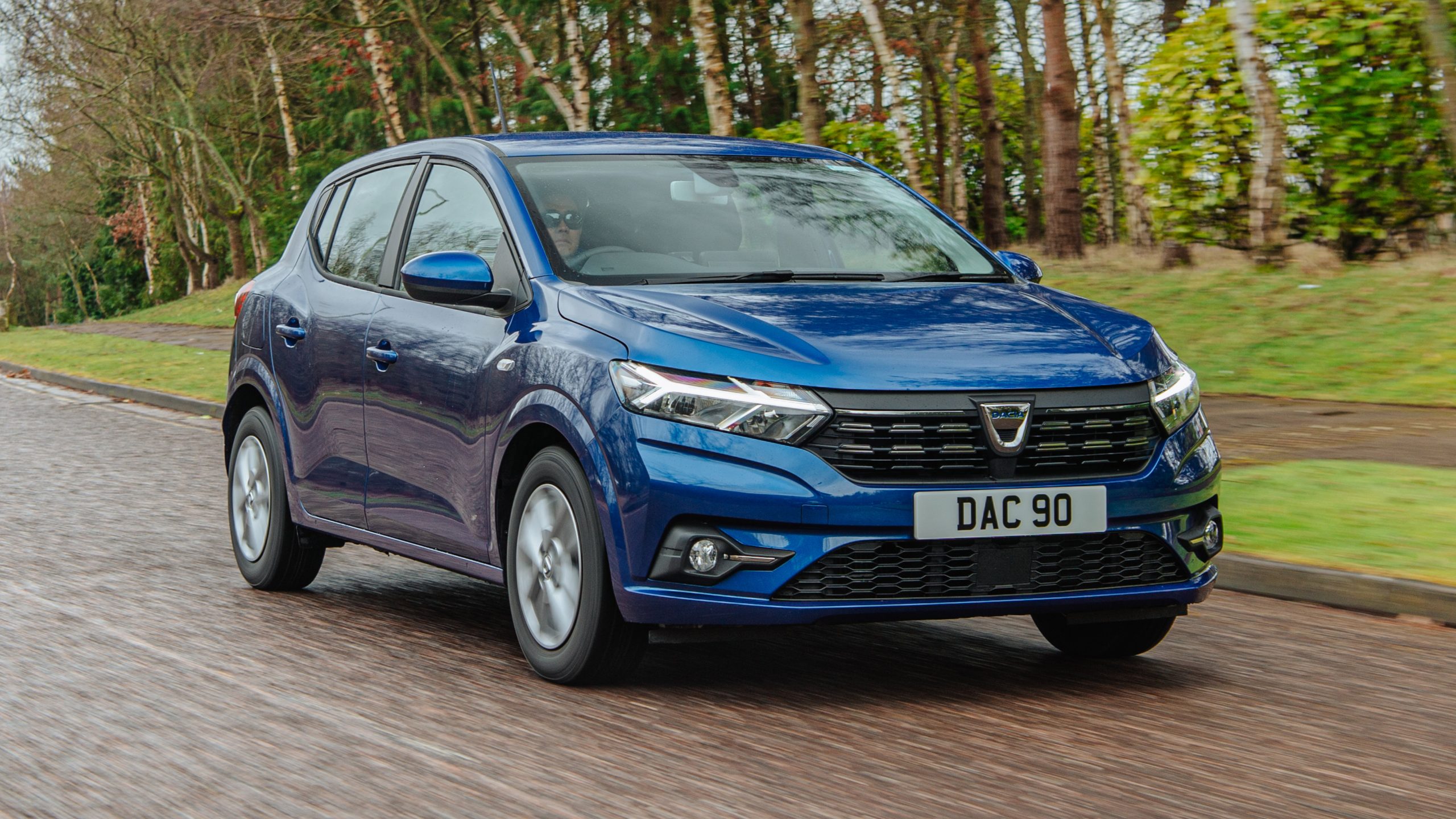
The Dacia Sandero Stepway is a budget-friendly crossover designed for utility and comfort on urban streets and rough roads rather than high-speed cruising. Its elevated ride height, soft suspension, and lightweight construction contribute to a highway experience that can feel less composed compared to more premium rivals.
A key factor is the Stepway’s raised ride height, roughly 40mm higher than the standard Sandero, which increases its center of gravity. This naturally results in more body roll during lane changes or cornering, making the vehicle feel sensitive to weight shifts at speed.
Soft, long-travel suspension tuned for potholes and unpaved surfaces compounds this effect, producing a “floaty” ride and delayed damping after road irregularities.
Aerodynamics and crosswind sensitivity further influence stability. The Stepway’s taller, boxy profile catches more air, and its light curb weight (around 1,100 kg) can allow gusts or passing large vehicles to create noticeable sway or twitching.
Electric power steering, designed for ease of low-speed maneuvering, provides limited feedback at highway speeds, requiring frequent micro-corrections to maintain lane position and giving a sense of vague steering dynamics.
Minimal sound insulation also affects driver perception. Tire and wind noise, along with engine sound at higher revs, amplify the sensation of speed and vulnerability, making the car feel less “locked-in” even when handling is within normal limits.
Owners looking to improve highway stability can focus on simple maintenance and upgrades. Proper tire pressures, balanced wheels, and functional dampers are crucial for minimizing vibrations and body movement. Worn shock absorbers should be replaced promptly, as delays in damping worsen the floaty feeling.
The Sandero Stepway excels as a practical, low-cost city and light off-road vehicle, but its elevated stance, soft suspension, and basic steering and insulation systems naturally limit its high-speed composure compared to conventional hatchbacks and compact crossovers.
5. Suzuki S-Presso: City-Oriented Design Limits Highway Stability
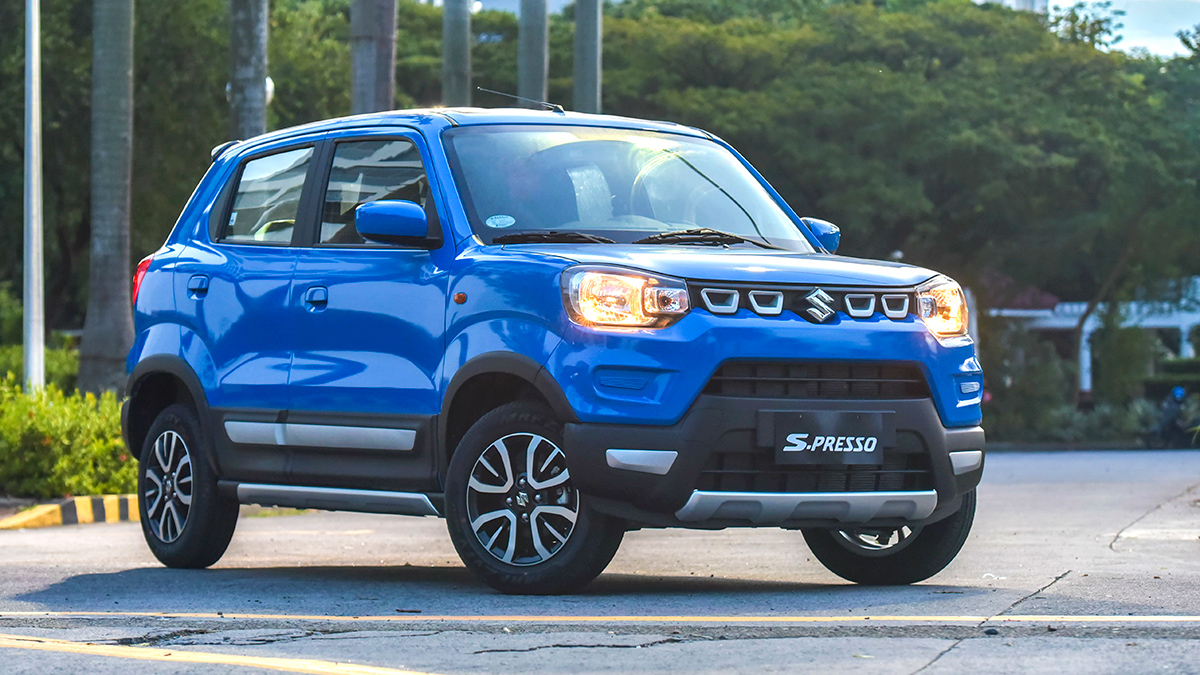
The Suzuki S-Presso is an ultra-compact urban SUV designed for city driving, featuring high ground clearance, a narrow track, and a lightweight body. These features make it effective at handling potholes and tight streets, but they contribute to a top-heavy, “floaty” feel on highways, especially when passing large trucks or driving in windy conditions.
The car’s tall and narrow design increases susceptibility to crosswinds. High ground clearance allows more air to flow beneath the vehicle, reducing the weight pressing on the tires and decreasing highway plantedness. A short wheelbase combined with narrow tires limits lateral grip, making the steering feel loose or twitchy at speeds above 70 km/h.
Steering characteristics further influence stability. The S-Presso’s minimal caster angle reduces the self-centering action of the steering wheel, requiring frequent small corrections to maintain a straight path. The suspension, tuned softly for urban comfort, allows the body to pitch or roll during lane changes or when hitting expansion joints, adding to the “floaty” sensation on open roads.
The car’s lightweight construction amplifies these effects, as it lacks sufficient inertia to resist gusts of wind or the turbulence from passing large vehicles.
Drivers can improve stability with several measures. Maintaining correct tire pressure and checking alignment can enhance straight-line control. Even weight distribution, avoiding rear overloading, keeps the car more balanced. Some owners report that stiffer aftermarket suspensions or slightly wider tires reduce body roll and improve highway confidence, although these modifications can impact fuel efficiency.
The Suzuki S-Presso performs very well in city settings but exhibits natural limitations at high speeds due to its tall, narrow, and light design, soft suspension, and limited steering self-centering. Awareness of these factors and minor adjustments can help make highway driving more secure and stable.
Highway stability in compact cars reflects the balance between city practicality and performance at speed. Cars that feel solid on the highway, like the Civic or Mazda 3, offer a strong chassis, responsive steering, and well-tuned suspension, providing comfort and confidence on long drives.
Vehicles such as the Mirage or S-Presso focus on light weight, soft suspension, and high ride height, which make them agile in cities but less stable at speed. Understanding these strengths and limitations is essential for buyers.
Those who prioritize smooth, confident highway driving should choose models with robust build quality, precise handling, and aerodynamic efficiency. Drivers focused on fuel efficiency and urban maneuverability can accept lighter, city-oriented designs but may need to make adjustments or consider upgrades to improve stability for longer trips.
Also read: 10 Cars With Windshields That Rarely Crack From Rock Chips