
There’s a persistent myth in American car culture that you need 400+ horsepower to have real fun.
In practice, the opposite is often true. Lightweight cars with modest output frequently deliver a more engaging, more usable, and more confidence-inspiring driving experience, especially on real roads, where traction, visibility, and feedback matter more than raw dyno numbers.
Lower mass amplifies everything: throttle response feels sharper, braking distances shrink, steering inputs translate instantly, and you spend more time in the sweet spot of the powerband instead of managing excess speed.
For daily drivers who still crave excitement, these cars prove that balance beats brute force.
Below are eight modern lightweight cars available (or very recently sold) in the U.S. market that turn reasonable horsepower into genuinely big smiles, each for a different kind of driver.
1. Honda Civic Si (2022–Present)
The Honda Civic Si is a textbook example of how thoughtful tuning amplifies moderate output.
With roughly 200 horsepower and a curb weight just under 2,900 pounds, it does not sound extraordinary. On the road, it feels lively because the gearing is tight, the turbo stays responsive, and the six-speed manual is among the best in the segment.
You can use full throttle frequently without instantly exceeding legal speeds. The chassis balance is excellent, and the steering communicates clearly without artificial heaviness.
Rather than overwhelming the front tires, the Si encourages smooth inputs and rewards rhythm. It feels quicker than its specs imply because you are almost always operating in the heart of its powerband.
Regarding in-car technology, Honda has traditionally been measured in introducing cutting-edge features into its more affordable models. Even so, this iteration of the Civic incorporates several meaningful upgrades.
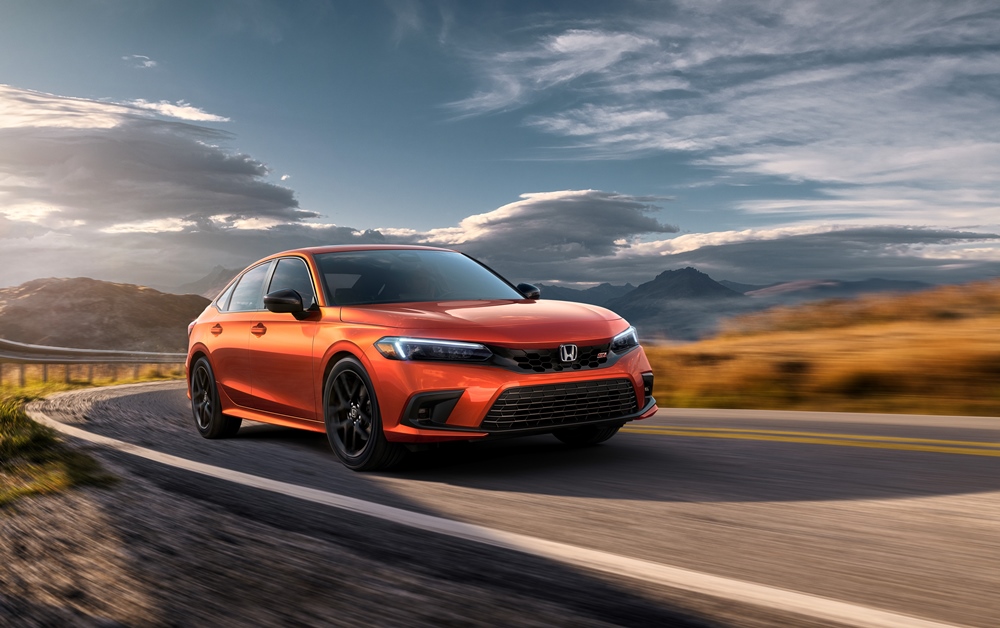
We hold the 2022 Honda Civic in high regard. Competitors such as the Mazda 3, Kia Forte, and Hyundai Elantra each present strong alternatives, whether through refinement, generous feature content, or distinctive styling.
Over 12 months and 20,000 miles, we assessed the manual-equipped Civic Si to determine its strengths and shortcomings in daily use. Our ongoing coverage documents detailed observations on ownership, drivability, and practicality over extended mileage.
We evaluated a Civic Touring sedan fitted with the turbocharged engine. At our test facility, it accelerated from 0 to 60 mph in 7.9 seconds, a result slightly better than the segment average for compact sedans.
Initial acceleration from a stop feels somewhat subdued, but power delivery builds progressively and decisively, eliminating the need for heavy throttle application as is often required with the base 2.0-liter engine. The continuously variable transmission is well calibrated, providing smooth power delivery and prompt responsiveness when additional acceleration is requested.
In cornering scenarios, the Civic feels composed and moderately sporty, promoting driver confidence while retaining everyday usability.
Although tire noise is noticeable, grip levels remain higher than expected, contributing to braking performance that exceeds class norms. The Civic delivers a balanced and unintimidating driving experience, qualities that align well with expectations for an accessible, value-oriented sedan.
Also Read: Top 10 Family Haulers That Are Not Minivans or SUVs
2. Ford Fiesta ST (Final U.S. Year: 2019)
If “recently sold” qualifies, the Ford Fiesta ST is one of the purest modern examples of the “slow car fast” philosophy.
At about 2,700 pounds and 197 horsepower, it is compact, short-wheelbase, and aggressively tuned. A mechanical limited-slip differential and eager rear-end rotation make it feel explosive at sane speeds.
The Fiesta ST does not rely on big numbers. Instead, it thrives on lightness and attitude. It changes direction instantly. Lift-off oversteer is accessible. The turbo engine delivers punch without overwhelming the chassis.
Few cars better demonstrate how modest output, combined with low mass and sharp calibration, creates outsized fun.
Consistent with most subcompact cars, the Fiesta does not benefit from abundant engine output. Its modest power is further tempered in everyday driving by the twin-clutch PowerShift transmission, which can feel less refined than a conventional automatic. Despite this, drivers with an interest in chassis dynamics will appreciate the Fiesta’s sport-oriented suspension tuning.
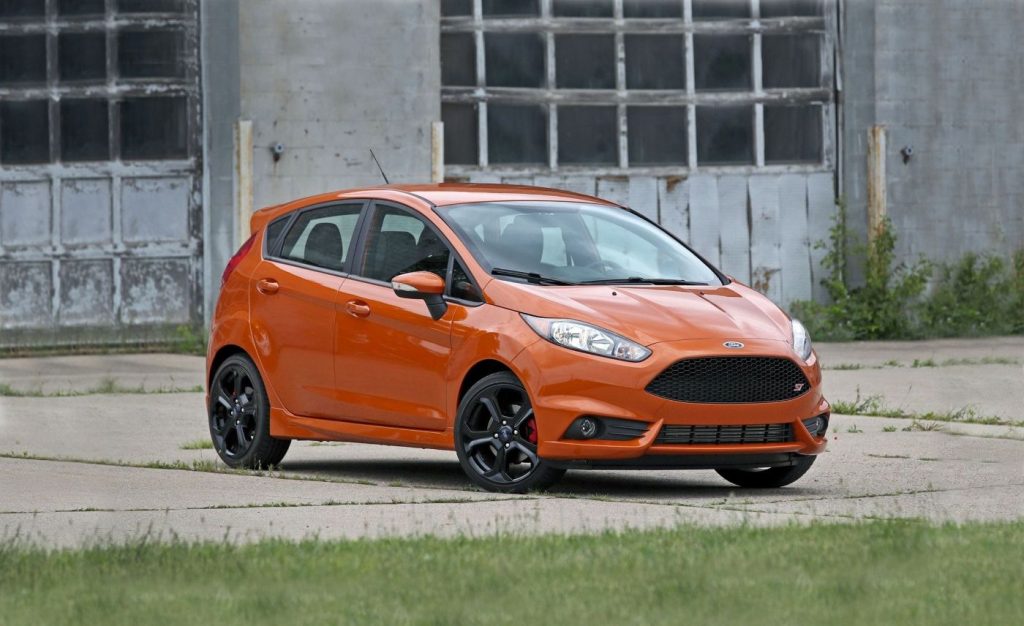
The 1.6-liter four-cylinder engine delivers adequate but unremarkable performance. It does not feel particularly forceful under acceleration, and the Fiesta reaches 60 mph from a standstill in 9.4 seconds, which aligns with the segment average.
Brake pedal modulation is straightforward and predictable during regular driving. In emergency stopping scenarios, braking distances are competitive but remain typical for the class rather than exceptional.
Steering response is quick and well-weighted, providing useful feedback through the wheel. This responsiveness enhances driver engagement, particularly when navigating curves or highway on-ramps. A thick-rimmed, high-grip steering wheel further reinforces the car’s sporty character.
The Fiesta distinguishes itself most clearly in cornering situations. Its suspension calibration strikes an effective balance between control and agility, resulting in a driving experience that is notably more engaging than many competitors in the subcompact category.
3. Honda Fit (Manual, 2018–2020)
The Honda Fit is not marketed as a performance car, yet it perfectly supports the lightweight thesis.
With roughly 130 horsepower and about 2,500 pounds to move, the Fit is tossable and honest. The naturally aspirated engine rewards revving. The manual transmission keeps you involved.
Because outright speed is limited, you focus on maintaining momentum. Smooth cornering, proper line choice, and throttle discipline become the source of enjoyment.
It is an ideal driver-development platform. The Fit proves that engagement does not require a sports-car badge.
The Fit is a vehicle that satisfies nearly every practical and dynamic criterion we prioritize. It delivers engaging handling through corners and remains enjoyable in urban driving, despite its modestly powered four-cylinder engine, which does not approach the output of performance-focused alternatives such as the Fiesta ST.
Given its compact exterior dimensions, the Fit offers remarkable cargo versatility. Its maximum cargo capacity is nearly on par with that of a Porsche Macan SUV.
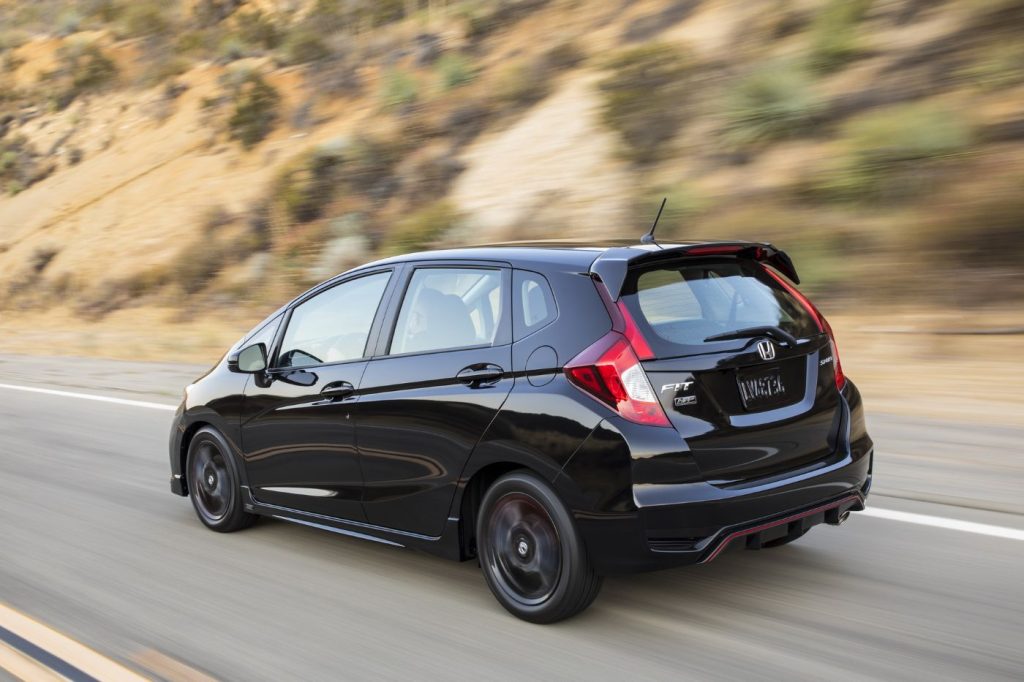
Material quality is generally strong for the price point, though a few components feel less substantial. The headliner material marks easily, and the chrome-finished rear hatch grab handle can appear inexpensive. However, with a starting price comfortably below $20,000, these compromises are proportionate.
All versions of the Fit utilize a naturally aspirated 1.5-liter four-cylinder engine. LX and Sport trims are equipped standard with a six-speed manual transmission, while a continuously variable transmission is optional on those trims and standard on EX and EX-L models.
The manual configuration provides a slight performance edge, rated at 130 horsepower and 114 lb-ft of torque, compared with 128 horsepower and 113 lb-ft for CVT-equipped variants. Depending on configuration, tested 0–60 mph times range from 7.9 to 9.1 seconds.
Fuel efficiency is consistently strong. Manual-transmission models are EPA-rated at 29 mpg city and 36 mpg highway. CVT-equipped versions return between 31–33 mpg city and 36 mpg highway, depending on trim level.
4. Fiat 124 Spider (Recent U.S. Models)
Often overlooked, the Fiat 124 Spider shares its bones with the Miata but adds a slightly different character.
With around 160 horsepower and roughly 2,450 pounds of curb weight, it remains firmly in lightweight territory. The turbocharged engine provides more low-end torque than the Miata’s naturally aspirated setup, giving it a slightly punchier feel in daily driving.
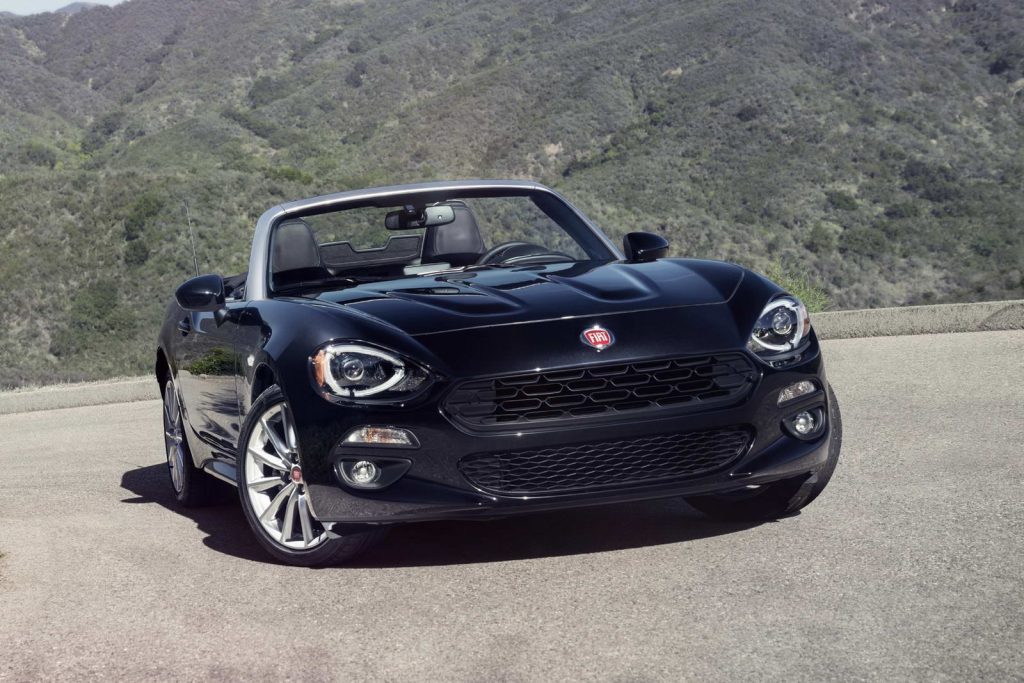
Rear-wheel drive, compact dimensions, and an open-top layout maintain purity. Like the Miata, it rewards flowing through corners rather than overpowering them.
It offers variety within the lightweight roadster theme without abandoning the “modest power feels big” principle.
Also Read: Top 10 Retro Styled Modern Cars That Will Age Well
5. Acura Integra (Base Manual)
The modern Acura Integra, particularly in base manual form, sits around 3,000 pounds with 200 horsepower.
While not ultra-light, it avoids excessive mass and focuses on usable performance. The turbocharged engine feels responsive, and the manual gearbox maintains driver engagement.
Because the power output is reasonable, you can exploit most of it during everyday driving. The chassis remains composed and predictable, reinforcing confidence rather than intimidation.
It reflects a balance-first philosophy, prioritizing engagement over headline-grabbing acceleration numbers.
Equipped with the six-speed manual transmission, the Integra accelerated from 0 to 60 mph in 7.8 seconds. That figure is modest for an entry-level luxury sedan and trails the mechanically similar Civic Si by roughly half a second. Braking performance was similarly middle-of-the-pack, with a 60-mph stopping distance of 119 feet.
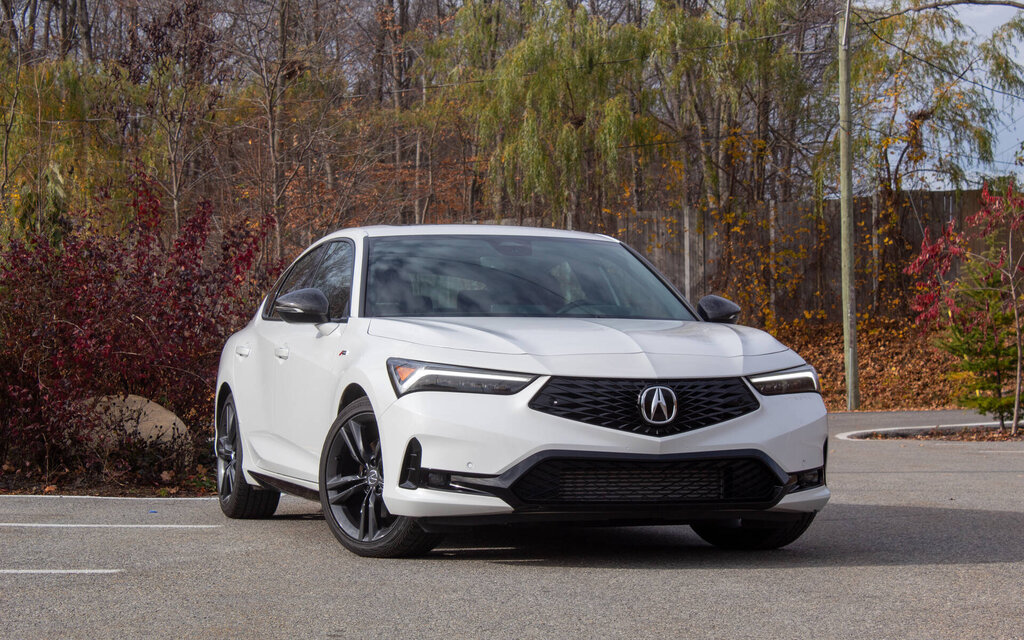
From a chassis perspective, the Integra demonstrates clear underlying competence when driven aggressively. Steering response and body control reveal a well-engineered platform, but the standard all-season tires limit ultimate grip and overall performance potential. Fitting summer tires would meaningfully improve cornering capability, braking traction, and general responsiveness.
Our test vehicle featured adaptive dampers, a component restricted to the A-Spec with Technology package. While this option increases the purchase price, it yields a more compliant ride than that of the Civic Si. Ride quality remains somewhat firm relative to traditional luxury sedans, but it is appropriate for the segment and price bracket.
The roster of available driver-assistance technologies is somewhat limited compared to certain competitors. However, the systems included are implemented effectively.
The adaptive cruise control functions properly even with the manual transmission, though it cannot bring the vehicle to a complete stop or manage stop-and-go traffic unless the optional continuously variable transmission (CVT) is selected.
6. Toyota GR Corolla
The Toyota GR Corolla pushes the upper edge of this theme.
At roughly 3,200 pounds and 300 horsepower, it is more powerful than others here. However, its compact dimensions, rally-inspired AWD system, and torque-vectoring capability make it feel alive rather than overwhelming.
The car thrives on interaction. Grip is high, but rotation remains accessible. Despite its output, it does not rely solely on brute force; it relies on balance and tuning.
It represents a modern example of how intelligent chassis engineering can make even higher power feel usable rather than excessive.
Powering the GR Corolla is a turbocharged three-cylinder engine derived from the GR Yaris, a hatchback sold in markets outside the United States.
For duty in the GR Corolla, the engine was recalibrated to produce 300 horsepower, an impressive 185.4 horsepower per liter and 43 horsepower more than its output in the GR Yaris. A six-speed manual transmission is the sole gearbox offered, and every variant is equipped with Toyota’s GR-Four all-wheel-drive system.
The GR-Four system provides selectable torque distribution modes. In standard driving, power is split 60/40 front to rear. For more dynamic situations, the system can vary distribution up to 30/70, enabling controlled oversteer. A 50/50 setting is available for conditions requiring maximum traction, such as track use.
While conventional Corolla models, including SE and XSE trims, do not deliver notably aggressive performance characteristics, the GR’s comprehensive suspension and powertrain upgrades position it as a credible entrant in the sport compact segment.
The Circuit Edition includes front and rear limited-slip differentials as standard equipment, whereas the base Core trim offers them optionally. In our testing, a GR Corolla Circuit Edition accelerated from 0 to 60 mph in 4.9 seconds and reached 100 mph in 11.4 seconds.
Those figures place it marginally ahead of similarly tested Honda Civic Type R and Volkswagen Golf R models. The limited-production Morizo Edition is engineered with greater track emphasis.
Cornering grip is substantial, and on technical roads the GR Corolla strikes a measured balance between composure and everyday usability. Although pedal spacing may not be optimized for heel-and-toe downshifting, the six-speed manual remains straightforward and satisfying to operate. A rev-matching function is included as standard equipment.
7. Toyota Prius (Latest Generation)
An unconventional inclusion, the latest Toyota Prius demonstrates how numbers can mislead.
With about 194 horsepower and a lower center of gravity than previous generations, it feels noticeably more composed and responsive than its reputation suggests.
Weight remains reasonable for a hybrid, and improved chassis tuning gives it surprising stability in corners. It is not a sports car, but it shows how balanced engineering can make moderate output feel meaningful in everyday driving.
It reinforces the central idea: power alone does not define engagement.
The Prius’s hybrid system is calibrated primarily for efficiency rather than acceleration, and as a result, it does not provide brisk or particularly engaging performance.
That shortcoming is notable given that several rivals demonstrate that competitive fuel economy can coexist with more responsive power delivery. Beyond straight-line performance, the 2022 Prius also falls short in terms of overall driving enjoyment and refinement.
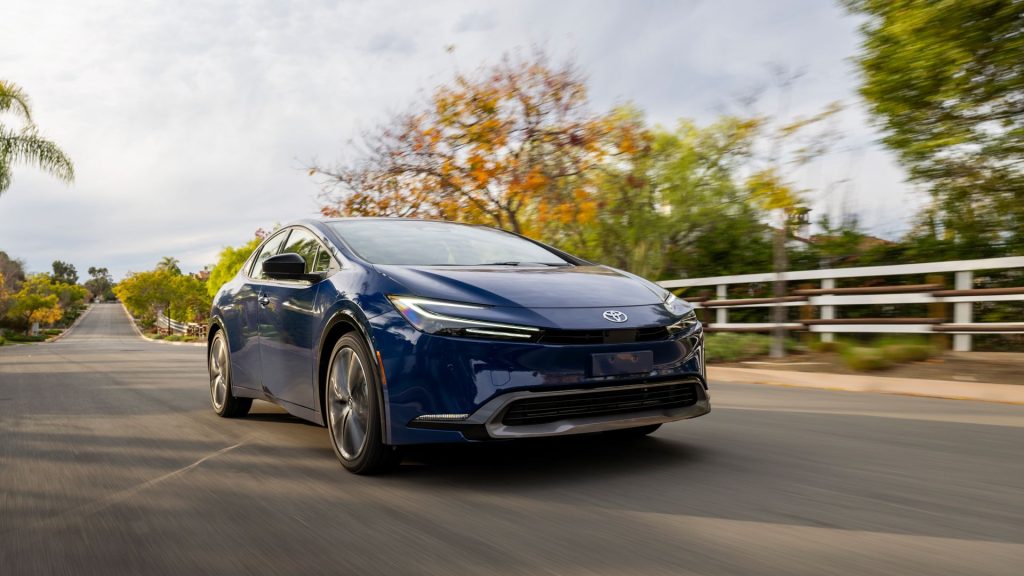
All-wheel-drive variants incorporate an additional electric motor mounted at the rear axle. This motor operates independently of the primary hybrid system and supplies power to the rear wheels when conditions require added traction.
Braking performance reflects a common characteristic of hybrid vehicles, which rely on a blend of regenerative and conventional friction braking. This dual-system setup can lead to inconsistent or muted pedal feedback, as observed in the Prius. The transition between regenerative and mechanical braking is not always seamless. When combined with the low-rolling-resistance tires typically fitted to hybrids, this can contribute to longer stopping distances compared with similarly sized nonhybrid vehicles.
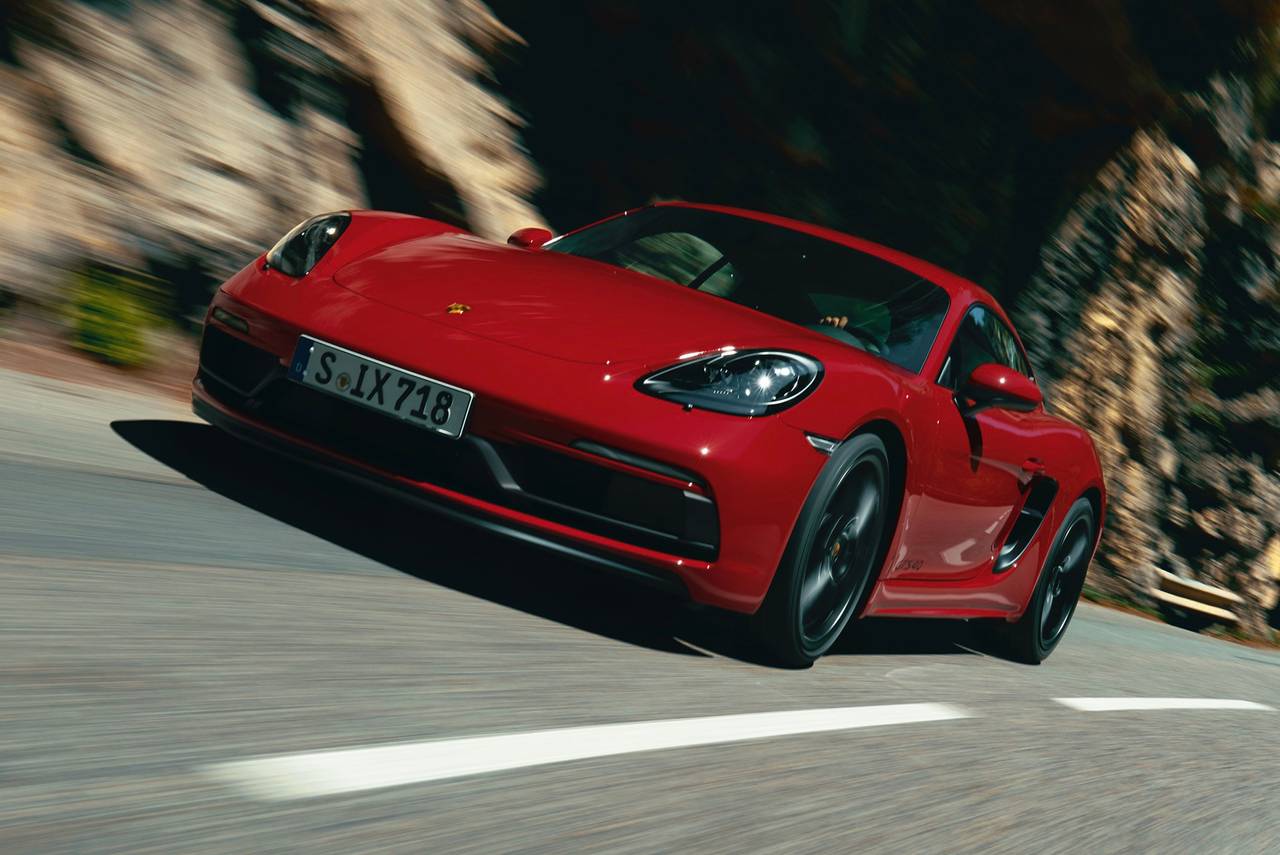
8. Porsche 718 Cayman (Base)
At around 3,000 pounds and roughly 300 horsepower in base form, the Porsche 718 Cayman sits at the premium end of this discussion.
It does not rely on extreme horsepower figures compared to many modern performance cars. Instead, its mid-engine balance, precise steering, and disciplined suspension tuning create an exceptionally responsive driving experience.
Because the chassis is so communicative, the available power feels substantial without requiring supercar-level output. The car feels alive through corners, not just fast in a straight line.
It is a higher-budget confirmation of the same principle seen in more affordable models: reduce mass, tune the chassis properly, and modest numbers become deeply satisfying.
These cars differ in price, layout, and mission. Some are dedicated sports cars. Others are practical hatchbacks or sedans. What unites them is restraint.
With its high-revving flat-six engine, standard manual transmission, and finely honed chassis, the Porsche 718 Cayman caters directly to drivers seeking the unfiltered, tactile experience that defines the brand’s heritage.
That said, the lineup also includes two turbocharged four-cylinder engines producing 300 and 350 horsepower, along with the option of a seven-speed dual-clutch automatic transmission.
While the four-cylinder variants lack the emotional resonance of the naturally aspirated flat-sixes found in the 394-hp GTS 4.0 and the 493-hp GT4 RS, and the automatic transmission removes the satisfaction of executing rev-matched downshifts manually, there are no objectively weak configurations.
Across the range, the Cayman maintains exceptional steering precision and chassis balance, attributes rooted in its mid-engine architecture and Porsche’s well-established suspension tuning expertise.
The interior is compact but purpose-built. Key driver interfacesm the steering wheel, shifter, and pedals, are positioned ideally to enhance engagement.
For 2025, the Cayman lineup continues largely unchanged. The track-focused GT4 trim has been discontinued, though the more extreme 493-hp GT4 RS remains available.
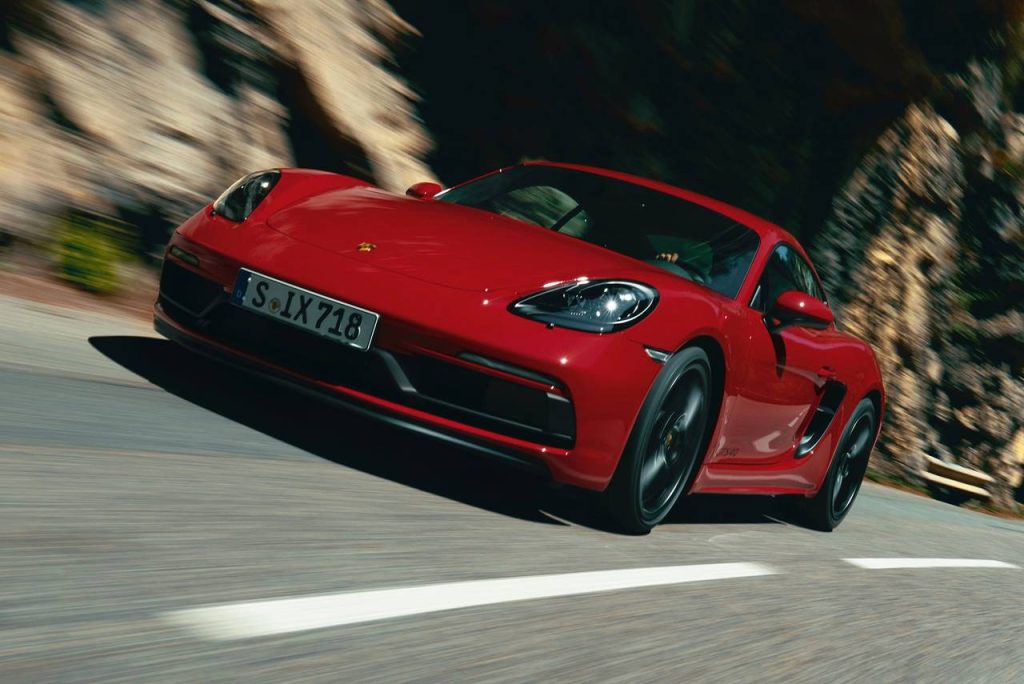
The 2025 Porsche 718 Cayman starts at $77,395 and can reach $172,095 depending on trim and options. Available variants include the Base ($77,395), Style Edition ($84,095), S ($89,895), GTS 4.0 ($105,295), and GT4 RS ($172,095).
Although the four-cylinder models present a lower entry price, the GTS 4.0 represents the most compelling configuration for those seeking an authentic Porsche sports car experience. Its 394-hp naturally aspirated flat-six provides the sound and responsiveness enthusiasts expect.
Retaining the standard manual transmission enhances driver involvement, offering precise engagement and a satisfying shift action superior to the automatic in terms of engagement.
The GTS 4.0 also includes desirable performance upgrades as standard, such as supportive sport seats, a more expressive exhaust system, adaptive suspension tuning, and 20-inch wheels fitted with summer performance tires. The Sport Chrono package is included as well, adding a limited-slip differential, brake-based torque vectoring, and the signature dashboard-mounted stopwatch.
The Cayman lineup features a range of potent engines. The entry-level model uses a 300-hp turbocharged 2.0-liter flat-four, while the S variant upgrades to a 350-hp turbocharged 2.5-liter flat-four.
Both deliver strong acceleration, though their engine note lacks the refinement and character of the flat-six options. The naturally aspirated 4.0-liter flat-six addresses this, producing 394 horsepower in the GTS 4.0 and 493 horsepower in the GT4 RS.
Every Cayman is equipped standard with a six-speed manual transmission, widely regarded as one of the best available in any sports car. For those who prefer two pedals, a rapid-shifting seven-speed dual-clutch automatic with steering-wheel-mounted paddles is optional. Regardless of powertrain, the Cayman’s chassis remains a defining strength.
Its mid-engine layout, combined with summer performance tires and expertly tuned suspension, yields exceptional grip, composure, and directional stability on winding roads. The result is a sports coupe that blends precise handling with a ride quality comfortable enough for extended driving.
They avoid excessive weight. They avoid runaway horsepower. They emphasize gearing, balance, steering feel, and throttle response.
As vehicles grow heavier due to safety requirements, technology, and electrification, genuinely lightweight cars are becoming rare. That scarcity makes them more valuable to enthusiasts who understand that driving enjoyment often peaks well below 400 horsepower.
In the end, when mass goes down, engagement goes up. Modest power does not feel modest when the chassis, steering, and balance are doing the real work.
