
The electric vehicle market has expanded rapidly, offering a diverse range of models with varying battery technologies, capacities, and thermal management systems. While some EVs impress with exceptional range retention, others struggle under certain conditions, leaving drivers frustrated by unexpected range loss.
Understanding which vehicles maintain their charge and which are prone to decline is crucial for consumers seeking reliability and confidence in daily driving. In this comparison, we explore five electric vehicles that hold their charge exceptionally well, including the Tesla Model 3, Audi Q8 e-tron, Hyundai Ioniq 6, Kia EV6, and Mercedes-Benz EQS.
These models benefit from advanced battery chemistry, efficient thermal management, and intelligent software that preserves capacity over time. On the other hand, some EVs, such as early-generation Nissan LEAFs, Volkswagen ID.4, Mazda MX-30, Chevrolet Bolt EV, and Mitsubishi i-MiEV, exhibit rapid range loss due to small battery sizes, passive cooling, or sensitivity to temperature extremes.
By examining these differences, buyers can make informed decisions when choosing an electric vehicle suited to their lifestyle.
5 Electric Vehicles That Hold Their Charge
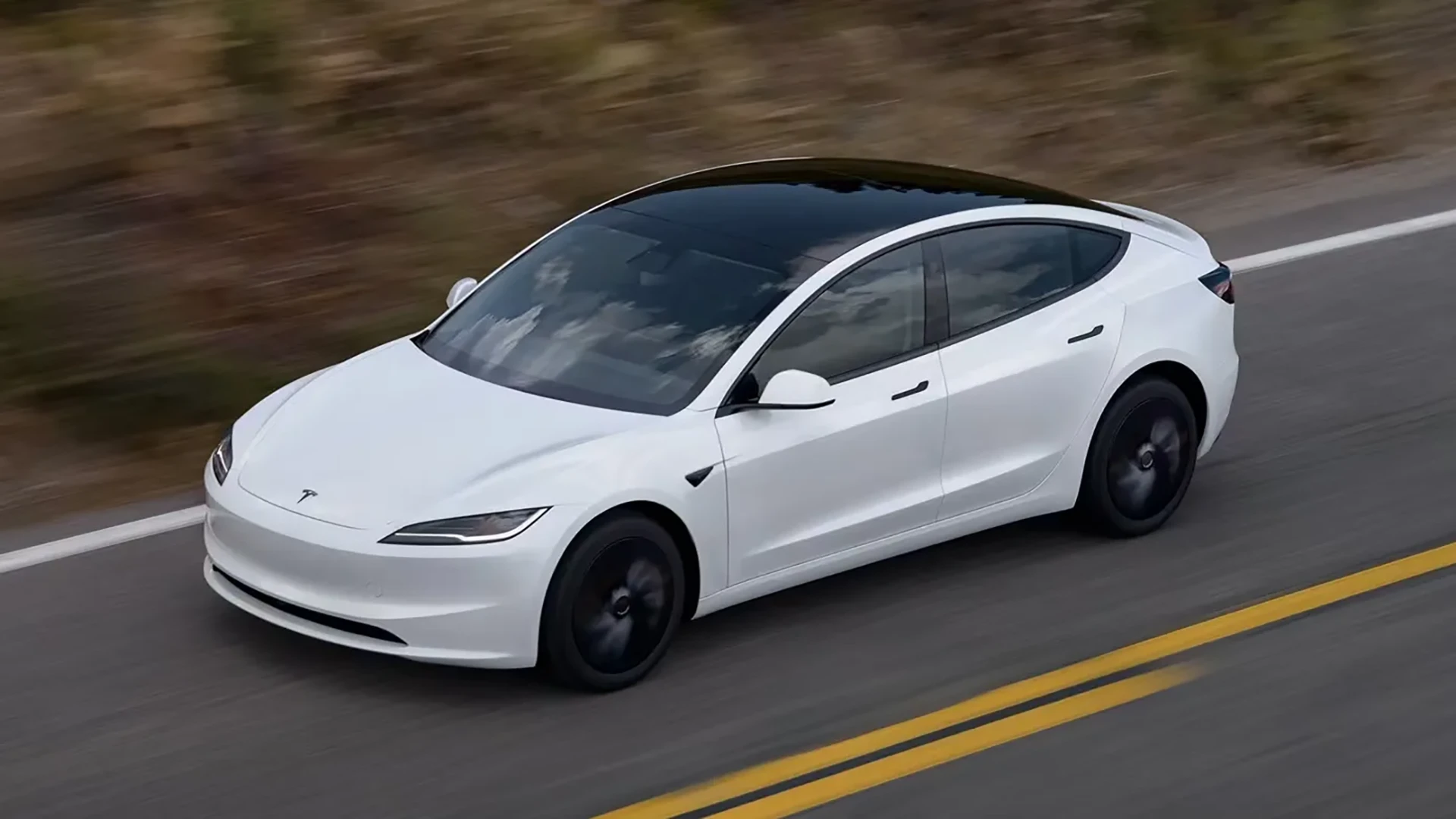
1. Tesla Model 3: Leading the EV Segment in Range, Performance, and Technology
The Tesla Model 3 continues to set benchmarks in electric vehicle (EV) battery performance and efficiency. According to Tesla’s 2023 Impact Report, both the Model 3 and Model Y retain approximately 85% of their battery capacity even after 200,000 miles.
This impressive longevity is largely due to advanced lithium-ion battery technology, the transition to Lithium Iron Phosphate (LFP) chemistry for standard-range models, and Tesla’s innovative “Octovalve” thermal management system, which minimizes range loss in cold weather to around 15–20%.
The combination of high-energy-density batteries, proactive software updates, and efficient thermal control ensures long-lasting battery health and reliable range performance.
Key factors in the Model 3’s battery endurance include sophisticated battery management software that carefully controls charging cycles and temperature, a low-drag aerodynamic design that reduces energy consumption, regenerative braking that recovers energy during deceleration, and over-the-air updates that continuously optimize battery performance.
Tesla reports that these strategies allow the Model 3 to maintain robust capacity throughout its lifespan, providing confidence for long-distance travel.
The Model 3’s electric motors deliver impressive performance across all trims. Options include a 286-hp single motor, a 425-hp dual motor, and a 510-hp dual motor Performance version, with front-wheel-drive and all-wheel-drive drivetrains.
The vehicle’s low-mounted battery contributes to a low center of gravity, enhancing stability and handling. Acceleration is swift, with the Performance model achieving 0–60 mph in just 2.8 seconds, outpacing many premium rivals at a comparatively lower price. Ride quality is firm yet composed, while the cabin has become noticeably quieter in recent iterations.
Range and charging remain strengths. EPA estimates range from 309 to 363 miles, depending on configuration, while real-world testing yields slightly lower but still competitive results.
Tesla Superchargers, home charging, and public charging adapters make recharging convenient, with DC fast charging capable of taking a Performance model from 10% to 90% in under 40 minutes. Energy efficiency is notable, with highway MPGe ratings of 91–128 depending on trim and configuration.
Inside, the Model 3 features a minimalist design with a 15.4-inch central touchscreen, supportive front seats, and adequate storage. Rear seating is more cramped, and the vehicle lacks AM/FM or Android/Apple integration, but streaming and entertainment options are abundant.
Safety and driver-assistance systems are comprehensive, and Tesla offers competitive warranty coverage, including eight years or 100,000 miles for the powertrain.
The Tesla Model 3 combines long-lasting battery technology, strong performance, high efficiency, and cutting-edge connectivity, maintaining its leadership in the EV segment.
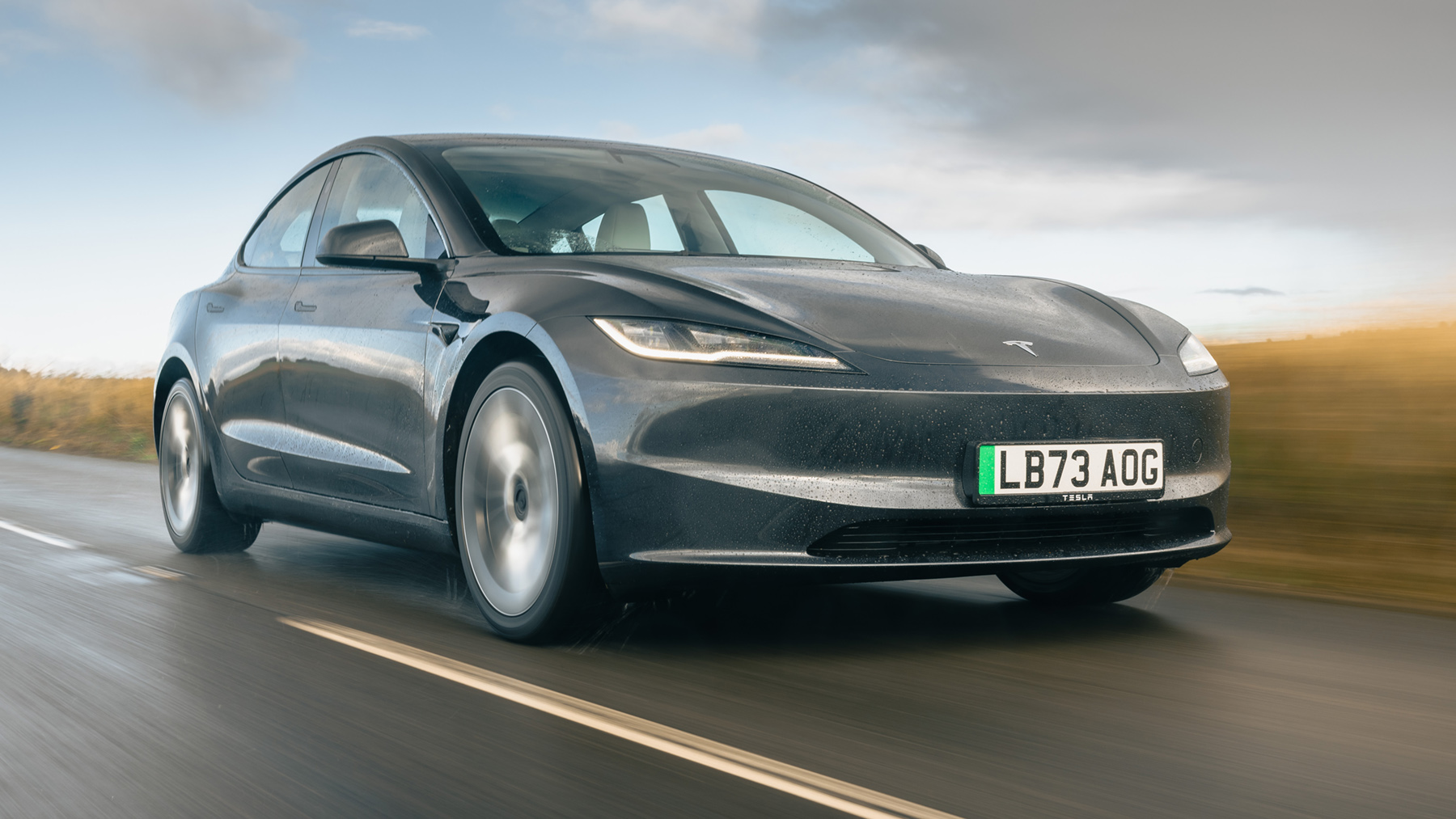
2. Audi Q8 e-tron: A Luxury Electric SUV Built for Comfort and Reliability
The Audi Q8 e-tron stands out in the luxury EV market for its robust battery technology, impressive capacity, and consistent long-term performance. With a large 114 kWh (106 kWh usable) battery, it delivers one of the highest five-year retention rates in the segment, often exceeding 92%.
Audi’s sophisticated liquid-cooling and intelligent thermal management systems keep the battery within a tight temperature range, minimizing heat-related degradation and ensuring stable performance over time. Enhanced prismatic cell technology and a switch to nickel-cobalt-aluminum (NCA) chemistry improve energy density and durability without adding significant weight.
Charging performance is strong and practical. The Q8 e-tron can charge at up to 170 kW DC, enabling 10–80% recharge in roughly 31 minutes for the 55 e-tron model. Audi focuses on a sustainable high-power charging curve rather than peak rates, ensuring consistent and reliable real-world charging.
AC and DC charging compatibility, both at home and public stations, further enhances convenience. Range estimates reach up to 582 kilometers (approximately 360 miles) for the 55 e-tron, though real-world results typically fall slightly short. The smaller 50 e-tron provides a 335-hp powertrain with an 89 kWh battery, achieving up to 290 miles on paper.
The Q8 e-tron prioritizes a premium driving experience over aggressive performance. With a solid, refined feel on the road, the SUV delivers quiet, comfortable travel rather than sporty handling. The vehicle comes in multiple trims (50, 55, S) and body styles (SUV and Sportback), with a focus on luxury rather than extreme dynamics.
Interior appointments include air suspension, 20-inch wheels, LED headlights, adjustable heated front seats, multiple touchscreens, and 360-degree parking sensors, providing executive-level comfort even on the base trim. Rear seating, however, is less accommodating for adults, and cargo practicality is adequate but not class-leading.
While the Q8 e-tron is a dependable and easy-to-live-with EV, it is heavy, expensive, and lacks excitement compared to rivals such as the Tesla Model X, Jaguar I-Pace, and Mercedes EQE SUV. Its facelifted design focuses more on visual refinement than performance upgrades, maintaining a quiet, comfortable, and premium driving experience without drawing attention to its electric powertrain.
The Audi Q8 e-tron excels as a luxurious, reliable, and refined electric SUV. Its high-capacity battery, consistent charge retention, and advanced thermal management make it an excellent choice for those seeking effortless electrified motoring. While it may not excite thrill-seekers, it delivers a solid, polished, and premium EV experience.
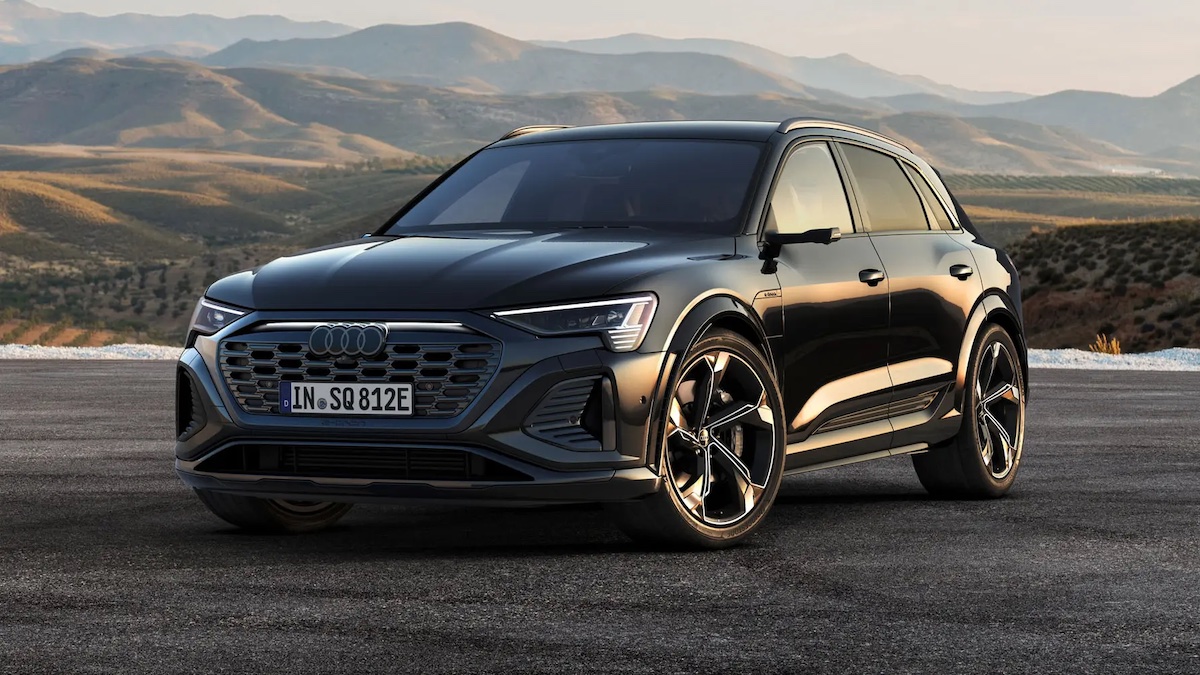
3. Hyundai Ioniq 6: Efficient, Long-Range EV with Exceptional Battery Retention
The Hyundai Ioniq 6 is an electric sedan built on Hyundai’s advanced E-GMP platform, designed for high efficiency, long-range performance, and strong battery retention. Real-world tests show it can lose as little as 16% of its range in freezing temperatures, while studies report average battery retention of up to 99% in the first few years.
Its sleek, low-drag design combined with the 800-volt architecture reduces energy consumption at highway speeds, making it one of the most efficient EVs in its class.
The Ioniq 6’s battery performance benefits from a high-voltage system, advanced thermal management, and a smart battery management system (BMS). The BMS continuously monitors cell voltages and temperatures to maintain efficiency and protect the battery from premature wear.
Liquid cooling keeps the battery within an optimal temperature range, preventing degradation from extreme heat or cold. Regenerative braking with multiple selectable levels captures energy during deceleration, and a hidden buffer allows the car to keep running even when the displayed range reaches zero. Regular software updates further support battery longevity and charge efficiency.
Charging is fast and convenient, with the Ioniq 6 capable of up to 240 kW DC charging, allowing a 10–80% charge in about 18 minutes. The rear-wheel-drive single-motor model prioritizes range, producing 226 hp and 258 lb-ft of torque with a WLTP range of up to 338 miles.
The all-wheel-drive dual-motor variant offers 320 hp and 446 lb-ft, trading some range for higher performance and accelerating from 0–62 mph in 5.1 seconds. Both versions use a 77.4 kWh battery and ride on 20-inch wheels, balancing comfort and efficiency.
The car’s design emphasizes aerodynamic function, though it features distinctive touches such as pixel LED lighting and refined interior materials.
Cabin space is comfortable, with excellent rear legroom, though boot usability is slightly restricted compared to other EVs. Driving is quiet and smooth, with selectable Eco, Normal, and Sport modes, as well as one-pedal regenerative braking that allows the driver to adjust energy recovery.
Compared to rivals like the Tesla Model 3, Polestar 2, and BMW i4, the Ioniq 6 stands out for its engineering, build quality, and efficiency. Its fast-charging capability, efficient powertrain, and aerodynamic design make it a practical choice for long-distance travel. The Hyundai Ioniq 6 delivers a balanced mix of comfort, range, and reliable battery performance, making it a strong contender in the electric sedan segment.
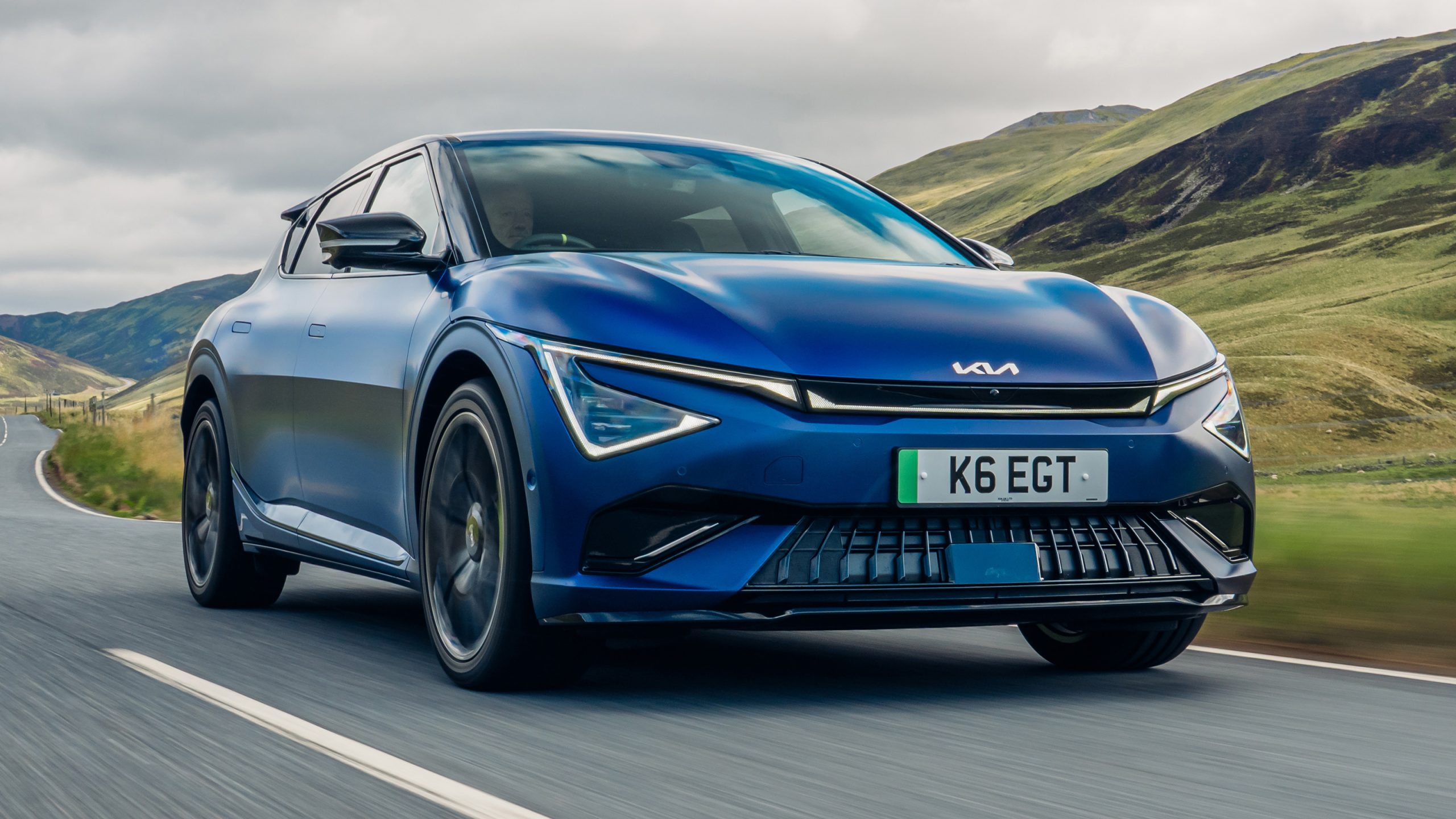
4. Kia EV6: All-Weather EV with Strong Battery Retention and Fast Charging
The Kia EV6 is a large, all-electric crossover that shares its platform and technology with the Hyundai Ioniq 6 and Genesis GV60, built on Hyundai’s E-GMP (Electric Global Modular Platform). It is especially notable for winter reliability, losing only about 7% of its range in cold conditions when equipped with a heat pump, making it one of the most stable all-weather EVs.
Its battery packs maintain strong long-term charge retention, often staying above 90% of capacity even after 3–5 years, thanks to advanced battery chemistry, efficient power management, and a high-voltage 800-volt architecture.
The EV6’s battery longevity is supported by several features. The advanced battery management system (BMS) monitors cell health, regulates charging, and balances temperatures to reduce long-term degradation. Active cooling and heating keep the battery in an optimal temperature range, while regenerative braking with the “i-Pedal” one-pedal mode recaptures energy during deceleration.
High-capacity battery packs 77.4 kWh initially, upgraded to 84 kWh in the facelift, allow for extended range and reduce stress by limiting full charge-discharge cycles. Kia recommends daily charging between 20–80% and occasional full charges to maintain battery health, while minimizing frequent DC fast charging.
Charging performance is fast, with the 800-volt system allowing a 10–80% recharge in about 18 minutes. Range estimates reach 310+ miles for the 77.4 kWh pack and 361 miles WLTP with the 84 kWh upgrade.
Two powertrain options are available: a single-motor rear-wheel-drive producing 225 hp and a dual-motor all-wheel-drive producing 320 hp. The EV6 GT delivers 641 hp and 568 lb-ft of torque, accelerating from 0–60 mph in 3.5 seconds with a top speed of 161 mph.
The interior combines technology and practicality, featuring dual 12.3-inch displays, a 12-inch HUD in top trims, updated infotainment, wireless smartphone connectivity, and a fingerprint scanner for personalized settings. Surfaces are designed to resist smudging and scratches, and the cabin is quiet and refined. Suspension updates make the ride more comfortable without sacrificing handling.
Pricing for the EV6 in the US starts at around $39,235 for the base 63 kWh RWD version and goes up to about $58,135 for the fully equipped AWD model. With its fast charging, winter reliability, spacious cabin, and long-range capability, the EV6 offers a balanced combination of efficiency, comfort, and performance.
Its 800-volt architecture, advanced battery management, and driver-focused engineering make it a strong choice for buyers seeking a capable, dependable electric crossover.
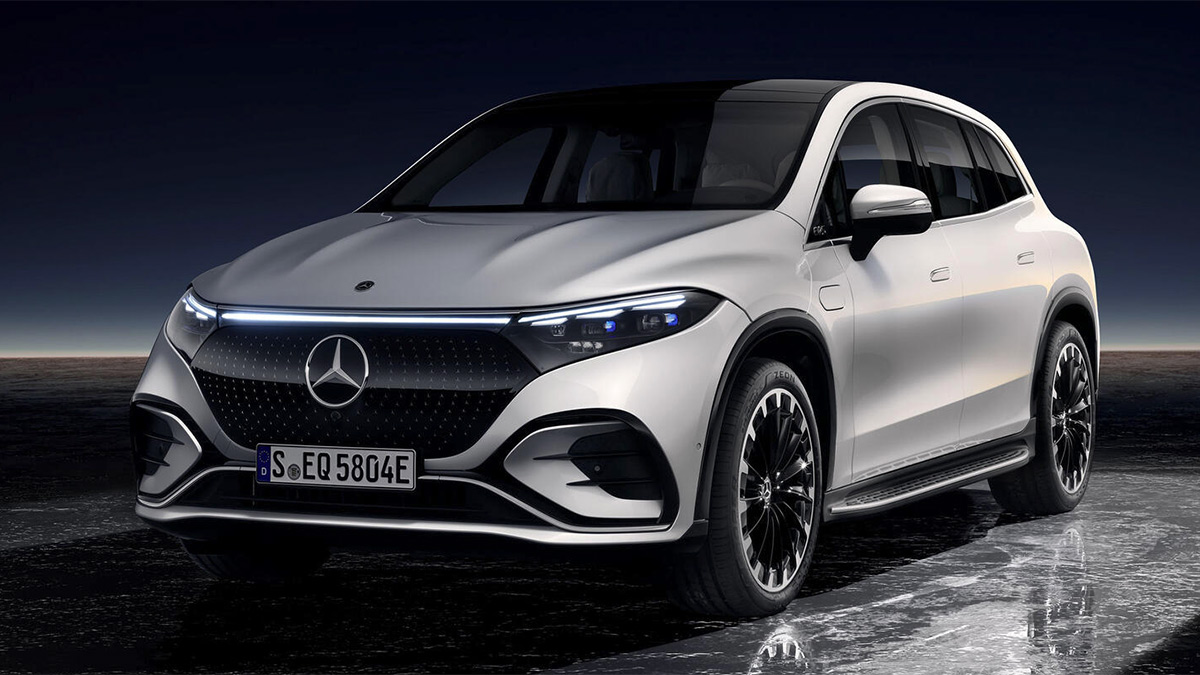
5. Mercedes-Benz EQS: Flagship Luxury EV with Exceptional Range and Technology
The Mercedes-Benz EQS is the brand’s first purpose-built electric luxury sedan, designed from the ground up rather than adapted from an existing model. It features a large 107.8 kWh lithium-ion battery, with newer models offering up to 118 kWh, making it one of the highest-capacity EVs on the market.
Larger batteries degrade more slowly because they experience fewer full charge cycles, and Mercedes’ conservative battery management system helps maintain long-term capacity. The EQS combines its battery with industry-leading aerodynamics, with a drag coefficient of 0.20, active liquid cooling, a heat pump, and advanced regenerative braking to achieve over 400 miles of range on many trims.
Battery longevity is further supported by intelligent power management, including using only the smaller motor during cruising to improve efficiency. The thermal management system keeps the battery at optimal temperatures in all conditions. The EQS is backed by a 10-year, 155,000-mile warranty in many markets.
Range varies by model. The EQS 450+ rear-wheel-drive version has 325 horsepower, reaches 0–60 mph in 6.2 seconds, and has a top speed of 130 mph. The EQS 580 4MATIC twin-motor all-wheel-drive version accelerates faster while offering slightly reduced range at 420 miles.
Mercedes will also offer a high-performance AMG EQS exceeding 700 horsepower to compete with vehicles such as the Tesla Model S Plaid and Porsche Panamera Turbo S.
The EQS rides on air suspension with adaptive damping and offers up to 10 degrees of rear-wheel steering. This provides exceptional agility for a vehicle of its size while maintaining high-speed stability.
The cabin is quiet and well-insulated, with noise-cancelling technology. The interior features high-quality materials and the optional 55-inch Hyperscreen, a single continuous glass display combining three digital panels that control infotainment, climate, and vehicle functions.
Charging is capable but not the fastest. The EQS accepts up to 200 kW, which allows a 10 to 80 percent charge in about 30 minutes using a rapid charger or approximately two hours on a 50 kW charger. The MercedesMe Charge service provides access to multiple charging networks with a single card.
Pricing in the United States starts around $105,000 for the EQS 450+ and rises above $140,000 for the EQS 580 4MATIC, with AMG variants costing more. The EQS combines long-range capability, advanced technology, and refined luxury.
It offers the smoothness, quiet operation, and comfort expected from Mercedes while showing the brand’s commitment to electric vehicles. This makes the EQS one of the most complete and capable electric luxury sedans available today.
Also Read: 5 Cars That Are Unstoppable in Deep Snow vs 5 AWD Models That Get Stuck
5 That Lose Range Quickly
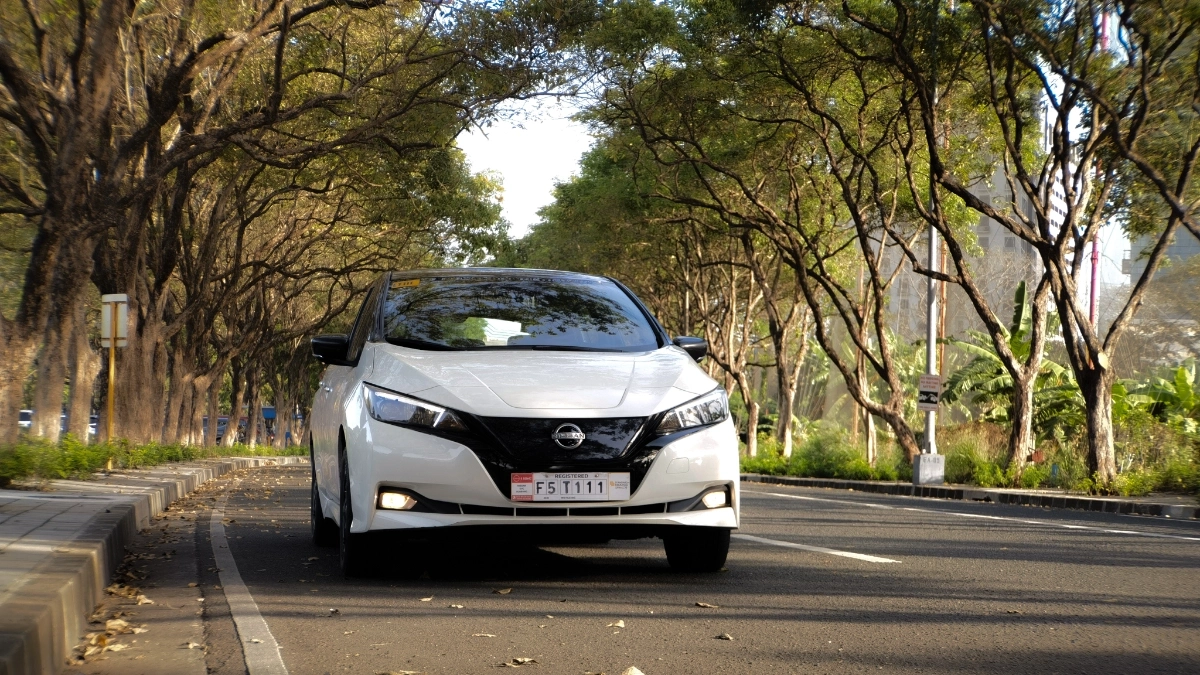
1. Nissan LEAF Early Generations: Rapid Range Loss Due to Passive Cooling
The early-generation Nissan LEAF, produced mainly between 2011 and 2015 with 24 kWh battery packs, is a well-known example of an electric vehicle prone to rapid range loss. Unlike modern EVs, these models used a passive air-cooled battery system, which relies solely on ambient air to dissipate heat.
Without liquid cooling, heat accumulates during driving, fast charging, or when parked in direct sunlight, causing chemical degradation and leading to roughly 20% capacity loss after five years, almost four times faster than liquid-cooled alternatives like Tesla models.
Several factors contributed to this accelerated degradation. First, the lack of active thermal management meant the battery could overheat, particularly in hot climates, and remain warm for hours after the vehicle was turned off. Second, the early battery chemistry was especially heat-sensitive.
Models from 2011 to 2014 often lost capacity quickly, sometimes dropping to seven or fewer battery bars out of twelve, while the introduction of “lizard cells” in 2015 improved heat tolerance.
Frequent use of DC fast charging also accelerated wear. Fast chargers generate intense heat, and without liquid cooling, the battery could not maintain safe temperatures during repeated quick charges. High state-of-charge habits, such as leaving the battery at 100% in hot conditions, further intensified degradation.
Early battery management systems allowed full charges without sufficient protective buffers, making the problem worse. Additionally, calendar aging contributed to capacity loss over time, even with low mileage, particularly in warmer regions such as the southern United States.
Early LEAFs often experience significant range reduction. Many 2011–2015 vehicles with degraded packs deliver only 40 to 60 miles on a full charge, roughly half their original capacity. This history highlights the importance of active thermal management, robust battery chemistry, and careful charging practices in extending the life of EV batteries.
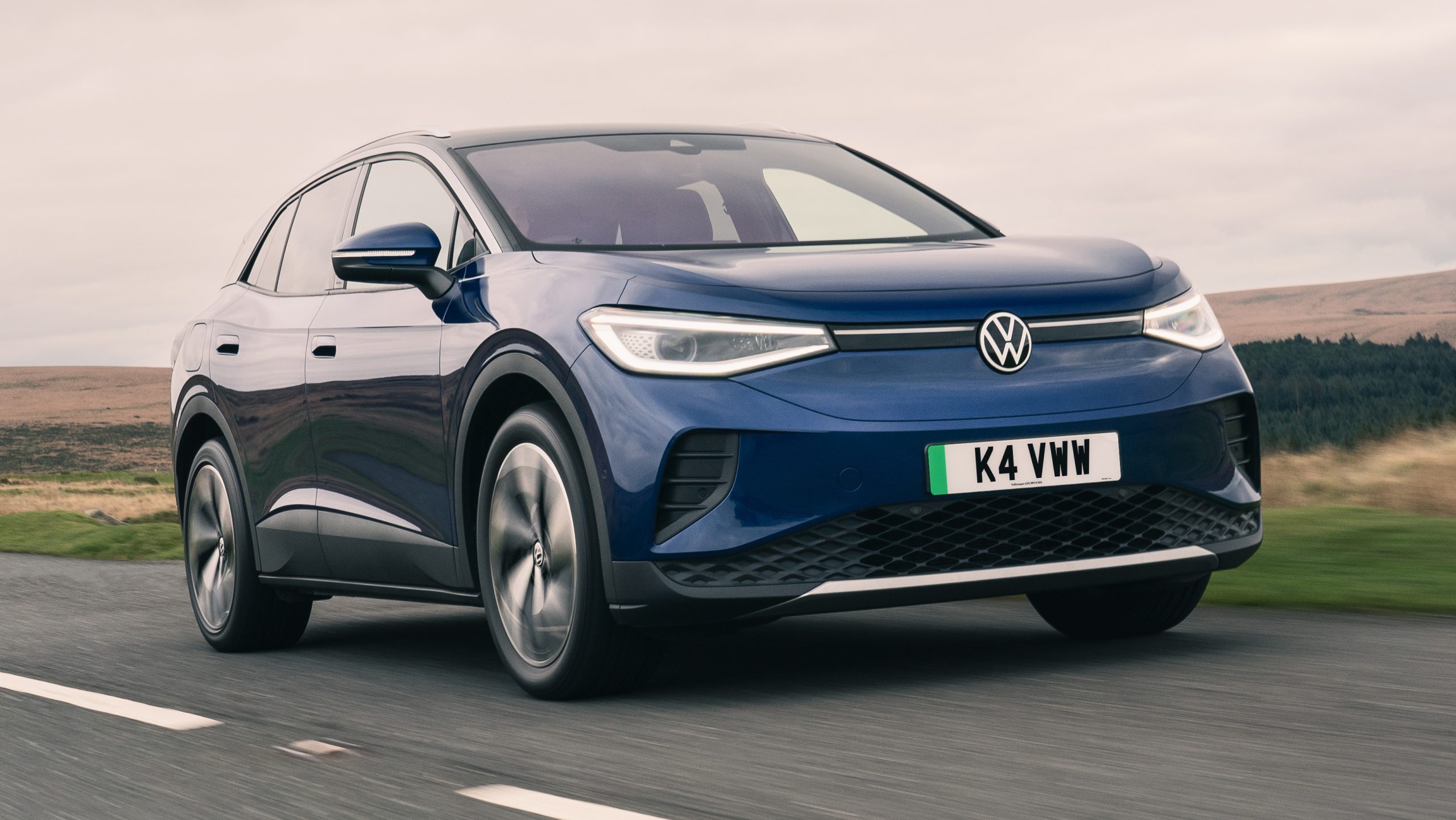
2. Volkswagen ID.4 Early Versions: Winter Sensitivity and Initial Battery Behavior
Early Volkswagen ID.4 models, particularly 2021–2022 versions, have been criticized for significant range loss in cold weather, with some owners reporting a 25% to 30% drop as temperatures approach freezing. While the ID.4 uses a liquid-cooled battery pack, its early performance issues are mostly due to temporary range fluctuations, initial chemical stabilization, and software behavior rather than severe permanent degradation.
One factor is the “front-loaded” degradation curve common to lithium-ion batteries using NMC chemistry. During the first 12–18 months, the battery forms a Solid Electrolyte Interphase (SEI) layer, which stabilizes internal components but consumes some lithium.
This break-in period often results in a 5% to 8% initial drop in capacity. After this period, the rate of degradation usually flattens, but early owners sometimes misinterpret the initial loss as an ongoing decline.
Cold-weather performance is another major contributor. Early U.S. ID.4 models lacked a heat pump and relied on resistive heaters to warm both the cabin and the battery. In temperatures below 40°F (4°C), these heaters can draw 3 kW to 5 kW continuously, temporarily reducing winter range by up to 30%. This is not permanent battery damage, but it can feel as if the vehicle has lost capability during colder months.
Software estimation also affected perceptions of range. Early versions, like v2.1 and v3.1, often provided pessimistic range readings. The system recalculated efficiency aggressively under high-speed or cold conditions, and early buffer management sometimes made the usable capacity appear lower than it truly was. Software updates improved the display, giving the impression of a “recovered” range.
Finally, early ID.4 models used pouch-style cells from LG Energy Solution and SK On, which are sensitive to high states of charge and frequent DC fast charging. Improper charging habits could create localized degradation, though careful management mitigates this risk.
Early ID.4 owners experienced a mix of temporary winter losses, perceptual software issues, and minor initial degradation, with real permanent capacity loss remaining modest when the battery was properly managed.
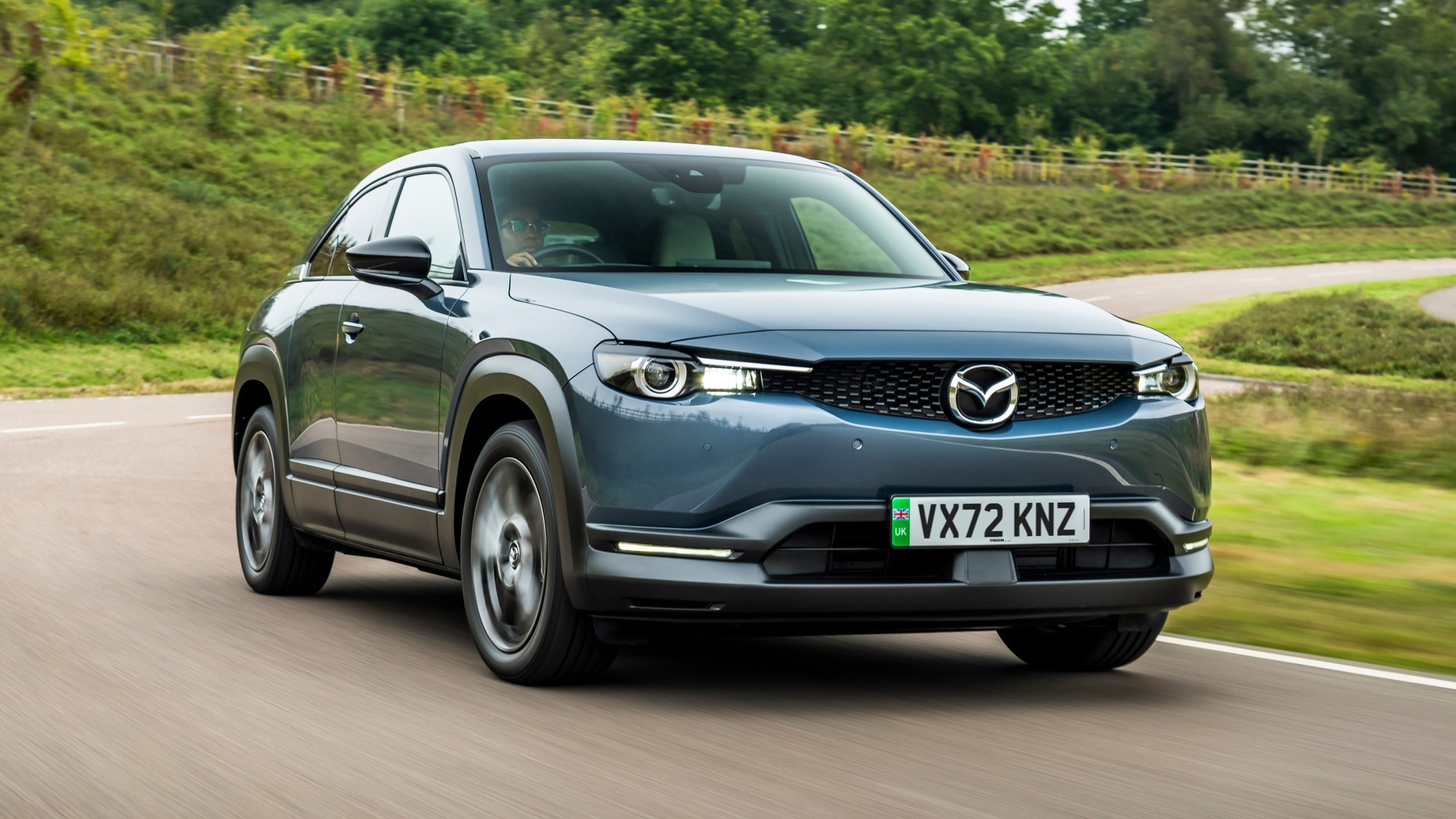
3. Mazda MX-30: Small Battery and Weather Sensitivity Drive Apparent Range Loss
The Mazda MX-30 is an urban-focused electric vehicle with a 35.5 kWh battery, offering roughly 30 kWh of usable energy. Its compact battery necessitates frequent charging, and the car’s range is highly sensitive to driving conditions and temperature.
While some owners report significant range loss, this is largely due to design choices rather than rapid battery degradation. The MX-30 was intentionally built as a compliance-focused, city-oriented EV, prioritizing lightness, handling, and lower production energy use over long-distance range.
The primary reason for apparent range loss is the small battery capacity. In larger EVs, minor energy drains from climate control or high-speed driving represent a small percentage of total range. In the MX-30, even a 5 kWh reduction can account for nearly 17% of the available energy.
Highway driving further exacerbates this effect; while the official WLTP range is 124 miles, consistent speeds of around 70 mph can reduce real-world range to 75–85 miles. Frequent “deep” charge cycles from 0% to 100% are common due to the limited battery size, which may slightly accelerate long-term wear, though the chemistry itself remains stable.
Temperature sensitivity is another major factor. Cold weather slows the chemical reactions inside the lithium-ion cells, increasing internal resistance and reducing efficiency. Drivers have reported winter range drops of 20% to 40%, especially when using the cabin heater.
Mazda recommends using heated seats and steering wheel options to reduce energy consumption while keeping the cabin comfortable. Extreme heat also impacts range, as energy is diverted to battery cooling and air conditioning, though the effect is less severe than in cold weather.
Despite these limitations, the MX-30’s battery exhibits standard lithium-ion longevity. Long-term degradation appears normal, with no unusual permanent loss of capacity reported in the first few years of use. However, because the small battery requires more frequent charging, the vehicle may accumulate cycle-related wear slightly faster than larger EVs, which impacts lifespan only marginally.
In real-world use, the MX-30’s range varies widely: city driving in warm conditions yields 100–110 miles, highway travel drops to 75–85 miles, and winter conditions with heating can reduce it to 60–70 miles. The perceived range loss is a direct result of the vehicle’s design philosophy, focusing on urban usability and light weight, rather than a mechanical defect or accelerated battery failure.
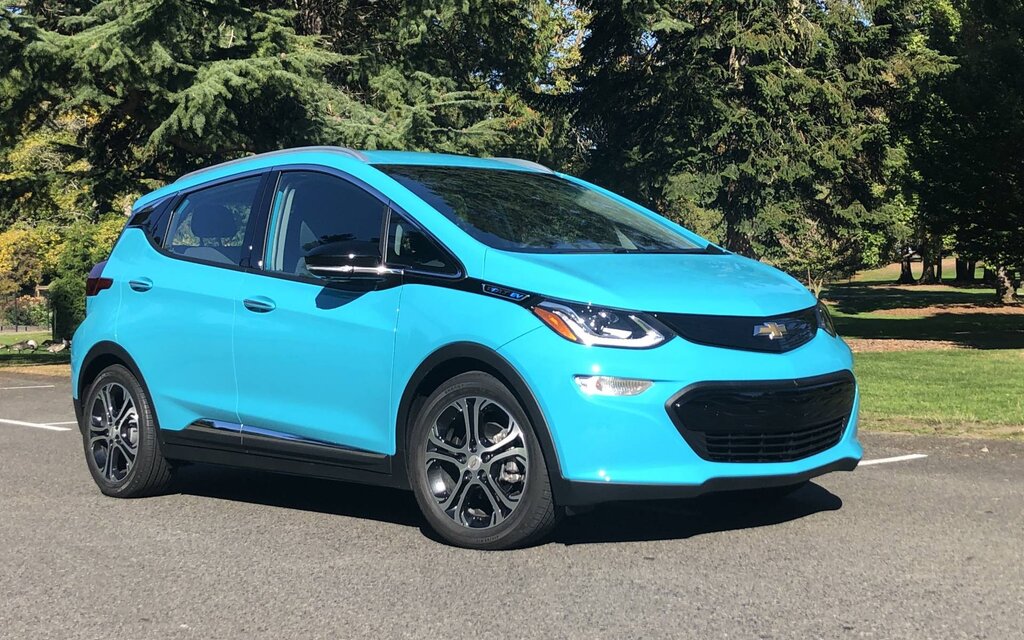
4. Chevrolet Bolt EV: Temperature Sensitivity Drives Temporary Range Loss
The Chevrolet Bolt EV experiences noticeable, though generally temporary, range reductions in extreme weather, despite having a liquid-cooled battery. In freezing conditions between 20 30°F, owners often report losing 20–30% of the car’s EPA-rated range, with extreme cold situations reaching up to 50%.
The primary factors behind this range loss are cold temperature sensitivity, resistive heating, and how the battery management system (BMS) regulates energy use.
Cold weather has a direct impact on the Bolt’s lithium-ion battery chemistry. At low temperatures, chemical reactions slow, reducing energy output. The Bolt uses a resistive heater rather than a modern heat pump, which draws significant power from the battery, further limiting driving range.
Additionally, the car’s BMS works to keep the battery at an optimal temperature, consuming energy if the vehicle is left unplugged. Cabin heating, defrosting, or intensive air conditioning also reduces the energy available for propulsion.
Environmental and physical factors exacerbate losses. Cold air density increases aerodynamic drag, and decreased tire pressure raises rolling resistance. Snow or wet conditions add further drag. Regenerative braking is less effective in cold temperatures because the battery cannot accept high levels of recovered energy, limiting energy recapture during deceleration.
The Bolt’s range estimator, or “Guess-o-Meter,” also reacts to these conditions, often showing a conservative range display that reflects temporary efficiency drops rather than permanent battery loss. Long-term degradation is generally minimal, though extreme heat or consistently charging to 100% in harsh conditions can reduce battery lifespan.
To mitigate range loss, Chevrolet recommends preconditioning the battery and cabin while plugged in, using heated seats and a steering wheel instead of the main heater, maintaining a connection to a charger when parked, and driving smoothly to reduce energy draw. These practices help preserve range during cold-weather driving while keeping the battery healthy over time.
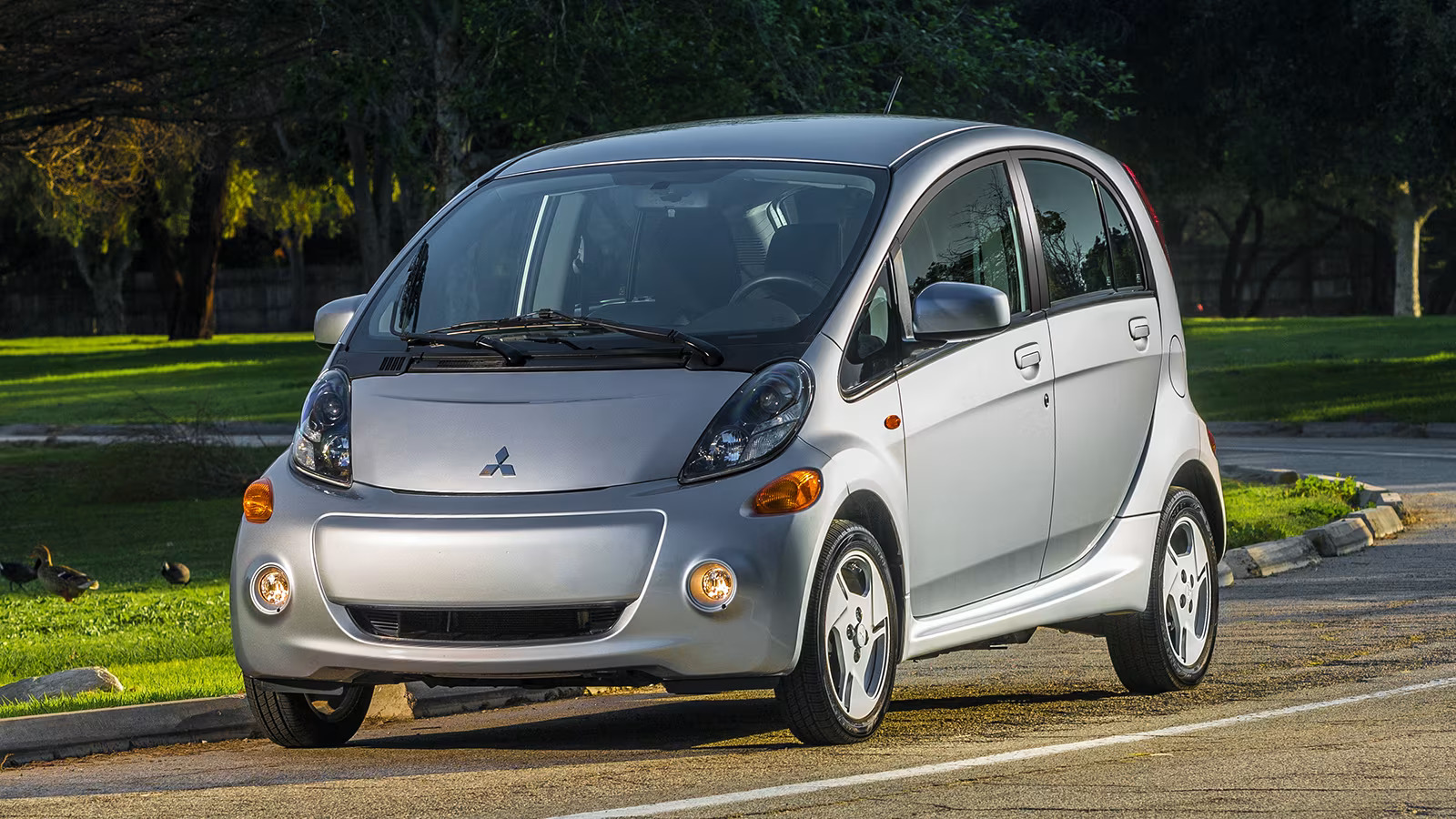
5. Mitsubishi i-MiEV: Small Battery and Weak Thermal Management Drive Rapid Range Loss
The Mitsubishi i-MiEV, one of the earliest mass-market electric vehicles, is notorious for rapid range loss due to permanent battery degradation and temporary temperature sensitivity. Its small 16 kWh battery pack amplifies the impact of both factors, making even minor energy losses significant in daily use. Many units drop below 70% State of Health (SoH) below after only five years, demonstrating limited long-term retention.
Permanent battery degradation stems from the i-MiEV’s limited thermal management and high cycle demands. Unlike modern EVs that use liquid cooling, the i-MiEV relies on a forced-air system, which struggles to maintain consistent temperatures across the battery.
Hot spots can form during fast charging or high-load driving, accelerating chemical aging. The small usable capacity of approximately 14.5 kWh forces frequent deep discharge and full recharge cycles. Even short trips consume a large portion of the battery, increasing stress on the cells and shortening their lifespan.
Temperature sensitivity further affects range. In cold weather, the car uses a 5 kW PTC resistance heater that can consume nearly a third of the battery’s energy in one hour, cutting range by up to 50%.
Cold also increases internal resistance and drivetrain viscosity, reducing efficiency. High temperatures above 86°F (30°C) similarly reduce range by 20–35% due to energy use for air conditioning and battery cooling, while accelerating chemical aging of the cells.
In mild conditions without climate control, the i-MiEV can reach its rated EPA range of 62 miles. In harsh winter or summer conditions, a used vehicle with some degradation may deliver only 30–45 miles.
Owners can monitor battery health using the Mitsubishi MUT-III diagnostic tool to check the State of Health. The i-MiEV’s design, prioritizing simplicity and affordability over advanced thermal systems, makes it a clear example of how small battery capacity and basic management systems can exacerbate range loss in early electric vehicles.
Battery performance is a key factor in the ownership experience of an electric vehicle, influencing convenience, usability, and confidence on the road. Models like the Tesla Model 3 and Mercedes-Benz EQS demonstrate that high-capacity batteries, advanced thermal management, and intelligent software can preserve range even under demanding conditions.
The Hyundai Ioniq 6, Kia EV6, and Audi Q8 e-tron further show that careful engineering and reliable battery management support consistent performance over several years. In contrast, early or smaller EVs, including the Nissan LEAF, Volkswagen ID.4, Mazda MX-30, Chevrolet Bolt EV, and Mitsubishi i-MiEV, illustrate how limited battery size, passive cooling, and climate sensitivity can cause significant range loss.
Buyers who focus on vehicles that maintain their charge can enjoy stress-free driving, efficient energy use, and long-term reliability, making the transition to electric mobility smoother and more practical.
Also Read: 10 Cars With Factory Exhaust Notes Worth Preserving
