
Active aerodynamics have become one of the most exciting developments in modern automotive design. Unlike fixed spoilers or static diffusers, active aero adjusts itself based on speed, driving conditions, and even driver input to maximize performance and efficiency.
It is no longer limited to hypercars; even sports cars are incorporating systems that change angles, deploy flaps, or raise surfaces to control airflow dynamically. These mechanisms are not just for show, they can drastically improve handling, braking, and straight-line stability at high speeds.
Automakers spend millions in wind tunnel testing to ensure that every moving part works seamlessly. The result is cars that feel more planted during hard cornering, reduce drag when cruising, and generate downforce exactly where it is needed. Active aero is also tied to safety in some cases, helping prevent lift and instability on fast highways.
The engineering behind these systems often involves complex hydraulics, electric motors, or mechanical linkages that operate in milliseconds. This makes them highly responsive to real-time conditions, a feature that passive aero simply cannot match.
What sets these systems apart is their ability to balance performance and efficiency. For instance, a car might retract a rear wing at low speeds to reduce drag and fuel consumption, then extend it fully under braking for maximum downforce.
Similarly, front splitters can adjust to optimize airflow under the car or channel air to cooling components. These subtle changes can improve lap times by seconds, which is a huge margin in motorsport terms. Drivers may not notice every adjustment consciously, but they feel the improved grip and stability immediately.
Another fascinating aspect is the variety of implementations across brands. Some hypercars use active flaps that deploy only at extreme speeds, while others employ entire wing assemblies that morph in shape.
These designs are often inspired by racing technology, transferring knowledge from track-only machines to road-legal cars. As regulations become stricter and efficiency more crucial, active aero could become a standard feature, not just a performance gimmick.
In this article, we will highlight ten cars that feature active aerodynamics systems that truly function as intended. Each vehicle represents a unique approach to improving stability, handling, and speed through moving aerodynamic parts.
From supercars to high-performance sedans, these cars show that active aero is more than just a technical showcase, it is a tangible benefit that enhances driving experience, performance, and even safety. Understanding how these systems work gives insight into the future of automotive design and the lengths engineers go to perfect performance under real-world conditions.

1. McLaren 720S
The McLaren 720S features one of the most sophisticated active aero systems in modern supercars. Its rear wing functions as both a high-speed spoiler and an air brake, automatically adjusting depending on speed and throttle input. The system also coordinates with the front flaps to balance downforce between the axles, giving the car remarkable cornering stability.
At high speed, the rear wing rises to generate maximum downforce, improving grip without compromising top speed. When braking hard, the wing tilts further to act as an air brake, reducing stopping distances significantly. These adjustments are seamless and instantaneous, showing how technology can enhance both performance and safety simultaneously.
The front aero components also adapt in real time. Small flaps on the nose and underbody shift angles to channel air efficiently, reducing lift and improving cooling to the brakes and radiators. This ensures the car maintains stability even under extreme conditions, such as high-speed track driving. McLaren’s integration of these elements makes the 720S feel connected and predictable at all times.
McLaren designed the system with both driving comfort and track performance in mind. On normal roads, the car lowers drag by retracting the wing and closing some flaps, allowing for smooth acceleration and efficient cruising. Track-focused modes, however, maximize every moving aero element to improve cornering and braking performance, demonstrating a clear link between aerodynamics and driver control.
The 720S is an example of active aero that does not merely exist for marketing. Its systems are functional, responsive, and directly enhance the driving experience. The combination of rear wing, front flaps, and underbody elements illustrates how precise engineering can make a hypercar handle exceptionally without compromising speed or efficiency.

2. Ferrari SF90 Stradale
Ferrari’s SF90 Stradale employs active aerodynamics to complement its hybrid powertrain and extreme performance. The front splitter and rear wing adjust angles to optimize airflow at varying speeds. This improves downforce during cornering while minimizing drag on straights, allowing the car to reach its top speed efficiently.
The rear wing doubles as an air brake, automatically deploying during heavy deceleration. Ferrari integrates sensors that constantly monitor speed, steering input, and braking pressure, ensuring the aero components respond instantly. This system is particularly effective during track use, where stability and grip can make a significant difference in lap times.
The SF90 also uses flaps within the front bumper to regulate airflow over the wheels. These elements reduce turbulence, prevent lift, and guide air toward the underbody diffuser. By controlling airflow around the car precisely, Ferrari ensures that downforce is distributed optimally between the front and rear axles.
One interesting feature is the car’s ability to switch between performance and efficiency modes. At lower speeds, some aero elements remain retracted to minimize drag, improving fuel economy and reducing noise. When the driver pushes the car to its limits, every element shifts to provide maximum aerodynamic advantage.
Ferrari’s active aero approach emphasizes that functionality can be beautifully combined with design. The SF90 Stradale demonstrates that moving aerodynamic parts are not just technical gimmicks; they improve handling, braking, and high-speed stability, making the car more rewarding to drive under demanding conditions.

3. Porsche 911 Turbo S
The Porsche 911 Turbo S integrates active aerodynamic systems seamlessly with its timeless design. The rear spoiler extends at high speeds and during braking to improve downforce and stability. Front spoiler lips and air intakes also adjust dynamically to optimize airflow, enhancing both performance and cooling efficiency.
Active aerodynamics in the 911 Turbo S are subtle yet highly effective. The car’s rear wing rises automatically when speed crosses a certain threshold, providing additional grip for corners and high-speed maneuvers. During braking, the wing tilts further to act as an air brake, aiding stopping performance.
Porsche also designed the underbody diffuser to work in concert with the rear wing and front lips. This system reduces turbulence, minimizes lift, and increases the car’s stability at speeds exceeding 180 miles per hour. Drivers notice improved confidence and control, especially during rapid directional changes.
The 911 Turbo S also adapts aero behavior based on selected drive modes. Comfort and normal modes prioritize drag reduction and smooth airflow, while Sport and Sport Plus modes shift components for maximum downforce. This versatility ensures the car performs equally well on everyday roads and racetrack conditions.
Porsche’s implementation shows that active aero can be highly functional without appearing aggressive or over-engineered. The system enhances grip, braking, and high-speed stability while remaining consistent with the car’s classic aesthetic, highlighting engineering excellence combined with practical design.

4. Lamborghini Huracan STO
The Lamborghini Huracan STO employs aggressive active aerodynamics to maximize track performance. Its large rear wing adjusts angle automatically depending on speed and driving mode. Front splitters and side skirts channel air precisely, improving downforce and reducing drag simultaneously.
At high speeds, the rear wing rises to improve traction and cornering stability. During braking, the wing tilts further to act as an air brake, enhancing stopping power. These adjustments occur in milliseconds, responding to every change in throttle and brake input.
The Huracan STO also uses movable flaps on the front splitter that open to increase downforce or close to reduce drag. This allows the car to maintain high-speed efficiency while ensuring it remains planted on tight corners and chicanes. The result is a car that feels exceptionally connected to the road.
Airflow management is crucial for the Huracan STO. The underbody and diffuser are designed to extract air efficiently, reducing lift and improving grip. This makes the active aero system not just a performance feature but a critical component of the car’s stability and handling.
Lamborghini’s approach demonstrates how active aero can transform driving dynamics. The Huracan STO shows that precision engineering and careful integration of movable parts can produce a car that is faster, safer, and more responsive, proving that functionality is more important than mere visual drama.

5. Bugatti Chiron Pur Sport
The Bugatti Chiron Pur Sport uses active aerodynamics to handle the immense power of its 1,500-horsepower engine. The rear wing and front flaps automatically adjust to balance downforce and drag, keeping the car stable at extreme speeds. These systems are crucial to safely harnessing the car’s acceleration capabilities.
During high-speed driving, the rear wing rises for maximum downforce, improving traction without significantly affecting top speed. When braking, the wing tilts further to act as an air brake, shortening stopping distances dramatically. The system responds to driver input with precision and consistency.
Bugatti also integrates active front flaps that manage airflow through the radiators and around the wheels. By regulating airflow efficiently, the car maintains optimal temperatures while enhancing aerodynamic performance. The combination of front and rear systems ensures perfect balance between the axles.
The Pur Sport’s underbody design complements its active aero components. Diffusers and channels extract air efficiently, reduce lift, and increase stability. These elements are integrated seamlessly, highlighting how aero is not just added as an accessory but forms part of the car’s core design philosophy.
Active aero in the Chiron Pur Sport demonstrates that even at hypercar speeds, every moving element contributes to safety, handling, and performance. The engineering ensures the driver experiences maximum confidence, control, and responsiveness under conditions that would overwhelm lesser cars.
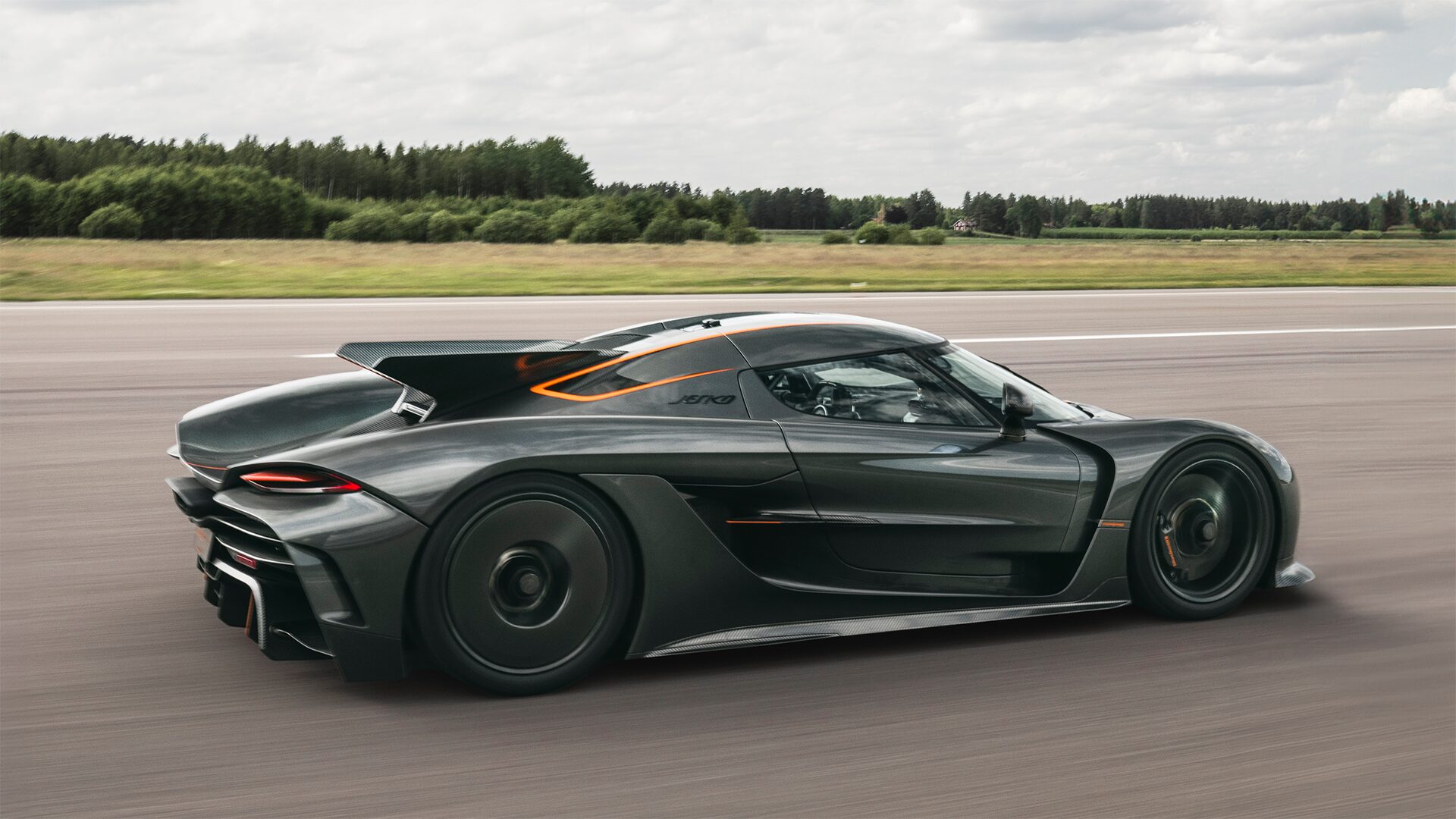
6. Koenigsegg Jesko
The Koenigsegg Jesko features one of the most advanced active aerodynamic systems in the hypercar world. Its rear wing is fully adjustable, moving both vertically and horizontally depending on speed, steering input, and braking force.
The car also has active front flaps and underbody channels that work together with the rear wing, creating a balanced aerodynamic profile capable of incredible stability at extreme velocities. Koenigsegg’s engineers focused on ensuring that each adjustment enhances handling precision without compromising comfort or efficiency during less demanding drives.
One of the most remarkable aspects of the Jesko’s active aero is how it integrates with the car’s suspension and drivetrain. The system communicates with the dampers and torque vectoring controls, allowing the car to maintain optimum grip in corners while reducing unnecessary drag on straights.
Even at speeds exceeding 250 miles per hour, the Jesko remains predictable and stable, giving the driver confidence to push the car to its limits. Each component operates in milliseconds, which is critical when navigating rapid directional changes or high-speed chicanes.
The front flaps play an essential role in managing airflow over the wheels and around the nose of the car. By adjusting dynamically, they reduce lift on the front axle while channeling air efficiently toward the underbody diffuser.
This ensures that downforce is evenly distributed between the front and rear wheels, improving cornering grip and braking stability. The Jesko demonstrates that aerodynamic efficiency is as much about airflow management as it is about raw downforce numbers.
Koenigsegg also implemented a “speed mode” where the rear wing retracts slightly to reduce drag during top-speed runs. This mode balances performance with efficiency, ensuring that the car can reach its top velocity without excessive aerodynamic resistance.
In corners or under braking, the wing extends fully to maximize downforce, making the car stick to the road in ways few other hypercars can match. The Jesko’s active aero system highlights the potential of combining mechanical ingenuity with precision electronics to deliver both speed and control.
The Jesko exemplifies how advanced active aerodynamics can transform the driving experience. It is not merely about producing higher cornering speeds but about creating a car that feels confident, connected, and responsive at every moment. Koenigsegg’s meticulous integration of active elements into both performance and efficiency considerations shows why this system is one of the most impressive examples of functional aero in a road-legal hypercar.

7. Aston Martin Valkyrie
The Aston Martin Valkyrie is designed with extreme aerodynamic efficiency in mind, incorporating a fully active aero system that rivals track-only prototypes. Its rear wing and front flaps adjust constantly depending on speed, steering, and driving mode, creating a car that remains glued to the road even under intense acceleration.
The Valkyrie’s aerodynamics are integrated with its hybrid powertrain, ensuring that both mechanical and electrical systems contribute to stability and performance simultaneously.
At high speeds, the rear wing rises and tilts to generate enormous downforce, which significantly improves traction through corners. This allows the driver to maintain higher speeds without sacrificing control, something essential for a car of the Valkyrie’s performance class.
During heavy braking, the wing acts as a massive air brake, drastically reducing stopping distances and ensuring the car remains stable even under extreme deceleration forces.
The front of the car features dynamic flaps and a splitter that manage airflow around the nose and wheel arches. These elements reduce turbulence, prevent lift, and direct air efficiently to the underbody and rear diffuser.
By distributing downforce evenly between the front and rear axles, Aston Martin ensures that the car remains balanced and responsive regardless of driving conditions. Each component is carefully engineered to complement the others, creating a cohesive aero system rather than a collection of isolated parts.
Aston Martin also incorporated an innovative underbody design that works in tandem with the active aero elements. Channels and diffusers extract air efficiently from beneath the car, enhancing ground effect and maximizing grip.
This integration ensures that every moving surface contributes to both downforce and stability, demonstrating that aero is as much about what happens underneath the car as what happens above it. The Valkyrie proves that hypercar aerodynamics can be highly functional without overwhelming the vehicle’s aesthetic.
Driving the Valkyrie highlights how active aero can transform both speed and handling. Unlike traditional spoilers, the Valkyrie’s system is intelligent, constantly adapting to real-world conditions.
This provides confidence during cornering, stability at top speed, and precision during braking. Aston Martin’s approach demonstrates that aero innovation is not just about looking fast; it is about making the driver faster, safer, and more in control.

8. Mercedes-AMG One
The Mercedes-AMG One brings Formula 1 technology to the road, featuring a fully active aerodynamic package that enhances both speed and handling. Its rear wing, front flaps, and underbody diffusers adjust dynamically based on vehicle speed, steering input, and braking forces.
The car even integrates hybrid powertrain data to ensure the optimal balance between downforce and drag under every driving condition. These systems enable cornering speeds and braking performance previously reserved for track-only vehicles.
The rear wing of the AMG One is perhaps the most noticeable element, capable of extending and tilting at extreme angles to improve grip during cornering or act as an air brake under heavy deceleration.
Unlike conventional wings, it continuously communicates with onboard sensors to provide precise adjustments in real time. This ensures that the car remains stable and predictable, even when transitioning from high-speed straights to tight bends.
Front aerodynamic elements, including splitters and flaps, manage airflow around the front wheels and direct it efficiently under the car. This reduces lift and turbulence, improving downforce distribution.
Combined with the rear wing, these components make the AMG One feel incredibly planted, allowing the driver to exploit its hybrid powertrain without worrying about stability loss at high speeds.
The underbody diffuser also works in conjunction with active aero elements, enhancing ground effect and creating additional downforce. This ensures that the car’s aerodynamic balance is maintained across all driving conditions, whether on a high-speed circuit or during spirited driving on mountain roads.
The seamless integration of front, rear, and underbody components exemplifies Mercedes’ meticulous attention to functional aero design.
Driving the AMG One is a unique experience because its active aero responds so intuitively to inputs. Each adjustment is felt rather than seen, providing confidence and control under extreme conditions.
The combination of Formula 1-inspired design and intelligent aero systems makes this car a benchmark in active aerodynamic engineering, proving that every moving element has a clear and measurable effect on performance.

9. Pagani Huayra BC
The Pagani Huayra BC showcases an intricate active aerodynamic system inspired by aerospace engineering. Its rear wing, front flaps, and underbody channels are all controlled by hydraulics and electronics, adjusting to maximize downforce and stability at every speed.
Pagani emphasizes not only performance but also aesthetic beauty, ensuring that every moving component integrates seamlessly with the car’s handcrafted bodywork.
At high speeds, the rear wing rises and tilts to generate significant downforce, improving traction and cornering performance. The wing also functions as an air brake during heavy deceleration, shortening stopping distances while keeping the car balanced. This responsiveness is critical given the Huayra BC’s extreme power-to-weight ratio and track-focused chassis.
The front aero system manages airflow around the nose and wheels, reducing lift and guiding air efficiently toward the underbody. Movable flaps on the front splitter dynamically adjust angles to balance downforce and drag depending on speed. The integration ensures that the car remains predictable through fast bends and during sudden directional changes.
The Huayra BC’s underbody is designed to extract air efficiently, enhancing ground effect and stability. This, combined with the active rear and front aero components, ensures that every surface contributes to aerodynamic performance. Pagani’s approach highlights the importance of designing aero as a holistic system rather than separate pieces acting independently.
Driving the Huayra BC emphasizes the benefits of active aero in real-world conditions. The car feels planted, responsive, and controllable at speeds that would overwhelm most vehicles. Pagani demonstrates that with careful engineering, even the most extreme hypercars can achieve remarkable stability and performance through intelligently integrated active aerodynamic systems.

10. Nissan GT-R50 by Italdesign
The Nissan GT-R50 by Italdesign combines Japanese engineering with European design flair, featuring an active aerodynamic package that enhances high-speed stability and cornering precision.
Its rear wing and front aero components automatically adjust based on speed, steering angle, and driving mode, improving balance between downforce and drag. This system transforms the car from a road-going supercar into a track-capable machine without compromising drivability.
The rear wing rises at high speeds to increase downforce, providing enhanced traction during acceleration and cornering. It also tilts under braking to act as an air brake, reducing stopping distances while keeping the rear stable.
Italdesign ensured that every movement is coordinated with the car’s electronic stability systems, allowing for predictable handling even under extreme conditions.
The front of the car features adjustable splitters and flaps that optimize airflow around the wheels and under the car. By minimizing turbulence and lift, these elements improve high-speed control and help channel air to the underbody diffuser efficiently. The result is a car that feels planted, precise, and highly responsive.
The GT-R50’s underbody is also aerodynamically optimized, working with the rear wing and front flaps to enhance ground effect. This ensures that the active aero system contributes to both performance and stability, demonstrating that even special edition vehicles can benefit from sophisticated engineering normally reserved for hypercars.
Driving the GT-R50 highlights the real impact of active aero. The car feels confident in corners, stable under braking, and responsive during acceleration. Italdesign and Nissan created a car where moving aerodynamic elements are not just visual enhancements but functional components that significantly improve the driving experience.