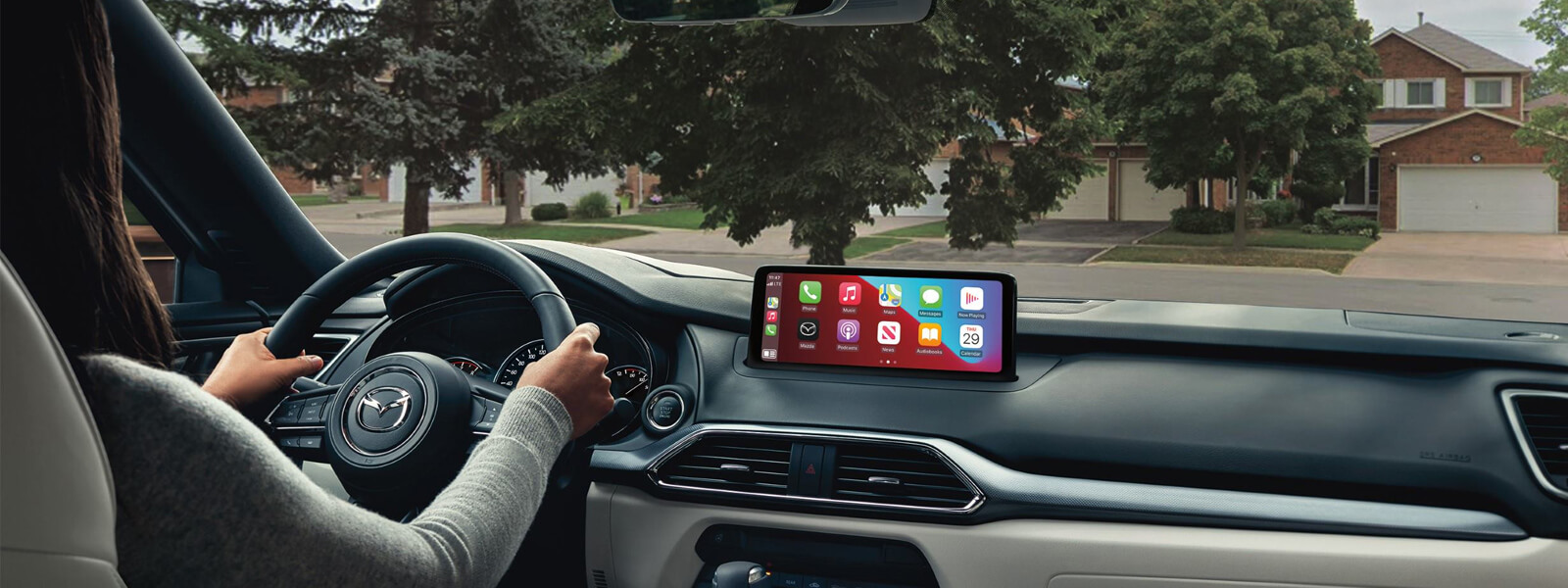
Although many automakers transitioned early to expansive touchscreens, Mazda long retained its rotary commander knob, a choice that increasingly made its interiors appear dated next to more contemporary designs.
With the arrival of the redesigned 2026 Mazda CX-5, the company has replaced that signature control interface with a larger touchscreen, while maintaining that its foundational design principles remain intact.
Matthew Valbuena, Mazda’s project manager for in-vehicle technologies and human-machine interfaces, stated that reducing driver distraction continues to guide development decisions.
While relocating HVAC and other functions into a large central display might appear contrary to that goal, Valbuena maintains that the system was engineered with layered safeguards to preserve usability and safety.
Several touchscreen operations can now be managed through steering wheel-mounted controls.
Core functions, including media source selection, are duplicated within the digital instrument cluster, limiting the need for drivers to shift their focus toward the center screen.
Mazda has also emphasized improvements to its voice-recognition technology, enabling drivers to adjust select settings without diverting attention from the road.
Valbuena further explained that contemporary integrations such as Android Auto and Apple CarPlay are optimized for touchscreen-based systems, making such hardware increasingly necessary for a seamless user experience.
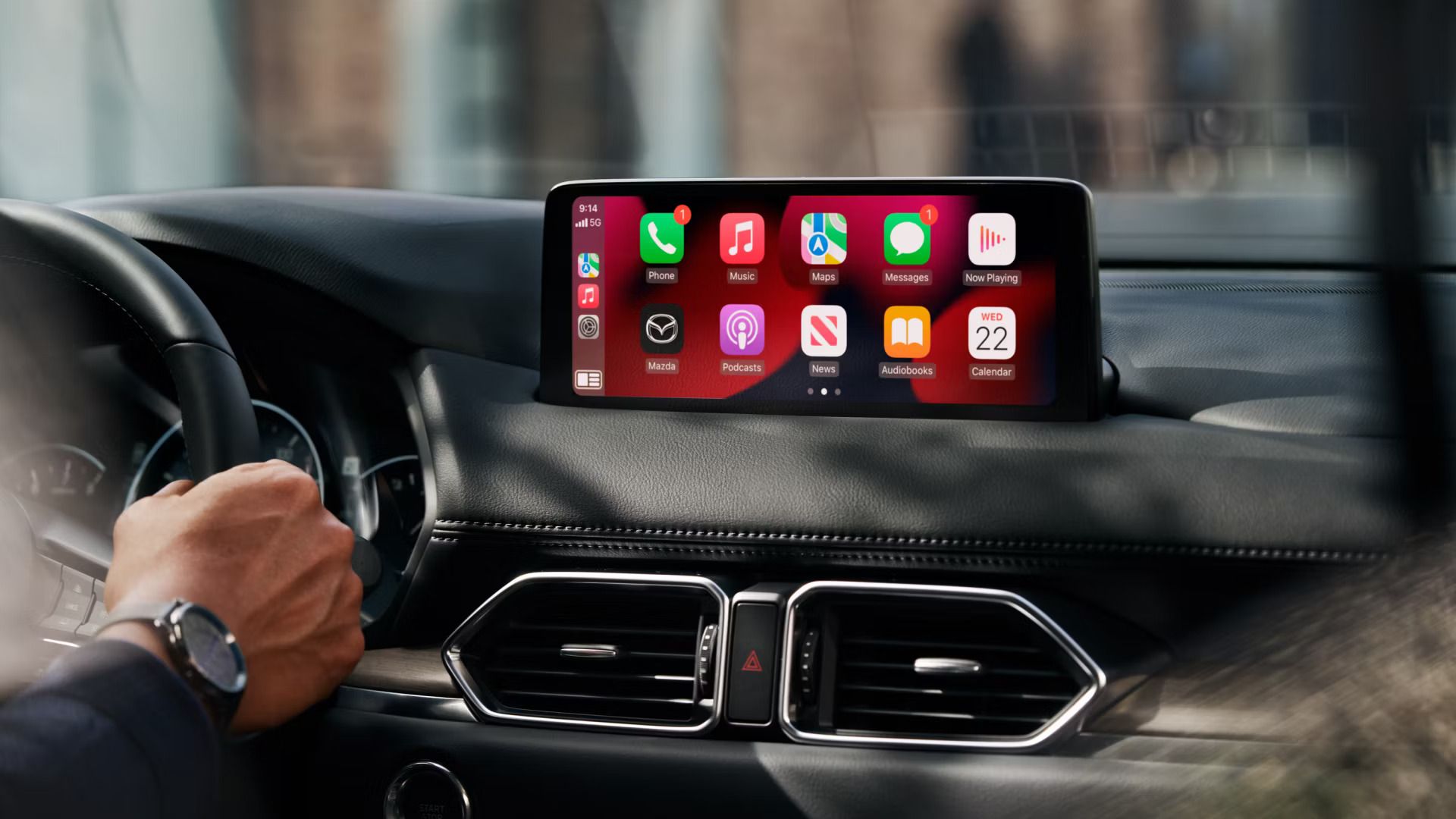
Drawing an analogy to consumer electronics, he compared Mazda’s earlier infotainment setup to the iPod Classic and the new system to the iPod Touch, stating, “Both can do the same things, but the iPod Touch offers greater flexibility and can do more than the iPod Classic.”
Mazda chose to debut this updated interface in the CX-5, the brand’s best-selling vehicle in the modern era.
The model recently surpassed five million units produced, becoming Mazda’s third vehicle to reach that milestone, following the 323 and the Mazda3.
In the United States, the CX-5 competes in a highly competitive segment against dominant players such as the Toyota RAV4 and the Ford F-Series, both of which consistently rank among the country’s top-selling vehicles. Because the CX-5 continues to be imported from Japan, Mazda faces tariff-related cost pressures in the U.S. market.
The company has acknowledged implementing cost-efficiency measures in the latest generation, though it asserts that these adjustments will not materially affect the customer experience.
Pricing for the 2026 CX-5 begins at $29,990, excluding destination charges, and includes a standard 12.9-inch touchscreen. A larger 15.6-inch display is offered on the range-topping Premium Plus trim, which starts at $38,990.
Whether this transition away from the rotary knob will resonate with long-time Mazda customers remains uncertain, but the shift reflects the company’s effort to respond to evolving user expectations while preserving its emphasis on driver-focused design.
Also Read: Top 10 Mazda Cars Every Enthusiast Must Drive Once