Rotary engines have always stood apart from traditional piston designs, earning both admiration and skepticism in equal measure. Known for their high-revving nature, compact size, and unmistakable sound, rotary-powered cars demand more attention and mechanical sympathy than most conventional vehicles.
Oil consumption, heat management, and apex seal wear are all part of the ownership experience. Yet for enthusiasts, these quirks are not deterrents but defining traits. The reward is a uniquely smooth power delivery, razor-sharp throttle response, and a driving character that feels alive in a way few modern cars can replicate.
In this list of Top 6 Rotary Powered Cars That Are Worth the Maintenance Effort, we explore six standout models that justify their demanding upkeep through innovation, rarity, performance, and historical significance.
From high-performance sports cars to luxury grand tourers and even a rotary-powered pickup, each vehicle proves that dedication and proper care unlock an experience unlike any other in the automotive world.
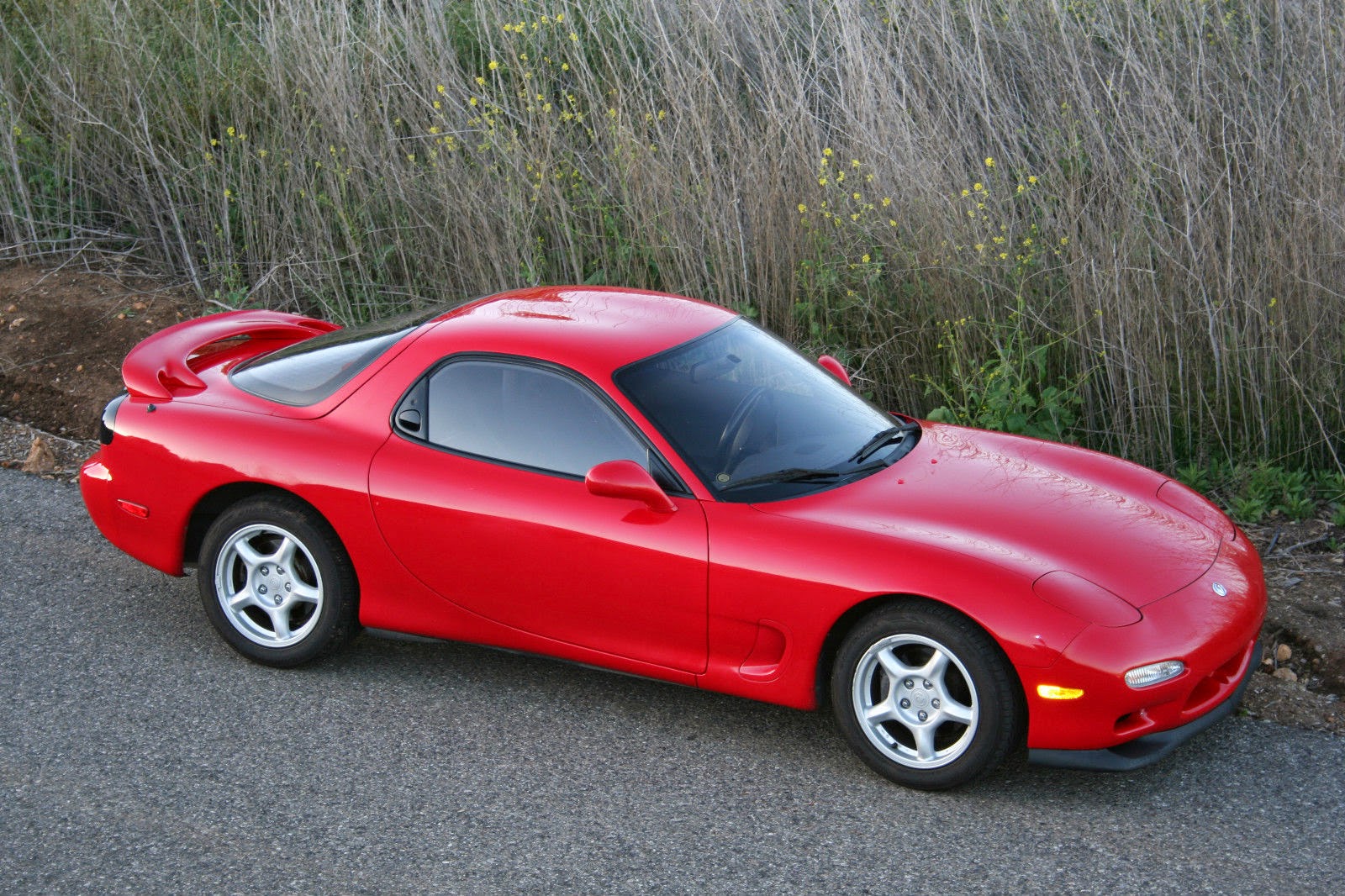
1. Mazda RX-7 (FD3S, 1992–2002): The Ultimate Rotary Sports Car
The third-generation Mazda RX-7, known as the FD3S, is widely celebrated as one of the finest Japanese sports cars of the 1990s. Produced between 1992 and 2002, it represents the pinnacle of rotary engine engineering, combining a lightweight chassis, exceptional balance, and sharp handling with the unique character of a high-revving twin-turbo 1.3L 13B-REW rotary engine.
The FD3S remains a legendary icon in the JDM community, renowned for its timeless aerodynamic styling and driver-focused design.
Performance is a defining feature of the FD3S. Its sequential twin-turbo system produces between 237 and 276+ horsepower, allowing the engine to rev up to 8,000–9,000 RPM. Acceleration from 0–60 mph is achieved in roughly 5.1–5.3 seconds, with a top speed limited to 156 mph.
The car’s lightweight construction, near-perfect 50/50 weight distribution, and double-wishbone suspension create razor-sharp handling and a highly communicative driving experience.
Enthusiasts often describe it as an “MX-5 on steroids,” noting that while the car can be tail-happy, it rewards skilled driving with unmatched feedback and precision. This raw, analog driving experience is a rarity among modern sports cars, making the FD3S highly desirable for purists.
The RX-7 FD3S’s styling has also cemented its legendary status. Its smooth, flowing lines, low stance, and aerodynamic profile give it a timeless appeal. The interior is driver-focused and simple, prioritizing functionality and engagement over luxury, although cabin space is limited, and some elements feel dated by today’s standards.
Mazda produced several notable variants, including the performance-focused R1 and R2, the more comfort-oriented Touring models, and the 2002 Spirit R, which is now a highly collectible version that represents the final iteration of the series.
Maintenance of the FD3S requires dedication and specialized knowledge. The rotary engine is sensitive to heat and requires careful management to avoid damage. Key tasks include frequent oil changes, monitoring the Oil Metering Pump, apex seal inspections, and managing the twin-turbo system.
Many owners also implement reliability modifications, such as upgraded cooling components and simplified vacuum lines, to reduce the risk of overheating and engine failure. Despite the intensive care it demands, well-maintained examples retain strong value and increasingly serve as collectible investments.
The FD3S is supported by a vibrant enthusiast community, offering access to specialists, aftermarket parts, and advice to keep these cars running reliably.
This support network, combined with the car’s enduring performance, styling, and emotional driving experience, ensures that the RX-7 FD3S remains a highly sought-after sports car. For those willing to commit to the maintenance, it delivers a unique, visceral, and rewarding driving experience that few vehicles can match.
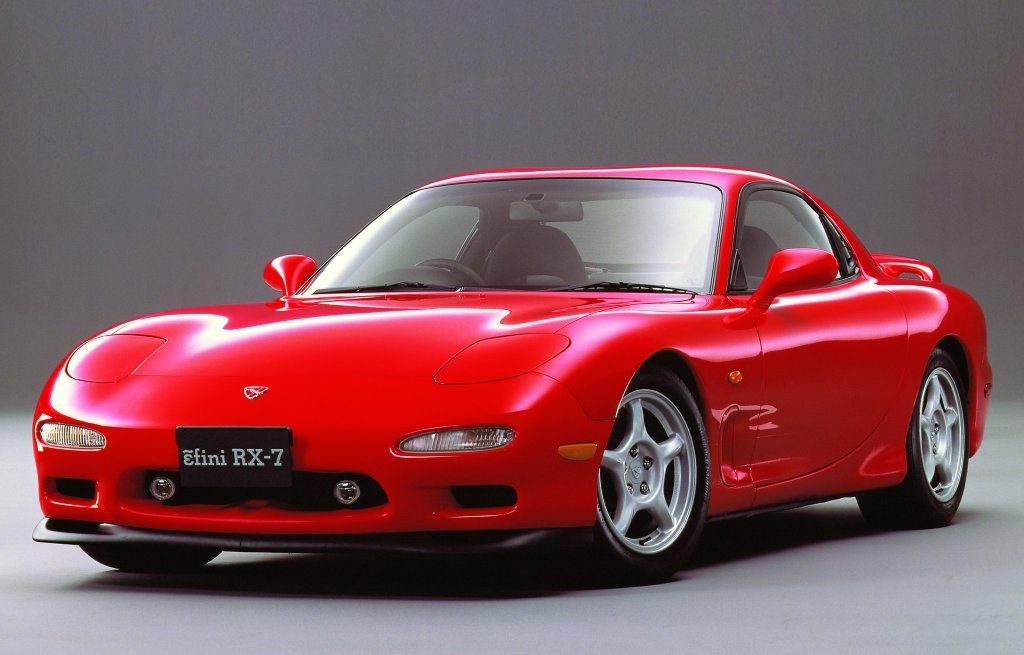
2. Mazda RX-8 (2003–2012): A High-Revving Rotary Sports Car with Everyday Practicality
The Mazda RX-8, produced from 2003 to 2012, is widely regarded as one of the most accessible and practical rotary-powered sports cars ever built. Designed as the successor to the RX-7, it introduced a naturally aspirated 1.3-liter RENESIS rotary engine and a distinctive four-door coupe layout with rear-hinged “freestyle” doors.
This unusual configuration allowed genuine seating for four passengers, setting it apart from most two-door sports cars. While it demands attentive ownership, the RX-8 offers a rare combination of high-revving performance, precise handling, and everyday usability at an affordable entry price.
At the heart of the RX-8 is the RENESIS rotary engine, producing between 190 and 231 horsepower depending on transmission and model year. Manual versions feature a 9,000 RPM redline, encouraging drivers to explore the upper reaches of the rev range where the engine feels most alive.
Power delivery is exceptionally smooth, and throttle response is immediate, creating a distinctive driving sensation unlike traditional piston engines. However, the engine produces modest low-end torque, meaning drivers must keep revs high for strong acceleration. When driven as intended, the RX-8 rewards enthusiasts with an engaging, free-spinning character and a unique engine note that defines the rotary experience.
Handling is one of the RX-8’s greatest strengths. The car features a front-mid-mounted engine layout and near-perfect 50:50 weight distribution, resulting in excellent balance and agility. Its low center of gravity and well-tuned suspension contribute to confident cornering and precise steering feedback.
The chassis feels planted and communicative, making the car particularly enjoyable on winding roads. Many drivers praise its predictable behavior and driver-focused dynamics, noting that it delivers a level of involvement often missing from heavier modern sports cars.
Despite its strengths, ownership requires commitment. Rotary engines are designed to burn oil as part of normal operation, so frequent oil level checks are essential, often every one to two fuel stops. Oil changes are typically recommended every 3,000 to 5,000 miles, and spark plugs require replacement around every 30,000 miles.
Proper cooling system maintenance is critical to prevent overheating, which can damage internal components. Regular high-rev driving helps reduce carbon buildup, and excessive short trips should be avoided. A compression test is strongly recommended before purchase, as low compression readings may indicate worn apex seals and the potential need for a costly rebuild.
Fuel economy is modest, averaging around 20 miles per gallon, and running costs can be higher than comparable piston-engine vehicles. Cold-start flooding can occur if the engine is shut down before reaching operating temperature, requiring specific starting procedures. However, with careful maintenance and informed driving habits, many owners find the RX-8 to be dependable and deeply satisfying.
Later Series 2 models introduced in 2008 featured chassis improvements, updated styling, and refinements that enhanced reliability and performance, particularly in the R3 trim. These updates made the later models especially appealing to enthusiasts seeking improved durability without sacrificing driving enjoyment.
The Mazda RX-8 is a cult favorite that blends high-revving rotary performance, exceptional handling, and genuine four-seat practicality. Although it requires disciplined maintenance and informed ownership, it delivers a unique and rewarding driving experience that few cars can replicate at a similar price point.
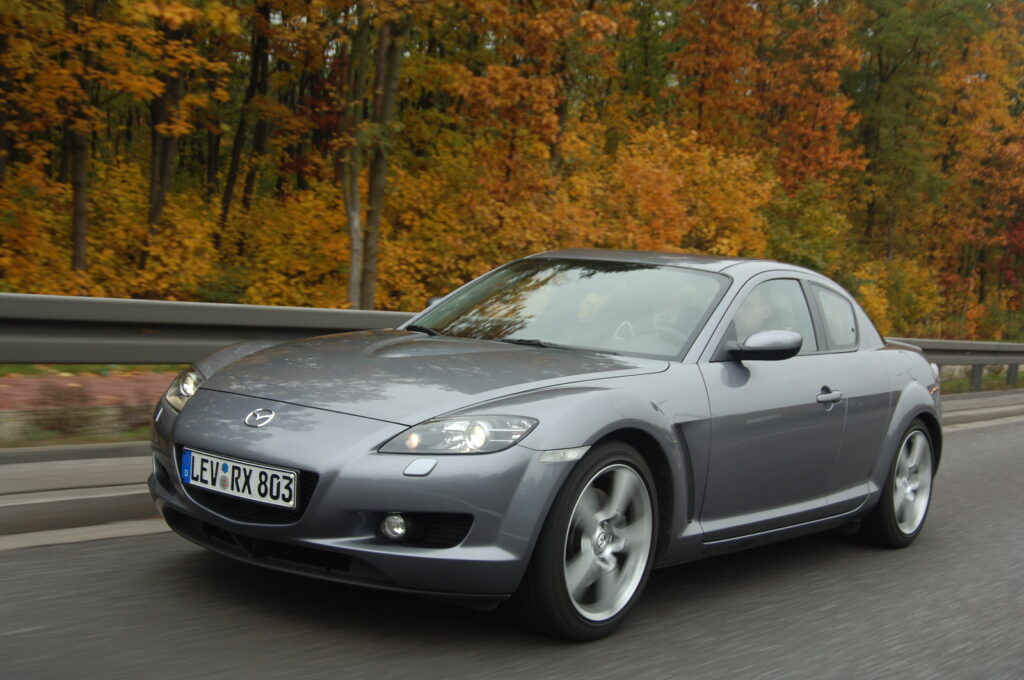
3. Mazda RX-7 (FC3S, 1986–1992): The Refined and Balanced Rotary Classic
The second-generation Mazda RX-7, designated FC3S, was produced from 1986 to 1992 and is widely regarded as one of the most well-rounded rotary sports cars of its era. Building on the lightweight philosophy of the original RX-7, the FC introduced improved refinement, sharper styling, and a more mature grand touring character while preserving the engaging rear-wheel-drive dynamics that defined the model.
With its sleek 1980s design, nearly 50:50 weight distribution, and high-revving 13B rotary engine, the FC3S has become a respected JDM icon and an increasingly appreciated classic among enthusiasts.
Powering the FC3S is the 1.3-liter 13B Wankel rotary engine. Early naturally aspirated versions produced approximately 146 horsepower, offering smooth and linear acceleration that encouraged drivers to explore higher RPM ranges. In 1987, Mazda introduced the Turbo II variant, which significantly increased performance to between 182 and 200 horsepower depending on specification.
The turbocharged models delivered stronger mid-range pull while maintaining the rotary engine’s characteristic smoothness and willingness to rev beyond 7,000 RPM. Unlike conventional piston engines, the rotary provides a distinctive power delivery and sound, creating a unique driving experience that remains central to the car’s appeal.
The FC3S chassis is a major reason for its enduring reputation. Equipped with independent rear suspension and rack-and-pinion steering, the car offers precise control and predictable handling. Its balanced weight distribution enhances stability through corners, and the rear-wheel-drive layout allows drivers to fully engage with the car’s dynamics.
Although the steering ratio is somewhat slower compared to modern sports cars, it remains communicative and confidence-inspiring. Compared to the later FD generation, the FC is generally considered more mechanically robust and less complex, making it a more approachable entry point into rotary ownership.
Inside, the FC3S reflects late 1980s design trends with a driver-focused cockpit and clear analog instrumentation. Supportive seating and an ergonomic layout emphasize function over flash.
The car was offered as both a coupe and a convertible, with Series 4 models produced from 1986 to 1988 and Series 5 models from 1989 to 1992 featuring updates and refinements. For its time, the FC provided respectable comfort, with options such as air conditioning and leather upholstery. Its 2+2 configuration added a degree of practicality, making it usable beyond weekend drives.
Maintenance requirements are moderate but essential. As with all rotary engines, the 13B consumes oil during normal operation, so frequent oil level checks and regular oil changes are critical. Overheating must be strictly avoided, as excessive heat can damage apex seals and coolant seals.
Preventative measures, such as replacing the fuel dampener on early models, are important to reduce fire risk. Occasional high-RPM driving helps prevent carbon buildup, promoting long-term engine health. When properly maintained, the 13B has demonstrated impressive durability, with many examples exceeding 150,000 miles.
Today, the FC3S is valued for its blend of classic styling, engaging rotary performance, and relative simplicity compared to later models. It offers an authentic, analog sports car experience that rewards attentive ownership and continues to gain recognition as a significant 1980s and early 1990s performance icon.
Also Read: 5 Engines That Don’t Leak A Drop VS 5 With Common Gasket Seepage
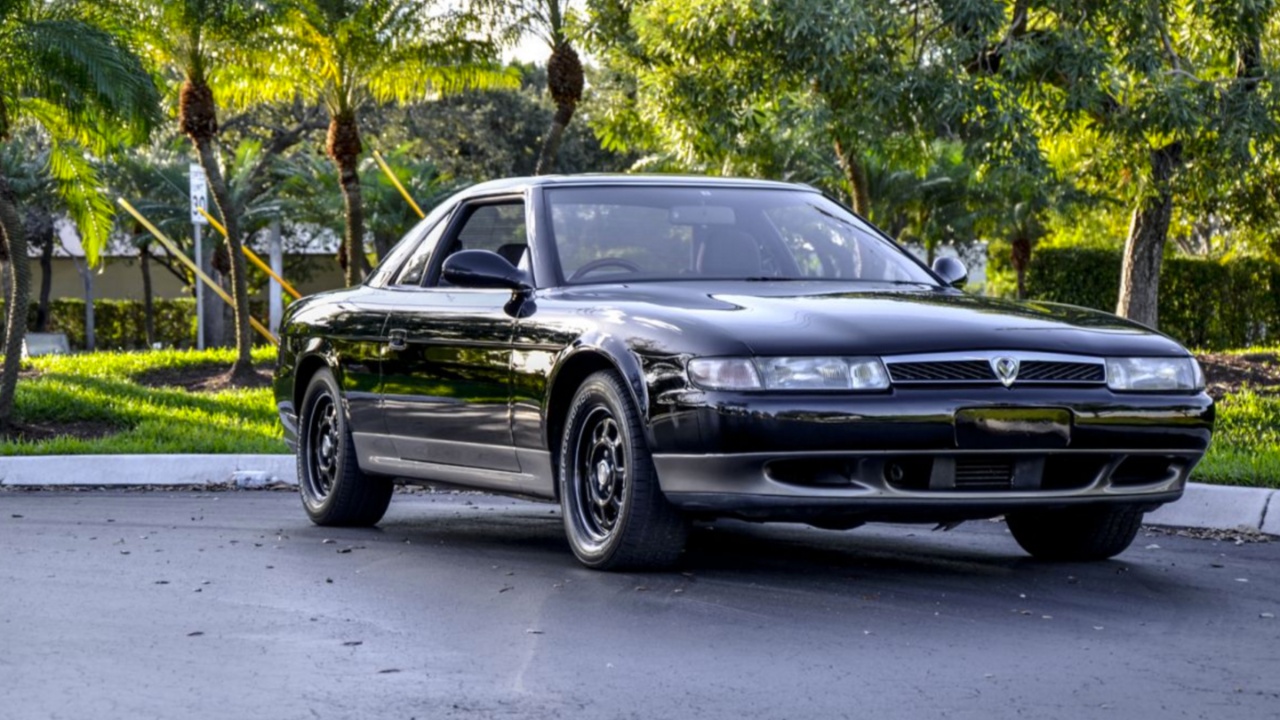
4. Eunos Cosmo (1990–1995): The Three-Rotor Flagship of Japan’s Bubble Era
The 1990 to 1995 Eunos Cosmo is one of the most ambitious and technologically daring grand tourers ever produced by a Japanese manufacturer. Sold exclusively in Japan during the height of the country’s economic bubble, the Cosmo was engineered without compromise, blending advanced electronics, luxury craftsmanship, and groundbreaking rotary technology.
Its greatest distinction is clear: it remains the only production car in history powered by a three-rotor engine, the 20B-REW. This singular achievement alone secures its place as a landmark vehicle in automotive engineering.
The 20B-REW engine defined the Cosmo’s character. Displacing 2.0 liters across three rotors, it produced approximately 300 horsepower and 300 lb-ft of torque. Power delivery was exceptionally smooth and refined, often compared to the seamless pull of a V12 engine.
Unlike earlier turbocharged rotaries that suffered from lag, the Cosmo used a sequential twin-turbo system to improve responsiveness throughout the rev range. The result was strong mid-range torque and consistent acceleration, unusual traits for rotary engines of the time.
A smaller 13B-RE twin-rotor option was also available, but the 20B remains the model’s most celebrated configuration. All versions were paired with a four-speed automatic transmission designed to emphasize relaxed, effortless cruising rather than aggressive shifting.
Performance was impressive for a luxury coupe of the early 1990s. The Cosmo could reach 60 mph in the low six-second range and achieve a top speed near 158 mph. Yet its mission was not to compete with lightweight sports cars.
Instead, it functioned as a high-speed grand tourer, delivering a stable, composed ride suited for long-distance travel. Its suspension setup prioritized comfort and smoothness, though sport-oriented trims featured slightly firmer tuning. The car’s weight and substantial structure contributed to its refined road manners and quiet cabin experience.
Inside, the Cosmo showcased technology that was far ahead of its contemporaries. It was the first production vehicle equipped with a factory-installed GPS navigation system. The centerpiece of the dashboard was a color CRT touchscreen that controlled navigation, climate functions, audio settings, and even television features in Japan.
This integrated digital interface created a futuristic atmosphere rarely seen in early 1990s vehicles. High-quality leather upholstery, optional wood trim, and a spacious 2+2 layout reinforced its identity as a premium touring coupe.
Production numbers were limited to just 8,875 units, and the model was never officially exported beyond Japan. This exclusivity has contributed to its collector appeal. However, rarity also brings challenges. Maintenance demands are very high, particularly for the complex 20B engine and its sequential turbo system.
Strict thermal management is essential, and consistent, high-quality oil changes are critical for longevity. Replacement parts can be difficult to source, and specialized rotary expertise is often required. Electronic components, including the original CRT display, may also require restoration.
Despite the complexity and cost of ownership, the Eunos Cosmo represents a bold statement of engineering ambition. It captures a moment in time when innovation, luxury, and rotary experimentation converged to create a truly singular grand touring machine.
5. Mazda 110S Cosmo Sport (1967–1972): The Pioneer of Rotary Performance
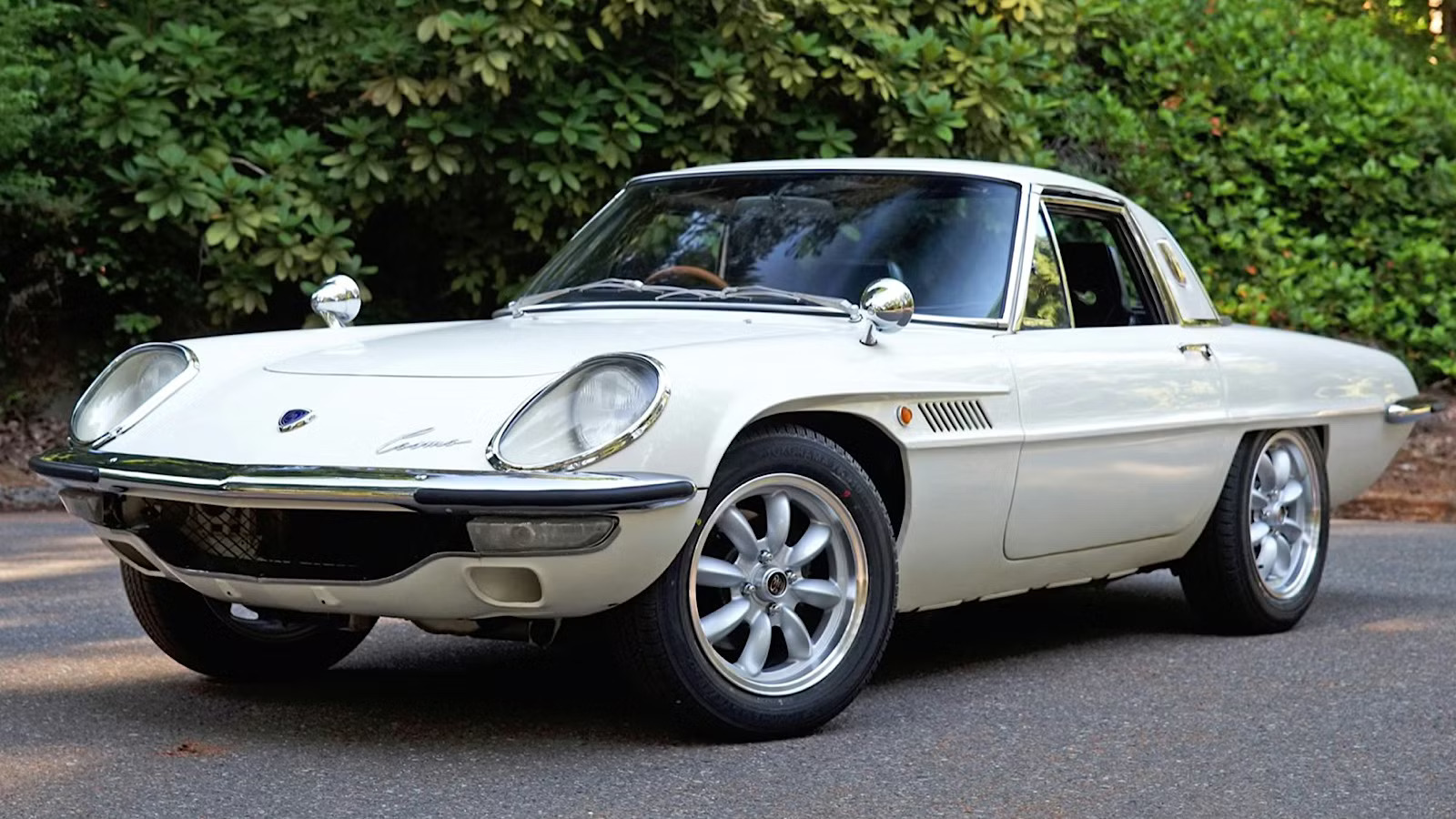
The 1967 to 1972 Mazda 110S Cosmo Sport holds a unique place in automotive history as the world’s first production car powered by a twin-rotor Wankel engine. Developed as a halo model, it symbolized Mazda’s determination to refine and commercialize rotary technology at a time when many manufacturers abandoned it.
Built in limited numbers and largely assembled by hand, the Cosmo Sport introduced a bold engineering philosophy that would define Mazda for decades. Today, it is regarded as a foundational Japanese classic and a highly prized collector’s vehicle.
Powering the Cosmo Sport was the 982cc 10A twin-rotor engine. Series I models produced approximately 110 horsepower, while the later Series II increased output to around 128 horsepower through refinements and improved tuning.
The rotary engine was celebrated for its turbine-like smoothness and ability to rev beyond 7,000 rpm, delivering a distinctive rasping exhaust note that separated it from conventional piston engines.
Because the engine generated limited low-end torque, drivers needed to maintain higher revs and shift carefully to extract performance. Series I cars used a four-speed manual transmission, while Series II versions featured a five-speed gearbox, enhancing drivability and cruising comfort.
Although not exceptionally fast by modern standards, the Cosmo Sport offered engaging performance for its era. With a curb weight under 2,100 pounds, it achieved 0 to 60 mph in about 10 seconds and reached a top speed near 115 mph. Its lightweight construction and balanced proportions contributed to agile handling.
The chassis employed rack-and-pinion steering for responsive control, while the rear suspension used a de Dion tube with leaf springs. This setup delivered respectable stability and nimbleness, making the Cosmo enjoyable to drive on winding roads.
The design of the Cosmo Sport reflected the optimism and futuristic themes of the 1960s space race. Its low, flowing bodywork, long hood, short rear deck, and wraparound rear window created a sleek silhouette often compared to a flying saucer.
Pop-up headlights and fender-mounted mirrors reinforced its distinctive presence. Inside, the cabin was compact and driver-oriented, featuring bucket seats, a wood-rimmed steering wheel, and simple instrumentation. While space was limited, the intimate cockpit emphasized the car’s sporting identity.
Rarity plays a major role in the Cosmo Sport’s desirability. Only 1,176 units were produced, with 343 Series I and 833 Series II models built. Very few examples were exported, increasing their scarcity outside Japan.
Each car was assembled at a slow production pace, enhancing its exclusivity. The Cosmo also proved its durability in competition, notably finishing fourth in the grueling 1968 Marathon de la Route at the Nürburgring, demonstrating the viability of rotary technology under extreme conditions.
Ownership demands significant commitment. As a vehicle more than five decades old, sourcing parts for the 10A engine can be extremely difficult. Early rotary engines were susceptible to apex seal wear, sometimes referred to as “nail marks of the devil,” and high oil consumption is typical. Restoration costs can be substantial, and knowledgeable rotary specialists are rare.
Despite these challenges, the Mazda 110S Cosmo Sport remains a landmark achievement. Its pioneering engineering, limited production, and striking design make it a treasured symbol of innovation and a defining chapter in automotive history.
6. Mazda REPU (1974–1977): The World’s Only Rotary-Powered Pickup
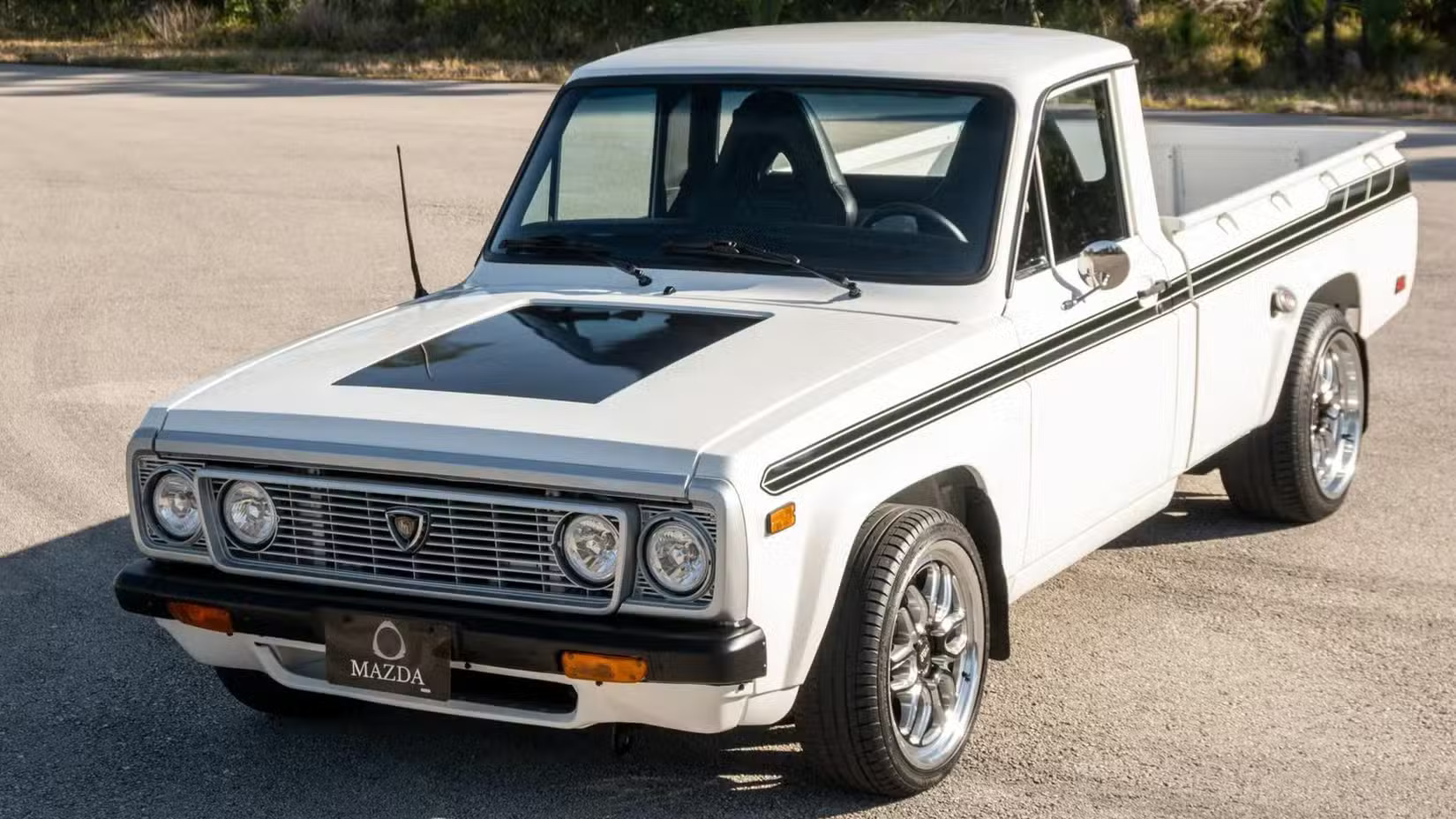
The 1974 to 1977 Mazda Rotary Engine Pickup, commonly known as the REPU, occupies a unique position in automotive history as the only factory-produced rotary-powered pickup truck ever sold by a major manufacturer. Marketed primarily in North America, the REPU combined the practicality of a compact truck with the high-revving character of Mazda’s 13B twin-rotor engine.
The result was an unconventional “sport truck” that delivered a driving experience unlike any other utility vehicle of its era. Today, it is regarded as a cult classic and a rising collectible among rotary enthusiasts.
At the heart of the REPU was a 1.3-liter 13B twin-rotor engine producing approximately 110 horsepower at 6,000 rpm and 117 lb-ft of torque at 3,500 rpm. While these figures may appear modest, the lightweight construction of the truck, which weighed under 3,000 pounds, allowed it to feel surprisingly lively.
Acceleration from 0 to 60 mph took roughly 11 seconds, respectable for a compact 1970s pickup. The engine’s smooth, vibration-free power delivery and willingness to rev beyond 6,000 rpm gave the REPU a personality more akin to a sports car than a traditional workhorse. Most models were equipped with a four-speed manual transmission, with later examples offering a five-speed option.
Unlike standard Mazda B-series trucks of the period, the REPU featured several upgrades to handle the rotary engine’s performance characteristics. These included a wider track, sportier suspension tuning, front disc brakes, and a factory tachometer to help drivers monitor engine speed.
The chassis improvements enhanced stability and control, making the truck feel composed and responsive. Although it lacked strong low-end torque, keeping the engine in higher rev ranges delivered a spirited and engaging drive.
Production numbers were limited to approximately 15,000 units over its four-year run, and many examples have been lost due to rust, engine swaps, or neglect. This scarcity has increased its desirability among collectors.
As interest in 1970s Japanese vehicles grows, well-preserved or restored REPUs frequently command prices between $15,000 and $25,000, with exceptional examples exceeding that range. Its rarity, combined with its status as a rotary anomaly, makes it a standout at car shows and enthusiast gatherings.
Ownership does require commitment. Fuel economy was one of the REPU’s primary drawbacks, averaging around 16 to 19 miles per gallon, which was considered poor even by 1970s standards. Like all rotary engines, the 13B consumes oil by design and requires careful monitoring of oil levels, seals, and cooling systems to prevent damage.
Proper maintenance is essential to ensure longevity, though the underlying truck platform is relatively simple and straightforward to restore. Some mechanical components are interchangeable with Mazda RX-series cars, which helps mitigate parts availability challenges.
The REPU is not a conventional daily driver, nor was it designed to compete with heavy-duty work trucks. Instead, it represents a bold experiment in blending performance engineering with utility. For enthusiasts willing to embrace its quirks and maintenance needs, the Mazda REPU offers a rare, high-revving, and historically significant driving experience that no other pickup can replicate.
Owning a rotary-powered car is rarely the easiest path, but it is often one of the most rewarding. The models featured in this list demonstrate why the extra maintenance effort can be worthwhile.
Whether it is the razor-sharp precision of the RX-7, the everyday practicality of the RX-8, the balanced charm of the FC, the engineering audacity of the Eunos Cosmo, the historic importance of the 110S Cosmo Sport, or the sheer novelty of the REPU, each vehicle delivers a driving experience that stands apart from conventional machines.
These cars are not for those seeking simple, low-maintenance transportation. They are for enthusiasts who appreciate engineering boldness and are willing to invest time and care into preservation.
When properly maintained, rotary-powered cars offer a level of engagement, character, and heritage that few other vehicles can match, proving they truly are worth the maintenance effort.
Also Read: 10 Engines With Timing Chains That Last the Life of the Car