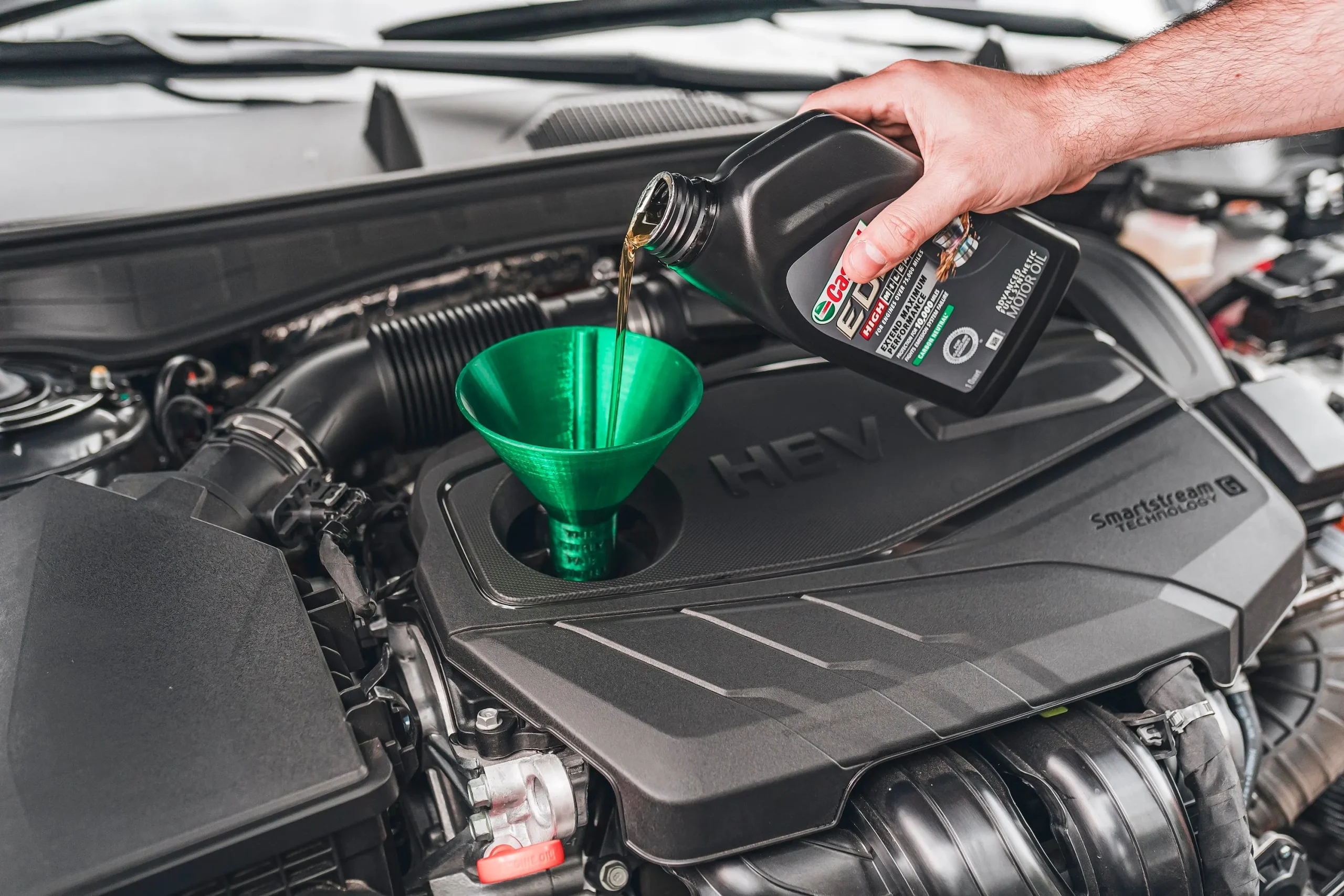
Turbocharged engines have changed the way we look at performance cars. In the past, drivers needed large engines to get more power. Today, turbochargers help smaller engines produce big horsepower without using too much fuel.
A turbo uses exhaust gases to spin a turbine, which forces more air into the engine. More air means more fuel can burn, and that creates more power. This smart technology gives drivers faster acceleration, better efficiency, and exciting performance. Here are nine turbocharged engines that deliver impressive performance gains.
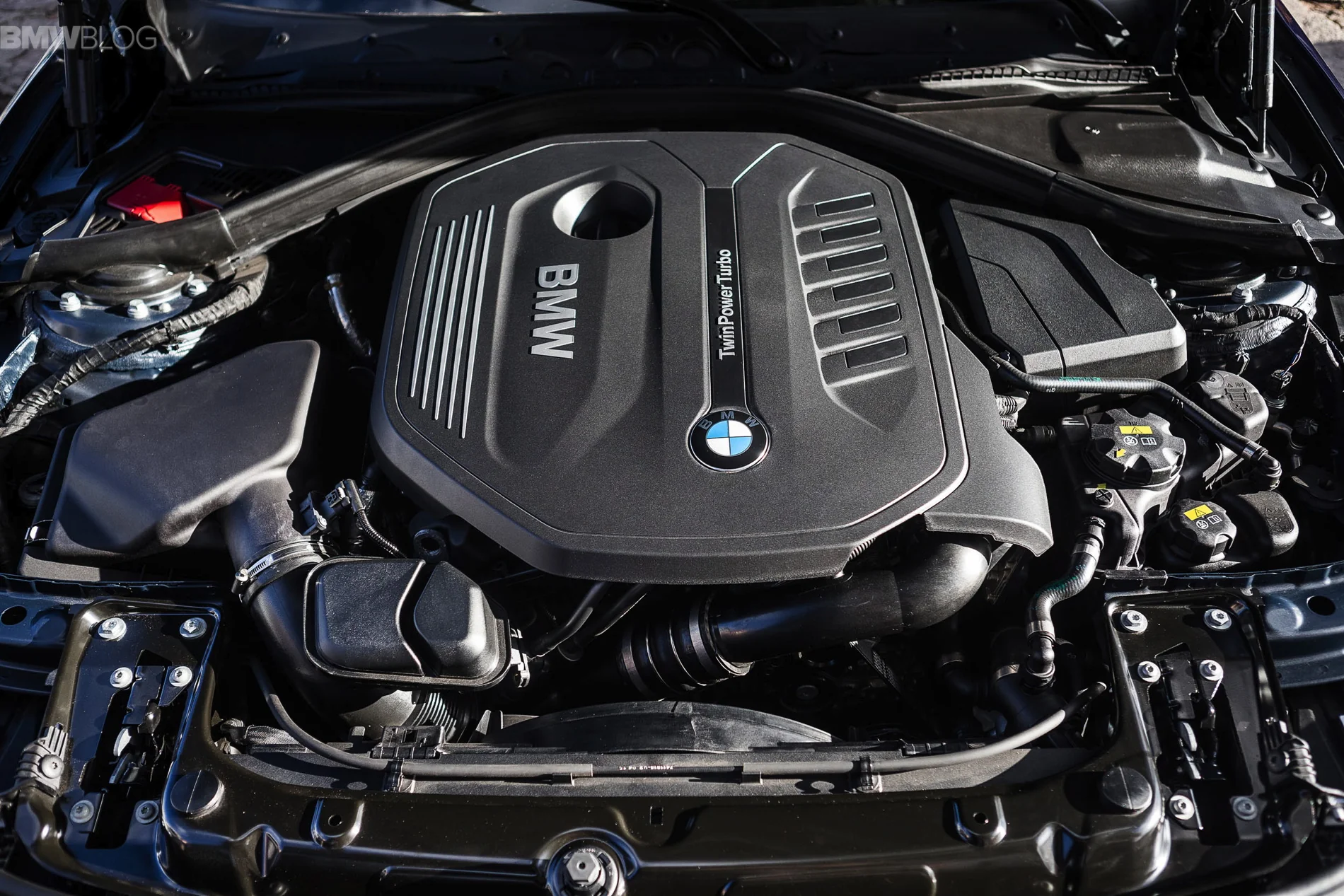
1) BMW B58 3.0-Liter Turbocharged Inline-Six Engine
The BMW B58 is a modern 3.0-liter turbocharged inline-six engine known for smooth power and strong reliability. It replaced the older N55 engine and quickly earned respect from drivers, tuners, and car experts around the world.
This engine uses a single twin-scroll turbocharger to improve response and reduce lag. The design allows exhaust gases to flow more efficiently, helping the engine build boost quickly. As a result, acceleration feels strong, smooth, and very controlled.
One of the B58’s biggest strengths is its balanced inline-six layout. This engine design naturally runs smoothly without much vibration. Drivers notice refined performance, especially during highway driving, where power delivery feels steady and effortless at higher speeds.
The B58 also uses direct fuel injection and variable valve timing. These modern technologies improve both power and fuel efficiency. Even though it produces impressive horsepower, it still delivers reasonable fuel economy for a performance-focused six-cylinder engine.
This engine powers popular models like the Toyota Supra and the BMW M340i. In these cars, the B58 produces strong factory horsepower and quick acceleration times. It gives drivers a sporty experience without sacrificing daily comfort or drivability.
Another reason the B58 is popular is its strong internal construction. BMW built this engine with a closed-deck block design, which adds strength and durability. This helps the engine handle higher boost levels and extra power without major internal changes.
Tuning potential is one of the B58’s most exciting features. Simple software upgrades, often called ECU tunes, can unlock significant horsepower gains. Many owners see large improvements in power with only minor modifications and proper engine management adjustments.
In addition to software tuning, bolt-on upgrades like better downpipes or intercoolers can increase performance further. The engine responds well to these changes, making it a favorite choice for enthusiasts who want more speed without rebuilding the motor.
Reliability is another key advantage of the B58 engine. Compared to some older turbocharged engines, it has fewer common problems. With regular maintenance, including oil changes and proper cooling care, the engine can remain dependable for many years.
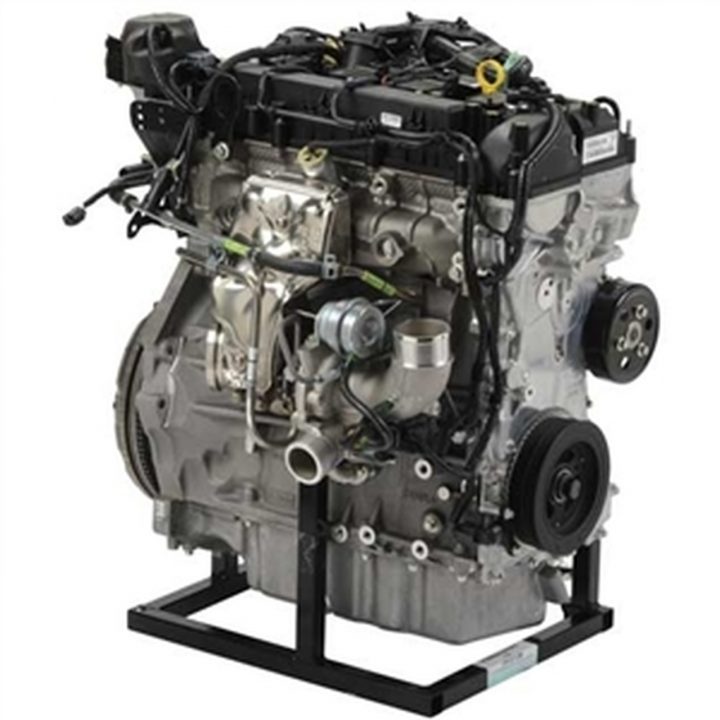
2) Ford 2.3L EcoBoost Turbo Engine
The Ford 2.3-liter EcoBoost is a turbocharged four-cylinder engine known for strong performance and good efficiency. It proves that smaller engines can still deliver exciting power while maintaining reasonable fuel economy for daily driving needs.
This engine uses a twin-scroll turbocharger to reduce turbo lag and improve throttle response. The design separates exhaust pulses, helping the turbo spin faster. As a result, drivers experience quicker acceleration and smoother power delivery at different speeds.
Direct fuel injection is another important feature of the 2.3 EcoBoost. It sprays fuel directly into the combustion chamber, improving efficiency and power. This system helps the engine produce strong horsepower while keeping emissions and fuel consumption under control.
The engine is widely known for powering the Ford Mustang EcoBoost. In this sporty coupe, it delivers impressive acceleration and balanced handling. Drivers get a fun performance experience without the higher fuel costs of larger V8 engines.
It also powered the high-performance Ford Focus RS. In that model, the engine produced even more horsepower thanks to special tuning. The Focus RS showed how flexible and capable the 2.3 EcoBoost can be under demanding conditions.
Ford designed this engine with a strong aluminum block and reinforced internal components. These features help it handle high boost pressure safely. The solid construction makes it suitable for both daily commuting and spirited weekend driving.
Another benefit of the 2.3 EcoBoost is its tuning potential. Many owners choose ECU software upgrades to increase horsepower. With proper supporting modifications, the engine can produce noticeable gains without changing major internal parts.
The engine also features variable valve timing technology. This system adjusts valve operation for better performance at both low and high speeds. It helps the engine feel responsive in city traffic while still delivering strong highway power.
In everyday driving, the 2.3 EcoBoost feels smooth and refined. It provides enough torque at low speeds, making it easy to drive in urban areas. At higher speeds, the turbo delivers strong pull and confident overtaking power.
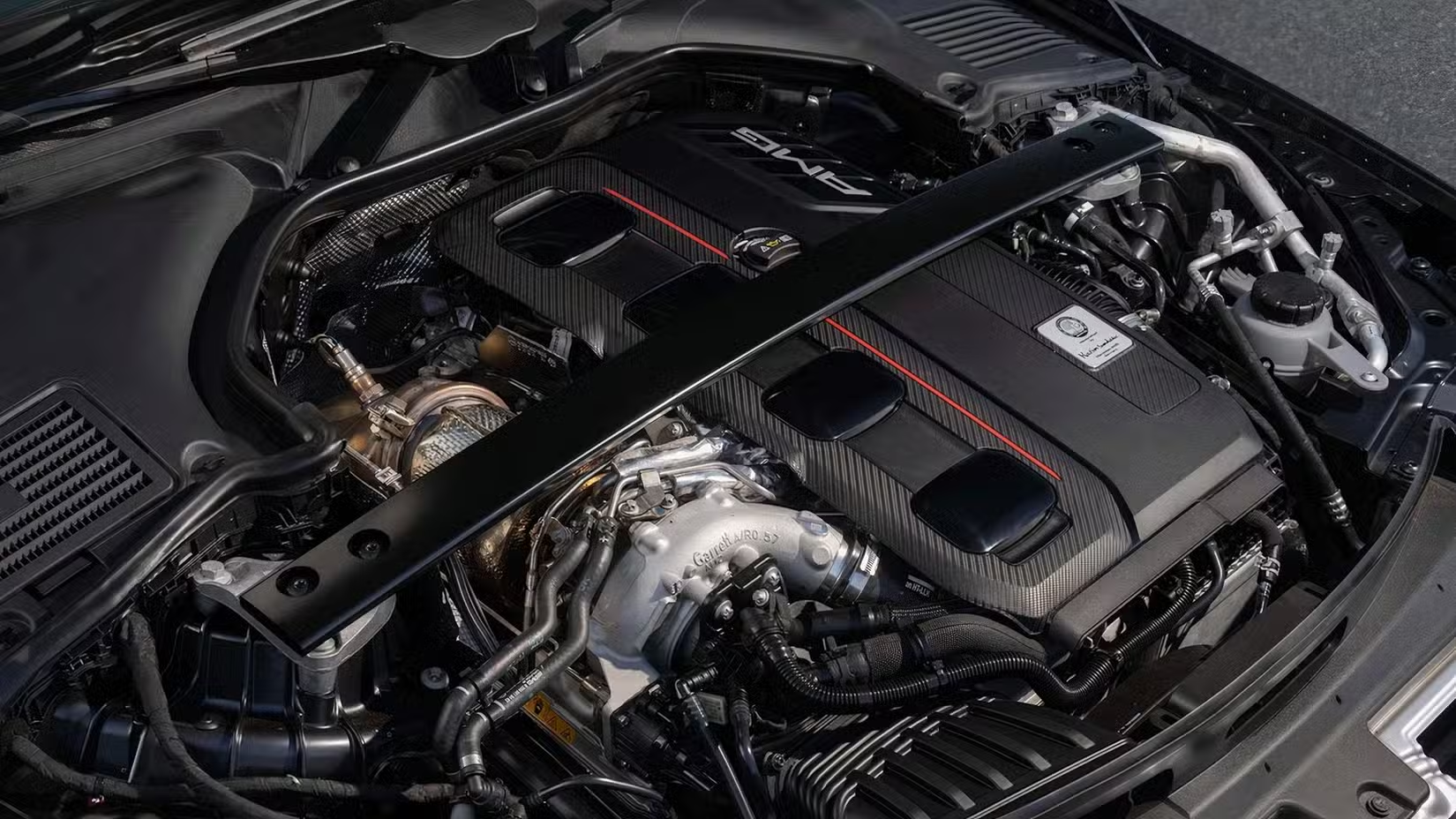
3) Mercedes-Benz M139 2.0L Turbocharged Engine
The Mercedes-Benz M139 is a 2.0-liter turbocharged four-cylinder engine built by AMG. It is known as one of the most powerful production four-cylinder engines in the world. Despite its small size, it delivers outstanding horsepower and strong performance.
This engine uses a large twin-scroll turbocharger designed for maximum efficiency. The turbo is mounted in a special position to improve airflow and reduce lag. This setup allows the engine to respond quickly when the driver presses the accelerator.
One of the most impressive features of the M139 is its handcrafted assembly. Each engine is built by one technician under AMG’s “one man, one engine” philosophy. This careful process ensures high quality and attention to detail.
The engine produces remarkable horsepower for its size. In performance models like the AMG A45, it delivers thrilling acceleration and high top speeds. It proves that small displacement engines can compete with larger six-cylinder units.
Advanced cooling systems help the M139 maintain stable temperatures under heavy load. Multiple cooling circuits manage heat from the turbocharger and engine block. This keeps performance consistent even during aggressive driving or track use.
The M139 also features direct fuel injection and variable valve timing. These technologies improve both power output and efficiency. Drivers benefit from strong acceleration while still meeting modern emission and fuel economy standards.
Inside, the engine includes forged pistons and a reinforced crankshaft for added durability. These strong internal parts allow the engine to handle high boost pressure safely. This design supports the engine’s impressive power levels.
In daily driving, the M139 feels smooth and responsive. Turbo lag is minimal, and power builds quickly. When driven calmly, it remains refined and comfortable, making it suitable for everyday commuting as well.
4) Porsche 3.8L Twin-Turbo Flat-Six Engine
The Porsche 3.8-liter twin-turbo flat-six engine is one of the most respected performance engines in the world. It powers high-performance 911 Turbo models and delivers explosive acceleration with smooth and controlled power delivery.
This engine uses a flat-six, or “boxer,” layout. The cylinders sit horizontally opposite each other, which lowers the car’s center of gravity. This design improves balance, handling stability, and overall driving confidence at high speeds.
Twin turbochargers help the engine produce massive horsepower. By forcing more air into the combustion chambers, the turbos increase power without increasing engine size. The result is extremely quick acceleration and strong mid-range torque.
One major advantage of this engine is its quick throttle response. Porsche engineers carefully tune the turbo system to reduce lag. When the driver presses the accelerator, power builds rapidly and smoothly, creating an exciting driving experience.
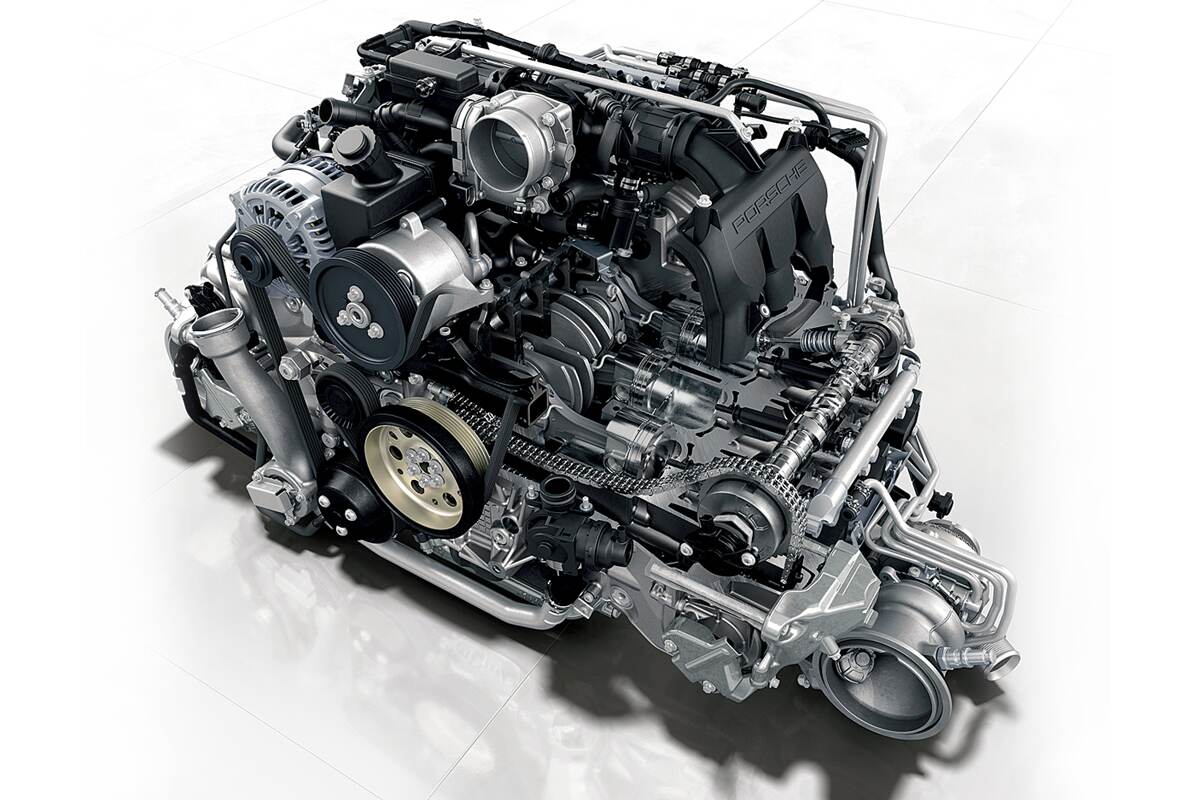
The engine also features advanced direct fuel injection technology. This system precisely controls fuel delivery, improving efficiency and combustion. It allows the engine to produce high power while still meeting modern emission standards.
Strong internal components support the engine’s performance. Reinforced pistons, connecting rods, and crankshaft parts help it handle high boost pressure. This solid construction ensures durability even under demanding driving conditions.
Cooling systems are carefully designed to manage heat from the twin turbos. Proper temperature control keeps performance stable during long highway drives or track sessions. This reliability adds to the engine’s strong reputation.
In daily driving, the engine feels refined and manageable. Despite its high power output, it can cruise comfortably at lower speeds. This balance between comfort and performance makes it suitable for both city roads and open highways.
The sound of the flat-six engine is another highlight. It produces a unique, deep tone that becomes more aggressive under acceleration. The twin turbos add a subtle whistle, enhancing the sporty character.
5) Honda 2.0L VTEC Turbo Engine
The Honda 2.0-liter VTEC Turbo engine is a powerful four-cylinder designed for performance and daily usability. It is best known for powering the Civic Type R, where it delivers strong acceleration and impressive track capability.
This engine combines Honda’s famous VTEC system with modern turbocharging technology. VTEC adjusts valve timing for better airflow at high speeds. When paired with a turbocharger, it produces excellent power across a wide range of engine speeds.
The turbocharger forces more air into the engine, increasing combustion strength. This allows the 2.0-liter engine to produce horsepower similar to larger engines. Drivers enjoy quick acceleration without the extra weight of a bigger motor.
Honda engineered this engine with a strong aluminum block and reinforced internal parts. The pistons and connecting rods are built to handle high boost pressure. This durable design supports both factory performance and mild tuning upgrades.
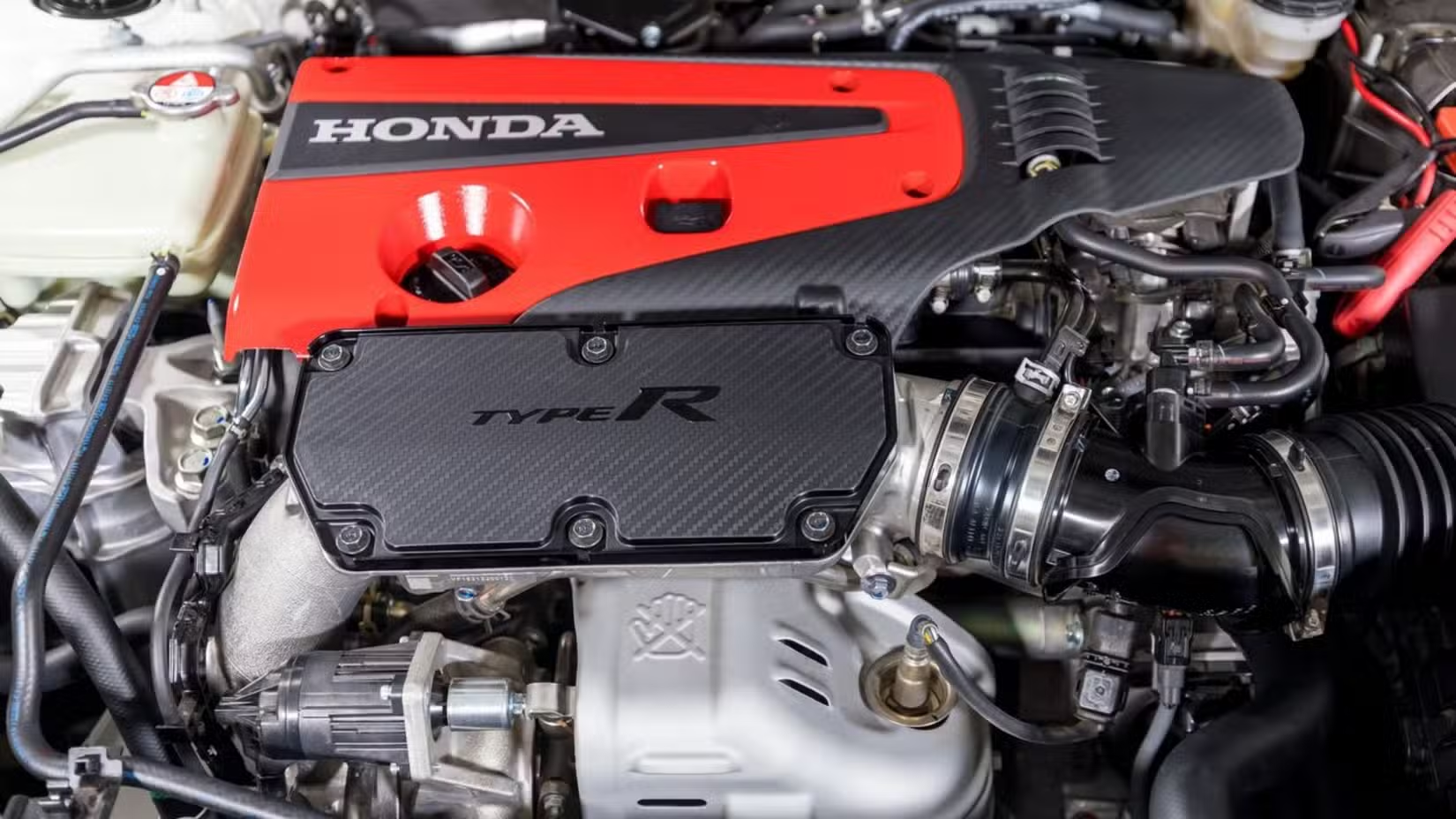
Direct fuel injection improves fuel efficiency and power output. By spraying fuel directly into the combustion chamber, combustion becomes more precise. This system helps the engine deliver strong performance while keeping fuel consumption reasonable.
One of the engine’s strengths is its sharp throttle response. Turbo lag is minimal, and power builds quickly. In the Civic Type R, it feels lively and responsive, especially when the engine reaches higher revolutions.
Cooling systems are carefully designed to manage heat during hard driving. A large intercooler lowers intake air temperatures, improving performance consistency. This helps maintain steady power even during long, aggressive driving sessions.
The sound of the VTEC Turbo engine is sporty yet refined. It produces a strong engine note under acceleration without becoming too loud. This balance makes it enjoyable for both daily driving and spirited weekend trips.
In everyday use, the engine remains practical and smooth. It offers good torque at lower speeds, making city driving easy. On highways, it provides confident overtaking power and steady performance.
6) Audi 2.5L TFSI Turbocharged Five-Cylinder Engine
The Audi 2.5-liter TFSI is a turbocharged five-cylinder engine known for its unique sound and strong performance. It powers high-performance models like the RS3 and TT RS, delivering exciting acceleration and impressive horsepower.
This engine uses a single large turbocharger to increase airflow and boost power. The turbo forces more air into the cylinders, allowing more fuel to burn. This process creates strong torque and quick acceleration across a wide speed range.
The five-cylinder design gives this engine a special character. It produces a distinctive exhaust note that stands out from four- and six-cylinder engines. Many enthusiasts love its deep, rhythmic sound during hard acceleration.
Audi built the 2.5 TFSI with lightweight materials, including an aluminum engine block. This reduces weight while maintaining strength. A lighter engine improves vehicle balance and helps enhance handling performance.
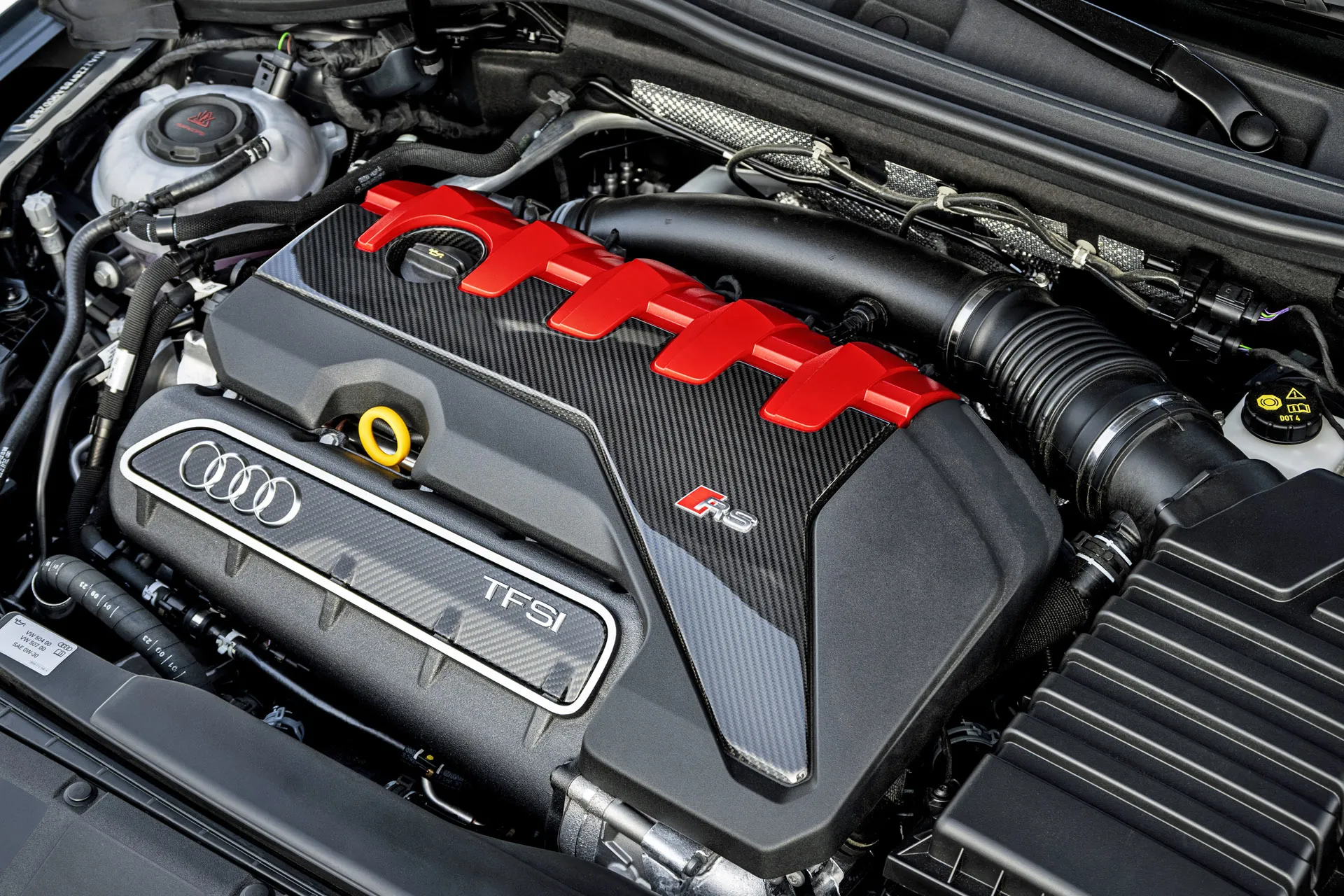
Direct fuel injection technology improves combustion efficiency. By precisely controlling fuel delivery, the engine produces high power while maintaining reasonable fuel economy. This balance makes it suitable for both daily use and performance driving.
Strong internal components allow the engine to handle high boost pressure. Forged crankshafts and durable pistons increase reliability under demanding conditions. This solid design supports both factory performance and aftermarket tuning upgrades.
The engine also features advanced cooling systems. Proper heat management ensures consistent performance during spirited driving. Whether on highways or racetracks, the engine maintains steady power without overheating easily.
In everyday driving, the 2.5 TFSI feels smooth and responsive. It provides strong low-end torque for city traffic and powerful mid-range acceleration for overtaking. The turbocharger delivers boost quickly with minimal delay.
This engine has won multiple international awards for performance and engineering excellence. Experts praise its combination of compact size, high output, and unique design. It represents Audi’s strong focus on innovation.
7) Subaru EJ25 Turbo Boxer Engine
The Subaru EJ25 turbo is a 2.5-liter four-cylinder boxer engine known for rally-inspired performance. It became famous in models like the WRX STI, where it delivered strong acceleration and impressive all-wheel-drive capability.
This engine uses a flat, or “boxer,” layout. The cylinders sit horizontally opposite each other. This design lowers the vehicle’s center of gravity, improving balance and stability, especially during high-speed cornering or aggressive driving.
A turbocharger increases airflow into the engine, allowing it to produce more power than a naturally aspirated version. The EJ25 delivers strong mid-range torque, making it feel powerful during quick acceleration and highway overtaking.
The EJ25 is well known among performance enthusiasts for its tuning potential. With proper upgrades such as improved intercoolers and exhaust systems, owners can safely increase horsepower and boost performance.
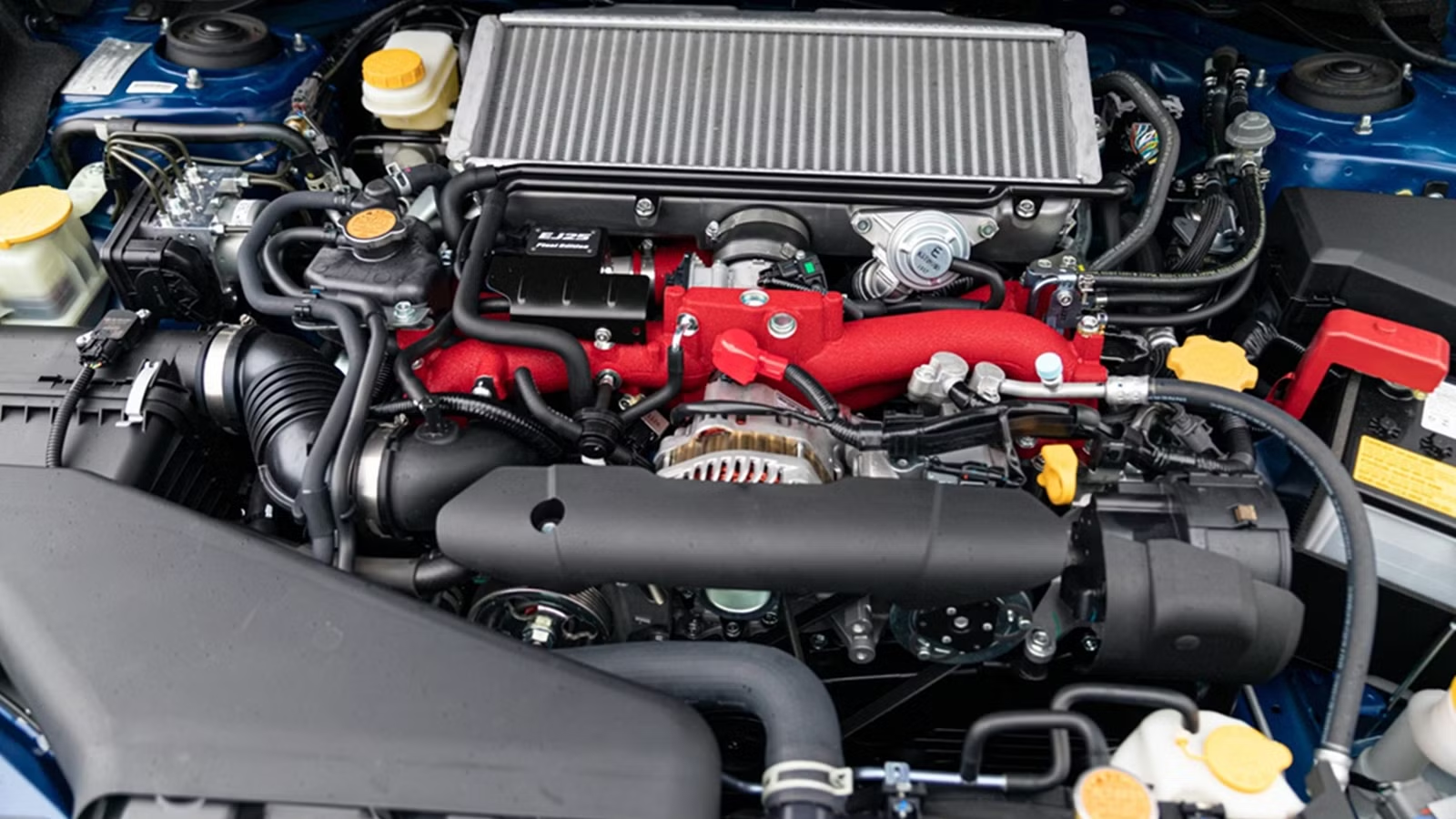
Subaru built this engine with a strong block and durable internal components. While it requires proper maintenance, many examples perform reliably when serviced regularly. Routine oil changes and cooling care are especially important.
One key feature of the EJ25 is its rally heritage. Subaru used turbocharged boxer engines in motorsports, including world rally competitions. This racing background helped shape the engine’s strong and performance-focused design.
In daily driving, the EJ25 provides solid low-end power. It feels responsive in city traffic and delivers confident acceleration on open roads. The turbocharger gives a noticeable push when boost builds.
The sound of the EJ25 is unique and easily recognizable. Its uneven exhaust rumble became a signature of older WRX STI models. Many fans appreciate this distinctive tone, which adds personality to the driving experience.
Cooling and airflow management are important in turbocharged engines like this one. Subaru equipped the engine with functional hood scoops and intercooler systems to manage intake temperatures and maintain consistent performance.
8) Volkswagen 2.0L TSI (EA888) Turbocharged Engine
The Volkswagen 2.0-liter TSI engine, especially the EA888 version, is one of the most widely used turbocharged engines in modern cars. It powers models like the Golf GTI and delivers a strong mix of performance, efficiency, and reliability.
This engine uses a turbocharger to increase airflow and boost power. By forcing more air into the cylinders, it produces more horsepower than a naturally aspirated engine of similar size. This makes the 2.0 TSI feel quick and responsive.
Direct fuel injection improves combustion efficiency and helps control fuel usage. The system delivers fuel precisely into the combustion chamber, allowing better power output while maintaining good fuel economy for daily driving.
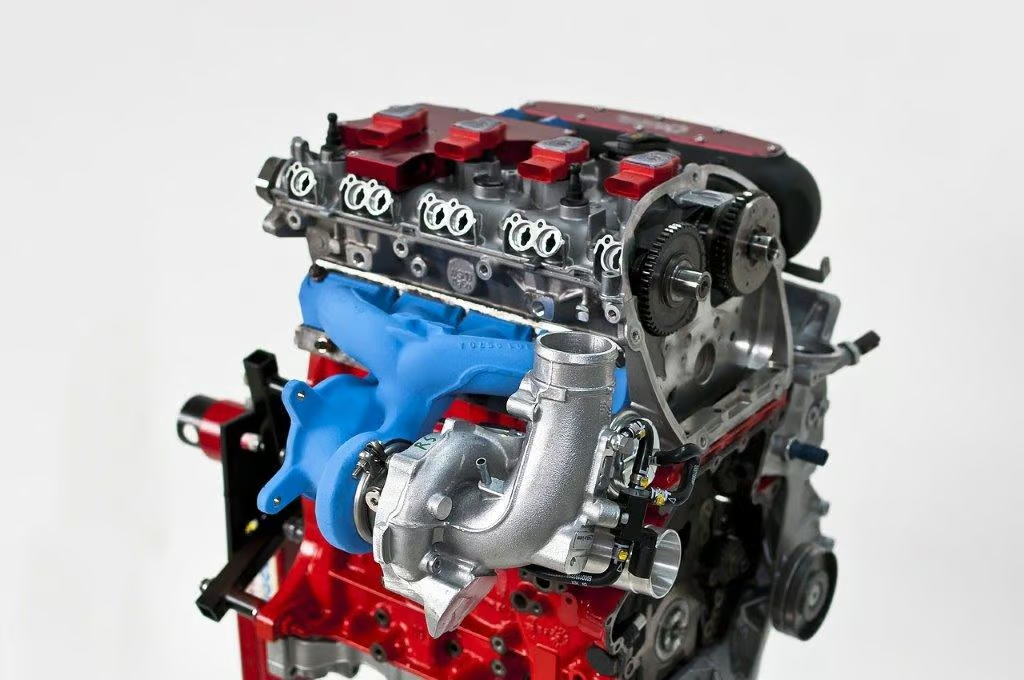
The EA888 engine also features variable valve timing technology. This system adjusts valve operation depending on driving conditions. It helps provide strong low-speed torque in city traffic and solid high-speed power on highways.
Volkswagen designed this engine with a strong and durable block. Over several generations, improvements were made to enhance reliability and reduce common issues. Newer versions are known for smoother operation and better long-term durability.
The 2.0 TSI is very popular among car enthusiasts because of its tuning potential. Simple ECU software upgrades can significantly increase horsepower. With proper supporting modifications, it can handle noticeable performance gains safely.
In cars like the Golf GTI, the engine delivers quick acceleration and balanced performance. It provides enough torque for spirited driving while remaining comfortable and practical for everyday commuting.
The turbocharger in the EA888 responds quickly, reducing noticeable lag. Drivers experience smooth and steady power delivery. This makes the engine feel lively without being difficult to control in normal driving situations.
Maintenance costs are generally reasonable compared to larger performance engines. Regular servicing, including oil changes and cooling system checks, helps maintain reliability and long engine life. Proper care ensures consistent performance over time.
9) Nissan VR38DETT Twin-Turbo V6 Engine
The Nissan VR38DETT is a 3.8-liter twin-turbo V6 engine best known for powering the GT-R. It is one of the most respected performance engines in the world, delivering massive horsepower and thrilling acceleration.
This engine uses two turbochargers to increase airflow and boost pressure. By compressing more air into the cylinders, it produces far more power than a naturally aspirated V6. The result is extremely quick acceleration and strong mid-range torque.
One special feature of the VR38DETT is that each engine is hand-assembled by a skilled technician. This careful process ensures high build quality and precise attention to detail, helping maintain performance consistency and reliability.
The engine block is made from strong aluminum, designed to handle high boost levels. Reinforced internal components such as forged pistons and connecting rods allow the engine to support impressive horsepower without major internal changes.
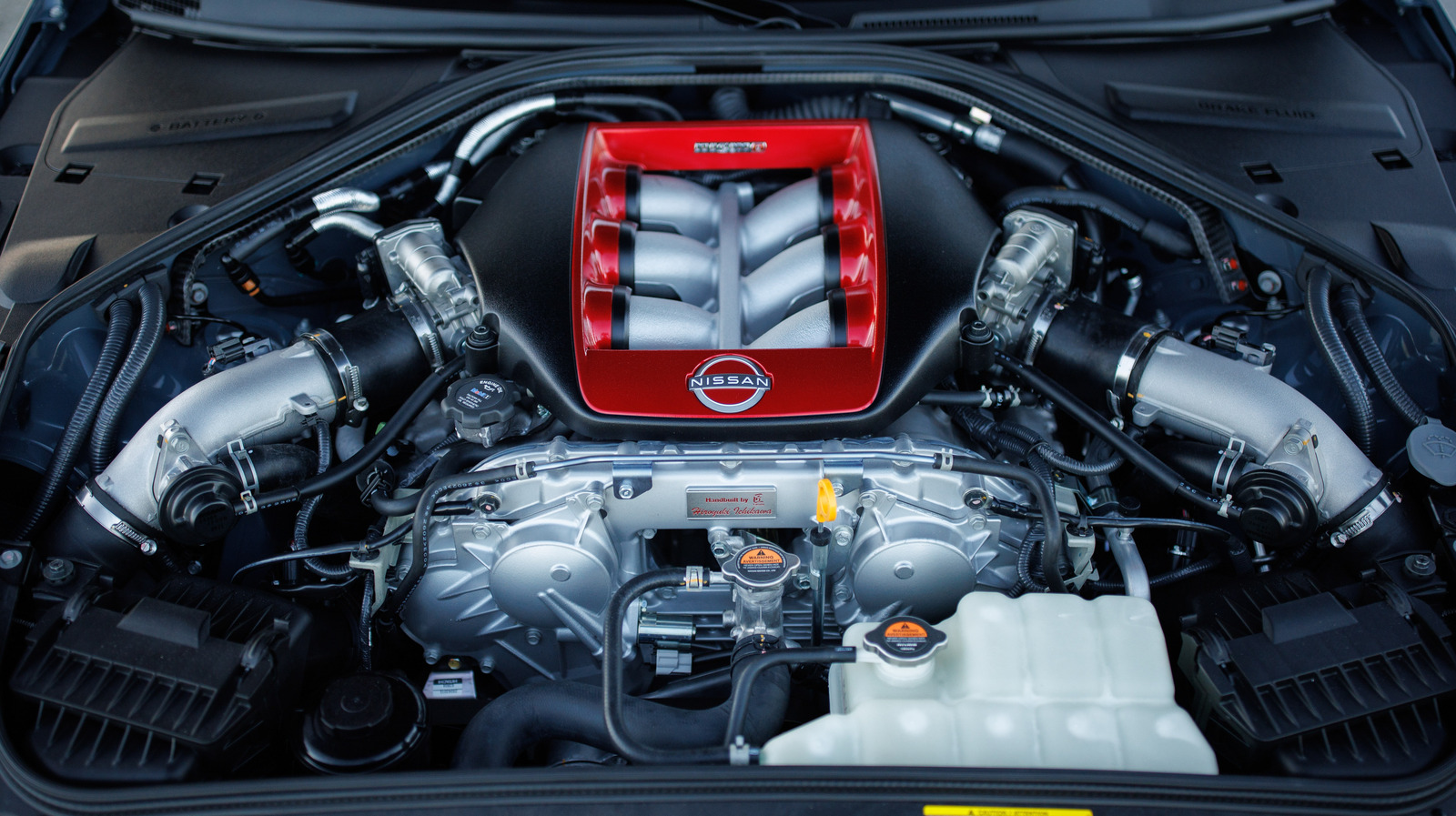
Advanced cooling systems help manage the heat created by twin turbochargers. Large intercoolers lower intake air temperatures, keeping performance steady during aggressive driving or track use. Proper cooling is key to maintaining reliability.
Direct fuel injection improves combustion efficiency and power output. It allows precise fuel delivery, helping the engine achieve both high performance and better fuel control compared to older turbocharged designs.
The VR38DETT is famous for its tuning potential. With upgraded turbos and supporting modifications, some builds produce extremely high horsepower numbers. This flexibility makes it popular among performance enthusiasts worldwide.
In daily driving, the engine remains surprisingly manageable. While it delivers explosive acceleration when pushed, it can cruise comfortably at lower speeds. This balance makes the GT-R usable beyond just racetrack environments.
The sound of the VR38DETT is aggressive and powerful. The twin turbos create a distinctive whistle under boost, adding excitement to the driving experience. The engine note matches its strong performance character.