
High-performance cars have long been synonymous with high price tags, putting many dream machines out of reach for everyday enthusiasts. However, the used market tells a different story. From affordable mid-engine Porsches to raw rear-wheel-drive coupes, several performance cars have depreciated dramatically, offering exceptional driving thrills at accessible prices.
Vehicles like the 2005–2012 Porsche Cayman/Boxster, 2014–2020 Jaguar F-Type, and 2012–2018 BMW M135i combine speed, handling, and style without the new-car premiums.
Factors such as high initial depreciation, maintenance costs, model discontinuation, and shifts in market demand have lowered entry points, making it possible for buyers to experience exotic styling, powerful engines, and engaging dynamics without spending a fortune.
These eight cars prove that affordable performance isn’t just a fantasy; with the right research and careful selection, enthusiasts can own high-octane machines that deliver excitement on both road and track.
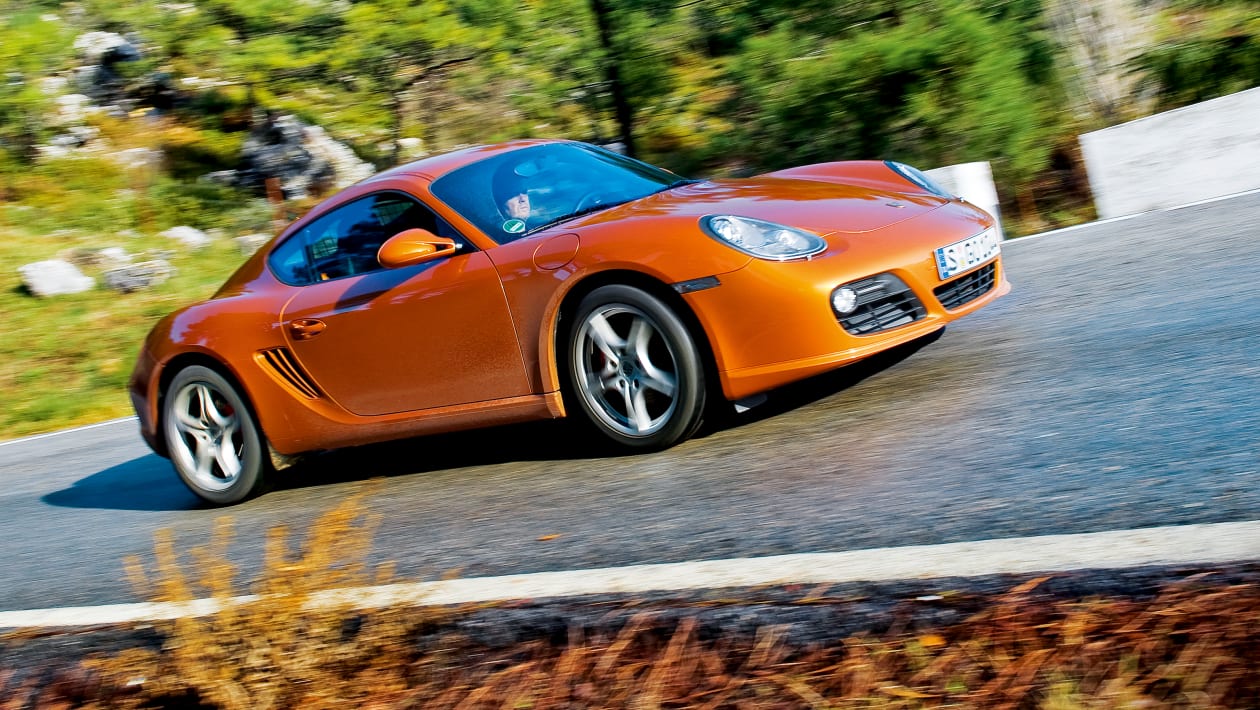
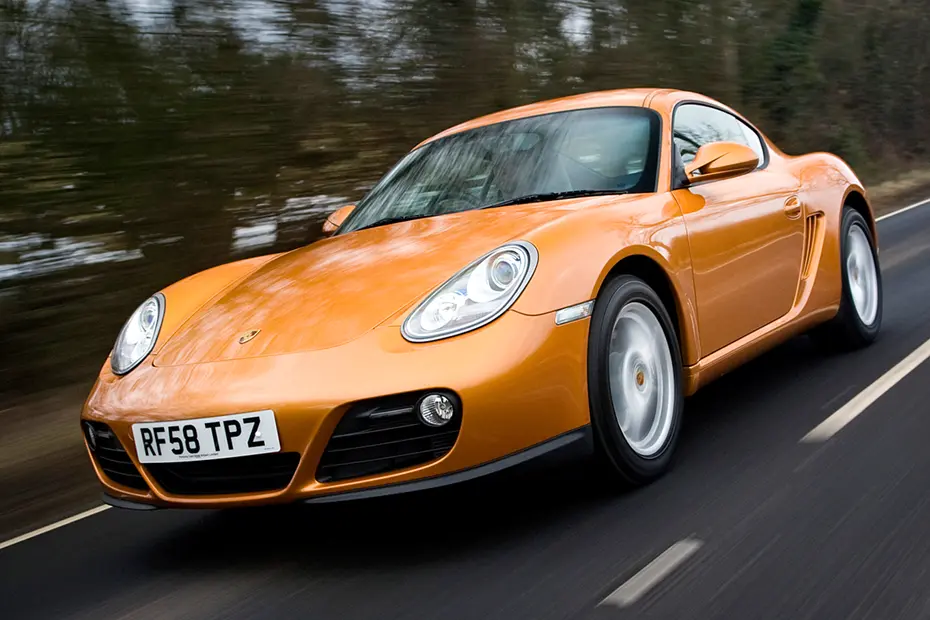
1. 2005–2012 Porsche Cayman/Boxster (987): Affordable Mid-Engine Excellence
The 2005–2012 Porsche Cayman and Boxster (987 generation) have become attractive options for enthusiasts seeking a mid-engine sports car at a relatively accessible price. Early 987.1 models (2005–2008) can often be found between $10,000 and $20,000, while the later 987.2 models (2009–2012) hold value better due to improved reliability and updated mechanicals.
These cars are now considered a “bargain” entry into Porsche ownership, offering the brand’s signature driving experience, superior build quality, and naturally aspirated flat-six engines, all in a daily-drivable package.
Affordability stems from several factors. Early 987.1 models are more susceptible to intermediate shaft (IMS) bearing failures and rare bore scoring in larger engines, prompting caution among buyers.
High production numbers and the entry-level positioning of the Boxster contribute to plentiful supply and moderate pricing. While depreciation has leveled off for the 987.2 models, the earlier cars remain accessible due to their age, mechanical concerns, and the legacy perception of the Boxster as the “budget” Porsche compared to the 911.
Performance and driving dynamics are major selling points. The Cayman/Boxster benefits from a mid-engine layout, offering exceptional balance, precise steering, and communicative handling, often praised over 911s for agility.
Engine choices include 2.7L and 2.9L base models, 3.2L and 3.4L S variants, and the 3.4L Spyder, producing 276–306+ bhp. The 987.2 models provide updated DFI engines with improved reliability, making them particularly desirable for long-term ownership.
Transmission options include a traditional manual or Porsche’s PDK dual-clutch system post-2009, with manuals preferred for driver engagement. Early Tiptronic automatics are less recommended.
Practicality is a highlight, with surprisingly usable front and rear trunks (“frunk” and rear boot) and a comfortable, well-built cabin. Ride quality balances sporty engagement with everyday usability, making the 987 suitable as both a weekend toy and a daily driver.
Maintenance is typical for Porsche, with costs higher than mainstream sports cars but manageable for well-documented, cared-for examples. Buyers should pay attention to rear suspension wear, RMS oil leaks, and engine service history.
The 987 Cayman and Boxster provide a rare combination of engaging mid-engine dynamics, stylish design, and Porsche-level build quality at a reasonable entry price.
While early 987.1 models require careful inspection due to IMS and bore scoring risks, the 987.2 models offer improved reliability without compromising the driving experience. For enthusiasts seeking a rewarding sports car with excellent handling, strong performance, and daily usability, the 987 generation remains a compelling choice.
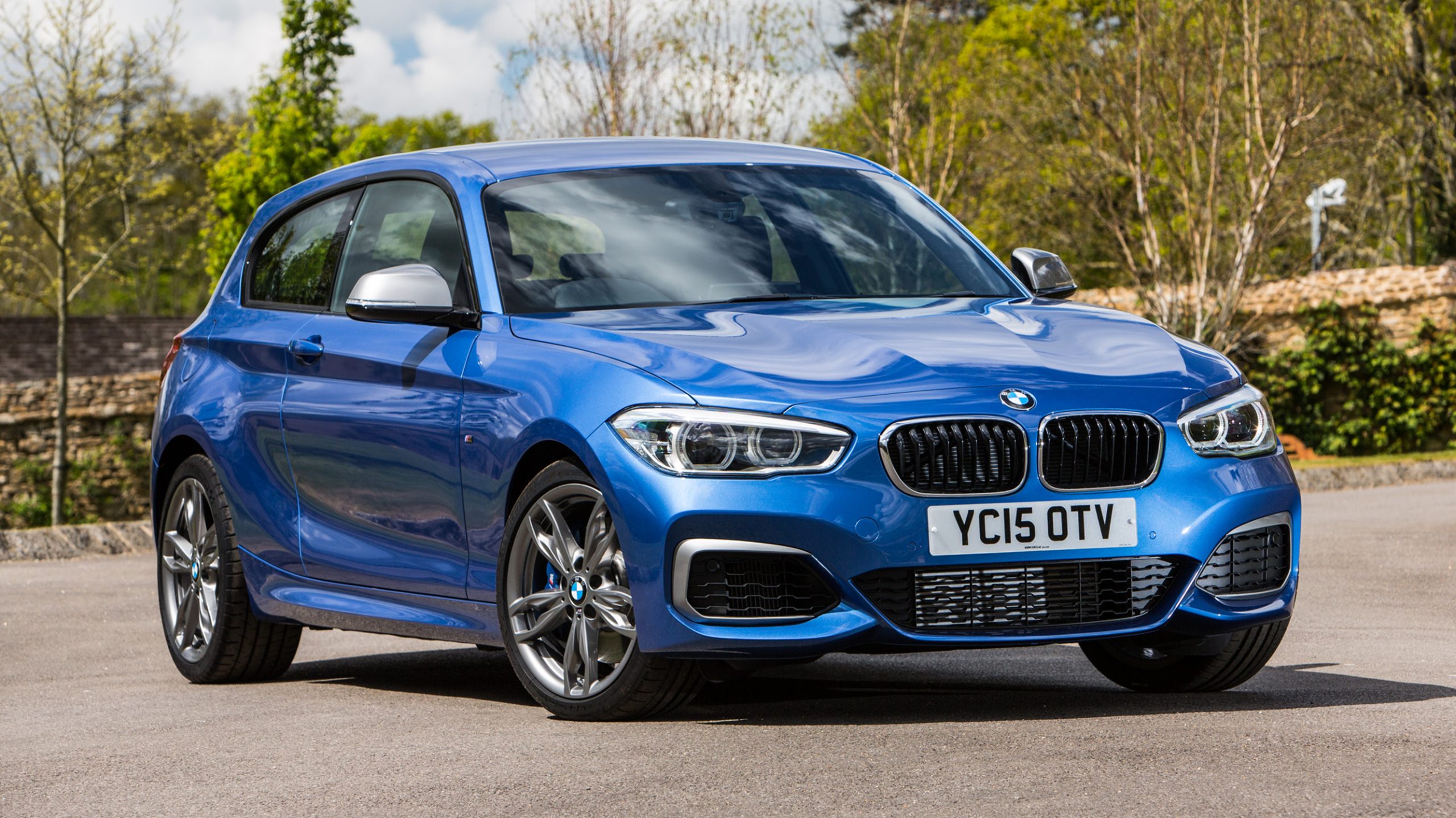
2. 2012–2018 BMW M135i: Affordable Performance Hatchback
The 2012–2018 BMW M135i (F20/F21) is widely regarded as a budget-friendly performance hatchback that combines practicality with impressive driving dynamics. It features a 3.0-liter turbocharged straight-six N55 engine producing 325 to 340 horsepower, allowing it to accelerate from 0 to 62 mph in under five seconds.
Rear-wheel drive, a well-balanced chassis, and responsive steering make it highly engaging on both city streets and winding roads. Buyers could choose between a 6-speed manual transmission, which can feel slightly notchy but is rewarding to drive, or an 8-speed automatic praised for its smooth and rapid shifts.
Optional adaptive dampers improve ride quality, while multiple driving modes, from Eco Pro to Sport+, allow drivers to adjust performance to suit the conditions.
The interior is well-built and functional, but understated compared to its performance capabilities. Front seats provide a low and supportive driving position, but rear legroom is tight, and the boot is smaller than some rivals.
Reliability is generally good, although the N55 engine can have issues such as turbo wastegate rattle, coolant reservoir leaks, and carbon buildup on intake valves that require regular maintenance. Suspension components, window regulators, and the rear-wheel-drive setup in poor weather are additional factors to consider.
Depreciation and maintenance costs have made the M135i more accessible on the used market. Luxury German cars lose value quickly, and older M135i models are now reaching high mileage, which can require service for engine mounts, turbos, and suspension parts.
The introduction of the M140i in 2016, with the newer B58 engine, further reduced demand for the N55-powered models. Market saturation from leased vehicles and heavily tuned examples also contributed to lower prices.
Despite these considerations, the M135i remains a strong performance-per-pound option for buyers willing to manage maintenance proactively. It offers the thrills of a high-output, rear-wheel-drive hatchback while remaining usable as a daily driver. It is an appealing alternative to rivals such as the Audi S3 or VW Golf R for those seeking an engaging and affordable performance hatchback.
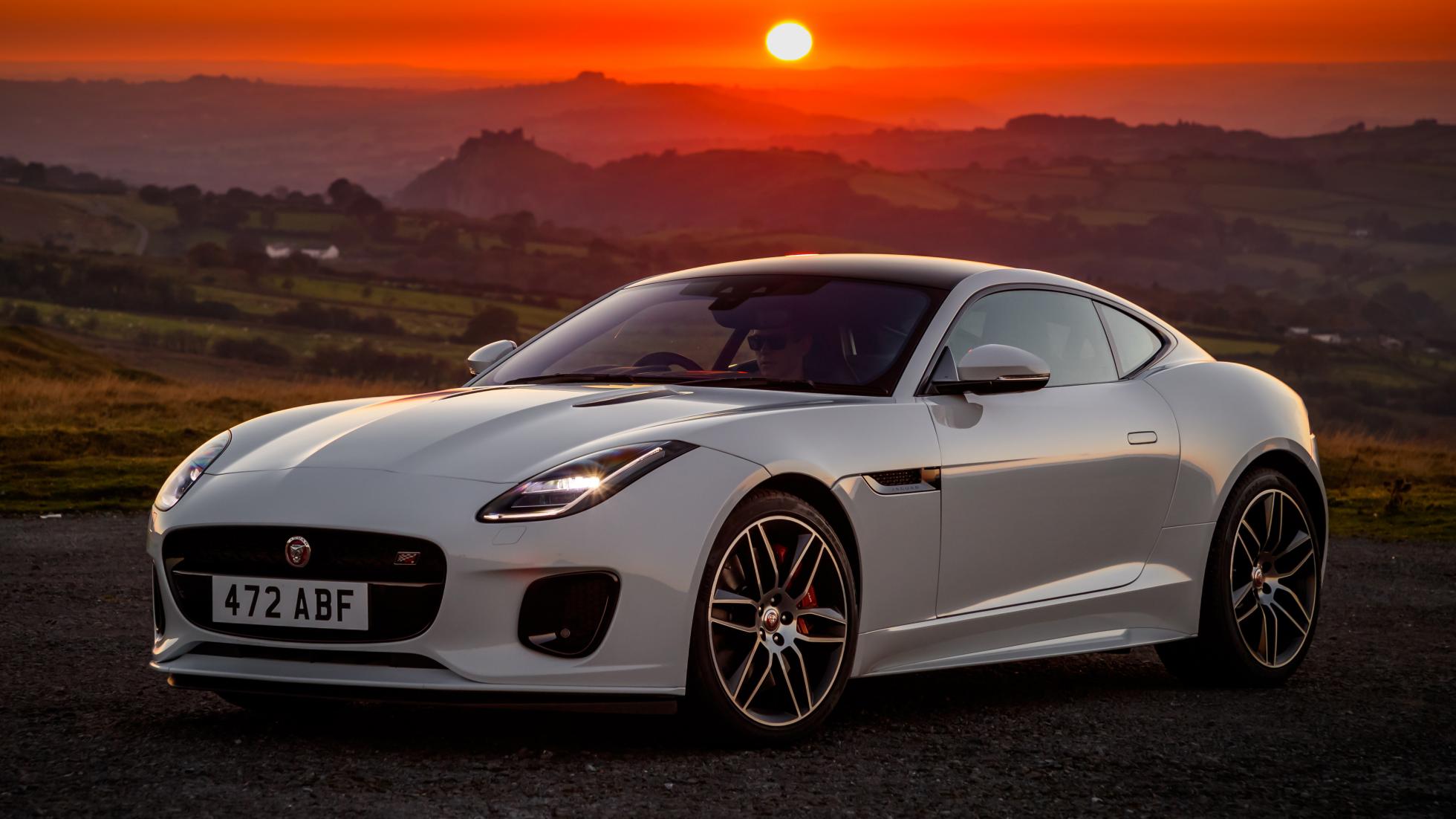
3. 2014–2020 Jaguar F-Type: Affordable Exotic Sports Car
The 2014–2020 Jaguar F-Type offers the thrill of an exotic sports car at a fraction of its original price. With supercharged V6 and V8 engines, it delivers exhilarating performance, sharp handling, and a distinctive soundtrack.
Many used examples are now available for as low as £18,995 (around $24,000 USD), making it an accessible option for buyers seeking a luxury performance experience without paying new-car prices. The F-Type is available as both a coupe and a convertible, combining dramatic styling with a driver-focused cockpit.
Driving performance is one of the F-Type’s strongest points. The V6, producing 340–380 horsepower, is widely regarded as the sweet spot for balance and usability, while the 5.0-liter V8 in R and SVR models provides blistering acceleration.
Rear-wheel-drive dynamics, precise steering, and the option of an 8-speed automatic transmission create a thrilling yet refined driving experience. Early manual models are rare but appreciated by enthusiasts. The F-Type blends GT comfort with sports car agility, offering a visceral driving experience praised by automotive reviewers.
Despite its appeal, the F-Type’s used market price is low due to depreciation, high maintenance costs, and perceived reliability issues. Common problems include timing chain tensioner failures, coolant leaks, fuel injector issues, and electronic glitches.
Rear differential seals and catalytic converters can also fail, and some door handles and spoilers are prone to water leaks. Older models, particularly pre-2018, feature dated infotainment systems, further reducing demand. Routine, strict maintenance is essential to avoid expensive repairs, particularly for supercharged engines.
Interior quality is generally high, with a cockpit-style layout and premium materials, though some lower-trim plastics appear in entry-level models. Storage is limited, with the coupe offering a slightly more practical boot than the convertible. Ride quality can feel firm, especially on SVR variants with larger wheels.
For used buyers, the V6 S model provides the best balance of performance and everyday usability. Later model years benefit from updated infotainment, but even earlier models can be satisfying if properly maintained.
The 2014–2020 Jaguar F-Type delivers stunning looks, strong performance, and the excitement of an exotic sports car at an accessible price, making it a rewarding choice for enthusiasts willing to invest in careful ownership.
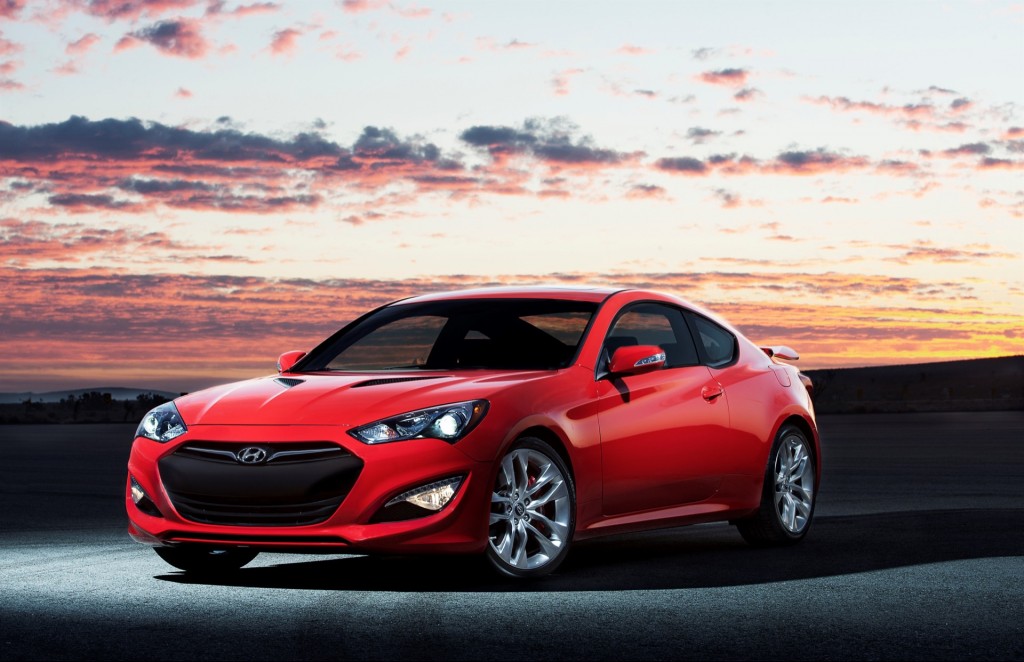
4. 2013–2016 Hyundai Genesis Coupe: Affordable Rear-Wheel-Drive Performance
The 2013–2016 Hyundai Genesis Coupe has become a sought-after, budget-friendly sports car, offering strong performance, rear-wheel drive, and stylish looks at an average used price of around $13,436. The 3.8-liter V6 model produces 348 horsepower and 295 lb-ft of torque, making it a true sleeper performance coupe.
Many examples come equipped with Brembo brakes, Torsen limited-slip differentials, and stiffer suspension in higher trims, combining spirited handling with daily usability.
Affordability is driven by several factors. Rapid depreciation affects Hyundai vehicles more than Japanese rivals, and the Genesis Coupe is over ten years old. Hyundai’s decision to discontinue the model after 2016 in favor of the dedicated Genesis luxury brand reduced visibility and demand. Warranty transfer restrictions and the shift of the market toward SUVs also contribute to lower resale values.
Maintenance costs, while not extreme, can be high, particularly for well-used or modified cars, and some buyers are deterred by potential engine issues, especially in the 2.0-liter turbo variant.
The driving experience of the Genesis Coupe is engaging. The 3.8-liter V6 is widely regarded as reliable and robust, while the 2.0T turbo offers strong performance but may carry a higher risk of engine wear. The 6-speed manual transmission, refined for the 2013 refresh, delivers precise shifts, while an 8-speed automatic is also available.
Hydraulic steering provides excellent feedback, and the suspension setup in Track and Ultimate trims enhances cornering control. Ride quality can be firm, particularly on higher trims with larger wheels, but the car rewards drivers who prioritize handling and responsiveness.
Interior quality is generally high for a budget sports car, with the 2013 facelift adding a 7-inch touchscreen, improved controls, and supportive front seats. Rear seats are cramped and better suited for storage than passengers. Technology includes Bluetooth, USB inputs, and keyless access, though audio performance is considered average.
Reliability is mostly solid for the 3.8L V6, but potential issues include catastrophic engine failures, clutch wear, and manual transmission synchro problems. Buyers are advised to prioritize well-maintained examples and avoid cars that have been heavily tracked or modified.
The 2013–2016 Hyundai Genesis Coupe is a hidden gem in the used market. It offers an affordable, modern rear-wheel-drive experience with significant power and aggressive styling. For enthusiasts willing to vet the service history carefully, it delivers excellent performance, strong handling, and a distinctive presence that competes with more expensive rivals.
Also Read: 5 Cars With Simple Dash Layouts vs 5 With Confusing Ones
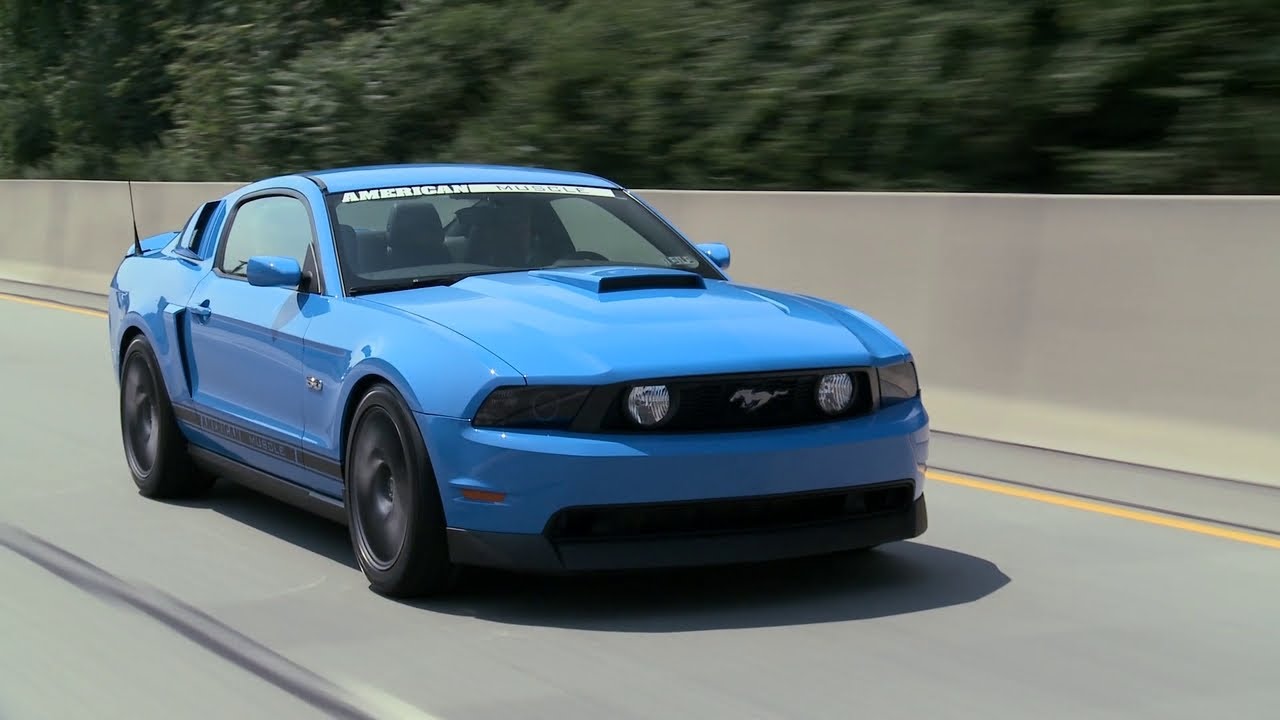
5. 2010–2014 Ford Mustang: Affordable Muscle Car Enthusiasm
The 2010–2014 Ford Mustang (S197 generation) has become one of the most accessible performance cars on the used market. With prices significantly lower than newer models, it offers raw power, aggressive styling, and a classic muscle car experience.
The 2011–2014 GT models, equipped with the 5.0-liter Coyote V8, produce 420 horsepower and 390 lb-ft of torque, allowing 0–60 mph acceleration in around 4.5 seconds. V6 models feature a 3.7-liter engine producing over 300 horsepower, providing strong performance for budget-conscious buyers. This generation is highly regarded for its distinctive engine note, rear-wheel-drive dynamics, and engaging driving feel.
Affordability is driven by several factors. Natural depreciation over a decade and the introduction of the more advanced 2015 S550 generation, with independent rear suspension and modern interiors, have reduced demand for the older S197 models.
High production numbers ensure a plentiful supply of used vehicles, keeping prices competitive. Earlier 2010 GTs use the 4.6-liter 3-valve V8, which is less powerful than the later Coyote engine, further lowering their value. While generally reliable, these cars require attention to aging components such as suspension bushings, tires, and minor electrical quirks.
The driving experience balances classic muscle car feel with modern usability. The GT models excel with strong acceleration, a throaty exhaust, and responsive handling, though the solid rear axle is less refined than the independent setup of newer Mustangs. V6 models remain engaging, offering adequate power at a lower entry cost.
Both manual and automatic transmissions are available, with the manual providing a more connected experience despite occasional stiffness. Optional Track Pack upgrades enhance cornering ability, brakes, and suspension performance.
Interior quality is a mix of retro design and functional materials. Front seats are comfortable, with optional Recaro seats providing excellent lateral support, while rear seats are cramped and better suited for children or storage. Technology includes the optional Sync system, though Bluetooth functionality can be inconsistent. Cabin materials combine soft-touch plastics with budget trims.
The 2010–2014 Mustang offers strong value for enthusiasts seeking high performance without paying for new-car prices. Reliability is generally solid, with minimal recalls, but careful inspection is recommended to avoid wear-related issues.
These Mustangs provide a traditional muscle car experience, combining aggressive styling, strong engines, and a fun-to-drive personality, making them a compelling choice for those looking for affordable American performance on the used market.
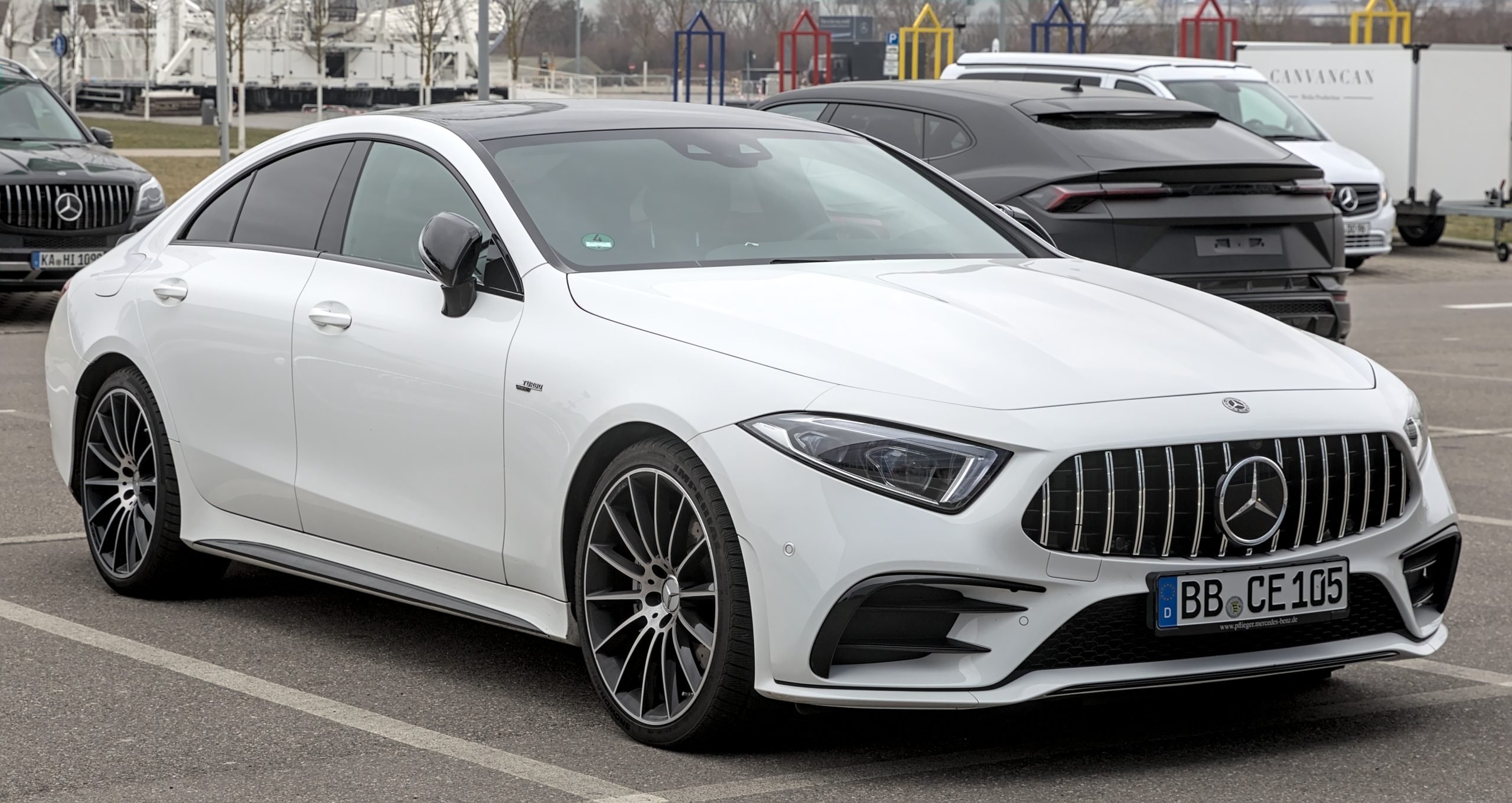
6. 2006–2008 Mercedes-AMG CLS 63: Affordable Luxury and Brutal Power
The 2006–2008 Mercedes-AMG CLS 63 (W219 generation) offers the rare combination of luxury, four-door practicality, and high-performance V8 power at surprisingly accessible prices. Used examples now often range from $15,000 to $25,000, making it a tempting option for enthusiasts seeking AMG-level performance without paying new-car premiums.
Under the hood, the early-production M156 6.2-liter naturally aspirated V8 delivers supercar-like performance with a 0–60 mph time of approximately 4.4 seconds and an unforgettable exhaust note. The car’s styling remains distinctive, with a low-slung roofline and sleek four-door coupe design that helped define the segment.
Affordability is largely driven by extreme depreciation and high maintenance costs. The early M156 engines are known for serious mechanical risks, particularly weak head bolts in engines produced before serial 60-060658, which can lead to catastrophic engine damage.
Camshaft and valve lifter wear often appears around 100,000 miles, while the magnesium intake manifold is prone to cracking or leaks. These issues make the cost of ownership much higher than the purchase price suggests.
Additional maintenance considerations include the complex Airmatic air suspension system, which can leak and is expensive to repair. Some early models also have components of the Sensotronic Brake Control system, and AMG-specific parts remain costly despite the vehicle’s low initial price.
Fuel economy is poor due to the thirsty 6.2-liter V8, further increasing running costs. Aging electronics, COMAND infotainment, and interior technology can also experience gremlins, adding to maintenance demands.
Despite these challenges, the CLS 63 AMG is praised for its driving experience. The naturally aspirated V8 provides immediate throttle response, a thrilling exhaust note, and supercar-level acceleration, while the 7-speed automatic transmission remains smooth for daily driving.
AMG RIDE CONTROL suspension delivers a grand touring balance, although the car’s weight over the front axle makes it more suitable for high-speed cruising than track-focused handling. The cabin is luxurious, with high-quality materials, though rear seating is cramped and best suited for two passengers.
The 2006–2008 CLS 63 AMG is ideal for buyers seeking a “modern classic” that combines brutal performance with luxury four-door practicality. It is highly recommended only for those willing to invest in meticulous, preventative maintenance and verify a complete service history.
For enthusiasts prepared to handle the costs, it offers a unique and exhilarating driving experience at a fraction of its original price, delivering AMG performance that few other cars in this price range can match.
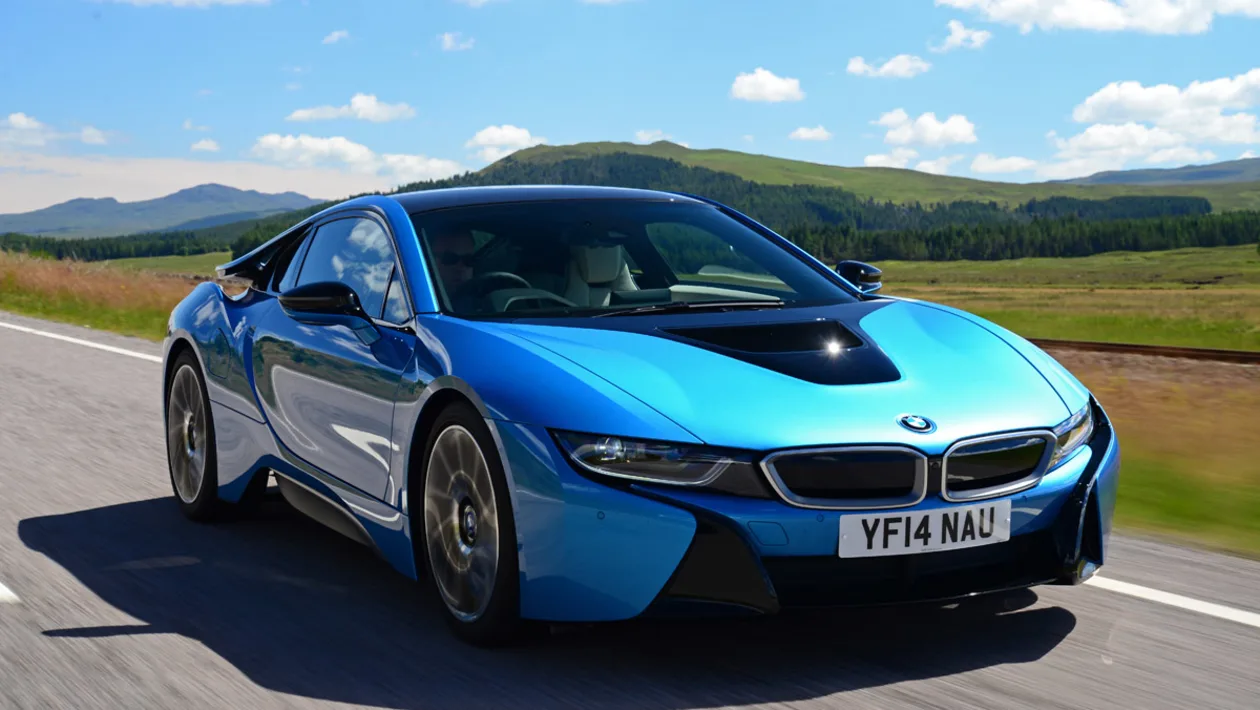
7. 2014–2020 BMW i8: Futuristic Hybrid Exotic
The 2014–2020 BMW i8 offers a striking combination of exotic styling, plug-in hybrid efficiency, and usable performance. Used examples have dropped in price to around £26,000 (roughly $33,000 USD), making it one of the more accessible “exotic” cars on the market.
Its 1.5-liter turbocharged three-cylinder engine powers the rear wheels, while an electric motor drives the front, creating a sophisticated all-wheel-drive system. Early models produce 357 horsepower and 420 lb-ft of torque, while later 2019–2020 models reach 369 horsepower.
This allows 0–60 mph sprints in approximately 4.2–4.4 seconds, offering supercar-style acceleration combined with real-world fuel efficiency of 30–40 mpg and a modest electric-only range of 15–22 miles.
Affordability is driven by typical luxury BMW depreciation, hybrid battery concerns, and niche market factors. Steep initial depreciation has left many i8s priced at 50% or less of their original MSRP. Potential high-cost maintenance, particularly for the high-voltage battery and carbon-fiber chassis, deters some buyers.
While mechanically robust, the MINI-derived petrol engine is paired with a complex hybrid system, meaning repairs such as coolant leaks in the HV battery housing, fuel pressure sensor faults, or structural carbon-fiber repairs can be expensive. Technological evolution in pure EVs has also made the i8 feel less cutting-edge, and its 2+2 layout limits practicality with extremely cramped rear seats and a tiny 5.4-cubic-foot trunk.
The i8’s design and driving experience remain standout features. The “LifeDrive” architecture combines a carbon-fiber-reinforced plastic passenger cell with an aluminum chassis, creating a lightweight yet stiff platform.
Butterfly doors provide dramatic entry and exit, requiring a careful technique. Inside, the cabin is driver-focused, featuring BMW’s intuitive iDrive system and high-quality materials. Ride quality is surprisingly supple, with reviewers noting comfortable long-distance performance despite the low-slung sports car stance.
Used buyers should be aware of potential issues and costs. Annual maintenance averages around $979, but structural or hybrid system repairs can be significantly higher. Early models had recalls for fuel leaks and braking sensor faults. Despite these considerations, the i8 is praised for reliable mechanics and balanced handling.
The BMW i8 represents a unique entry into the exotic car segment. It excels as a visually stunning, futuristic sports car with efficient hybrid performance. It is best suited for buyers prioritizing design, technology, and attainable exotic ownership over raw track-day performance, provided they budget for specialized maintenance and understand the car’s niche limitations.
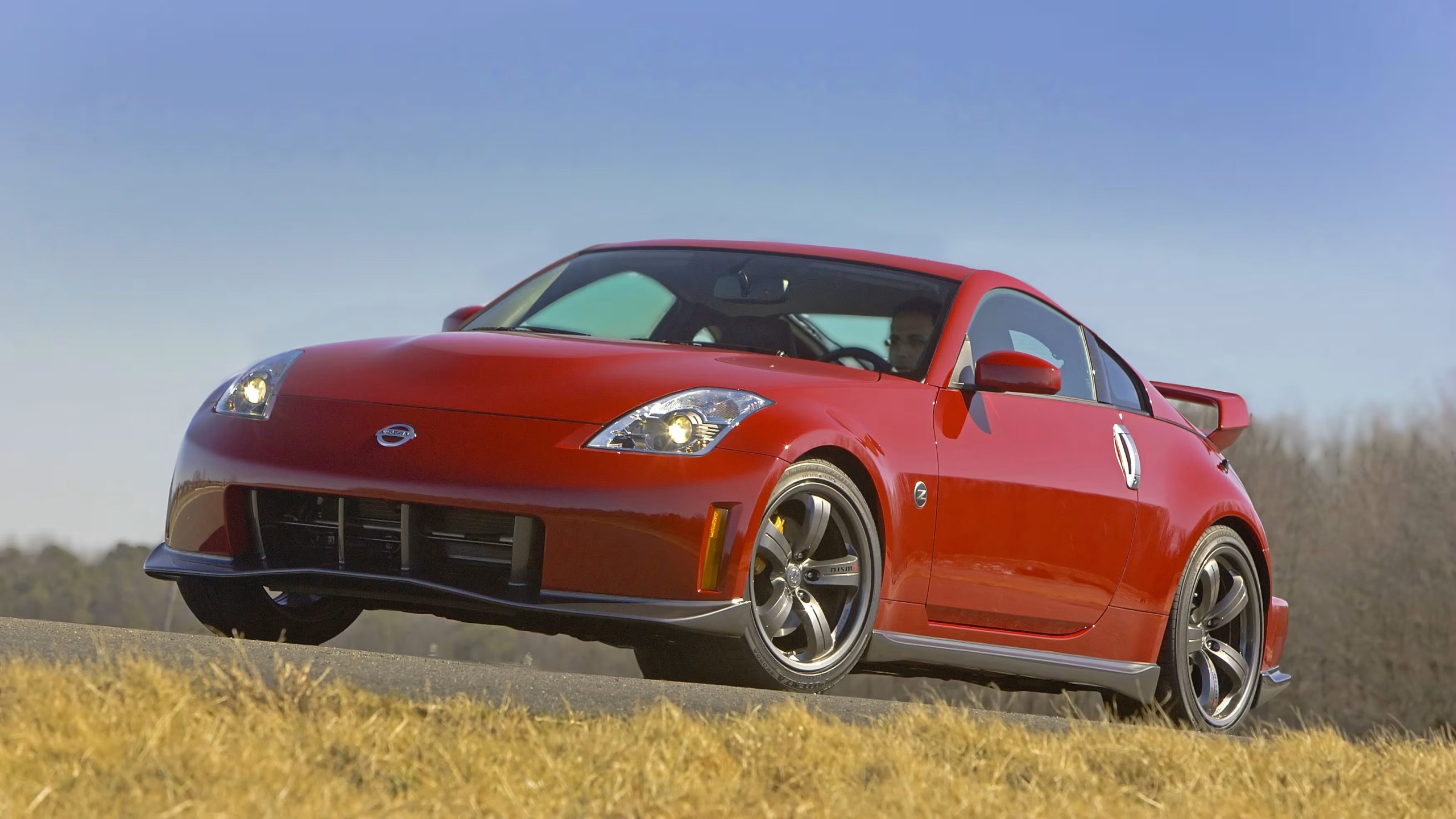
8. 2003–2008 Nissan 350Z/370Z: Affordable Raw Sports Cars
The 2003–2008 Nissan 350Z and early 370Z have become standout options in the affordable sports car segment. Used 350Zs can often be found for around $13,333, while early 370Z examples remain under $30,000.
These rear-wheel-drive coupes and convertibles deliver a potent combination of V6 power, sharp handling, and an engaging driving experience, making them popular for enthusiasts seeking a “bang for your buck” performance car.
The 350Z features a 3.5-liter VQ35 V6 producing 287–306 horsepower, while the early 370Z upgraded to a 3.7-liter V6 producing 332–350 horsepower, offering more refined power delivery and a stiffer chassis.
Affordability is largely due to age, depreciation, and high production numbers. Many 350Zs are now 15–20 years old, putting them at the bottom of their depreciation curve. High production numbers make them common, reducing rarity and resale value.
Abuse and modifications, including lowered suspension or drifting, are frequent, further lowering the availability of clean, stock examples. Interior quality in early 350Zs is modest, with hard plastics, sticky surfaces, and cabin rattles common over time. Aging vehicles also require attention to window motors, convertible tops, and rust-prone areas like wheel arches and shock towers.
The 350Z’s driving experience is raw and rewarding. It is praised for sharp, responsive steering, strong torque delivery, and an aggressive “muscular” feel. The firm suspension and heavy clutch make it engaging for spirited driving, though the ride can be noisy and firm for daily commuting.
Rear seats are limited, and cargo space is modest, reflecting its two-seater design. Transmission options include a reliable 6-speed manual or automatic, with manuals requiring careful inspection for clutch wear. Common issues include camshaft and crankshaft position sensors, oil consumption in some engines, and occasional electrical quirks.
The early 370Z refines the 350Z formula, offering more power, improved chassis rigidity, and better interior quality, though it maintains the raw driving character. Both models remain popular for daily driving, weekend track use, or as project cars, especially when owners prioritize maintenance and avoid heavily modified examples.
The 2003–2008 Nissan 350Z and early 370Z offer a rare combination of affordability, reliability, and pure sports car engagement. They are recommended for buyers seeking a raw, rear-wheel-drive experience with strong performance, manageable maintenance, and classic sports car appeal without the price tag of newer, higher-end models.
The used car market offers a pathway to automotive passion by making high-performance vehicles more attainable. The eight models highlighted, from the futuristic BMW i8 to the classic Nissan 350Z, demonstrate how depreciation and market trends create opportunity.
Some vehicles require careful maintenance and attention to mechanical issues, yet each delivers unique driving thrills through mid-engine balance, rear-wheel-drive engagement, or powerful V8 performance.
Buyers who research, inspect, and budget properly can enjoy the exhilaration, style, and performance of high-end sports cars at a fraction of the original cost. These cars prove that with knowledge and timing, high-performance dreams can become reality in the used market.
Also Read: 10 Cars With Maintenance Schedules That Actually Matter in 2026
