
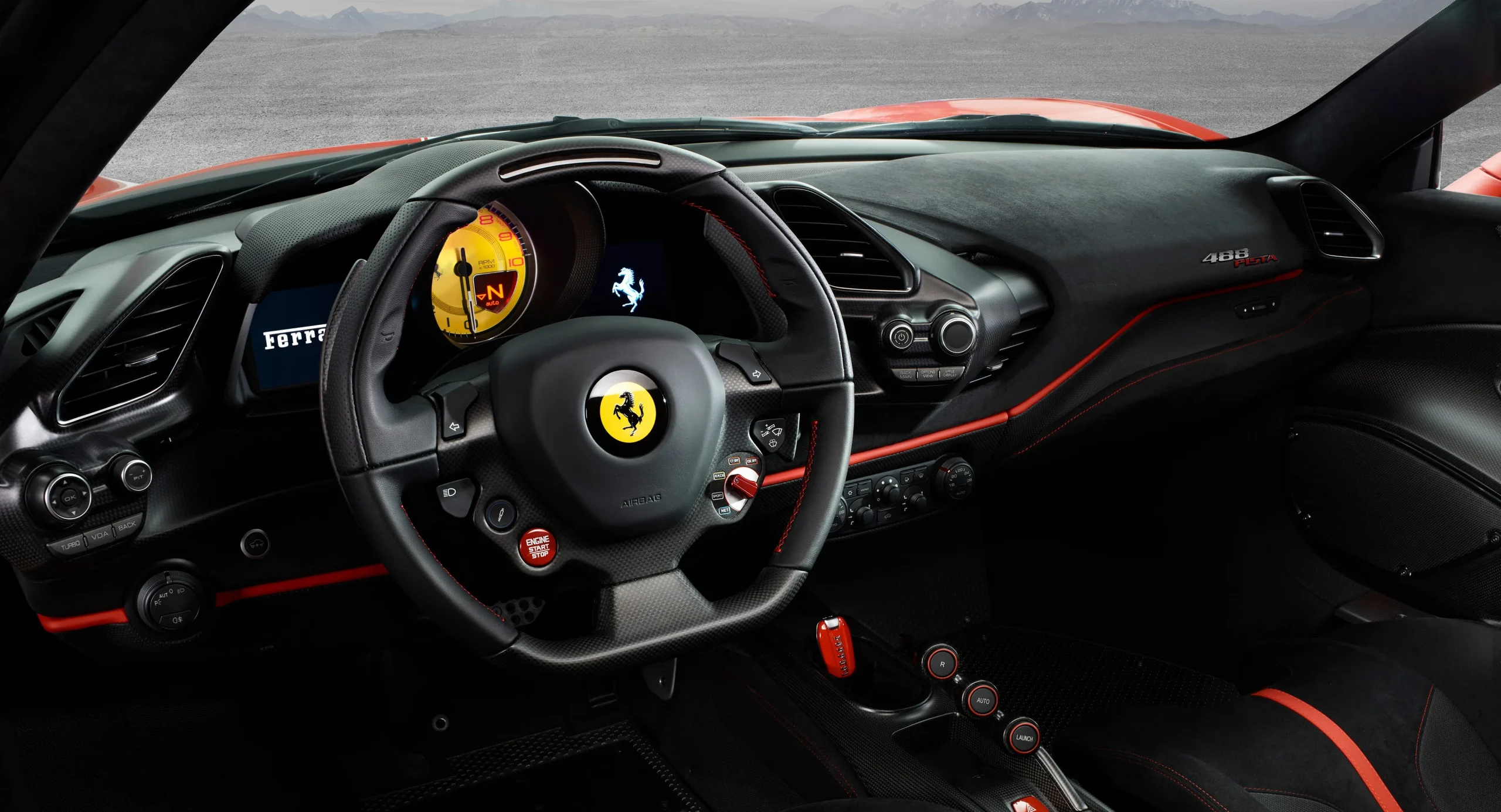
Steering wheels often serve as the interface between driver and machine, yet they remain one of the most overlooked aspects of automotive design. A carefully designed steering wheel can influence comfort, control, and aesthetics, turning a simple functional component into a symbol of style and engineering.
From the early days of motoring, when wheels were crafted from polished wood, to modern creations incorporating digital controls, each era has left its own signature on this central cockpit element. Steering wheel design combines form and function. It requires careful attention to ergonomics, grip, size, and material while reflecting the vehicle’s character.
Classic cars often emphasized elegance and simplicity, while sports cars showcased minimalistic, driver-focused designs. Luxury models integrated advanced controls without compromising tactile feedback, creating an experience that is both engaging and intuitive.
Exploring steering wheels offers insight into broader trends in automotive history. They reflect technological innovations, safety advancements, and shifts in consumer preferences. From thin wooden rims to thick leather-wrapped hubs and multifunctional controls, the steering wheel has evolved alongside the cars it commands.
This journey highlights how designers balanced aesthetics, functionality, and engineering demands over the decades. This page profiles ten iconic steering wheel designs that exemplify craftsmanship and ingenuity. Each selection represents a unique approach to driver engagement, blending heritage with innovation.
By examining these examples, enthusiasts and casual observers alike can appreciate how subtle differences in diameter, shape, materials, and layout influence the driving experience. The focus is on models that have stood out for design impact and lasting appeal, offering lessons in creativity and practical thinking.
1. 1955 Chevrolet Bel Air
Estimated original price: $1,700 to $2,300 (depending on trim and body style)
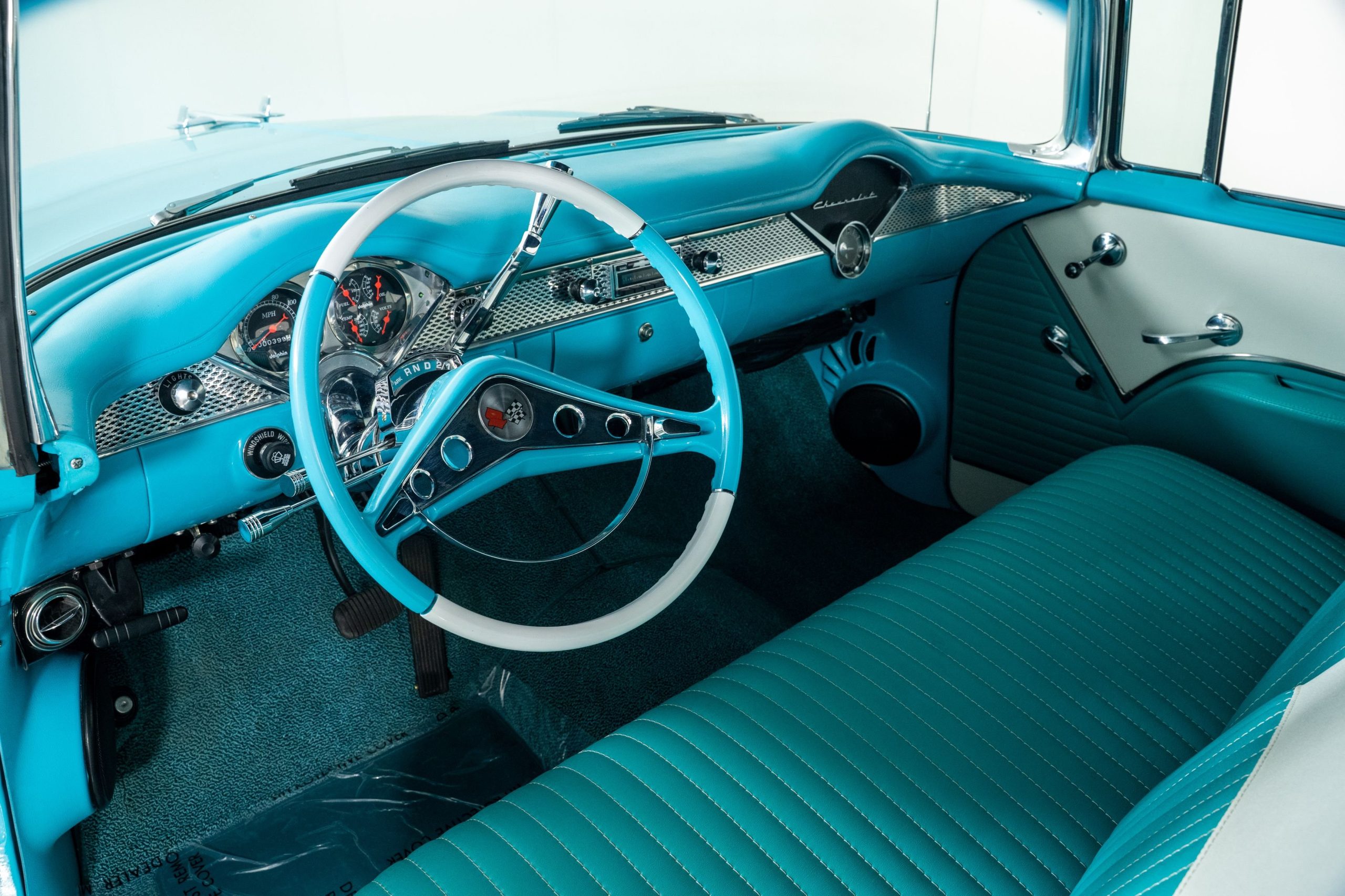
The Chevrolet Bel Air from 1955 presented a steering wheel that became synonymous with 1950s automotive style. This wheel combines size, shape, and materials to provide an immediate sense of elegance and confidence behind the wheel.
Its thin, two-spoke design featured a large diameter, which suited the hydraulic steering systems of the period. The simplicity of the design emphasized clean lines, while the horn ring allowed easy signaling without removing hands from the wheel.
Materials played an important role. Polished chrome accents highlighted the spokes and contrasted with a soft plastic rim, offering visual appeal and tactile comfort. Drivers appreciated the balance between aesthetics and usability, as the wheel felt responsive despite the era’s limited power assistance. Its large size contributed to leverage, which made steering easier at lower speeds.
Functionality extended beyond the visual. The horn ring was integrated without protruding knobs or complicated mechanisms, reflecting the era’s focus on intuitive control. The slim rim encouraged a natural hand position, allowing long drives with minimal fatigue.
Interior styling harmonized with the wheel, creating a cohesive cabin environment that felt modern at the time. Chevrolet’s choice in 1955 signaled a shift from purely utilitarian wheels to ones that reinforced a car’s identity.
The Bel Air’s wheel remained a cultural icon, appearing in advertisements and becoming a reference point for collectors seeking authenticity. Enthusiasts continue to admire how this design merged practicality with visual sophistication, demonstrating that even functional elements could define a vehicle’s character.
Collectors often restore the steering wheel when refurbishing a Bel Air, valuing the original chrome detailing and the perfect curvature of the rim. The design has inspired modern retro-themed wheels, showing its influence persists decades later. The 1955 Chevrolet Bel Air steering wheel exemplifies how careful attention to proportion, materials, and driver interaction can create a lasting design legacy.
2. 1969 Dodge Charger R/T
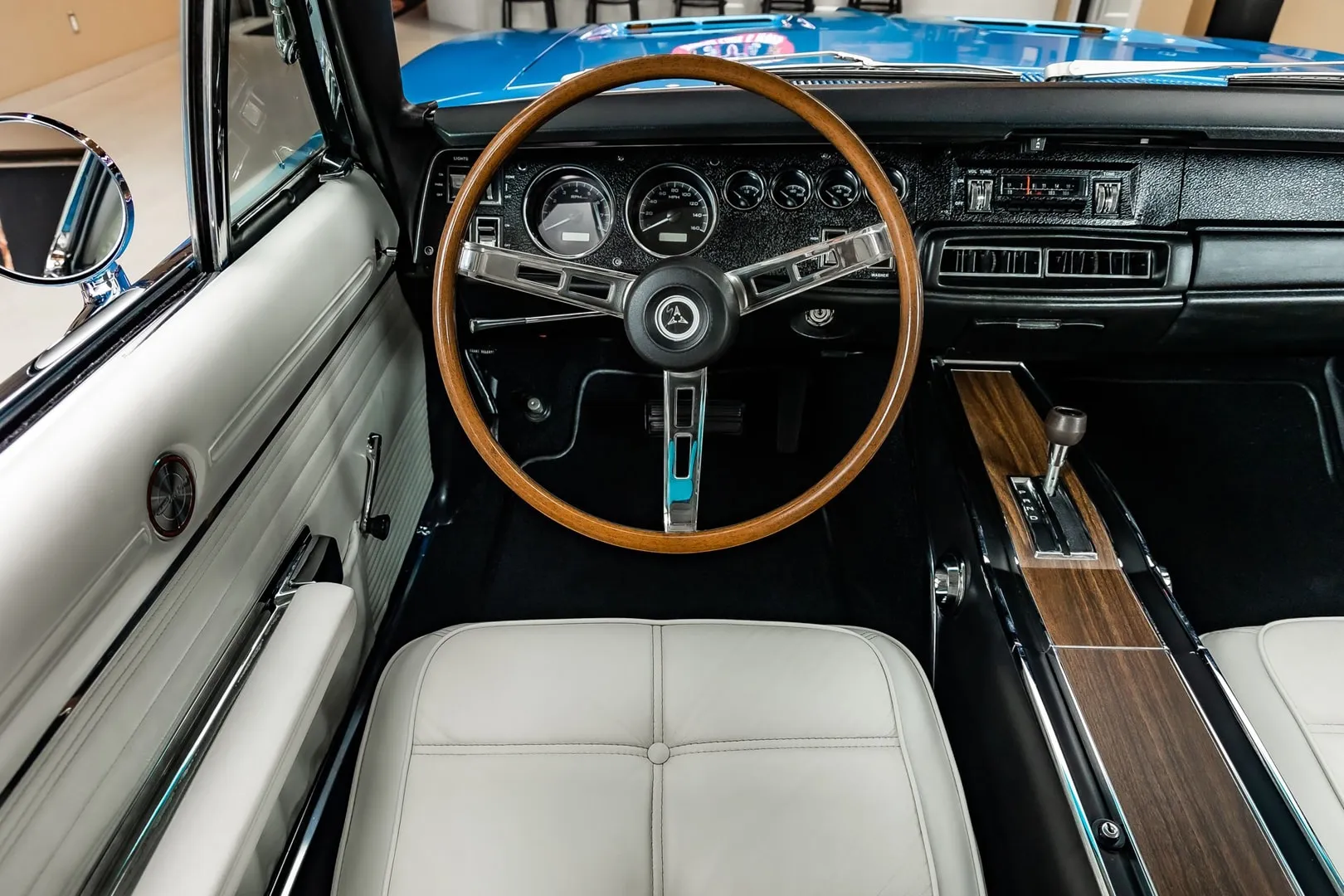
The Dodge Charger R/T from 1969 introduced a bolder approach, reflecting the muscle car era’s aggressive styling. Unlike the delicate spokes of earlier decades, the Charger’s wheel featured a thicker, three-spoke design with a pronounced central hub. The center bore the R/T emblem, visually linking the wheel to the car’s high-performance identity.
Construction combined functional durability with tactile feedback. Leather-wrapped rims provided grip during spirited driving, while the larger hub housed the horn button without obstructing hand movement. The three-spoke configuration minimized visual clutter while supporting driver control, particularly when cornering at higher speeds.
The wheel’s diameter was smaller than that of family sedans, which suited quicker response typical of muscle car handling. Ergonomics were prioritized for performance. Designers angled the spokes to align with common hand positions at nine and three o’clock.
This alignment enhanced control during acceleration and braking, creating a direct connection between driver input and road behavior. Unlike previous decorative-focused wheels, the Charger R/T emphasized the tactile experience without compromising aesthetics.
Styling communicated intent. The polished metal and contrasting leather reflected the car’s athletic character, while the wheel’s size and proportion balanced with the larger dashboard layout. Muscle car buyers expected to feel power through the wheel, and Dodge delivered with a design that offered both feedback and a commanding presence.
The 1969 Dodge Charger R/T steering wheel became a symbol of the era’s performance culture. Its aggressive yet ergonomic design influenced subsequent muscle cars, as designers sought a balance between driver control and cabin visual impact. Collectors and restorers pay close attention to the hub emblem, rim thickness, and spoke angle, ensuring authenticity.
Beyond aesthetics, the wheel demonstrated how design could support performance. Its combination of grip, angle, and central hub placement created an intuitive interface for drivers who demanded both style and function. The Dodge Charger R/T exemplifies a period when steering wheels became instruments of identity, shaping perception while enhancing the driving experience.
Also Read: 10 Best Cars for Parents Who Hate Minivans
3. 1973 Porsche 911 Carrera RS
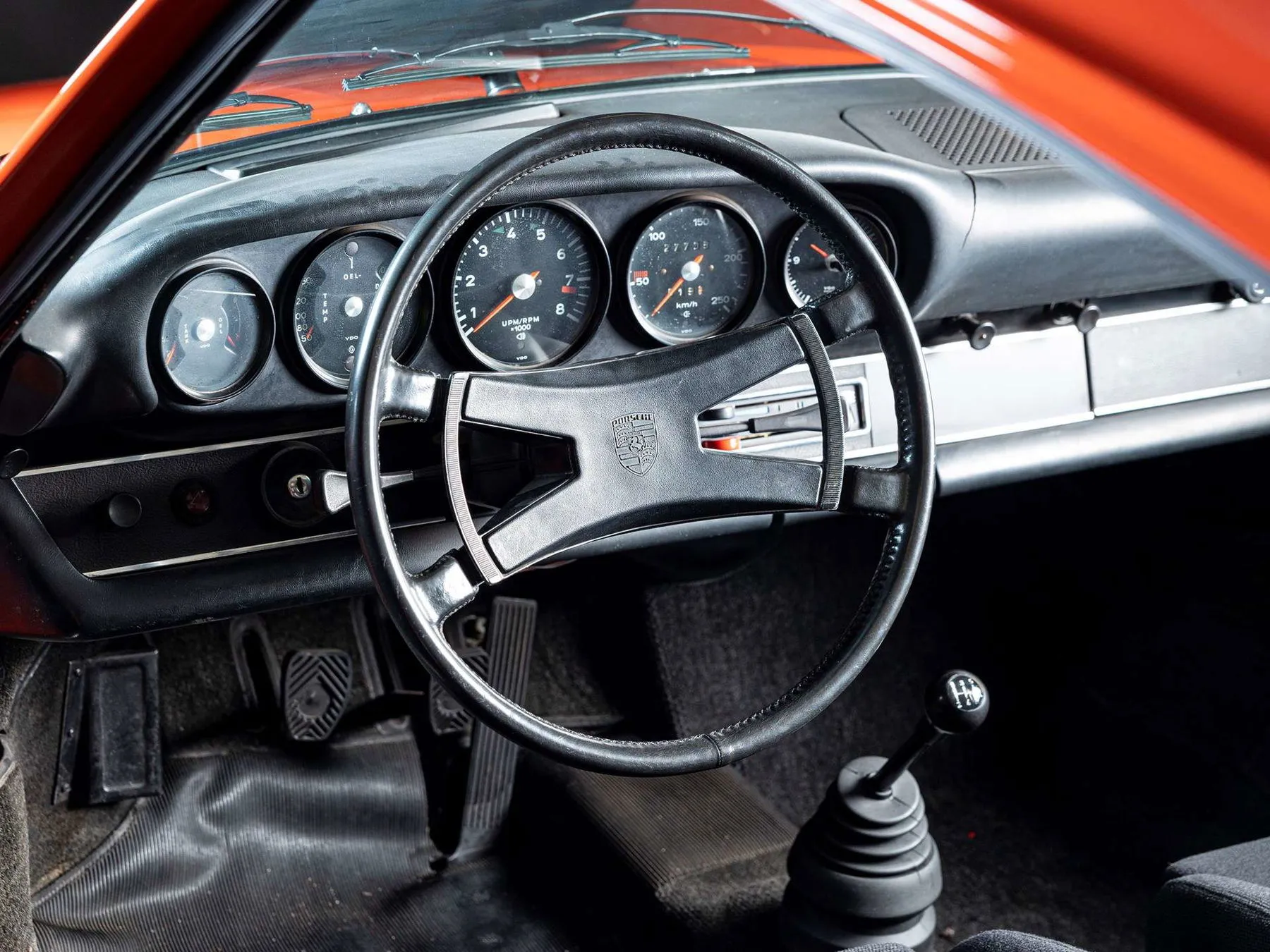
Porsche introduced the 911 Carrera RS steering wheel in 1973 with a focus on minimalism and driver engagement. Unlike the previous muscle car approach, this wheel emphasized simplicity and function over decorative elements. The three-spoke, thin-rim design reduced weight while improving tactile feedback, aligning perfectly with the lightweight ethos of the Carrera RS.
Material selection reinforced intent. The rim was wrapped in high-quality leather, offering grip for spirited driving. Spokes remained uncluttered, with only essential controls visible, reflecting Porsche’s philosophy of purity. Drivers experienced direct feedback from the road, allowing subtle steering inputs to translate immediately into vehicle motion.
Engineering considered proportion carefully. The wheel diameter was slightly larger than that of modern sports cars, balancing precise control with comfort on longer drives. The flat hub minimized interference with the dashboard, keeping the driver’s view clear. This design highlighted a focus on performance and driver concentration rather than aesthetic flair alone.
The Carrera RS wheel symbolized a turning point in sports car design, where feedback and ergonomics became central. It contrasted sharply with oversized, decorative wheels of prior decades, showcasing how design could reinforce mechanical intent.
Porsche’s attention to thickness, material choice, and spoke arrangement created an interface that rewarded skilled drivers and encouraged precision. Collectors value the Carrera RS steering wheel for its balance of simplicity and function.
Restorers seek original leather wrapping and spoke alignment, understanding that small deviations affect both feel and authenticity. The wheel embodies a philosophy where minimalism enhances usability, proving that less can indeed be more in high-performance automotive design.
This approach influenced future Porsche models, cementing a lineage of steering wheels that prioritizes tactile feedback, precise ergonomics, and visual restraint. Drivers engaging with the 1973 Carrera RS experience a pure connection with the car, illustrating how design transcends mere decoration to influence behavior and enjoyment behind the wheel.

4. 1984 BMW M635CSi
The 1984 BMW M635CSi steering wheel reflected a blend of luxury and sportiness. BMW emphasized both ergonomic precision and brand identity, integrating leather-wrapped rims with a thick, four-spoke structure. Its bold hub included the BMW roundel, creating a visual anchor in the cabin.
Designers considered hand placement carefully. The thicker rim allowed drivers to maintain grip during longer drives while supporting quick, controlled inputs. Unlike the thin wooden wheels of the past, this wheel combined tactile comfort with precise mechanical feel, appealing to both luxury buyers and performance enthusiasts.
Ergonomics extended to controls. The horn and basic functions were integrated seamlessly, reducing distraction and keeping the wheel uncluttered. The balance between hub size, spoke width, and rim diameter optimized driver reach, making long drives less fatiguing.
Material choices reinforced BMW’s design language. Soft leather provided cushioning while polished metal accents conveyed refinement. The wheel’s thickness communicated strength and reliability, matching the car’s engine and suspension capabilities.
This wheel became a defining feature of the M635CSi, reflecting a period where sports-luxury vehicles sought to combine aesthetics with function. It served as an interface that communicated performance intent while maintaining cabin sophistication. Collectors continue to prize original leather condition, spoke finish, and hub emblem for authenticity.
The BMW M635CSi steering wheel demonstrates how designers blended tactile comfort, visual presence, and functional ergonomics to create a cohesive driving experience. It illustrates the era’s shift toward integrating luxury cues without sacrificing performance characteristics.

5. 1992 Acura NSX
The 1992 Acura NSX steering wheel introduced a driver-centric approach, reflecting the car’s high-performance engineering. This wheel adopted a three-spoke layout with a slightly flattened bottom, improving leg clearance during aggressive maneuvers. Leather wrapping ensured grip while supporting extended track or road use.
Functionality was paramount. Minimalist design avoided unnecessary controls, allowing drivers to focus solely on inputs. The diameter was slightly smaller than conventional luxury wheels, enhancing responsiveness. The rim thickness balanced tactile comfort with feedback from the steering mechanism, giving drivers precise command over the vehicle’s mid-engine layout.
Engineering emphasized balance. The hub contained the horn without obstructing hand motion, while spoke placement accommodated natural wrist angles. Drivers could maintain control during sharp cornering, high-speed braking, or sudden directional changes.
The NSX wheel represented a new generation of performance vehicles where driver interface took precedence over decorative styling. Acura’s approach proved that steering wheel design could enhance engagement and performance simultaneously.
Collectors and restorers focus on leather condition, spoke alignment, and diameter consistency. These attributes directly affect driving experience and authenticity. The 1992 Acura NSX steering wheel remains influential, shaping modern sports car ergonomics while honoring precision and simplicity.

6. 2003 Ferrari Enzo
Ferrari approached the Enzo steering wheel with a philosophy rooted in Formula One influence, blending extreme performance with advanced ergonomics. This wheel broke traditional conventions by integrating multiple controls directly into the rim, reducing the need for the driver to remove hands from the steering interface.
Paddle shifters were mounted just behind the wheel, enabling near-instantaneous gear changes without sacrificing control during high-speed maneuvers. Material choice emphasized lightweight construction. Carbon fiber reinforced the structure while Alcantara covered the rim to provide grip under aggressive handling conditions.
The flat-bottom design increased legroom for the driver, facilitating comfort during prolonged high-intensity driving. Its thickness and rim diameter were carefully calculated to enhance tactile feedback without inducing fatigue.
The Enzo steering wheel incorporated a manettino dial, a Ferrari-specific control that allowed drivers to switch between different traction and stability modes instantly. This element emphasized the car’s focus on driver input and precision, reflecting a design where the wheel itself became an extension of the car’s dynamic systems.
Every control was positioned intuitively, highlighting the importance of minimizing distractions in a high-performance environment. Ergonomic analysis informed spoke placement. The three-spoke layout ensured the driver maintained optimal hand positioning while cornering or braking at speed.
In addition, visibility of the instrument cluster remained unobstructed, reinforcing the wheel’s dual role as a control hub and a framing device for critical driving information. The Enzo wheel also communicated identity.
Its unique design reinforced Ferrari’s commitment to cutting-edge technology while preserving a sense of tradition through material choices and proportions reminiscent of classic race cars. Restorers and collectors seek the original wheel with precise carbon fiber weave and flawless Alcantara finish, understanding that even minor deviations impact both authenticity and driving feel.
The 2003 Ferrari Enzo steering wheel demonstrated that steering design could integrate mechanical controls, ergonomic refinement, and aesthetic identity into a single, high-performance component. Its influence extended to later Ferrari models and other high-end sports cars, establishing a benchmark for multifunctional, driver-focused steering interfaces.

7. 2008 Mercedes-Benz SLS AMG
The Mercedes-Benz SLS AMG introduced a steering wheel that married luxury with racetrack-inspired ergonomics. Designers implemented a thick leather-wrapped rim with perforated grip sections, creating a tactile surface that is both spirited-driving and comfortable for everyday use.
The wheel’s diameter struck a balance between responsiveness and leverage, allowing drivers to feel connected without oversteering in urban environments. Integration of multifunction controls was seamless. Buttons for infotainment, phone, and adaptive cruise systems were positioned to maintain natural hand positions at nine and three o’clock.
Paddle shifters behind the rim provided instant gear changes, while a flat-bottom design enhanced leg clearance and made entry into the vehicle easier. The SLS AMG wheel emphasized driver feedback. Soft leather sections absorbed minor vibrations, while thicker grip areas conveyed tactile road information directly to the hands.
Spoke angles were optimized to support natural wrist movement, reducing fatigue on long drives or during aggressive cornering sessions. Visual design reinforced the car’s identity. Polished metal spokes and central hub detailing aligned with the SLS AMG’s exterior proportions, ensuring harmony between cockpit and bodywork.
The combination of luxury finishes and precise engineering reflected Mercedes-Benz’s intention to deliver a driver-focused yet refined experience. Collectors appreciate the SLS AMG wheel for its balance of form and function.
Original leather texture, paddle engagement feel, and precise spoke alignment are all indicators of authenticity. Unlike mass-produced wheels, subtle differences in curvature and padding can alter driving perception, making attention to detail crucial for restoration or replacement.
Mercedes used the SLS AMG wheel to illustrate that high-performance design does not require sacrificing comfort. By integrating ergonomics, multifunctionality, and aesthetic presence, the wheel became a focal point in a cabin engineered for both excitement and refinement.
Its influence remains evident in contemporary AMG models, demonstrating how steering wheels can serve as both interface and design statement.

8. 2012 Tesla Model S
Tesla revolutionized cabin design with the Model S steering wheel, focusing on minimalism and digital integration. The wheel prioritized unobstructed visibility for the large touchscreen, while preserving tactile feedback through a relatively thin rim coated in premium leather.
This simplicity contrasted sharply with traditional multifunction-heavy designs, reflecting Tesla’s philosophy of reducing physical controls in favor of centralized digital management. Driver ergonomics were carefully considered.
A moderate diameter and soft rim surface encouraged precise control without inducing fatigue. Spokes were minimized, and only essential controls like the horn and indicator were retained on the wheel, emphasizing the reliance on touchscreen inputs and voice commands for secondary functions.
The Model S wheel exemplified futuristic thinking. By removing extraneous buttons and integrating subtle paddles for regenerative braking and drive mode, Tesla encouraged drivers to engage with vehicle systems intuitively. The tactile focus remained on hand position and grip quality, ensuring road feedback was preserved despite minimalist design.
Designers also aimed for visual coherence. The wheel’s shape and proportions harmonized with the cabin’s horizontal lines and clean dashboard layout. Its understated appearance reinforced a perception of technological sophistication, where the digital interface replaced physical complexity without diminishing driver confidence.
Tesla owners often highlight the Model S wheel’s ergonomic adaptability. Leather quality, rim thickness, and subtle curvature deliver comfort for both city and highway driving. Collectors and enthusiasts value originality, as aftermarket modifications can compromise both feel and aesthetic balance.
By reducing complexity while maintaining tactile engagement, the 2012 Model S wheel demonstrates that steering design can evolve alongside digital interfaces. It emphasizes driver interaction, comfort, and futuristic styling, shaping how electric vehicles approach the cockpit experience.
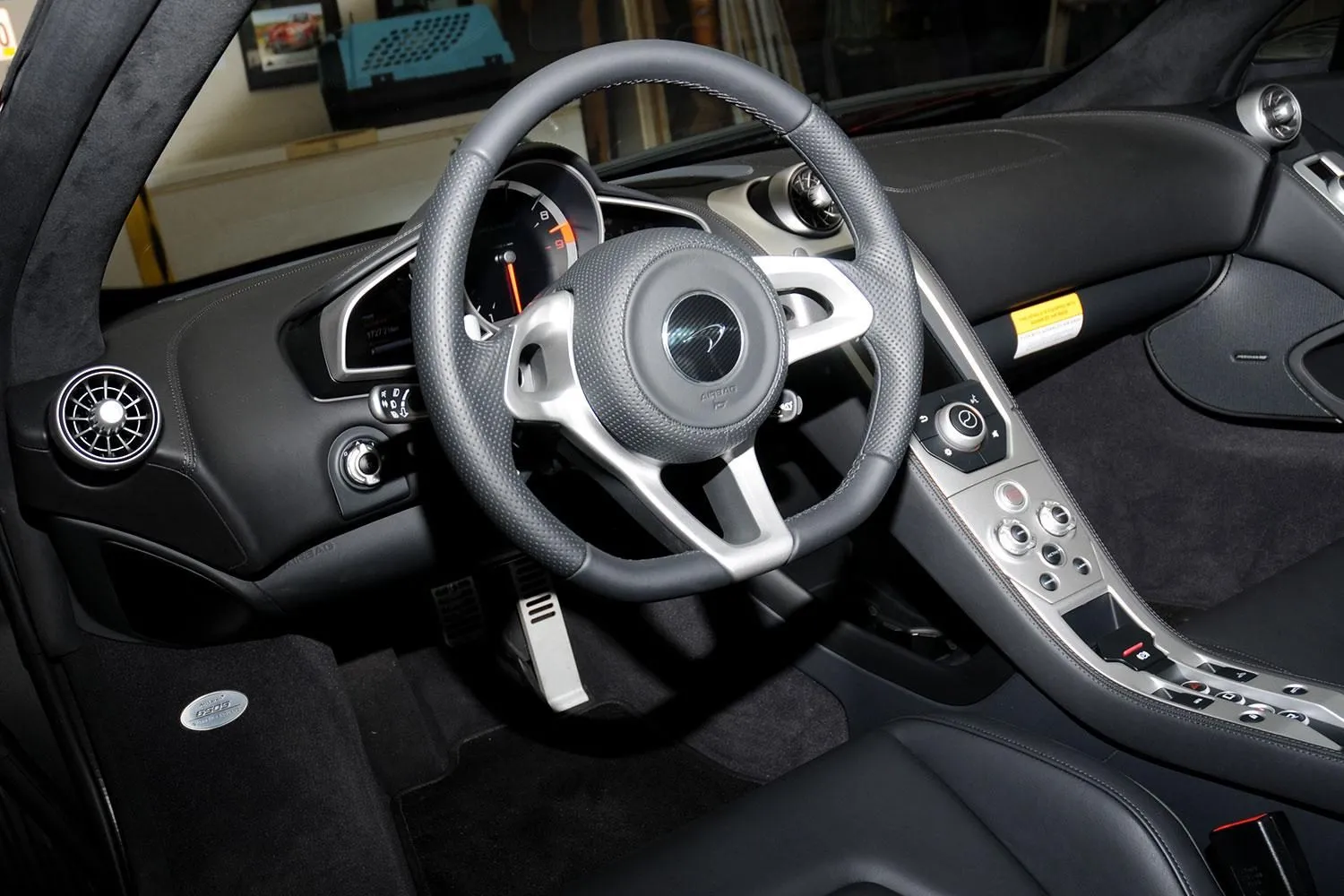
9. 2015 McLaren 650S
McLaren approached the 650S steering wheel as a pure performance tool. The wheel integrated paddle shifters, drive mode selectors, and multifunction buttons directly on the rim, echoing the company’s Formula One heritage.
Carbon fiber construction reduced weight while enhancing structural rigidity, ensuring every input translated instantly to the car’s dynamic systems. The wheel’s flat-bottom design improved leg clearance and allowed aggressive seating posture.
Alcantara wrapping provided grip under high g-force conditions, while carefully calculated rim thickness delivered precise tactile feedback. Spoke angles aligned with wrist motion during rapid transitions, minimizing fatigue during track or road driving.
Visual cues reinforced performance. The central hub displayed the McLaren logo, while colored drive mode switches indicated immediate changes to traction, suspension, and powertrain behavior. Functionality and aesthetics were merged seamlessly, emphasizing control without distraction.
Collectors and restorers prioritize original carbon fiber weave, paddle feel, and button responsiveness. Alterations can affect both mechanical performance and authenticity, highlighting the importance of preserving the wheel in pristine condition.
The McLaren 650S wheel demonstrates how steering design can act as both a driver interface and a visual statement. By integrating materials, ergonomics, and advanced controls, McLaren created a tool that rewards precision, enhances driver confidence, and communicates performance intent.
Also Read: 10 Cars That Offer a True Cloud-Like Ride for Long Distances

10. 2020 Porsche Taycan
Porsche’s Taycan introduced a refined development of conventional steering philosophy within the electric vehicle category. Attention was directed toward harmonizing minimalist design with advanced operational functionality.
The steering wheel presents a clean visual structure, free from excessive ornamentation, yet carefully engineered to maintain tactile quality. Surfaces finished in premium leather or Alcantara provide a firm grip and comfort during extended driving periods.
A subtly flattened lower section improves legroom and enhances driver ergonomics, particularly during entry and exit. Proportions are measured to support natural hand placement, allowing the driver to maintain steady control without strain.
Integrated paddle controls are positioned with restraint and clarity. These paddles facilitate drive mode adjustments and regenerative braking modulation without diverting attention from the road. Their placement reflects deliberate ergonomic study, ensuring that adjustments can be made intuitively.
Spoke design has been reduced to a streamlined configuration, permitting unobstructed visibility of the digital instrument cluster. This arrangement reinforces clarity of information display, ensuring that essential data such as speed, navigation guidance, and vehicle status remain within the driver’s direct line of sight.
Functional buttons embedded within the steering wheel provide access to adaptive cruise control, media functions, and communication systems. By situating these controls within easy reach, Porsche reduces reliance on touchscreen interaction during active driving.
Each button exhibits precise tactile feedback, offering clear confirmation when engaged. The actuation pressure has been calibrated to avoid accidental inputs while maintaining comfort. Such precision contributes to safe and efficient operation, particularly during high-speed travel or dense urban traffic conditions.
Dimensional balance remains a defining characteristic of the Taycan steering wheel. Rim diameter and thickness are carefully calculated to deliver responsiveness while preventing hand fatigue. Weight distribution across the steering assembly produces natural feedback, compensating for the absence of engine vibrations typically present in internal combustion vehicles.
Through this measured engineering approach, the electric driving experience retains a sense of mechanical connection that enthusiasts value. Collectors and automotive purists frequently commend the steering wheel for its quality finish and disciplined design language.
