
Buying a used sedan is one of the smartest financial decisions you can make but only if you pick the right one. The used car market is a world full of opportunity and landmines in equal measure. Some sedans will roll off a dealer’s lot and go another 150,000 miles with nothing more than oil changes and fresh tires.
Others will have you on a first-name basis with your mechanic before the first year is up, draining your wallet with repair bills that eventually dwarf what you paid for the car itself.
The difference between these two categories often comes down to engineering philosophy, powertrain design, and decades of real-world reliability data.
Some automakers have spent generations refining their engines and transmissions into near-indestructible units. Others have chased novelty, prioritized flash over substance, or cut corners in ways that only become apparent after the warranty expires.
In this guide, we break down five used sedans that have earned legendary reputations for mechanical durability cars whose engines just refuse to die and five that have developed well-documented patterns of costly, recurring problems.
Whether you’re shopping on a tight budget or simply want to avoid the dealer service lane, this list will help you make an informed decision. The difference between peace of mind and financial pain could come down to one smart choice at the lot. Read carefully, because the used car market rewards knowledge and punishes impulse.
5 Used Sedans With Bulletproof Engines
These exceptionally reliable vehicles feature legendary powertrains and simple mechanical designs perfectly suited for high-mileage used ownership, providing dependable transportation through hundreds of thousands of miles without the major engine failures typically forcing expensive rebuilds or premature retirement despite affordable used pricing.
Their proven engineering includes naturally aspirated designs and robust internal components that resist the catastrophic failures found in problematic engines while delivering consistent performance past 200,000 miles with only routine maintenance, legendary durability surviving neglected oil changes that would destroy lesser engines, and widespread mechanic familiarity ensuring affordable repairs when eventually needed.
1. Toyota Camry (2012–2020)
When automotive journalists, mechanics, and long-term owners are asked to name the most dependable used sedan on the market, the answer is almost always the same: the Toyota Camry.
This isn’t a coincidence, and it isn’t marketing spin. It’s the product of decades of disciplined engineering, conservative powertrain design, and a corporate culture that treats reliability as a non-negotiable feature rather than an optional extra.
The 2012–2020 generation is particularly worth highlighting. The 2.5-liter four-cylinder engine found in most of these models the 2AR-FE is one of the most robustly proven four-cylinder engines in automotive history.
It produces a modest but adequate 178 to 203 horsepower depending on the model year, and it does so without the exotic technology that tends to create expensive headaches later on.
There’s no direct injection system prone to carbon buildup on the intake valves, no variable displacement trickery, and no turbocharger demanding premium fuel and precise maintenance schedules. It’s a naturally aspirated, port-injected engine that responds well to regular oil changes and essentially nothing else.
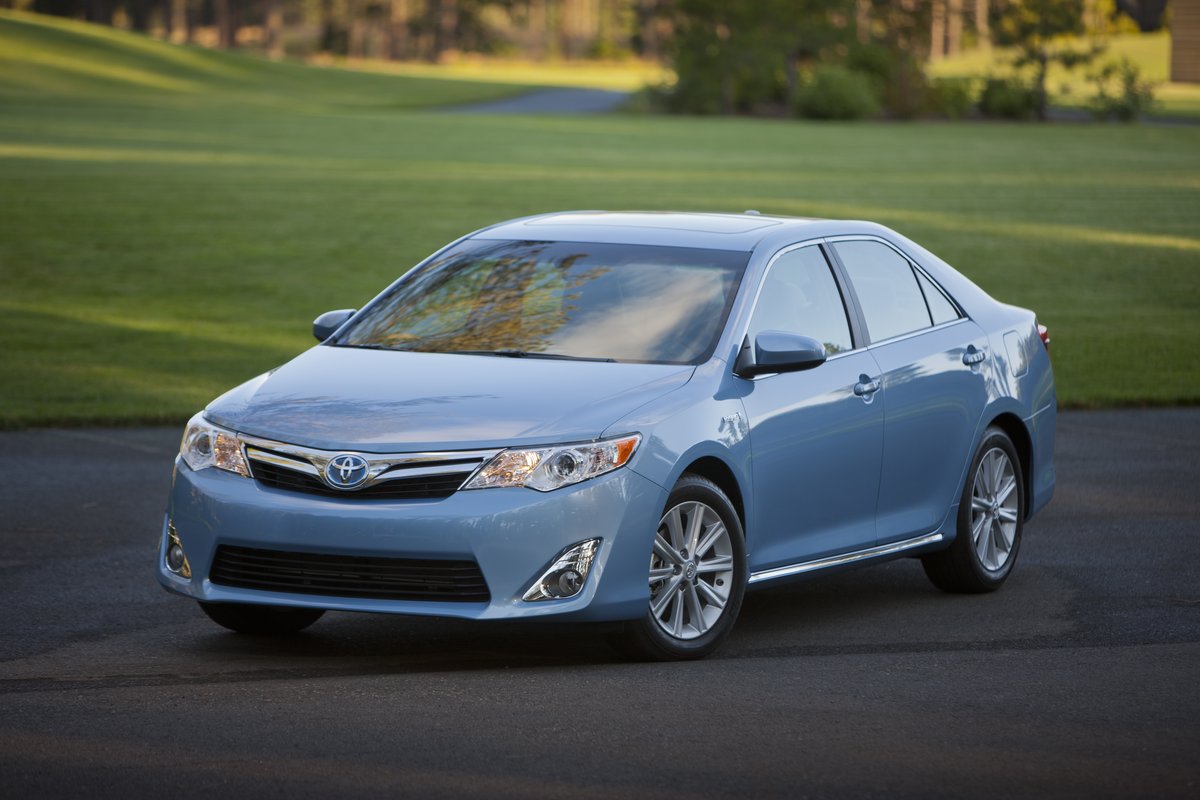
The six-cylinder models, equipped with the 2GR-FE 3.5-liter V6, are equally bulletproof. This engine has powered everything from the Camry XSE to the Lexus ES350, logging tens of millions of real-world miles without significant mechanical drama.
Both engine choices are backed by Toyota’s smooth, durable six-speed automatic transmission, which is rarely the source of any major complaint in owner surveys or reliability data.
Real-world evidence backs this up comprehensively. Consumer Reports has ranked the Camry among the most reliable sedans in its class for multiple consecutive years.
On high-mileage forums, 200,000-mile Camrys are practically unremarkable many owners casually report pushing past 250,000 miles with only routine service.
Parts are inexpensive and universally available, mechanics know the platform inside and out, and even when something does go wrong, the repair bill is rarely catastrophic. If you want a used sedan that simply works, year after year, without drama, the Camry from this era is the benchmark.
2. Honda Accord (2013–2020)
Honda has built its reputation on engines that rev cleanly, last forever, and perform reliably in conditions that would stress lesser powertrains into failure.
The 2013–2020 Accord is perhaps the finest expression of that philosophy, offering a combination of driving engagement, interior quality, and long-term durability that’s genuinely hard to beat at used car prices.
The heart of the Accord’s reliability story is its engine lineup. The 2.4-liter four-cylinder Earth Dreams engine produces 185 horsepower and is as dependable as they come.
Honda’s naturally aspirated four-cylinders have a decades-long track record of high-mileage durability, and this generation continues that tradition without significant deviation.
The engine doesn’t suffer from the carbon buildup issues common in direct-injection-only setups, and it’s known to cruise past 200,000 miles without major mechanical intervention when maintained properly.
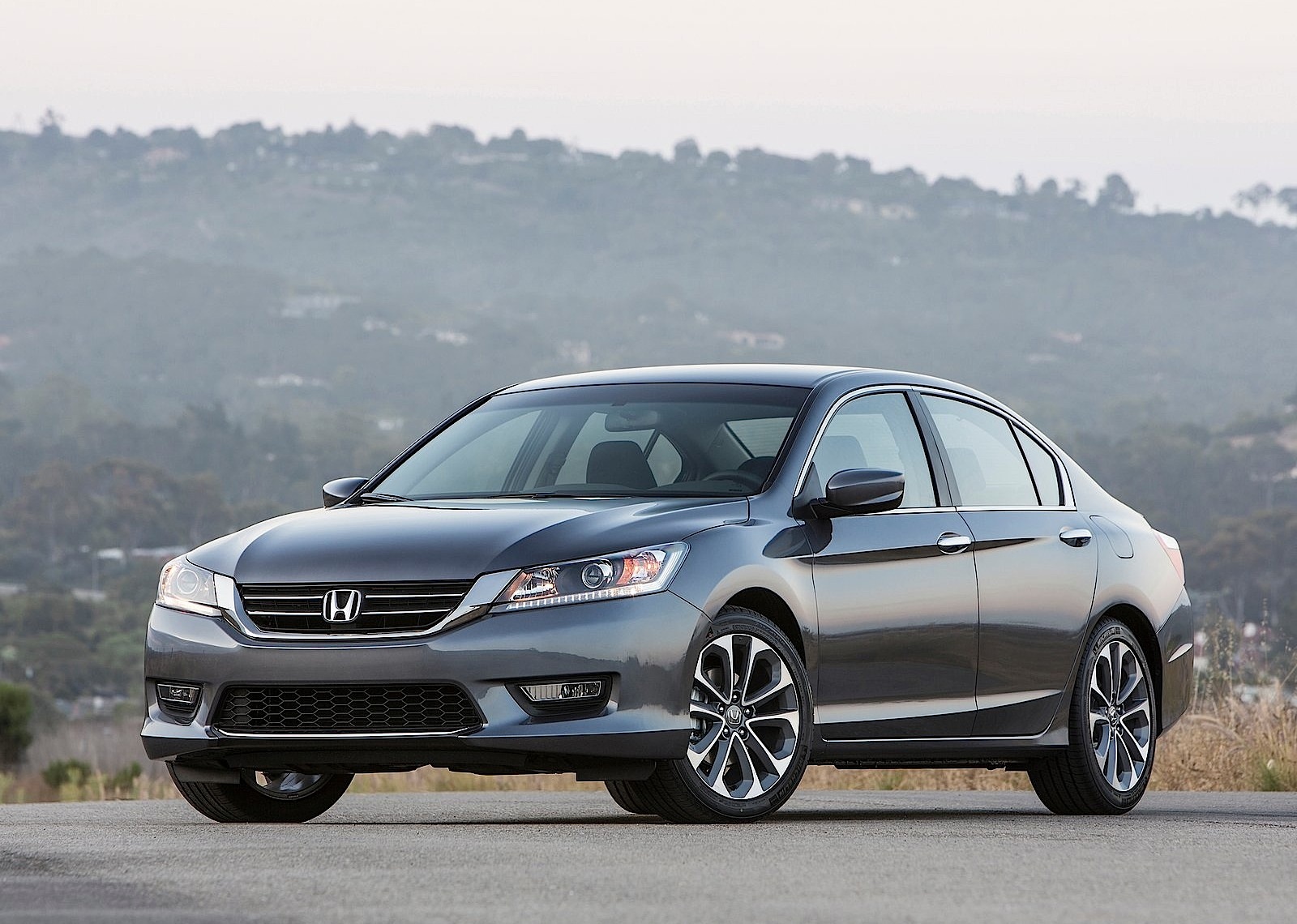
The V6 models equipped with a 3.5-liter six-cylinder producing 278 horsepower are equally durable, though buyers should know that the six-speed automatic paired with the V6 can occasionally show torque converter shudder if the transmission fluid hasn’t been changed on schedule.
This is a minor and inexpensive service item rather than a fundamental design flaw, and it’s easily avoided with proper maintenance history verification at purchase.
What sets the Accord apart from the Camry is a more engaging driving experience. The steering is more communicative, the chassis feels sportier, and the suspension strikes a better balance between comfort and handling. This doesn’t compromise reliability at all it simply means you get more driver satisfaction along with the durability.
Long-term owner reports and independent reliability surveys consistently paint the same picture: Accords from this generation rarely break down unexpectedly, and when they do need repairs, the costs are manageable. For buyers who want the durability of a Camry with a slightly sharper character, the 2013–2020 Accord is the natural companion choice.
3. Toyota Avalon (2013–2018)
Toyota’s flagship sedan occupies a fascinating space in the used car market. It’s significantly larger and more luxurious than the Camry, yet it shares the same core mechanical underpinnings specifically the same 3.5-liter 2GR-FE V6 engine meaning buyers get full-size premium comfort with the identical iron-clad reliability that has made the Camry famous. For informed used car shoppers, this represents outstanding value that the broader market often overlooks.
The 2013–2018 Avalon generation is the sweet spot. Built on Toyota’s thoroughly developed K platform and paired with a six-speed automatic that has proven itself across millions of miles in the Camry, Lexus ES350, and RAV4 V6, the powertrain combination is conservative by design.
Toyota could have chased fuel economy numbers with a turbocharged four-cylinder, but instead kept the naturally aspirated V6 that mechanics and owners had come to trust over the preceding decade.
The result is a sedan that delivers 268 horsepower smoothly and silently, wrapped in a premium interior that rivals entry-level luxury brands at a fraction of the price on the used market.
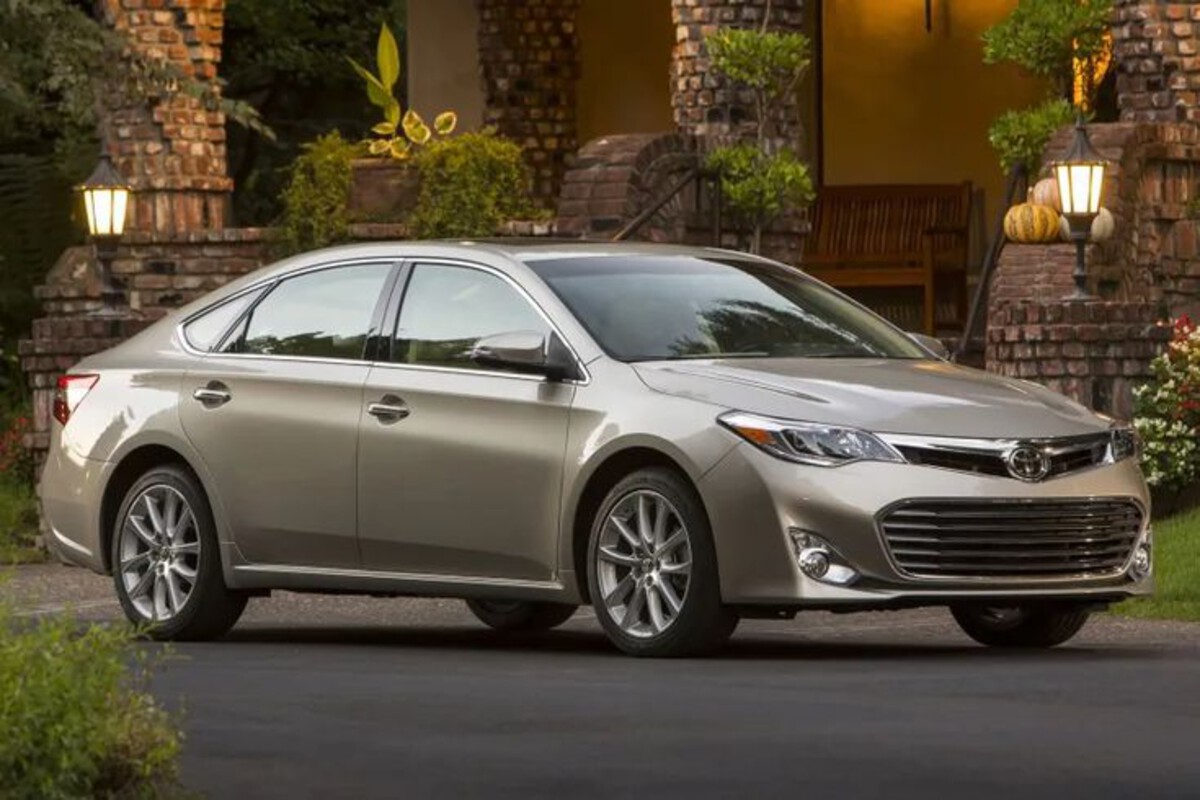
Leather seating, a JBL audio system, heated and cooled front seats, and generous rear legroom are standard across most trim levels, making the Avalon exceptional value when purchased used.
Mechanically, the reliability data shows it performing as well as or better than the Camry, which is remarkable. The larger, heavier body puts slightly more stress on brake components, so brake service intervals should be observed diligently, but the powertrain itself is virtually immune to the catastrophic failures that plague less carefully engineered competitors.
One additional practical advantage: because the Avalon is perceived as an older buyer’s car, used examples are frequently meticulously maintained and lower in mileage than comparable Camrys.
Buyers often find them at competitive prices simply because they’re not fashionable a perception gap that works entirely in the informed buyer’s favor.
4. Mazda6 (2014–2020)
Mazda occupies a unique position in the automotive world a brand that takes driving dynamics seriously without sacrificing the mechanical durability and build quality that define satisfying long-term ownership.
The 2014–2020 Mazda6 is the clearest expression of this philosophy in the mid-size sedan segment, delivering sports-car handling in a practical, fuel-efficient package that holds together impressively over high mileage.
The engine powering the Mazda6 during this period is the company’s 2.5-liter Skyactiv-G four-cylinder, producing between 184 and 187 horsepower depending on model year.
The Skyactiv-G uses a carefully tuned direct injection system with relatively high compression that is designed to run on regular fuel while maintaining efficiency. Long-term reliability data on this engine has been consistently positive.
High-mileage owners regularly report reaching 200,000 miles with only routine maintenance, and catastrophic engine failures are genuinely rare. The six-speed automatic transmission is smooth, durable, and not prone to the shuddering or slipping issues that afflict some competitors in this class.
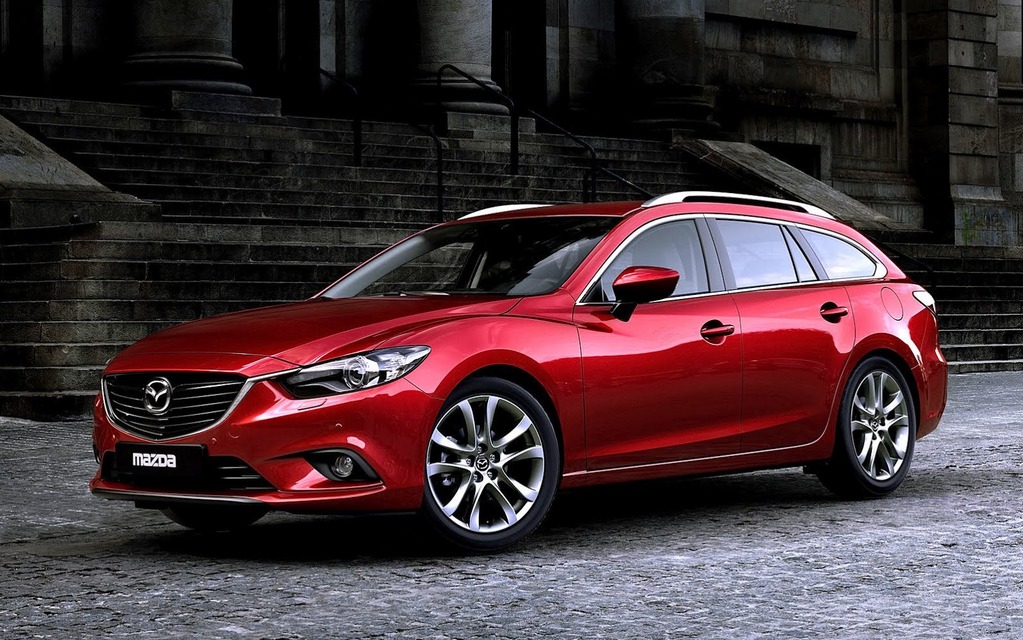
Where the Mazda6 shines beyond reliability is the driving experience. The steering is weighted and communicative in a way that no Camry or Accord can fully match. The suspension is tuned for genuine agility.
The interior design is thoughtful and modern, constructed with premium-feeling materials that hold up well over time and mileage. Mazda has also made substantial investments in build quality during this era, and it shows these cars feel expensive in a way that the transaction price doesn’t always suggest.
The Mazda6 does carry slightly higher maintenance costs than the Toyota options on this list, primarily because parts availability is somewhat more limited and the Skyactiv system benefits from a mechanic with some platform familiarity.
However, it remains far below the costs associated with European competitors and rewards careful maintenance with exceptional longevity. For buyers who want reliability without sacrificing driver engagement, the Mazda6 is the standout choice on this list.
Also Read: 10 Most Reliable Lexus Models Famous for Never Quitting
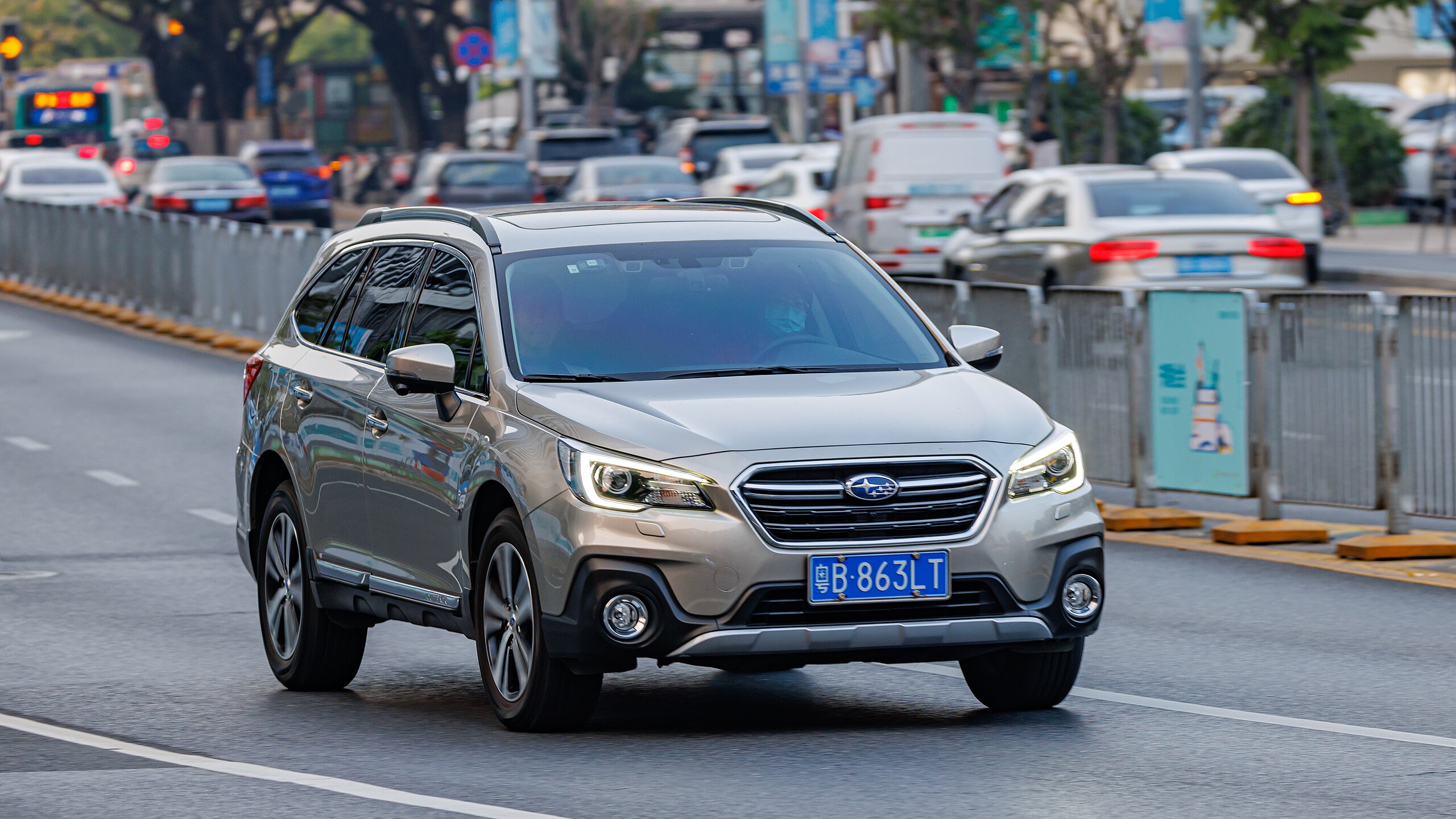
5. Subaru Legacy (2015–2019, Non-Turbo)
In most of the country, all-wheel drive is a luxury. In large swaths of the northern United States and Canada, it’s a genuine necessity. The Subaru Legacy with its standard symmetrical all-wheel drive system fills this niche better than virtually any other sedan, combining real weather capability with solid though not quite Toyota-level mechanical reliability that makes it a compelling choice for buyers in challenging climates.
The critical caveat with the Legacy is engine specification. The 2.5-liter naturally aspirated four-cylinder found in the base and Premium trims has a substantially better long-term reliability record than the turbocharged engines found in higher-performance Subaru models.
Subaru’s turbocharged engines have been associated with higher rates of oil consumption and head gasket stress over high mileage, making the naturally aspirated version the clear-headed choice for durability-focused buyers.
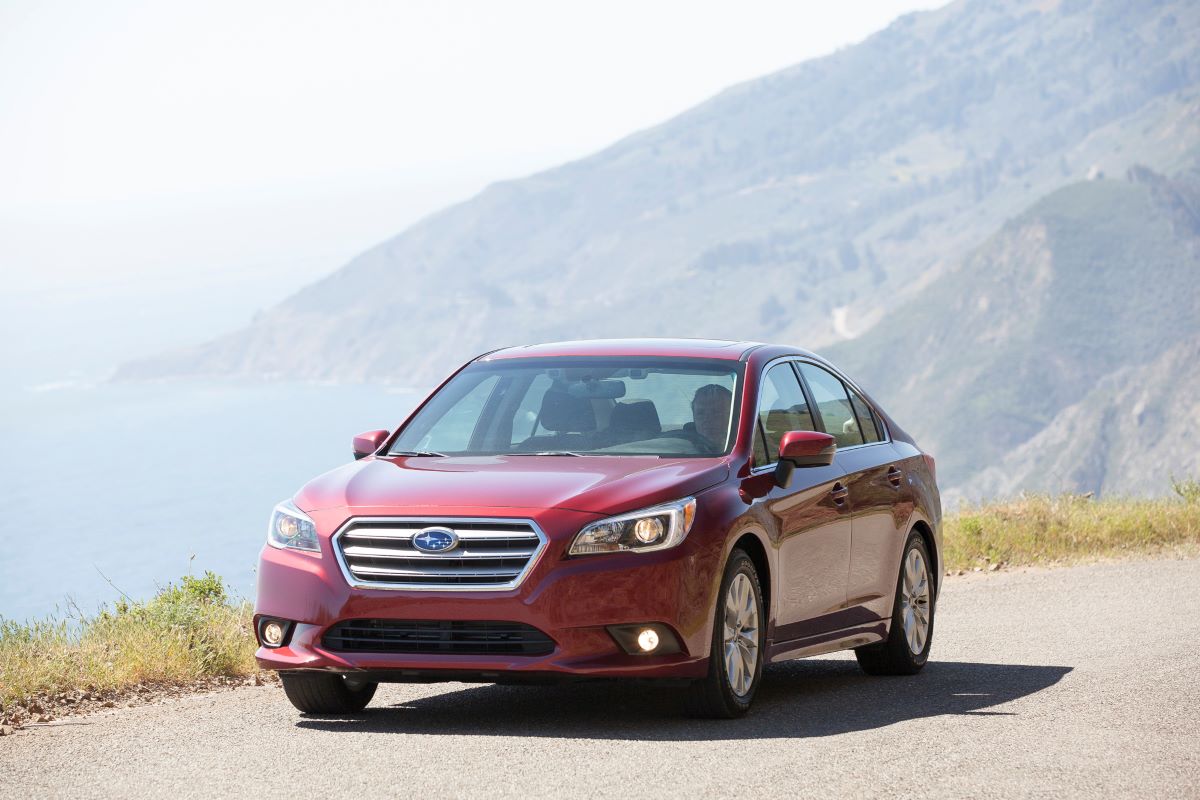
The 2.5-liter Boxer engine in the naturally aspirated Legacy produces 175 horsepower and is mated to a continuously variable transmission that Subaru refined significantly in this generation.
The CVT attracts criticism from enthusiasts who prefer traditional automatics, but from a reliability standpoint, Subaru’s CVT in this period has proven reasonably durable when the transmission fluid is serviced on schedule.
The symmetrical all-wheel drive system itself is mechanically elegant, requiring no driver input and performing consistently in rain, snow, and ice that would leave competitors struggling.
Independent reliability assessments place the naturally aspirated 2015–2019 Legacy comfortably above the industry average, though below the Toyota entries on this list.
For buyers in climates where all-wheel drive genuinely matters, the Legacy is a thoughtful compromise: better reliability than most European AWD alternatives, better traction than the Camry or Accord, and a used price that’s genuinely accessible to budget-conscious shoppers.
5 That Frequent the Shop
These catastrophically unreliable vehicles suffer from documented engine problems and premature component failures that create constant repair nightmares for used buyers, transforming affordable purchase prices into financial disasters as inevitable expensive failures emerge shortly after ownership begins despite initially smooth operation and clean vehicle history reports.
Their problematic engineering includes failure-prone timing chains and defective engine components that cannot survive typical mileage accumulation, leading to catastrophic timing system failures destroying engines around 80,000 miles, excessive oil consumption requiring constant top-ups between changes, and documented class-action problems that manufacturers refuse properly addressing despite thousands of identical failures.
6. Volkswagen Jetta/Passat (2012–2019, TSI Variants)
Volkswagen sedans are seductive. They look sophisticated, drive with precision, feel substantial in a way few mass-market sedans can match, and their turbocharged TSI engines and DSG dual-clutch transmissions seem like engineering triumphs on paper.
The reality of long-term ownership, however, is frequently a dispiriting parade of warning lights and repair invoices that makes even committed VW loyalists question their devotion.
The 1.4-liter and 1.8-liter TSI turbocharged four-cylinders that power most Jetta and Passat models from this period share a set of well-documented problems.
Carbon buildup on the intake valves a direct consequence of direct injection without port injection as a backup requires periodic walnut blasting, a specialized cleaning procedure costing several hundred dollars that is not a one-time fix.
It needs to be repeated regularly throughout the engine’s life. Timing chain tensioner failures are another recurring concern at higher mileage, and a timing chain failure in an interference engine is catastrophically expensive, we’re talking thousands of dollars in engine damage. Water pump failures, thermostat housing cracks, and persistent oil consumption complaints round out the engine’s resume.
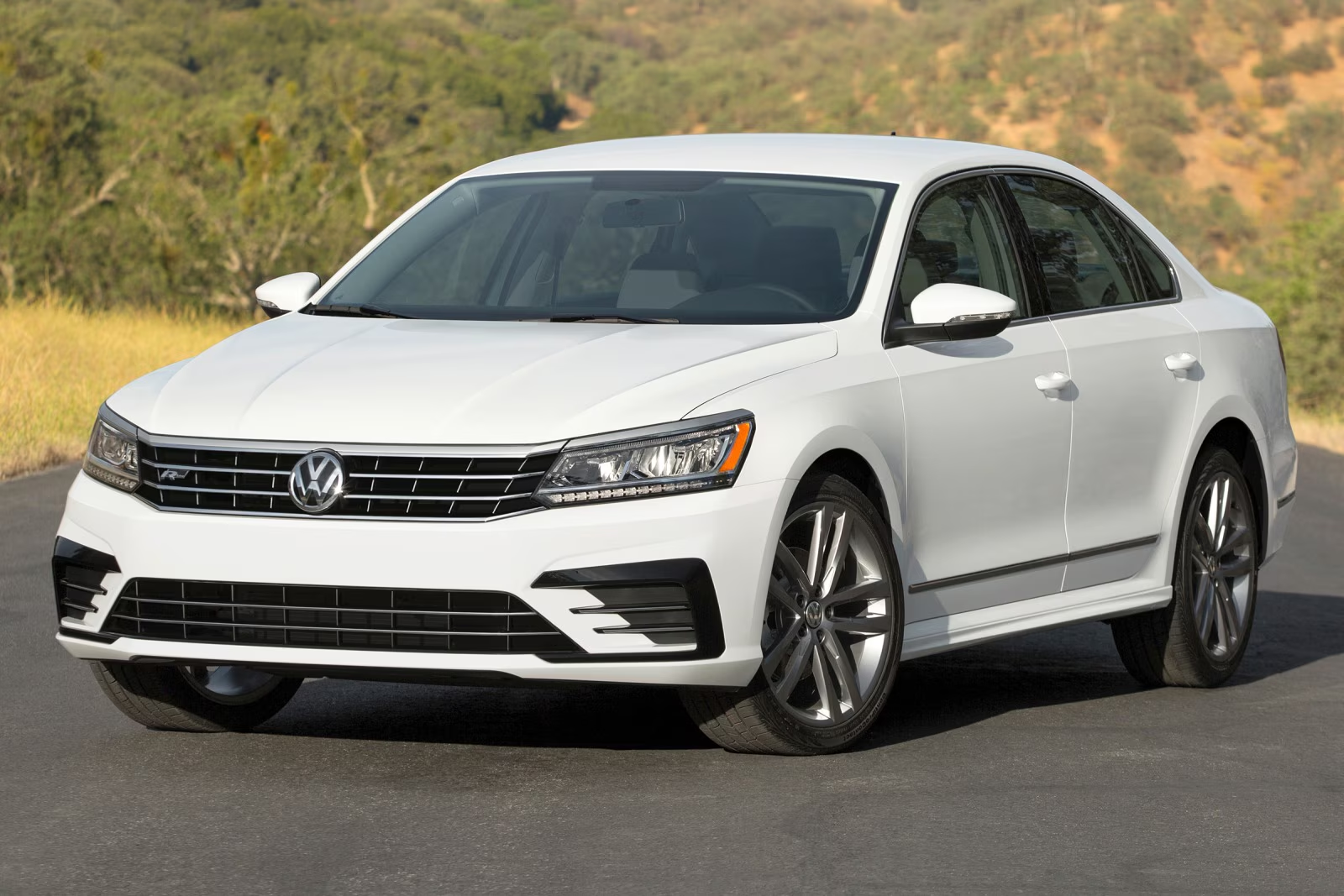
The DSG dual-clutch transmission, while impressive in concept, has been associated with shuddering at low speeds, mechatronic unit failures, and costly repairs frequently running into four figures. DSG fluid service is essential and commonly neglected by previous owners of used examples.
The TDI diesel variants carry their own complications, including timing belt service requirements, diesel particulate filter regeneration issues, and specialized service that many independent shops aren’t equipped to handle.
Owning a well-maintained Jetta or Passat from this era can be rewarding in terms of driving feel. But maintaining one requires either deep knowledge of its specific quirks or a trusted VW specialist and the bills will arrive regardless.
7. Chrysler 200 (2015–2017)
The second-generation Chrysler 200, launched for 2015, was a genuinely admirable attempt to enter the competitive mid-size sedan segment with credibility.
The exterior design was sharp and contemporary, the interior was dramatically improved over the outgoing model, and the optional all-wheel drive was a meaningful differentiator. Underneath that promising surface, however, was a collection of mechanical problems that have made the 200 one of the most frequently complained-about sedans of its generation.
The 2.4-liter Tigershark four-cylinder, while producing a reasonable 184 horsepower, has been widely reported to consume excessive amounts of oil relatively early in its life cycle.
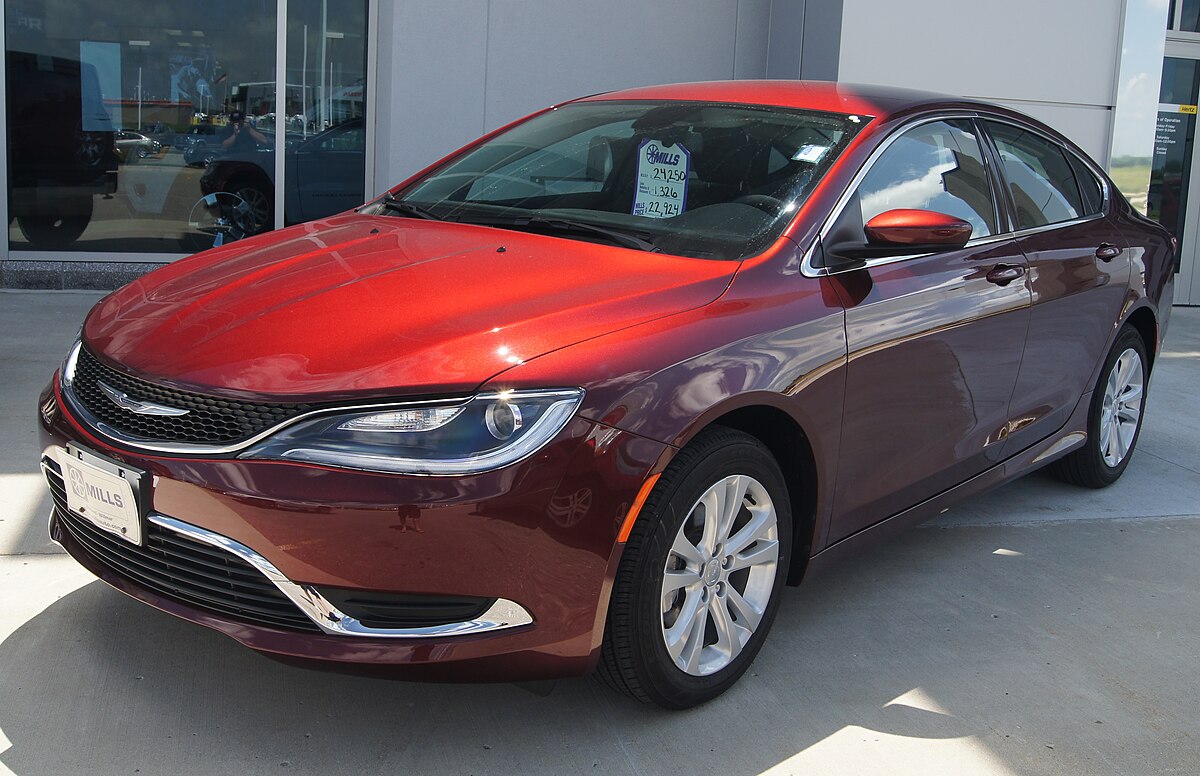
Many owners report needing to add a quart of oil between scheduled changes well before 100,000 miles a pattern that points to ring seal issues rather than simple owner neglect. When oil consumption goes unaddressed in an engine, the resulting damage tends to be progressive and eventually terminal.
Far more problematic is the nine-speed automatic transmission. This unit has generated more sustained owner complaints than virtually any other component in the segment.
Rough shifts, constant gear hunting at highway speeds, shuddering during acceleration, and outright failure have been reported at alarming rates. Chrysler issued multiple software calibration updates, but many owners found these only partially addressed the underlying issues. Electrical problems random warning lights, infotainment failures, and HVAC control malfunctions add further to the ownership headaches.
Chrysler discontinued the 200 after the 2017 model year, and in retrospect, that decision reflects an honest internal acknowledgment of the platform’s fundamental limitations. Used examples are priced attractively, but the low price reflects documented risk, not exceptional value.
8. Ford Fusion (2013–2018, EcoBoost Variants)
The Ford Fusion is in many ways a victim of its own ambition. When Ford introduced the EcoBoost turbocharged engine family, the marketing was compelling: smaller displacement, better fuel economy, equal or superior power output.
The 1.5-liter and 2.0-liter EcoBoost four-cylinders powering the Fusion were supposed to deliver the best of both worlds. In practice, they delivered a reliability profile that has frustrated owners across multiple model years and driven up service costs in ways that completely negate the fuel savings.
The 1.5-liter EcoBoost in particular has attracted serious criticism for coolant intrusion into the engine caused by a design flaw in the cylinder head that allows coolant to migrate into the combustion chamber.
The symptom often presents as a coolant smell, white exhaust smoke, or coolant loss without a visible external leak. When not caught early, coolant entering the combustion chamber can damage the catalytic converter, promote corrosion inside the engine block, and ultimately lead to catastrophic, unrepairable failure.
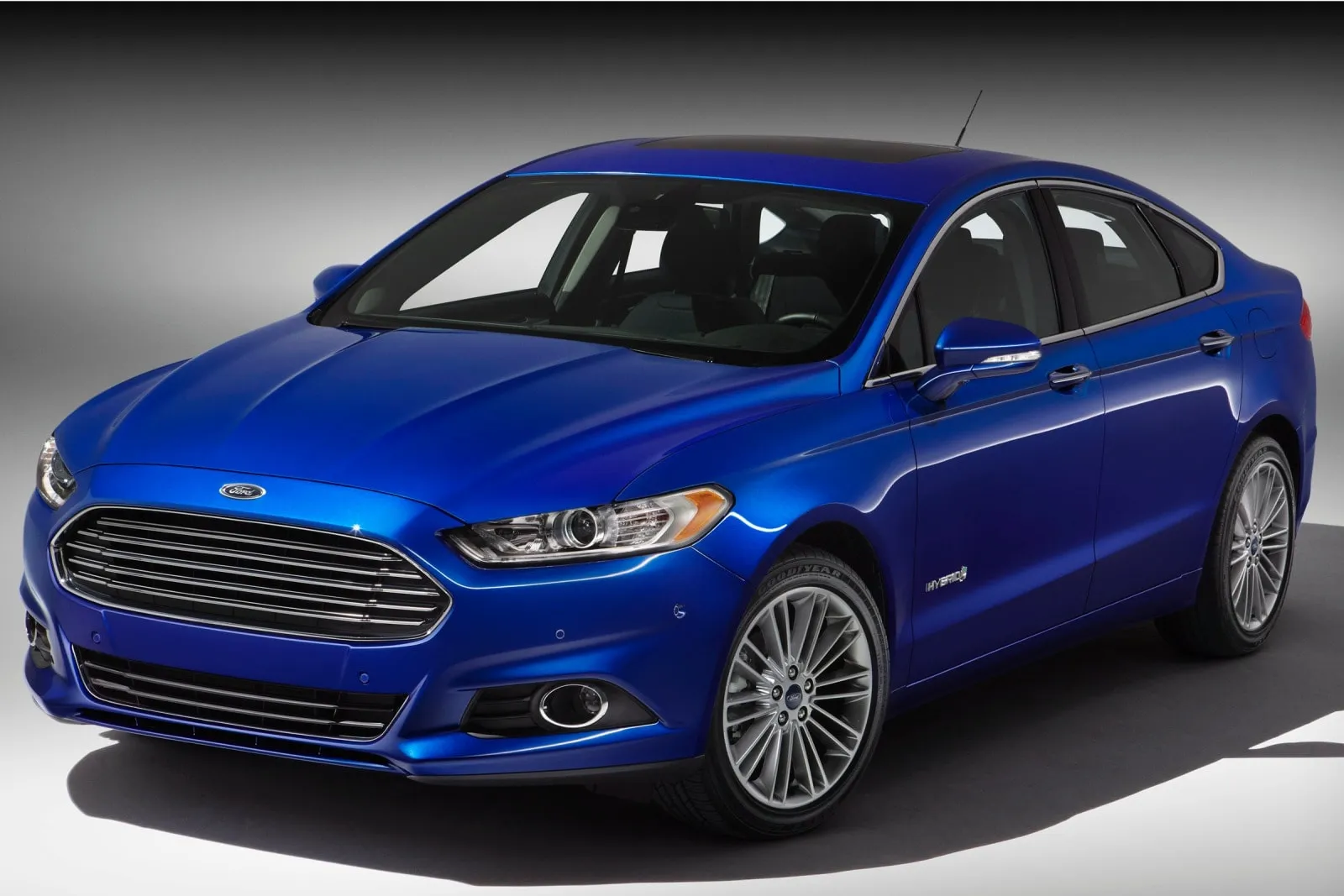
Ford issued technical service bulletins and some owners were covered under extended warranty programs, but used car buyers outside that coverage window face this expense entirely on their own.
The 2.0-liter EcoBoost is generally more robust but carries its own concerns including carbon buildup from its direct injection system and turbocharger wear at higher mileage that can be expensive to address.
The six-speed automatic can also exhibit shuddering and rough shift behavior when transmission fluid is overdue for a change. Worth noting: the naturally aspirated 2.5-liter four-cylinder Fusion and the hybrid powertrain are significantly more reliable than either EcoBoost variant.
For used buyers focused on durability, seeking out the base engine or the hybrid is the smart play. But EcoBoost variants make up a large portion of the used Fusion market, and they carry real risks that deserve serious consideration before purchase.
9. Chevrolet Malibu (2016–2019)
The 2016 Chevrolet Malibu arrived with genuine promise. It was larger than its predecessor, noticeably more fuel efficient, and significantly more attractive in its styling. General Motors appeared to have finally built a Malibu capable of competing head-to-head with the Camry and Accord.
Initial reviews were positive and consumer interest was real. Then the long-term ownership data started coming in, and the picture became considerably more complicated.
The turbocharged 1.5-liter four-cylinder engine in base Malibu trims has attracted persistent, widespread complaints about oil consumption, particularly after 60,000 miles.
Reports of engines consuming a quart of oil every 1,000 to 2,000 miles have surfaced across multiple owner forums and in General Motors’ own technical service bulletins suggesting the issue is systemic rather than isolated to individual unlucky owners.
Excessive oil consumption of this kind, when left unmonitored, leads to engine damage that accumulates progressively and eventually becomes irreversible.
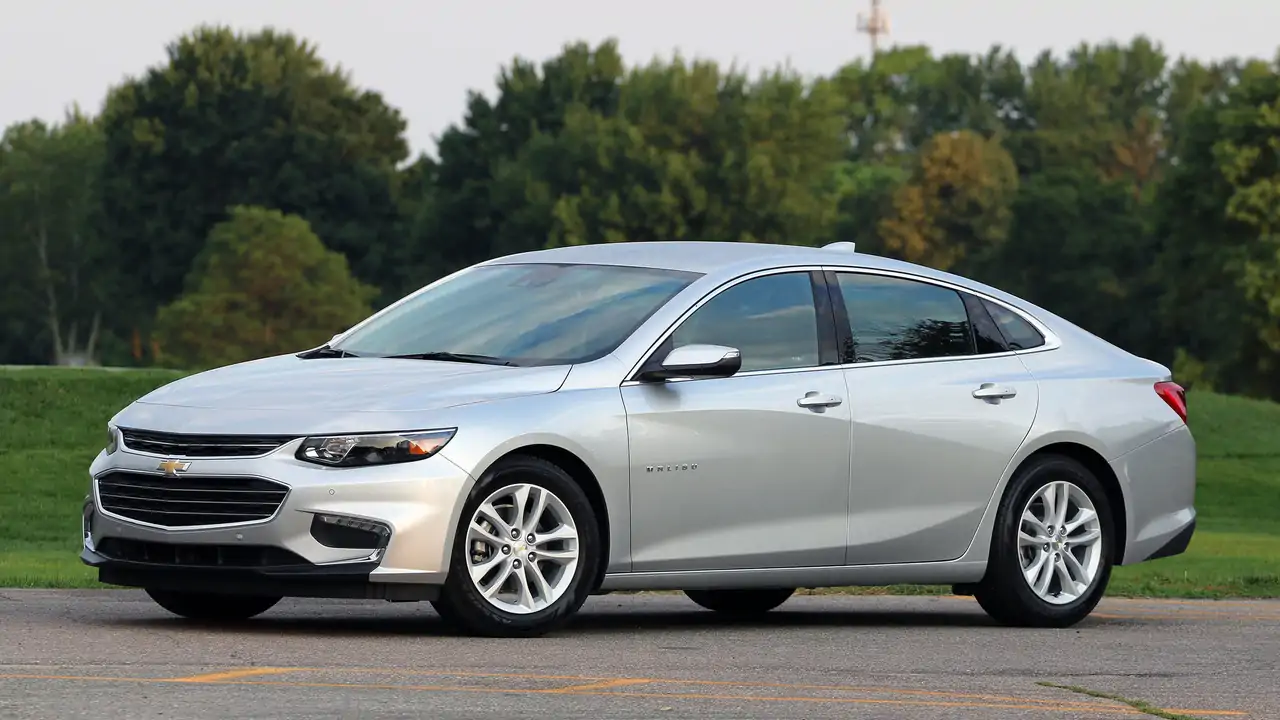
The continuously variable transmission available on some Malibu configurations has generated its own complaints including shuddering, jerking at low speeds, and in some cases complete failure requiring full replacement.
CVT replacements are expensive by definition, and the Malibu’s unit has not earned the durability reputation that would make those costs feel justifiable.
Electrical reliability has been another consistent weak point, with infotainment system freezes, intermittent sensor failures, and HVAC issues appearing in owner reports at rates higher than most of the Malibu’s direct competitors.
J.D. Power and Consumer Reports have both placed the 2016–2019 Malibu below the segment average for reliability across multiple categories. The 2.0-liter turbocharged engine in higher trims is generally regarded as more robust than the 1.5-liter, but the platform reliability record makes this generation a risky proposition for used buyers who aren’t prepared to absorb potential repair costs.
10. Nissan Altima (2013–2018, CVT Models)
The Nissan Altima has long been one of the best-selling sedans in America, and for much of its history, that popularity was deserved. In the 2013–2018 generation, however, a fundamental mechanical weakness has cast a long shadow over the car’s reputation: the Xtronic continuously variable transmission, which Nissan uses across virtually its entire lineup, has developed a well-documented pattern of premature failure that has left owners stranded and staring at repair bills that can approach or exceed the remaining market value of the car itself.
The Altima’s CVT problems are not isolated to a single bad model year or a small batch of defective units. Shuddering under acceleration, jerking at low speeds, overheating in hot weather or during any kind of load, and complete transmission failure sometimes before reaching 100,000 miles have been reported at rates that are statistically alarming across multiple model years in this range.
Nissan extended the powertrain warranty on certain configurations specifically to address CVT concerns, but used car buyers outside that extended coverage window are fully exposed to replacement costs that typically range from $3,500 to over $5,000 at an independent shop.
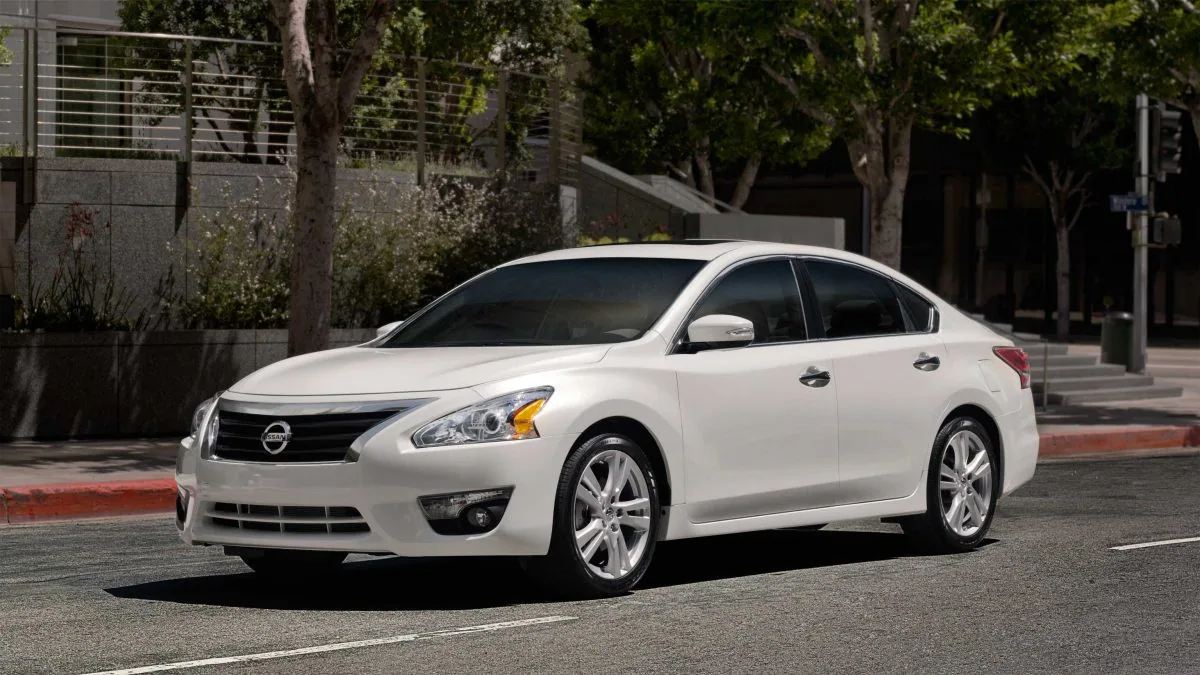
The 2.5-liter four-cylinder QR25DE engine that powers most Altimas from this period is actually a reasonably competent and durable unit on its own. It doesn’t suffer from the oil consumption or coolant intrusion issues that plague some competitors, and it’s capable of high mileage when maintained properly.
The engine itself is not the problem it’s the transmission it’s bolted to that consistently fails. Compounding the CVT issue, the Altima from this era has also attracted complaints about premature rust in certain northern markets, power steering rack failures, and interior quality that degrades noticeably compared to the Accord and Camry over time.
If you’re considering an Altima from this generation, at minimum, have the transmission professionally inspected before purchase, verify whether any extended warranty coverage applies to the specific VIN, and factor the real possibility of CVT replacement into your total cost of ownership calculation. The low used price often reflects the raised risk, not a genuine bargain.
Also Read: 10 Used EVs Sitting on Dealer Lots And Why They’re Actually Great Buys
